The body of the bride Lila appeared cruelly shredded (From Elena Ferrante’s novel The Story of a New Name)

It was a beautiful warm evening; the brilliant lights of the shop’s interior spread their glow into the square. The gigantic image of Lila in her wedding dress could be seen at a distance, leaning against the center wall. Stefano parked, we went in, making our way among the boxes of shoes, piled up haphazardly, cans of paint, ladders. Marcello, Rino, Gigliola, and Pinuccia were visibly irritated: for varying reasons they had no wish to submit yet again to Lila’s caprices. The only one who greeted us cordially was Michele, who turned to my friend with a mocking laugh. “Lovely signora, will you let us know, at last, what you have in mind or do you just want to ruin the evening?”

Lila looked at the panel leaning against the wall, asked them to lay it on the floor. Marcello said cautiously, with the dark timidity that he always showed toward Lila, “What for?”

“I’ll show you.”

Rino interrupted: “Don’t be an idiot, Lina. You know how much this thing cost? If you ruin it, you’re in trouble.”

The Solaras laid the image on the floor. Lila looked around, with her brow furrowed, her eyes narrowed. She was looking for something that she knew was there, that perhaps she had bought herself. In a corner she spied a roll of black paper, and she took a pair of big scissors and a box of drawing pins from a shelf. Then, with that expression of extreme concentration which enabled her to isolate herself from everything around her, she went back to the panel. Before our astonished and, in the cases of some, openly hostile eyes, she cut strips of black paper, with the manual precision she had always possessed, and pinned them here and there to the photograph, asking for my help with slight gestures or quick glances.

I joined in with the devotion that I had felt ever since we were children. Those moments were thrilling, it was a pleasure to be beside her, slipping inside her intentions, to the point of anticipating her. I felt that she was seeing something that wasn’t there, and that she was struggling to make us see it, too. I was suddenly happy, feeling the intensity that invested her, that flowed through her fingers as they grasped the scissors, as they pinned the black paper.

Finally, she tried to lift the canvas, as if she were alone in that space, but she couldn’t. Marcello readily intervened, I intervened, we leaned it against the wall. Then we all backed up toward the door, some sneering, some grim, some appalled. The body of the bride Lila appeared cruelly shredded. Much of the head had disappeared, as had the stomach. There remained an eye, the hand on which the chin rested, the brilliant stain of the mouth, the diagonal stripe of the bust, the line of the crossed legs, the shoes.

Gigliola began, scarcely containing her rage: “I cannot put a thing like that in my shop.”

“I agree,” Pinuccia exploded. “We have to sell here, and with that grotesque thing people will run away. Rino, say something to your sister, please.”

Rino pretended to ignore her, but he turned to Stefano as if his brother-in-law were to blame for what was happening. “I told you, you can’t reason with her. You have to say yes, no, and that’s it, or you see what happens? It’s a waste of time.”

Stefano didn’t answer, he stared at the panel leaning against the wall and it was evident that he was looking for a way out. He asked me, “What do you think, Lenù?”

I said in Italian, “To me it seems very beautiful. Of course, I wouldn’t want it in the neighborhood, that’s not the right place for it. But here it’s something else, it will attract attention, it will please. In Confidenze just last week I saw that in Rossano Brazzi’s house there is a painting like this.”

Hearing that, Gigliola got even angrier. “What do you mean? That Rossano Brazzi knows what’s what, that you two know everything, and Pinuccia and I don’t?”

At that point I felt the danger. I had only to glance at Lila to realize that, if when we arrived at the shop she had really felt willing to give in should the attempt prove fruitless, now that the attempt had been made and had produced that image of disfigurement she wouldn’t yield an inch. Those minutes of work on the picture had broken ties: at that moment she was overwhelmed by an exaggerated sense of herself, and it would take time for her to retreat into the dimension of the grocer’s wife, she wouldn’t accept a sigh of dissent. In fact, while Gigliola was speaking, she was already muttering: Like this or not at all. And she wanted to quarrel, she wanted to break, shatter, she would have happily hurled herself at Gigliola with the scissors.
From Elena Ferrante’s 2012 novel The Story of a New Name. English translation by Ann Goldstein. I’m not sure how well the passage stands free of any context—I know there are a lot of characters here with backgrounds that won’t be clear to anyone who hasn’t read Ferrante’s novel (read it!)—but I love this passage, where brilliant friends Lila and Lenù collaborate to turn advertising into art, to artistically—and violently, perhaps—erase Lila’s body from the patriarchal order into which she has been inscribed.

William T. Vollmann talks sex and death; reads from Last Stories and Other Stories

Completely cleansed of the dross of speech (From Elena Ferrante’s novel My Brilliant Friend)

I stuck my head out the window, the postman said there was a letter for Greco. I ran down with my heart pounding. I ruled out the possibility that my parents had written to me. Was it a letter from Lila, from Nino? It was from Lila. I tore open the envelope. There were five closely written pages, and I devoured them, but I understood almost nothing of what I read. It may seem strange today, and yet it really was so: even before I was overwhelmed by the contents, what struck me was that the writing contained Lila’s voice. Not only that. From the first lines I thought of The Blue Fairy, the only text of hers that I had read, apart from our elementary-school homework, and I understood what, at the time, I had liked so much. There was, in The Blue Fairy, the same quality that struck me now: Lila was able to speak through writing; unlike me when I wrote, unlike Sarratore in his articles and poems, unlike even many writers I had read and was reading, she expressed herself in sentences that were well constructed, and without error, even though she had stopped going to school, but—further—she left no trace of effort, you weren’t aware of the artifice of the written word. I read and I saw her, I heard her. The voice set in the writing overwhelmed me, enthralled me even more than when we talked face to face: it was completely cleansed of the dross of speech, of the confusion of the oral; it had the vivid orderliness that I imagined would belong to conversation if one were so fortunate as to be born from the head of Zeus and not from the Grecos, the Cerullos. I was ashamed of the childish pages I had written to her, the overwrought tone, the frivolity, the false cheer, the false grief. Who knows what Lila had thought of me. I felt contempt and bitterness toward Professor Gerace, who had deluded me by giving me a nine in Italian. The first effect of that letter was to make me feel, at the age of fifteen, on the day of my birthday, a fraud. School, with me, had made a mistake and proof was there, in Lila’s letter.

From Elena Ferrante’s 2011 novel My Brilliant Friend. English translation by Ann Goldstein. I love this novel, and what I perhaps love most about it is how Ferrante’s narrator conveys the titular brilliance of her friend Lila. My Brilliant Friend might be summarized in one of its own sentences: “She was trying to understand, we were both trying to understand, and understanding was something that we loved to do.”

I conclude now I have no inner resources (Reading/Have Read/Should Write About)

img_2152

For twenty years now Berryman’s line I conclude now I have no inner resources has been plinking around the inside of my dumb skull. The line is plinking like crazy lately, as I shuffle final exam essays into some kind of order (what order?) that might align with my ability to offer the student, the writer, some meaningful note, some suggestion for improvement, some revelatory remark. Plink plink plink. No inner resources.

It is bad to start with a complaint so I will dress up the preceding paragraph (I dress it mentally) as an apologia. (Why the hell did I decide to write about books online?!).

I’ve been reading some really great books lately, folks. People, yes, you, listen. It’s not true that I have no inner resources. I am unstuck as a reader. I’m all gummed up with what I’ve read. Well-fed. And yet I go to scribble out a, like, review and plink plink plink. Nothing.

But like I said, the reading’s been really good. From the bottom up:

Let me strongly recommend American Candide by Mahendra Singh. I recommend this book for people who enjoy laughing at tragedies that should otherwise make them weep. You can and should purchase this book from Rosarium.

tumblr_o6f5s07t9a1s4y9aso1_1280
Illustration to American Candide by Mahendra Singh

Above American Candide in the stack so lazily pictured above is Yuri Herrera’s neon noir novella The Transmigration of Bodies, which I also highly recommend. I managed a few words on it here.

If you were to describe Henri Michaux’s Miserable Miracle 1956 book to me, I might politely decline with a small gesture of my hand. It’s about a guy who takes mescaline and writes about the experience and he draws these pictures and then he later takes “Indian hemp” and compares it— you might say to me, you, knowing as you know that I dig weird books, but I would cut you off at with an em dash, polite but firm, Not interested in drug novels these days (and besides dude, you know that Aldous Huxley did kinda the same thing at kinda the same time). And then you, having the book with you might press it into my hand, declaring, No, look

img_2156 img_2154 img_2155 img_2158

—and I would say Thanks and consume the book in two sittings.

And so after a few years of false starts, I finally broke through the second chapter of Stanley Elkin’s satire The Franchiser. The many years of recommendations, exhortations (and scoldings) to read The fucking Franchiser were correct and good and now appreciated, as I work my way into the novel’s rich fat middle—but I admit it was Mr. William Gass who finally sold me on a commitment. I read his introduction published elsewhere—in A Temple of Texts—and that was that.

Thanks to Jon for sending me Ursula K. Le Guin’s essay collection The Language of the Night. The collection collects the collective introductions to Le Guin’s so-called Hainish collection, which I read this winter, and wrote about here. Not one of my editions featured the reflections Le Guin (or more likely her editors) called “Introductions” in later essays, and reading the Hainish intros is, in a very slight sense, like rereading those books. Lovely.

Last and never least: Tom Clark’s The Last Gas Station and Other Stories. I’ve thought often of Clark’s poems as stories pretending to be poems so maybe these are poems pretending to be stories. Or maybe I have no idea what the fuck I’m talking about. (Plink plink plink). I read most of them except for the longest one, “Incident at Basecamp,” which I will save save save for the future, an old habit, maybe a bad habit, that, to read all but one story in a collection, to maybe keep the collection afresh somehow or not wholly discovered—eh? Plink plink plink. Wag.

Three More Purple Books

Last week I crammed my thoughts about the death of Prince into one of these “Three Books” posts I’ve doing each Sunday for around 30 Sundays now (I plan to do 52, if anyone cares or counts). I grabbed a bunch of purple books and scanned them, and I still have the scans saved, so today’s Three Books are, I guess, books that I deemed not-quite-purple-enough for last week’s post. My thoughts on Prince remain the same: I’m still vaguely shocked at his death and shocked at my shock at his death. I tried to write a Thing on Prince’s sexy dystopian visions, but I failed.  Give me the electric chair 4 all my future crimes.

img_2144

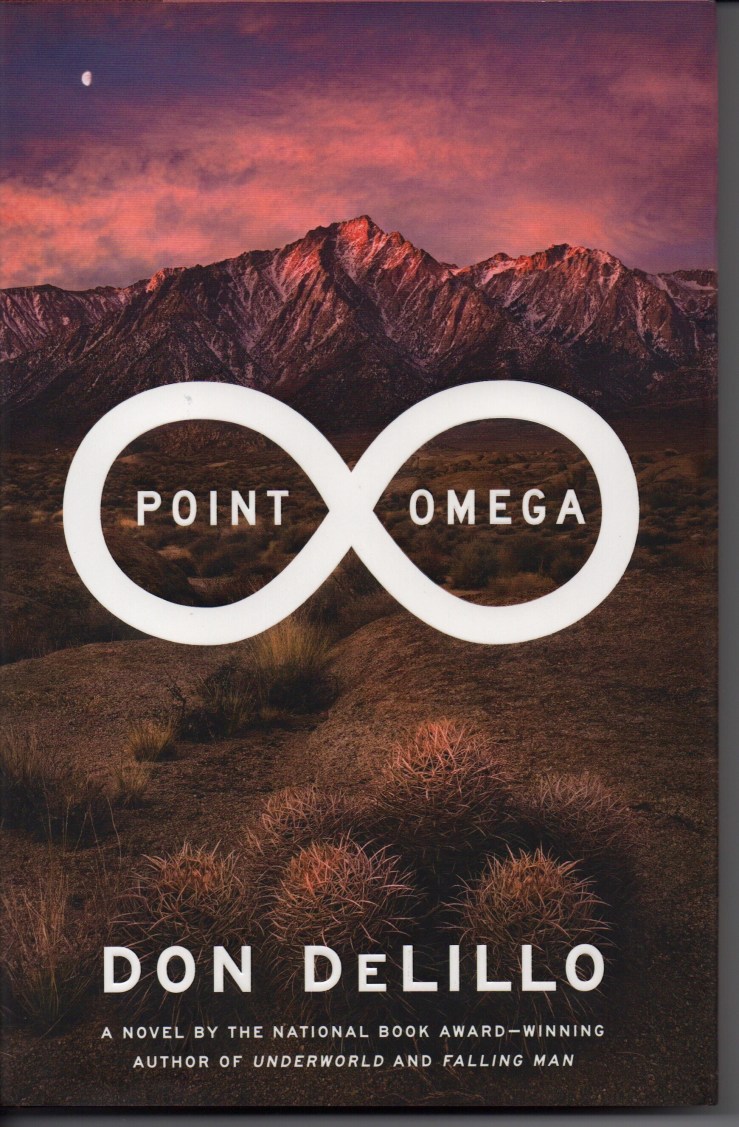
Point Omega by Don DeLillo. First edition hardback, Scribner, 2010. Jacket design by Rex Bonomelli using a photograph by Marc Adamus. I reviewed Point Omega when it came out, noting that it “is not a particularly fun book nor does it yield any direct answers, but it’s also a rewarding, engaging, and often challenging read.” The book got somewhat mixed reviews, but I think in retrospect it’s quite underrated. DeLillo wrote one of the earliest paraphrases of the Bush Wars here (without really writing a summation and without really writing a war novel), and I think about the book often—whenever I read a little digital clipping about Cheney or Wolfowitz or Rumsfeld or any  of the Old Neocon Gang—and the hacks and mouthpieces who supported them.

img_2147

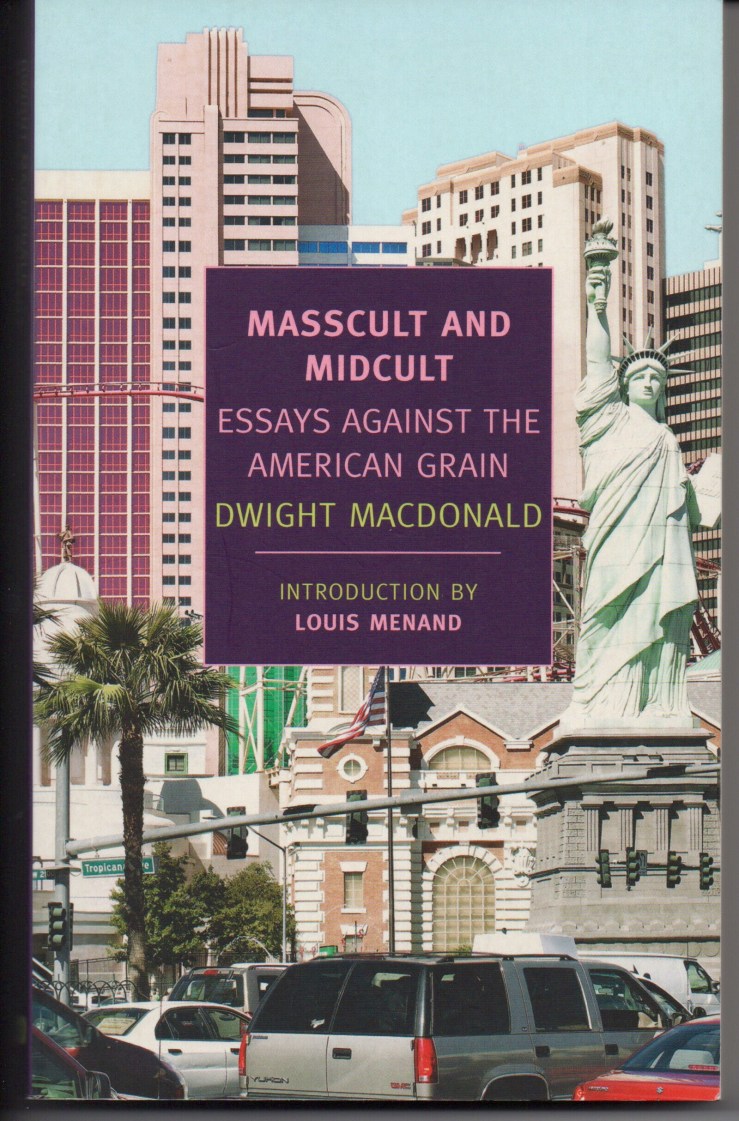
Masscult and Midcult: Essays against the American Grain by Dwight Macdonald. Edited by John Summers. Published by NYRB, 2011. Cover design by Katy Homans; the cover image is a detail of Cedric Delsaux’s photograph 88, Las Vegas Casino 1. I reviewed Masscult a few years ago. The book has some perceptive essays, and its title essay is essential cultural criticism.

img_2146

Native Son by Richard Wright. Mass market paperback edition by Harper Perennial, 1993. Cover design and illustration by David Diaz. This book was part of a class set I used years ago when I taught AP English Literature. It left with me when I left that job.

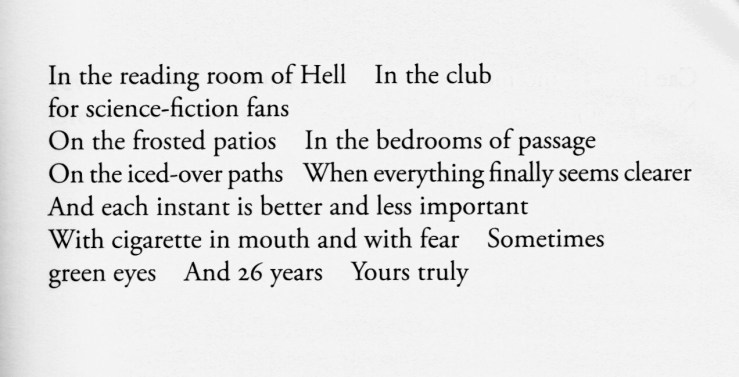
“In the reading room of Hell” — Roberto Bolaño

img_2118-1

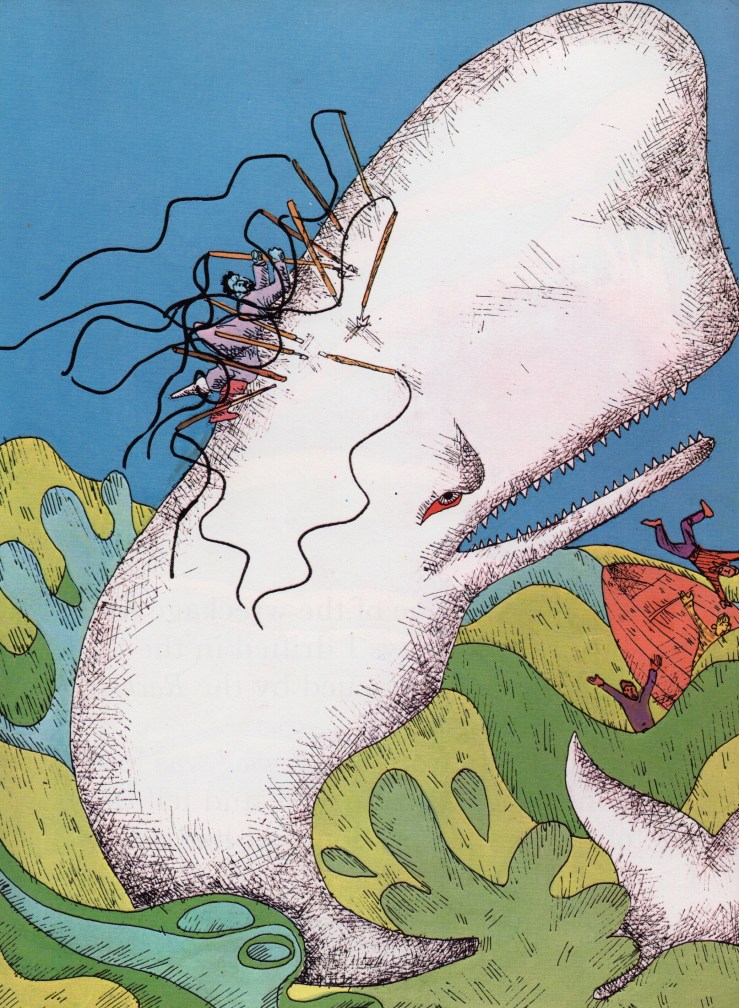
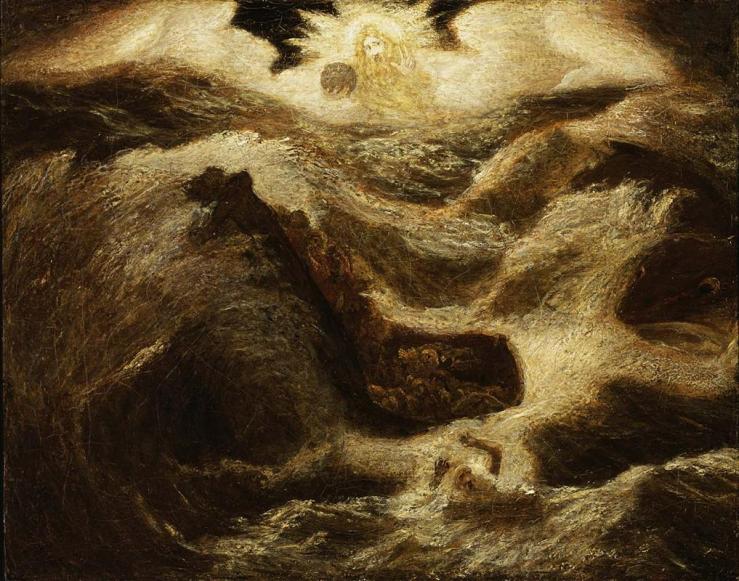
Jonah — Albert Pinkham Ryder

jonah-1895halfhd

And here is “The Sermon,” Ch. IX of Herman Melville’s great novel Moby-Dick, in which Father Mapple gives us the tale of Jonah—


Father Mapple rose, and in a mild voice of unassuming authority ordered the scattered people to condense. “Starboard gangway, there! side away to larboard—larboard gangway to starboard! Midships! midships!”

There was a low rumbling of heavy sea-boots among the benches, and a still slighter shuffling of women’s shoes, and all was quiet again, and every eye on the preacher.

He paused a little; then kneeling in the pulpit’s bows, folded his large brown hands across his chest, uplifted his closed eyes, and offered a prayer so deeply devout that he seemed kneeling and praying at the bottom of the sea.

This ended, in prolonged solemn tones, like the continual tolling of a bell in a ship that is foundering at sea in a fog—in such tones he commenced reading the following hymn; but changing his manner towards the concluding stanzas, burst forth with a pealing exultation and joy—

     "The ribs and terrors in the whale,
     Arched over me a dismal gloom,
     While all God's sun-lit waves rolled by,
     And lift me deepening down to doom.

     "I saw the opening maw of hell,
     With endless pains and sorrows there;
     Which none but they that feel can tell—
     Oh, I was plunging to despair.

     "In black distress, I called my God,
     When I could scarce believe him mine,
     He bowed his ear to my complaints—
     No more the whale did me confine.

     "With speed he flew to my relief,
     As on a radiant dolphin borne;
     Awful, yet bright, as lightning shone
     The face of my Deliverer God.

     "My song for ever shall record
     That terrible, that joyful hour;
     I give the glory to my God,
     His all the mercy and the power."

Nearly all joined in singing this hymn, which swelled high above the howling of the storm. A brief pause ensued; the preacher slowly turned over the leaves of the Bible, and at last, folding his hand down upon the proper page, said: “Beloved shipmates, clinch the last verse of the first chapter of Jonah—’And God had prepared a great fish to swallow up Jonah.'”

“Shipmates, this book, containing only four chapters—four yarns—is one of the smallest strands in the mighty cable of the Scriptures. Yet what depths of the soul does Jonah’s deep sealine sound! what a pregnant lesson to us is this prophet! What a noble thing is that canticle in the fish’s belly! How billow-like and boisterously grand! We feel the floods surging over us; we sound with him to the kelpy bottom of the waters; sea-weed and all the slime of the sea is about us! But what is this lesson that the book of Jonah teaches? Shipmates, it is a two-stranded lesson; a lesson to us all as sinful men, and a lesson to me as a pilot of the living God. As sinful men, it is a lesson to us all, because it is a story of the sin, hard-heartedness, suddenly awakened fears, the swift punishment, repentance, prayers, and finally the deliverance and joy of Jonah. As with all sinners among men, the sin of this son of Amittai was in his wilful disobedience of the command of God—never mind now what that command was, or how conveyed—which he found a hard command. But all the things that God would have us do are hard for us to do—remember that—and hence, he oftener commands us than endeavors to persuade. And if we obey God, we must disobey ourselves; and it is in this disobeying ourselves, wherein the hardness of obeying God consists. Continue reading “Jonah — Albert Pinkham Ryder”

Another misty morning | Nathaniel Hawthorne’s journal entry for April 27, 1843

Thursday, April 27th.–I took a walk into the fields, and round our opposite hill, yesterday noon, but made no very remarkable observation. The frogs have begun their concerts, though not as yet with a full choir. I found no violets nor anemones, nor anything in the likeness of a flower, though I looked carefully along the shelter of the stone-walls, and in all spots apparently propitious. I ascended the hill, and had a wide prospect of a swollen river, extending around me in a semicircle of three or four miles, and rendering the view much finer than in summer, had there only been foliage. It seemed like the formation of a new world; for islands were everywhere emerging, and capes extending forth into the flood; and these tracts, which were thus won from the watery empire, were among the greenest in the landscape. The moment the deluge leaves them Nature asserts them to be her property by covering them with verdure; or perhaps the grass had been growing under the water. On the hill-top where I stood, the grass had scarcely begun to sprout; and I observed that even those places which looked greenest in the distance were but scantily grass-covered when I actually reached them. It was hope that painted them so bright.

Last evening we saw a bright light on the river, betokening that a boat’s party were engaged in spearing fish. It looked like a descended star,–like red Mars,–and, as the water was perfectly smooth, its gleam was reflected downward into the depths. It is a very picturesque sight. In the deep quiet of the night I suddenly heard the light and lively note of a bird from a neighboring tree,–a real song, such as those which greet the purple dawn, or mingle with the yellow sunshine. What could the little bird mean by pouring it forth at midnight? Probably the note gushed out from the midst of a dream, in which he fancied himself in Paradise with his mate; and, suddenly awakening, he found he was on a cold, leafless bough, with a New England mist penetrating through his feathers. That was a sad exchange of imagination for reality; but if he found his mate beside him, all was well.

This is another misty morning, ungenial in aspect, but kinder than it looks; for it paints the hills and valleys with a richer brush than the sunshine could. There is more verdure now than when I looked out of the window an hour ago. The willow-tree opposite my study window is ready to put forth its leaves. There are some objections to willows. It is not a dry and cleanly tree; it impresses me with an association of sliminess; and no trees, I think, are perfectly satisfactory, which have not a firm and hard texture of trunk and branches. But the willow is almost the earliest to put forth its leaves, and the last to scatter them on the ground; and during the whole winter its yellow twigs give it a sunny aspect, which is not without a cheering influence in a proper point of view. Our old house would lose much were this willow to be cut down, with its golden crown over the roof in winter, and its heap of summer verdure. The present Mr. Ripley planted it, fifty years ago, or thereabouts.

Nathaniel Hawthorne’s journal entry for April 27, 1843. From Passages from the American Note-Books.

Illustration for “The Beautiful Girl of the Moon Tower” — Leo and Diane Dillon

img_2091

From The People Could Fly: American Black Folktales told by Virginia Hamilton.

Human flower-shrubs, if they will grow old on earth | Nathaniel Hawthorne’s journal entry for April 26, 1843

April 26th.–Here is another misty day, muffling the sun. The lilac-shrubs under my study window are almost in leaf. In two or three days more, I may put forth my hand and pluck a green bough. These lilacs appear to be very aged, and have lost the luxuriant foliage of their prime. Old age has a singular aspect in lilacs, rose-bushes, and other ornamental shrubs. It seems as if such things, as they grow only for beauty, ought to flourish in immortal youth, or at least to die before their decrepitude. They are trees of Paradise, and therefore not naturally subject to decay; but have lost their birthright by being transplanted hither. There is a kind of ludicrous unfitness in the idea of a venerable rose-bush; and there is something analogous to this in human life. Persons who can only be graceful and ornamental–who can give the world nothing but flowers–should die young, and never be seen with gray hairs and wrinkles, any more than the flower-shrubs with mossy bark and scanty foliage, like the lilacs under my window. Not that beauty is not worthy of immortality. Nothing else, indeed, is worthy of it; and thence, perhaps, the sense of impropriety when we see it triumphed over by time. Apple-trees, on the other hand, grow old without reproach. Let them live as long as they may, and contort themselves in whatever fashion they please, they are still respectable, even if they afford us only an apple or two in a season, or none at all. Human flower-shrubs, if they will grow old on earth, should, beside their lovely blossoms, bear some kind of fruit that will satisfy earthly appetites; else men will not be satisfied that the moss should gather on them.

Winter and Spring are now struggling for the mastery in my study; and I yield somewhat to each, and wholly to neither. The window is open, and there is a fire in the stove. The day when the window is first thrown open should be an epoch in the year; but I have forgotten to record it. Seventy or eighty springs have visited this old house; and sixty of them found old Dr. Ripley here,–not always old, it is true, but gradually getting wrinkles and gray hairs, and looking more and more the picture of winter. But he was no flower-shrub, but one of those fruit-trees or timber-trees that acquire a grace with their old age. Last Spring found this house solitary for the first time since it was built; and now again she peeps into our open windows and finds new faces here. . . .

It is remarkable how much uncleanness winter brings with it, or leaves behind it, . . . The yard, garden, and avenue, which should be my department, require a great amount of labor. The avenue is strewed with withered leaves,–the whole crop, apparently, of last year,–some of which are now raked into heaps; and we intend to make a bonfire of them. . . –There are quantities of decayed branches, which one tempest after another has flung down, black and rotten. In the garden are the old cabbages which we did not think worth gathering last autumn, and the dry bean-vines, and the withered stalks of the asparagus-bed; in short, all the wrecks of the departed year,–its mouldering relics, its dry bones. It is a pity that the world cannot be made over anew every spring. Then, in the yard, there are the piles of firewood, which I ought to have sawed and thrown into the shed long since, but which will cumber the earth, I fear, till June, at least. Quantities of chips are strewn about, and on removing them we find the yellow stalks of grass sprouting underneath. Nature does her best to beautify this disarray. The grass springs up most industriously, especially in sheltered and sunny angles of the buildings, or round the doorsteps,–a locality which seems particularly favorable to its growth; for it is already high enough to bend over and wave the wind. I was surprised to observe that some weeds (especially a plant that stains the fingers with its yellow juice) had lived, and retained their freshness and sap as perfectly as in summer, through all the frosts and snows of last winter. I saw them, the last green thing, in the autumn; and here they are again, the first in the spring.

Nathaniel Hawthorne’s journal entry for April 26, 1843. From Passages from the American Note-Books.

Stanley Elkin and William Gass on the mythic mode, Faulkner, etc.

From Washington University’s marvelous Modern Literature Collection YouTube channel.

Crows visited us | Nathaniel Hawthorne’s journal entry for April 25, 1843

April 25th. Spring is advancing, sometimes with sunny days, and sometimes, as is the case now, with chill, moist, sullen ones. There is an influence in the season that makes it almost impossible for me to bring my mind down to literary employment; perhaps because several months’ pretty constant work has exhausted that species of energy,–perhaps because in spring it is more natural to labor actively than to think. But my impulse now is to be idle altogether,–to lie in the sun, or wander about and look at the revival of Nature from her death-like slumber, or to be borne down the current of the river in my boat. If I had wings, I would gladly fly; yet would prefer to be wafted along by a breeze, sometimes alighting on a patch of green grass, then gently whirled away to a still sunnier spot. . . . Oh, how blest should I be were there nothing to do! Then I would watch every inch and hair’s-breadth of the progress of the season; and not a leaf should put itself forth, in the vicinity of our old mansion, without my noting it. But now, with the burden of a continual task upon me, I have not freedom of mind to make such observations. I merely see what is going on in a very general way. The snow, which, two or three weeks ago, covered hill and valley, is now diminished to one or two solitary specks in the visible landscape; though doubtless there are still heaps of it in the shady places in the woods. There have been no violent rains to carry it off: it has diminished gradually, inch by inch, and day after day; and I observed, along the roadside, that the green blades of grass had sometimes sprouted on the very edge of the snowdrift the moment that the earth was uncovered.

The pastures and grass-fields have not yet a general effect of green; nor have they that cheerless brown tint which they wear in later autumn, when vegetation has entirely ceased. There is now a suspicion of verdure,–the faint shadow of it,–but not the warm reality. Sometimes, in a happy exposure,–there is one such tract across the river, the carefully cultivated mowing-field, in front of an old red homestead,–such patches of land wear a beautiful and tender green, which no other season will equal; because, let the grass be green as it may hereafter, it will not be so set off by surrounding barrenness. The trees in our orchard, and elsewhere, have as yet no leaves; yet to the most careless eye they appear full of life and vegetable blood. It seems as if, by one magic touch, they might instantaneously put forth all their foliage, and the wind, which now sighs through their naked branches, might all at once find itself impeded by innumerable leaves. This sudden development would be scarcely more wonderful than the gleam of verdure which often brightens, in a moment, as it were, along the slope of a bank or roadside. It is like a gleam of sunlight. Just now it was brown, like the rest of the scenery: look again, and there is an apparition of green grass. The Spring, no doubt, comes onward with fleeter footsteps, because Winter has lingered so long that, at best, she can hardly retrieve half the allotted term of her reign.

The river, this season, has encroached farther on the land than it has been known to do for twenty years past. It has formed along its course a succession of lakes, with a current through the midst. My boat has lain at the bottom of the orchard, in very convenient proximity to the house. It has borne me over stone fences; and, a few days ago, Ellery Channing and I passed through two rails into the great northern road, along which we paddled for some distance. The trees have a singular appearance in the midst of waters. The curtailment of their trunks quite destroys the proportions of the whole tree; and we become conscious of a regularity and propriety in the forms of Nature, by the effect of this abbreviation. The waters are now subsiding, but gradually. Islands become annexed to the mainland, and other islands emerge from the flood, and will soon, likewise, be connected with the continent. We have seen on a small scale the process of the deluge, and can now witness that of the reappearance of the earth.

Crows visited us long before the snow was off. They seem mostly to have departed now, or else to have betaken themselves to remote depths of the woods, which they haunt all summer long. Ducks came in great numbers, and many sportsmen went in pursuit of them along the river; but they also have disappeared. Gulls come up from seaward, and soar high overhead, flapping their broad wings in the upper sunshine. They are among the most picturesque birds that I am acquainted with; indeed, quite the most so, because the manner of their flight makes them almost stationary parts of the landscape. The imagination has time to rest upon them; they have not flitted away in a moment. You go up among the clouds, and lay hold of these soaring gulls, and repose with them upon the sustaining atmosphere. The smaller birds, –the birds that build their nests in our trees, and sing for us at morning-red,–I will not describe.. . But I must mention the great companies of blackbirds–more than the famous “four-and-twenty” who were baked in a pie–that congregate on the tops of contiguous trees, and vociferate with all the clamor of a turbulent political meeting. Politics must certainly be the subject of such a tumultuous debate; but still there is a melody in each individual utterance, and a harmony in the general effect. Mr. Thoreau tells me that these noisy assemblages consist of three different species of blackbirds; but I forget the other two. Robins have been long among us, and swallows have more recently arrived.

Nathaniel Hawthorne’s journal entry for April 25, 1843. From Passages from the American Note-Books.

William Gaddis: “The problem of writing with a message”

From Washington University’s marvelous Modern Literature Collection YouTube channel.

Illustration for Oscar Wilde’s “The Fisherman and His Soul” — James Hill

fisherman and his soul
James Hill’s illustration for “The Fisherman and His Soul” by Oscar Wilde. From The Short Stories of Oscar Wilde, Heritage Press, 1968. 

“The Fisherman and His Soul”

by

Oscar Wilde


Every evening the young Fisherman went out upon the sea, and threw his nets into the water.

When the wind blew from the land he caught nothing, or but little at best, for it was a bitter and black-winged wind, and rough waves rose up to meet it.  But when the wind blew to the shore, the fish came in from the deep, and swam into the meshes of his nets, and he took them to the market-place and sold them.

Every evening he went out upon the sea, and one evening the net was so heavy that hardly could he draw it into the boat.  And he laughed, and said to himself, ‘Surely I have caught all the fish that swim, or snared some dull monster that will be a marvel to men, or some thing of horror that the great Queen will desire,’ and putting forth all his strength, he tugged at the coarse ropes till, like lines of blue enamel round a vase of bronze, the long veins rose up on his arms.  He tugged at the thin ropes, and nearer and nearer came the circle of flat corks, and the net rose at last to the top of the water.

But no fish at all was in it, nor any monster or thing of horror, but only a little Mermaid lying fast asleep.

Her hair was as a wet fleece of gold, and each separate hair as a thread of fine gold in a cup of glass.  Her body was as white ivory, and her tail was of silver and pearl.  Silver and pearl was her tail, and the green weeds of the sea coiled round it; and like sea-shells were her ears, and her lips were like sea-coral.  The cold waves dashed over her cold breasts, and the salt glistened upon her eyelids.

So beautiful was she that when the young Fisherman saw her he was filled with wonder, and he put out his hand and drew the net close to him, and leaning over the side he clasped her in his arms.  And when he touched her, she gave a cry like a startled sea-gull, and woke, and looked at him in terror with her mauve-amethyst eyes, and struggled that she might escape.  But he held her tightly to him, and would not suffer her to depart.

And when she saw that she could in no way escape from him, she began to weep, and said, ‘I pray thee let me go, for I am the only daughter of a King, and my father is aged and alone.’

But the young Fisherman answered, ‘I will not let thee go save thou makest me a promise that whenever I call thee, thou wilt come and sing to me, for the fish delight to listen to the song of the Sea-folk, and so shall my nets be full.’

‘Wilt thou in very truth let me go, if I promise thee this?’ cried the Mermaid.

‘In very truth I will let thee go,’ said the young Fisherman.

So she made him the promise he desired, and sware it by the oath of the Sea-folk.  And he loosened his arms from about her, and she sank down into the water, trembling with a strange fear.

Read the rest of Wilde’s “The Fisherman and His Soul” at Project Gutenberg.

Yuri Herrera’s The Transmigration of Bodies (Book acquired, 4.16.2016; consumed 4.17.2016)

img_2013

I was a big fan of the last novella I read by Yuri Herrera, Signs Preceding the End of the World (also from publisher And Other Stories, and also translated by Lisa Dillman). So I was psyched when his newest offering (in English translation) The Transmigration of Bodies arrived at Biblioklept World Headquarters this weekend. I read the first half of Transmigration yesterday lying in the hammock, just enjoying the hell out of it. Herrera’s style condenses the mythic with the real; Transmigration begins with a surreal plague, flies buzzing over blood—or just some other filth?—and our (anti-)hero, a fixer who goes by The Redeemer. (Everyone in Transmigration gets a hardboiled name: The Dolphin, Three Times Blonde, Unruly, Neeyanderthal. Etc.). Anyway, the book isn’t out until July, so I’ll wait to do a full review until then, but here’s And Other Stories‘ blurb:

A plague has brought death to the city. Two feuding crime families with blood on their hands need our hard-boiled hero, The Redeemer, to broker peace. Both his instincts and the vacant streets warn him to stay indoors, but The Redeemer ventures out into the city’s underbelly to arrange for the exchange of the bodies they hold hostage.

Yuri Herrera’s novel is a response to the violence of contemporary Mexico. With echoes of Romeo and Juliet, Roberto Bolaño and Raymond Chandler, The Transmigration of Bodies is a noirish tragedy and a tribute to those bodies – loved, sanctified, lusted after, and defiled – that violent crime has touched.

Romeo and Juliet, Roberto Bolaño and Raymond Chandler” — yes, absolutely — and I would add Nicolas Winding Refn to that list. Herrera’s vivid neon noir is of a piece with Drive and Only God Forgives, and the grime here recalls his wonderful Pusher trilogy to me. I dig it.

“Small Oak Place” — W.S. Merwin

merwin

Beckett directs Beckett