THE TIME has come that I must tell the events which began in 40 Pest St. The houses which were reddish-black looked as if they had survived mysteriously from the fire of London. The house in front of my window, covered with an occasional wisp of creeper, was as blank and empty looking as any plague-ridden residence subsequently licked by flames and saliv’d with smoke. This is not the way that I had imagined New York.
It was so hot that I got palpitations when I ventured out into the streets—so I sat and considered the house opposite and occasionally bathed my sweating face.
The light was never very strong in Pest Street. There was always a reminiscence of smoke which made visibility troubled and hazy—still it was possible to study the house opposite carefully, even precisely; besides my eyes have always been excellent.
I spent several days watching for some sort of movement opposite but there was none and I finally took to undressing quite freely before my open window and doing breathing exercises optimistically in the thick Pest Street air. This must have blackened my lungs as dark as the houses. One afternoon I washed my hair and sat out on the diminuitive stone crescent which served as a balcony to dry it. I hung my head between my knees ¡and watched a blue-bottle suck the dry corpse of a spider between my feet. I looked up through my lank hair and saw something black in the sky, ominously quiet for an airplane. Parting my hair I was in time to see a large raven alight on the balcony of the house opposite. It sat on the balustrade and seemed to peer into the empty window, then poked its head under its wing apparently searching for lice. A few minutes later I was not unduly surprised to see the double windows open and and admit a woman onto the balcony—she carried a large dish full of bones which she emptied onto the floor. With a short appreciative squawk, the raven hopped down and picked about amongst its unpleasant repast.
The woman, who had hemp-long black hair, wiped out the dish, using her hair for this purpose.
Then she looked straight at me and smiled in a friendly fashion. I smiled back and waved a towel. This seemed to encourage her for she tossed her head coquettishly and gave me a very elegant salute after the fashion of a queen.
“Do you happen to have any bad meat over there that you don’t need?” she called.
“Any what?” I called back, wondering if my ears had deceived me.
“Any stinking meat? Decomposed flesh … meat?”
“Not at the moment,” I replied, wondering if she was trying to be funny.
“Won’t you have any towards the end of the week? If so, I would be very grateful if you would bring it over.”
Literary journals should be a dam against the unconscionable scribbling of the age, and the ever-increasing deluge of bad and useless books. Their judgments should be uncorrupted, just and rigorous; and every piece of bad work done by an incapable person; every device by which the empty head tries to come to the assistance of the empty purse, that is to say, about nine-tenths of all existing books, should be mercilessly scourged. Literary journals would then perform their duty, which is to keep down the craving for writing and put a check upon the deception of the public, instead of furthering these evils by a miserable toleration, which plays into the hands of author and publisher, and robs the reader of his time and his money.
If there were such a paper as I mean, every bad writer, every brainless compiler, every plagiarist from other’s books, every hollow and incapable place-hunter, every sham-philosopher, every vain and languishing poetaster, would shudder at the prospect of the pillory in which his bad work would inevitably have to stand soon after publication. This would paralyze his twitching fingers, to the true welfare of literature, in which what is bad is not only useless but positively pernicious. Now, most books are bad and ought to have remained unwritten. Consequently praise should be as rare as is now the case with blame, which is withheld under the influence of personal considerations, coupled with the maxim accedas socius, laudes lauderis ut absens.
It is quite wrong to try to introduce into literature the same toleration as must necessarily prevail in society towards those stupid, brainless people who everywhere swarm in it. In literature such people are impudent intruders; and to disparage the bad is here duty towards the good; for he who thinks nothing bad will think nothing good either. Politeness, which has its source in social relations, is in literature an alien, and often injurious, element; because it exacts that bad work shall be called good. In this way the very aim of science and art is directly frustrated.
The ideal journal could, to be sure, be written only by people who joined incorruptible honesty with rare knowledge and still rarer power of judgment; so that perhaps there could, at the very most, be one, and even hardly one, in the whole country; but there it would stand, like a just Aeropagus, every member of which would have to be elected by all the others. Under the system that prevails at present, literary journals are carried on by a clique, and secretly perhaps also by booksellers for the good of the trade; and they are often nothing but coalitions of bad heads to prevent the good ones succeeding. As Goethe once remarked to me, nowhere is there so much dishonesty as in literature.
1. “Notes Towards a Mental Breakdown” (1976) / “The Index” (1977)
By the end of the sixties, Ballard had found a style and rhetoric to match his weird futurism. His output of stories slowed down considerably in the ’70s, as he found financial comfort and some measure of fame as a writer. If 1969’s collection The Atrocity Exhibition didn’t cement Ballard as a voice at the forefront of avant-garde fiction, then Crash (1973) surely did. Ballard published four novels in the seventies, and as usual, the stories he composed around the same time often feel like sketches or dress rehearsals for bigger ideas.
The two strongest stories here—or maybe, I should just admit, the stories I like best—are “Notes Towards a Mental Breakdown” and “The Index.” Ballard’s repetitions can often be draining, especially if you read all these stories back to back, but “Notes” and “Index” feel vital, necessary—essential. Yes, of course they belong in that ideal collection I’ve been imagining, The Essential Short Stories of J.G. Ballard. Both stories condense Ballard’s obsessions into short, strange, experiments.
“Notes Towards a Mental Breakdown” reads as a playful but sinister parody of what a fictionalized autobiography of Ballard might look like. The story consists of a single sentence: “A discharged Broadmoor patient compiles ‘Notes Towards a Mental Breakdown,’ recalling his wife’s murder, his trial and exoneration.” Each subsequent paragraph is a numbered footnote, which complicates and disrupts the levels of fictionality and reality that we might expect to inhere in the plot. With its missing mental patients, psycholinguistics, dead, adulterous wife, surrealism, airplanes, etc., “Notes” encapsulates so many of Ballard’s stories to date, yet makes the reader encounter them with fresh perspective. Sample paragraph:
A vital role seems to have been played during these last days by the series of paintings by Max Ernst entitled Garden Airplane Traps, pictures of low walls, like the brick–courses of an uncompleted maze, across which long wings have crashed, from whose joints visceral growths are blossoming. In the last entry of his diary, the day before his wife’s death, 27 March 1975, Loughlin wrote with deceptive calm: ‘Ernst said it all in his comment on these paintings, the model for everything I’ve tried to do… “Voracious gardens in turn devoured by a vegetation which springs from the debris of trapped airplanes… Everything is astonishing, beart–breaking and possible… with my eyes I see the nymph Echo…” Shortly before writing out these lines he had returned to his Hendon apartment to find that his wife had set off for Gatwick Airport with Dr Douglas, intending to catch the 3.15 p.m. flight to Geneva the following day. After calling Richard Northrop, Loughlin drove straight to Elstree Flying Club.
Physician and philosopher, man of action and patron of the arts, sometime claimant to the English throne and founder of a new religion, Henry Rhodes Hamilton was evidently the intimate of the greatest men and women of our age. After World War II he founded a new movement of spiritual regeneration, but private scandal and public concern at his growing megalomania, culminating in his proclamation of himself as a new divinity, seem to have led to his downfall.
After a very short introductory note (which I yanked the above from), “The Index” takes the form of “the index to the unpublished and perhaps suppressed autobiography of a man who may well have been one of the most remarkable figures of the twentieth century.” Ballard crams an analysis of the entire 20th century into the index, with bizarre humor and grand results. Forced to read between the lines, HRH (his royal highness) seems to be present at every single meaningful event of the last century, whether he’s advising Churchill:
Churchill, Winston, conversations with HRH, 221; at Chequers with HRH, 235; spinal tap performed by HRH, 247; at Yalta with HRH, 298, ‘iron curtain’ speech, Fulton, Missouri, suggested by HRH, 312; attacks HRH in Commons debate, 367
Ghandhi:
Ghandi, Mahatma, visited in prison by HRH, 251; discussesBhagavadgita with HRH, 253; has dhoti washed by HRH, 254; denounces HRH, 256
–or Hitler:
Hitler, Adolf, invites HRH to Berchtesgaden, 166; divulges Russia invasion plans, 172; impresses HRH, 179; disappoints HRH, 181
I have to share this entry too:
Hemingway, Ernest, first African safari with HRH, 234; at Battle of the Ebro with HRH, 244; introduces HRH to James Joyce, 256; portrays HRH in The Old Man and the Sea, 453
Ballard is at his best when he makes the reader work the hardest (think of “The Beach Murders,” “The Drowned Giant,” or “Why I Want to Fuck Ronald Reagan”), and “The Index” and “Notes” are no exception.
2. “The Greatest Television Show on Earth” (1972) / “The Life and Death of God” (1976)
“The Greatest Television Show on Earth” and “The Life and Death of God” are both composed in a detached, slightly ironic, and highly-omniscient tone that Ballard rarely employs. Most of the time he uses a free indirect style that floats near the harried, paranoid consciousness of one of his (always male) protagonist, constraining the viewpoint to that character. There’s also the occasional first-person voice. It’s worth noting that Ballard’s omniscient voice, usually reserved for wry fables, is one of his strongest (see also: “The Drowned Giant”). This pair of stories—and I do take them as a pair—are thought experiments that ultimately focus on metaphysics, a subject that is somewhat rare in the Ballardverse.
“The Greatest Television Show on Earth” imagines a future (2001!) in which time travel has been perfected and history itself becomes the history channel as billions become addicted to television broadcasts of historical battles. Over time, however, the producers begin to interfere. They try to make history flashier, more violent (sexier?). The story ends with a metaphysical gesture that might be read ironically, although I find it hard to see the conclusion (which I won’t spoil here) as anything other than Ballard’s moralistic reactionary streak alight.
“The Life and Death of God” takes a cue from Voltaire’s quip that if God did not exist it would be necessary to invent him. In this fable/thought experiment, scientists prove beyond doubt (keyword: doubt) that God is real. Ballard imagines a world relieved of radical doubt—a world without faith:
Within two months of the confirmation of the worldwide rumour of God’s existence came the first indications of government concern over the consequences. Industry and agriculture were already affected, though far less than commerce, politics and advertising. Everywhere the results of this new sense of morality, of the virtues of truth and charity, were becoming clear. A legion of overseers, time–keepers and inspectors found themselves no longer needed. Longestablished advertising agencies became bankrupt. Accepting the public demand for total honesty, and fearful of that supreme client up in the sky, the majority of television commercials now ended with an exhortation not to buy their products.
And then things get worse. “The Life and Death” again shows Ballard’s reactionary, elitist stripe, his lack of faith in the so-called common person to make meaning and organize a life without an anchoring center—illusory or otherwise.
3. “The Air Disaster'” (1975) / “Low–Flying Aircraft” (1975) /”The 60 Minute Zoom” (1976) / “The Smile” (1976) / “The Intensive Care Unit” (1977) / “Theatre of War” (1977) / “Having a Wonderful Time” (1978) / “One Afternoon at Utah Beach” (1978) /”Motel Architecture” (1978)
In the order they are listed above, with apologies:
Ballard does cargo cult / Ballard explores child-mutation-as-harbinger-of-new-evolutionary-jump / Ballard does Rear Window (the story anticipates Blue Velvet) / Ballard writes about emotional transference and a sex doll / Ballard mashes up his TV obsessions with his displacement obsessions with his Oedipal obsessions / Ballard imagines a contemporary Civil War in Britain, with American aggressors; there’s a gimmick end here that actually works wonderfully / Ballard’s permanent vacation riff / Ballard writes yet another cheating-wife-leads-to-husband’s-attempt-at-revenge, this time with a Nazi motif / Ballard repeats “Intensive Care Unit,” but mixes it up with voyeurism and a kick of Psycho. (The story anticipates what DeLillo will do a decade later).
Sorry to lump all these together. I probably shouldn’t handle the whole decade of stories at once, but I’m almost finished with this enormous, very long book (dear lord I am ready to be finished) and lumping I shall do. Of this set, “The Intensive Care Unit” and “Theatre of War” are the best, and the most mediocre of the bunch (“Low-Flying Aircraft” and “One Afternoon at Utah Beach”) are better than the mediocre stories of the sixties.
4. “Zodiac 2000” (1978)
Ballard’s most deconstructive, postmodern stories begin with an author’s note, an apologia of sorts, and while I often think these are unnecessary, I’ve also used them to help summarize the stories. So too with “Zodiac 2000”:
An updating, however modest, of the signs of the zodiac seems long overdue. The houses of our psychological sky are no longer tenanted by rams, goats and crabs but by helicopters, cruise missiles and intra–uterine coils, and by all the spectres of the psychiatric ward. A few correspondences are obvious – the clones and the hypodermic syringe conveniently take the place of the twins and the archer. But there remains the problem of all those farmyard animals so important to the Chaldeans. Perhaps our true counterparts of these workaday creatures are the machines which guard and shape our lives in so many ways – above all, the taurean computer, seeding its limitless possibilities. As for the ram, that tireless guardian of the domestic flock, his counterpart in our own homes seems to be the Polaroid camera, shepherding our smallest memories and emotions, our most tender sexual acts. Here, anyway, is an s–f zodiac, which I assume the next real one will be…
If “Zodiac 2000” doesn’t quite work as well as Ballard’s other list-driven/fractured stories, it’s probably because he attempts to screw a plot-driven thriller onto his weird frame. It’s almost as if he has a left-over story that wasn’t quite good enough to sell, and says, hey, I’ve got this idea for a structure, let me mash it all together. In Ballard’s best stuff, frame and content are inseparable; “Zodiac 2000″ is not Ballard’s best” — but it’s still more interesting than his most mediocre.
5. “The Ultimate City” (1976)
Speaking of mediocre: “The Ultimate City” is a very long short story, a novella really, that I invite anyone reading The Complete Short Stories of J.G. Ballard to feel totally okay about skipping. You’ve read this story before, under several different titles, by this point, or maybe you’ll read it later. It’s another thought experiment dressed up as an essay dressed up as an adventure story. At its best there are some good ideas here infused with a heavy dose of environmentalism. At its worst though, “The Ultimate City” is didactic, ponderous, meandering, overstuffed, and redolent of hoary tropes (there’s even a Magical Negro).
6. “The Dead Time” (1977)
1977’s “The Dead Time” is, unless I’m mistaken, Ballard’s first attempt to write directly (if still indirectly) about his experiences as a captive ex-patriot in WWII. Ballard, as is well-known, was interred in a prison camp in Shanghai by the Japanese forces, and this traumatic ordeal undoubtedly underwrites so much of his violent, alienated fiction. If we take Ballard’s childhood internment and the subsequent abject horrors he faced to be the cornerstone of the Ballardverse he would later create, then we must also, significantly, recognize that almost all of Ballard’s fiction up to “The Dead Time” is a displacement and revision of those terrors (which Ballard handled most directly in his mainstream breakthrough, 1984’s Empire of the Sun).
“The Dead Time” focuses on a hero who, released from his Shanghai prison in the final days of WWII, wonders hungry and dissociated through a corpse-and-trash-strewn apocalyptic landscape. He’s charged with the bizarre duty of transporting and then burying a truckload of dead bodies. Little else happens. The tale is, without a doubt, Ballard’s most real, and probably most terrifying story to date:
I tried to pick up another of the corpses, but again my hands froze, and again I felt the same presentiment, an enclosing wall that enveloped us like the wire fence around our camp. I watched the flies swarm across my hands and over the faces of the bodies between my feet, relieved now that I would never again be forced to distinguish between us. I hurled the tarpaulin into the canal, so that the air could play over their faces as we sped along. When the engine of the truck had cooled I refilled the radiator with water from the canal, and set off towards the west.
The narrator’s abject trial continues, and we see in the corpses in his charge the grotesque bits and fragments that have fueled the two previous decades of Ballard’s writing:
Under the cover of darkness – for I would not have dared to commit this act by daylight – I returned to the truck and began to remove the bodies one by one, throwing them down on to the road. Clouds of flies festered around me, as if trying to warn me of the insanity of what I was doing. Exhausted, I pulled the bodies down like damp sacks, ruthlessly avoiding the faces of the nuns and the children, the young amputee and the elderly woman.
As we reach the end of the narrative, our hero remarks,
From this time onwards, during the confused days of my journey to my parents’ camp, I was completely identified with my companions. I no longer attempted to escape them.
It’s difficult not to read here some reconciliation here, as if Ballard is finally ready to write through his formative traumas without the intermediary tropes of science fiction or radical paranoia. What we get here is wonderfully, viscerally real. Fantastic stuff, and clearly part of my ideal Essential collection.
7. On the horizon:
Ballard writes the same story three times in a row! We get one of his best stories, “Answers to a Questionnaire”! And I finish! Yay!
The problem of education is twofold: first to know, and then to utter. Every one who lives any semblance of an inner life thinks more nobly and profoundly than he speaks; and the best of teachers can impart only broken images of the truth which they perceive. Speech which goes from one to another between two natures, and, what is worse, between two experiences, is doubly relative. The speaker buries his meaning; it is for the hearer to dig it up again; and all speech, written or spoken, is in a dead language until it finds a willing and prepared hearer. Such, moreover, is the complexity of life, that when we condescend upon details in our advice, we may be sure we condescend on error; and the best of education is to throw out some magnanimous hints. No man was ever so poor that he could express all he has in him by words, looks, or actions; his true knowledge is eternally incommunicable, for it is a knowledge of himself; and his best wisdom comes to him by no process of the mind, but in a supreme self-dictation, which keeps varying from hour to hour in its dictates with the variation of events and circumstances.
As regards reading, to require that a man shall retain everything he has ever read, is like asking him to carry about with him all he has ever eaten. The one kind of food has given him bodily, and the other mental, nourishment; and it is through these two means that he has grown to be what he is. The body assimilates only that which is like it; and so a man retains in his mind only that which interests him, in other words, that which suits his system of thought or his purposes in life.
If a man wants to read good books, he must make a point of avoiding bad ones; for life is short, and time and energy limited.
Repetitio est mater studiorum. Any book that is at all important ought to be at once read through twice; partly because, on a second reading, the connection of the different portions of the book will be better understood, and the beginning comprehended only when the end is known; and partly because we are not in the same temper and disposition on both readings. On the second perusal we get a new view of every passage and a different impression of the whole book, which then appears in another light.
A man’s works are the quintessence of his mind, and even though he may possess very great capacity, they will always be incomparably more valuable than his conversation. Nay, in all essential matters his works will not only make up for the lack of personal intercourse with him, but they will far surpass it in solid advantages. The writings even of a man of moderate genius may be edifying, worth reading and instructive, because they are his quintessence—the result and fruit of all his thought and study; whilst conversation with him may be unsatisfactory.
So it is that we can read books by men in whose company we find nothing to please, and that a high degree of culture leads us to seek entertainment almost wholly from books and not from men.
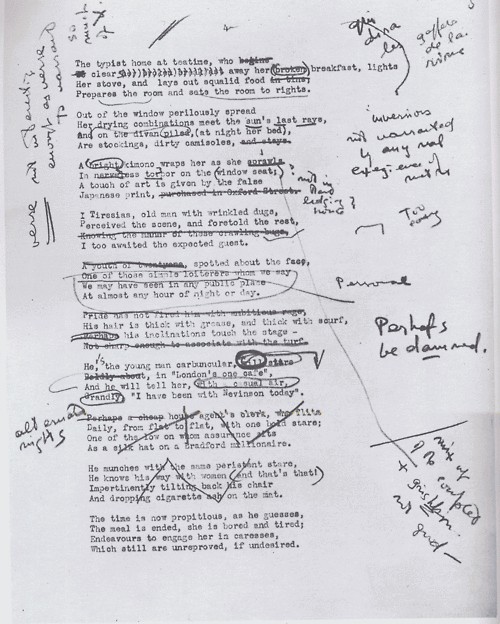
I was pleasantly surprised to get a box of great stuff in the mail from Ryan Mihaly, a frequent contributor to this blog (check out the second part of his interview with translator Ilan Stavans). Inside the handsome Penguin Classics Goethe was this little card:
I had never even heard of The Thoughtbook, Fitzgerald’s boyhood diary. Sample:
Metaphors and similes are of great value, in so far as they explain an unknown relation by a known one. Even the more detailed simile which grows into a parable or an allegory, is nothing more than the exhibition of some relation in its simplest, most visible and palpable form. The growth of ideas rests, at bottom, upon similes; because ideas arise by a process of combining the similarities and neglecting the differences between things. Further, intelligence, in the strict sense of the word, ultimately consists in a seizing of relations; and a clear and pure grasp of relations is all the more often attained when the comparison is made between cases that lie wide apart from one another, and between things of quite different nature. As long as a relation is known to me as existing only in a single case, I have but an individual idea of it—in other words, only an intuitive knowledge of it; but as soon as I see the same relation in two different cases, I have a general idea of its whole nature, and this is a deeper and more perfect knowledge.
Since, then, similes and metaphors are such a powerful engine of knowledge, it is a sign of great intelligence in a writer if his similes are unusual and, at the same time, to the point. Aristotle also observes that by far the most important thing to a writer is to have this power of metaphor; for it is a gift which cannot be acquired, and it is a mark of genius.
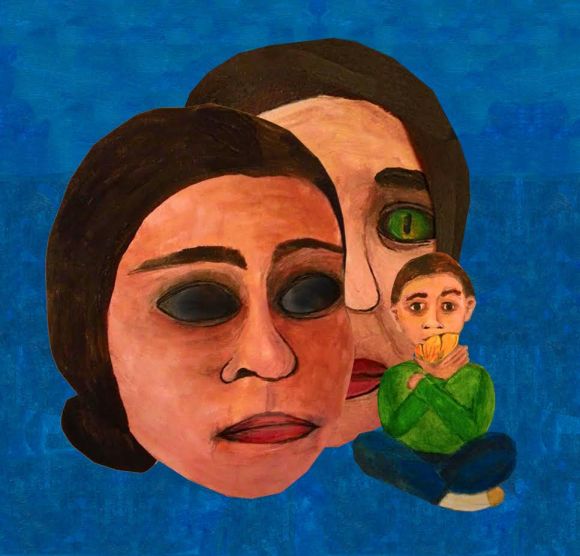
This is the 2nd part of my conversation with Ilan Stavans about The Plain in Flames, his translation of Juan Rulfo’s short story collection El Llano en Llamas. Catch up with part 1 here. Lauren Flinner made the artwork below. (Editor’s note: “Schade” is George D. Schade, who did the first English translation of Juan Rulfo’s short stories as The Burning Plain.)
The goal of putting these stories out in English is to say, “I can’t see the world without them.” I believe that I can dress the stories in a way that is truthful to the original. But now that they’re there, it is up to whomever comes to the text to be able to synchronize with the stories.
Rulfo said, upon finishing Pedro Paramo, “I couldn’t make head nor tail of it, which signaled to me that it was finished.” When did you know you were finished?
I take after Walt Whitman – I know that I am finished when I have finally forced myself to send it to the editor and begin the editorial process, and when (or if) I open it again – as you are making me do right now [laughs] – there is always a feeling of discomfort, “mm, maybe I should have done this slightly different,” because the Ilan Stavans that is sitting with you is not the Ilan Stavans of a year ago, who had the text and was reacting to life in a particular way.
A text is finished the moment the text reaches the page. There is always the temptation to retouch it. There is always the sense, in my view, that one should move forward, and what you did then is an expression of that time, and you should do other projects.
In the introduction you mention that Rulfo’s Mexican Spanish includes countless peasantisms, and that it would seem very jarring if you tried to mimic them in this era. Why did you not include them and what made them so jarring?
It is jarring because… let me transpose it just for a second into the slice of a culture that I think you will understand better. If I tried to translate a rap song from English into Spanish, I will find very quickly that there is no easy referent to the exact same culture in the Spanish speaking world, and that slang in one culture works in one way that doesn’t work in others. If I use the word “chota” in Spanish to describe police, there is no word in English that will make me convey the sense of fear of the degradation, of abuse, of disgust that chota has. “Cops” doesn’t quite work…
Pigs?
But that already brings an animalistic view here that you don’t have in Spanish. So, slang or speech that connects particularly with a region, localisms, or with a class, are very difficult to convey and you don’t want to have the wrong impression. It would have been very easy to use, for instance, language of farmers in the Midwest to recreate certain words that the peasants in Mexico in the 1950s are using. But if I had done that, what people would have thought in those words would be to connect it with Midwest America. The context would have totally been destroyed. And so you have to sometimes sacrifice geographical or cultural contexts in order to creatively convey the content of a word. You can translate words, but culture does not easily translate.
In most of those cases, would you keep the original Spanish, instead of using the jarring word?
I would keep the Spanish because I felt that the Spanish was no longer foreign. Take the word campesino. Campesino is a word that, in 1967, for Schade, might have meant “peasant”. But today if you say campesino, it is clearly a term that is used in certain parts of Mexico and Central America to denote somebody who is illiterate, who has no access to power, who has been alienated from urban society, for decades and decades. “Peasant” has a very different connotation. The word patrón is probably even a better example. Patrón could be simply “boss,” or “leader.” But the word patrón in Spanish means really… when you use “no patrón,” you really mean you are inferior to the person you are connected to. Inferior not only in a momentary way, but in terms of class, in terms of humanity, you consider yourself below that other individual. It is very difficult to look for an equivalent to patrón. And yet, the word patrón is so established that I chose to leave it in several places, because I believe that the English language readers have been exposed to it for long enough to react to it, to get the sensibility.
Reading your translation of “Luvina,” you use the poetic phrase “rumor of wind.” I read The Burning Plain to see how Schade took it – “noise” – and clearly you see this as an issue of translation.
I can tell you in general that the choice had to do with the fact that I wanted to recreate the poetry of the original, el rumor del aire, and simply “noise” wouldn’t have done it. Even though it is less clear in English, the poetry in Spanish is unavoidable.
And if you see the title… I’ll tell you. The title in Spanish has the alliteration – El Llano en Llamas. Llano. Llamas. In English, the first translation was The Burning Plain, which is so dull, so plain, so uninteresting. I immediately said I’ll do it, but it has to be The Plain in Flames, which plays with the alliteration. The Juan Rulfo Foundation said “we love it.” The publisher said “we can’t do it” – because people have already connected The Burning Plain with Rulfo, and if you change the title, you can lose readers. And I said I’m not doing that. If we don’t have“The Plain in Flames,” I won’t do it. And finally we were able to convince them. So they resisted for marketing reasons. That’s something that translators often have to deal with.
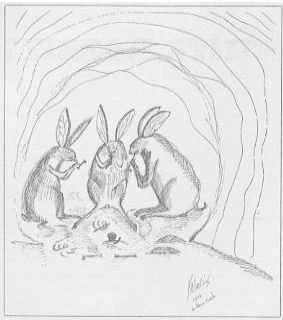
Lauren Flinner – Macario
I noticed in The Burning Plain, the titles of the stories are extremely different – “No Dogs Bark” as opposed to “You Don’t Hear Dogs Barking” in your translation – which is striking.
The Spanish title – “¿No oyes ladrar los perros?” “You don’t hear the dogs bark.” That was a perfect story! The Spanish is so challenging. You see, in Spanish, it could mean it doesn’t have a question mark. But it could almost implicitly suggest that there is a question there. “Don’t you hear the dogs barking?” And this is the story of a father who is carrying his son… it’s an astonishing story, my God, that enough would have given Rulfo a place in the history of literary classics…The father is taking the son [who is wounded]. The father really doesn’t want to take the son because he is so ambivalent at the life the son has led. He believes that the son actually killed the mother because of his behavior. But he has to take him. The son is covering his ears, and he can’t hear for that reason, and the son is supposed to be the one that would hear the dogs barking when they approach the town where they will find the doctor. But you have the impression that the father might be walking in circles, to prolong the agony. And so it could be, “Don’t you hear the dogs barking?” “You don’t hear the dogs barking.”
I would send my translation to Harold [Augenbraum, co-translator], and he would say, “are you sure of this? What has Schade done? What other options do we have here?” We would have five or six options and I would go back to my original one, try to defend it, until we finally had the one that worked best.
In the story, the father still carries the son. And the father takes some joy, I think, about making his son cry about his mother.
I have to tell you of an experience that transformed my life. Last November [2012] when the book came out, I got an invitation from a high-security prison in upstate New York. The inmates were all reading, in a class, The Plain in Flames. They wanted me to come and talk about the translation. I have never had such a rapt, passionate audience, and we spent a long time discussing that particular story. It has been said that no one understands Hamlet better than a person who has committed a crime, who has actually murdered. And in this particular case, I can tell you that this, between twenty-five and sixty year olds, all of them criminals in one way or another reading the story, transformed my way of seeing the story. They had either the burden of having killed someone, or understood that condition… and they felt the ambivalence of the father’s duty in a way that I had never seen before. It’s as if the story had been written for them.
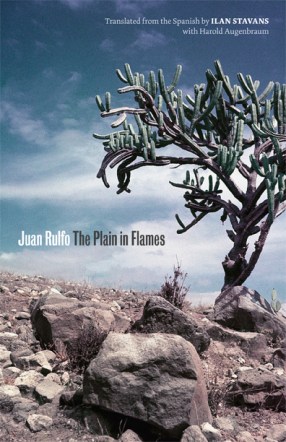
I see immense differences in the design in both translations. First, with the illustrations and the very stylized text for the story titles in The Burning Plain. One of Rulfo’s photographs graces the cover of The Plain in Flames, and it strikes me as being very similar to his writing, as you say “realismo crudo,” interested with the rawness of life. The Burning Plain almost looks like a collection of fairy tales because of this sort of design. Did you have any say in the use of font, whether or not there would be illustrations, or any other matters of design?
I admire Rulfo as a writer without reservations, even though not everything that he wrote is superb and supreme, enough of it is to put him, in my view, in that shelf of classics that ought to be read for generations. I admire him not in equal measure, but almost, as a photographer as well. His photographs, when you see them, you will realize, are about those silences, and about that sense of desolation and isolation that exists in the Mexican countryside.
I wanted, and thus I petitioned to the Juan Rulfo Foundation, to use more than one photograph, and to see if one or two, or maybe more, could be used in the interior. They told us right away no, and you can only use one on the cover. I was at first disappointed – I thought it would be beautiful for the reader to see the photographs in connection with the book, because this a visual window, by the author himself, to his own stories, unfiltered, untarnished by a translator. Photography doesn’t have a translation, it comes as you see it. But they denied it, and now I think that I am grateful that they did, because the stories are read as stories, and that’s the way Rulfo wrote them. He did not write them to be accompanied by the photographs – they are published in separate volumes.
I am thrilled that I chose the one on the cover. If I have a reservation – and my editor and I claim that reservation – it’s that the font is a little too small. I wish it was a little larger, but I did not have any control on how the book was designed in its interior. I like the spareness, the big spaces of white; I like that we didn’t have any folksy type of imagery. But the stories live or die on their own merit. The same thing is true for the translation.
The complaint that I have about the font has to do with my aging. When I was younger I could read this in an easier way. Now I still can but I can perfectly sympathize with somebody who would say, “Oh, I’m sure those are great stories but the font is too small and I can’t read them.” And I think they should be accessible also to readers who might have that challenge.
I want to ask how that makes you feel as a writer and a translator. The design of the book has an immense impact on your reading. With The Burning Plain, the book itself is such an odd shape…
You have to think, also, in the 1960’s, Latin America was seen as a factory of folklore, much more connected to that kind of mythical past than the United States, which was already moving so fast into a post-capitalist stage of society. So, this style, this design of The Burning Plain reflects the way publishers and translators were looking at Latin America in that period, and here, with The Plain in Flames, I’m happy to say that, if this is a reflection of how we see it, Latin Americans have become contemporaries with the rest of the world, and we don’t need to turn it into folk stories – we can read them as legitimate, authentic, wonderful stories the way we would read them from an author from Russia or from Italy or Egypt or any other part of the world.
I grew up in Mexico and I came at age twenty-five to the United States. It was much easier for me to translate from English into Spanish, because Spanish was a language in which I had grown up in. English is my fourth language. And so it took me years to feel comfortable in English. I have reached a certain point in my life, linguistically, that there is a symmetry between the comfort that I have in Spanish and the comfort that I have in English. For that reason, if the same invitation by an editor had come to me fifteen years ago, when Spanish was much more a powerful force in my linguistic life and English was coming second, I would have had to say no, I don’t think I’m capable of translating Rulfo into English. In 2011, this symmetry was such that I thought I could do a service to Rulfo, that probably somebody who is a native English language speaker cannot do, because for me now the two languages are balanced.
Did that symmetry with English and Spanish come in any way from reading English literature?
It comes from literally having my life cut in two. Half of my life was spent outside the United States, and half of my life now has been spent within the United States, meaning I’ve lived my life inside and outside of English. And after twenty-five years the language becomes you, and you become the language. It comes from reading, it comes from being exposed to the language, it comes from becoming that culture – I am now an American, and a Mexican… I don’t know which is which.
What was your favorite story to translate? And which is your favorite story to read?
“It’s Because We’re So Poor,” the first one that I translated, it’s the story of a boy who is sitting next to his sister and their cow is carried away by the flooded river and he’s describing how their world has collapsed and how the reputation of the family is now in question… I adore that story. I adore “You Don’t Hear Dogs Barking.” If I had to choose ten stories from any writer and do an anthology for the future where only these ten stories would be read… that story would be there.
This is the moment to say that a good short story writer has ten, fifteen, maybe less, five stories to write, and that he or she spends his or her time trying to find which of those stories are going to be final… and many of them are exercises. Many of them are rehearsals for the big crime that will be committed in the defining story. I think some of the stories come as preparations for the great stories that you have in the book. But even a not-fully-developed story by Rulfo is an incredible story.
I am in the minority in not thinking that Pedro Paramo is a better book than this. There are many who think that Pedro Paramo is his greatest contribution. I believe El Llano en Llamas is the greatest contribution. I think some stories here are eternal.









 Biblioklept