An Animated Christmas Card from Maurice Sendak

Maurice Sendak’s animated intro for the 1977 film Simple Gifts was based on an earlier design for a Christmas card  by the artist:

(Image and info via the very cool Michael Sporn Animation blog, with a hat tip to Jescie for sending me the link).

Read “Farewell Tour,” New Short Fiction from Teju Cole

Here’s the first paragraph of Teju Cole’s new short story “Farewell Tour” —

Frank Low told me this one Friday night in Times Square. He said he’d been transfixed by “Lavoisier and His Wife” at the Metropolitan Museum that past Wednesday afternoon, and in telling me about it, he had the hesitant manner of someone trying to remember the precise wording of a poem. When his words came, they came complete. He had read the wall label next to the painting and noted that 222 years had passed since it was made. The text read: “Antoine-Laurent Lavoisier (1743-1794) and His Wife (Marie-Anne-Pierrette Paulze, 1758-1836)”. The picture was, historically speaking, an intake of breath, a preparation for what was to come. Within a year after David painted it the Bastille was stormed. When it came to revolutions Low himself would rather there were none. He preferred order, lived as he liked, in a world of well-kept invoices and precise appointments, a world in which he never spent beyond his means. The Jean-Georges dinner on Tuesday night had been an unusual extravagance that he hadn’t mentioned to his wife. She might have thought it odd, rightly so, given that he hadn’t worked in three months.

Read the rest of “Farewell Tour.”

Read our review of Cole’s brilliant novel Open City.

Book Shelves #52, 12.23.2012

Book shelves series #52, fifty-second Sunday of 2012: In which, in this penultimate chapter, we return to the site of entry #1.

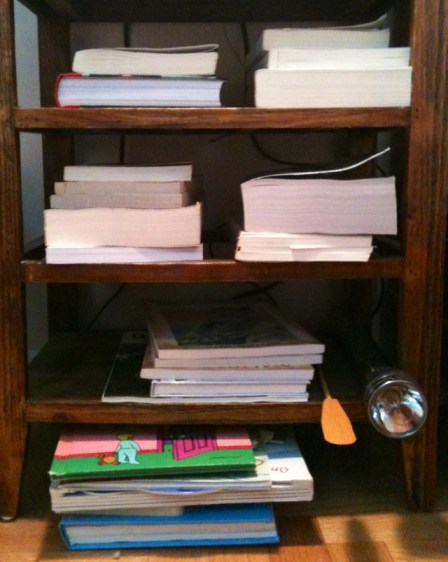
The first entry in this project was my bedside nightstand. This is what it looked like back in January:

This is it this morning:

20121223-113957.jpg

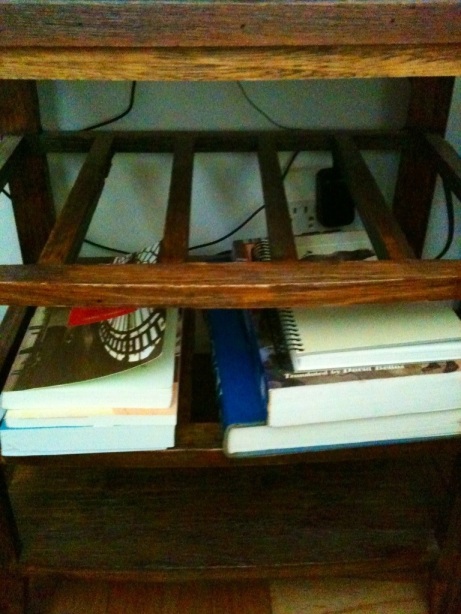
This is the major difference:

20121223-114053.jpg

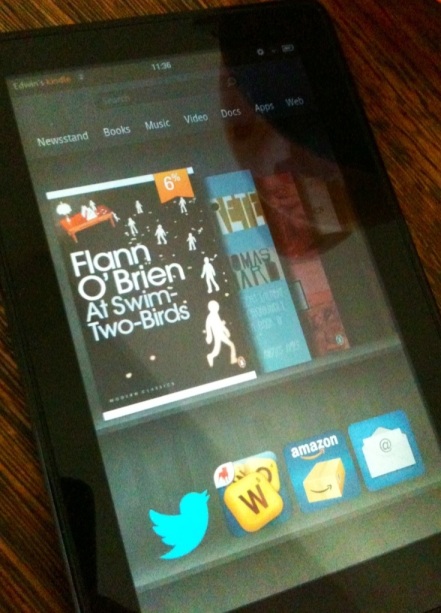
The Kindle Fire has changed my late night shuffling habits.

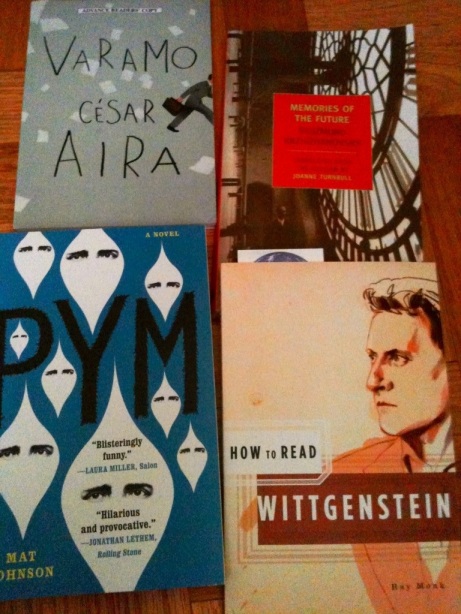
Here are the books that are in the nightstand:

20121223-114006.jpg

I read the Aira novel but completely forgot about it, which I’m sure says more about me than it.

Have no idea why this is in there:

20121223-114014.jpg

But it’s a fun book. With pictures! Sample:

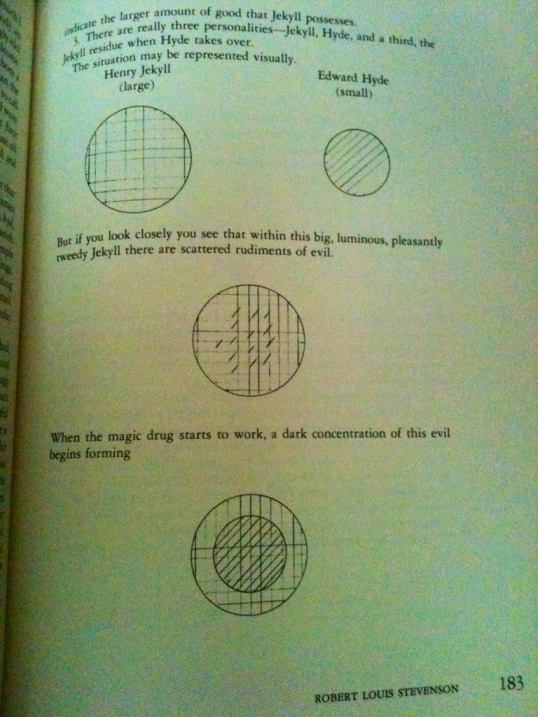
20121223-114024.jpg

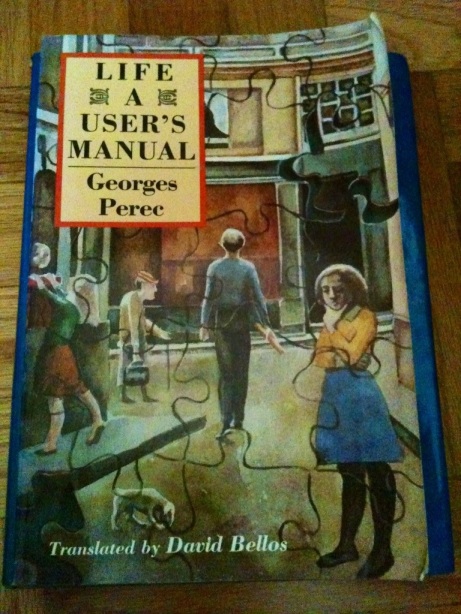
Finally, Perec’s Life A User’s Manual—this is one of my reading goals for 2013. It seems like a good way to close out this penultimate post, as one of Perec’s essays inspired this project

“Every library answers a twofold need, which is often also a twofold obsession: that of conserving certain objects (books) and that of organizing them in certain ways”

—Georges Perec, from ”Brief Notes on the Art and Manner of Arranging One’s Books” (1978)

20121223-114044.jpg

Read Nathaniel Hawthorne’s Short Story “The Christmas Banquet”

“The Christmas Banquet,” a tale from Nathaniel Hawthorne (from Mosses from an Old Manse):

“I HAVE HERE attempted,” said Roderick, unfolding a few sheets of manuscript, as he sat with Rosina and the sculptor in the summer-house–“I have attempted to seize hold of a personage who glides past me, occasionally, in my walk through life. My former sad experience, as you know, has gifted me with some degree of insight into the gloomy mysteries of the human heart, through which I have wandered like one astray in a dark cavern, with his torch fast flickering to extinction. But this man–this class of men–is a hopeless puzzle.”

“Well, but propound him,” said the sculptor. “Let us have an idea of him, to begin with.”

“Why, indeed,” replied Roderick, “he is such a being as I could conceive you to carve out of marble, and some yet unrealized perfection of human science to endow with an exquisite mockery of intellect; but still there lacks the last inestimable touch of a divine Creator. He looks like a man, and, perchance, like a better specimen of man than you ordinarily meet. You might esteem him wise–he is capable of cultivation and refinement, and has at least an external conscience–but the demands that spirit makes upon spirit, are precisely those to which he cannot respond. When, at last, you come close to him, you find him chill and unsubstantial–a mere vapor.”

Continue reading “Read Nathaniel Hawthorne’s Short Story “The Christmas Banquet””

Christmas in Shakespeare (From Thomas Firminger Thiselton-Dyer’s Folk-lore of Shakespeare)

From Thomas Firminger Thiselton-Dyer’s Folk-lore of Shakespeare:

Christmas. Among the observances associated with this season, to which Shakespeare alludes, we may mention the Christmas Carol, a reference to which is probably made in “A Midsummer-Night’s Dream” (ii. 1), by Titania: “No night is now with hymn or carol blest.”

Hamlet (ii. 2) quotes two lines from a popular ballad, entitled the “Song of Jephthah’s Daughter,” and adds: “The first row of the pious chanson will show you more.”

In days gone by, the custom of carol-singing was most popular, and Warton, in his “History of English Poetry,” notices a license granted in 1562 to John Tysdale for printing “Certayne goodly carowles to be songe to the glory of God;” and again “Crestenmas Carowles auctorisshed by my lord of London.”

In the “Taming of the Shrew” (Ind., sc. 2) Sly asks whether “a comonty is not a Christmas gambold.” Formerly the sports and merry-makings at this season were on a most extensive scale, being presided over by the Lord of Misrule. Again, in “Love’s Labour’s Lost” (v. 2), Biron speaks of “a Christmas comedy.”

As we have noticed, too, in our chapter on Plants, a gilt nutmeg was formerly a common gift at Christmas, and on other festive occasions, to which an allusion is probably made in the same scene. Formerly, at this season, the head of the house assembled his family around a bowl of spiced ale, from which he drank their healths, then passed it to the rest, that they might drink too. The word that passed among them was the ancient Saxon phrase wass hael , i. e., to your health. Hence this came to be recognized as the wassail or wassel bowl; and was the accompaniment to festivity of every kind throughout the year. Thus Hamlet (i. 4) says: “The king doth wake to-night, and takes his rouse, Keeps wassail.” And in “Love’s Labour’s Lost” (v. 2), Biron speaks of: “wakes and wassails, meetings, markets, fairs.” In “Macbeth” (i. 7), it is used by Lady Macbeth in the sense of intemperance, who, speaking of Duncan’s two chamberlains, says: “Will I with wine and wassail so convince, That memory, the warder of the brain, Shall be a fume, and the receipt of reason A limbeck only.” In “Antony and Cleopatra” (i. 4), Cæsar advises Antony to live more temperately, and to leave his “lascivious wassails.” In the same way, a “wassail candle” denoted a large candle lighted up at a festival, a reference to which occurs in “2 Henry IV.” (i. 2): “Chief-Justice. You are as a candle, the better part burnt out. Falstaff. A wassail candle, my lord; all tallow.”

A custom which formerly prevailed at Christmas, and has not yet died out, was for mummers to go from house to house, attired in grotesque attire, performing all kinds of odd antics. Their performances, however, were not confined to this season. Thus, in “Coriolanus” (ii. 1) Menenius speaks of making “faces like mummers.”


Tom McCarthy & D.T. Max Discuss David Foster Wallace

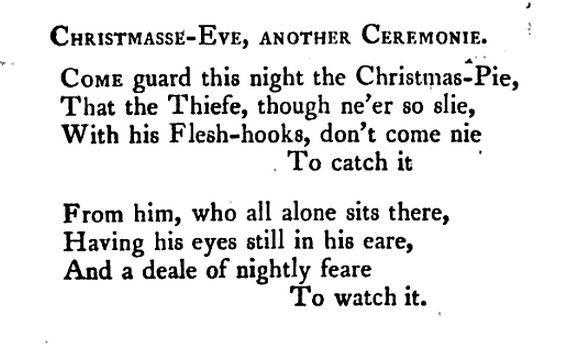
“Christmasse-Eve, Another Ceremonie” — Robert Herrick

herrick

“The Mouse” — Saki

“The Mouse” — Saki

Theodoric Voler had been brought up, from infancy to the confines of middle age, by a fond mother whose chief solicitude had been to keep him screened from what she called the coarser realities of life. When she died she left Theodoric alone in a world that was as real as ever, and a good deal coarser than he considered it had any need to be. To a man of his temperament and upbringing even a simple railway journey was crammed with petty annoyances and minor discords, and as he settled himself down in a second-class compartment one September morning he was conscious of ruffled feelings and general mental discomposure.

He had been staying at a country vicarage, the inmates of which had been certainly neither brutal nor bacchanalian, but their supervision of the domestic establishment had been of that lax order which invites disaster. The pony carriage that was to take him to the station had never been properly ordered, and when the moment for his departure drew near, the handyman who should have produced the required article was nowhere to be found. In this emergency Theodoric, to his mute but very intense disgust, found himself obliged to collaborate with the vicar’s daughter in the task of harnessing the pony, which necessitated groping about in an ill-lighted outbuilding called a stable, and smelling very like one – except in patches where it smelled of mice. Without being actually afraid of mice, Theodoric classed them among the coarser incidents of life, and considered that Providence, with a little exercise of moral courage, might long ago have recognised that they were not indispensable, and have withdrawn them from circulation.

As the train glided out of the station Theodoric’s nervous imagination accused himself of exhaling a weak odour of stable yard, and possibly of displaying a mouldy straw or two on his unusually well-brushed garments. Fortunately the only other occupation of the compartment, a lady of about the same age as himself, seemed inclined for slumber rather than scrutiny; the train was not due to stop till the terminus was reached, in about an hour’s time, and the carriage was of the old-fashioned sort that held no communication with a corridor, therefore no further travelling companions were likely to intrude on Theodoric’s semiprivacy. And yet the train had scarcely attained its normal speed before he became reluctantly but vividly aware that he was not alone with the slumbering lady; he was not even alone in his own clothes. Continue reading ““The Mouse” — Saki”

Watch Samuel Beckett’s Endgame (Full Filmed Production)

The Junky’s Christmas — William S. Burroughs

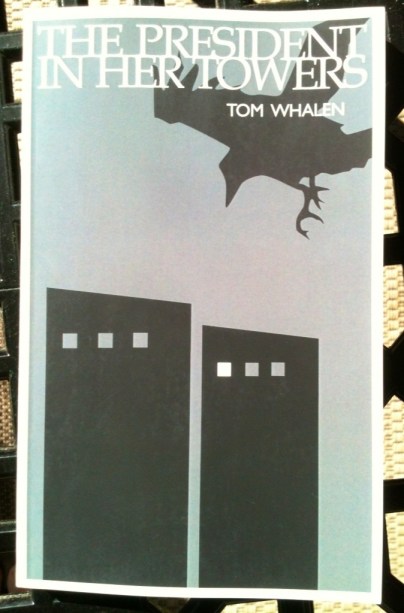
The President in Her Towers (Book Acquired, 12.20.2012)

20121221-122159.jpg

I just read the first few chapters of The President in Her Towers, Tom Whalen’s satire of academia—good stuff: short, punchy chapters that illustrate the reality of academia in all its paranoid surreality. Here’s publisher Ellipsis Press’s blurb:

Through the corridors of the university’s Humanities and Sciences Towers, rumors are swirling about the President: her bizarre decrees, her midnight meetings, her strange projects (the Head-in-Progress, the Activated Eye, the Gestation Chamber). The President’s dedicated personal assistant, Thomas (a.k.a. Herr Abjectus), is charged with investigating and reporting on these and other matters, but it won’t be easy—especially since the President has disappeared. And now there is a new rumor: that she has been marked for assassination


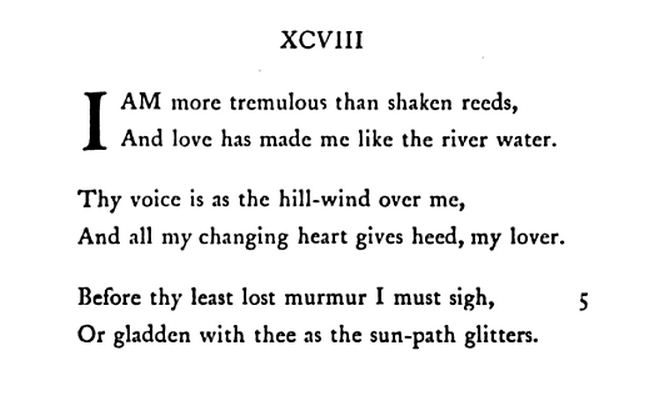
“I am more tremulous than shaken reeds” — Sappho

saph

Death of Sappho — Gustave Moreau

Future Now, a 1986 Filmed Interview with JG Ballard

“Pain in Pleasure” — Elizabeth Barrett Browning

pip

A Riff on What I Read (And Didn’t Read) in 2012

20121218-132128.jpg

I didn’t really read that many new books—by which I mean books published in 2012—this year.

The highlight of the new books I did read was Chris Ware’s Building Stories, the moving story of the lives of several people (and a bee!) who live in the titular building (and other places. And other buildings. Look, it’s difficult to describe). Building Stories is a strange loop, a collection of 14+ elements (the big box it comes in is part of the puzzle) that allows the reader to reconstruct the narratives in different layers.

I also really dug the second installment of Charles Burns’s trilogy, The Hive; Burns and Ware are two of the most talented American writers working right now, suggesting that some of the most exciting stuff happening in American literature is happening in comic books.

Speaking of second installments in ongoing trilogies, I also listened to Hilary Mantel’s Bring Up the Bodies, which I liked, and read Lars Iyer’s Dogma and liked it as well—sort of like Beavis & Butthead Do America by way of Samuel Beckett.

I read Dogma at the beach the same week I read Michel Houellebecq’s The Map & The Territory, an uneven but engaging novel about art; the novel eventuually shifts into a strange murder procedural before exploring a fascinating vision of what a post-consumer future might look like. I dig Houellebecq and look forward to whatever he’ll spring on us next.

Another strange book I liked very much was Phi by Giulio Tononi, an exploration of consciousness written as a kind of Dante’s Inferno of the brain. A beautiful and perhaps overlooked book of 2012.

Indie presses in general tend to get overlooked—not in the sense that their books don’t have a community of readers, but in that their books don’t always reach the wider audience they deserve. I liked new books this year by Matt Bell (Cataclysm Baby), Matt Mullins (Three Ways of the Saw), and Jared Yates Sexton (An End to All Things). These books are all very different in style and content, but all marked by precise, unpretentious writing. Good stuff.

Like I said though, I didn’t read that many books published in 2012—even when I intended to. Like George Szirtes’s English translation of László Krasznahorkai’s novel Satantango, for instance. I was right in the middle of something when I got my review copy, and by the time I started it the hype surrounding it was almost unbearable—the sort of palate-clouding noise (to mix and misuse metaphors) that deafens a fair reading. (To be clear: I blame myself. I could easily refrain from Twitter and quit following lit news online). By the time Hari Kunzru documented the hype in a mean-spirited (but hilarious) article forThe Guardian, I knew I’d have to set Satantango aside for a bit. It’s worth noting here that Hari Kunzru’s own novel Gods without Men had been lingering in my to read stack for some time at that point, but his Satantango article managed to get it shelved. Still, I’m interested in reading it—maybe sometime late next year.

There were plenty of top listed writers who put out books this year that I probably would’ve been excited to read six or seven years ago or at least feel obligated to read and write about two or three years ago. But by 2012 I just don’t care anymore. At the risk of sounding overly dismissive (not my intention), I just can’t make time for another middling Michael Chabon novel, or another bloated tome from Zadie Smith, or another empty exercise in style from Junot Diaz, or another whatever from Dave Eggers.

Most of the great new stuff I read in 2012 was really just playing catch up to 2011—I loved Teju Cole’s Open City, found Nicholson Baker’s House of Holes to be an amusing diversion, and declared Denis Johnson’s Train Dreams a perfect novella. I also read Adam Johnson’s The Orphan Master’s Son, and used it, along with Jeffrey Eugenides’s The Marriage Plot as a kind of springboard to discuss lit criticism (which everyone in my particular echo chamber wanted to spar about this year) and what I want from books these days.

Two books I pretty much hated: Joshua Cody’s clever but empty memoir [sic] and Alain de Botton’s facile self-help book Religion for Atheists.

On the whole though, most of what I read in 2012 was fantastic and most of what I read in 2012 was published before 2012.

The major highlight of the year was finally reading William Gaddis’s novels The Recognitions and J R. I also read Gaddis’s posthumous novella AgapēAgape, an erudite rant that purposefully echoes the work of Thomas Bernhard, another cult writer I finally got to in 2012. His novels Correction and The Loser challenged me, made me laugh, and occasionally disturbed me.

And while I’m on Bernhard, perhaps I should squeeze in the collection I read by one of his predecessors, Robert Walser, and the poetry collection (After Nature) I read by one of his followers, W.G. Sebald. Both were excellent. And while I’m squeezing stuff in—or perhaps showing how writers lead me to read other writers—I’ll admit that I hadn’t read Thomas Browne’s Urn Burial (referenced heavily in Sebald’s The Rings of Saturn) until this year.

Another book that I finally got to this year that blew me away was John Williams’s lucid and sad novel Stoner. Reading Stoner, produced one of those can’t-believe-I-haven’t-read-it-before moments, which I experienced again even more intensely with Flann O’Brien’s The Third Policeman, a surreal comic masterpiece which may be the best book I read in 2012. I also finally read—and was blown away by—Fyodor Dostoevsky’s Crime and Punishment (why had I not read it yet? Maybe I read it before. Not sure. In any case, if I did read it before it’s clear to me that I didn’t really read it). I took another shot at Marcel Proust but it didn’t take. Again.

Clarice Lispector received some much-deserved attention from the English-speaking world this year when New Directions released four new translations of her work. I found her novella The Hour of the Star sad, funny, and captivating. Also on the novellas-by-South-Americans: I’m working my ways through Alvaro Mutis’s Maqroll novellas and they are fantastic.

I also finally got to David Markson’s so-called “note card novels,” devouring them in a quick stretch. I reviewed the last one, The Last Novel.Markson’s novels are often called “experimental,” a term I kind of hate, but perhaps serves as easy tag for many of the novels I enjoyed best this year, including Ben Marcus’s The Age of Wire and String and Barry Hannah’s hilarious tragedy Hey Jack!

Hey, did you know David Foster Wallace wrote an essay on David Markson? The previous sentence is an extremely weak attempt to transition to Both Flesh and Not, a spotty collection from the late great writer; it showcases some brilliant moments along with undercooked material and a few throwaways probably better left uncollected. I fretted about the book on Election Night.

The posthumous book mill also kept pumping out stuff from Roberto Bolaño, including an unfinished novel called The Woes of the True Policeman that seems like a practice sketch for 2666 (I haven’t read Woes and don’t feel particularly compelled to). I did read and enjoy The Secret of Evil, a book that might not be exactly essential but nevertheless contains some pieces that further expand (and darken and complicate) the Bolañoverse. Going back to that Bolañoverse was a highlight of the year for me—rereading 2666proved to be tremendously rewarding, yielding all kinds of new grotesque insights. I also reread The Savage Detectives, and while it’s hardly my favorite by RB, I got more out of it this time.

I also revisited The Hobbit this year and somehow decided it’s a picaresque novel. Definitely a picaresque: Blood Meridian, which I reread as well. In fact, I’ve reread it at least once a year since the first time I read it, and it gets funnier and richer and more devastating with each turn. I also reread Herman Melville’s “Bartleby” and tried to make sense out of it. I will reread Moby-Dick next year, although it’s not “Bartleby” that sparked the desire—chalk it up to Charles Olson’s amazing study Call Me Ishmael.

Olson’s study reminds me to bring up some of the nonfiction I enjoyed this year: Stephen Bronner’s Modernism at the Barricades, Robert Hughes’s Goya biography, the parts of William T. Vollmann’s Imperial that I read, Patti Smith’s memoir Just Kids,and big chunks of William Gass’s collection Finding a Form.

Perhaps the most significant change in my reading habits this year was embracing an e-reader. I got a Kindle Fire for Christmas last year and wound up reading from it—a lot. About half the books I read this year I read on the Kindle. I also read lots of comics on it with my daughter, including all of Jeff Smith’s Bone, much of Tintin, and all of Carl Barks’s Donald Duck stuff. (I also read several hard to find volumes from Moebius via the Kindle).

And while I love my Kindle and it’s become my go-to for night reading (it’s lightweight and self-illuminating), I can’t see it replacing physical books. To return to where I started: Chris Ware’s Building Stories, an innovative, sprawling delight simply would not be reproducible in electronic form. Ware’s book (if it is a book (which it is)) reminds us that the aesthetics of reading—of the actual physical process of reading—can be tremendously rewarding as a tactile, messy, sprawling experience.

Perhaps because I’ve freed myself from the anxiety of trying to write on this blog about everything that I read, and perhaps because I’ve freed myself from trying to write traditional reviews on this blog, and perhaps because I’ve freed myself from trying to cover contemporary literary fiction on this blog—perhaps because of all of this, I’ve enjoyed reading more this year than I can remember ever having enjoyed it before.

Watering Heaven (Book Acquired, Some Time Back in October)

20121217-104453.jpgThe stories Peter Tieryas Liu’s Watering Heaven move at a sharp clip, propelled by realistic dialogue set against a surreal backdrop. “Every time I have sex, I lay an egg,” one character tells another in the opening scene of “Chronology of an Egg.” The strange romance culminates in a fantastic punchline to this magical set-up. The protagonist of “The Wolf’s Choice,” facing an existential crisis, transforms his outward appearance by extensive plastic surgery. And in “Rodenticide”—well, let me just share a paragraph of Liu’s prose:

He dreamed of rats. One named Zhucheng lost her tail—a pink, gnarled tube with a texture like a gizzard. She was crying a shrill homily and there were flags with emblems of rat ears. He realized all rats were psychics with more understanding of humans than humans themselves—a homeopathic conglomeration of half-defunct diseases. Telepathy is my disease, Zhucheng screamed, I know you’re planning our mass extermination!

 “Rodenticide” is just one example of Liu’s strange mix of absurdity, realism, and magic. The stories of Watering Heaven suggest a world where comedy and romance might tip over dramatically into horror or despair at any moment. Good stuff.