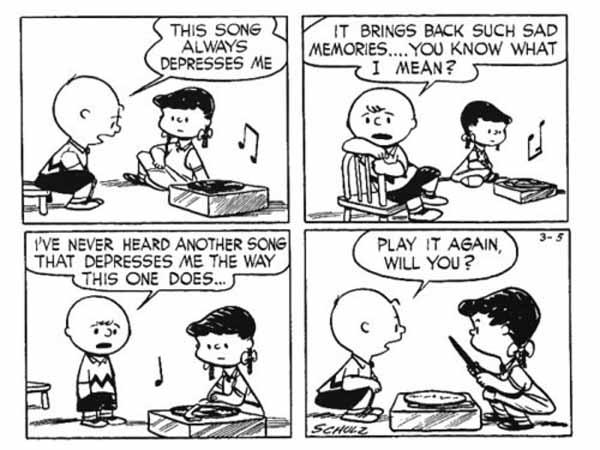
Depresses me (Peanuts)

HeartBreak-Peanuts-1

The honest critic (Ezra Pound)

image

From ABC of Reading. 

Fried Egg — Tjalf Sparnaay

Fried-Egg_2014_80x80cm

Nathaniel Hawthorne’s journal entry for September 1st, 1838

September 1st.–Last evening, during a walk, Graylock and the whole of Saddleback were at first imbued with a mild, half-sunshiny tinge, then grew almost black,–a huge, dark mass lying on the back of the earth and encumbering it. Stretching up from behind the black mountain, over a third or more of the sky, there was a heavy, sombre blue heap or ledge of clouds, looking almost as solid as rocks. The volumes of which it was composed were perceptible by translucent lines and fissures; but the mass, as a whole, seemed as solid, bulky, and ponderous in the cloud-world as the mountain was on earth. The mountain and cloud together had an indescribably stern and majestic aspect. Beneath this heavy cloud, there was a fleet or flock of light, vapory mists, flitting in middle air; and these were tinted, from the vanished sun, with the most gorgeous and living purple that can be conceived,–a fringe upon the stern blue. In the opposite quarter of the heavens, a rose-light was reflected, whence I know not, which colored the clouds around the moon, then well above the horizon, so that the nearly round and silver moon appeared strangely among roseate clouds,–sometimes half obscured by them.

A man with a smart horse, upon which the landlord makes laudatory remarks. He replies that he has “a better at home.” Dressed in a brown, bright-buttoned coat, smartly cut. He immediately becomes familiar, and begins to talk of the license law, and other similar topics, making himself at home, as one who, being much of his time upon the road, finds himself at ease at any tavern. He inquired after a stage agent, named Brigham, who formerly resided here, but nowhas gone to the West. He himself was probably a horse-jockey.

An old lady, stopping here over the Sabbath, waiting for to-morrow’s stage for Greenfield, having been deceived by the idea that she could proceed on her journey without delay. Quiet, making herself comfortable, taken into the society of the women of the house.

Nathaniel Hawthorne’s journal entry for September 1st, 1838. From Passages from the American Note-Books.

“Times Square” — Destroyer

“Gabriel-Ernest” — Saki

“Gabriel-Ernest”

by

Saki


“There is a wild beast in your woods,” said the artist Cunningham, as he was being driven to the station. It was the only remark he had made during the drive, but as Van Cheele had talked incessantly his companion’s silence had not been noticeable.

“A stray fox or two and some resident weasels. Nothing more formidable,” said Van Cheele. The artist said nothing.

“What did you mean about a wild beast?” said Van Cheele later, when they were on the platform.

“Nothing. My imagination. Here is the train,” said Cunningham.

That afternoon Van Cheele went for one of his frequent rambles through his woodland property. He had a stuffed bittern in his study, and knew the names of quite a number of wild flowers, so his aunt had possibly some justification in describing him as a great naturalist. At any rate, he was a great walker. It was his custom to take mental notes of everything he saw during his walks, not so much for the purpose of assisting contemporary science as to provide topics for conversation afterwards. When the bluebells began to show themselves in flower he made a point of informing every one of the fact; the season of the year might have warned his hearers of the likelihood of such an occurrence, but at least they felt that he was being absolutely frank with them.

What Van Cheele saw on this particular afternoon was, however, something far removed from his ordinary range of experience. On a shelf of smooth stone overhanging a deep pool in the hollow of an oak coppice a boy of about sixteen lay asprawl, drying his wet brown limbs luxuriously in the sun. His wet hair, parted by a recent dive, lay close to his head, and his light-brown eyes, so light that there was an almost tigerish gleam in them, were turned towards Van Cheele with a certain lazy watchfulness. It was an unexpected apparition, and Van Cheele found himself engaged in the novel process of thinking before he spoke. Where on earth could this wild-looking boy hail from? The miller’s wife had lost a child some two months ago, supposed to have been swept away by the mill-race, but that had been a mere baby, not a half-grown lad. Continue reading ““Gabriel-Ernest” — Saki”

Temptation of St Anthony — Bernardo Parentino

Bernardino_Parenzano_-_Temptations_of_St_Anthony_-_WGA17016

Reviews and riffs of August, 2015 (and an unrelated octopus)

I don’t like August and I’m glad it’s over.

I only wrote a few riffs and reviews in August, failing to write at length about Gordon Lish’s Cess and Victor Hussenot’s The Spectators and Vladimir Nabokov’s Pale Fire. Also: Neal Stephenson’s novel The Diamond Age, which I audited the audiobook of—great stuff, a novel that posits the book as a primary and insuperable technology. And some films too—Michael Mann’s Thief (amazing); Quest for Fire (why were the Baby Boomers so obsessed with cave people?); Ex Machina (a well-acted design-porn riff on Bluebeard that has no real ideas about its central theme, human consciousness).

I also watched and loved and didn’t write about the second season finale of True Detective—loved it—a tragic hyperbole, a big exclamation point, a sympathetic punchline to the season’s paternal anxieties. I found the final shot unexpectedly moving—the season’s female leads moving through the traffic of humanity, strapped with a child, knives, the future.

In August—

I riffed on season 2 of True Detective, arguing for its merits as a neon noir satire.

Ryan Chang and I talked about New American Stories, an anthology edited by Ben Marcus. We riffed on the selections, scope, and the first story, Saïd Sayrafiezadeh’s “Paranoia.”

I wrote a barely-coherent, probably incoherent review of Philip K. Dick’s novel Martian Time-SlipThe sub(or is it super?)text of the review is that I am a Permanently Paranoid American.

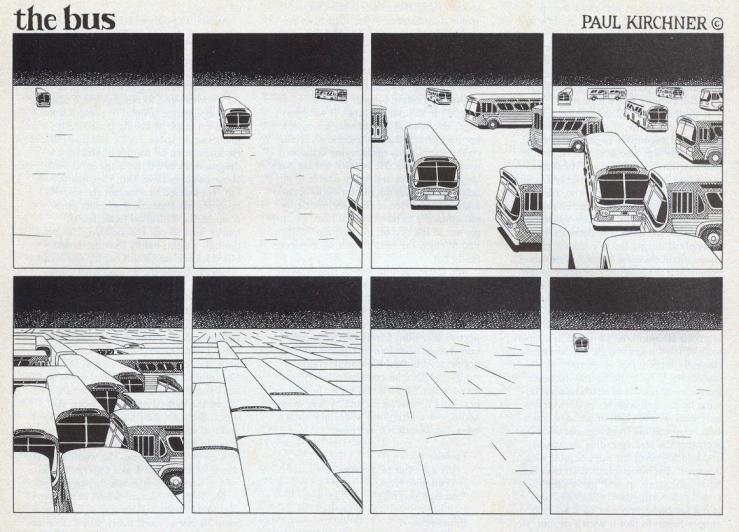
I also wound up writing a bit on Paul Kirchner’s trip strip The Bus yesterday. For years now, I’ve run some kind of regular Sunday post to anchor the site—it was death masks for a while, book shelves after…maybe something else I’m forgetting now (?)—but running The Bus was the most fun I had.

I’m not sure what I’ll run this Sunday for a new series, but something serialish so…

Promised octopus, by Utagawa Kuniyoshi—


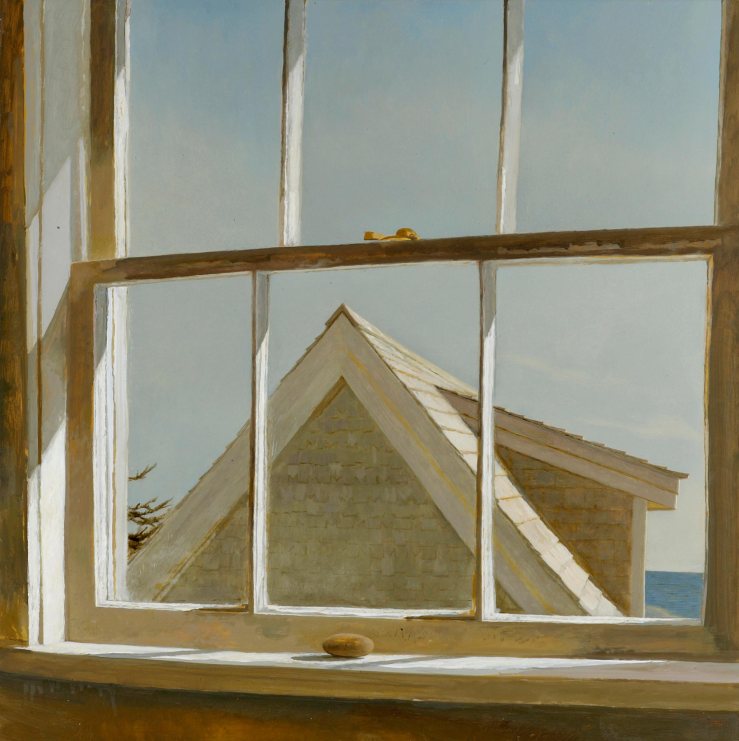
The End of Summer — Bo Bartlett

2006-the-end-of-summer-lg

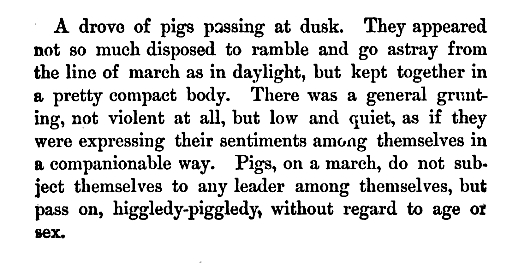
Note on pigs (From Nathaniel Hawthorne’s August 31, 1838 journal entry)

Screenshot 2015-08-31 at 3

Nankai Plum — Totoya Hokkei

RISDM 56-039-52

Mrs. Abrams in Paris — Lucien Abrams

display_image (2)

RIP Wes Craven

RIP Wes Craven, 1939-2015

Like a lot of people my age (I was born in 1979), I grew up alternately seeking out and then trying to look away from snippets of Wes Craven films—posters, previews, surreptitious late-night cable screenings—hell, even Mad Magazine parodies. Nightmare fuel, sometimes glimpsed through webbed fingers. Was it A Nightmare on Elm Street or Swamp Thing I saw first, at 9 or 10, probably on the USA network? I know I didn’t see his cult classics until later, until I was in college—The Last House on the Left and The Hills Have Eyes. By then I’d seen the Nightmare on Elm Street films a few times in their raw VHS glory. My favorite is still Dream Warriors. And of course I saw Scream and its sequels in the theater—we loved it, thought it so clever, so meta! But my favorite Craven film by far is The People Under the Stairs, a 1991 dark fable that summarized Reagan’s eighties. Predatory capitalism as horror. Anyway, dude was a legend and his films will live on, both in and of themselves, but also as the generative material for films yet to come.

Gravure, Uno — Wilfredo Lam

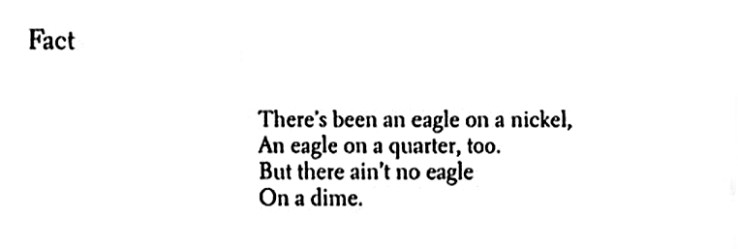
“Fact” — Langston Hughes

Screenshot 2015-08-30 at 6

Ishmael Reed (Book acquired, 8.20.2015)

image

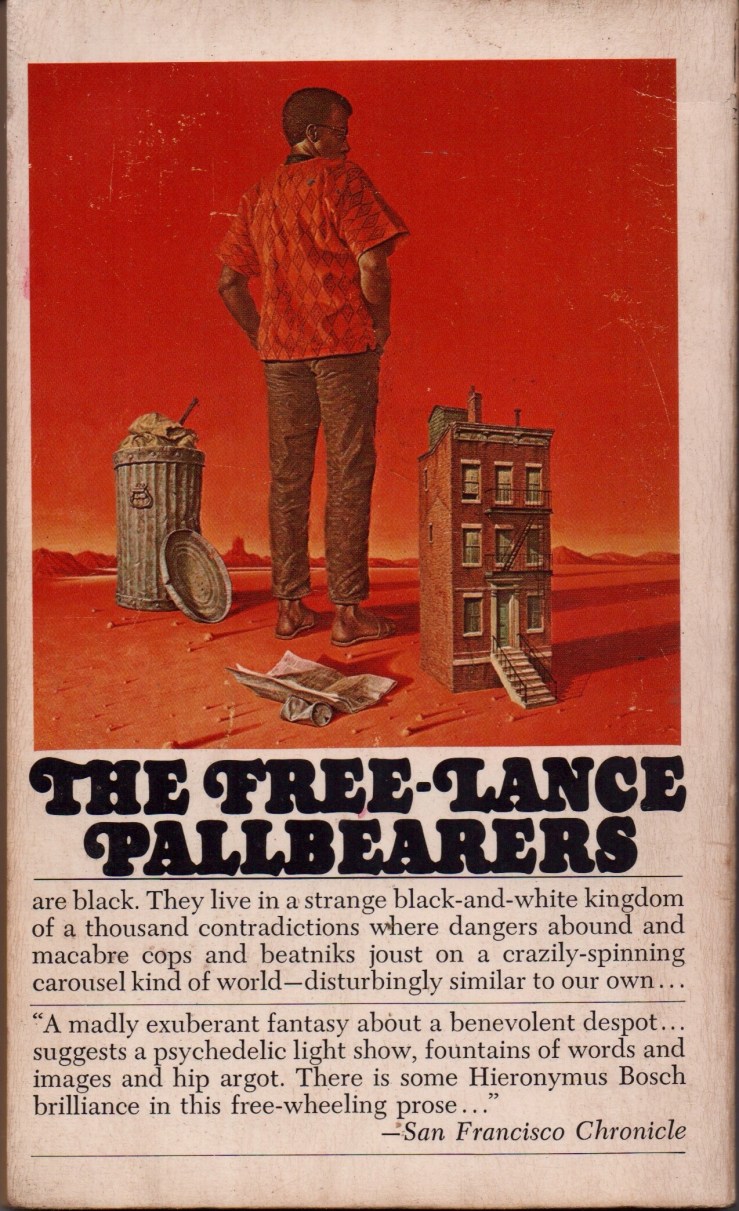
I love love love the cover of this Ishmael Reed mass market paperback Bantam edition of The Free-Lance Pallbearers. image

The Bus, Paul Kirchner’s marvelous and surreal comic strip trip

wccAP24 - Imgur

For the past year, I’ve run a strip from Paul Kirchner’s cult classic The Bus each Sunday. The strips come from an album posted at Imgur full of high quality scans. I posted the last scan last week.

The Bus originally ran in Heavy Metal from 1979-1985; Kirchner’s done a few  over 40 new strips over the past few years, as he notes in a recent memoir-piece at The Boston GlobeThe new strips will be collected in The Bus 2 from Editions Tanibis. Editions Tanibis also has collected the original run of The Bus in an edition that’s more complete than the Imgur page.

Screenshot 2015-08-30 at 11.51.44 AM

I’ve enjoyed posting the strips tremendously. I first saw a few strips at an image forum I frequent, and quickly found the Imgur album. Posting one each Sunday was my way of, well, not bingeing on them.

WQlfiuH - Imgur

The Bus is a profound strange wonderful trip. Kirchner’s visions often evoke Escher’s paradoxes, and the best of his strips make us attend closely to what we’d otherwise dismiss. The Bus is subtle and sly, occasionally (very occasionally) dark, but also, I would argue, sensitive—there’s something deeply endearing about the strip’s central human protagonist, an often passive (even hapless) passenger, a kind of late-20th century Everyman. Continue reading “The Bus, Paul Kirchner’s marvelous and surreal comic strip trip”