

There are two distinct ironies in the title of George V. Higgins’s landmark 1970 novel The Friends of Eddie Coyle. The first is the word “friends” to describe the collection of folks on both sides of the law who Coyle tries to get over on in order to get out of an upcoming prison sentence (of course, most of these folks are looking to use or set up Coyle in turn). The second irony is that Eddie Coyle (aka Eddie Fingers aka “the stocky man”) is not so much the headliner here as he is the catalyst in a sharp and gritty tale of Boston gangsters, gunrunners, student radicals, cops, state police, and federal agents.
Like David Simon did three decades later in his Baltimore opus The Wire, Higgins throws his audience into the deep end. Coyle features almost no exposition. Instead Higgins, a former U.S. Attorney, forwards his intricate and fast-paced plot using machine-gun dialogue. While many crime writers fall for the lure of hyperbolic argot, Higgins’s dialogue rings very true and very raw. He trusts the reader to sort out the complex relationships between hustlers and dupes, cops and finks from their conversations alone; the rest of the prose is reserved for tight, cinematic descriptions of gritty urban Boston at the end of the 1960s. The imagery is straight out of a Scorcese film, and like that director, Higgins has a wonderful gift for showing his audience action without getting in the way. Coyle features a description of a bank robbery that is so clean, precise, and sharp that I wouldn’t be surprised to hear that someone somewhere had used it as a how-to manual.
Higgins also spares authorial intrusion when it comes to a moral voice in his novel. There are certainly bad guys here, to be sure, but they are complex and human, just like the cops and feds who hunt them. In this sense, Coyle is the prototype of a type of crime fiction that came to rise in the cinema of the ’70s–gritty actioners that viewed crime and punishment through a lens of absolute ambiguity. At the same time, Coyle doesn’t unravel into a mere shaggy dog story–there’s a definite conclusion to the story here, even if it doesn’t satisfy the district attorney who tries to make sense of it all (like, in a metaphysical sense) at the end.
I’ve read more crime fiction in the past year than I ever have before, inspired perhaps by “The Part About the Crimes” in Bolaño’s 2666 or Jonathan Lethem’s forays into noir. I wrote a little bit about this the other week when I praised Denis Johnson’s noveau-noir exercise Nobody Move for its purity and its “willingness to be what it is” (whatever that means). (The tone of Nobody Move is downright lighthearted next to Coyle. Not that they need to be compared–I enjoyed both very much). What I did not directly address in that post is my own prejudice against genre fiction, a prejudice that inflamed me in my early teens to such a degree that I probably outright disregarded a lot of great writing. But there’s always more great writing out there than one can read in a lifetime, so why dwell on the past? Suffice to say that The Friends of Eddie Coyle should correct any prejudicial notions of the limits of crime fiction. Highly recommended.
The Friends of Eddie Coyle 40th Anniversary Edition with a new introduction by Dennis Lehane is new this month from Picador.

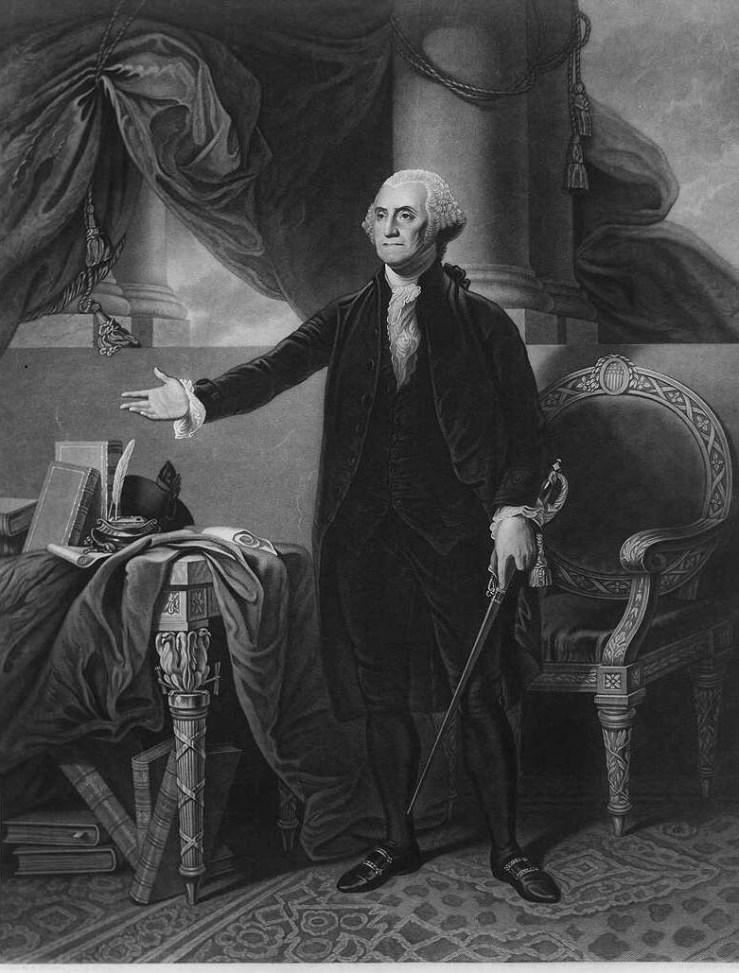 George Washington was a biblioklept.

 Sylvia Beach was the nexus point for Modernist and ex-pat literature for much of the first half of the twentieth century, running the Left Bank bookstore Shakespeare & Company until the Nazi occupation of Paris in 1941. She was the first publisher of Joyce’s Ulysses, she translated Paul Valéry into English, and was close friends to a good many great writers, including William Carlos Williams, Ezra Pound, H.D., and Ernest Hemingway. In The Letters of Sylvia Beach, editor Keri Walsh compiles many of Beach’s letters from 1901 to just before her death in 1962. Framed by a concise biographical introduction and a useful glossary of correspondents, Letters reveals private insights into a fascinating literary period. There’s a sweetness to Beach’s letters, whether she’s inviting the Fitzgeralds to come to a dinner party or asking Richard Wright (“Dick”) how much he thinks a fair price for a record player is. The Letters of Sylvia Beach is out now from
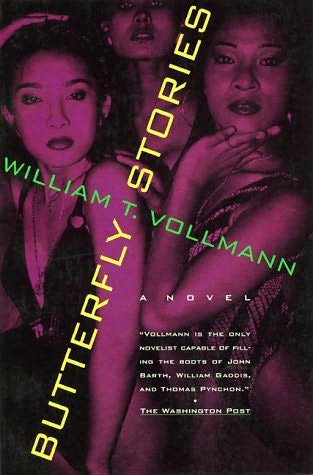 I’m a couple of chapters into William T. Vollmann’s 1993 novel Butterfly Stories, one of his (three? four? Dude’s prolific) books about prostitution. The bullied butterfly grows up to be a boy who wants to be a journalist and then a journalist/inept sex tourist in southeast Asia. Good stuff. Here’s a mordantly elegant passage:
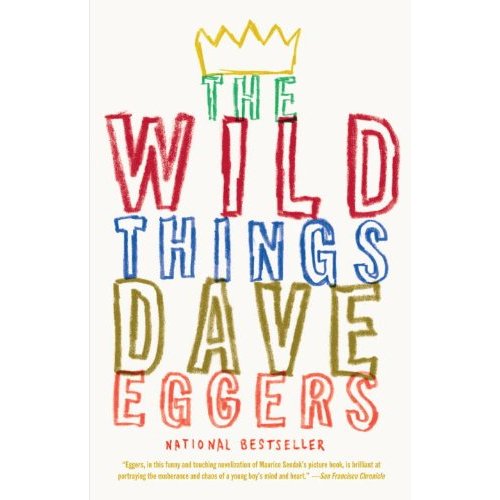 Been working through my reader’s copy of Dave Eggers’s The Wild Things, new in trade paperback from Vintage. I’m having a hard time envisioning a kind of review of the book that escapes the context of the book; that it’s a novelization of a movie script of a Maurice Sendak book of maybe a few dozen words. I loved that book growing up, so no reason that it should be adapted into a feature film, but hoped for the best due to Eggers’s involvement and the fact that the incomparable Spike Jonze was at the rudder. Or helm. Or whatever naval metaphor you wish. Anyway, I absolutely hated the movie–it was mostly melancholy and downright depressing at times. Whereas Sendak’s book channels the joys of transgressive energy while reiterating the need for stable familial order, Jonze’s movie was all sorrow and loss, the hangover of youth, each ecstasy overshadowed in darkness. Too much yin, not enough yang. Anyway. I’ll try to give the book its proper, fair due on its own terms without all that baggage. Full review forthcoming.





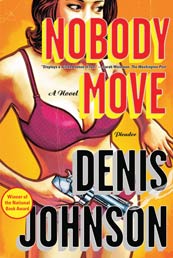 Denis Johnson’s Nobody Move is a tight snare drum of a comedy crime novel. Jimmy Luntz, still decked out in his white barbershop chorus tux (don’t ask) gets into trouble with a big gorilla he owns money too. On the run, he meets smoldering bombshell Anita. More trouble ensues. Nobody Move, originally serialized in Playboy, is a dark, funny genre exercise propelled by Johnson’s sharp dialogue and keen eye for detail. Johnson’s restraint and economy demonstrate writerly chops, but its his story and his characters that made me stay up too late reading last night.
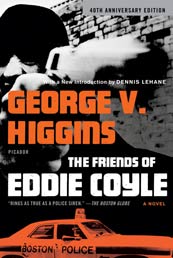 I’m kind of embarrassed that I’d never heard of George V. Higgins’s seminal crime novel, The Friends of Eddie Coyle, the story of a down-on-his luck gunrunner trying to get a break on a three-year sentence. Picador’s new edition celebrates the book’s 40th anniversary. Higgins’s electric dialogue thrusts the reader right into the action, trading narrative clarity for a smoky milieu of backroom deals and gritty alleys. But my phrasing here sounds way too corny and trite. Forgive me, I don’t really know how to write about good crime fiction because I’m so unused to it. I’ll lazily favorably compare The Friends of Eddie Coyle to David Simon’s Baltimore crime epic The Wire.
 I’ve been too engrossed with Coyle and Nobody Move the past few days to do more than skim over Clancy Martin’s How to Sell, a novel about grifters and scam artists in the jewelery world, but I did read and very much enjoy its first chapter, where the protagonist pawns his mother’s wedding ring (“the only precious thing she had left”) and yet still manages to keep reader sympathy (mine, at least). Martin worked for years in the fine jewelery business. He also translates Nietzsche and Kierkegaard. Zadie Smith says of How to Sell: “It’s a little like Dennis Cooper with a philosophical intelligence, or Raymond Carver without hope. But mostly it’s like itself.” I like that.

