Tag: Books
Books Acquired, Some Time Over the Past Two Weeks
Henry Miller Reads (Film)
Books Acquired, 4.23.2012 — Or, Here’s What’s New from Picador This Month
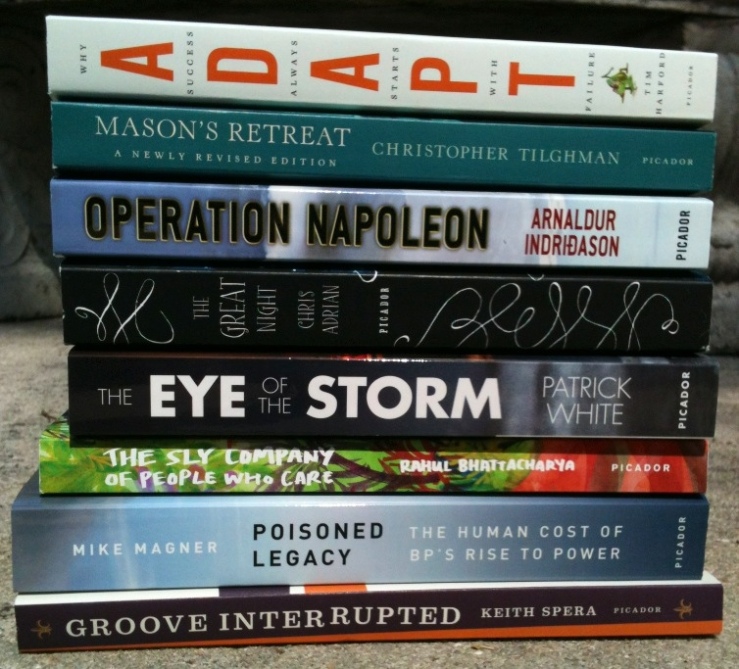 Nice little stack from the good people at Picador—novels, reissues, first-time-in-trade-paperbacks, nonfiction . . . a nice little spread.
First up is Chris Adrian’s latest novel The Great Night, which, improbably, I’ve yet to read—I’m a huge fan of Chris Adrian’s other books, especially The Children’s Hospital (although I’ve reviewed his other books here too, for those inclined to hit the archives), and I love A Midsummer Night’s Dream, which I know The Great Night basically riffs on. Anyway, my wife snapped this one up right away (I had to go through her nightstand to fetch it up for yon photograph), so my reading will be delayed (although I will likely con her into reviewing it here).
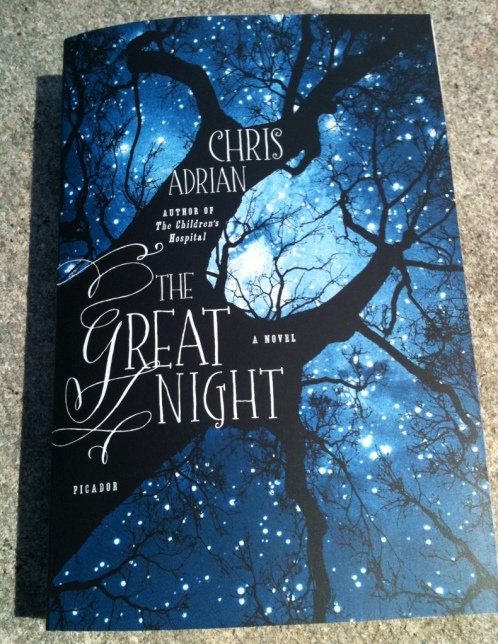
From Patrick Ness’s review at The Guardian—
The Great Night is set in Buena Vista Park in San Francisco. Titania and Oberon – the very ones from Shakespeare’s play – live under the park’s main hill with their full court. Puck is there too, a malevolent but chained force, chafing for revenge against his masters. He may get his chance, for Titania is collapsing under grief. Boy, a changeling brought in by Oberon to amuse her and for whom she felt the first maternal feelings of her immortal life, has died of a very human disease, leukaemia.
Consumed by the pain of her loss, Titania makes a terrible mistake and tells Oberon she never loved him. Furious, he abandons her and shows no signs of returning. But perhaps if Titania releases Puck, who the other faeries refer to as the Beast, then Oberon will have to return to enslave him again. Won’t he? She breaks Puck’s bonds on the Great Night – Midsummer’s Eve, naturally – for which he says, “Milady, I am in your debt, and so I shall eat you last.” . . .
. . . Adrian does nearly everything right here. The Shakespearean references are worn lightly, and the plotting is so skilful you barely notice it falling into place. The characterisations are rich, too. There’s a spellbinding chapter on Molly’s childhood in a performing Christian family band that is both deeply weird and blisteringly sad. Plus there’s an eye-wateringly matter-of-fact approach to sex (and lots of it), which here is essentially indistinguishable from magic, and from love as well, in all its “intimations from the world that there was more to be had, something different and something better”.
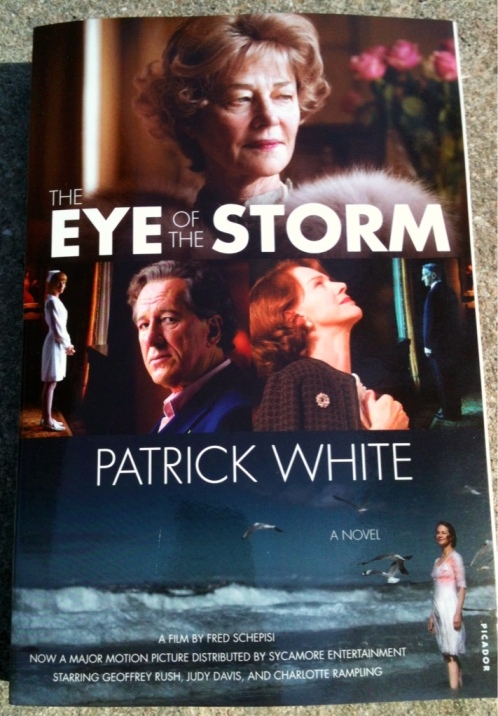
I like the cover of the Adrian, which I only mention here to transition into The Eye of the Storm, the novel that won Patrick White the Nobel in 1973. The book has been adapted into a film, so of course there’s a reissue with a film tie-in cover. (Buzzfeed’s addressed this phenomena recently; I did it a few years ago myself).
Speaking of covers: Love love love this one for The Sly Company of People Who Care by Rahul Bhattacharya:
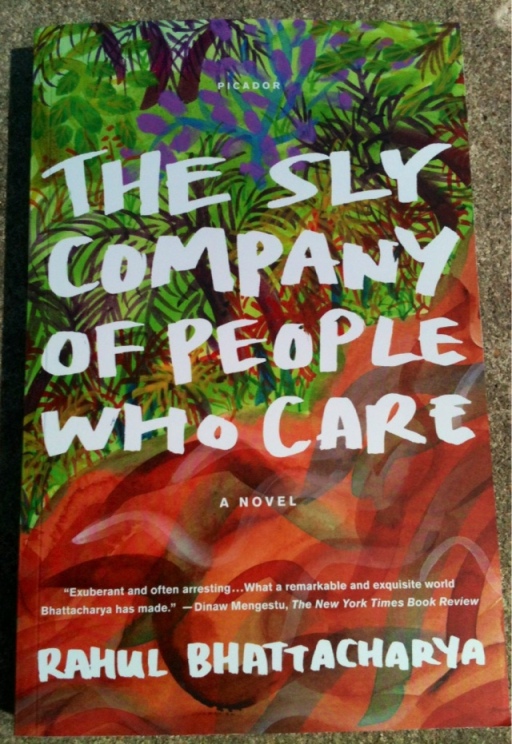
Here’s novelist Dinaw Mengestu, from his review in The New York Times:
In the opening paragraph of Rahul Bhattacharya’s first novel, “The Sly Company of People Who Care,” the unnamed narrator, a former cricket journalist from India, declares his intentions for his life, and thus his story — to be a wanderer, or in his words, “a slow ramblin’ stranger.” That rambling, through the forests of Guyana; the ruined streets of its capital, Georgetown; and out to the borders of Brazil and Venezuela, constitutes the novel’s central action. But its heart lies in the exuberant and often arresting observations of a man plunging himself into a world full of beauty, violence and cultural strife.

The Kirkus review of Mike Magner’s Poisoned Legacy:
This angry investigative report begins well before the 2010 Deepwater Horizon catastrophe.
In the first chapter, National Journal editor Magner describes a possible cancer epidemic in a Kansas town where refinery wastes have poisoned a wide area and where a courageous retired schoolteacher is fighting an uphill battle to force BP to clean up. Apparently, he had been researching this problem when the Gulf blowout forced him to change the book’s focus, but both stories alternate throughout the narrative. Readers with a taste for heated fist-shaking will have plenty of opportunities as Magner delivers detailed accounts of BP’s mishaps, emphasizing the massive 2005 Texas refinery explosion, leaks and malfunctions along the Alaska pipeline and the Deepwater disaster. Each follows an identical pattern: BP officials cut costs, safety budgets drop, employees grumble and warn of disaster, disaster occurs, individuals who suffered terribly tell their stories and government regulators and the media suddenly show interest, resulting in an outpouring of outrage, investigations, damning reports, fines and apologies from BP executives and the inevitable avalanche of lawsuits. Magner makes a strong case for BP’s negligence and the American government’s feeble oversight, but his case that BP operates less competently than other oil companies is not as convincing. Perhaps wisely, the author makes no argument that Americans are willing to make the painful sacrifices necessary to ensure that these catastrophes never recur. We want oil, and we don’t want it to cost too much.
A relentlessly critical denunciation of the latest environmental disaster that leaves the impression that more will follow.
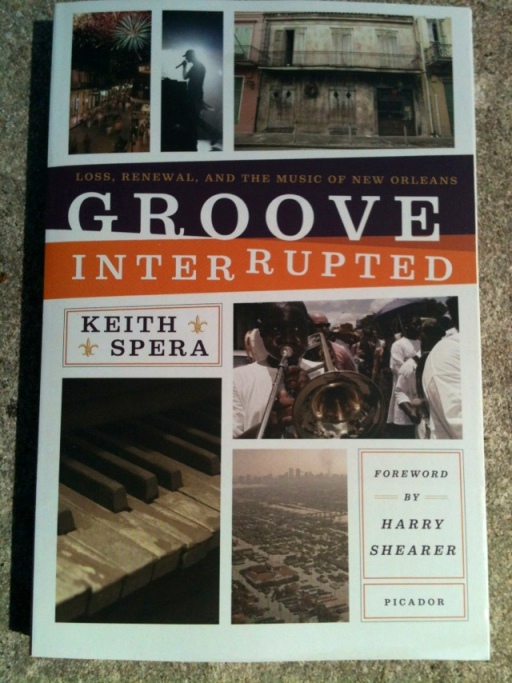
Groove Interrupted immediately piqued my interest and quickly found its way into my stack. Excerpt from Jazz Time’s review:
New Orleans native Spera, a longstanding music writer for The Times-Picayune who was also part of the newspaper’s Pulitzer Prize-winning Hurricane Katrina coverage team, focuses on tales of musicians confronting the challenges of trying to continue to make music in a post-Katrina environment. He covers those displaced New Orleanians forced to seek refuge in Houston, Austin, Nashville and other points around the country in the wake of Hurricane Katrina (known around New Orleans as “the Federal flood”). His profile of the cantankerous, Slidell-based blues guitarist-singer-fiddler Gatemouth Brown, who succumbed to lung cancer shortly after Katrina hit, is particularly moving, as is his eloquent recounting of Aaron Neville’s escape from his beloved hometown in the face of Katrina, his subsequent mourning over the loss of his wife to lung cancer in 2006 and triumphant return to New Orleans in 2008.
Parenting After the Apocalypse — I Review Matt Bell’s Cataclysm Baby
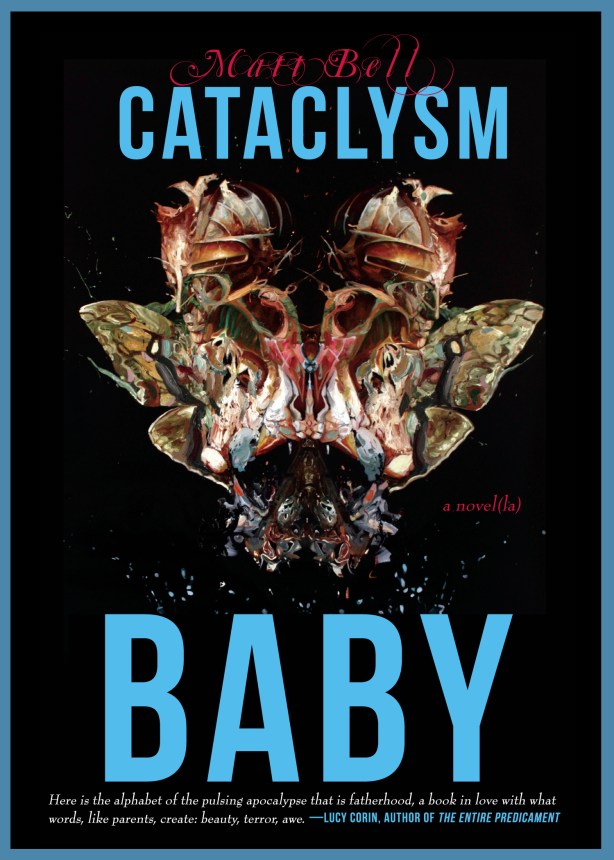
Each of the twenty-six short pieces that comprise Matt Bell’s Cataclysm Baby offers a different take on family life after the apocalypse. The opening paragraphs of “Abelard, Abraham, Absalom”—the first tale in the collection—offers an overview of Cataclysm Baby’s program:
The smoldered cigar, last of a box of twenty, bought to celebrate happier times, now smoked to keep away the smell of our unwashed skin, of our slipping flesh, of our baby grown in my wife’s belly, the submerged sign of a prophecy burning, stretching taut her hard bulge: All hair, just like the others, gone wrong again.
Fists of black hail fall from the cloudless sky and spatter the house, streak the skin of our walls, break windows above broken beds. The birth-room fills with air the texture of mud, with black birds forgetting how to fly, these crows and vultures waiting to make a nest of our child, and still I I focus, keep my eyes on shattered glass, on my wife’s pelvis tilting toward sunlight, toward sun turned the color of baby’s first stool, then the color blood.
We see here the vestiges of civilization, emblematic in the narrator’s cigar smoking down to ash; we see the mutated child, another hirsute monster “just like the others, gone wrong again”; we see the backdrop of ecological disaster, of carrion birds that can no longer fly yet nevertheless maintain a brutal Darwinian competition with humanity; we see a deathly world that seems to all but occlude birth. These motifs—the end of social order, the species-transformation of new children, the utter collapse of ecological norms—run throughout Cataclysm Baby, telegraphed in Bell’s precise, concrete style.
These short fables are also united by the alphabet: “Abelard, Abraham, Absalom” gives way to “Beatrice, Bella, Blaise,” and so on until “Zachary, Zahir, Zedekiah.” However, Bell’s apocalypse is discontinuous; each tale evokes its own paradigm, its own idiom of grief. He’s less interested in the invention and world-building that marks so much of sci-fi and fantasy than he is in tapping into the mythological undercurrents of end-of-the-world narratives. The short pieces in Cataclysm Baby unfold (or burst, or twist) like strange, dark fairy tales, each proposing another vision of collapse.
Even in these collapses, Bell hints at some sense of social order, suggesting the occasional dystopia, as in “Fawn, Fiona, Fjola,” where forced breeders exchange their child for a basement with an oxygen supply and the occasional shower, or “Grayson, Griffin, Guillermo,” where the narrator-father’s awful offspring dooms the rest of the town:
How many babies are born before we realize that all their children are boys? That our town’s women are the past, thanks to my one-note issue, to their deadly sperm making deathly pregnancies, taking each of their partners the way of their own mother: the blood-wet, breath-gasped, split-wombed, at best to linger, never to recover from the makings of their children?
Elsewhere, there’s pure horror, like in “Svara, Sveta, Sylvana,” a riff on parenting-as-grave-digging, or “Prescott, Presley, Preston,” where precognitive children sound out their own infanticidal doom. Horror generally pervades Bell’s language, as in the opening paragraph of “Isaac, Isaiah, Ishmael”:
Even at birth they were already damaged, their brittle bones opened and crushed, powdered by their mother’s powerful organs, her pressing canal: All those thin ribs snapped and splintered upon the stainless steel of the operating room. All those skulls crooked and cracked, all those twisted greenstick limbs. We lifted each child out from the mother’s body and into surgeries of its own, did our best to splint and screw our prides together.
Despite its horrors, there are occasional moments of (very) dark humor in Cataclysm Baby, absurd comic eruptions, like these lines from “Domina, Doreen, Dorma”:
A chrysalis? I ask my wife. A cocoon?
What’s the difference, she says, when it’s your child inside, when it’s your caterpillar?
I’m tempted to offer more examples, but I fear that I’m approaching over-paraphrasing here when much of the pleasure (is this the right noun?) of Cataclysm Baby comes from its strange familiarity, its uncanny contours, its ugly surprises. Bell’s cryptic details—shaved heads, missing mothers, night soot—allow the reader’s imagination do much of the work. This trust pays off; Bell is aware of the tradition he taps into and equally aware of reader awareness.
The apocalyptic tradition evinces in the two epigraphs Cataclysm Baby bears. The first, from the King James bible version of Noah’s apocalypse, notes “the creeping thing” — a bizarre expression, frightening, frustrating, and intriguing in its vivid vagueness. (Bell appropriates the expression later in one of his narratives). The other epigraph comes fromThe Road, Cormac McCarthy’s sad apocalypse story about a father and son who are “carrying the fire.” There’s little room for other characters in The Road and in a sense, Cataclysm Baby offers variations on the characters who might lurk in the margins of McCarthy’s story, or the edges of the other end-of-the-world stories we know. These parents simultaneously fear and fear for their children, harbingers of a world they will not survive. Recommended.
Cataclysm Baby is new from Mud Luscious Press.
Book Shelves #18, 4.29.2012
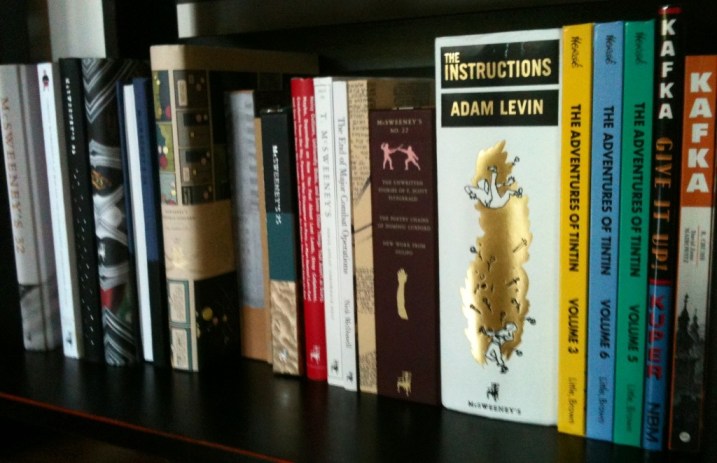
Book shelves series #18, eighteenth Sunday of 2012.
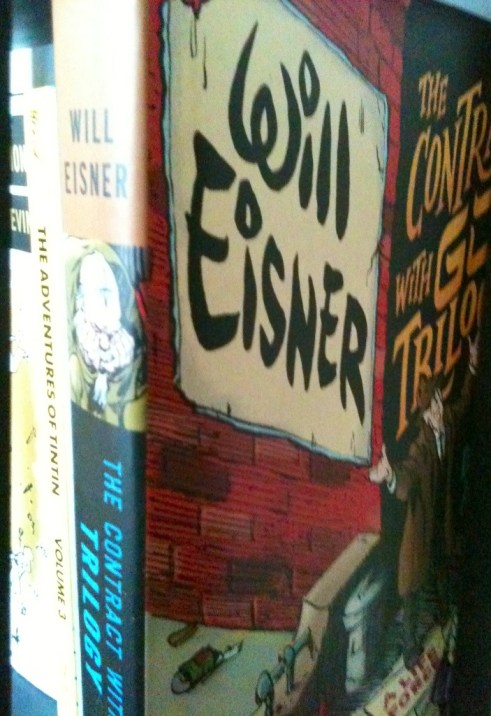
Lots of issues of McSweeney’s on this shelf. I abandoned The Instructions. Some Tintin omnibuses. Crumb-illustrated Kafka bio. Bookended by Will Eisner’s masterwork A Contract with God:
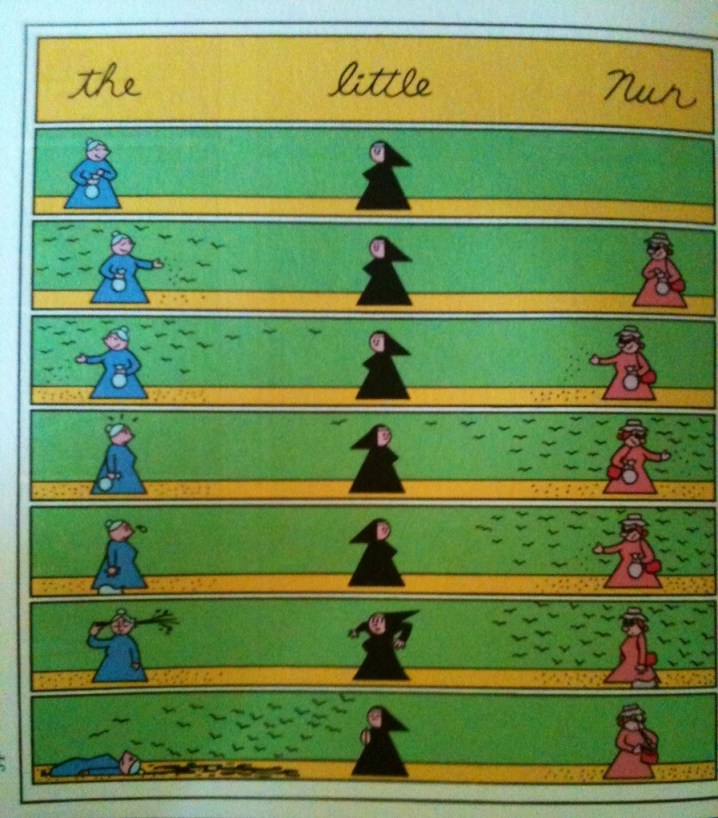
A Chris Ware comic from McSweeney’s #13:
E-Books of the Future! (Retrofuture Fun from 1959)

(Via Disonancia, which is probably my favorite thing on the internet right now).
Book Shelves #17, 4.22.2012
Book shelves series #17, seventeenth Sunday of 2012.

Hemingway, Fitzgerald, Steinbeck, Camus, Nabokov, Celine, Kafka.

Jonathan Littell’s The Kindly Ones with Revere movie camera as bookend. Littell’s lurid, bizarre book is only shelved here temporarily (he’s in too-rarefied company, perhaps).
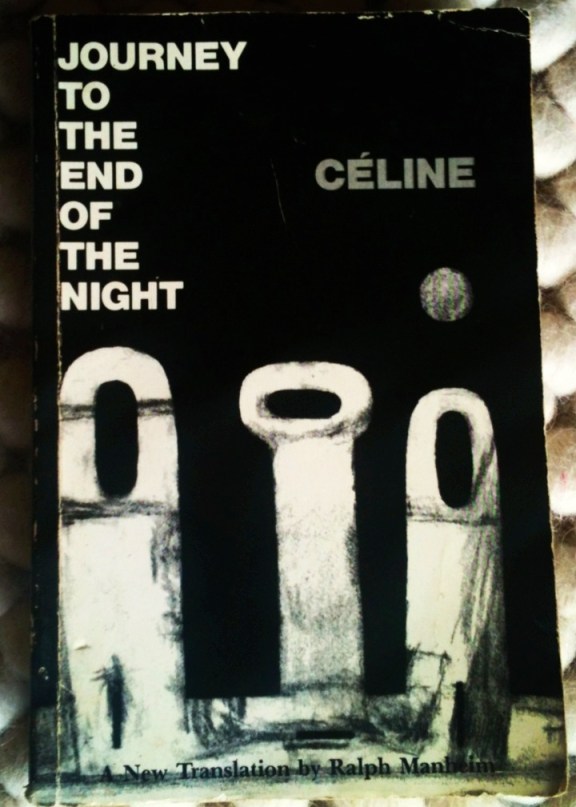
A friend gave me this in high school.
Put the book in the head not on the head

(Via Disonancia ).
Books Acquired, 4.10.2012
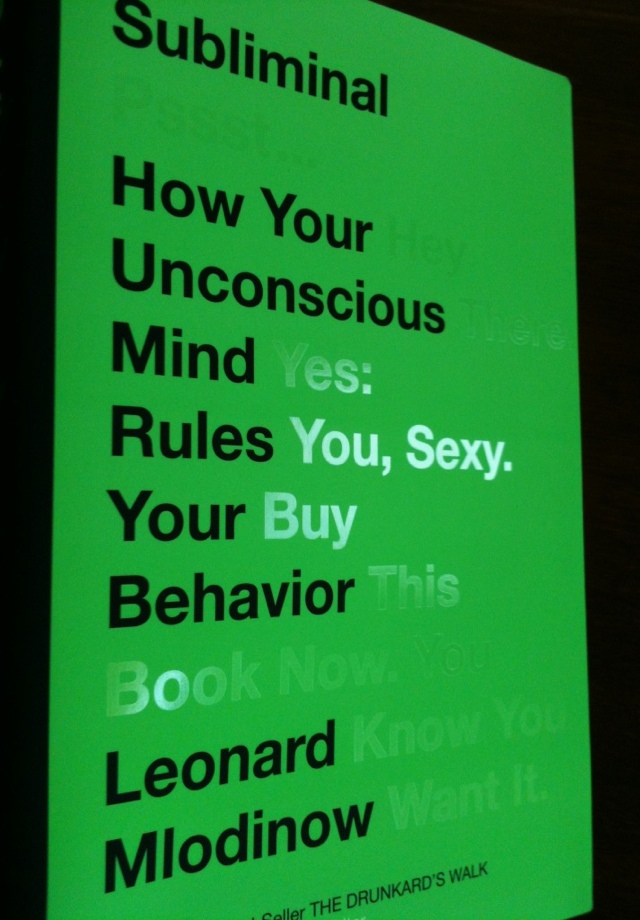
Subliminal by Leonard Mldodinow is new from Random House. Their description:
Leonard Mlodinow, the best-selling author of The Drunkard’s Walk and coauthor of The Grand Design (with Stephen Hawking), gives us a startling and eye-opening examination of how the unconscious mind shapes our experience of the world and how, for instance, we often misperceive our relationships with family, friends, and business associates, misunderstand the reasons for our investment decisions, and misremember important events.
Your preference in politicians, the amount you tip your waiter—all judgments and perceptions reflect the workings of our mind on two levels: the conscious, of which we are aware, and the unconscious, which is hidden from us. The latter has long been the subject of speculation, but over the past two decades researchers have developed remarkable new tools for probing the hidden, or subliminal, workings of the mind. The result of this explosion of research is a new science of the unconscious and a sea change in our understanding of how the subliminal mind affects the way we live.
Employing his trademark wit and lucid, accessible explanations of the most obscure scientific subjects, Leonard Mlodinow takes us on a tour of this research, unraveling the complexities of the subliminal self and increasing our understanding of how the human mind works and how we interact with friends, strangers, spouses, and coworkers. In the process he changes our view of ourselves and the world around us.
Read a profile of Mlodinow at The Los Angeles Times (dude used to work on MacGyver, so . . .)

Also new from Random House is Against Wind and Tide, a collection of letters, journals, and other documents by Anne Morrow Lindbergh. Jacket copy:
Why, as an eager and talented writer, has Anne Morrow Lindbergh published so relatively little in forty years of marriage?” asked reviewer John Barkham in 1970. “After a promising start with those first books on flying, she tapered off into long silences broken by an infrequent volume of verse or prose.” Many years later, Lindbergh replied with a quote from Harriet Beecher Stowe, who claimed that writing, for a wife and mother, is “rowing against wind and tide.”
In this sixth and final collection of Lindbergh’s diaries and letters, taking us from 1947 to 1986, we mark her progress as she navigated a remarkable life and a remarkable century with enthusiasm and delight, humor and wit, sorrow and bewilderment, but above all devoted to finding the essential truth in life’s experiences through a hard-won spirituality and a passion for literature.
Between the inevitable squalls of life with her beloved but elusive husband, the aviator Charles A. Lindbergh, she shepherded their five children through whooping cough, horned toads, fiancés, the Vietnam War, and their own personal tragedies. She researched and wrote many books and articles on issues ranging from the condition of Europe after World War II to the meaning of marriage to the launch of Apollo 8. She published one of the most beloved books of inspiration of all time, Gift from the Sea. She left penetrating accounts of meetings with such luminaries as John and Jacqueline Kennedy, Thornton Wilder, Enrico Fermi, Leland and Slim Hayward, and the Frank Lloyd Wrights. And she found time to compose extraordinarily insightful and moving letters of consolation to friends and to others whose losses touched her deeply.
More than any previous books by or about Anne Morrow Lindbergh, Against Wind and Tide makes us privy to the demons that plagued this fairy-tale bride, and introduces us to some of the people—men as well as women—who provided solace as she braved the tides of time and aging, war and politics, birth and death. Here is an eloquent and often startling collection of writings from one of the most admired women of our time.
People in the Sun — Edward Hopper

Crews, Gaddis, Lish, Mutis (Books Acquired Late Last Week)

I picked up Harry Crews’s novel The Knockout Artist, which I hadn’t read, after his recent death. I was not the only person to pick up Crews books: the Crews section of my favorite used bookstore, once swollen is now depleted (the omnibus and collections all snapped up).
William Gaddis’s last novel Agapē Agape was my occasion (as if I needed one) for visiting said store; I ordered it after finishing The Recognitions. I managed to bend the cover badly in the first five minutes of ownership. I started it over the weekend and then got distracted by a friend calling me to meet at a bar. I started it again last night and got about a third of the way in. Full review on the horizon.
I have no idea why I picked up Lish’s novel other than the fact that Lish is awesome; it’s a first edition paperback and the cover is awesome. Maybe that’s why. I have no idea when I’ll get around to reading it. Compulsive behaviors.
The Mutis novel, or collection of novellas, is half of the book that Dave Cianci aka Noquar reviewed on this blog a few months ago. I wanted the full version, which collects six novellas, but I’ll settle for this (it’s used; I have store credit, etc.). Anyway, Noquar’s review made me want to read it, so I’ve slated it for summer reading (May?).
“The Moral Here Is Wonderfully Fine” — Melville Annotates Hawthorne
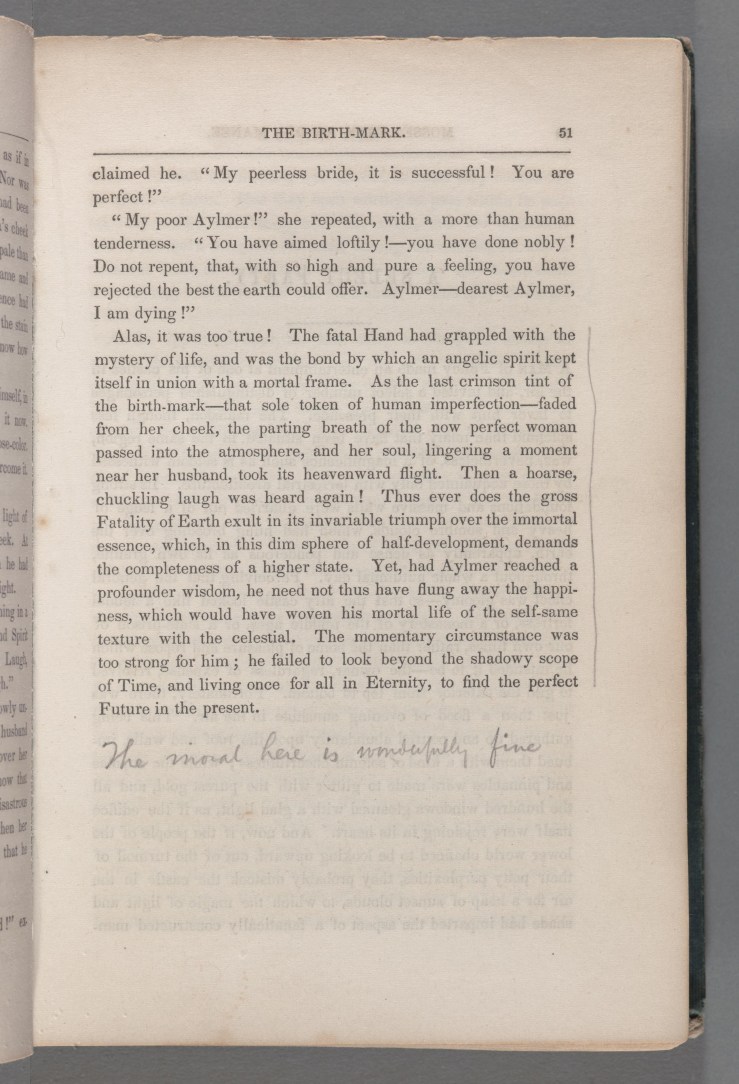
Herman Melville’s markings and annotations on the last page of Nathaniel Hawthorne’s short story “The Birth-mark.” From Melville’s Marginalia Online.
I Burn Paris (Book Acquired, Some Time Last Week, Or Maybe Late the Week Before)
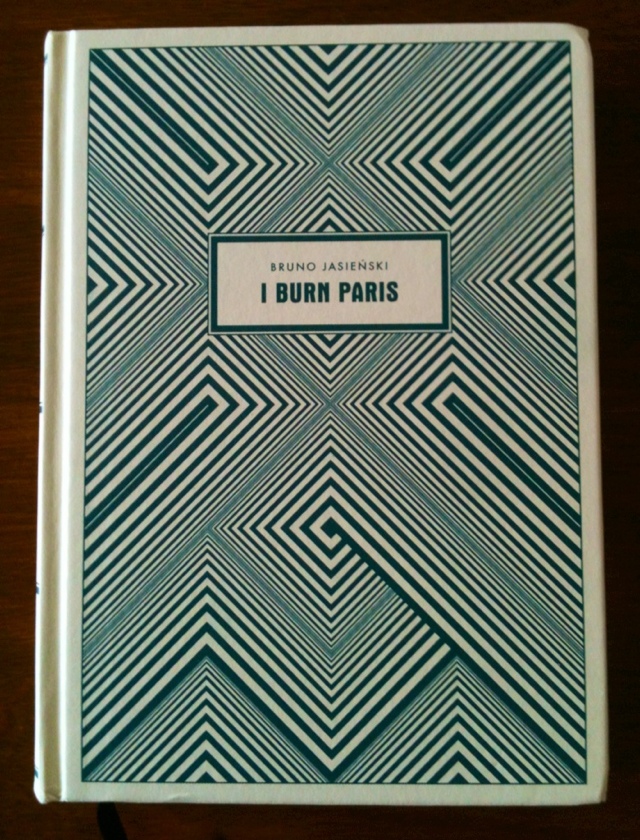
Bruno Jasieński was one of the leaders of the Polish Futurist movement, and his novel I Burn Paris looks fascinating. It’s also a beautiful looking book — publisher Twisted Spoon has done a lovely job here — an embossed hardback with no superfluous jacket, and even a nice lace bookmark (doesn’t show up in my photo). There are also illustrations by Cristian Opris.
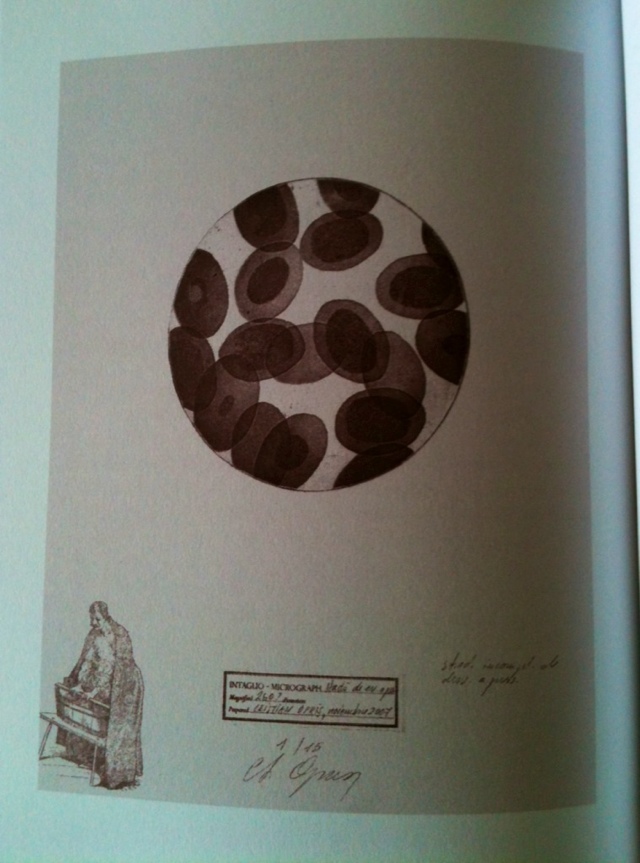
I’m hoping to get into this this weekend, but for now, here’s publisher Twisted Spoon’s description:
I Burn Paris has remained one of Poland’s most uncomfortable masterstrokes of literature since its initial and controversial serialization by Henri Barbusse in 1928 inL’Humanité (for which Jasienski was deported for disseminating subversive literature). It tells the story of a disgruntled factory worker who, finding himself on the streets, takes the opportunity to poison Paris’s water supply. With the deaths piling up, we encounter Chinese communists, rabbis, disillusioned scientists, embittered Russian émigrés, French communards and royalists, American millionaires and a host of others as the city sections off into ethnic enclaves and everyone plots their route of escape. At the heart of the cosmopolitan city is a deep-rooted xenophobia and hatred — the one thread that binds all these groups together. As Paris is brought to ruin, Jasienski issues a rallying cry to the downtrodden of the world, mixing strains of “The Internationale” with a broadcast of popular music.
With its montage strategies reminiscent of early avant-garde cinema and fist-to-the-gut metaphors, I Burn Parishas lost none of its vitality and vigor. Ruthlessly dissecting various utopian fantasies, Jasienski is out to disorient, and he has a seemingly limitless ability to transform the Parisian landscape into the product of disease-addled minds. An exquisite example of literary Futurism and Catastrophism, the novel presents a filthy, degenerated world where factories and machines have replaced the human and economic relationships have turned just about everyone into a prostitute. Yet rather than cliché and simplistic propaganda, there is an immediacy to the writing, and the modern metropolis is starkly depicted as only superficially cosmopolitan, as hostile and animalistic at its core.
This English translation of I Burn Paris fills a major gap in the availability of works from the interwar Polish avant-garde, an artistic phenomenon receiving growing attention with recent publications such as Caviar and Ashes.
Excursion into Philosophy — Edward Hopper

“Little or No Love” — Nietzsche on Good and Bad Books
158. Little or no Love. —Every good book is written for a particular reader and men of his stamp, and for that very reason is looked upon unfavourably by all other readers, by the vast majority. Its reputation accordingly rests on a narrow basis and must be built up by degrees.—The mediocre and bad book is mediocre and bad because it seeks to please, and does please, a great number.
—Friedrich Nietzsche, Human, All Too Human, Part II.
Book Shelves #14, April 1, 2012
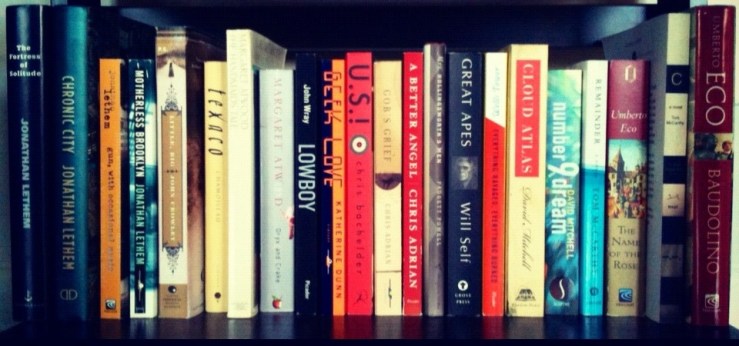
Book shelves series #14, fourteenth Sunday of 2012.
This is a strange shelf: it’s the bottom shelf of the ladder book shelf I’ve been photographing over the past few weeks, and it’s probably the least organized so far. There’s also a higher ratio of unread books on this shelf than in previous shelves. Anyway, left to right:
I was far more enthusiastic about Jonathan Lethem just a few years ago. I still think The Fortress of Solitude and Motherless Brooklyn hold up (they do in my memory, anyway), but Chronic City was awful (then why is it still on my shelf) and You Don’t Love Me Yet is one of the most pointless, silly, and gross books I’ve ever read.
I had good intentions to read John Crowley’s Little, Big and Patrick Chamoiseau’s Texaco and John Wray’s Lowboy and Katherine Dunn’s Geek Love: I’m actually pretty sure I got all these novels around the same time. They must have been in a stack that eventually got shelved here during a reshelving.
I’ve read at least five or six more Margaret Atwood novels than the ones here, but have no idea where they are (likely a combination of cheap mass markets that I gave to friends or lost).
Chris Bachelder’s U.S.! is an underread gem. Chris Adrian: Again, I was more enthusiastic about his work a few years ago, but I think it holds up. Also, would the person who borrowed my first edition hardback of The Children’s Hospital please return it? Padgett Powell’s slim novel is not bad.
Will Self’s Great Apes holds the distinction of being the ickiest novel I’ve ever read. Horrifying stuff. I bought it at an airport—in Bangkok? LA? Houston? I really can’t remember—I was returning to the US from Thailand and had bought the cheapest possible plane ticket—one that would basically keep me en route for three days, sleeping on planes and in airports. Anyway, Self’s nightmare book is bound up in that experience: it’s a riff on Kafka; dude wakes up to find that he’s become a chimp. It’s just so gross on so many levels. (Maybe I should add that I find seeing chimps dressed as humans to be the acme of perversion).
The Wells Tower collection is gold.
David Mitchell’s Cloud Atlas is gold, but I never got past the first 20 pages of number9dream, which seemed to really bite from William Gibson. I loved both the Tom McCarthy books, particularly C. Eco’s The Name of the Rose is a bit overrated and Baudolino’s first half is not bad, but it just goes on and on and on . . . but it’s funny.
 Biblioklept