Dracula is a character in Roberto Bolaño’s dark opus 2666.
Specifically, I’m suggesting that Dracula (like, theCount Dracula) is the unnamed SS officer in “The Part About Archimboldi” who hosts a strange party in a Romanian castle.
II. I’m willing to concede that my idea is probably full of holes and more than a little silly, but I think there’s some textual support for such a claim.
III. I’ve already suggested on this blog that 2666 is full of lycanthropic transformations, and in that earlier essay, I linked werewolves to vampires (using the work of mythologist Sabine Baring-Gould).
It’s a work of mesmerism and transformation—vampire powers. Dracula showing up is a winking sick joke, a satire.
IV. In his post “Castle Dracula” at Infinite Zombies, Daryl L. L. Houston connects the many strands of vampirism that run through 2666, suggesting that “Bolaño is using the vampirism in the story, and Dracula in particular, to tie together some of the threads he’s been unwinding pertaining to insiders and outsiders, parasitism and consumption of people, and a sort of larger parasitism of nations.” Hence Aztec blood rituals, the Holocaust, the murder of helpless, marginalized women in Santa Teresa . . .
V. Okay, so back to that thesis. Let’s start with the first appearance of the unnamed SS officer:
At midmorning they came to a castle. The only people there were three Romanians and an SS officer who was acting as butler and who put them right to work, after serving them a breakfast consisting of a glass of cold milk and a scrap of bread, which some soldiers left untouched in disgust. Everyone, except for four soldiers who stood guard, among them Reiter, whom the SS officer judged ill suited for the task of tidying the castle, left their rifles in the kitchen and set to work sweeping, mopping, dusting lamps, putting clean sheets on the beds.
Fairly banal, right? Also, “midmorning” would entail, y’know, sunlight, which is poison for most vampires. Let me chalk this up to the idea that the SS officer is inside the castle, which is sufficiently gloomy and dark enough to protect him (I’m not going to get into any vampire rules that might spoil my fun, dammit!). In any case, hardly noteworthy. Indeed, the SS officer—a butler commanding house chores—seems hardly a figure of major importance.
VI. Next, we get the Romanian castle explicitly identified as “Dracula’s castle” and meet the actors for this milieu:
“And what are you doing here, at Dracula’s castle?” asked the baroness.
“Serving the Reich,” said Reiter, and for the first time he looked at her.
He thought she was stunningly beautiful, much more so than when he had known her. A few steps from them, waiting, was General Entrescu, who couldn’t stop smiling, and the young scholar Popescu, who more than once exclaimed: wonderful, wonderful, yet again the sword of fate severs the head from the hydra of chance.
(I love Popescu’s line here).
VII. Our principals soon take a tour of castle and environs, led by the SS officer (boldface emphasis is mine):
Soon they came to a crypt dug out of the rock. An iron gate, with a coat of arms eroded by time, barred the entrance. The SS officer, who behaved as if he owned the castle, took a key out of his pocket and let them in. Then he switched on a flashlight and they all ventured into the crypt, except for Reiter, who remained on guard at the door at the signal of one of the officers.
So Reiter stood there, watching the stone stairs that led down into the dark, and the desolate garden through which they had come, and the towers of the castle like two gray candles on a deserted altar. Then he felt for a cigarette in his jacket, lit it, and gazed at the gray sky, the distant valleys, and thought about the Baroness Von Zumpe’s face as the cigarette ash dropped to the ground and little by little he fell asleep, leaning on the stone wall. Then he dreamed about the inside of the crypt. The stairs led down to an amphitheater only partially illuminated by the SS officer’s flashlight. He dreamed that the visitors were laughing, all except one of the general staff officers, who wept and searched for a place to hide. He dreamed that Hoensch recited a poem by Wolfram von Eschenbach and then spat blood. He dreamed that among them they had agreed to eat the Baroness Von Zumpe.
He woke with a start and almost bolted down the stairs to confirm with his own eyes that nothing he had dreamed was real.
When the visitors returned to the surface, anyone, even the least astute observer, could have seen that they were divided into two groups, those who were pale when they emerged, as if they had glimpsed something momentous down below, and those who appeared with a half smile sketched on their faces, as if they had just been reapprised of the naivete of the human race.
Bolaño concludes the crypt passage by highlighting an essential ambiguity that courses throughout the entire “Castle Dracula” episode, a strange axis of horror/humor, romance/banality. What has been revealed in the crypt? We don’t know, of course, but our surrogate Reiter allows us access to a few visions of what might have happened, including terror and fear and cannibalism. (He employs Hawthorne’s escape hatch too—it was all a dream).
The Knight of Death, Salvador Dali
VIII. Then, supper time:
That night, during dinner, they talked about the crypt, but they also talked about other things. They talked about death. Hoensch said that death itself was only an illusion under permanent construction, that in reality it didn’t exist. The SS officer said death was a necessity: no one in his right mind, he said, would stand for a world full of turtles or giraffes. Death, he concluded, served a regulatory function.
Clearly it’s easy to link any of the dinnertime comments about death to Dracula, but note that the SS officer’s idea that death is a “regulatory function” is terribly banal, is quite literally regular—this idea contrasts with Hoensch’s more poetic notion that death is an illusion (an illusion that the SS officer, if he is in fact Count Dracula, would realize in a perfectly mundane way that foreclosed the necessity of metaphor).
IX. Dinner conversation turns to murder—obviously one of the central themes of 2666:
The SS officer said that murder was an ambiguous, confusing, imprecise, vague, ill-defined word, easily misused.
Again, ambiguity: on one hand, sure, an SS officer’s job was in large part about coordinating and executing mass murder. At the same time, we might appreciate that murder is a vague term if people are one’s lunch.
X. Then conversation turns to culture:
The SS officer said culture was the call of the blood, a call better heard by night than by day, and also, he said, a decoder of fate.
I’m pretty sure that this was the moment I started entertaining the fancy that the SS officer might be Dracula.
XI. Popescu the intellectual also seems to reconsider the SS officer:
The intellectual Popescu remained standing, next to the fireplace, observing the SS officer with curiosity.
XII. Then, they finally riff on Dracula. Significantly, the SS officer believes that Dracula is a good German (bold emphasis mine):
First they praised the assortment of little cakes and then, without pause, they began to talk about Count Dracula, as if they had been waiting all night for this moment. It wasn’t long before they broke into two factions, those who believed in the count and those who didn’t. Among the latter were the general staff officer, General Entrescu, and the Baroness Von Zumpe. Among the former were Popescu, Hoensch, and the SS officer, though Popescu claimed that Dracula, whose real name was Vlad Tepes, aka Vlad the Impaler, was Romanian, and Hoensch and the SS officer claimed that Dracula was a noble Teuton, who had left Germany accused of an imaginary act of treason or disloyalty and had come to live with some of his loyal retainers in Transylvania a long time before Vlad Tepes was born, and while they didn’t deny Tepes a real historical or Transylvanian existence, they believed that his methods, as revealed by his alias or nickname, had little or nothing to do with the methods of Dracula, who was more of a strangler than an impaler, and sometimes a throat slitter, and whose life abroad, so to speak, had been a constant dizzying spin, a constant abysmal penitence.
The SS officer is the noble Teuton. More importantly, we get language that connects Dracula to the murders in Santa Teresa, most of which are stranglings; we also get the idea that Dracula has had a “life abroad”—one outside of time—a life that might see his spirit inhabit and ventriloquize an industrial city in the north of Mexico. (Or not. I know. Look, I’m just riffing here).
We also get the idea of an abyss (this is the structure of 2666), as well as the idea of Dracula as a penitent of sorts.
So, let us recall that early in “The Part About the Crimes,” detective Juan de Dios Martinez is searching for a criminal dubbed The Penitent who desecrates churches and has committed a few murders in the process. He goes to psychologist Elvira Campos for help:
Sacraphobia is fear or hatred of the sacred, of sacred objects, especially from your own religion, said Elvira Campos. He thought about making a reference to Dracula, who fled crucifixes, but he was afraid the director would laugh at him. And you believe the Penitent suffers from sacraphobia? I’ve given it some thought, and I do. A few days ago he disemboweled a priest and another person, said Juan de Dios Martinez.
This is the first mention of Dracula in 2666, and he’s explicitly likened to the Penitent; later, as we see above, Dracula will be explicitly linked to penitence.
(I’m not suggesting that the Penitent is Dracula traveled to Mexico to piss in churches. What I want to say is that Dracula’s dark spirit ventriloquizes the text of 2666).
(I’m also suggesting, again, that 2666 be read intertextaully).
Riding with Death, Jean-Michel Basquiat
XIII. Our other principals continue to discuss Dracula, but I won’t belabor that discussion (I’d prefer you, dear reader, to return to the text).
I will summarize though: Popescu sees Dracula in nationalistic terms (“a Romanian patriot” who repels the Turks), and General Entrescu goes on a long rant about heroism and villainy and history, culminating in a lengthy digression on Jesus Christ (recall now that Entrescu will be crucified JC-style by his men).
One aside on the SS officer bears mentioning: we learn that “the fastidious SS officer” is the most sober conversant as he “scarcely wet his lips with alcohol.” (Because he’s a vampire who prefers blood! Muahahahaha!)
XIV. Fast forward a few hours. Our man Reiter, among fellow soldiers, sets out to explore the secret crannies and passageways of Castle Drac and play voyeur:
The room they came to was empty and cold, as if Dracula had just stepped out. The only thing there was an old mirror that Wilke lifted off the stone wall, uncovering a secret passageway.
Dracula’s spirit leaves the room, creating an opening, behind the ever-symbolic mirror. (Muahahahaha!). (2666: Mirror, tunnels, chambers, labyrinths).
They enter the passageway and come first upon our supposed Dracula, the SS officer:
And so they were able to look into the room of the SS officer, lit by three candles, and they saw the SS officer up, wrapped in a robe, writing something at a table near the fireplace. The expression on his face was forlorn. And although that was all there was to see, Wilke and Reiter patted each other on the back, because only then were they sure they were on the right path. They moved on.
XV. Dracula, the epistolary novel. Count Dracula, troubled writer of letters, will author the following scenes, his spirit ventriloquizing the principals all: Here, we find Reiter and his homeboy Wilke, lurking in a secret passage, jerking off to werewolf-cum-Jesus-Christ-figure Gen. Entrescu screwing the lovely Baroness Von Zumpe and reciting poetry (emphasis per usual mine):
Then Wilke came on the wall and mumbled something too, a soldier’s prayer, and soon afterward Reiter came on the wall and bit his lips without saying a word. And then Entrescu got up and they saw, or thought they saw, drops of blood on his penis shiny with semen and vaginal fluid, and then Baroness Von Zumpe asked for a glass of vodka, and then they watched as Entrescu and the baroness stood entwined, each with a glass in hand and an air of distraction, and then Entrescu recited a poem in his tongue, which the baroness didn’t understand but whose musicality she lauded, and then Entrescu closed his eyes and cocked his head as if to listen to something, the music of the spheres, and then he opened his eyes and sat at the table and set the baroness on his cock, erect again (the famous foot-long cock, pride of the Romanian army), and the cries and moans and tears resumed, and as the baroness sank down onto Entrescu’s cock or Entrescu’s cock rose up into the Baroness Von Zumpe, the Romanian general recited a new poem, a poem that he accompanied by waving both arms (the baroness clinging to his neck), a poem that again neither of them understood, except for the word Dracula,which was repeated every four lines, a poem that might have been martial or satirical or metaphysical or marmoreal or even anti-German, but whose rhythm seemed made to order for the occasion, a poem that the young baroness, sitting astride Entrescu’s thighs, celebrated by swaying back and forth, like a little shepherdess gone wild in the vastness of Asia, digging her nails into her lover’s neck, scrubbing the blood that still flowed from her right hand on her lover’s face, smearing the corners of his lips with blood, while Entrescu, undeterred, continued to recite his poem in which the word Dracula sounded every four lines, a poem that was surely satirical, decided Reiter (with infinite joy) as Wilke jerked off again.
I contend that the poem is the work of the SS officer, psychic mesmerist, the poet Dracula, a poem no one in the scene can understand, a dark satire that might also be a war poem or a love poem or an elegy, but definitely a dark satire, written in violence and sex and blood, a poem that ventriloquizes not only Entrescu, phallic delivery device, but also the baroness, and also Reiter and Wilke. And perhaps the reader.
XVI. Where to go after such a climax? Maybe point out that Dracula infects Reiter and Wilke, of whom we learn:
Some of their battalion comrades dubbed them the vampires.
(But better to return I think to our strange figure, the SS officer).
XVII. Here, his last appearance:
The next morning the detachment left the castle after the departure of the two carloads of guests. Only the SS officer remained behind while they swept, washed, and tidied everything. Then, when the officer was fully satisfied with their efforts, he ordered them off and the detachment climbed into the truck and headed back down to the plain. Only the SS officer’s car—with no driver, which was odd—was left at the castle. As they drove away, Reiter saw the officer: he had climbed up to the battlements and was watching the detachment leave, craning his neck, rising up on tiptoe, until the castle, on the one hand, and the truck, on the other, disappeared from view.
Dracula stays in Dracula’s castle; his spirit, his seed, his blood seeps out.
[Ed. note: This post was originally published in 2012].
[Editorial note: The following citations come from one-star Amazon reviews of Bram Stoker’s novel Dracula.I’ve preserved the reviewers’ original punctuation and spelling. More one-star Amazon reviews].
Crapula
hack author
Painfully verbose
he lives in a castle!
hard to understand
NOTHING is happening
find an abridged version
I have read many horror novels
may be the worst book ever written
being the avid vampire fan that I am
attempt to cash in on the vampire craze
cavort lasciviously with the sons of the devil
Watch the movie and save yourself some time
I’m always willing to read new vampire fiction
epistolary format is monotonous and repetitive
Turns out the vampire in this book is an old guy
It was so stupid and the movie was even stupider
If you’re like me, just tring this book to make yourself feel brave, forget it
I think I have been hacked or my late wife’s daughter is using our account
Any vampire fan knows that vampires roam the streets of upper middle class suburbia
Over the past couple years I’ve started a collection of vampire books which totals over 100 now
I’ll be returning this on my next trip to the library and sticking to the teen reading section for finding my next vampire novel
I fully realize that this is a fictional/fantasy tale containing elements that obviously require a certain amount of leeway and suspension of belief, but
Epostolary novel told from multiple perspectives about the vampire, Count Dracula, who is trying to invade London and turn everyone else into vampires. A bunch of rich guys and a chick decide to stop him.
no relationship between Lucy and the Count-which i suppose makes more sense as to why he bit her
up pops a homoerotic cover with naked men, one whose penis is exposed in the background
the book is down hill from the time Dracula is in London and it is decided that he must be destroyed
the method being used to advance the plot being in disuse since quite some time
he is not a suave romantic movie/play character but an angry stupid animal
Amazon markets this book not to children but homosexual adult men
The movie was so much better even with Keanu Reeves’ awful acting
what are the standards when it comes to classic books
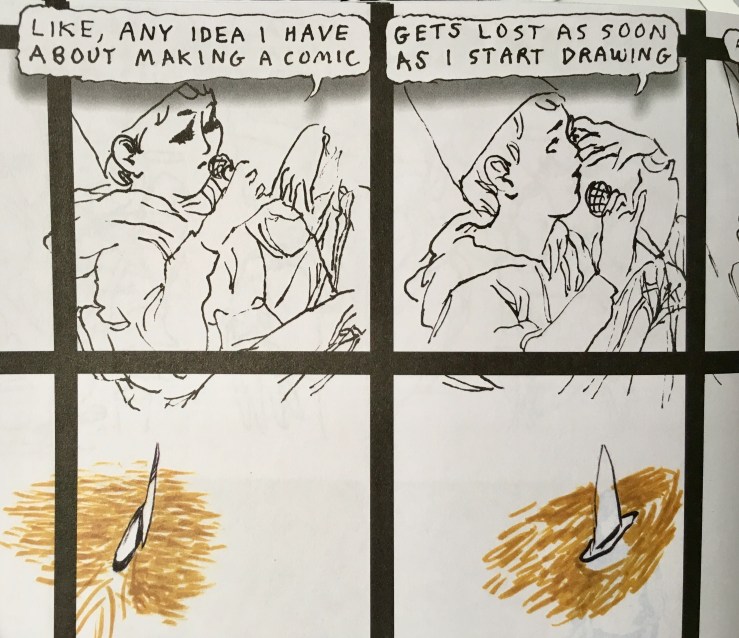
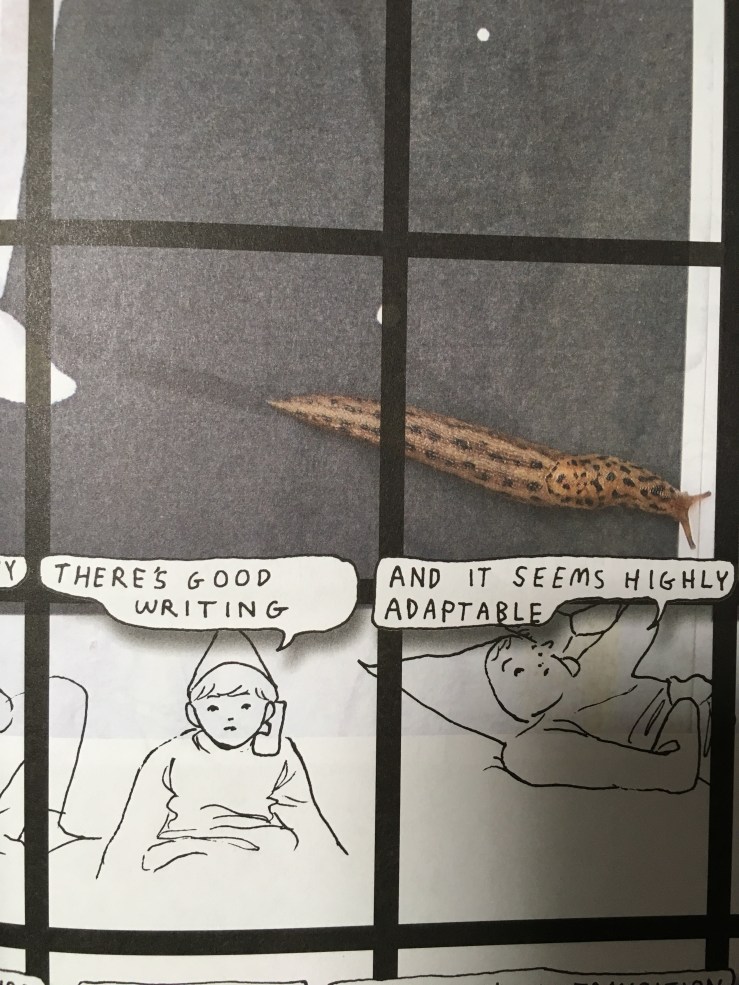
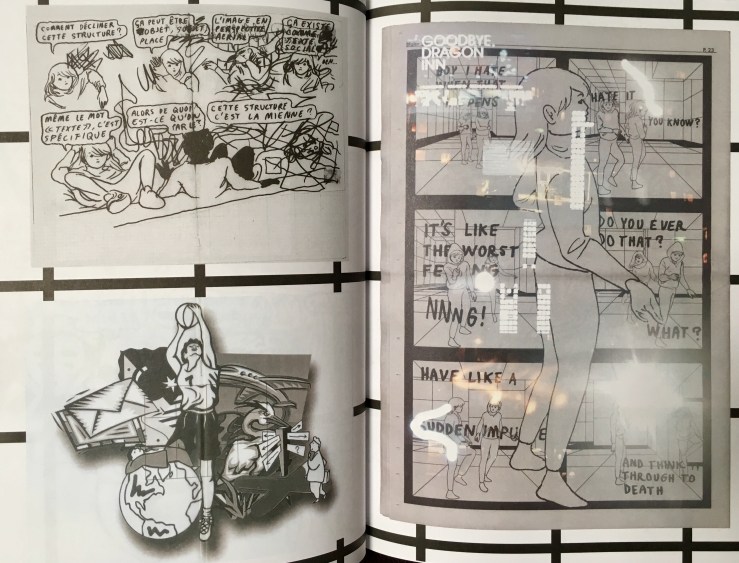
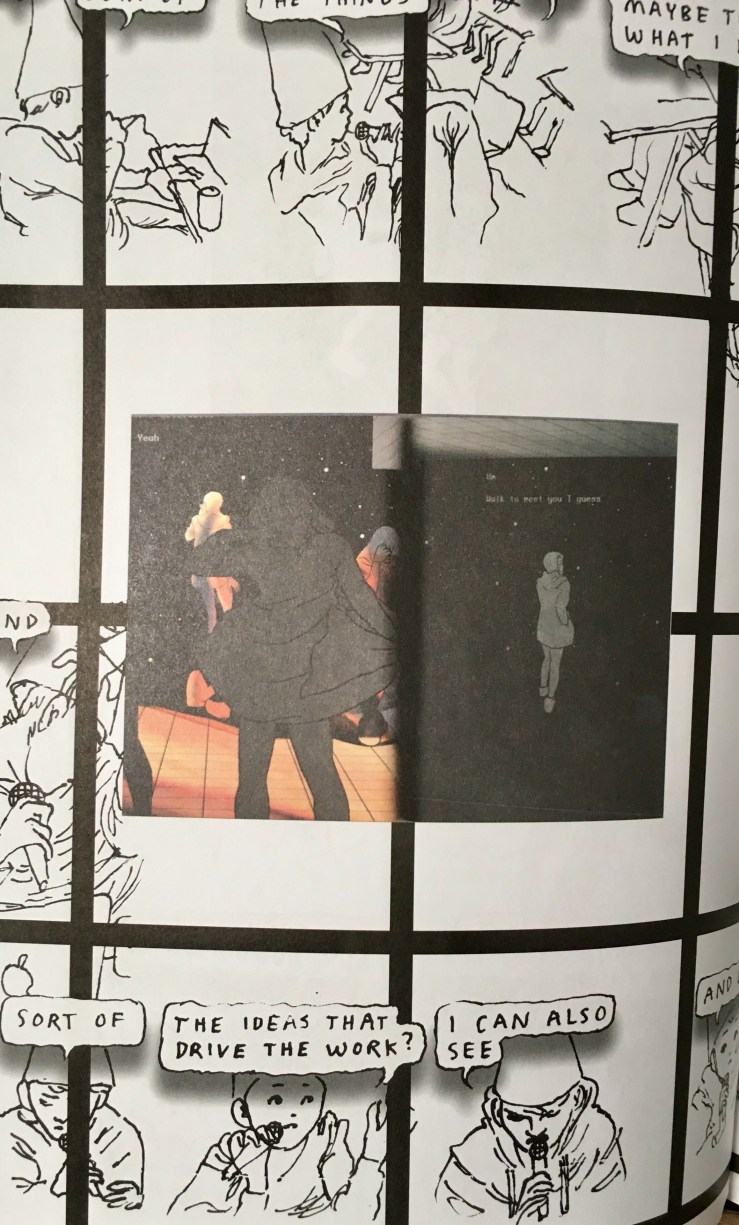
Blaise Larmee’s 2001 is new from 2dcloud. It showed up at the house a few weeks ago, its minimalist cover strange and intriguing.
I’m not sure what the book is—is it a sort of metatextual commentary on Larmee’s webcomic of the same name? A kind of autobiographical riff? A deconstruction of the graphic novel form?
What Larmee’s book is is not as compelling, ultimately, as how it is—sketchy, loose, messy; littered with hi-res scans–receipts, crushed cans and bottles, a house key—scraps from the real that call attention to the narrative’s artifice.
2001 is strange and fascinating in its fragmentary, elusory nature. Check it out.
We were speaking of sequestration, alluding to a recent lawsuit. It was at the close of a friendly evening in a very old mansion in the Rue de Grenelle, and each of the guests had a story to tell, which he assured us was true.
Then the old Marquis de la Tour-Samuel, eighty-two years of age, rose and came forward to lean on the mantelpiece. He told the following story in his slightly quavering voice.
“I, also, have witnessed a strange thing—so strange that it has been the nightmare of my life. It happened fifty-six years ago, and yet there is not a month when I do not see it again in my dreams. From that day I have borne a mark, a stamp of fear,—do you understand?
“Yes, for ten minutes I was a prey to terror, in such a way that ever since a constant dread has remained in my soul. Unexpected sounds chill me to the heart; objects which I can ill distinguish in the evening shadows make me long to flee. I am afraid at night.
“No! I would not have owned such a thing before reaching my present age. But now I may tell everything. One may fear imaginary dangers at eighty-two years old. But before actual danger I have never turned back, mesdames.
“That affair so upset my mind, filled me with such a deep, mysterious unrest that I never could tell it. I kept it in that inmost part, that corner where we conceal our sad, our shameful secrets, all the weaknesses of our life which cannot be confessed.
“I will tell you that strange happening just as it took place, with no attempt to explain it. Unless I went mad for one short hour it must be explainable, though. Yet I was not mad, and I will prove it to you. Imagine what you will. Here are the simple facts:
“It was in 1827, in July. I was quartered with my regiment in Rouen.
“One day, as I was strolling on the quay, I came across a man I believed I recognized, though I could not place him with certainty. I instinctively went more slowly, ready to pause. The stranger saw my impulse, looked at me, and fell into my arms.
“It was a friend of my younger days, of whom I had been very fond. He seemed to have become half a century older in the five years since I had seen him. His hair was white, and he stooped in his walk, as if he were exhausted. He understood my amazement and told me the story of his life.
“A terrible event had broken him down. He had fallen madly in love with a young girl and married her in a kind of dreamlike ecstasy. After a year of unalloyed bliss and unexhausted passion, she had died suddenly of heart disease, no doubt killed by love itself.
“He had left the country on the very day of her funeral, and had come to live in his hotel at Rouen. He remained there, solitary and desperate, grief slowly mining him, so wretched that he constantly thought of suicide.
“‘As I thus came across you again,’ he said, ‘I shall ask a great favor of you. I want you to go to my château and get some papers I urgently need. They are in the writing-desk of my room, of our room. I cannot send a servant or a lawyer, as the errand must be kept private. I want absolute silence. Continue reading ““A Ghost,” a short story by Guy de Maupassant”→
October 25th.–A walk yesterday through Dark Lane, and home through the village of Danvers. Landscape now wholly autumnal. Saw an elderly man laden with two dry, yellow, rustling bundles of Indian corn-stalks,–a good personification of Autumn. Another man hoeing up potatoes. Rows of white cabbages lay ripening. Fields of dry Indian corn. The grass has still considerable greenness. Wild rose-bushes devoid of leaves, with their deep, bright red seed-vessels. Meeting-house in Danvers seen at a distance, with the sun shining through the windows of its belfry.Barberry-bushes,–the leaves now of a brown red, still juicy and healthy; very few berries remaining, mostly frost-bitten and wilted. All among the yet green grass, dry stalks of weeds. The down of thistles occasionally seen flying through the sunny air.
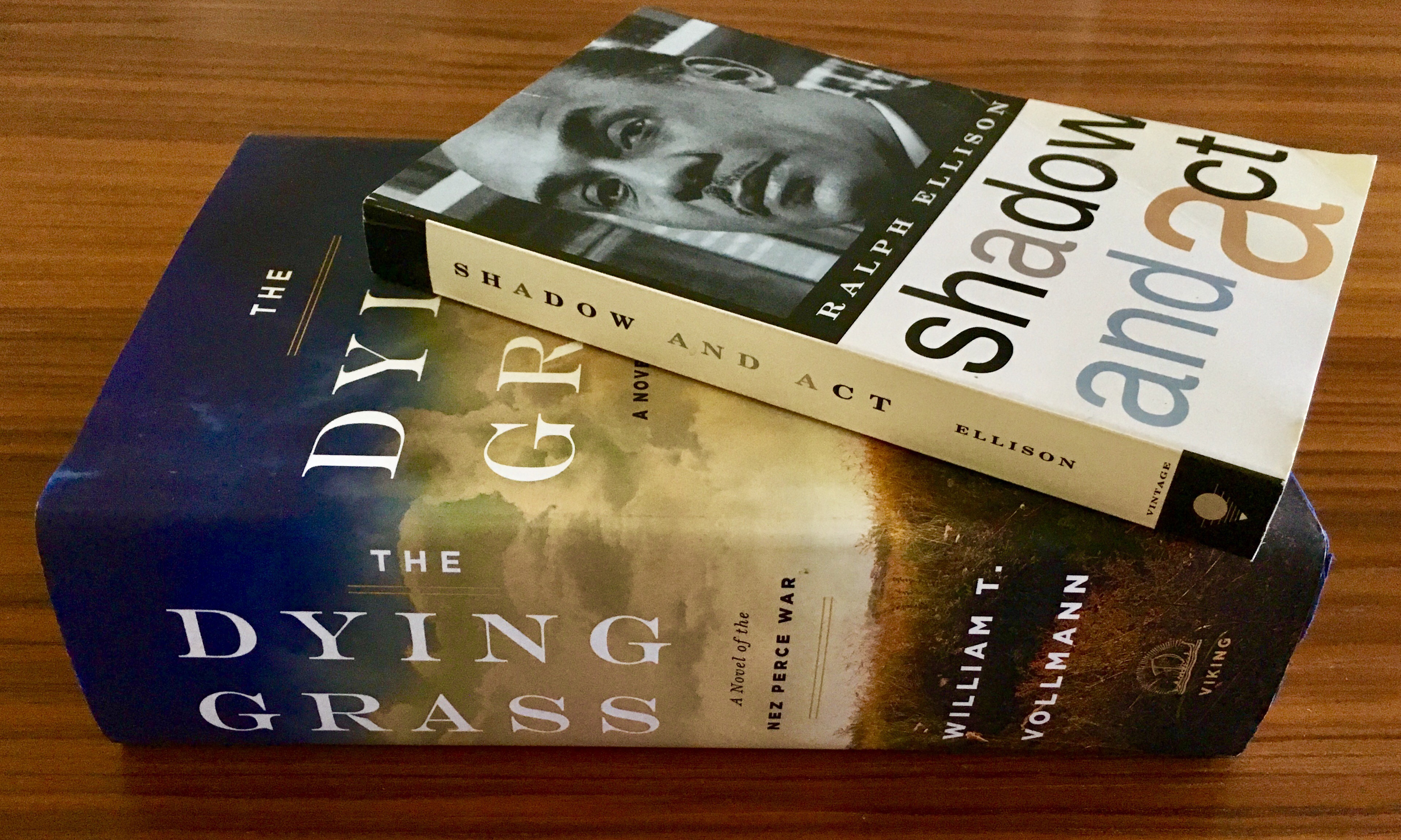
I tried William Vollmann’s The Dying Grass a few times last year, both as an audiobook and as an ebook, but it got the best of me. Spotted it at my favorite used book store for a measly twelve bucks, so. Like, we’ll see—although it’s much, much more accessible in print than on screen—the form, the lines on the page—they makes more sense, evoke Whitman more than the ebook or the audio. I also picked up Ralph Ellison’s collection Shadow and Act somewhat randomly—just started reading it and got carried away. Great stuff.
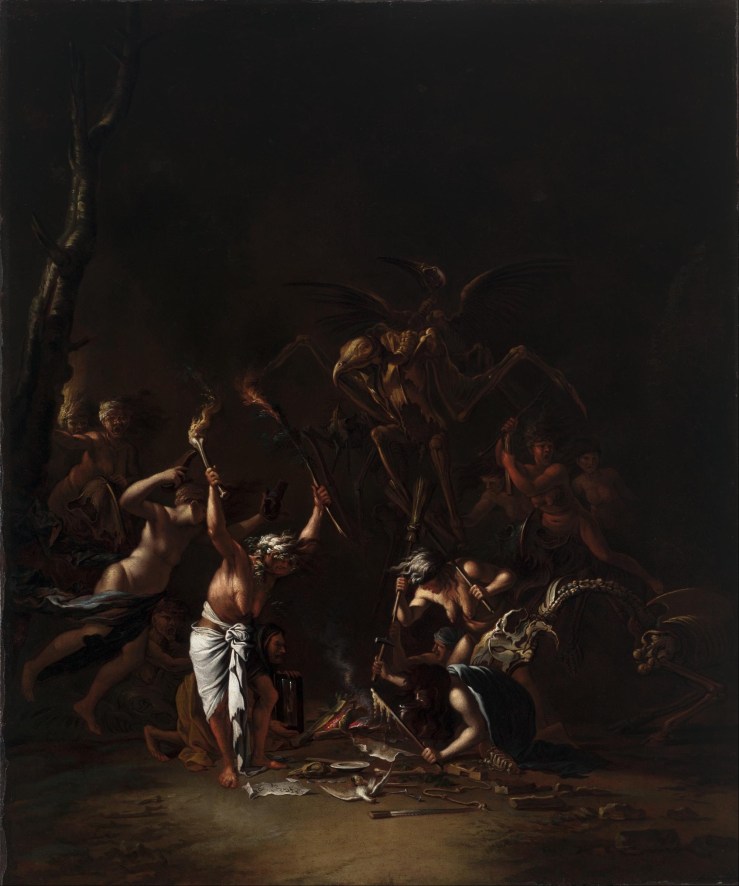
It is a northern country; they have cold weather, they have cold hearts. Cold; tempest; wild beasts in the forest. It is a hard life. Their houses are built of logs, dark and smoky within. There will be a crude icon of the virgin behind a guttering candle, the leg of a pig hung up to cure, a string of drying mushrooms. A bed, a stool, a table. Harsh, brief, poor lives. To these upland woodsmen, the Devil is as reals as you or I. More so; they have not seen us nor even know that we exist, but the Devil they glimpse often in the graveyards, those bleak and touching townships of the dead where the graves are marked with portraits of the deceased in the naif style and there are no flowers to put in front of them, no flowers grow there, so they put out small votive offerings, little loaves, sometimes a cake that the bears come lumbering from the margins of the forests to snatch away. At midnight, especially on Walpurgisnacht, the Devil holds picnics in the graveyards and invites the witches; then they dig up fresh corpses, and eat them. Anyone will tell you that. Wreaths of garlic on the doors keep out the vampires. A blue-eyed child born feet first on the night of St. John’s Eve will have second sight. When they discover a witch – some old woman whose cheeses ripen when her neighbours’ do not, another old woman whose black cat, oh, sinister! follows her about all the time, they strip the crone, search for her marks, for the supernumerary nipple her familiar sucks. They soon find it. Then they stone her to death.
Winter and cold weather.
Go and visit grandmother, who has been sick. Take her the oatcakes I’ve baked for her on the hearthstone and a little pot of butter.
The good child does as her mother bids – five miles’ trudge through the forest; do not leave the path because of the bears, the wild boar, the starving wolves. Here, take your father’s hunting knife; you know how to use it.
The child had a scabby coat of sheepskin to keep out the cold, she knew the forest too well to fear it but she must always be on her guard. When she heard that freezing howl of a wolf, she dropped her gifts, seized her knife, and turned on the beast.
It was a huge one, with red eyes and running, grizzled chops; any but a mountaineer’s child would have died of fright at the sight of it. It went for her throat, as wolves do, but she made a great swipe at it with her father’s knife and slashed off its right forepaw.
The wolf let out a gulp, almost a sob, when it saw what had happened to it; wolves are less brave than they seem. It went lolloping off disconsolately between the trees as well as it could on three legs, leaving a trail of blood behind it. The child wiped the blade of her knife clean on her apron, wrapped up the wolf’s paw in the cloth in which her mother had packed the oatcakes and went on towards her grandmother’s house. Soon it came on to snow so thickly that the path and any footsteps, track or spoor that might have been upon it were obscured.
She found her grandmother was so sick she had taken to her bed and fallen into a fretful sleep, moaning and shaking so that the child guessed she had a fever. She felt the forehead, it burned. She shook out the cloth from her basket, to use it to make the old woman a cold compress, and the wolf’s paw fell to the floor.
But it was no longer a wolf’s paw. It was a hand, chopped off at the wrist, a hand toughened with work and freckled with old age. There was a wedding ring on the third finger and a wart in the index finger. By the wart, she knew it for her grandmother’s hand.
She pulled back the sheet but the old woman woke up, at that, and began to struggle, squawking and shrieking like a thing possessed. But the child was strong, and armed with her father’s hunting knife; she managed to hold her grandmother down long enough to see the cause of her fever. There was a bloody stump where her right hand should have been, festering already.
The child crossed herself and cried out so loud the neighbours heard her and come rushing in. They know the wart on the hand at once for a witch’s nipple; they drove the old woman, in her shift as she was, out into the snow with sticks, beating her old carcass as far as the edge of the forest, and pelted her with stones until she fell dead.
Now the child lived in her grandmother’s house; she prospered.








 Biblioklept