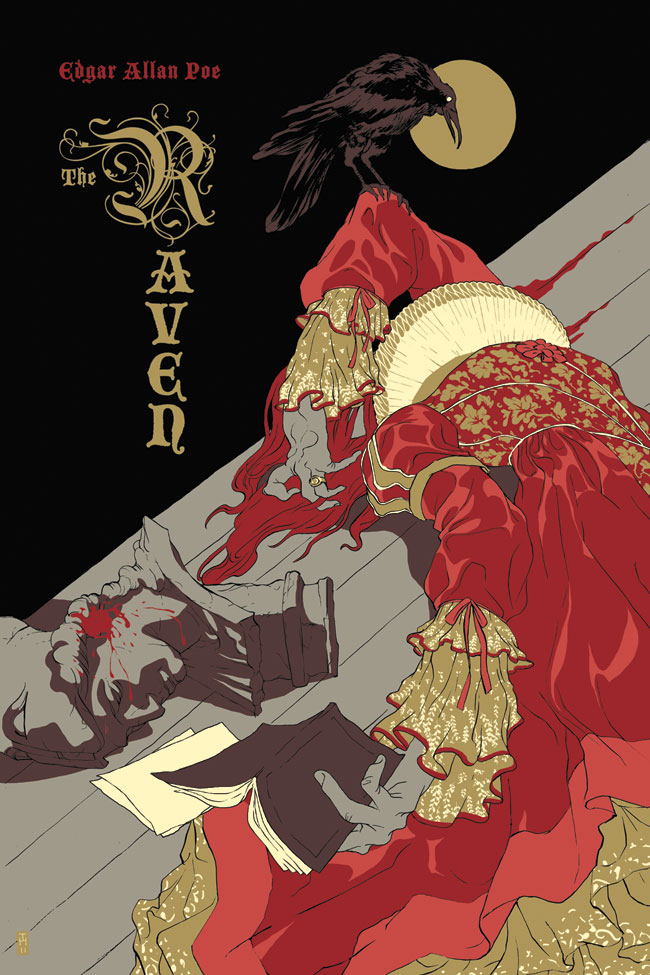
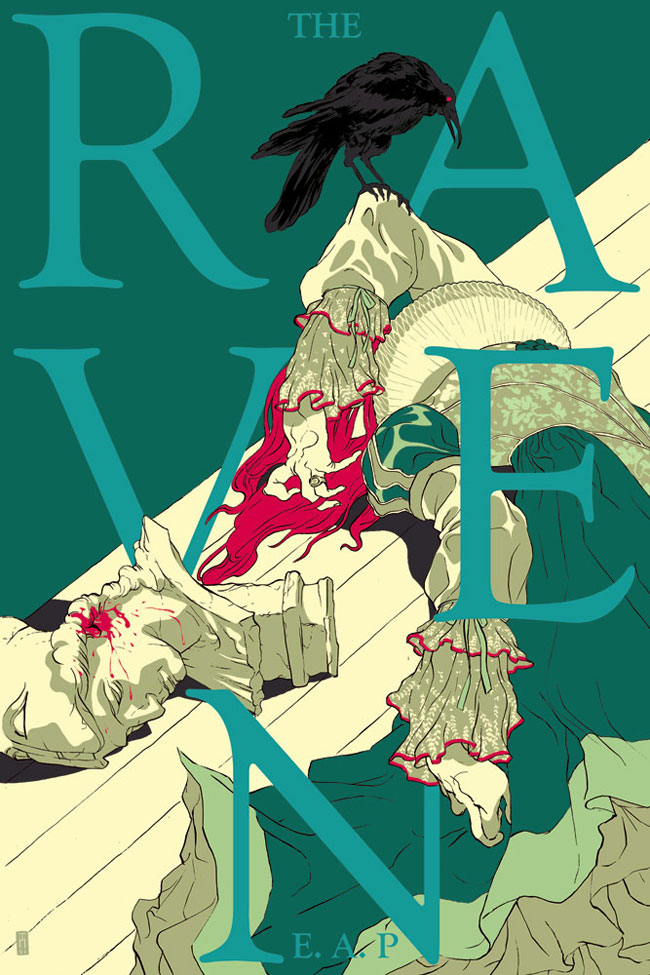
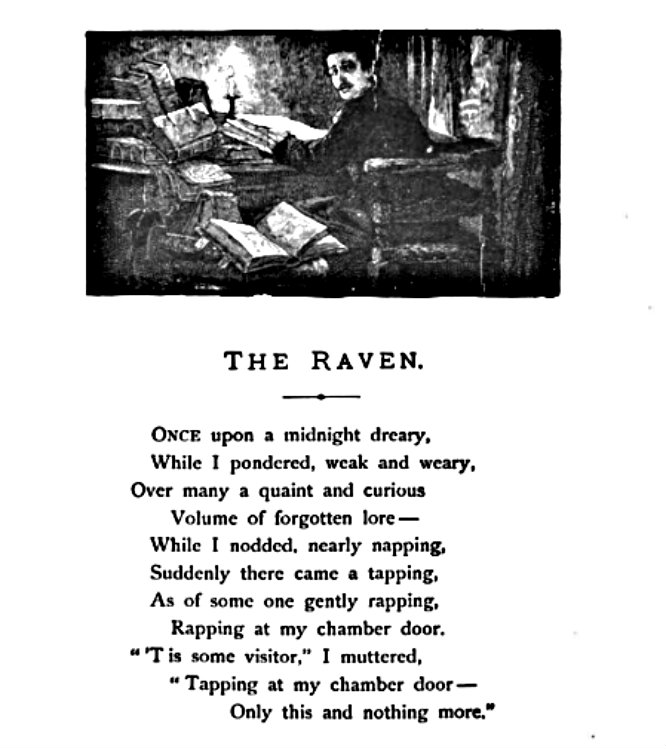

Do you still need an idea for a jack o’ lantern? Are you a fan of Hayao Miyazaki films? Even the really sweet and gentle ones, like Ponyo and My Neighbor Totoro? And, are you, like, totally skilled at carving pumpkins? If so, have at it with this cool stencil by Flickr user PlayWithFire:

You can see variations on Totoro jack o’ lanterns–and other cool Miyazaki-inspired pumpkins here. From that set, here’s Flickr user C. Lambert’s Totoro pumpkin–

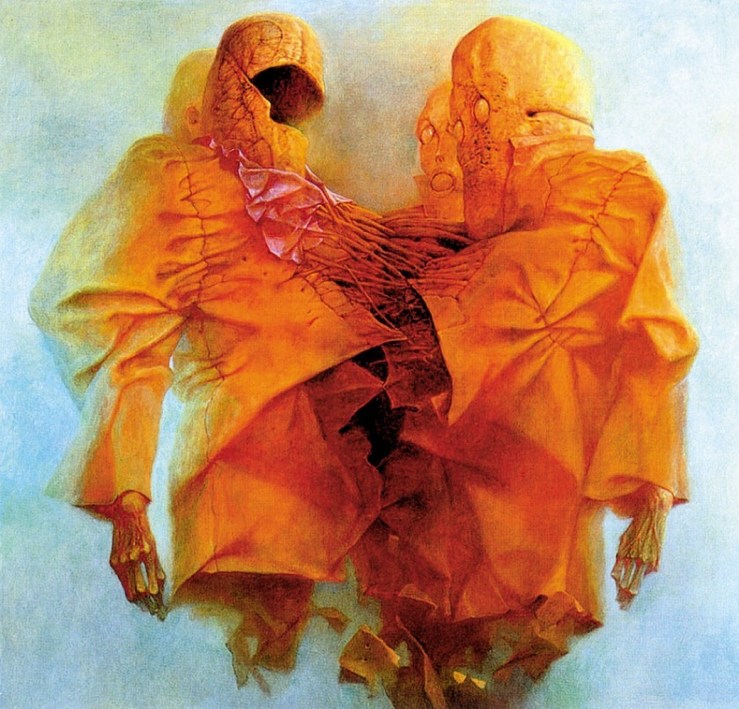
“The Tell-Tale Heart”
by
Edgar Allan Poe
TRUE!—nervous—very, very dreadfully nervous I had been and am; but why will you say that I am mad? The disease had sharpened my senses—not destroyed—not dulled them. Above all was the sense of hearing acute. I heard all things in the heaven and in the earth. I heard many things in hell. How, then, am I mad? Hearken! and observe how healthily—how calmly I can tell you the whole story.
It is impossible to say how first the idea entered my brain; but once conceived, it haunted me day and night. Object there was none. Passion there was none. I loved the old man. He had never wronged me. He had never given me insult. For his gold I had no desire. I think it was his eye! yes, it was this! He had the eye of a vulture—a pale blue eye, with a film over it. Whenever it fell upon me, my blood ran cold; and so by degrees—very gradually—I made up my mind to take the life of the old man, and thus rid myself of the eye forever. Continue reading ““The Tell-Tale Heart” — Edgar Allan Poe”


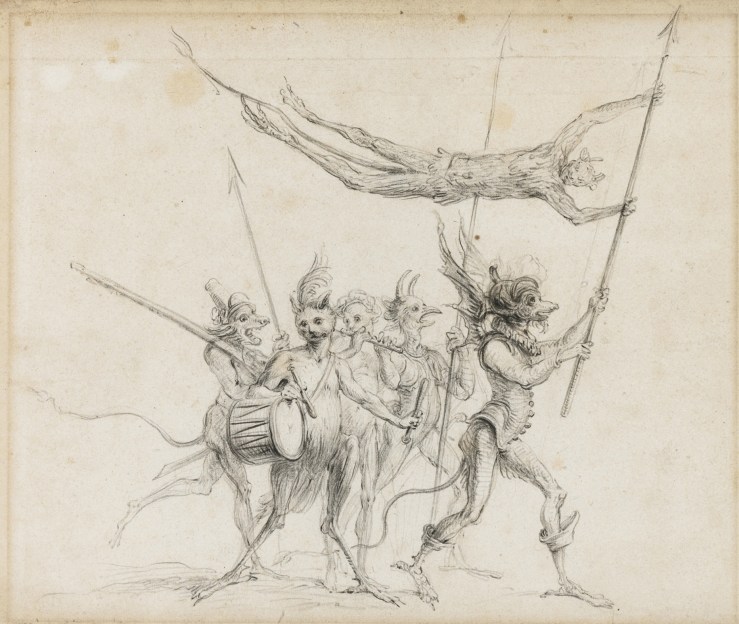
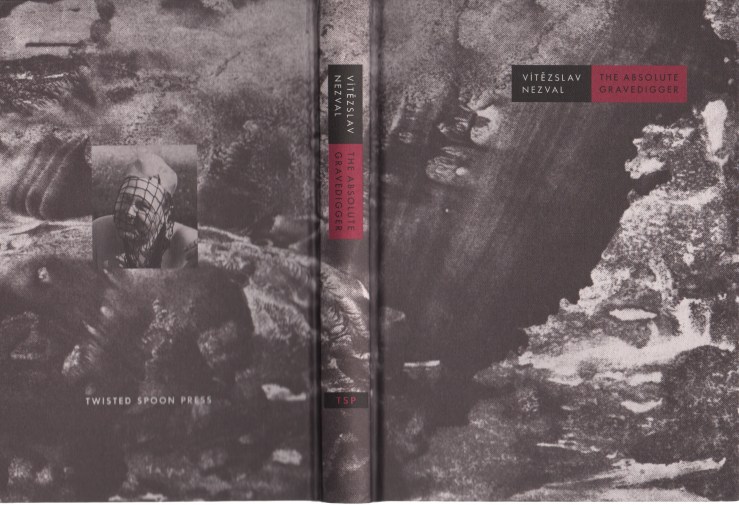
Vítězslav Nezval’s 1937 poetry collection The Absolute Gravedigger is new in English translation by Stephan Delbos and Tereza Novická, thanks to Twisted Spoon Press. As usual, Twisted Spoon’s edition is a beauty, including some of Nezval’s original illustrations.
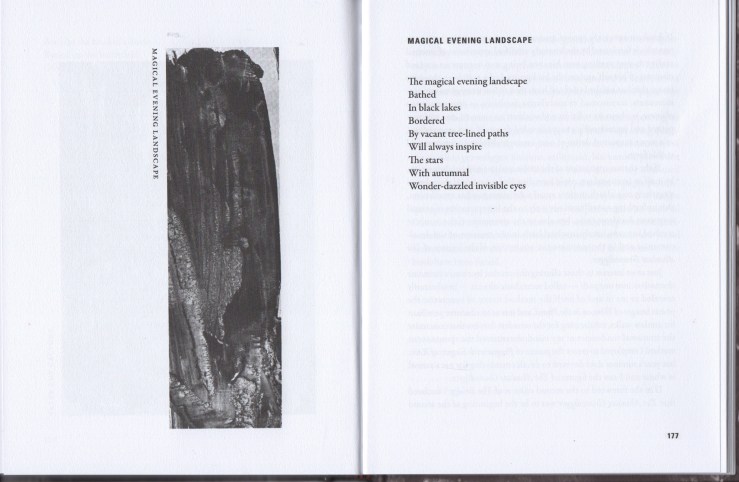
The Absolute Gravedigger seems comprised of seven “books,” and I ended up barreling through one of them, Bizarre Town, in one sitting. Nezval’s surrealist poems are seemingly spare, but the parts jar against each other in unsettling ways; Bizarre Town evokes Bosch, or Goya’s etchings.

You might know Nezval as the author of Valerie and Her Week of Wonders, which was adapted into a marvelously disturbing 1970 film by Jaromil Jireš.
More to come as I read more, but for now, here’s Twisted Press’s blurb:
The Absolute Gravedigger, published in 1937, is in many ways the culmination of Vítězslav Nezval’s work as an avant-garde poet, combining the Poetism of his earlier work and his turn to Surrealism in the 1930s with his political concerns in the years leading up to World War II. It is above all a collection of startling verbal and visual inventiveness. And while a number of salient political issues emerge from the surrealistic ommatidia, Nezval’s imagination here is completely free-wheeling and untethered to any specific locale, as he displays mastery of a variety of forms, from long-limbed imaginative free verse narratives to short, formally rhymed meditations in quatrains, to prose and even visual art (the volume includes six of his decalcomania images).
Together with Nezval’s prior two collections, The Absolute Gravedigger forms one of the most important corpora of interwar Surrealist poetry. Yet here his wild albeit restrained mix of absolute freedom and formal perfection has shifted its focus to explore the darker imagery of putrefaction and entropy, the line breaks in the shorter lyric poems slicing the language into fragments that float in the mind with open-ended meaning and a multiplicity of readings. Inspired by Salvador Dalí’s paranoiac-critical method, the poems go in directions that are at first unimaginable but continue to evolve unexpectedly until they resolve or dissolve – like electron clouds, they have a form within which a seemingly chaotic energy reigns. Nezval’s language, however, is under absolute control, allowing him to reach into the polychromatic clouds of Surrealist uncertainty to form shapes we recognize, though never expected to see, to meld images and concepts into a constantly developing and dazzling kaleidoscope.

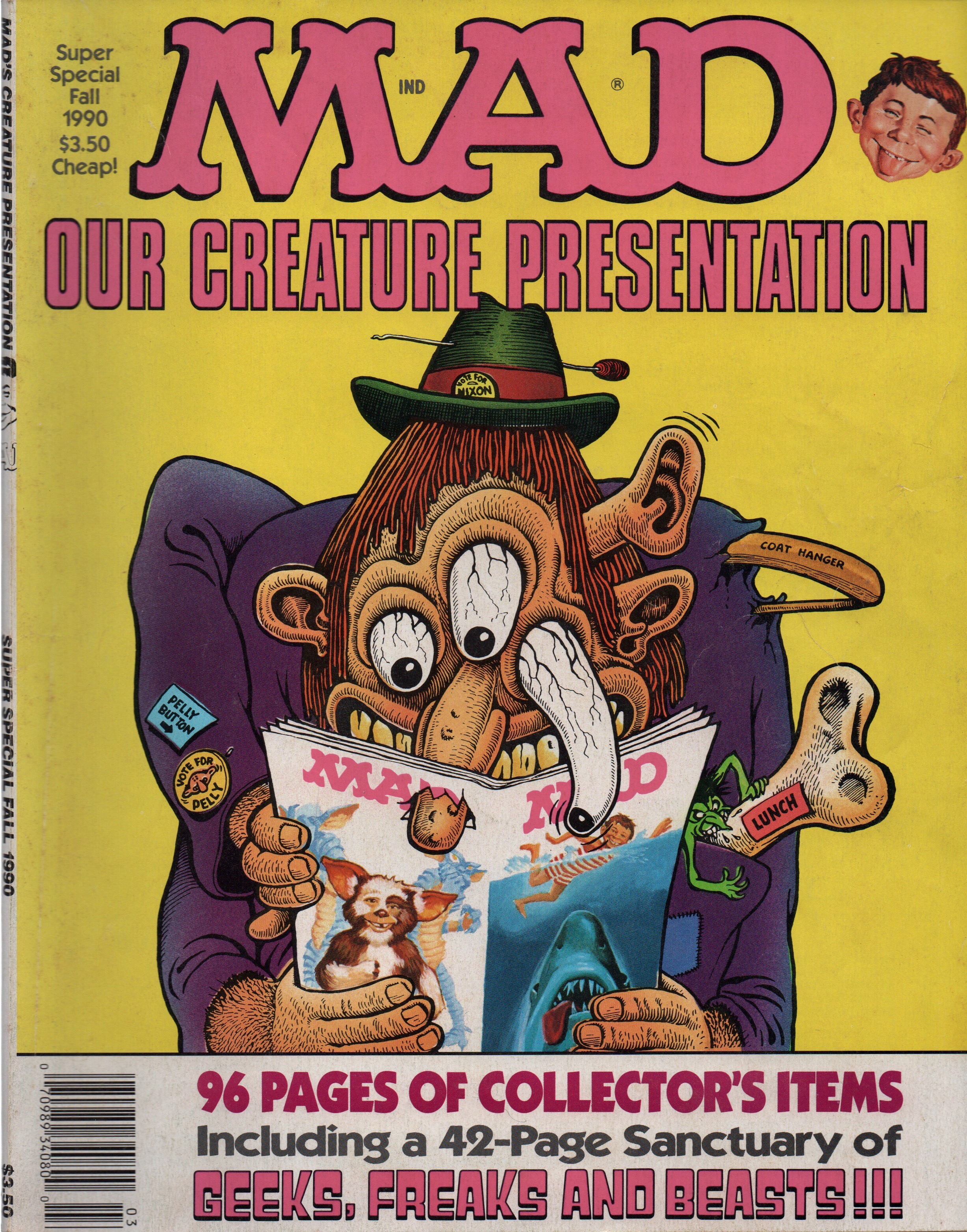
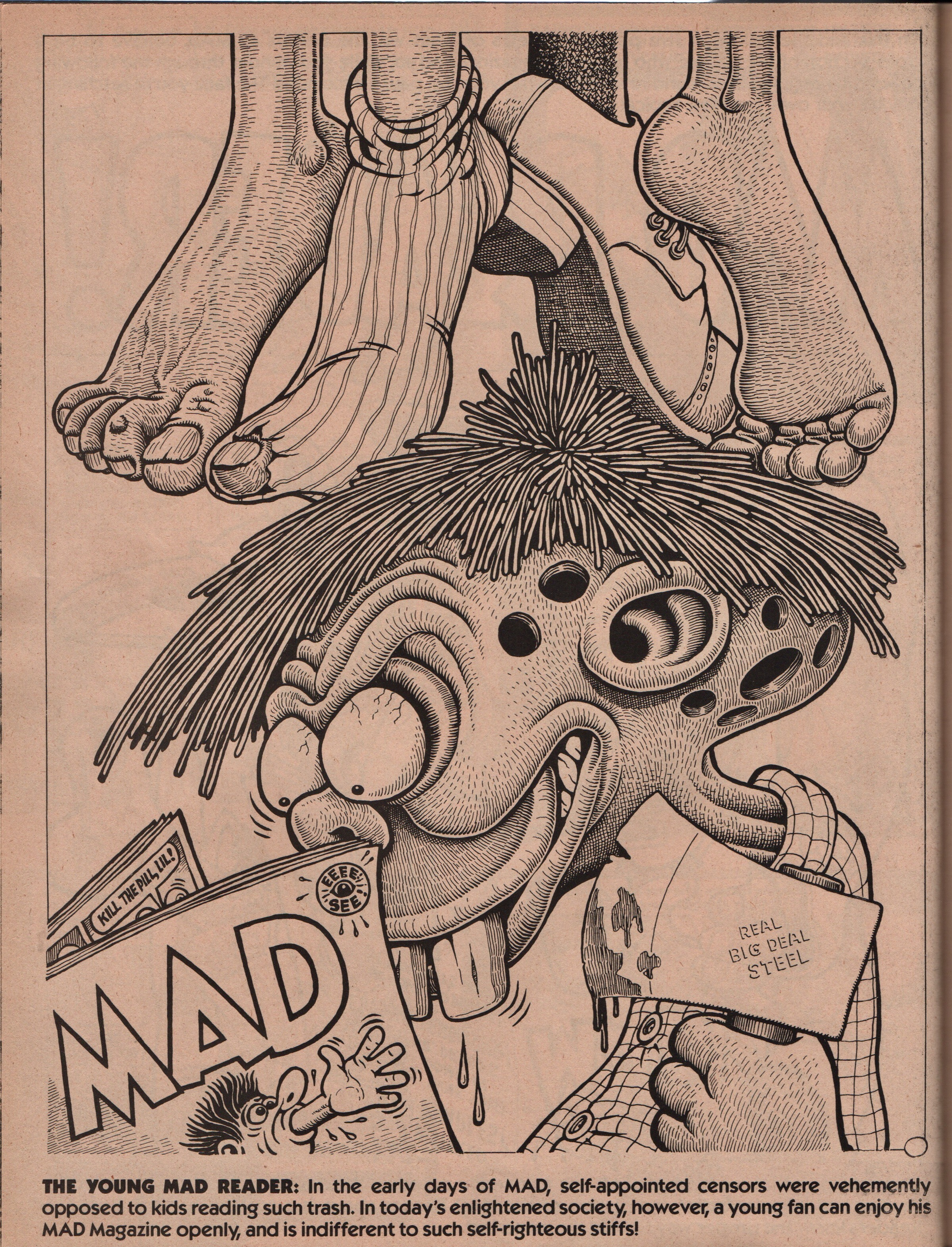
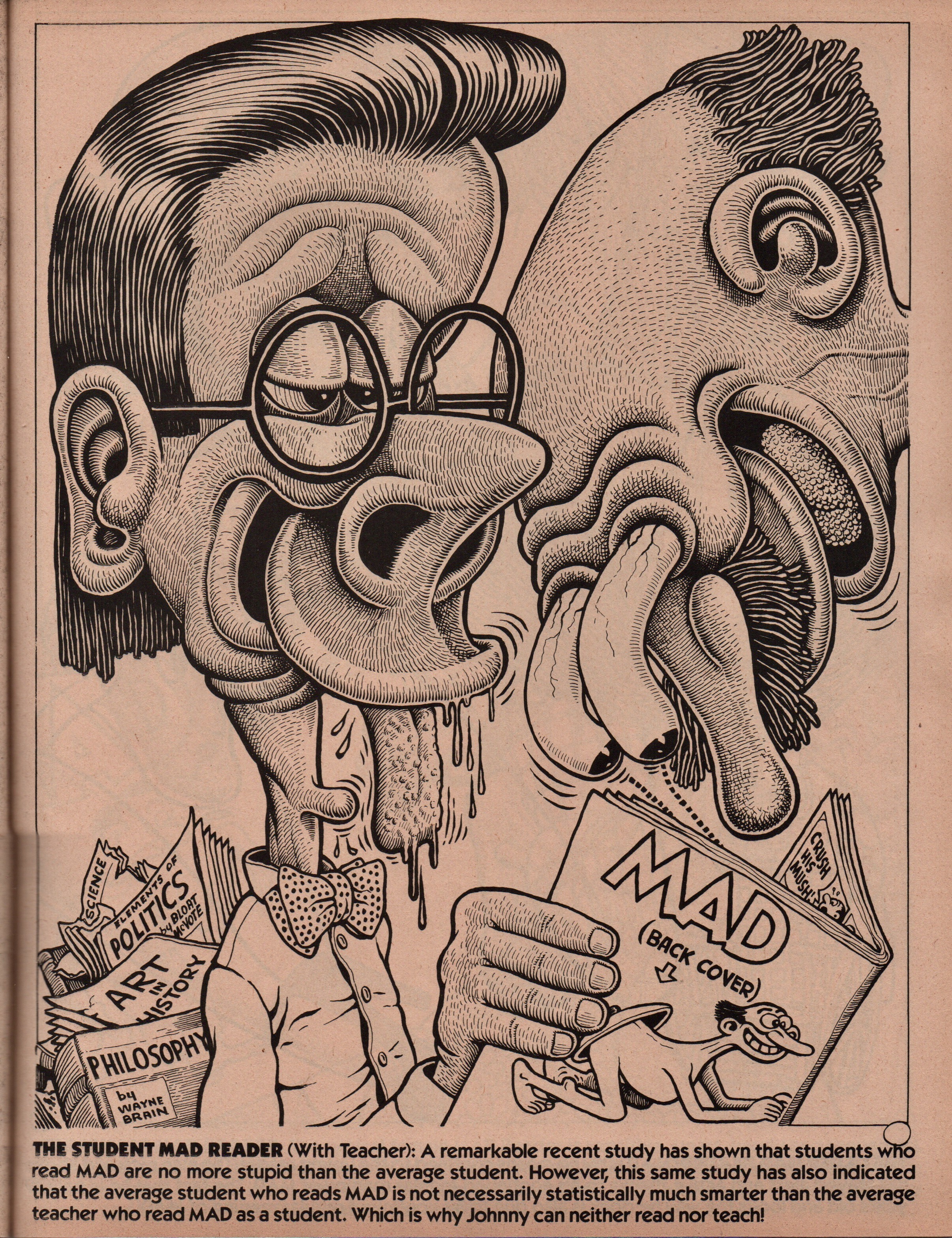
I might occasionally talk shit about my old man (what boy doesn’t?) but he always picked me up an issue of MAD.
I’m not sure when these wonderfully weird Basil Wolverton drawings were originally done/published, but they come from the Fall 1990 “Super Special” of weirdness. Note that the “Vote for Nixon” button on the cover illustration is likely an update to the “Vote for Landon” button below (Alf Landon lost in a landslide to FDR in 1936). The other internal/meta-textual differences are obvious too.
I love Basil Wolverton.


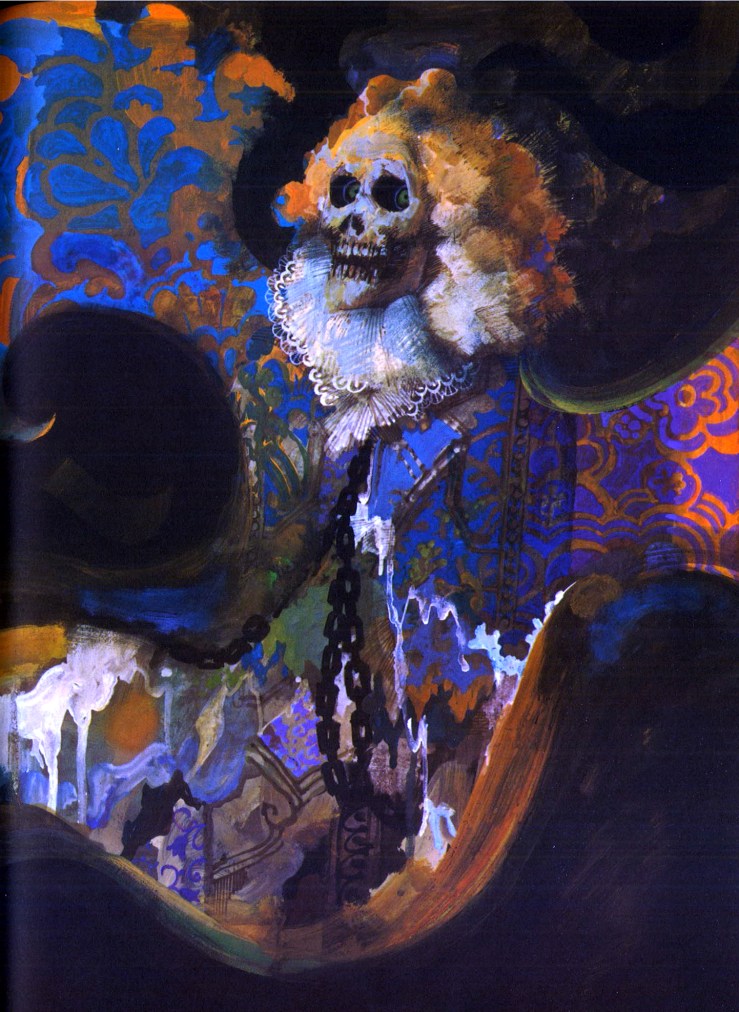
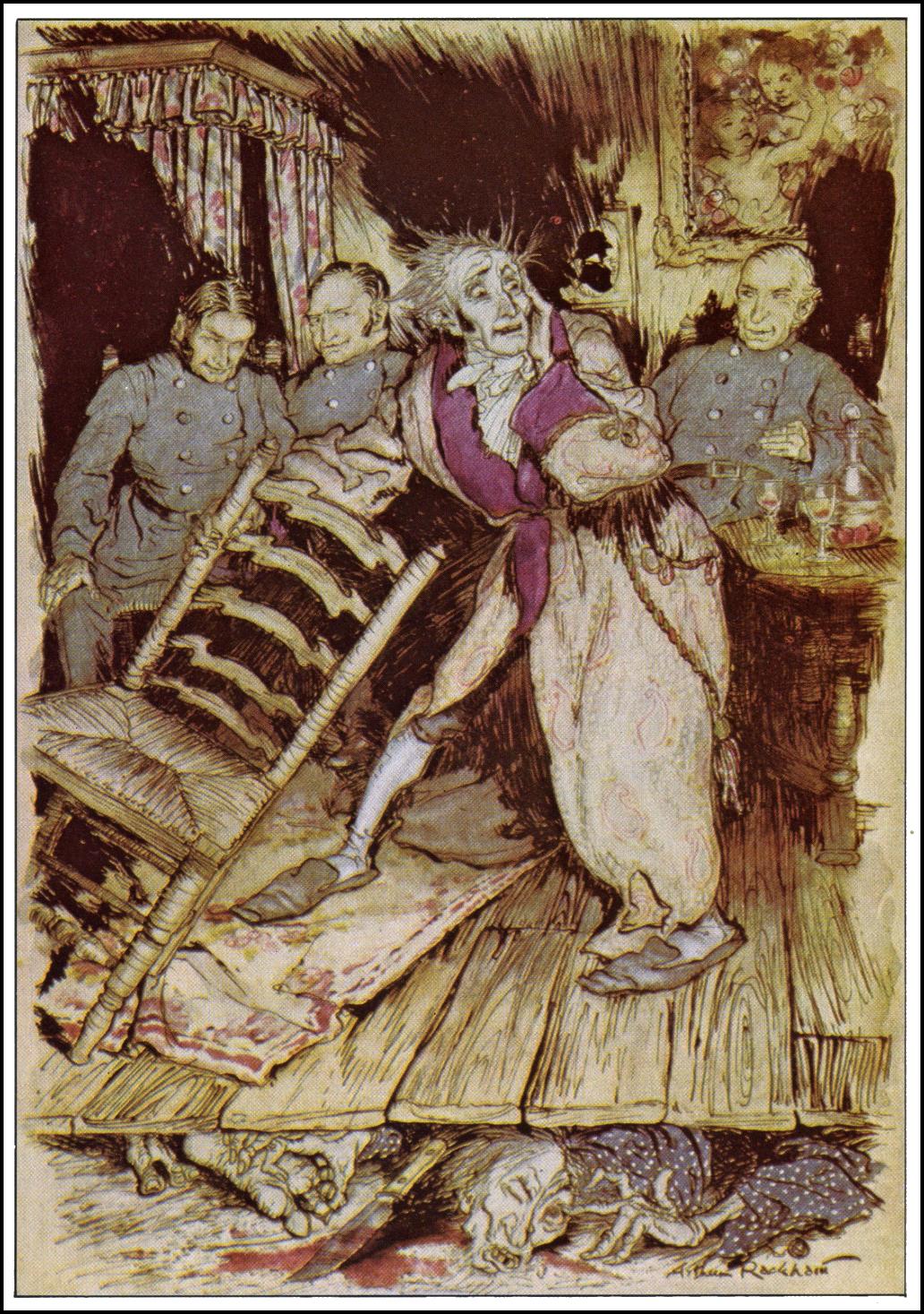
James Hill’s illustration for The Canterville Ghost by Oscar Wilde. From The Short Stories of Oscar Wilde, Heritage Press, 1968.
The Canterville Ghost
by
Oscar Wilde
When Mr. Hiram B. Otis, the American Minister, bought Canterville Chase, every one told him he was doing a very foolish thing, as there was no doubt at all that the place was haunted. Indeed, Lord Canterville himself, who was a man of the most punctilious honour, had felt it his duty to mention the fact to Mr. Otis when they came to discuss terms.
“We have not cared to live in the place ourselves,” said Lord Canterville, “since my grandaunt, the Dowager Duchess of Bolton, was frightened into a fit, from which she never really recovered, by two skeleton hands being placed on her shoulders as she was dressing for dinner, and I feel bound to tell you, Mr. Otis, that the ghost has been seen by several living members of my family, as well as by the rector of the parish, the Rev. Augustus Dampier, who is a Fellow of King’s College, Cambridge. After the unfortunate accident to the Duchess, none of our younger servants would stay with us, and Lady Canterville often got very little sleep at night, in consequence of the mysterious noises that came from the corridor and the library.”
“My Lord,” answered the Minister, “I will take the furniture and the ghost at a valuation. I have come from a modern country, where we have everything that money can buy; and with all our spry young fellows painting the Old World red, and carrying off your best actors and prima-donnas, I reckon that if there were such a thing as a ghost in Europe, we’d have it at home in a very short time in one of our public museums, or on the road as a show.”
“I fear that the ghost exists,” said Lord Canterville, smiling, “though it may have resisted the overtures of your enterprising impresarios. It has been well known for three centuries, since 1584 in fact, and always makes its appearance before the death of any member of our family.”
“Well, so does the family doctor for that matter, Lord Canterville. But there is no such thing, sir, as a ghost, and I guess the laws of Nature are not going to be suspended for the British aristocracy.”
“You are certainly very natural in America,” answered Lord Canterville, who did not quite understand Mr. Otis’s last observation, “and if you don’t mind a ghost in the house, it is all right. Only you must remember I warned you.”
Read the rest of The Canterville Ghost at Project Gutenberg.

Toward dusk, the black birds descend, millions 1 of them, to sit in the branches of trees nearby. The trees grow heavy with black birds, branches like dendrites of the Nervous System 2 fattening, deep in twittering nerve-dusk, in preparation for some important message… . 3
Later in Berlin, down in the cellar among fever-dreams with shit leaking out of him at gallons per hour, too weak to aim more than token kicks at the rats 4 running by with eyes fixed earnestly noplace, trying to make believe they don’t have a newer and dearer status among the Berliners, at minimum points on his mental health chart, when the sun is gone so totally it might as well be for good, Slothrop’s dumb idling heart 5 sez: The Schwarzgerät is no Grail, Ace, that’s not what the G in Imipolex G stands for. And you are no knightly hero 6. The best you can compare with is Tannhäuser 7, the Singing Nincompoop—you’ve been under one mountain at Nordhausen, been known to sing a song or two with uke accompaniment, and don’tcha feel you’re in a sucking marshland of sin out here, Slothrop? maybe not the same thing William Slothrop, vomiting a good part of 1630 away over the side of that Arbella 8, meant when he said “sin.” . . . But what you’ve done is put yourself on somebody else’s voyage 9—some Frau Holda, some Venus in some mountain—playing her, its, game… you know that in some irreducible way it’s an evil game. You play because you have nothing better to do 10, but that doesn’t make it right. And where is the Pope whose staff’s gonna bloom for you? 11
From page 364 of Thomas Pynchon’s novel Gravity’s Rainbow.
1 A million black birds sounds like a hyperbole of crows, but Berlin 1945, post-V-E Day—which is like, where we are here—I mean, it’s a desperate deathly ghastly place. So maybe buzzards and dreadful crows abound.
2 Cf. the discussion between nerve cells in pages 148-49.

3 What’s the important message? Oh wait, we’re still in the marvelous tree-crow-dendrite simile—the “twittering nerve-dusk”—so the “message” the crow-tree-branches awaits is just part of the, uh, metaphor. Or not? I mean, this is a novel in large part about expectation—about waiting for the bomb to fall, waiting for the Sword of Damocles to descend. And also: awaiting a message of Return.
But: What a lovely little simile. Pynchon’s powers as a prose stylist seem under-remarked upon.
4 Cf. page 359: “Last week, in the British sector someplace, Slothrop, having been asshole enough to drink out of an ornamental pond in the Tiergarten, took sick.”
The cellar, the diarrhea, the rats….I’ve written it before: Gravity’s Rainbow is a thoroughly abject novel—full of assholes (literal) and shit (literal) and toilets (literal). (And oh, also: metaphorical too, metaphorical too). Slothrop here is sick, literally evacuating—but also figuratively evacuating. A few pages later he’ll evacuate into his next identity, Rocket Man.
Cf. page 553, from Slothrop’s “Partial List of Wishes on Evening Stars for This Period”:
“Let me be able to take a shit soon.”
5 I counted 75 words in the dependent clause that precedes Pynchon’s finally introducing the independent clause—which is to say subject and verb—
“Slothrop’s dumb idling heart sez”
(My count is likely off; I counted once and I’ve had some bourbon. I counted “fever-dreams” as two words, although I think you’re not supposed to do that).
Anyway: That’s a lot of dependent-clauseauge before, like, the main idea—which I guess, from a prose/aesthetic analysis, is the, uh, main idea—ascent, suspension—and then an immediate divergence (and note how Pynchon simultaneously deflates and invigorates his predicate verb “sez” with colloquial zeal).
6 Many of Gravity’s Rainbow’s motifs almost cohere here. Pynchon highlights two of Slothrop’s ostensible “quests” — the Schwarzgerät (the mysterious “black device” that will be installed in rocket 00000 (present), and the sexy sinister plastic Imipolex G (past). (But also both, obviously: Future).
Slothrop’s dumb heart denies any knightly virtue, rejects Romanticism—and, perhaps, Modernism’s ironic obsessions with Romanticism.
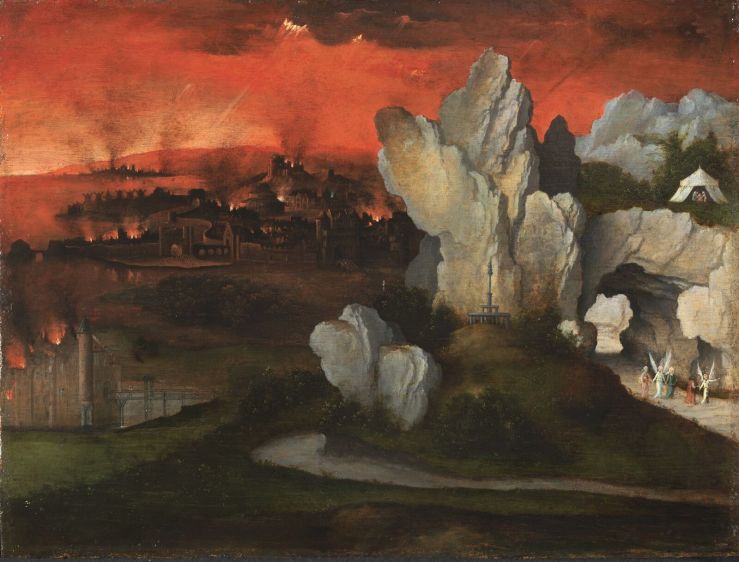
(I think the passage above, what with its ravens and Venus-denial and grail-refusal, is a tidy antonym to Rossetti’s depiction of the Grail…and yet I’d argue Pynchon’s writing bears a Pre-Raphaelite streak)—

The episode strikes me as utterly true, a moment of honest self-speech. As Emily Dickinson put it: “I like a look of Agony / Because I know it’s true.” (One of Slothrop’s ancestor’s plagiarized Ms. Dickinson on his gravestone). And yet and yet and yet…Perhaps Tyrone S. is being a bit too harsh on himself (who among us hasn’t cast a harsh gaze into the mirror?).
Slothrop expels the old identity here, the old dreams, the old, evacuating space for the arrival of “Raketemensch,” — Rocketman!
Rocketman points to an emerging postmodern hero—a comic bookish hero, perhaps—totemic, sure, but also Pop, cartoonish, textual—framed (literally) in the conventions of previous centuries’ conceptions of “heroism.”
7 Cf. page 299: “There is that not-so-rare personality disorder known as Tannhäuserism. Some of us love to be taken under mountains, and not always with horny expectations.” I annotated the page here. Slothrop seems to accept the abject mantle of a bard, a laze, a loaf, a lingerer. I think of Whitman here, proud to lean and loafe at his ease at the beginning of Song of Myself, only to “effuse [his] flesh in eddies, and drift it in lacy jags” in the poem’s closing lines. Like Whitman’s persona, Slothrop will dissipate.
8 Cf. pages 203-04 (annotations here), wherein Slothrop’s vomiting ancestor William Slothrop, in a remarkable passage of hysteron proteron, travels backwards from the New World to the Old.
9 One of the central paranoias of Gravity’s Rainbow is that you might be on their voyage. How much agency do you have in your own life? And what’s the cost of asserting that agency? How many identities do you have to evacuate? And in the end—what’s left?
10 Boredom strikes me as one of (if not the) central theme connecting Modernism, postmodernism, and post-postmodernism.
11 Cf. the Tannhäuser story/footnote 7.
Or: Simply note the motif of bloom, of fruition, of phallic life, of promise. In fuller context though—it’s a bloom too late. The question blooms from Slothrop’s self-speech, but also extends to you and me, reader.
Or: Cf. the opening of Gravity’s Rainbow. From the sixth paragraph:
“You didn’t really believe you’d be saved. Come, we all know who we are by now. No one was ever going to take the trouble to save you, old fellow. . . .”

I filled 45 minutes that I had to wait for something at my favorite used bookstore. I spent most of the time perusing the section of German books—I’d never looked at them before. I was kinda sorta browsing for a copy of Arno Schmidt’s Zettels Traum. I picked up the English translation of Zettels Traum (Bottom’s Dream) not quite two weeks ago, and I was curious to see what the original looks like. It may or may not (I’m guessing probably not) have been there—I got a bit lost. (There are almost three million books in this store; at least 1000 or so in the German section, and not particularly well-organized).
I did pick up Schmidt’s sci-fi novel The Egghead Republic, which is much much shorter (and much much more accessible) than Bottom’s Dream. Here’s the blurb:

I couldn’t help but snap some pic of some of the German-language, German-published books I perused:


 Biblioklept