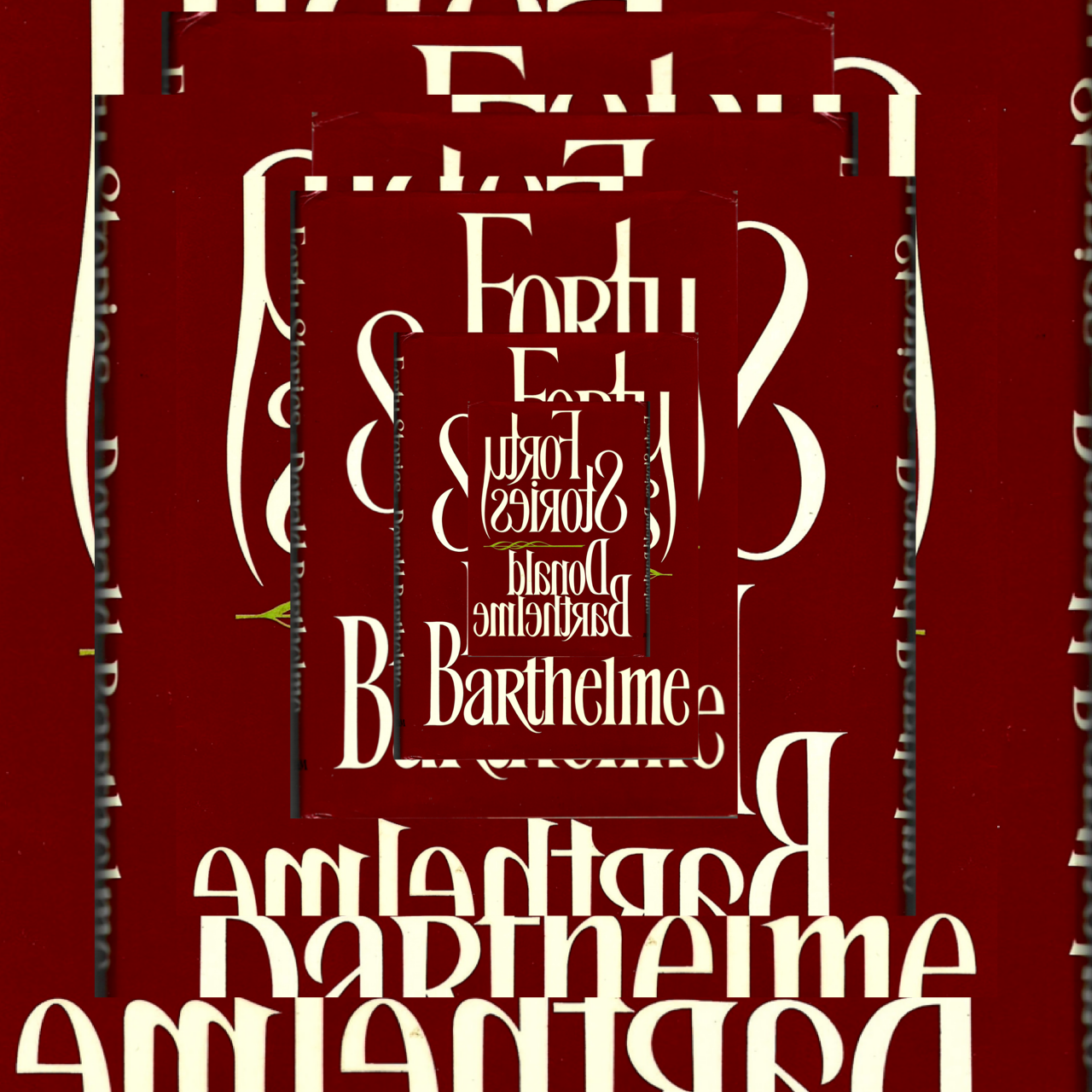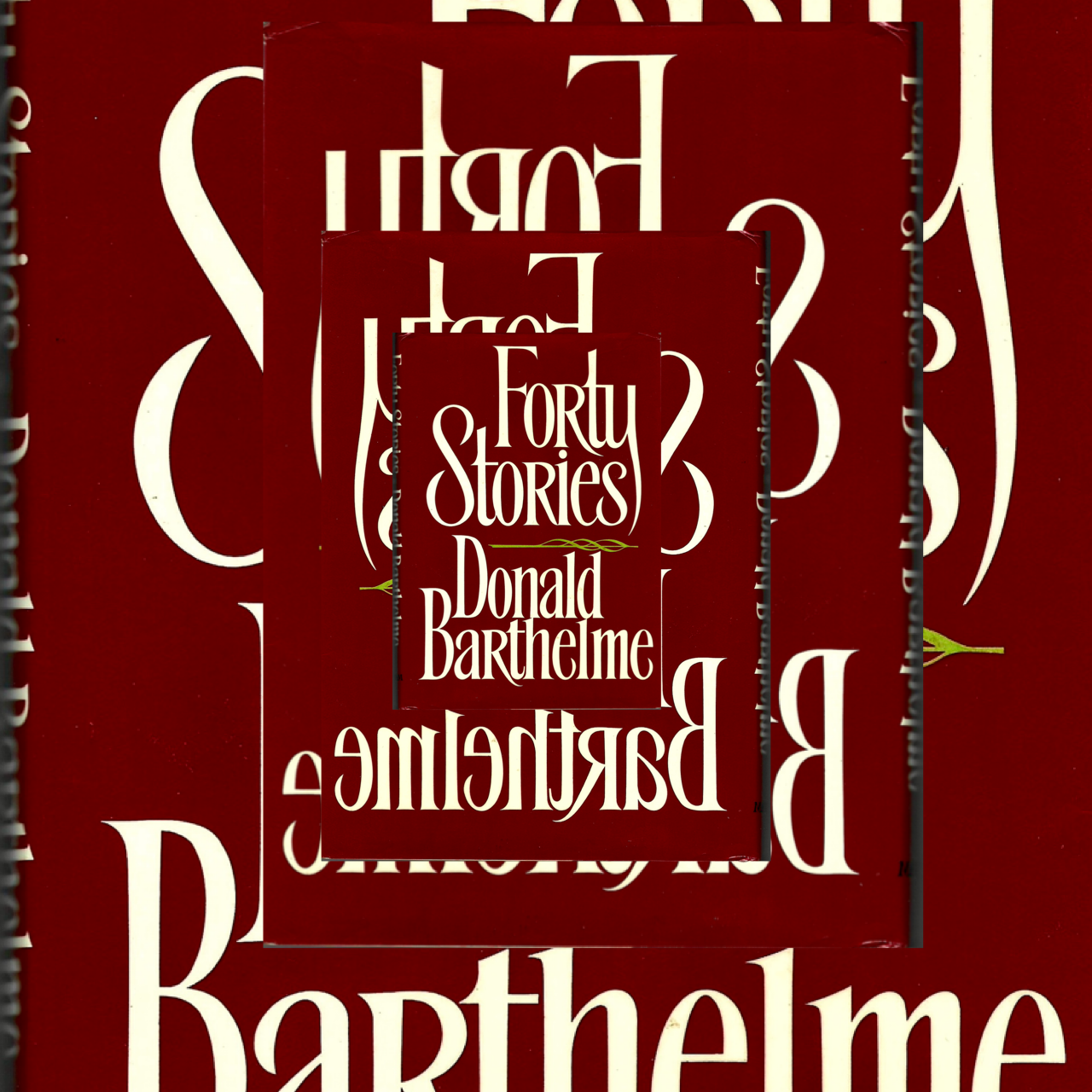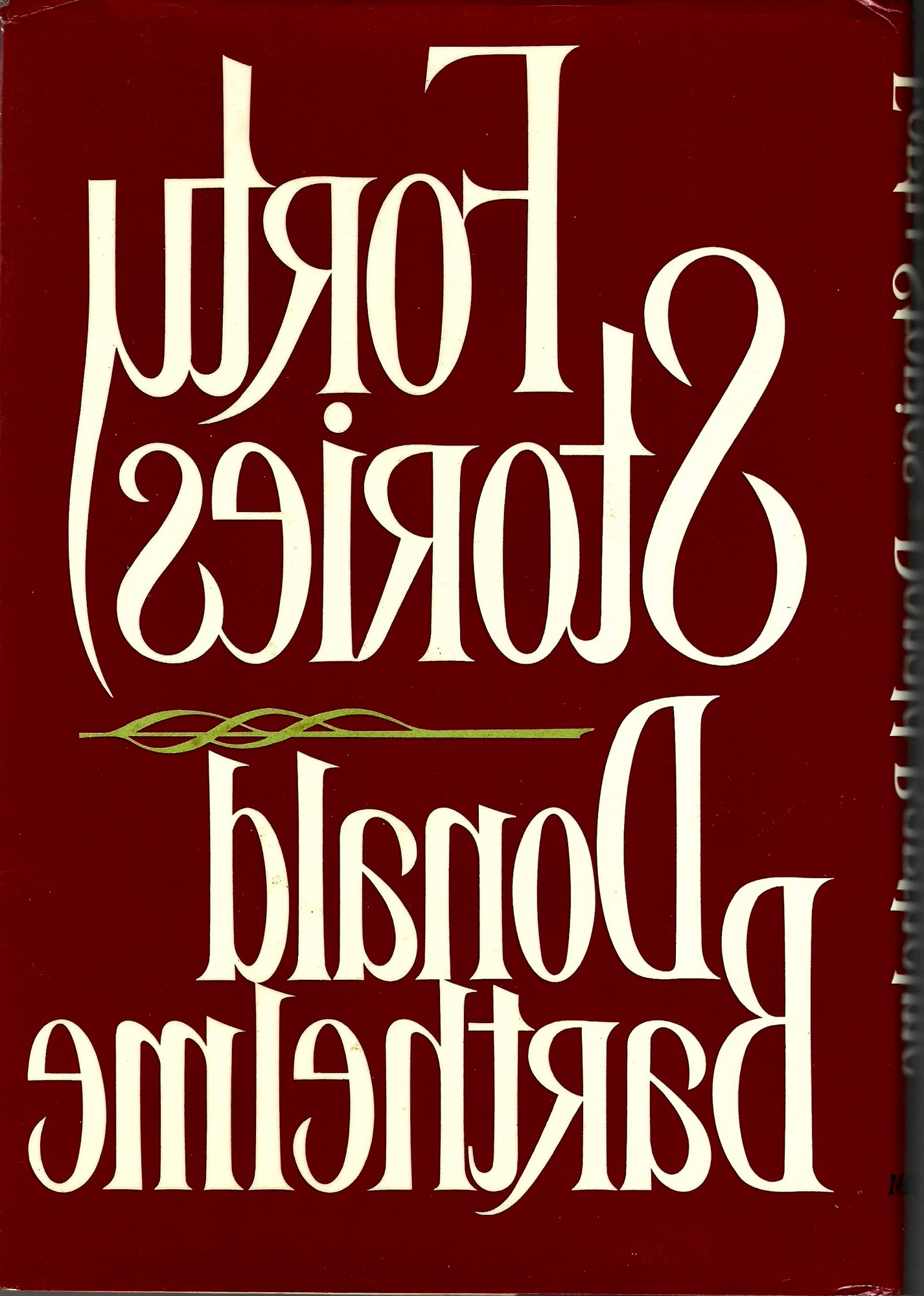
Donald Barthelme’s Forty Stories in reverse, Part IV

Previously,

Stories 40-36

Stories 35-32

Stories 31-28

27. “Some of Us Had Been Threatening Our Friend Colby” (Amateurs, 1976)

This is probably the first essential story in Forty Stories—maybe at the end of this silly project I’ll put together something like Fifty Stories, whittling down Sixty Stories and Forty Stories. Here are the first few sentences:

Some of us had been threatening our friend Colby for a long time, because of the way he had been behaving. And now he’d gone too far, so we decided to hang him. Colby argued that just because he had gone too far (he did not deny that he had gone too far) did not mean that he should be subjected to hanging. Going too far, he said, was something everybody did sometimes. We didn’t pay much attention to this argument. We asked him what sort of music he would like played at the hanging. He said he’d think about it but it would take him a while to decide.

Colby finally settles on Ive’s Fourth Symphony.

“Some of Us” showcases in a non-showy way the best of Barthelme—absurdity balanced by syntactic restraint; surreal humor weighted in the visceral specter of impending violence. It’s a very, very funny story, and while I think it resists simple allegorical interpretation, it’s nevertheless a little parcel of domestic fascism in practice. Great stuff. Read “Some of Us Had Been Threatening Our Friend Colby”  here.

26. “Pepperoni” (first published in The New Yorker, 23 Nov. 1980)

Published over four decades ago, “Pepperoni” is a depressingly prescient riff on what happens when capital decides to take over journalism. Newspapers become just another widget, a slice of pepperoni, a trifle, a nothing to sell and sell and resell:

Financially, the paper is quite healthy. The paper’s timber-lands, mining interests, pulp and paper operations, book, magazine, corrugated-box, and greeting-card divisions, film, radio, television, and cable companies, and data-processing and satellite-communications groups are all flourishing, with overall return on invested capital increasing at about eleven percent a year.

Despite the vertical integration, all is not well: “But top management is discouraged and saddened, and middle management is drinking too much.” Barthelme’s hyperbole is jaunty in 1980, where the paper’s “editorials have been subcontracted to Texas Instruments, and the obituaries to Nabisco, so that the staff will have ‘more time to think.'” But in 2024 it reads as a grim warning about the gross intersection of capital and journalism. Read “Pepperoni” here.

25. “Sentence” (City Life, 1970)

I mean what if I just…

Or a long sentence moving at a certain pace down the page aiming for the bottom-if not the bottom of this page then some other page-where it can rest, or stop for a moment to think out the questions raised by its own (temporary) existence, which ends when the page is turned, or the sentence falls out of the mind that holds it (temporarily) in some kind of embrace, not necessarily an ardent one, but more perhaps the kind of embrace enjoyed (or endured), by a wife who has just waked up and is on her way to the bathroom in the morning to wash her hair, and is bumped into by her husband, who has been lounging at the breakfast table reading the newspaper, and doesn’t see her coming out of the bedroom, but, when he bumps into her, or is bumped into by her, raises his hands to embrace her lightly, transiently, because he knows that if he gives her a real embrace so early in the morning, before she has properly shaken the dreams out of her head, and got her duds on, she won’t respond, and may even become slightly angry, and say something wounding, and so the husband invests in this embrace not so much physical or emotional pressure as he might, because he doesn’t want to waste anything-with this sort of feeling, then, the sentence passes through the mind more or less, and there is another way of describing the situation too, which is to say that the sentence crawls through the mind like something someone says to you while you are listening very hard to the FM radio, some rock group there, with its thrilling sound, and so, with your attention or the major part of it at least already rewarded, there is not much mind room you can give to the remark, especially considering that you have probably just quarreled with that person, the maker of the remark, over the radio being too loud, or something like that, and the view you take, of the remark, is that you’d really rather not hear it, but if you have to hear it, you want to listen to it for the smallest possible length of time, and during a commercial, because immediately after the commercial they’re going to play a new rock song by your favorite group, a cut that has never been aired before, and you want to hear it and respond to it in a new way, a way that accords with whatever you’re feeling at the moment, or might feel, if the threat of new experience could be (temporarily) overbalanced by the promise of possible positive benefits, or what the mind construes as such, remembering that these are often, really, disguised defeats (not that such defeats are not, at times, good for your character, teaching you that it is not by success alone that one surmounts life, but that setbacks, too, contribute to that roughening of the personality that, by providing a textured surface to place against that of life, enables you to leave slight traces, or smudges, on the face of human history-your mark) and after all, benefit-seeking always has something of the smell of raw vanity about it, as if you wished to decorate your own brow with laurel, or wear your medals to a cookout, when the invitation had said nothing about them, and although the ego is always hungry (we are told) it is well to remember that ongoing success is nearly as meaningless as ongoing lack of success, which can make you sick, and that it is good to leave a few crumbs on the table for the rest of your brethren, not to sweep it all into the little beaded purse of your soul but to allow others, too, part of the gratification, and if you share in this way you will find the clouds smiling on you, and the postman bringing you letters, and bicycles available when you want to rent them, and many other signs, however guarded and limited, of the community’s (temporary) approval of you, or at least of it’s willingness to let you believe (temporarily) that it finds you not so lacking in commendable virtues as it had previously allowed you to think, from its scorn of your merits, as it might be put, or anyway its consistent refusal to recognize your basic humanness and its secret blackball of the project of your remaining alive, made in executive session by its ruling bodies, which, as everyone knows, carry out concealed programs of reward and punishment, under the rose, causing faint alterations of the status quo, behind your back, at various points along the periphery of community life, together with other enterprises not dissimilar in tone, such as producing films that have special qualities, or attributes, such as a film where the second half of it is a holy mystery, and girls and women are not permitted to see it, or writing novels in which the final chapter is a plastic bag filled with water, which you can touch, but not drink: in this way, or ways, the underground mental life of the collectivity is botched, or denied, or turned into something else never imagined by the planners, who, returning from the latest seminar in crisis management and being asked what they have learned, say they have learned how to throw up their hands; the sentence meanwhile, although not insensible of these considerations, has a festering conscience of its own, which persuades it to follow its star, and to move with all deliberate speed from one place to another, without losing any of the “riders” it may have picked up just being there, on the page, and turning this way and that, to see what is over there, under that oddly-shaped tree, or over there, reflected in the rain barrel of the imagination, even though it is true that in our young manhood we were taught that short, punchy sentences were best (but what did he mean? doesn’t “punchy” mean punch-drunk? I think he probably intended to say “short, punching sentences,” meaning sentences that lashed out at you, bloodying your brain if possible, and looking up the word just now I came across the nearby “punkah,” which is a large fan suspended from the ceiling in India, operated by an attendant pulling a rope-that is what I want for my sentence, to keep it cool!) we are mature enough now to stand the shock of learning that much of what we were taught in our youth was wrong, or improperly understood by those who were teaching it, or perhaps shaded a bit, the shading resulting from the personal needs of the teachers, who as human beings had a tendency to introduce some of their heart’s blood into their work, and sometimes this may not have been of the first water, this heart’s blood, and even if they thought they were moving the “knowledge” out, as the Board of Education had mandated, they could have noticed that their sentences weren’t having the knockdown power of the new weapons whose bullets tumble end-over-end (but it is true that we didn’t have these weapons at that time) and they might have taken into account the fundamental dubiousness of their project (but all the intelligently conceived projects have been eaten up already, like the moon and the stars) leaving us, in our best clothes, with only things to do like conducting vigorous wars of attrition against our wives, who have now thoroughly come awake, and slipped into their striped bells, and pulled sweaters over their torsi, and adamantly refused to wear any bras under the sweaters, carefully explaining the political significance of this refusal to anyone who will listen, or look, but not touch, because that has nothing to do with it, so they say; leaving us, as it were, with only things to do like floating sheets of Reynolds Wrap around the room, trying to find out how many we can keep in the air at the same time, which at least gives us a sense of participation, as though we were Buddha, looking down at the mystery of your smile, which needs to be investigated, and I think I’ll do that right now, while there’s still enough light, if you’ll sit down over there, in the best chair, and take off all your clothes, and put your feet in that electric toe caddy (which prevents pneumonia) and slip into this permanent press hospital gown, to cover your nakedness-why, if you do all that, we’ll be ready to begin! after I wash my hands, because you pick up an amazing amount of exuviae in this city, just by walking around in the open air, and nodding to acquaintances, and speaking to friends, and copulating with lovers, in the ordinary course (and death to our enemies! by and by)-but I’m getting a little uptight, just about washing my hands, because I can’t find the soap, which somebody has used and not put back in the soap dish, all of which is extremely irritating, if you have a beautiful patient sitting in the examining room, naked inside her gown, and peering at her moles in the mirror, with her immense brown eyes following your every movement (when they are not watching the moles, expecting them, as in a Disney nature film, to exfoliate) and her immense brown head wondering what you’re going to do to her, the pierced places in the head letting that question leak out, while the therapist decides just to wash his hands in plain water, and hang the soap! and does so, and then looks around for a towel, but all the towels have been collected by the towel service, and are not there, so he wipes his hands on his pants, in the back (so as to avoid suspicious stains on the front) thinking: what must she think of me? and, all this is very unprofessional and at-sea looking! trying to visualize the contretemps from her point of view, if she has one (but how can she? she is not in the washroom) and then stopping, because it is finally his own point of view that he cares about and not hers, and with this firmly in mind, and a light, confident step, such as you might find in the works of Bulwer-Lytton, he enters the space she occupies so prettily and, taking her by the hand, proceeds to tear off the stiff white hospital gown (but no, we cannot have that kind of pornographic merde in this majestic and high-minded sentence, which will probably end up in the Library of Congress) (that was just something that took place inside his consciousness, as he looked at her, and since we know that consciousness is always consciousness of something, she is not entirely without responsibility in the matter) so, then, taking her by the hand, he falls into the stupendous white puree of her abyss, no, I mean rather that he asks her how long it has been since her last visit, and she says a fortnight, and he shudders, and tells her that with a condition like hers (she is an immensely popular soldier, and her troops win all their battles by pretending to be forests, the enemy discovering, at the last moment, that those trees they have eaten their lunch under have eyes and swords) (which reminds me of the performance, in 1845, of Robert-Houdin, called The Fantastic Orange Tree, wherein Robert-Houdin borrowed a lady’s handkerchief, rubbed it between his hands and passed it into the center of an egg, after which he passed the egg into the center of a lemon, after which he passed the lemon into the center of an orange, then pressed the orange between his hands, making it smaller and smaller, until only a powder remained, whereupon he asked for a small potted orange tree and sprinkled the powder thereupon, upon which the tree burst into blossom, the blossoms turning into oranges, the oranges turning into butterflies, and the butterflies turning into beautiful young ladies, who then married members of the audience), a condition so damaging to real-time social intercourse of any kind, the best thing she can do is give up, and lay down her arms, and he will lie down in them, and together they will permit themselves a bit of the old slap and tickle, she wearing only her Mr. Christopher medal, on its silver chain, and he (for such is the latitude granted the professional classes) worrying about the sentence, about its thin wires of dramatic tension, which have been omitted, about whether we should write down some natural events occurring in the sky (birds, lightning bolts), and about a possible coup d’etat within the sentence, whereby its chief verb would be-but at this moment a messenger rushes into the sentence, bleeding from a hat of thorns he’s wearing, and cries out: “You don’t know what you’re doing! Stop making this sentence, and begin instead to make Moholy-Nagy cocktails, for those are what we really need, on the frontiers of bad behavior!” and then he falls to the floor, and a trap door opens under him, and he falls through that, into a damp pit where a blue narwhal waits, its horn poised (but maybe the weight of the messenger, falling from such a height, will break off the horn)-thus, considering everything very carefully, in the sweet light of the ceremonial axes, in the run-mad skimble-skamble of information sickness, we must make a decision as to whether we should proceed, or go back, in the latter case enjoying the pathos of eradication, in which the former case reading an erotic advertisement which begins, How to Make Your Mouth a Blowtorch of Excitement (but wouldn’t that overtax our mouthwashes?) attempting, during the pause, while our burned mouths are being smeared with fat, to imagine a better sentence, worthier, more meaningful, like those in the Declaration of Independence, or a bank statement showing that you have seven thousand kroner more than you thought you had-a statement summing up the unreasonable demands that you make on life, and one that also asks the question, if you can imagine these demands, why are they not routinely met, tall fool? but of course it is not that query that this infected sentence has set out to answer (and hello! to our girl friend, Rosetta Stone, who has stuck by us through thick and thin) but some other query that we shall some day discover the nature of, and here comes Ludwig, the expert on sentence construction we have borrowed from the Bauhaus, who will-“Guten Tag, Ludwig!”-probably find a way to cure the sentence’s sprawl, by using the improved way of thinking developed in Weimer-“I am sorry to inform you that the Bauhaus no longer exists, that all of the great masters who formerly thought there are either dead or retired, and that I myself have been reduced to constructing books on how to pass the examination for police sergeant”-and Ludwig falls through the Tugendhat House into the history of man-made objects; a disappointment, to be sure, but it reminds us that the sentence itself is a man-made object, not the one we wanted of course, but still a construction of man, a structure to be treasured for its weakness, as opposed to the strength of stones

Is good if not great.

24. “The Temptation of St. Anthony” (Sadness, 1972)

After rereading this one, the thought that dominated my stupid brain was, How the fuck did an editor allow DB to use the word “ineffable” four times in this short story? He uses a version of the word here, in this nice little excerpt in which one of the things that St. Anthony did was the passive doing of being mugged:

 There was the ineffableness I’ve already mentioned, and there were certain things that he did. He was mugged, for example. That doesn’t happen too often here, but it happened to him. It was at night, somebody jumped on him from behind, grabbed him around the neck and began going through his pockets. The man only got a few dollars, and then he threw St. Anthony down on the sidewalk (he put one leg in front of the saint’s legs and shoved him) and then began to run away. St. Anthony called after him, held up his hand, and said, “Don’t you want the watch?” It was a good watch, a Bulova. The man was thunderstruck. He actually came back and took the watch off St. Anthony’s wrist. He didn’t know what to think. He hesitated for a minute and then asked St. Anthony if he had bus fare home. The saint said it didn’t matter, it wasn’t far, he could walk. Then the mugger ran away again.

If not essential, “St. Anthony” is a robust and colorful example of DB riffing in his prime. Read “The Temptation of St. Anthony” here.

22 Nov. 2024

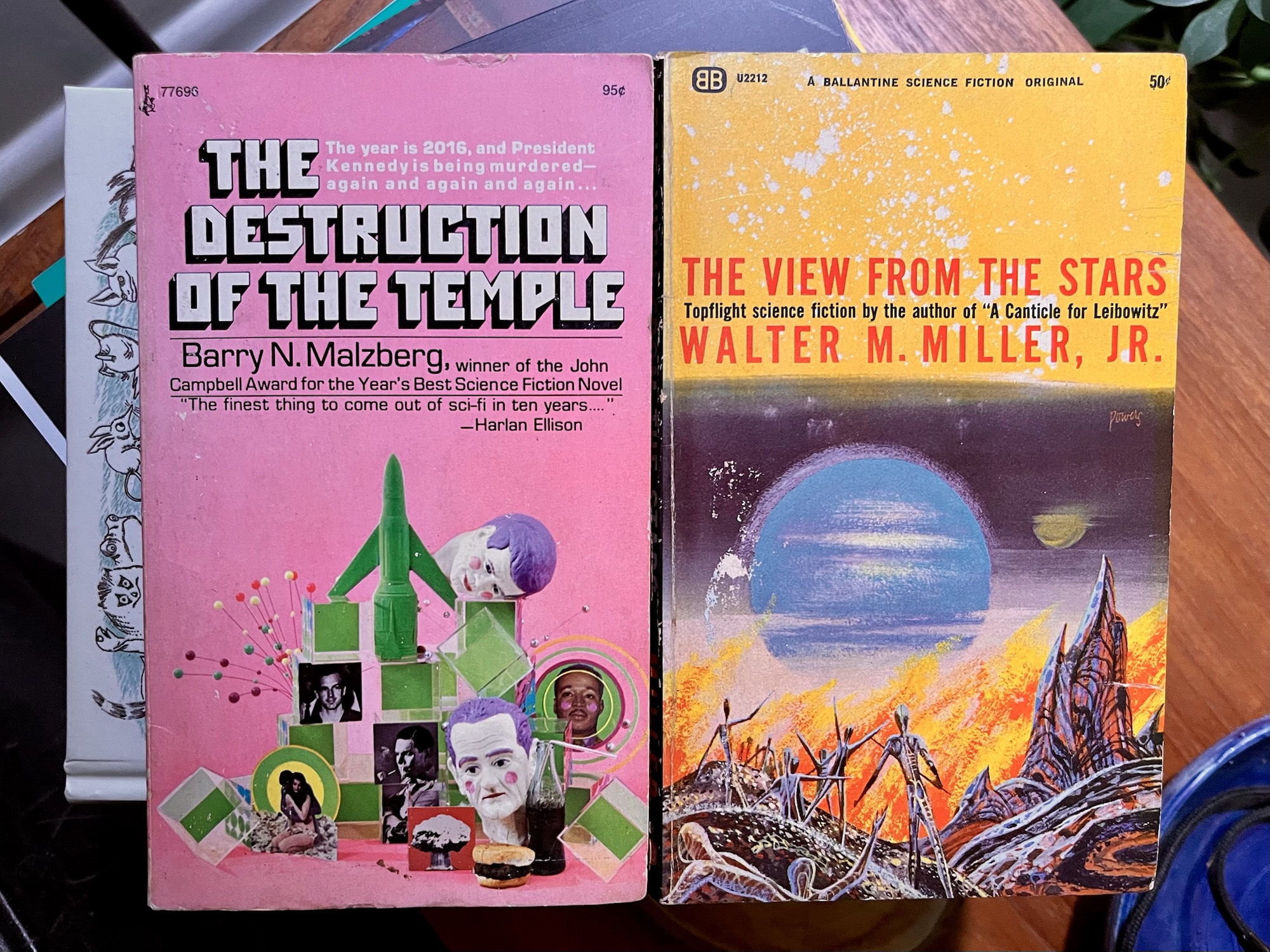
Bought some books today, mass-market paperbacks by Barry N. Malzberg and Walter M. Miller, Jr. I don’t need them and honestly my eyes are so bad by now that I probably couldn’t make it through one—I’ll have to find them online probably. But they were so cheap and such a cheap indulgence and so lovely as objects.

I’ve only ever come across two Walter M. Miller Jr. books: A Canticle for Leibowitz, a fantastic post-apocalyptic western theodicy, and its sequel, Saint Leibowitz and the Wild Horse Woman, which, for whatever reasons, I’ve chosen to abstain from reading. His 1965 novel The View from the Stars looks fairly generic but I picked it up anyway. I also picked up Barry N. Malzberg’s The Destruction of the Temple, simply because it looks so goofy. I listened to an audiobook of his 1975 novel Galaxies earlier this year. It wasn’t very good, but it was also fascinating, a metatextual mess dripping with anxiety about/against the “legit” lit of Barthelme, Barth, Pynchon, et al. I found pirated copies of two “erotic” novels he wrote under the pseudonym Gerrold Watkins, 1969’s Southern Comfort and 1970’s A Satyr’s Romance. Both were better than Galaxies, and not nearly as horny as, say, Robert Coover’s pornographies. Southern Comfort is actually a pretty good novel. (I mean it’s also, like, very deeply problematic in many ways, but those are the same ways that maybe makes it so more interesting than so-called “legit” so-called “literary” fiction.)

As a weird bit of chaotic (serendipity is not the right word) coincidence, The Destruction of the Temple features this blurb/description:

The year is 2016, and President Kennedy is being murdered – again and again and again. The director has come to the charred ruins of New York to re-enact a mad dream from the past – the assassination of President Kennedy.

JFK was assassinated 22 Nov. 1963, of course, sixty years ago today.

Donald Barthelme’s Forty Stories in reverse, Part III

Previously,

Stories 40-36

Stories 35-32

31. “Sakrete” (first published in The New Yorker, 25 Sep. 1983)

“Sakrete” is a silly little domestic riff about garbage can theft, rats, and an alcoholic trying to work with concrete. It’s not a very good story and I have no idea why it was included in Forty Stories. I do like that it shows a general respect for garbage cans and garbage collection (very interested parties should check out Stephen Dixon’s excellent novel Garbage). Here is the last paragraph, the highlight of the story:

 There are now no garbage cans on our street—no garbage cans left to steal. A committee of rats has joined with the Special Provisional committee in order to deal with the situation, which, the rats have made known, is attracting unwelcome rat elements from other areas of the city. Members of the two committees exchange secret grips, grips that I know not of. My wife drives groups of rats here and there in her yellow Pontiac convertible, attending important meetings. The crisis, she says, will be a long one. She has never been happier.

30. “Porcupines At The University” (Amateurs, 1976)

Another trifle—am I regretting this project, this rereading of Forty Stories? The stories in Sixty Stories are so, so much stronger—and those stories were organized chronologically. Going backwards through these is not really going backwards through time, through the artist’s anti-maturation, but rather just, like, making it more difficult to find one’s place in a book. “Porcupines” is a goof on academia that — and I say this as a compliment — at best reads like an alcoholic’s surrealist riff on a college film. Skip it!

29. “The Catechist” (Sadness , 1972)

This is a good story, “The Catechist.” But also a very Catholic one, without being, like, small-c catholic. There’s a bit of narrativizing here that Barthelme would eventually dispense with in his dialogues, the form that he would eventually settle on for his short stories. I say “settle on” but Barthelme died quite young, or, it seems to me, at 45, quite young—dying at 58. Barthelme died from throat cancer, probably a result of his alcoholism (pure conjecture on my part, this last clause):

The catechist reads from his book. “The candidate should be questioned as to his motives for becoming a Christian.”
I think: My motives?
He says: “Tell me about yourself.”
I say: “I’m forty. I have bad eyes. An enlarged liver.”
“That’s the alcohol,” he says.
“Yes,” I say.
“You’re very much like your father, there.”
“A shade more avid.”

28. “Lightning” (Overnight to Many Distant Cities, 1983)

This is a great story. Or at least a very good story, unexpectedly so, written a mode approaching near-realism or even near-dirty-realism. Was Barthelme flexing his muscles in the mirror after having read a story by Raymond Carver? Probably not, but I like to imagine it (I imagine his muscles beefier and musclier than they likely were). “Lightning” has a fairly straightforward ( and unBarthelemesque) plot:

Edward Connors, on assignment for Folks, set out to interview nine people who had been struck by lightning. “Nine?” he said to his editor, Penfield. “Nine, ten,” said Penfield, “doesn’t matter, but it has to be more than eight.” “Why?” asked Connors, and Penfield said that the layout was scheduled for five pages and they wanted at least two people who had been struck by lightning per page plus somebody pretty sensational for the opening page. “Slightly wonderful,” said Penfield, “nice body, I don’t have to tell you, somebody with a special face. Also, struck by lightning.”

The story is ultimately a romantic comedy, with reporter Edward finally finding his “face”:

People would dig slant wells for this woman, go out into a producing field with a tank truck in the dead of night and take off five thousand gallons of somebody else’s crude, write fanciful checks, establish Pyramid Clubs with tony marble-and-gold headquarters on Zurich’s Bahnhofstrasse. What did he have to offer?

He finds something to offer. This is probably the best one yet in Forty Stories (in reverse, anyway).

19 Nov. 2024 (Blog about missing GY!BE and Alan Sparhawk this weekend in Atlanta)

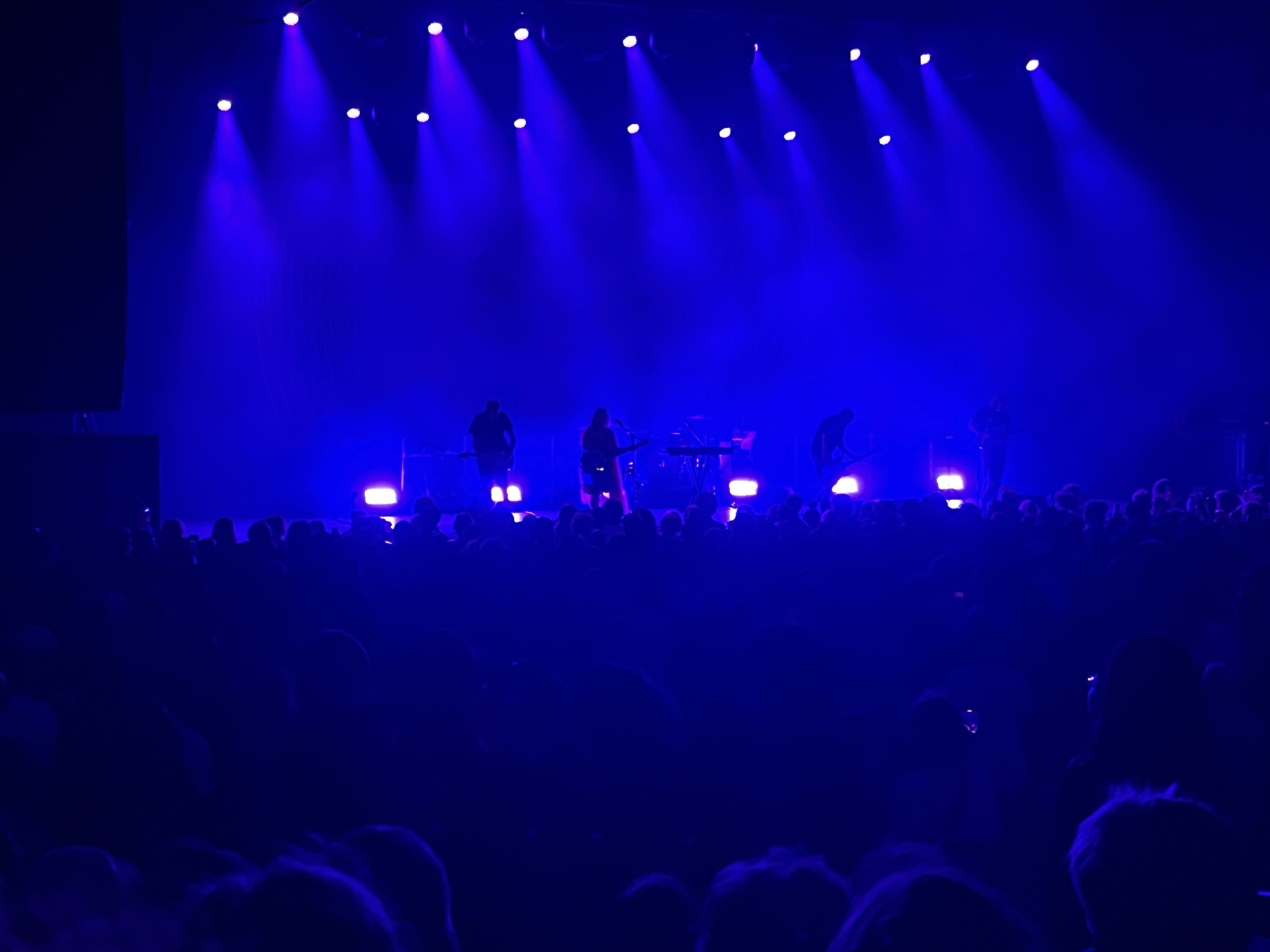
This is Friday—not today, I mean, this, this blog, is Friday, four or five days ago, depending on how you count such things. We were maybe fifteen or twenty minutes on the road heading northwest to Atlanta—my wife driving the first leg before we stopped for gas—when I checked social media again to see if Godspeed You! Black Emperor were still going to play that night. They were not. This information came via opener Low legend Alan Sparhawk, who had reported the past two nights’ shows canceled.

We headed north anyway. The kids had left school early; my daughter pointed out that she had already missed an AP Bio test and that she wasn’t going with me and the boy to the show anyway, she just wanted to go to Atlanta to hang out. Fair point, of course.

My son was bummed and I was bummed. I don’t know exactly how he came to Godspeed You! Black Emperor’s strange, hypnotic, droney anthems—via an algorithm, really—but a few years ago I heard him blasting Lift Your Skinny Fists Like Antennas to Heaven in his bedroom. I gave him my copy of their debut LP, F♯ A♯ ∞, which I’d bought from the band back in 1998 or 1999 when they opened for Low at a record story I was working at in Florida. They knocked our socks off. It seemed there were more Godspeeds Yous than audience members, and to be clear, the tiny record store was packed. It was a summer afternoon in Florida; very hot and very sunny, a throbbing miasma of sound across Hemming Park, now James Weldon Johnson Park, in beautiful ugly downtown Jacksonville.

(It was just such a night my friend Travis was arrested for skateboarding across Laura Street. Jayskating. (I don’t think it was the same night.))

After the show I bought their record. It had a pouch crammed with incidentals—flattened pennies, a Canadian stamp, some illustrated scraps. I think I listened to it a million times that summer. One of the guys in the band asked me where they could get some hash in Jacksonville. I suggested the Waffle House. Low played after; everyone sat down, exhausted from what Godspeed had required. It was lovely. Perfect day.

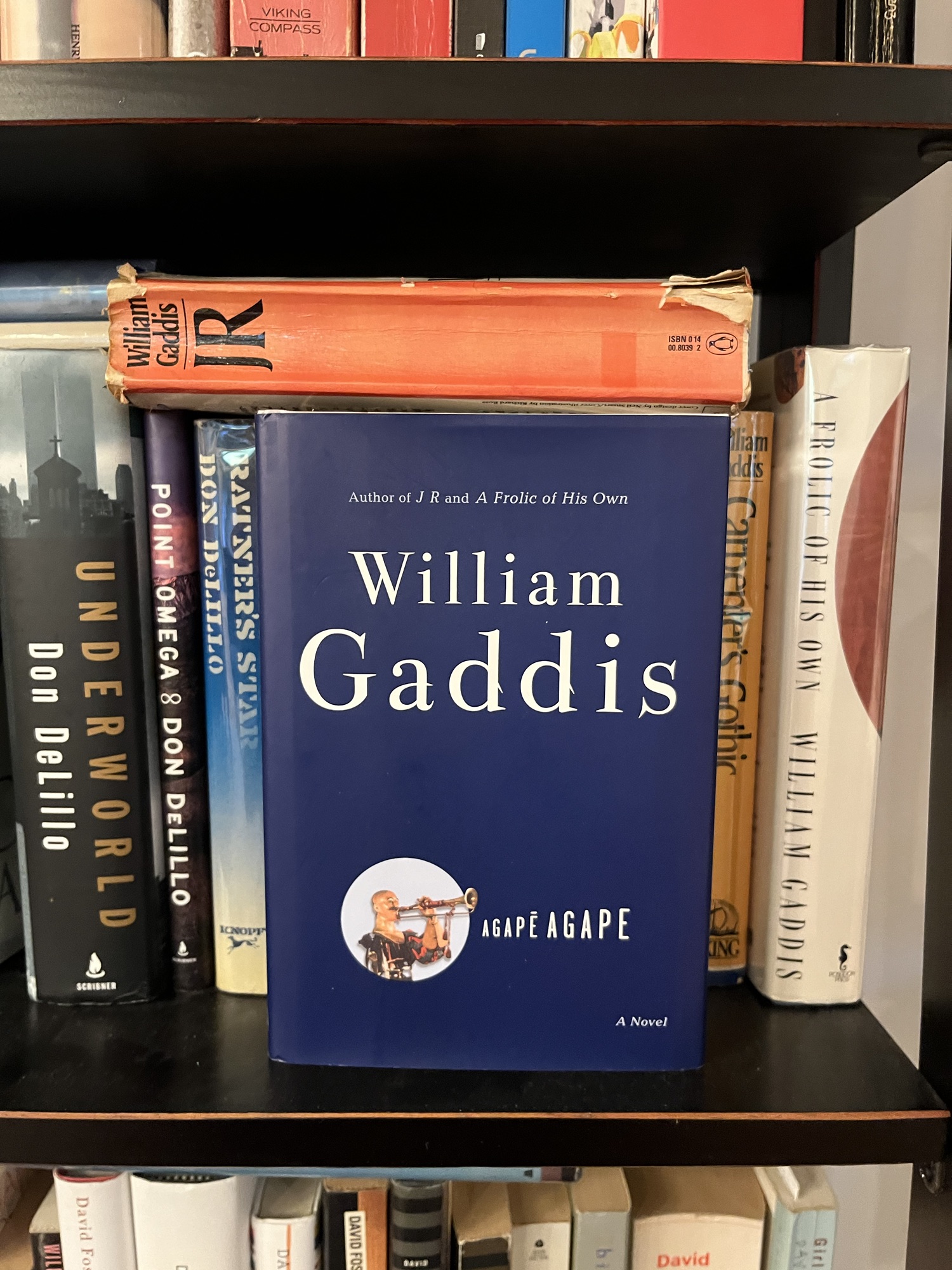
I had really wanted to experience my imaginative inversion of this concert this past weekend, but it didn’t emerge. I mean Alan Sparhawk, whose new record is so strange and daring and wonderful—I wanted to see that with my kid, who, he, my kid, wanted to see the ensemble Godspeed do their drone magic. I bought him an Aphex Twin record at Wax n’ Facts as a consolation prize, and he bought himself the first volume of Katsuhiro Otomo’s Akira at A Capella Books. I picked up a first edition hardback of William Gaddis’s last novel Agapē Agape.

And so well we made a weekend of it, browsing book stores and record stores and walking the Beltline. Love that city and my best wishes to GY!BE founding member, Efrim Menuck—I hate that we missed you on the tour but I hope that your health recovers. Thank you for making music my son and I love. 


Paul Valéry’s Monsieur Teste (Book acquired, 14 Nov. 2024)

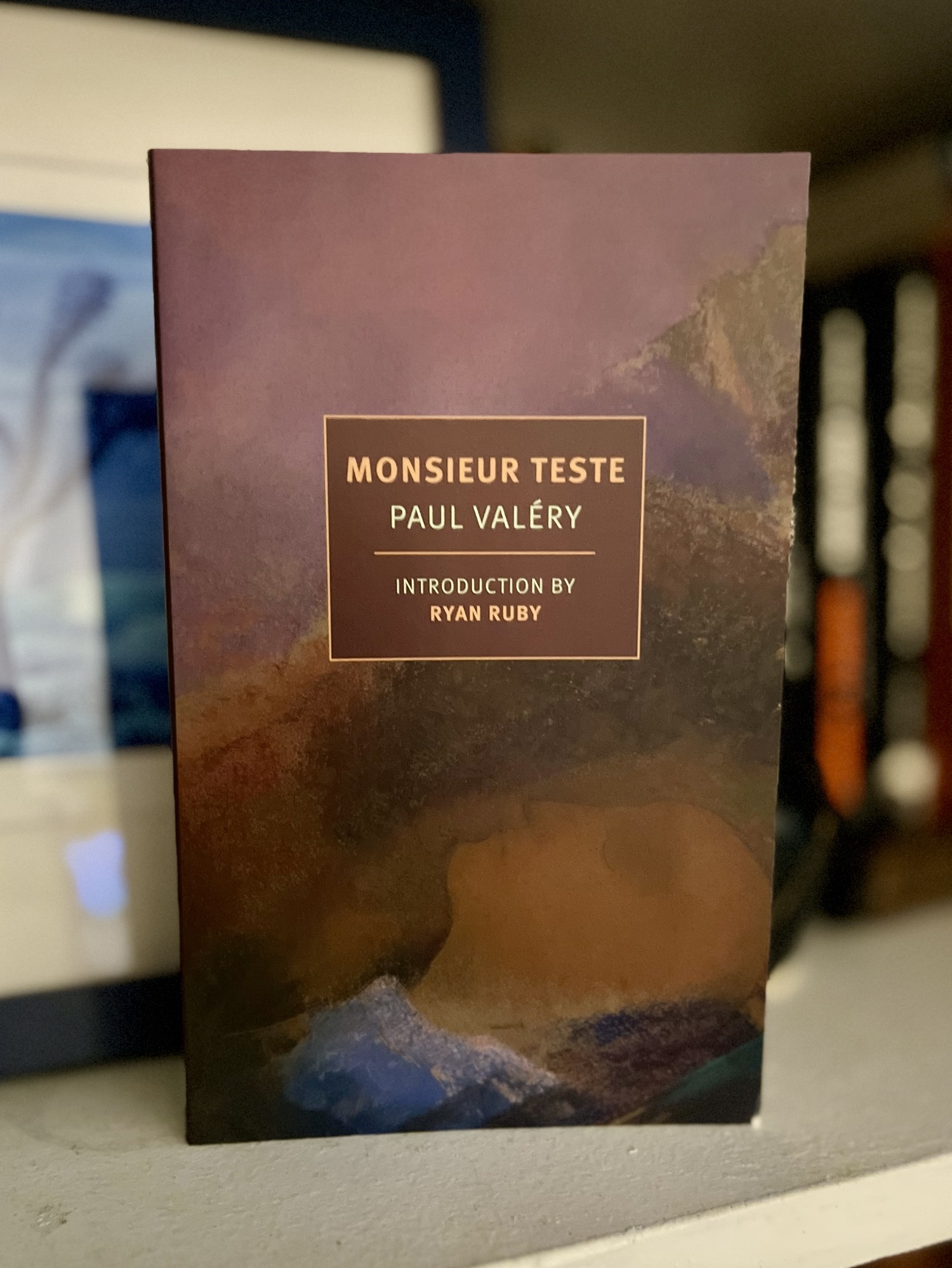
Got a review copy of Paul Valéry’s Monsieur Teste, a slim lil fellow from NYRB in translation by Charlotte Mandell. The back cover includes a blurb from William H. Gass—

Monsieur Teste is a monster, and is meant to be—an awesome, wholly individualized machine—yet in a sense he is also the sort of inhuman being Valéry aimed to become himself: a Narcissus of the best kind, a scientific observer of consciousness, a man untroubled by inroads of worldly trivia, who vacations in his head the way a Platonist finds his Florida in the realm of Forms.

What the fuck does Gass mean by “Florida” here? I really want to know.


This style of post, the book acquired post, is an established, which is to say tired, blog post format on this blog, Biblioklept, probably going back a decade now, born from a glut of review copies piling up, mostly unasked for but many asked for, books that stack up their own measures of guilt, unread, or then maybe read, months, years later—but the post style is ephemeral, yes, fluffy, sure, embarrassing even maybe. The form is stale; I apologize. I do think the Valéry book seems pretty cool.


I have a not-insubstantial stack of newly acquired new (and used books) stacked on the cherry side table by the black leather couch that I should have made book acquired posts about. These have piled up over the last few weeks. These are not interesting sentences (several of the books seem very interesting).


I am not going to find the new form I want here, am I?


When I was a freshman in high school, my then-girlfriend’s older brother gave me a mixtape that a girl had given him. He didn’t like anything on the mixtape; he liked Buddy Holly. I can’t remember why he gave me the tape—I think I saw it in his car and asked about it. But it ended up changing my life in some ways, as small giant things like songs or books or films can do when they come over you at the right time and place.

There were a few bands on the tape that I knew or had heard of, and even some I owned albums by, like the Cure and the Smiths. But for the most part, the tape opened a new aural world to me. I heard My Bloody Valentine, Big Star, Ride, the Cocteau Twins, and This Mortal Coil, among others, for the first time. There were also two songs by one band: Slowdive’s “When the Sun Hits” and “Dagger.”


(This particular blog post is no longer about acquiring a Valéry translation; it is about something else.)


Those songs are from Slowdive’s 1993 classic Souvlaki. I owned it on cassette. That cassette melted, just slightly, on the top of my 1985 Camry’s dashboard in like August of 1995. The tape was just warped enough not to fit into a cassette deck. I liked to imagine how it would sound. The next year, my lucky privileged ass found a used CD of Slowdive’s follow-up, Pygmallion on a school trip to London. Slowdive kinda sorta broke up after that.


I have always been a proponent of bands breaking up. I think a decade is long enough; get what you need done in five or six albums and move on. There are many many exceptions to this rule. But generally, I don’t think beloved bands—by which I means bands beloved by me—should keep going on too long. And if they break up, they should stay broken.


But I bought Slowdive’s 2017 reunion album Slowdive used at a St. Petersburg record store and listened to it again and again, amazed at how strong it was, how true to form. My kids liked it a lot. And then they put out a record last year, Everything Is Alive—I like that one too (not as good as the self titled one).


(There’s no point to any of this; I might’ve had some wine; I might just feel like writing.)


I guess if you’d told me back in ’95 or ’05 or even ’15 that I’d see a reunited Slowdive twice in one year I’d say that that sounded silly. (The ’15 version of me that had seen Dinosaur Jr.’s dinosaur act wouldn’t have been interested.) But we went out into the woods to see Slowdive this Sunday. They played the St. Augustine Amphitheatre to a large, strange, diverse crowd, out there in the Florida air. A band named Wisp, TikTok famous I’m told, opened, and they were pretty good. But Slowdive was perfect—better than back in May in Atlanta—echo and reverb ringing out into Anastasia State Park.


We stayed in a cheap motel off of AIA that night—another sign of my age. When I was younger, I could drive six hours, watch a band, and drive the six hours back without blinking. We are about 45 minutes from St. Augustine. It was a nice night out.


A younger version of me could’ve read the 80 pages of Paul Valéry’s Monsieur Teste in the time it took to twiddle my thumbs in this post and write a real (and likely bad) review to boot. Again, apologies. I’m getting old, a dinosaur act. But I can’t break up, not now.


Slowdive, St. Augustine Amphitheatre, 10 Nov. 2024 Slowdive, St. Augustine Amphitheatre, 10 Nov. 2024

7 Nov. 2024

On 5 Nov. 2024, or, really, technically, it was the very early hours of 6 Nov. 2024, I found myself unable to read, the distraction I had wanted, and instead found some respite from anxiety looking again at online copies (is copies the right word? digital reproductions? images, of course, but none of it is the real thing) of Francisco Goya’s Pinturas negras, his Black Paintings. Goya painted these strange, engrossing murals on the walls of his homestead the Quinta del Sordo, outside of Madrid, his last home in Spain before his exile in France.

I’m not sure how I got there. I have an impulse to return to his depiction of Saturn chomping on his son any time I feel the pain of a modern world that is always and forever ancient.

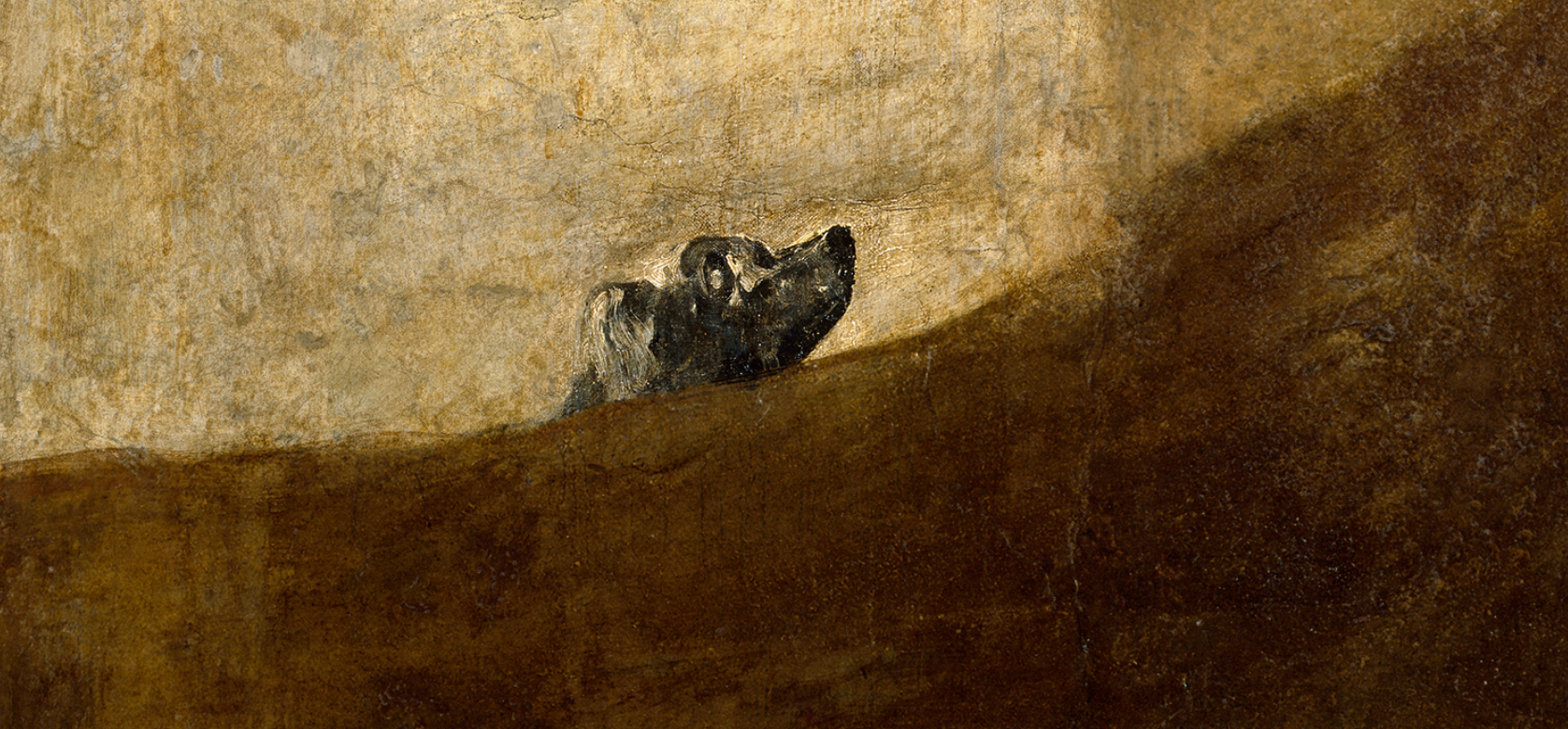
I have never seen another painting that makes as much sense to me, which means I’m a fucken sicko—I am sure that there are nicer paintings out there (I’ve seen so many). The idea that Goya would paint such paintings on the walls of his own home captivates me. The dog painting is my favorite; all negative space, which I’ll edit out, the negative space, here:

I stumbled out my bed that night to look for Robert Hughes’ wonderful biography Goya, which sheds no true light on the black paintings, as far as I can recall. Here is what he offers:

THE GREAT SERIES of paintings Goya made for his own pleasure at about the same time is equally enigmatic, and likely to remain so. These were the Pinturas negras, the so-called Black Paintings with which, in his last Madrid years, Goya was covering the walls of his farmhouse on the other side of the Manzanares outside the city, now converted into his studio and semi-solitary hermitage. Nothing, he felt, obliged him to be available to the court anymore; as for private clients, they could come to him. The new house, according to its title deed, was “beyond the Segovia bridge … on the site where the Hermitage of the Guardian Angel formerly stood.” It had twenty-two acres of arable land, and a vegetable garden. Comfortable but not palatial, and in need of some renovation, it was sturdily built of brick and adobe, with two stories divided into several rooms, two attics, a well by the garden, and another in the courtyard. Goya paid 60,000 reales for it, cash. By a peculiar coincidence, the property next door had been owned by a farmer who was deaf, and so was named the Quinta del Sordo, the Deaf Man’s House. This name passed to Goya’s own property, since he was the only notable deaf man around.

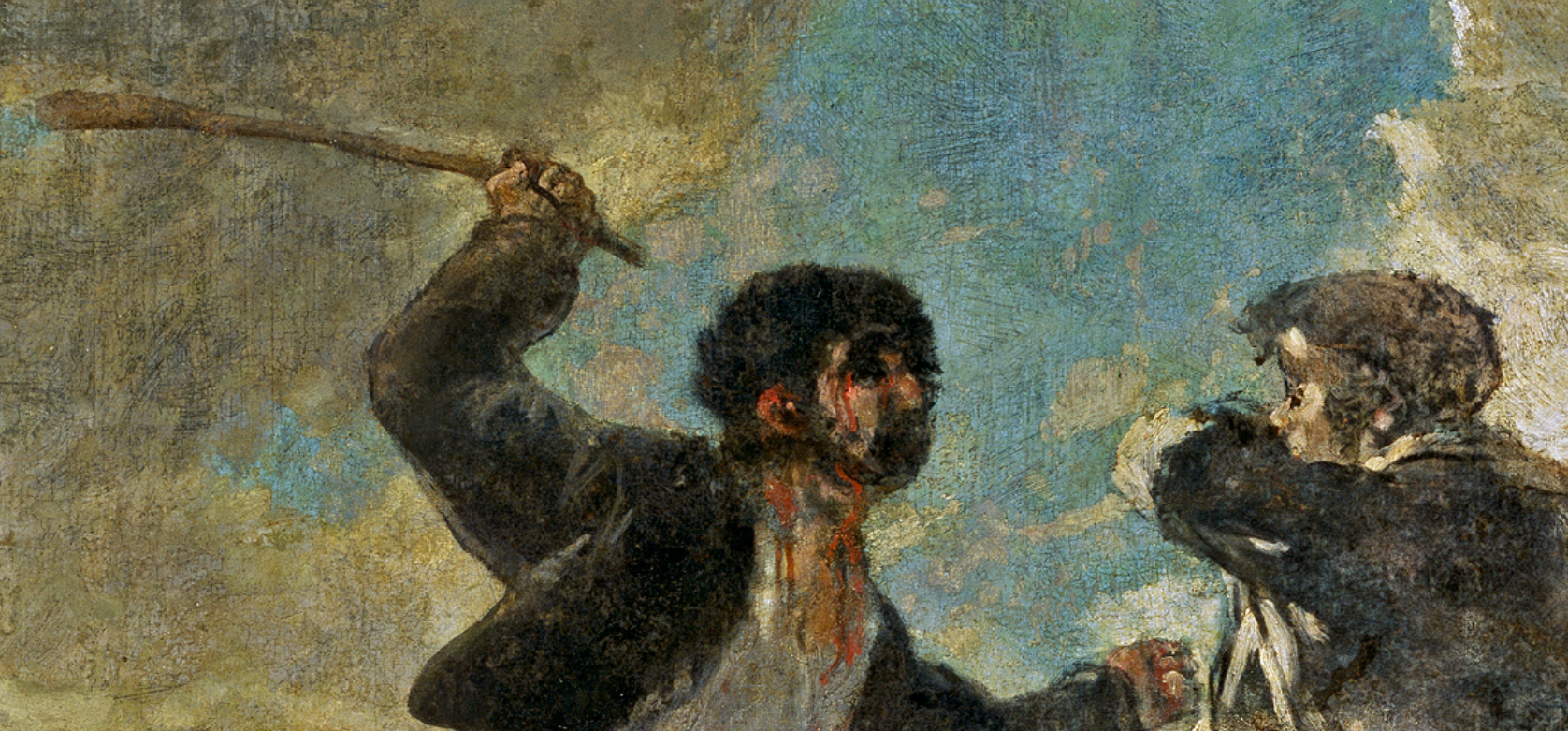
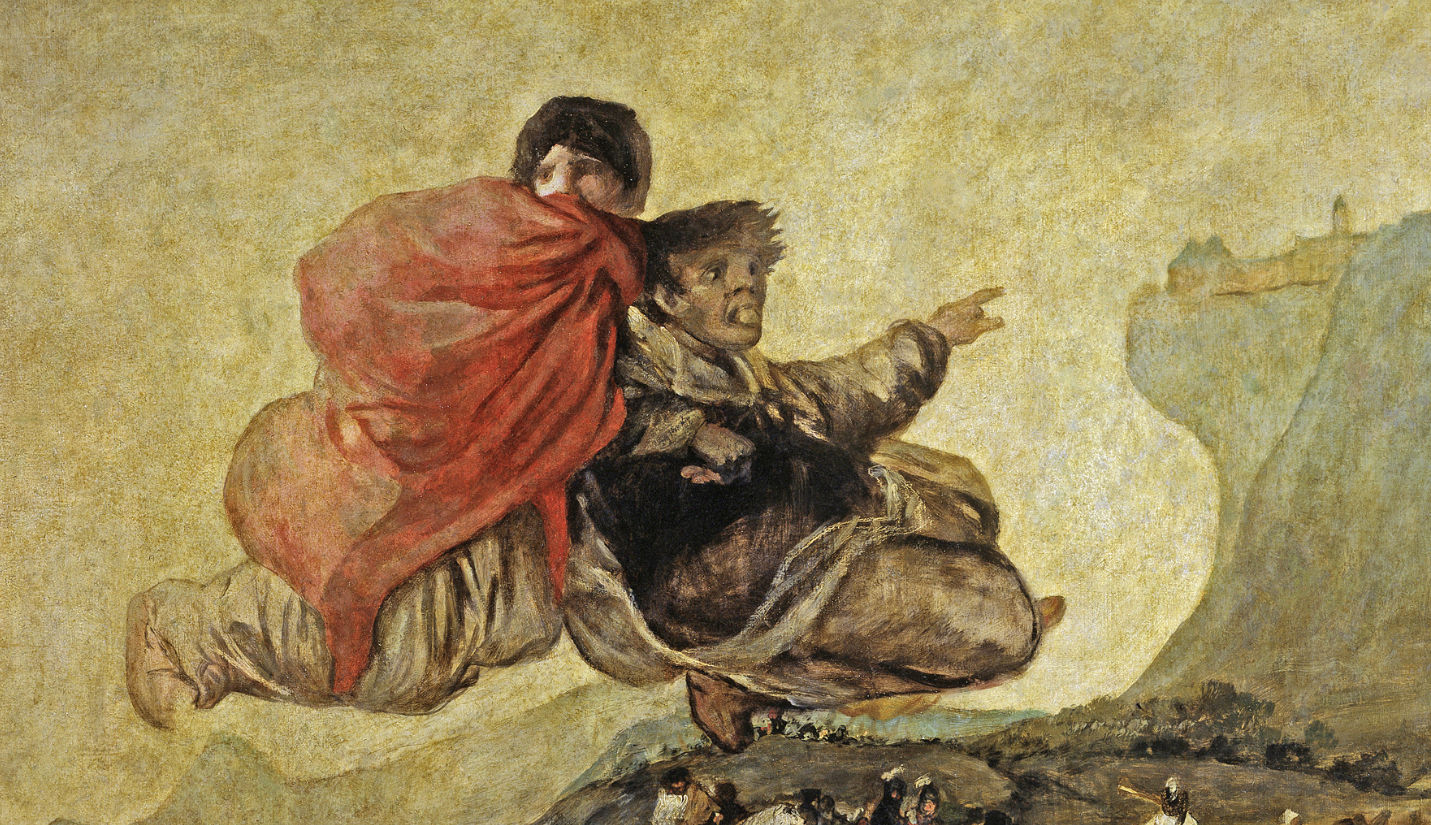
But Goya painted wild things on his walls—Judith and Holofrenes, flying mystics, a pilgrimage, a Satanic Sabbath, old people eating soup. Men hitting each other with sticks, red blood white clouds lovely blue sky:

I mean I think I guess that it’s he did what he did—the gross, rough, beautiful paintings—that he, Goya, did them for himself, the so-called Black Paintings—I think that’s what makes me drawn to him, beyond their aesthetic powers, which is really what I mean to say, the images, the colors, the contours, the phantasies—

6 Nov. 2024

Like a lot of US Americans I didn’t sleep too well last night. I went to bed too late and I rustled myself into some form of consciousness way too early. A veteran of past election eves, I did not overimbibe, but still felt groggy enough and well just plain like well disconcerted discombobulated discouraged enough to cancel meetings with my classes for the day. I didn’t have anything to give.

While I was in no way shocked by the results of the 2024 elections, I am nevertheless big-w Worried about all the things that may unfold, quickly, and without organized opposition, in the next six months. As has been the case for most of the presidential elections I’ve voted in, I voted against a candidate instead of for a candidate. I knew in Florida that my vote probably wouldn’t matter too much anyway.

I made myself go outside of my house into “Florida,” into Northeast Florida, which is, of course, also inside of my house, Florida, but I went outside early to take the air and look around. It was also garbage day in the neighborhood. I had a can with some nasty double-bagged rotten Jack O’Lanterns. We carved them on Halloween night and they wilted to a gray and black fuzz swarmed over with pestilence. I had to scrape their guts into the garden bed and hose the whole mess down. It’s not supposed to be this hot here this time of year, only it is and it has been, like regularly, consistently, predictably for well over a decade. The Florida air I stepped out into was gross: sticky, muggy, humidity near ninety percent and maybe 82° at nine in the morning. It did not feel like summer nor fall, but some other gross fifth season. None of this was colored by mood.

My mood was and is grim. I knew that voting for the incumbent’s proxy was simply kicking a can down the road; I knew that I was endorsing a system I had no belief in and that no one else I knew really seemed to believe in. I think I wanted just a little bit of the latter half of the 20th century to trickle down to my children, who are no longer really children. But it felt like a gross summer’s eve on this fall morning, and I remembered that climate change, which is to say global warming, which is to say the warming of the earth’s habitable surface as the result of fossil fuels—this so-called “climate change” didn’t even seem to be a blip in this election cycle. Again: kicking the can down the road, whistling past the graveyard, etc. Ostriches don’t really bury their heads in the sand though, and we all gotta know that the bill for the twentieth century is way past overdue.

But ostensibly this is a blog about literature or art; I don’t think anyone comes here for me to rant. So what am I reading?

I have been reading two books (three, really, or maybe more) and auditing two books. Audiobooks first: I am about half way through Dan Simmons’ Fall of Hyperion and I want to quit. I liked Hyperion but this one is just…I don’t have anything to say about it, except that I am sympathetic to Simmons’ anti-imperialist critique and I’m generally simpatico with his appropriation of the Romantics into a sci-fi epic (although, like, where the fuck is Blake?)—but the first book Hyperion was much better. Maybe it’s because he had a form to steal (Chaucer’s Canterbury Tales). I listen to this book in waking hours: drivingcooking, chores, etc.

The other audiobook is a fantastic rendition of John le Carré’s Tinker Tailor Soldier Spy. I do not listen to this book during waking hours; I fall asleep to it (or to Reich’s Music for Eighteen Musicians or to Sleep’s Holy Mountain or something else). Specifically, I’ve been falling asleep somewhere between chapters seven and eight this week. I love this book so much. I love the film version that came out like ten plus years ago, with Gary Oldman as Smiley. I used to love falling asleep to that film. I don’t actually know what happens in the narrative.


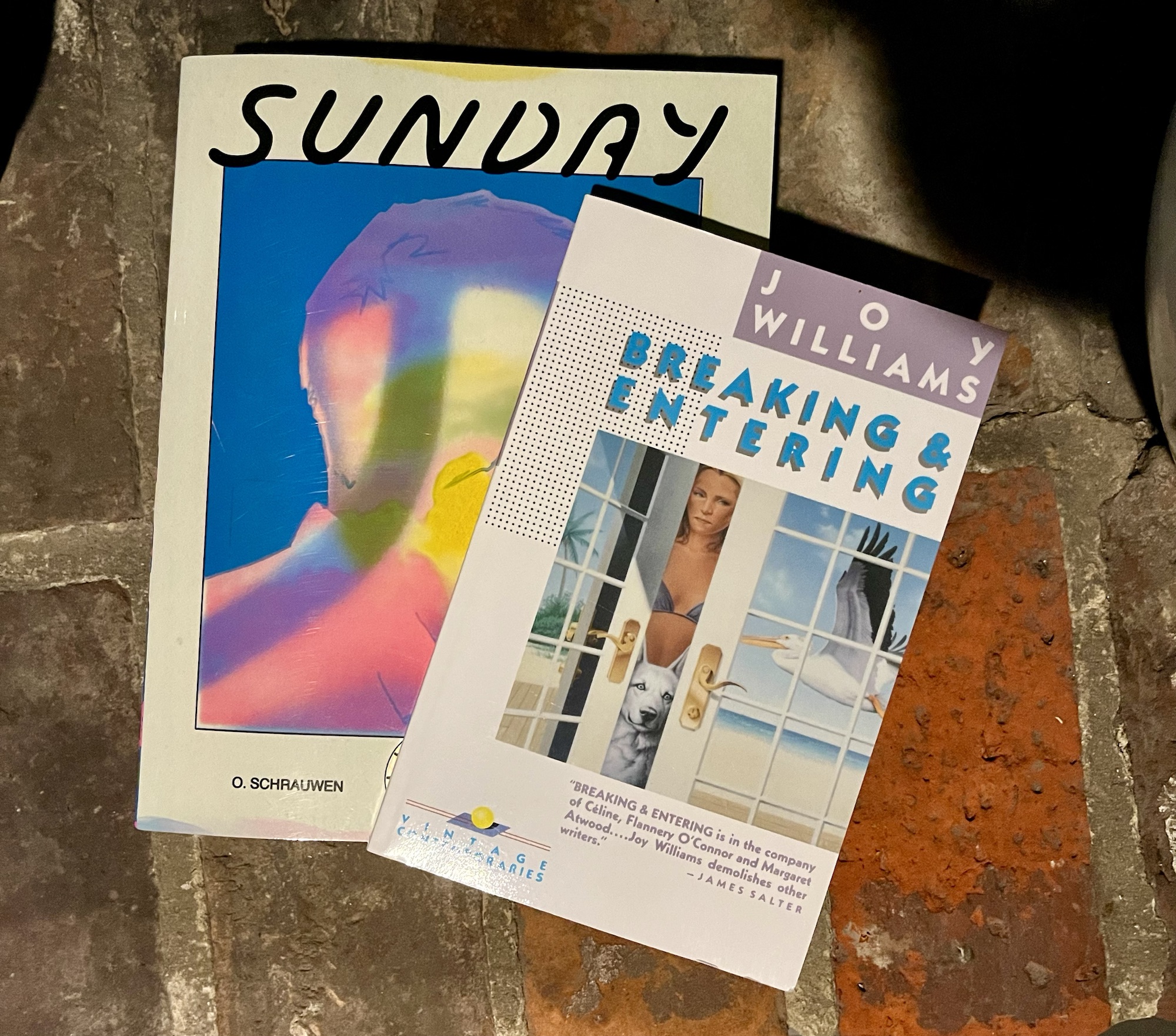
The two books I switch between before falling asleep to Tinker Tailor Soldier Spy:

Olivier Schrauwen’s Sunday and Joy Williams’ Breaking and Entering.

Sunday is a true graphic novel: that term, “graphic novel,” a marketing gambit I’m sure, gets appended to pretty much any cartoonists’ self-contained work of, say, fifty-plus pages. But a lot of what we (and we includes very much me) call graphic novels are really short stories in comix/cartooning form. Schrauwen’s effort is a real novel, a real graphic novel a la allah ah lah lah From Hell or Jimmy Corrigan. It’s really fucking great, and if this weren’t a low-effort I am writing this for me and not you post, I would tell you why I think it’s really fucking great (I would describe the story, the so-called story, such as it is; I would riff on all the motifs; I would get lost in the coloring. I would I would I would…)

The other book I’ve been reading, the one I read after I read a chapter of Sunday and before I fall asleep to Tinker Tailor Soldier Spy is Joy Williams’ 1988 novel Breaking and Entering, which is about a strange young couple who, like, break and enter and then live in other people’s houses. These other people are snowbirds, although I don’t think Williams actually employs the term: people who own houses on the barrier islands of Florida’s Gulf Coast which they, like, inhabit only a scant season or two a year. Breaking and Entering is very, very Florida, crammed with weirdos and tragedies, farcical, ironic, and thickly sauced in the laugh-cry flavor. I’m not sure exactly where it’s set, but I do know that I do know the general area—again, the barrier islands, skinny shining strips of weird between the Gulf and the Tampa Bay. Not my haunts, exactly, northeastern Florida man that I am, but still the locus of so many of my fondest memories, the places I return to, where my family is, where the cars and boats stacked up in the streets of Pass-a-Grille and Treasure Island and St. Pete Beach after the once-in-a-century storms that happen several times in a season, after Helene, after Milton, where the houses faltered folded soaked, where the snowbirds can defer their false falls and warm winters in favor of safer stabler climes, where the locals pledge a future allegiance against the heat, the water, the wind, the salt. A future against the future.

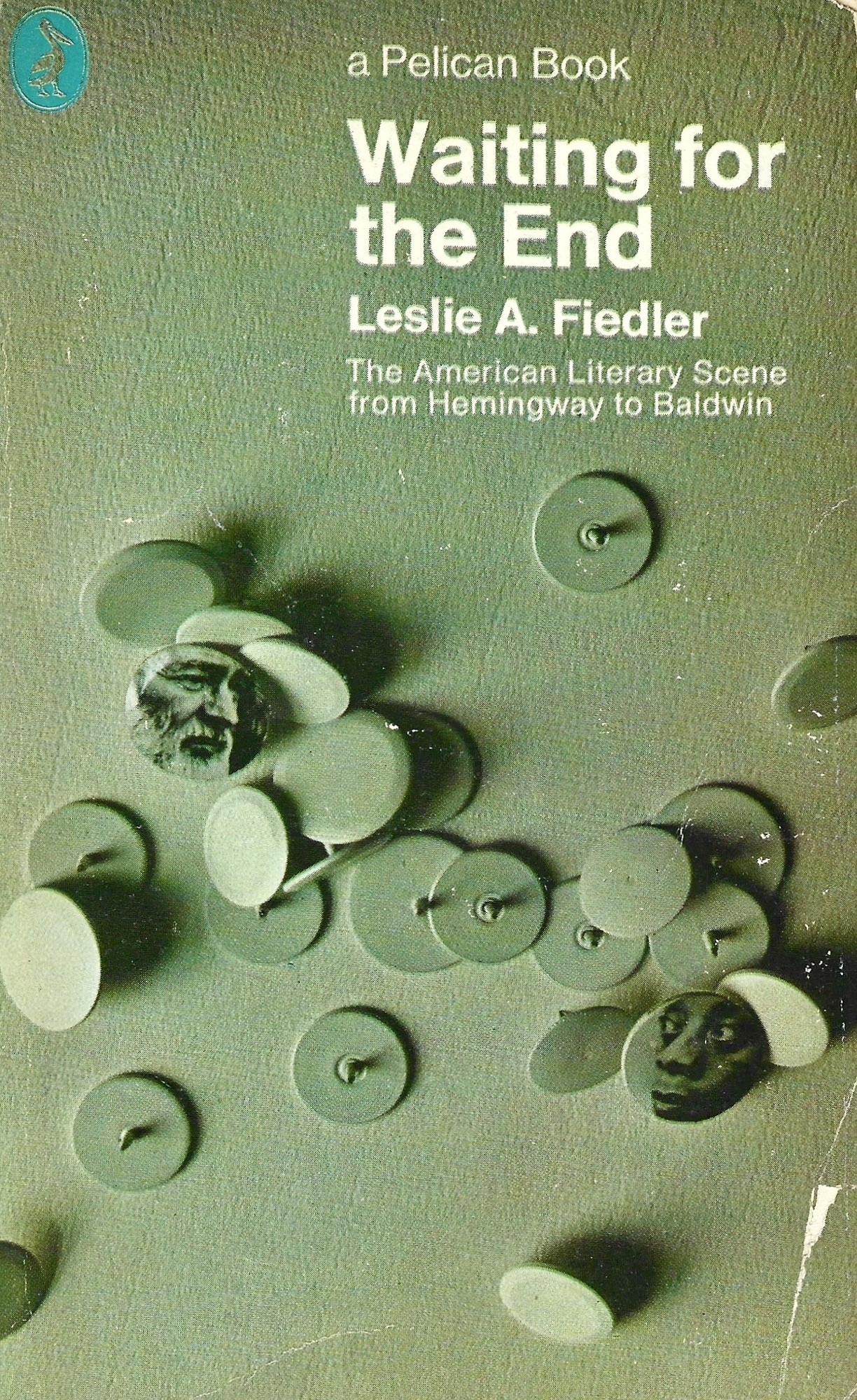
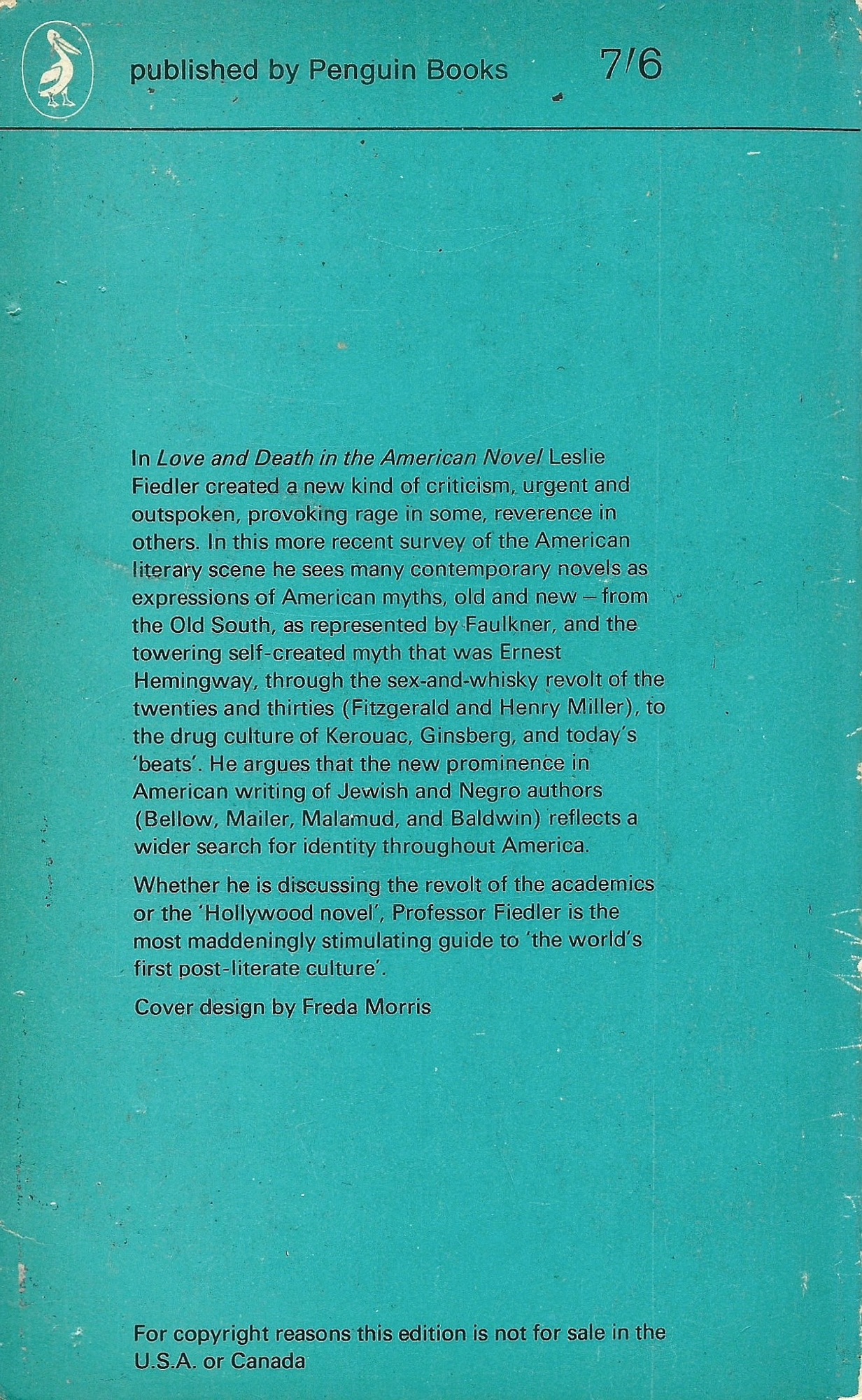
Mass-market Monday | Leslie A. Fiedler’s Waiting for the End

Waiting for the End, Leslie A. Fiedler. Penguin Books, Pelican imprint (1967). Cover design by Freda Morris. 274 pages.

From a riff a few years back:

Fiedler begins with the (then-recent) deaths of Hemingway and Faulkner. Fiedler uses the deaths of these “old men” to riff on the end of Modernism, although he never evokes the term. Neither does he use the term “postmodernism” in his book, although he edges towards it in his critiques of kitsch and middlebrow culture, and especially in his essay “The End of the Novel.” In parts of the book, he gets close to describing, or nearing a description of, an emergent postmodernist literature (John Barth and John Hawkes are favorite examples for Fiedler), but ultimately seems more resigned to writing an elegy for the avant garde. Other aspects of Waiting for the End, while well-intentioned, might strike contemporary ears as problematic, as the kids say, but Fiedler’s sharp and loose style are welcome over stodgy scholarship. Ultimately, I find the book compelling because of its middle position in its take on American literature. It’s the work of a critic seeing the beginnings of something that hasn’t quite emerged yet—but his eye is trained more closely on what’s disappearing into the past.

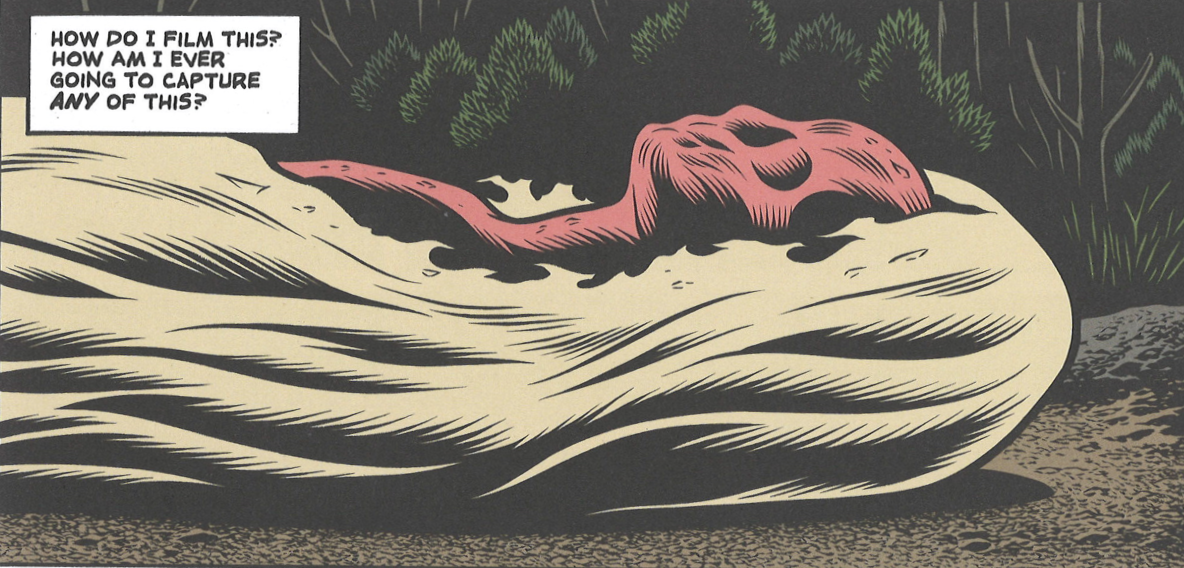
Charles Burns’ Final Cut explores the irreal reality of artistic ambition

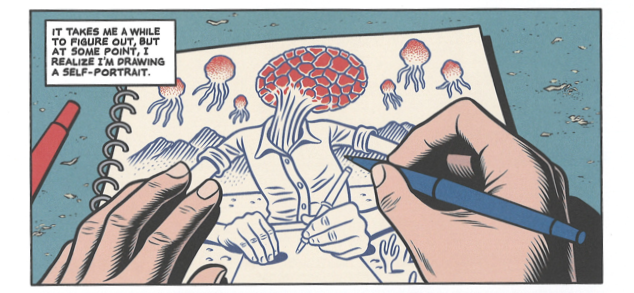
Charles Burns’ latest graphic novel Final Cut tells the story of Brian, an obsessive would-be auteur grappling with an unrealized film project. Brian hopes to assemble his film — also titled Final Cut — from footage he shoots with friends on a weekend camping trip, but the messiness of reality impinges the weird glories of his vibrant imagination. He cannot bring his vision to the screen. He cannot capture all the “fucked-up shit going on inside my head.”
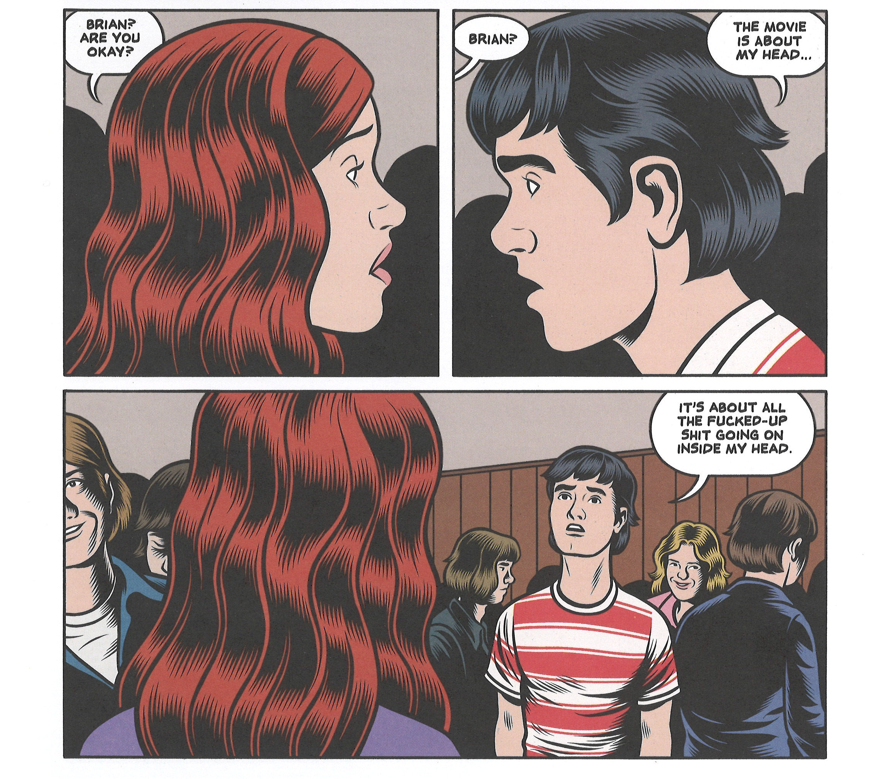

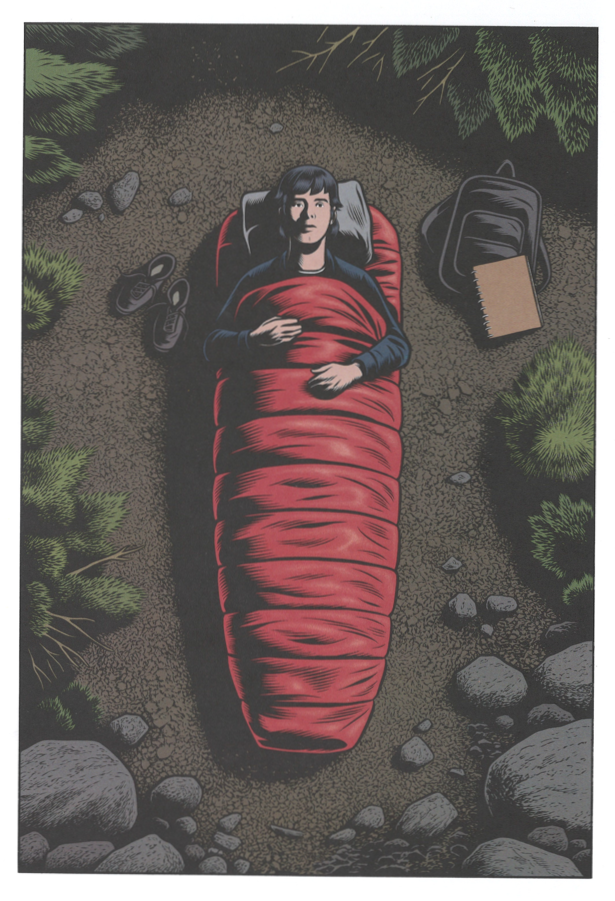
Capturing all the fucked-up shit going on inside my head is a neat encapsulation of the Artistic Problem in general. It’s not that Brian doesn’t try; if anything, he tries too hard. His best friend and erstwhile cameraman Chris is there to help him, along with his crush Laurie and their friend Tina—but ultimately, these are still kids at play. They indulge Brian’s artistic whims, but at a certain point they’d rather swim, drink, and smoke than shoot yet another scene they can’t comprehend.

Eschewing straightforward narrative conventions, Final Cut unfolds in a blend of flashbacks, dreamscapes, and flights into Brian’s imagination. The book also gives over to Laurie’s consciousness, providing an essential ballast of realism to anchor Brian’s (and Burns’, I suppose) surrealism. Brian would have Laurie as his muse, trying to capture her in his sketchbook, in his film, and in the intense gaze of his mind’s eye. And while Laurie is fascinated by Brian’s visions, she doesn’t understand them.

The last member of Brian’s would-be acting troupe is Tina, an earthy, funny gal who drinks a bit too much. She plays foil to Brian’s ambitions; her animated spirit punctures the seriousness of his film shoot. Again, these are just kids in the woods with a camera and camping gear.

And the film itself? Well, it’s about kids camping in the woods. And an alien invasion. And pod people.

The pod-people motif dominates Final Cut. We get the teens in their larval sleeping bags, transformed into aliens in their cocoons (echoed again in Brian’s imagination and in his sketches). The motif looms larger: Can we really know who a person is? Could they be someone else entirely? Can we really ever know all the fucked-up shit going on inside their head?

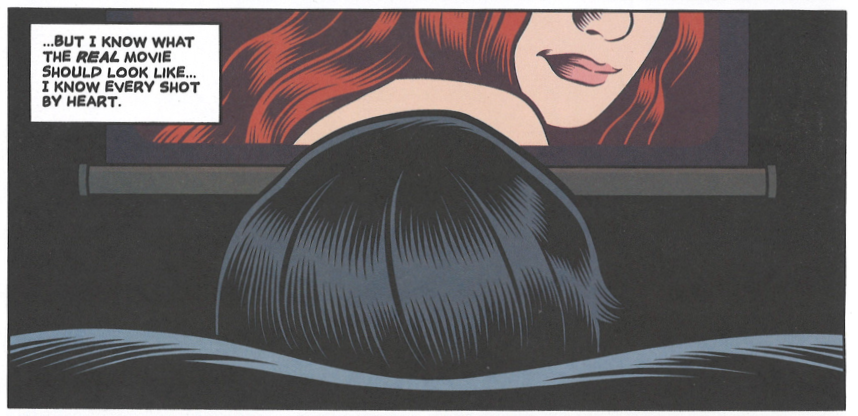
Indeed, Don Siegel’s 1956 film Invasion of the Body Snatchers is a major progenitor text for Final Cut. Brian even takes Laurie on a date to a screening of Invasion; he’s so mesmerized by the film that he weeps. Burns renders stills from the film in heavy chiaroscuro black and white, contrasting with the vibrant reds, maroons, and pinks that reverberate through the novel.

Burns recreates stills from another black and white film, Peter Bogdanovich’s 1971 coming-of-age heartbreaker The Last Picture Show. Again, Brian is obsessed with the film—or by the film, perhaps. In particular, he’s infatuated with Cybill Shepherd’s Jacy, whose character he imaginatively merges with his conception of Laurie.

While Invasion of the Body Snatchers is a science-fiction horror film, a deep sense of reality-soaked dread underpins it; The Last Picture Show is utterly real in its evocations of the emotional and physical lives of teenagers. Both films convey a maturity and balance of the fantastic with the real that Brian has not yet purchased via his own experiences, his own failures and heartbreaks. 

The maturity and balance that Brian can imagine but not execute in his Final Cut is precisely the maturity and balance that Burns achieves in his Final Cut. Simply put, Final Cut is the effort of a master performing at the heights of his power, rendered with inspired technical proficiency. It delivers on themes Burns has been exploring from the earliest days of his career.

There’s the paranoia and alienation of adolescence Burns crafted in Black Hole, here delivered in a more vibrant, cohesive, and frankly wiser book. There’s the hallucinatory trauma and repression he conveyed in the X’ed Out trilogy (collected a decade ago as Last Look, the title of which prefigures Final Cut). There’s also an absence of parental authority here, a trope that Burns has deployed since 1991’s Curse of the Molemen. (In Final Cut, Brian’s mentally-unstable mother is a dead-ringer for Mrs. Pinkster, the domestic abuse victim rescued by the child-hero of Curse of the Molemen). There’s all the sinister dread and awful beauty that anyone following Burns’ career would expect, synthesized into his most lucid exploration of the inherent problems of artistic expression.

Ultimately, in Final Cut Charles Burns crafts a portrait of the artist as a weird young man. Brian wrestles with the friction sparked from his vital imagination butting up against cold reality. His ambitious unfinished film mirrors his own incomplete journey as an artist, highlighting the clash between youthful creative fervor and the inevitable constraints of life, experience, and maturity. Burns’ themes of alienation and artistic ambition may be familiar, but Final Cut feels fresh and vibrant, the culmination of the artist’s own entanglements with the irreality of reality. Highly recommended.

Donald Barthelme’s Forty Stories in reverse, Part I

A few years ago, I reread Donald Barthelme’s collection Sixty Stories and wrote about them on this blog. I enjoyed the project immensely. A recent comment on the last of those Sixty Stories posts asked, or demanded, I suppose (the four-word comment is in the imperative voice) that I Now do Forty Stories. Which I am going to now do, Forty Stories.

40. “January” (first published in The New Yorker, 6 April 1987)

“January” begins as a dialogue between two characters, a mode Barthelme would return to repeatedly throughout his later career. The story is ostensibly a Paris Review style interview with one “Thomas Brecker,” who has authored seven books on religion over his thirty-five year career. The story begins as light satire; our Serious Writer is “renting a small villa” in St. Thomas; the interviewer notes that “a houseboy attended us, bringing cool drinks on a brown plastic tray of the sort found in cafeterias.” The interview quickly takes the shape of a career-spanning reflection, with Brecker sliding into a more melancholy mind frame. By the end of the story, the “interviewer” disappears, leaving us in Brecker’s imagination, where we have likely always been, and it’s hard not to read Barthelme’s autobiographical flourishes beneath Brecker’s mordant quips:

I think about my own death quite a bit, mostly in the way of noticing possible symptoms—a biting in the chest—and wondering, Is this it? It’s a function of being over sixty, and I’m maybe more concerned by how than when. That’s a … I hate to abandon my children. I’d like to live until they’re on their feet. I had them too late, I suppose. 

39. “The Baby” (Overnight to Many Distant Cities, 1983)

“The Baby” was composed around the same time as “Chablis” (1983); both stories are love letters of paternal affection for an infant daughter. Again, it’s hard not to see Barthelme’s own biography here. His daughter Katherine was an infant at the time he wrote them. While I don’t think “The Baby” is as strong as “Chablis” is (or, at least as strong in my memory — “Chablis” is the first story in Forty Stories, so we’ll get there, I guess) — while I don’t think “The Baby” is as strong as “Chablis,” it’s still a fun little ditty with an anarchic punchline. It’s also, like barely five short paragraphs–just read it.

38. “Great Days” (Great Days, 1979)

As I revisit my notes for “Great Days,” I realize I should probably read the story again, more slowly, and try to tune more into its voice. Or voices. Are there two voices here, or one? I think there is more of a n actual story story here than I can summarize — not that anyone wants summary of Barthelme —  but my takeaway is that this is Barthelme doing Stein doing Cubism doing… In his 2009 biography of Barthelme Hiding Man, Tracy Daugherty wrote that New Yorker fiction editor (and early Barthelme champion) Roger Angell rejected an early version of the story (under the title “Tenebrae”). According to Daugherty’s bio, while Angell recognized the story as a “serious work” and a “new form,” he ultimately thought it was too “private and largely abstract” for publication.

I think this bit is lovely read aloud:

 —Purple bursts in my face as if purple staples had been stapled there every which way—

—Hurt by malicious criticisms all very well grounded—

—Oh that clown band. Oh its sweet strains.

—The sky. A rectangle of glister. Behind which, a serene brown. A yellow bar, vertical, in the upper right.

—I love you, Harmonica, quite exceptionally.

—By gum I think you mean it. I think you do.

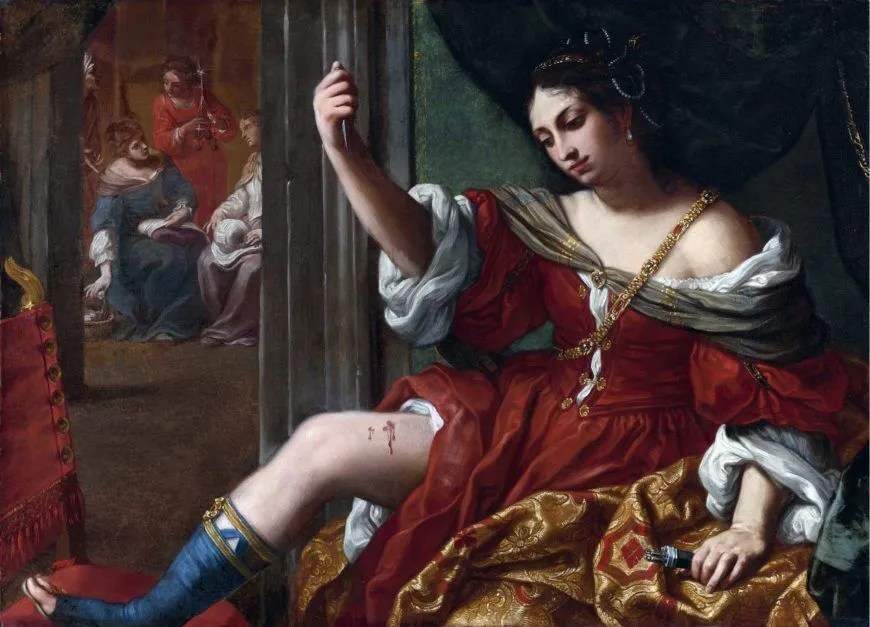
—It’s Portia Wounding Her Thigh.

—It’s Wolfram Looking at His Wife Whom He Has Imprisoned with the Corpse of Her Lover.

Elisabetta Sirani, Portia Wounding her Thigh, 1664


37. “Letters to the Editore” (Guilty Pleasures, 1974)

A lively little gem from Barthelme’s mid-seventies “non-fiction” collection Guilty Pleasures. Its inclusion seems to show an editorial need to pad out Forty Stories with more hits than the old boy had strung together by ’87. Anyway. “Letters to the Editore” is a fantastic send-up of small aesthetic aggressions writ large in the slim pages of little magazines. The ostensible subject is a dust-up surrounding an exhibition of so-called “asterisk” paintings by an American in a European gallery—but the real subject is language itself:

The Editor of Shock Art has hardly to say that the amazing fecundity of the LeDuff-Galerie Z controversy during the past five numbers has enflamed both shores of the Atlantic, at intense length. We did not think anyone would care, but apparently, a harsh spot has been touched. It is a terrible trouble to publish an international art-journal in two languages simultaneously, and the opportunities for dissonance have not been missed.

Barthelme’s comedic control of voices here is what makes this “story” an early (which is to say, late) standout in Forty Stories. It is the “opportunities for dissonance” that our author is most interested in and attuned to.

36. “Construction” (first published in The New Yorker, 21 April 1985)

“Construction” is the non-story of a writer flying out West to complete the “relatively important matter of business which had taken me to Los Angeles, something to do with a contract, a noxious contract, which I signed.” The documents he signs are “reproduced on onionskin, which does not feel happy in the hand.” This is one of two decent verbal flares in “Construction”; the other is an extended episode (as verbal flare-ups go) in which we find our Writer-Hero up against the wall of absurdity:

The flight back from Los Angeles was without event, very calm and smooth in the night. I had a cup of hot chicken noodle soup which the flight attendant was kind enough to prepare for me; I handed her the can of chicken noodle soup and she (I suppose, I don’t know the details) heated it in her microwave oven and then brought me the cup of hot chicken noodle soup which I had handed her in canned form, also a number of drinks which helped make the calm, smooth flight more so. The plane was half empty, there had been a half-hour delay in getting off the ground which I spent marveling at a sentence in a magazine, the sentence reading as follows: “[Name of film] explores the issues of love and sex without ever being chaste.” I marveled over this for the full half-hour we sat on the ground waiting for clearance on my return from Los Angeles, thinking of adequate responses, such as “Well we avoided that at least,” but no response I could conjure up was equal to or could be equal to the original text which I tore out of the magazine and folded and placed, folded, in my jacket pocket for further consideration at some time in the future when I might need a giggle.

Barthelme’s stand-in confesses here to what we’ve always known: He’s a scissors-and-paste man, a night ripper with a good ear, a good eye, but mostly one of us, a guy who needs a good giggle.

Riff on some books I’m reading, have read, and should really review

Hurricane Milton passed far enough south last night to leave our city relatively untroubled. There were power outages here but not the expected flooding. Most of my anxiety was focused on my family in the Tampa Bay area, all of whom are safe; we’re just not sure about the material conditions of the things they left behind.

Milton seemed to suck the summer air out of Northeast Florida; when I got out of bed and went outside to investigate the loud THUNK that woke me up at four a.m., I was shocked at how cold the air felt. It was only about 66°, but all the humidity seemed gone, even in the cold sprinkling rain. (The THUNK was our portable basketball hoop toppling over.)

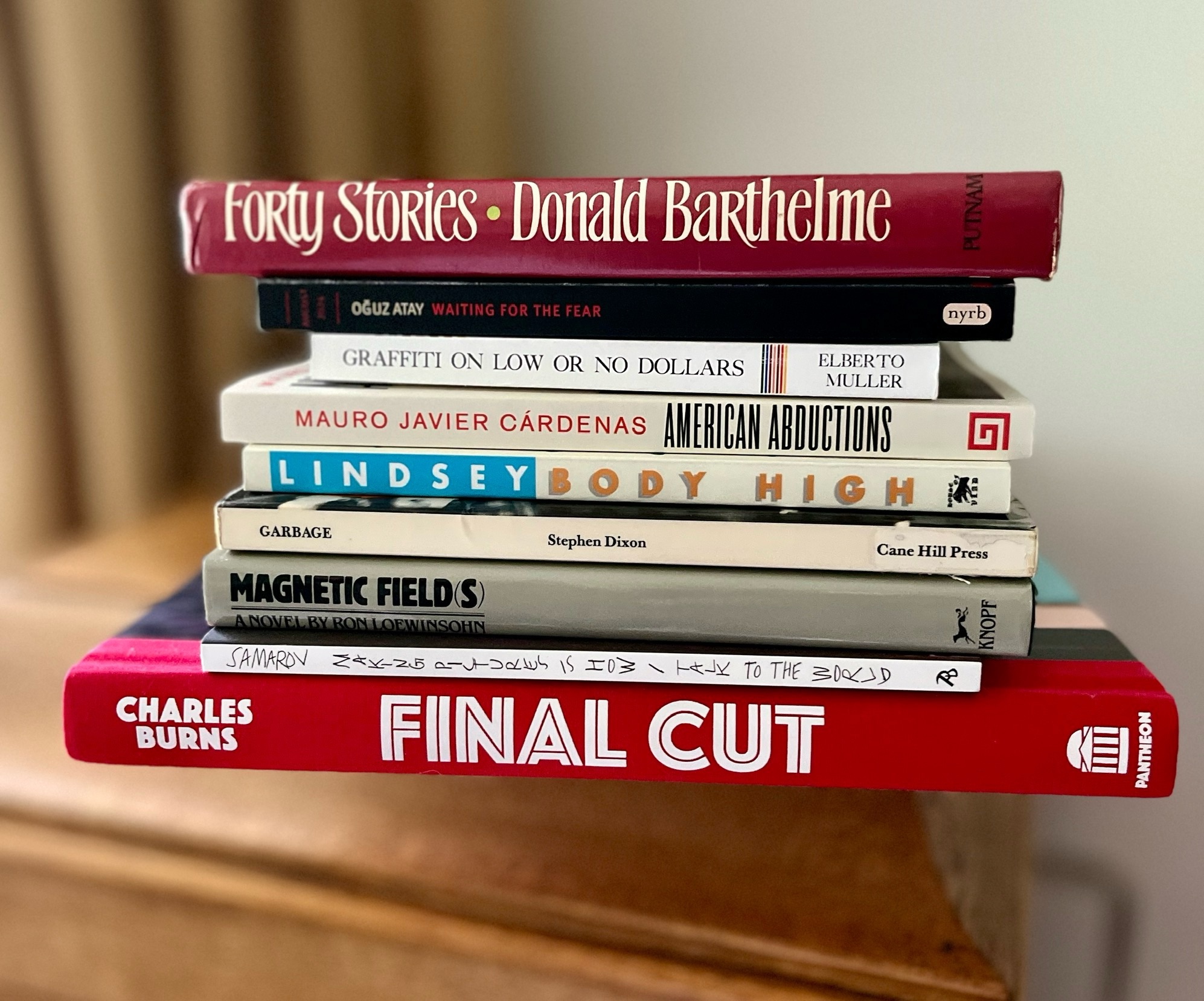
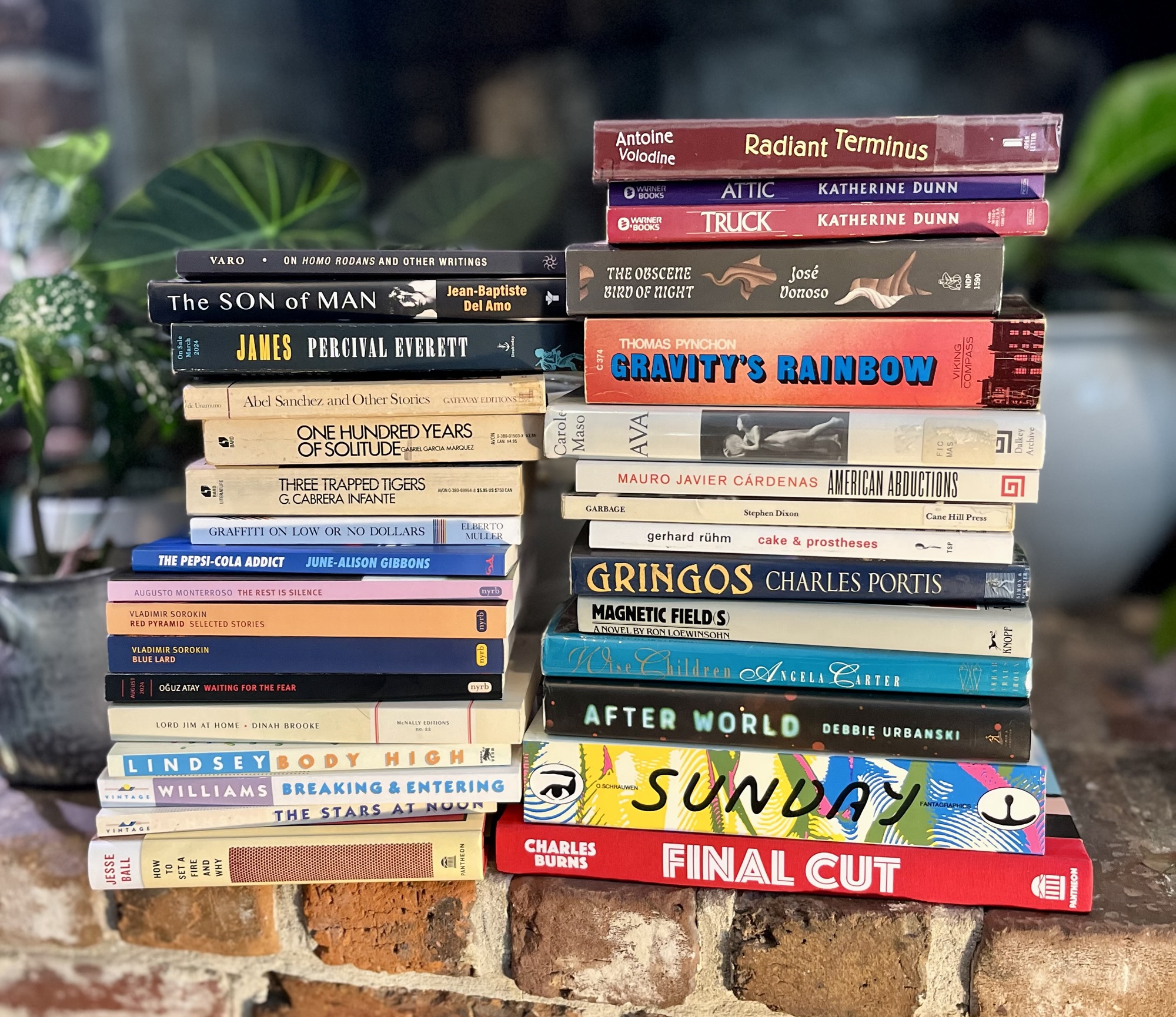
I thought I might try to knock out a review or a write-up of one of the many books I’ve finished that have stacked up as the summer has slowly transitioned to autumn. College classes have been canceled through to Tuesday. I have, ostensibly a “free” week; maybe some words, harder to cobble together for me these days, would come together, no? For the past few years I’ve focused more on reading literature with the attempt to suspend analysis in favor of, like, simply enjoying it. I realized I’d gotten into the habit of reading everything through the lens of this blog: What was I going to say about the book after reading it? I’ve been happier and read more sense freeing myself from the notion that I need to write about every fucking book I read. But the good books stack up (quite literally in a little place I have for such books); I find myself simply wanting to recommend, at some level, however facile, some of the stuff I’ve read. So forgive this lazy post, organized around a picture of a stack of books. From the top down:

Forty Stories, Donald Barthelme

A few years ago, I read Donald Barthelme’s collection Sixty Stories in reverse order. A few days ago, a commenter left me a short message on the final installment of that series of blogs: “Now do Forty Stories.” I think I have agreed–over the past week I’ve read stories forty through thirty-five in the collection. More to come.

Waiting for the Fear, Oğuz Atay; translation by Ralph Hubbell

A book of cramped, anxious stories. Atay, via Hubbell’s sticky translation, creates little worlds that seem a few reverberations off from reality. These are the kind of stories that one enjoys being allowed to leave, even if the protagonists are doomed to remain in the text (this is a compliment). Standouts include “Man in a White Overcoat,” “The Forgotten,” and “Letter to My Father.”

Graffiti on Low or No Dollars, Elberto Muller

Subtitled An Alternative Guide to Aesthetics and Grifting throughout the United States and Canada, Elberto Muller unfolds as a series of not-that-loosely connected vignettes, sketches, and fully-developed stories, each titled after the state or promise of their setting. The main character seems a loose approximation of Muller himself, a bohemian hobo hopping freights, scoring drugs, and working odd jobs—but mostly interacting with people. It kinda recalls Fuckhead at the end of Denis Johnson’s Jesus’ Son (a book Graffiti spiritually resembles) praising “All these weirdos, and me getting a little better every day right in the midst of them.” Muller’s storytelling chops are excellent—he’s economical, dry, sometimes sour, and most of all a gifted imagist.

American Abductions, Mauro Javier Cárdenas

If I were to tell you that Mauro Javier Cárdenas’s third novel is about Latin American families being separated by racist, government-mandated (and wholly fascist, really) mass deportations, you might think American Abductions is a dour, solemn read. And yes, Cárdenas conjures a horrifying dystopian surveillance in this novel, and yes, things are grim, but his labyrinthine layering of consciousnesses adds up to something more than just the novel’s horrific premise on its own. Like Bernhard, Krasznahorkao, and Sebald, Cárdenas uses the long sentence to great effect. Each chapter of American Abductions is a wieldy comma splice that terminates only when his chapter concludes—only each chapter sails into the next, or layers on it, really. It’s fugue-like, dreamlike, sometimes nightmarish. It’s also very funny. But most of all, it’s a fascinating exercise in consciousness and language—an attempt, perhaps, to borrow a phrase from one of its many characters, to make a grand “statement of missingnessness.”

Body High, Jon Lindsey

I liked Jon Lindsey’s debut Body High, a brief, even breezy drug novel that tries to do a bit too much too quickly, but is often very funny, gross, and abject. The narrator, who telegraphs his thoughts in short, clipped sentences (or fragments cobbled together) is a fuck-up whose main income derives from submitting to medical experiments. He dreams of scripting professional wrestling storylines though, perhaps one involving his almost-best friend/dealer/protector/enabler. When his underage-aunt shows up in his life, activating odd lusts, things get even more fucked up. Body High is at its best when it’s at its grimiest, and while it’s grimy, I wish it were grimier still.

Garbage, Stephen Dixon

I don’t know if Dixon’s Garbage is the best novel I’ve read so far this year, but it’s certainly the one that has most wrapped itself up in my brain pan, in my ear, throbbed a little behind my temple. The novel’s opening line sounds like an uninspired set up for a joke: “Two men come in and sit at the bar.” Everything that unfolds after is a brutal punchline, reminiscent of the Book of Job or pretty much any of Kafka’s major works. These two men come into Shaney’s bar—this is, or at least seems to be, NYC in the gritty seventies—and try to shake him down to switch up garbage collection services. A man of principle, Shaney rejects their “offer,” setting off an escalating nightmare, a world of shit, or, really, a world of garbage. I don’t think typing this description out does any justice to how engrossing and strange (and, strangely normalGarbage is. Dixon’s control of Shaney’s voice is precise and so utterly real that the effect is frankly cinematic, even though there are no spectacular pyrotechnics going on; hell, at times Dixon’s Shaney gives us only the barest visual details to a scene, and yet the book still throbs with uncanny lifeforce. I could’ve kept reading and reading and reading this short novel; it’s final line serves as the real ecstatic punchline. Fantastic stuff.

Magnetic Field(s), Ron Loewinsohn

I ate up Loewinshohn’s Magnetic Field(s) over a weekend. It’s a hypnotic triptych, a fugue, really, with phrases sliding across and through sections. We meet first a burglar breaking into a family’s home and learn that “Killing the animals was the hard”; then a composer, working with a filmmaker; then finally a novelist. Magnetic Field(s) posits crime and art as overlapping intimacies, and extends these intimacies through imagining another life as a taboo, too-intimate trespass.

Making Pictures Is How I Talk to the World, Dmitry Samarov

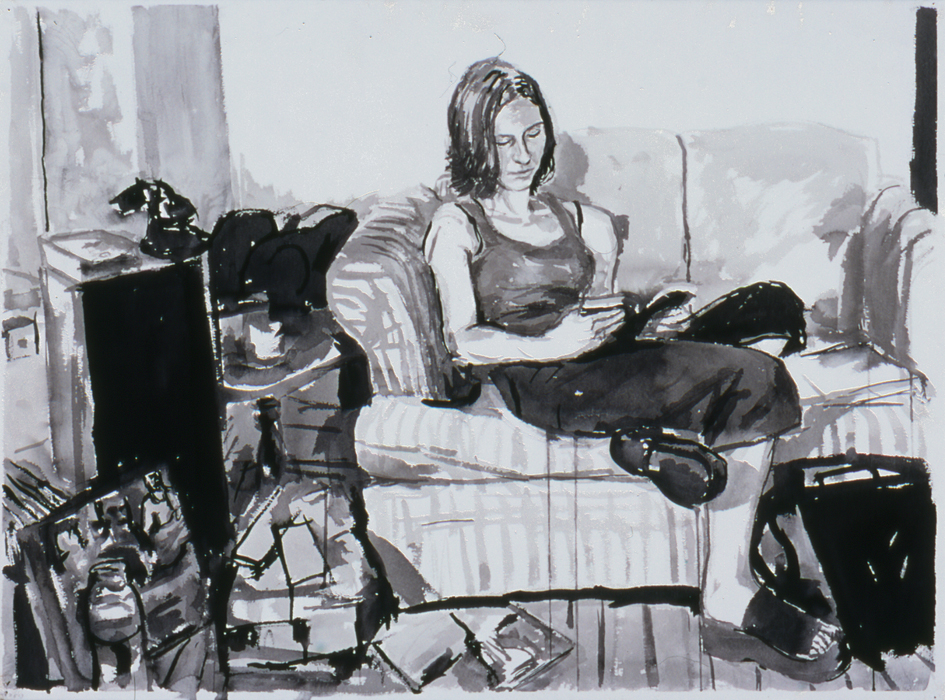
Making Pictures spans four decades of Samarov’s artistic career. Printed on high-quality color pages, the collection is thematically organized, showcasing Samarov’s different styles and genres. There are sketches, ink drawings, oils, charcoals, gouache, mixed media and more—but what most comes through is an intense narrativity. Samarov’s art is similar to his writing; there isn’t adornment so much as perspective. We get in Making Pictures a world of bars and coffee shops, cheap eateries and indie clubs. Samarov depicts his city Chicago with a thickness of life that is better seen than written about. Some of my favorite works include interiors of kitchens, portraits of women reading, and scribbly but energetic sketches of indie bands playing live. What I most appreciate about this collection though is that it showcases how outside of the so-called “art world” Samarov’s work is–and yet this is hardly the work of a so-called “outsider” artist. Samarov trained at the School of the Art Institute of Chicago, and yet through his career he has remained an independent, “not associated with an institution such as an art gallery, college, or museum,” as he writes in his book.

Beth, Dmitry Samarov, 2000

Final Cut, Charles Burns

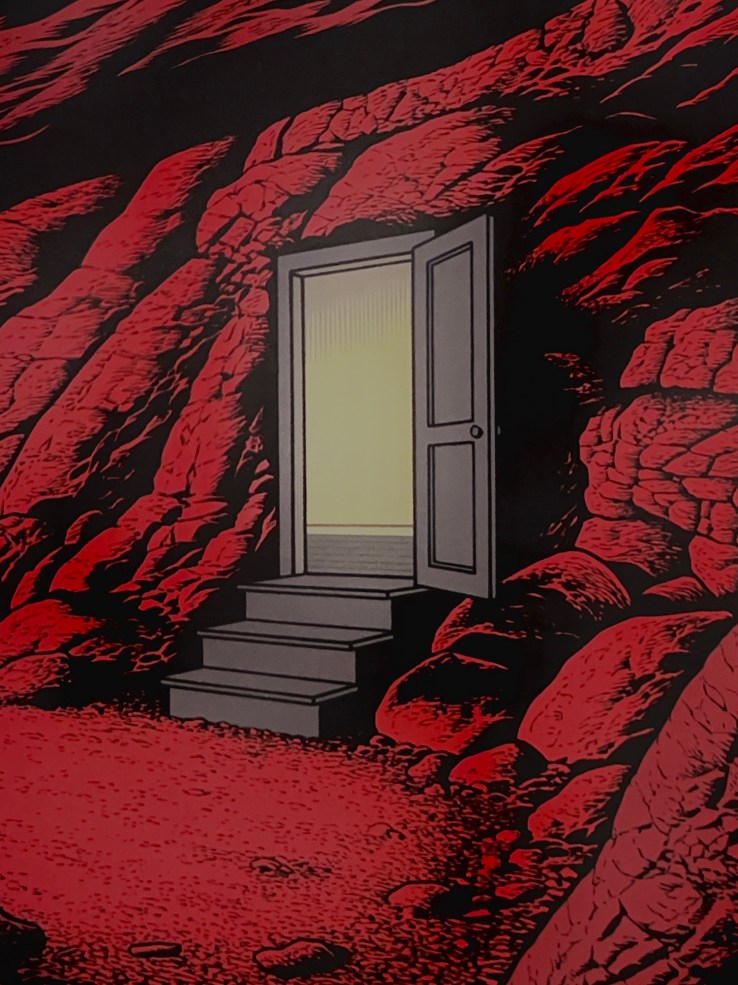
I don’t know anything about Charles Burns’s upbringing, his youth, his personal life, and I don’t mean to speculate. However, it’s impossible not to approach Final Cut without pointing out that for several decades he’s been telling the same story over and over again—a sensitive, odd, artistic boy who is out of place even among others out of place. This is in no way a complaint—he tells the story with difference each time. And with more coherence. Final Cut is beautiful and sad and also weird enough to fit in neatly to Burns’s oeuvre. But it’s also more mature, a mature reflection on youth really, intense, still, but without the claustrophobia of Black Hole or the mania of his Last Look trilogy. There’s something melancholy here. It’s fitting that Burns employs the heartbreaking 1971 film The Last Picture Show as a significant motif in Final Cut.

Image from Final Cut, Charles Burns, 2024

RIP Robert Coover, Prince of American Metafiction

RIP Robert Coover, 1932-2024

Robert Coover passed away a few days ago at ninety-two years old. In his decades-spanning career, Coover published twenty-one novels, four plays, and four short story collections. He also published dozens of (as-yet) uncollected stories, essays, and a host of so-called “electronic fiction.” A fifth short story collection, 2018’s Going for a Beer, collected some of Coover’s greatest hits, and is generally an excellent starting place for those interested in Coover’s metatextual fabulism.

Coover didn’t start out as a metatextual fabulist. His first novel, 1966’s The Origin of the Brunists, is vivid, humanist realism with the slightest tinges of magic brightening its edges. 1968’s follow-up, The Universal Baseball Association, Inc., J. Henry Waugh, Prop., strays much deeper into the pop-myth fantasies that Coover would perfect in his mature career.

Coover’s 1969 collection Pricksongs & Descants shows a remarkable shift into postmodern metafiction. Pricksongs features some of his better stories, like “The Brother” (told from the point of view of the biblical Noah’s brother), “The Elevator,” and “The Magic Poker,” which begins with the sentence “I wander the island, inventing it” — a tidy encapsulation of Coover’s growing motif of the self-creating story. At times, this metatextual motif can exhaust the reader, as in Pricksongs’ capper “The Hat Act.” However, the collection features one of Coover’s best stories, “The Babysitter,” in which the titular character serves as a locus for a mundane suburban community’s collective repressed anxieties of sex and violence.

Coover would continue to explore such themes throughout his career, refining and sharpening his metatextual hat act in standout novels like Spanking the Maid (1982), Gerald’s Party (1986), and 1977’s The Public Burning—arguably Coover’s most important novel. It’s easy to think of The Public Burning as the last part of a loose postmodern American trilogy of large daring novels, the first two parts comprised of Pynchon’s Gravity’s Rainbow (1973) and William Gaddis’s J R (1975).

Indeed, Coover was regularly grouped with a (very white, very male) clique of postmodern American writers. In his 1980 essay “The Literature of Replenishment,” John Barth halfheartedly counted up the members: “By my count, the American fictionists most commonly included in the canon, besides the three of us at Tubingen [William H. Gass, John Hawkes and Barth himself], are Donald Barthelme, Robert Coover, Stanley Elkin, Thomas Pynchon, and Kurt Vonnegut, Jr.”

There was some chatter on social media that Coover’s passing left just Pynchon–and maybe Don DeLillo and Joseph McElroy–as the last living luminaries of twentieth-century US American postmodernist fiction. Of course, Pynchon really wasn’t a member of this or any other clique (he declined an invitation to Donald Barthelme’s so-called “postmodernists dinner“), and, as is too often the case with such groupings, Ishmael Reed’s contribution to American postmodernist fiction continues to be marginalized.

Let it stand then that Robert Coover, despite whatever connections and friendships he held with other writers and artists, was his own special self-made creation. He was prolific, especially later in life, publishing nine novels in the twenty-first century. One of these was The Brunist Day of Wrath (2014), a sequel to his debut; he also collaborated with comix artist Art Spiegelman on the graphic novelette Street Cop (2021) and even found a sliver of mainstream readers with Huck Out West, his wonderful 2017 “sequel” to Adventures of Huckleberry Finn. Coover’s latest novel Open House was published just over a year ago.

Clearly, Coover leaves behind a large body of work, and we’ll likely see more of his work collected and published over the next decade. I won’t pretend to have read most of what he’s written, but I’ve loved a lot of it—particularly Pricksongs & DescantsHuck Out WestSpanking the Maid, and Briar Rose, which, as far as I can recall, is likely the first thing I read of his (my girlfriend at the time’s sister had to read it in college; she professed that she hated it but thought I’d like it). The aforementioned 2018 collection Going for a Beer is a nice starting place for Coover; those more interested in novels might like Spanking the Maid. Or jump into one of his later short novels, like 2004’s Stepmother or 2018’s The Enchanted Prince, both of which exemplify his metamagicianist mode. Or hell, just go for the big boy, The Public Burning. Ultimately, Coover leaves behind a trove of trembling, writhing, vividly-living words, an oeuvre that will continue to engage readers fascinated by a certain stamp of so-called experimental literature–and for that I thank him.


Riff on some Friends of the Library Sale acquisitions

I ducked out of work maybe a little bit early on Friday and filled a brown paper bag with books at a Friends of the Library sale.

I picked up some hardback first editions of books I already own in cheaper formats–Lucia Berlin’s A Manual for Cleaning Women, Denis Johnson’s The Laughing Monsters, P.D. James’s The Children of Men, and Ben Marcus’s Leaving the Sea. I also got hardcover editions of Rachel Cusk’s Second Place, Amy Hempel’s Sing to It, Atticus Lish’s The War for Gloria, and Eugenio Corti’s The Red Horse.

I also grabbed some duplicates or alternate paperback editions of books I already own, including an academically-oriented edition of Gertrude Stein’s Three Lives, Italo Calvino’s If on a winter’s night a traveler, and William Faulkner’s Light in August. I gave the Calvino to my son; the Stein is for a colleague. I’ll give Light in August to a student. (I got the same edition of the Faulkner at the last Friends of the Library sale I went to; my son claimed it.) I’ll also probably offer the Bourdain memoir to a student. I’m pretty sure we have a copy of Kitchen Confidential somewhere around the house. I couldn’t pass up on the cheap mass-market copy of Melville’s White Jacket. I mean, just look at this cover—dude’s wearing a white jacket

The book also bears a stamp claiming it originated (in a sense) at the old Melville Manse, Arrowhead:

I also couldn’t resist letting a paperback copy of Lucy Ellmann’s Ducks, Newburyport take up a lot of real estate in my paper grocery bag. The hype has died down enough for me to perhaps eventually sink into it. The edition of Alan & John Lomax’s American Ballads & Folk Songs is kinda beat up, but it’s got a lovely cover:

I was also attracted to this strange edition of Nikolai Gogol’s Dead Souls. It’s a 1987 hardback from the Soviet house Raduga Publishers, featuring a full-color portrait of Gogol and blue (?) page headings. The translation is by Christopher English and the book was printed in the U.S.S.R.—I’m not really sure who the intended audience was.

Albert Cullum’s The Geranium in the Window Sill Just Died But Teacher You Went Right On was another oddity I came across. Ostensibly a children’s book, The Geranium ultimately seems aimed at teachers. It features illustrations on every other page, each one by a different artist; many are remarkable, like this one by Stanley Mack–

There were a few titles, not pictured in the image at the top of this post, that I grabbed to cram into my bag simply because I had extra room at the end. I can usually offset the ten dollar bag fee by identifying a handful of pristine trade paperbacks that my local used bookstore will take for trade credit. So maybe I’m not, like, really offsetting the ten dollar fee so much as redirecting it toward obtaining more books.

There were plenty of titles at this particular sale that I would’ve crammed into the bag maybe ten or fifteen years ago—lots of books by Haruki Marukami, who has never been my guy, Jonathan Lethem (who I once really loved), Michael Chabon, Irvine Welsh, and even Chuck Palahniuk (there was a time when I was younger and had a broader range of friends that I could’ve given Palahniuk titles away easily). But I ended up imagining some younger person showing up to the sale, maybe today, Saturday, filling up a bag with titles that promised something beyond the YA formula stuff that makes up their current literary diet.

And if I imagined a younger person growing their library, I also imagined some of the older people whose collections had clearly ended up at the sale. Beyond the obvious airport thrillers and glut of titles by fiction factory Authors™, there were sets of strange, off-brand looking fantasy series in hardback, a seemingly-full run of Agatha Christie mysteries (also in hardback), Westerns no one will read again. Other people’s oddities ended up here; their children had no place for them, having subscribed to their own burdensome addictions.

I’ll have to give away all these books I’ve acquired at some point. But there’s joy in that too.


Man is doomed to constantly fabricate new agonies for himself | On Dino Buzzati’s novella The Singularity

Two years after it was first published in Italy, Dino Buzzati’s 1960 novella Il grande ritratto got its first English translation by Henry Reed under the title Larger Than Life. This year, NRYB issued a new translation of Il grande ritratto by Anne Milano Appel under the title The Singularity. This is the second new English translation of a Buzzati book from NYRB; last year saw the publication of Lawrence Venuti’s translation of Buzzati’s most famous novel, Il deserto dei Tartari, published as The Stronghold (in lieu of the more recognizable title The Tartar Steppe).

It makes sense, from both a cultural and a marketing stance, that Il grande ritratto would find new life as The Singularity, a term that refers to the hypothetical point where artificial intelligence surpasses human intelligence, which in turn triggers a dramatic existential change for humanity. AI slop abounds on the internet; misinformation replicates and mutates; we are told that the chatbots that frustrate us so frequently are an inevitable part of a future that no one seems to want. A sci-fi novel called The Singularity is pretty zeitgeisty.

The scant plot of The Singularity builds to the revelation of an artificial intelligence, part of a military science project perched high in the Italian Alps. I don’t think I’ve necessarily spoiled the grand reveal; both its title and its publisher’s blurb declare The Singularity “a startlingly prescient parable of artificial intelligence.”

Perhaps it’s this prescience that makes the central sci-fi conceit of The Singularity seem a bit dated. There’s a creakiness to Buzzati’s staging of his grand portrait of an artificial intelligence. The novella is more compelling in its initial chapters, which ignite a mood of slow-burning dread, the kind of Kafkaesque foreboding he served up in his superior novel Il deserto dei Tartari.

That slow-burn starts with a certain Professor Ismani, “who had always had an inferiority complex with respect to figures.” He and his much younger wife, the archetypal innocent Elisa (who “had not gone beyond middle school”) agree to undertake a mysterious journey up the mountain to “Experimental Camp of Military Zone 36,” where Ismani will join a scientific project he knows nothing about. As they zig and zag up the mountain, chauffeured by their military liaison, Ismani and Elisa (and the reader) gather crumbs about their destination. “So many mysteries,” a soldier tells them, at a penultimate stop. “If they at least told us what it is we’re guarding. I mean, let’s call it what it is, a kind of prison.”

In response to all this anxious foreboding, we are told that “Ismani felt the return of apprehension and dismay, the feeling of being insignificant in the face of immense, threatening things, a panic that he had once experienced in the war.” None of Ismani’s time in the war comes to bear on the narrative itself. Indeed, Ismani is thrown to the reader as a decoy; initially presented to the audience as the potential big-brain hero of a sci-fi thriller, he ends up a background ghost.

We eventually achieve the summit, where the natural splendor is overrun by the enormous complex that houses the titular singularity:

But the cliffs were no longer visible, nor could any vegetation be seen, or land, or flowing waters. Everything had been invaded and overwhelmed by a tangled succession of buildings similar to silos, towers, mastabas, retaining walls, slender bridges, barbicans, fortifications, blockhouses, and bastions, which plunged in dizzying geometries. As though a city had crashed down the sides of a ravine.

But there was an exceedingly abnormal element that gave those structures an air of enigma. There were no windows. Everything seemed hermetically sealed and blank.

From this moment, more or less, the best bits of The Singularity come not from sci-fi plotting but rather philosophical asides that add weight to the pulp narrative. Most of these are delivered by the handful of scientists who haunt the experimental camp. One of these scientists repeats the mantra, “Language is the worst enemy of mental clarity.” In their attempt to author an artificial consciousness, these scientists decreed that their singularity would have “No language,” for “Every language is a trap for the mind.”

Here in their “little kingdom, hermetically closed off and apart from the rest of the world,” the scientists have created a “machine made in our likeness” which “will read our thoughts, create masterpieces, reveal the most hidden mysteries.” Through hints, intimations, weird noises, and other creaky trappings of pulp horror, we come to learn that the singularity might not be, like, sane. As one of our (maybe not like exactly sane either) scientists declares, “before we knew it we had lost the reins, and all that was left for us to do was to record the machine’s behavior.”

In a move that would surprise no one familiar with the tropes of Gothic romance, we come to learn that the singularity’s consciousness is based on a beautiful dead woman. The whole operation is powered by a mysterious glowing egg. Indeed, The Singularity is perhaps most interesting if approached through a feminist lens. As it rushes to its climax, Elisa the innocent takes over the role of hero. She somehow learns to speak the strange “language” of the pre-lingual singularity, and through conversation, comes to understand that the singularity views herself as a desiring machine. The singularity wants a body; specifically a female body; specifically a body that can be desired by a male body and bear offspring.

Ultimately, The Singularity feels less like a novella than it does a short story stretched a bit too thin. Buzzati adroitly crafts an atmosphere of suspense and foreboding, but the characters are underdeveloped. Like a lot of pulp fiction, Buzzati’s book often reads as if it were written very quickly (and written expressly for money). Still, Buzzati’s intellect gives the book a philosophical heft, even if it sometimes comes through awkwardly in forced dialogue. Anne Milano Appel’s translation is smooth and nimble; it’s a page turner, for sure, and if it seems like I’ve been a bit rough on it in this paragraph in particular, I should be clear: I enjoyed The Singularity.

Like many of the modernist writers of the twentieth century, Buzzati intuited a future in which technology would become increasingly self-propelled, mutating unchecked in the notion of a progress wholly divorced from the needs of the human spirit. In our own era, we see con artists and hucksters banging the drum for “artificial intelligences” to “read our thoughts, create masterpieces, reveal the most hidden mysteries” for us. The results have been utter shit. Buzzati’s mad scientist isn’t so much prescient as he is simply describing the human condition then, when he declares that “man is doomed to torment himself, he doesn’t see the consolations offered to him, right there, within reach, he has to constantly fabricate new agonies for himself.” We can fabricate the agonies, but we can fight them too.

Mass-market Monday | Billy Budd, Sailor and Other Stories by Herman Melville

Billy Budd, Sailor and Other Stories by Herman Melville, Herman Melville. No collection editor credited. Bantam Books (1989). No cover designer credited. Cover is a detail of Ships and an Approaching Storm Off Owl’s Head, Maine, 1860 by Fitz Hugh Lane. 278 pages.

I read Bartleby in 10th grade and took up I prefer not to as a mantra that I’d throw at poor dear Ms. Hall any time she asked me to do something I didn’t want to do, which was often. I never returned the book at the end of the year. I’m not sure if there is another book in the household, apart from old children’s books, I suppose, that I have read so many times.

I wrote about Bartleby here.

I wrote about Benito Cereno here.

Here is Billy Budd, but just the punctuation:

, , – , – – ‘ – . , , – , . ” ” . , – , . . , , – ‘ ( ) , . . ; , . ; , , . , , . . – – , , – – . . , – – , , , , , , – . , . . . ; ; . – – , , – – , ” , ” ” ” , . , , . . , , , , . , , , , – , , , – , . ‘ , – – – , . . . ; , , . , ‘ – . . , – , , . ‘ , ‘ , . , , . , , . , – – ” . ” – – – – , – , . , , , , , – – , . , . , , . , , . . , ‘ , , ‘ , , , – , . – . ; , , , . ‘ . , – . , , , , , , . , ; : ” , , ‘ . ” ” , , ” , ; ” , . . ” ” , ‘ , . . , – . , , . . ; . ; , . ; , – . , , , ‘ , ‘ , – , . – – , , – – . , – , – – – – . . , . , . , , . , , – – , . . ‘ , ; . ; ‘ . , , – – . , , – – , , . , , ‘ ; ! ” . ” , ” , ; ” , , ! – – – – – , ” ‘ . ” ! ‘ , . , . ; ; , , , , . – – ‘ ? , ” ‘ , ” ; , – – – – ! – – , ” , ” ‘ – . – . , . , – – ‘ . ” . , , – – . – ‘ ; ‘ . – ‘ . ‘ , , , , , , , . , ‘ , – – , – – ; , , – . , , ” – , – – . ” ” , ! ” , , . , ‘ . ; . ‘ , , . , , , , , ‘ , , , . . . , . , , , , . , , , . – – – . , – – . : ‘ ; , – , . , ; , , , , , , . – , ‘ , . ; , , , , , , . , – ; . , , , , . , ‘ – . . – . – . . , , . . , , , , – ‘ , – ; , , , , ; . – – – , , . , , , , , ” , , ‘ . ” ” ‘ ? – – ? ” ” , . ” , , ” ? ” ” , . ‘ . ” ” ? , ” ; ” , . ‘ , ; . ” , , – , , , . . , , , , . ; , , . – , ‘ . , , , – , , ” ‘ – , ” . , ” ‘ – , ” ? ; , , , ; . , , . ‘ , , , , , ‘ . – , , , . , , , – ‘ , , , : – – ” , , , , ? ” ; , ‘ , . , , ; , . , – , , , , , . , , . , , – – . , . ‘ . . – , ‘ , , , . , . . . , , . . – . ; – – – – – , – – – , , ; , ‘ . , . – – – – – , , : ” , ‘ ‘ ! ” ‘ ; ( . . . ) ” . ” , . . , , . , . – , . , , – – – – , ; , , – – – – . , , ; . , . , – – , , , – – , . , , : , , , , . , , – . – . . , . – . – , , , , , . , , ‘ , , , , , , , , . , , , , ‘ , , , , , . , – , . , , , , ; , . , ‘ – , ‘ , , , . , , ; ; ; , , , , , . , , . – – . , , , – – , – – . ; , , , . , . , ‘ ” . ” , , , . , ; , , , , . , . . , , , , , , , , . , , , , . , , – , , , ; , . , . , . : , , – , , ; : , ; , , , , , . – . . . , , , . – , . , . , , , . , . , , , ; , , . – ‘ , – . , , , , . , . , , , , ‘ , ‘ – , . , , . ‘ , , , . – – , , . ; . – – . , , : , , – , ; ‘ , , , , , , , ” ‘ , . ” , ‘ , , , ” , ; , ! ” , ‘ , , , . , . – , . ‘ , , . . , , . , , – , . , ; – – , , , , , . – – , , , . . , , , , . , , . , , , , , . , : ” , . , ” ( ) ” . , ‘ ‘ ? , ‘ – ? ” ; ‘ , . , , . ‘ . , – . ‘ , – . – , . , . , – – . – . , , – ‘ , . , – – , ; – – – , . , , . . ; ; , ‘ , . . , . . ; , , – . , , , ‘ , . , , . . ; , . – – – – ‘ ‘ . , , . , , – – . ‘ , , , , ; , , ; . ‘ – – – , – , , – , . , – . , . , ‘ – , , . , , , , , , ; , ; , , . : – , , . . , ‘ , . , . , , ‘ , . . ‘ , . – , – – . , , , ; . ‘ – – ‘ ‘ . – , , – – – , – – . , , , , , , , – – ‘ , , . , , , ; – – . ‘ – , , , ; , , . ‘ , ‘ , , , – . – . , , , , ‘ , , . ‘ . , . . – . , , – , . , , , ; , . ‘ , ; ‘ , . . , ‘ – , . , ? , . . ” , ? ” . ” , , , ‘ . ” , . – , . , , . , – – , – . ; , , , , , ‘ . – , ‘ . , – , ‘ ” – – – – . ” – , . , , , – ‘ , ? , ‘ ; , , , – – , , ; . , . . . ‘ , , , , , , , . , , – ; , ‘ , , . . , , , – , – , . , . , ‘ . , , ” , , . ” , , , ” , ” ( – – – ) ” . ” ” ! ” , ; ” ? , . ” ” ? ” ; , ” , , . ” ” , . . . ” ” ‘ ‘ , . ” , , . ; – , , , . , – , . ‘ – – . , , , , , – . , – – , , , . , , , . . , , , , , , ” , ! ! ” . , , , , ‘ . . , ” , ” ; , , , ; , ” , ! ” ” , ? ” . , , – – – – , – – . , , , , ; – . , , , ” ! ” – – ? , , , , , ? – ‘ , ‘ ” ” ? , , ‘ , ? , , , , , . , , , ‘ – – – , , . . , , , , . , , , ? – . , . ‘ . ? , . ” . ” . , , , ” , – – – – ‘ . . , , – – – , , ” ” – – , . ” ” , ” , ” – – – , , , , . ” ” , , . , , , . , , , . . . . ‘ . . ? . ” . . , , , . , . , , : ” : . ” ‘ , ‘ . . . , , , . , , . . . . . . . , . . : ‘ , , . : , . , , , ; , – , , , , – – – – . , , , , ” . ” , , , ? , ? ? ? , , ; ; , , . , . , . ? ” ” ? , , – . – – . , , , . ‘ , , , , . , . ; ‘ , , , , . – . , – – , , , , , . , , . ? , , ? . , . , . ‘ . , , ‘ . ‘ . , , , , . , , , , , . , – – . , , – – . ! , – – , , . , ‘ ; , ; ‘ , , . , , . , , . , , . , – – – ‘ – ‘ . – – , – – , – – , ‘ . , , , , . ‘ . – , , , , , . ‘ – – – – – – – , , , , . – – , , – – , – – , – – ; ( ) . , ‘ . , . , ; , , . ; ? ‘ ? , , ” , ” . ‘ , , , , , , ; , . . . , – – ‘ ; – ; , , . , , . , . ; , , , . – , , – ‘ , , . , – ; , . – , , , , , ” , ; . ‘ . , ” ; . – – ; , , , , . . , . , , . , , , , , , – – ; , – , ‘ ; , , , , – , . . ; – . ‘ . , , , . ” ! , ” ; ” , ‘ ? , ! ” ; , . , , . : ” , . ‘ . – – – ‘ – – – – ? ” ” ? ” , . ” , ! ” , ” ” ; ; ” , , , ‘ – – ” , : ” – – – , ‘ – – , , – – ! ” , , ; , , ” – ‘ ‘ – – – ! ” – . ” , ‘ ? ” – ‘ . ; ” , , ? , – – . ” ” , ” , ; ” . ” ” , ? ” , – , ; ” ‘ ! ” . , ‘ , ‘ , , – , , , , , – , . . ; . , , , . ? , ? ? . , – , . ‘ , , . , . . , – , , . , , . – – – , ; , , . , . , , , , . ‘ , , , , , . , , – , , , , . . , . , – . , , , , – , . . , , ; , , , . , . ‘ , ; , , ” ‘ , ? ” ” ? ” . ” , . ” ” , ” , ” ? ” ” , . ‘ – , ‘ – ! ” , , , , , ‘ , ‘ , , , . . , ‘ – – , , ‘ , ” . ” . . , . , – . ‘ , . , , , . ; ‘ . , , , , . ? – , – – – , , , ‘ , . , . , ; , ; , , . , , . . ‘ . , , , , , . , , ; ; – – – , – – , . , – , , , – – – , ; . . , , , , , . , . ‘ – , ; – , . . , , . , , , , . , , , , . . , , . ‘ , . . – – . . , ” – . ” , , . , . . – – , , ; , . , ‘ , , ‘ – , , , , – – , . ‘ , – , , , . , ‘ , , ‘ – , . ‘ , , , . ( ) , , , . , – . , , ‘ . , . , , ‘ . , – – – – , – ; , . . – – – – – . ( – – ) , , . , , , , , , . , , , – . . ‘ , , . – , . , , – – , , – , – – , . – – – . – – ; , , , . , , ‘ , . ‘ – ‘ , , , – – . , . , , , . , , , , ” ? , – – ? ” , , , , , . , , , , , , , , ‘ . : ” , ; . ” , . ( ) , . , . , , , , , . , , . , ‘ ‘ . , . , , : ” , , ‘ – – ” ” ! ” , , , . . , – , . , – , . . , , . , – , , , , ‘ . , , , , , , , . . , ‘ – , , , , . : ” . . ” ” . , – ” ” , ” ; ” – – – – , ‘ , ‘ ? ” ” , ; , . , . ‘ , ‘ ‘ ? – . . – – . ” , , ‘ . ‘ , , . ‘ – – , , , , ‘ , ; , . ‘ , , ‘ , , ‘ – , , , . – – , , , . , ” ‘ , ” , ‘ . ‘ ” – , ” ‘ , : ” , – – , ? , . , ” , ” . , , – – – – . ” ” , ! ” , . , – – – – – , , , . , , . ‘ , ; . , – – – ‘ – – , – – , – . , – , – ‘ , , . – – – – . . , , , ‘ . , – – . , ; . , – . – , , ‘ – ; ‘ ; ‘ , ‘ ; ; , ‘ . , . , ” – – , ‘ ? ” ” , . ” , ” . ! ” , ” . ” ‘ – , – . . ” ? ” ” , . ” ” . . . . . , . . . – – – – , , , . ” , , , . . , ‘ . ‘ : , , , . ‘ . . – – . ” , , ” ; ” , . – – , – – – , ; ” . – , , , . . , – . . ‘ , , . , . ; – . ” , ! ” , ‘ , ” ! . ” ; ; , , , , – ; , , . ‘ , , ‘ . , , , ” , . , . ” , , ‘ , – – , . , , , . ‘ , , – – – ; , . , . ” , ” , ” ! , . ” . , . . . . , ? ; . , , . – ( ) , . . – – , , ” . ” . ” , ” , ” . . ” – – – , – – , , ‘ , , ” , , ” . , – , . ‘ , . ‘ . ” ? ” . ” . . ” ‘ , , . , , . , ‘ , , – – ” ! ! ” ‘ , , , . . , – – ” ! ! ” , , . , . ” ; , ” , ” ” ( ) ” , ” . , , . ” , ” – – ” . – . , . , ” , ” . ” . , , ? – , , . , , , , . . ? , . ? , , . . . ; ‘ . . . ? , ? . . , , ‘ . . , , , . . , , – – – . . , , . ; , , . . , , – . ‘ , , . , ; , , , , . . , , – , , , . . , , – ; . ‘ , . . – . , , , , . ‘ , ‘ . , , . , , , , . – – , , , , . – , . , , . , , , , , ‘ . , , , . . , ‘ , . , , – ; – , , ‘ . – . , , , , , , , ‘ – , – . , ‘ . , . , , , ” . ? ” . : ” . , – – . ‘ . ” ” , , ” , . ” , ! ” , . – , , ” , . – – . . . . , , , ! ” – , , ‘ – – ‘ , ” , . ” ( , ‘ ) ‘ . . . ; ‘ – . ‘ – – – – – , , ; , , , . . ” , ” . ” – – . , , ? ” ‘ , , , , . , , . , . ” . ? ? , ” . ” . , ‘ , , . – – , , ‘ , ‘ . ” , , , . , . , ‘ . . ; : ” – – ‘ , – – , , . ” ” , ” ; ” . , ; , , ‘ , ‘ . ? – – – – – , ” . ” ‘ , – – . ” , , , . , , , . , ” , ” , , ” , , . ” ; , , , , ” , . ” – – – – – , – – , , . , ‘ , . , . , , , – . ‘ , , . , – – ; , ‘ ; . . , – , . . , , . , , , ‘ . : ” , ; , , , , – – – – , , , – – – . , ? , . , , . , . , , . ” : ? . . : ? , , – – ‘ , ? ‘ ? – , ? – – ? . , , . . ? , . , , ‘ , ‘ ? , – . ? . , . . . . ? , . : , . ” . . . ? , ‘ , . ” , ; . ” , , . , , ? ” , . , ; , . ” , . – – – – – ‘ – , . , , , . – ” ” , , ” , ” . . ” ” , . , . . ? . – – . ‘ – – – – . , . ‘ – , , ? . . ‘ , , . , . , ‘ , . ‘ – . ” , , – – – – . ; – – . ” ” ? ” , , . ” , , . , ” ( ‘ ) ” – ; ; ? – – – – , . , ‘ , , . , . . ? . . ? . – – – . . , – – . , . , , , . , , . . , . ” , – , . ‘ . , , , , , , . , – , , – – ‘ – ‘ . . . – – , – , , – . . . , . , . , – , . , ” – . . , . , ‘ . – . ” , – , . , , . – , – – – – – . ; . . – , – – – – . – – , . ‘ . ‘ . , . . . ‘ . , , . , , , ‘ . , , , , . . , , , ‘ , . ‘ . , , . , ; , . ‘ – – ; , ; – – . – , , , . ; , , – – . – , ; – , . . ; – – ; ; . . , . ‘ ‘ . , , . . , , , . ‘ – . , , , – – . , . , , ‘ , , – – – ‘ – , . , , . ‘ – – – . , . ; ‘ . . . – – . ; , – , ‘ , . ‘ , , , . . – . , – – – , , ; , , . ‘ , , , ‘ . . , , – . – ( , , ) , ‘ . , – , – . . – , . . – . – , ‘ . , , ‘ , ‘ – – . . , . , – , . ‘ , . , , , , , , ‘ , . . , , , , , . , . , ; , . . , , – . , , ; , , , , . , , , , ( – ) , , , , , ” ” ( ) ” ? ? ” ‘ , , – . , , – ; . , ; – – . – – – ‘ . , . . ‘ . . , ; , ; , . , – , , ; . ‘ ( ) . , , . , – – . , . ? ; . , – , , – – – . , , . , . . , . ‘ . . , , – – , – – . – , – , . , , . – – , – – – . – . , – . , – . – , . , . , . ‘ , . . , , , – – ” ! ” – – – ‘ ; – , , ‘ . , ‘ , – – ” ! ” , . , , ‘ – , – ‘ . , , , . , ‘ , , , ; , , . , – , , ‘ , . , , , , ” – , ” – – , , , , ” , . . – – ‘ – – , . – – – – . ” ” , ? ” ” , . . ” ” , , ? ” ” . , . – , . , , . ‘ , , – – , – – , ? ” ” . ” ” , . , . ” ” , , ” , ” ‘ , ? ” ” , . , – : – – – . , – – , . , ” , ” – . , . ” . , ‘ , . – , ; , . – , ‘ . , , ‘ ‘ . , . ” , , . ” – , ; , . , – – – . – , ‘ . , ‘ , , – , – ‘ , . . . , , – , , . , – . , – , . , – – ‘ – ; – , ‘ , . , . . , , . . – , . , , ‘ . , – , ; , . , , . , , . ” , ” , ” , ; – . ” . , . – . ‘ . , , , , . . – , . – ‘ . . ; . . ‘ , . . – , . – – . , , , ‘ , , , – ; , ( ) – . – , . ; , , – – ‘ . – . . , . , . , . . , , . , , – – ” , . ” , ‘ , – , , ‘ , . , , , , . , ‘ , , , . : – – ” . . . . , ‘ – – , ‘ , ; , , – . ” , ‘ , . ” , , – , , – , , , ‘ . , & , . , , , . , . ” . . . . . . ” , , . . . , – . – – , – . . ‘ , , . , . , . , , , , , , ; , . ‘ . – ‘ , . – – : – ! ‘ ; ‘ ‘ . – ‘ – , – – – – – , ‘ , ‘ . , , , ; , . , , . ‘ – – ‘ . , ; , , ! . – – ‘ ? ‘ ; . ? ? , ? ; ‘ . – – ! ‘ , . . . ‘ , . , , ‘ . . , ? , , , .

Mid-August riff; some books acquired, etc.

The last two weeks flew by. My kids went back to school this week; they are attending the same school for the first time since elementary school, high school,my own dear mother, that school, and I am relieved, if only temporarily from driving duties. We are making pizzas in an hour or two to celebrate the first Friday of their school year (we make pizzas every Friday as a nifty fridge clearing activity, but let’s not ruin the sparkle). My own semester starts the week after next and I realize that I need to do something more with my summers now that my children are so much older than they were when they were little children, when I was with them all summer, or if I wasn’t exactly right there with them I was hovering in the background.

I am on track to read fewer novels, or books, or whatever, than I read in July of this year. I finished Mauro Javier Cárdenas’s third novel American Abductions and liked it very much, or liked the experience or feeling of reading it, whatever that means, and I owe it a proper review. In July I read Katherine Dunn’s debut novel Attic and loved it. I couldn’t find her 1971 follow-up Truck in any of the used bookstores I frequent, so I ended up listening to it on audiobook. Maybe it was the narrator’s narration but I found it disappointing, but I still appreciate its grime and its abjection and its picaresque energy. I also checked out some Stephen Dixon e-books from my library; I read a handful of fucked up stories (a piece called “The Intruder” was especially weird) before digging into his 1988 novel Garbage. I read the first half of Garbage last night and I don’t even know how to describe it—it’s sort of like wandering upon some forgotten gritty 1970s American exploitation film made by an insane but focused auteur. But it’s also very normal in a way I will not explain. It’s uncanny.

I purged about thirty paperbacks last week at my local used bookstore and ordered a copy of the latest Antoine Volodine novel, Gina M. Stamm’s translation of Mevlido’s Dreams. A recent reading of Volodine’s Radiant Terminus left me hungry for more of that sweet gross post-exotic flavor. I went to pick up the Volodine today and ended up with two hardbacks. I admit that the blurb on the back of Thomas Sullivan’s 1989 novel Born Burning sold me; it compared his previous novel to William Gaddis, John Barth, and Kurt Vonnegut. I also snapped up a first-edition hardback 1985 edition of William S. Burroughs’s novel Queer, which I fear was quite underpriced, although I don’t fear that too much. (All my sweet purged paperback credit is gone!)

I am ready for the summer to end.

A(nother) completely subjective and thoroughly unnecessary ranking of Thomas Pynchon’s novels


In 2018—six years ago—on Thomas Pynchon’s 81st birthday, I put together a thoroughly unnecessary ranking of his eight novels. I’m somewhat ashamed of the post, as I included two novels I had abandoned a few times—Vineland and Bleeding Edge. Three years ago, on Pynchon’s 84th birthday, I wrote a few sentences on each of Pynchon’s novels, having, at that point, made my way through all of them. The first post, perhaps because it contains the word “ranking” in its title gets far more traffic to this day than the more thoughtful and finished post from 2021. Indeed, the “ranking” post regularly shows up in the top ten percentile of my weekly and monthly stats on Biblioklept, which, I guess, has bothered me enough to write this (thoroughly unnecessary still) “ranking.”

I know that if I were to approach Pynchon’s eight novels on eight different days, I’d likely end up with a consistent #1, #2, #3, and #8—but the other spots would shift depending on my memory or fancy or whatever spell I’d fallen under, chemical, metaphysical or otherwise. But here’s the list I came up with today.

8. Vineland (1990)

In my 2018 post (where I ranked Vineland at number 7) I noted that “Vineland seems to have a strange status for Pynchon cultists—its a cult novel in an oeuvre of cult novels,” and I’ve found that intuition confirmed over the years. I stick by my assertion in my 2021 post in which I asserted that “Vineland is ultimately depressing and easily my least-favorite Pynchon novel, but it does have some exquisite prose moments.” I’m sure I’ll revisit it before seeing Paul Thomas Anderson’s film adaptation though.

7. Inherent Vice (2009)

Speaking of Paul Thomas Anderson—I think I like his film adaptation of Inherent Vice more than I like the novel. And I love Inherent Vice. But I think PTA provides an emotional ballast that gives the narrative a center that’s missing from Pynchon’s novel (which is, likely, the point, or at least the byproduct of Pynchon’s shaggy dogging it). (I originally ranked Inherent Vice at number 6).

6. Bleeding Edge (2013)

So I finally found my way into Bleeding Edge in the earliest weeks of the COVID-19 lockdown. I’d stuck the book at the bottom of my 2018 list. I’m not really sure why I stalled out on—maybe it feels the closest to my own timeline of any Pynchon novel. Anyway, it’s one I want to revisit again soon. I riffed on it some in 2020, writing “Pynchon captures a time in America during which I was, at least theoretically, becoming an adult (a becoming which may or may not have happened yet). Reading Bleeding Edge helped evoke all the weirdness the 2000s were about to lay out for us. It made me angry again, or reminded me of the anger that I’d sustain for most of the decade. It reminded me of our huge ideological failure after 9/11, an ideological failure we are watching somehow fail even more today.  But I also loved the novel’s unexpectedly sweet domestic plot, and found a kind of solace even in its affirmation of family, even as its final image pointed to the kind of radical inconclusiveness at the heart of being a parent.”

5. V. (1963)

So from here on out my rankings are identical to my stupid 2018 list, with that big caveat that I would easily swap, say, V. and 49 here. I’ll repeat my endorsement that “V. makes a good starting place for anyone new to Pynchon” and recommend that anyone interested in Pynchon but daunted by the scope check out the book from their library and read the ninth chapter, the story of of Kurt Mondaugen.

4. The Crying of Lot 49 (1966)

The Crying of Lot 49 is probably a better novel than V. but I think I like V. better. 49 is very funny and showcases Pynchon’s tonality of paranoia/hope wrapped up in zaniness/horror. It’s an excellent sophomore novel, but also dense, claustrophobic even. I guess I like the Pynchon sprawl a bit better.

3. Against the Day  (2006)

Speaking of sprawl: Against the Day is Pynchon’s biggest novel, just fat and giddy and overstuffed with goodies. I think this novel would make an excellent American history textbook. Its thesis: resist the military-industrial-entertainment-complex. Start here!

2. Mason & Dixon (1997)

A measurement of the world and a story about friendship. It would be Pynchon’s best novel if he hadn’t written—

1. Gravity’s Rainbow (1973)

The best book. I reread it earlier this summer and it’s roomier and stranger and more rewarding each time.