
Category: Books
Henry Miller’s Basic Chart of Plexus
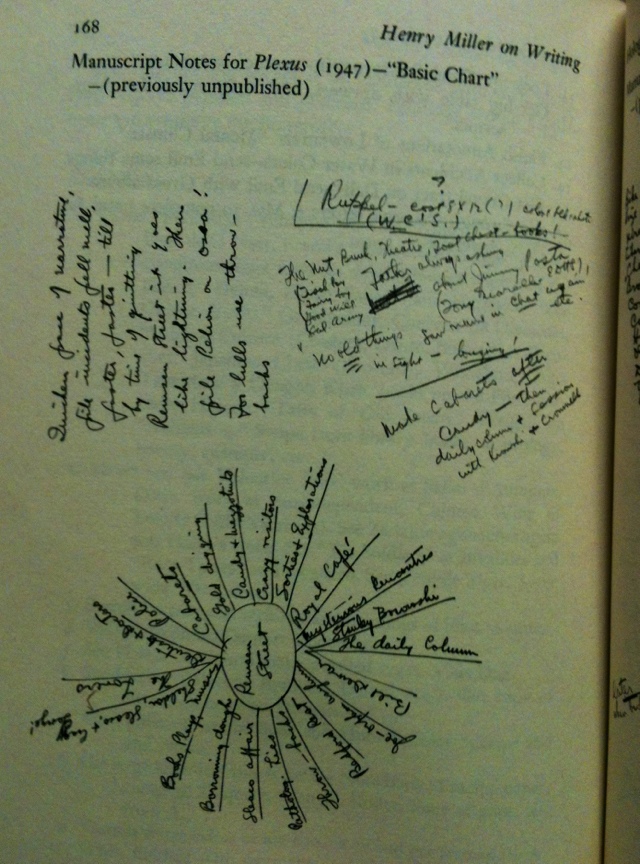
(From Henry Miller on Writing, New Directions).
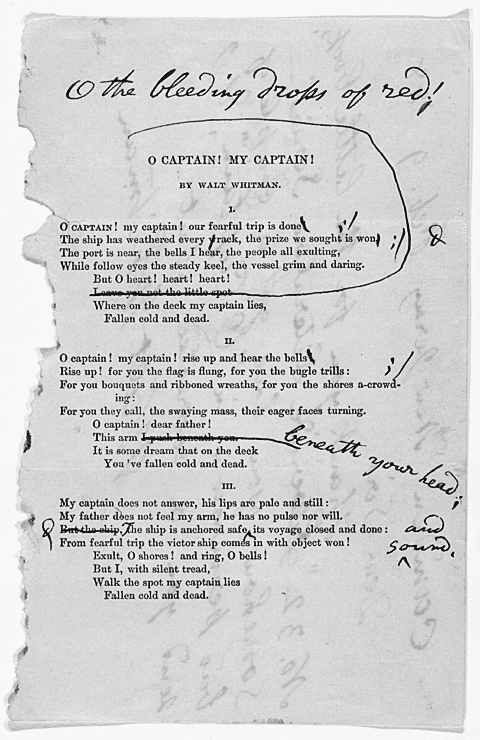
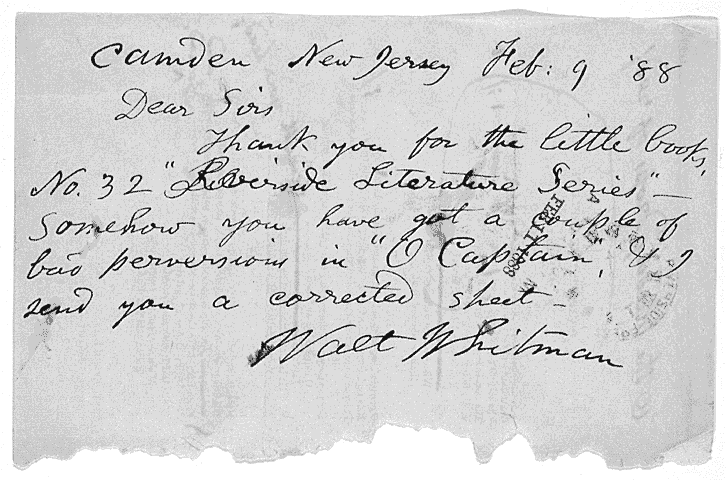
Letter and Corrected Reprint of Walt Whitman’s “O Captain, My Captain” with Comments by Author
Ned Flanders Reads Harry Potter
Topless Hemingway, Part IV
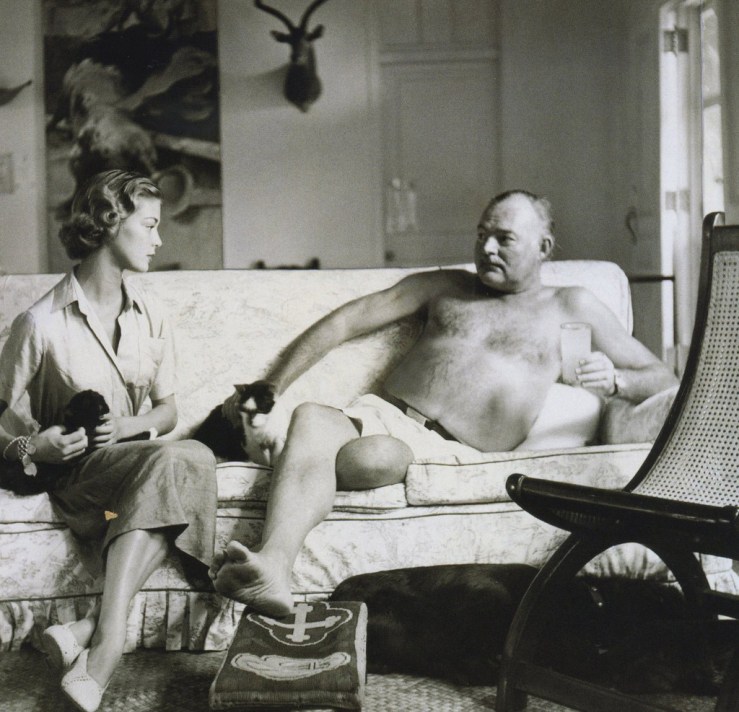
- Pictured with Jean Patchett, Cuba, 1950
Siphonophorae — Ernst Haeckel

Alan Moore Talks Apocalypse (Video)
“My Tone Is Not Meant to Be Obnoxious. I Am in a State of Shock” — Flannery O’Connor Responds to an English Professor
From a 1961 letter by Flannery O’Connor to an English professor, who wrote her asking for an interpretation of her story “A Good Man Is Hard to Find.” In his letter, the professor concludes that the second half of the story is imaginary, an interpretation that seems to give Ms. O’Connor the vapors:
The interpretation of your ninety students and three teachers is fantastic and about as far from my intentions as it could get to be. If it were a legitimate interpretation, the story would be little more than a trick and its interest would be simply for abnormal psychology. I am not interested in abnormal psychology.
There is a change of tension from the first part of the story to the second where the Misfit enters, but this is no lessening of reality. This story is, of course, not meant to be realistic in the sense that it portrays the everyday doings of people in Georgia. It is stylized and its conventions are comic even though its meaning is serious.
Bailey’s only importance is as the Grandmother’s boy and the driver of the car. It is the Grandmother who first recognized the Misfit and who is most concerned with him throughout. The story is a duel of sorts between the Grandmother and her superficial beliefs and the Misfit’s more profoundly felt involvement with Christ’s action which set the world off balance for him.
The meaning of a story should go on expanding for the reader the more he thinks about it, but meaning cannot be captured in an interpretation. If teachers are in the habit of approaching a story as if it were a research problem for which any answer is believable so long as it is not obvious, then I think students will never learn to enjoy fiction. Too much interpretation is certainly worse than too little, and where feeling for a story is absent, theory will not supply it.
My tone is not meant to be obnoxious. I am in a state of shock.
Kurt Vonnegut on Story Shapes (Video)
I’d seen the diagrams, which I’ve used in the classroom for a few years now (along with Margaret Atwood’s excellent short short “Happy Endings”) but never seen this video (metaphorical hat tip to ‘klept reader ccllyyddee, who says he saw it at Curiosity Counts—cheers!).
Teju Cole’s Open City Is a Strange, Marvelous Novel That Captures the Post-9/11 Zeitgeist

“And so when I began to go on evening walks last fall . . .” begins Julius, the perspicacious narrator of Teju Cole’s admirable and excellent début Open City. That opening “And” is significant, an immediate signal to the reader that this novel will refuse to align itself along (or even against) traditional arcs of plot and character development. We will meet Julius in media res, and we will leave him there, and along the way there will be learning and suffering and compassion and strange bubbles of ambiguity that threaten to burst out of the narrative.
As noted, Open City begins with Julius’s peripatetic voyages; he walks the night streets of New York City to ostensibly relieve the “tightly regulated mental environment of work.” Julius is completing his psychiatry fellowship at a hospital, and the work takes a toll on him, whether he admits it or not. In these night walks—and elsewhere and always throughout the novel—Julius shares his sharp observations, both concrete and historical. No detail is too small for his fine lens, nor does he fail to link these details to the raw information that rumbles through his mind: riffs on biology, history, art, music, philosophy, and psychology interweave the narrative. Julius maps the terrain of New York City against its strange, mutating history; like a 21st century Ishmael, he attempts to measure it in every facet—its architecture, its rhythms, its spirit. And if there is one thread that ties Julius’s riffs together it is the nightmare of history:
But atrocity is nothing new, not to humans, not to animals. The difference is that in our time it is uniquely well organized, carried out with pens, train carriages, ledgers, barbed wire, work camps, gas. And this late contribution, the absence of bodies. No bodies were visible, except the falling ones, on the day America’s ticker stopped.
Open City is the best 9/11 novel I’ve read, but it doesn’t set out to be a 9/11 novel, nor does it dwell on that day. Instead, Cole captures something of the post-9/11 zeitgeist, and at the same time situates it in historical context. When Julius remarks on the recent past, the concrete data of history writhes under the surface. He remarks that the 9/11 attack on the World Trade Center “was not the first erasure on the site,” and goes on to detail the 1960s cityscapes that preceded the WTC. Before those, there was Washington Market. Then Julius embarks, via imagination, into the pre-Colombian space of the people we now call Indians or Native Americans. “I wanted to find the line that connected me to my own part in these stories,” he concludes, peering at the non-site that simultaneously anchors these memory-spaces.
Julius’s line, like the lines that comprise New York City (and perhaps, if we feel the spirit of its democratic project, America itself) is a mixed one, heterogeneous and multicultural. Julius’s father, now dead, was an important man in Nigeria, where Julius enjoyed a relatively privileged childhood. Julius’s mother—they are now estranged—is German. He remarks repeatedly about his German grandmother’s own displacements during WWII, reflecting at one point that, from a historical perspective, it was likely impossible that she escaped Cossack rape.
Even though he sometimes seems reticent to do so, Julius delves into the strange violence that marks his lineage. He recalls a childhood fascination with Idi Amin; as a boy, he and his cousins would watch the gory film The Rise and Fall of Idi Amin repeatedly: ” . . . we enjoyed the shock of it, its powerful and stylized realism and each time we had nothing to do, we watched the film again.”
Fascinated horror evinces repeatedly in Open City. In just one example, Julius believes he sees “the body of a lynched man dangling from a tree”; as he moves closer to inspect, he realizes that it is merely canvas floating from a construction scaffold. Perhaps so attuned to history’s grand catalog of spectacular atrocity, Julius finds it lurking in places where it does not necessarily evince.
In turn, despite his profession as psychiatrist, Julius is wary of human sympathy. Throughout the novel, dark-skinned men engage him by calling him “brother.” He almost always deflects these attempts at connection, and internally remarks them as fatuous, or naïve, or false. This is not to say though that Julius doesn’t make significant (if often transitory) connections.
One of the organizing principles of Open City comes in the form of Julius’s infrequent visits to the home of his former English professor, Dr. Saito, who is slowly dying. Saito’s own memories float into Julius—this technique repeats throughout the novel—and we learn that he was interned as a young man during WWII; the sad fact is another ugly kink in the line of American history that Julius attempts to trace.
Julius also befriends Dr. Maillotte, an aging surgeon on a flight to Brussels, where he spends a few weeks of Christmas vacation, ostensibly looking for his oma (a task he performs half-heartedly at best). As Julius daydreams, Dr. Maillotte, European émigré, finds a place within his vision of family members and friends:
I saw her at fifteen, in September 1944, sitting on a rampart in the Brussels sun, delirious with happiness at the invaders’ retreat. I saw Junichiro Saito on the same day, aged thirty-one or thirty-two, unhappy, in internment, in an arid room in a fenced compound in Idaho, far away from his books. Out there on that day, also, were all four of my own grandparents: the Nigerians, the Germans. Three were gone by now, for sure. But what of the fourth, my oma? I saw them all, even the one I had never seen in real life, saw all of them in the middle of that day in September sixty-two years ago, with their eyes open as if shut, mercifully seeing nothing of the brutal half century ahead and better yet, hardly anything at all of all that was happening in their world, the corpse-filled cities, camps, beaches, and fields, the unspeakable worldwide disorder that very moment.
In Brussels, Julius meets Farouq, an angry young man with intellectual, Marxist tendencies. Farouq believes in a theory of “difference” and finds himself at odds with both the dominant Belgian culture and with Western culture in general. Julius’s conversations with Farouq are a highlight of the novel; they help to further contextualize the drama of diaspora in the post-9/11 world. Later, Julius finds a counterweight to some of Farouq’s extreme positions over a late lunch with Dr. Maillotte, who suggests that “For people to feel that they alone have suffered, it is very dangerous.” There’s a sense of reserved moderation to her critique—not outright dismissal nor condemnation, but simply a recognition that there are “an endless variety of difficulties in the world.”
Julius seems to tacitly agree with Maillotte’s assessment. His reluctance to accept brotherhood based on skin color alone speaks to a deeper rejection of simplicity, of tribe mentality, of homogeneity; it also highlights his essential alienation. At the same time, he’s acutely aware of how skin color matters, how identity can be thrust upon people, despite what claims to agency we might make. In search of the line that will connect him to his part of the American story, Julius finds unlikely “brothers” in Farouq, Maillotte, and Saito.
But let us not attribute to Julius a greater spirit than Cole affords him: Open City is a novel rich in ambiguity, with Julius’s own personal failures the most ambiguous element of all. While this is hardly a novel that revolves on plot twists, I hesitate to illustrate my point further for fear of clouding other readers’ perceptions; suffice to say that part of the strange, cruel pleasure of Open City is tracing the gaps in Julius’s character, his failures as a professional healer—and his failures to remark or reflect upon these failures.
But isn’t this the way for all of us? If history is a nightmare that we try to awake from—or, more aptly in a post-9/11 world, a nightmare that we awake to, to paraphrase Slavoj Žižek—then there is also the consolation and danger that time will free us from the memory of so much atrocity, that our collective memory will allow those concrete details to slip away, replaced with larger emblems and avatars that neatly smooth out all the wrinkles of ambiguity. “I wondered if indeed it was that simple, if time was so free with memory, so generous with pardons, that writing well could come to stand in the place of an ethical life,” Julius wonders at one point; later, Saito points out that “There are towns whose names evoke a real horror in you because you have learned to link those names with atrocities, but, for the generation that follows yours, those names will mean nothing; forgetting doesn’t take long.” Julius’s mission then is to witness and remark upon the historical realities, the nitty-gritty details that we slowly edge out of the greater narrative. And Cole? Well, he gives us a novel that calls attention to these concrete details while simultaneously exploring the dangerous subjectivity behind any storytelling.
If it needs to be said: Yes, Open City recalls the work of W.G. Sebald, who crammed his books with riffs on history and melancholy reflections on memory and identity. And yes, Open City is flâneur literature, like Sebald (and Joyce, and Bolaño, perhaps). But Cole’s work here does not merely approximate Sebald’s, nor is it to be defined in its departures. Cole gives us an original synthesis, a marvelous and strange novel about history and memory, self and other. It’s a rich text, the sort of book one wants to immediately press on a friend, saying, Hey, you there, read this, we need to talk about this. Very highly recommended.
Open City is new in trade paperpack from Random House.
Related articles
- Who Needs Plot? Teju Cole’s Open City (themillions.com)
Gertrude Stein Next to Her Portrait (Portrait by Picasso; Photo by Man Ray; Commentary by David Markson)

In The Last Novel, David Markson offers the following citations re: Picasso, Stein, Man Ray (citations not in Markson’s (anti-)order):
Gertrude Stein once delighted Picasso by reporting that a collector had been dumbfounded, years afterward, to hear that Picasso had given her her portrait as a gift, rather than asking payment.
Not understanding that that early in Picasso’s career, the difference had been next to negligible.
Among the many paintings in her Paris flat, Gertrude Stein had two exceptional Picassos.
If there were a fire, and I could save only one picture, it would be those two. Unquote.
Picasso. Cézanne. Matisse. Braque. Bonnard. Renoir.
All of whom painted portraits of Ambroise Vollard.
Cartier-Bresson. Brassaï. Man Ray. Lee Miller. Robert Doisneau. Robert Capa. David Douglas Duncan. Cecil Beaton.
All of whom photographed Picasso.
Book Acquired, 2.15.2012
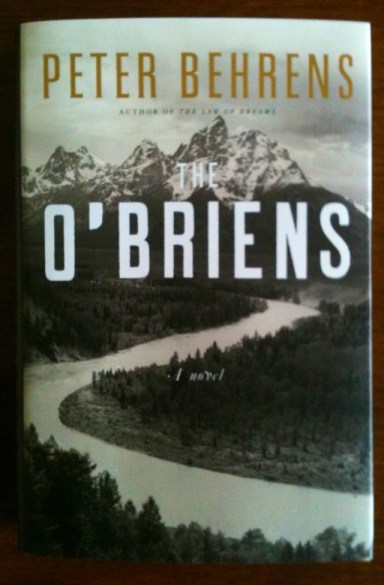
Peter Behren’s The O’Briens.
An unforgettable saga of love, loss, and exhilarating change spanning half a century in the lives of a restless family, from the author of the acclaimed novel The Law of Dreams.
The O’Briens is a family story unlike any told before, a tale that pours straight from the heart of a splendid, tragic, ambitious clan. In Joe O’Brien—grandson of a potato-famine emigrant, and a backwoods boy, railroad magnate, patriarch, brooding soul—Peter Behrens gives us a fiercely compelling man who exchanges isolation and poverty in the Canadian wilds for a share in the dazzling riches and consuming sorrows of the twentieth century.When Joe meets Iseult Wilkins in Venice, California, the story of their courtship—told in Behrens’s gorgeous, honed style—becomes the first movement in a symphony of the generations. Husband and wife, brothers, sisters-in-law, children and grandchildren, the O’Briens engage unselfconsciously with their century, and we experience their times not as historical tableaux but as lives passionately lived. At the heart of this clan—at the heart of the novel—is mystery and madness grounded in the history of Irish sorrow. The O’Briens is the story of a man, a marriage, and a family, told with epic precision and wondrous imagination.
George Washington Was A Biblioklept
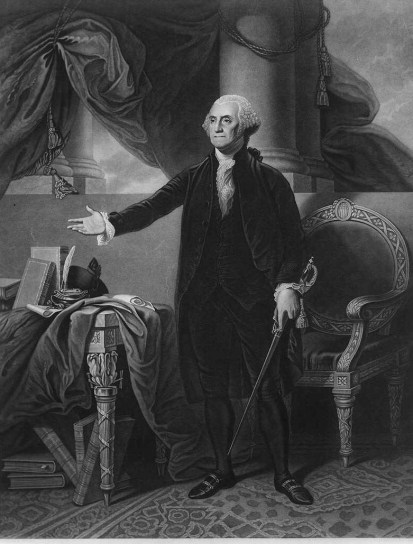 George Washington was a biblioklept. MobyLives hipped us to Ed Pilkington’s Guardian article. From the article:
Founder of a nation, trouncer of the English, God-fearing family man: all in all, George Washington has enjoyed a pretty decent reputation. Until now, that is.
The hero who crossed the Delaware river may not have been quite so squeaky clean when it came to borrowing library books.
The New York Society Library, the city’s only lender of books at the time of Washington’s presidency, has revealed that the first American president took out two volumes and pointedly failed to return them.
At today’s prices, adjusted for inflation, he would face a late fine of $300,000.
The library’s ledgers show that Washington took out the books on 5 October 1789, some five months into his presidency at a time when New York was still the capital. They were an essay on international affairs called Law of Nations and the twelfth volume of a 14-volume collection of debates from the English House of Commons.
The ledger simply referred to the borrower as “President” in quill pen, and had no return date.
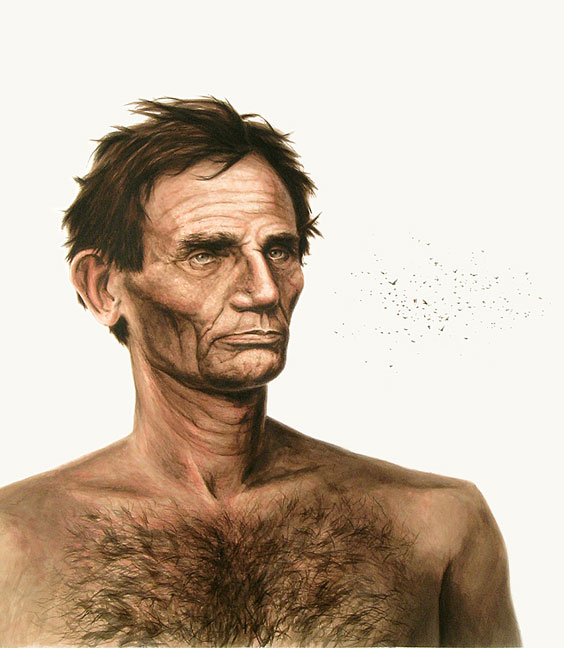
Lincoln — George Boorujy
Book Shelves #8, 2.19.2012

Book shelves series #8, eighth Sunday of 2012. This is likely the most boring post in this series (at least I hope it is). I keep books that folks send me that I intend to review but haven’t gotten to yet in this magazine stand thing; it abuts the sofa in the sitting room. Some of the books in here came in last summer. So, out of shame alone, I won’t be yanking any out for individual pics. Next week, we’ll get a gander at some of the finer shelves in the house.
Edward Albee Talks About Carson McCullers (Video)
“The Jockey,” A Short Story by Carson McCullers
“The Jockey” by Carson McCullers
The jockey came to the doorway of the dining room, then after a moment stepped to one side and stood motionless, with his back to the wall. The room was crowded, as this was the third day of the season and all the hotels in the town were full. In the dining room bouquets of August roses scattered their petals on the white table linen and from the adjoining bar came a warm, drunken wash of voices. The jockey waited with his back to the wall and scrutinized the room with pinched, crêpy eyes. He examined the room until at last his eyes reached a table in a corner diagonally across from him, at which three men were sitting. As he watched, the jockey raised his chin and tilted his head back to one side, his dwarfed body grew rigid, and his hands stiffened so that the fingers curled inward like gray claws. Tense against the wall of the dining room, he watched and waited in this way.
He was wearing a suit of green Chinese silk that evening, tailored precisely and the size of a costume outfit for a child. The shirt was yellow, the tie striped with pastel colors. He had no hat with him and wore his hair brushed down in a stiff, wet bang on his forehead. His face was drawn, ageless, and gray. There were shadowed hollows at his temples and his mouth was set in a wiry smile. After a time he was aware that he had been seen by one of the three men he had been watching. But the jockey did not nod; he only raised his chin still higher and hooked the thumb of his tense hand in the pocket of his coat.
The three men at the corner table were a trainer, a bookie, and a rich man. The trainer was Sylvester — a large, loosely built fellow with a flushed nose and slow blue eyes. The bookie was Simmons. The rich man was the owner of a horse named Seltzer, which the jockey had ridden that afternoon. The three of them drank whiskey with soda, and a white-coated waiter had just brought on the main course of the dinner. Continue reading ““The Jockey,” A Short Story by Carson McCullers”
 Biblioklept