Advice to young writers from Umberto Eco

Why the hell did I buy William Vollmann’s Argall? (Book acquired, 2.12.2016)

img_1546

I don’t know what’s wrong with me.

First, I bought an ebook of William T. Vollmann’s really really long new novel The Dying Grass a few weeks ago.

I bought this ebook rather late at night, after rather many drinks, against rather better judgment—or, rather, no judgment. If I can reconstruct my thought process: I think I rationalized paying so much money for an electronic file would like, necessitate a commitment to reading The Dying Grass that I might not feel if it were, say, a review copy, or a copy obtained via store credit at my favorite local book shop. Well I’ve been reading the ebook, putting a little edent in it in little eincrements, but it’s still damn long, and our narrator William the Blind can be awfully opaque at times (not to mention the shifts in narrative).

Anyway, I’ve been reading the ebook, which does, I think (?) a nice job of preserving Vollmann’s occasional indulgence in Whitmanesque free verse (prose) style—but well, I sort of want the physical thing too. So I went by my local bookshop in the hopes of securing a copy (and also pick up some Valentine’s books for my kiddoes). No luck in the new hardback section, so they directed me to Historical Fiction, an area I rarely browsed. No luck for The Dying Grass, but there was a hardback copy of Argall there. All 736 pages of it.

Reader, I acquired it.

Why? I don’t know. I love the faux-Elizabethan prose that Pynchon deployed in Mason & Dixon (and I tolerated Barth’s in The Sot-Weed Factor)—and Vollmann’s has a different flavor that’s intriguing (and difficult). The story, the base story, is the Pocahontas story, which in Vollmann’s telling might go past the Pocahontas myth (more than Malick, more than Disney).

But when oh when am I going to get to the thing?!

I’ll close with a selection from Vollmann’s own review of his novel;  the review originally ran in the October 7, 2001 edition of The Los Angeles Times, and was later collected in Expelled from Eden:

“Argall,” whose story emblematizes a personified and of course feminine Virginia, is no better or worse than any of the other “Seven Dreams.” That is why nobody reads “Argall.” No one looks for “Argall.” No one can find “Argall.” Good riddance, say I. To quote from “Argall” itself (the reference is to a fellow who’s searching for Pocahontas’ skeleton), “had the critic found her, what would he have done? Coffined her, borne her back seaward to some brown Virginian marsh crowned by grey and yellow weeds? Locked her into his cabinet of curiosities? All he discovered was a menagerie of human and animal remnants. What power could have swallowed her so thoroughly, but ooze?”

Enough. Holding our noses, let’s try to take this menagerie of remnants on its own terms.

This book’s first sin, as you might have already gathered from the foregoing, consists in its so-called Elizabethan language, whose archaisms, variant spellings and preposterous figures of speech substantially impede the reader in any attempt to envision the ball in any uniform fashion. Here is a sentence plucked at random from the mess: “He search’d for an issue of fair water, there to make another well, for he misdoubted him not that the river they drunk from was somehow tainted with disease, yet could discover no convenient place to make his diggings.” Much time and trouble would have been saved, had this so-called novelist written what he meant: “In order to get more healthful water, he intended to dig a well, but couldn’t.” The arch apostrophe, the ignorant substitution of “drunk” for “drank,” the ink-wasting double negation, well, really all this makes me crave to spew.

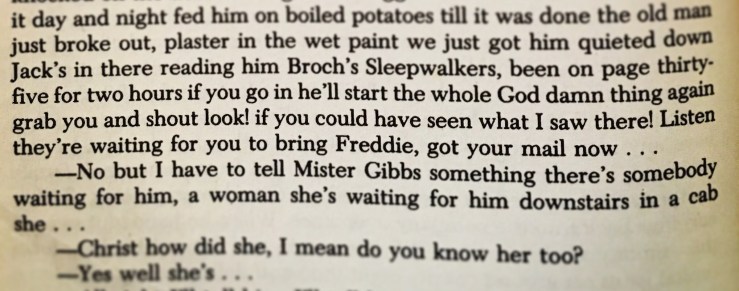
So what happens on page 35 of Broch’s Sleepwalkers? (William Gaddis’s J R)

img_1554

From page 724 (of 726) of my Penguin edition of William Gaddis’s novel J R.  I shall endeavor to answer my own question—what happens on page 35 of Hermann Broch’s novel The Sleepwalkers?

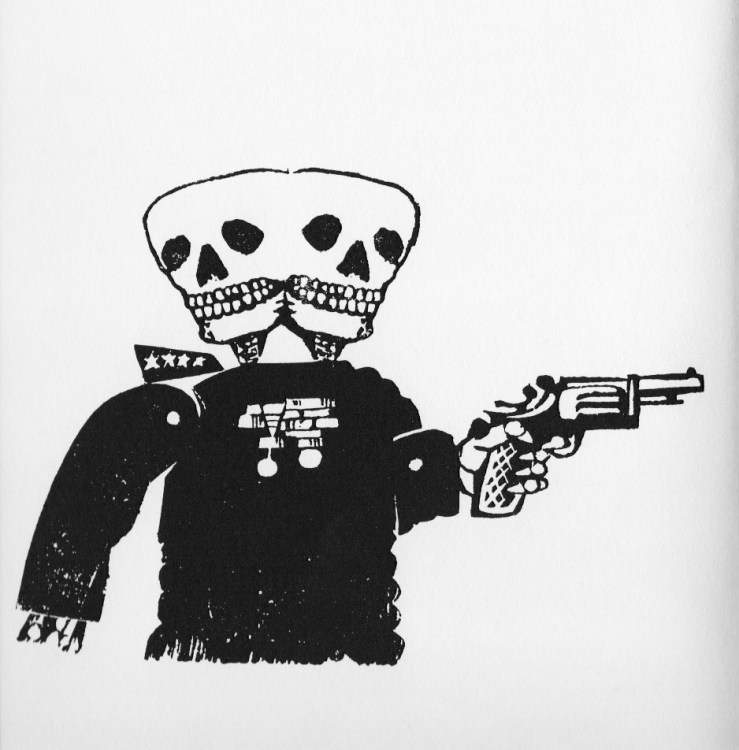
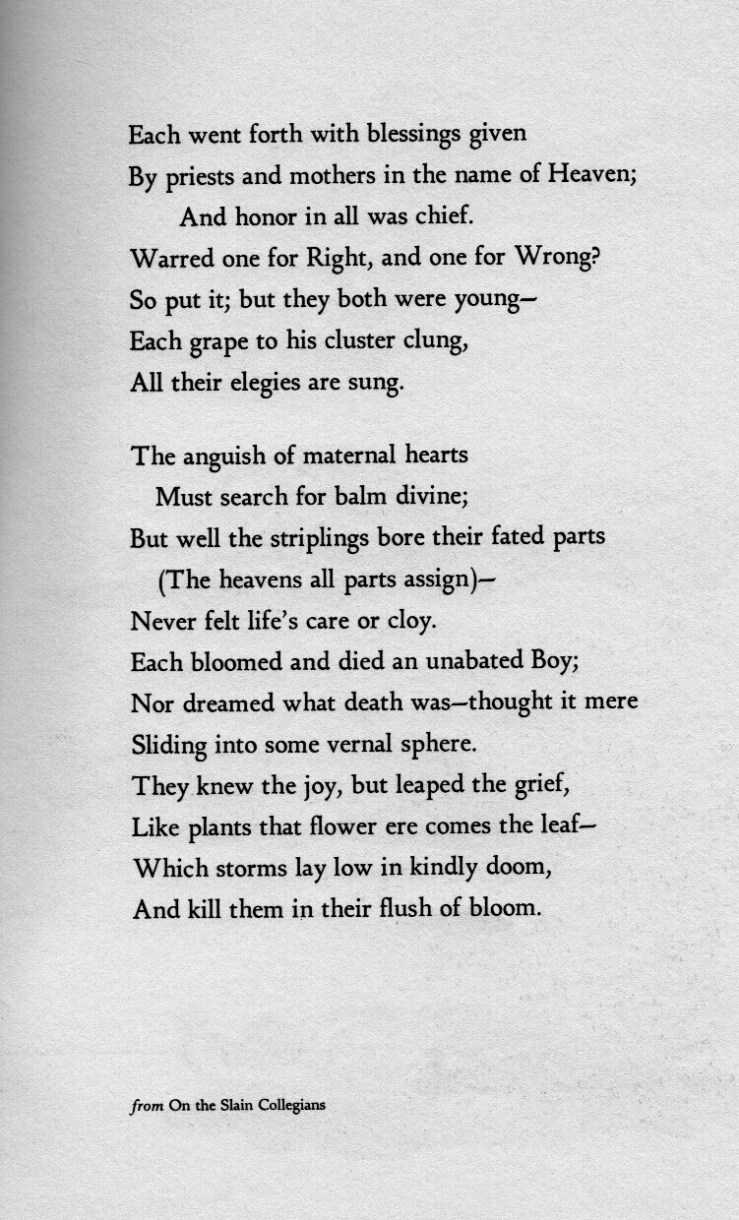
Kill them in their flush of bloom

img_1550img_1551

From On the Slain Collegians: Selections from the poems of Herman Melville. Edited, and with woodcuts by Antonio Frasconi. Noonday Press, 1971.

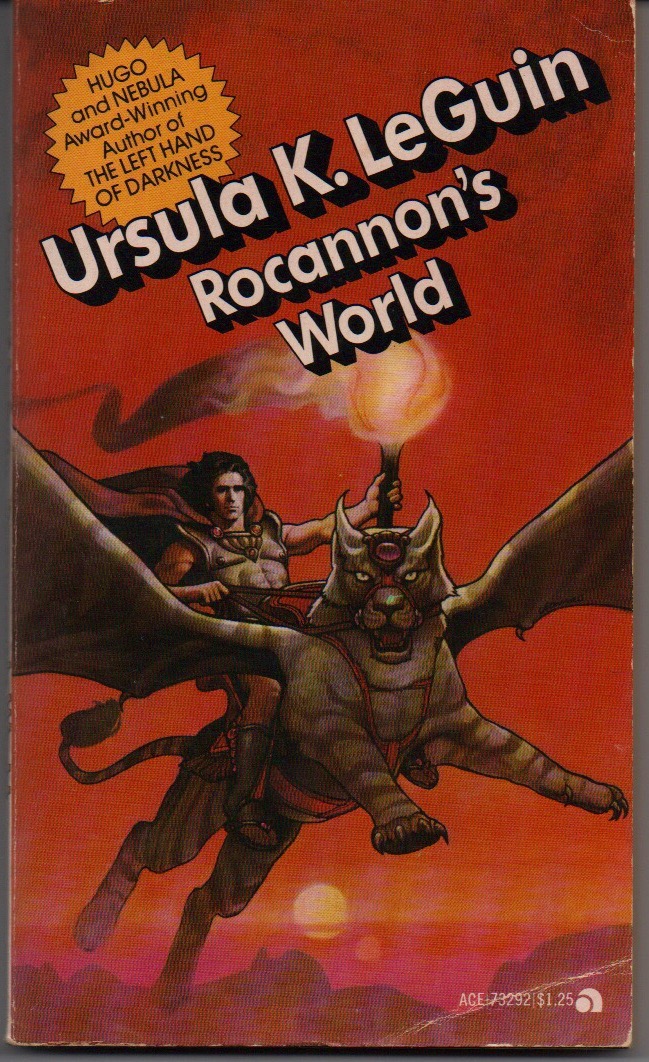
A conversation on Ursula K. Le Guin’s first novel, Rocannon’s World

After I posted a review on this site of Ursula K. Le Guin’s novel The Lathe of Heaven, the novelist Adam Novy recommended that I check out her under-read first novel, Rocannon’s World. So I did. Our email exchanges about the book developed over a few weeks (during which time I ended up reading all of Le Guin’s so-called Hainish novels), and Adam’s analysis of the novel is, I think, especially perceptive. An edit of our conversation is below.

Adam Novy’s novel The Avian Gospels is fantastic. Buy it from Hobart.

img_1534

Edwin Turner: Thanks for suggesting Rocannon’s World, Adam. I’m not really sure how I missed it in my first few forays into Le Guin—when I was younger it might not have been in my school library—but I’m glad I read it. Very vivid stuff. You told me it was your favorite Le Guin. Why?

Adam Novy: There are many reasons why I love Rocannon’s World. The beautiful and exact descriptive writing, and the syntax. Le Guin can really sing. The sadness of the heroes for their vanished civilizations. The way so many passages evoke the feel of hiking. The flying cats. The incomparable ending.

But it’s the way Le Guin explores the idea of agency sets the book apart for me. The protagonists, Semley and Rocannon, take decisive action they believe in, which sets in motion plots that spiral out of control and annihilate their intentions. Rocannon and Semley end up being massive historical figures, yet also tiny cogs in galaxy-sized machines. This comparison of the massive and the tiny is not a calculated stalemate—not the cultivated balance I think a lot of writers feel we must produce these days, as if our calculations will be checked and we might get partial credit—but an ambivalence that’s immune to human desire or even narrative. It’s one of the things I love about Le Guin. Her idea of a human being’s influence in the world is like the ancients’.

This is fascinating to me in a lot of ways, first at the level of plot. How much should a character affect the world around her? Too much power can seem unserious and thrillery, like a fantasy, like competence porn. (A possible new definition of literary fiction is “incompetence porn.”)  Le Guin is just so elegant with this. Semley and Rocannon may be important figures in their communities—Semley is a kind of Duchess and Rocannon is a government anthropologist with administrative dominion over half the galaxy—and yet, by merely performing their own social roles, they ruin everything they care about, including the context in which their identities exist. Le Guin’s formula is magical: a central figure in a community commits a deliberate act, and the consequences are massive, unforeseen, accidental, and diminish this central figure to almost nothing. And yet, despite their total disempowerment, their influence endures in major ways. But even this is misconstrued by people in the future, who tell the history. There is no linear connection between intention and result. The reader feels the ages passing every time Rocannon takes a step.

This leads to the other aspect of the plot I really love, which is political. Rocannon is a bureaucrat in a colonial hegemony, and by honestly yet patronizingly trying to protect the subjects he administrates, he initiates a plot that will destroy them, and himself. He’s a kind of blinkered, well-meaning liberal who does not know what the hell he’s really doing, or how power works, since the force that does the destroying—an anti-government entity called “the enemy”—seems to emanate from the government Rocannon works for. In the end, his people simply don’t belong on the planet, which he only learns when he, too, is a refugee.

ET: But there’s also the sense that Rocannon integrates into the planet—he marries into the Angyar at the end, although we don’t really hear that story. It’s an epilogue that fulfills the legend-structure of the tale. So, on one hand Le Guin’s written this story that’s highly ironic—especially in the ironic title, Rocannon’s World—a title that points to the novel’s themes of colonialism. On the other hand, there’s a sense of discovery and exploration—a kind of High Adventure narrative à la Verne, where our viewpoint character ascends, peers down over the planet from his flying machine (in this case a winged cat).

And then Rocannon sort of achieves his Romantic quest of attaining Semley, or rather the idea of Semley—the exotic, the beautiful, the aristocratic—by marrying into her ancestral chain, and becoming a sort of Duke. This is all very much Fairy Tale stuff, Fantasy stuff. And Le Guin isn’t really synthesizing fantasy tropes with sci-fi in Rocannon’s World. It’s more like she’s tapping into a deeper, mythic vein—so on some level, I think that the novel is really about storytelling itself. There’s something oral and episodic about it, with its riffs on Eurydice and winged men and Valhalla. I reread The Dispossessed after Rocannon’s World. The Dispossessed strikes me as more deliberately structured than Rocannon’s World—more dialectical, more focused, but also centered much more on dialogue-monologue (similar to The Lathe of Heaven). Rocannon’s World is literally more fantastical than The Dispossessed. Do you think that Le Guin’s first novel has been overlooked as a book of ideas? Continue reading “A conversation on Ursula K. Le Guin’s first novel, Rocannon’s World”

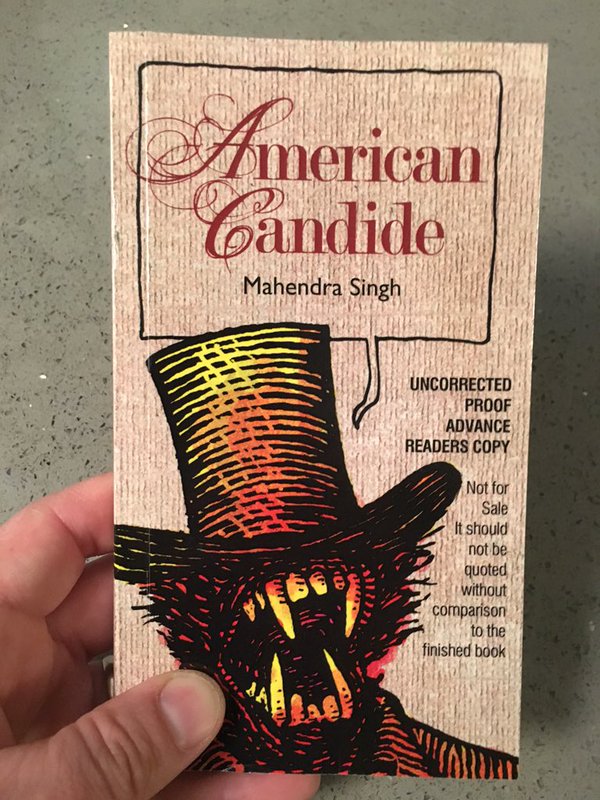
American Candide (Book acquired and consumed this past week, like early-mid February 2016)

capcoafxiaak7r6

So I ate this one up: Mahendra Singh’s American Candide is terribly funny, except when you stop and think about the satire and why the satire works, and you think, Aw hell, this is terribly sad. I consumed the thing in more or less three sittings. There’s a cliché, right—Better than it has any right to be—I mean, this thing could fall flat on its face, this transposition of Voltaire’s Candide to 21st century America (excuse me, Freedonia)—but Singh’s prose is adroitly devastating; like Candide, he offers a subject, a verb, and then pivots the object or next clause in some darkly satirical direction. Fun fun fun smart smart smart. My only quibble is that I wish Singh’s marvelous illustrations (with nods to Gustave Dore and William Blake, among others, I’m sure) we’re reproduced on full pages.

Back cover blurb:

Voltaire’s most famous literary creation, Candide, is now rebooted for the better-than-best of all possible worlds, 21st-century America. The globe-trotting misadventures of American Candide and his wingnut tutor, Dr. Pangloss, his totally hot BBW Cunegonde plus sundry suicide bombers, illuminati global warmers, insurance cults, sex-crazed illegal aliens and even the Senate Sub-Committee on Homeland Furnishings provides sufficient belly laughs to make exile, destitution, rape, murder and torture into something that happens to other, mostly foreign people, thank God.

 From the jungle slums of darkest Africa to the lily-white McMansions of American suburbia, the human condition wreaks havoc upon Candide and his friends as they search for an American Dream being held against its will in an undisclosed location. College-boy sissies will call it a Juvenalian satire upon America’s penchant for mindless optimism and casual racism but Candide says it’s really ‘rage against the rage, Voltaire-dude!’

Three Books

img_1510


Pierre, or The Ambiguities by Herman Melville. First edition hardback, Harper Collins, 1995. Color illustrations, many blatantly erotic, including the cover, by Maurice Sendak (in the mood of Billy Blake). Design by Cynthia Krupat. The editor Hershel Parker has reconstructed the original, shorter version of Pierre that Melville sabotaged (according to Parker) by adding convoluted subplots (in revenge against the Harper brothers who did not wish to publish the book). This is the so-called “Kraken Edition”; the title comes from a letter Melville sent to Hawthorne. If Moby-Dick was the whale, Pierre was his giant monstrous squid.


img_1512

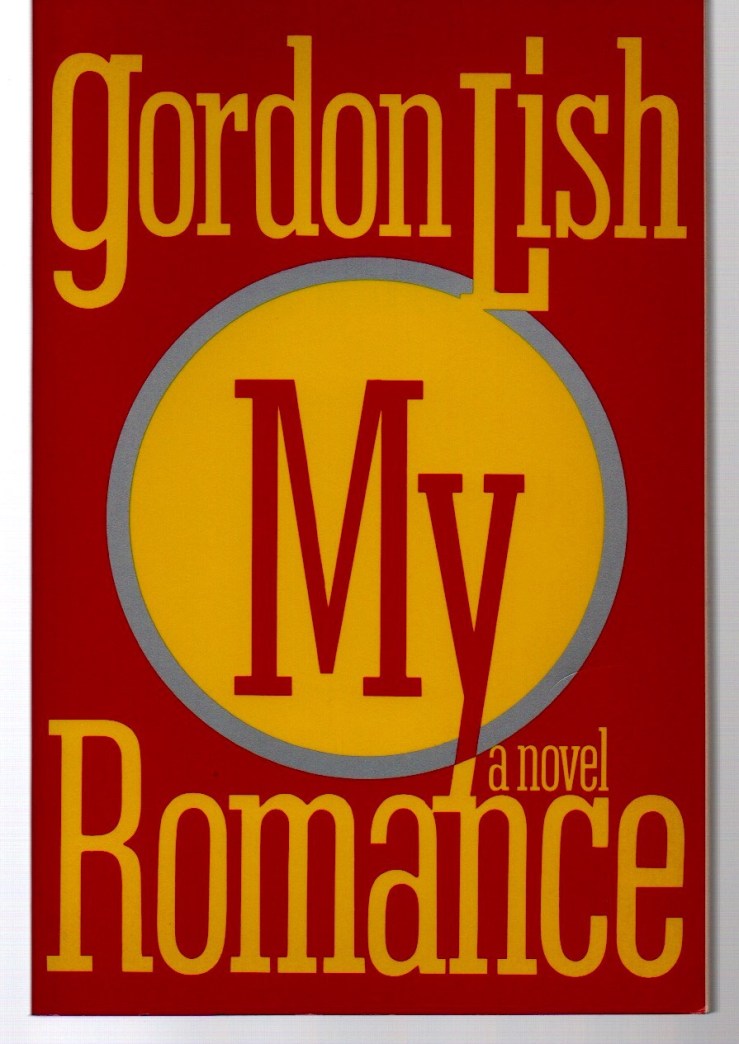
My Romance by Gordon Lish. 1993 Norton trade paperback. Cover design by R.D. Scudellari. There are two paragraphs in this 142-page novel; the first starts on page 1 and ends on page 142; the second begins and ends on page 142 and is all of one sentence.

img_1511


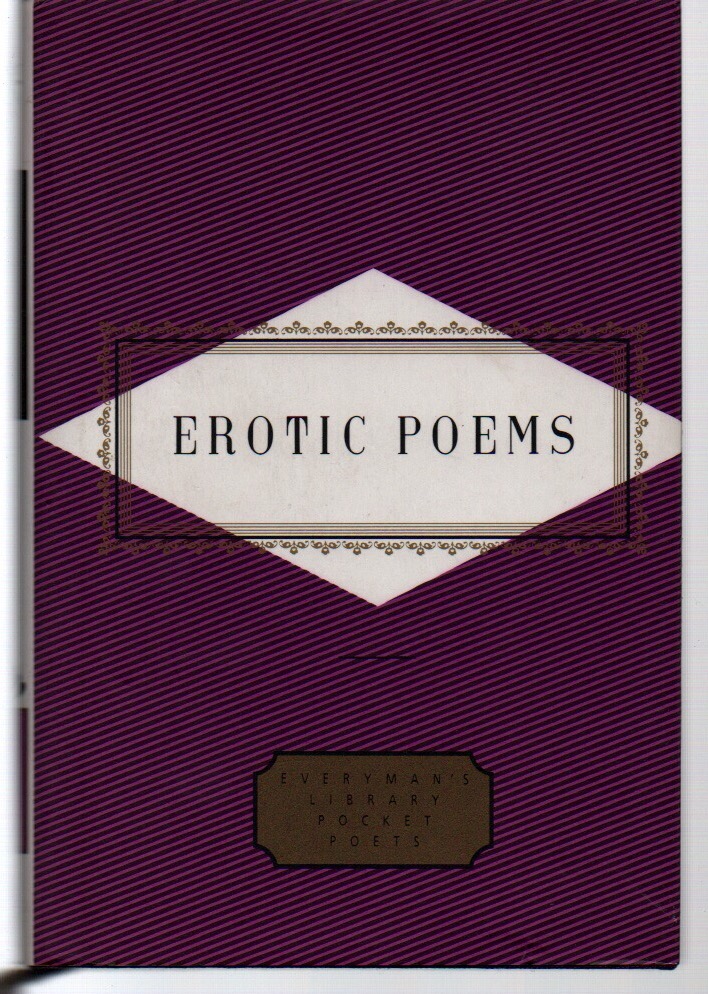
Erotic Poems, an Everyman’s Library Pocket Poets collection. Borzoi/Knopf, tiny hardback 1994. Jacket design by Barbara de Wilde. Happy Valentine’s.

Another trailer for that High-Rise film

Not sure about this one…but I love the Ballard novel, so…

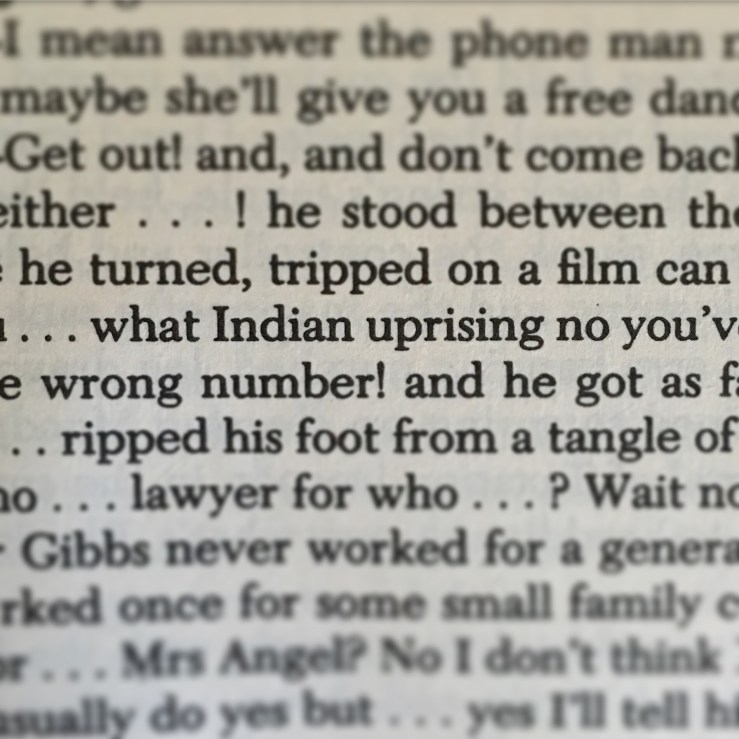
Indian uprising (William Gaddis’s J R)

img_1504

From page 617 of my Penguin edition of William Gaddis’s novel J R, a nod (I think) to Donald Barthelme’s short story “The Indian Uprising.”

“Giant” — Thomas Bernhard

img_1487-1

“The Difficulty of Crossing a Field,” a very short tale by Ambrose Bierce

“The Difficulty of Crossing a Field”

by

Ambrose Bierce

from Present at a Hanging and Other Ghost Stories


One morning in July, 1854, a planter named Williamson, living six miles from Selma, Alabama, was sitting with his wife and a child on the veranda of his dwelling.  Immediately in front of the house was a lawn, perhaps fifty yards in extent between the house and public road, or, as it was called, the “pike.”  Beyond this road lay a close-cropped pasture of some ten acres, level and without a tree, rock, or any natural or artificial object on its surface.  At the time there was not even a domestic animal in the field.  In another field, beyond the pasture, a dozen slaves were at work under an overseer.

Throwing away the stump of a cigar, the planter rose, saying: “I forgot to tell Andrew about those horses.”  Andrew was the overseer.

Williamson strolled leisurely down the gravel walk, plucking a flower as he went, passed across the road and into the pasture, pausing a moment as he closed the gate leading into it, to greet a passing neighbor, Armour Wren, who lived on an adjoining plantation.  Mr. Wren was in an open carriage with his son James, a lad of thirteen.  When he had driven some two hundred yards from the point of meeting, Mr. Wren said to his son: “I forgot to tell Mr. Williamson about those horses.”

Mr. Wren had sold to Mr. Williamson some horses, which were to have been sent for that day, but for some reason not now remembered it would be inconvenient to deliver them until the morrow.  The coachman was directed to drive back, and as the vehicle turned Williamson was seen by all three, walking leisurely across the pasture.  At that moment one of the coach horses stumbled and came near falling.  It had no more than fairly recovered itself when James Wren cried: “Why, father, what has become of Mr. Williamson?”

It is not the purpose of this narrative to answer that question.

Mr. Wren’s strange account of the matter, given under oath in the course of legal proceedings relating to the Williamson estate, here follows:

“My son’s exclamation caused me to look toward the spot where I had seen the deceased [sic] an instant before, but he was not there, nor was he anywhere visible.  I cannot say that at the moment I was greatly startled, or realized the gravity of the occurrence, though I thought it singular.  My son, however, was greatly astonished and kept repeating his question in different forms until we arrived at the gate.  My black boy Sam was similarly affected, even in a greater degree, but I reckon more by my son’s manner than by anything he had himself observed.  [This sentence in the testimony was stricken out.]  As we got out of the carriage at the gate of the field, and while Sam was hanging [sic] the team to the fence, Mrs. Williamson, with her child in her arms and followed by several servants, came running down the walk in great excitement, crying: ‘He is gone, he is gone!  O God! what an awful thing!’ and many other such exclamations, which I do not distinctly recollect.  I got from them the impression that they related to something more – than the mere disappearance of her husband, even if that had occurred before her eyes.  Her manner was wild, but not more so, I think, than was natural under the circumstances.  I have no reason to think she had at that time lost her mind.  I have never since seen nor heard of Mr. Williamson.”

This testimony, as might have been expected, was corroborated in almost every particular by the only other eye-witness (if that is a proper term) – the lad James.  Mrs. Williamson had lost her reason and the servants were, of course, not competent to testify.  The boy James Wren had declared at first that he saw the disappearance, but there is nothing of this in his testimony given in court.  None of the field hands working in the field to which Williamson was going had seen him at all, and the most rigorous search of the entire plantation and adjoining country failed to supply a clew.  The most monstrous and grotesque fictions, originating with the blacks, were current in that part of the State for many years, and probably are to this day; but what has been here related is all that is certainly known of the matter.  The courts decided that Williamson was dead, and his estate was distributed according to law.

Inherent Vice (William Gaddis’s J R)

img_1471

From page 571 of my Penguin edition of William Gaddis’s novel J R. The phrase appears as part of the character Jack Gibbs’s work in progress, Agapē AgapeThe phrase is not especially uncommon, I suppose, in art history, and I (obliquely) remark it in this post for my own amusement.

Read “Loka,” a short story by Kate Chopin

“Loka”

by

Kate Chopin

from Bayou Folk (1894)


She was a half-breed Indian girl, with hardly a rag to her back. To the ladies of the Band of United Endeavor who questioned her, she said her name was Loka, and she did not know where she belonged, unless it was on Bayou Choctaw.

She had appeared one day at the side door of Frobissaint’s “oyster saloon” in Natchitoches, asking for food. Frobissaint, a practical philanthropist, engaged her on the spot as tumbler-washer.

She was not successful at that; she broke too many tumblers. But, as Frobissaint charged her with the broken glasses, he did not mind, until she began to break them over the heads of his customers. Then he seized her by the wrist and dragged her before the Band of United Endeavor, then in session around the corner. This was considerate on Frobissaint’s part, for he could have dragged her just as well to the police station.

Loka was not beautiful, as she stood in her red calico rags before the scrutinizing band. Her coarse, black, unkempt hair framed a broad, swarthy face without a redeeming feature, except eyes that were not bad; slow in their movements, but frank eyes enough. She was big—boned and clumsy.

She did not know how old she was. The minister’s wife reckoned she might be sixteen. The judge’s wife thought that it made no difference. The doctor’s wife suggested that the girl have a bath and change before she be handled, even in discussion. The motion was not seconded. Loka’s ultimate disposal was an urgent and difficult consideration.

Some one mentioned a reformatory. Every one else objected.

Madame Laballière, the planter’s wife, knew a respectable family of ‘Cadians living some miles below, who, she thought, would give the girl a home, with benefit to all concerned. The ‘Cadian woman was a deserving one, with a large family of small children, who had all her own work to do. The husband cropped in a modest way. Loka would not only be taught to work at the Padues’, but would receive a good moral training beside.

That settled it. Every one agreed with the planter’s wife that it was a chance in a thousand;-and Loka was sent to sit on the steps outside, while the band proceeded to the business next in order.

Loka was afraid of treading upon the little Padues when she first got amongst them,—there were so many of them,—and her feet were like leaden weights, encased in the strong brogans with which the band had equipped her.

Madame Padue, a small, black-eyed, aggressive woman, questioned her in a sharp, direct fashion peculiar to herself.

“How come you don’t talk French, you?” Loka shrugged her shoulders.

“I kin talk English good ‘s anybody; an’ lit’ bit Choctaw, too,” she offered, apologetically.

Ma foi, you kin fo’git yo’ Choctaw. Soona the betta for me. Now if you wil-lin’, an’ ent too lazy an’ sassy, we ‘ll git ‘long somehow. Vrai sauvage ça,” she muttered under her breath, as she turned to initiate Loka into some of her new duties.

She herself was a worker. A good deal more fussy one than her easy-going husband and children thought necessary or agreeable. Loka’s slow ways and heavy motions aggravated her. It was in vain Monsieur Padue expostulated:—

“She’s on’y a chile, rememba, Tontine.”

“She’s vrai sauvage, that’s w’at. It’s got to be work out of her,” was Tontine’s only reply to such remonstrance.

The girl was indeed so deliberate about her tasks that she had to be urged constantly to accomplish the amount of labor that Tontine required of her. Moreover, she carried to her work a stolid indifference that was exasperating. Whether at the wash-tub, scrubbing the floors, weeding the garden, or learning her lessons and catechism with the children on Sundays, it was the same.

It was only when intrusted with the care of little Bibine, the baby, that Loka crept somewhat out of her apathy. She grew very fond of him. No wonder; such a baby as he was! So good, so fat, and complaisant! He had such, a way of clasping Loka’s broad face between his pudgy fists and savagely biting her chin with his hard, toothless gums! Such a way of bouncing in her arms as if he were mounted upon springs! At his antics the girl would laugh a wholesome, ringing laugh that was good to hear. Continue reading “Read “Loka,” a short story by Kate Chopin”

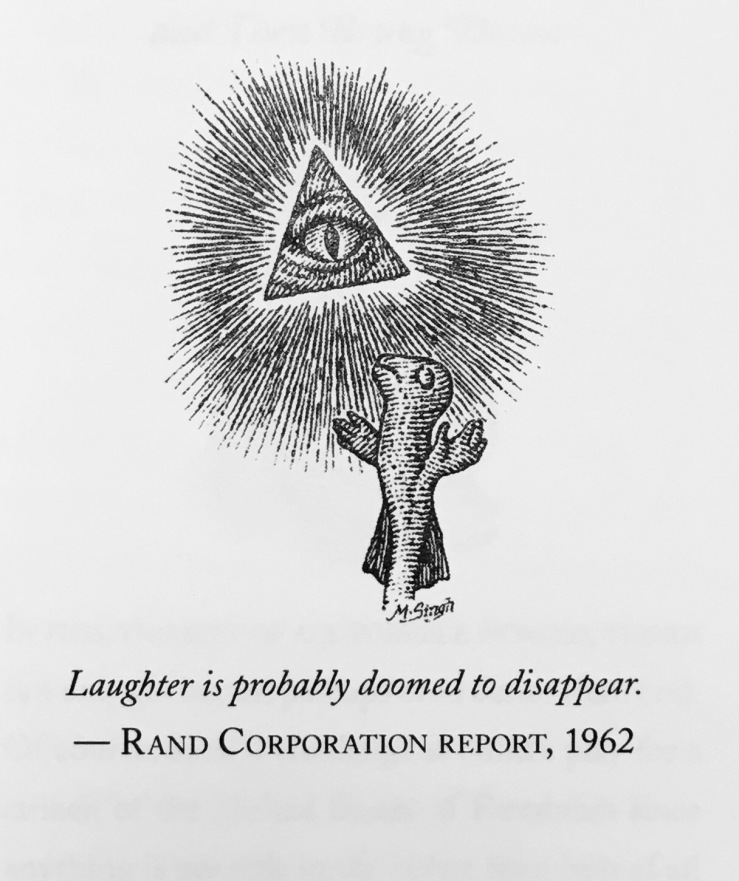
Laughter is probably doomed to disappear.

img_1468

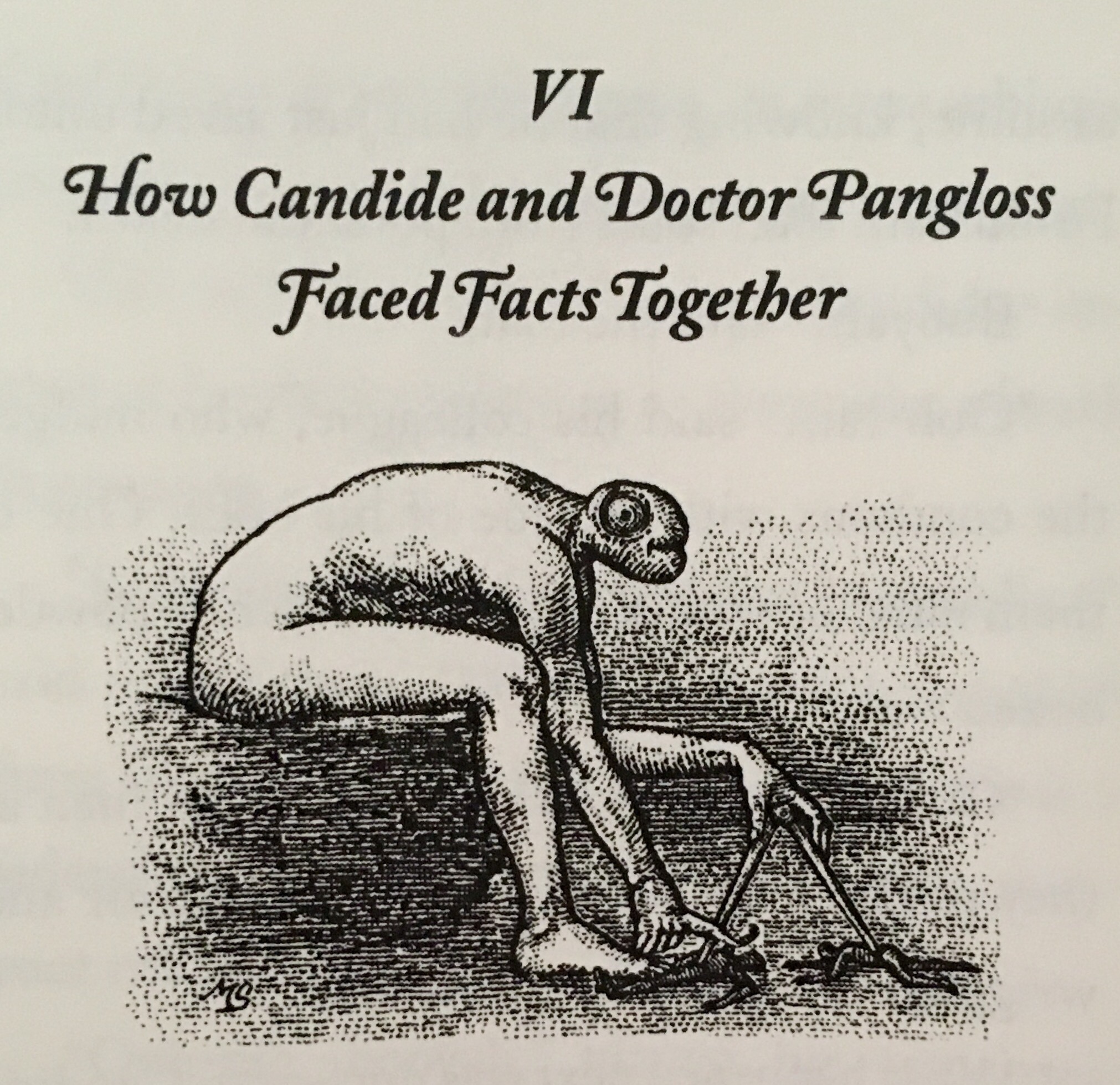
Frontispiece to Mahendra Singh’s forthcoming novel American Candide; the illustration (as well as all the illustrations in the novel) is by Singh. Just enjoying the hell out of it so far.

Three Books

img_1464

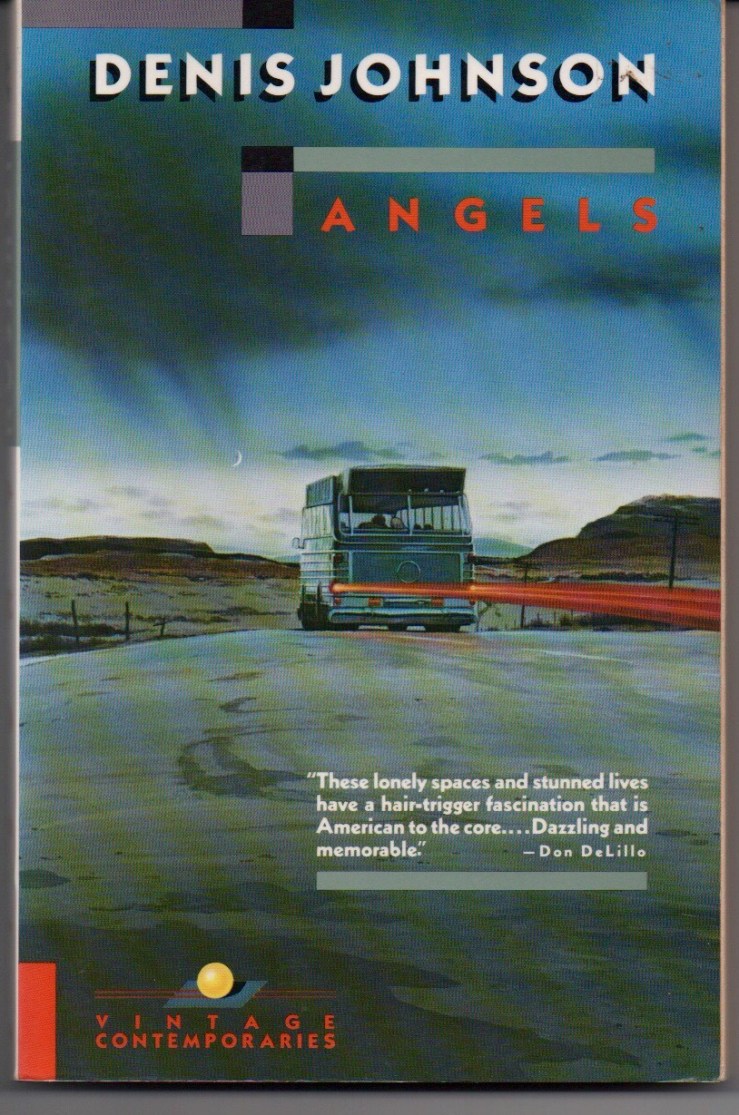
Angels by Denis Johnson. 1989 Vintage Contemporaries trade paperback. Cover design by Lorraine Louie. Cover illustration by Chris Moore.

img_1463

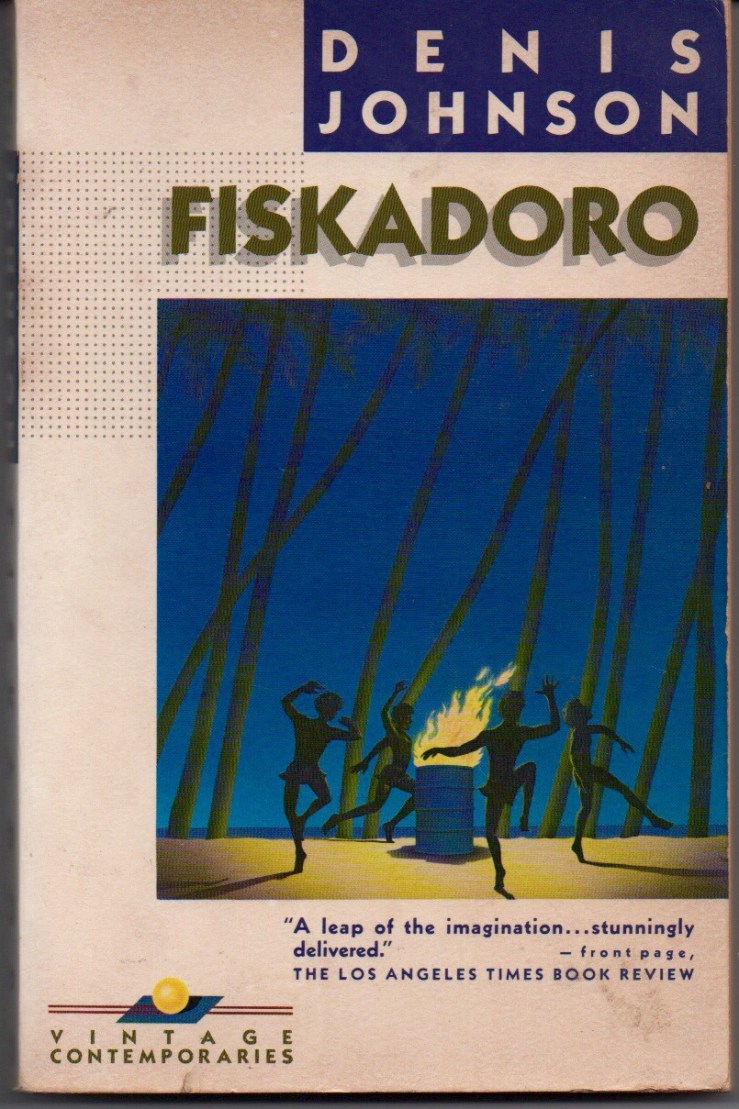
Fiskadoro by Denis Johnson. 1986 Vintage Contemporaries trade paperback. Cover design by Lorraine Louie. Cover illustration by Rick Lovell.

img_1465

The Stars at Noon by Denis Johnson. 1988 Vintage Contemporaries trade paperback. Cover design by Lorraine Louie. Cover illustration by Rick Lovell.

I CHOSE ROTTEN GIN and other forthcoming titles from J R Corp (William Gaddis)

I CHOSE ROTTEN GIN The story of a disillusioned Communist, who had not the courage to go against the party.

. . . so ostentatiously aimed at writing a masterpiece that, in a less ambitious work, one would be happy to call promising, for such readers as he may be fortunate enough to have . . .

—Glandvil Hix

OI CHITTERING ONES A serious work which urges us to lay aside our fears and realize our true

. . . the outside world of American life is described so imperfectly and so superficially as to make us feel that the novelist himself has never known it . . .

—M Axswill Gummer

THE R I COONS IGNITE Violence in a small southern community, the racial question delicately and faithfully dealt with.

. . . nowhere in this whole disgusting book is there a trace of kindness or sincerity or simple decency . . .

—S T Erlingnorf

TEN ECHOES RIOTING A delicately evocative novel.

. . . a delicately evocative novel . . .

—B R Endengill

. . . a literary event, of sorts . . .

—Newsleak Magazine

THE ONION CREST G I A rousing war novel, adventure with a tough talking sergeant from Wisconsin (the onion state).

. . . does not persuade us that it is based on any but a narrow and jaundiced view, a projection of private discontent . . .

—Milton R Goth

. . . another long and rather dreary saga of modem man in search of a soul . . .

—Baltimore Sun

THOSE NIGER CONTI Lusty romance with the Godzzoli family in love and the Italian secret service in Egypt.

. . . a complete lack of discipline . . .

—Kricket Reviews

THE TIGER ON SONIC A killer in provincial New England trapped by the brilliant deductions of the author’s popular armchair detective, Mr Ethan Frome.

. . . a really yummy read . . .

—D O’Lobeer

From William Gaddis’s novel J R. (The titles, I’m sure I don’t have to point out to you, dear reader, are all anagrams of The Recognitions).

United States of Japan (Book acquired, 2.02.2016)

img_1459

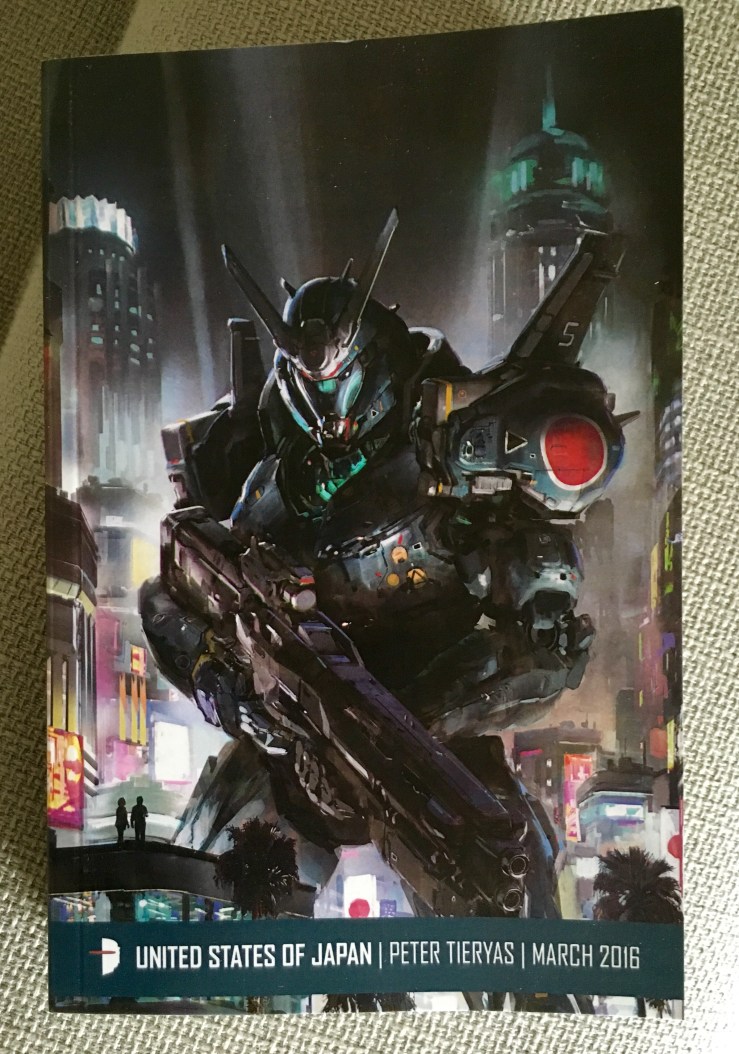
Peter Tieryas’s United States of Japan — a “spiritual sequel to Philip K. Dick’s The Man in the High Castle” — -is forthcoming from Angry Robot. Their blurb:

Decades ago, Japan won the Second World War. Americans worship their infallible Emperor, and nobody believes that Japan’s conduct in the war was anything but exemplary. Nobody, that is, except the George Washingtons — a group of rebels fighting for freedom. Their latest terrorist tactic is to distribute an illegal video game that asks players to imagine what the world might be like if the United States had won the war instead.

Captain Beniko Ishimura’s job is to censor video games, and he’s tasked with getting to the bottom of this disturbing new development. But Ishimura’s hiding something…kind of. He’s slowly been discovering that the case of the George Washingtons is more complicated than it seems, and the subversive videogame’s origins are even more controversial and dangerous than the censors originally suspected.d