
In Sam Lipsyte’s 2004 novel Home Land, minor loser Lewis Miner sends missives to his high school alumni newsletter, Catamount Notes, about his awful, sad misadventures in small-time drug use, petty copy-writing, itinerant busboyism, and chronic masturbation (he has a strong erotic disposition toward leg warmer porn. If this idea repels you (with no reciprocal attraction) this book is not for you). Miner wants to be sweet but he can be mean. He’s obsessed with the past–and who can blame him? His nickname in high school was Teabag, an appellation literally thrust upon him by the dumbest of jock-bullies. He carries this kernel of spite for years like a pebble in the sock, one that rubs up a giant blister–Miner is all blister. Writing ostensibly to his former classmates, but really just for himself, another form of masturbation:
It’s always been this way, as many of you might recall. Somebody chucks a snowball, I’m scouring the school yard for rocks. The bully just wants to shove sadness around, shake me down for spare change, I’m looking to scrape out his eye. I lack a sense of proportion. I have no sensitivity to sport. I’m the aggrieved rider on the grievous plain. I’m still pissed about the parade.
For all his anger though, Miner is an engaging, preternaturally sensitive voice. Along with his best friend/foil Gary, he muddles through a wretched life, finding solace (and an outlet for an outsized comic voice) in his letters to Catamount Notes–even if disgraced Principal Fontana won’t publish them. Despite his censorious discretion, Fontana reignites a downright silly mentorship with Miner. Fontana, a man after Holden Caulfield’s heart who calls everyone a “phony,” plays a weird father-figure to our favorite loser (even though Lewis’s own “Daddy Miner” is an ever-present terror in this tragicomedy).
Fontana, Daddy Miner, and the other characters in Home Land often feel like props rather than fully-drawn beings. Take the aforementioned Gary, for example, flush with cash after suing the hypnotherapist who convinced him that his parents sexually abused him repeatedly as part of elaborate Satanic rituals. His ridiculous past is par for course in the book. Such characters are the stock-in-trade of Home Land; they are, paradoxically, both its strength and weakness, beings who seem to speak entirely in misplaced metaphors and fucked-up aphorisms. There are too many of them for the book’s 200 pages. The fast writing never sags under the huge cast, but, nonetheless, its spine, its plot, its quick rhythm can’t bear their weight. There’s a much bigger novel here, but I don’t think I’d want to read it. Even Lipsyte’s normals are grotesques–or maybe it’s just Miner’s bilious perspective. In any case, sympathy is in short supply in Catamount country.
None of this is meant to disparage the reading experience of Home Land, which is marvelous, quick, funny, and a little bit gross (in a good way). Lipsyte crafts his sentences with a concrete, witty excellence that is near unrivaled in contemporary lit. It’s true that he sacrifices the depth of his characters here from time to time, and then includes passages that add nothing to the plot as a whole, like this one:
An older shapely woman swerved past on rollerblades. Bronzed, undulant in black Lycra, she clutched a pack of menthol cigarettes, danced on her wheels to something pumped through headphones. It was an admirable kind of ecstasy, hard-won. I wanted her for a lewd aunt.
That last line, of course, tells us so much about Lewis Miner and is also indicative of his overall method of storytelling. Not that he sees his letters to his alumni newsletter as part of a larger narrative–indeed, he’s to be forgiven all his esoterica, his mean, incisive commentary on contemporary life that doesn’t add up. Halfway through the book he tells us:
It occurs to me, Catamounts, sitting here composing this latest update, that someday, if and when the collected works of Lewis Miner ever see the light of day, some futuristic editor-type might attempt to assemble these dispatches in a certain manner, to, for example, tell a story, or else effect some kind of thematic arrangement of interwoven leitmotifs: Work, Love, Masturbation, Gary.
This would be a mistake. There are no leitmotifs. There is no story.
Miner then goes on to makes a pretty convincing case against stories (or at least against narrative arcs) and, tellingly, Home Land is better as a series of ugly, gross, hilarious anecdotes than it is as a novel with a traditional character arc. Which it is–a novel with a traditional character arc, climax, all that good stuff. Strangely, this is the book’s biggest failure. But that failure doesn’t get in the way of what is a pretty great and often very funny reading experience. Miner’s voice is a pleasure to inhabit for a while, a postmodern Falstaff heavy on the self-loathing. Home Land is a quick, easy read, a novel destined for cult-status, and Lewis Miner’s pathetic ironic braggadocio will hit home for many folks. Recommended.
Home Land is available in trade paperback from Picador.
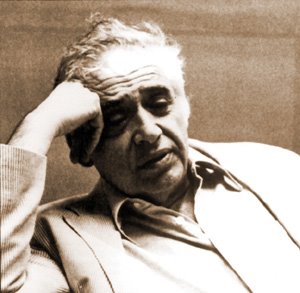 In his essay “Shakespeare in Bloom,” critic James Wood performs one of the strangest, most backhanded (and yet earnest) defenses I’ve ever read of Harold Bloom‘s aesthetic reaction to (what Bloom has called) “The School of Resentment” — deconstruction, Marxism, gender and queer theory, postcolonial theory, all that good stuff. Wood comes out strong, arguing, that in his prolific output, Bloom “has kidnapped the whole of the English literature and has been releasing his hostages, one by one, over a lifetime, on his own spirited terms.” Wood suggests that “this ceaselessness has produced some hurried, fantastical, and repetitive work,” before going on to throw around words like “garrulous” and “shallow.” Wood then takes Bloom to task over his famous (and improbable) claim that “Shakespeare invented us,” situating the claim against Bloom’s own most famous theory, the anxiety of influence. Wood says–
 As we bring up the term again, we should note that we consider it a bit pejorative and utterly reactionary, and, to borrow from (and perhaps misapply) Wood, shallow. Wood points out that “Deconstruction brings a generalized suspicion to bear on language and in particular on metaphor (or ‘rhetoric’), which it suspects of hiding something–namely, its own metaphoricity.” In short, literature always metaphorizes, and thus hides, some other impulse, one always politicized. Wood continues: “Political criticism, including cultural materialism, converts Freud’s analytical suspicions into political ones. . . . The poem is read as if it were covering something up, as if it were an alibi that is rather too fluent to be entirely trusted.” It must be interrogated to reveal its secret, the secret prejudices of its age. Wood continues, after a page or two–
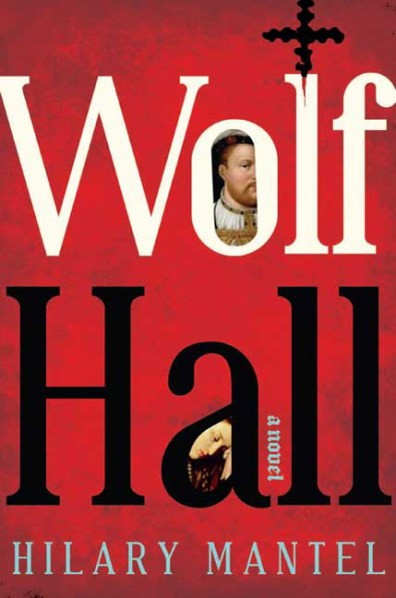 I’m coming to the end of Hilary Mantel’s brilliant treatment of the Tudor saga, Wolf Hall. Sign of a great book: when it’s finished, I will miss her characters, particularly her hero Thomas Cromwell, presented here as a self-made harbinger of the Renaissance, a complicated protagonist who was loyal to his benefactor Cardinal Wolsey even though he despised the abuses of the Church. Mantel’s Cromwell reminds us that the adjective “Machiavellian” need not be a pejorative, applied only to evil Iago or crooked Richard III. The Cromwell of Wolf Hall presages a more egalitarian–modern–extension of power. Cromwell here is not simply pragmatic (although he is pragmatic), he also has a purpose: he sees the coming changes of Europe, the rise of the mercantile class signaling economic power over monarchial authority. Yet he’s loyal to Henry VIII, and even the scheming Boleyns. “Arrange your face” is one of the book’s constant mantras; another is “Choose your prince.” Mantel’s Cromwell is intelligent and admirable; the sorrows of the loss of his wife and daughter tinge his life but do not dominate it; he can be cruel when the situation merits it but would rather not be. I doubt that many people wanted yet another telling of the Tudor drama–but aren’t we always looking for a great book? Wolf Hall demonstrates that it’s not the subject that matters but the quality of the writing. Highly recommended.
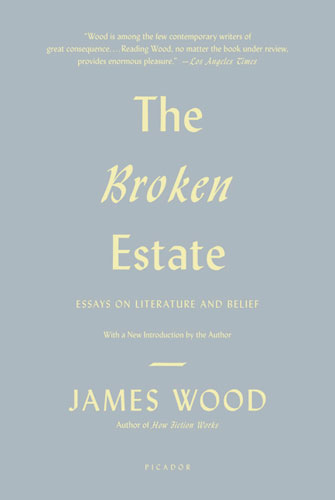
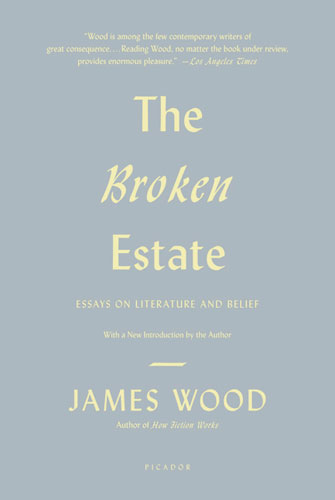 Cromwell’s greatest foil in Wolf Hall is Thomas More, who is also the subject of the first essay in James Wood’s collection The Broken Estate. I got my review copy in the mail late last week, so it was pure serendipity that I should read “Sir Thomas More: A Man for One Season” after a full day of listening to Wolf Hall (did I neglect to mention that I listened to the audio book? Sorry). Wood is harsher on More than Mantel; whereas she lets us despise him within the logic and framework of the Tudor court, Wood aims to find a contemporary secular standard from which to judge him. He finds license to do so through the work of John Stuart Mill, citing the influential essay On Liberty. Wood writes:
 Loved loved loved Nick McDonell’s collection of reportage on the US Army in Iraq, The End of Major Combat Operations. It’s not the sort of thing that I’d normally pick up, so I’m glad that it showed up as half of
  Deirdre Madden’s novel Molly Fox’s Birthday takes place over the course of just one summer day in Dublin, Ireland. Perhaps that sounds a bit familiar, but Madden can’t be accused of trying to riff off Ulysses–even if her book is funny and erudite. Molly Fox, a famous stage actor, is abroad for a few months; in the interim her playwright friend, the unnamed narrator, takes residence in her home. The book opens with a strange dream sequence, full of joy and mystery, which ushers in a host of questions about the intertwined past of the narrator, Molly, and a TV art critic named Andrew. Madden’s book is a sustained investigation into how our friendships endure–and change–over the course of all the masks we wear. Molly Fox’s Birthday, a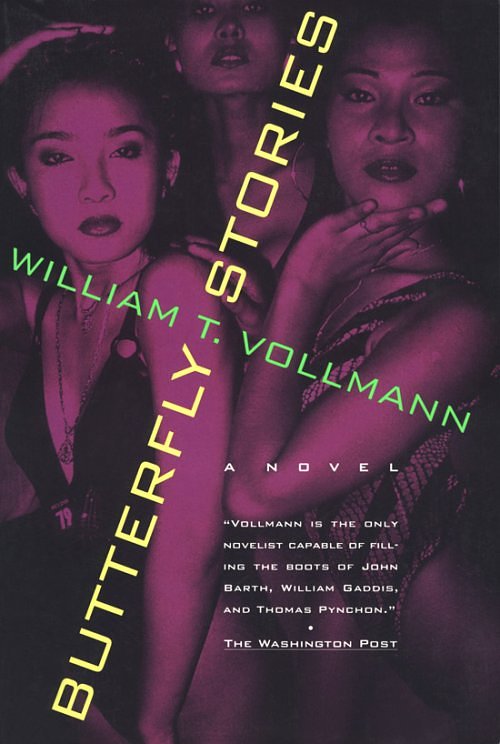





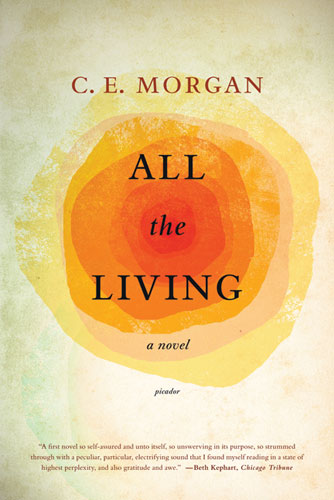 In her debut novel, All the Living, C.E. Morgan tells the story of Aloma, a would-be pianist who forgoes her dreams of artistic freedom to play wifey to her young lover Orren who must take sole responsibility of running the family tobacco farm after his family dies in a car accident. Aloma knows nothing about farming and even less about the grief Orren suffers. She’s an orphan herself, but with no memory of her own parents, she finds it hard to connect to overworked Orren as he slowly slips away. A nearby minister who hires her to play church services paradoxically relieves and exacerbates Almoa’s despair when he enters her life. Morgan’s novel is a slow-burn, often painful, sometimes slow, but also guided by a poetic spirituality that resists easy interpretations. (Oh, and she’ll also make you run for a thesaurus every few pages). All the Living is new in trade paperback from
 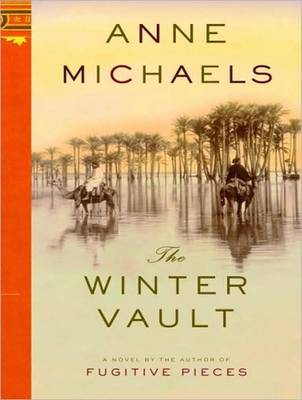 Anne Michaels’s The Winter Vault begins in Egypt, in 1964, where Canadian engineer Avery Escher is part of a team trying to help the Nubians who will be displaced by the Aswan High Dam. He and his wife Jean share a houseboat on the Nile, but what might have been a year of romantic adventure devolves into the tragedy of a culture displaced and a family eroded. The pair separate and return to Canada, where Jean takes up with Lucjan whose stories of Nazi-occupied Warsaw inform the novel’s second half. The Winter Vault is poetically dense and often overly-lyrical, sometimes offering self-important and ponderous dialogues in place of concise plotting. And while Michaels treats the tragedies of the occupied Poles and Nubians with a certain sensitivity, her engagement veers awfully close to what Lee Siegel has termed “
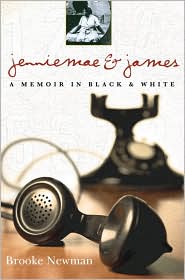 Jenniemae & James is Brooke Newman‘s new memoir about her father’s unlikely relationship with the family maid. James Newman was a brilliant mathematician (he coined the term “googol”); Jenniemae Harrington “was an underestimated, underappreciated, extremely overweight woman who was very religious, dirt poor, and illiterate.” Newman wants us to see a unique–and deep–friendship between the pair that defies 1940s/50s norms in Washington D.C., but it’s hard not to think that there’s at least some whitewashing going on here. Undoubtedly the two shared an affinity and connected through a love of numbers, but it’s hard to see more in this than an employer-employee relationship–and one still colored by the politics of the pre-Civil Rights era. Jenniemae, black mammy, sassy, Southern, larger-than-life, quick with folk wisdom and colorful quips–it all seems like a one-sided vision, a take on the
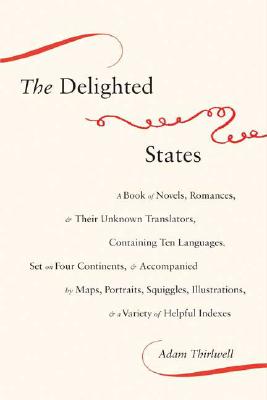 This weekend, I read and thoroughly enjoyed the first volume of Adam Thirlwell’s The Delighted States (new in a handsome trade paperback edition from
 Biblioklept