“Translation is an act of risk” | An interview with Rainer J. Hanshe on translating Baudelaire’s My Heart Laid Bare

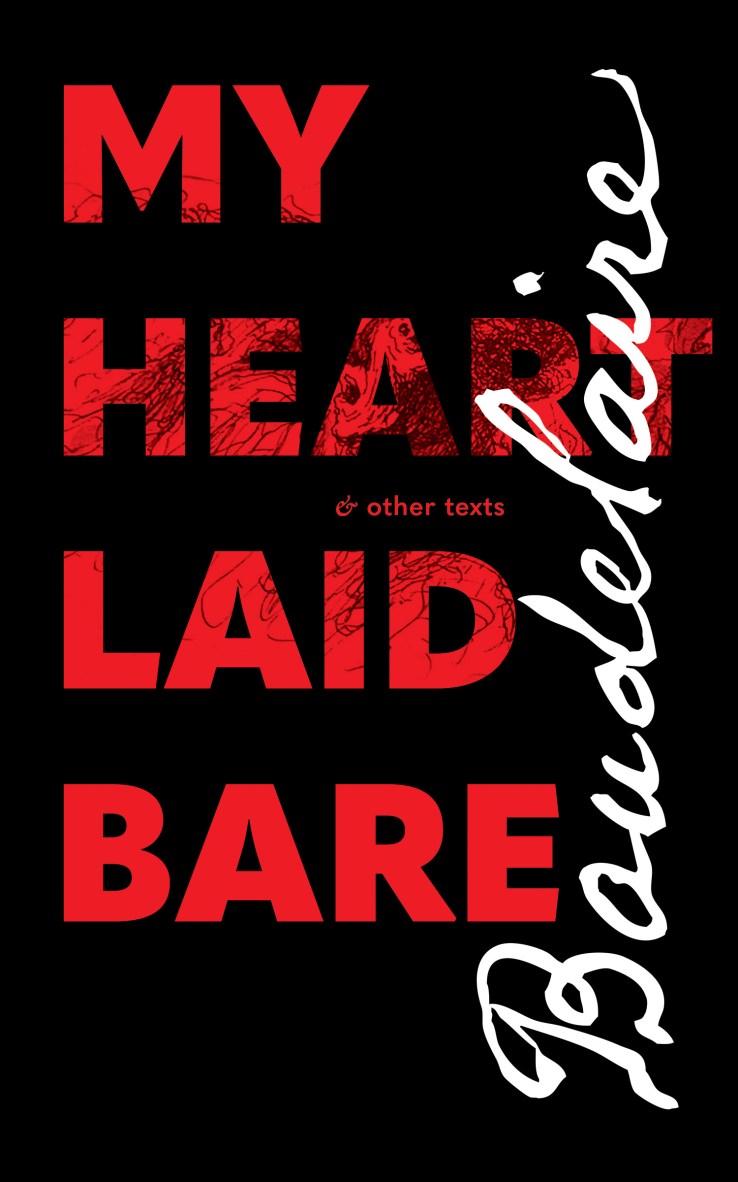
Rainer J. Hanshe is the translator of My Heart Laid Bare & Other Texts, a collection of writings by Charles Baudelaire, new from Contra Mundum Press. Over a series of emails, Hanshe was kind enough to talk to me about My Heart Laid Bare, Baudelaire, dandyism, translation, art, stealing books, and all other manner of topics.


Biblioklept: What is My Heart Laid Bare? Did Baudelaire envision its publication in his lifetime?

Rainer J. Hanshe: The title My Heart Laid Bare is Edgar Allan Poe’s, and it’s he who conceives of a book that, if daring enough, if ‘bare’ enough, could revolutionize human thought, opinion, and sentiment. This could be achieved, Poe said, “by writing and publishing a very little book. Its title should be simple — a few plain words — ‘My Heart Laid Bare.’ But this little book must be true to its title.” Baudelaire took up Poe’s provocation and his Mon cœur mis à nu is one of a number of different books that he dreamt up and hoped to write “without lassitude — in a word to be in good heart day after day.” Others Baudelaire mentioned along with it in an 1864 letter included Histoires grotesques et sérieuses, Les fleurs du Mal, Le spleen de Paris, Les paradis artificiels, Contemporaines, and Pauvre Belgium! The first notes for Mon cœur mis à nu begin in 1859, two years after the initial publication of The flowers of Evil, if not possibly somewhat earlier, and continue until 1865, ceasing only due to Baudelaire’s severe health condition (he would die in 1867 at just 46 years of age), hence they comprise the final decade of his writing life.

Aside from the more direct root of Poe, Rousseau was another of Baudelaire’s models, albeit a negative one to surpass. Baudelaire said that “all the targets of [his] rage” would be collected in Mon cœur mis à nu. “Ah! if ever that sees the light of day, J-J’s Confessions will seem pale.” As I describe in the synopsis, it is an apodictic work of aphorism, maxim, note, and extended reflection. It is not however some memoir-like spewing of Baudelaire’s bios; rather, it is the baring of his l’esprit, and as a crystallization of such, it isn’t some kind of ‘tell-all exposé’ (Rousseau’s notion of absolute transparency, an indulgence we could well do without, especially considering its pernicious ramifications), but to me a much higher form of ‘confession,’ for it is the arc of thought, the play of the mind in its every breadth that is bared. It contains Baudelaire’s exhortations on work, faith, religion, and politics, excoriating sociological analyses, diatribes on literature, the arts (George Sand receives some choice malicious arrows), and love (women, prostitution, sadomasochism, erotics en générale), and outlines of his conception of the dandy and the Poet.

The Poet for Baudelaire is I would say a figure similar in kind to Nietzsche’s untimely personage, the posthumous human, a kind of philosophical anthropologist who hovers over the earth, examining the human species both from within and externally, from a sub species aeternitatis perspective, diagnosing it like a physician (much of the book’s terminology is medical taxonomy).

In 1861, two years after beginning Mon cœur mis à nu, sieged by resignation, calumny, and ill health (nervous disorders, vomiting, insomnia, fainting fits, recurrent syphilitic outbreaks), Baudelaire expresses doubt that he will ever complete his various projects. “My situation as regards my honor, frightful — and that’s the greatest evil. Never any rest. Insults, outrages, affronts you can’t imagine, which corrupt the imagination and paralyze it.” Three years later, it was against the continuing extremities of an exacerbated solitude, frayed nerves, self-described terrors, and constant hounding by creditors that Baudelaire implored himself to remain stalwart (“I must pull myself together, take heart! This may well bring rewards.”) and write.

Clearly, he did envision publishing the book in his lifetime, and he diligently worked at it, steeling himself against his trials to the degree within his power, but it was never completed. The obstructions he faced were abundant; the somatic afflictions inordinately taxing. The threat of his impending decline or decay is sharply articulated in one passage wherein he speaks of “feeling the wind of the wing of imbecility” passing over him. Various translators have rendered that as “the wing of madness,” but Baudelaire says “imbécillité,” not folie or démence. The notion of “the wing of madness” has greater Gothico-Romantic cache, but it’s not what Baudelaire says, and in this case, there’s a relatively exact equivalence of terms. It was more physical weakness and feebleness that he feared, and experienced, and believed would finally incapacitate him, as it did, not madness. His aphasia and heart attacks led to his losing his ability to speak and thereafter, his ability to read and write — the death of the writer.

We have only the existing fragments then, which have been translated in full, but they were published posthumously. Despite no such title existing in the text, or any related material, French editors originally published the work as “Journaux intime” (Intimate Journals), which included two other sections, “Fusées” and “Hygiène.” Translations into English followed suite, and they adopted the false title, which must at last be discarded. If Baudelaire hadn’t been besieged by illnesses as he was, he would have imaginably given us a definitive version of Mon cœur mis à nu considering that he did complete other books he began around the same period (Le spleen de Paris, Les paradis artificiels, et cetera). It remains a fragmentary work then, in both senses, yet one that is substantive enough to merit our continued attention.

Biblioklept: For me, the fragmentary nature of My Heart Laid Bare is in some ways more appealing than the cohesion of a more polished philosophical or poetic text. It’s a discursive read, and there’s joy in tying (or failing to tie) the fragments together. This reading experience is perhaps as close as we can get to seeing Baudelaire thinking (and feeling). At the same time, there’s perhaps a risk of the average reader’s misreading or misinterpreting some of Baudelaire’s riffs, quips, and jabs here. How tempting was it to footnote the hell out of My Heart Laid Bare?

Hanshe: In his poet’s notebook, Paul Valéry said that “a work is never necessarily finished, for he who has made it is never complete, and the power and agility he has drawn from it confer on him just the power to improve it […]. He draws from it what is needed to efface and remake it. This is how a free artist, at least, should regard things.” Similarly, he says elsewhere that, “in the eyes of lovers of anxiety and perfection, a work is never finished but abandoned.” Since Baudelaire never prepared a definitive version of the book, we cannot know what he would have changed, or not, yet as a work closely aligned with his self, it’s something that could never have been completed, only abandoned. Hence, it would always remain fragmentary. Think of Schlegel’s poetics of the fragment where even ‘incompleteness’ is exceptionally refined, an architecturally precise aesthetic form (sculpturally, this calls to mind Giacometti). In his essay on German Romanticism, Walter Benjamin pointed out that aphoristic writing is not proof against systematic intentions (an accurate insight made about Nietzsche’s work in fact, albeit one lost on many of his later readers…), that one can write aphoristically and still think through one’s philosophy or writing “in a comprehensive and unitary manner in keeping with one’s guiding ideas.” In this way, it’s not that Baudelaire’s book lacks cohesiveness; it’s deliberately fragmentary to eschew finality, and because the self, the ‘heart’ being laid bare, is never complete. That Baudelaire worked on it for nearly ten years though makes it probable that its character was quite well defined before illness permanently disrupted his voluntarily abandoning it.

There are certainly unities, or thoughts that overlap and intertwine within the book, as there are with other books of Baudelaire’s, and when I began translating it, I kept track of those I was aware of while also benefitting from the extensive and exemplary notes that the French editors amassed. The critical addendum was therefore unfurling like an infinite papyrus, threatening to end in it being as long, if not longer, than the book itself. In a way, that kind of critical gesture is an act of usurpation and domination, just as overly lengthy introductions can be (consider the grand effrontery of Foucault’s introduction to Binswanger’s Dream & Existence, which is twice the length of the book). At a certain point, I felt that continuing to amass notes would have made the book extremely cumbersome, one unpleasant to read, merely due to sheer volume. There’s also something about a massive critical addendum that’s imposing, if not intrusive, to many readers. Additionally, it was a question of elegance: I didn’t want to litter the book with footnote numbers; alternative methods to that could have easily been devised but, ultimately, I opted against including extensive notes. While as readers we can disavow them altogether, not having them makes for a more comfortable book to wield. Finally, encountering it would be more like coming upon Baudelaire’s own notebook, free of editorial invasiveness, thereby leaving the reader to his or her own rapturous encounter with it, however intractable it may be. As for misreading or misinterpreting, I don’t think such can ever be definitively foreclosed. While errant and contentious readings exist, to fear risking them is to argue that we can fathom authorial intention, or that there are definitive and absolute interpretations. Reading should be dangerous, risky, volatile, something that threatens to undermine, overwhelm, and mutate us, if not put the world into metamorphosis, as books can and have done, though hardly as much in our depleted and toothless epoch. Otherwise, reading is just entertainment, a diversionary narcotic, and we have to be willing to be shattered by books, to undergo both subtle and emphatic shocks.
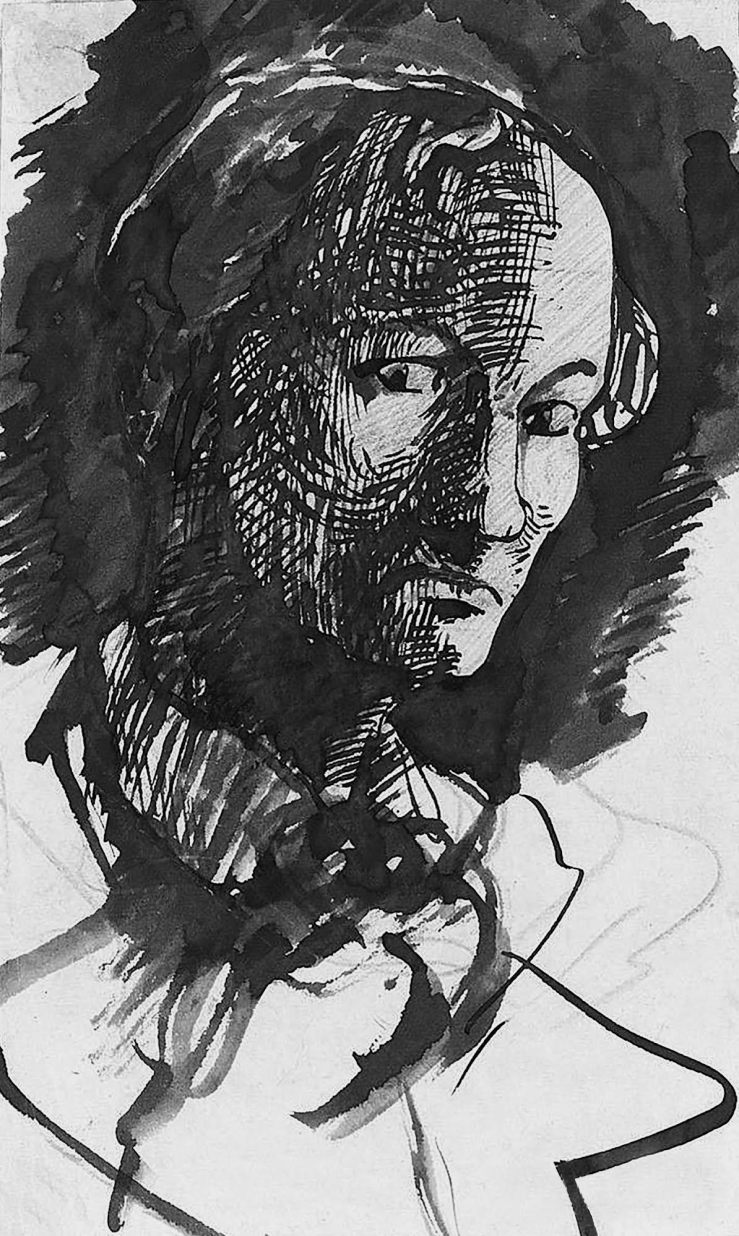
Self-Portrait by Charles Baudelaire, 1863-64

Biblioklept: What is Flares?

Hanshe: Quite simply, it’s a writer’s notebook; as such, it doesn’t have a single focus but is more motley, something of a hybrid entity. To paraphrase, we could call it The Poet Laid Bare (of poetic form). Nonetheless, I believe it has two principal nerve centers: critique and meditation.

The critique is many-tendrilled, with its points of observation being the craft of the writer, art and aesthetics, love, pleasure, and intoxication (numerous types), religion and theology, politics, etc. The writer’s smelting room and sometimes place of furious venting. As with Mon cœur mis à nu, there is a root in Poe, who in his Marginalia spoke of “a peculiar type of criticism” that “can only be designated by the ‘German ‘Schwarmerei’ — not exactly ‘humbug’ but ‘sky-rocketing’…” Baudelaire took up this idea, naming his work fusées, which is an expansive translation of the English skyrockets. A fusée is a pyrotechnical device (rocket, flare, or firework), musket, or heraldic emblem, hence the title corresponds well with the work’s variegated character. It is something incendiary, combative, and elegant. The manifold subtitles peppered throughout “Flares” offer us a provisional overview of its character, too: Plans, Projects, Suggestions, Notes, Hygiene, Morality, Conduct, Method. Here we see the writer’s notebook, the critique, and the meditation.

In speaking of intellectual gymnastics, the altar of the will, moral dynamics, the great deed, perfect health, the hygiene of the soul, political harmony of character, eurhythmy of character and faculties, self-purification, mastery of time, and accomplishing one’s duties, Baudelaire enumerates a concentration of terms and concepts related to self-cultivation. The book thus contains a kind of technology of the self, the outline of Baudelaire’s martial praxis for the artist — intellectual gymnastics and the sanctification of the will both bespeak an agonistic sensibility, as does his paean to greatness and his call to achieve it in contradistinction to the tremendous oppositional force of nothing less than an entire nation. What is this but Baudelaire’s Miltonic-Satanic typology. “The man of letters rends foundations…” (Flares §6) Such terminology, and the repeated invocations to himself to master his will and to work diligently to become who he is, are part of a regimen of poetic self-shaping. “Want every day to be the greatest of men!!!” (My Heart… §70) The references to Emerson and his Conduct of Life further reinforce that, which is but one reason why in the book’s synopsis I made a parallel to Marcus Aurelius, characterizing the book as Baudelaire’s meditations, which I see as its second nerve center. The poet is clearly concerned with self-government, and this shaping or cultivation of the self is meant to strengthen him, thereby aiding his accomplishing his artistic tasks, of which the book is in part a record.

These notions can be woven together with other parts of the work, i.e. §16 of “Flares,” where Baudelaire speaks of the most perfect type of virile Beauty (the Miltonic Satan­), or the Emersonian hero (he who is immovably centered), giving us the supreme artistic model of Satan, that is, Satan as the light-bringer, the visionary, he who is anti-human (“Let us defy the people, common sense, the heart, inspiration, and evidence.” §47; “The man of letters is the enemy of the world.” §53). In §21 of ”Flares” Baudelaire asks, “To give oneself to Satan, what is it?” The book provides us with some answers, as does his poetry (the “Litanies of Satan” et alia), and his Dandy (a superior figure) is another type with similarly sublime aspirations. It is the onset of the anti-Christian hyperanthropos. “The poet, the priest, and the soldier are the only great men among men: … the rest are made for the whip” (§47). Continue reading ““Translation is an act of risk” | An interview with Rainer J. Hanshe on translating Baudelaire’s My Heart Laid Bare”
This is May-Day! Alas, what a difference between the ideal and the real! | Nathaniel Hawthorne’s journal entry for May 1st, 1841

May 1st.–. . . Every day of my life makes me feel more and more how seldom a fact is accurately stated; how, almost invariably, when a story has passed through the mind of a third person, it becomes, so far as regards the impression that it makes in further repetitions, little better than a falsehood, and this, too, though the narrator be the most truth-seeking person in existence. How marvellous the tendency is! . . . Is truth a fantasy which we are to pursue forever and never grasp?

My cold has almost entirely departed. Were it a sunny day, I should consider myself quite fit for labors out of doors; but as the ground is so damp, and the atmosphere so chill, and the sky so sullen, I intend to keep myself on the sick-list this one day longer, more especially as I wish to read Carlyle on Heroes.

There has been but one flower found in this vicinity,–and that was an anemone, a poor, pale, shivering little flower, that had crept under a stone-wall for shelter. Mr. Farley found it, while taking a walk with me.

. . . This is May-Day! Alas, what a difference between the ideal and the real!

Nathaniel Hawthorne’s journal entry for May 1st, 1841. From Passages from the American Note-Books.

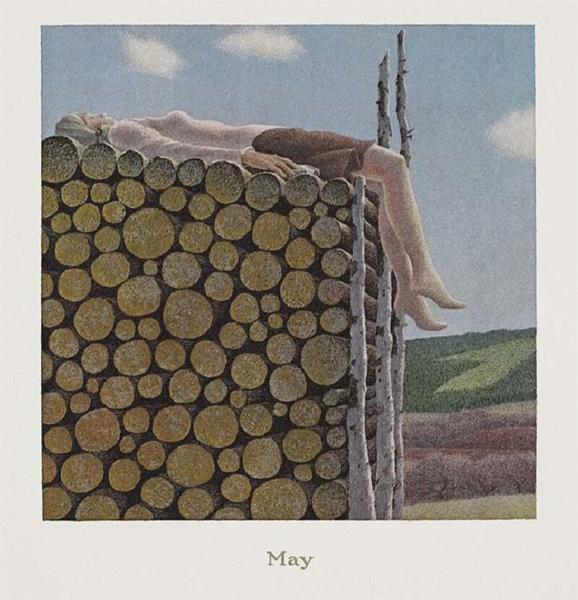
May — Alex Colville

may-1979.jpg!Large

May, 1979 by Alex Colville (1920-2013)

Sunday Comics

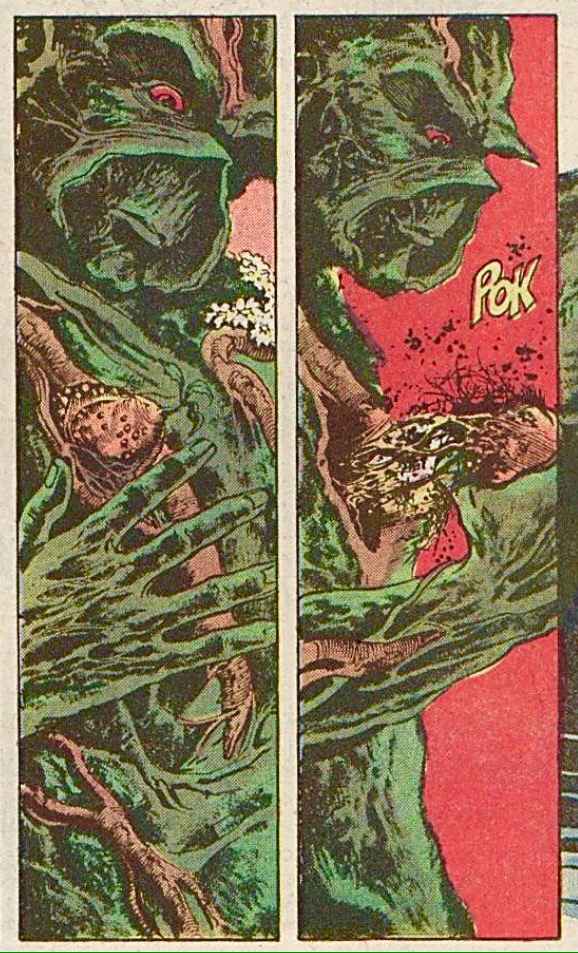
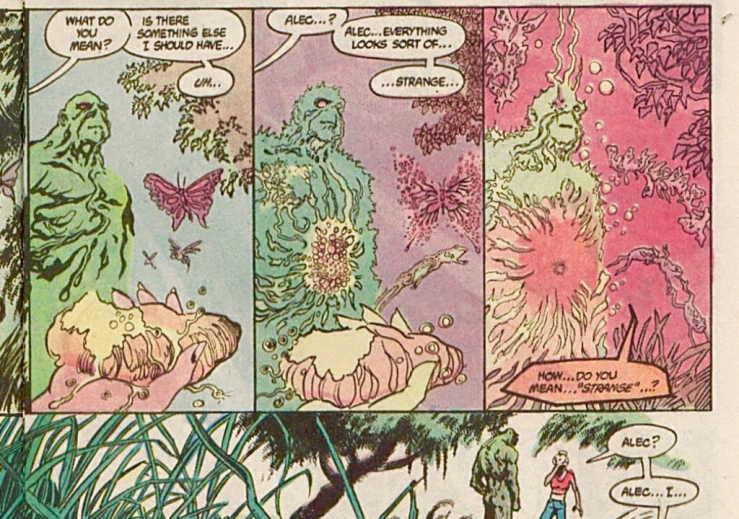
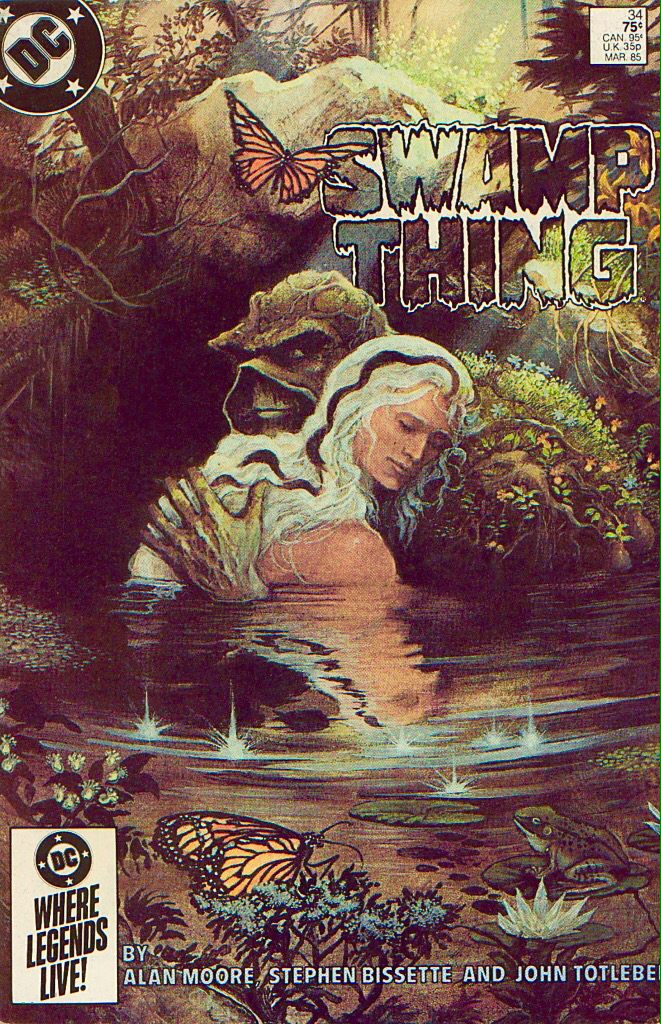
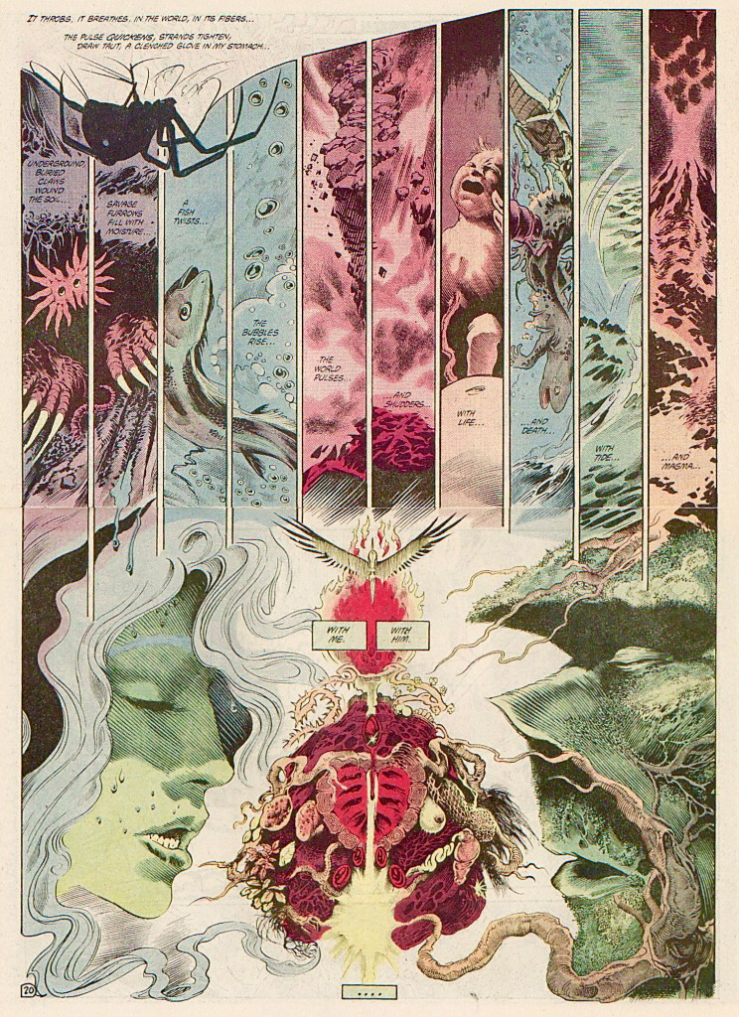
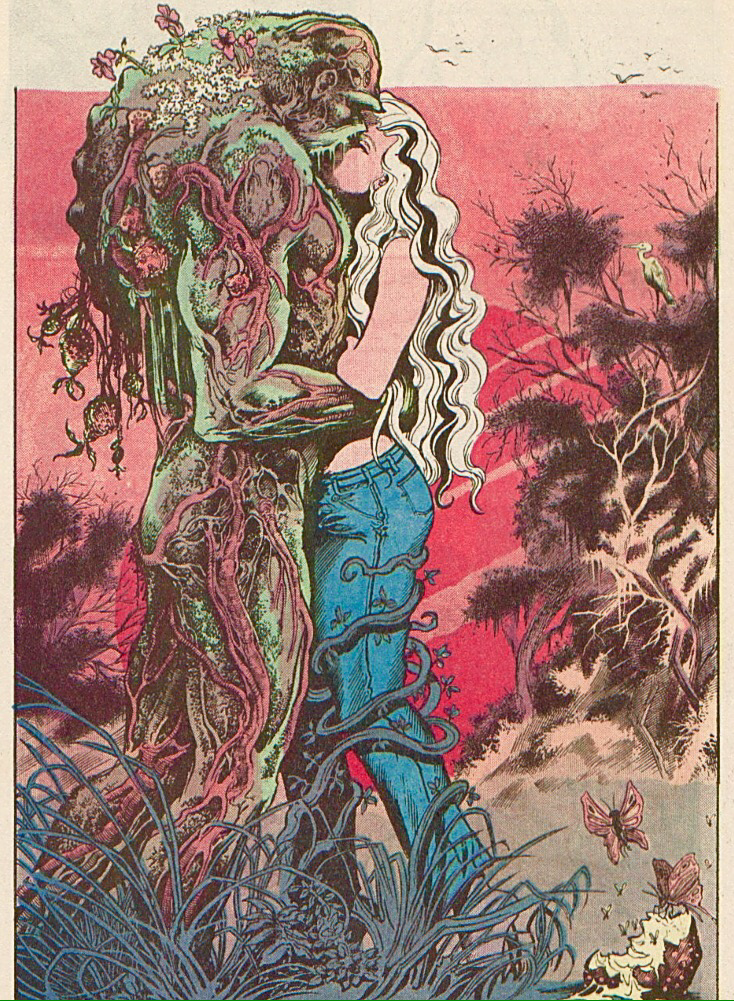
Swamp Thing #34 (March 1985), “Rite of Spring” is one of the best “mainstream” comic books I’ve ever read. I need to write a full thing on it, but for today, some panels, splashes, and the cover. Art by Stephen Bissette and John Totleben; coloring by Tatjana Wood. Script by Alan Moore.

More Plant-Like: A review of Han Kang’s novel The Vegetarian

gustave dore

We tend to pathologize the ultimate no—suicide—as a shameful failure, the worst kind of failure. The shame of not having assimilated into normative culture, of not bootstrapping the self into a legible narrative of success. Of being merely unable. Melville’s Bartleby teaches us this lesson all too well. Those around Bartleby can’t read his preference to merely not be as such. They want to know why he doesn’t want to be a good bureaucrat. And they string him up for it. But saying no can be an assertion of power, freedom and will, as Bartelby teaches us. The choice to merely not be is simply that. It frustrates everyone around it because it defies the most naturalized assumption in existence: that consciousness is a gift, a privilege, a precious unit of time not to be squandered or frivolously wasted. We are urged to make good with life.

But this attitude comes with the privilege of choices. One who can say that things can be different, that one only need to work a bit harder, shift her perception, to “be the change she wishes to see in the world” doesn’t wake up on Skid Row every morning, is not black in Baltimore or Ferguson, does not live in a body policed by the law and popular culture. Moreover, this attitude assumes that whatever prevents this different life, where one doesn’t have to say no, is conquerable, fixable. Often, the sensation that things cannot be different appears insurmountable. Whatever is assaulting you cannot be removed with a simple shift in perception and attitude.

Such is the dilemma of Yeong-hye in Han Kang’s The Vegetarian. The flap copy describes Yeong-hye’s turn towards vegetarianism as a decision, as does her tyrannical husband and everyone around her, but Yeong-hye’s plant-like turn is only a decision in the most technical sense. Yes, she does decide to become a vegetarian, but not because of preference, or political/ethical commitment. Yeong-hye’s vegetarianism is vital; for her, vegetarianism is her only out from the violent misogyny that she has been born into. But to also say that she wants death and, in turn, that Kang’s novel is a reconfiguration of the normative narrative of suicide would be a double injustice. I know nothing of South Korean culture, and I can only speak confidently of the misogyny that frames The Vegetarian because it is terrifyingly normal in the mouths of its narrators; the first injustice is that I only know this misogyny through western narratives. The second, to assert that Yeong-hye wants death, falls into the trap of romanticizing suicide. None of Yeong-hye’s life is decision, or choice, or freedom, except her desire to become more plant-like—even that is a stretch to say it is a desire. For Yeong-hye, a plant-like existence approaches a state of supreme serenity and disaffection from her world – a position where she cannot be read as a sexual being and, in turn, under the hands of a violent culture. Vegetarianism hangs the human body and self between what we understand and project onto the outside world as life and death. Vegetarianism asymptotically kisses death.

‘…I thought trees stood up straight … I only found out just now. They actually stand with both arms in the earth, all of them. … Do you know how I found out? Well, I was in a dream, and I was standing on my head … leaves were growing from my body, and roots were sprouting from my hands … so I dug down into the earth. On and on…I wanted flowers to bloom from my crotch so I spread my legs; I spread them wide…’

What’s peculiar about the novel, apart from the quiet horror of Kang’s prose, the quiet violence of Yeong-hye’s world and its casual presentation thereof, and actually a lot of things that are wonderfully disquieting, is that none of its three acts are narrated by Yeong-hye herself. I expected more time with and inside Yeong-hye in a book about the murderously aloof self-satisfaction of the men in power that orchestrate her destruction. But I even wince at the word “inside” of Yeong-hye. It sounds like I’m participating in a certain kind of violence. The important thing to remember is that Yeong-hye’s perceived disability is only so in the eyes of the narrators, Yeong-hye’s husband, brother-in-law, and sister. Her family insists, and then demands, that Yeong-hye provide a rational reason for her vegetarianism, but they only want to hear her say that it’s for the sake of her health, or for her appearance. They might even tolerate an ethical argument. Instead, Yeong-hye only offers, like our Bartleby, a frustration. Drunk and sleepy, Yeong-hye’s husband finds his wife staring intently into the white light of the fridge.

Dark woods. No people. The sharp-pointed leaves on the trees, my torn feet. This place, almost remembered, but I’m lost now. Frightened. Cold. Across the frozen ravine, a red barn-like building. Straw matting flapping limp across the door. Roll it up and I’m inside, it’s inside. A long bamboo stick strung with great blood-red gashes of meat, blood still dripping down. Try to push past but the meat, there’s no end to the meat, and no exit. Blood in my moth, blood-soaked clothes sucked onto skin.

The repetition of the word meat has a certain violence to it, and metaphorizes the ways in which the category of “meat” is embedded even in the writing itself, how deeply it penetrates. Yeong-hye is treated like meat; pigs and cattle raised for consumption are referred to as pork and beef, even before they’re slaughtered; meat is a violently rendered, aestheticized experience. Soon, Yeong-hye does remember the places that are lost in her dreams inside of actual memories. The haunting repetition of the word “meat” transforming what was once familiar into paralyzing strangeness.

While Father ties the dog to the tree and scorches it with a lamp, he says it isn’t to be flogged. He says he heard somewhere that driving a dog to keep running until the point of death is considered a milder punishment. The motorcycle engine starts, and Father begins to drive in a circle. […] Once it has gone five laps, the dog is frothing at the mouth. Blood drips from its throat, which is being choked with the rope. Constantly groaning through its damaged throat, the dog is dragged along the ground.

Punishment and thus justice isn’t swift, but an exercise in pushing one’s ability to endure physical shame. Like when her father, incredulous and domineering, forces her family to hold Yeong-hye back as he shoves a “lump of meat” into Yeong-hye’s wailing body. Or when Yeong-hye is forced to endure the public shaming at an obligatory business dinner. Her vegetarianism unhinges the normative narrative of her family’s reality, and they take it personally. To them, it is an invitation to rape, to control, and to punish.

But it was no easy thing for a man in the prime of his life, for whom married life had always gone entirely without a hitch, to have his physical needs go unsatisfied for such a long period of time. So yes, one night when I returned home late and somewhat inebriated after a meal with colleagues, I grabbed hold of my wife and pushed her to the floor. Pinning down her struggling arms and tugging off her trousers, I became unexpectedly aroused. She put up a surprisingly strong resistance and, spitting out vulgar curses all the while, it took me three attempts before I managed to insert myself successfully. Once that had happened she lay there in the dark staring up at the ceiling, her face blank, as though she were a ‘comfort woman’ dragged in against her will, and I was the Japanese soldier demanding her services.

Rape doesn’t apply to Yeong-hye because she is called a wife, her refusal to play the role erases the violence of rape in the rules of this reality. Yeong-hye’s renunciation of subservience, and the subsequent violence, highlights the underlying rage of male culture presented in this novel. More striking than the appalling behavior of Yeong-hye’s husband is his nonchalance, a result of Kang’s cool, distending prose, brilliantly translated by into English by Deborah Smith. We’re not meant to be unhinged by the drapes of meat in Yeong-hye’s dreams, but the coolness in which Yeong-hye’s family preclude empathy and default to insult and violence. Even before empathy, they preclude curiosity—their questions only seek answers for which they are already disappointed. What we are supposed to be horrified by is how bereft they are of compassion.

Where they shame a woman supposedly acting out of character, Yeong-hye simply wants the dreams to stop. But where do the dreams come from? This tension sustains the entirety of the novel, and drives Yeong-hye deeper into plant-like behavior. Yeong-hye is eventually committed to a mental hospital after the staff find her shirtless, looking up into the sun with eyes clenched, as if in the grip of photosynthesis. Later, after a divorce, in a second mental hospital, something akin to the sanatoriums of Kafka’s and Bernhard’s worlds, far away from Seoul, she refuses to eat and spends hours in a hand-stand, emulating the trees of the mountains. Yeong-hye can’t do anything about the dreams because they are the signature of her conscription into humanity.

Yeong-hye cut her off. ‘They say my insides have all atrophied, you know.’ In-hye was lost for words. Yeong-hye moved her emaciated face closer to her sister. ‘I’m not an animal anymore, sister,’ she said, first scanning the empty ward as if about to disclose a momentous secret. ‘I don’t need to eat, now now. I can live without it. All I need is sunlight.’

Becoming vegetarian isn’t a choice, but a last resort. Yeong-hye is compelled towards plant-like existence because it’s her only method of control and, ironically, affirming her humanity. Yeong-hye doesn’t elect vegetarianism; her family conditioned her for this transformation, her refusal to play this version of humanity. But this is the humanity under which all of us are prescribed. When Yeong-hye recoils at the sight of meat, she sees herself. Yeong-hye turns to vegetarianism because she projects onto plants a freedom of being non-human, non-woman, non-sexualized. The possibility of existing without violence or domination, of being in the world without the risk of knowing what one is, but just being. Vegetarianism in The Vegetarian isn’t a religious requirement, nor the fancy of first-world privilege, but anti-human. It is an affirmation that says not only is the culture a problem, but people are the problem.

[Ed. note: Ryan Chang’s review of The Vegetarian was originally published by Biblioklept in May of 2015].

Not a review of Han Kang’s novel The Vegetarian

Screenshot 2017-04-30 at 5

  1. What follows is not a novel of Han Kang’s 2007 novel The Vegetarian, which I read this weekend (in Deborah Smith’s 2015 English language translation).
  2. Here—by which I mean this link—is a review of The Vegetarian by Biblioklept contributor Ryan Chang. He reviewed the novel two years ago on this blog, in depth, and with plenty of like, citations and examples from the novel itself.
  3. I meant to read The Vegetarian after reading Ryan’s review, but got sidetracked, (Sidetracked is not the right metaphor. I hoped to read it but didn’t. Until this weekend).
  4. Anyway, in the meantime while I was not reading it, The Vegetarian won the 2016 Man Booker International Prize, which means it got plenty of reviews and attention, which is good, because it’s a “good” book (whatever that means—what I mean is it’s a perplexing and fucked up and weird book), and also I’ve been out in the sun drinking beers all day and I know I couldn’t muster, like, a review.
  5. To really review the book, I’d have to reread it anyway, which I’ll probably do. The narrative’s arranged in three sections told via three very different perspectives—kinda sorta Rashomon style, I guess—and information in each section shades and intensifies information in other sections—so rereading the first two sections would be, um, valuable to seeing/feeling the novel anew.
  6. I use seeing/feeling above in lieu of understanding. The Vegetarian produced an aesthetic sensation in me (by which I maybe mean emotion that I don’t have the right word for. This previous statement sounds like boilerplate hyperbole, but it’s not—I literally cannot think of an accurate word to describe the feeling of the end of the novel. I’ve read takes on the novel that use terms like “unsettling” or “disturbing,” but these seem like adjectives without clear or proper referents.
  7. My adjective/noun combo for The Vegetarian: “dreamy queasiness.”
  8. Or maybe: “queasy dreaminess.”
  9. Does that hold appeal for you, kind reader? A dreamy queasy South Korean novel about a woman who stops eating meat after a weird dream and whose family reacts extremely poorly to her decision to stop eating meet? That description sounds way more banal than the novel really is. The books’ not banal at all; it’s a weird take on cruelty and abjection and refusal, refusal, refusal. It’s confounding. (I don’t have the right adjectives right now).
  10. I don’t have the right adjectives right now. Maybe I’ll just hit “publish” on this post and then repost Ryan’s review, which is far more detailed and perceptive and interesting than this non-review. In fact, I’m sure I’ll do that.

Screenshot 2017-04-30 at 5

More than mere vegetable happiness | Nathaniel Hawthorne’ journal entry for April 30th, 1840

April 30th.–. . . I arose this morning feeling more elastic than I have throughout the winter; for the breathing of the ocean air has wrought a very beneficial effect, . . . What a beautiful, most beautiful afternoon this has been! It was a real happiness to live. If I had been merely a vegetable,–a hawthorn-bush, for instance,–I must have been happy in such an air and sunshine; but, having a mind and a soul, . . . I enjoyed somewhat more than mere vegetable happiness. . . . The footsteps of May can be traced upon the islands in the harbor, and I have been watching the tints of green upon them gradually deepening, till now they are almost as beautiful as they ever can be.

Nathaniel Hawthorne’ journal entry for April 30th, 1840. From Passages from the American Note-Books.

Late Harvest — David Pettibone

2310039dd992d595-07_David_Pettibone

Late Harvest, 2012 by David Pettibone

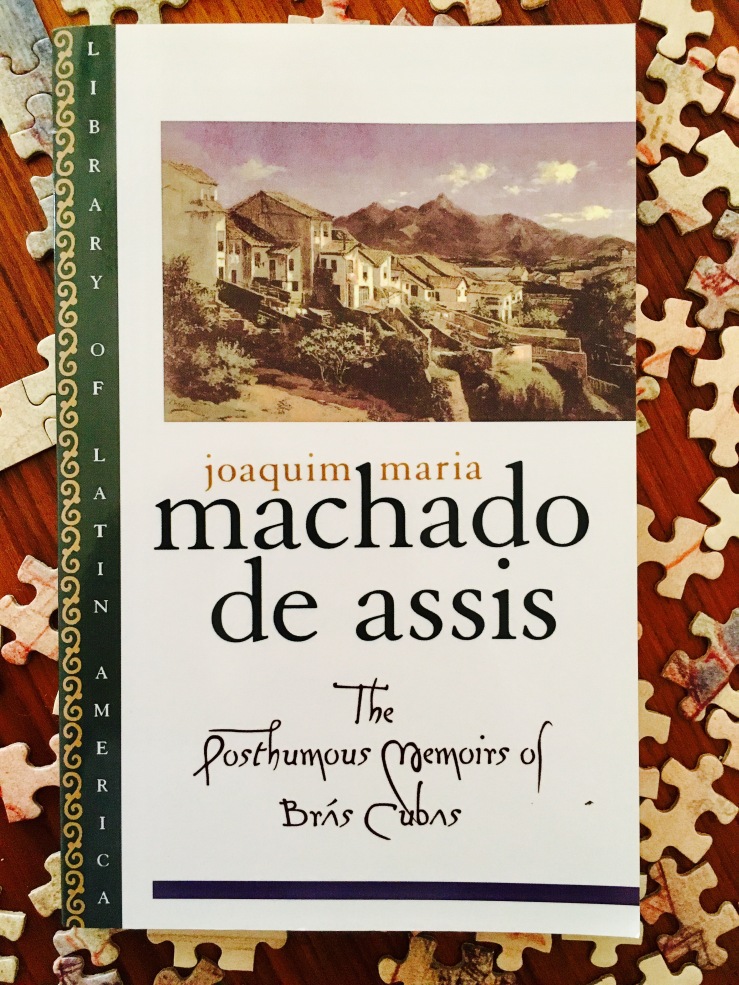
The Posthumous Memoirs of Brás Cubas (Book acquired 29 April 2017)

img_5991

I picked up Brazilian author  Joaquim Maria Machado de Assis’s 1881 novel The Posthumous Memoirs of Brás Cubas today. I picked it up because of an oblique recommendation via Twitter a few weeks ago when I was raving about Antonio di Benedetto’s novel Zama

I got Gregory Rabassa’s translation (I dipped my toe into his translation of Miguel Ángel Asturias’s 1963 novel Mulata a few weeks ago).

Brás Cubas reminds me a lot of Tristram Shandy so far—short sharp funny chapters that bop forward and backward. The 1881 novel anticipates anticipates a style and form that we now describe as “postmodern.” I’ll share a few excerpts in the future, but for now, here’s the Wikipedia summary (lazy, I know, but I think it’s a bit better than this Oxford UP edition’s blurb):

The novel is narrated by the dead protagonist Brás Cubas, who tells his own life story from beyond the grave, noting his mistakes and failed romances.

The fact of being already deceased allows Brás Cubas to sharply criticize the Brazilian society and reflect on his own disillusionment, with no sign of remorse or fear of retaliation. Brás Cubas dedicates his book to the first worm that gnawed his cold body: “To the worm who first gnawed on the cold flesh of my corpse, I dedicate with fond remembrance these Posthumous Memoirs” (Portuguese: Ao verme que primeiro roeu as frias carnes do meu cadáver dedico com saudosa lembrança estas Memórias Póstumas). Cubas decides to tell his story starting from the end (the passage of his death, caused by pneumonia), then taking “the greatest leap in this story”, proceeding to tell the story of his life since his childhood.

The novel is also connected to another Machado de Assis work, Quincas Borba, which features a character from the Memoirs (as a secondary character, despite the novel’s name), but other works of the author are hinted in chapter titles. It is a novel recalled as a major influence by many post-modern writers, such as John Barth or Donald Barthelme, as well as Brazilian writers in the 20th century

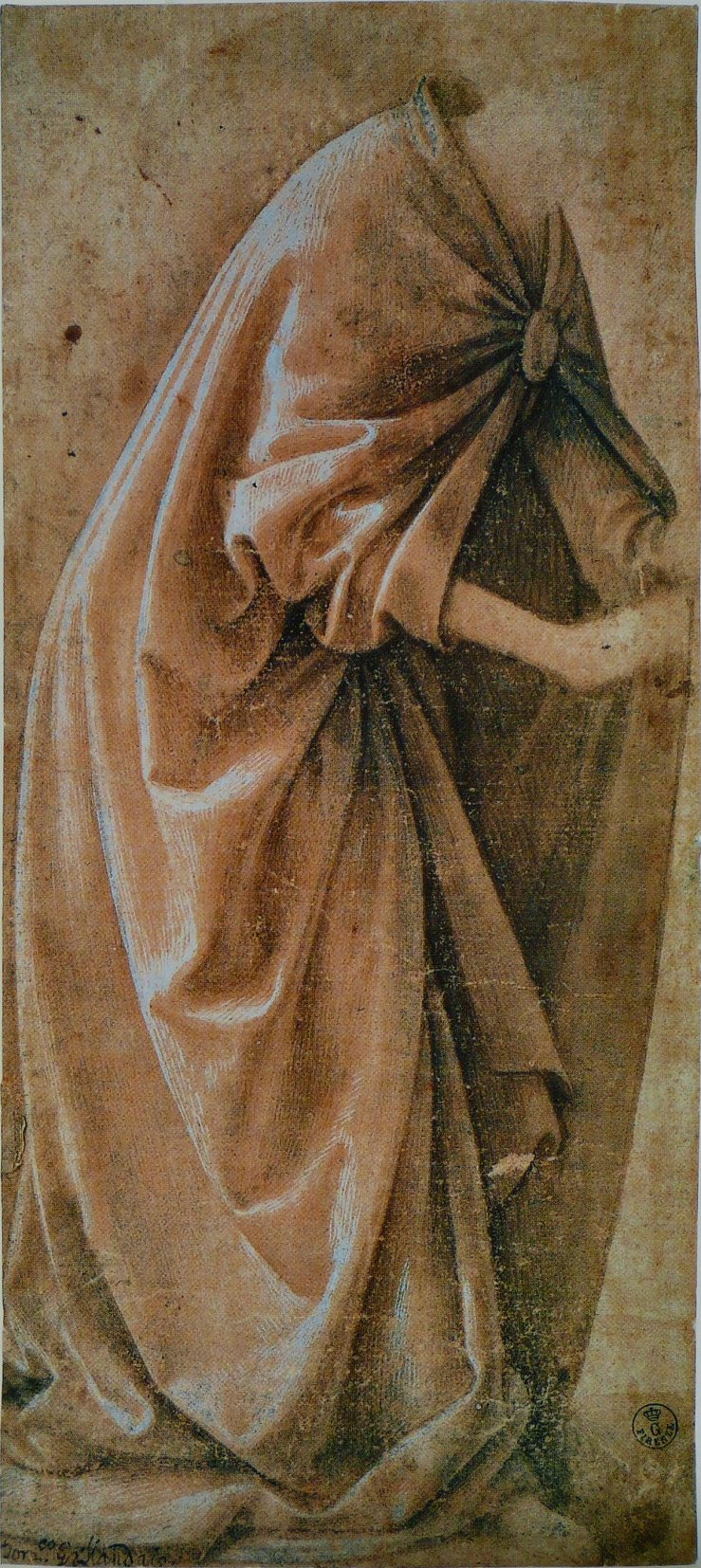
Study of Garments — Domenico Ghirlandaio

study-of-garments

Study of Garments, c. 1491 by Domenico Ghirlandaio (1449-94)

Posted in Art

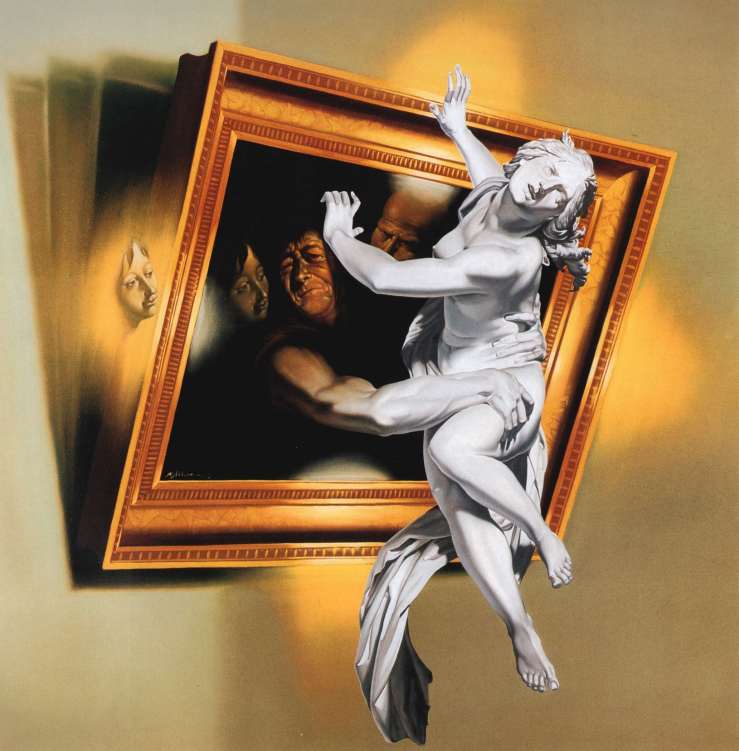
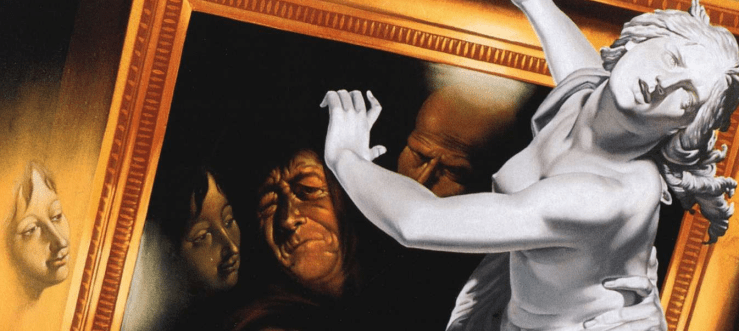
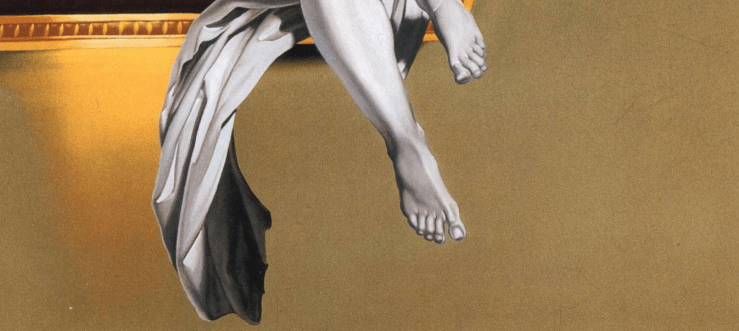
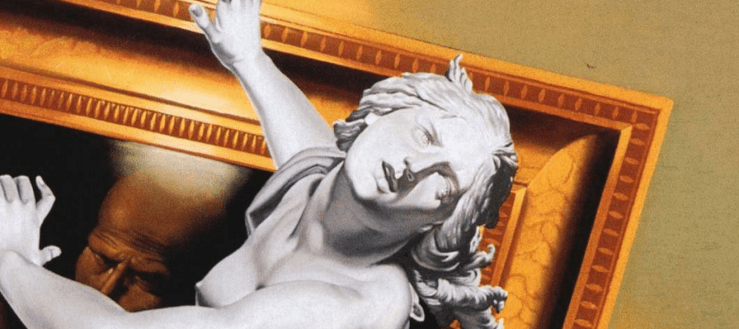
The Abduction of Proserpina — Nicolae Maniu

098-LENLEVEMENT-DE-PROSERPINE-huile-sur-toile-80x80-1985-collection-priveeScreenshot 2017-04-28 at 3.49.53 PMScreenshot 2017-04-28 at 3.50.04 PMScreenshot 2017-04-28 at 3.50.25 PM

L’Enlevement de Proserpine (The Abduction of Proserpina), 1985 by Nicolae Maniu (b. 1944)

Turtles have short legs

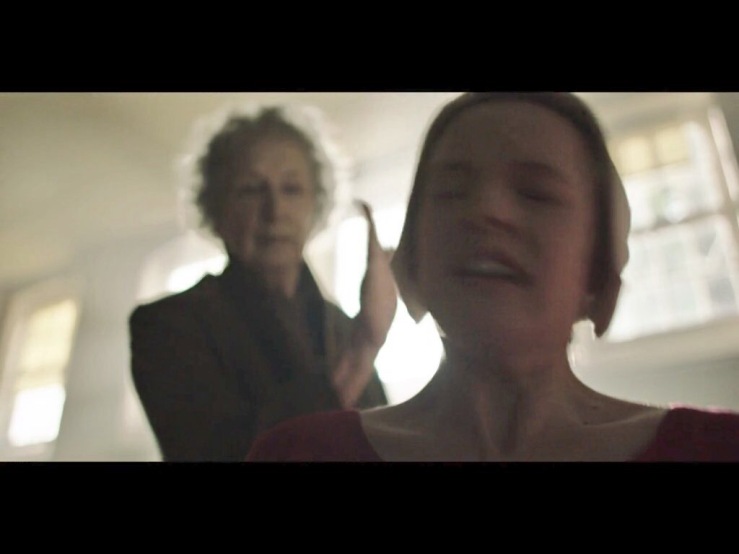
Margaret Atwood on her cameo in The Handmaid’s Tale pilot

img_0533

From Margaret Atwood’s essay of 10 March 2017 in The New York Times:

In this series I have a small cameo. The scene is the one in which the newly conscripted Handmaids are being brainwashed in a sort of Red Guard re-education facility known as the Red Center. They must learn to renounce their previous identities, to know their place and their duties, to understand that they have no real rights but will be protected up to a point if they conform, and to think so poorly of themselves that they will accept their assigned fate and not rebel or run away.

The Handmaids sit in a circle, with the Taser-equipped Aunts forcing them to join in what is now called (but was not, in 1984) the “slut-shaming” of one of their number, Jeanine, who is being made to recount how she was gang-raped as a teenager. Her fault, she led them on — that is the chant of the other Handmaids.

Although it was “only a television show” and these were actresses who would be giggling at coffee break, and I myself was “just pretending,” I found this scene horribly upsetting. It was way too much like way too much history. Yes, women will gang up on other women. Yes, they will accuse others to keep themselves off the hook: We see that very publicly in the age of social media, which enables group swarmings. Yes, they will gladly take positions of power over other women, even — and, possibly, especially — in systems in which women as a whole have scant power: All power is relative, and in tough times any amount is seen as better than none. Some of the controlling Aunts are true believers, and think they are doing the Handmaids a favor: At least they haven’t been sent to clean up toxic waste, and at least in this brave new world they won’t get raped, not as such, not by strangers. Some of the Aunts are sadists. Some are opportunists. And they are adept at taking some of the stated aims of 1984 feminism — like the anti-porn campaign and greater safety from sexual assault — and turning them to their own advantage. As I say: real life.

Which brings me to three questions I am often asked.

First, is “The Handmaid’s Tale” a “feminist” novel? If you mean an ideological tract in which all women are angels and/or so victimized they are incapable of moral choice, no. If you mean a novel in which women are human beings — with all the variety of character and behavior that implies — and are also interesting and important, and what happens to them is crucial to the theme, structure and plot of the book, then yes. In that sense, many books are “feminist.”

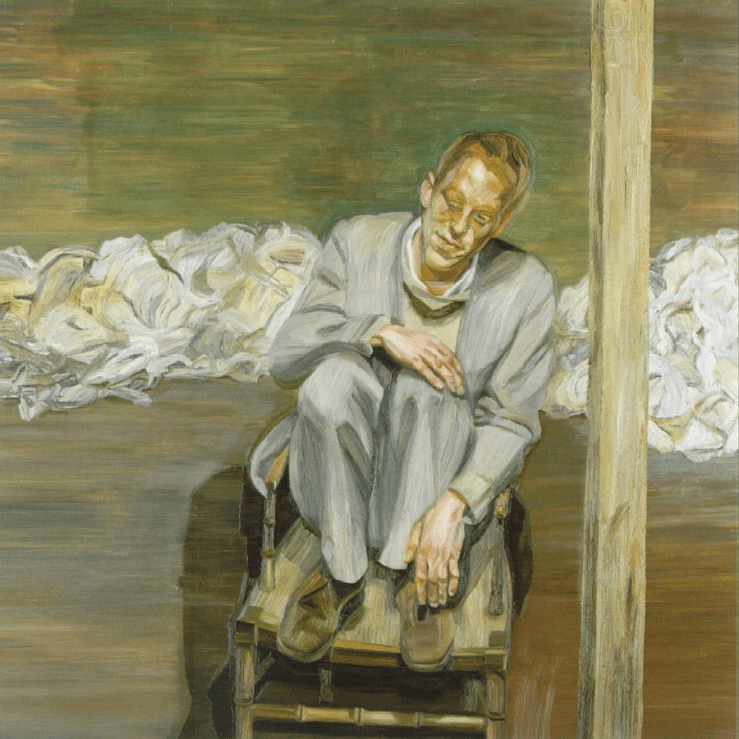
Red Haired Man on a Chair — Lucian Freud

tumblr_ol7idveiGQ1u6x3h6o1_1280

Red Haired Man on a Chair, 1963-64 by Lucian Freud

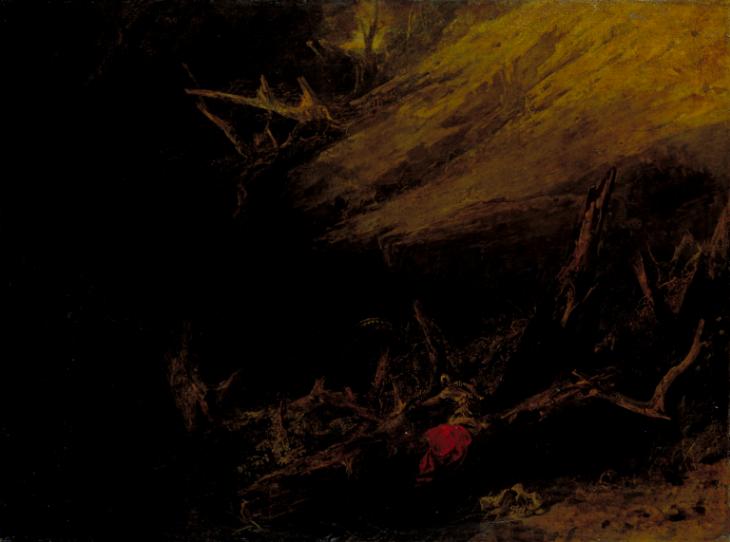
Jason — J.M.W. Turner

Jason exhibited 1802 by Joseph Mallord William Turner 1775-1851

Jason, 1802 by Joseph Mallord William Turner (1775–1851)

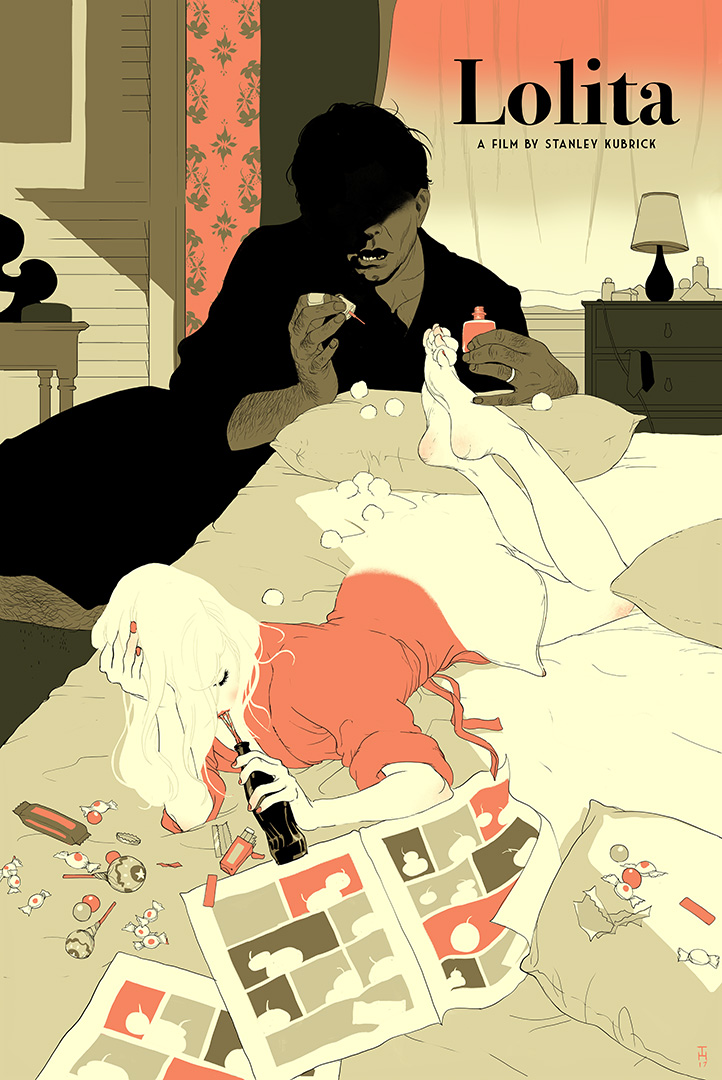
Tomer Hanuka’s film posters for Stanley Kubrick’s Lolita

lolita_reg72.jpglolita_var72.jpg

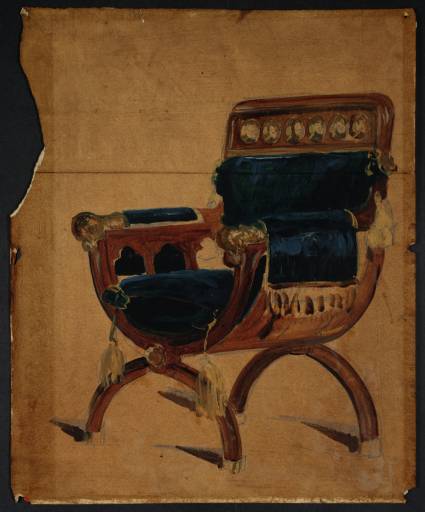
An Arm Chair — J.M.W. Turner

D05959_9.jpg

An Arm Chair, c.1801 by Joseph Mallord William Turner (1775–1851)