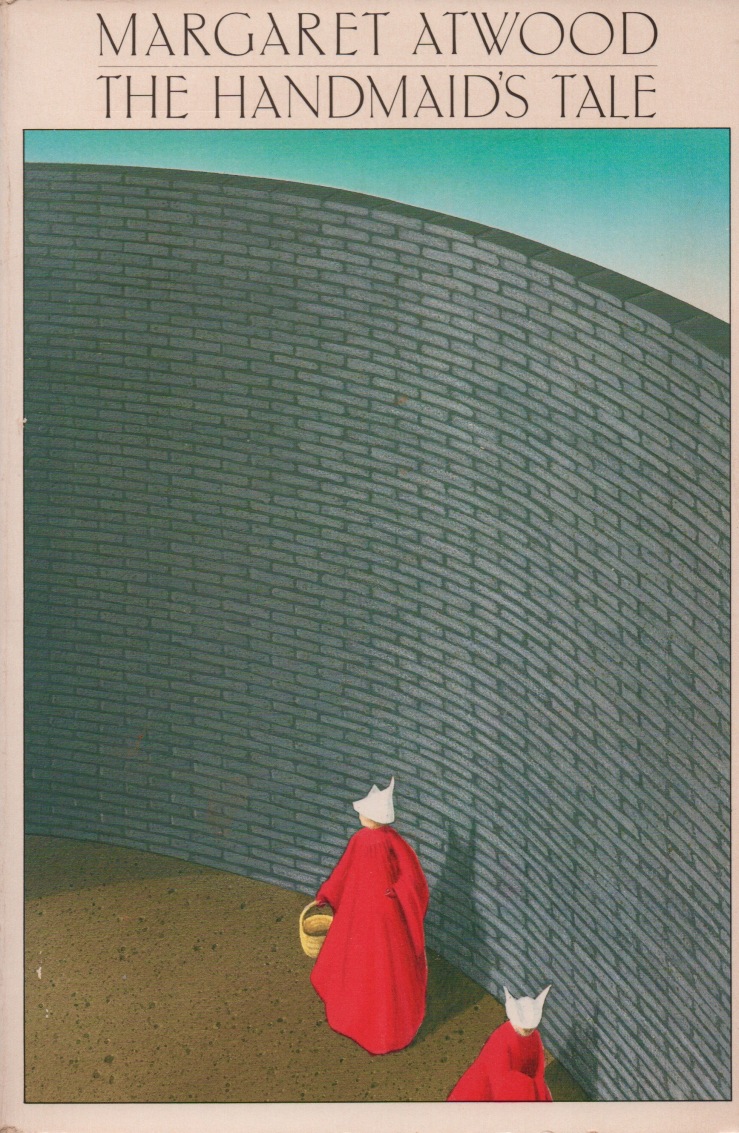
On Margaret Atwood’s The Handmaid’s Tale, a story about storytelling

Margaret Atwood’s 1985 novel The Handmaid’s Talhas been adapted into a television series by Hulu, a fact which you probably already knew if you are on the internet and are interested in these sorts of things.

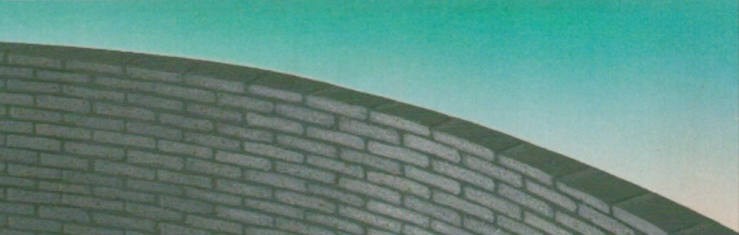
Initial clips of the show seem promising enough. Elisabeth Moss, who I loved in Top of The Lake,  plays the novel’s protagonist Offred, and Margaret Atwood, a consulting producer, has been a vocal supporter of the adaptation. And, as many have pointed out lately, the story’s backdrop—a patriarchal theocratic regime—seems, uh, timely. (Hell, there’s even a Wall).

In anticipation of Hulu’s adaptation, I decided to reread The Handmade’s Tale a third time in a third decade. I found it subtler, more personally intense than the broad, voluminous epic my memory had concocted. My memory had filled in some of Atwood’s strategic gaps; one of her rhetorical gambits is to deliver the so-called “worldbuilding” common to sci-fi novels in tiny morsels and incomplete glimpses. She refuses to give us a big picture. We see this world like one of the handmaids, who view it through a veil of white wings around their heads.
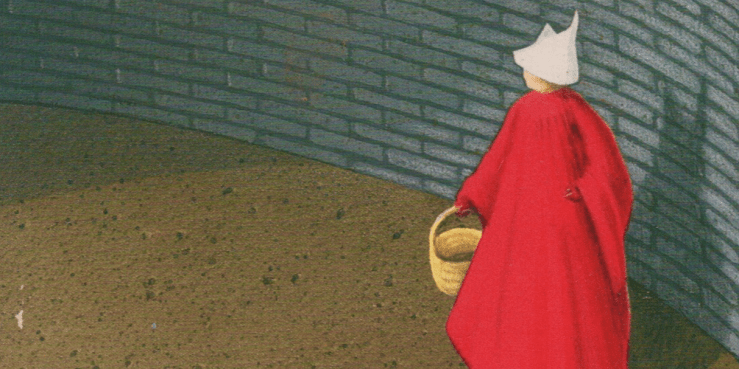
Our narrator Offred is one of those, whatchamacallit, unreliable narrators (as she frequently, subtly reminds us), and her picture of the Republic of Gilead is necessarily incomplete. My memory filled in huge swaths of backstory—a caste system, forced breeding, a plague of infertility, civil wars, ecological collapse, mutations, religious infighting, spy networks and underground railroads. There’s something of an epic scale there, no? But the The Handmaid’s Tale actually elides much of the its genre’s heavy baggage. Exposition hides in bits and pieces for the reader to scrabble together. Even in some of its more straightforward expository passages, as when Offred describes the theocratic regime’s coup d’etat, we still only get the events from her perspective. We experience the effects of the revolution as the effects on her life. There’s no big picture geopolitical analysis. The causes aren’t clear.

Indeed, the lack of clear causality between events is one of the scariest aspects of The Handmaid’s Tale. Our narrator emphasizes how quickly norms can change in a culture, which is, from a plot-standpoint, quite important. Nineteen Eighty-Four has long been a point of comparison to The Handmaid’s Tale, but in Orwell’s novel the totalitarian regime has presumably been in power for decades (although of course, the protagonist’s job in that novel is to revise historical documents so that they align with the past, making “history” suspect).

In The Handmaid’s Tale, crucially, the protagonist is still connected to the pre-Revolutionary, pre-theocratic world. We’re reminded again and again that she’s one of the first generation of handmaids; we’re reminded again and again that after the first generation takes hold, the practice of forced breeding will become completely normalized. The Handmaid’s Tale is the preamble to dystopia. Offred remembers life in the U.S., life before her role was absolutely proscribed by a patriarchal theocracy. The narrator’s disconnection between that life and her new one drives the narrative.

This radical disconnection threatens the narrator’s sanity. It’s not just the wings of her habit that obstruct her vision, but also a veil of creeping instability. The unraveling of history, the sense that she is dislocated in time threaten to undo her. Her way of seeing the world and her self in the world is completely destabilized. Consider the following passage, in which our heroine gazes at the “smile” of a dead man hung from the Wall as a warning:

I look at the one red smile. The red of the smile is the same as the red of the tulips in Serena Joy’s garden, towards the base of the flowers where they are beginning to heal. The red is the same but there is no connection. The tulips are not tulips of blood, the red smiles are not flowers, neither thing makes a comment on the other. The tulip is not a reason for disbelief in the hanged man, or vice versa. Each thing is valid and really there. It is through a field of such valid objects that I must pick my way, every day and in every way. I put a lot of effort into making such distinctions. I need to make them. I need to be very clear, in my own mind.

The protagonist’s defense against the threat of dislocation, displacement, and insanity is her power to tell her tale. In this sense, The Handmade’s Tale has as much in common with Charlotte Perkins Gilman’s “The Yellow Wallpaper” as it does with Orwell’s dystopian classic.

Our narrator’s need “to be very clear [in her] own mind” carries (what many readers will consider) the main thread of The Handmaid’s Tale on a straightforward, linear path: Offred is pressed into the service of the Commander (Fred, from whom she receives her patronymic) so that he can impregnate her, become a father, and perpetuate his class tier. If she can’t produce a child in a certain time frame, it’s off to the colonies! (Never mind that the Commander is likely sterile).

Capture

The narrative’s linear sequence will provide a sturdy frame for Hulu’s adaptation, and the constant flashbacks that interweave through the novel will also likely help to flesh out the series, both in tone and characterization. The ways in which the novel’s narrator weaves and unweaves these story strands might be much more difficult for the show to capture though. Indeed, Atwood’s rhetorical technique here is something native to literature itself. Atwood evokes consciousness under duress. She shows us a heroine trying to weave strands of a story together into something meaningful, to make a story where there is none, to find a space to speak where there is only the specter of mute doom. The Handmaid’s Tale is a story about storytelling as resistance and self-preservation:

I would like to believe this is a story I’m telling. I need to believe it. I must believe it. Those who can believe that such stories are only stories have a better chance.

If it’s a story I’m telling, then I have control over the ending. Then there will be an ending, to the story, and real life will come after it. I can pick up where I left off.

It isn’t a story I’m telling.

It’s also a story I’m telling, in my head, as I go along.

Tell, rather than write, because I have nothing to write with and writing is in any case forbidden. But if it’s a story, even in my head, I must be telling it to someone. You don’t tell a story only to yourself. There’s always someone else.

Even when there is no one.

A story is like a letter. Dear You, I’ll say. Just you, without a name. Attaching a name attaches you to the world of fact, which is riskier, more hazardous: who knows what the chances are out there, of survival, yours? I will say you, you, like an old love song. You can mean more than one.

You can mean thousands.

Our storyteller—we are her You—is finely attuned to language. She constantly points out old phrases, commonplaces, and cliches, and remarks on what they used to mean in “the time before.” In some of these moments of linguistic mulling, Atwood calls attention to language’s destructive potential, of its ability to unravel the very meaning we seek to pin to it. If language connects, it can also disconnect. Consider the following passage:

It’s strange, now, to think about having a job. Job. It’s a funny word. It’s a job for a man. Do a jobbie, they’d say to children, when they were being toilet-trained. Or of dogs: he did a job on the carpet. You were supposed to hit them with rolled-up newspapers, my mother said. I can remember when there were newspapers, though I never had a dog, only cats.

The Book of Job.

Language can protect, but it can also threaten. It can slipslide from a random memory to an existentialist myth in the span of a breath. It can turn tulips into bloody smiles and bloody smiles into explanations for executions. Language can turn into stories, but stories can swallow up whole lives, whole cultures. That’s the threat of theocracy.

Atwood highlights the novel’s attention to storytelling itself in the final chapter, which reads almost like an appendix. Called “Historical Notes,” and separated from the text proper by its own title page, the final (unnumbered) chapter purports to be the transcript of a speech given at an academic conference on “Gileadean Studies” in the year 2195. There is much exposition and analysis here. Our anthropologist lecturer informs us that what is known as The Handmaid’s Tale is the composite of a number of audiocassettes. Furthermore, we learn that the narrator Offred (apparently) fabricated or synthesized elements of the story, either to protect certain persons’ anonymity, or for her own pleasure—or simply in the service, of, y’know, good storytelling. The lecturer laments that Offred failed to give future listeners more details about politics and war and the culture of Gilead at large. In a sense, the lecturer’s complaint is the one that many readers who go to Atwood’s novel expecting “worldbuilding” might have. The narrator isn’t telling a story about dystopian Gilead. She’s telling a story about storytelling. She’s making herself a story. Speaking to a You helps to preserve her I.

The “Historical Notes” on The Handmaid’s Tale are an example of a particular trope I generally dislike—the “expert shows up at the end and explains everything” device. However, Atwood’s final chapter is successful, and perhaps even essential to the novel’s critique of patriarchy and of how institutions tell and what they tell. The key, of course, is to recognize the layers of irony in this “explainer” chapter, in which a male authority arrives and asks all the wrong questions about Offred and criticizes some of her narrative choices. Even though he’s an expert on her text, he manages to miss that she’s woven her true name into the story. It’s right there at the end of the first chapter.

“Historical Notes” shows the problems and limitations in telling “the truth,” highlighting that all tales are constructions, syntheses of pre-existing elements. At the same time, the chapter points towards a narrative future, and a fairly stable future at that. “Historical Notes” thus provides the “happy ending” that the text proper—The Handmaid’s Tale—refuses to offer.

After finishing Atwood’s novel, I indulged in a favorite treat: sifting through one-star Amazon reviews with the express purpose of rearranging lines and fragments into…something. A complaint that arose again and again about The Handmaid’s Tale was the novel’s ambiguous ending. Only “ambiguous” wasn’t a word I saw used—our stalwart reviewers insisted that the novel had no conclusion. Such an interpretation is either a misreading or a failure to see that ambiguity is its own opening to adventure.
Capture

Our heroine concludes her tale: “And so I step up, into the darkness within; or else the light.” The line might frustrate many readers and even license them to accuse Atwood of simply not knowing how to finish her story. The final line’s ambiguity is structural though, part and parcel of the narrative itself. The heroine crosses a threshold. She’s pregnant, both literally and figuratively. The novel’s final ambiguity opens a space for our heroine to “step up” into. As Scheherazade understood, storytelling isn’t about closing off, but opening up. When the narrator walks out into either darkness or light, she’s entering a new narrative possibility—one that can be imagined by the auditors of her tale, her future You.

Perhaps its best to assess Atwood’s ending using her own rubric. Here are the last lines of her 1983 short story “Happy Endings”:

So much for endings. Beginnings are always more fun. True connoisseurs, however, are known to favor the stretch in between, since it’s the hardest to do anything with.

That’s about all that can be said for plots, which anyway are just one thing after another, a what and a what and a what.

Now try How and Why.


The Handmaid’s Tale succeeds in answering How and Why. 
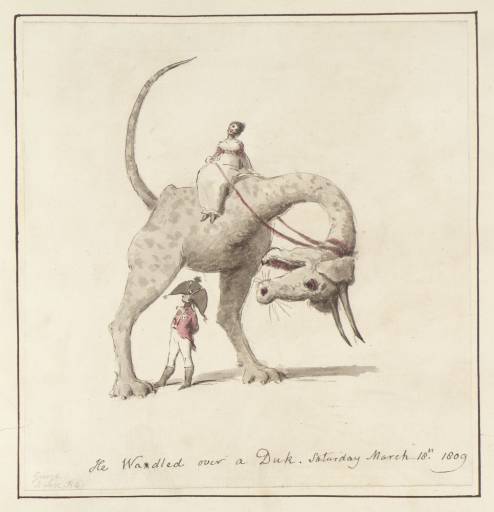
Two-Legged Ass-Headed Monster — George Dance

1. Caricature. A Woman Seated on a Two-Legged Ass-Headed Monster Straddling a Man in Military Uniform 1809 by George Dance 1741-1825

1. Caricature. A Woman Seated on a Two-Legged Ass-Headed Monster Straddling a Man in Military Uniform, 1809 by George Dance (1741–1825)

The Bed, The Chair, Waiting — Eric Fischl

the-bed-the-chair-waiting.jpg!Large

The Bed, The Chair, Waiting, 2000 by Eric Fischl (b. 1948)

An illustrated Devil’s Dictionary (Book acquired, 14 April 2017)

img_5948

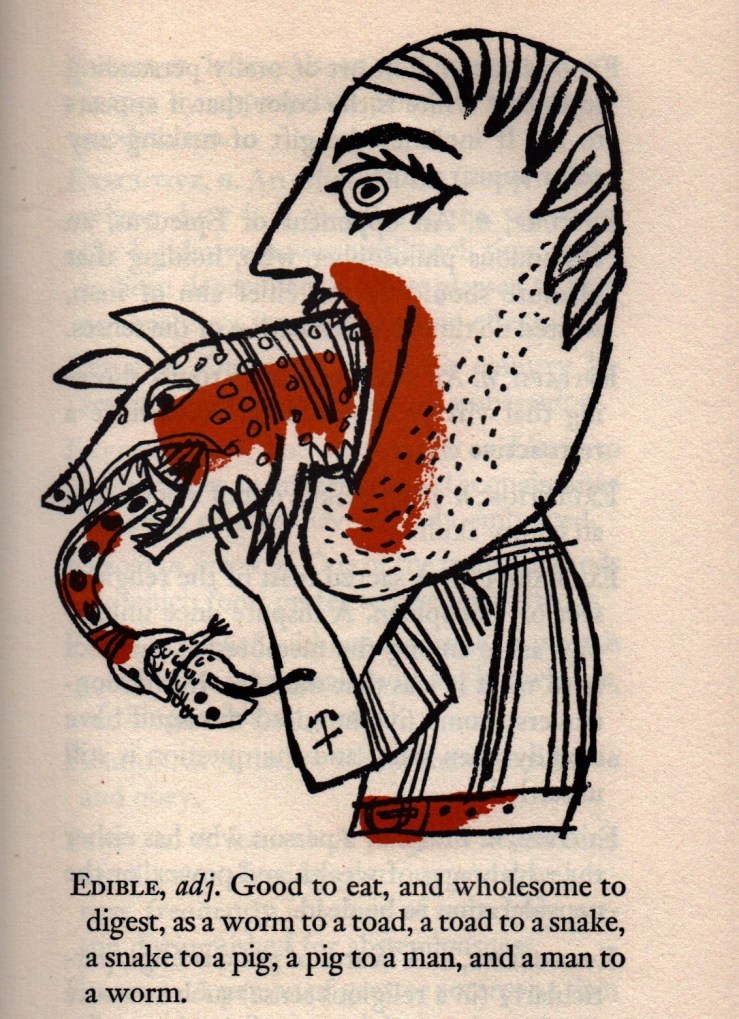
I couldn’t pass up this 1958 illustrated edition of Ambrose Bierce’s caustic classic The Devil’s Dictionary. It’s published by The Peter Pauper Press, with art by Joseph Low. I took the matching dust jacket off for the scan above. A sample of the innards:

img_5950

Selections from One-Star Amazon Reviews of Margaret Atwood’s The Handmaid’s Tale

[Editorial note: The following citations come from one-star Amazon reviews of Margaret Atwood’s novel The Handmaid’s Tale. (For the record, I think The Handmaid’s Tale is pretty great).

 I’ve preserved the reviewers’ original punctuation and spelling. More one-star Amazon reviews].


shrill

Strange

no hope

anti male story

boring and odd

Feminist dogma

anti-religious zeal

poorly researched

futuristic yet dated

no good verses evil

Political propaganda

socialist point of view

Too many adjectives!!

extremely depressing

It all-around too much

tries to be all futuristic

I’m not a Christian, but

Overuse of punctuation

Sorry but no one liked it

a lot of words were used

twisted grossness and blah

Not a feminist novel for sure

Actually, it is about infertility

Written by a 12-year-old shut in

It’s hard to glean what happened

Not realistic as a futuristic fantasy

pointless exercise in self-contempt

annoying stream-of-consciousness style

these fertile women aren’t treated badly

an academic’s paranoid bondage fantasy

a lot of sexual situations and foul language

The reader is always in a confused state of mind

The main character doesn’t grow or learn anything

The author created a lot of terms but didn’t explain them

literally fills the pages by talking about grocery shopping

obviously has an ax to grind with Judeo-Christian principle

There isn’t much focus on what women are not allowed to do

Mostly just someone running errands in an American dystopia

an author who obviously doesn’t understand the passages from the Bible

main character is weak, conviction less and incapable of making any exciting moves

I’m going to bury it in the ground and let the worms eat all those words unfit for human consumption

drones on and on about brick sidewalks and rays of sunlight and tulips and blue stripes on kitchen towels

Is this supposed to be 1984, Brave New World, or even Hunger Games? If you compare it to any of those books, it is utter fail.

Chair — Matthias Weischer

chair.png

Chair, 2004 by Matthias Weischer (b. 1974)

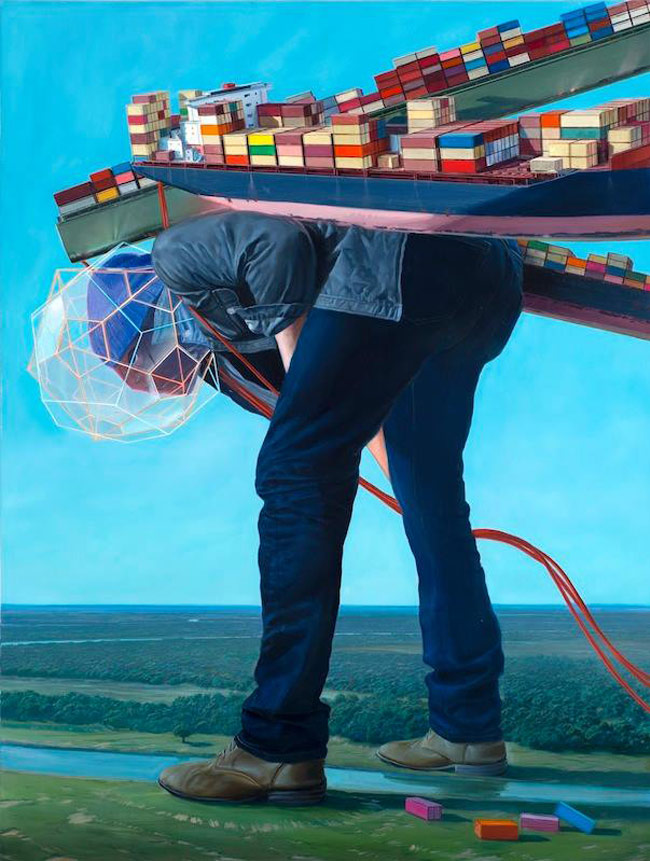
Shore for the Unmanned — Jean-Pierre Roy

JPRoy-Shore-for-the-Unmanned

Shore for the Unmanned, 2014 by Jean-Pierre Roy (b. 1974)

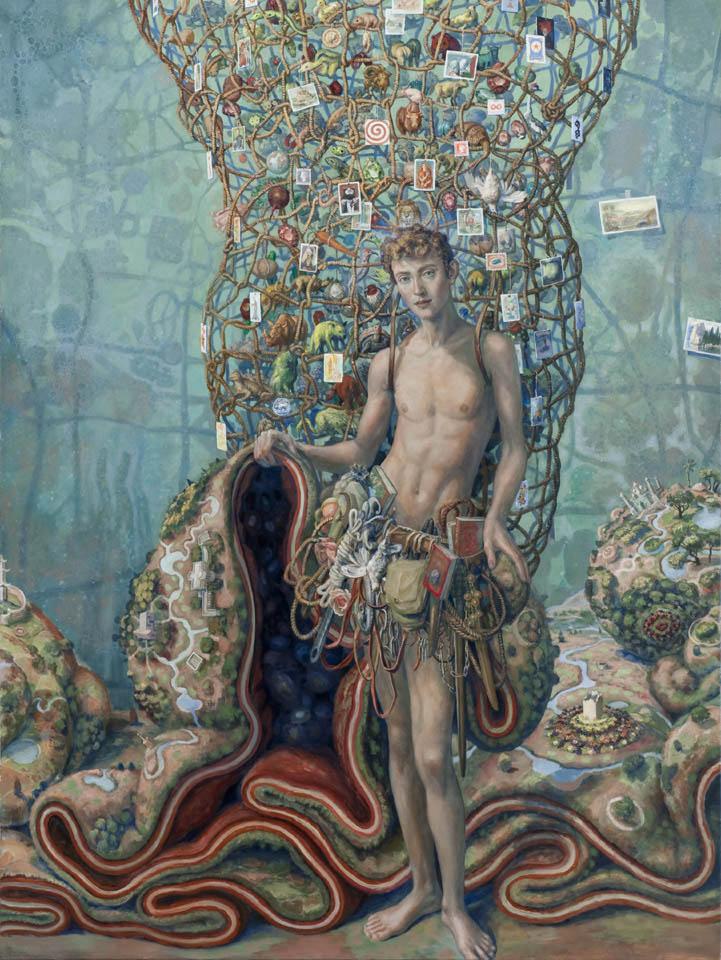
Self Portrait as Great Scout Leader III — Julie Heffernan

Great Scout Leader III_2010_72x54

Self Portrait as Great Scout Leader III, 2010 by Julie Heffernan (b. 1956)

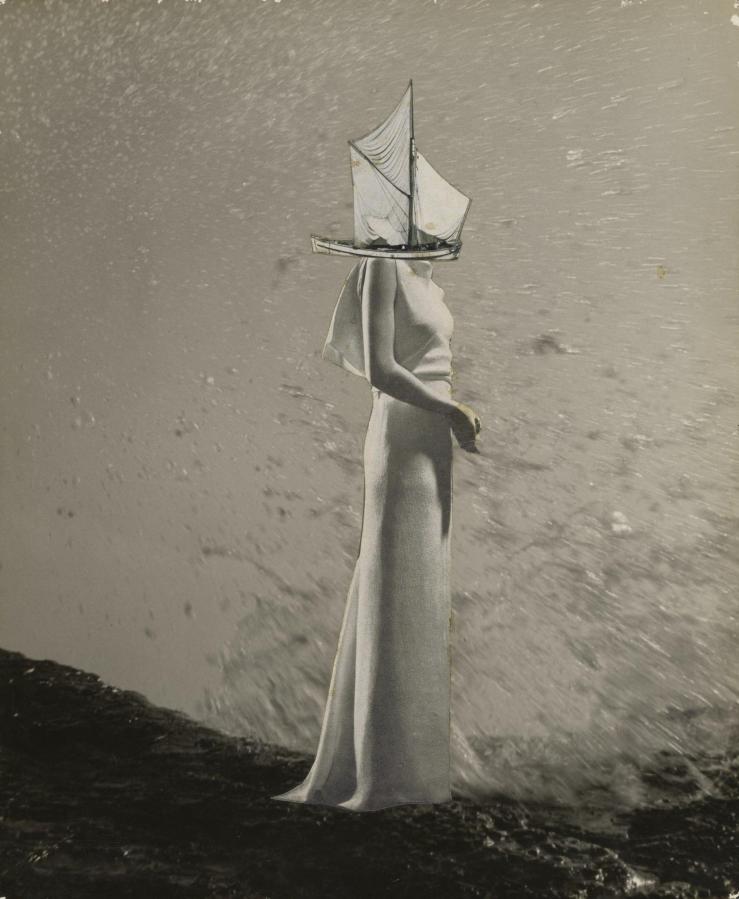
A Chronicle of Drifting — Kansuke Yamamoto

007-kansuke-yamamoto-theredlist

A Chronicle of Drifting, 1949 by Kansuke Yamamoto (1914-87)

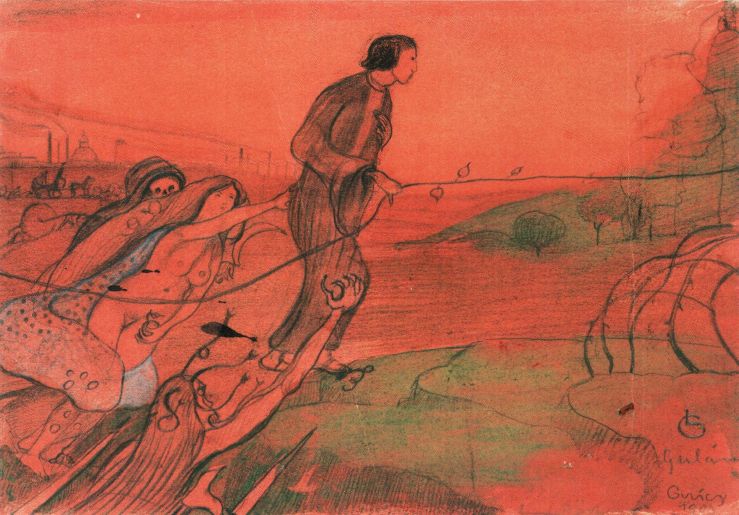
Dream — Lajos Gulácsy

Gulácsy_Dream_1903

Dream, 1903 by Lajos Gulácsy (1882-1932)

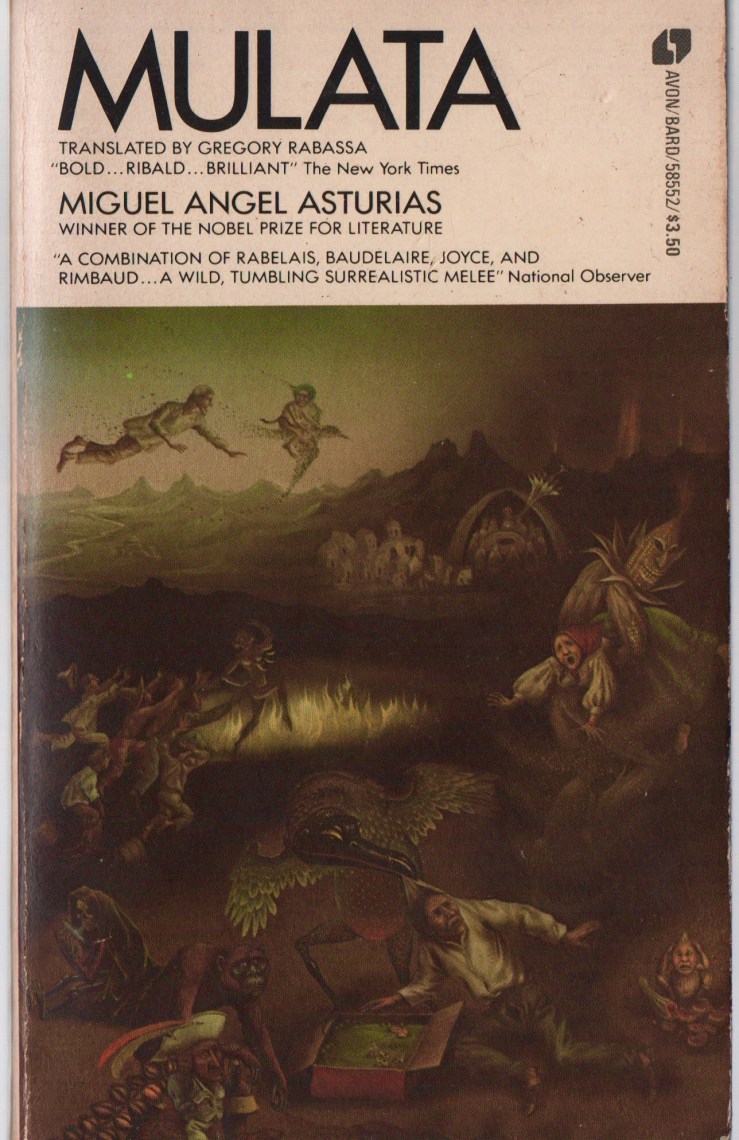
Miguel Ángel Asturias’s weird novel Mulata (Book acquired, 14 April 2017)

img_5940

I admit that I picked up Miguel Ángel Asturias’s 1963 novel Mulata de Tal because of the cover and blurb alone. This 1982 translation is by Gregory Rabassa, and part of a series of Latin American authors that Avon/Bard put out in really cool attractive mass market paperbacks in the 1980s. The titles can be hit or miss, but I like the energy of the first two chapters of Mulata. Back cover blurb:

img_5941

Sunday Comics

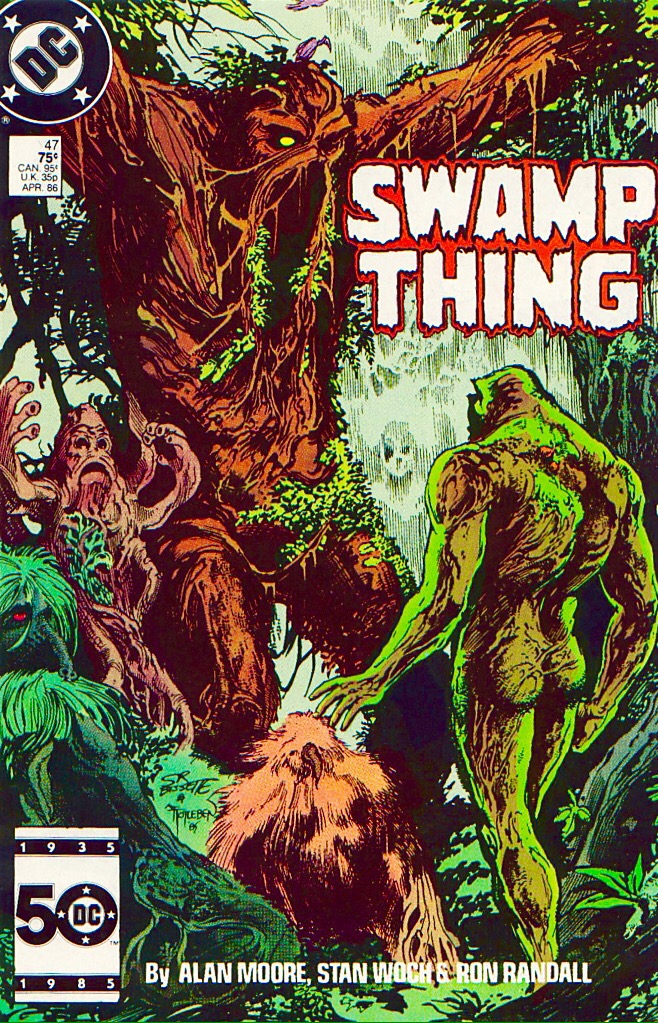
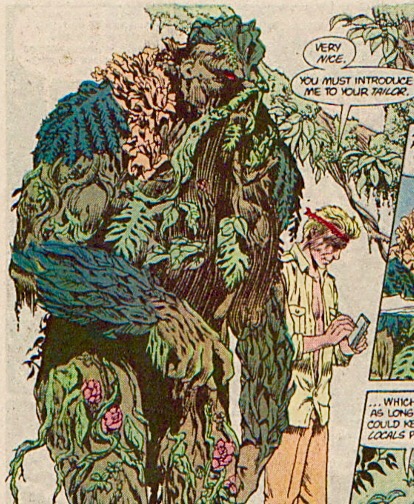
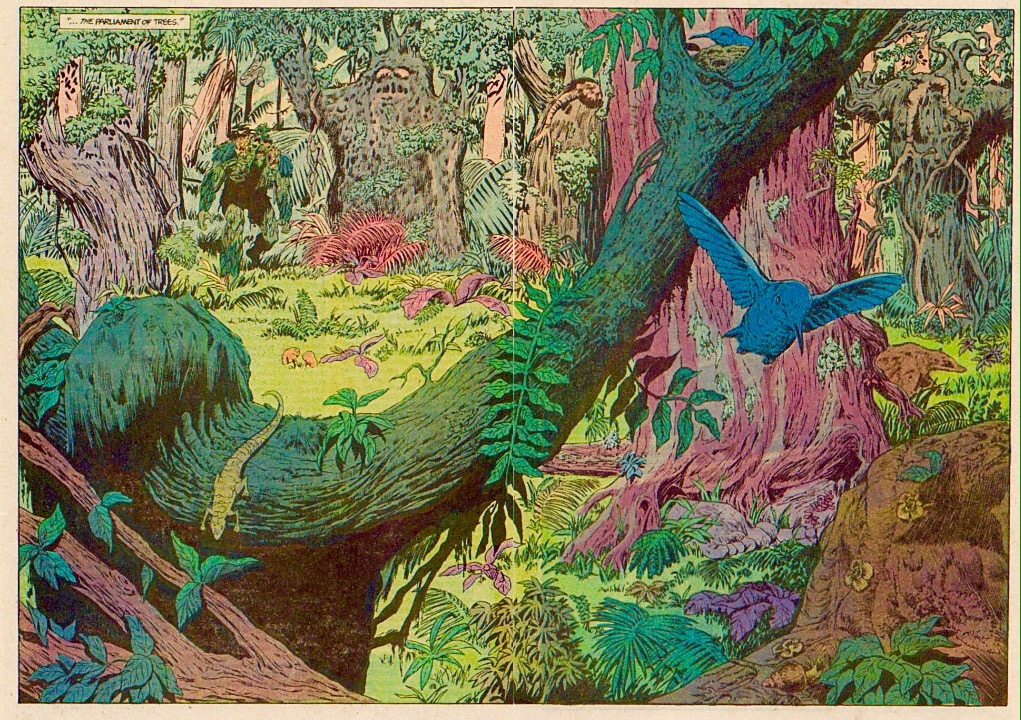
Pages and panels from “The Parliament of Trees,” Swamp Thing #47 (April, 1986) by Alan Moore with guest art by Stan Woch and Ron Randall and colors by Tatjana Wood. Seemed appropriate for Earth Day weekend (and I’m still burning through Moore’s run on Swamp Thing.

In this issue, Swamp Thing goes to South America via his death/resurrection power.

–and gets a new “costume”—

He meets other flora Elementals: There’s a cool splash page:

Cormac McCarthy’s essay “The Kekulé Problem,” a meditation on language and consciousness

img_5259

The science magazine Nautilus has published Cormac McCarthy’s essay “The Kekulé Problem.” This is the first piece of nonfiction that McCarthy has published. It’s a fascinating essay that takes its name from a dream of Friedrich August Kekulé, “father of organic chemistry.” Kekulé dreamed of an ouroboros, an unconscious insight that led him to “discover” the ring-structure of the benzene molecule. (Thomas Pynchon writes about Kekulé’s dream in Gravity’s Rainbow, by the way).  Anyway, it’s a nice piece on a complex subject, and it’s fun to watch McCarthy move from lucid, transparent, and direct prose into wry fragments that are, well, more McCarthyesque. From the essay–

The evolution of language would begin with the names of things. After that would come descriptions of these things and descriptions of what they do. The growth of languages into their present shape and form—their syntax and grammar—has a universality that suggests a common rule. The rule is that languages have followed their own requirements. The rule is that they are charged with describing the world. There is nothing else to describe.

All very quickly. There are no languages whose form is in a state of development. And their forms are all basically the same.

We dont know what the unconscious is or where it is or how it got there—wherever there might be. Recent animal brain studies showing outsized cerebellums in some pretty smart species are suggestive. That facts about the world are in themselves capable of shaping the brain is slowly becoming accepted. Does the unconscious only get these facts from us, or does it have the same access to our sensorium that we have? You can do whatever you like with the us and the our and the we. I did. At some point the mind must grammaticize facts and convert them to narratives. The facts of the world do not for the most part come in narrative form. We have to do that.

David Berman goes to Israel in the 2007 documentary Silver Jew

Edible (Ambrose Bierce)

From Ambrose Bierce’s The Devil’s Dictionary. 

Originally published in 1906; the image is from The Peter Pauper Press’s 1958 illustrated edition, with art by Joseph Low.


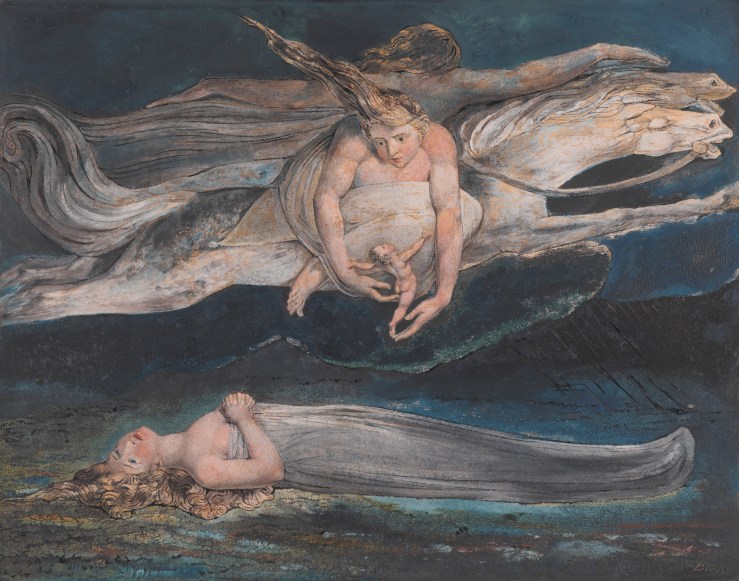
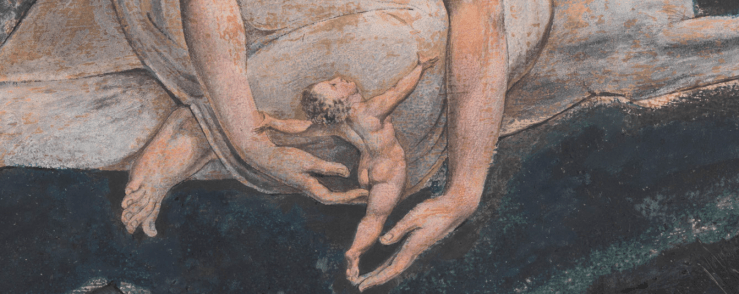
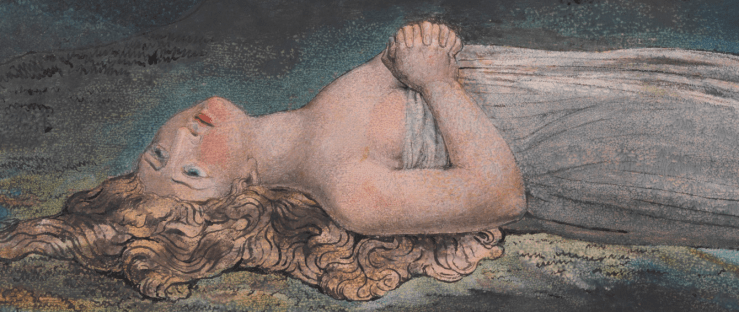
Pity — William Blake

William-Blake-Pity-c.1795Screenshot 2017-04-20 at 5.38.41 PMScreenshot 2017-04-20 at 5.38.56 PMScreenshot 2017-04-20 at 5.39.13 PM

Pity, c. 1795 by William Blake (1757–1827)

A review John Williams’s cult novel Stoner

stoner

John Williams’s 1965 novel Stoner documents the quiet and often painful life of William Stoner, an English professor at the University of Missouri. In a direct, lucid style, the novel follows Stoner from the time he first enters the University of Missouri as a freshman, to his old age and eventual death.

The son of poor farmers, Stoner is sent to school to study agriculture, only to become quickly bewildered by a required survey course of English literature. Obsessed by the affecting mysteries literature presents, Stoner pursues English as a major (never a smart move, young people) and in time becomes a teacher, safe in the university’s protection from the bustle and toil of the real world—he even neglects to enlist to serve in the Great War.

Stoner’s love of literature, learning, and the university itself cannot, however, protect him from the pain and despair of an unfulfilled life. This is a very sad book, and one made even sadder by the plainness and smallness of its tragedies. These tragedies seem all the more real in Williams’s simple, unadorned style, which we see (or, more accurately, don’t see—Williams’s technique is never on show) here in the novel’s opening paragraph:

William Stoner entered the University of Missouri as a freshman in the year 1910. Eight years later, during the height of World War I, he received his Doctor of Philosophy degree and accepted an instructorship at the same University, where he taught until his death in 1956. He did not rise above the rank of assistant professor, and few students remembered him with any sharpness after they had taken his courses. When he died his colleagues made a memorial contribution of a medieval manuscript to the University library. This manuscript may still be found in the Rare Books Collection, bearing the inscription: “Presented to the Library of the University of Missouri, in memory of William Stoner, Department of English. By his colleagues.’

As its beginning suggests, Stoner recounts one man’s professional failures. To steal a line from Dylan Thomas, Stoner’s words forked no lightning — he writes one mediocre book and is clearly no one’s favorite teacher. Even worse, he’s fated to teach scattered freshman composition courses for most of his career instead of the senior seminars most academics crave for intellectual stimulation. Who blocks him? His biggest professional enemy is Lomax, a vengeful hunchback who becomes chair of the English department and then makes Stoner’s professional life hell. Lomax retaliates Stoner’s attempt to prevent Lomax’s protégé—a poseur and an intellectual hack—from completing his degree. It’s the sort of dastardly, petty politics that won’t be unfamiliar to teachers.

It’s not just Stoner’s professional life that languishes in sad, decaying inertia. Stoner’s marriage is also a terrible failure, doomed from the outset. It’s not exactly clear why Stoner falls so hard for Edith, a brittle, neurotic rich girl; it’s even more unclear why she agrees to marry him. Their marriage is doomed before it even begins. Williams writes:

Years later it was to occur to him that in that hour and a half on that December evening of their first extended time together, she told him more about herself than she ever told him again. And when it was over, he felt that they were strangers in a way that he had not thought they would be, and he knew that he was in love.

Stoner’s idealistic love for Edith matches his idealistic love for reading and study, which at times becomes his sole reason for being:

Having come to his studies late, he felt the urgency of study. Sometimes, immersed in his books, there would come to him the awareness of all that he did not know, of all that he had not read; and the serenity for which he labored was shattered as he realized the little time he had in life to read so much, to learn what he had to know.

Stoner’s love for his subject does not translate into his being an inspiring teacher though (just as his initial love for Edith does not lead him to being a successful marriage partner):

He was ready to admit to himself that he had not been a good teacher. Always, from the time he had fumbled through his first classes of freshman English, he had been aware of the gulf that lay between what he felt for his subject and what he delivered in the classroom.

Stoner is very much a novel about that gulf between feeling and form, ideal and expression, and if Williams plumbs Stoner’s frequent failures to cross that gulf, there are still small moments of triumph, ones that brought a broad smile to my face, albeit a smile tempered by irony and pained by the general tone of doom that pervades the book.

Particularly painful is Stoner’s relationship with his daughter Grace. After Grace’s birth, Edith becomes emotionally paralyzed from postpartum depression and even moves out of the house. Undisturbed, Stoner finds great joy in becoming his infant daughter’s primary caretaker. However, when Edith returns, she slowly drives a wedge between Stoner and Grace.

The disintegration of Stoner’s relationship with his only child was by far the most frustrating plot point of the book for me to endure. There were many times when I wished to grab him by his stooped shoulders, shake him hard, and cry, “Look, man, your life is passing you by! Wake up!” Stoner’s inattention and Edith’s neurotic behavior all but destroy their daughter, who becomes pregnant in high school, moves away from home, and eventually becomes a hardcore alcoholic. Here’s a heartbreaking passage from late in the book; Grace has made a rare visit to her aging parents, and stays up to talk with her father:

They talked late into the night, as if they were old friends. And Stoner came to realize that she was, as she had said, almost happy with her despair; she would live her days out quietly, drinking a little more, year by year, numbing herself against the nothingness her life had become. He was glad that she had that, at least; he was grateful that she could drink.

It’s not the great gulf between Stoner and Grace that is most painful—it is the sense of lost opportunity, of unfulfilled love that hurts the most. Stoner chooses paralysis; sure, the narrative is highly realistic, achingly aware of his limited options—but at the same time Stoner’s inaction and inertia can be maddening. He doesn’t even try.

Late in life, sick and approaching death — am I spoiling too much of the novel? — late in life, Stoner reflects (via Williams’s impeccable and unobtrusive free indirect style):

And he had wanted to be a teacher, and he had become one; yet he knew, he had always known, that for most of his life he had been an indifferent one. He had dreamed of a kind of integrity, of a kind of purity that was entire; he had found compromise and the assaulting diversion of triviality. He had conceived wisdom, and at the end of the long years he had found ignorance. And what else? he thought. What else?

What did you expect? he asked himself.

It’s a small epiphany I suppose, and one achieved at great price—it’s also crushingly realistic, even if Stoner is, say, 40 odd years late to a realization most of us make by our mid-twenties. Stoner’s near-death epiphany is wrapped in futility and resignation; there’s no rage against the dying of the light here. Still, Williams’s depiction of the end of his character’s life is one of the most stunning and moving portrayals of death that I’ve read in all of fiction. Here, I was reminded of Katherine Anne Porter’s fantastic story “The Jilting of Granny Weatherall.”  Williams’s style is unlike Porter’s stream-of-consciousness technique—he’s far more lucid, yet keenly attuned to the changing of his protagonist’s consciousness. And while I’m comparing Williams to other writers, I should point out how strongly Stoner reminded me of Harold Brodkey’s sad and moving collection First Love and Other Sorrows.

Stoner’s straightforward style and direct, linear plot make it an unlikely candidate for a cult novel (a status it has achieved thanks in large part to a reissue from the NYRB a few years ago). Stoner flaunts none of the stylistic innovations (or gimmicks) of its postmodern contemporaries and Modernist forbears. It does not obsess over strange or marginalized figures. Its discourse never bristles with dramatic allusion or mythical and archetypal overtones. Nevertheless, it’s the sort of overlooked novel whose dedicated, vocal admirers like to press on others. And with good reason of course: this is a deeply moving, engaging, and often exasperating novel. It will make you truly, deeply sad. Highly recommended.

[Ed. note: Biblioklept originally published a version of this review on 20 April 2012].