Mass-Market Monday | Donald Barthelme’s Sadness

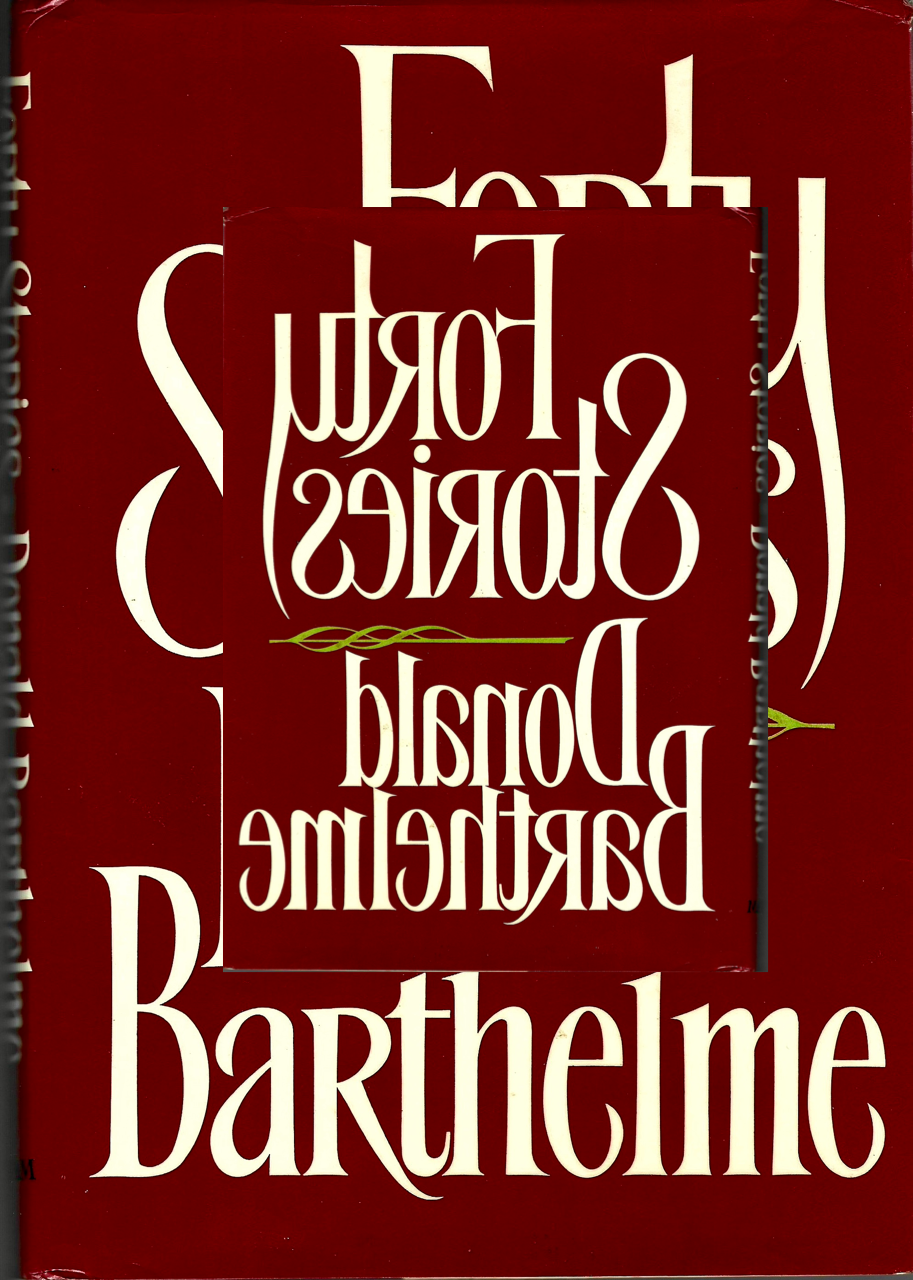
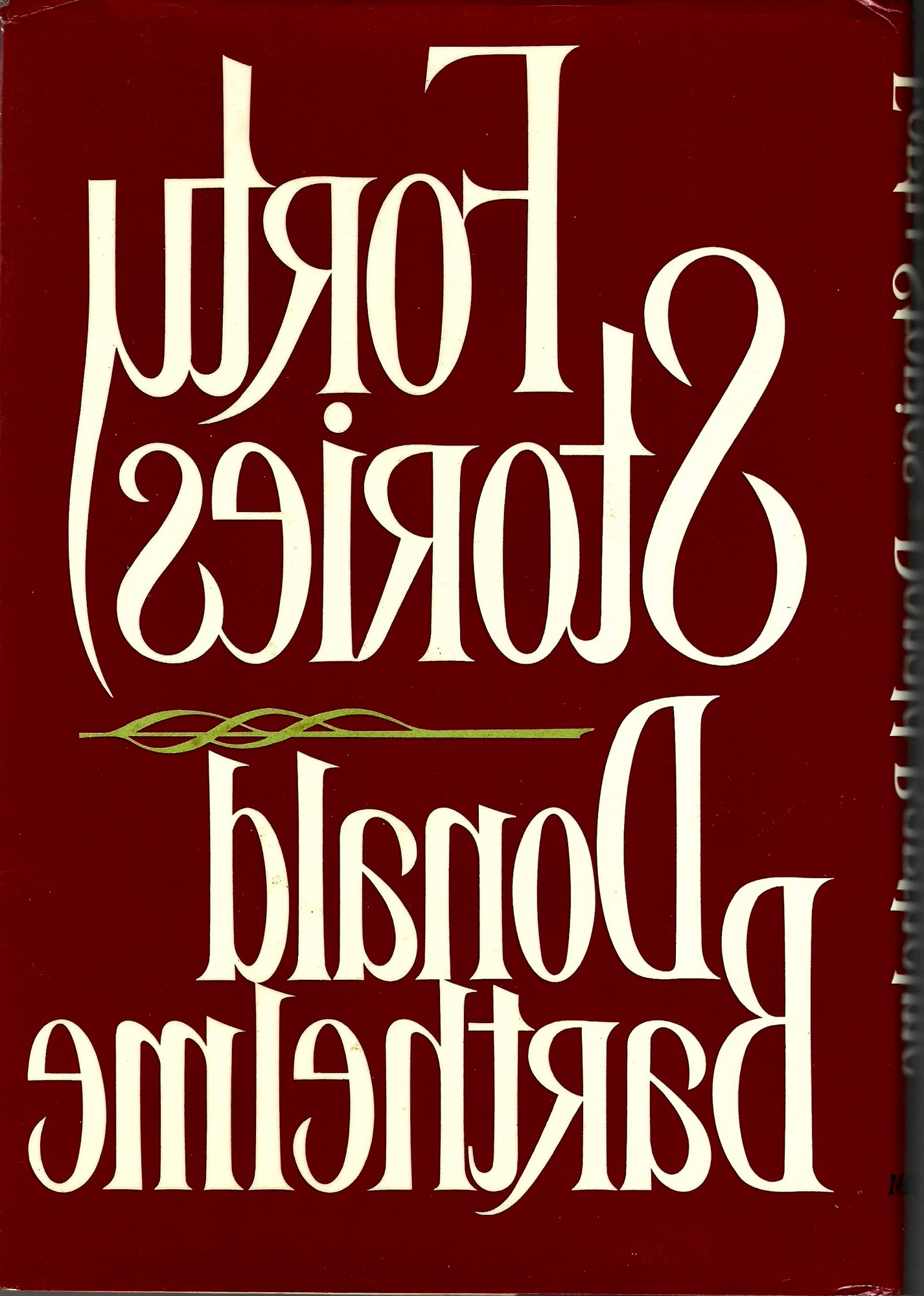
Sadness, 1972, Donald Barthelme. Kangaroo Pocket Books (1980). No cover artist or designer credited. 159 pages.

Here is the fifth section of “Departures,” a series of vignettes. It stands alone as its own short story–


My grandfather once fell in love with a dryad—a wood nymph who lives in trees and to whom trees are sacred and who dances around trees clad in fine leaf-green tutu and who carries a great silver-shining axe to whack anybody who does any kind of thing inimical to the well-being and mental health of trees. My grandfather was at that time in the lumber business.

It was during the Great War. He’d got an order for a million board feet of one-by-ten of the very poorest quality, to make barracks out of for the soldiers. The specifications called for the dark red sap to be running off it in buckets and for the warp on it to be like the tops of waves in a distressed sea and for the knotholes in it to be the size of an intelligent man’s head for the cold wind to whistle through and toughen up the (as they were then called) doughboys.

My grandfather headed for East Texas. He had the timber rights to ten thousand acres there, Southern yellow pine of the loblolly family. It was third-growth scrub and slash and shoddy—just the thing for soldiers. Couldn’t be beat. So he and his men set up operations and first crack out of the box they were surrounded by threescore of lovely dryads and hamadryads all clad in fine leaf-green tutus and waving great silver-shining axes.

“Well now,” my grandfather said to the head dryad, “wait a while, wait a while, somebody could get hurt.”

“That is for sure,” says the girl, and she shifts her axe from her left hand to her right hand.

“I thought you dryads were indigenous to oak,” says my grandfather, “this here is pine.”

“Some like the ancient tall-standing many-branched oak,” says the girl, “and some the white-slim birch, and some take what they can get, and you will look mighty funny without any legs on you.”

“Can we negotiate,” says my grandfather, “it’s for the War, and you are the loveliest thing I ever did see, and what is your name?”

“Megwind,” says the girl, “and also Sophie. I am Sophie in the night and Megwind in the day and I make fine whistling axe-music night or day and without legs for walking your life’s journey will be a pitiable one.”

“Well Sophie,” says my grandfather, “let us sit down under this tree here and open a bottle of this fine rotgut here and talk the thing over like reasonable human beings.”

“Do not use my night-name in the light of day,” says the girl, “and I am not a human being and there is nothing to talk over and what type of rotgut is it that you have there?”

“It is Teamster’s Early Grave,” says my grandfather, “and you’ll cover many a mile before you find the beat of it.”

“I will have one cupful,” says the girl, “and my sisters will have each one cupful, and then we will dance around this tree while you still have legs for dancing and then you will go away and your men also.”

“Drink up,” says my grandfather, “and know that of all the women I have interfered with in my time you are the absolute top woman.”

“I am not a woman,” says Megwind, “I am a spirit, although the form of the thing is misleading I will admit.”

“Wait a while,” says my grandfather, “you mean that no type of mutual interference between us of a physical nature is possible?”

“That is a thing I could do,” says the girl, “if I chose.”

“Do you choose?” asks my grandfather, “and have another wallop.”

“That is a thing I will do,” says the girl, and she had another wallop.

“And a kiss,” says my grandfather, “would that be possible do you think?”

“That is a thing I could do,” says the dryad, “you are not the least prepossessing of men and men have been scarce in these parts in these years, the trees being as you see mostly scrub, slash and shoddy.”

“Megwind,” says my grandfather, “you are beautiful.”

“You are taken with my form which I admit is beautiful,” says the girl, “but know that this form you see is not necessary but contingent, sometimes I am a fine brown-speckled egg and sometimes I am an escape of steam from a hole in the ground and sometimes I am an armadillo.”

“That is amazing,” says my grandfather, “a shape-shifter are you.”

“That is a thing I can do,” says Megwind, “if I choose.”

“Tell me,” says my grandfather, “could you change yourself into one million board feet of one-by-ten of the very poorest quality neatly stacked in railroad cars on a siding outside of Fort Riley, Kansas?”

“That is a thing I could do,” says the girl, “but I do not see the beauty of it.”

“The beauty of it,” says my grandfather, “is two cents a board foot.”

“What is the quid pro quo?” asks the girl.

“You mean spirits engage in haggle?” asks my grandfather.

“Nothing from nothing, nothing for nothing, that is a law of life,” says the girl.

“The quid pro quo,” says my grandfather, “is that me and my men will leave this here scrub, slash and shoddy standing. All you have to do is to be made into barracks for the soldiers and after the War you will be torn down and can fly away home.”

“Agreed,” says the dryad, “but what about this interference of a physical nature you mentioned earlier? for the sun is falling down and soon I will be Sophie and human men have been scarce in these parts for ever so damn long.”

“Sophie,” says my grandfather, “you are as lovely as light and let me just fetch another bottle from the truck and I will be at your service.”

This is not really how it went. I am fantasizing. Actually, he just plain cut down the trees.

Donald Barthelme’s Forty Stories in reverse, Part V

Previously,

Stories 40-36

Stories 35-32

Stories 31-28

Stories 27-24

23 . “A Few Moments of Sleeping and Waking” (Unspeakable Practices, Unnatural Acts, 1968)

I’ve been reading the stories in Forty Stories as kinda-sorta palate cleansers, usually ingesting one or two between novels; my method is to take a few initial notes to come back to, cross-reference against Tracy Daugherty’s Barthelme biography Hiding Man, and then riff on my general impression. Sometimes a few weeks go by from the time I’ve read or reread one of these stories and the time I actually get around to writing about them. Until now, the title alone has activated some memory or aesthetic impression about the story, but “A Few Moments of Sleeping and Waking” was a total blank for me. I suppose in my memory it simply segued out of the story that preceded it in Barthelme’s excellent 1968 sophomore collection, Unspeakable Practices, Unnatural Acts. That story was “Edward and Pia,” metapseudoautobiographical stand-ins for Barthelme and his third wife Birgit. “A Few Moments” is more droll low-stakes tension between the pair; there’s a little here on films and dreams and their interpretations. The best bit of the story is a moment on cabbage:

Pia was chopping up an enormous cabbage, a cabbage big as a basketball. The cabbage was of an extraordinary size. It was a big cabbage.
“That’s a big cabbage,” Edward said.
“Big,” Pia said.
They regarded the enormous cabbage God had placed in the world for supper.

22 . “The Flight of Pigeons from the Palace” (Sadness, 1972)

A lovely little story, so short and sweet it really can’t be summarized! But I’ll give it a shot: “The Flight” is a comic riff on the audience’s addiction to novelty and sensation. The third-person “we” who narrates “Flight” is a kind of postmodern carnival barker, barking new wonders into existence:

The lineup for opening night included:

A startlingly handsome man

A Grand Cham

A tulip craze

The Prime Rate

Edgar Allan Poe

A colored light

We asked ourselves: How can we improve the show?

We auditioned an explosion.

Barthelme’s not really a moralist, hardly a Hawthorne, but I think he does offer oblique lessons, or warnings really, to his reader. “Flight” culminates thus:

The supply of strange ideas is not endless.

The development of new wonders is not like the production of canned goods. Some things appear to be wonders in the beginning, but when you become familiar with them, are not wonderful at all.

The story concludes in the threatening specter of newly-contracted volcano.

21 . “At the Tolstoy Museum” (City Life, 1970)

Like “Flight,” “At the Tolstoy Museum” is one of Barthelme’s literal cut-and-paste collage stories — that is, a story to include the author’s own visual collages, juxtaposed against his verbal collages. In “Flight,” the collages seem incidental. They aren’t exactly affectations, and they don’t add anything to the story–but they don’t detract either. The visual collages in “At the Tolstoy Museum” are deployed more judiciously, serving as punchlines that resound off of the narrator’s flat, affectless pose:

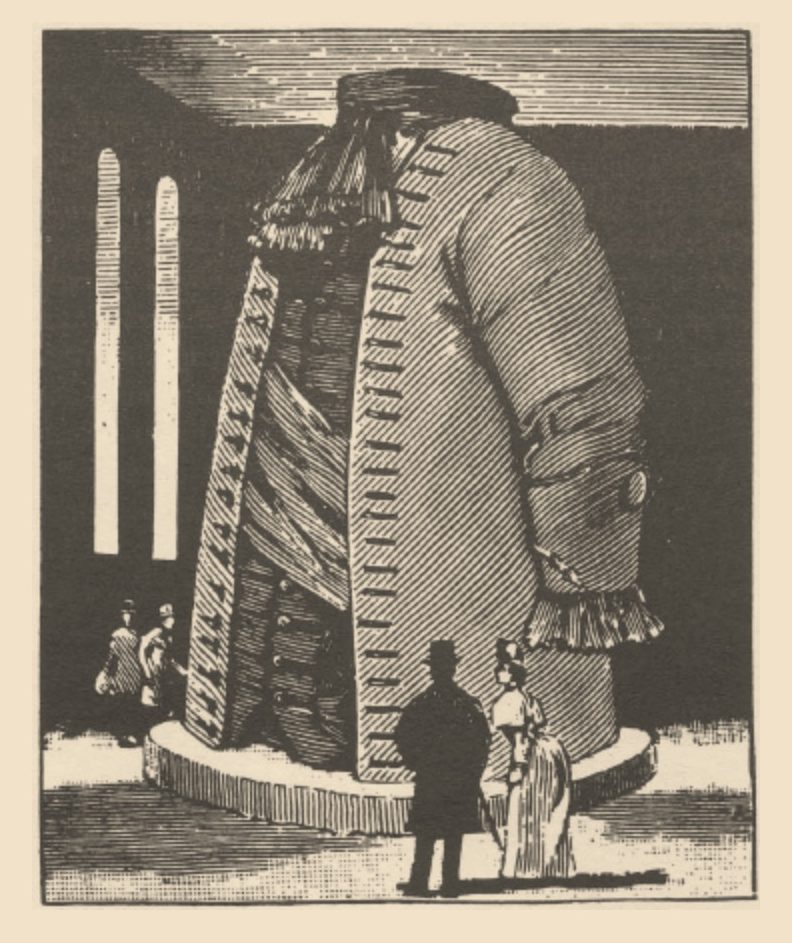
I was eating a sandwich at the Tolstoy Museum. The Tolstoy Museum is made of stone—many stones, cunningly wrought Viewed from the street, it has the aspect of three stacked boxes: the first, second, and third levels. These are of increasing size. The first level is, say, the size of a shoebox, the second level the size of a case of whiskey, and the third level the size of a box that contained a new overcoat. The amazing cantilever of the third level has been much talked about. The glass floor there allows one to look straight down and provides a “floating” feeling. The entire building, viewed from the street, suggests that it is about to fall on you. This the architects relate to Tolstoy’s moral authority.

Tolstoy’s Coat

In Hiding Man, Daugherty relates that after “At the Tolstoy Museum” was published in The New Yorker (24 May 1969) “a family from Holly Hill, Florida [wrote to the magazine to learn the location of the Tolstoy Museum.” About two weeks later, Tolstoy’s daughter, the Countess Alexandra L. Tolstoy sent a more indignant letter to the magazine, referring to the story as “Donald Barthelme’s absurd article…What is the aim of such an article? To make people laugh? … How funny! Ha, ha, ha.” Great stuff all around.

20 . “The Wound” (Amateurs, 1976)

A surreal sketch featuring a bullfighter, his mother, his mistress, a bishop, and a famous aficionado (of, implicitly, bullfighting, and, explicitly, breasts), as well as a cast of grumbling minions and peons. Barthelme’s stories are often collage-like, anti-real, hyper-real, or outright absurd, but they are, at least in my estimation, rarely dreamlike. But “The Wound” moves like a dream — a brief, stifled dream, one that reveals something about himself to the dreamer, who later might lament, But I already knew that, like the Bishop who laments his therapy:

The Bishop begins to talk about his psychoanalysis: “I am a different man now,” the Bishop says. “Gloomier, duller, more fearful. In the name of the Holy Ghost, you would not believe what I see under the bed, in the middle of the night.” The Bishop laughs heartily. The torero joins him. The torero’s mistress is filming the Bishop. “I was happier with my whiskey,” the Bishop says, laughing even harder.

The Queen of Gypsies arrives, claiming wounds. There’s “An ecstasy of shrinking” and the final vision of “an immense black bull” blocking the door way. It “begins to ring, like a telephone.”

“The Wound” is a short example that might be handed off to any young person clamoring for meaning or theme or symbolism from every text they read. Sometimes it’s just a dream, a goof, an aesthetic gesture. Sometimes there’s just a surreal punchline that needs to erupt, like a giant black bull ringing like a telephone, blocking the only exit in sight.

“Presents” — Donald Barthelme

“Presents”

by

Donald Barthelme


In the middle of a forest. Parked there is a handsome 1932 Ford, its left rear door open. Two young women are pausing, about to step into the car. Each has one foot on the running board. Both are naked. They have their arms around each other’s waist in sisterly embrace. The woman on the left is dark, the one on the right fair. Their white, graceful backs are in sharp contrast to the shiny black of the Ford. The woman on the right has turned her head to hear something her companion is saying.


At a dinner party. The eight guests are seated, in shining white plastic shells mounted on steel pedestals, in a luxurious kitchen. They sit around a long table of polished rosewood, at one end of which there is a wicker basket filled with fruit, pineapples, bananas, pears, and at the other a wicker basket containing loaves of burnt-orange bread. The kitchen floor is polished black tile; electric ovens with bronze fronts are set into the polished off-white walls. On thick glass shelves above the diners, handsome pots with herbs, jams, jellies, and tall glass jars with half-a-dozen varieties of raw pasta. Six of the guests, men and women, are conventionally clothed. The two young women (one dark, one fair) are naked, smoking cigarillos. One of them unfolds a large white linen napkin and smoothes it over her companion’s lap.


Ten o’clock in the morning. Marble, more marble, together with walnut paneling, a terrazzo floor, on the left a long (sixty feet) black-topped counter behind which the tellers sit, on the right a beige-carpeted area with three rows (three times three) of bank officers, suited and gowned. At the back, the great vault door open, functionary seated at desk reading a Gothic novel. In the center, long lines of depositors channeled to the tellers by a flattened S-curve of blue velvet ropes. Uniformed guards, etc., the American flag drooping on its standard near the vault. Two young women enter. They are naked except for black masks. One is dark, one fair. They place themselves back-to-back in the center of the banking floor. The guards rush toward them, then rush away again.


A woman seated on a plain wooden chair under a canopy. She is wearing white overalls and has a pleased expression on her face. Watching her, two dogs, German shepherds, at rest. Behind the dogs, with their backs to us, a row of naked women kneeling, sitting on their heels, their buttocks perfect as eggs or O’s — OOOOOOOOOOOOO. In profile to the scene, at the far right, Henry James — his calm, accepting gaze.


Two young women wrapped as gifts. But the gift-wrapping is indistinguishable from ordinary clothing. Or there is a distinction, in that what they are wearing is perhaps a shade newer, brighter, more studied than ordinary clothing, proclaims the specialness of what is wrapped, argues for immediate unwrapping, or if not that, unwrapping at leisure, with wine, cheese, sour cream.


Two young women, naked, tied together by a long red thread. One is dark, one is fair.


Large (eight by ten feet) sheets of white paper on the floor, six or eight of them. The total area covered is perhaps 200 feet square; some of the sheets overlap. A string quartet is playing at one edge of this area, and irregular rows of handsomely-dressed spectators border another. A large bucket of blue paint sits on the paper. Two young women, naked. Each has her hair rolled up in a bun; each has been splashed, breasts, belly, and thighs, with blue paint. One, on her belly, is being dragged across the paper by the other, who is standing, gripping the first woman’s wrists. Their backs are not painted. Or not painted with. The artist is Yves Klein.


Two young men, wrapped as gifts. They have wrapped themselves carefully, tight pants, open-throated shirts, shoes with stacked heels, gold jewelry on right and left wrists, codpieces stuffed with credit cards. They stand, under a Christmas tree big as an office building, the women rush toward them. Or they stand, under a Christmas tree big as an office building, and no women rush toward them. A voice singing inappropriate Easter songs, hallelujahs.


Two young men, artists, naked in a loft on Broome Street, are painting a joint portrait of four young women, fully clothed, who are standing in a row with their backs to the artists, who are sipping coffee from paper cups (the paper cup held in the left hand, the brush or palette knife in the right) and carefully regarding the backs of the women, who from time to time let slip from the sides of their mouths comments (encouraging or disparaging) about the artists, who for their part are not intimidated by these comments which have mostly to do with the weather and future projects but in some cases with the comparative beauty and masculinity (because of course the women have opinions about these matters, expressed in whispers just loud enough to be overheard) of the naked artists, who are mostly worried about the stamina and comfort (four or five hours’ work yet ahead) of the women, who are feeling rather hot and peevish in the white-painted, rather stuffy (although the big windows have been opened) loft of the artists, who are perfectly comfortable themselves, being naked, but do recognize the fact that some discomfort may be engendered by the heavy overcoats worn by the women, who are in truth pulling and tugging irritably upon these gross garments, increasing the nervousness of the artists, who are also concerned about the effect the scene might have upon someone who just blundered into it, such as the four lovers of the women, who are thinking now (by coincidence) of those selfsame lovers, Luke, Matt, John, and Mark, and what they might say if, battered by the heat of the hot sun, they staggered into an air-conditioned art gallery and there beheld a sixteen-by-forty foot painting of four backs, backs that they know intimately even through the layers of clothes, and begin to wonder whether the clothes on those backs had just been painted on (but of course they had been painted on, like everything else on the canvas) but had been really there while the women were posing for the naked artists, who are as character types notoriously . . .


Nowhere — the middle of it, its exact center. Standing there, a telephone booth, green with tarnished aluminum, the word PHONE and the system’s symbol (bell in ring) in medium blue. Inside the telephone booth, two young women, one dark, one fair, facing each other. Their breasts and thighs brush lightly (one holding the receiver to the other’s ear) as they place phone calls to their mothers in California and Maine. In profile to the scene, at far right, Henry James, wearing white overalls.


Henry James, wearing white overalls (Iron Boy brand) is attending a film. On the screen two young women, naked, are playing ping-pong. One makes a swipe with her paddle at a ball the other has placed just over the net and misses, bruising her right leg. The other puts down her paddle and walks around the table (gracefully) to examine the bruise; she places her hands on either side of the raw, ugly mark, then bends to kiss it. Henry James picks up his hat and walks thoughtfully from the theatre. Behind the popcorn machine in the lobby stand two young women, naked, one dark and one fair. Henry James approaches the popcorn stand and purchases, for 35¢, a bag of M & Ms. He opens the bag with his teeth. The women smile at each other.


Two young women wearing web belts to which canteens are attached, nothing more, marching down Broadway again. They are followed by a large crowd, bands, etc.


A plaza or open space. Two young women on their hands and knees. They are separated by a distance of eight feet, both facing in the same direction. Rough wooden boards (one by tens) have been laid across their backs to form a sort of table. On top of the table are piled bags and bags of M & Ms, hundreds of bags some of which have been opened spilling the chocolate out onto the table. A small army of insects, not ants but other chocolate-loving insects, informed of this prime target by scouts, is advancing across the plaza toward the rear of the table. The vanguard (the insects are a half-inch long and, closely inspected, resemble tiny black toothbrushes) reaches the left leg of the young woman on the left side of the table. The boldest members leap upon the leg, a line of insects runs up the leg toward the cleft of the buttocks. The table shudders and collapses.


The world of work. Two young women, one dark, one fair, wearing web belts to which canteens are attached, nothing more. They are sitting side-by-side on high stools (OO OO) before a pair of draughting tables, inking-in pencil drawings. Or, in a lumberyard in Southern Illinois, they are unloading a railroad car containing several hundred thousand board feet of Southern yellow pine. Or, in the composing room of a medium-sized Akron daily, they are passing long pieces of paper through a machine which deposits a thin coating of wax on the back side, and then positioning the type on a page. Or, they are driving two Yellow cabs which are racing side-by-side up Park Avenue with frightened passengers, each driver trying to beat the other to a hole in the traffic in front of them. Or, they are seated at adjacent desks in the beige-carpeted area set apart for officers in a bank (possibly the very same bank they had entered, naked, masked, several days ago), refusing loans. Or, they are standing bent over, hands on knees, peering into the site of an archaeological dig in the Cameroons. Or, they are teaching, in adjacent classrooms, Naked Physics — in the classroom on the left, Naked Physics I, and in the classroom on the right, Naked Physics II. These courses are very popular. Or, they are kneeling, sitting on their heels, before a pair of shoeshine sta
nds, polishing the expensive boots, suave loafers, of their admiring customers. OO OO.


Two women, one dark and one fair, wearing parkas, blue wool watch caps on their heads, inspecting a row of naked satyrs, hairy-legged, split-footed, tailed and tufted, who hang on hooks in a meat locker where the temperature is a constant 18 degrees. The women are tickling the satyrs under the tail, where they are most vulnerable, with their long white (nimble) fingers tipped with long curved scarlet nails. The satyrs squirm and dance under this treatment, hanging from hooks, while other women, seated in red plush armchairs, in the meat locker, applaud, or scold, or hug and kiss, in the meat locker.


Two women, one dark and one fair, wearing parkas, blue wool watch caps on their heads, inspecting a row of naked young men, hairy-legged, many-toed, pale and shivering, who hang on hooks in a meat locker where the temperature is a constant 18 degrees. The women are tickling the young men under the tail, where they are most vulnerable, with their long white (nimble) fingers tipped with long curved scarlet nails. The young men squirm and dance under this treatment, hanging from hooks, while giant eggs, seated in red plush chairs, boil.


Two young women, naked, trundle the giant boiled eggs to market in wheelbarrows. They move through double rows of shouting civilians who applaud the size, whiteness, and exquisite shape of the eggs, and the humor and good cheer of the women. The grandest eggs ever seen in this part of the country, and the most gloriously-powered wheelbarrows! There is no end to the intoxicating noise. The women are sweating, moisture visible on their backs, on their legs and breasts, on their white, beautifully-formed shoulders. Yet they smile, and smile, and smile, their hands on the handles of the wheelbarrows, their sturdy sweating backs bent into the work. Like Henry James writing a novel, they trundle onward, placing one foot in front of the other in sweet, determined, dogged bliss — the achievement of a task.


Bliss: A condition of extreme happiness, euphoria. The nakedness of young women, especially in pairs (that is to say, a plenitude) often produces bliss in the eye of the beholder, male or female. If you have an elbow in your mouth, then you are occupied, for the moment, but your mind often wanders away, toward more bliss, wondering if you should be doing something else, with your arms and legs, so as to provide more static along the surface of the situation, wherein the two (naked) young women lie unfolded before you, waiting for you to fold them up again in new, interesting ways. Oh they are good kids, no doubt about it, and brave and forthright too, and mind their manners and their eggs, and have hope and ambitions, and are supportive and giving as well as chilly and austere — most of all, naked. That is a delight, let us confess the fact, and that is why we are considering all these different ways in which naked young women may be conceptualized, in the privacy of our studies, dealt out like cards from a deck of thin, flexible, six-foot-tall mirrors. Doubtless women do the same sort of thing in regard to us, in the privacy of their studies, or even better things, things we have not yet been able to imagine, or possibly nothing at all — maybe they just sit there, the beauty of a naked thumb, for example, or a passionate, interestingly-historied wrist. What if they don’t care? If this is the case, send them to the elephants, let them sit around all day listening to the elephants cry “Long live King Babar! Long live Queen Celeste!” Few naked young women can take much of this.


Back to business: Two naked young women are walking, with an older man in a white suit, on a plain in British Columbia. The older man has told them that he is Henry James, returned to earth in a special dispensation accorded those whose works, in life, have added to the gaiety of nations. They do not quite believe him, yet he is stately, courteous, beautifully-spoken, full of anecdotes having to do with the upper levels of London society. One of the naked young women reaches across the chest of Henry James to pinch, lightly, the rosy, full breast of the second young woman, who —
Mass-Market Monday | Donald Barthelme’s Amateurs

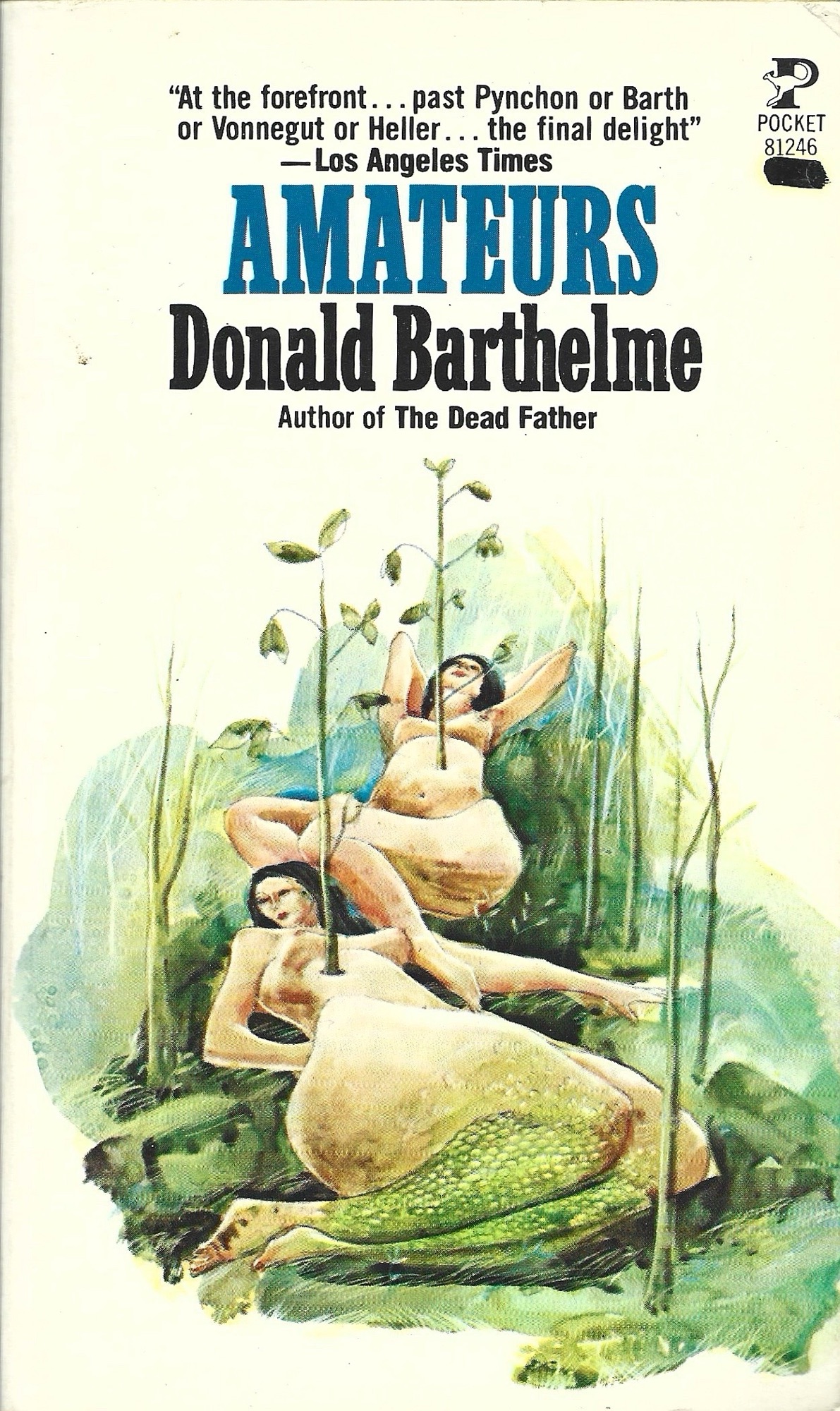
Amateurs, Donald Barthelme. Kangaroo Pocket Books (1977). No cover artist or designer credited. 207 pages.

I’ve written a few times about my slow acquisition of someone else’s library. This person lives in Perry, Florida, a small panhandle town south of Tallahassee, and I guess he drives into Jacksonville at least once a year to sell books at the bookstore I frequent. I’ve talked to the bookstore’s owner about him a few times. Sometimes, I’ll spot a spine and think, Yeah, his name and address are going to be stamped on the inside cover. And there it was this Friday when I picked up his mass-market edition of Amateurs. His by-now familiar habit of checking off volumes by the same author is on display here too. He also put neat pencil dashes by some of the stories in Amateurs, including my favorite from the collection, “Some of Us Had Been Threatening Our Friend Colby.” He also checked off “The Educational Experience,” which, in this Kangaroo edition of Amateurs, sadly fails to include Barthelme’s collage illustrations that accompanied the piece when it first ran in Harper’s


Continue reading “Mass-Market Monday | Donald Barthelme’s Amateurs”

Donald Barthelme’s Fine Homemade Soups

DONALD BARTHELME’S FINE HOMEMADE SOUPS

My fine homemade soups are interesting, economical, and tasty. To make them, one proceeds in the following way:

Fine Homemade Leek Soup

Take one package Knorr Leek Soupmix. Prepare as directed. Take two live leeks. Chop leeks into quarter-inch rounds. Throw into Soupmix.

Throw in ½ cup Tribuno Dry Vermouth. Throw in chopped parsley.

Throw in some amount of salt and a heavy bit of freshly-ground pepper.

Eat with good-quality French bread, dipped repeatedly in soup.

Fine Homemade Mushroom Soup

Take one package Knorr Mushroom Soupmix. Prepare as directed.

Take four large mushrooms. Slice. Throw into Soupmix. Throw in ⅛ cup Tribuno Dry Vermouth, parsley, salt, pepper. Stick bread as above into soup at intervals. Buttering bread enhances taste of the whole.

Fine Homemade Chicken Soup

Take Knorr Chicken Soupmix, prepare as directed, throw in leftover chicken, duck, or goose as available. Add enhancements as above.

Fine Homemade Oxtail Soup

Take Knorr Oxtail Soupmix, decant into same any leftover meat (sliced or diced) from the old refrigerator. Follow above strategies to the letter.

The result will make you happy. Knorr’s Oxtail is also good as a basic gravy-maker and constituent of a fine fake cassoulet about which we can talk at another time. Knorr is a very good Swiss outfit whose products can be found in both major and minor cities. The point here is not to be afraid of the potential soup but to approach it with the attitude that you know what’s best for it. And you do. The rawness of the vegetables refreshes the civilization of the Soupmixes. And there are opportunities for mercy-if your ox does not wish to part with his tail, for example, to dress up your fine Oxtail Soup, you can use commercial products from our great American supermarkets, which will be almost as good. These fine homemade recipes work! Use them with furious enthusiasm.

From The Great American Writers’ Cookbook (ed. Dean Faulkner Wells, 1981).

Donald Barthelme’s Forty Stories in reverse, Part III

Previously,

Stories 40-36

Stories 35-32

31. “Sakrete” (first published in The New Yorker, 25 Sep. 1983)

“Sakrete” is a silly little domestic riff about garbage can theft, rats, and an alcoholic trying to work with concrete. It’s not a very good story and I have no idea why it was included in Forty Stories. I do like that it shows a general respect for garbage cans and garbage collection (very interested parties should check out Stephen Dixon’s excellent novel Garbage). Here is the last paragraph, the highlight of the story:

 There are now no garbage cans on our street—no garbage cans left to steal. A committee of rats has joined with the Special Provisional committee in order to deal with the situation, which, the rats have made known, is attracting unwelcome rat elements from other areas of the city. Members of the two committees exchange secret grips, grips that I know not of. My wife drives groups of rats here and there in her yellow Pontiac convertible, attending important meetings. The crisis, she says, will be a long one. She has never been happier.

30. “Porcupines At The University” (Amateurs, 1976)

Another trifle—am I regretting this project, this rereading of Forty Stories? The stories in Sixty Stories are so, so much stronger—and those stories were organized chronologically. Going backwards through these is not really going backwards through time, through the artist’s anti-maturation, but rather just, like, making it more difficult to find one’s place in a book. “Porcupines” is a goof on academia that — and I say this as a compliment — at best reads like an alcoholic’s surrealist riff on a college film. Skip it!

29. “The Catechist” (Sadness , 1972)

This is a good story, “The Catechist.” But also a very Catholic one, without being, like, small-c catholic. There’s a bit of narrativizing here that Barthelme would eventually dispense with in his dialogues, the form that he would eventually settle on for his short stories. I say “settle on” but Barthelme died quite young, or, it seems to me, at 45, quite young—dying at 58. Barthelme died from throat cancer, probably a result of his alcoholism (pure conjecture on my part, this last clause):

The catechist reads from his book. “The candidate should be questioned as to his motives for becoming a Christian.”
I think: My motives?
He says: “Tell me about yourself.”
I say: “I’m forty. I have bad eyes. An enlarged liver.”
“That’s the alcohol,” he says.
“Yes,” I say.
“You’re very much like your father, there.”
“A shade more avid.”

28. “Lightning” (Overnight to Many Distant Cities, 1983)

This is a great story. Or at least a very good story, unexpectedly so, written a mode approaching near-realism or even near-dirty-realism. Was Barthelme flexing his muscles in the mirror after having read a story by Raymond Carver? Probably not, but I like to imagine it (I imagine his muscles beefier and musclier than they likely were). “Lightning” has a fairly straightforward ( and unBarthelemesque) plot:

Edward Connors, on assignment for Folks, set out to interview nine people who had been struck by lightning. “Nine?” he said to his editor, Penfield. “Nine, ten,” said Penfield, “doesn’t matter, but it has to be more than eight.” “Why?” asked Connors, and Penfield said that the layout was scheduled for five pages and they wanted at least two people who had been struck by lightning per page plus somebody pretty sensational for the opening page. “Slightly wonderful,” said Penfield, “nice body, I don’t have to tell you, somebody with a special face. Also, struck by lightning.”

The story is ultimately a romantic comedy, with reporter Edward finally finding his “face”:

People would dig slant wells for this woman, go out into a producing field with a tank truck in the dead of night and take off five thousand gallons of somebody else’s crude, write fanciful checks, establish Pyramid Clubs with tony marble-and-gold headquarters on Zurich’s Bahnhofstrasse. What did he have to offer?

He finds something to offer. This is probably the best one yet in Forty Stories (in reverse, anyway).

Donald Barthelme wants you to please tell David Markson that he’s not always coming out of that liquor store where you frequently see him

I lived over near Sixth, and so I’d frequently walk up West Eleventh and we’d run into each other. He was a famous writer, and I had no reputation at all, so I was always kind of quiet around him. He was the Donald Barthelme. Once, I was walking with my daughter, who was about sixteen at the time, and we bumped into him. Afterward, she asked me who he was and I told her, and she said, ‘Dad! You didn’t even introduce me! My friends and I love his work!’ One time, [Barthelme’s editor] Faith Sale passed this message on to my wife; she said, ‘Donald Barthelme wants you to please tell David Markson that he’s not always coming out of that liquor store where you frequently see him. . .It was very funny. I, of course, went to a different liquor store, and was probably there more often than Don was in his!

An anecdote from David Markson, recorded in Tracy Daugherty’s Donald Barthelme biography, Hiding Man.

Donald Barthelme’s Forty Stories in reverse, Part II

Previously,

Stories 40-36

35. ” Overnight to Many Distant Cities” (Overnight to Many Distant Cities, 1983)

In Hiding Man, his 2010 Barthelme biography, Tracy Daugherty notes that Barthelme’s collection Overnight to Many Distant Cities was not particularly well-received by critics. Reviews were a mix of bafflement and derision, as Daugherty has it, which fits the tone near the end of Hiding Man: a career winding-down—Barthelme a happy father, content with a teaching gig, and committed to a new form for his stories, now pared down to spare and often oblique dialogues. Daugherty relays a detail from a rejection letter from Barthelme’s (one-time) champion at the New Yorker, Roger Angell: “Well, maybe we’ll learn to read you. It won’t be the first time that happened.”

In my estimation, Barthelme’s later stories do not diverge too radically from his earlier work. The techniques may have evolved (or devolved, if you like), but collage and pastiche are still a major mode, domestic themes prevail, and Our Bard is ever the ironist.

Barthelme sprinkles vignettes throughout Overnight to Many Distant Cities (like Hemingway’s In Our Time); its title track, coming at the end of the collection, is a travelogue in vignettes with our narrator and his family visiting places like Paris, London, Copenhagen… The story is essentially a series of anecdotes and arch asides (“Asked her opinion of Versailles, my daughter said she thought it was overdecorated”), and, as Barthelme’s wife Marion disclosed in Daugherty’s book, some of the material was directly drawn from their honeymoon in Barcelona (“In Barcelona the lights went out”). A taste:

In Stockholm we ate reindeer steak and I told the Prime Minister… That the price of booze was too high. Twenty dollars for a bottle of J&B! He (Olof Palme) agreed, most politely, and said that they financed the Army that way. The conference we were attending was held at a workers’ vacation center somewhat outside the city. Shamelessly, I asked for a double bed, there were none, we pushed two single beds together. An Israeli journalist sat on the two single beds drinking our costly whiskey and explaining the devilish policies of the Likud. Then it was time to go play with the Africans. A poet who had been for a time a Minister of Culture explained why he had burned a grand piano on the lawn in front of the Ministry. “The piano,” he said, “is not the national instrument of Uganda.”

Is it essential Barthelme? Of course not. But it’s nice enough.

34. ” The Film” (first published as “A Film” in the The New Yorker, September 26, 1970)

A nice little story that never quite transcends it’s marvelous opening lines:

Things have never been better, except that the child, one of the stars of our film, has just been stolen by vandals, and this will slow down the progress of the film somewhat, if not bring it to a halt. But might not this incident, which is not without its own human drama, be made part of the story line?

I just went back and read the last lines though, and they are also very good:

Truth! That is another thing they said our film wouldn’t contain. I had simply forgotten about it, in contemplating the series of triumphs that is my private life.

33. “110 West Sixty-First Street” (Amateurs, 1976)

An ugly tragic domestic comedy in just over a dozen paragraphs: Paul and Eugenie are trying to get over the death of their infant by going to erotic films. It doesn’t work; they take up cruelty–

“You are extremely self-righteous,” Eugenie said to Paul. “That is the one thing I can’t stand in a man. Sometimes I want to scream.”

“You are a slut without the courage to go out and be one,” Paul replied. “Why don’t you go to one of those bars and pick up somebody, for God’s sake?”

“It wouldn’t do any good,” Eugenie said.

32. “Captain Blood” (Overnight to Many Distant Cities, 1983)

So like one of my favorite things that Melville does in Moby-Dick is turn the whole thing into a drama, a play that is taking place in the narrator-cum-Ishmael’s consciousness, with Starbuck and Stubb milling and mulling on various decks, soliloquizing. And while the Captain Blood of “Captain Blood” is no Ahab, he’s still a compellingly goofy brooder:

Blood, at dawn, a solitary figure pacing the foredeck. The world of piracy is wide, and at the same time, narrow. One can be gallant all day long, and still end up with a spider monkey for a wife. And what does his mother think of him?

This isn’t Barthelme at his best—that stock was poured into Sixty Stories—but it’s still the jaunty, boyish fun flavor that I want when I dip into his stuff.

Notice to mariners | Donald Barthelme

To the Editor:

The fall 1973 number of the Carolina Quarterly contains a story called “Divorce” and signed with my name. As it happens, I did not write it. It is quite a worthy effort, as pastiches go, and particularly successful in reproducing my weaknesses. A second story, titled “Cannon,” also signed with my name, appears in the current issue of Voyages. As a candidate‐member of the Scandinavian Institute of Comparative Vandalism, I would rate the second item somewhat inferior to the first, but again, I am not responsible. May I say, as a sort of notice to mariners, that only manuscripts offered to editors by my agent, Lynn Nesbit, are authentic—not good or bad, but at least authentic.

DONALD BARTHELME New York City.

(Barthelme’s letter was published in The New York Times, 23 Dec. 1963

Donald Barthelme’s Forty Stories in reverse, Part I

A few years ago, I reread Donald Barthelme’s collection Sixty Stories and wrote about them on this blog. I enjoyed the project immensely. A recent comment on the last of those Sixty Stories posts asked, or demanded, I suppose (the four-word comment is in the imperative voice) that I Now do Forty Stories. Which I am going to now do, Forty Stories.

40. “January” (first published in The New Yorker, 6 April 1987)

“January” begins as a dialogue between two characters, a mode Barthelme would return to repeatedly throughout his later career. The story is ostensibly a Paris Review style interview with one “Thomas Brecker,” who has authored seven books on religion over his thirty-five year career. The story begins as light satire; our Serious Writer is “renting a small villa” in St. Thomas; the interviewer notes that “a houseboy attended us, bringing cool drinks on a brown plastic tray of the sort found in cafeterias.” The interview quickly takes the shape of a career-spanning reflection, with Brecker sliding into a more melancholy mind frame. By the end of the story, the “interviewer” disappears, leaving us in Brecker’s imagination, where we have likely always been, and it’s hard not to read Barthelme’s autobiographical flourishes beneath Brecker’s mordant quips:

I think about my own death quite a bit, mostly in the way of noticing possible symptoms—a biting in the chest—and wondering, Is this it? It’s a function of being over sixty, and I’m maybe more concerned by how than when. That’s a … I hate to abandon my children. I’d like to live until they’re on their feet. I had them too late, I suppose. 

39. “The Baby” (Overnight to Many Distant Cities, 1983)

“The Baby” was composed around the same time as “Chablis” (1983); both stories are love letters of paternal affection for an infant daughter. Again, it’s hard not to see Barthelme’s own biography here. His daughter Katherine was an infant at the time he wrote them. While I don’t think “The Baby” is as strong as “Chablis” is (or, at least as strong in my memory — “Chablis” is the first story in Forty Stories, so we’ll get there, I guess) — while I don’t think “The Baby” is as strong as “Chablis,” it’s still a fun little ditty with an anarchic punchline. It’s also, like barely five short paragraphs–just read it.

38. “Great Days” (Great Days, 1979)

As I revisit my notes for “Great Days,” I realize I should probably read the story again, more slowly, and try to tune more into its voice. Or voices. Are there two voices here, or one? I think there is more of a n actual story story here than I can summarize — not that anyone wants summary of Barthelme —  but my takeaway is that this is Barthelme doing Stein doing Cubism doing… In his 2009 biography of Barthelme Hiding Man, Tracy Daugherty wrote that New Yorker fiction editor (and early Barthelme champion) Roger Angell rejected an early version of the story (under the title “Tenebrae”). According to Daugherty’s bio, while Angell recognized the story as a “serious work” and a “new form,” he ultimately thought it was too “private and largely abstract” for publication.

I think this bit is lovely read aloud:

 —Purple bursts in my face as if purple staples had been stapled there every which way—

—Hurt by malicious criticisms all very well grounded—

—Oh that clown band. Oh its sweet strains.

—The sky. A rectangle of glister. Behind which, a serene brown. A yellow bar, vertical, in the upper right.

—I love you, Harmonica, quite exceptionally.

—By gum I think you mean it. I think you do.

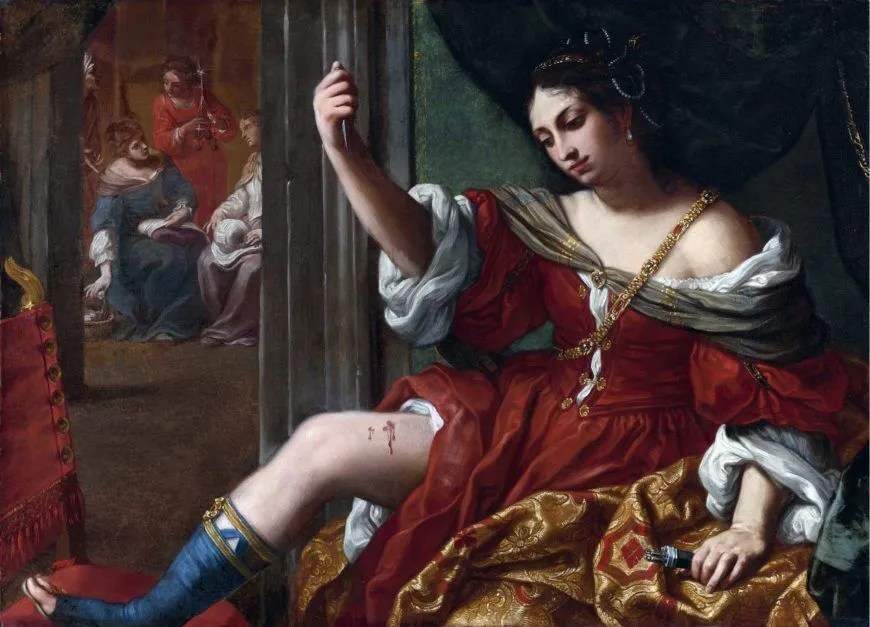
—It’s Portia Wounding Her Thigh.

—It’s Wolfram Looking at His Wife Whom He Has Imprisoned with the Corpse of Her Lover.

Elisabetta Sirani, Portia Wounding her Thigh, 1664


37. “Letters to the Editore” (Guilty Pleasures, 1974)

A lively little gem from Barthelme’s mid-seventies “non-fiction” collection Guilty Pleasures. Its inclusion seems to show an editorial need to pad out Forty Stories with more hits than the old boy had strung together by ’87. Anyway. “Letters to the Editore” is a fantastic send-up of small aesthetic aggressions writ large in the slim pages of little magazines. The ostensible subject is a dust-up surrounding an exhibition of so-called “asterisk” paintings by an American in a European gallery—but the real subject is language itself:

The Editor of Shock Art has hardly to say that the amazing fecundity of the LeDuff-Galerie Z controversy during the past five numbers has enflamed both shores of the Atlantic, at intense length. We did not think anyone would care, but apparently, a harsh spot has been touched. It is a terrible trouble to publish an international art-journal in two languages simultaneously, and the opportunities for dissonance have not been missed.

Barthelme’s comedic control of voices here is what makes this “story” an early (which is to say, late) standout in Forty Stories. It is the “opportunities for dissonance” that our author is most interested in and attuned to.

36. “Construction” (first published in The New Yorker, 21 April 1985)

“Construction” is the non-story of a writer flying out West to complete the “relatively important matter of business which had taken me to Los Angeles, something to do with a contract, a noxious contract, which I signed.” The documents he signs are “reproduced on onionskin, which does not feel happy in the hand.” This is one of two decent verbal flares in “Construction”; the other is an extended episode (as verbal flare-ups go) in which we find our Writer-Hero up against the wall of absurdity:

The flight back from Los Angeles was without event, very calm and smooth in the night. I had a cup of hot chicken noodle soup which the flight attendant was kind enough to prepare for me; I handed her the can of chicken noodle soup and she (I suppose, I don’t know the details) heated it in her microwave oven and then brought me the cup of hot chicken noodle soup which I had handed her in canned form, also a number of drinks which helped make the calm, smooth flight more so. The plane was half empty, there had been a half-hour delay in getting off the ground which I spent marveling at a sentence in a magazine, the sentence reading as follows: “[Name of film] explores the issues of love and sex without ever being chaste.” I marveled over this for the full half-hour we sat on the ground waiting for clearance on my return from Los Angeles, thinking of adequate responses, such as “Well we avoided that at least,” but no response I could conjure up was equal to or could be equal to the original text which I tore out of the magazine and folded and placed, folded, in my jacket pocket for further consideration at some time in the future when I might need a giggle.

Barthelme’s stand-in confesses here to what we’ve always known: He’s a scissors-and-paste man, a night ripper with a good ear, a good eye, but mostly one of us, a guy who needs a good giggle.

Riff on some books I’m reading, have read, and should really review

Hurricane Milton passed far enough south last night to leave our city relatively untroubled. There were power outages here but not the expected flooding. Most of my anxiety was focused on my family in the Tampa Bay area, all of whom are safe; we’re just not sure about the material conditions of the things they left behind.

Milton seemed to suck the summer air out of Northeast Florida; when I got out of bed and went outside to investigate the loud THUNK that woke me up at four a.m., I was shocked at how cold the air felt. It was only about 66°, but all the humidity seemed gone, even in the cold sprinkling rain. (The THUNK was our portable basketball hoop toppling over.)

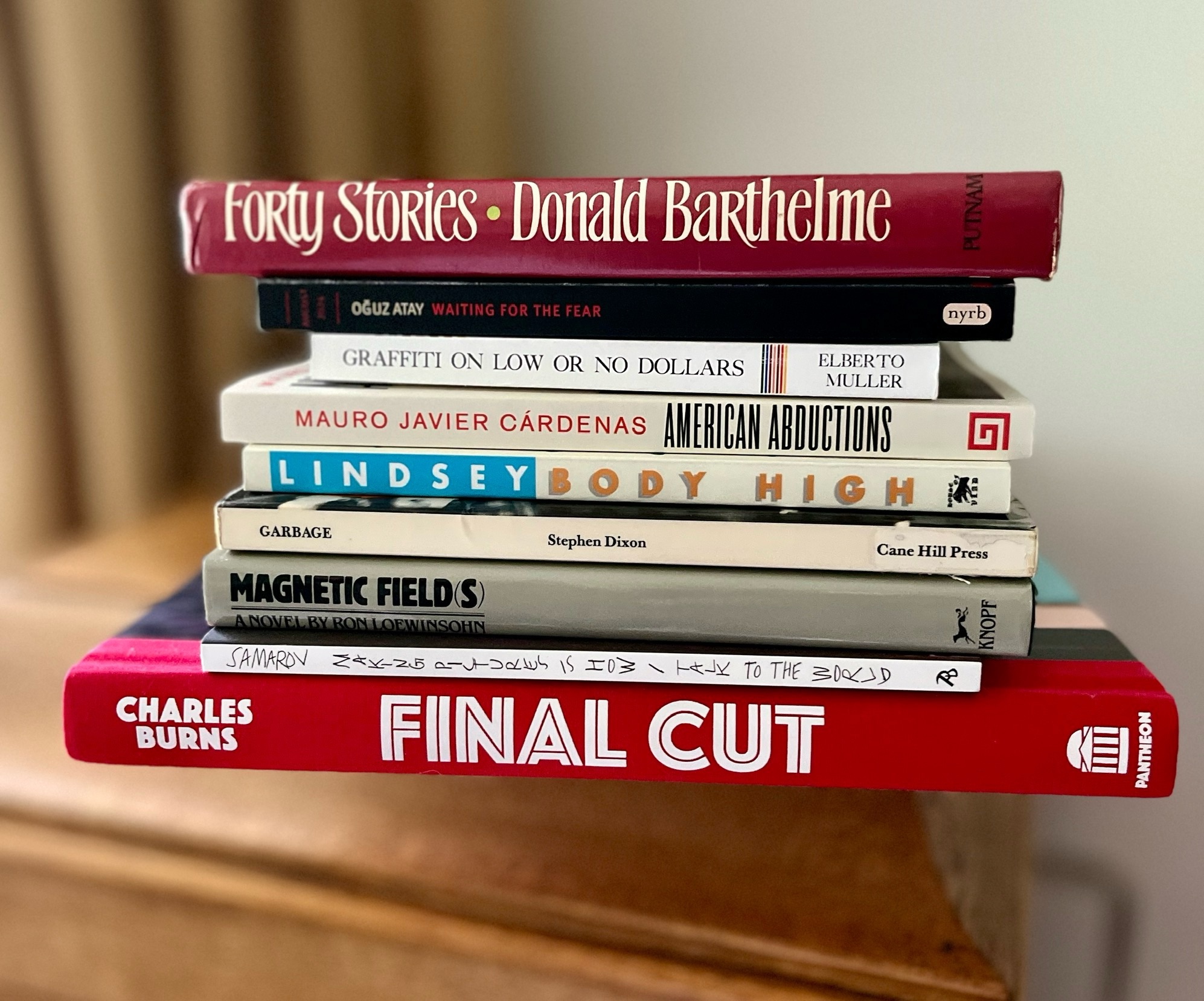
I thought I might try to knock out a review or a write-up of one of the many books I’ve finished that have stacked up as the summer has slowly transitioned to autumn. College classes have been canceled through to Tuesday. I have, ostensibly a “free” week; maybe some words, harder to cobble together for me these days, would come together, no? For the past few years I’ve focused more on reading literature with the attempt to suspend analysis in favor of, like, simply enjoying it. I realized I’d gotten into the habit of reading everything through the lens of this blog: What was I going to say about the book after reading it? I’ve been happier and read more sense freeing myself from the notion that I need to write about every fucking book I read. But the good books stack up (quite literally in a little place I have for such books); I find myself simply wanting to recommend, at some level, however facile, some of the stuff I’ve read. So forgive this lazy post, organized around a picture of a stack of books. From the top down:

Forty Stories, Donald Barthelme

A few years ago, I read Donald Barthelme’s collection Sixty Stories in reverse order. A few days ago, a commenter left me a short message on the final installment of that series of blogs: “Now do Forty Stories.” I think I have agreed–over the past week I’ve read stories forty through thirty-five in the collection. More to come.

Waiting for the Fear, Oğuz Atay; translation by Ralph Hubbell

A book of cramped, anxious stories. Atay, via Hubbell’s sticky translation, creates little worlds that seem a few reverberations off from reality. These are the kind of stories that one enjoys being allowed to leave, even if the protagonists are doomed to remain in the text (this is a compliment). Standouts include “Man in a White Overcoat,” “The Forgotten,” and “Letter to My Father.”

Graffiti on Low or No Dollars, Elberto Muller

Subtitled An Alternative Guide to Aesthetics and Grifting throughout the United States and Canada, Elberto Muller unfolds as a series of not-that-loosely connected vignettes, sketches, and fully-developed stories, each titled after the state or promise of their setting. The main character seems a loose approximation of Muller himself, a bohemian hobo hopping freights, scoring drugs, and working odd jobs—but mostly interacting with people. It kinda recalls Fuckhead at the end of Denis Johnson’s Jesus’ Son (a book Graffiti spiritually resembles) praising “All these weirdos, and me getting a little better every day right in the midst of them.” Muller’s storytelling chops are excellent—he’s economical, dry, sometimes sour, and most of all a gifted imagist.

American Abductions, Mauro Javier Cárdenas

If I were to tell you that Mauro Javier Cárdenas’s third novel is about Latin American families being separated by racist, government-mandated (and wholly fascist, really) mass deportations, you might think American Abductions is a dour, solemn read. And yes, Cárdenas conjures a horrifying dystopian surveillance in this novel, and yes, things are grim, but his labyrinthine layering of consciousnesses adds up to something more than just the novel’s horrific premise on its own. Like Bernhard, Krasznahorkao, and Sebald, Cárdenas uses the long sentence to great effect. Each chapter of American Abductions is a wieldy comma splice that terminates only when his chapter concludes—only each chapter sails into the next, or layers on it, really. It’s fugue-like, dreamlike, sometimes nightmarish. It’s also very funny. But most of all, it’s a fascinating exercise in consciousness and language—an attempt, perhaps, to borrow a phrase from one of its many characters, to make a grand “statement of missingnessness.”

Body High, Jon Lindsey

I liked Jon Lindsey’s debut Body High, a brief, even breezy drug novel that tries to do a bit too much too quickly, but is often very funny, gross, and abject. The narrator, who telegraphs his thoughts in short, clipped sentences (or fragments cobbled together) is a fuck-up whose main income derives from submitting to medical experiments. He dreams of scripting professional wrestling storylines though, perhaps one involving his almost-best friend/dealer/protector/enabler. When his underage-aunt shows up in his life, activating odd lusts, things get even more fucked up. Body High is at its best when it’s at its grimiest, and while it’s grimy, I wish it were grimier still.

Garbage, Stephen Dixon

I don’t know if Dixon’s Garbage is the best novel I’ve read so far this year, but it’s certainly the one that has most wrapped itself up in my brain pan, in my ear, throbbed a little behind my temple. The novel’s opening line sounds like an uninspired set up for a joke: “Two men come in and sit at the bar.” Everything that unfolds after is a brutal punchline, reminiscent of the Book of Job or pretty much any of Kafka’s major works. These two men come into Shaney’s bar—this is, or at least seems to be, NYC in the gritty seventies—and try to shake him down to switch up garbage collection services. A man of principle, Shaney rejects their “offer,” setting off an escalating nightmare, a world of shit, or, really, a world of garbage. I don’t think typing this description out does any justice to how engrossing and strange (and, strangely normalGarbage is. Dixon’s control of Shaney’s voice is precise and so utterly real that the effect is frankly cinematic, even though there are no spectacular pyrotechnics going on; hell, at times Dixon’s Shaney gives us only the barest visual details to a scene, and yet the book still throbs with uncanny lifeforce. I could’ve kept reading and reading and reading this short novel; it’s final line serves as the real ecstatic punchline. Fantastic stuff.

Magnetic Field(s), Ron Loewinsohn

I ate up Loewinshohn’s Magnetic Field(s) over a weekend. It’s a hypnotic triptych, a fugue, really, with phrases sliding across and through sections. We meet first a burglar breaking into a family’s home and learn that “Killing the animals was the hard”; then a composer, working with a filmmaker; then finally a novelist. Magnetic Field(s) posits crime and art as overlapping intimacies, and extends these intimacies through imagining another life as a taboo, too-intimate trespass.

Making Pictures Is How I Talk to the World, Dmitry Samarov

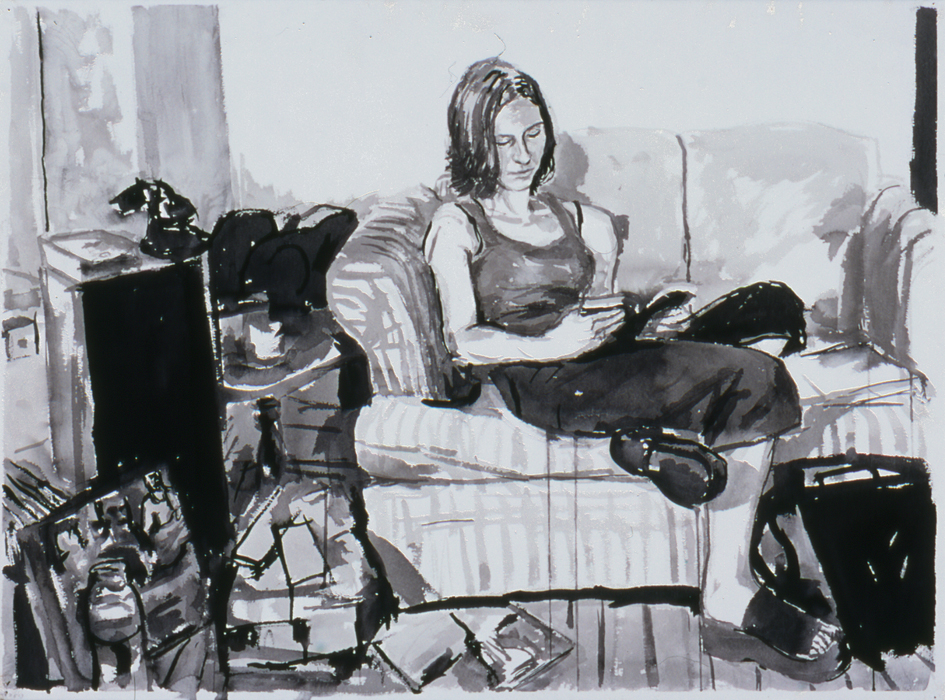
Making Pictures spans four decades of Samarov’s artistic career. Printed on high-quality color pages, the collection is thematically organized, showcasing Samarov’s different styles and genres. There are sketches, ink drawings, oils, charcoals, gouache, mixed media and more—but what most comes through is an intense narrativity. Samarov’s art is similar to his writing; there isn’t adornment so much as perspective. We get in Making Pictures a world of bars and coffee shops, cheap eateries and indie clubs. Samarov depicts his city Chicago with a thickness of life that is better seen than written about. Some of my favorite works include interiors of kitchens, portraits of women reading, and scribbly but energetic sketches of indie bands playing live. What I most appreciate about this collection though is that it showcases how outside of the so-called “art world” Samarov’s work is–and yet this is hardly the work of a so-called “outsider” artist. Samarov trained at the School of the Art Institute of Chicago, and yet through his career he has remained an independent, “not associated with an institution such as an art gallery, college, or museum,” as he writes in his book.

Beth, Dmitry Samarov, 2000

Final Cut, Charles Burns

I don’t know anything about Charles Burns’s upbringing, his youth, his personal life, and I don’t mean to speculate. However, it’s impossible not to approach Final Cut without pointing out that for several decades he’s been telling the same story over and over again—a sensitive, odd, artistic boy who is out of place even among others out of place. This is in no way a complaint—he tells the story with difference each time. And with more coherence. Final Cut is beautiful and sad and also weird enough to fit in neatly to Burns’s oeuvre. But it’s also more mature, a mature reflection on youth really, intense, still, but without the claustrophobia of Black Hole or the mania of his Last Look trilogy. There’s something melancholy here. It’s fitting that Burns employs the heartbreaking 1971 film The Last Picture Show as a significant motif in Final Cut.

Image from Final Cut, Charles Burns, 2024

Read “Among the Beanwoods,” a short story by Donald Barthelme

“Among the Beanwoods”

by

Donald Barthelme


The already-beautiful do not, as a rule, run.

I am, at the moment, seated.

Ireland and Scotland are remote; Wales fares little better. Here in this forest of tall, white beanwoods, the already-beautiful saunter. Some of them carry plump red hams, already cooked.

I am, at the moment, seated. On a chair in the forest, listening. I will rise, shortly, to hold the ladder for you. Every beanwood will have its chandelier scattering light on my exercise machine, which is made of cane. The beans you have glued together are as nothing to the difficulty of working with cane, at night, in the dark, in the wind, watched by insects. I will not allow my exercise machine to be photographed. It sings, as I exercise, like an unaccompanied cello. I will not allow my exercise machine to be recorded.

Tombs are scattered through the beanwoods, made of perfectly ordinary gray stone. All are empty. The chandeliers, at night, scatter light over the tombs, little houses in which I sleep, from time to time, with the already-beautiful, and they with me. We call to each other, at night, saying “Hello, hello” and “Who, who, who?” That one has her hips exposed, for rubbing.

Holding the ladder, I watch you glue additional chandeliers to appropriate limbs. You are tiring, you have worked very hard. Iced beanwater will refresh you, and these wallets made of ham. I have been meaning to speak to you. I have set bronze statues of alert, crouching Indian boys around the periphery of the forest, for ornamentation. Each alert, crouching Indian boy is accompanied by a large, bronze, wolf-like dog, finely polished.

I have been meaning to speak to you. I have many pages of notes. I have a note about cameras, a note about recorders, a note about steel wool, a note about the invitations. On weightier matters I will speak without notes, freely and passionately, as if inspired, at night, in a rage, slapping myself, great tremendous slaps to the brow which will fell me to the earth. The already-beautiful will stand and watch, in a circle, cradling, each, an animal in mothering arms — green monkey, meadow mouse, tucotuco. That one has her hips exposed, for study. I make careful notes. You snatch the notebook from my hands.

The pockets of your smock swinging heavily with the lights of chandeliers. Your light-by-light, bean-by-bean career.

I am, at this time, prepared to dance. The already-beautiful have, historically, danced. The music made by my exercise machine is, we agree, danceable. The women partner themselves with large bronze hares, which have been cast in the attitudes of dancers. The beans you have glued together are as nothing to the difficulty of casting hares in the attitudes of dancers, at night, in the foundry, the sweat, the glare. Thieves have been invited to dinner, along with the deans of the great cathedrals. The thieves will rest upon the bosoms of the deans, at dinner, among the beanwoods. Soft benedictions will ensue.

I am privileged, privileged, to be able to hold your ladder.

Pillows are placed in the tombs, together with pot holders and dust cloths. The already-beautiful strut. England is far away, and France is scarcely nearer. I am, for the time being, reclining. In a warm tomb, with Concordia, who is beautiful. Mad with bean wine she has caught me by the belt buckle and demanded that I hear her times tables. Her voice enchants me. Tirelessly you glue. The forest will soon exist on some maps, a tribute to the quickness of the world’s cartographers. This life is better than any life I have lived, previously. I order more smoke, which is delivered in heavy glass demi-johns, twelve to a crate. Beautiful hips abound, bloom. Your sudden movement toward red kidney beans has proved, in the event, masterly. Everywhere we see formal gowns of red kidney beans, which have been polished to the fierceness of carnelians. No ham hash does not contain two beans, polished to the fierceness of carnelians.

Spain is distant, Portugal wrapped in an impenetrable haze. These noble beans, glued by you, are mine. Thousand-pound sacks are off-loaded at the quai, against our future needs. The thieves are willing workers, the deans, straw bosses of extraordinary tact. I polish hares, dogs, Indian boys in the chill of early morning. Your weather reports have been splendid. The fall of figs you predicted did in fact occur. There is nothing like ham in fig sauce, or almost nothing. I am, at the moment, feeling very jolly. Hey hey, I say. It is remarkable how well human affairs can be managed, with care.

Mass-market Monday | Donald Barthelme’s Unspeakable Practices, Unspeakable Acts

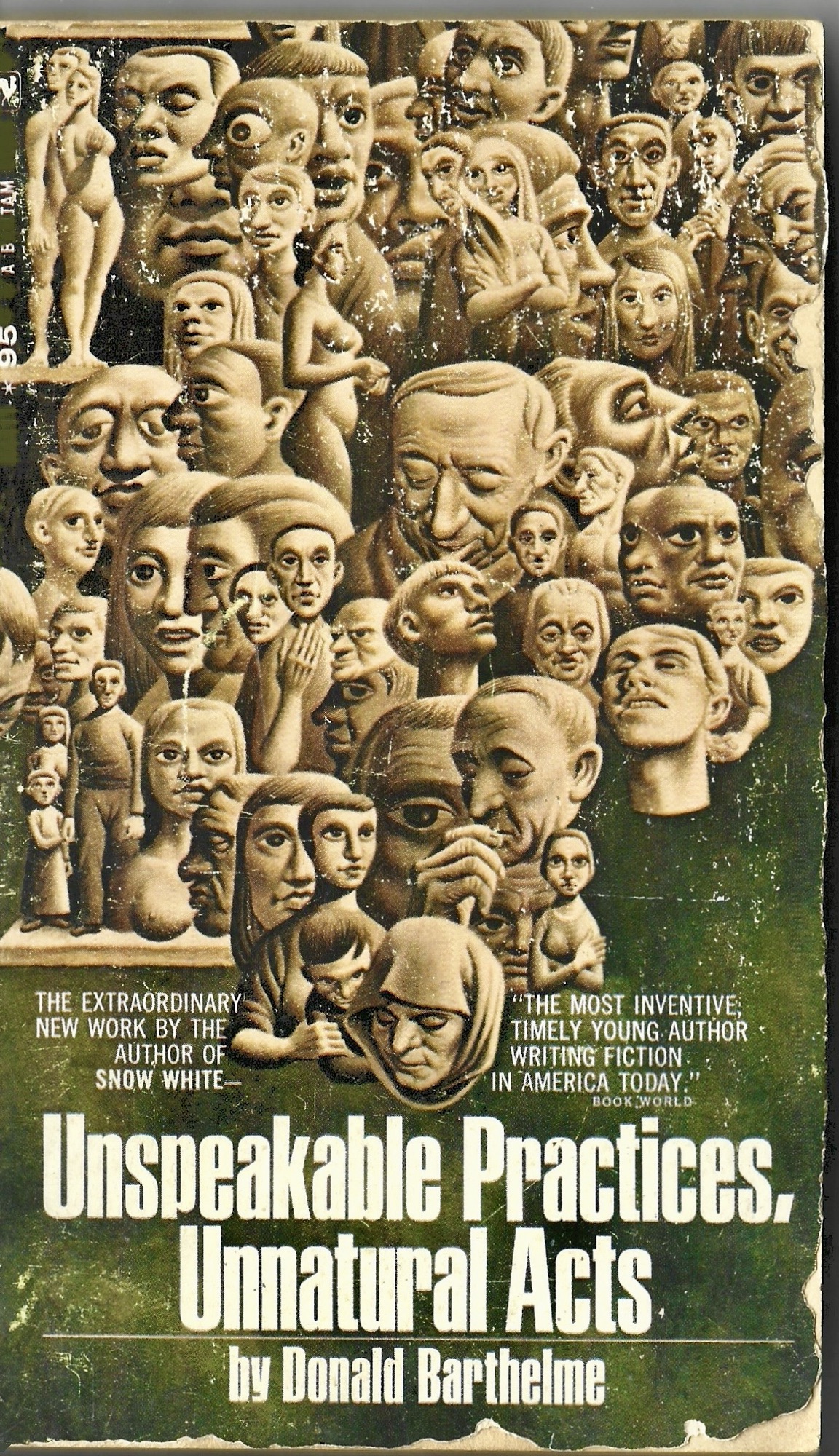
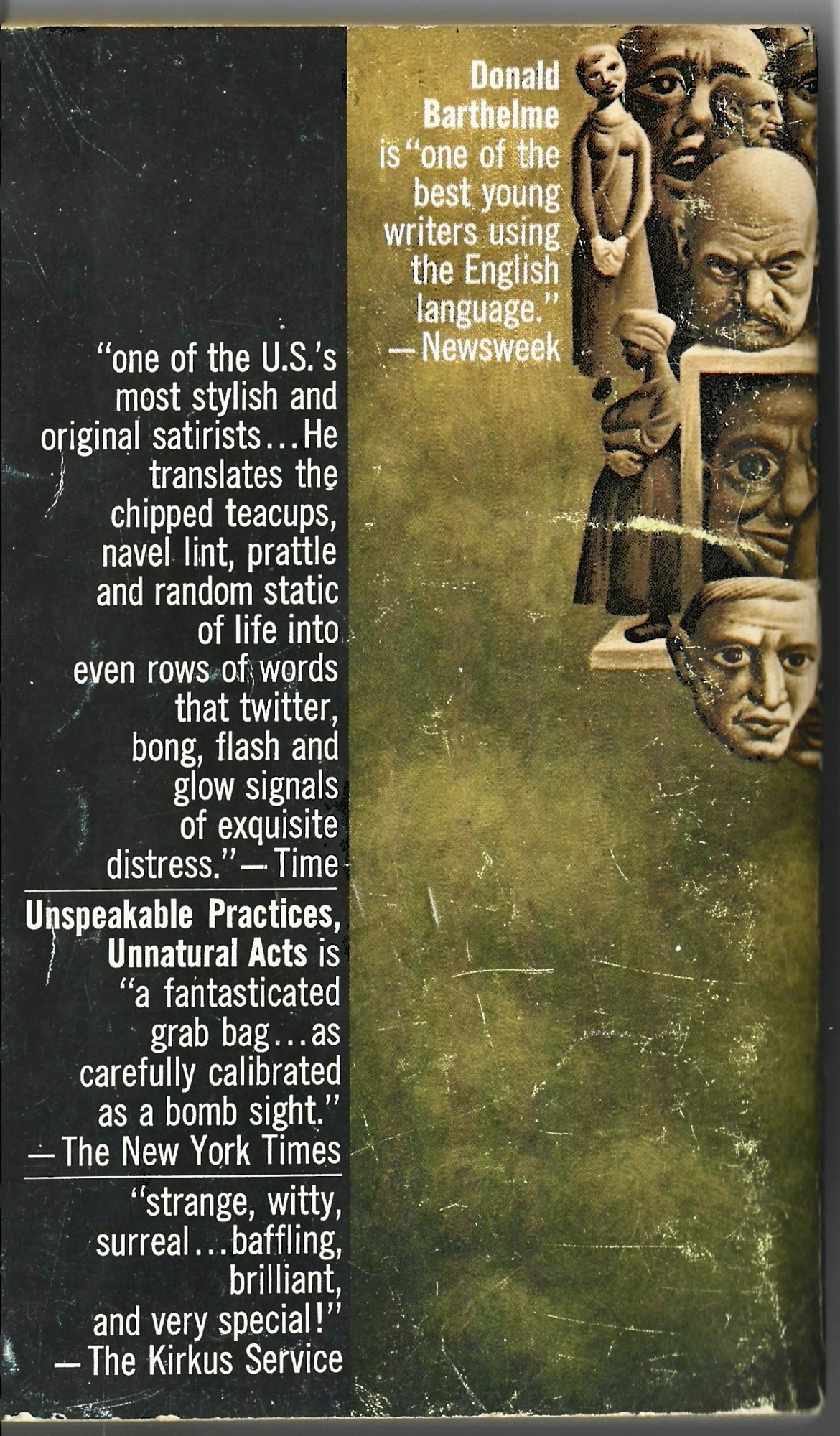
Unspeakable Practices, Unnatural Acts, Donald Barthelme. Bantam Books, first edition, first printing (1969). No cover artist credited. 165 pages.

While there is no artist credited for the frenetic, Boschian cover of this Bantam edition of Unspeakable Practces, it is likely the work of Steele Savage — compare it in particular with Savage’s cover for Ballantine’s 1969 edition of John Brunner’s novel Stand on Zanzibar.

Barthelme’s second collection of short stories (most of which first ran in The New Yorker) is larded with some of the postmodernist’s greatest hits: “The Indian Uprising,” “The Balloon,” “Robert Kennedy Saved from Drowning, “Game,” “See the Moon?”….It would be an ideal starting point for Barthelme if Sixty Stories and Forty Stories didn’t already exist. I wrote about many of the stories collected in Unspeakable Practices, Unnatural Acts a few years ago when I revisited Sixty Stories. 

And if you want to get into Barthelme but aren’t sure of where to start, you could do far worse than to hear him read his classic, “The Indian Uprising”:

John Barth’s brief description of Donald Barthelme’s so-called postmodernist dinners

1fa8c7cbf8dc977653f7750905725da4
Photograph from “The Postmodernists Dinner,” 1983 by Jill Krementz (b. 1940)

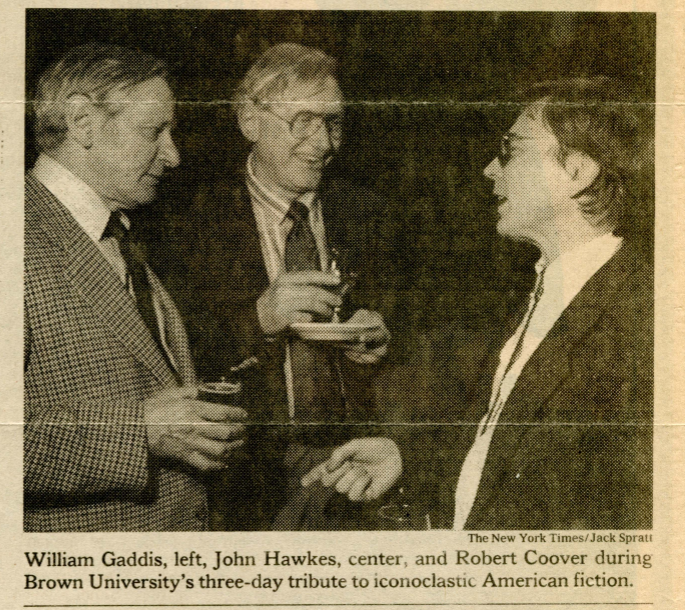
In John Barth’s 1989 New York Times eulogy for Donald Barthelme, Barth gives a brief description of two so-called postmodernist dinners, both of which I’ve written on this blog before.

…though [Barthelme] tsked at the critical tendency to group certain writers against certain others ”as if we were football teams” – praising these as the true ”post-contemporaries” or whatever, and consigning those to some outer darkness of the passe – he freely acknowledged his admiration for such of his ”teammates,” in those critics’ view, as Robert Coover, Stanley Elkin, William Gaddis, William Gass, John Hawkes, Thomas Pynchon and Kurt Vonnegut, among others. A few springs ago, he and his wife, Marion, presided over a memorable Greenwich Village dinner party for most of these and their companions (together with his agent, Lynn Nesbit, whom Donald called ”the mother of postmodernism”). In 1988, on the occasion of John Hawkes’s academic retirement, Robert Coover impresarioed a more formal reunion of that team, complete with readings and symposia, at Brown University. Donald’s throat cancer had by then already announced itself – another, elsewhere, would be the death of him – but he gave one more of his perfectly antitheatrical virtuoso readings.

More on the first dinner here.

More on the second dinner here.

You don’t consciously see yourself as John Barth, the postmodernist?

Q: You don’t consciously see yourself as John Barth, the postmodernist?

JOHN BARTH: Oh no, no, and the term now has become so stretched out of shape. I did a good deal of reading on the subject for a postmodernist conference in Stuttgart back in 1991, and I think I had a fairly solid grasp of the term then. At the time, there seemed to be a general agreement that, whatever postmodernism was, it was made in America and studied in Europe. At my end, I would say the definitions advanced by such European intellectuals as Jean Baudrillard and Jean- Francois Lyotard have only a kind of a grand overlap with what I think I mean when I am talking about it.g about it. They apply the term to disciplines and fields other than art-their thoughts about postmodern science, for instance, are very interesting-but when the subject is postmodern American fiction, things get murkier. So often we’re told, “You know, it’s Coover, Pynchon, Barth, and Barthelme,” but that’s just pointing at writers. Perhaps that’s all you can do. It led me to say once, “If postmodern is what I am, then postmodernism is whatever I do.” You get a bit wary about these terms. When The Floating Opera came out, Leslie Fiedler called it “provincial American existentialism.” With End of the Road, I was most often described as a black humorist, and with The Sot-Weed Factor, Giles Goat-Boy, and Lost in the Funhouse, I became a fabulist. Bill Gass resists the term “postmodernist,” and I understand his resistance. But we need common words to talk about anything. “Impressionism” is a very useful term which helps describe the achievements of a number of important artists. But when you begin to look at individual impressionist painters, the term becomes less meaningful. You find yourself contemplating a group of artists who probably have as many differences as similarities. I recall a wonderful old philosophy professor of mine who used to talk about the difference between the synthetic temperament and the analytical temperament. With the synthetic, the similarities between things are more impressive than the differences; with the analytical, the differences are more impressive than the similarities. We need them both; you can’t do without either. In that context, once you’ve come up with some criteria that describe what has been going on in a certain type of fiction composed during the sixties, seventies, eighties, and nineties, I think the differences among Donald Barthelme, Angela Carter, and Italo Calvino are probably more interesting than the similarities.

From an interview with Barth conducted by Charlie Reilly in the journal Contemporary Literature, Vol. 41, No. 4 (Winter, 2000).

“The Temptation of St. Anthony,” a short story by Donald Barthelme

“The Temptation of St. Anthony”

by

Donald Barthelme


YES, THE saint was underrated quite a bit, then, mostly by people who didn’t like things that were ineffable. I think that’s quite understandable—that kind of thing can be extremely irritating, to some people. After all, everything is hard enough without having to deal with something that is not tangible and clear. The higher orders of abstraction are just a nuisance, to some people, although to others, of course, they are quite interesting. I would say that on the whole, people who didn’t like this kind of idea, or who refused to think about it, were in the majority. And some were actually angry at the idea of sainthood—not at the saint himself, whom everyone liked, more or less, except for a few, but about the idea he represented, especially since it was not in a book or somewhere, but actually present, in the community. Of course some people went around saying that he “thought he was better than everybody else,” and you had to take these people aside and tell them that they had misperceived the problem, that it wasn’t a matter of simple conceit, with which we are all familiar, but rather something pure and mystical, from the realm of the extraordinary, as it were; unearthly. But a lot of people don’t like things that are unearthly, the things of this earth are good enough for them, and they don’t mind telling you so. “If he’d just go out and get a job, like everybody else, then he could be saintly all day long, if he wanted to”—that was a common theme. There is a sort of hatred going around for people who have lifted their sights above the common run. Probably it has always been this way.

For this reason, in any case, people were always trying to see the inside of the saint’s apartment, to find out if strange practices were being practiced there, or if you could discern, from the arrangement of the furniture and so on, if any had been, lately. They would ring the bell and pretend to be in the wrong apartment, these people, but St. Anthony would let them come in anyhow, even though he knew very well what they were thinking. They would stand around, perhaps a husband-and-wife team, and stare at the rug, which was ordinary beige wall-to-wall carpet from Kaufman’s, and then at the coffee table and so on, they would sort of slide into the kitchen to see what he had been eating, if anything. They were always surprised to see that he ate more or less normal foods, perhaps a little heavy on the fried foods. I guess they expected roots and grasses. And of course there was a big unhealthy interest in the bedroom, the door to which was usually kept closed. People seemed to think he should, in pursuit of whatever higher goals he had in mind, sleep on the floor; when they discovered there was an ordinary bed in there, with a brown bedspread, they were slightly shocked. By now St. Anthony had made a cup of coffee for them, and told them to sit down and take the weight off their feet, and asked them about their work and if they had any children and so forth: they went away thinking, He’s just like anybody else. That was, I think, the way he wanted to present himself, at that time.

Later, after it was all over, he moved back out to the desert. Continue reading ““The Temptation of St. Anthony,” a short story by Donald Barthelme”

Blog about some recent books acquired, other stuff

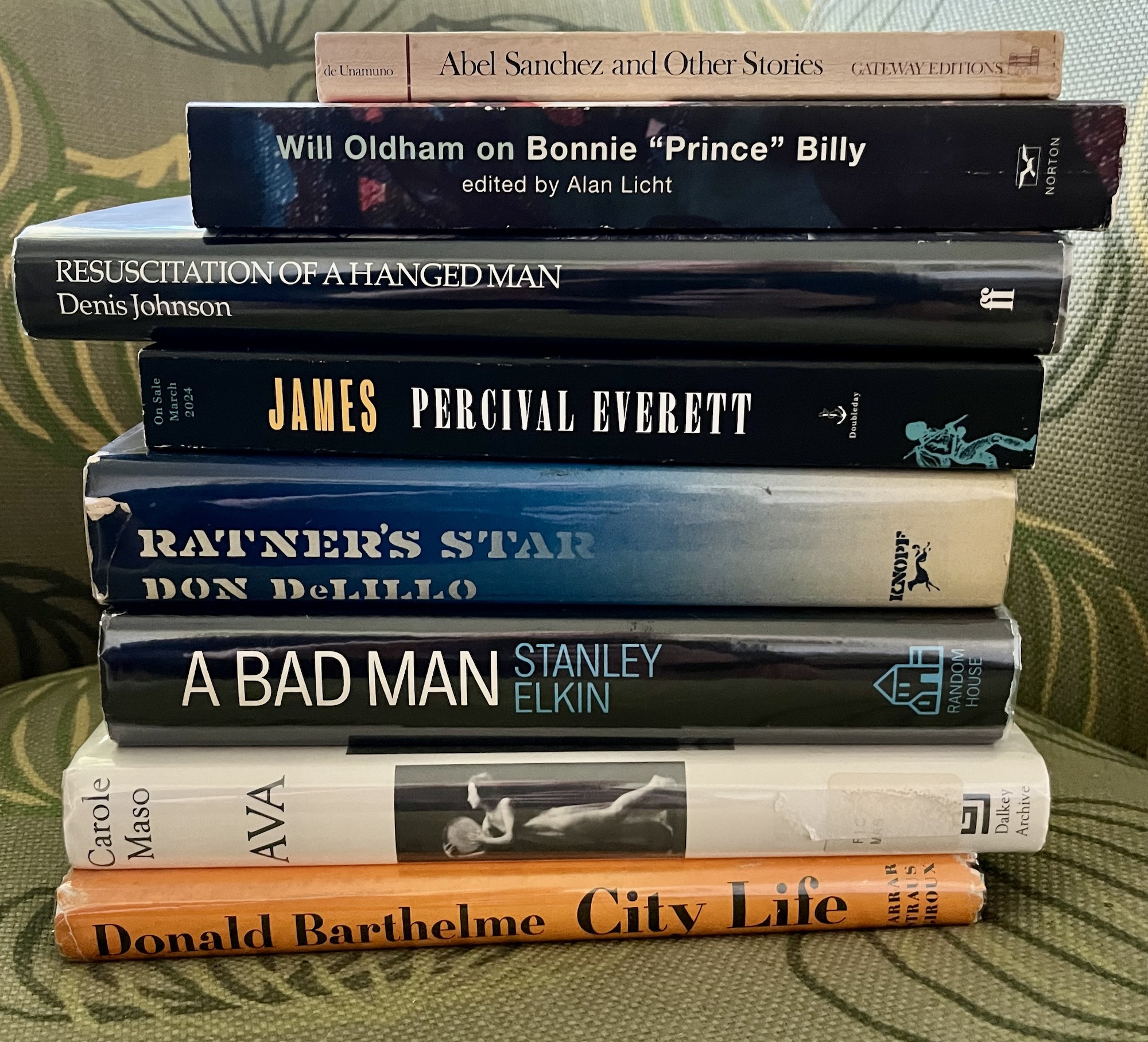
I read Will Oldham’s book On Bonnie ‘Prince’ Billy almost a decade and it therefore doesn’t belong in a stack of recent acquisitions, but it’s there—I pulled it off the shelf last week and thumbed through it in anticipation of seeing Oldham play this past Thursday. I even brought the book to the venue, thinking maybe I’d ask him to sign it. But I left it in the car and simply enjoyed Oldham and his pal run through a set of covers and originals. His voice is more resonant, richer, bolder than the last time I saw him live, and even if I didn’t know half of the songs, I enjoyed the gentle chill music on a cold Florida Thursday night. (I suspect Oldham’s short “tour” of Florida is an excuse to get out of the midwestern cold—although he complained it was “fuckin’ cold” here.)

Other books in the stack above are a composite of three or maybe four book store visits. The most memorable visit was to Aeon Bookstore in the Lower East Side of NYC.

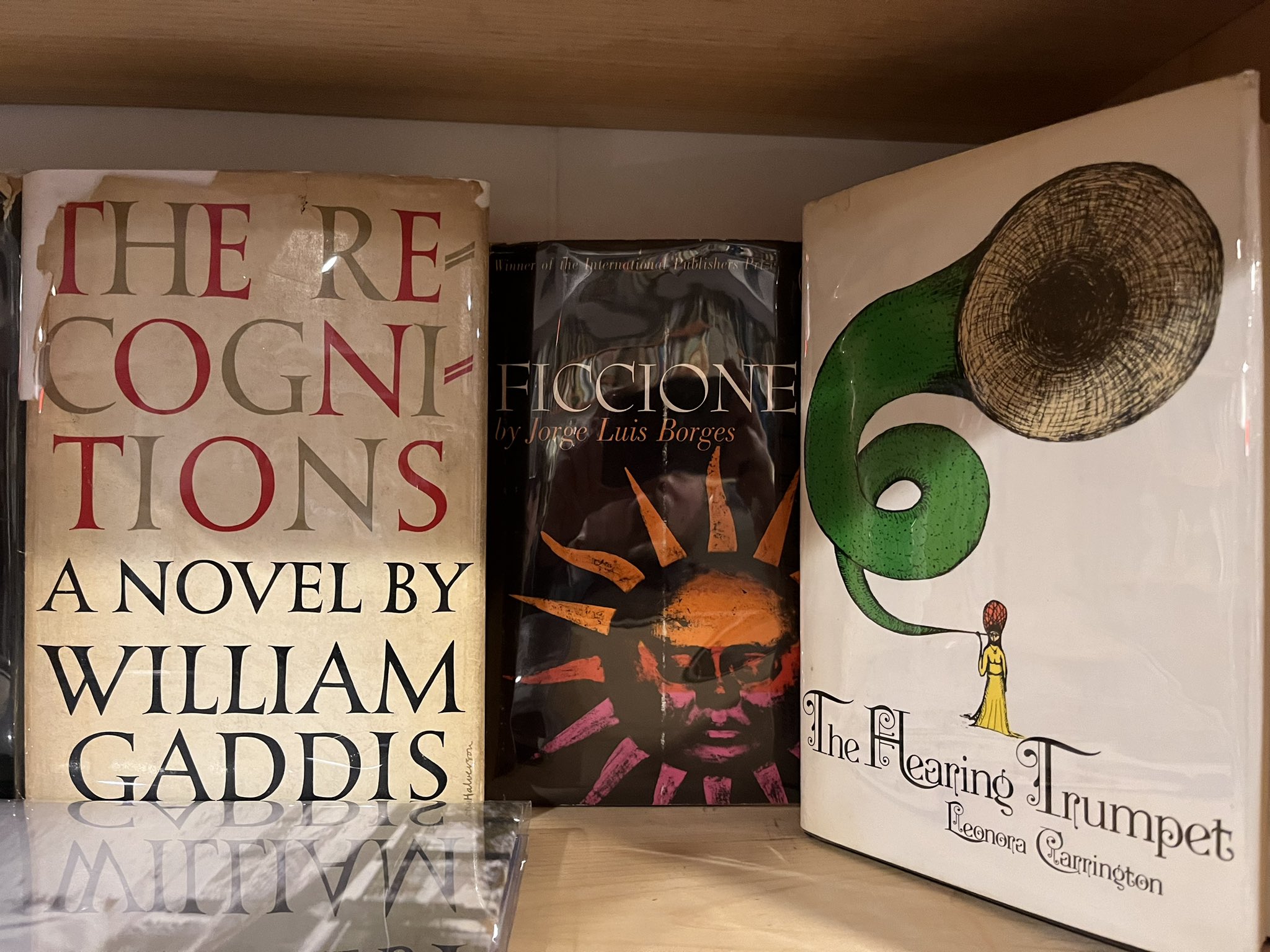
Aeon is a small, cozy shop, well-curated with art, philosophy, anthropology, and literature books, as well as an excellent selection of jazz records. The clerk let me handle some first editions of Williams Burroughs and Gaddis, as well as Ishmael Reed and others.

I resisted The Recognitions and The Hearing Trumpet and picked up first editions of Donald Barthelme’s City Life and Don DeLillo’s Ratner’s Star.

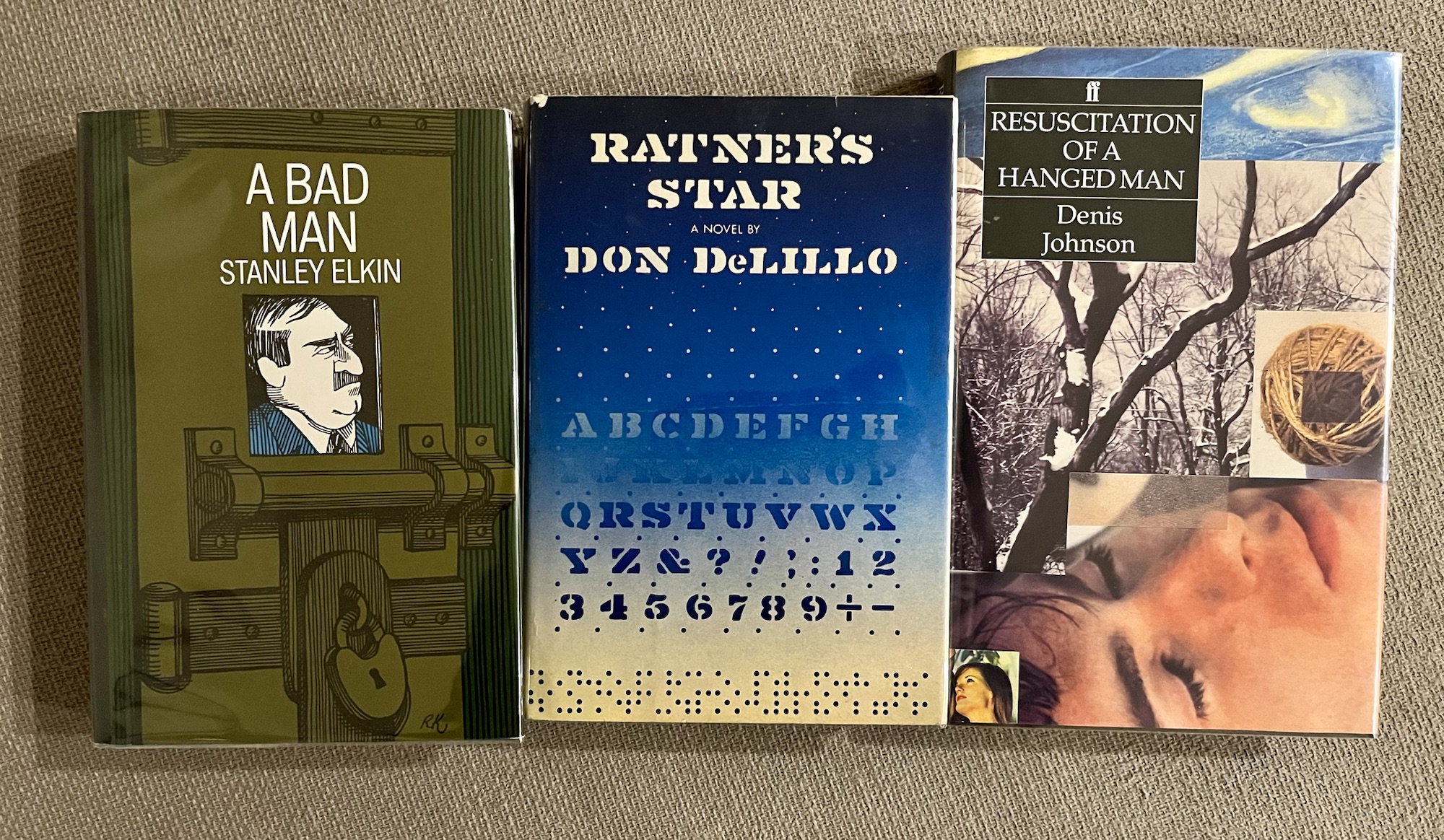
Over two or possibly three visits to my local bookshop over the last month, I picked up copies of Stanley Elkin’s A Bad Man, Denis Johnson’s Resuscitation of a Hanged Man, and Carole Maso’s Ava. I also picked up Anthony Kerrigan’s translation of Miguel de Unamuno stories, Abel Sanchez and Other Stories.

I also snagged an advance copy of Percival Everett’s James. Blurb:

When the enslaved Jim overhears that he is about to be sold to a man in New Orleans, separated from his wife and daughter forever, he decides to hide on nearby Jackson Island until he can formulate a plan. Meanwhile, Huck Finn has faked his own death to escape his violent father, recently returned to town. As all readers of American literature know, thus begins the dangerous and transcendent journey by raft down the Mississippi River toward the elusive and too-often-unreliable promise of the Free States and beyond.

While many narrative set pieces of Adventures of Huckleberry Finn remain in place (floods and storms, stumbling across both unexpected death and unexpected treasure in the myriad stopping points along the river’s banks, encountering the scam artists posing as the Duke and Dauphin…), Jim’s agency, intelligence and compassion are shown in a radically new light.