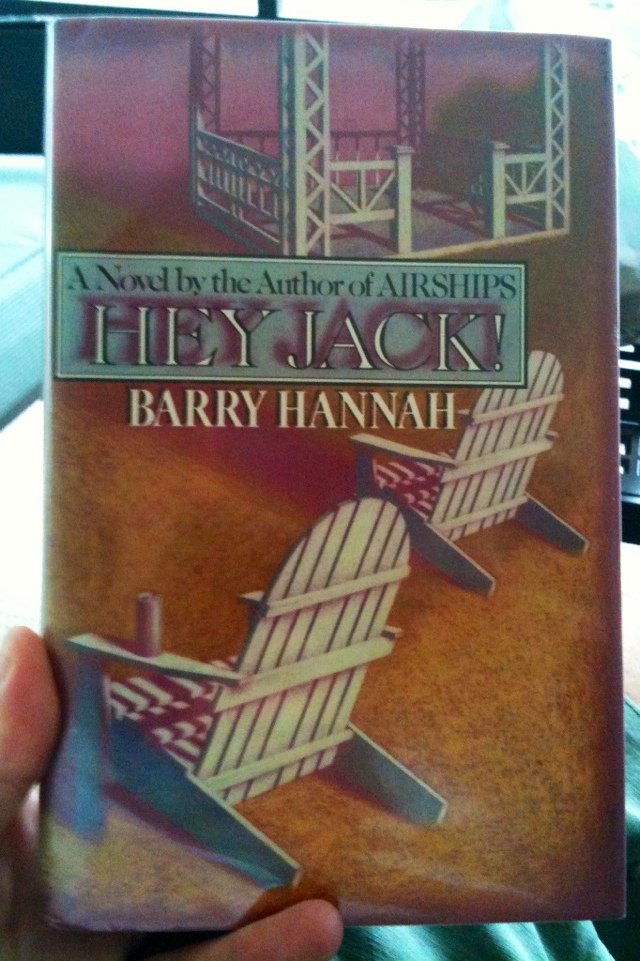
Barry Hannah’s Hey Jack! (Book Acquired, 3.23.2012; Or, Gee, Isn’t It Kinda Sad That This Ex-Library Book Was Checked Out Only Twice in 24 Years?)

20120324-143113.jpg

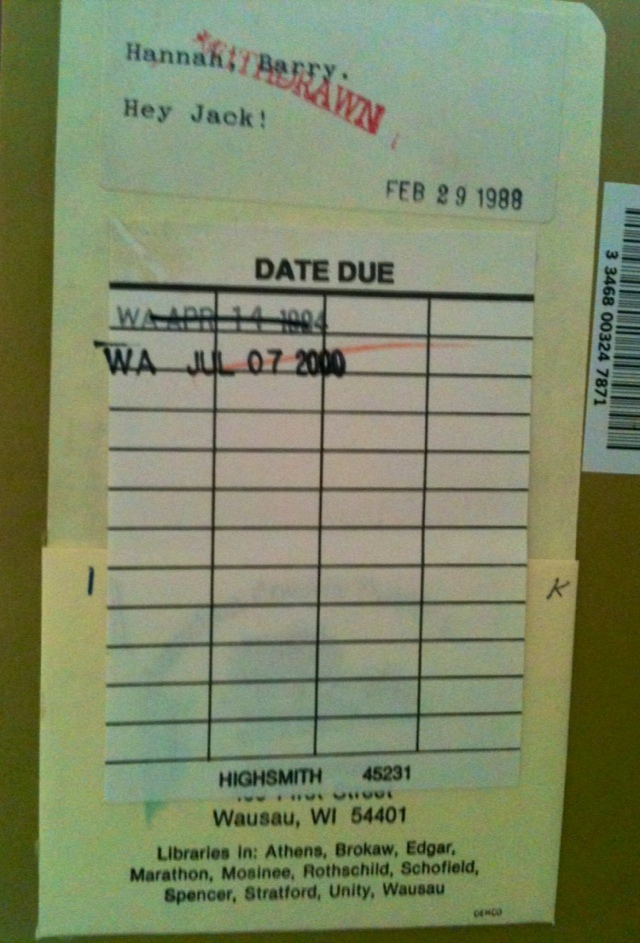
I bought Barry Hannah’s seventh book Hey Jack! over the internet after my favorite local bookstore told me it would be difficult or expensive for them to order. I bought a first edition hardback brokered by Amazon. It was an ex-library copy. It looks like no one ever read it, and it seems to have been checked out only twice in twenty-four years. A sad business.

I put some wear and tear on it today, reading it outside on my porch during a thunderstorm, using it as a beer coaster at one point, and then taking it into a salted bath where it got damp and curly. I read half of it. Hannah’s novel-in-vignettes is still ahead of its time. Who writes better sentences? (“Christ, the South has been pickled in the juice of its own image”).

20120324-143122.jpg

“Sources Agree Rock Swoon Has No Past” — Barry Hannah Short Story

“Sources Agree Rock Swoon Has No Past” by Barry Hannah. This short short was published in the June 2000 issue of Harper’s from a reading Hannah gave in 1986 at the Sigma Tao Delta Society at the University of Mississippi. The story appeared in Hannah’s 1988 novel Hey Jack!:

“Pa. Is it really true the old eat their young?”

Gives pause.

“Couldn’t rightly say, son. I’m a mid man. Feels like I’m walking on ice meself. Go on down to the barn, ask Grandpa.”

Grandpa’s down there in the back shadows, some loose bales around his old brogies. Seems to be humming and eating, pulling a nail out of a rotten piece of board with a pair of pliers.

“Is it true, Grandpa?”

“Wyoming’s not my home . . .”

“Yer nuts, Grandpa.”

Sings, “Ate ol’ Granny in a choo-choo car”

Kid goes to the hut to see Grandpa’s father. Withered beyond longevity, a tiny man in dwarf’s overalls, deeply addicted to codeine and Valium, fears colored people; occasionally makes scratching protests on his old violin, which has become too large for him. Every disease has had its success with him. Now he’s bare;u a scab demanding infrequent nutrients. Bald as a beige croquet ball, he rolls his own.

They’ve fixed him up a mike with a cord into an ancient Silvertone amplifying box. Even his snores can be heard, slightly, out in the yard.

“Double Gramps, is it true that the old eat their young?”

“God damn, I’m old!” blasts over the kid, feedback piercing too. The old man faints, recovers, goes into a codeine wither.

“But my question. Please, Double Gramps.”

Almost accidentally, the old man fits bow to fiddle and scrawls out the grand trio of “Stars and Stripes Forever.” Endlessly. It goes on the entire afternoon, amplifier picking up a prouder stroke here and there, screeching.

The kid grows up, a rock star, aging at twenty-three. He’s already eating the young by the thousands when the second though hits him.

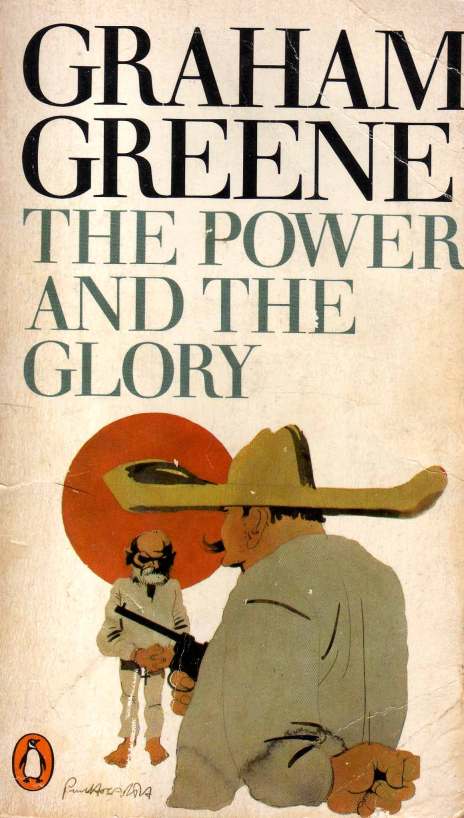
“The Priest Is Us”: The Power and The Glory, Graham Greene’s Adventure of Religion and Faith

The Gospels are powerful not simply because Christ performed miracles and taught kindness, strength, and humility. Humanity has long attributed to certain individuals impossible deeds, tremendous suffering, and inordinate wisdom. We survey the collective memory and search for meaning in the lives of renowned teachers so that they might serve as an example during our own unpredictable, harrowing journey. What separates the story of Jesus from the stories of other merely great people in history is the idea that God manifested itself to humans as a human: wracked with doubt, vulnerable to temptation, victim of unimaginable pain.  Although he taught that love is the first commandment, Christ was flailed, tortured, left to die on a cross between two thieves, all ostensibly for no benefit but our own.  Wasn’t it Borges who said that every story is either the Odyssey or the Crucifixion?  The stories we tell each other, in their reflection, become the same nothing cycle of words, told again and again, a record of our inadequacy and cowardice.

Graham Greene, in his short and powerful novel The Power and the Glory, considers the life and death of Jesus as he narrates the life of a man brought low by pride and circumstances. The last priest someplace in southwestern Mexico flees from the authorities.  His hunters seek to free the peasant farmers who populate the land from exploitation and superstition with their own imperfect liberation theologies: the abolition of superstition and private property; the self-sufficiency that follows honest labor.  The men in red shirts ride horses and believe in the impending, always near, revolution.  On the back of a mule, the father sneaks from town to town, trying to fulfill his duty, but without understanding the significance of the words that tumble clumsily from his mouth in Latin. He performs sacred rites in exchange for sanctuary until even a hiding spot is denied to him. The police have started to execute men and boys in villages who they believe have colluded to shelter this wayward man of God.

As the priest travels, he finds himself stripped not only of the vestments of his profession: his chalice, his incense, his robes, and his bible, but his own air of invincibility, privilege and comfort. Exposed, fearful, living in a state of mortal sin and unable to confess, this fallen man of God, like Christ himself, is destroyed.  The priest is, by his own admission, a bad one. He drinks heavily and thinks too much of his own comfort. Led to his profession not so much by attention to the divine will but by a desire for status and privilege, during his exile he recalls fondly dinners lavish dinners with wealthy members of his assembly and the gifts they gave him. While he may have seen that the most of his flock made a meager living on small farms after taxes and fees paid to local bosses, he never stopped to consider the meaning of his own observations, busying himself instead with ambitions for his own greater glory. He is, for the first half of the book, greedy, proud, and self-concerned.

But, as he eludes the authorities and traverses the country, he becomes, in Greene’s capable hands, a symbol of redemption and an affirmation of a full but unrealized life.  Words that lacked meaning help to ameliorate the strongest pain he has ever felt. He is jailed, extorted, and rejected by the people who love him the most, but in humiliation finds real faith.  Performing the sacred rites of his profession, he confronts the banality of evil and comes to finally realize the true power of the promise he brought to those who came to him:

He had an immense self-importance; he was unable to picture a world in which he was only a typical part — a world of treachery, violence, and lust in which his shame was altogether insignificant. How often the priest had heard the same confession — Man was so limited he hadn’t even the ingenuity to invent a new vice: the animals knew as much. It was for this world that Christ had did; the more evil you saw and heard about you, the greater glory lay around the death. It was too easy to die for what was good or beautiful, for home or children or a civilization — it needed a God to die for the half-hearted and the corrupt.

This is a book about religion and faith, but The Power and the Glory doesn’t require its reader to have an inclination towards either.  It is an adventure story, recounted in bold, confident sentences, about a normal man who fears that incorrect choices will cause him to suffer. This fear is real and it manifests itself in the priest’s moral and ethical dilemmas.  We are asked to ponder those things that lead from sadness to strength.  The priest is us: we see ourselves completely in him and give him our sympathy.

David Markson on Harold Bloom

From David Markson’s The Last Novel:

Where the synecdoche of tessera made a totality, however illusive, the metonymy of kenosis breaks this up into discontinuous fragments.

Somewhere declareth Harold Bloom.

It may be essential to Harold Bloom that his audience not know quite what he is talking about.

Commenteth Alfred Kazin — pointing out other immortal phrasings altogether.

Michel Houellebecq: “I Still Haven’t Made Up My Mind Whether Sex Is Good or Not”

Michel Houellebecq talks sex, frustration, and prostitution in his 2010 Paris Review interview:

INTERVIEWER

Of course, it was the numerous sex scenes that got you a lot of attention in the media.

HOUELLEBECQ

I’m not sure that there are such an unusual number of sex scenes in my novel.
I don’t think that’s what was shocking. What shocked people was that I
depicted sexual failure. I wrote about sexuality in a nonglorifying way. Most of all I described a basic reality: a person filled with sexual desire who can’t satisfy it. That’s what people don’t like to hear about. Sex is supposed to be positive. Showing frustrated sexual desire is obscene. But it’s also the truth. The real question is, Who is allowed to have sex? I don’t understand, for example, how teachers survive with all these alarming young girls. When women become sexual tourists, that is even more hidden, shameful, and taboo than when men do it. Just as, when a woman professor puts her hand on a student’s thigh, it’s even worse, even more unspeakable.

INTERVIEWER

A constant refrain in your novels is that sex and money are the dominant values of this world.

HOUELLEBECQ

It’s strange, I’m fifty years old and I still haven’t made up my mind whether sex is good or not. I have my doubts about money too. So it’s odd that I’m considered an ideological writer. It seems to me that I am mostly exposing my doubts. I do have certain convictions. For example, the fact that you can pay a girl, that I think is a good thing. Undeniably. An immense sign of progress.

INTERVIEWER

You mean prostitutes?

HOUELLEBECQ

Yes. I’m all for prostitution.

INTERVIEWER

Why?

HOUELLEBECQ

Because everybody wins. It doesn’t interest me personally, but I think it’s a good thing. A lot of British and Americans pay for it. They’re happy. The girls are happy. They make a lot of money.

INTERVIEWER

How do you know that the girls are happy?

HOUELLEBECQ

I talk to them. It’s very difficult because they don’t really speak English, but I talk to them.

INTERVIEWER

What about the more commonly held idea that these women are victims who are forced into these circumstances?

HOUELLEBECQ

It’s not true. Not in Thailand. It’s just stupid to have objections about it.

Book Shelves #10, 3.04.2012

20120304-125356.jpg

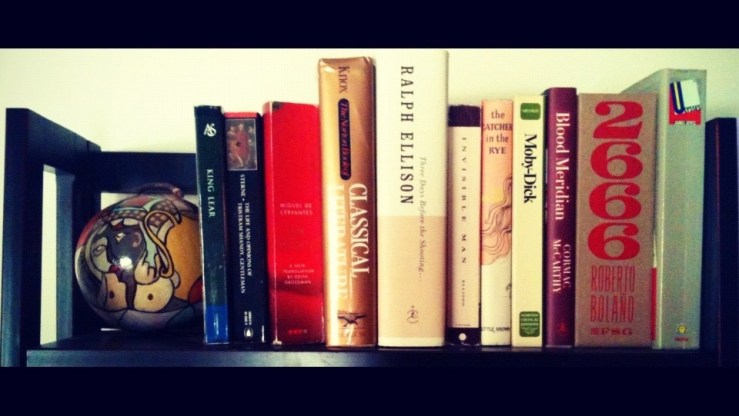
Book shelves series #10, tenth Sunday of 2012. I’m very ill today. These are some books; I own multiple copies of some of these. A painted gourd stands in as a book end. Look, I’m really ill today, these are books, I think you get the idea.

Henry Miller Interview (In a Swimming Pool)

Haley Tanner’s Vaclav & Lena Is A Modern Day Fairy Tale (With Lots of Lists)

I like fairy tales, stories with happy endings. As the mother of two little ones, I also like stories about children. Which may be why  I liked Haley Tanner’s Vaclav & Lena as much as I did. I was actually surprised at just how much I liked it. Vaclav & Lena is a modern-day fairy tale, with all the right amounts of good and bad, kindness and evil. And there’s even a little magic, too.

Tanner’s writing is simple, witty and charming, not unlike the main character, Vaclav.  Her characters are real and believable, even as they are simultaneously too good to be true: Vaclav, completely earnest and selfless; Lena, a mystery to everyone, even herself; and Rasia, the adoring and dutiful guardian.

My love and concern for the welfare of the characters, coupled with a heartbreaking story line, made it hard to put this one down each night.  I fell in love with little, shy, neglected Lena and vulnerable, gallant, naïve Vaclav when they were just little kids, and my love only grew stronger when they matured into delicate, hormonal, irrational teenagers. And, as it was for Vaclav, Lena, and Rasia, it will be difficult for me too to forget this inseparable pair.

In keeping with Vaclav’s love of lists, I feel that it is only fitting to include some lists of my own:

List of What Vaclav Would Say this Book is About

Magic

Illusion

Friendship

The American Dream

The Importance of Lists

Loss

Secrets

Lena

Love

List of What Lena Would Say this Book is About

Mystery

Fear

Longing

Curiosity

Friendship

Secrets

Moms

Fairy Tales

Certainty

Uncertainty

Love

List of What Rasia Would Say this Book is About

Sacrifice

Fear

Guilt

Raising a Russian boy in America

Raising an American teenage boy in Brooklyn

Heartbreak

Pride

Knowledge

Love

Vaclav & Lena is new in trade paperback from Random House.

Have You Got Any Castles?

(Info. Yes, the cartoon does not have the most, uh, sensitive portrayal of nonwhite characters. Thanks, Jescie, for sending me the link).

Walt Whitman, Unsurprisingly, Was Not a Prescriptive Grammarian

More from Walt Whitman’s essay “Slang in America”:

Language, be it remember’d, is not an abstract construction of the learn’d, or of dictionary-makers, but is something arising out of the work, needs, ties, joys, affections, tastes, of long generations of humanity, and has its bases broad and low, close to the ground. Its final decisions are made by the masses, people nearest the concrete, having most to do with actual land and sea. It impermeates all, the Past as well as the Present, and is the grandest triumph of the human intellect.

Book Shelves #9, 2.26.2012

We should first of all distinguish stable classifications from provisional ones. Stable classifications are those which, in principle, you continue to respect; provisional classifications are those supposed to last only a few days, the time it takes for a book to discover, or rediscover, its definitive place. This may be a book recently acquired and not read yet, or else a book recently read that you don’t quite know where to place and which you have promised to yourself you will put away on the occasion of a forthcoming ‘great arranging’, or else a book whose reading has been interrupted and that you don’t to classify before taking it up again and finishing it, or else a book you have used constantly over a given period, or else a book you have taken down to look up a piece of information or a reference and which you haven’t yet put back in its place, or else a book that you can’t put back in its place, or else a book that you can’t put back in its rightful place because it doesn’t belong to you and you’ve several times promised to give it back, etc.

—Georges Perec, from “The Art and Manner of Arranging One’s Books”

Book shelves series #9, ninth Sunday of 2012: In which I photograph three book shelves that I will examine more closely over the next several weeks.

Georges Perec goes on to admit that over three-quarters of his own books are provisionally categorized (at best). Libraries, like governments and tectonic plates and personalities, are not stable entities. Still, most of us try to impose some sense of order on our book collection, even if it’s an order apparent and relevant to ourselves alone. The three book shelves photographed below are probably the most “stable” in the house:

20120226-105205.jpg

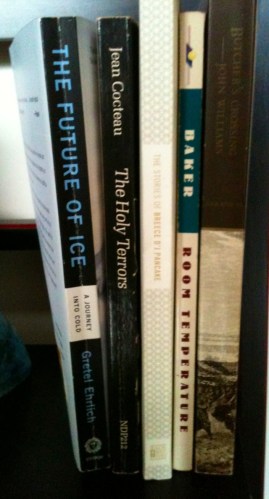
Despite an ongoing process of accretion, relocation, and removal, these shelves tend to remain fairly constant, with minor rearrangements happening maybe monthly instead of weekly or daily. As of today, there’s only one slim piece of a shelf “free”—that is, holding unsorted books waiting to be read, shelved, or, in one case, reviewed (I swear I’ll make another stab at writing up Breece D’J Pancake one day . . .). These books will be elsewhere by the time I get to photographing the shelf they rest on now:

20120226-105217.jpg

Teju Cole’s Open City Is a Strange, Marvelous Novel That Captures the Post-9/11 Zeitgeist

“And so when I began to go on evening walks last fall . . .” begins Julius, the perspicacious narrator of Teju Cole’s admirable and excellent début Open City. That opening “And” is significant, an immediate signal to the reader that this novel will refuse to align itself along (or even against) traditional arcs of plot and character development. We will meet Julius in media res, and we will leave him there, and along the way there will be learning and suffering and compassion and strange bubbles of ambiguity that threaten to burst out of the narrative.

As noted, Open City begins with Julius’s peripatetic voyages; he walks the night streets of New York City to ostensibly relieve the “tightly regulated mental environment of work.” Julius is completing his psychiatry fellowship at a hospital, and the work takes a toll on him, whether he admits it or not. In these night walks—and elsewhere and always throughout the novel—Julius shares his sharp observations, both concrete and historical. No detail is too small for his fine lens, nor does he fail to link these details to the raw information that rumbles through his mind: riffs on biology, history, art, music, philosophy, and psychology interweave the narrative. Julius maps the terrain of New York City against its strange, mutating history; like a 21st century Ishmael, he attempts to measure it in every facet—its architecture, its rhythms, its spirit. And if there is one thread that ties Julius’s riffs together it is the nightmare of history:

But atrocity is nothing new, not to humans, not to animals. The difference is that in our time it is uniquely well organized, carried out with pens, train carriages, ledgers, barbed wire, work camps, gas. And this late contribution, the absence of bodies. No bodies were visible, except the falling ones, on the day America’s ticker stopped.

Open City is the best 9/11 novel I’ve read, but it doesn’t set out to be a 9/11 novel, nor does it dwell on that day. Instead, Cole captures something of the post-9/11 zeitgeist, and at the same time situates it in historical context. When Julius remarks on the recent past, the concrete data of history writhes under the surface. He remarks that the 9/11 attack on the World Trade Center “was not the first erasure on the site,” and goes on to detail the 1960s cityscapes that preceded the WTC. Before those, there was Washington Market. Then Julius embarks, via imagination, into the pre-Colombian space of the people we now call Indians or Native Americans. “I wanted to find the line that connected me to my own part in these stories,” he concludes, peering at the non-site that simultaneously anchors these memory-spaces.

Julius’s line, like the lines that comprise New York City (and perhaps, if we feel the spirit of its democratic project, America itself) is a mixed one, heterogeneous and multicultural. Julius’s father, now dead, was an important man in Nigeria, where Julius enjoyed a relatively privileged childhood. Julius’s mother—they are now estranged—is German. He remarks repeatedly about his German grandmother’s own displacements during WWII, reflecting at one point that, from a historical perspective, it was likely impossible that she escaped Cossack rape.

Even though he sometimes seems reticent to do so, Julius delves into the strange violence that marks his lineage. He recalls a childhood fascination with Idi Amin; as a boy, he and his cousins would watch the gory film The Rise and Fall of Idi Amin repeatedly: ” . . . we enjoyed the shock of it, its powerful and stylized realism and each time we had nothing to do, we watched the film again.”

Fascinated horror evinces repeatedly in Open City. In just one example, Julius believes he sees “the body of a lynched man dangling from a tree”; as he moves closer to inspect, he realizes that it is merely canvas floating from a construction scaffold. Perhaps so attuned to history’s grand catalog of spectacular atrocity, Julius finds it lurking in places where it does not necessarily evince.

In turn, despite his profession as psychiatrist, Julius is wary of human sympathy. Throughout the novel, dark-skinned men engage him by calling him “brother.” He almost always deflects these attempts at connection, and internally remarks them as fatuous, or naïve, or false. This is not to say though that Julius doesn’t make significant (if often transitory) connections.

One of the organizing principles of Open City comes in the form of Julius’s infrequent visits to the home of his former English professor, Dr. Saito, who is slowly dying. Saito’s own memories float into Julius—this technique repeats throughout the novel—and we learn that he was interned as a young man during WWII; the sad fact is another ugly kink in the line of American history that Julius attempts to trace.

Julius also befriends Dr. Maillotte, an aging surgeon on a flight to Brussels, where he spends a few weeks of Christmas vacation, ostensibly looking for his oma (a task he performs half-heartedly at best). As Julius daydreams, Dr. Maillotte, European émigré, finds a place within his vision of family members and friends:

I saw her at fifteen, in September 1944, sitting on a rampart in the Brussels sun, delirious with happiness at the invaders’ retreat. I saw Junichiro Saito on the same day, aged thirty-one or thirty-two, unhappy, in internment, in an arid room in a fenced compound in Idaho, far away from his books. Out there on that day, also, were all four of my own grandparents: the Nigerians, the Germans. Three were gone by now, for sure. But what of the fourth, my oma? I saw them all, even the one I had never seen in real life, saw all of them in the middle of that day in September sixty-two years ago, with their eyes open as if shut, mercifully seeing nothing of the brutal half century ahead and better yet, hardly anything at all of all that was happening in their world, the corpse-filled cities, camps, beaches, and fields, the unspeakable worldwide disorder that very moment.

In Brussels, Julius meets Farouq, an angry young man with intellectual, Marxist tendencies. Farouq believes in a theory of “difference” and finds himself at odds with both the dominant Belgian culture and with Western culture in general. Julius’s conversations with Farouq are a highlight of the novel; they help to further contextualize the drama of diaspora in the post-9/11 world. Later, Julius finds a counterweight to some of Farouq’s extreme positions over a late lunch with Dr. Maillotte, who suggests that “For people to feel that they alone have suffered, it is very dangerous.” There’s a sense of reserved moderation to her critique—not outright dismissal nor condemnation, but simply a recognition that there are “an endless variety of difficulties in the world.”

Julius seems to tacitly agree with Maillotte’s assessment. His reluctance to accept brotherhood based on skin color alone speaks to a deeper rejection of simplicity, of tribe mentality, of homogeneity; it also highlights his essential alienation. At the same time, he’s acutely aware of how skin color matters, how identity can be thrust upon people, despite what claims to agency we might make. In search of the line that will connect him to his part of the American story, Julius finds unlikely “brothers” in Farouq, Maillotte, and Saito.

But let us not attribute to Julius a greater spirit than Cole affords him: Open City is a novel rich in ambiguity, with Julius’s own personal failures the most ambiguous element of all. While this is hardly a novel that revolves on plot twists, I hesitate to illustrate my point further for fear of clouding other readers’ perceptions; suffice to say that part of the strange, cruel pleasure of Open City is tracing the gaps in Julius’s character, his failures as a professional healer—and his failures to remark or reflect upon these failures.

But isn’t this the way for all of us? If history is a nightmare that we try to awake from—or, more aptly in a post-9/11 world, a nightmare that we awake to, to paraphrase Slavoj Žižek—then there is also the consolation and danger that time will free us from the memory of so much atrocity, that our collective memory will allow those concrete details to slip away, replaced with larger emblems and avatars that neatly smooth out all the wrinkles of ambiguity. “I wondered if indeed it was that simple, if time was so free with memory, so generous with pardons, that writing well could come to stand in the place of an ethical life,” Julius wonders at one point; later, Saito points out that “There are towns whose names evoke a real horror in you because you have learned to link those names with atrocities, but, for the generation that follows yours, those names will mean nothing; forgetting doesn’t take long.” Julius’s mission then is to witness and remark upon the historical realities, the nitty-gritty details that we slowly edge out of the greater narrative. And Cole? Well, he gives us a novel that calls attention to these concrete details while simultaneously exploring the dangerous subjectivity behind any storytelling.

If it needs to be said: Yes, Open City recalls the work of W.G. Sebald, who crammed his books with riffs on history and melancholy reflections on memory and identity. And yes, Open City is flâneur literature, like Sebald (and Joyce, and Bolaño, perhaps). But Cole’s work here does not merely approximate Sebald’s, nor is it to be defined in its departures. Cole gives us an original synthesis, a marvelous and strange novel about history and memory, self and other. It’s a rich text, the sort of book one wants to immediately press on a friend, saying, Hey, you there, read this, we need to talk about this. Very highly recommended.

Open City is new in trade paperpack from Random House.

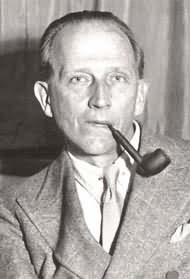
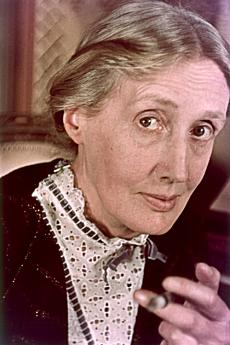
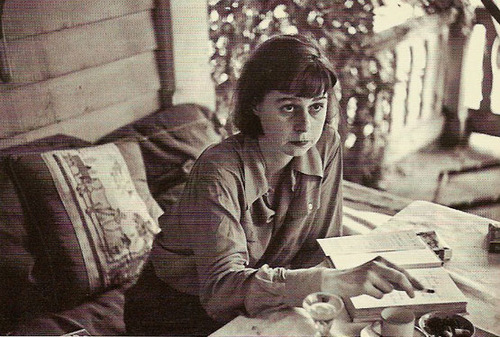
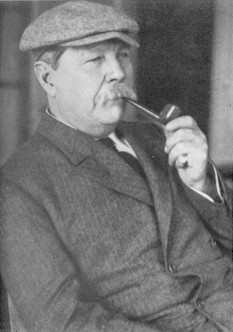
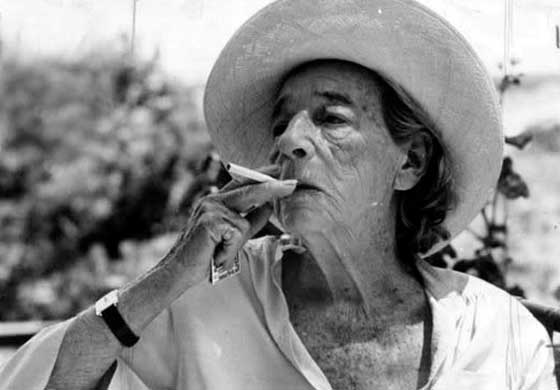
Smoking Makes You Look Cool, Part II (More Pics of Writers Smoking)

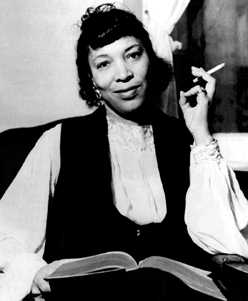
Zora Neale Hurston
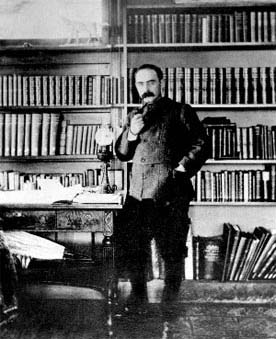
Rudyard Kipling
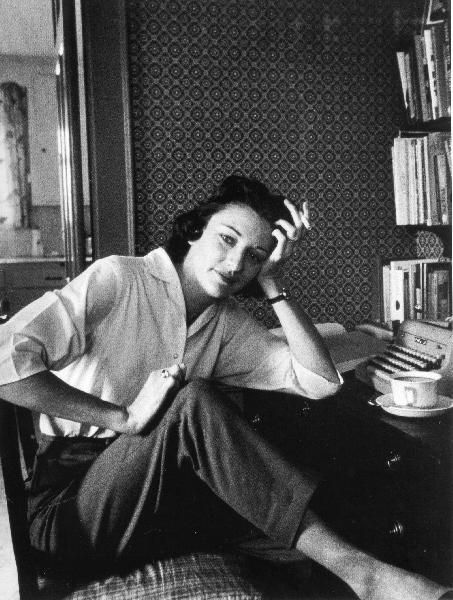
Anne Sexton 
A.A. Milne
Virginia Woolf
Carson McCullers
Dylan Thomas
Arthur Conan Doyle
Lillian Hellman
Raymond Carver

(For more pics of writers smoking, check out our first gallery—and don’t worry, people already expressed their hatred for what they perceived to be our endorsement of smoking there).

“A Book Lives as Long as It Is Unfathomed” — D.H. Lawrence on Reading

D.H. Lawrence in his long essay Apocalypse:

Now a book lives as long as it is unfathomed. Once it is fathomed, it dies at once. It is an amazing thing, how utterly different a book will be, if I read it again after five years. Some books gain immensely, they are a new thing. They are so astonishingly different, they make a man question his own identity. Again, other books lose immensely. I read War and Peace once more, and was amazed to find how little it moved me, I was almost aghast to think of the raptures I had once felt, and now felt no more.

“Order Is Simply a Thin, Perilous Condition We Try to Impose on the Basic Reality of Chaos” (A Citation from William Gaddis’s Novel JR)

Near the beginning of William Gaddis’s sprawling novel J R, erstwhile protagonist Jack Gibbs rants about knowledge to his students:

Before we go any further here, has it ever occurred to any of you that all this is simply one grand misunderstanding? Since you’re not here to learn anything, but to be taught so you can pass these tests, knowledge has to be organized so it can be taught, and it has to be reduced to information so it can be organized do you follow that? In other words this leads you to assume that organization is an inherent property of the knowledge itself, and that disorder and chaos are simply irrelevant forces that threaten it from the outside. In fact it’s the opposite. Order is simply a thin, perilous condition we try to impose on the basic reality of chaos . . .

Book Shelves #5, 1.29.2012

Book shelves series #5, fifth Sunday of 2012: In which we leave the southern wing of the house where the bedrooms are and enter a formal sitting room.

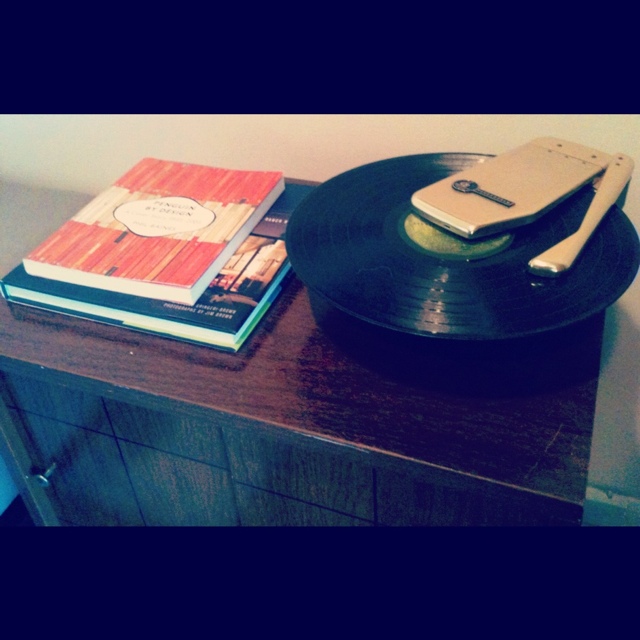
Okay. So. When I started this project, it was easy to identify the rooms in the house—they were bedrooms. As we go, I’ll have to occasionally make up names for rooms, often names that don’t really fit. Our house is a 1956 ranch with some of the atomic flavor, so it’s long and rectangular and very open—rooms open up into other rooms; spaces are demarcated more by ideas of rooms and not, say, walls. The house is essentially three sections; we’ve left the first, the bedrooms, and now move into a series of rooms for living and eating and cooking and sitting. And reading. I mapped out a little route for the rest of this series, and the first stop is this mid-century LP cabinet in what I’ll call, for lack of a better term, our formal sitting room. The cabinet once held many of my records but is now filled with comic books (more on those next week).

20120129-123357.jpg

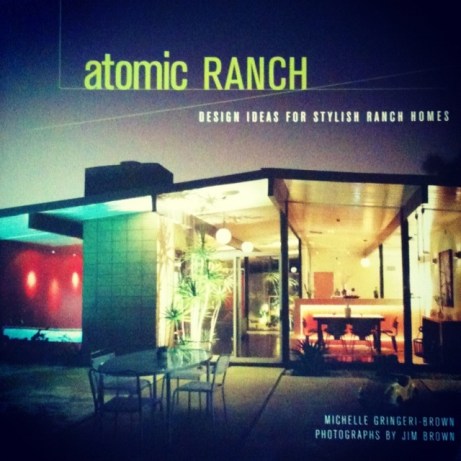
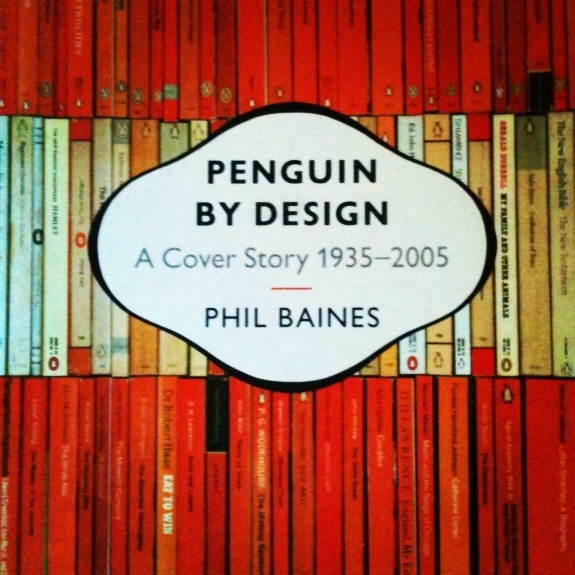
The books that set on top of it are coffee tablish, I suppose, and they tend to rotate, although there’s usually a stray novel or two that sets here as well. Today we’ll look at the two on top now: Penguin by Design and Atomic Ranch.

20120129-123410.jpg

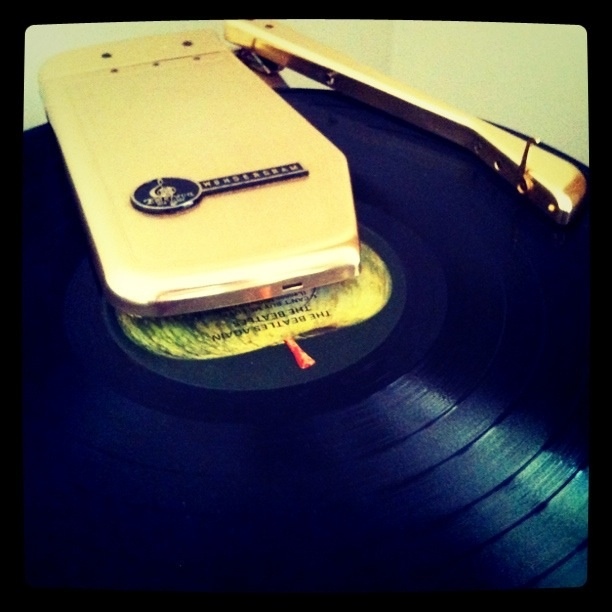
There’s also an Emerson Wondergram record player that sets on the table; I suppose it was the iPod of its day (see one in action here).

20120129-121621.jpg

Atomic Ranch is my wife’s, although I don’t really make such distinctions when it comes to books. We lived for years in a bungalow and she amassed books dedicated to craftsman homes during that time; when we moved to the ’50s ranch, she wanted this:

20120129-123515.jpg

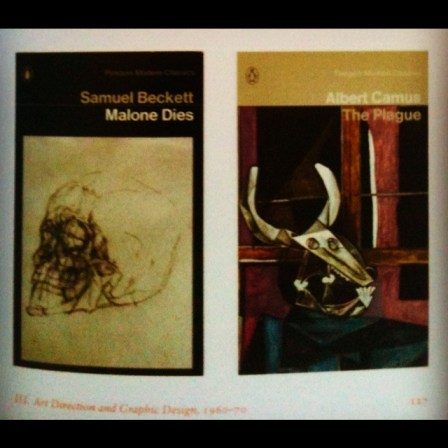
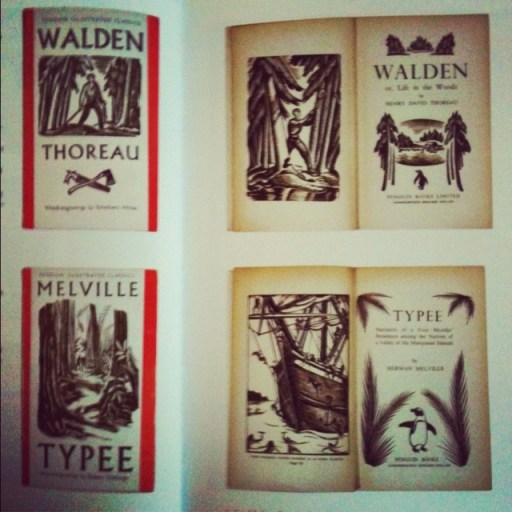
Penguin by Design is essential for anyone who drools over beautiful modern book covers.

20120129-123508.jpg

My pics are lousy—sorry—but just a few editions I’d love to pick up one day:

20120129-123417.jpg

20120129-123443.jpg

20120129-123449.jpg

Next week, we’ll look at some of the comic books inside the cabinet.

Maurice Sendak on The Colbert Report (In Case You Missed It)

Vodpod videos no longer available. Vodpod videos no longer available.