1. Leaving the Sea, Ben Marcus: A weird and (thankfully) uneven collection that begins with New Yorkerish stories of a post-Lish stripe (like darker than Lipsyte stuff) and unravels (thankfully) into sketches and thought experiments and outright bizarre blips. Abjection, abjection, abjection. The final story “The Moors” is a minor masterpiece.
2. Novels and stories, Donald Barthelme: A desire to write something big and long on Barthelme seems to get in the way of my writing anything about Barthelme. Something short then? Okay: Barthelme is all about sex. He posits sex as the solution (or at least consolation) for the problems of language, family, identity, etc.
3. Enormous Changes at the Last Minute and The Little Disturbances of Man by Grace Paley: I gorged on these precise, sad, funny stories, probably consuming too many at once (by the end of Little Disturbances I had the same stomach ache I got after eating too much of Barthelme’s Sixty Stories at once).
Fans of Alejandro Jodorowsky and will likely already be familiar with the story that unfolds in Jodorowsky’s Dune, a new documentary by Frank Pavich. The short version: After the success of his midnight cult films El Topo and The Holy Mountain, Jodorowsky moves to a castle in France to turn Frank Herbert’s sci-fi novel Dune into a film. Jodorowky put together a group of “spiritual warriors” to aid him in this quest, including the core team of Dan O’Bannon (who went on to create Alien), H.R. Giger, and the French artist Jean Giraud, aka Moebius, whose character designs and storyboards are the concrete manifestations of Jodorowsky’s vision. Jodorowsky also sought out Orson Welles, Salvador Dali, Pink Floyd, and Mick Jagger, among others. The project resulted in a tome the size of several phonebooks, including paintings, designs, technical solutions, and a storyboard by Moebius—but no film. Studios shied away from Jodorowsky, daunted in no small part by the film’s proposed fourteen hour running time. Dino De Laurentiis eventually bought the film rights and handed the project to David Lynch, resulting in 1984’s admirable failure Dune.
Jodorowsky’s Dune enriches and enhances the mythic status of Jodo (as he’s affectionately called by half the interviewees) and his non-film. Most of this enhancing comes from Jodo himself, whose shaman-presence radiates through the screen, charming the camera and the viewer. Here is someone spinning his own legend, telling stories he’s told a million times before, it seems, but weaving them into a more definitive tapestry—one that covers over half-truths, poses, and outright fraudulence. Like any great con-man, Jodo believes in his own bullshit and makes his audience want to believe it as well. His little stories—promising to buy off Orson Welles with a personal chef and plenty of wine, snapping at Pink Floyd while they wolf down hamburgers, a fateful across-the-room meeting with Mick Jagger, dueling with Dali—these anecdotes are the real life-force of the film.
The other talking heads (and occasional disembodied voices) in the documentary offer a more nuanced, reality-based perspective, although it’s always clear that Jodo’s core team of “spiritual warriors” were willing to do whatever he asked of them (including Jodo’s son, who was to play the starring role of Paul Atreides—he had to endure several years of intense martial arts training). Jodorowsky’s influence on H.R. Giger and O’Bannon is especially clear, and the film makes a strong case that many of the concepts that landed in Jodo’s Dune-film-tome eventually showed up all over subsequent sci-fi and fantasy films.
Moebius is sorely missing here. He’s repeatedly (and correctly) credited as a genius, but his overall influence on the project is understated, and unless I blinked and missed it, there is no footage of him in the film—not even a voiceover (conflicting film rights?).
Perhaps what’s most significantly missing from the film is Frank Herbert. Early on, Jodorowsky admits that he hadn’t read Dune, just had the plot summarized by a friend. As the film progresses, it becomes evident that Jodorowsky probably never bothered to read the book. “I was raping Frank Herbert…but with love,” he declares at one point. Of course, it’s Jodorowsky’s Dune—not Herbert’s Dune.
The film also avoids spending much time on Lynch’s Dune, which is probably for the better. Still, there’s a wonderful moment near the end when Jodorowsky shares his thoughts on Lynch’s take (spoiler: He agreed with pretty much every other critic).
Jodorowsky is clearly still angry that the film was never made. Like a magician practiced in misdirection, he spends much of the film hiding his wounded ego. His performance conveys the appearance—but not the spirit—of candor. In a rare moment that feels honest though, he grasps the tome he made with his spiritual warriors and expresses how much he would like somebody—anybody—to make the film.
Do we actually want Jodorowsky’s Dune? Isn’t it somehow better for the myth to exist, the chimera, the idealization, the-could-have-been? The filmmakers of Jodorowsky’s Dune offer us a version or a template or a guide. They do a wonderful job of synthesizing disparate materials into a unified audiovisual experience. Animation and original music bring the storyboards and concept art into vivid life, and Jodo’s voice commands and directs the viewer’s imagination. And this is the real joy of Jodorowsky’s Dune: A chance for the viewer to imagine, along with its shaman-author, the film that never happened.
Masscult and Midcult: Essays Against the American Grain (NYRB) collects ten pieces by cultural critic Dwight Macdonald. First published between the late 1950s and the early 1970s, the essays here feature varied subjects, always attacked through the same critical lens. Whether he’s excoriating late-period Hemingway, deriding structural linguistics, lamenting the Revised Standard Version of the Bible, or chewing up a now-forgotten bestseller, Macdonald centers the brunt of his attack on the creeping “impostures and vulgarizations” of what he called Masscult and Midcult.
In “Masscult and Midcult,” the longest and perhaps most effective essay in the collection, Macdonald defines, illustrates, and analyzes his neologisms against the historical backdrop of a rising commercial culture. “Masscult is bad in a new way,” he tells us,” it doesn’t even have the theoretical possibility of being good . . . It is not just unsuccessful art. It is non-art. It is even anti-art.” He continues:
Masscult offers its customers neither an emotional catharsis nor an aesthetic experience, for these demand effort. The production line grinds out a uniform product whose humble aim is not even entertainment, for this too implies life and hence effort, but merely distraction. It may be stimulating or narcotic, but it must be easy to assimilate. It asks nothing of its audience, for it is “totally subjected to the spectator. And it gives nothing.
Macdonald views Masscult as the unfortunate inevitability of capitalism and the burgeoning middle class—or, more appropriately, Middlebrow class. Macdonald is deeply concerned with the location of brows, referring to himself as Highbrow throughout the collection (even once casually dropping We highbrows, a little bone to the reader, perhaps). He repeatedly points out that the virtue of Lowbrowness is that the Lowbrow know where their brows are in relation to higher brows. Folk art is not just acceptable, it’s good stuff, important in its hierarchical relationship to High Art. It’s those damn Middlebrows that cause confusion. For Macdonald, Midcult is thus the real threat:
…the danger to High Culture is not so much from Masscult as from a peculiar hybrid bred from the latter’s unnatural intercourse with the former. A whole middle culture has come into existence and it threatens to absorb both its parents. This intermediate form—let us call it Midcult—has the essential qualities of Masscult—the formula, the built-in reaction, the lack of any standard except popularity—but it decently covers them with a cultural figleaf. In Masscult the trick is plain—to please the crowd by any means. But Midcult has it both ways: it pretends to respect the standards of High Culture while in fact it waters them down and vulgarizes them.
Macdonald uses case samples from Hemingway, Thornton Wilder, Archibald MacLeish, and Stephen Vincent Benet to demonstrate the creeping vulgarity of Midcult posing as High Art.
Indeed, Macdonald almost always focuses on negative examples, perhaps taking for granted that his audience will be guided to a better understanding of High Culture through…I don’t know? Osmosis? He clearly shows a strong affection for the Modernists (up through Faulkner, with a special love for Joyce and Picasso), but the essays in the collection rarely explore in detail exactly why the good stuff is so good. He comes closest in “Updating the Bible” when he points out that the Revised Standard Version strips too much of the King James Version’s poetic strangeness, poetic strangeness that startles, engages, and demands the attention—the work—of the reader. Elsewhere, he connects the avant-garde of the Modernists to an aesthetic tradition going back to the Renaissance (and Periclean Greece before it), and while these moments are satisfying, they are hardly explored with the same vigor Macdonald applies to pulling away Midcult’s figleaf.
Neither does Macdonald prescribe medicine to go along with his devastating diagnoses. To a reader who felt his criticism should be more constructive, Dwight Macdonald replies: “I’ve always specialized in negative criticism—literary, political, cinematic, cultural—because I’ve found so few contemporary products about which I could be ‘constructive’ without hating myself in the morning.” A succinct summary of the entire book, that.
Something of the force of Macdonald’s personality evinces in that reply, a combative, cranky, brilliant personality that asserts the nuances of its own subjectivity as if they were Aesthetic Law. And Macdonald is so, so, so perceptive, building each case thoroughly on textual grounds—citation, history, context—that make me blush here for not attempting his thoroughness in kind. But that would take more space and time than We Postmoderns should like to allot, no? (Maybe this review would gain more rhetorical force were I to simply make it a list of cat gifs).
Macdonald’s diagnoses remain prescient. His 1958 annihilation of James Gould Cozzens’s novel By Loved Possessed takes to task not just the author, but also the Masscult audience that made the book a best seller and the Midcult critics who sanctified the book’s artistic merits. With a few simple substitutions, the essay might be updated to critique Jonathan Franzen’s Freedom. In “The String Untuned,” ostensibly a review of the Third Edition of Webster’s New International Dictionary, Macdonald complains that the influence of structuralism, whatever merits it may have, has crumbled the authority of lexicography to the point that they “have untuned the string, made a sop of the solid structure of English, and encouraged the language to eat up” previous authorities. Essays like “The Book-of-the-Millennium Club” and “The Triumph of Fact” critique the increasing American tendency to look only for self-improvement in Art—to look for not just the digested form, but the predigested form. A footnote to “Masscult and Midcult” puts it plainly: “the Midcult audience always wants to be Told.” Ours is a time of explainer sites, listicles, speed-reading apps, and “curators” who boil entire works of philosophy down to feel-good quotes aimed at the reader’s desire for self-improvement and self-satisfaction.
Some gaps and miscalculations mar Masscult and Midcult. There’s no reckoning with the approach of postmodernism—or if there is, such a reckoning only evinces in the denial that an artful synthesis of the High and Low might be possible. (It’s worth noting here that Macdonald views Ulysses as a critique of vulgar culture, not a synthesis of vulgar culture. What would he make of Pynchon?). And while Macdonald beats up on poor Norman Rockwell, there’s nothing in the collection that deals with the nascent Pop Art movement. (Perhaps Warhol was too Midcult to merit mention; perhaps Macdonald did write about Pop Art somewhere else). His hatred for rock and roll feels purely reactionary, and his insistence that rock’s superior jazz is a folk art (and not a High Art) is just plain wrong. Also, Macdonald, for all his talk of the avant-garde and challenging comfortable conventions, writes exclusively about white men. There are few mentions of persons of color or women in the collection. I wonder what Macdonald thought of Flannery O’Connor, say, who succinctly echoed his own views when she wrote: “Art never responds to the wish to make it democratic; it is not for everybody; it is only for those who are willing to undergo the effort needed to understand it.”
At the core of these essays though is a cranky brilliance, a burning, engaging intelligence that seeks to upend simple, comfortable assumptions about how we view, interact with, and think about art. Are we to be mere consumers—and not just consumers, but infantilized consumers, baby birds gulping down material that’s already been predigested for us? Or are we willing to put in the work, to dare strong strangeness—to be confused, to not know, to feel discomfort, alienation, newness? Masscult and Midcult doesn’t just evoke these questions, it formally answers them by challenging and provoking, offering a critical rubric for winnowing the wheat from the chaff, or, to use Macdonald’s metaphor, escaping “not only from the Masscult depths but also from the agreeable ooze of the Midcult swamp.” For all the apparent bitterness, there’s something nourishing here. Macdonald’s essays retain a critical power that transcends their ostensible subjects, a power that rips the poseur’s figleaf away. Great stuff.
The Unknown University, Roberto Bolaño’s poetry collection—his complete poems, a bilingual edition, lovely, beautiful, over 800 pages—has been shifted all over my messy house this past month, wedged into ad hoc shelves, even conspicuously, for a time, fatly weighing down another Bolaño text, The Insufferable Gaucho (which I’ve been reading in tandem with/against The Unknown University), swollen and warped with saltwater from the gray Atlantic ocean.
I pecked at The Unknown University discursively, avoiding end notes, taking the rest of the Bolañoverse as my guide or frame or map or background for these poems. I read randomly, trying one poem at a time in no special order, taking crude stabs at the Spanish text on the left hand pages, clumsily matching them against Laura Healy’s fine translation, a poetics that matches the tone and rhythm and cadence and vibe of Bolaño’s other translators, Natasha Wimmer and Chris Andrews.
Then last night, a tale from The Insufferable Gaucho compelled me to read from The Unknown University straightwise, linear, 1-2-3, non-discursively, to take a stab at an orderly trajectory, reading it like a novel in fragments, perhaps.
The book is divided into three parts, each comprised of their own chapters or individual books. Last night I read, or reread, the first half of the first part: The Snow-Novel; Guirat de Bornelh; Streets of Barcelona; In the Reading Room of Hell.
The examples and citations in this riff come from those books, but I’d suggest that the images, motifs, and themes of these early poems—switchblades, hell, abysses, poets, girls, detectives, assassins, hunchbacks, genitals, sex, madness, blood—resonate throughout the entire volume (and throughout Bolaño’s oeuvre).
Perhaps the most central theme is Bolaño himself; The Unknown University often reads like a diffuse autobiography, with Bolaño’s concern for his own place in literature at the fore.
We see that anxiety in the first poem shared by the editors, a piece from 1990 included in the book’s intro:
Even a decade earlier, Bolaño prophesied that he would be carried to hell, a primal setting of the Bolañoverse. Bolaño’s romantic ancestor Jorge Luis Borges famously imagined Paradise as a kind of library. Bolaño inverts that image:
In another poem, Bolaño seems to obliquely address Borges again (“Dear, this isn’t Paradise”), while also name-checking the heroes of that “club / for science-fiction fans” (including some perhaps-unlikely figures):
“A long, slow University.” Yes.
But how could Bolaño leave his hero Edgar Allan Poe from the curriculum? Oh, never mind. Here he is:
The vase—Pandora’s box, Keats’s urn?—is a central image in these early poems. Dark, beautiful, and transformative, Bolaño seems to posit the vase—an object rendered somewhat mundane in its traditional place as an aesthetic object—as a portal to the abyss:
Elsewhere our poet warns/invites us: “The nightmare begins over there, right there. / Further up, down, everything’s part of the / nightmare. Don’t stick your hand in that urn. Don’t / stick your hand in that hellish vase.” Reading the poem forces us to stick our hand in the vase.
If Bolaño seems occasionally melodramatic in his poems, a thrall to Baudelaire, he’s also keenly aware of it, even this early in his career. A twinning of irony and earnestness characterizes Bolaño’s writing, a savage self-reflexive humor that doesn’t necessarily reveal itself on first reading. When he begins a poem about a lost love, “Go to hell, Roberto, and remember you’ll never stick it in again,” the sentiment is simultaneously tragic and comic, the kind of personal confession that connects to the reader’s own experiences. “To be honest I don’t remember much now,” our narrator confides near the end, before the devastating conclusion, “She loved me forever / She crushed me.”
For Bolaño though, what’s perhaps most crushing is the loss of literature:
And yet Bolaño sticks his arm into the vase, walks out over the chasm, dares for his poems to perhaps earn the right to be one of those “loose sentences, traces . . . fragments” that may survive.
In the very early poem “Work,” Bolaño romanticizes his own literary posterity:
Poetry that might champion my shadow in days to come
when I’ll be just a name not the man who wandered
with empty pockets, worked in slaughterhouses
on the old and on the new continent.
I seek credibility not durability for the ballads
I composed in honor of very real girls.
And mercy for my years before 26.
Seems like a reasonable request.
I don’t know if these poems are good or bad or excellent or what. I do know that I loved reading them and that they are of a piece with everything else I’ve read by Bolaño. The best moments recall his best writing, that strange mix of plain, even understated language, set against romantic violence and terrible madness. The poems here don’t distill the best of Bolaño into burning kernels of visceral realism; rather, they feel like the liquid filament of the Bolañoverse. Fantastic.
More to come.
The Unknown University is available now from New Directions.
1. William T. Vollmann’s Europe Central, 811 pages in my Penguin trade paperback edition (including end notes), is a virtuoso attempt to describe or measure or assess or explain or analyze the Eastern front of WWII, a part of the war that in my American ignorance I know, or knew (no, know) so little about.
2. The book covers 1914-1975, most of the composer Dmitri Dmitriyevich Shostakovich’s life. If Europe Central has a hero, it is Shostakovich.
From the book’s last end note, “An Imaginary Love Triangle: Shostakovich, Karmen, Konstantinovaskya”:
When I think of Shostakovich, and when I listen to his music, I imagine a person consumed by fear and regret, a person who (like Kurt Gerstein) did what little he could to uphold the good—in this case, freedom of artistic creation, and the mitigation of other people’s emergencies. He became progressively more beaten down, and certainly experienced difficulty saying no—a character trait which may well have kept him alive in the Stalinist years. In spite of the fact that he joined the Party near the end, to me he is a great hero—a tragic hero, naturally.
That’s Vollmann’s own authorial voice, of course, and there we have perhaps the most concise condensation of Europe Central.
3. Maybe a clarification though: Europe Central is not (just) a fictional biography of Shostakovich: There are many, many other characters that Vollmann uses to power his beast: the Soviet director Roman Karmen and the translator Elena Konstantinovskaya, those other points in the book’s central love triangle; German artist Käthe Kollwitz; Samizdat poet Anna Akhmatova; Generals Paulus (German) and Vlasov (Soviet)—similarly disgraced; SS man Kurt Gerstein, who oversees death camps; there’s Lenin, there’s Stalin. There’s “the Sleepwalker,” one Adolf Hitler. And many, many more.
4. Is Europe Central too big?
No. I don’t think so.
5. I lazily suggested that the book uses Shostakovich as an organizing principle. We could also argue for Operation Barbarossa (Germany’s disastrous invasion of the USSR) as the book’s main thrust. Or, we might say that the book reframes Wagner’s Ring Cycle. Or that it somehow restages Shostakovich’s Opus 40 and Opus 110. (Back to Shostakovich!).
6. Or the telephone! Yes, that totem of modernity, communication, power—the telephone!—the telephone is the central image of Europe Central. Indeed, it initiates the novel: “A squat black telephone, I mean an octopus, the god of our Signal Corps…” That octopus, those tendrils, those lines of communication snake throughout Europe Central.
7. Another description of Europe Central, perhaps, from one of its earliest chapters—
Most literary critics agree that fiction cannot be reduced to mere falsehood. Well-crafted protagonists come to life, pornography causes orgasms, and the pretense that life is what we want it to be may conceivably bring about the desired condition. Hence religious parables, socialist realism, Nazi propaganda. And if this story likewise crawls with reactionary supernaturalism, that might be because its author longs to see letters scuttling across ceilings, cautiously beginning to reify themselves into angels. For if they could only do that, then why not us?
8. Was that enough of Vollmann’s language for this short riff?
No?
I shared various citations from Europe Central on Biblioklept as I read it, even riffing a bit now and then. Check out some of Vollmann’s strange, wonderful prose—it’s far more convincing than anything I can write about his book.
10. I left off from the list above one of the finest passages in the book, a section where the unnamed “I” narrator of some of the Soviet sections of Europe Central shifts into Shostakovich’s consciousness, and then, perhaps, into Vollmann’s own authorial voice—and then back. The narratological dimensions here are too big to suss out in my lazy riff, but I find the passage’s main thrust one of the most compelling issues of modern art (or Modern Art, if you prefer): Can art use irony to conceal its true feelings? Can love be self-ironic? And if so, how does this complicate the truth of the expression?
I think this matters because Vollmann thinks this matters—put another way, Vollmann believes in Art and Truth and, significantly, in Love, and the power of love against the backdrop of totalitarianism, despotism, murder, privation, starvation, rape, maiming, gas chambers, mass graves, infanticide, total war…
11. What Vollmann achieves in Europe Central, through the reality and fictionality (and reality of the fictionality of the reality) of his characters, is a language of love. Vollmann posits love, or the possibility of love, or the possibility of imagining the possibility of love, as a response to despair.
12. Point 11 is maybe a way of saying that Europe Central is about so much more than central Europe during WWII—but if you’re at all familiar with Vollmann, gentle reader, of course you’d expect that. Still, I learned a lot about a subject which I thought I knew something about.
Whether or not Vollmann is a generous writer depends on your perspective—you’re swimming in the deep end here, and many of the connections between the different sections don’t cohere until you’ve got the hang of the book. But once you get the hang of it—once you learn to read it—Vollmann’s generosity is almost overbearing in its profundity. How did he research it, do all the reading that went into it, and still make all the voices sing? How?
13. Europe Central is probably not the best starting place for Vollmann, but I think it will appeal to fans of certain giant polyglossic postmodern novels. I’ll admit to a predilection for WWII metafictions, too, but I can’t really anticipate how readers of historical fiction might regard what Vollmann does here. Can I end by writing Highly recommended? I don’t know. I’m not sure who this book is for… but I loved it.
Bob Schofield’s The Inevitable June continues theNewerYork Press’s dedication to beautiful weirdness. They’ve billed The Inevitable June as “words and art,” which is truth in advertising, yes, but is also a way of avoiding putting a label on this strange little book.
Is it a comic? A novella? A thought experiment? A prose-poem? A flip-book? Something entirely new? Yes.
But entirely new is wrong too, because, as the billing states, what we’ve got here are those ancient raw elements of storytelling, words and pictures, resynthesized into something that, in its strangeness, evokes newness and surpasses novelty.
An initial simplicity of form, both in written and drawn line, allows the reader’s consciousness to slip into the strangeness of June. We begin with a simple black-on-white square (emblem of a page or a screen? (or hey man it’s just a square?)) which turns into a cube, or a box rather, one side open (a door; a window) its interior obscured. Should the reader stick his head in? Yes. The book seems to take place in this box, an imaginative dream-machine that we might recall from a childhood or two.
What follows is an almanac of tragicomic weirdness, each entry logging the events of a new morning in an eternal June.
The clarity and concreteness of Schofield’s prose jars against its symantic expression, evoking a dream-nightmare world of continual creation and destruction. Every morning the world begins—and ends—anew, complete with new metaphors which crumble or dissolve or give way under the strain of the next morning’s creation.
The Inevitable June echoes with images of oceans and fires, glass airplanes and invisible pilots, octopuses and yetis, angels and demons. Its transmutations both challenge and invite the reader to play a game where the rules have not been, cannot be, verbalized.
Is the game consciousness?
A version of consciousness anyway, a metaphor for consciousness—a collection of words and art, black and white lines, inky abysses and blank fields of possibility. If The Inevitable June attests that imaginative power can transform, it also underscores the costs and conditions of that transformation—the edges, the borders, the limits—the constraints of time, the days on a calendar. Interposed, our protagonist travels, falls, rises, dreams, and performs his various identities.
I read Schofield’s book a few times (it’s short) in different formats—on a laptop, a tablet, and then the physical book. Oh, and on my iPhone. I reread that thing on an iPhone waiting in my car to pick up my son from school. It was a different read each time, offering new strangenesses, new pathways, pratfalls, and pitfalls. The Inevitable June is not for all readers, obviously, but it gave me some joy in its puzzles and prose. Recommended.
Jim Jarmusch’s latest film Only Lovers Left Alive is excellent.
Moody, sometimes funny, always gorgeous, and largely plotless, the film centers on two vampires—Adam and Eve, played by Tom Hiddleston and Tilda Swinton—who fill their long lives with music, literature, and love. At its core, the film is an elegiac love song to aesthetic originary creation in the age of the curator.
What really interests Jarmusch is immortality, or at least longevity. How would we behave if we lived for centuries, and were free to do pretty much anything we wanted? What sort of aesthetes and collectors might we become? … In this world, the vampire’s primary function is to appreciate the things we humans take for granted; they’re much more like curators than monsters.
Eve’s curatorial powers are enviable—she merely has to touch an object to know its age (and quality). She touches Adam’s beloved Gibson guitar, declaring “1905.” As she packs her suitcase full of books (Don Quixote, Infinite Jest, and Kafka all make the cut), she scrolls her fingers through pages briskly but lovingly, seeming to absorb each one instantly.
Adam’s curatorial impulses manifest in his collection of antique musical and electronic equipment, his claustrophobic crumbling mansion a mad scientist’s lab of sight and sound. Adam creates plodding dirges, death songs, elegies for the end of romance. Reclusive cult hero, he hides in the outskirts of Detroit from his growing fanbase who demand to know who madethis music. Like Wyatt, the masterful forger of William Gaddis’s novel The Recognitions, Adam wonders what people want from the person that they couldn’t get from the work of art. Still, as he mournfully complains to Eve, Adam wants a reflection, something to echo back to him. His fans—the “zombies”—are not enough.
Eve’s library and Adam’s studio allow Jarmusch to perform his own curatorial impulses. On one wall in a room of Adam’s mansion hang the portraits of dozens of writers and musicians, including Blake, Poe, Twain, and Christopher Marlowe. Marlowe it turns out is a vampire—and the real author of Shakespeare to boot.
It might be tempting to accuse Jarmusch of merely providing fan service for hipsters, but there’s more going on here than simple name-checking. Adam’s wall isn’t simply a shrine for hero-worship. Instead, it feels like a gallery of family portraits.
Some viewers may find Adam and Eve’s aesthetic obsessions insufferable. As if in anticipation of this criticism—and as a sort of counter argument—Jarmusch plants an internal critique of his lovers in the film in the form of Eve’s kid sis Ava, an impulsive, strangely immature, and ultimately tacky vampire. In her acrimonious parting with Adam and Eve, Ava curses the pair as “condescending snobs.” She is, of course, absolutely correct.
Adam and Eve are snobs, but perhaps living through eons will do that to a body, so what should we expect? Adam, black-haired, always dressed in black, veers along a desperate, suicidal spectrum, writing dirges for the end of the world. Eve, golden-haired, clothed in white, must constantly remind Adam of eternal recurrence, a motif figured in Jarmusch’s repeated shots of spinning 45rpm records. Adam mourns the death of Detroit, but Eve tells him that it will bloom again when the “cities of the South are burning.”
Only Lovers Left Alive is peppered with these notes of apocalypse, but Eve tempers them with a kind of weary optimism: She and her lover will survive, and they will preserve what is worth preserving, worth loving. Not only will they curate, they will also create.As the film rushes to its ending in Tangier (my biggest criticism is that we could use another half hour)—oh, and that word “ending”: yeah, look out, fair warning, some spoilers ahead—as the film rushes to its ending, Adam and Eve experience intense blood withdrawal. Continue reading “Curation and Creation in Only Lovers Left Alive, Jim Jarmusch’s Vampire Film”→
Jorge Luis Borges is first mentioned in the sixth paragraph of Roberto Bolaño’s masterful short story “The Insufferable Gaucho.” In this paragraph, the narrator tells us that the story’s hero, an ex-judge named Pereda, believed “the best Argentine writers were Borges and his son; any further commentary on that subject was superfluous.”
Several paragraphs later, Bolaño’s narrator explicitly references Borges’s short story “The South,” the precursor text for “The Insufferable Gaucho.” The reference to Borges is tied again to Pereda’s son, the writer Bebe.
Leaving tumultuous Buenos Aires, basically destitute from the Argentine Great Depression, Pereda heads to the countryside to take up residence in his family’s ancient ranch. Departing the train and arriving to a rural town,
Inevitably, he remembered Borges’s story “The South,” and when he thought of the store mentioned in the final paragraphs his eyes brimmed with tears. Then he remembered the plot of Bebe’s last novel, and imagined his son writing on a computer, in an austere room at a Midwestern university. When Bebe comes back and finds out I’ve gone to the ranch . . . , he thought in enthusiastic anticipation.
Bolaño essentially appropriates the plot of “The South” for his tale “The Insufferable Gaucho” and inserts a version of himself into this revision. Bolaño is “Bebe” here, an author who “wrote vaguely melancholy stories with vaguely crime-related plots,” his name phonically doubling the series of mirrors and precursors that Bolaño, mystery man, leaves as clues: Bebe, B-B, Borges-Bolaño, Belano-Bolaño. (Is this too wild a conjecture, dear reader? Mea culpa).
And Pereda then? A stand-in for Borges’s Juan Dahlmann (hero of “The South,” who “considered himself profoundly Argentinian”), surely, but also, maybe also—a stand-in for (a version of) Borges.
I was deeply impressed by the short stories in Jessica Hollander’s In These Times the Home Is a Tired Place (University of North Texas Press). In my review, I wrote that
Every story in Jessica Hollander’s début collection In These Times the Home Is a Tired Place feels thoroughly real, deeply authentic, and if we already know the contours of these plots—perhaps having lived some of them ourselves—Hollander makes us experience them anew with her bristling, strange sentences. Hollander writes here of families on the brink and families broken, families fragmenting and families forgetting. She conjures domestic spaces limned with ghosts and memories, children and parents who aren’t quite sure how to be a family, but who nevertheless try—even if trying is really just imagining.
Jessica was kind enough to discuss her writing with me over a series of emails, sharing her thoughts on sentences, families, and zombies.
Biblioklept: When did you start working on the stories that make up In These Times the Home Is a Tired Place? The collection feels really unified in its tone, themes, and images. Many of the stories were published in different journals and magazines before they were collected—did you always envision them collected? Were there stories you left out that you felt didn’t fit?
Jessica Hollander: I worked on a lot of these stories while in my MFA program, so over four years, though a couple date back even further than that. I was interested in trying out new voices and forms, but I kept examining similar questions and anxieties, just from different angles. During the years I wrote most of these stories, I lived through a lot of “big” moments – marriage, parenthood, home-ownership – and writing was a way to deal with some of my anxieties in doing what our society tells us we should do. I constantly questioned why I wanted these things—if I really wanted them or if I’d only been conditioned to want them. I thought a lot about identity and what happens to it once you start taking on roles with so much cultural baggage attached to them, as I became a wife, a mother, etc., which is why in some of the stories the characters are even referred to by these titles. It’s a battle between the role and their individuality.
I didn’t think about writing the stories for a collection. I knew I was “worrying” particular subject matter that was important to me, and it was exciting to see trends in tone and imagery develop, but it wasn’t until I’d accumulated a mass of work that I started sifting through it. And many stories were left out that didn’t seem to fit or that years later didn’t interest me as much anymore.
Biblioklept: One thing I love about the stories in the collection is how they take on those “big” moments you mention—how alienating it is all of a sudden to inhabit a new role that’s already been socially scripted in some way. Do your stories start from those conflicts, or from something else? I mean, do you start by trying to write (through, against, about) the anxieties, or do the stories germinate in other ways?
JH: Most of the time I don’t have a clear idea of what I’m going to write about. I’ll start with a character or a small scene inspired by something I saw or experienced, but often I’ll start with style—wanting to try out a modular story or write about characters who have titles instead of names or I’ll want to try a particular point of view I haven’t written from in awhile or I will write a sentence and see if I’m interested in the voice. I have to be interested in the sentence level to push a story further, so sentences come before themes or even character for me. But that’s what was strange and exciting about the stories that came together to form this collection—I seemed to keep worrying over these similar themes, anxieties over identity and role-shifts, but it wasn’t planned. I guess that’s the part of writing that the subconscious has a bigger hand in. A lot of my extended family was surprised when they read the collection because the stories seemed so pessimistic about things like family and connections between people. They tell my parents, “But she had such a happy childhood!” And now they see me, and I am married and have kids and (besides general anxieties) I am happy (though it’s hard to write that word without quotations—what does “happy” mean?). And of course these stories are fiction, it isn’t me, but it all still comes from me and things I’m thinking about on some level.
Jessica Hollander
Biblioklept: I can imagine those family reactions—because the stories seem so real, so true, so authentic. But I think a lot of that authenticity originates from the sentences, which you bring up here. In many of the stories, the reader gets a whole story out of just a sentence or two, and part of that story comes from the disconnect between the way a character might perceive the world and the way that the other sentences have represented that world—like the poor babysitter of the title story. Is the sentence as important to you as a reader as it is to you as a writer?
JH: The sentence is important to me as a reader. There was a time when I didn’t really even think about what language could do to a story—I only noticed macro-level things like plot and character, then later I got more interested in image and metaphor. Now, to me, it seems like the central energy of a piece comes from the sentences. If I’m not interested in the writing, if there’s no strangeness or surprises or just some poetic sense of words interacting with each other, I rarely stick around to find out about plot and character.
Biblioklept: I think the sentences in your collection mediate the tension between the simultaneous reality/irreality of domestic life, of the weirdness of being in a family—that a family is a set of contingent relationships, never stable. In one of our earlier emails, you mentioned working on new material with a “hyper-real semi-comic tone but with some darker threads” and that there might be “zombies and haunted houses and things” in your latest work. Is this a conscious shift away from the content of your collection, which focuses so much on families?
JH: Oh, no, the stories I’m working on now are still all about family and relationships, but I’m having some fun drawing from the female gothic tradition, examining the dark sides of domestic life and pressures of social/gender roles. Gothic literature is interested in what’s unexplainable, both inside and outside of us, and looks at impulses based in emotion and not logic. There’s hauntings from the past and monsters inside of us, battles between logic and emotion, repressing feelings that later manifest destructively, and humans being drawn to the sublime and the numinous: things that inspire both fear and awe, that remind us of our own demise, but encourage us to see beauty in sadness, death, and suffering. So certainly relevant to families!
Biblioklept: You teach writing now here in the South—do you think that the Southern Gothic tradition has influence you at all? Why do you think that we so strongly identify Southern lit as Gothic?
JH: Gothic is often about hauntings from the past, and I think a lot of people view the south as haunted, by slavery and economic disparities and the war. A lot of southern gothic writers (Faulkner, O’Connor, Williams) confront or critique southern romanticism, a longing for the old south as a magical place where chivalry and passionate emotions thrived that was unfortunately corrupted/destroyed by outsiders and modernity. But we know the old south was not so beautiful as that; it was of course a complex place where a lot of dark things passed between humans. Classic Gothic literature (Frankenstein, Dracula, Castle of Otranto, Edgar Allan Poe’s work) is romantic, too, with long passages about the sublimity of nature and characters moved by strong emotions (including grief, despair, anger, and love), but Gothic always exposes the dark urges of humans, and how people inevitably contribute to their own demise.
Biblioklept: What authors do you encourage your students to read?
JH: I’m really conscious of exposing students to a lot of different styles of writing, from traditional realism to postmodern experiments, so we can talk about how choices different authors make in terms of language, image, structure, portrayal of reality, and so on shape theme and meaning. This seems like the best way to prepare students to make conscientious choices when defining their own aesthetic interests and to recognize the wide variety of options available to them. Toward the realism side of things, I like Michael Cunningham, Dan Chaon, and Jennifer Egan; for maximalism, Alice Munroe; Lorrie Moore, Miranda July and Raymond Carver I use for hyper-realism and minimalism; Christine Schutt for lyricism; Sherman Alexie, Haruki Murakami, and Kellie Link for magical realism and surrealism; Jessica Hagedorn and Michael Martone for formalism; and George Saunders and Stacey Richter for absurdism. And it depends on the class. I use different authors for the gothic class and for the linked story workshop I’m teaching now, but I always try for variety.
Biblioklept: Have you ever stolen a book?
JH: I haven’t stolen a book from a store or library, but there’s one book that I borrowed and never returned: the Complete Stories by Flannery O’Connor. When I lived in North Carolina a few years, I lent a writer friend my copy of Salinger’s Catcher in the Rye, which she amazingly hadn’t read, and she lent me the O’Connor book, which amazingly I hadn’t read. I was happy with the one I ended up with. She must’ve been, too, or maybe she forgot we’d switched, but we never swapped those books back to each other. Maybe it foreshadowed my move further south to Alabama and my interest in dark humor and gothicism.
I promise you that from the first time she took his hand—the very first time!—he actually believed; she was ready, lonely, beautiful; she wanted someone to love with all her heart and he was the man; she longed to take care of him, knowing even better than he how much he needed to be taken care of—he still couldn’t knot his necktie by himself, and, well, you know. He believed, because an artist must believe as easily and deeply as a child cries. What’s creation but self-enacted belief? —Now for a cautionary note from E. Mravinsky: Shostakovich’s music is self-ironic, which to me implies insincerity. This masquerade imparts the spurious impression that Shostakovich is being emotional. In reality, his music conceals extremely deep lyric feelings which are carefully protected from the outside world. In other words, is Shostakovich emotional or not? Feelings conceal—feelings! Could it be that this languishing longing I hear in Opus 40 actually masks something else? But didn’t he promise Elena that she was the one for him? And how can love be self-ironic? All right, I do remember the rocking-horse sequence, but isn’t that self-mockery simply self-abnegation, the old lover’s trick? Elena believes in me, I know she does! How ticklishly wonderful! Even Glikman can see it, although perhaps I shouldn’t have told Glikman, because . . . What can love be if not faith? We look into each other’s faces and believe : Here’s the one for me! Lyalya, never forget this, no matter how long you live and whatever happens between us: You will always be the one for me. And in my life I’ll prove it. You’ll see. Sollertinsky claims that Elena’s simply lonely. What if Elena’s simply twenty? Well, I’m lonely, too. Oh, this Moscow-Baku train is so boring. I can’t forgive myself for not kidnapping my golden Elenochka and bringing her to Baku with me. Or does she, how shall I put this, want too much from destiny? My God, destiny is such a ridiculous word. I’ll try not to be too, I mean, why not? It’s still early in my life. That nightmare of the whirling red spot won’t stop me! I could start over with Elena and . . . She loves me. Ninusha loves me, but Elena, oh, my God, she stares at me with hope and longing; her love remains unimpaired, like a child’s. I love children. I want to be a father. I’ll tell Nina it’s because she can’t have children. That won’t hurt her as much as, you know. Actually, it’s true, because Nina . . . Maybe I can inform her by letter, so I don’t have to . . . Ashkenazi will do that for me if I beg him. He’s very kind, very kind. Then it will be over! As soon as I’m back in my Lyalka’s arms I’ll have the strength to resolve everything. If I could only protect that love of hers from ever falling down and skinning its knee, much less from growing up, growing wise and bitter! Then when she’s old she’ll still look at me like that; I’ll still be the one for her.
From William T. Vollmann’s big fat historical novel Europe Central, which is so big and fat that I think a comprehensive review of it will be just maybe beyond me by the time I get to the end of it, so maybe some citation, a bit of riffing, yes?
The novel recounts (a version) of the Eastern front of WWII. Polyglossic, discontinuous, musical, mythic, often discordant, Vollmann shifts through a series of narrators, his turns oblique, jarring. And while Vollmann includes political and military leaders, his analsyis/diagnosis focuses on artists, musicians, and writers. The above passage—which struck me especially for its discussion of the feeling of feeling, the aesthetics of feeling—this passage offers a neat encapsulation of Vollmann’s narrative digressions.
The “I” at the beginning of the citation is one of the “Shostakovich” sections narrators. Although unnamed (as of yet), he seems to be a high-ranking officer in Stalin’s secret police. At times though, this narrator—all of the narrators!—seem to merge consciousness with Vollmann, the novel’s architect, who interposes his own research and readings (or are they the narrators?). We see this in the dash introducing some lines from the conductor Evegny Mravinsky—key lines that I find fascinating—which Vollmann (or Vollmann’s narrator) uses to critique/question the relationship between art, emotion, intention, and authenticity (current subjects of deep fascination for me). Then—then!—without warning, Vollmann enters the consciousness of another “I,” Shostakovich himself, whose elliptical thoughts, muddied and warbling, illustrate, illuminate, and complicate Mravinsky’s critique.
Feelings conceal—feelings!—yes, yes, yes I think so: Here Vollmann (through several layers of complicating narrators, which lets just set aside for a second, or perhaps altogether, at least for now)—here Vollmann offers a fascinating description followed by its problem: If earnest expression can be couched in irony—if we use feelings to hide other feelings in art (etc.)—then what does that mean for love, which I think Vollmann (here, elsewhere) believes to be A Big Important Thing? Is a self-ironic love possible? Likely even?
I’m tempted here to deflect, move to another piece of art, like say, It’s A Wonderful Life, a film that I understand anew every year, a film I found baffling, frightening as a child; a film that bored me as teen; a film that I resented as a young man; a film that I appreciated with a winking ironic cheer a few years later—and then, now, or nowish, as an adult, a film I feel I understand, that its sentiment, raw, affects me more deeply than ever. (I was right as a child to be baffled and frightened). (What if anything self-ironic love?).
So I deflected. And am ranting, trying to set out a few thoughts for Something Bigger—something on Authenticity and Inauthenticity, The Con-Artist vs. The Poseur, the Aesthetics of Feeling the Feeling, of Anesthetizing the Feeling (of Feeling the Feeling). Look at me, I capitalized some of my words. Sorry.
William Shakespeare, the Greatest Living American Author, turns 450 today.
(There may be some, uh, factual, problems with the preceding sentence, but I’ll let it stand).
(After all, to write after Shakespeare requires some gall, a bit of fakery, maybe an outright lie or two).
450! (Could I even hit 450 points on a riff?)
“Shakespeare invented us,” Harold Bloom repeatedly insists in his big fat book The Western Canon.
(I might be misquoting; the prospect of putting the effort of fact checking into this riff horrifies me).
“Shakespeare—whetting, frustrating, surprising and gratifying,” F. Scott Fitzgerald jotted down in his notebook.
We don’t actually have a record of Shakespeare’s birth, although we do know he was baptized on 26 April 1564.
And died 23 April 1616.
It’s likely that Shakespeare was born on 23 April 1564.
Or, perhaps: There’s something symmetrical, neat, poetic about Shakespeare dying on his birthday.
Ingrid Bergman died on her birthday.
As did Thomas Browne.
As did Yasujrio Ozu.
And, according to tradition: Moses, David, Mohammad.
So why not Shakespeare, born on his deathday?
We want a teleological neatness with Shakespeare: We want his last play to be The Tempest, a tragicomedy that somehow synthesizes all before it; we can claim Prospero a commanding stand-in for Shakespeare.
(These claims overlooking of course that Shakespeare’s last work was likely a forgettable collaboration with John Fletcher, The Two Noble Kinsmen).
The Two Noble Kinsmen was based on Chaucer’s The Knight’s Tale.
(Shakespeare of course “based” his works on other works; the man was not one for original plotting (thank goodness)).
“Chaucer had a deeper knowledge of life than Shakespeare,” claimed Ezra Pound.
“Let the reader contradict that after reading both authors, if he chooses to do so,” he truculently added.
To Coleridge though Shakespeare was “myriad-minded Shakespeare” — Our myriad-minded Shakespeare.
Dryden credited him with “the largest and most comprehensive soul.”
Suggesting also that, “Shakespeare’s magic could not copied be.”
I’m not sure about that.
How many versions of Hamlet have been attempted?
Were not some of these Hamlets magical—magical enough, at least?
Ulysses?
Infinite Jest?
The Lion King?
Oedipus Rex?
David Markson points out somewhere—forgive me for not rising from my fat ass to go verify—that Shakespeare couldn’t possibly have read Sophocles’ Oedipus as there was no English translation yet available.
And how many books did Shakespeare read?
(Chaucer, often credited with a library of sixty).
Speculation, speculation!
Shakespeare Truthers.
Or Anti-Stratfordians—whatever you want to call them.
Walt Whitman was a Shakespeare Truther.
Believing no commoner could write the plays, but “only one of the ‘wolfish earls’ so plenteous in the plays themselves, or some born descendant and knower, might seem to be the true author of those amazing works.”
Amazing that, that Walt Whitman, who could so bombastically conceive himself every man, woman, child, a cosmos, etc.—that he couldn’t credit a commoner with the depth of imagination to produce the plays that Whitman called “greater than anything else in recorded literature.”
David Markson: “Scholars who are convinced that Shakespeare must certainly have been a military man. Or a lawyer. Or closely associated with royalty. Or even a Jew. To which Ellen Terry: Or surely a woman.”
For some Shakespeare Truthers, evidence of his lack of authorship is to be found in the different ways he supposedly signed his name!
Willm Shakp.
William Shakspēr.
Wm Shakspē.
William Shakspere.
Willm Shakspere.
William Shakspeare.
The last of these from his 1616 will, in which he famously bequeathed his second-best bed to his wife Anne Hathaway.
“He was a rich country gentleman, Stephen said, with a coat of arms and landed estate at Stratford and a house in Ireland yard, a capitalist shareholder, a bill promoter, a tithefarmer. Why did he not leave her his best bed if he wished her to snore away the rest of her nights in peace?” Continue reading “Riff on William Shakespeare”→
Novelist’s personal genre. For all its seeming fragmentation, nonetheless obstinately cross-referential and of cryptic interconnective syntax.
–David Markson, The Last Novel, 2007
I think I’m beginning to understand. What I’m writing is an infranovel.
–Laurent Binet, HHhH, 2010 / English trans. by Sam Taylor, 2012.
. . . it’s safe to say that in a true war story nothing is absolutely true.
–Tim O’Brien, The Things They Carried, 1990.
From the current (18 April 2014) Wikipedia entry for Laurent Binet’s novel HHhH:
HHhH is the debut novel of French author Laurent Binet. It recounts Operation Anthropoid, the assassination of Nazi leader Reinhard Heydrich in Prague during World War II. It was awarded the 2010 Prix Goncourt du Premier Roman.
The novel follows the history of the operation and the life of its protagonists – Heydrich and his assassins Jozef Gabčík and Jan Kubiš. But it is also interlaced with the author’s account of the process of researching and writing the book, his commentary about other literary and media treatments of the subject, and reflections about the extent to which the behavior of real people may of necessity be fictionalised in a historical novel.
The title is an acronym for Himmlers Hirn heisst Heydrich (“Himmler‘s brain is called Heydrich”), a quip about Heydrich said to have circulated in Nazi Germany.
If I were the narrator of HHhH—which is to say, if I were a version of Binet, a version that I might describe (and am describing, I guess) as Binet-the-writer-performing-Binet-the-author-performing-Binet-the-author-as-narrator-narrating-the-author-trying-to-write-HHhH (awful description)—if I were the narrator of HHhH I’d probably now dole out a droll little chapter about how the gesture I’ve just committed (lazily using Wikipedia to summarize the novel and prefacing that lazy summary with a few citations that might make cribbing from Wikipedia seem, I dunno, clever (which I do not think said cribbing is))—If I were the narrator of HHhH I might riff on how what I just did is the result of some kind of 21st-century paralysis induced by an overload of information combined with a deep sincere genuine honest-to-gawd love for my subject.
Or maybe I’d just claim to be writing an infrareview.
Has this been a bad start?
I think HHhH gets off to a bad start, but I could be wrong.
Maybe you should judge for yourself, dear reader. Here is its first paragraph:
Gabčík—that’s his name—really did exist. Lying alone on a little iron bed, did he hear, from outside, beyond the shutters of a darkened apartment, the unmistakable creaking of the Prague tramways? I want to believe so. I know Prague well, so I can imagine the tram’s number (but perhaps it’s changed?), its route, and the place where Gabčík waits, thinking and listening. We are at the corner of Vyšehradská and Trojická. The number 18 tram (or the number 22) has stopped in front of the Botanical Gardens. We are, most important, in 1942. In The Book of Laughter and Forgetting, Milan Kundera implies that he feels a bit ashamed at having to name his characters. And although this shame is hardly perceptible in his novels, which are full of Tomášes, Tominas, and Terezas, we can intuit the obvious meaning: what could be more vulgar than to arbitrarily give—from a childish desire for verisimilitude or, at best, mere convenience—an invented name to an invented character? In my opinion, Kundera should have gone further: what could be more vulgar than an invented character?
Actually, rereading it now, this seems like a perfect start, although I’ll admit it stalled me on the first few attempts. I mean, that’s a bit alienating, yes? Names, dates, places—and then a shift to Kundera, the immediate assault on fiction? But it fits, in retrospect. Maybe this is another way of saying that HHhH, despite a difficult first few chapters (What is the book about? What is the book?) quickly becomes thrilling, engrossing, a cerebral spy novel, a study in power and terror, a love letter to Prague, a moody bit of flanerie, at times—and mostly an intertextual adventure yarn that shouldn’t work but does, that succeeds wildly.
In chapters that are often short, punchy, and precise, Binet spends much of the first part of the novel building the character of Reinhard Heydrich, “‘the Hangman,’ ‘the Butcher,’ ‘the Blond Beast.” Binet’s Heydrich is fascinating but never sympathetic, a psychological portrait that Binet draws in spite of himself. The author’s radical ambivalence is evident in two early consecutive chapters, which are worth sharing in full, I think, as they illustrate both Binet’s prose as well as his program. Chapter 16:
Little Heydrich—cute, blond, studious, hardworking, loved by his parents. Violinist, pianist, junior chemist. A boy with a shrill voice which earns him a nickname, the first in a long list: at school, they call him “the Goat.” At this point in his life, it is still possible to mock him without risking death. But it is during this delicate period of childhood that one learns resentment.
And Chapter 17:
In Death Is My Trade, Robert Merle creates a novelized biography of Rudolph Höss, the commandant of Auschwitz, based on firsthand accounts and on notes that Höss himself wrote in prison before being hanged in 1947. The whole of the first part is given over to his childhood and his unbelievably deadening upbringing at the hands of an ultraconservative and emotionally crippled father. It’s obvious what the author is trying to do: find the causes, if not the explanations, for the path this man would later take. Robert Merle attempts to guess—I say guess, not understand—how someone becomes commandant of Auschwitz.
This is not my intention—I say intention, not ambition—with regard to Heydrich. I do not claim that Heydrich ended up in charge of the Final Solution because his schoolmates called him “the Goat” when he was ten years old. Nor do I think that the ragging he took because they thought he was a Jew should necessarily explain anything. I mention these facts only for the ironic coloring they give to his destiny: “the Goat” will grow up to be the man called, at the height of his power, “the most dangerous man in the Third Reich.” And the Jew, Süss, will become the Great Architect of the Holocaust. Who could have guessed such a thing?
Throughout HHhH, Binet-the-narrator repeatedly voices his concerns for spending so much time on Heydrich; these anxieties are frequently tethered to other texts (as we see both in the first paragraph of the novel, and in the first line of Chapter 17). It’s not just that the Nazis in particular were such fastidious record-keepers (“The Nazis love burning books, but not files”); it’s also that WWII has arguably produced more literature—narrative entertainment!—than anyone could hope to wade through.
But Binet-narrator assures us he’s waded, especially into territories where Heyrdrich might show his yellow head. Blazoning an often truculent anxiety of influence, the narrator of HHhH reflects and opines on numerous Nazi narratives, from Kenneth Brannagh’s role as Heydrich in Conspiracy to Rutger Hauer in Twilight of the Eagles (adapted from a Robert Harris novel, it sounds like a ripoff of PK Dick’s The Man in the High Castle) to Jonathan Littell’s The Kindly Ones to William T. Vollmann’s Europe Central. Binet also lards the novel with historical documents, like journal entries, newspaper records, excerpts from speeches, etc., along with rumor and speculation. He often crams a story or an anecdote into HHhH that he claims has no business there, like the (apocryphal?) tale of a soccer match between occupied Ukraine and the Nazis:
. . . none of the main characters of Operation Anthropoid is involved, so theoretically it has no place in my novel. But one of the great advantages of the genre is the almost unlimited freedom it gives the author.
This kind of bait and switch is characteristic of HHhH, and it should be annoying as hell. But for some reason it isn’t—just the right amount of restraint? Just the right note of ironic dissonance? I’m not sure. Binet’s earnest pleas that he wishes to do justice to the reality of his characters can become overbearing at times, but the earnestness is tempered in a kind of postmodern distance. But maybe I brought that with me. (Although of course the reader bears some responsibility, especially in such an intertextual reading).
Binet-as-narrator pleads at the gaps in history:
My story has as many holes in it as a novel. But in an ordinary novel, it is the novelist who decides where these holes should occur. Because I am a slave to my scruples, I’m incapable of making that decision.
But of course the rhetoric here, the language itself, is a contrivance, a making, a bit of artifice—a decision. And, near the end of HHhH, exhausted from witnessing, from channeling that witnessing:
Worn-out by my muddled efforts to salute these people, I tremble with guilt at the thought of all those hundreds, those thousands, whom I have allowed to die in anonymity. But I want to believe that people exist even if we don’t speak of them.
Binet-as-narrator overestimates his powers if he thinks that he allowed those anonymous deaths. But his creation does not stink of hubris.
No, what happens here—and gosh darn, I’ve really failed to describe it adequatley—what HHhH ultimately offers is the very thing it sets out to deconstruct: A ripping, gripping adventure yarn. The final sequence—I really want to just lay it all out here, now, but c’mon, spoilers! You should read this book!—the final sequence deserves more than the review-hack cliches I’ll rest on here: Breathtaking, spellbinding, engrossing, thrilling, etc. Just wonderful, and Binet knows it, stretches it out, repeatedly gnashes and wails that he doesn’t want it to end, and for good reason—it’s really damn good.
I listened to Audible’s unabridged version of HHhH, narrated by John Lee (and then reread sections at night on my Kindle). Lee’s been a dealbreaker for me in the past (I barely made it through his narration of Martin’s A Feast for Crows and gave up on his take on China Miéville’s Kraken), but his evocation of the narrator’s voice here is perfect—intelligent, slightly ironic. Perhaps it helps that Binet is unequivocal about his characters’ voices (which are rare in the novel)—he’s always pointing out, Hey, look here, I’m the ventriloquist! I looked forward to the narrative in my commute and often lingered over chores to listen longer. Great stuff.
Is HHhH an infranovel? I don’t know because I don’t know really what Binet means by “infranovel.” It is an entertaining and smart take on a worn-out genre though, which is more than enough. Recommended.
Ostensibly a collection of fictional short stories, Gordon Lish’s Goings reads more like a memoir-in-fragments. All thirteen stories are told by a first-person narrator named Gordon, who parenthetically appends an exclamatory repetition of his name (“I, Gordon (Gordon!)”) throughout the work, a verbal tic that registers the tension between the author and narrator, memory and truth. All these stories are in some way about memory and truth—and language, always language. Some of the tales are heavier on plot than others, although “heavier” is hardly the right modifier—let’s be honest—the plots here are thin, almost nonexistent: gestures, images, feelings—but that’s not why we read Gordon Lish, is it?
Opener “My Personal Memoir” sets the tone here, its title an honest ironic joke, I suppose. Old Gordon tells the story of young Gordon and his boyhood chums playing paddle-ball. A minor tragedy ensues. That’s pretty much the plot, but with Lish it’s really about the sentences, the memory behind the sentences, or maybe the inability of sentences to communicate the memories, or maybe just the failure of all of it—language, memory, truth—themes that carry through the collection in Lish’s (Lish’s!) often tortuous syntax.
In “Für Whom?”, Lish offers a sketch of his family, his boyhood piano lessons, his teacher, his competitive anxieties, his burgeoning lust:
Siblings, families—what else is there to say? Furthermore (I love that: the chance to flaunt it with echt balance), it was I whose fingers took up his arpeggios while his backside thrummed ever more thrummingly to a kind of low-register attunement to the propinquity of Miss Buggell’s same. Oh, the nearness of her ass (sirs, and madam, it was no rump, now was it?), all yearning angularities not infrequently settling itself within fractions of centimeters afar. I quote, of course. Yes, I, Gordon (Gordon!), aged seven, aged six, aged eight, hankered after that piano teacher as I have never since hankered after the person of a woman since.
In another strong story, “For My Mother, Reg, Dead in America,” Lish returns again to his parents, weaving them into a strange half-rant that moves from rutabagas to spelling to Kierkegaard to Grace Paley to lettuce. Like most of these stories, “For My Mother” is obsessed with its own telling (and the conditions that might authorize its telling). Its narrator tells us:
I don’t know. I don’t look anything up in any fucking dictionary. Who’s writing this? I’m writing this. The dictionary is not in any goddamn charge of this act of expression, or of this, if you please, scription. Even me, even I, even the author of this is barely in charge of it. Or of anything else. And you know why? Would you like to know fucking why? Because he does not fucking want to be—is that answership enough for you. Make sure you have mastered the spelling of your father’s name of of your mother’s name. Never refer to your mother as “Mom.” Never use the word “reference” as a verb. The same goes for “experience,” the word. Never start a sentence with the word “however.”
Lish’s narrator Gordon continues offering editorial advice, which I suppose we may take ironically or otherwise. In any case, the book is crammed with moments like these, little fits of our narrator’s (author’s?) doubt coupled with a commanding viewpoint on how language could, should, mean.
At least one (very funny) story, “Knowledge,” hangs entirely around Lish-as-editor—only this time, our Gordon isn’t cutting into Raymond Carver’s prose or tightening up some Barry Hannah. No, he’s tearing down a poorly-worded sign from a lamp post. Gordon (Gordon!), “for the decency of my community, for its bloody battered decency,” tears it down. The sign? — “WE ARE LOOKING FOR INFORMATION ABOUT THE MOTORCYCLE ACCIDENT THAT OCCURED THIS PAST SUNDAY IN THIS AREA. WE HIS FAMILY AND FRIENDS WANT TO FIND OUT WHAT HAPPENED.” There’s a story in there too, in that sign, but our narrator’s not interested in any human characters that the sign’s written characters, letters, might try to represent. The brilliance of the story: Lish leaves it to the reader to suss out the gap between the meaning of the sign—the information that it communicates—and the narrator’s critique of how that sign communicates.
“Avant La Lettre” offers another literary space for gaps to evince between reader, narrator, and author. Our narrator Gordon (Gordon!) tells us at the outset: “The title, pay it no mind. It does not apply. It does not appertain,” suggesting that he doesn’t even know what the phrase means, that it just came to him as he “sat down to tell you about a mystery (the vanishing of the man on the corner).” The immediate denial of a link between the meaning of the story’s title and the story’s content isutterly disingenuous, a clue really to the mystery here (more of a non-mystery, an anecdote at best). Lish pokes fun at the denial by repeatedly referencing literary theorists throughout the story: “(tell Barthes, tell Derrida, tell Badiou)” and then “Well name it and (tell Schopenhauer, tell Schelling, tell Spinoza or Freud) it dies.” The punch line to the story is too good to spoil here, but it can’t hurt to share part of the set-up. Lish writes (or Gordon (Gordon!) says):
Where’s in me anymore (in Gordon, in Gordon!) the discipline for the creation of the succession of elaborations, for the concatenation of the falsifications, for the accruing of the exhausting collocations?
I’m sad….Writing’s not the god of me.
Is writing not the god of you, speaker? And what is “Avant La Lettre” but a succession of elaborations, a concatenation of falsifications, an accrual of collocations?
“Avant La Lettre” admittedly requires from its reader a certain comfort with (or at least understanding of) postmodern literary theory; this is a story that casually (and of course not casually) references Alphonso Lingis and Julia Kristeva.
Other material here is less obscure (and more subtle) in its treatment of theory. “In the District, Into the Bargain” uses a chance meeting between widower Gordon and a widowed acquaintance to restage the central paradox of Rene Magritte’s painting The Treachery of Images (you know: “This is not a pipe”). There’s also the oblique feminism of “Women Passing: O Mysterium!” and the semiotic play of “Troth.” This is all great stuff, or maybe not. I mean I loved it, lapped it up, but I’m the audience for this. I’m Lish’s (Gordon’s!) reader, the reader he addresses so directly in closer “Afterword.” Only I’m not—because “Afterword” is so clearly written to, spoken to Lish himself.
This literary solipsism, onanism, pick-your-ism is so not for everyone. Lish is a cult writer, and his performance here is appropriate to any aging (aged!) cult leader, one who’s painfully aware of how easy it is to point out a naked charlatan. The structure of Goings is something like I-see-you-seeing-me-seeing-myself-try-to-see-myself-etc. But the book is very funny, often painful, and downright moving at times, like in “Gnat,” where Lish shares a simple memory of trying on a new shirt for his wife, or the terror of “Speakage,” a two-page dialogue between young Gordon and his mother that begins “What is it, die?” The stories here are real—obscure, sure, difficult, yes, but also emotional, rewarding.
Goings In Thirteen Sittings is not the best starting place for anyone interested in Lish’s prose. This new book continues a project that will feel familiar to those who’ve read Self-Imitation of My Self, Epigraph, and My Romance, books that many critics felt were too insular, too inscrutable. New readers might do better to start with Mourner at the Door (although you can’t really lose in picking up Collected Fictions, which collects that book among others). I also highly recommend the Iambik recording of Lish reading selections from Collected Fictions. Hearing his intonation and rhythm totally changed how I read his prose, enriched my understanding of what he was doing and how he was doing it.
But the book accomplishes what it sets out to do, delivering on its two epigraphs. The second, ascribed to “Anon.” (another joke on Lish’s part, I think): “Mother! Father! Please!” The first is from a literary critic, but in its phrasing on the page it looks like a poem. In any case, it’s a fitting summary for Goings:
Goings In Thirteen Sittings is available now from OR Books.
Walking down the street—a windy night, a blustery night, the last remnant of winter poking into new spring—walking with my family, I ran into my former cat. My wife coaxed him from the brick home five doors down the road, where he has lived for the last three years, or maybe habited is the word, browner, fatter than I remember him when I remember him. He ran up and bit me. I burst into tears.
The time I called my parents, weaving home from the izakaya–It must be daytime, the supper hour, back at home in Florida, yes?—asking after my father, my brother, my grandmother, my childhood dog, how was she, her health, etc.? The lie in my mother’s voice. Stumbling in tears back to my tiny apartment. I missed the train.
(I missed the train on purpose so that I could cry on the long walk home).
On our bed, our old bed, a slimmish bed, tickling my wife, my fingers all over her beautiful young body, her laughter, shrieks, protest, delight. Our cat—our kitten—how he dashed in and bit me all over, viciously, striking like some other animal, like one might imagine a cobra or a weasel would strike. My hand, my arm, my shoulder. That I had a genuine wound there. Blood. My wife calming him, explaining him. Sweethearts.
When my mother brought home the dog, a border collie, a beautiful black and white border collie—no, her name, I can’t share that, I can’t—me, twelve, furious, trembling even, walking into the neighbors’ yard, away, the dog, her, she, the dog in our garage, my younger brother petting her, my father suspicious, but me—Why so angry?
I loved the dog. So much. She was the best.
A few years ago, finding a picture of my dog, a puppy still, wet, in a bathtub of a house I lived in twice, finding the picture in the pages of a book, handing it to my daughter, who asked after the dog, her condition, name, whereabouts, etc., concerned, an edge or shade of protocol in her voice.
That picture now tacked to my daughter’s wall on a corkboard reserved for such tackings.
The cat—how he jumped into my daughter’s crib, curled about her. How it frightened us.
He was never the same after the daughter, or we were never the same, an understatement, an obvious, obvious understatement, of course.
He went to wander a bit, stroll in the world; he failed to return at nights. He took up with an orange tabby, a dusty bland beast my wife dubbed Pearly.
A ridiculous name for a cat.
And then I took to feeding them both. On the porch.
There were other dogs after the dog I loved. A chow, a beagle that couldn’t keep up. What happened to them?
The cat took residency under the house. He refused to move in. He was some kind of scrapper now. We might see him of an evening, curled on the porch, nestled, maybe, with dust-orange Pearly.
But he stopped coming in.
What happened to my dog? The details? I don’t know. This is still a sore spot, but I seem to refuse to ask.
(I suppose I enjoy a sore spot, a wound to worry).
The cat did not like my daughter, I think, and when we had the son, well, I know he didn’t like that. He made it clear. But we subscribe to a fiction wherein the cat loved the children and the children loved the cat.
My daughter has a sweet little framed photo of my cat. He is curled snugly (is there another way for a cat to curl?) in a little wicker basket atop a kitchen cabinet in our old home. My daughter insisted on keeping the photo when I went to throw it away.
Every person, or most persons, that is, most folks—-most folks love their dogs and like their dogs and will say of a dog they like and love: He was a good dog. But my dog! My dog was a very good dog, a smart dog, a dog of impeccable training. My father, returning from years of work overseas to a few months of not working (overseas or otherwise)—my father he trained the beast. It was his project.
(I say, I write, My dog, knowing goddamn well that that dog was my father’s dog).
Returning home from a week in the Smoky Mountains, unable to locate my cat. A miasma about the backporch. Flies, that dead-animal smell that permeates the nostrils, the brain. Finding a raccoon corpse under the house, its body bloated but whole, vile, large and swollen. Discarding it in a series of trash bags.
Its fur was the same color as my cat’s fur.
The strange joy when my cat arrived two days later, his feet trotting down the pavement, sauntering even, arriving on the porch indifferent to my delight but hungry.
That he had taken up first with a possum, and then a raccoon.
The first time I suspected the affair was when I heard the strange crunch of a new jaw crunching on my cat’s own food—a louder, drier crunch. I enlarged myself, hollered, arms above head, chest-thrust, Hey raccoon—off the porch!
But that furred trio just stared at me, knowing I’d go on feeding them as I had been, all Darwinian competition suspended by domestic tendencies, blinking in a series.
How horrifying!
And yet and still—my children, via the designs and tendencies of my wife and me—don’t they turn woodland creatures into anthropomorphic totems? Don’t they squeeze stuffed dolls? Draw and mold and paint forest friends? Make stories about such beasts?
I can’t believe for a minute that the dog would’ve taken to such nocturnal company, nor would her sweet heart spurn my babies for night adventures.
But who knows.
My parents now live with an awful yapping terrier dog, his two rows of teeth set above his rotten beard, and above that mutant jaw, his eyes skewed, akimbo, their colors mismatched.
There is a picture of my cat, or the cat that I am calling my cat who is so plainly now his own cat—there is a picture of that cat in the crib with my daughter. In the picture, both cat and daughter face the camera, the crib horizontal to the viewer, its vertical white bars framing the pair. The cat’s head intersects with the daughter’s head, occluding half her face from the viewer’s view.
This picture horrified my daughter.
(And perhaps signaled a sense of self, or, more importantly, or more significantly, or just plain more interestingly, the sense that there was a self that could be occluded, obstructed, obscured, incomplete).
My wife and I, repeatedly testing our daughter’s reaction to the photo, varying times of day, situations, etc., in order to observe her reaction.
(I almost used the verb gauge for observe but oh my that would be so dishonest, yes?).
Anyway, it horrified this little girl, moved her to tears, gasping, this cat’s head blocking half of her head.
With the dog I don’t know what happened, not really: She was old; her hips were bad, we had to put her down. There’s no image there, just the sound of my mother’s voice passing through some 7,000 miles, telling me that she—the dog—was dead. Or not to tell me, but rather to avoid telling me.
But I do know what happened to the cat.
Here’s what happened to the cat: We moved—not far—from a colorful, lively, urban neighborhood, to an old old suburb of that early urban plot. We moved.
And he was an afterthought, the cat—with his roving, his adventures, he was hard to pin down, to catch in a carrier, a box. I’d tried to coax him and trap him and chase him over a few weeks, but in the thin interval between buying the new house and moving into the new house and selling the old house—well I couldn’t get him, grab him, hold him.
Until I finally did. I engineered (the verb here is too kind) a trap of sorts, bating him with the food, constructing a perimeter, waiting. Pearly showed himself (he knew he was not wanted), but my cat was far slippier. But I waited. And I nabbed him: In a carrier purposed for cats and then into a big box and then into the back of my station wagon and then howling for five or six or seven minutes as we traveled, not far, but over a short, old bridge, into our new old neighborhood, his howling yelping shrieking raising my anxiety about the whole thing, his rustling fury palpable in acute waves from the rear of the car, my voice which could not even call him to me under the brightest of conditions in no way alleviating any of this and so yes of course the first thing I did when I got to the new old house was to open the hatchback, open the box, pull out the carrier, and try to grip the cat who yes of course sprang down (like a cat!) onto the unfamiliar concrete drive, hunting perhaps a crawlspace to crawl into, sensing none, none, none what to do what to do?
1. Let’s start with this: This is for me, this is not for you.
2. The above statement is not a very inviting invitation to the audience, is it? Sorry. Look. I have the Writer’s Block. The blockage. The being-stuckness. Etc.
3. Writer’s block, for me anyway, is not the inability to write. It’s more like some kind of inertia, some kind of anxiety, some little whisper of doom, hopelessness about the futility of shaping feelings into ideas and ideas into words. (That last phrase is, I believe, a paraphrase of Robert Frost’s definition of poetry).
4. Anyway, sometimes it’s best just to write—and write with the intention to make the writing public, to publish it (even on a blog!)—to put something (the publishing, that is) at stake.
6. I’ve read or audited nearly a dozen books this year that I’ve failed to write about on this site. Ostensibly, at some point, writing about books was like, the mission of Biblioklept, which maybe that mission has been swallowed up by some other mission, some non-mission, some other goal or telos or whatever.
7. But you see there are some books I’ve read or audited that I really, really want to write about! (Sorry for this dithering but hey wait why am I apologizing I already said that this is for me this is not for you did I not?).
8. These books are:
Enormous Changes at the Last Minute by Grace Paley
Leaving the Sea by Ben Marcus
Every Day Is for the Thief by Teju Cole
Concrete by Thomas Bernhard
Middle C by William H. Gass
Save Me the Waltz by Zelda Fitzgerald
Goings in Thirteen Sittings by Gordon Lish
Not quite half a dozen books of poetry by Tom Clark
The majority of Donald Barthelme.
9. (I am also reading half a dozen books right now, even though I made a vow years ago not to do that).
10. A common theme to some of the books listed in point 8: The difficulty of words to mean, the toxic power of language, the breakdown of communication.
Nanni Balestrini originally composed Tristano in the 1960s with the aid of an algorithm supplied to an IBM computer.
There are ten chapters in the novel.
Each chapter is comprised of twenty paragraphs.
Balestrini’s algorithm shuffles fifteen of those paragraphs within each chapter.
There are thus 109,027,350,432,000 possible versions of Tristano.
Tristano was published in 1966 by the Italian press Feltrinelli, but in only one of those 109,027,350,432,000 possible versions.
Now, Verso Books has published 4,000 different versions of Tristano in English.
They sent me #10786 to review.
Maybe a few more facts, and then some opinions—and citations from the novel—no?
Umberto Eco spends the first five pages of his six page introduction to Tristano situating Balestrini’s project in its proper literary-historical context. (He names some names: Pascal, Georg Philipp Harsdörffer, Christopher Clavius, Pierre Guldin, Mersenne, Leibniz, Borges, Queneau, Mallarmé, Manzoni, Joyce. There is no mention of Cortázar’s Hopscotch or Bantam’s Choose Your Own Adventure series).
Mike Harakis translated Tristano into English.
Harakis preserves Balestrini’s spare (and often confusing) style of punctuation.
The book is exactly 120 pages.
In his contemporary “Note on the Text” of Tristano, Balestrini says that the book is “an ironic homage to the archetype of the love story.”
The title of course alludes to the legend of Tristan and Iseult.
In his note, Balestrini uses the term “experiment” at least three times, suggesting that “to experiment with a new way of conceiving literature and novels” can make it more “possible to represent effectively the complexities and unpredictability of contemporary reality.”
Balestrini’s 2004 novel Sandokan is in my estimation one of the finest books of the past decade: A poetic examination of criminal brutality told in a bold voice, its syntactical experiments not experiments at all, but rather the base of a strong, strange tone that perfectly synthesizes plot and voice.
Okay. Opinions and citations:
In chapter 2 of my edition of Tristano—on page 19 of version #10786—we get a paragraph that begins: “To be one-sided means not to look at problems all-sidedly.”
Does Tristano, through its formal, discursive, algorithmic structure seek to approach an all-sided perspective? Significantly, we can’t be sure who says the line. There are two characters, male and female, both named C (an algebraic variable?).
There seems to be an argument here, an investigation. A crime, a love affair. But Tristano is a dialectic without synthesis. Or maybe that failure is mine. Maybe I’ve failed as the reader. Neglected my part. “Treat life as if it were a game,” we’re told in the aforementioned paragraph (page 19 of version #10786, if you’re keeping score). Or maybe we’re not told. Maybe C is telling C to treat life as a game (and not just telling the reader), but the context is not (cannot) be clear.
But again, that’s probably maybe almost certainly but okay maybe not quite the point of Tristano. From paragraph 18 of chapter 6 (page 71 of version #10786): “First of all one must have a fairly clear idea of the content of the text.” And a few lines down: “Her story weaves and unweaves like the tapestry she was working on.” And: “It’s the unconditional loss of language that starts.” And: “It might never have an end.” Freeing these lines from the sentences around them ironically stabilizes them.
Tristano isn’t just line after line of Postmodernism 101 though. There is actual imagery here, content. In fairness, let me share entire paragraph (from page 69 of version #10786):
In the internal part of the cave along with an abundance of Pleistocene fauna a human Neanderthaloid tooth was recovered. You’ve already told me this story. The cave is divided into two levels one upper and one lower that host a subterranean lake which can be visited by boat. It might even be another story. They had warned him it wouldn’t be a walk in the park. Inside you can go down into a great cavern in the centre of which there is a rock surmounted by a giant stalagmite. We’ll stay and look for another thirty seconds then we’ll leave. All the stories are different one from the other. On returning he found that C had bought herself a new blue silk dress. C remained standing while he explained to her how it had gone. She ran a finger over his lips to wipe the lipstick off them. I have to go. It’s still early. I’ll be away all day perhaps tomorrow too. He gave her a long kiss on the lips.
This paragraph is maybe almost kind of sort of a synecdoche of the entire book—sentences that seem to belong to other paragraphs, story threads that seem part of another tapestry. Let us pull a thread from another paragraph, another chapter (chapter 9, paragaph 8, page 102 of of version #10786):
All imaginable pathways of the line that represents a direct connexion to the objective are equally impracticable and no adjustment of the shape of the body to the spatial forms of the surrounding objects can allow the objective to be reached.
Do you believe that? Did Balestrini? Or did it just allow him a neat little piece of rhetoric to gel with the concept of his experiment? The verbal force, dexterity, and dare I claim truth of Sandokan, composed a few decades later, suggests that yes, language can be shaped to mean.
And this, I think, is the big failure of Tristano—it’s a text afraid to mean, to even take a shot at meaning. Content to be simply an experiment, its sections adding up to nothing more than the suggestion that its sections could never add up to anything, Tristano offers little beyond its concept and a few observations on storytelling that dwell on paralysis instead of freedom. The whole experiment strikes me as the set up for a joke played on the reader: Look at all this possibility, look at all these iterations—and what’s at the core? Nothing.
I hate to end on such a negative note. I’m thankful that Verso published Tristano, which I think shows courage as well as a commitment to literature that you just aren’t going to see from a corporate house. I’m thankful that I got to read (version #10786 of) Tristano, and I plan to order his novelThe Unseen via my local bookstore. The expectations that I brought to the book were huge: Loved the concept, loved the last book I’d read by the author—and I want to read more by the author. Indeed, it’s entirely possible that I failed Tristano’s experiment. But I would’ve been happier to learn something or feel something from that failure other than disappointment.
I first interviewed Lars Iyer in 2011, after the publication of his novel Spurious, the beginning of a trilogy that concluded with Exodus(my favorite of the three).I asked Lars to talk with me about his trilogy for an email interview, and we ended up discussing failure, comedy, optimism, academia, American writing, Britain in the mid-eighties, and his forthcoming novel Wittgenstein Jr.
You can get Lars Iyer’s trilogy from publisher Melville House, check out his blog, and find him on Twitter.
Biblioklept: Why a trilogy? Was that by design? Is it a trilogy?
Lars Iyer: Spurious was only a beginning. I wanted to historicise my characters, to present their friendship as part of a larger social, economic and political context. Otherwise, I risked merely contributing belatedly to the literature of the absurd.
Biblioklept: I want to talk about the end of Exodus but that seems like bad form for an interview. Spoilers, etc. Can you comment on where you leave your protagonists, or how you leave them, or why you leave them?
LI: I leave my protagonists roughly where they were at the beginning of the trilogy: rudderless, rather lost, full of a sense of their failure, but with their friendship, such as it is, intact. ‘No hugs, no lessons’: my characters haven’t learned anything…
Biblioklept: Why can’t they learn? Why the repetition? Why not a heroic arc? Why not a saving grace?
LI: Perhaps because learning implies a kind of resolution that I think is inappropriate for the characters. Kundera says something apposite about Don Quixote. Cervantes makes his would-be knight-errant set off in search of battles, ready to sacrifice his life for a noble cause, ‘but tragedy doesn’t want him’. Kundera goes on:
since its birth, the novel is suspicious of tragedy: of its cult of grandeur; of its theatrical origins; of its blindness to the prose of life. Poor Alonzo Quijada. In the vicinity of his mournful countenance, everything turns into comedy.
So it is with my trilogy. No tragedy! No heroism! No tragic catharsis, that would see the tragic hero being dragged back into line. And no comic catharsis either, in which the older norms of a traditional societal system are reaffirmed. So much comedy is self-congratulatory, self-reassuring: the humour of good cheer, of port and cigars. It shores up things as they are. This is why I can never bear to watch comedy on television. It’s so rare to see comedians turn the joke on themselves. We need cruel comedy. Black comedy, which laughs at itself laughing…
Why the use of repetition in my novels? Because I want to portray the breakdown of things as they are, not once, but again and again. Failure, without amelioration. Serio-comic breakdown, without restitution. Anomie. Helplessness. Crushed hope. How else to acknowledge the prose of our lives?
Much of the humour of DonQuixote, depends on the contrast between lofty ideals and the concrete, everyday, corporeal life. The humour of my trilogy is analogous – but, of course, our everyday is utterly changed! A generalised precarity, un- and under-employment, free-floating anxiety, consumerism, the emphasis on self-representation, the sense that history is over, that politics is all played out, that financial and climatic catastrophe loom…
The tragedy of everyday life is that it’s not even tragic. It never reaches the lofty heights of tragic grandeur. Well, nor do my characters. When W. is at his most wretched, he cannot even die – that’s the end of Dogma. When W. is at his most revolutionary, participating in his own version of the Occupy movement, as at the end of Exodus … well, I won’t spoil the story, but it won’t surprise readers of previous books in the trilogy that there is neither a heroic arc nor a saving grace. Continue reading ““We Need Cruel Comedy” | A Lars Iyer Interview”→
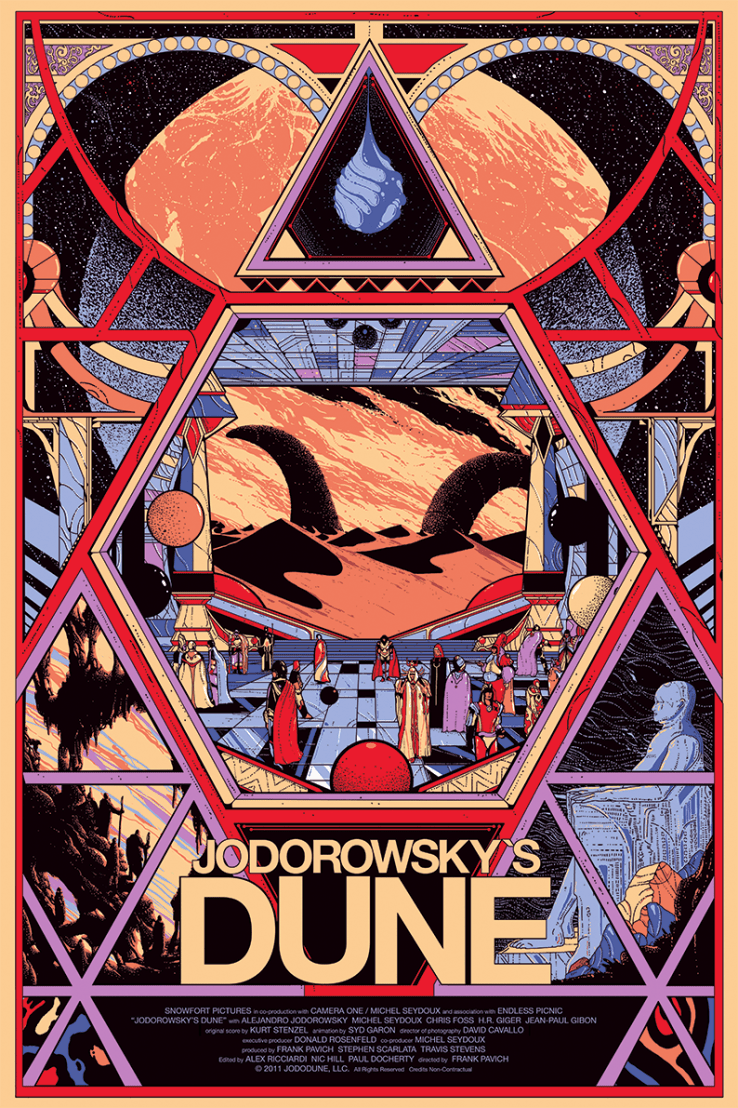
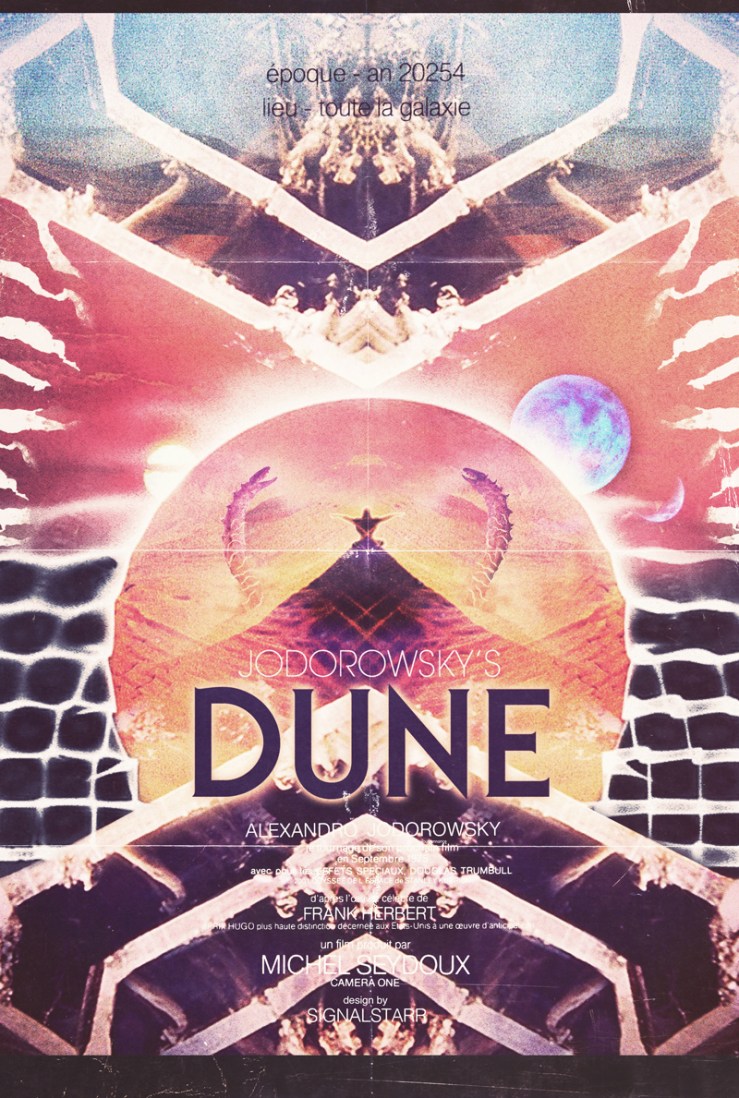
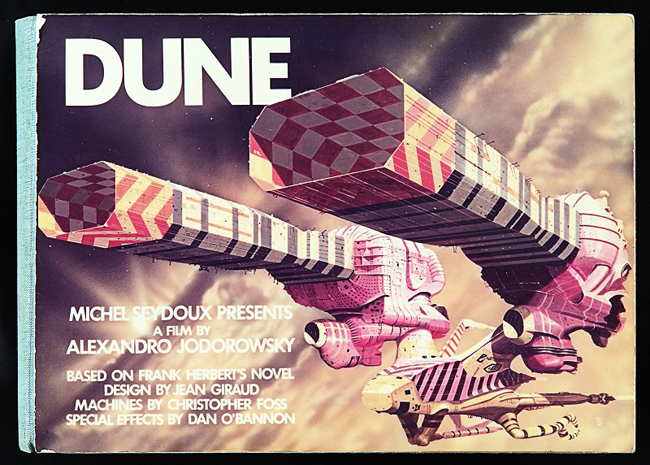
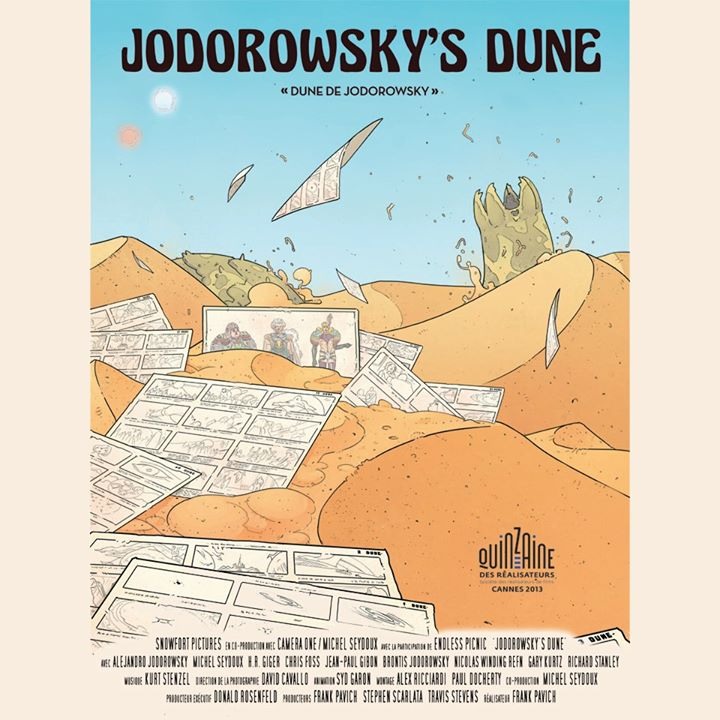
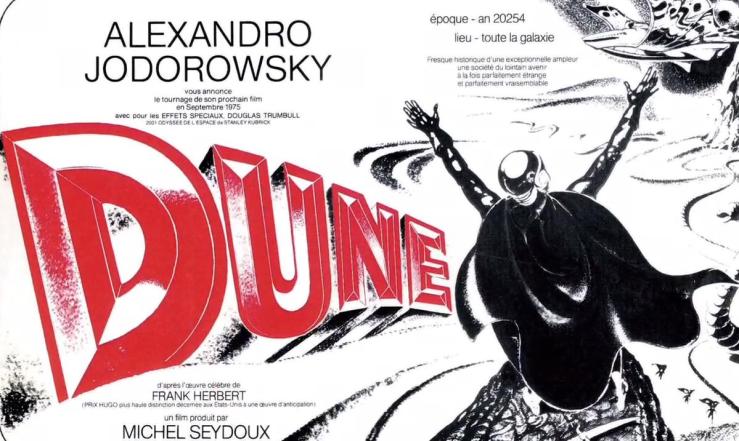
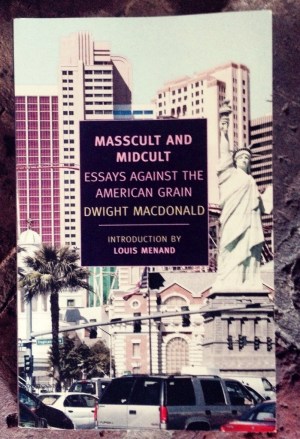


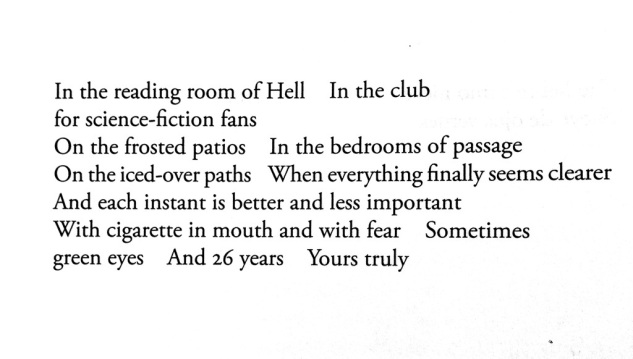 In another poem, Bolaño seems to obliquely address Borges again (“Dear, this isn’t Paradise”), while also name-checking the heroes of that “club / for science-fiction fans” (including some perhaps-unlikely figures):
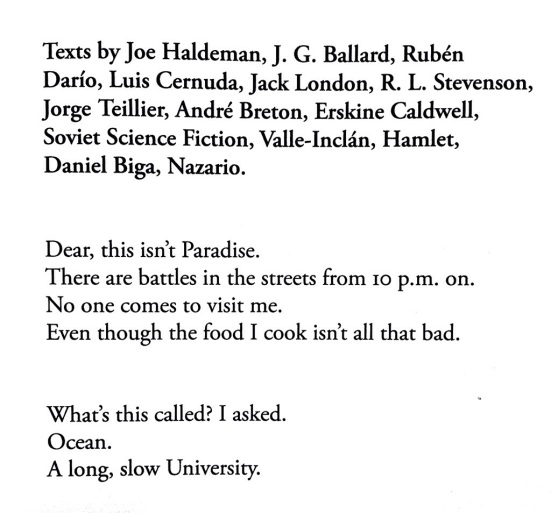 “A long, slow University.” Yes.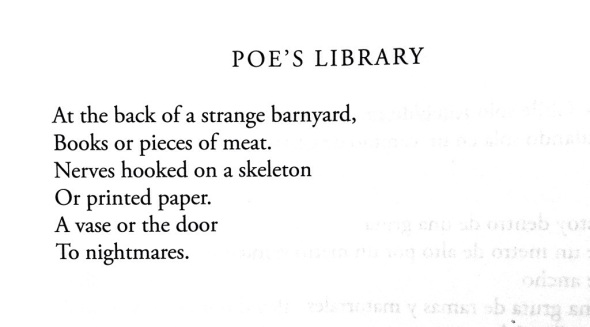
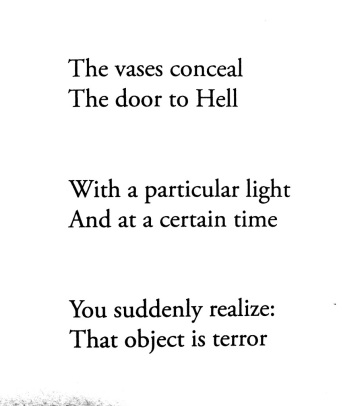
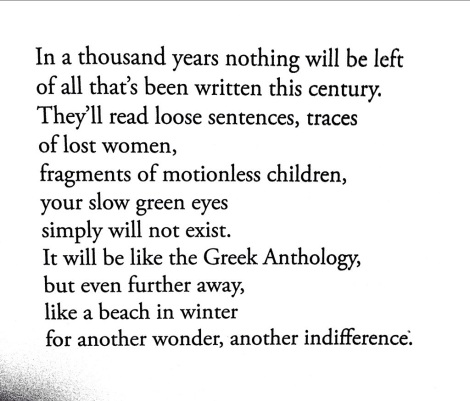

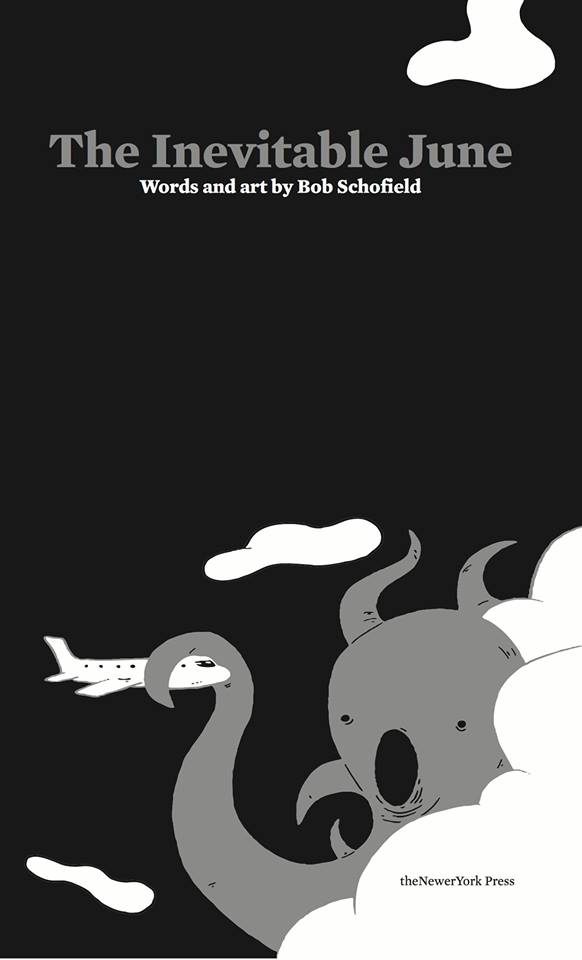

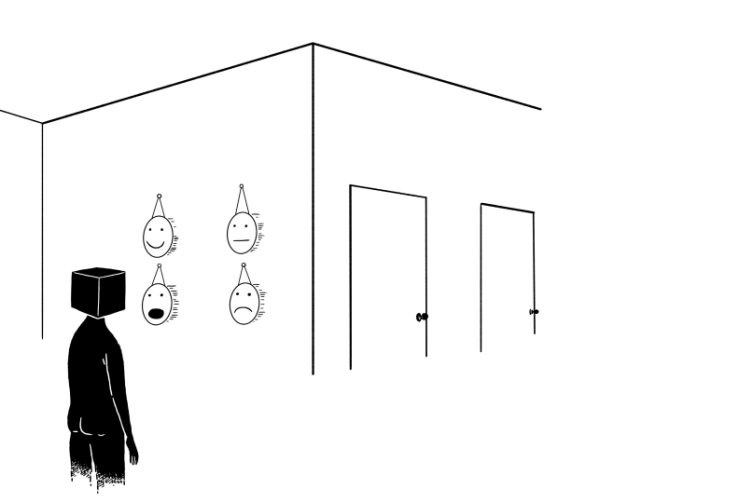
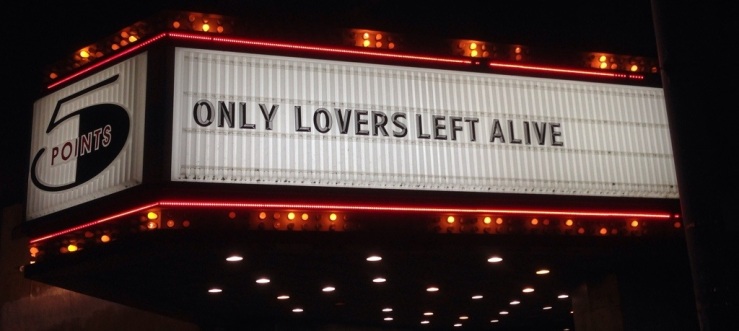
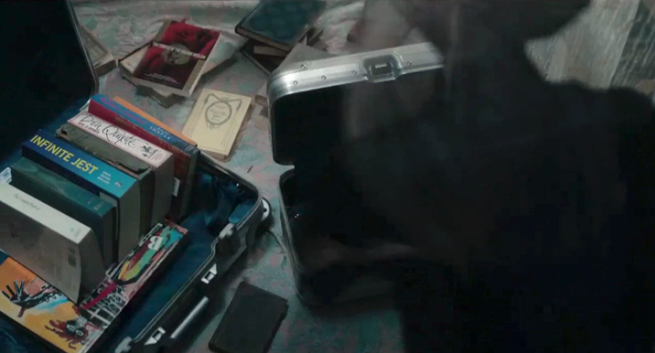
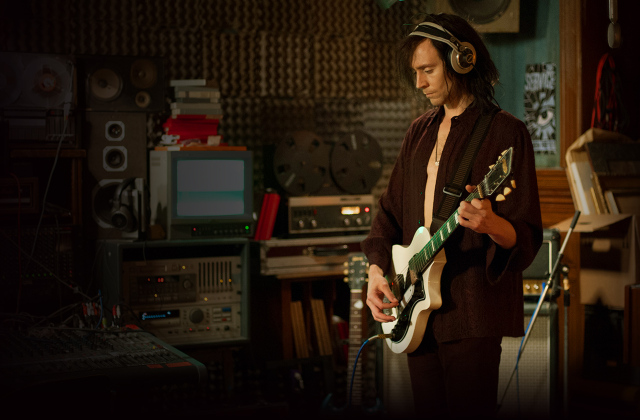
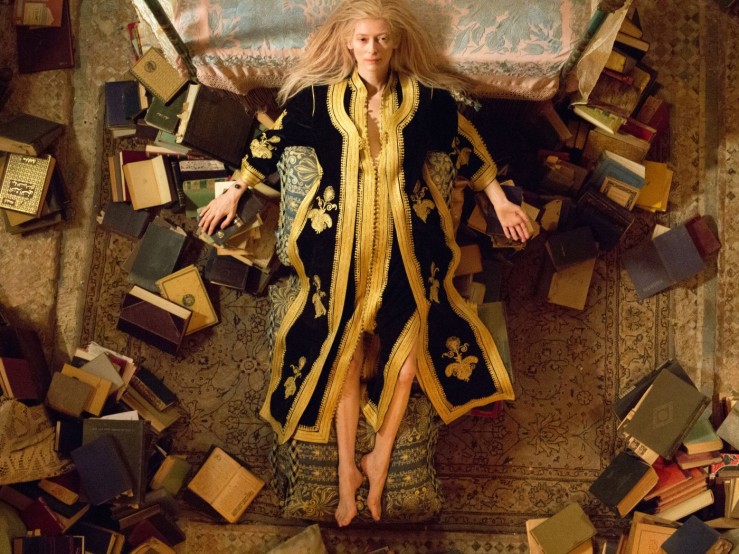
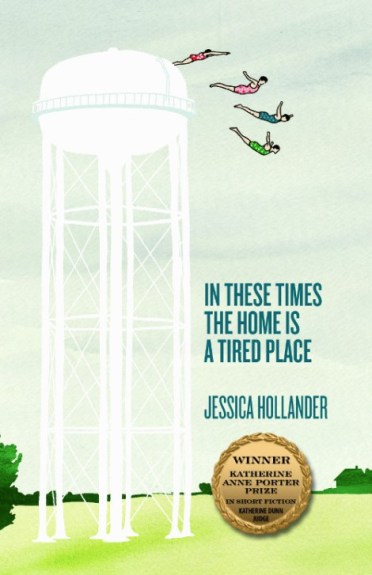 I was deeply impressed by the short stories in Jessica Hollander’s In These Times the Home Is a Tired Place (

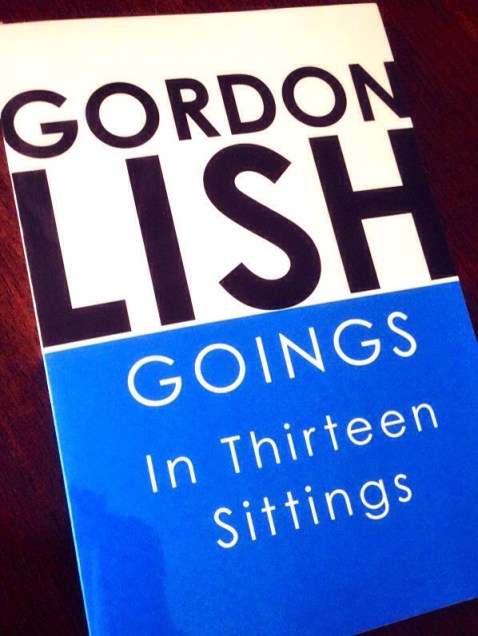
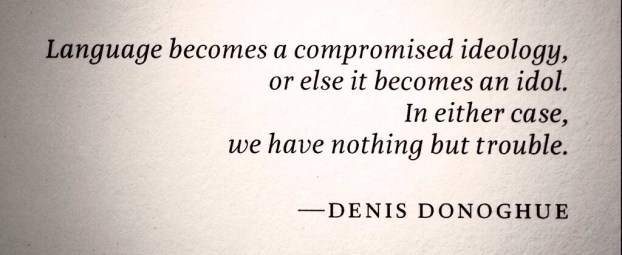
 Biblioklept: Why can’t they learn? Why the repetition? Why not a heroic arc? Why not a saving grace?
 Biblioklept