There are a number of difficulties with dirty words, the first of which is that there aren’t nearly enough of them (William H. Gass)

There are a number of difficulties with dirty words, the first of which is that there aren’t nearly enough of them; the second is that the people who use them are normally numskulls and prudes; the third is that in general they’re not at all sexy, and the main reason for this is that no one loves them enough. Contrary to those romantic myths which glorify the speech of mountain men and working people, Irish elves and Phoenician sailors, the words which in our language are worst off are the ones which the worst-off use. Poverty and isolation produce impoverished and isolated minds, small vocabularies, a real but fickle passion for slang, most of which is like the stuff which Woolworths sells for ashtrays, words swung at random, wildly, as though one were clubbing rats, or words misused in an honest but hopeless attempt to make do, like attacking tins with toothpicks; there is a dominance of cliché and verbal stereotype, an abundance of expletives and stammer words: you know, man, like wow! neat, fabulous, far-out, sensaysh. I am firmly of the opinion that people who can’t speak have nothing to say. It’s one more thing we do to the poor, the deprived: cut out their tongues . . . allow them a language as lousy as their lives.

Thin in content, few in number, constantly abused: what chance do the unspeakables have? Change is resisted fiercely, additions are denied. I have introduced ‘squeer,’ ‘crott,’ ‘kotswinkling,’ and ‘papdapper,’ with no success. Sometimes obvious substitutes, like ‘socksucker,’ catch on, but not for long. What we need, of course, is a language which will allow us to distinguish the normal or routine fuck from the glorious, the rare, or the lousy one—a fack from a fick, a fick from a fock—but we have more names for parts of horses than we have for kinds of kisses, and our earthy words are all . . . well . . . ‘dirty.’ It says something dirty about us, no doubt, because in a society which had a mind for the body and other similarly vital things, there would be a word for coming down, or going up, words for nibbles on the bias, earlobe loving, and every variety of tongue track. After all, how many kinds of birds do we distinguish?

We have a name for the Second Coming but none for a second coming. In fact our entire vocabulary for states of consciousness is critically impoverished.

From William H. Gass’s On Being Blue.

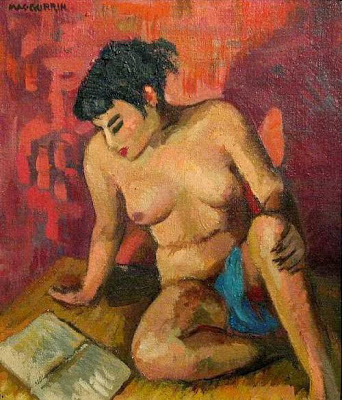
Amanda Reading — Buckley MacGurrin

macgurrin-buckley-amanda-reading

Three Books

img_1271

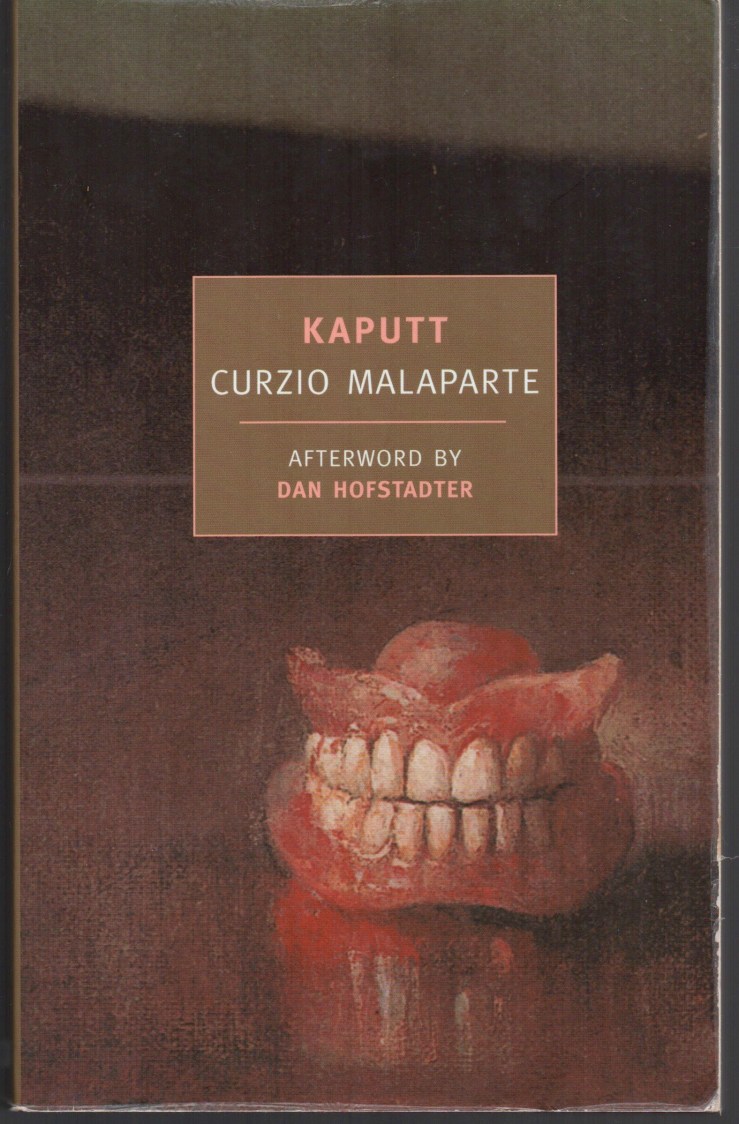
Kaputt by Curzio Malaparte. English translation by Cesare Foligno. 2005 trade paperback by NYRB. Cover painting is Odd Nerdrum’s The Dentures; cover design by Katy Homans. Bought this a while ago and have been meaning to take a serious crack at it for some time now.
img_1273

1982 Janine by Alasdair Gray. 1985 trade paperback by Penguin. No designer credited, but I’d bet money Gray did the cover illustration himself. Picked this up after loving the hell out of Lanark, but I keep getting pulled away from it: another one to try in 2016.img_1272

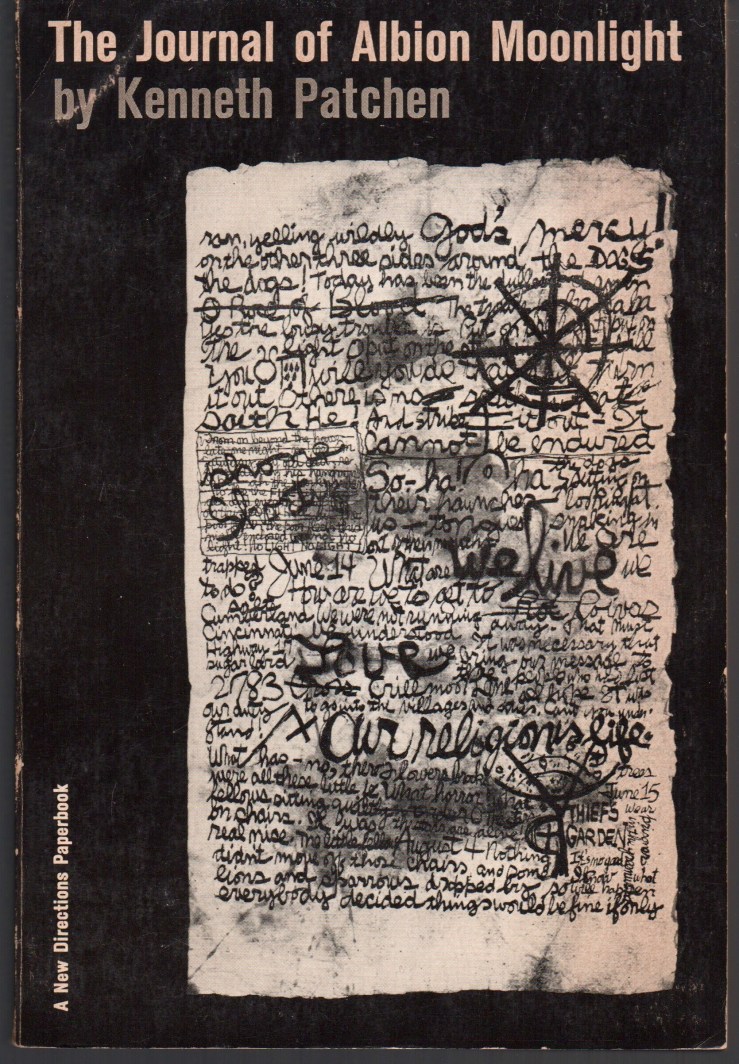
The Journal of Albion Moonlight by Kenneth Patchen. Trade paperback by New Directions (no year given, but “Fifth Printing” noted). Cover art is a photo of Patchen’s manuscript for the volume; no photographer or designer is credited. Shelved next to the Gray; will attempt again this year.

I have a bad cold – Fernando Pessoa / Álvaro de Campos

I have a bad cold.jpg

(Translation: Richard Zenith.)

The obligatory 2015 year-end list

img_1228

Favorite Reading Experiences

I finally read Thomas Pynchon’s novel Gravity’s Rainbow in full in 2015. Then I immediately read it again (which is sort of like really reading it), occasionally dipping into Steven Weisenburger’s A Gravity’s Rainbow Companion. Rewarding, hilarious, challenging, perplexing, Gravity’s Rainbow is too brilliant to look at directly, and is perhaps best approached slantwise, as one Ms. Dickinson of Amherst has advised.

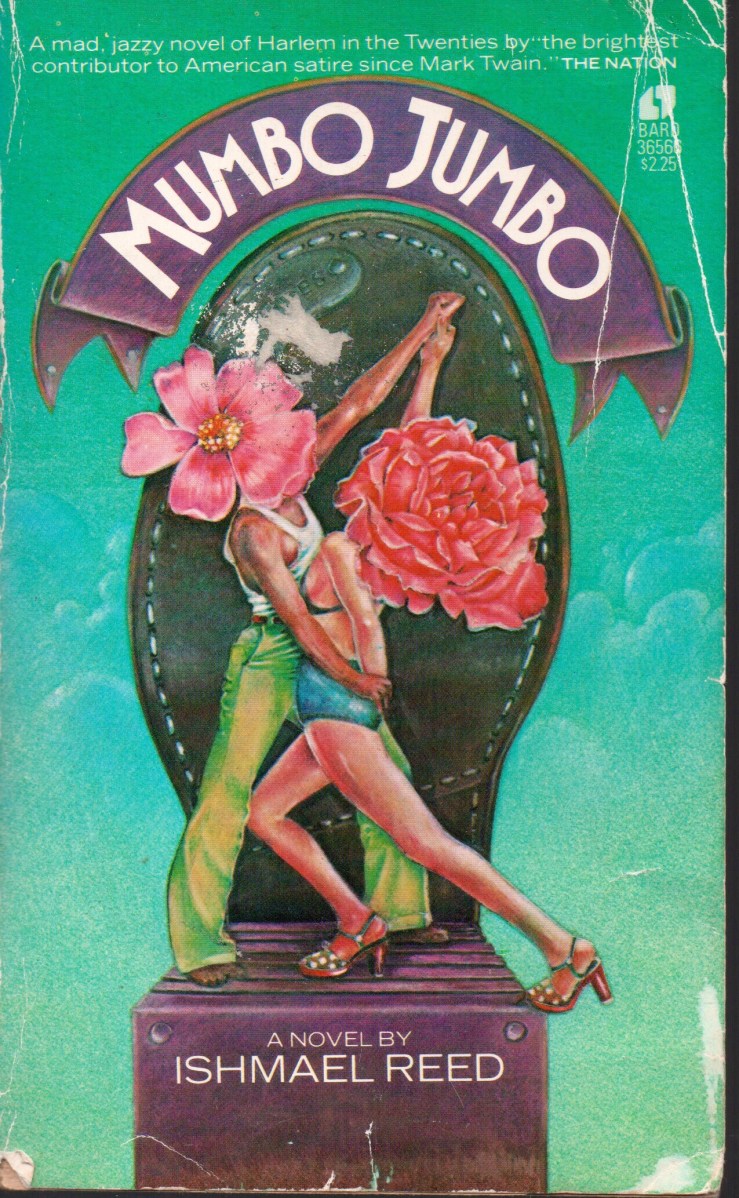
On page 588 of Gravity’s Rainbow, the narrator (?!) suggests that we “Check out Ishmael Reed.” So I did. His novel Mumbo Jumbo is like nothing I’ve ever read before—the reviewer’s crutch “dazzling performance” comes to mind, because Mumbo Jumbo is a performance (jazz, bebop, soft shoe, vaudeville, a hoodoo magic show, an exorcism: performance art), and it does dazzle, overwhelm, energize, haunt, titillate, reverberate, howl…and there are pictures! Reed uses photos in a way that Sebald would a few decades later—documentary evidence of a sort. I don’t know. I just don’t know.

Like Reed’s novel, Anne Carson’s novel-poem-myth-book Autobiography of Red is impossible to categorize and extremely difficult to describe. I tried to write about it a few times on this site and failed, which is fine. What matters here is the reading experience: Carson’s book zapped me, gave me tingles, reminded me that what I want to think and feel when I read is, How is this possible? How is this allowed? (Another huge thank you to BLCKDGRD for sending me Autobiography of Red and its sorta-sequel Red Doc>).

Also: Nabokov’s Pale FireTwo Serious Ladies by Jane BowlesHomesick by Lucia Berlin and Evan Dara’s novel Fleewhich I loved reading with Biblioklept contributor Ryan Chang .

And finally, Ursula K. Le Guin, whose so-called Hainish Cycle I read most of this year. I still have to read The Telling, but great stuff, and a full write-up early in the new year.

Favorite Books I Read in 2015 That Were Actually Published in 2015

Signs Preceding the End of the World, Yuri Herrera

Cess, Gordon Lish

The Bus 2, Paul Kirchner

Mislaid, Nell Zink (although I liked The Wallcreeper better, but hey, it was published last year)

Favorite Indie Presses of 2015

You can’t beat Nobrow, Dorothy, OR, and/or And Other Stories.

Favorite Films I Saw in 2015 That Came Out in 2015

IMG_0340

I had a relatively contrarian opinion of Fury Road, but I enjoyed it overall, I suppose. The Force Awakens was a better spectacle for my money/nostalgia. Overall, 2015 was kind of a weak year for movies, filled with overrated indies, comic book schlock, and self-serious entertainments that Tried Too Hard. Hard to Be a God was the only thing that really zapped me, although a quick google shows that it was actually released in 2014.

You know, Inherent Vice was released in late 2014 too, but I saw it and loved it and obsessed over it in 2015…so, Inherent Vice, yeah…

I also liked that Scientology documentary, which was full-on Pynchon.

Favorite Television Shows of 2015

I thought the second season of Fargo was near-perfect and found the tawdry spectacle of The Jinx thrilling, but there was no show I enjoyed watching and reading about more than the second season of True Detective

Favorite Albums of 2015

The albums I listened to the most this year were soundtracks that came out before 2015: Inherent Vice and The Good, The Bad, and The Ugly. But I did like a number of new albums this year, including Joanna Newsom’s Divers, Jim O’Rourke’s Simple Songs, and Destroyer’s Poison Season.

Favorite Books I Didn’t Finish in 2015

I’ve been crawling my way through a full read of Leslie Fiedler’s Love and Death in the American Novel, but: No end in sight. I also read most of the essays in William T. Vollmann: A Critical Companion (check out my interview with the editors). I also read a hefty chunk of the Ben Marcus-edited collection New American Stories. My favorite discursive reading though was dipping into William H. Gass’s nonfiction.

Favorite Rereads

…speaking of Gass—well, I read his essay “Even If, by All the Oxen in the World” in conjunction with a reread of David Foster Wallace’s Infinite Jest, which turned out to be most rewarding—both the rereading and the reading-in-conjunction. Reading Infinite Jest for the first time since 2001 ended up being a deflating, even depressing experience, but I wouldn’t trade it. I also reread against the second reading of Gravity’s Rainbow. Other rereading highlights included Pynchon, Ursula K. Le Guin, High Rise by J.G. Ballard, and Blood Meridian by Cormac McCarthy (which I’ve reread every year since I first read it). But it was McCarthy’s Suttree that I got the most out of rereading this year.

2016

I’ll finish out Le Guin’s Hainish books with The Telling, and then probably crack into William H. Gass’s Eyes. In between I might read Marianne Fritz’s novel The Weight of Things. More Lucia Berlin for sure. Thomas Bernhard if it ever cools down again. (End of December 2015 and it feels like early summer here in Florida). I’d also love to take a shot at William T. Vollmann’s The Dying Grass, but who knows…there are always more pages than hours.

A probably incomplete list of books I read in 2015

The Crying of Lot 49, Thomas Pynchon*

Dockwood, Jon McNaught

A German Picturesque, Jason Schwartz*

Inherent Vice, Thomas Pynchon*

Two Serious Ladies, Jane Bowles

Flee, Evan Dara

Birchfield Close, Jon McNaught

Nazi Literature in the Americas, Roberto Bolaño*

Signs Preceding the End of the World, Yuri Herrera

Infinite Fictions, David Winters

Syrian Notebooks, Jonathan Littell

Girl in a Band, Kim Gordon

Can’t and Won’t, Lydia Davis

Gravity’s Rainbow, Thomas Pynchon

Gaha: Babes of the Abyss, Jon Frankel

The Spectators, Victor Hussenot

Mumbo Jumbo, Ishmael Reed

Infinite Jest, David Foster Wallace*

The Wallcreeper, Nell Zink

Cess, Gordon Lish

Station Eleven, Emily St. John Mandel

High Rise, J.G. Ballard*

Millennium People, J.G. Ballard

Pale Fire, Vladimir Nabokov

Mislaid, Nell Zink

The Diamond Age, Neal Stephenson

Culture and Value, Ludwig Wittgenstein

Martian Time-Slip, Philip K. Dick

Autobiography of Red, Anne Carson

Suttree, Cormac McCarthy*

Blood Meridian, Cormac McCarthy*

Red Doc>, Anne Carson

The Buried Giant, Kazuo Ishiguro

The Lathe of Heaven, Ursula K. Le Guin

The Bus, Paul Kirchner

The Bus 2, Paul Kirchner

The Free-Lance Pall Bearers, Ishmael Reed

Vertigo, Joanna Walsh

Rocannon’s World, Ursula K. LeGuin

Censorship Now!!, Ian Svenonius

750 Years in Paris, Vincent Mahé

The Dispossessed, Ursula K. Le Guin*

The Word for World Is Forest, Ursula K. Le Guin

Planet of Exile, Ursula K. Le Guin

City of Illusions, Ursula K. Le Guin

Homesick, Lucia Berlin

The Left Hand of Darkness, Ursula K. Le Guin*

* indicates a reread

Three Books (or, My three favorite reading experiences in 2015)

These were my three favorite (?!) reading experiences in 2015:

img_1217

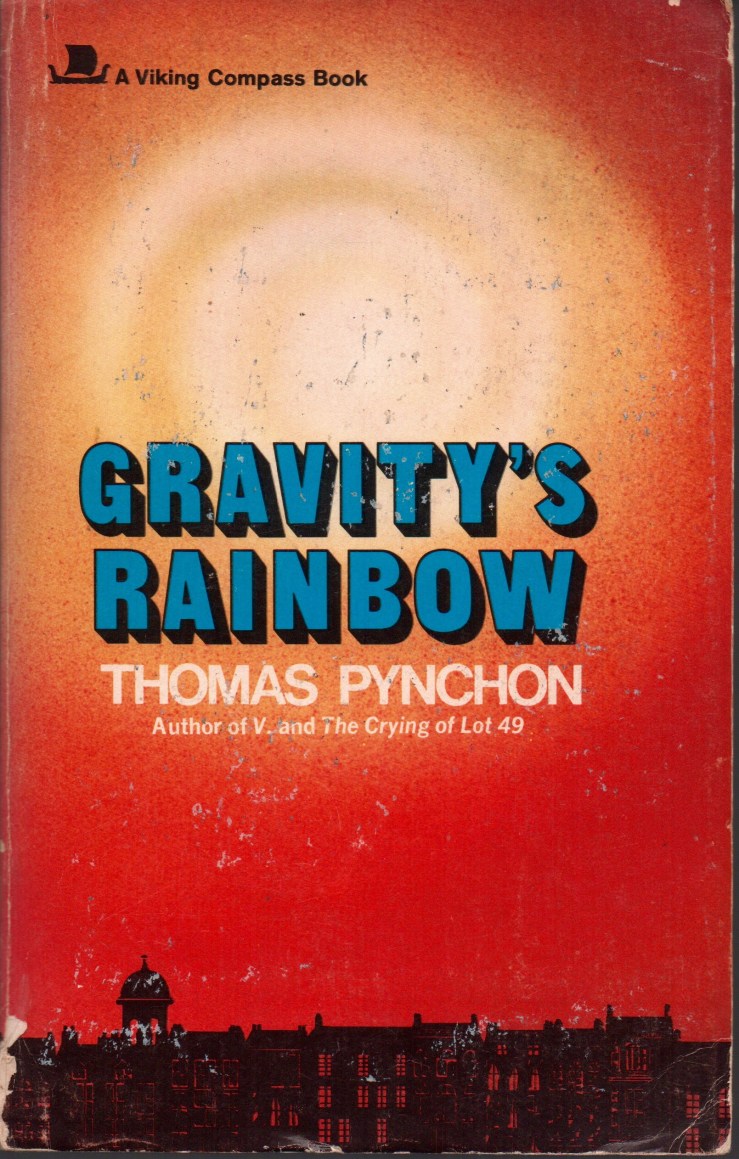
Gravity’s Rainbow by Thomas Pynchon. 1973 first edition trade paperback by Viking. Cover design and illustration by Marc Getter.img_1218

Autobiography of Red by Anne Carson. First Vintage Contemporaries edition, trade paperback, 1998. Cover design by Carol Devine Carson.

IMG_0547

Mumbo Jumbo by Ishmael Reed. 1978 mass market paperback by Bard Books, a division of Avon Books. No designer or illustrator credited.

“It was Christmas night and the proper things had been done” (The Once and Future King)

It was Christmas night and the proper things had been done. The whole village had come to dinner in hall. There had been boar’s head and venison and pork and beef and mutton and capons—but no turkey, because this bird had not yet been invented. There had been plum pudding and snap-dragon, with blue fire on the tips of one’s fingers, and as much mead as anybody could drink. Sir Ector’s health had been drunk with “Best respects, Measter,” or “Best compliments of the Season, my lords and ladies, and many of them.” There had been mummers to play an exciting dramatic presentation of a story in which St. George and a Saracen and a funny Doctor did surprising things, also carol-singers who rendered “Adeste Fideles” and “I Sing of a Maiden,” in high, clear, tenor voices. After that, those children who had not been sick from their dinner played Hoodman Blind and other appropriate games, while the young men and maidens danced morris dances in the middle, the tables having been cleared away. The old folks sat round the walls holding glasses of mead in their hands and feeling thankful that they were past such capers, hoppings and skippings, while those children who had not been sick sat with them, and soon went to sleep, the small heads leaning against their shoulders. At the high table Sir Ector sat with his knightly guests, who had come for the morrow’s hunting, smiling and nodding and drinking burgundy or sherries sack or malmsey wine.

After a bit, silence was prayed for Sir Grummore. He stood up and sang his old school song, amid great applause—but forgot most of it and had to make a humming noise in his moustache. Then King Pellinore was nudged to his feet and sang bashfully:

“Oh, I was born a Pellinore in famous Lincolnshire. Full well I chased the Questing Beast for more than seventeen year. Till I took up with Sir Grummore here In the season of the year. (Since when) ’tis my delight On a feather-bed night To sleep at home, my dear.

“You see,” explained King Pellinore blushing, as he sat down with everybody whacking him on the back, “old Grummore invited me home, what, after we had been having a pleasant joust together, and since then I’ve been letting my beastly Beast go and hang itself on the wall, what?”

“Well done,” they told him. “You live your own life while you’ve got it.”

William Twyti was called for, who had arrived on the previous evening, and the famous huntsman stood up with a perfectly straight face, and his crooked eye fixed upon Sir Ector, to sing:

“D’ye ken William Twyti

With his Jerkin so dagged? D’ye ken William Twyti

Who never yet lagged? Yes, I ken William Twyti,

And he ought to be gagged With his hounds and his horn in the morning.”

“Bravo!” cried Sir Ector. “Did you hear that, eh? Said he ought to be gagged, my dear feller. Blest if I didn’t think he was going to boast when he began. Splendid chaps, these huntsmen, eh? Pass Master Twyti the malmsey, with my compliments.”

The boys lay curled up under the benches near the fire, Wart with Cavall in his arms. Cavall did not like the heat and the shouting and the smell of mead, and wanted to go away, but Wart held him tightly because he needed something to hug, and Cavall had to stay with him perforce, panting over a long pink tongue.

“Now Ralph Passelewe.”

“Good wold Ralph.”

“Who killed the cow, Ralph?”

“Pray silence for Master Passelewe that couldn’t help it.”

At this the most lovely old man got up at the furthest and humblest end of the hail, as he had got up on all similar occasions for the past half-century. He was no less than eighty-five years of age, almost blind, almost deaf, but still able and willing and happy to quaver out the same song which he had sung for the pleasure of the Forest Sauvage since before Sir Ector was bound up in a kind of tight linen puttee in his cradle. They could not hear him at the high table—he was too far away in Time to be able to reach across the room—but everybody knew what the cracked voice was singing and everybody loved it. This is what he sang:

“Whe-an/Wold King-Cole/was a /wakkin doon-t’street, H-e /saw a-lovely laid-y a /steppin-in-a-puddle. / She-a /lifted hup-er-skeat/ For to / Hop acrorst ter middle, / An ee /saw her /an-kel. Wasn’t that a fuddle? / Ee could’ernt elp it, /ee Ad to.”

There were about twenty verses of this song, in which Wold King Cole helplessly saw more and more things that he ought not to have seen, and everybody cheered at the end of each verse until, at the conclusion, old Ralph was overwhelmed with congratulations and sat down smiling dimly to a replenished mug of mead.

It was now Sir Ector’s turn to wind up the proceedings. He stood up importantly and delivered the following speech:

“Friends, tenants and otherwise. Unaccustomed as I am to public speakin’—”

There was a faint cheer at this, for everybody recognized the speech which Sir Ector had made for the last twenty years, and welcomed it like a brother.

“Unaccustomed as I am to public speakin'” it is my pleasant duty—I might say my very pleasant duty—to welcome all and sundry to this our homely feast. It has been a good year, and I say it without fear of contradiction, in pasture and plow. We all know how Crumbocke of Forest Sauvage won the first prize at Cardoyle Cattle Show for the second time, and one more year will win the cup outright. More power to the Forest Sauvage. As we sit down tonight, I notice some faces now gone from among us and some which have added to the family circle. Such matters are in the hands of an almighty Providence, to which we all feel thankful. We ourselves have been first created and then spared to enjoy the rejoicin’s of this pleasant evening. I think we are all grateful for the blessin’s which have been showered upon us. Tonight we welcome in our midst the famous King Pellinore, whose labours in riddin’ our forest of the redoubtable Questin’ Beast are known to all. God bless King Pellinore. (Hear, hear!) Also Sir Grummore Grummursum, a sportsman, though I say it to his face, who will stick to his mount as long as his Quest will stand up in front of him. (Hooray!) Finally, last but not least, we are honoured by a visit from His Majesty’s most famous huntsman, Master William Twyti, who will, I feel sure, show us such sport tomorrow that we will rub our eyes and wish that a royal pack of hounds could always be huntin’ in the Forest which we all love so well. (Viewhalloo and several recheats blown in imitation.) Thank you, my dear friends, for your spontaneous welcome to these gentlemen. They will, I know, accept it in the true and warmhearted spirit in which it is offered. And now it is time that I should bring my brief remarks to a close. Another year has almost sped and it is time that we should be lookin’ forward to the challengin’ future. What about the Cattle Show next year? Friends, I can only wish you a very Merry Christmas, and, after Father Sidebottom has said our Grace for us, we shall conclude with a singin’ of the National Anthem.”

The cheers which broke out at the end of Sir Ector’s speech were only just prevented, by several hush-es, from drowning the last part of the vicar’s Grace in Latin, and then everybody stood up loyally in the firelight and sang:

“God save King Pendragon,

May his reign long drag on,

God save the King.

Send him most gorious,

Great and uproarious,

Horrible and Hoarious,

God save our King.”

The last notes died away, the hall emptied of its rejoicing humanity. Lanterns flickered outside, in the village street, as everybody went home in bands for fear of the moonlit wolves, and The Castle of the Forest Sauvage slept peacefully and lightless, in the strange silence of the holy snow.

—From T.H. White’s The Once and Future King.
 

Happy Christmas

img_1212

Happy Christmas. These are scans of some Christmas cards that my family bought and never sent. This was in ’87 or ’88, in Papua New Guinea, which is where the cards were designed and printed. Maybe I’ll blog about living there sometime. Or not. Happy Christmas.img_1213

A Blood Meridian Christmas

Cormac McCarthy’s seminal anti-Western Blood Meridian isn’t exactly known for visions of peace on earth and good will to man. Still, there’s a strange scene in the book’s final third that subtly recalls (and somehow inverts) the Christmas story. The scene takes place at the end of Chapter 15. The Kid, erstwhile protagonist of Blood Meridian, has just reunited with the rampaging Glanton gang after getting lost in the desert and, in a vision-quest of sorts, has witnessed “a lone tree burning on the desert” (a scene I argued earlier this year was the novel’s moral core).

Glanton’s marauders, tired and hungry, find temporary refuge from the winter cold in the town of Santa Cruz where they are fed by Mexicans and then permitted to stay the night in a barn. McCarthy offers a date at the beginning of the chapter — December 5th — and it’s reasonable to assume, based on the narrative action, that the night the gang spends in the manger is probably Christmas Eve. Here is the scene, which picks up as the gang — “they” — are led into the manger by a boy–

The shed held a mare with a suckling colt and the boy would would have put her out but they called to him to leave her. They carried straw from a stall and pitched it down and he held the lamp for them while they spread their bedding. The barn smelled of clay and straw and manure and in the soiled yellow light of the lamp their breath rolled smoking through the cold. When they had arranged their blankets the boy lowered the lamp and stepped into the yard and pulled the door shut behind, leaving them in profound and absolute darkness.

No one moved. In that cold stable the shutting of the door may have evoked in some hearts other hostels and not of their choosing. The mare sniffed uneasily and the young colt stepped about. Then one by one they began to divest themselves of their outer clothes, the hide slickers and raw wool serapes and vests, and one by one they propagated about themselves a great crackling of sparks and each man was seen to wear a shroud of palest fire. Their arms aloft pulling at their clothes were luminous and each obscure soul was enveloped in audible shapes of light as if it had always been so. The mare at the far end of the stable snorted and shied at this luminosity in beings so endarkened and the little horse turned and hid his face in the web of his dam’s flank.

The “shroud of palest fire” made of sparks is a strange image that seems almost supernatural upon first reading. The phenomena that McCarthy is describing is simply visible static electricity, which is not uncommon in a cold, dry atmosphere–particularly if one is removing wool clothing. Still, the imagery invests the men with a kind of profound, bizarre significance that is not easily explainable. It is almost as if these savage men, naked in the dark, are forced to wear something of their soul on the outside. Tellingly, this spectacle upsets both the mare and her colt, substitutions for Mary and Christ child, which makes sense. After all, these brutes are not wise men.

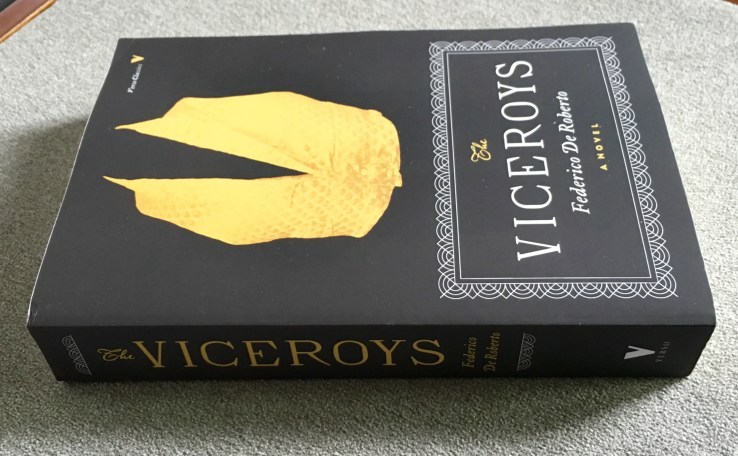
The Viceroys (Book acquired, 12.22.2015)

img_1195

Federico De Roberto 1894 novel The Viceroys is back in print again via the good people at Verso. This edition is translated by Archibald Colquhoun, with a foreword by Franco Moretti. Verso’s blurb:

A lost literary classic, written in 1894, The Viceroys is one of the most acclaimed masterworks of Italian realism.

The novel follows three generations of the aristocratic Uzeda family as it struggles to hold on to power in the face of the cataclysmic changes rocking Sicily. As Garibaldi’s triumphs move Italy toward unification, the Uzedas try every means to retain their position. De Roberto’s satirical and mordant pen depicts a cast of upper-class schemers, headed by the old matriarch, Donna Teresa, and exemplified by her arrogant and totally unscrupulous son, Consalvo, who rises to political eminence through lip service, double-dealing, and hypocrisy. The Viceroys is a vast dramatic panorama: a new world fighting to shrug off the viciousness and iniquities of the old.

Moretti’s blurb:
“A unique combination of naturalistic lucidity over the fate of impoverished aristocracies, and a Goya-like inventiveness in extracting from social disintegration a whole gallery of grotesques and monstrosities … a superb lesson in how coarse and rancid the collapse of a ruling class actually is.

Thirty-point riff on Star Wars: The Force Awakens

Rey-Star-Wars-Episode-7-Force-Awakens

  1. Star Wars: The Force Awakens is a fun entertainment that achieves its goals, one of which is not to transcend the confines of its brand-mythos.
  2. SW: TFA takes Star Wars itself (as brand-mythos) as its central subject. The film is “about” Star Wars.
  3. To this end, SW: TFA is basically a remake of A New Hope. My saying this is not insightful and cannot be insightful.
  4. In the first Star Wars film, A New Hope (aka Episode IV, aka simply Star Wars), George Lucas synthesized Flash Gordon and Kurosawa, Joseph Campbell and WWII serials into a cultural product that was simultaneously new and old, hokey and profound, campy and heroic.
  5. SW: TFA is not a synthesis (and does not seek to be a synthesis); rather it is a transcription, repetition, and  replication of the previous Star Wars films—particularly the so-called “original trilogy” (Episodes IV, V, and VI).
  6. Hence, SW: TFA often feels like a greatest hits collection, its sequences and visuals (engaging and visually spectacular) cribbed from the previous films. I could spend the rest of the riff outlining the correspondences—major and minor—but why? The correspondences are intentionally obvious to anyone who has seen the film; furthermore, they are not allusions, but the formal structure of the film.
  7. And this formal technique, this replication—it’s all very enjoyable and often warm and unexpectedly humorous and at times awfully sad even.
  8. And I liked the new characters very much, which I was of course supposed to. They are all in some ways replications of previously existing characters, just as the set pieces and sequences they act in/out/upon are replications.
  9. Let’s consider Rey, the heroine of The Force Awakens really quickly: She is, in some ways, a synthesis, but only a synthesis of the principals of the Star Wars brand-mythos: She is at once Han, Luke, and Leia: A figuration in the foreground: A childhood fantasy.
  10. A childhood fantasy: Watching SW: TFA feels like watching a Star Wars film—which is the film’s intention, obviously.
  11. But not obviously and really quickly and not a gripe: Isn’t there a part of us, by which us I mean me, that wants something more than the feeling of (the feeling of) a Star Wars film? That wants something transcendent—something beyond that which we have felt and can name? Something that we don’t know that we want because we haven’t felt it before?
  12. Re: Point 11: I already made an (awfully) oblique argument at some length almost three years ago about franchise films in general and Star Wars films in particular, arguing (maybe arguing) for, say, Wong Kar Wai to direct the next Star Wars film.
  13. In that riff I wrote that, “J.J. Abrams is a safe bet. I can more or less already imagine the movie he’ll make.” That prediction was incorrect only in that I enjoyed the product that he made more than I thought I would. That prediction was wholly correct in that I could imagine the product Abrams made. It was easy to imagine. I’d already seen the film dozens of times before he even made it.
  14. So, to return to point 11, the “not a gripe” point: Is the argument then that film as an art form allows us (the illusion of) a transcendent perspective? That film at its best, at its strongest and strangest, offers us a new way of seeing?
  15. (Yes).
  16. The Force Awakens is strong but not strange. Its major advancement (by which I mean break from previous films) evinces in its casting choices—but these reflect the progress of our own era, not the brand-mythos of Star Wars itself, which was of course always diverse.
  17. The Force Awakens is fun. Entertaining. Like I wrote in point 1.
  18. And, to repeat point 2 after repeating point 1: SW: TFA is “about” Star Wars.
  19. So what do I mean by this? Consider for a minute what the other Star Wars films are “about.”
  20. A New Hope is about escape and rescue, both in the literal, romantic, and metatextual sense.
  21. The Empire Strikes Back is about Oedipal anxieties and Oedipal violence, family entanglements, friendships and loyalties.
  22. Return of the Jedi is about restoration and redemption, a film about the genius of ecology over mechanization.
  23. And while the (so-called) prequels are generally reviled, I like them: They are “about” something.
  24. For example, Revenge of the Sith is about democracy and fascism, community and ego—and more of that Oedipal violence.
  25. Indeed the entire series is Oedipally structured—which The Force Awakens replicates and continues.
  26. Yet Abrams’s reverence for Star Wars bears no clear trace (at least on my first viewing) of Oedipal anxiety towards Lucas. No attempt to transcend or surpass—as such a move would entail a kind of critical (if metaphorical) violence directed at Lucas’s vision. (Notably, many of the criticisms of the so-called prequels rest on the way those films look beyond their predecessors (in a way that Abrams’s film doesn’t)).
  27. “In order to criticize a movie, you have to make another movie,” said Jean-Luc Goddard.
  28. And Harold Bloom: “Every poem is a misinterpretation of a parent poem. A poem is not an overcoming of anxiety, but is that anxiety…There are no interpretations but only misinterpretations, and so all criticism is prose poetry.”
  29. Abrams’s goal was not to criticize Star Wars or poetically engage it; his goal was to praise it—to praise it as stasis, to replicate its comforts, to avow and vindicate its forms and tropes. And he succeeded.
  30. And of course the biggest success of the film: I want to watch it again.

If civilization has an opposite, it is war (Ursula K. Le Guin)

Tibe spoke on the radio a good deal. Estraven when in power had never done so, and it was not in the Karhidish vein: their government was not a public performance, normally; it was covert and indirect. Tibe, however, orated. Hearing his voice on the air I saw again the long-toothed smile and the face masked with a net of fine wrinkles. His speeches were long and loud: praises of Karhide, disparagements of Orgoreyn vilifications of “disloyal factions,” discussions of the “integrity of the Kingdom’s borders,” lectures in history and ethics and economics, all in a ranting, canting, emotional tone that went shrill with vituperation or adulation. He talked much about pride of country and love of the parentland, but little about shifgrethor, personal pride or prestige. Had Karhide lost so much prestige in the Sinoth Valley business that the subject could not be brought up? No; for he often talked about the Sinoth Valley. I decided that he was deliberately avoiding talk of shifgrethor because he wished to rouse emotions of a more elemental, uncontrollable kind. He wanted to stir up something which the whole shifgrethor-pattern was a refinement upon, a sublimation of. He wanted his hearers to be frightened and angry. His themes were not pride and love at all, though he used the words perpetually; as he used them they meant self-praise and hate. He talked a great deal about Truth also, for he was, he said, “cutting down beneath the veneer of civilization.”

It is a durable, ubiquitous, specious metaphor, that one about veneer (or paint, or pliofilm, or whatever) hiding the nobler reality beneath. It can conceal a dozen fallacies at once. One of the most dangerous is the implication that civilization, being artificial, is unnatural: that it is the opposite of primitiveness… Of course there is no veneer, the process is one of growth, and primitiveness and civilization are degrees of the same thing. If civilization has an opposite, it is war. Of those two things, you have either one, or the other. Not both. It seemed to me as I listened to Tibe’s dull fierce speeches that what he sought to do by fear and by persuasion was to force his people to change a choice they had made before their history began, the choice between those opposites.

From Ursula Le Guin’s 1969 novel The Left Hand of Darkness. The bold emphases are mine—mea culpa, I couldn’t help it.

Frankie Styne and the Silver Man (Book acquired, 12.09.2015)

img_1013

Kathy Page’s 1992 novel Frankie Styne and the Silver Man is getting a North American debut thanks to publisher Biblioasis. Blurb from the author’s website:

Frankie Styne, the successful author of a series of gruesome killer novels,  has lived  at 125 Onley Street for many years. Meticulous and obsessive, he lives a life of isolation, managing to keep both future and past at bay.

Next door, live Liz Meredith and her new baby, Jim. Liz has been told by her social worker Mrs Purvis that Jim has a rare disorder, and will never be like other children. But Mrs Purvis can’t see, as Liz can, that Jim already knows things no ordinary person could. Besides, Liz doesn’t want any help from the social services or from Tom and Alice, the couple at number 129. She wants to be left in peace so that she can imagine her way out of how things are.

When Frank’s solitary anonymity is threatened, he hatches a real-life plot which, as he begins to enact it, unexpectedly changes not only his own life, but also those of Liz and Jim. Sifting through our collective nightmares, Kathy Page has written a novel that is powerful, humorous, tragic and thoroughly surprising.

A Mason & Dixon Christmastide (Thomas Pynchon)

They discharge the Hands and leave off for the Winter. At Christmastide, the Tavern down the Road from Harlands’ opens its doors, and soon ev’ryone has come inside. Candles beam ev’rywhere. The Surveyors, knowing this year they’ll soon again be heading off in different Directions into America, stand nodding at each other across a Punch-bowl as big as a Bathing-Tub. The Punch is a secret Receipt of the Landlord, including but not limited to peach brandy, locally distill’d Whiskey, and milk. A raft of long Icicles broken from the Eaves floats upon the pale contents of the great rustick Monteith. Everyone’s been exchanging gifts. Somewhere in the coming and going one of the Children is learning to play a metal whistle. Best gowns rustle along the board walls. Adults hold Babies aloft, exclaiming, “The little Sausage!” and pretending to eat them. There are popp’d Corn, green Tomato Mince Pies, pickl’d Oysters, Chestnut Soup, and Kidney Pudding. Mason gives Dixon a Hat, with a metallick Aqua Feather, which Dixon is wearing. Dixon gives Mason a Claret Jug of silver, crafted in Philadelphia. There are Conestoga Cigars for Mr. Harland and a Length of contraband Osnabrigs for Mrs. H. The Children get Sweets from a Philadelphia English-shop, both adults being drawn into prolong’d Negotiations with their Juniors, as to who shall have which of. Mrs. Harland comes over to embrace both Surveyors at once. “Thanks for simmering down this Year. I know it ain’t easy.”
“What a year, Lass,” sighs Dixon.
“Poh. Like eating a Bun,” declares Mason.”

The last paragraphs of Ch. 52 of Thomas Pynchon’s novel Mason & Dixon.

Three Books

img_1191

Homesick: New & Selected Stories by Lucia Berlin. Lovely Black Sparrow trade edition, 1990; design by Barbara Martin. An amazing book, a revelation to me. I picked it up looking for the posthumous collection A Manual for Cleaning Women (that track is collected here) based on, well, the hype. But the hype was more than right, and I feel simultaneously abashed that I didn’t know Berlin before and grateful to know her writing now.

img_1190

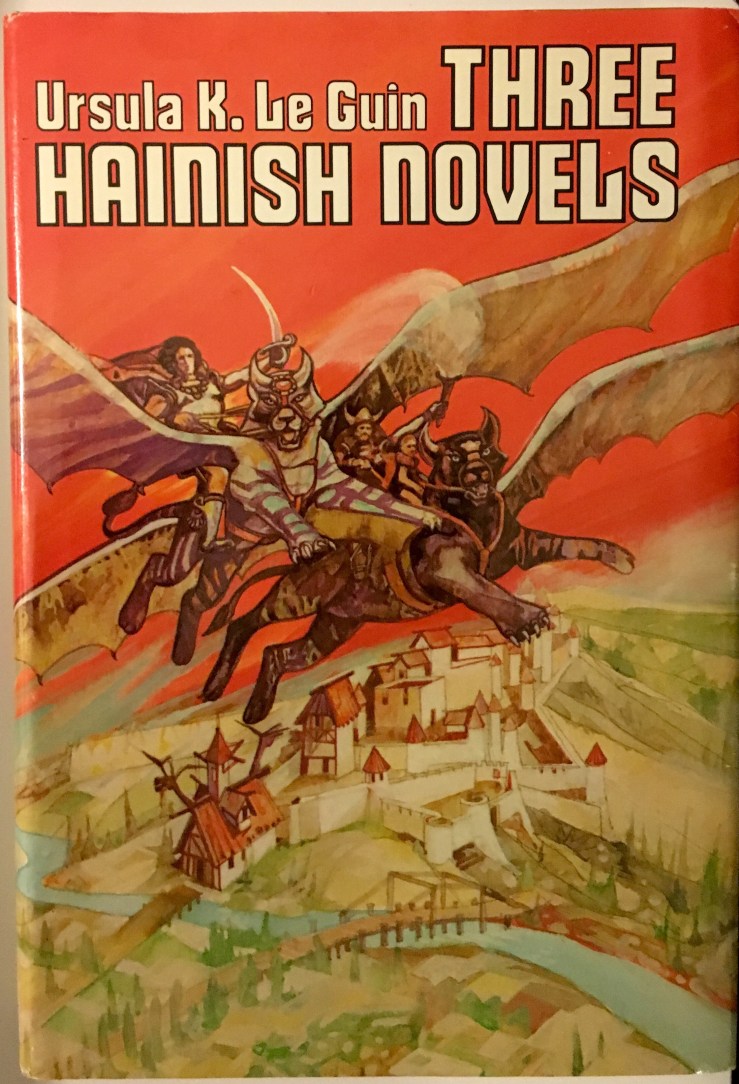
Three Hainish Novels by Ursula K. Le Guin. An omnibus collecting Rocannon’s WorldPlanet of Exile, and City of Illusions. 1967 hardcover by Nelson Doubleday. Jacket design by John Lisco; cover illustration by Jack Woolhiser. I finished City of Illusions this weekend—probably the most accomplished of her earliest (non-)trilogy, synthesizing high adventure into a philosophical exploration of truth and lie. A reread of The Left Hand of Darkness is next.img_1187

Purity and Danger by Mary Douglas. 1988 trade paperback by ARK. No designer or cover artist credited. I dug this out at some point in my big Le Guin read/re-read, and it’s been hanging around since. Can’t remember why.

William S. Burroughs and his friends