The following discussion of Vladimir Sorokin’s novel Blue Lard (in translation by Max Lawton) is intended for those who have read or are reading the book. It contains significant spoilers; to be very clear, I strongly recommend entering Blue Lard cold.
I’ve had too many false starts with this last (for now) riff on Blue Lard that I’ve ended up rereading the last 100 or so pages maybe four times now. When I first started this ridiculous series of riffs–way back in February!–I promised to surf Blue Lard’s wave; I have not done that. I’ve bogged myself down in summarizing. I’ve found myself reading Wikipedia entry after Wikipedia entry of the various Soviet luminaries–politicians, artists, writers, scientists, etc.–who lard the end of the novel. I’ve tried to figure out the ending by going back to the epistolary beginning. I’ve tried, I suppose, to flesh out the thesis I arrived at in the last riff I did, where I suggested that “Blue Lard is hypersurreal, shocking, deviant. But it’s also more balanced and nuanced than a first go-through might suggest, not just absurdist shit-throwing and jabberwocky, but an accomplished analysis of the emerging post-Soviet era.”
So well where were we? Or rather, where are we? The novel’s final section begins with Hitler loading his family, his bodyguard, his lover Khrushchev and a retinue of ninjas into his private plane. They abscond with the cache of blue lard and make their way to Germany to meet up with their old pal Hitler, irking Beria and his murderous allies.
On route to Hitler’s Berghof, Stalin’s wife Nadezhda reads aloud the first act of a new play by Konstantin Simonov, A Glass of Russian Blood. The play seems to be an allegory framing the Soviet intelligentsia as literal bloodsuckers, vampires feasting on the proletariat. Khrushchev dismisses the play’s subject as “fashionable rancor”; Stalin is more charitable, remarking that “Every writer has his ups and downs.” As usual, I found myself going down a rabbit hole, trying to glean a possible critique of the Simonov’s journal Novy Mir in particular and Soviet literature in general. This is not the way to read Blue Lard. Meanwhile, unconcerned with absurd theater, Stalin’s daughter is hungry; she declares she’d like to eat a unicorn. (In one of the earlier translations of Blue Lard I read, Max includes a footnote explaining that he’s substituted unicorn for the original tyanitolkai (тяни-Толкай) in the interest of readability.)
Back in Moscow, Beria is trying to track down Stalin and the missing blue lard. He’s also ordered the torture of Andrei Sakharov who’s been condemned for, as his torturer notes, suggesting that “Time is a head of cabbage and all events are just aphids eating their way through it” — a complete rejection of Soviet communism’s teleological conception of historical materialism.
Sakharov’s torturer is Alexander Khvat, who the narrator informs us was “the lead investigator on the case of the sinister saboteur Vavilov who’d devoted his life to cultivating ‘quick ergot’ and using it to infect Kuban wheat.” The historical Vavilov, which is to say our historical Vavilov, was an agrinomical geneticist who tried to use science to feed the world.
But Sorokin’s critique doesn’t seem to be aimed at Soviet communism alone; rather, he seems to condemn the brutal stupidity and close-mindedness of those who fear what they do not comprehend. Blue Lard’s absurdity and violence critiques power—and the fear of loss of power that consumes those who hold power.
Stalin’s crew passes over the great Prague Wall which separates the West from the East, the Third Reich and its partner the USSR, and soon arrive at the Berghof:
The long, unusually smooth tarmac of the airfield was reminiscent of a frozen mountain lake and ran up against a granite statue of Hitler’s head, carved from an entire mountain by the efforts of Arno Breker and six thousand French and British prisoners.
The Hitlers (the führer has married mistress Eva in this reality) and the Stalins kiss their hellos and with their accompanying entourages head to yet another of Blue Lard’s many, many feasts. (The narrator notes that “Meanwhile, in the plane, Ajooba, Sisul, and the ninjas were quickly and professionally strangling the airplane’s crew” — the adverb professionally there is marvelous.)
Just as he does with Stalin, Sorokin renders Hitler in kitschy pop-glam strokes:
Hitler put his unfinished glass down on a tray held up to him by an SS servant, then, opening his long arms in the narrow sleeves of a dark-blue frock coat, lace cuffs spilling out of them, walked over to Stalin, his high-heeled shoes with their golden spurs loudly knocking against the marble. Eva followed him, her thin body nestled snugly into a leopard dress.
Tacky-glam of Hitler of Blue Lard is also a bit of a carnivore, unlike the vegetarian of our own historical record. “The table was covered primarily in meat-based hors d’oeuvres, as the Führer couldn’t stand fruits and vegetables,” the narrator notes. But he’s still an animal lover. When he pets his dog Blondie, his hands sparkle and crackle with electric energy. This Hitler shoots electrical beams from his fingertips, a talent that helps him win WW2.
Blue Lard’s final sequence in Hitler’s Berghof is full of depravities and (soap) operatics. Hitler essentially rapes Vesta, while her mother Nadezdha watches through a keyhole. Stricken, Nadezdha makes a call to her on-again-off-again lover Boris Leonidovich—presumably Boris Pasternak (we encountered his clone, author of the thirteen-stanza poem “Pussy” in the first section of Blue Lard), who chastises her for the sin of “pleonasm” (!) after she accuses him of cheating on her with “that jester… that clown… that idiot” Shklovsky (presumably the literary theorist Viktor Shklovsky).
Then all kinds of shit goes down. I’ve gotten bogged down in over-summarizing again; not my intention. The final strands of Blue Lard twist about like fragments of old spy films or war films—double crosses, unclear intentions. Heinrich Himmler shows up with just a few pages left in the novel, a thousand-pound mutant (Jabba to Hitler’s Emperor? Did Sorokin, like, get mad coked up and watch Return of the Jedi and write Blue Lard?)
It all ends, or doesn’t end, with Stalin injecting blue lard into his brain, which then expands and expands and expands:
Iosif Stalin’s brain gradually filled up the entire universe, absorbing its planets and stars. After 126,407,500 years, the brain turned into a black hole and began to shrink. After 34,564,007,330 years, the brain had shrunk back to the original size of Iosif Stalin’s brain. But the mass of the leader’s brain was 345,000 times greater than the mass of the sun. Then Stalin remembered about the pear.
And opened his eyes.
And now we are back where we started, a hundred years or so from Stalin’s then-present. An old, old man with a thick rural accent, he attends to the bratty recipient of Boris Gloger’s letters. In fact, he gives the brat the missive from Gloger dated 2 January (2048) that initiates Blue Lard—we are in a strange loop. (Is this an endorsement or refutation of the aphids-in-a-head-of-cabbage theory of time?) The letter’s recipient, Gloger’s “tender bastard,” tosses it to the ground after just a few sentences or two.
He’s more interested in the outfit he’ll wear to the Easter ball, a special outfit Stalin has apparently tailored: a mantle composed of blue lard. So rise again.
Illustration for Coleridge’s The Rime of the Ancient Mariner, Gustave Doré, 1876
Well1, if the Counterforce2 knew better what those categories3 concealed, they might be in a better position to disarm, de-penis and dismantle the Man4. But they don’t. Actually they do, but they don’t admit it. Sad but true. They are as schizoid, as double-minded in the massive presence of money, as any of the rest of us, and that’s the hard fact5. The Man has a branch office in each of our brains, his corporate emblem is a white albatross, each local rep has a cover known as the Ego, and their mission in this world is Bad Shit6. We do know what’s going on, and we let it go on7. As long as we can see them, stare at them, those massively moneyed, once in a while. As long as they allow us a glimpse, however rarely. We need that. And how they know it–how often, under what conditions. . . .8 We ought to be seeing much popular-magazine coverage on the order of The Night Rog and Beaver Fought Over Jessica While She Cried in Krupp’s Arms, and drool over every blurry photo–9
Roger must have been dreaming10 for a minute here of the sweaty evenings of Thermidor11: the failed Counterforce, the glamorous ex-rebels, half-suspected but still enjoying official immunity and sly love, camera-worthy wherever they carry on . . . doomed pet freaks.
They will use us. We will help legitimize Them12, though They don’t need it really, it’s another dividend for Them, nice but not critical. . . .
Oh yes, isn’t that exactly what They’ll do.
1 Well, hell, the last time I composed one of these silly annotations posts was way back in the unfortunate Fall of 2016, when I lost my goddamn mind for a while. I never made any notes on the novel’s final quadrant, “The Counterforce,” and never mustered any more notes when I reread GR in 2020. Over the past two weeks, I listened to George Guidall’s excellent narration in a long, long audiobook that kept me good company through some serious Spring cleaning projects. As has been the case in each of my treks through GR, I found it intensely prescient, a wonderful, terrifying diagnosis of the grand ugly 20th c. that we will never recover from.
2 I’ve read Gravity’s Rainbow all the way through six or seven times now, and each time I always find myself buoyed by the Counterforce—Pynchon’s heroic band of preterite rebels who resist the forces of Control. And every time I reread it I seem to forget that the Counterforce fails—the Counterforce (I dare not use the appropriate pronoun they, for They is the enemy of the Counterforce’s We) simply can’t stop the coming new world order of the military-industrial-entertainment complex. The short passage I’ve selected here, with Counterforce hero and one-time lover Roger Mexico as its medium, showcases one of the many reasons the Counterforce will fail.
3 Those categories refers to Pynchon’s previous paragraph, an academic spoof highlighting various “albatross nosologies”; nosology refers to the classification of diseases; the albatross is a metaphorical curse, of course.
Illustration for Coleridge’s The Rime of the Ancient Mariner, Gustave Doré, 1876
4 The Man: authority, control, They, the force, the fuzz, the cops, the heat, the money guys, the enemies of art, love, and the human soul…
5 A depressing notion, of course, and one Pynchon would return to in his 1990 follow-up to GR, Vineland, a novel that parodied the so-called counterculture of the 1960’s massive ideological failure, to, like, follow through with any true revolutionary project.
6 The economic metaphors here are appropriate. Again, fuck the money guys whose mission in this world is Bad Shit.
7 An even more depressing notion—that the double-mindedness of Counterforce consciousness includes knowing that we let the Bad Shit go on; maybe our resistant spirit curdles into a brittle apathy; maybe we overindulge in mindless pleasures; maybe we explode.
An early trial cover for GR, featuring one of its working titles, Mindless Pleasures
8 The date of publication for this post coincides with the May 6, 2024 annual Met Gala, a capitalist spectacle of wealth and fame costumed in the trappings of art. This year’s ticket is $75,000, more than the average U.S. salary. And yet it might be fair to consider that those “massively moneyed” costumed revelers at the Met Gala aren’t even really the true massively moneyed, but rather their avatars, projected on innumerable screens, avatars of mindless pleasures to distract us from all the Bad Shit the massively moneyed are up to.
9 Pynchon here plays on lurid tabloid headlines that aren’t too different from the ones we see today, reconfiguring the one-time lovers Jessica and Roger as the elect, figures of celebration. It’s all fantasy though—literally; as the next lines seem to suggest, we’ve been in Roger’s addled mind. Pynchon’s headline reminds me of Donald Barthelme’s 1964 short story “Me and Miss Mandible,” which includes a list of trashy titles about Elizabeth Taylor, Debbie Reynolds, and Eddie Fisher like “The Private Life of Eddie and Liz,” “Debbie Gets Her Man Back?” and “Eddie’s Taylor-Made Love Nest.”
I found the wartime love affair between Jessica and Roger more depressing this time than in previous reads of Gravity’s Rainbow. When we first meet them, we get one of the best lines in the novel: “They are in love. Fuck the war.” But it is the war that licenses their love; in its absence (or, really dormancy), a bureaucratizing control subsumes their ardor. They fail.
The Lovers card from the Rider–Waite tarot deck
10 The gerund dreaming here helps to foreground Roger’s current tabloid-headline-revenge-against-the-powers-that-be-fantasy as fantasy while also analeptically connecting the post-WW2 Counterforce’s nebulous mission to the fallout of the French Revolution. Dreaming also suggests that Roger is the “narrator” of this section; it also reminds me of Roger’s mentor Pirate Prentice, whose dream (of failed escape, “all theater”) initiates Gravity’s Rainbow. Pirate’s psychic power is to inhabit the fantasies of others; this is also Thomas Pynchon’s power.
11 In the second edition of his A Companion to Gravity’s Rainbow, Steven Weisenburger gives the following gloss:
If Roger Mexico is dreaming of these evenings, then his dreams contain a warning. Thermidor was the eleventh month of the French revolutionary calendar, corresponding to the period from July 19 to August 17. Moreover, it was on the eighth of Thermidor, in the French Revolution’s second year (in other words, July 27, 1794), that Robespierre, Saint-Just, and other leaders of massive redistribution of wealth and upheaval of the aristocratic order, known as the Reign of Terror, were arrested and, the next day, executed.
Weisenburger’s annotation here is a significant update from the Companion’s first edition, which essentially gives a brief definition of what Thermidor was without any greater political or historical context.
I have no idea what “one of his newspaper articles” is being referenced here. What immediately came to mind was likely “Is It Okay to Be a Luddite?” or “Nearer, My Couch, to Thee,” both of which appeared in The New York Times, and neither of which, as far as I can tell, use the phrase “Thermidorian reaction” or “Nixon.” (In “Luddite,” Pynchon does refer to the French Revolution—and also gives us a nice little summary of Roger’s complaint against Power in our little passage here: “there is now a permanent power establishment of admirals, generals and corporate CEO’s, up against whom us average poor bastards are completely outclassed”). The closest phrasing I can find to the Pynchon Wiki’s framing comes from a 2016 essay by James Liner that primarily deals with Inherent Vice. Liner writes: “Even in the Thermidor of Nixon’s 1970s, on the eve of the Reagan/Thatcher ’80s, Doc holds fast to utopian hope and the possibility of antisystemic praxis.”
Execution de Robespierre et de ses complices conspirateurs contre la liberté et l’egalité : vive la Convention nationale qui par son energie et Surveillance a delivré la Republique de ses Tyrans
12 Doomed pet freaks. The money guys will put the counterculture on the market as a Fuck You to freaks and rubes alike, icing on their cake.
Don’t legitimize their grasping at capital as culture.
We might be freaks, but We are not doomed and We are not Their pets.
…though [Barthelme] tsked at the critical tendency to group certain writers against certain others ”as if we were football teams” – praising these as the true ”post-contemporaries” or whatever, and consigning those to some outer darkness of the passe – he freely acknowledged his admiration for such of his ”teammates,” in those critics’ view, as Robert Coover, Stanley Elkin, William Gaddis, William Gass, John Hawkes, Thomas Pynchon and Kurt Vonnegut, among others. A few springs ago, he and his wife, Marion, presided over a memorable Greenwich Village dinner party for most of these and their companions (together with his agent, Lynn Nesbit, whom Donald called ”the mother of postmodernism”). In 1988, on the occasion of John Hawkes’s academic retirement, Robert Coover impresarioed a more formal reunion of that team, complete with readings and symposia, at Brown University. Donald’s throat cancer had by then already announced itself – another, elsewhere, would be the death of him – but he gave one more of his perfectly antitheatrical virtuoso readings.
On pages 611-613 of James Joyce’s Finnegans Wake, St. Patrick meets the archdruid Balkelly:
Tunc. Bymeby, bullocky vampas tappany bobs topside joss pidgin fella Balkelly, archdruid of islish chinchinjoss in the his heptachromatic sevenhued septicoloured roranyellgreenlindigan mantle finish he show along the his mister guest Patholic with alb belongahim the whose throat hum with of sametime all the his cassock groaner fellas of greysfriaryfamily he fast all time what time all him monkafellas with Same Patholic, quoniam, speeching, yeh not speeching noh man liberty is, he drink up words, scilicet, tomorrow till recover will not, all too many much illusiones through photoprismic velamina of hueful panepiphanal world spectacurum of Lord Joss, the of which zoantholitic furniture, from mineral through vegetal to animal, not appear to full up to-gether fallen man than under but one photoreflection of the several iridals gradationes of solar light, that one which that part of it (furnit of heupanepi world) had shown itself (part of fur of huepanwor) unable to absorbere, whereas for numpa one pura —— duxed seer in seventh degree of wisdom of Entis–Onton he savvy inside true inwardness of reality, the Ding hvad in idself id est, all objects (of panepiwor) allside showed themselves in trues coloribus resplendent with sextuple gloria of light actually re-tained, untisintus, inside them (obs of epiwo). Rumnant Patholic, stareotypopticus, no catch all that preachybook, utpiam, tomorrow recover thing even is not, bymeby vampsybobsy tap — panasbullocks topside joss pidginfella Bilkilly–Belkelly say pat — fella, ontesantes, twotime hemhaltshealing, with other words verbigratiagrading from murmurulentous till stridulocelerious in a hunghoranghoangoly tsinglontseng while his comprehen-durient, with diminishing claractinism, augumentationed himself in caloripeia to vision so throughsighty, you anxioust melan-cholic, High Thats Hight Uberking Leary his fiery grassbelong- head all show colour of sorrelwood herbgreen, again, nigger- blonker, of the his essixcoloured holmgrewnworsteds costume the his fellow saffron pettikilt look same hue of boiled spinasses,other thing, voluntary mutismuser, he not compyhandy the his golden twobreasttorc look justsamelike curlicabbis, moreafter, to pace negativisticists, verdant readyrainroof belongahim Exuber High Ober King Leary very dead, what he wish to say, spit of superexuberabundancy plenty laurel leaves, after that com-mander bulopent eyes of Most Highest Ardreetsar King same thing like thyme choppy upon parsley, alongsidethat, if please-sir, nos displace tauttung, sowlofabishospastored, enamel Indian gem in maledictive fingerfondler of High High Siresultan Em-peror all same like one fellow olive lentil, onthelongsidethat, by undesendas, kirikirikiring, violaceous warwon contusiones of facebuts of Highup Big Cockywocky Sublissimime Autocrat, for that with pure hueglut intensely saturated one, tinged uniformly, allaroundside upinandoutdown, very like you seecut chowchow of plentymuch sennacassia Hump cumps Ebblybally! Sukkot?
Punc. Bigseer, refrects the petty padre, whackling it out, a tumble to take, tripeness to call thing and to call if say is good while, you pore shiroskuro blackinwhitepaddynger, by thiswis aposterioprismically apatstrophied and paralogically periparo-lysed, celestial from principalest of Iro’s Irismans ruinboon pot before, (for beingtime monkblinkers timeblinged completamen-tarily murkblankered in their neutrolysis between the possible viriditude of the sager and the probable eruberuption of the saint), as My tappropinquish to Me wipenmeselps gnosegates a handcaughtscheaf of synthetic shammyrag to hims hers, seeming-such four three two agreement cause heart to be might, saving to Balenoarch (he kneeleths), to Great Balenoarch (he kneeleths down) to Greatest Great Balenoarch (he kneeleths down quite-somely), the sound salse sympol in a weedwayedwold of the firethere the sun in his halo cast. Onmen.
That was thing, bygotter, the thing, bogcotton, the very thing, begad! Even to uptoputty Bilkilly–Belkelly-Balkally. Who was for shouting down the shatton on the lamp of Jeeshees. Sweating on to stonker and throw his seven. As he shuck his thumping fore features apt the hoyhop of His Ards.
Thud.
Good safe firelamp! hailed the heliots. Goldselforelump! Halled they. Awed. Where thereon the skyfold high, trampa-trampatramp. Adie. Per ye comdoom doominoom noonstroom. Yeasome priestomes. Fullyhum toowhoom.
The following discussion of Vladimir Sorokin’s novel Blue Lard (in translation by Max Lawton) is intended for those who have read or are reading the book. It contains significant spoilers; to be very clear, I strongly recommend entering Blue Lard cold.
The first hundred or so pages of Sorokin’s Blue Lard switch between Boris Gloger’s letters to his lover and the narratives of seven cloned Russian writers (the clone-narratives are, textually speaking, included in Boris’s letters).
The shifts between these layered texts are initially quite disarming. Boris’s letters are filled with invented futurese, neologisms, and Chinese slang; the clone-narratives each impose their own linguistic taxes (and rewards) on the reader.
However, these first hundred pages do establish some of the baselines one might expect of a traditional novel: setting (a futuristic laboratory in frozen northeast Siberia), characters (scientists with a military guard—and seven clones), and a basic mission (cloning Russian writers who, in writing their compositions, produce an enigmatic substance called blue lard).
That mission is a clear success by the time we get to Boris’s last letter (dated 8 April for those keeping track), and our team, “the arbiters of the BL-3 Project, have total L-rights to relax.” So they decide to throw a cocktail party. (“It’s sometimes necessary to drink cocktails all day. Not, of course, for L-harmony, rips ni ma de, but JUST ‘CAUSE,” bold Boris boasts boldly.)
As in some of the previous scenes of hard-drinking downtime, the BL-3 Project’s futuristic cocktail party feels like something from a pop sci-fi film. Much of the dialogue seems inscrutable in a first run through the novel, but the jargon and bickering and bantering over political and cultural circumstances alien to the reader are simply texture–verbal adornment to fill out the scene.
Sorokin does bolster his futurese with occasional asides of historical analysis though:
Everything is working out for the Chinese now, just as it did for the Americans in the twentieth century, the French in the nineteenth century, the English in the eighteenth century, the Germans in the seventeenth century, the Italians in the sixteenth century, the Russians in the fifteenth century, the Italians in the fourteenth century, and the Jews in the first (I think) century.
That “I” is Boris, although the style of the party section has subtly but significantly shifted from the flirtatious and gossipy tone of his love letters home.
But enough with style! Back to the party!
There is drinking and dancing and drinking and drinking and drinking. The ol’ fashioned colonel whips up a batch of whiskey sours (“A drink for lonely men who test AEROSEX once a month and prefer books to holo-bubbles,” a geneticist opines), and from there, the BL-3 Project crew goes to town in inventing ever-more daring cocktails.
Here is the recipe for Fan Fei’s CHINA 21:
5 measures of tomato juice
3 measures of spiritus vini
2 measures of red ants
1 measure of salty ice
1 pod of red pepper
Our party is in full drunken swing, abject sweat flung from the dancefloor, another round of cocktails called for, when all of a sudden the novel’s perspective upends itself (again).
The disruptive narrative event here would, again, not be out of place in a sci-fi actioner. A band of rebels (the “Brothers,” as they refer to themselves) breach the laboratory’s bunker, exchange gunshots with the soldiers, and kill everyone but our heretofore main character, Boris.
But the stylistic shift is intense—we go from the strange comfort of Boris’s letters to a new style, one utterly outside of Boris’s consciousness. Indeed, it’s through the eyes of these invading “Brothers” that we actually see Boris for the first time: The Brothers-centered narrator informs us he is “rail-thin… His face was narrow and swarthy skin clung to the bones of his skull. Metal plates in complicated shapes were visible beneath the skin of his temples.” He is the last living witness to the BL-3 Project—but not for long.
Again, the scene plays out as a cinematic trope, the scientist interrogated before his death. Boris isn’t much use explaining just what the blue lard is for or how it works. But he does tell us there’s
something called the MINOBO Project. I don’t know the details… [but] they’re building a reactor on the moon, a constant-energy reactor. They’re building it in the shape of pyramids… pyramids made of fifth-generation superconductors and blue lard… layers… layers and layers of it… and that allows them to plus-directly solve the problem of perpetual energy.
Our one-time narrator is then summarily executed, his brains ironically sprayed over a safety placard.
We are now firmly in the narrative purview of the Brothers. They harvest the blue lard from the bodies of the clones and head back to their lair, mumbling about their poor diet and their ever-constant war with “the whorish” who populate the surface of the earth. They are of the Earth-Fuckers, a bizarre monastic sect dwelling in a strange hierarchical series of underground caverns that seem to descend infinitely into the earth.
The narrative too moves with these earth-fucking brothers, as does the blue lard, a vibrant constant in a constantly-changing scene. Along the way we are treated to ever-stranger rituals and routines. Sorokin, in Lawton’s deft translation, gives us a surreal but limpid portrait of this subterrestrial monastery, where sacred cloister gives way to another sacred cloister:
The descent was quick––the staircase led into a large, dusky hall with a marble floor and marble walls. In the hall, there were ten marble desks, at which bald men in black suits were sitting. Green lamps were burning atop their desks. On the wall, a sigil made of rock crystal, jasper, and granite was illuminated in green light: a man copulating with the earth.
The blue lard slowly makes its way down to “the magister” who informs the reader that when he looks at his hands, he sees tiny golden children’s hands on his wrist. These tiny golden children’s hands speak to him through a language based on wrist rotations. He has transcribed some of these communications, including something called “The Swim,” a very short story about a group of military swimmers who hold torches aloft to create a constellation of language. They are swimming raft of lighted language, passing by crowds who read from afar the quotations they have created—quotations that the swimmers themselves cannot rightly read. They are, quite literally, marks. The story “The Swim” is actually a version of an older Sorokin short story, underscoring the intertextual nature of Blue Lard’s internal and external composition. This is a novel about writing; or, a novel about writing writing.
The Earth-Fuckers section of Blue Lard is probably where, on first reading, I truly gave into the novel’s strange wave and just went with it. After all, my dear epistolarian Boris Gloger was now deceased and I found myself far from the false stability of the BL-3 Project’s base. The section plays out as a series of wonderful deferrals, stories that descend into new stories as one Earth-Fucker descends to a new level of their strange subterranean labyrinth. There’s the infanticidal Nadelina, who gives birth to a child by a different father every year–twenty-six children in total in Max’s translation (one for each letter of the English-language alphabet?). She sacrifices the children so that she might always be able to “water the earth with her milk.” There are three mischievous “babes” — devilishly horny little cherubs who float around in what could be the set of a nightmarish technicolor Hollywood musical. There’s the history lesson of the great schism between the Northern and Southern Earth-Fuckers. There are enormous genitals.
The Earth-Fuckers section is larded with surreal episodes (all anchored in precise, clear imagery), but a re-read reveals that Sorokin is not solely interested in throwing bizarre satirical scenarios at his reader. Traditional novel-making elements are in play here, even if it’s easy to miss them in a dazzled first read. As Sorokin prepares to transition to a new sequence, he offers his readers a recap of the story so far, a blunt summary from an Earth-Fucker’s perspective. After declaring the blue lard an “eternal substance” that will never burn or freeze but “shall forever be exactly as warm as the blood of man,” we get this exchange:
And how did the whorish manage to produce this substance?
By accident, oh my father. They were doing whorish experiments restoring and regrowing people from the memories in their bones. These were people of various professions. But only those people who had at some point written down their fantasies on paper turned out to be capable of producing blue lard.
Again, Blue Lard is writing about writing (about writing about writing…). And, soon, another writer will enter the text and deliver the textual tissue between Blue Lard’s lobes: “The Indigo Pill.”
Gass read his peers’ work and commented on it regularly, in interviews, guest lectures, critical articles, and book reviews. Gaddis, on the other hand, was not inclined to read his contemporaries. Steven Moore writes that “[h]e seemed to have little interest in the novels of those contemporaries with whom he is most often associated,” including Barth, Donald Barthelme, Robert Coover, Don DeLillo, John Hawkes, Cormac McCarthy, and Thomas Pynchon. “William H. Gass was an exception,” says Moore, “whom he admired both personally and professionally.” At the tribute to her father in 1999, Sarah Gaddis said, “William Gass was important to Gaddis. . . . He held Gass in the highest esteem for his work, and no other writer made him feel so understood.” ( This respect for Gass and his opinions, literary and otherwise, is made clear by Gaddis’s frequently quoting or paraphrasing his friend in letters to others over the years; and his admiration for Gass’s abilities as a writer is put plainly in an April 13, 1994, letter to Michael Silverblatt, host of the literary radio program Bookworm: “Gass is for me our foremost writer, a magician with the language.”
The following discussion of Vladimir Sorokin’s novel Blue Lard (in translation by Max Lawton) is intended for those who have read or are reading the book. It contains significant spoilers; to be very clear, I strongly recommend entering Blue Lard cold.
Previously on Blue Lard…We enjoyed the first of our clone narratives, Dostoevsky-2’s “Count Reshetovsky” (our dear correspondent Boris brag’s that the tale’s composition will yield “up to 6 kg. of blue lard”).
It is now Akhmatova-2’s turn to whip up some blue lard. Boris reports that “During the script-process, the object didn’t become at all deformed. Just heavy bleeding: vaginal and nasal.” Sorokin mixes abjection with creation. The Anna Akhmatova clone composes the song-poem “Three Nights.” I confess much of my idea of Ann Akhmatova’s poetry is informed by her sympathetic characterization in William T. Vollmann’s novel Europe Central—I’ve read fewer than a dozen of her poems, I’d guess—but nevertheless I found “Three Nights” very, very funny. Sorokin skewers Akhmatova in his parodic evocation of her earnest declaiming, perhaps lovingly, perhaps not, but with a fine ear, as telegraphed in Max Lawton’s translation. The plaintive sincerity of Akhmatova-2’s poem culminates in a riff on the old “farmer’s daughters” joke:
They rubbed sheep’s fat over his hard plow,
So that he could better plow the girls,
The three kolkhoznitsas-in-arms stripped down to their skin,
They lay down next to Comrade Akhmat.
Oh my!
Comrade Akhmat plowed them all night,
Gaptieva––three times,
Gazmanova––three times,
Khabibulina––three times.
Oh my!
Oh my! (A few pages later we’re treated (treated?) to the image of Lenin’s “heavy balls…crimson balls…shaggy balls… his hunchbacked balls.)
The clone narratives take over the text proper of Blue Lard (at least for now) and Boris’s tender letters to his tender bastard dwindle in length. (Boris does note in a letter dated 15 January that he’s reading Romance of the Three Kingdoms (attributed to Luo Guanzhong); perhaps the 14th-century historical novel , with its real-life figures and its epic sweep, signals a precursor text for Blue Lard.)
Our next clone is Platonov-3. Of all the cloned writers, Andrei Platonov was the one with whom I was most unfamiliar. That didn’t stop me from enjoying the scenario the first time I encountered it. It’s an actioner, featuring fight scenes on a train—uh, excuse me, a proletarian lumpomotive. Our hero is Bubnov, a stoker, machinist, engineer (and fighter) who takes on a new mission. The passenger who gives him this mission has to yell these new orders over “the class roar of the furnace with his bourgeois voice.” Such satirical lines riddle Platonov-3’s episode; later after digging a mass grave (I suppose such a scene shouldn’t be so slapstick, but it is), Bubnov’s comrade “got ready to say something sentimental, but was only able to growl because of the poverty of a human language that had entirely dried up in revolutionary winds.” I won’t spoil the trick of Platonov-3’s story, but it’s of a piece with Snowpiercer or The Train to Busan; one can easily reimagine Sorokin’s cloned Platonov-3’s riff as a sci-fi horror flick.
Another letter from Boris to bastard transitions to our next clone narrative, a one-act play by Chekhov-3 called “The Burial of Attis” (I should clarify that Boris includes the clone compositions in his letters). On my first reading of Blue Lard, I tuned into the depravity and linguistic difficulty of Boris’s letters. In the letter of 16 January that precedes Chekhov-3’s story, for instance, he complains that the colonel makes a pass at him while they are both drunk, tempting him to “test” some drug called “3 plus Caroline.” Boris’s letters are filled with futurese along with Chinese slang (he describes the colonel as a “hangkong mujian,” for example). A reread reveals more straightforward plotting elements–the letter of the 19th reminds us that this isn’t just a science mission but a military operation; the base is loaded with soldiers. And guns!
But on to Chekhov-3’s play, “The Burial of Attis.” The titular character is a beloved borzoi, now deceased. Attis belonged to Viktor Nikolayevich Polozov, a young aristocrat who seems to be barely maintaining his ancestral estate. He’s aided Anton, an aging footman. A former lover shows up at the burial, but he shouts her away in disgust after she declares that unlike dead people, “Dead dogs look just like dogs that are alive.” Later, an alcoholic neighbor, Dr. Schtange comes by to tie one on; in his drunkenness he urges Polozov to sell the ancestral manse: “Sell everything, sell it all! And as soon as possible! All this junk, all this decay, all this graveside garbage. A Chinese vase, a stuffed shark, these crystal goblets, what the devil are they to you?!” He does recommend keeping the weapons collection though, including a certain Mexican throwing knife. Chekhov-3’s Mexican throwing knife? Again, no spoilers, but the monologue that Polozov delivers at the end of the play is something else. A selection:
All things correspond to their names. The Chinese vase was, is, and shall always be a Chinese vase. Crystal is crystal and shall be thus until the day the moon falls to earth. You stood amidst these dead things––a living, warm-blooded man––and you alone did not correspond to your name. It wasn’t to do with the properties of your soul, not because of your decency or your wickedness, your honesty or your deceitfulness, not because of the good or the evil that was inside of you. You simply did not have a name… A person cannot have a name… They’re mere titles. We have no name. And never shall.
“There’s something M-unpleasant in this script,” muses Boris, “But I can’t figure out just what.” Something to return to later?
Nabokov-7’s “Kardosso’s Way” is up next. The clone has composed this text “in blood,” which, as Boris archly notes, “the original [Nabokov] couldn’t quite manage.” The linguistic fussiness of Nabokov-7’s composition is soaked in some of the foulest culinary abjection since Roger Mexico and Pig Bodine served snot soup, vomit vichyssoise wart waffles in Gravity’s Rainbow. “I only eat white meat!” the golddigger Svetalana exclaims before digging into a “silver dish filled with the prostates of catamites baked in grated cheese and generously sprinkled with lemon juice.” Later, “having nepresnified herself,” Svetlana “immersed her feet in a vase filled with ferret pâté.” And what to order when dining out?
The spouses never betrayed their gastronomic preferences, as they always ordered an 1889 Tokay, a swamp grass salad, the roots of elderly proletarians’ wisdom teeth, marengo made from bolonkas, parchment with toad caviar, and the menisci of third league Belarussian football players under a pile of vomit. For dessert, Svetlana would have rock crystal with whipped bull saliva or “Lair.” Having eaten their fill, they would move on to the jointer-inlaid tabernacle, wipe the prisms and trample the hamsters for forty minutes, then slide down the larded chute into the cloakroom.
The diction above is obscure, to be sure, but it’s possible to figure out what a marengo made of bolonkas might look like (you might not want to imagine what it would taste like, natch). Beyond obscurantism though, Nabokov-7 lards his narrative with terms that seem utterly alien to any known language: geobnorobdy, sodictio, nepresenified, half-gronzezily… In his recent interview on this blog, translator Max Lawton stated that he “worked in a few of Nabokov’s pet words,” but I’m not sure if jebraifying was one of those.
“I’m sending this one without comment,” Boris begins his letter of 18 January, referring to Pasternak-1’s 13-stanza poem “Pussy.” “You know I can’t stand Russcenities. Because of this, I offer no commentary,” he appends. I too will withhold commentary on the Pasternak pastiche, but will note that Boris’s brief letter reminds us that their experiment is part of a military operation: a certain Sgt. Prut allows him to shoot off a Cyclops-238 MC, a “slaughtersome thing” that Boris notes “could easily hew a clearing into our taiga all the way to the ocean.”
The last of the clone narratives, Tolstoy-4’s, is my favorite of the group. We get three chapters from the middle of an unnamed novel set in what seems to be 17th-century Russia. In media res, we find out that, “Having spent the whole winter in Pospelov, the old prince Mikhail Savvich found out about Boris’s duel too late, after his son’s wound had already closed up, and, along with it, so too had the whole business of his quarrel with Nesvitsky closed up and scabbed over.” So prodigal Boris returns home, where he will relax by bear hunting with his father and his father’s retainers. These scenes are richly-detailed and wonderful to walk through. Sorokin doesn’t seem to parody or skewer Tolstoy, nor does he mimic or mock him (at least to my ear)—instead the Tolstoy-4 passages evoke what I sense is a tempered if contested respect for the old master. Of all the clones, this narrative points to Sorokin’s intertextual competition with Tolstoy, which Sorokin enters into not with barbed neologisms or depraved abjection (although there is a bit of that here!), but with strange pop-fantasy eruptions. Accompanying the aristocrats and their retinue on their hunt are three “crushers,” a bizarre Cerberus troop of beasts who also seem to be men. The crushers speak in cracked, harsh voices and possess hands, yet walk leashed and lick their master’s lardshined boots. (Tatyana Tolstoya’s 2000 novel The Slynx (in English translation by Jamey Gambrell) would expand on these “crushers,” reinventing them as “degenerators,” human hybrid slaves used as beasts of burden.) Later, as Boris recuperates in a bathhouse, the wound he received in the duel reopens and one of the crushers gently licks it clean. Sorokin weaves abjection and purity in this strange bathhouse tableaux. The wound/scabbing motif here at the end of Tolstoy-4’s narrative echoes a remarkable passage from the section’s outset:
How does an awakened person differ from one who is awakened a s i t w e r e ? An awakened individual, that is to say, an individual who has been awakened by their conscience once and for all, has shaken off the evil of indifference to the lives of other people, as if it were a scab strongly and tightly clinging to the body, which, like a shell or suit of armor, clings to the conscience of every contemporary person living in contemporary society, which is based on the lawful oppression of certain people, the weak and the poor, by other people, the strong and the rich; this awakened individual will always evaluate all his deeds and misdeeds based on his new, young conscience, which has just awoken from its slumber. A person who is awakened, a s i t w e r e, shall continue to evaluate his deeds and misdeeds based not on his conscience, but on the shape of the scab of socially legitimized deception that clings to his conscience, continuing to flatter himself as before.
I would read an entire novel by Tolstoy-4; at the same time, I love that we only get three chapters, reifying Blue Lard’s apparently discontinuous structure. The writing of the section is evocative enough that we can imagine our own befores and afters if we like.
The first six clone narratives included linguistic aberrations–mechanical repetitions, scatological eruptions, perverted interludes, abject impossibilities–but the only real syntactical tic throughout Tolstoy-4’s story are three iterations of a sentence that might best be understood as “Sonya, get the hammer out of the cupboard” — although we see those words recombined, repeated, and inverted. Is this the Sonya of War and Peace? A version of Sofiya Tostoya? Is this Sonya merely (merely!) the verbal tic of cloned version of a nineteenth-century Russian realist whose erregen object is a stuffed albino panther? Does it matter?
Ahead: cocktail hour, dance party, armed combat, earthfuckers, THE SWIM, THE INDIGO PILL…
It is the responsibility of society to let the poet be a poet
It is the responsibility of the poet to be a woman
It is the responsibility of the poets to stand on street corners giving out poems and beautifully written leaflets also leaflets they can hardly bear to look at because of the screaming rhetoric
It is the responsibility of the poet to be lazy, to hang out and prophesy
It is the responsibility of the poet not to pay war taxes
It is the responsibility of the poet to go in and out of ivory towers and two-room apartments on Avenue C and buckwheat fields and Army camps
It is the responsibility of the male poet to be a woman
It is the responsibility of the female poet to be a woman
It is the poet’s responsibility to speak truth to power, as the Quakers say
It is the poet’s responsibility to learn the truth from the powerless
It is the responsibility of the poet to say many times: There is no freedom without justice and this means economic justice and love justice
It is the responsibility of the poet to sing this in all the original and traditional tunes of singing and telling poems
It is the responsibility of the poet to listen to gossip and pass it on in the way storytellers decant the story of life
There is no freedom without fear and bravery. There is no freedom unless earth and air and water continue and children also continue
It is the responsibility of the poet to be a woman, to keep an eye on this world and cry out like Cassandra, but be listened to this time.
Max Lawton is the translator of many, many works, including a number of books by the Russian writer Vladimir Sorokin. The recent publication of two of those translations, Blue Lard and Red Pyramid was the occasion for my email-based interview with Max. We began in earnest late last fall and finished up on Leap Day, 2024. While Blue Lard was our starting place, we meandered, discussing future translations of Sorokin’s work, like The Norm and Dispatches from the District Committee, as well as some of Max’s other translation projects, books like Michael Lentz’s Schattenfroh and Stefano D’Arrigo’s Horcynus Orca. We also got into Max’s own fiction, which I anticipate seeing in bookstores soon. I want to express my gratitude to Max for generously sharing his time in this interview, and more importantly, making more Good Weird Stuff available to monolingual slobs like me.
Biblioklept: Max! Congrats on the publication of Blue Lardand Red Pyramid. I want to start with Blue Lard, because I think it’s a big deal that it’s getting an English language publication. It’s also my favorite Vladimir Sorokin book that I’ve read, and I know that it’s one of yours as well. The novel is perhaps Sorokin’s most (in)famous one, and I think it’ll attract new readers. What can readers expect when approaching the novel?
Max Lawton: Like TELLURIA, BLUE LARD is all about textures: literary, historical, ideological… However, unlike TELLURIA, BLUE LARD has a telos to it—an endpoint. I am firmly of the belief that BLUE LARD is Vladimir’s best novel. He had taken a long break from prose (about 7 years) before writing it, so this text simply burst forth from him and ended up as a neat showcase of all of his aesthetic preoccupations, butheld together by an edifice that has proportions none too short of classically harmonious. What should readers expect… hmm… the first section is rather challenging. One needs to surf its wave and not expect full comprehension. There is a glossary of Chinese words and neologisms at the back of the book, but I’m not sure it’s worth consulting in the expectation of further understanding. The middle section of the book—characterized by a faux-archaic language—is also terribly strange, but with fewer neologisms. The last section of the book—an alternate iteration of Post-WWII Europe—is formally very smooth, but insanely transgressive in terms of content. And I haven’t even mentioned the rather unorthodox parodies of Russian classics in the novel’s first section! What should readers expect? In short: to have their minds blown!
Max Lawton, Hollywood, California. Photog. by Ecem Lawton.
Biblioklept: Yeah, Blue Lard zapped me in the wildest way, and you’re right when you suggest the reader should “surf its wave and not expect full comprehension.” The first section is disorienting, but I think it also orients the reader to the radical disorientation to come. And the parodies of Chekhov, Tolstoy, Akhmatova, et al. are fantastic; there’s something really joyful in these deviant mutant performances. Sorokin constantly shifts linguistic registers in his work, which I know poses challenges and opportunities for you as a translator. For example, you’ve stated that in translating the polyglossia of Telluria you tapped into a range of voices including Chaucer, Faulkner, and Mervyn Peake. I’m curious about your process in translating Sorokin’s Russian classics parodies in Blue Lard.
ML: This is a fantastic question. The fundamental issue, however, is that Vladimir isn’t really interested in parody. If the clone-texts were a neat pastiche of Russian greats, that would be one thing. But Vladimir describes them as “essence hunts.” Oftentimes, they do not read like the authors they are “imitating.” This is especially so for Nabokov and Pasternak. Tolstoy and Akhmatova are in the middle. Then Dostoevsky, Platonov, and Chekhov are right on the money; their essence seems to line up with their outer form––their noumena are no different from their phenomena. For Dostoevsky, Platonov, and Chekhov, I did appeal to previous translations of their work, as not to do so seemed like a grave error. But, for the others, I had to think more outside of the box. With Nabokov, the one thing I “added” to the translation was recommended by a couple of professors and approved by Vladimir: I worked in a few of Nabokov’s pet words in English, as he is actually more famous for his writing in English than in Russian. For this reason, the insanely bizarre Nabokov “essence-hunt” reads more like a parody in English than in Russian––not that it isn’t very alienating in both languages. The Dostoevsky parody was especially fun to translate, as it allowed me to indulge the worst instincts of a Dostoevsky translator. I leave it to you to figure out what that might mean. The fundamental question posed by these parodies and the way they both resemble the texts of the original authors and not is: what does it mean, aesthetically speaking, when phenomena do not align with noumena?
Biblioklept: That seems like a central thread of what I’ve read from Sorokin in general—this aesthetic disarrangement of what we know, or what we think we know, and what might actually, I don’t know, be. To go back to Blue Lard: it reads like the work of someone joyfully detonating and reinventing realities. The “plot” of the novel is a series of displacements that culminate in this fucked up and hilarious reinvention of Postwar Europe. But as you mention above, that section is composed in a really precise, lucid, “smooth” manner, which only serves to highlight its transgressive content. The tonal shift isn’t exactly jarring, because by this point the reader has been through a linguistic gauntlet—but it does imbue the “alternate history” at the end of Blue Lard with an uncanny tinge.
ML:I actually think that the second half of the novel was more difficult to translate than the first. There’s a specific rhythm of Russian speech that is pun-filled and, I guess you’d say, overripe. This is how Russians speak in a sophisticated milieu even now. And I think it comes across as if it were wearing a fedora, so to speak, when it’s translated too directly. For that reason, I went back to the rhythms of dialogue at play in Old Hollywood films to find something that felt stilted but didn’t simply register as dissonance to the Anglophone ear. Of course, translating the narration of the book’s second half was more a question of reduction—making it as transparent as possible so that the horrors at its bottom would be visible. This wasn’t difficult, but was a good exercise in Hemingwayesque (or Sadean) style—Vladimir loves Old Man Ham and doesn’t much like Sade. As somebody who has written a lot of screenplays, Vladimir does sometimes enter a mode of narrative prose that seems to owe a lot to the way that screenplays are composed. With reference to the first half of the book with its constant destabilizing, I would say that it can be easier to translate things that sound utterly deranged because the question of normalcy goes out the window. As you will see in 2025, this is why the Soviet rhythms of THE NORM were a particular pain to render… we simply don’t have that register!
Biblioklept: Okay, so the fact that you drew from Old Hollywood patter actually makes a lot of sense to my ear. There’s like a heightened artificiality to the section, but one grounded in “realism,” which, again, lends to this uncanny rhythm.
ML: Yes, exactly. I have made this comparison before, but it bears repeating: Sorokin is a bit like a Russian hybrid of David Lynch and Quentin Tarantino. I very much hope that the dialogue in my translations of his work falls onto the Tarantino side of that spectrum. It should be crisp patter––highly rhythmic. Not stilted and highly unreal like Lynch’s screenplays. But, as with Tarantino and Old Hollywood films, something in Sorokin’s crispness eventually begins to limp, cloy, gum up the works… to glitch!
Max Lawton and Vladimir Sorokin, NYC.
Biblioklept:The Norm is Sorokin’s first novel, right?
ML: THE NORM is more or less Sorokin’s first novel. Things are a bit complicated at the beginning because he was simply writing “into his desk” with no prospect of publication. So, the early novels were sort of composed alongside one another. THE NORM is a Soviet Disneyland of abject horror: eight rides, each representing a different aspect of the USSR’s shittiness. Everyone knows it’s the book in which people eat shit, but it actually goes way deeper than that. The section people most love in Russia is a deranged epistolatory one, in which the distant relation managing an intelligentsia family’s dacha loses his mind with rage at having been saddled with its maintenance. Part 5––the best.
Actually, here’s a fun spoiler-free preview of the book––this diagram-thing will be included in the edition coming out from NYRB Classics in 2025.
TRANSLATOR’S LINATI SCHEMA FOR THE NORM
I. Contemporary dialogue. For a Soviet person, the same shock an Irish person might have had upon reading Dubliners. No point foraging through the American ‘80s. Therefore: the NOW.
II. Critical exegesis. These are mere words. American slang when necessary––then to explain the original by way of scholarly apparatus.
III. A thesis: Russian’s rhythms are generally quite defined by rurality. The agrarian empire was industrialized too quickly––couldn’t do away with the rurality of speech. But, so as not to exaggerate, to make the dialogue in “The Scourge” sound like a film noir about louche characters. Again: contemporary speech when necessary (esp. with the editors interrupting the text). Pilfering phrases from Constance Garnett for the Anton frame-narrative.
IV. Making the poems as perfect as any poems can be in translation. Total metrical adequacy.
V. No contractions. A dash of Benjy Compson. Instead of rhyming insults, total obscenity (“dickass professor” instead of the more literal “dickessor”).
VI. The occasional need to make a slogan more grammatical in English than in Russian.
VII. Not perfect lines, but shattered fragments. A meta-commentary on the clunkiness of official poetry (of poetry an sich as well?). The main thing: that the reader feels the clunky, contorted poetry when it supplants the prose, but that I not give into Miltonic excess entirely. Impossible to translate these as perfect poems as in Part V.
VIII. To occasionally add syntax to the gibberish so that it scans. “Jabberwocky.”
Biblioklept: I’m about halfway through The Norm—haven’t gotten to Part 5, which I’ll read tonight. The first section was, uh, hard to swallow, but also very funny. And once it told me how to read it, I was quite taken with how even in some of his earliest stuff, Sorokin has already found this strange, mutating form, a kind of narrative hot potato (or “hot norm” if we’re feeling extra abject today). I loved the third section, especially the sinister shift it takes.
ML: THE NORM is a highly compressed preview of all the tendencies Sorokin would be working out in the first half of his career—all the way up until BLUE LARD. Of course, you have the binary bomb structure of the short stories, in which a highly ordinary situation that would typically make up the raw material of Soviet official prose is ruptured and gives way to something abject. This will be explored a great deal more in the short stories of DISPATCHES FROM THE DISTRICT COMMITTEE, coming out from Dalkey next year. ROMAN and MARINA’S THIRTIETH LOVE, also binary bombs, but novels rather than stories, belong to the NORM-universe as well. Sorokin’s imitation of the world of Russian classics in ROMAN is as precise as his immersion in Soviet shit. Indeed, in THE NORM, one cannot help but note the intense specificity of Sorokin’s engagement with the Soviet Life-World. His prose would not be quite as specific in and after BLUE LARD—it would be more imaginative and less grounded in any one reality. Perhaps what tortured Sorokin during the first half of his career was his inability to imagine a world other than the Soviet Union. In all books after THEIR FOUR HEARTS (so BLUE LARD AND all that follows), though he may be haunted by the Russian past, the worlds he imagines are light and free—defined by his own language alone. After BLUE LARD, it is only his short stories that are weighted down by the gritty details of Russianness.
Biblioklept: You mentioned Russians love the fifth section, the “deranged epistolatory.” I loved the section too—it’s a kind of linguistic unraveling, but a strangely sympathetic one. Why do you think this chapter resonates with Sorokin’s native audience? Can you tell us a bit about translating it—was it fun? Difficult?
ML: That part was only tricky when Soviet-houseware vocab would pop up—obviously not my area of expertise. But, beyond that, in the sections where Sorokin is exploring a very pronounced directionality, I find it somehow easier to ride along with him. Translation is more about translating intent than individual words, so when the intent is very legible, it makes the translator’s job easier. That section is so beloved because it depicts a Soviet archetype of resentment and envy—wasn’t all of that meant to have gone away? Isn’t this the Shining Future? Well, it turns out that people are still animated by precisely the same sorts of petty evil. The idea of this section is a lot like what Dostoevsky wants to convey with the Underground Man: human beings are immutably illogical, petty… From that perspective, there is something divine about the gibberish at the section’s end—as divine as Dostoevsky’s 2+2=5.
Biblioklept: I really enjoy the gibberish and jabberwocky that infiltrates The Norm (particularly the lulling but clunky rhyming in the seventh section). That polyglossic strand seems woven throughout Sorokin’s work but is more palpable in this early novel than his later stuff. (Not sure if novel is the right word for The Norm but I don’t really care.) In Blue Lard and other later works, Sorokin employs neologisms and a range of non-Russian-language terms, but these are deployed in a more narratively-coherent manner than what’s happening in The Norm. In your estimation, is this simply an evolution in style? Is it purposeful, or just a writer doing his thing? Is this a stupid question?
ML: THE NORM is what all of Sorokin’s later works emerge from. In that sense, it’s undoubtedly true that this “narrative experiment” (you’re also right that it’s not a novel in any real sense) is less laser-focused than books like BLUE LARD, in which tropes like gibberish or corporeal-mutilation-as-metaphor have been worked out to a precise science. Sorokin wrote the book when he was a young man, passing around pamphlets of each part to his friends in the Moscow Conceptualist Underground. They were over the moon about it. In fact, there’s no meaningful way in which THE NORM can be differentiated from MY FIRST WORKING SATURDAY (mostly collected in Dalkey Archive’s forthcoming DISPATCHES FROM THE DISTRICT COMMITTEE), ROMAN, or MARINA’S THIRTIETH LOVE. All these books are a singular meta-work that deconstructs the ideological and literary languages of the Soviet Union, during the period when Sorokin was coming of age as an artist.
Biblioklept: Can you tell us a little more about Dispatches from the District Committee? Also, if this is something you can get into, how do you go about placing Sorokin’s work with the U.S. publishers—is there a thought into which titles go to Dalkey and which go to NYRB?
ML: DISPATCHES FROM THE DISTRICT COMMITTEE is the dark Dale Cooper to the RED PYRAMID’s sweet pie-eating FBI man. Whereas the latter was structured in accordance with a certain sort of classical form (yes, it’s fucked, but its stories are fucked (and fuck) in a harmonious way, as it were), DISPATCHES is a collection of early binary bombs from Sorokin’s famous MY FIRST WORKING SATURDAY collection, along with a few bits of juvenilia and a few late-period stories. Without exception, these are woolly and insane tales, some of my favorite things Sorokin has ever written. And it is in this collection that we truly learn the meaning of the “binary bomb” of which he so often speaks: in such stories, the first half is the technically-accomplished outlining of a typical Soviet situation or Soviet literary mode, but, about halfway through the story, the pin of the grenade is pulled and all that which is “normal” about the tale we’ve been reading gives way to the abject and the obscene––to Joycean gibberish and Bataillean acts of violence. In a way, this collection is the ninth part of THE NORM, and I wouldn’t object to readers approaching it in that way.
The publishers themselves divided the books, but I do think there was a certain logic to how it shook out. The Dalkey books tend to be the cult-classic Sorokin novels that are particularly beloved by people in Russia: by his “cult readers.” And the NYRB books are the books foreign readers tend to come to first. This narrative might become a bit stranger in coming years with NIGHTINGALE GROVE and THE SUGAR KREMLIN, but I’d say that’s how the chips have fallen for the time being.
Art by artist Yaroslav Schwartzstein from ОПРИЧНАЯ КНИГА, a collaboration with Vladimir Sorokin
Biblioklept: Speaking of The Sugar Kremlin and different publishers: the manuscript I have includes wonderful color illustrations by Yaroslav Schwarzstein. If I understand correctly, these illustrations have appeared with other editions of the book? Is the plan to include the illustrations in a U.S. edition? The Dalkey edition of Their Four Hearts includes illustrations by Gregory Klassen—has he collaborated with Sorokin on other works? Can you give us some background on Sorokin’s relationship with visual artists?
ML: I’m not sure those illustrations are going to be in THE SUGAR KREMLIN, alas… But Greg Klassen’s wonderful frontispieces for DISPATCHES are going to be included. Sorokin was a visual artist before he was a writer, so his texts are profoundly visual. He also has a lot of love for illustrated editions of his novels and stories––especially the deluxe editions put out by ciconia, ciconia in Berlin. In the future, I would love to put out English editions of Sorokin’s illustrated works that are just as deluxe as the German ones. In a sense, Sorokin writes like a painter. When I read his books, I can always see exactly what’s happening on the page in my mind’s eye. But it’s funny to imagine an illustrated edition of something like BLUE LARD––his linguistic abilities outpace those of any theoretical artist. I am also working to get a couple of American film adaptations of Sorokin’s books and stories off the ground here in LA. Cinema is very dear to him––and he’s written quite a few scripts.
Sanke’s Love by Gregory Klassen. From Dispatches from the Central Committee.
Biblioklept: Yeah, Sorokin’s writing is very imagistic, photographic, cinematic—for all the wild unreal shit that happens, it’s anchored in highly visual, sensual prose. I think that imagistic quality is important to the storytelling, especially when he drops these “binary bombs” as you put it (or is that Sorokin’s term?). I think the term is appropriate; I also like how novelist Will Self describes this signature structure in his introduction to Red Pyramid: “Each of his stories is a sort of mutant Mobius strip, in which to follow the narrative is to experience the real and fantastic as simultaneously opposed and coextensive.” I’m curious how Self’s introduction came about—can you tell us a little bit about that process?
ML: The binary bomb is Sorokin’s term of art for his own early stories, not my own. In fact, the term in Russian is closer to “lil’ binary bomb”. Will’s introduction is just so beautifully written—Vladimir and I think it’s one of the best texts ever written about him. I’d met Will a long time ago—first when he did a reading from Shark at Columbia when I was doing my undergrad there, then when he debated Zizek in London when I was at Oxford (Will won the debate by a wide margin, you can still find it on YouTube). Will has always been one of my heroes—one of the writers whose books showed me a possible path forward with my own writing when I was starting high school. In fact, for contemporary English-language prose, one couldn’t do better than his “technology trilogy”—UMBRELLA, SHARK, and PHONE. Anyways… I’d emailed Will a few times about my writing and received polite replies, but, when I was in London on the eve of the release of THEIR FOUR HEARTS and TELLURIA, he tried to meet up with me, didn’t succeed, then we met up in NYC, where he was doing a bit of research for his new novel. We became fast friends and, just as Will has become a big fan of Sorokin, so too has he become a mentor to me. To my mind, Will represents all that which is glorious about the English literary tradition: its irreverence, wildness, erudition, biting wit… It means a great deal to both me and Vladimir to have him “coming out to meet the reader”—and doing such a damn fine job of introducing the book! To all those readers who haven’t yet touched Sorokin, I would recommend starting out your odyssey with Will’s intro to RED PYRAMID, then reading the collection itself, then reading BLUE LARD.
Biblioklept: You’ve touched on the timeline for publication for some of your Sorokin translations. Any news on when we might expect to see Roman or The Sugar Kremlin on anglophone shelves? What about your translation of Michael Lentz’s surreal opus, Schattenfroh?
ML: The Sorokin timeline is still a bit unclear. ROMAN and THE SUGAR KREMLIN will be coming out in the next two or three years, I would say. Actually, I take that back: THE SUGAR KREMLIN will be coming out in 2025, but ROMAN is a little bit more unclear. There is some discussion of ROMAN and MARINA’S THIRTIETH LOVE being released together in a slipcase.
SCHATTENFROH is the novel. I am most excited about having translated after BLUE LARD. It is such an incredible, strange masterpiece, and I really don’t think the Anglosphere is ready for it. That will be coming out in 2025 and in fact, my translation, or rather, the very final draft of my translation is due at the beginning of the fall, and my editor Matthias and I are thinking a lot about how much work that will be to get done.
Biblioklept: Who’s publishing Schattenfroh? I’m going to ask you an unfair and stupid question: What is Schattenfroh?
ML: I can’t reveal who will be publishing it, but a press release about all these books is coming within the month. In brief, SCHATTENFROH is about a man named Nobody, who, coincidentally, bears a great deal of resemblance to Michael Lentz, being forced to write a book called SCHATTENFROH by his father’s ghost, whose name is also Schattenfroh. The process of the book’s composition—the journeys undertaken during its composition and the technical elements of its assembly (and deconstruction)—are what it’s about. It also deals with family history, metaphysics, World War II, Hegel, the baroque, German urban planning, incest, the apocalypse, death, and much else. It is one of my favorite novels without question.
Biblioklept: Can you touch briefly on some of what went into translating Schattenfroh? The book is formally daunting; at times reading in it is like walking through a surreal nightmare; other times the prose is austere, even spare…
ML: In certain respects, I felt the inherent affinity to SCHATTENFROH I have felt to other texts I am deeply infatuated with as a translator (BLUE LARD, Antonio Moresco’s trilogy, Céline…). On the other hand, the technical vocabulary that crops up from time to time as a conceptual gag was absolutely brutal to work with and I am indebted to my editor Matthias Friedrich for the good work he’s done, of which there is still much to do. The printing press vocab will require a specialist in medieval printing technology to give it a rather intensive read, just as the section in which a museum guard quizzes the protagonist about a technical architecture article from an East German architecture journal will require an intensive edit by a perfectly bilingual scholar conversant in architecture and physics. Lentz has the luxury of using texts as found objects––we, alas, do not! Matthias has also been a great help with identifying quotes, which we then have to translate or find extant translations of. The latter option is preferable, as it safeguards the encyclopedic quality of the book––you see a quote, Google it, and dive deeper into the world of the novel. The most problematic translation question is what to do with historical quotes from Luther and others like him that have been translated into English, but into modern English, whereas the German is dense as hell and difficult to read due to its archaicism. Translations of Luther from the era he lived would be ideal, otherwise I’m left attempting to kitschify the English into an approximation of the archaic German.
Biblioklept: I expect Schattenfroh to become a cult novel for anglophones after your translation comes out. Do you know if it has a similar reputation in Germany?
ML: The fascinating thing about SCHATTENFROH is that it doesn’t have too much of an audience in Germany. It’s very much a cult novel. Its release in English will provide a new opportunity for more German readers to discover it. With that said, those German readers who have read the book have, for the most part, fallen in love with it. It’s the sort of novel one can’t believe is still being written. On the other hand, there’s a way in which SCHATTENFROH is the sort of book that might find an audience in America more readily than it has in Germany—this is just my suspicion.
ML: Yes, I’m very excited to dredge the depths of its pornographic scatology. It’s one of the most metaphysical projects I’ve ever encountered––moving from Moresco’s own lived experience as a monk and revolutionary to the most distant reaches of interstellar space in a frozen Steinian mode that is as gorgeous as it is infuriating. This trilogy is on the level of SCHATTENFROH and BLUE LARD and will be adored by all readers of 2666, THE 120 DAYS OF SODOM, and SOLENOID. The second book in the trilogy in particular, CANTI DEL CAOS, will be an event in English publishing that I hope will reach the heights of the reception to Bolaño’s masterpiece. I am also translating HORCYNUS ORCA and am still terrified of the Sicilian therein. The great writer and translator Francesco Pacifico will be editing these translations.
ML: It’s thanks to Andrei that I’m going to be translating SCHATTENFROH, Moresco’s trilogy, HORCYNUS ORCA, and, in a few years, Palol’s BOÖTES. He’s a great friend and mentor to me and there are few things in the world I appreciate as much as his taste and total aesthetic honesty. He is a source of great guidance to me, and I am deeply, deeply grateful that I stumbled on his blog and that he responded to me when I sent him the illustrated manuscript of THEIR FOUR HEARTS back in 2019. A true OG.
Biblioklept: Amazing. Andrei is a champion reader. Reading is such a private, internal process; it’s easy to overlook that great writers need great readers. And translators are clearly in the vanguard of great readers.
This is probably a really stupid question, but when you’re writing your own fiction, like your novel The Abode, are you in, like, a totally different zone than the translation sphere?
ML: Will Self always asks me about this and expresses concern that I’m being over-influenced by the fiction I translate, but, for whatever reason, I have found that translation is a self-contained system in my literary life. The words of the original enter me, then are flushed out like water turning into piss. I have the capacity to be influenced by texts, but the very fact of translating means that I also exorcise the influence. The commonality between my own prose and translation is the focus on style, but the difference is the question of what to write that must necessarily plague any original writer. That is the most difficult part of writing––ontological doubts. I have a good feeling that the Anglosphere will soon get to read my first novel PROGRESS, my short-story collection THE WORLD, and my second novel THE ABODE. These three books represent the first era of my writing. After I’m done with THE ABODE, the autofictional monstrosity I’m writing now, I’m going to stop writing for a while––just play black metal with my new band here in LA and read. Then see when I’m driven back to the blank page (though, to be honest, I’m half-lying: I already have two new novels planned out––they’re just very different from the first three books).
Biblioklept: To your parenthetical post-dash clause: When you write that your plans for these two new books differ from the first three, what do you mean? Style? Subject? Did this difference come from a conscious choice?
ML: Yeah, the first three are very selfish books in a sense. MAX LAWTON looms over them rather heavily. For the follow-ups, I’ve been thinking about certain American styles that are generous, biblical: Cormac McCarthy, Marilynne Robinson, etc. I want to write a few books from which I am utterly absent, and I want them to be shorter, with the sentences screwed in tight. In brief, I want to write grown-up books. These first three are my graphomaniacal youth-culture books––Bret Easton Ellis casts a long shadow over them too.
Here are links to a few of my short stories that have recently been published:
Biblioklept: There’s that line near the end of the prologue of The Abode, where the third-person narrator tells us that “Max wasn’t interested in the ups and downs of a typical Bildungsroman or campus novel”…
ML: Yeah, I’ve always wanted to write a massive slab of autofiction but am keenly aware of the clichés that dog the form. This is the sort of cheeky line that might get thrown out in further revisions of the text but represents my desire to combine disparate tendencies: the neuroticism of Proust, the hedonism of Bret Easton Ellis, and the metaphysics of William Blake. Though my German reader says it reminds him of THE CORRECTIONS… In a sense, THE ABODE is all about wanting my cake and eating it too.
Biblioklept: I liked the line, especially in its context, which I hope you don’t mind if I share here with some readers:
“Max wasn’t interested in the ups and downs of a typical Bildungsroman or campus novel, didn’t believe he’d ever end up with a single woman to whom he would pledge his affections––he was the plinks of the second synth coming in over the washes of the first and each click of the metronome showed him something else––something he was meant to see, something pure and visionary that had been vomited up from the very center of the earth.”
The synth metaphor is lovely.
ML: Thanks so much! I tried to make the language chewy and specific without losing the pellucid quality of 19th-century narrative prose. My first novel PROGRESS is very dense stylistically in a way I strived to move away from.
Biblioklept: The style of Progress seems to rhetorically approximate the narrator’s attempt to register the material world he is moving through with his sense of interiority, selfhood, whatever. (That inside/outside distinction manifests in a number of the book’s motifs, including all the pissing and shitting.) I don’t know if I think of the style as dense, necessarily. The clauses stack up, but they also flow and move. I mean, I think the book is quite readable; it’s not like, Oh fuck another giant paragraph! Maybe that’s because Progress is, at least in part, about, “Y’know, like, apocalyptic stuff,” to quote one character out of context.
ML: I wrote PROGRESS during Covid and the lack that seemed to inform it was my feeling that narrative prose had ceased to describe the world as it exists (I was also reading a lot of Heidegger at the time). The conceptual sci-fi narrative is an excuse to describe the freeways and all that exists around them as if it were a natural idyll. The book is a beach on which the detritus of our age washes up––I catalog it.
Ralph Hubbell and Max Lawton pose before the house where Atay wrote The Disconnected (photog. unknown)
Biblioklept: So, besides your novel Progress, your short story collection The World, your autofiction-in-progress The Abode, the Moresco trilogy, Horcynus Orca, Schattenfroh, and a slew of Sorokin–what other projects are you cooking up?
ML: There are a couple of others (as if I didn’t have enough on my plate!). First is my new translation of GUIGNOL’S BAND in a single volume––the previous translations of the book’s two parts were done by two translators and put out by two publishers. It is my contention that GUIGNOL’S BAND may be Céline’s greatest novel. The extremity of his style increased all throughout his career, but,by the time it reached its point of extremity, the content had, alas, curdled (here, I’m thinking of the final trilogy recounting his years spent as a Nazi). GUIGNOL’S BAND, on the other hand, is a showcase of the way Céline would blow up his own idiom, but in the context of a propulsive London novel with a lot of crime and capers. It is my hope that a new translation of GUIGNOL’S BAND will truly bring home to the Anglosphere the quiddity of Céline’s “musical orality.”
My friend Ralph Hubbell and I are also hoping to translate Oğuz Atay’s great novel THE DISCONNECTED, which has already been translated into English, but, speaking delicately, needs to be redone if it is to be published (Ralph and I have written a lot about this and gotten into hot water for what we’ve said). The book is akin to a mix of ULYSSES and CATCHER IN THE RYE. It’s the best novel ever written in Turkish, and I sincerely hope we get good news from Istanbul in the near future––the offer from the Anglophone publisher that wants the two of us to retranslate the book still stands.
Biblioklept: The last time I interviewed you, I ended with my standard last question, Have you ever stolen a book? and you admitted that you hadn’t. Any updates there?
ML: I still haven’t stolen any physical books, but I hope that my work continues to be another kind of theft: stealing great books out of the maw of Anglophone oblivion and putting them into the hands of readers eager for fiction that is dense, extreme, and difficult. I am of the sincere conviction that the demand for these books is high and, to any Anglophone publishers reading this, I say this: take a chance, publish something that pushes the envelope, and you might just be surprised by the reaction…
A little while after arriving in the city, and after he had built up a better than average practice and had acquired the reputation of a serious, careful, painstaking and well-endowed doctor, a local journal published his first story, a story half-way between fantasy and humor, without descriptive writing and without a moral. Two days later I found him very upset; when I asked the reason, he burst forth: “Do you think I’m going to be able to resist the overwhelming pressure of the idiocy prevailing here? Tell me, do you think so? It’s the same thing all over again, exactly the same as in my town, the very same! And just as happened there, I’ll end by becoming known as a madman. I, who am a marvel of calm! And my patients will gradually drop away, and I’ll lose my practice. Then the dismal days will come again. days filled with despair, disgust, and bad temper, and 1 will have to leave here just as I had to leave my own town!”
“But what has happened?” I was finally able to ask.
“What has happened? Simply that five people have already approached me to ask what I meant by writing the piece of fiction I just published, what I intended to say, and what bearing did it have. Idiots, idiots, and thrice idiots! They’re worse than children who break dolls to find out what’s inside. This town has no hope of salvation, my friend; it’s simply condemned to seriousness and silliness, two blood sisters. People here have the souls of school teachers. They believe no one could write except to prove some-thing, or defend or attack some proposition, or from an ulterior motive. One of these blockheads asked me the meaning of my story and by way of reply I asked him: ‘Did it amuse you?’ And he answered: ‘As far as that goes, it certainly did; as a matter of fact, I found it quite amusing; but…’ I left the last word in his mouth, because as soon as he reached this point in the conversation, I turned my back on him and walked away. That a piece of writing is amusing wasn’t enough for this monster. They have the souls of school teachers, the souls of school teachers!”
“But, now…” I ventured to take up the argument.
“Listen,” he interrupted, “don’t you come at me with any more ‘buts.’ Don’t bother. The infectious disease, the itch of our Spanish literature is the urge to preach. Everywhere a sermon, and a bad sermon at that. Every little Christ sets himself up to dispense advice, and does it with a poker-face. I remember picking up the Moral Epistle to Fabian and being unable to get beyond the first three verses; I simply couldn’t stomach it. This breed of men is totally devoid of imagination, and so all their madness is merely silly. An oyster-like breed—there’s no use of your denying it—; oysters, that’s what they are, nothing but oysters. Everything here savors of oyster beds, or ground-muck. I feel like I’m living among human tubers. And they don’t even break through the ground, or lift their heads up, like regular tubers.”
In any case, Dr. Montarco did not take heed, and he went and published another story, more satirical and fantastic than the first.
When young and full of fellow feeling, Professor Joseph Skizzen had been tormented by the thought that the human race (which he naïvely believed was made up of great composers, a few harmlessly lecherous painters, maybe a mathematician or a scientist, a salon of writers, all aiming at higher things however they otherwise carried on) … that such an ennobled species might not prosper, indeed, might not survive in any serious way—symphonies sinking like torpedoed ships, murals spray-canned out of sight, statues toppled, books burned, plays updated by posturing directors; but now, older, wiser—more jaundiced, it’s true—he worried that it might (now that he saw that the human world was packed with politicians who could not even spell “scruple”; now that he saw that it was crammed with commercial types who adored only American money; now that he saw how it had been overrun by religious stupefiers, mountebanks, charlatans, obfuscators, and other dedicated misleaders, as well as corrupt professionals of all kinds—ten o’clock scholars, malpracticing doctors, bribed judges, sleepy deans, callous munitions makers and their pompous generals, pedophilic priests, but probably not pet lovers, not arborists, not gardeners—but Puritans, squeezers, and other assholes, ladies bountiful, ladies easy, shoppers diligent, lobbyists greedy, Eagle Scouts, racist cops, loan sharks, backbiters, gun runners, spies, Judases, philistines, vulgarians, dumbbells, dolts, boobs, louts, jerks, jocks, creeps, yokels, cretins, simps, pipsqueaks—not a mensch among them—nebbechs, scolds, schlemiels, schnorrers, schnooks, schmucks, schlumps, dummkopfs, potato heads, klutzes, not to omit pushers, bigots, born-again Bible bangers, users, conmen, ass kissers, Casanovas, pimps, thieves and their sort, rapists and their kind, murderers and their ilk—the pugnacious, the miserly, the envious, the litigatious, the avaricious, the gluttonous, the lubricious, the jealous, the profligate, the gossipacious, the indifferent, the bored), well, now that he saw it had been so infested, he worried that the race might … might what? … the whole lot might sail on through floods of their own blood like a proud ship and parade out of the new Noah’s ark in the required pairs—for breeding, one of each sex—sportscasters, programmers, promoters, polluters, stockbrokers, bankers, body builders, busty models, show hosts, stamp and coin collectors, crooners, glamour girls, addicts, gamblers, shirkers, solicitors, opportunists, insatiable developers, arrogant agents, fudging accountants, yellow journalists, ambulance chasers and shysters of every sleazy pursuit, CEOs at the head of a whole column of white-collar crooks, psychiatrists, osteopaths, snake oilers, hucksters, fawners, fans of funerals, fortune-tellers and other prognosticators, road warriors, chieftains, Klansmen, Shriners, men and women of any cloth and any holy order—at every step moister of cunt and stiffer of cock than any cock or cunt before them, even back when the world was new, now saved and saved with spunk enough to couple and restock the pop … the pop … the goddamn population.
I keep hoping the corporations will realize that publishing is not, in fact, a sane or normal business with a nice healthy relationship to capitalism. The practices of literary publishing houses are, in almost every way, by normal business standards, impractical, exotic, abnormal, insane.
Parts of publishing are, or can be forced to be, successfully capitalistic: the textbook industry is all too clear a proof of that. And how-to books and that kind of thing have good market predictability. But inevitably some of what publishers publish is, or is partly, literature: art. And the relationship of art to capitalism is, to put it mildly, vexed. It is seldom a happy marriage. Amused contempt is about the pleasantest emotion either partner feels for the other. Their definitions of what profiteth a man are too different.
So why don’t the corporations drop the literary publishing houses, or at least the literary departments of publishers they have bought, with amused contempt, as unprofitable? Why don’t they let them go back to muddling along making just enough, in a good year, to pay the printers, the editors, modest advances and crummy royalties, and plowing most profits back into taking chances on new writers? There’s no hope of creating new readers other than the kids coming up through the schools, who are no longer taught to read for pleasure and anyhow are distracted by electrons; not only is the relative number of readers unlikely to see any kind of useful increase, it may well keep shrinking. What’s in this dismal scene for you, Mr. Corporate Executive? Why don’t you just get out of it? Why don’t you dump the ungrateful little pikers and get on with the real business of business, ruling the world?
Is it because you think if you own publishing you can control what’s printed, what’s written, what’s read? Well, lotsa luck, sir. It’s a common delusion of tyrants. Writers and readers, even as they suffer from it, regard it with amused contempt.
There were two vessels, the Ouachita and the City of Camden, and they ran on about a two-week cycle—New Orleans-Camden-New Orleans, with stops along the way. The round-trip fare, including a bed and all meals, was $50. Traditional steamboat decorum was imposed, with the men required to wear coats in the dining room. At night, after supper was cleared, the waiters doubled as musicians for a dance.
It was Dee Brown of Little Rock, the author of Bury My Heart at Wounded Knee, who told me about this, and how as a teen-aged boy in the late 1920s he took the Ouachita from New Orleans to Camden. He had a summer job at a filling station between Stephens and Camden, and had often watched the steamer tie up and unload. “‘I’ve got to ride that boat,’ I kept telling myself.” He saved up a bit more than $50 for the adventure—“an enormous sum in those days”—but then thought better of this extravagance. He would keep half of it back. “So I made a reservation for the other end and hitch-hiked down to New Orleans. Hitch-hiking was easy and safe then, and faster than the boat.”
His timing was good, which kept expenses down. He paid a dollar for a night’s lodging at a boarding house near the French Quarter. The trip back was a delight, as Mr. Brown remembers, a leisurely voyage of five or six days. He got full value for his $25. The big splashing wheel pushed the steamer up the Mississippi, the Red, the Black, and at last into the Ouachita at Jonesville, with the two walls of the forest closing in a bit more day by day.
There were fine breakfasts of ham and eggs, when ham was real ham, with grits and hot biscuits. At lunch one day he found a split avocado on his plate, or “alligator pear,” as it was called on the menu. “I had never seen one before. I wouldn’t eat it.” Young Mr. Brown was traveling light and so had to borrow a coat from a waiter at each meal before he could be seated. He had a tiny sleeping cabin to himself with a bunk bed and a single hook on the wall for his wardrobe.
He enjoyed the nightly dances, though he had to sit them out as a wallflower because he didn’t know how to dance. Townsfolk along the way came on board just for the dance, and among them were young Delta sports sneaking drinks of corn whiskey and ginger jake. These were Prohibition days. A young girl from New Orleans, traveling with her family, offered to teach Dee Brown how to dance. “I wanted to dance with her, too, sure, but I just couldn’t bring myself to do it.” This family, he recalls, who had never seen any high ground, marveled over the puny hillocks of the upper river. He remembers an Arkansas woman vowing never again to eat sugar, after seeing the deckhands, dripping with sweat, taking naps on the deck-loaded sacks of sugar.
From “The Forgotten River” by Charles Portis. Collected in Escape Velocity.
The small, yellow grass-onion,
spring’s first green, precursor
to Manhattan’s pavements, when
plucked as it comes, in bunches,
washed, split and fried in
a pan, though inclined to be
a little slimy, if well cooked
and served hot on rye bread
is to beer a perfect appetizer——
and the best part
of it is they grow everywhere.
I was preparing a meal for Celeste-a meal of a certain elegance, as when arrivals or other rites of passage are to be celebrated.
First off there were Saltines of the very best quality and of a special crispness, squareness, and flatness, obtained at great personal sacrifice by making representations to the National Biscuit Company through its authorized nuncios in my vicinity. Upon these was spread with a hand lavish and not sitting Todd’s Liver Pate, the same having been robbed from geese and other famous animals and properly adulterated with cereals and other well-chosen extenders and the whole delicately spiced with calcium propionate to retard spoilage. Next there were rare cheese products from Wisconsin wrapped in gold foil in exquisite tints with interesting printings thereon, including some very artful representations of cows, the same being clearly in the best of health and good humor. Next there were dips of all kinds including clam, bacon with horseradish, onion soup with sour cream, and the like, which only my long acquaintance with some very high-up members of the Borden company allowed to grace my table. Next there were Fritos curved and golden to the number of 224 (approx.), or the full contents of the bursting 53c bag. Next there were Frozen Assorted Hors d’Oeuvres of a richness beyond description, these wrested away from an establishment catering only to the nobility, the higher clergy, and certain selected commoners generally agreed to be comers in their particular areas of commonality, calcium propionate added to retard spoilage. In addition there were Mixed Nuts assembled at great expense by the Planters concern from divers strange climes and hanging gardens, each nut delicately dusted with a salt that has no peer. Furthermore there were cough drops of the manufacture of the firm of Smith Fils, brown and savory and served in a bowl once the property of Brann the Iconoclast. Next there were young tender green olives into which ripe red pimentos had been cunningly thrust by underpaid Portuguese, real and true handwork every step of the way. In addition there were pearl onions meticulously separated from their nonstandard fellows by a machine that had caused the Board of Directors of the S&W concern endless sleepless nights and had passed its field trails just in time to contribute to the repast I am describing. Additionally there were gherkins whose just fame needs no further words from me. Following these appeared certain cream cheeses of Philadelphia origin wrapped in costly silver foil, the like of which a pasha could not have afforded in the dear dead days. Following were Mock Ortolans Manques made of the very best soybean aggregate, the like of which could not be found on the most sophisticated tables of Paris, London and Rome. The whole washed down with generous amounts of Tab, a fiery liquor brewed under license by the Coca-Cola Company which will not divulge the age-old secret recipe no matter how one begs and pleads with them but yearly allows a small quantity to circulate to certain connoisseurs and bibbers whose credentials meet the very rigid requirements of the Cellarmaster. All of this stupendous feed being a mere scherzo before the announcement of the main theme, chilidogs.
“What is all this?” asked sweet Celeste, waving her hands in the air. “Where is the food?”
“You do not recognize a meal spiritually prepared,” I said, hurt in the self-love.
“We will be very happy together,” she said. “I cook.”
No one wanted to cook that night. We all got in the car and went out to the commercial strip in the no man’s land beyond the town boundary. The never-ending neon. I pulled in at a place that specialized in chicken parts and brownies. We decided to eat in the car. The car was sufficient for our needs. We wanted to eat, not look around at other people. We wanted to fill our stomachs and get it over with. We didn’t need light and space. We certainly didn’t need to face each other across a table as we ate, building a subtle and complex cross-network of signals and codes. We were content to eat facing in the same direction, looking only inches past our hands. There was a kind of rigor in this. Denise brought the food out to the car and distributed paper napkins. We settled in to eat. We ate fully dressed, in hats and heavy coats, without speaking, ripping into chicken parts with our hands and teeth. There was a mood of intense concentration, minds converging on a single compelling idea. I was surprised to find I was enormously hungry. I chewed and ate, looking only inches past my hands. This is how hunger shrinks the world. This is the edge of the observable universe of food. Steffie tore off the crisp skin of a breast and gave it to Heinrich. She never ate the skin. Babette sucked a bone. Heinrich traded wings with Denise, a large for a small. He thought small wings were tastier. People gave Babette their bones to clean and suck. … We sent Denise to get more food, waiting for her in silence. Then we started in again, half stunned by the dimensions of our pleasure.
In the final third of Nathaniel Hawthorne’s 1852 novel The Blithedale Romance, the narrator, having departed the titular would-be utopian farm, enjoys some city time in a hotel. He takes a voyeuristic pleasure in watching people from his window, and elects to deepen the pleasure by ordering a drink: “Just about this time a waiter entered my room. The truth was, I had rung the bell and ordered a sherry-cobbler.” The explanatory end note for my Penguin Classics copy of Blithedale gives the following recipe: “A drink made with sherry, lemon juice, sugar, and cracked ice.” I decided to make a few.
A brief internet search resulted in dozens and dozens of recipes, all more or less the same iteration: long glass, crushed ice, sherry, simple syrup, citrus (oranges cited most frequently), fresh berries if you have ’em, and a straw. The straw is the kicker here. Here is a passage from Charles Dickens’ 1844 novel Life and Adventures of Martin Chuzzlewitthat shows the titular hero’s delight with his first sherry cobbler (note Chuzzlewit’s ecstasy when he gets “the reed” to his lips):
‘I wish you would pull off my boots for me,’ said Martin, dropping into one of the chairs ‘I am quite knocked up—dead beat, Mark.’
‘You won’t say that to-morrow morning, sir,’ returned Mr Tapley; ‘nor even to-night, sir, when you’ve made a trial of this.’ With which he produced a very large tumbler, piled up to the brim with little blocks of clear transparent ice, through which one or two thin slices of lemon, and a golden liquid of delicious appearance, appealed from the still depths below, to the loving eye of the spectator.
‘What do you call this?’ said Martin.
But Mr Tapley made no answer; merely plunging a reed into the mixture—which caused a pleasant commotion among the pieces of ice—and signifying by an expressive gesture that it was to be pumped up through that agency by the enraptured drinker.
Martin took the glass with an astonished look; applied his lips to the reed; and cast up his eyes once in ecstasy. He paused no more until the goblet was drained to the last drop.
‘There, sir!’ said Mark, taking it from him with a triumphant face; ‘if ever you should happen to be dead beat again, when I ain’t in the way, all you’ve got to do is to ask the nearest man to go and fetch a cobbler.’
‘To go and fetch a cobbler?’ repeated Martin.
‘This wonderful invention, sir,’ said Mark, tenderly patting the empty glass, ‘is called a cobbler. Sherry cobbler when you name it long; cobbler, when you name it short. Now you’re equal to having your boots took off, and are, in every particular worth mentioning, another man.’
Anyway. Where was I? Oh, yeah—so I looked around for recipes. David Wondrich’s 2007 cocktail history Imbibe! gives a helpful baseline recipe by citing Jerry Thomas’s 1862 classic, How to Mix Drinks. From Thomas’s book:
Thomas doesn’t mention muddling the oranges, although pretty much every online recipe I read called for muddling.
So reader, I muddled.
Here is my variation on the sherry cobbler (or Sherry Cobbler, or sherry-cobbler). In the loose spirit of the cocktail, I made ours entirely of ingredients I already had at the house. These were for each cocktail:
–4 oz of sherry
–1/2 oz of simple syrup
–1/2 oz of maraschino syrup
–1 oz of sparkling water
–1 clementine (muddled)
–sprigs of mint
–blueberries
–crushed ice
The maraschino syrup was an afterthought after I’d mixed the cocktail and was about to pour it over ice—I wanted to get a pop of color at the bottom of the glass. The mint and blueberries were from our garden. The pic above is lousy; sorry—not sure why I didn’t move the dishcloth and maybe photograph the cocktails like, uh, not in front of my wife’s kombucha hotels.
So how was it? Pretty refreshing. My wife enjoyed it more than I did, although I’m not a huge cocktail guy. (I think it’s pretty hard, for example, to improve upon neat scotch , although I do like bourbon straight up in the hotter months).
I’ve always been fascinated by literary recipes, so I’m a bit surprised the sherry cobbler has evaded my attention until now, despite its having shown up in various novels I’ve read (including Nicholson Baker’s House of Holes, as Troy Patterson pointed out in a remarkably thorough literary history of the cocktail at Slate years ago). I’m not sure I’d go out of my way to make a sherry cobbler again (not that I went out of my way to make these ones), but the basic cobbler recipe’s spirit is very close to my approach to making cocktails at home anyway—use what you have. In fact, the major difference between the sherry cobblers I made yesterday and the kind of cocktail I’d normally cobble together for my wife on a Saturday afternoon is the sherry—I’d usually use rum or maybe vodka. Anyway, the whole thing was fun, which is like, the point of cocktails.

 Previously on Blue Lard…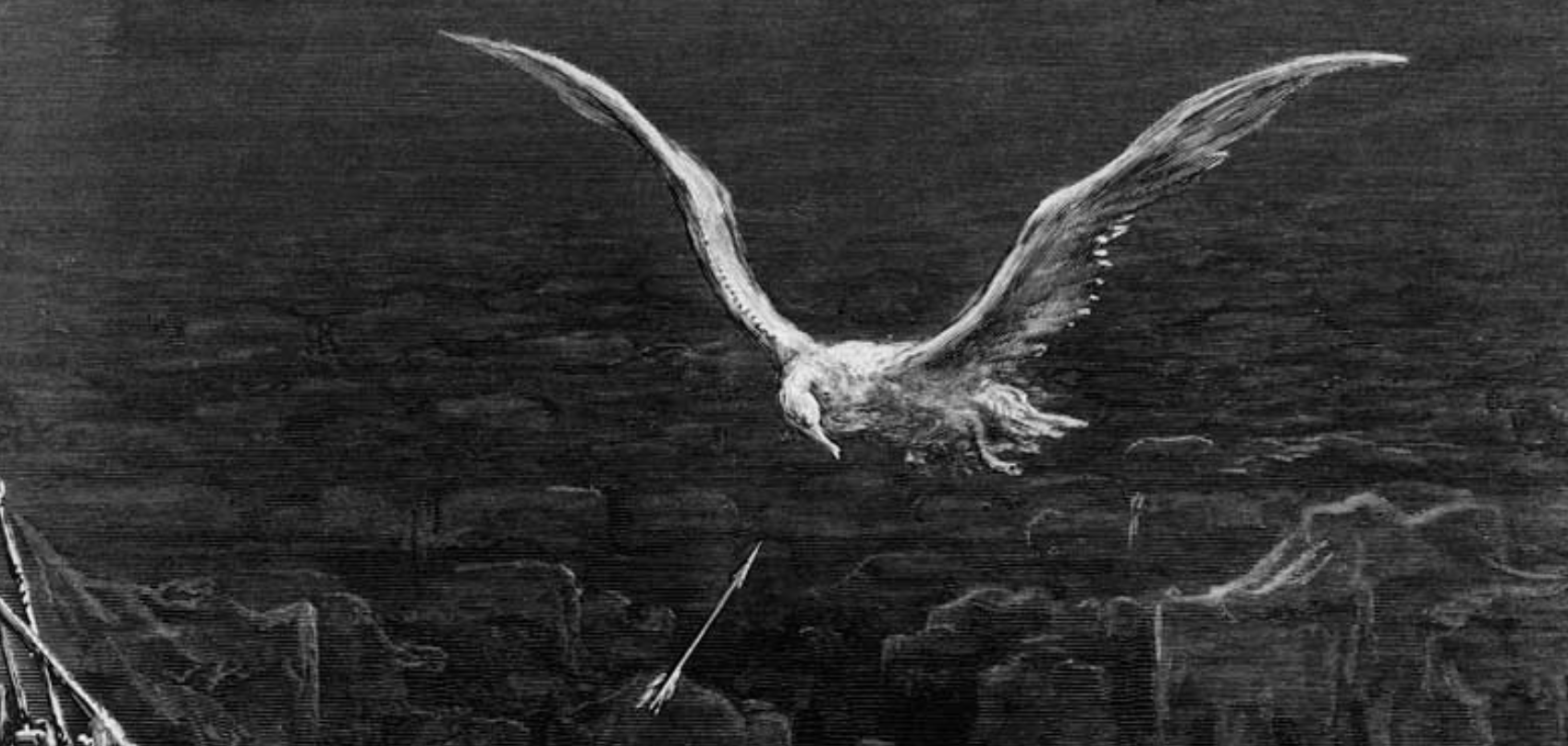


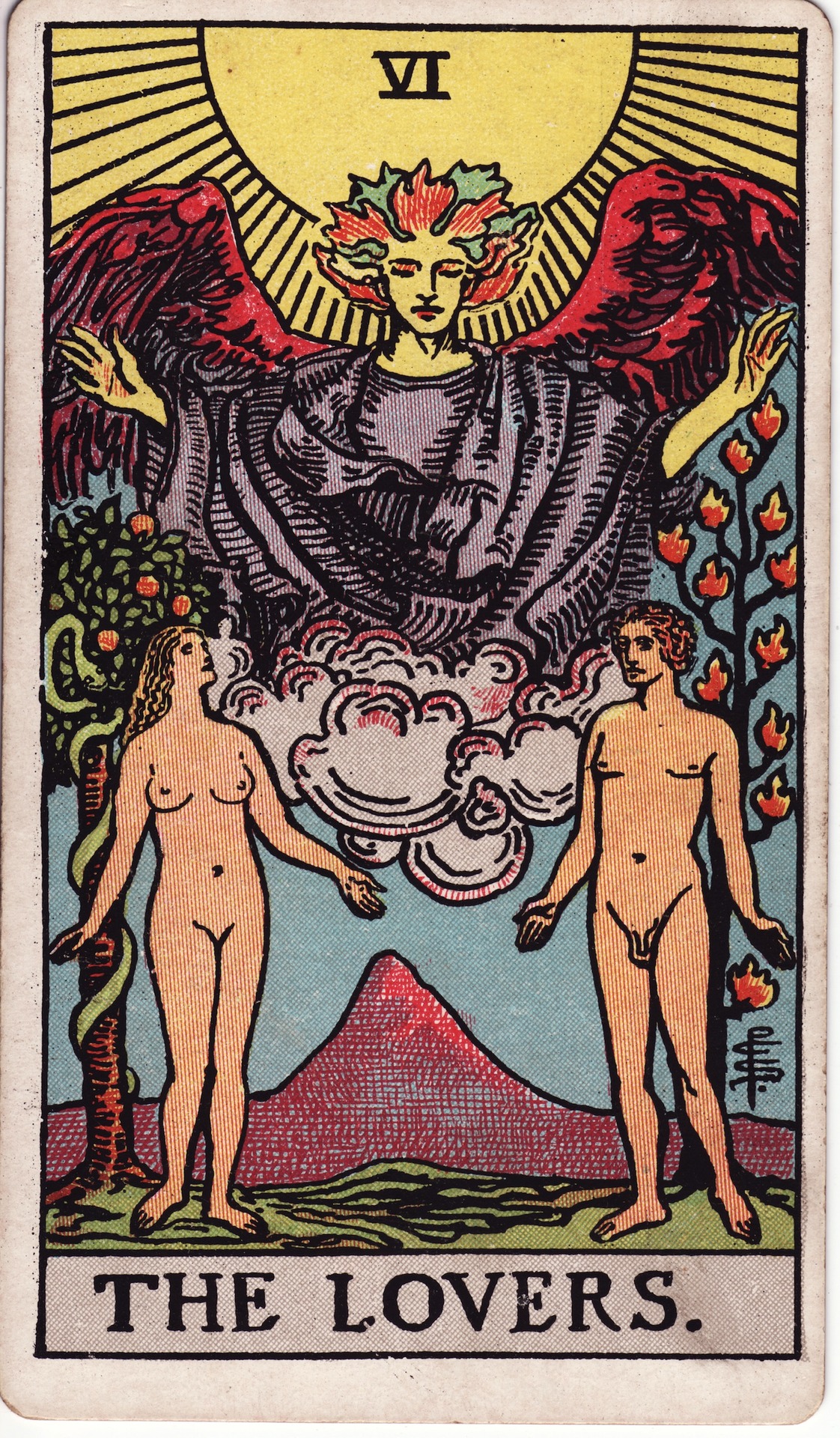
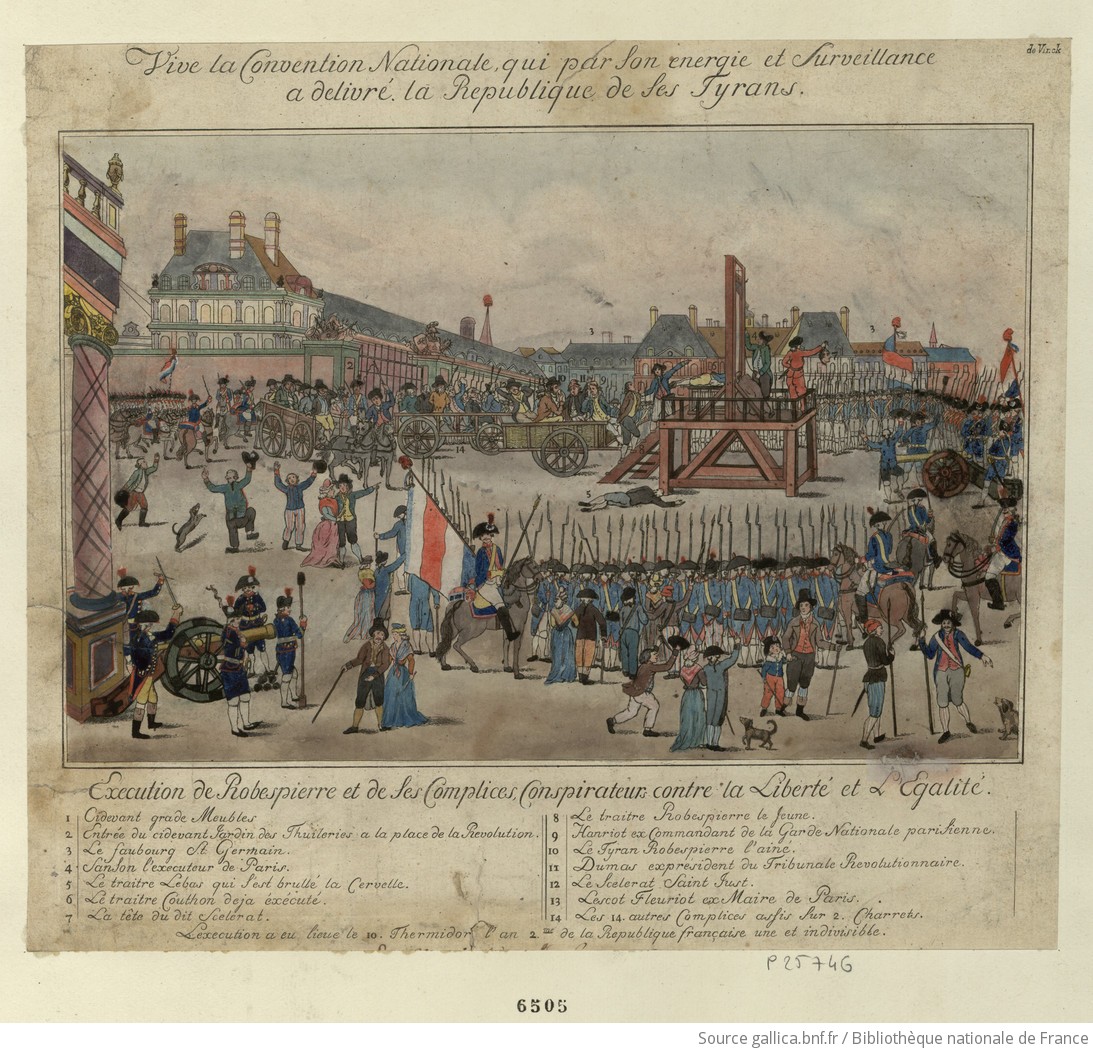

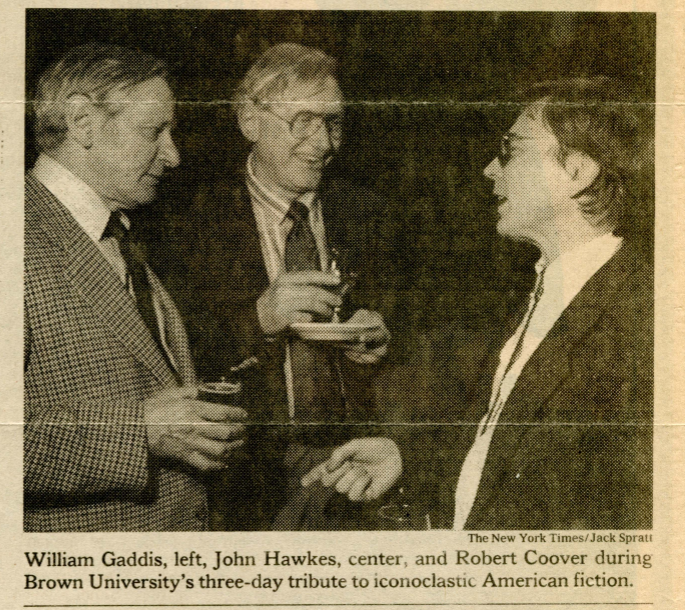




 Biblioklept