“Because they’re a bunch of bloodsucking bastards, quite frankly,” is the kinda thing he tends to say. He’ll clarify that the comic book medium is “perfect,” it is “sublime,” whereas the comics industry is “a dysfunctional hellhole” that “hasn’t had any new ideas in 20 or 30 years,” that it’s run by “sub-human” thieves who employ the same “gangster ethics” by which DC “bought” the rights for Superman off its teen creators, Jerry Siegel and Joe Schuster, for $130.
“I pretty much detest the comics industry” is the gist, most recently for what they’ve done to popular culture and democracy with the Marvel Cinematic Universe and . . . whatever it is that DC’s up to. Moore’s been saying for years that he sees a harbinger of fascism in how young adults flock to see these “franchised übermenschen” zipping across the screen, and yes, he’s also mindful of the fact that he’s basically the cause of all this.
There were a lot of quotes I could’ve pulled from Alexander Sorondo’s new profile of Alan Moore at The Metropolitan Review — getting expelled for selling acid, falling in love with David Foster Wallace, accidentally conjuring the Persian math demon Asmodeus, etc. — but this is the one I chose. Check it out.
Portrait of Alan Moore, 2011, by Frank Quitely (b. 1968)
Photograph of William Vollmann in his studio by Ian Bates
Late last week, The Wall Street Journal published “The Last Untamed Writer in America,” a profile of William T. Vollmann. The piece begins with its author Alexander Nazaryan politely refusing breakfast scotch from Vollmann, who is hosting Nazaryan at his studio (a converted Mexican restaurant):
It was breakfast time at the Sacramento, Calif., home of the novelist William T. Vollmann, which meant time for scotch. Out came two gold-colored shot glasses, modeled after 50-caliber rounds, a gift from a relative to the gun-loving writer. Despite gentle pressure, I stuck to my coffee, so Vollmann poured himself only a perfunctory nip of the Balvenie DoubleWood 12. “This will get me buzzed up,” Vollmann said. Then he added, ruefully, “I can hardly drink at all anymore.”
The piece has some interesting quips from Vollmann, but it doesn’t really expand on Alexander Sorondo’s long essay “The Last Contract: William T. Vollmann’s Battle to Publish an American Epic,” from this spring–notes on Vollmann’s cancer, getting dropped by his publisher Viking, and finding a home for his epic ATable for Fortune with Skyhorse, an iffy group that has published books by RF Kennedy Jr. and Alex Jones. A lot of the notes will be familiar with those tuned into the myth of the Vollmann (guns, drugs, sex, volume, etc.), but it’s kinda sorta interesting to see how the conservative Wall Street Journal frames Vollmann. They play up Vollmann’s enthusiasm for guns and note that he is not an author to be “cowed by sensitivity readers”; they even get a quote from him decrying “people who want trigger warnings.” And yet even when Vollmann professes a tinge of patriotism, he deflates it immediately:
“I love America because it’s my homeland, and I love Americans,” Vollmann says. “What I dislike is the whole hypocritical American exceptionalism. We do all these dirty, crummy things.”
Max Lawton is the translator of many, many works, including a number of books by the Russian writer Vladimir Sorokin. The recent publication of two of those translations, Blue Lard and Red Pyramid was the occasion for my email-based interview with Max. We began in earnest late last fall and finished up on Leap Day, 2024. While Blue Lard was our starting place, we meandered, discussing future translations of Sorokin’s work, like The Norm and Dispatches from the District Committee, as well as some of Max’s other translation projects, books like Michael Lentz’s Schattenfroh and Stefano D’Arrigo’s Horcynus Orca. We also got into Max’s own fiction, which I anticipate seeing in bookstores soon. I want to express my gratitude to Max for generously sharing his time in this interview, and more importantly, making more Good Weird Stuff available to monolingual slobs like me.
Biblioklept: Max! Congrats on the publication of Blue Lardand Red Pyramid. I want to start with Blue Lard, because I think it’s a big deal that it’s getting an English language publication. It’s also my favorite Vladimir Sorokin book that I’ve read, and I know that it’s one of yours as well. The novel is perhaps Sorokin’s most (in)famous one, and I think it’ll attract new readers. What can readers expect when approaching the novel?
Max Lawton: Like TELLURIA, BLUE LARD is all about textures: literary, historical, ideological… However, unlike TELLURIA, BLUE LARD has a telos to it—an endpoint. I am firmly of the belief that BLUE LARD is Vladimir’s best novel. He had taken a long break from prose (about 7 years) before writing it, so this text simply burst forth from him and ended up as a neat showcase of all of his aesthetic preoccupations, butheld together by an edifice that has proportions none too short of classically harmonious. What should readers expect… hmm… the first section is rather challenging. One needs to surf its wave and not expect full comprehension. There is a glossary of Chinese words and neologisms at the back of the book, but I’m not sure it’s worth consulting in the expectation of further understanding. The middle section of the book—characterized by a faux-archaic language—is also terribly strange, but with fewer neologisms. The last section of the book—an alternate iteration of Post-WWII Europe—is formally very smooth, but insanely transgressive in terms of content. And I haven’t even mentioned the rather unorthodox parodies of Russian classics in the novel’s first section! What should readers expect? In short: to have their minds blown!
Max Lawton, Hollywood, California. Photog. by Ecem Lawton.
Biblioklept: Yeah, Blue Lard zapped me in the wildest way, and you’re right when you suggest the reader should “surf its wave and not expect full comprehension.” The first section is disorienting, but I think it also orients the reader to the radical disorientation to come. And the parodies of Chekhov, Tolstoy, Akhmatova, et al. are fantastic; there’s something really joyful in these deviant mutant performances. Sorokin constantly shifts linguistic registers in his work, which I know poses challenges and opportunities for you as a translator. For example, you’ve stated that in translating the polyglossia of Telluria you tapped into a range of voices including Chaucer, Faulkner, and Mervyn Peake. I’m curious about your process in translating Sorokin’s Russian classics parodies in Blue Lard.
ML: This is a fantastic question. The fundamental issue, however, is that Vladimir isn’t really interested in parody. If the clone-texts were a neat pastiche of Russian greats, that would be one thing. But Vladimir describes them as “essence hunts.” Oftentimes, they do not read like the authors they are “imitating.” This is especially so for Nabokov and Pasternak. Tolstoy and Akhmatova are in the middle. Then Dostoevsky, Platonov, and Chekhov are right on the money; their essence seems to line up with their outer form––their noumena are no different from their phenomena. For Dostoevsky, Platonov, and Chekhov, I did appeal to previous translations of their work, as not to do so seemed like a grave error. But, for the others, I had to think more outside of the box. With Nabokov, the one thing I “added” to the translation was recommended by a couple of professors and approved by Vladimir: I worked in a few of Nabokov’s pet words in English, as he is actually more famous for his writing in English than in Russian. For this reason, the insanely bizarre Nabokov “essence-hunt” reads more like a parody in English than in Russian––not that it isn’t very alienating in both languages. The Dostoevsky parody was especially fun to translate, as it allowed me to indulge the worst instincts of a Dostoevsky translator. I leave it to you to figure out what that might mean. The fundamental question posed by these parodies and the way they both resemble the texts of the original authors and not is: what does it mean, aesthetically speaking, when phenomena do not align with noumena?
Biblioklept: That seems like a central thread of what I’ve read from Sorokin in general—this aesthetic disarrangement of what we know, or what we think we know, and what might actually, I don’t know, be. To go back to Blue Lard: it reads like the work of someone joyfully detonating and reinventing realities. The “plot” of the novel is a series of displacements that culminate in this fucked up and hilarious reinvention of Postwar Europe. But as you mention above, that section is composed in a really precise, lucid, “smooth” manner, which only serves to highlight its transgressive content. The tonal shift isn’t exactly jarring, because by this point the reader has been through a linguistic gauntlet—but it does imbue the “alternate history” at the end of Blue Lard with an uncanny tinge.
ML:I actually think that the second half of the novel was more difficult to translate than the first. There’s a specific rhythm of Russian speech that is pun-filled and, I guess you’d say, overripe. This is how Russians speak in a sophisticated milieu even now. And I think it comes across as if it were wearing a fedora, so to speak, when it’s translated too directly. For that reason, I went back to the rhythms of dialogue at play in Old Hollywood films to find something that felt stilted but didn’t simply register as dissonance to the Anglophone ear. Of course, translating the narration of the book’s second half was more a question of reduction—making it as transparent as possible so that the horrors at its bottom would be visible. This wasn’t difficult, but was a good exercise in Hemingwayesque (or Sadean) style—Vladimir loves Old Man Ham and doesn’t much like Sade. As somebody who has written a lot of screenplays, Vladimir does sometimes enter a mode of narrative prose that seems to owe a lot to the way that screenplays are composed. With reference to the first half of the book with its constant destabilizing, I would say that it can be easier to translate things that sound utterly deranged because the question of normalcy goes out the window. As you will see in 2025, this is why the Soviet rhythms of THE NORM were a particular pain to render… we simply don’t have that register!
Biblioklept: Okay, so the fact that you drew from Old Hollywood patter actually makes a lot of sense to my ear. There’s like a heightened artificiality to the section, but one grounded in “realism,” which, again, lends to this uncanny rhythm.
ML: Yes, exactly. I have made this comparison before, but it bears repeating: Sorokin is a bit like a Russian hybrid of David Lynch and Quentin Tarantino. I very much hope that the dialogue in my translations of his work falls onto the Tarantino side of that spectrum. It should be crisp patter––highly rhythmic. Not stilted and highly unreal like Lynch’s screenplays. But, as with Tarantino and Old Hollywood films, something in Sorokin’s crispness eventually begins to limp, cloy, gum up the works… to glitch!
Max Lawton and Vladimir Sorokin, NYC.
Biblioklept:The Norm is Sorokin’s first novel, right?
ML: THE NORM is more or less Sorokin’s first novel. Things are a bit complicated at the beginning because he was simply writing “into his desk” with no prospect of publication. So, the early novels were sort of composed alongside one another. THE NORM is a Soviet Disneyland of abject horror: eight rides, each representing a different aspect of the USSR’s shittiness. Everyone knows it’s the book in which people eat shit, but it actually goes way deeper than that. The section people most love in Russia is a deranged epistolatory one, in which the distant relation managing an intelligentsia family’s dacha loses his mind with rage at having been saddled with its maintenance. Part 5––the best.
Actually, here’s a fun spoiler-free preview of the book––this diagram-thing will be included in the edition coming out from NYRB Classics in 2025.
TRANSLATOR’S LINATI SCHEMA FOR THE NORM
I. Contemporary dialogue. For a Soviet person, the same shock an Irish person might have had upon reading Dubliners. No point foraging through the American ‘80s. Therefore: the NOW.
II. Critical exegesis. These are mere words. American slang when necessary––then to explain the original by way of scholarly apparatus.
III. A thesis: Russian’s rhythms are generally quite defined by rurality. The agrarian empire was industrialized too quickly––couldn’t do away with the rurality of speech. But, so as not to exaggerate, to make the dialogue in “The Scourge” sound like a film noir about louche characters. Again: contemporary speech when necessary (esp. with the editors interrupting the text). Pilfering phrases from Constance Garnett for the Anton frame-narrative.
IV. Making the poems as perfect as any poems can be in translation. Total metrical adequacy.
V. No contractions. A dash of Benjy Compson. Instead of rhyming insults, total obscenity (“dickass professor” instead of the more literal “dickessor”).
VI. The occasional need to make a slogan more grammatical in English than in Russian.
VII. Not perfect lines, but shattered fragments. A meta-commentary on the clunkiness of official poetry (of poetry an sich as well?). The main thing: that the reader feels the clunky, contorted poetry when it supplants the prose, but that I not give into Miltonic excess entirely. Impossible to translate these as perfect poems as in Part V.
VIII. To occasionally add syntax to the gibberish so that it scans. “Jabberwocky.”
Biblioklept: I’m about halfway through The Norm—haven’t gotten to Part 5, which I’ll read tonight. The first section was, uh, hard to swallow, but also very funny. And once it told me how to read it, I was quite taken with how even in some of his earliest stuff, Sorokin has already found this strange, mutating form, a kind of narrative hot potato (or “hot norm” if we’re feeling extra abject today). I loved the third section, especially the sinister shift it takes.
ML: THE NORM is a highly compressed preview of all the tendencies Sorokin would be working out in the first half of his career—all the way up until BLUE LARD. Of course, you have the binary bomb structure of the short stories, in which a highly ordinary situation that would typically make up the raw material of Soviet official prose is ruptured and gives way to something abject. This will be explored a great deal more in the short stories of DISPATCHES FROM THE DISTRICT COMMITTEE, coming out from Dalkey next year. ROMAN and MARINA’S THIRTIETH LOVE, also binary bombs, but novels rather than stories, belong to the NORM-universe as well. Sorokin’s imitation of the world of Russian classics in ROMAN is as precise as his immersion in Soviet shit. Indeed, in THE NORM, one cannot help but note the intense specificity of Sorokin’s engagement with the Soviet Life-World. His prose would not be quite as specific in and after BLUE LARD—it would be more imaginative and less grounded in any one reality. Perhaps what tortured Sorokin during the first half of his career was his inability to imagine a world other than the Soviet Union. In all books after THEIR FOUR HEARTS (so BLUE LARD AND all that follows), though he may be haunted by the Russian past, the worlds he imagines are light and free—defined by his own language alone. After BLUE LARD, it is only his short stories that are weighted down by the gritty details of Russianness.
Biblioklept: You mentioned Russians love the fifth section, the “deranged epistolatory.” I loved the section too—it’s a kind of linguistic unraveling, but a strangely sympathetic one. Why do you think this chapter resonates with Sorokin’s native audience? Can you tell us a bit about translating it—was it fun? Difficult?
ML: That part was only tricky when Soviet-houseware vocab would pop up—obviously not my area of expertise. But, beyond that, in the sections where Sorokin is exploring a very pronounced directionality, I find it somehow easier to ride along with him. Translation is more about translating intent than individual words, so when the intent is very legible, it makes the translator’s job easier. That section is so beloved because it depicts a Soviet archetype of resentment and envy—wasn’t all of that meant to have gone away? Isn’t this the Shining Future? Well, it turns out that people are still animated by precisely the same sorts of petty evil. The idea of this section is a lot like what Dostoevsky wants to convey with the Underground Man: human beings are immutably illogical, petty… From that perspective, there is something divine about the gibberish at the section’s end—as divine as Dostoevsky’s 2+2=5.
Biblioklept: I really enjoy the gibberish and jabberwocky that infiltrates The Norm (particularly the lulling but clunky rhyming in the seventh section). That polyglossic strand seems woven throughout Sorokin’s work but is more palpable in this early novel than his later stuff. (Not sure if novel is the right word for The Norm but I don’t really care.) In Blue Lard and other later works, Sorokin employs neologisms and a range of non-Russian-language terms, but these are deployed in a more narratively-coherent manner than what’s happening in The Norm. In your estimation, is this simply an evolution in style? Is it purposeful, or just a writer doing his thing? Is this a stupid question?
ML: THE NORM is what all of Sorokin’s later works emerge from. In that sense, it’s undoubtedly true that this “narrative experiment” (you’re also right that it’s not a novel in any real sense) is less laser-focused than books like BLUE LARD, in which tropes like gibberish or corporeal-mutilation-as-metaphor have been worked out to a precise science. Sorokin wrote the book when he was a young man, passing around pamphlets of each part to his friends in the Moscow Conceptualist Underground. They were over the moon about it. In fact, there’s no meaningful way in which THE NORM can be differentiated from MY FIRST WORKING SATURDAY (mostly collected in Dalkey Archive’s forthcoming DISPATCHES FROM THE DISTRICT COMMITTEE), ROMAN, or MARINA’S THIRTIETH LOVE. All these books are a singular meta-work that deconstructs the ideological and literary languages of the Soviet Union, during the period when Sorokin was coming of age as an artist.
Biblioklept: Can you tell us a little more about Dispatches from the District Committee? Also, if this is something you can get into, how do you go about placing Sorokin’s work with the U.S. publishers—is there a thought into which titles go to Dalkey and which go to NYRB?
ML: DISPATCHES FROM THE DISTRICT COMMITTEE is the dark Dale Cooper to the RED PYRAMID’s sweet pie-eating FBI man. Whereas the latter was structured in accordance with a certain sort of classical form (yes, it’s fucked, but its stories are fucked (and fuck) in a harmonious way, as it were), DISPATCHES is a collection of early binary bombs from Sorokin’s famous MY FIRST WORKING SATURDAY collection, along with a few bits of juvenilia and a few late-period stories. Without exception, these are woolly and insane tales, some of my favorite things Sorokin has ever written. And it is in this collection that we truly learn the meaning of the “binary bomb” of which he so often speaks: in such stories, the first half is the technically-accomplished outlining of a typical Soviet situation or Soviet literary mode, but, about halfway through the story, the pin of the grenade is pulled and all that which is “normal” about the tale we’ve been reading gives way to the abject and the obscene––to Joycean gibberish and Bataillean acts of violence. In a way, this collection is the ninth part of THE NORM, and I wouldn’t object to readers approaching it in that way.
The publishers themselves divided the books, but I do think there was a certain logic to how it shook out. The Dalkey books tend to be the cult-classic Sorokin novels that are particularly beloved by people in Russia: by his “cult readers.” And the NYRB books are the books foreign readers tend to come to first. This narrative might become a bit stranger in coming years with NIGHTINGALE GROVE and THE SUGAR KREMLIN, but I’d say that’s how the chips have fallen for the time being.
Art by artist Yaroslav Schwartzstein from ОПРИЧНАЯ КНИГА, a collaboration with Vladimir Sorokin
Biblioklept: Speaking of The Sugar Kremlin and different publishers: the manuscript I have includes wonderful color illustrations by Yaroslav Schwarzstein. If I understand correctly, these illustrations have appeared with other editions of the book? Is the plan to include the illustrations in a U.S. edition? The Dalkey edition of Their Four Hearts includes illustrations by Gregory Klassen—has he collaborated with Sorokin on other works? Can you give us some background on Sorokin’s relationship with visual artists?
ML: I’m not sure those illustrations are going to be in THE SUGAR KREMLIN, alas… But Greg Klassen’s wonderful frontispieces for DISPATCHES are going to be included. Sorokin was a visual artist before he was a writer, so his texts are profoundly visual. He also has a lot of love for illustrated editions of his novels and stories––especially the deluxe editions put out by ciconia, ciconia in Berlin. In the future, I would love to put out English editions of Sorokin’s illustrated works that are just as deluxe as the German ones. In a sense, Sorokin writes like a painter. When I read his books, I can always see exactly what’s happening on the page in my mind’s eye. But it’s funny to imagine an illustrated edition of something like BLUE LARD––his linguistic abilities outpace those of any theoretical artist. I am also working to get a couple of American film adaptations of Sorokin’s books and stories off the ground here in LA. Cinema is very dear to him––and he’s written quite a few scripts.
Sanke’s Love by Gregory Klassen. From Dispatches from the Central Committee.
Biblioklept: Yeah, Sorokin’s writing is very imagistic, photographic, cinematic—for all the wild unreal shit that happens, it’s anchored in highly visual, sensual prose. I think that imagistic quality is important to the storytelling, especially when he drops these “binary bombs” as you put it (or is that Sorokin’s term?). I think the term is appropriate; I also like how novelist Will Self describes this signature structure in his introduction to Red Pyramid: “Each of his stories is a sort of mutant Mobius strip, in which to follow the narrative is to experience the real and fantastic as simultaneously opposed and coextensive.” I’m curious how Self’s introduction came about—can you tell us a little bit about that process?
ML: The binary bomb is Sorokin’s term of art for his own early stories, not my own. In fact, the term in Russian is closer to “lil’ binary bomb”. Will’s introduction is just so beautifully written—Vladimir and I think it’s one of the best texts ever written about him. I’d met Will a long time ago—first when he did a reading from Shark at Columbia when I was doing my undergrad there, then when he debated Zizek in London when I was at Oxford (Will won the debate by a wide margin, you can still find it on YouTube). Will has always been one of my heroes—one of the writers whose books showed me a possible path forward with my own writing when I was starting high school. In fact, for contemporary English-language prose, one couldn’t do better than his “technology trilogy”—UMBRELLA, SHARK, and PHONE. Anyways… I’d emailed Will a few times about my writing and received polite replies, but, when I was in London on the eve of the release of THEIR FOUR HEARTS and TELLURIA, he tried to meet up with me, didn’t succeed, then we met up in NYC, where he was doing a bit of research for his new novel. We became fast friends and, just as Will has become a big fan of Sorokin, so too has he become a mentor to me. To my mind, Will represents all that which is glorious about the English literary tradition: its irreverence, wildness, erudition, biting wit… It means a great deal to both me and Vladimir to have him “coming out to meet the reader”—and doing such a damn fine job of introducing the book! To all those readers who haven’t yet touched Sorokin, I would recommend starting out your odyssey with Will’s intro to RED PYRAMID, then reading the collection itself, then reading BLUE LARD.
Biblioklept: You’ve touched on the timeline for publication for some of your Sorokin translations. Any news on when we might expect to see Roman or The Sugar Kremlin on anglophone shelves? What about your translation of Michael Lentz’s surreal opus, Schattenfroh?
ML: The Sorokin timeline is still a bit unclear. ROMAN and THE SUGAR KREMLIN will be coming out in the next two or three years, I would say. Actually, I take that back: THE SUGAR KREMLIN will be coming out in 2025, but ROMAN is a little bit more unclear. There is some discussion of ROMAN and MARINA’S THIRTIETH LOVE being released together in a slipcase.
SCHATTENFROH is the novel. I am most excited about having translated after BLUE LARD. It is such an incredible, strange masterpiece, and I really don’t think the Anglosphere is ready for it. That will be coming out in 2025 and in fact, my translation, or rather, the very final draft of my translation is due at the beginning of the fall, and my editor Matthias and I are thinking a lot about how much work that will be to get done.
Biblioklept: Who’s publishing Schattenfroh? I’m going to ask you an unfair and stupid question: What is Schattenfroh?
ML: I can’t reveal who will be publishing it, but a press release about all these books is coming within the month. In brief, SCHATTENFROH is about a man named Nobody, who, coincidentally, bears a great deal of resemblance to Michael Lentz, being forced to write a book called SCHATTENFROH by his father’s ghost, whose name is also Schattenfroh. The process of the book’s composition—the journeys undertaken during its composition and the technical elements of its assembly (and deconstruction)—are what it’s about. It also deals with family history, metaphysics, World War II, Hegel, the baroque, German urban planning, incest, the apocalypse, death, and much else. It is one of my favorite novels without question.
Biblioklept: Can you touch briefly on some of what went into translating Schattenfroh? The book is formally daunting; at times reading in it is like walking through a surreal nightmare; other times the prose is austere, even spare…
ML: In certain respects, I felt the inherent affinity to SCHATTENFROH I have felt to other texts I am deeply infatuated with as a translator (BLUE LARD, Antonio Moresco’s trilogy, Céline…). On the other hand, the technical vocabulary that crops up from time to time as a conceptual gag was absolutely brutal to work with and I am indebted to my editor Matthias Friedrich for the good work he’s done, of which there is still much to do. The printing press vocab will require a specialist in medieval printing technology to give it a rather intensive read, just as the section in which a museum guard quizzes the protagonist about a technical architecture article from an East German architecture journal will require an intensive edit by a perfectly bilingual scholar conversant in architecture and physics. Lentz has the luxury of using texts as found objects––we, alas, do not! Matthias has also been a great help with identifying quotes, which we then have to translate or find extant translations of. The latter option is preferable, as it safeguards the encyclopedic quality of the book––you see a quote, Google it, and dive deeper into the world of the novel. The most problematic translation question is what to do with historical quotes from Luther and others like him that have been translated into English, but into modern English, whereas the German is dense as hell and difficult to read due to its archaicism. Translations of Luther from the era he lived would be ideal, otherwise I’m left attempting to kitschify the English into an approximation of the archaic German.
Biblioklept: I expect Schattenfroh to become a cult novel for anglophones after your translation comes out. Do you know if it has a similar reputation in Germany?
ML: The fascinating thing about SCHATTENFROH is that it doesn’t have too much of an audience in Germany. It’s very much a cult novel. Its release in English will provide a new opportunity for more German readers to discover it. With that said, those German readers who have read the book have, for the most part, fallen in love with it. It’s the sort of novel one can’t believe is still being written. On the other hand, there’s a way in which SCHATTENFROH is the sort of book that might find an audience in America more readily than it has in Germany—this is just my suspicion.
ML: Yes, I’m very excited to dredge the depths of its pornographic scatology. It’s one of the most metaphysical projects I’ve ever encountered––moving from Moresco’s own lived experience as a monk and revolutionary to the most distant reaches of interstellar space in a frozen Steinian mode that is as gorgeous as it is infuriating. This trilogy is on the level of SCHATTENFROH and BLUE LARD and will be adored by all readers of 2666, THE 120 DAYS OF SODOM, and SOLENOID. The second book in the trilogy in particular, CANTI DEL CAOS, will be an event in English publishing that I hope will reach the heights of the reception to Bolaño’s masterpiece. I am also translating HORCYNUS ORCA and am still terrified of the Sicilian therein. The great writer and translator Francesco Pacifico will be editing these translations.
ML: It’s thanks to Andrei that I’m going to be translating SCHATTENFROH, Moresco’s trilogy, HORCYNUS ORCA, and, in a few years, Palol’s BOÖTES. He’s a great friend and mentor to me and there are few things in the world I appreciate as much as his taste and total aesthetic honesty. He is a source of great guidance to me, and I am deeply, deeply grateful that I stumbled on his blog and that he responded to me when I sent him the illustrated manuscript of THEIR FOUR HEARTS back in 2019. A true OG.
Biblioklept: Amazing. Andrei is a champion reader. Reading is such a private, internal process; it’s easy to overlook that great writers need great readers. And translators are clearly in the vanguard of great readers.
This is probably a really stupid question, but when you’re writing your own fiction, like your novel The Abode, are you in, like, a totally different zone than the translation sphere?
ML: Will Self always asks me about this and expresses concern that I’m being over-influenced by the fiction I translate, but, for whatever reason, I have found that translation is a self-contained system in my literary life. The words of the original enter me, then are flushed out like water turning into piss. I have the capacity to be influenced by texts, but the very fact of translating means that I also exorcise the influence. The commonality between my own prose and translation is the focus on style, but the difference is the question of what to write that must necessarily plague any original writer. That is the most difficult part of writing––ontological doubts. I have a good feeling that the Anglosphere will soon get to read my first novel PROGRESS, my short-story collection THE WORLD, and my second novel THE ABODE. These three books represent the first era of my writing. After I’m done with THE ABODE, the autofictional monstrosity I’m writing now, I’m going to stop writing for a while––just play black metal with my new band here in LA and read. Then see when I’m driven back to the blank page (though, to be honest, I’m half-lying: I already have two new novels planned out––they’re just very different from the first three books).
Biblioklept: To your parenthetical post-dash clause: When you write that your plans for these two new books differ from the first three, what do you mean? Style? Subject? Did this difference come from a conscious choice?
ML: Yeah, the first three are very selfish books in a sense. MAX LAWTON looms over them rather heavily. For the follow-ups, I’ve been thinking about certain American styles that are generous, biblical: Cormac McCarthy, Marilynne Robinson, etc. I want to write a few books from which I am utterly absent, and I want them to be shorter, with the sentences screwed in tight. In brief, I want to write grown-up books. These first three are my graphomaniacal youth-culture books––Bret Easton Ellis casts a long shadow over them too.
Here are links to a few of my short stories that have recently been published:
Biblioklept: There’s that line near the end of the prologue of The Abode, where the third-person narrator tells us that “Max wasn’t interested in the ups and downs of a typical Bildungsroman or campus novel”…
ML: Yeah, I’ve always wanted to write a massive slab of autofiction but am keenly aware of the clichés that dog the form. This is the sort of cheeky line that might get thrown out in further revisions of the text but represents my desire to combine disparate tendencies: the neuroticism of Proust, the hedonism of Bret Easton Ellis, and the metaphysics of William Blake. Though my German reader says it reminds him of THE CORRECTIONS… In a sense, THE ABODE is all about wanting my cake and eating it too.
Biblioklept: I liked the line, especially in its context, which I hope you don’t mind if I share here with some readers:
“Max wasn’t interested in the ups and downs of a typical Bildungsroman or campus novel, didn’t believe he’d ever end up with a single woman to whom he would pledge his affections––he was the plinks of the second synth coming in over the washes of the first and each click of the metronome showed him something else––something he was meant to see, something pure and visionary that had been vomited up from the very center of the earth.”
The synth metaphor is lovely.
ML: Thanks so much! I tried to make the language chewy and specific without losing the pellucid quality of 19th-century narrative prose. My first novel PROGRESS is very dense stylistically in a way I strived to move away from.
Biblioklept: The style of Progress seems to rhetorically approximate the narrator’s attempt to register the material world he is moving through with his sense of interiority, selfhood, whatever. (That inside/outside distinction manifests in a number of the book’s motifs, including all the pissing and shitting.) I don’t know if I think of the style as dense, necessarily. The clauses stack up, but they also flow and move. I mean, I think the book is quite readable; it’s not like, Oh fuck another giant paragraph! Maybe that’s because Progress is, at least in part, about, “Y’know, like, apocalyptic stuff,” to quote one character out of context.
ML: I wrote PROGRESS during Covid and the lack that seemed to inform it was my feeling that narrative prose had ceased to describe the world as it exists (I was also reading a lot of Heidegger at the time). The conceptual sci-fi narrative is an excuse to describe the freeways and all that exists around them as if it were a natural idyll. The book is a beach on which the detritus of our age washes up––I catalog it.
Ralph Hubbell and Max Lawton pose before the house where Atay wrote The Disconnected (photog. unknown)
Biblioklept: So, besides your novel Progress, your short story collection The World, your autofiction-in-progress The Abode, the Moresco trilogy, Horcynus Orca, Schattenfroh, and a slew of Sorokin–what other projects are you cooking up?
ML: There are a couple of others (as if I didn’t have enough on my plate!). First is my new translation of GUIGNOL’S BAND in a single volume––the previous translations of the book’s two parts were done by two translators and put out by two publishers. It is my contention that GUIGNOL’S BAND may be Céline’s greatest novel. The extremity of his style increased all throughout his career, but,by the time it reached its point of extremity, the content had, alas, curdled (here, I’m thinking of the final trilogy recounting his years spent as a Nazi). GUIGNOL’S BAND, on the other hand, is a showcase of the way Céline would blow up his own idiom, but in the context of a propulsive London novel with a lot of crime and capers. It is my hope that a new translation of GUIGNOL’S BAND will truly bring home to the Anglosphere the quiddity of Céline’s “musical orality.”
My friend Ralph Hubbell and I are also hoping to translate Oğuz Atay’s great novel THE DISCONNECTED, which has already been translated into English, but, speaking delicately, needs to be redone if it is to be published (Ralph and I have written a lot about this and gotten into hot water for what we’ve said). The book is akin to a mix of ULYSSES and CATCHER IN THE RYE. It’s the best novel ever written in Turkish, and I sincerely hope we get good news from Istanbul in the near future––the offer from the Anglophone publisher that wants the two of us to retranslate the book still stands.
Biblioklept: The last time I interviewed you, I ended with my standard last question, Have you ever stolen a book? and you admitted that you hadn’t. Any updates there?
ML: I still haven’t stolen any physical books, but I hope that my work continues to be another kind of theft: stealing great books out of the maw of Anglophone oblivion and putting them into the hands of readers eager for fiction that is dense, extreme, and difficult. I am of the sincere conviction that the demand for these books is high and, to any Anglophone publishers reading this, I say this: take a chance, publish something that pushes the envelope, and you might just be surprised by the reaction…
McCarthy’s works have been termed “experimental” by most critics but he thinks that can be said of most serious writers. “Any serious writer is experimental in that he’s trying to do something new or better.” A serious writer, he adds, sits down and begins to write and develop the story as he goes along. “He doesn’t just sit down and 70,000 or 80,000 words come full blown into his head.” He suggests that anyone who intends to write “read to know what’s been written before—both good and bad.” This point complements the theory of author as experimenter, for, as McCarthy said, “you will see things in other writers you admire and that you think you can do better.”
I saw the film this weekend and it’s one of the best musical documentaries I’ve seen in ages. The film is really about the art scene in New York City in the 1960s, and as such, Haynes employs a number of aesthetic conceits, all of which vibrate on just the right side of pretentiousness. There are lots and lots of clips from Warhol’s films and screen tests combined with archival footage (John Cage on teevee, for example), and old interviews interspersed with new interviews with John Cale, Moe Tucker, and a host of other musicians, artists, actors, and folks who bore witness to that whole scene. The film is its own thing—it transcends being “about” the band—indeed, that’s the best thing about The Velvet Underground: it lets you see and hear the band you discovered when you were thirteen or fifteen or thirty with fresh ears and fresh eyes. To this end, it’s possible that the film might turn off folks completely unfamiliar with the band and its influence. Haynes addresses this in his interview with Adams:
I mean, there are some people for whom this will be frustrating and not what they expect from a documentary. They kind of want that tidier oral history. If you’re interested, there’s all kinds of more stuff to find and discover for yourself. But I wanted it to be mostly that experience where the image and the music were leading you, and then it was a visceral journey through the film.
A visceral journey it is.
A highlight for me in the film is a series of late appearances by Jonathan Richman. Adams enjoyed that too:
[Adams]: As someone who’s been listening to him for a long time, the interview with Jonathan Richman is a real highlight of the movie. It makes me hope there’s a Blu-ray someday so you can just release the whole thing as an extra.
[Haynes]: Oh, it’s so fucking great. The whole thing is just, it’s a complete piece. I was crying by the end of it.
Was it your idea for him to have the guitar, or did he just bring it with him?
No, he just brought it. And I mean, come on. It was just so generous and so insightful. And he served the purposes of saying things that I had sort of decided I would not include in this movie: fans, other musicians, critics. It was just going to be about people who were there. That was the criteria. Well, he was there, in spades, and I didn’t realize to what degree.
That picture of him as a teenager with the band, I’d never seen that before.
Fucking crazy. But he could also then speak so informatively as a musician and as a critic and as a fan.
This is the meat locker, where Dolores’s parts are. When the electrician wired it up, he asked, “What do you use this for?” I said, “Oh, that’s just where I keep my victims.” There was a long silence….She’s got her dresses here and I have my bulletproof helmet and various stuff from my journalism in there.
Have you taken many reporting trips recently?
No, that seems to being drying up. It seems that the magazines have less and less money. They’re mostly interested in domestic stuff. I don’t know whether it’s to save costs or if they really think Americans are only interested in America. I get sort of sick of it. So there are the wig heads. Whatever woman comes in here, I always say, “Now, those are your rivals.” They kind of freak out.
Do you have many visitors or is this mostly a solitary space?
I have the occasional visitor, yeah. And then let’s see. [Opens the door to the bathrooms.] I figure the men’s room and the women’s room ought to connect.
Why is that?
Well, you know male and female should always get together wherever possible. The men’s room is the toilet. The women’s room is the shower. They didn’t used to connect. It was really, really gross when I bought the place. This old restaurant—everything was all rotted out with pee.
[Bill takes me into another small room.] And then this is the books and bullets room. I put my phone in the closet most of the time, so I never have to hear it. I got all the extra copies of my books and all the bullets I’ll need for my various pistols.
If you’re able, check out the book launch for Conversations with William T. Vollmann tonight (8 Feb. 2020) at 6:00pm at Unnameable Books, 600 Vanderbilt Ave., Brooklyn, NY 11238.
There’s a little bit of terror to almost all the good stuff I recall in literature, a little bit of terror, like Heart o f Darkness. I love the ghost story. I love to go after mysteries. I think all the best stories I have ever read are very close to ghost stories. I have no interest, by the way, in Poltergeist. But I am interested in the mysterious X, the big force behind something perceived. We’re usually not privy to too many of those things ourselves. But our friends have lived them. Of course I grew up in the Vietnam era. My classmates fought the war, came back with their tales— it still works on the heads of people my age, because it was a fantastic zone, that some of the veterans can’t even acknowledge happened nowadays, you know? But there are other places you’ve been that are—Denis Johnson examines these things-zones of irreality that had not only horror, but some sweetness. The writer ought to go into these other zones and come back like a spy, and tell us something exciting. And move us. And sometimes disgust us. There’s not enough of that now.
To turn now–it’s not a different direction; it’s this whole idea of the risk of authorial absence and the risk one takes with the reader putting down the book, saying, “It’s too much trouble, I don’t know what’s going on here.” Refusing to collaborate because it’s not worth the effort. So in that light, the idea of the writer as a confidence man has always appealed to me and to many writers. When you think about it, the number of novels [wherein there is a confidence man is great; one thinks] of Melville and, oh dear, Maugham I think had one. The idea of a confidence man has a great appeal for writers because there is something of the con man in the writer, I think. He’s trying—What? What does the confidence man do?—he is working for this “willing suspension of disbelief.”
An excerpt from William Gaddis’s New York State Writers Institute reading, April 4, 1990
Rainer J. Hanshe is the translator of My Heart Laid Bare & Other Texts, a collection of writings by Charles Baudelaire, new from Contra Mundum Press. Over a series of emails, Hanshe was kind enough to talk to me about My Heart Laid Bare, Baudelaire, dandyism, translation, art, stealing books, and all other manner of topics.
Biblioklept: What is My Heart Laid Bare? Did Baudelaire envision its publication in his lifetime?
Rainer J. Hanshe: The title My Heart Laid Bare is Edgar Allan Poe’s, and it’s he who conceives of a book that, if daring enough, if ‘bare’ enough, could revolutionize human thought, opinion, and sentiment. This could be achieved, Poe said, “by writing and publishing a very little book. Its title should be simple — a few plain words — ‘My Heart Laid Bare.’ But this little book must be true to its title.” Baudelaire took up Poe’s provocation and his Mon cœur mis à nu is one of a number of different books that he dreamt up and hoped to write “without lassitude — in a word to be in good heart day after day.” Others Baudelaire mentioned along with it in an 1864 letter included Histoires grotesques et sérieuses, Les fleurs du Mal, Le spleen de Paris, Les paradis artificiels, Contemporaines, and Pauvre Belgium! The first notes for Mon cœur mis à nu begin in 1859, two years after the initial publication of The flowers of Evil, if not possibly somewhat earlier, and continue until 1865, ceasing only due to Baudelaire’s severe health condition (he would die in 1867 at just 46 years of age), hence they comprise the final decade of his writing life.
Aside from the more direct root of Poe, Rousseau was another of Baudelaire’s models, albeit a negative one to surpass. Baudelaire said that “all the targets of [his] rage” would be collected in Mon cœur mis à nu. “Ah! if ever that sees the light of day, J-J’s Confessions will seem pale.” As I describe in the synopsis, it is an apodictic work of aphorism, maxim, note, and extended reflection. It is not however some memoir-like spewing of Baudelaire’s bios; rather, it is the baring of his l’esprit, and as a crystallization of such, it isn’t some kind of ‘tell-all exposé’ (Rousseau’s notion of absolute transparency, an indulgence we could well do without, especially considering its pernicious ramifications), but to me a much higher form of ‘confession,’ for it is the arc of thought, the play of the mind in its every breadth that is bared. It contains Baudelaire’s exhortations on work, faith, religion, and politics, excoriating sociological analyses, diatribes on literature, the arts (George Sand receives some choice malicious arrows), and love (women, prostitution, sadomasochism, erotics en générale), and outlines of his conception of the dandy and the Poet.
The Poet for Baudelaire is I would say a figure similar in kind to Nietzsche’s untimely personage, the posthumous human, a kind of philosophical anthropologist who hovers over the earth, examining the human species both from within and externally, from a sub species aeternitatis perspective, diagnosing it like a physician (much of the book’s terminology is medical taxonomy).
In 1861, two years after beginning Mon cœur mis à nu, sieged by resignation, calumny, and ill health (nervous disorders, vomiting, insomnia, fainting fits, recurrent syphilitic outbreaks), Baudelaire expresses doubt that he will ever complete his various projects. “My situation as regards my honor, frightful — and that’s the greatest evil. Never any rest. Insults, outrages, affronts you can’t imagine, which corrupt the imagination and paralyze it.” Three years later, it was against the continuing extremities of an exacerbated solitude, frayed nerves, self-described terrors, and constant hounding by creditors that Baudelaire implored himself to remain stalwart (“I must pull myself together, take heart! This may well bring rewards.”) and write.
Clearly, he did envision publishing the book in his lifetime, and he diligently worked at it, steeling himself against his trials to the degree within his power, but it was never completed. The obstructions he faced were abundant; the somatic afflictions inordinately taxing. The threat of his impending decline or decay is sharply articulated in one passage wherein he speaks of “feeling the wind of the wing of imbecility” passing over him. Various translators have rendered that as “the wing of madness,” but Baudelaire says “imbécillité,” not folie or démence. The notion of “the wing of madness” has greater Gothico-Romantic cache, but it’s not what Baudelaire says, and in this case, there’s a relatively exact equivalence of terms. It was more physical weakness and feebleness that he feared, and experienced, and believed would finally incapacitate him, as it did, not madness. His aphasia and heart attacks led to his losing his ability to speak and thereafter, his ability to read and write — the death of the writer.
We have only the existing fragments then, which have been translated in full, but they were published posthumously. Despite no such title existing in the text, or any related material, French editors originally published the work as “Journaux intime” (Intimate Journals), which included two other sections, “Fusées” and “Hygiène.” Translations into English followed suite, and they adopted the false title, which must at last be discarded. If Baudelaire hadn’t been besieged by illnesses as he was, he would have imaginably given us a definitive version of Mon cœur mis à nu considering that he did complete other books he began around the same period (Le spleen de Paris, Les paradis artificiels, et cetera). It remains a fragmentary work then, in both senses, yet one that is substantive enough to merit our continued attention.
Biblioklept: For me, the fragmentary nature of My Heart Laid Bare is in some ways more appealing than the cohesion of a more polished philosophical or poetic text. It’s a discursive read, and there’s joy in tying (or failing to tie) the fragments together. This reading experience is perhaps as close as we can get to seeing Baudelaire thinking (and feeling). At the same time, there’s perhaps a risk of the average reader’s misreading or misinterpreting some of Baudelaire’s riffs, quips, and jabs here. How tempting was it to footnote the hell out of My Heart Laid Bare?
Hanshe: In his poet’s notebook, Paul Valéry said that “a work is never necessarily finished, for he who has made it is never complete, and the power and agility he has drawn from it confer on him just the power to improve it […]. He draws from it what is needed to efface and remake it. This is how a free artist, at least, should regard things.” Similarly, he says elsewhere that, “in the eyes of lovers of anxiety and perfection, a work is never finished but abandoned.” Since Baudelaire never prepared a definitive version of the book, we cannot know what he would have changed, or not, yet as a work closely aligned with his self, it’s something that could never have been completed, only abandoned. Hence, it would always remain fragmentary. Think of Schlegel’s poetics of the fragment where even ‘incompleteness’ is exceptionally refined, an architecturally precise aesthetic form (sculpturally, this calls to mind Giacometti). In his essay on German Romanticism, Walter Benjamin pointed out that aphoristic writing is not proof against systematic intentions (an accurate insight made about Nietzsche’s work in fact, albeit one lost on many of his later readers…), that one can write aphoristically and still think through one’s philosophy or writing “in a comprehensive and unitary manner in keeping with one’s guiding ideas.” In this way, it’s not that Baudelaire’s book lacks cohesiveness; it’s deliberately fragmentary to eschew finality, and because the self, the ‘heart’ being laid bare, is never complete. That Baudelaire worked on it for nearly ten years though makes it probable that its character was quite well defined before illness permanently disrupted his voluntarily abandoning it.
There are certainly unities, or thoughts that overlap and intertwine within the book, as there are with other books of Baudelaire’s, and when I began translating it, I kept track of those I was aware of while also benefitting from the extensive and exemplary notes that the French editors amassed. The critical addendum was therefore unfurling like an infinite papyrus, threatening to end in it being as long, if not longer, than the book itself. In a way, that kind of critical gesture is an act of usurpation and domination, just as overly lengthy introductions can be (consider the grand effrontery of Foucault’s introduction to Binswanger’s Dream & Existence, which is twice the length of the book). At a certain point, I felt that continuing to amass notes would have made the book extremely cumbersome, one unpleasant to read, merely due to sheer volume. There’s also something about a massive critical addendum that’s imposing, if not intrusive, to many readers. Additionally, it was a question of elegance: I didn’t want to litter the book with footnote numbers; alternative methods to that could have easily been devised but, ultimately, I opted against including extensive notes. While as readers we can disavow them altogether, not having them makes for a more comfortable book to wield. Finally, encountering it would be more like coming upon Baudelaire’s own notebook, free of editorial invasiveness, thereby leaving the reader to his or her own rapturous encounter with it, however intractable it may be. As for misreading or misinterpreting, I don’t think such can ever be definitively foreclosed. While errant and contentious readings exist, to fear risking them is to argue that we can fathom authorial intention, or that there are definitive and absolute interpretations. Reading should be dangerous, risky, volatile, something that threatens to undermine, overwhelm, and mutate us, if not put the world into metamorphosis, as books can and have done, though hardly as much in our depleted and toothless epoch. Otherwise, reading is just entertainment, a diversionary narcotic, and we have to be willing to be shattered by books, to undergo both subtle and emphatic shocks.
Self-Portrait by Charles Baudelaire, 1863-64
Biblioklept: What is Flares?
Hanshe: Quite simply, it’s a writer’s notebook; as such, it doesn’t have a single focus but is more motley, something of a hybrid entity. To paraphrase, we could call it The Poet Laid Bare (of poetic form). Nonetheless, I believe it has two principal nerve centers: critique and meditation.
The critique is many-tendrilled, with its points of observation being the craft of the writer, art and aesthetics, love, pleasure, and intoxication (numerous types), religion and theology, politics, etc. The writer’s smelting room and sometimes place of furious venting. As with Mon cœur mis à nu, there is a root in Poe, who in his Marginalia spoke of “a peculiar type of criticism” that “can only be designated by the ‘German ‘Schwarmerei’ — not exactly ‘humbug’ but ‘sky-rocketing’…” Baudelaire took up this idea, naming his work fusées, which is an expansive translation of the English skyrockets. A fusée is a pyrotechnical device (rocket, flare, or firework), musket, or heraldic emblem, hence the title corresponds well with the work’s variegated character. It is something incendiary, combative, and elegant. The manifold subtitles peppered throughout “Flares” offer us a provisional overview of its character, too: Plans, Projects, Suggestions, Notes, Hygiene, Morality, Conduct, Method. Here we see the writer’s notebook, the critique, and the meditation.
In speaking of intellectual gymnastics, the altar of the will, moral dynamics, the great deed, perfect health, the hygiene of the soul, political harmony of character, eurhythmy of character and faculties, self-purification, mastery of time, and accomplishing one’s duties, Baudelaire enumerates a concentration of terms and concepts related to self-cultivation. The book thus contains a kind of technology of the self, the outline of Baudelaire’s martial praxis for the artist — intellectual gymnastics and the sanctification of the will both bespeak an agonistic sensibility, as does his paean to greatness and his call to achieve it in contradistinction to the tremendous oppositional force of nothing less than an entire nation. What is this but Baudelaire’s Miltonic-Satanic typology. “The man of letters rends foundations…” (Flares §6) Such terminology, and the repeated invocations to himself to master his will and to work diligently to become who he is, are part of a regimen of poetic self-shaping. “Want every day to be the greatest of men!!!” (My Heart… §70) The references to Emerson and his Conduct of Life further reinforce that, which is but one reason why in the book’s synopsis I made a parallel to Marcus Aurelius, characterizing the book as Baudelaire’s meditations, which I see as its second nerve center. The poet is clearly concerned with self-government, and this shaping or cultivation of the self is meant to strengthen him, thereby aiding his accomplishing his artistic tasks, of which the book is in part a record.
These notions can be woven together with other parts of the work, i.e. §16 of “Flares,” where Baudelaire speaks of the most perfect type of virile Beauty (the Miltonic Satan), or the Emersonian hero (he who is immovably centered), giving us the supreme artistic model of Satan, that is, Satan as the light-bringer, the visionary, he who is anti-human (“Let us defy the people, common sense, the heart, inspiration, and evidence.” §47; “The man of letters is the enemy of the world.” §53). In §21 of ”Flares” Baudelaire asks, “To give oneself to Satan, what is it?” The book provides us with some answers, as does his poetry (the “Litanies of Satan” et alia), and his Dandy (a superior figure) is another type with similarly sublime aspirations. It is the onset of the anti-Christian hyperanthropos. “The poet, the priest, and the soldier are the only great men among men: … the rest are made for the whip” (§47). Continue reading ““Translation is an act of risk” | An interview with Rainer J. Hanshe on translating Baudelaire’s My Heart Laid Bare”→
That’s an all-inclusive command! What can I possibly tell you about her that isn’t implicit in her writing?
INTERVIEWER
She obviously had an extraordinary imagination. She was always coherent, but one had the feeling that she could go off the edge at any time. Almost every page of Two Serious Ladies, for example, evoked a sense of madness although it all flowed together very naturally.
BOWLES
I feel that it flows naturally, yes. But I don’t find any sense of madness. Unlikely turns of thought, lack of predictability in the characters’ behavior, but no suggestion of “madness.” I love Two Serious Ladies. The action is often like the unfolding of a dream, and the background, with its realistic details, somehow emphasizes the sensation of dreaming.
INTERVIEWER
Does this dreamlike quality reflect her personality?
BOWLES
I don’t think anyone ever thought of Jane as a “dreamy” person; she was far too lively and articulate for that. She did have a way of making herself absent suddenly, when one could see that she was a thousand miles away. If you addressed her sharply, she returned with a start. And if you asked her about it, she would simply say: “I don’t know. I was somewhere else.”
INTERVIEWER
Can you read her books and see Jane Bowles in them?
BOWLES
Not at all; not the Jane Bowles that I knew. Her work contained no reports on her outside life. Two Serious Ladies was wholly nonautobiographical. The same goes for her stories.
INTERVIEWER
She wasn’t by any means a prolific writer, was she?
BOWLES
No, very unprolific. She wrote very slowly. It cost her blood to write. Everything had to be transmuted into fiction before she could accept it. Sometimes it took her a week to write a page. This exaggerated slowness seemed to me a terrible waste of time, but any mention of it to her was likely to make her stop writing entirely for several days or even weeks. She would say: “All right. It’s easy for you, but it’s hell for me, and you know it. I’m not you. I know you wish I were, but I’m not. So stop it.”
INTERVIEWER
The relationships between her women characters are fascinating. They read like psychological portraits, reminiscent of Djuna Barnes.
BOWLES
In fact, though, she refused to read Djuna Barnes. She never read Nightwood. She felt great hostility toward American women writers. Usually she refused even to look at their books.
INTERVIEWER
Why was that?
BOWLES
When Two Serious Ladies was first reviewed in 1943, Jane was depressed by the lack of understanding shown in the unfavorable reviews. She paid no attention to the enthusiastic notices. But from then on, she became very much aware of the existence of other women writers whom she’d met and who were receiving laudatory reviews for works which she thought didn’t deserve such high praise: Jean Stafford, Mary McCarthy, Carson McCullers, Anaïs Nin. There were others I can’t remember now. She didn’t want to see them personally or see their books.
INTERVIEWER
In the introduction that Truman Capote wrote for the collected works, he emphasized how young she’d been when she wrote Two Serious Ladies.
BOWLES
That’s true. She began it when she was twenty-one. We were married the day before her twenty-first birthday.
INTERVIEWER
Was there something symbolic about the date?
BOWLES
No, nothing “symbolic.” Her mother wanted to remarry and she had got it into her head that Jane should marry first, so we chose the day before Jane’s birthday.
INTERVIEWER
Did your careers ever conflict, yours and your wife’s?
BOWLES
No, there was no conflict of any kind. We never thought of ourselves as having careers. The only career I ever had was as a composer, and I destroyed that when I left the States. It’s hard to build up a career again. Work is something else, but a career is a living thing and when you break it, that’s it.
INTERVIEWER
Did you and Jane Bowles ever collaborate?
BOWLES
On a few songs. Words and music. Any other sort of collaboration would have been unthinkable. Collaborative works of fiction are rare, and they’re generally parlor tricks, like Karezza of George Sand and who was it: Alfred de Musset?
INTERVIEWER
How did she feel about herself as an artist—about her work?
BOWLES
She liked it. She enjoyed it. She used to read it and laugh shamefacedly. But she’d never change a word in order to make it more easily understood. She was very, very stubborn about phrasing things the way she wanted them phrased. Sometimes understanding would really be difficult and I’d suggest a change to make it simpler. She’d say, “No. It can’t be done that way.” She wouldn’t budge an inch from saying something the way she felt the character would say it.
INTERVIEWER
What was her objective in writing?
BOWLES
Well, she was always trying to get at people’s hidden motivations. She was interested in people, not in the writing. I don’t think she was at all conscious of trying to create any particular style. She was only interested in the things she was writing about: the complicated juxtapositions of motivations in neurotic people’s heads. That was what fascinated her.
INTERVIEWER
Was she “neurotic”?
BOWLES
Oh, probably. If one’s interested in neuroses, generally one has some sympathetic vibration.
INTERVIEWER
Was she self-destructive?
BOWLES
I don’t think she meant to be, no. I think she overestimated her physical strength. She was always saying, “I’m as strong as an ox,” or “I’m made of iron.” That sort of thing.
INTERVIEWER
Considering how independently the two of you lived your lives, your marriage couldn’t really be described as being “conventional.” Was this lack of “conventionalism” the result of planning, or did it just work out that way?
BOWLES
We never thought in those terms. We played everything by ear. Each one did what he pleased—went out, came back—although I must say that I tried to get her in early. She liked going out much more than I did, and I never stopped her. She had a perfect right to go to any party she wanted. Sometimes we had recriminations when she drank too much, but the idea of sitting down and discussing what constitutes a conventional or an unconventional marriage would have been unthinkable.
INTERVIEWER
She has been quoted as saying, “From the first day, Morocco seemed more dreamlike than real. I felt cut off from what I knew. In the twenty years I’ve lived here, I’ve written two short stories and nothing else. It’s good for Paul, but not for me.” All things considered, do you think that’s an accurate representation of her feelings?
BOWLES
But you speak of feelings as though they were monolithic, as though they never shifted and altered through the years. I know Jane expressed the idea frequently toward the end of her life, when she was bedridden and regretted not being within reach of her friends. Most of them lived in New York, of course. But for the first decade she loved Morocco as much as I did.
INTERVIEWER
Did you live with her here in this apartment?
BOWLES
No. Her initial stroke was in 1957, while I was in Kenya. When I got back to Morocco about two months later, I heard about it in Casablanca. I came here and found her quite well. We took two apartments in this building. From then on, she was very ill, and we spent our time rushing from one hospital to another, in London and New York. During the early sixties she was somewhat better, but then she began to suffer from nervous depression. She spent most of the last seven years of her life in hospitals. But she was an invalid for sixteen years.
Author Brian Hall is known for his diverse subject matter. His 2003 novel I Should Be Extremely Happy In Your Companyis a fictionalized account of Lewis and Clark, and his 2008 novel The Fall of Frost re-imagines Robert Frost’s personal life and inner world. Hall’s writing has received significant praise over the years; his 1997 coming-of-age novel The Saskiad has been translated into twelve languages.
This year Hall collaborated with composer Mary Lorson for a rather unusual endeavor: setting James Joyce’s Finnegans Wake to music. Part of the Waywords and Meansigns project, Hall and Lorson were tasked with creating an unabridged musical version of the Wake’s famous eighth chapter. The chapter presents a dialogue between two women, who are in turn juxtaposed with Dublin’s Liffey river and one of the book’s main characters, Anna Livia Plurabelle. (You can hear their chapter in the embedded audio player below.)
Derek Pyle, who runs Waywords and Meansigns, spoke with Brian Hall about a number of topics ranging from the experience of wrestling with Joyce’s text to the process of writing and researching novels.
Derek Pyle: You worked with Mary Lorson for the Waywords and Meansigns project. What was your collaborative process like?
Brian Hall: We decided that I would record the voice track first, before she did anything else. I’ve never recorded any reading before, so we practice recorded the thing twice, just to get me used to it. That way I could get used to just how thorny it is to read at a relatively quick pace, to manage to spit out all of these weird words one after another. You have to practice quite a lot so you can get through a sentence and make it sound somewhat natural.
I assured Mary right at the beginning that the final mix and music, all of that would be entirely up to her and I wasn’t going to interfere. I made some suggestions, just throwing out ideas — I know [classical music] pretty well, and she was interested in drawing on that, so I mentioned a few things that could be related.
Derek Pyle: At times your voice has a call and response feel — it was her tinkering that created this effect?
Brian Hall: The chapter is clearly some kind of a dialogue, but a lot of it is not really clear which voice is which. I was looking online and nobody really agrees on how the voices divide. I made my own version of the back and forth, just by highlighting the younger voice, and I gave Mary a copy of this marked up version of the text.
When I read it in the studio in Toronto, it was all on one track. As I read, every time I went to the younger voice I pitched my voice a little bit higher. So with the pitch between the two voices, and my printed version, which had highlighted the young woman’s lines, Mary could tell pretty easily which was which. She put the voices on two different tracks, one on the left speaker, one on the right speaker, and did everything that we hear. It really gives a much better feel.
Derek Pyle: It’s such a full landscape of sound, with the river running through the conversation. What were some of the other underlying conceptual elements guiding your reading?
Brian Hall: Because I tend to gather books, I already had the Tindall guide to Finnegans Wake and I also had the Roland McHugh Annotations to Finnegans Wake. I read through both the Tindall and the McHugh related to this chapter, to see whatever there was — things that I couldn’t figure out on my own.
Since Joyce uses — I can’t remember the figure — 140 different river names, McHugh notes pretty much every time there’s a river name. He doesn’t say which country it’s in, so I marked all of this up and then for all the river names I looked them up on Google Maps.
I wanted to find out what country the rivers are in, because you don’t really have a sense how to pronounce it unless you know what language it’s in. When you’re reading [the Wake] out loud you want to straddle, as much as possible, the different possible pronunciations of these multilingual words.
Some of Brian’s notes.
But I don’t really know how Joyce pronounced some of those words. He may have had a Dublin-English version of it. A lot of it is total guesswork but it was really fun, although a fair amount of work — with a text like this you basically have stuff all over the page, with arrows trying to figure out what the hell you’re doing.
Derek Pyle: What was your engagement with Joyce prior to this undertaking?
Brian Hall: By the time I got out of college I had read most of Joyce except Finnegans Wake. I cheated a bit — I took a course on Ulysses and I ran out of time in the course, the way you do in college, and I ended up only reading about half of Ulysses. I wrote a paper on the part that I had read, to hide the fact that I hadn’t read the whole thing.
When I was forty, I went back and read the entire Ulysses, and like loads of writers I was pretty fascinated. Large parts of it are some of the most interesting stuff written in the 20th century, I think.
But it’s true for a lot of great work, one of the things that makes them so fascinating — as you approach them as a critical reader and as a writer yourself, it makes sense that there are things that you don’t entirely agree with. There are parts of Ulysses which I think go farther down the formalistic path than is really helpful. I never much liked the “Oxen of the Sun” chapter, the one that goes through the history of the English language.
I think a lot of Ulysses, as great as it is, it’s a little longer than ideal. But you know, it’s a fabulous monumental work. When people pick it as like, if you’re forced to choose the greatest novels of the 20th century, I’m certainly not surprised that a lot of people pick Ulysses.
Portrait of the Artist I’ve probably read three or four times. Dubliners you of course get in high school and I read it again in my forties. I read Stephen Hero at one point because I was curious to see the earlier version of Portrait of the Artist.
But Finnegans Wake was the big thing that I had never gotten around to. I actually have you to thank — it really was an opportunity for me to do something I’d wanted to do, which is to take a closer look at one part of the Wake. I always wondered how to what extent I would appreciate what his goals are in Finnegans Wake.
Derek Pyle: How would you articulate Joyce’s goals?
I can only speak of the Liffey chapter, but I think he goes further down the path of playing with language, to the point where it starts to become a question of diminishing returns. I want to stress how much I enjoyed reading it out loud — it is a fascinating word fest he’s done.
But he has the idea that [the chapter] is going to be about rivers — about a river, the Liffey. He has what I think are loads of great ideas about how to do this, where Liffey and Livia are basically the same. The way he describes the places where the Liffey runs and the kinds of landscape it runs through — he does it in such a way that pretty much every moment is both about the river but also about this sort of mythical female figure, Livia. I think a lot of that is really great.
Then there’s this other side of Joyce — and this is the part where I as an artist part ways with him — since he’s doing a thing about the river, he decides to incorporate into the chapter the names of like 140 rivers from around the world. I think that layer just gets in the way; I can’t see that it adds much.
Who am I, of course — I’m just me and he’s James Joyce. If I were his childhood friend and he took any advice from me, I would say “hey Jim, maybe that one layer…”
Derek Pyle: As a writer reading Joyce, is there any way his works have influenced your own craft in terms of techniques to use, or even to avoid?
The generally broad idea of stream of consciousness narration, which of course takes many forms, but he was obviously one of the big fat originators of it. That’s had a big effect on the way I write. I believe very strongly that prose should take whatever form it needs to take, to properly convey the way a person is thinking.
All of my writing, except for my first novel, is in close third person. But I think the writer whose style of stream of consciousness influenced me somewhat more than Joyce — but of course she herself was influenced by Joyce and vice versa — was Virginia Woolf. Her approach in Mrs. Dalloway is the way I tend to write when I’m trying to convey the moment of thought in one of my character’s minds.
I think a big problem with a lot of literary writing today is that a lot of writers consistently stick to a polished lyrical style. I guess it’s out of the idea that beautiful writing is always beautiful, so why not write beautifully. My temperament or whatever, my reading of that, it’s not psychologically acute writing because it doesn’t reflect emotional turmoil.
If you’re describing a character who is very upset or angry or confused, or if the character is not very literate — I think the prose should always try to reflect the content, and that means loads of good prose is not beautiful.
You know Joyce, a lot of his stuff is of course beautiful in its own way, but you get to the “Sirens” chapter in Ulysses and you have this overture section at the beginning. It’s just totally fractured. He’s not trying something beautiful there, he’s trying something much more interesting.
Derek Pyle: Whether it’s Woolf or Joyce, did you take a research approach into looking at technique, breaking down how and why does this work?
Brian Hall: I haven’t sat down and analyzed it. Stuff that I read that really excites me, I just assume it’s working its way into how I think about writing. I do lots of research for my novels, but it’s not related to stylistic stuff.
The novel I’m working on right now, the main character is an astronomer. My sense is, if you’re going to write a novel where the main character is an astronomer, you really should know a lot about astronomy. It’s not like you need lectures in there about astronomy, but just in the background of your mind, you should know a lot because that’s how your character will look at the world.
It helps if you like to do research for its own sake, because then you don’t have the temptation to try to shoehorn too much into the novel. It doesn’t feel like a waste to me if I have twenty times more material than I actually put into the book. I love research, so I don’t regret that at all.
Derek Pyle: Anything else you want to add? Biblioklept interviews usually end with the question ‘have you ever stolen a book?’
Brian Hall: I’ll say this. I really detest copyright law in general and in the U.S. in particular and these organizations like creative commons — what you’re doing with this whole project, where stuff is put online for people to freely download, I just think it’s great.
My understanding of the original idea of copyright law, for one thing it only lasted for sixteen years when it was first proposed by Jefferson. The idea was to keep people from competing in the market with the original thing.
But when you take something, and you change it dramatically by adding things — I ran into this with my Frost book. I ended up not being able to quote certain Frost poems because of supposed copyright problems. That’s a real perversion of the original idea of copyright protection. What I was doing in the Frost book would in no conceivable way cut into the sales of volumes of poetry by Frost.
I personally sympathize with people who are alive and remember Frost and are uncomfortable with the idea of a novelist like me coming along and writing a very personal novel about Frost. I don’t think it’s ridiculous that they don’t like it. But if it weren’t for the ridiculously extended copyright laws in this country, there wouldn’t be a problem. I’d be allowed to do what I do, they could be unhappy about it the way that I’m unhappy about lots of things, and you know, we would just move on.
Oh, and to answer your question, I’ve never stolen a book.
Only a handful of novels are so perfectly simultaneously comic and tragic. Moby-Dick? Yes. Gravity’s Rainbow? Absolutely. (G R and J R, a duo published two years apart, spiritual twins, massive American novels that maybe America hardly deserves (or, rather: theses novels were/are totally the critique America deserves). I guess maybe what I’m saying is J R is the Great American Novel to Come (The Recognitions is perhaps overpraised and certainly not Gaddis’s best novel; J R is. The zeitgeist has been caught up to J R, the culture should (will) catch up).
…the product of a global attack on the commons, the great trove of air, water, plants and creatures, as well as collectively created cultural forms such as language, that have been regarded traditionally as the inheritance of humanity as a whole…capital of course depends on continuous commodification of this environment to sustain its growth.
My reading of Extinction—and hence my writing about it—is/was inextricably bound up in a viewing of Hayao Miyazaki’s 1997 eco-fable 1997 , Mononoke-hime. (The film’s title is usually rendered in English asPrincess Mononoke, but I think Spirit-Monster Wolfchild is a more fitting translation). I also linked the book to Gilgamesh and Easter. And I used this gif:
Breath (pneuma) has always been seen as a sign of life . . . Language is speech before it is anything. It is born of babble and shaped by imitating other sounds. It therefore must be listened to while it is being written. So the next time someone asks you that stupid question, “Who is your audience?” or “Whom do you write for?” you can answer, “The ear.” I don’t just read Henry James; I hear him. . . . The writer must be a musician—accordingly. Look at what you’ve written, but later … at your leisure. First—listen. Listen to Joyce, to Woolf, to Faulkner, to Melville.
I reviewed Mahendra Singh’s marvelous satire American Candide. Far better than my measly review is a long interview I did with Singh, who is just a damn genius. I’m most grateful for the final exchange of our review, which was not really a part of the official q & a type thing we were doing—rather, I was bemoaning my ability to write anything lately, and Mahendra offered me the following, which I edited into the interview:
The hidden contempt that our culture harbors towards art will drive you nuts if you think about it … so don’t think too much … write instead! And if you can’t write, read smartly. I find great solace in the classics and have devoted most of my life to trying in whatever way I can to perpetuate the classical tradition (in concealment) and create situations where young people can gain access to the eternal truths and beauty of the classical world tradition. We are living in a time of imperial decline and must preserve the best of the past as our ancestors did in similar times of trouble. The pendulum will swing the other way in a few centuries.
While the High-Rise adaptation delivers Ballardian style, that Ballardian style only points at itself, and not at our Ballardian present, our Ballardian future.
I’m always surprised when someone points out as a flaw the fact that my stories contain no possibility of transcendence. Here I’d like to move on to a statement of principle: since the age of fifteen, I haven’t believed in the kingdom of any God, in Heaven or on Earth—in fact, wherever you place it, it seems dangerous to me. On the other hand, I share the opinion that most of the concepts we work with have a theological origin. Theology helps us understand the origins of the dregs we even now resort to. As for the rest, I don’t know what to tell you. I’m comforted by stories that emerge through horror to a turning point, stories in which someone is redeemed as confirmation that peace and happiness are possible, or that one can return to a private or public Eden. But I tried to write a story like that, long ago, and I discovered that I didn’t believe in it. I’m drawn, rather, to images of crisis, to seals that are broken. When shapes lose their contours, we see what most terrifies us, as in Ovid’s “Metamorphoses,” Kafka’s “Metamorphosis,” and Clarice Lispector’s extraordinary “Passion According to G.H.” You don’t go beyond that; you have to take a step back and, to survive, reënter some good fiction. I don’t believe, however, that every fiction we orchestrate is good. I cling to those that are painful, those that arise from a profound crisis of all our illusions. I love unreal things when they show signs of firsthand knowledge of the terror, and hence an awareness that they are unreal, that they will not hold up for long against the collisions. Human beings are extremely violent animals, and the violence they are always ready to use in order to impose their own eternal, salvific life vest, while shattering those of others, is frightening.
Elena Ferrante in conversation with novelist Nicola Lagioia. English translation by Ann Goldstein. The full exchange between Lagioia and Ferrante will be published in Frantumaglia: An Author’s Journey Told Through Letters, Interviews, and Occasional Writings this fall. Read a longer (and fascinating) excerpt at The New Yorker.

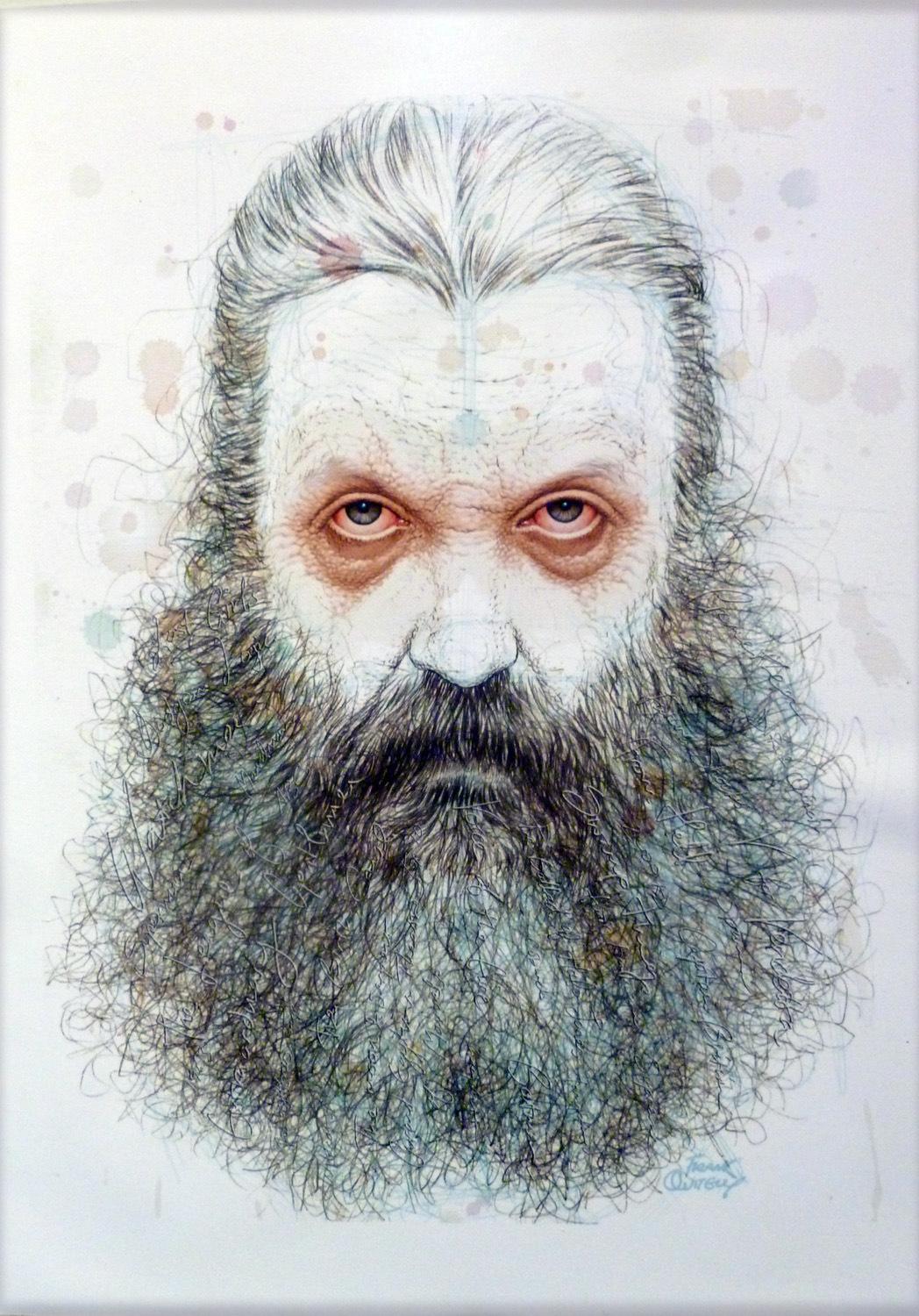

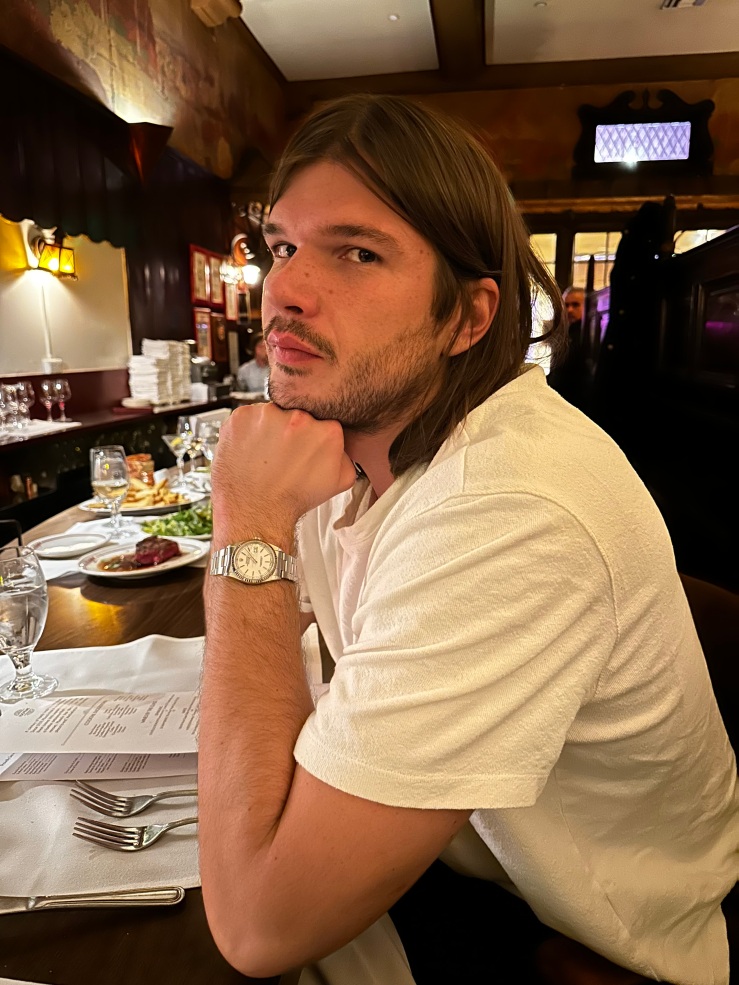

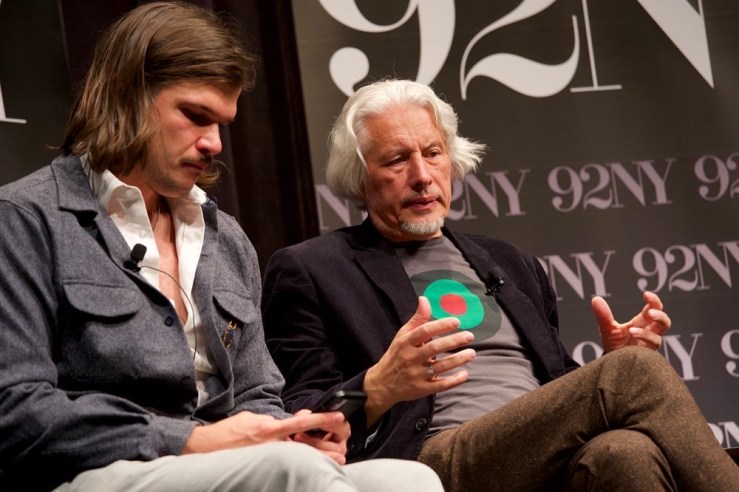
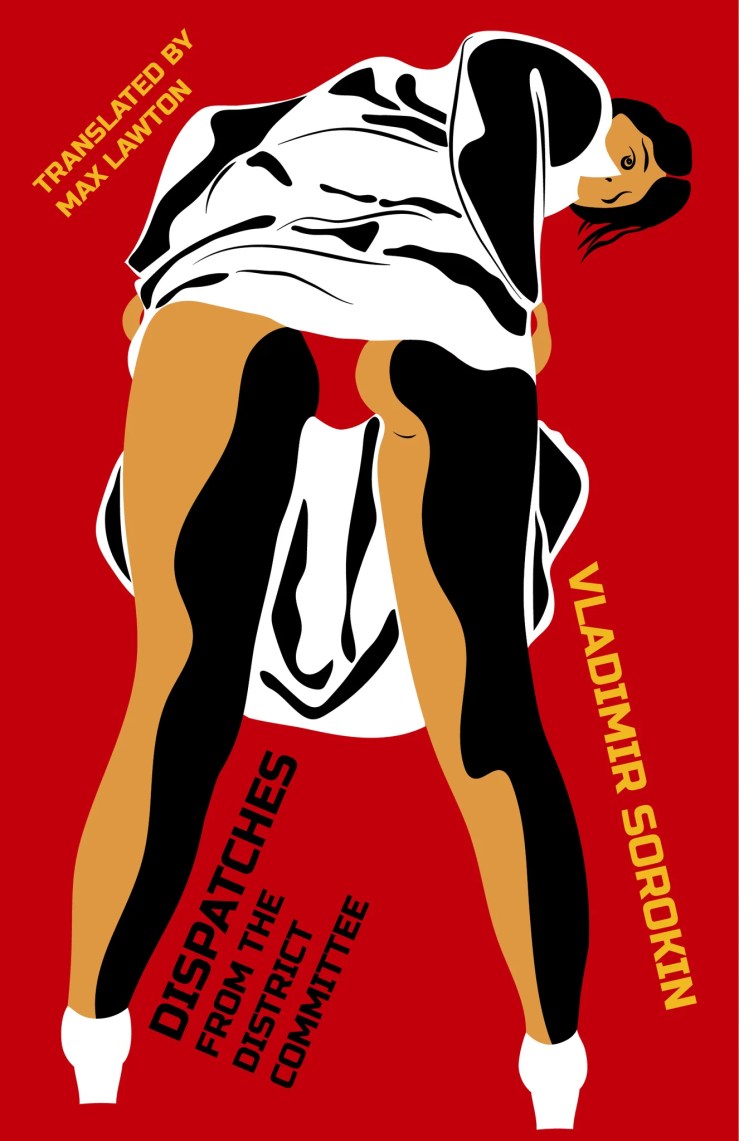


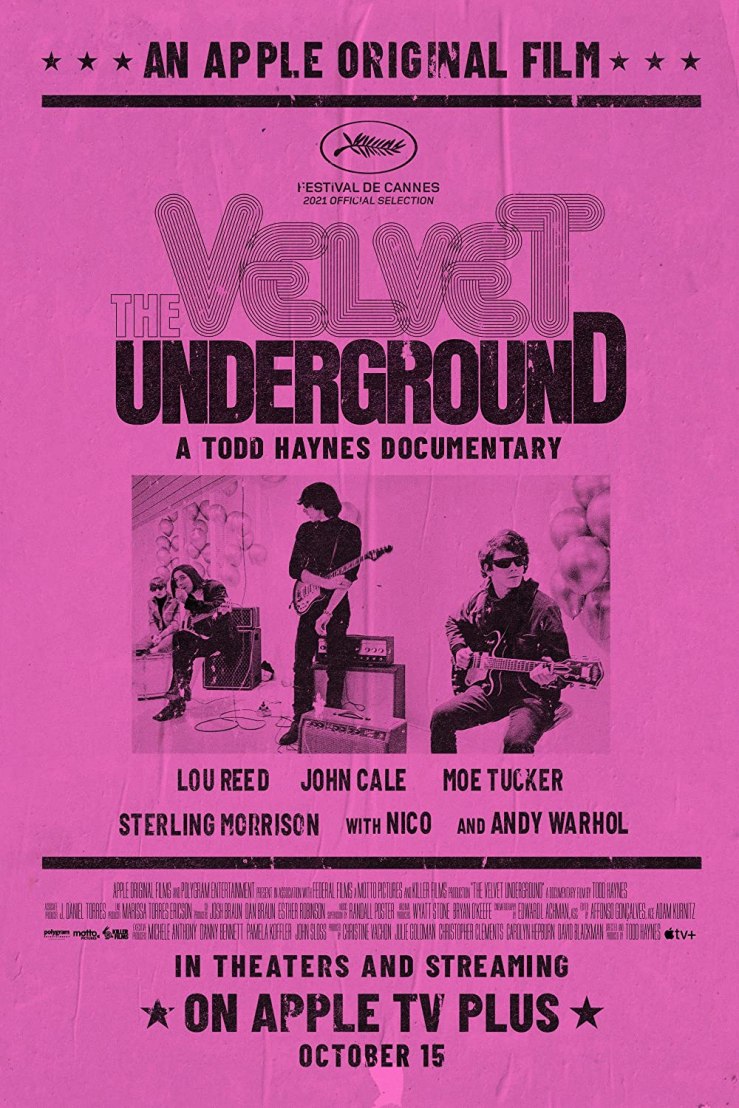
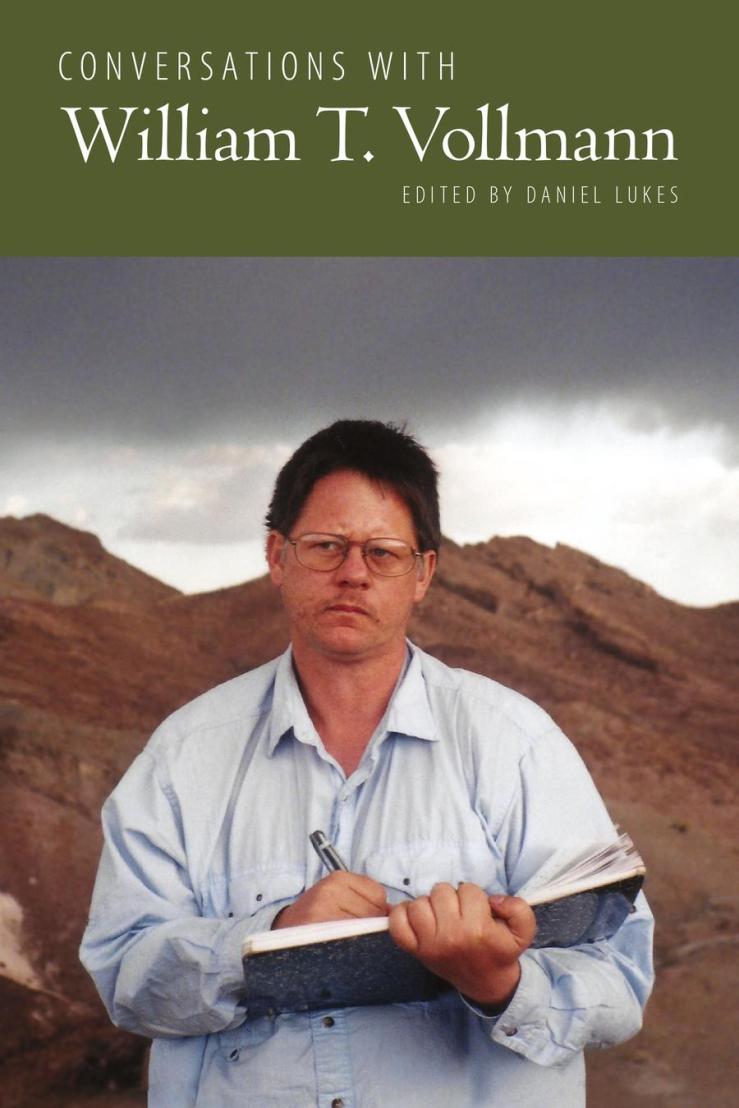
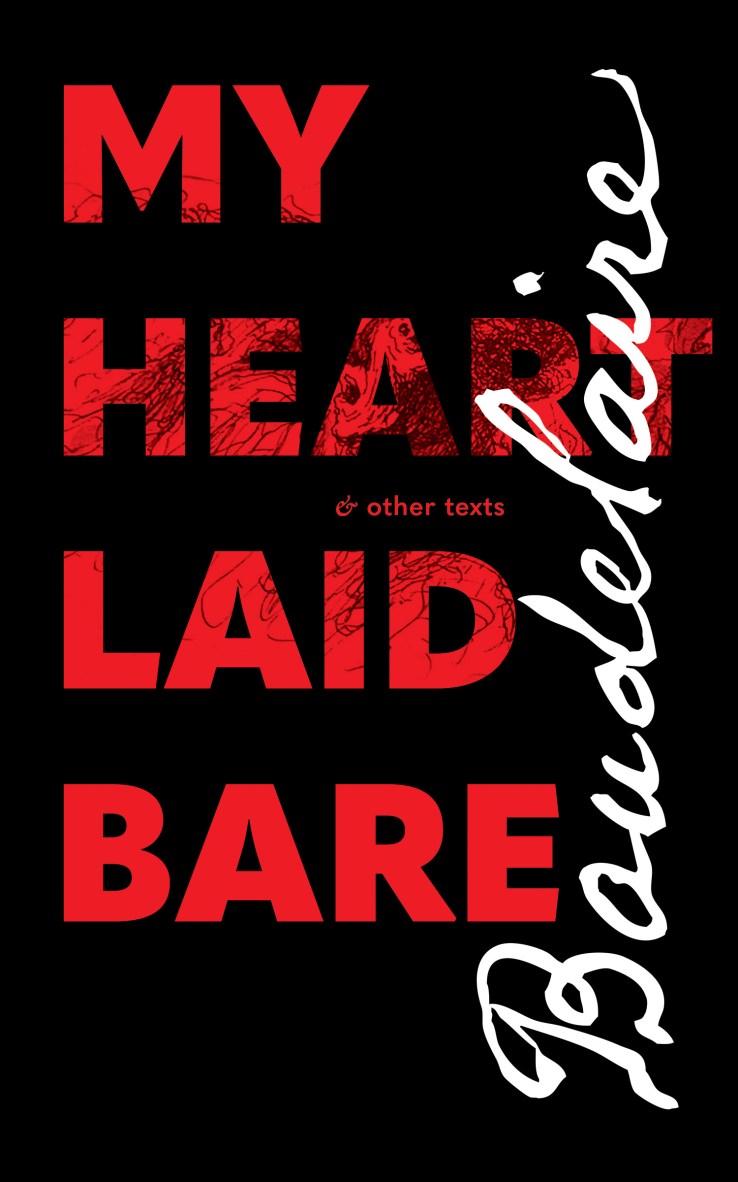
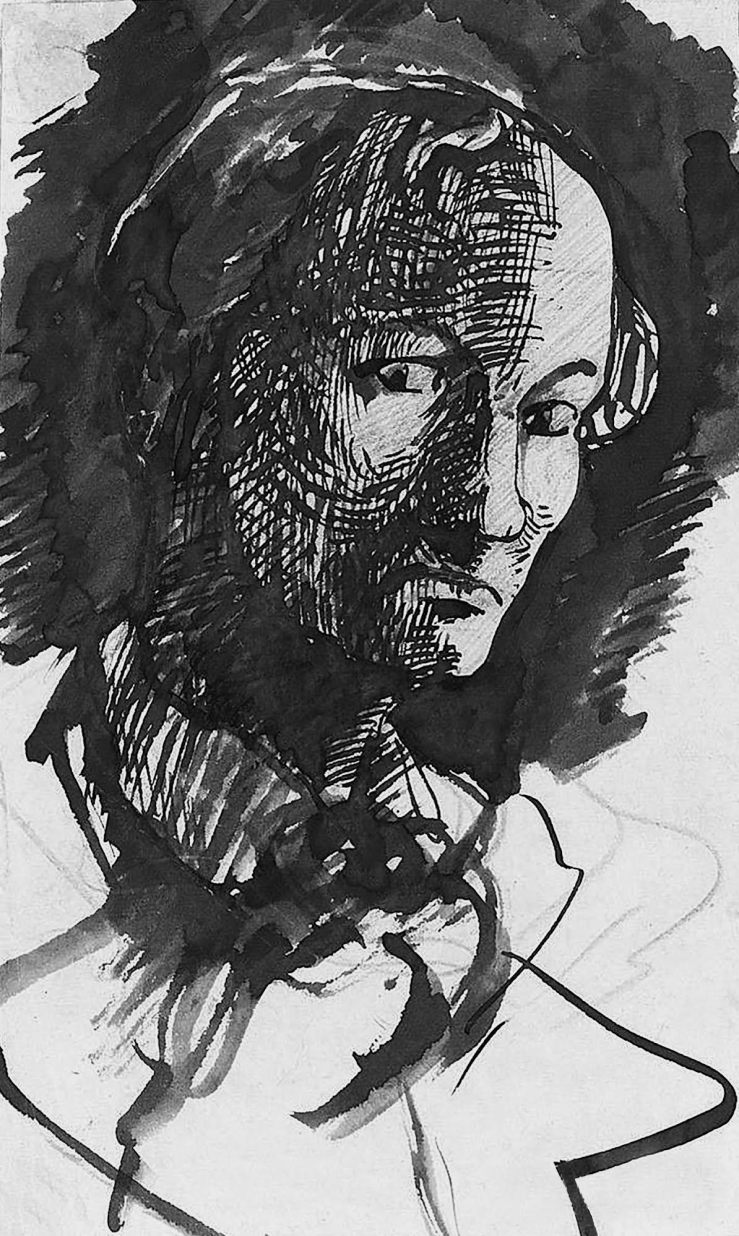



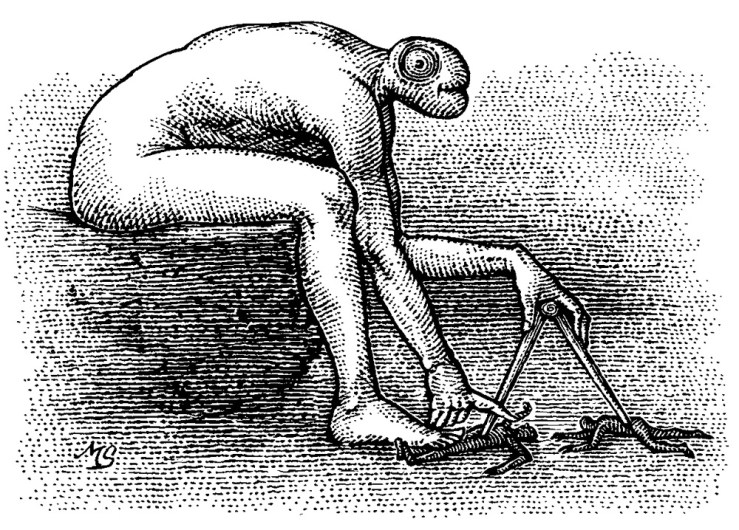
 Biblioklept