The following discussion of Vladimir Sorokin’s novel Blue Lard (in translation by Max Lawton) is intended for those who have read or are reading the book. It contains significant spoilers; to be very clear, I strongly recommend entering Blue Lard cold.
Previously on Blue Lard…We enjoyed the first of our clone narratives, Dostoevsky-2’s “Count Reshetovsky” (our dear correspondent Boris brag’s that the tale’s composition will yield “up to 6 kg. of blue lard”).
It is now Akhmatova-2’s turn to whip up some blue lard. Boris reports that “During the script-process, the object didn’t become at all deformed. Just heavy bleeding: vaginal and nasal.” Sorokin mixes abjection with creation. The Anna Akhmatova clone composes the song-poem “Three Nights.” I confess much of my idea of Ann Akhmatova’s poetry is informed by her sympathetic characterization in William T. Vollmann’s novel Europe Central—I’ve read fewer than a dozen of her poems, I’d guess—but nevertheless I found “Three Nights” very, very funny. Sorokin skewers Akhmatova in his parodic evocation of her earnest declaiming, perhaps lovingly, perhaps not, but with a fine ear, as telegraphed in Max Lawton’s translation. The plaintive sincerity of Akhmatova-2’s poem culminates in a riff on the old “farmer’s daughters” joke:
They rubbed sheep’s fat over his hard plow,
So that he could better plow the girls,
The three kolkhoznitsas-in-arms stripped down to their skin,
They lay down next to Comrade Akhmat.
Oh my!
Comrade Akhmat plowed them all night,
Gaptieva––three times,
Gazmanova––three times,
Khabibulina––three times.
Oh my!
Oh my! (A few pages later we’re treated (treated?) to the image of Lenin’s “heavy balls…crimson balls…shaggy balls… his hunchbacked balls.)
The clone narratives take over the text proper of Blue Lard (at least for now) and Boris’s tender letters to his tender bastard dwindle in length. (Boris does note in a letter dated 15 January that he’s reading Romance of the Three Kingdoms (attributed to Luo Guanzhong); perhaps the 14th-century historical novel , with its real-life figures and its epic sweep, signals a precursor text for Blue Lard.)
Our next clone is Platonov-3. Of all the cloned writers, Andrei Platonov was the one with whom I was most unfamiliar. That didn’t stop me from enjoying the scenario the first time I encountered it. It’s an actioner, featuring fight scenes on a train—uh, excuse me, a proletarian lumpomotive. Our hero is Bubnov, a stoker, machinist, engineer (and fighter) who takes on a new mission. The passenger who gives him this mission has to yell these new orders over “the class roar of the furnace with his bourgeois voice.” Such satirical lines riddle Platonov-3’s episode; later after digging a mass grave (I suppose such a scene shouldn’t be so slapstick, but it is), Bubnov’s comrade “got ready to say something sentimental, but was only able to growl because of the poverty of a human language that had entirely dried up in revolutionary winds.” I won’t spoil the trick of Platonov-3’s story, but it’s of a piece with Snowpiercer or The Train to Busan; one can easily reimagine Sorokin’s cloned Platonov-3’s riff as a sci-fi horror flick.
Another letter from Boris to bastard transitions to our next clone narrative, a one-act play by Chekhov-3 called “The Burial of Attis” (I should clarify that Boris includes the clone compositions in his letters). On my first reading of Blue Lard, I tuned into the depravity and linguistic difficulty of Boris’s letters. In the letter of 16 January that precedes Chekhov-3’s story, for instance, he complains that the colonel makes a pass at him while they are both drunk, tempting him to “test” some drug called “3 plus Caroline.” Boris’s letters are filled with futurese along with Chinese slang (he describes the colonel as a “hangkong mujian,” for example). A reread reveals more straightforward plotting elements–the letter of the 19th reminds us that this isn’t just a science mission but a military operation; the base is loaded with soldiers. And guns!
But on to Chekhov-3’s play, “The Burial of Attis.” The titular character is a beloved borzoi, now deceased. Attis belonged to Viktor Nikolayevich Polozov, a young aristocrat who seems to be barely maintaining his ancestral estate. He’s aided Anton, an aging footman. A former lover shows up at the burial, but he shouts her away in disgust after she declares that unlike dead people, “Dead dogs look just like dogs that are alive.” Later, an alcoholic neighbor, Dr. Schtange comes by to tie one on; in his drunkenness he urges Polozov to sell the ancestral manse: “Sell everything, sell it all! And as soon as possible! All this junk, all this decay, all this graveside garbage. A Chinese vase, a stuffed shark, these crystal goblets, what the devil are they to you?!” He does recommend keeping the weapons collection though, including a certain Mexican throwing knife. Chekhov-3’s Mexican throwing knife? Again, no spoilers, but the monologue that Polozov delivers at the end of the play is something else. A selection:
All things correspond to their names. The Chinese vase was, is, and shall always be a Chinese vase. Crystal is crystal and shall be thus until the day the moon falls to earth. You stood amidst these dead things––a living, warm-blooded man––and you alone did not correspond to your name. It wasn’t to do with the properties of your soul, not because of your decency or your wickedness, your honesty or your deceitfulness, not because of the good or the evil that was inside of you. You simply did not have a name… A person cannot have a name… They’re mere titles. We have no name. And never shall.
“There’s something M-unpleasant in this script,” muses Boris, “But I can’t figure out just what.” Something to return to later?
Nabokov-7’s “Kardosso’s Way” is up next. The clone has composed this text “in blood,” which, as Boris archly notes, “the original [Nabokov] couldn’t quite manage.” The linguistic fussiness of Nabokov-7’s composition is soaked in some of the foulest culinary abjection since Roger Mexico and Pig Bodine served snot soup, vomit vichyssoise wart waffles in Gravity’s Rainbow. “I only eat white meat!” the golddigger Svetalana exclaims before digging into a “silver dish filled with the prostates of catamites baked in grated cheese and generously sprinkled with lemon juice.” Later, “having nepresnified herself,” Svetlana “immersed her feet in a vase filled with ferret pâté.” And what to order when dining out?
The spouses never betrayed their gastronomic preferences, as they always ordered an 1889 Tokay, a swamp grass salad, the roots of elderly proletarians’ wisdom teeth, marengo made from bolonkas, parchment with toad caviar, and the menisci of third league Belarussian football players under a pile of vomit. For dessert, Svetlana would have rock crystal with whipped bull saliva or “Lair.” Having eaten their fill, they would move on to the jointer-inlaid tabernacle, wipe the prisms and trample the hamsters for forty minutes, then slide down the larded chute into the cloakroom.
The diction above is obscure, to be sure, but it’s possible to figure out what a marengo made of bolonkas might look like (you might not want to imagine what it would taste like, natch). Beyond obscurantism though, Nabokov-7 lards his narrative with terms that seem utterly alien to any known language: geobnorobdy, sodictio, nepresenified, half-gronzezily… In his recent interview on this blog, translator Max Lawton stated that he “worked in a few of Nabokov’s pet words,” but I’m not sure if jebraifying was one of those.
“I’m sending this one without comment,” Boris begins his letter of 18 January, referring to Pasternak-1’s 13-stanza poem “Pussy.” “You know I can’t stand Russcenities. Because of this, I offer no commentary,” he appends. I too will withhold commentary on the Pasternak pastiche, but will note that Boris’s brief letter reminds us that their experiment is part of a military operation: a certain Sgt. Prut allows him to shoot off a Cyclops-238 MC, a “slaughtersome thing” that Boris notes “could easily hew a clearing into our taiga all the way to the ocean.”
The last of the clone narratives, Tolstoy-4’s, is my favorite of the group. We get three chapters from the middle of an unnamed novel set in what seems to be 17th-century Russia. In media res, we find out that, “Having spent the whole winter in Pospelov, the old prince Mikhail Savvich found out about Boris’s duel too late, after his son’s wound had already closed up, and, along with it, so too had the whole business of his quarrel with Nesvitsky closed up and scabbed over.” So prodigal Boris returns home, where he will relax by bear hunting with his father and his father’s retainers. These scenes are richly-detailed and wonderful to walk through. Sorokin doesn’t seem to parody or skewer Tolstoy, nor does he mimic or mock him (at least to my ear)—instead the Tolstoy-4 passages evoke what I sense is a tempered if contested respect for the old master. Of all the clones, this narrative points to Sorokin’s intertextual competition with Tolstoy, which Sorokin enters into not with barbed neologisms or depraved abjection (although there is a bit of that here!), but with strange pop-fantasy eruptions. Accompanying the aristocrats and their retinue on their hunt are three “crushers,” a bizarre Cerberus troop of beasts who also seem to be men. The crushers speak in cracked, harsh voices and possess hands, yet walk leashed and lick their master’s lardshined boots. (Tatyana Tolstoya’s 2000 novel The Slynx (in English translation by Jamey Gambrell) would expand on these “crushers,” reinventing them as “degenerators,” human hybrid slaves used as beasts of burden.) Later, as Boris recuperates in a bathhouse, the wound he received in the duel reopens and one of the crushers gently licks it clean. Sorokin weaves abjection and purity in this strange bathhouse tableaux. The wound/scabbing motif here at the end of Tolstoy-4’s narrative echoes a remarkable passage from the section’s outset:
How does an awakened person differ from one who is awakened a s i t w e r e ? An awakened individual, that is to say, an individual who has been awakened by their conscience once and for all, has shaken off the evil of indifference to the lives of other people, as if it were a scab strongly and tightly clinging to the body, which, like a shell or suit of armor, clings to the conscience of every contemporary person living in contemporary society, which is based on the lawful oppression of certain people, the weak and the poor, by other people, the strong and the rich; this awakened individual will always evaluate all his deeds and misdeeds based on his new, young conscience, which has just awoken from its slumber. A person who is awakened, a s i t w e r e, shall continue to evaluate his deeds and misdeeds based not on his conscience, but on the shape of the scab of socially legitimized deception that clings to his conscience, continuing to flatter himself as before.
I would read an entire novel by Tolstoy-4; at the same time, I love that we only get three chapters, reifying Blue Lard’s apparently discontinuous structure. The writing of the section is evocative enough that we can imagine our own befores and afters if we like.
The first six clone narratives included linguistic aberrations–mechanical repetitions, scatological eruptions, perverted interludes, abject impossibilities–but the only real syntactical tic throughout Tolstoy-4’s story are three iterations of a sentence that might best be understood as “Sonya, get the hammer out of the cupboard” — although we see those words recombined, repeated, and inverted. Is this the Sonya of War and Peace? A version of Sofiya Tostoya? Is this Sonya merely (merely!) the verbal tic of cloned version of a nineteenth-century Russian realist whose erregen object is a stuffed albino panther? Does it matter?
Ahead: cocktail hour, dance party, armed combat, earthfuckers, THE SWIM, THE INDIGO PILL…
Max Lawton is the translator of many, many works, including a number of books by the Russian writer Vladimir Sorokin. The recent publication of two of those translations, Blue Lard and Red Pyramid was the occasion for my email-based interview with Max. We began in earnest late last fall and finished up on Leap Day, 2024. While Blue Lard was our starting place, we meandered, discussing future translations of Sorokin’s work, like The Norm and Dispatches from the District Committee, as well as some of Max’s other translation projects, books like Michael Lentz’s Schattenfroh and Stefano D’Arrigo’s Horcynus Orca. We also got into Max’s own fiction, which I anticipate seeing in bookstores soon. I want to express my gratitude to Max for generously sharing his time in this interview, and more importantly, making more Good Weird Stuff available to monolingual slobs like me.
Biblioklept: Max! Congrats on the publication of Blue Lardand Red Pyramid. I want to start with Blue Lard, because I think it’s a big deal that it’s getting an English language publication. It’s also my favorite Vladimir Sorokin book that I’ve read, and I know that it’s one of yours as well. The novel is perhaps Sorokin’s most (in)famous one, and I think it’ll attract new readers. What can readers expect when approaching the novel?
Max Lawton: Like TELLURIA, BLUE LARD is all about textures: literary, historical, ideological… However, unlike TELLURIA, BLUE LARD has a telos to it—an endpoint. I am firmly of the belief that BLUE LARD is Vladimir’s best novel. He had taken a long break from prose (about 7 years) before writing it, so this text simply burst forth from him and ended up as a neat showcase of all of his aesthetic preoccupations, butheld together by an edifice that has proportions none too short of classically harmonious. What should readers expect… hmm… the first section is rather challenging. One needs to surf its wave and not expect full comprehension. There is a glossary of Chinese words and neologisms at the back of the book, but I’m not sure it’s worth consulting in the expectation of further understanding. The middle section of the book—characterized by a faux-archaic language—is also terribly strange, but with fewer neologisms. The last section of the book—an alternate iteration of Post-WWII Europe—is formally very smooth, but insanely transgressive in terms of content. And I haven’t even mentioned the rather unorthodox parodies of Russian classics in the novel’s first section! What should readers expect? In short: to have their minds blown!
Max Lawton, Hollywood, California. Photog. by Ecem Lawton.
Biblioklept: Yeah, Blue Lard zapped me in the wildest way, and you’re right when you suggest the reader should “surf its wave and not expect full comprehension.” The first section is disorienting, but I think it also orients the reader to the radical disorientation to come. And the parodies of Chekhov, Tolstoy, Akhmatova, et al. are fantastic; there’s something really joyful in these deviant mutant performances. Sorokin constantly shifts linguistic registers in his work, which I know poses challenges and opportunities for you as a translator. For example, you’ve stated that in translating the polyglossia of Telluria you tapped into a range of voices including Chaucer, Faulkner, and Mervyn Peake. I’m curious about your process in translating Sorokin’s Russian classics parodies in Blue Lard.
ML: This is a fantastic question. The fundamental issue, however, is that Vladimir isn’t really interested in parody. If the clone-texts were a neat pastiche of Russian greats, that would be one thing. But Vladimir describes them as “essence hunts.” Oftentimes, they do not read like the authors they are “imitating.” This is especially so for Nabokov and Pasternak. Tolstoy and Akhmatova are in the middle. Then Dostoevsky, Platonov, and Chekhov are right on the money; their essence seems to line up with their outer form––their noumena are no different from their phenomena. For Dostoevsky, Platonov, and Chekhov, I did appeal to previous translations of their work, as not to do so seemed like a grave error. But, for the others, I had to think more outside of the box. With Nabokov, the one thing I “added” to the translation was recommended by a couple of professors and approved by Vladimir: I worked in a few of Nabokov’s pet words in English, as he is actually more famous for his writing in English than in Russian. For this reason, the insanely bizarre Nabokov “essence-hunt” reads more like a parody in English than in Russian––not that it isn’t very alienating in both languages. The Dostoevsky parody was especially fun to translate, as it allowed me to indulge the worst instincts of a Dostoevsky translator. I leave it to you to figure out what that might mean. The fundamental question posed by these parodies and the way they both resemble the texts of the original authors and not is: what does it mean, aesthetically speaking, when phenomena do not align with noumena?
Biblioklept: That seems like a central thread of what I’ve read from Sorokin in general—this aesthetic disarrangement of what we know, or what we think we know, and what might actually, I don’t know, be. To go back to Blue Lard: it reads like the work of someone joyfully detonating and reinventing realities. The “plot” of the novel is a series of displacements that culminate in this fucked up and hilarious reinvention of Postwar Europe. But as you mention above, that section is composed in a really precise, lucid, “smooth” manner, which only serves to highlight its transgressive content. The tonal shift isn’t exactly jarring, because by this point the reader has been through a linguistic gauntlet—but it does imbue the “alternate history” at the end of Blue Lard with an uncanny tinge.
ML:I actually think that the second half of the novel was more difficult to translate than the first. There’s a specific rhythm of Russian speech that is pun-filled and, I guess you’d say, overripe. This is how Russians speak in a sophisticated milieu even now. And I think it comes across as if it were wearing a fedora, so to speak, when it’s translated too directly. For that reason, I went back to the rhythms of dialogue at play in Old Hollywood films to find something that felt stilted but didn’t simply register as dissonance to the Anglophone ear. Of course, translating the narration of the book’s second half was more a question of reduction—making it as transparent as possible so that the horrors at its bottom would be visible. This wasn’t difficult, but was a good exercise in Hemingwayesque (or Sadean) style—Vladimir loves Old Man Ham and doesn’t much like Sade. As somebody who has written a lot of screenplays, Vladimir does sometimes enter a mode of narrative prose that seems to owe a lot to the way that screenplays are composed. With reference to the first half of the book with its constant destabilizing, I would say that it can be easier to translate things that sound utterly deranged because the question of normalcy goes out the window. As you will see in 2025, this is why the Soviet rhythms of THE NORM were a particular pain to render… we simply don’t have that register!
Biblioklept: Okay, so the fact that you drew from Old Hollywood patter actually makes a lot of sense to my ear. There’s like a heightened artificiality to the section, but one grounded in “realism,” which, again, lends to this uncanny rhythm.
ML: Yes, exactly. I have made this comparison before, but it bears repeating: Sorokin is a bit like a Russian hybrid of David Lynch and Quentin Tarantino. I very much hope that the dialogue in my translations of his work falls onto the Tarantino side of that spectrum. It should be crisp patter––highly rhythmic. Not stilted and highly unreal like Lynch’s screenplays. But, as with Tarantino and Old Hollywood films, something in Sorokin’s crispness eventually begins to limp, cloy, gum up the works… to glitch!
Max Lawton and Vladimir Sorokin, NYC.
Biblioklept:The Norm is Sorokin’s first novel, right?
ML: THE NORM is more or less Sorokin’s first novel. Things are a bit complicated at the beginning because he was simply writing “into his desk” with no prospect of publication. So, the early novels were sort of composed alongside one another. THE NORM is a Soviet Disneyland of abject horror: eight rides, each representing a different aspect of the USSR’s shittiness. Everyone knows it’s the book in which people eat shit, but it actually goes way deeper than that. The section people most love in Russia is a deranged epistolatory one, in which the distant relation managing an intelligentsia family’s dacha loses his mind with rage at having been saddled with its maintenance. Part 5––the best.
Actually, here’s a fun spoiler-free preview of the book––this diagram-thing will be included in the edition coming out from NYRB Classics in 2025.
TRANSLATOR’S LINATI SCHEMA FOR THE NORM
I. Contemporary dialogue. For a Soviet person, the same shock an Irish person might have had upon reading Dubliners. No point foraging through the American ‘80s. Therefore: the NOW.
II. Critical exegesis. These are mere words. American slang when necessary––then to explain the original by way of scholarly apparatus.
III. A thesis: Russian’s rhythms are generally quite defined by rurality. The agrarian empire was industrialized too quickly––couldn’t do away with the rurality of speech. But, so as not to exaggerate, to make the dialogue in “The Scourge” sound like a film noir about louche characters. Again: contemporary speech when necessary (esp. with the editors interrupting the text). Pilfering phrases from Constance Garnett for the Anton frame-narrative.
IV. Making the poems as perfect as any poems can be in translation. Total metrical adequacy.
V. No contractions. A dash of Benjy Compson. Instead of rhyming insults, total obscenity (“dickass professor” instead of the more literal “dickessor”).
VI. The occasional need to make a slogan more grammatical in English than in Russian.
VII. Not perfect lines, but shattered fragments. A meta-commentary on the clunkiness of official poetry (of poetry an sich as well?). The main thing: that the reader feels the clunky, contorted poetry when it supplants the prose, but that I not give into Miltonic excess entirely. Impossible to translate these as perfect poems as in Part V.
VIII. To occasionally add syntax to the gibberish so that it scans. “Jabberwocky.”
Biblioklept: I’m about halfway through The Norm—haven’t gotten to Part 5, which I’ll read tonight. The first section was, uh, hard to swallow, but also very funny. And once it told me how to read it, I was quite taken with how even in some of his earliest stuff, Sorokin has already found this strange, mutating form, a kind of narrative hot potato (or “hot norm” if we’re feeling extra abject today). I loved the third section, especially the sinister shift it takes.
ML: THE NORM is a highly compressed preview of all the tendencies Sorokin would be working out in the first half of his career—all the way up until BLUE LARD. Of course, you have the binary bomb structure of the short stories, in which a highly ordinary situation that would typically make up the raw material of Soviet official prose is ruptured and gives way to something abject. This will be explored a great deal more in the short stories of DISPATCHES FROM THE DISTRICT COMMITTEE, coming out from Dalkey next year. ROMAN and MARINA’S THIRTIETH LOVE, also binary bombs, but novels rather than stories, belong to the NORM-universe as well. Sorokin’s imitation of the world of Russian classics in ROMAN is as precise as his immersion in Soviet shit. Indeed, in THE NORM, one cannot help but note the intense specificity of Sorokin’s engagement with the Soviet Life-World. His prose would not be quite as specific in and after BLUE LARD—it would be more imaginative and less grounded in any one reality. Perhaps what tortured Sorokin during the first half of his career was his inability to imagine a world other than the Soviet Union. In all books after THEIR FOUR HEARTS (so BLUE LARD AND all that follows), though he may be haunted by the Russian past, the worlds he imagines are light and free—defined by his own language alone. After BLUE LARD, it is only his short stories that are weighted down by the gritty details of Russianness.
Biblioklept: You mentioned Russians love the fifth section, the “deranged epistolatory.” I loved the section too—it’s a kind of linguistic unraveling, but a strangely sympathetic one. Why do you think this chapter resonates with Sorokin’s native audience? Can you tell us a bit about translating it—was it fun? Difficult?
ML: That part was only tricky when Soviet-houseware vocab would pop up—obviously not my area of expertise. But, beyond that, in the sections where Sorokin is exploring a very pronounced directionality, I find it somehow easier to ride along with him. Translation is more about translating intent than individual words, so when the intent is very legible, it makes the translator’s job easier. That section is so beloved because it depicts a Soviet archetype of resentment and envy—wasn’t all of that meant to have gone away? Isn’t this the Shining Future? Well, it turns out that people are still animated by precisely the same sorts of petty evil. The idea of this section is a lot like what Dostoevsky wants to convey with the Underground Man: human beings are immutably illogical, petty… From that perspective, there is something divine about the gibberish at the section’s end—as divine as Dostoevsky’s 2+2=5.
Biblioklept: I really enjoy the gibberish and jabberwocky that infiltrates The Norm (particularly the lulling but clunky rhyming in the seventh section). That polyglossic strand seems woven throughout Sorokin’s work but is more palpable in this early novel than his later stuff. (Not sure if novel is the right word for The Norm but I don’t really care.) In Blue Lard and other later works, Sorokin employs neologisms and a range of non-Russian-language terms, but these are deployed in a more narratively-coherent manner than what’s happening in The Norm. In your estimation, is this simply an evolution in style? Is it purposeful, or just a writer doing his thing? Is this a stupid question?
ML: THE NORM is what all of Sorokin’s later works emerge from. In that sense, it’s undoubtedly true that this “narrative experiment” (you’re also right that it’s not a novel in any real sense) is less laser-focused than books like BLUE LARD, in which tropes like gibberish or corporeal-mutilation-as-metaphor have been worked out to a precise science. Sorokin wrote the book when he was a young man, passing around pamphlets of each part to his friends in the Moscow Conceptualist Underground. They were over the moon about it. In fact, there’s no meaningful way in which THE NORM can be differentiated from MY FIRST WORKING SATURDAY (mostly collected in Dalkey Archive’s forthcoming DISPATCHES FROM THE DISTRICT COMMITTEE), ROMAN, or MARINA’S THIRTIETH LOVE. All these books are a singular meta-work that deconstructs the ideological and literary languages of the Soviet Union, during the period when Sorokin was coming of age as an artist.
Biblioklept: Can you tell us a little more about Dispatches from the District Committee? Also, if this is something you can get into, how do you go about placing Sorokin’s work with the U.S. publishers—is there a thought into which titles go to Dalkey and which go to NYRB?
ML: DISPATCHES FROM THE DISTRICT COMMITTEE is the dark Dale Cooper to the RED PYRAMID’s sweet pie-eating FBI man. Whereas the latter was structured in accordance with a certain sort of classical form (yes, it’s fucked, but its stories are fucked (and fuck) in a harmonious way, as it were), DISPATCHES is a collection of early binary bombs from Sorokin’s famous MY FIRST WORKING SATURDAY collection, along with a few bits of juvenilia and a few late-period stories. Without exception, these are woolly and insane tales, some of my favorite things Sorokin has ever written. And it is in this collection that we truly learn the meaning of the “binary bomb” of which he so often speaks: in such stories, the first half is the technically-accomplished outlining of a typical Soviet situation or Soviet literary mode, but, about halfway through the story, the pin of the grenade is pulled and all that which is “normal” about the tale we’ve been reading gives way to the abject and the obscene––to Joycean gibberish and Bataillean acts of violence. In a way, this collection is the ninth part of THE NORM, and I wouldn’t object to readers approaching it in that way.
The publishers themselves divided the books, but I do think there was a certain logic to how it shook out. The Dalkey books tend to be the cult-classic Sorokin novels that are particularly beloved by people in Russia: by his “cult readers.” And the NYRB books are the books foreign readers tend to come to first. This narrative might become a bit stranger in coming years with NIGHTINGALE GROVE and THE SUGAR KREMLIN, but I’d say that’s how the chips have fallen for the time being.
Art by artist Yaroslav Schwartzstein from ОПРИЧНАЯ КНИГА, a collaboration with Vladimir Sorokin
Biblioklept: Speaking of The Sugar Kremlin and different publishers: the manuscript I have includes wonderful color illustrations by Yaroslav Schwarzstein. If I understand correctly, these illustrations have appeared with other editions of the book? Is the plan to include the illustrations in a U.S. edition? The Dalkey edition of Their Four Hearts includes illustrations by Gregory Klassen—has he collaborated with Sorokin on other works? Can you give us some background on Sorokin’s relationship with visual artists?
ML: I’m not sure those illustrations are going to be in THE SUGAR KREMLIN, alas… But Greg Klassen’s wonderful frontispieces for DISPATCHES are going to be included. Sorokin was a visual artist before he was a writer, so his texts are profoundly visual. He also has a lot of love for illustrated editions of his novels and stories––especially the deluxe editions put out by ciconia, ciconia in Berlin. In the future, I would love to put out English editions of Sorokin’s illustrated works that are just as deluxe as the German ones. In a sense, Sorokin writes like a painter. When I read his books, I can always see exactly what’s happening on the page in my mind’s eye. But it’s funny to imagine an illustrated edition of something like BLUE LARD––his linguistic abilities outpace those of any theoretical artist. I am also working to get a couple of American film adaptations of Sorokin’s books and stories off the ground here in LA. Cinema is very dear to him––and he’s written quite a few scripts.
Sanke’s Love by Gregory Klassen. From Dispatches from the Central Committee.
Biblioklept: Yeah, Sorokin’s writing is very imagistic, photographic, cinematic—for all the wild unreal shit that happens, it’s anchored in highly visual, sensual prose. I think that imagistic quality is important to the storytelling, especially when he drops these “binary bombs” as you put it (or is that Sorokin’s term?). I think the term is appropriate; I also like how novelist Will Self describes this signature structure in his introduction to Red Pyramid: “Each of his stories is a sort of mutant Mobius strip, in which to follow the narrative is to experience the real and fantastic as simultaneously opposed and coextensive.” I’m curious how Self’s introduction came about—can you tell us a little bit about that process?
ML: The binary bomb is Sorokin’s term of art for his own early stories, not my own. In fact, the term in Russian is closer to “lil’ binary bomb”. Will’s introduction is just so beautifully written—Vladimir and I think it’s one of the best texts ever written about him. I’d met Will a long time ago—first when he did a reading from Shark at Columbia when I was doing my undergrad there, then when he debated Zizek in London when I was at Oxford (Will won the debate by a wide margin, you can still find it on YouTube). Will has always been one of my heroes—one of the writers whose books showed me a possible path forward with my own writing when I was starting high school. In fact, for contemporary English-language prose, one couldn’t do better than his “technology trilogy”—UMBRELLA, SHARK, and PHONE. Anyways… I’d emailed Will a few times about my writing and received polite replies, but, when I was in London on the eve of the release of THEIR FOUR HEARTS and TELLURIA, he tried to meet up with me, didn’t succeed, then we met up in NYC, where he was doing a bit of research for his new novel. We became fast friends and, just as Will has become a big fan of Sorokin, so too has he become a mentor to me. To my mind, Will represents all that which is glorious about the English literary tradition: its irreverence, wildness, erudition, biting wit… It means a great deal to both me and Vladimir to have him “coming out to meet the reader”—and doing such a damn fine job of introducing the book! To all those readers who haven’t yet touched Sorokin, I would recommend starting out your odyssey with Will’s intro to RED PYRAMID, then reading the collection itself, then reading BLUE LARD.
Biblioklept: You’ve touched on the timeline for publication for some of your Sorokin translations. Any news on when we might expect to see Roman or The Sugar Kremlin on anglophone shelves? What about your translation of Michael Lentz’s surreal opus, Schattenfroh?
ML: The Sorokin timeline is still a bit unclear. ROMAN and THE SUGAR KREMLIN will be coming out in the next two or three years, I would say. Actually, I take that back: THE SUGAR KREMLIN will be coming out in 2025, but ROMAN is a little bit more unclear. There is some discussion of ROMAN and MARINA’S THIRTIETH LOVE being released together in a slipcase.
SCHATTENFROH is the novel. I am most excited about having translated after BLUE LARD. It is such an incredible, strange masterpiece, and I really don’t think the Anglosphere is ready for it. That will be coming out in 2025 and in fact, my translation, or rather, the very final draft of my translation is due at the beginning of the fall, and my editor Matthias and I are thinking a lot about how much work that will be to get done.
Biblioklept: Who’s publishing Schattenfroh? I’m going to ask you an unfair and stupid question: What is Schattenfroh?
ML: I can’t reveal who will be publishing it, but a press release about all these books is coming within the month. In brief, SCHATTENFROH is about a man named Nobody, who, coincidentally, bears a great deal of resemblance to Michael Lentz, being forced to write a book called SCHATTENFROH by his father’s ghost, whose name is also Schattenfroh. The process of the book’s composition—the journeys undertaken during its composition and the technical elements of its assembly (and deconstruction)—are what it’s about. It also deals with family history, metaphysics, World War II, Hegel, the baroque, German urban planning, incest, the apocalypse, death, and much else. It is one of my favorite novels without question.
Biblioklept: Can you touch briefly on some of what went into translating Schattenfroh? The book is formally daunting; at times reading in it is like walking through a surreal nightmare; other times the prose is austere, even spare…
ML: In certain respects, I felt the inherent affinity to SCHATTENFROH I have felt to other texts I am deeply infatuated with as a translator (BLUE LARD, Antonio Moresco’s trilogy, Céline…). On the other hand, the technical vocabulary that crops up from time to time as a conceptual gag was absolutely brutal to work with and I am indebted to my editor Matthias Friedrich for the good work he’s done, of which there is still much to do. The printing press vocab will require a specialist in medieval printing technology to give it a rather intensive read, just as the section in which a museum guard quizzes the protagonist about a technical architecture article from an East German architecture journal will require an intensive edit by a perfectly bilingual scholar conversant in architecture and physics. Lentz has the luxury of using texts as found objects––we, alas, do not! Matthias has also been a great help with identifying quotes, which we then have to translate or find extant translations of. The latter option is preferable, as it safeguards the encyclopedic quality of the book––you see a quote, Google it, and dive deeper into the world of the novel. The most problematic translation question is what to do with historical quotes from Luther and others like him that have been translated into English, but into modern English, whereas the German is dense as hell and difficult to read due to its archaicism. Translations of Luther from the era he lived would be ideal, otherwise I’m left attempting to kitschify the English into an approximation of the archaic German.
Biblioklept: I expect Schattenfroh to become a cult novel for anglophones after your translation comes out. Do you know if it has a similar reputation in Germany?
ML: The fascinating thing about SCHATTENFROH is that it doesn’t have too much of an audience in Germany. It’s very much a cult novel. Its release in English will provide a new opportunity for more German readers to discover it. With that said, those German readers who have read the book have, for the most part, fallen in love with it. It’s the sort of novel one can’t believe is still being written. On the other hand, there’s a way in which SCHATTENFROH is the sort of book that might find an audience in America more readily than it has in Germany—this is just my suspicion.
ML: Yes, I’m very excited to dredge the depths of its pornographic scatology. It’s one of the most metaphysical projects I’ve ever encountered––moving from Moresco’s own lived experience as a monk and revolutionary to the most distant reaches of interstellar space in a frozen Steinian mode that is as gorgeous as it is infuriating. This trilogy is on the level of SCHATTENFROH and BLUE LARD and will be adored by all readers of 2666, THE 120 DAYS OF SODOM, and SOLENOID. The second book in the trilogy in particular, CANTI DEL CAOS, will be an event in English publishing that I hope will reach the heights of the reception to Bolaño’s masterpiece. I am also translating HORCYNUS ORCA and am still terrified of the Sicilian therein. The great writer and translator Francesco Pacifico will be editing these translations.
ML: It’s thanks to Andrei that I’m going to be translating SCHATTENFROH, Moresco’s trilogy, HORCYNUS ORCA, and, in a few years, Palol’s BOÖTES. He’s a great friend and mentor to me and there are few things in the world I appreciate as much as his taste and total aesthetic honesty. He is a source of great guidance to me, and I am deeply, deeply grateful that I stumbled on his blog and that he responded to me when I sent him the illustrated manuscript of THEIR FOUR HEARTS back in 2019. A true OG.
Biblioklept: Amazing. Andrei is a champion reader. Reading is such a private, internal process; it’s easy to overlook that great writers need great readers. And translators are clearly in the vanguard of great readers.
This is probably a really stupid question, but when you’re writing your own fiction, like your novel The Abode, are you in, like, a totally different zone than the translation sphere?
ML: Will Self always asks me about this and expresses concern that I’m being over-influenced by the fiction I translate, but, for whatever reason, I have found that translation is a self-contained system in my literary life. The words of the original enter me, then are flushed out like water turning into piss. I have the capacity to be influenced by texts, but the very fact of translating means that I also exorcise the influence. The commonality between my own prose and translation is the focus on style, but the difference is the question of what to write that must necessarily plague any original writer. That is the most difficult part of writing––ontological doubts. I have a good feeling that the Anglosphere will soon get to read my first novel PROGRESS, my short-story collection THE WORLD, and my second novel THE ABODE. These three books represent the first era of my writing. After I’m done with THE ABODE, the autofictional monstrosity I’m writing now, I’m going to stop writing for a while––just play black metal with my new band here in LA and read. Then see when I’m driven back to the blank page (though, to be honest, I’m half-lying: I already have two new novels planned out––they’re just very different from the first three books).
Biblioklept: To your parenthetical post-dash clause: When you write that your plans for these two new books differ from the first three, what do you mean? Style? Subject? Did this difference come from a conscious choice?
ML: Yeah, the first three are very selfish books in a sense. MAX LAWTON looms over them rather heavily. For the follow-ups, I’ve been thinking about certain American styles that are generous, biblical: Cormac McCarthy, Marilynne Robinson, etc. I want to write a few books from which I am utterly absent, and I want them to be shorter, with the sentences screwed in tight. In brief, I want to write grown-up books. These first three are my graphomaniacal youth-culture books––Bret Easton Ellis casts a long shadow over them too.
Here are links to a few of my short stories that have recently been published:
Biblioklept: There’s that line near the end of the prologue of The Abode, where the third-person narrator tells us that “Max wasn’t interested in the ups and downs of a typical Bildungsroman or campus novel”…
ML: Yeah, I’ve always wanted to write a massive slab of autofiction but am keenly aware of the clichés that dog the form. This is the sort of cheeky line that might get thrown out in further revisions of the text but represents my desire to combine disparate tendencies: the neuroticism of Proust, the hedonism of Bret Easton Ellis, and the metaphysics of William Blake. Though my German reader says it reminds him of THE CORRECTIONS… In a sense, THE ABODE is all about wanting my cake and eating it too.
Biblioklept: I liked the line, especially in its context, which I hope you don’t mind if I share here with some readers:
“Max wasn’t interested in the ups and downs of a typical Bildungsroman or campus novel, didn’t believe he’d ever end up with a single woman to whom he would pledge his affections––he was the plinks of the second synth coming in over the washes of the first and each click of the metronome showed him something else––something he was meant to see, something pure and visionary that had been vomited up from the very center of the earth.”
The synth metaphor is lovely.
ML: Thanks so much! I tried to make the language chewy and specific without losing the pellucid quality of 19th-century narrative prose. My first novel PROGRESS is very dense stylistically in a way I strived to move away from.
Biblioklept: The style of Progress seems to rhetorically approximate the narrator’s attempt to register the material world he is moving through with his sense of interiority, selfhood, whatever. (That inside/outside distinction manifests in a number of the book’s motifs, including all the pissing and shitting.) I don’t know if I think of the style as dense, necessarily. The clauses stack up, but they also flow and move. I mean, I think the book is quite readable; it’s not like, Oh fuck another giant paragraph! Maybe that’s because Progress is, at least in part, about, “Y’know, like, apocalyptic stuff,” to quote one character out of context.
ML: I wrote PROGRESS during Covid and the lack that seemed to inform it was my feeling that narrative prose had ceased to describe the world as it exists (I was also reading a lot of Heidegger at the time). The conceptual sci-fi narrative is an excuse to describe the freeways and all that exists around them as if it were a natural idyll. The book is a beach on which the detritus of our age washes up––I catalog it.
Ralph Hubbell and Max Lawton pose before the house where Atay wrote The Disconnected (photog. unknown)
Biblioklept: So, besides your novel Progress, your short story collection The World, your autofiction-in-progress The Abode, the Moresco trilogy, Horcynus Orca, Schattenfroh, and a slew of Sorokin–what other projects are you cooking up?
ML: There are a couple of others (as if I didn’t have enough on my plate!). First is my new translation of GUIGNOL’S BAND in a single volume––the previous translations of the book’s two parts were done by two translators and put out by two publishers. It is my contention that GUIGNOL’S BAND may be Céline’s greatest novel. The extremity of his style increased all throughout his career, but,by the time it reached its point of extremity, the content had, alas, curdled (here, I’m thinking of the final trilogy recounting his years spent as a Nazi). GUIGNOL’S BAND, on the other hand, is a showcase of the way Céline would blow up his own idiom, but in the context of a propulsive London novel with a lot of crime and capers. It is my hope that a new translation of GUIGNOL’S BAND will truly bring home to the Anglosphere the quiddity of Céline’s “musical orality.”
My friend Ralph Hubbell and I are also hoping to translate Oğuz Atay’s great novel THE DISCONNECTED, which has already been translated into English, but, speaking delicately, needs to be redone if it is to be published (Ralph and I have written a lot about this and gotten into hot water for what we’ve said). The book is akin to a mix of ULYSSES and CATCHER IN THE RYE. It’s the best novel ever written in Turkish, and I sincerely hope we get good news from Istanbul in the near future––the offer from the Anglophone publisher that wants the two of us to retranslate the book still stands.
Biblioklept: The last time I interviewed you, I ended with my standard last question, Have you ever stolen a book? and you admitted that you hadn’t. Any updates there?
ML: I still haven’t stolen any physical books, but I hope that my work continues to be another kind of theft: stealing great books out of the maw of Anglophone oblivion and putting them into the hands of readers eager for fiction that is dense, extreme, and difficult. I am of the sincere conviction that the demand for these books is high and, to any Anglophone publishers reading this, I say this: take a chance, publish something that pushes the envelope, and you might just be surprised by the reaction…
Q. It’s interesting that you say your new book is surreal but not magical realism. You’ve said that you don’t consider your earlier books to be surrealistic. Why not?
A. Surrealism was born out of a preoccupation with the irrationality and illogic of the subconscious, and a view that human relationships are fundamentally absurd. Whatever else my books may be about, they don’t express an absurd view of existence. The form of the books, and the strange juxtapositions of their narratives, may strike people as surreal, but the central concerns that drive the stories are traditional ones. I don’t think any true surrealist would consider me a surrealist, in the same way no hard-core science-fiction fan would consider me a science-fiction writer, since the basic concern of most classic science fiction is the relationship between man and technology. Philip K. Dick and Theodore Sturgeon and a few others are exceptions. Technology is a completely valid and important topic to write about, but it just doesn’t happen to interest me. And my books aren’t “experimental” because my priorities don’t involve reinventing literary forms, and they’re not fantastic because they’re not characterized by the sense of wonder that fantasy evokes. I think it’s been hard for my novels to find a niche.
Q. Do you see your books as being postmodern?
A. You know, I’ve never been entirely clear what “postmodern” means. But to at least some extent postmodernism seems to involve a cultural or aesthetic self-awareness, and an insistence on art recognizing and tweaking its own artifice. My aim isn’t to call attention to the artifice of my books but to make readers forget the artifice, to persuade them to exchange their reality for the one I’ve created. I’m aware that trying to get readers to give themselves over to another reality is always doomed to failure. On the other hand, that’s the job of the novelist, to fail and fail again. The great hope isn’t to succeed-I’m not sure what success would really mean-but to risk everything, and perhaps to fail by narrower margins, until there’s nothing left to fail with.
From a 1997 interview with novelist Steve Erickson. Larry McCaffery and Takayuki Tatsumi conducted the interview, which published in Contemporary Literature, Autumn, 1997, Vol. 38, No. 3.
A few years ago I passed up on a hardback first-edition copy of Walker Percy’s weird dystopian Southern Gothic Love in the Ruins, and have regretted it ever since, or at least ever since I read a run of his novels back in 2020. I wound I’m reading a digital copy of Love from my local library, loved it, and would put it up there with Lancelot as his best, knowing damn well I still haven’t read The Last Gentleman or The Thanatos Syndrome. (The Thanatos Syndrome sounds like the name of a bad novel in a dystopian parody novel or film.) The cover for this edition of Love in the Ruins is by Janet Halverson.
I’ve read nine of Ishmael Reed’s first ten novels, but I still haven’t read Japanese by Spring, his ninth work, a campus novel that parodies America’s ever-ongoing culture wars. I picked up this first-edition hardback today. Before I even opened the copy, I wondered if it belonged to the same dude who I’ve managed to cop so many used postmodern novels of the past three decades. This guy—I won’t write his name out here—this guy put stamps or stickers of his name and address in the books he bought, I guess, and I ended up picking up a lot of them used over the years: Ishmael Reed, Stanley Elkin, Don DeLillo…I was thinking about maybe writing the guy? Anyway, sure enough, this copy of Japanese by Spring included a sticker bearing this guy’s name and the same address. I did a basic internet search and it looks like he’s moved, but not far, and that he’s (probably) eighty years old. I guess I’d just want to say Thanks is all.
Ishmael Reed’s 1974 novel The Last Days of Louisiana Red is a sharp, zany satire of US culture at the end of the twentieth century. The novel, Reed’s fourth, is a sequel of sorts to Mumbo Jumbo (1972), and features that earlier novel’s protagonist, the Neo-HooDoo ghost detective Papa LaBas.
In Mumbo Jumbo, Reed gave us the story of an uptight secret society, the Wallflower Order, and their attempt to root out and eradicate “Jes’ Grew,” a psychic virus that spreads freedom and takes its form in arts like jazz and the jitterbug. The Last Days of Louisiana Red also employs a psychic virus to drive its plot, although this transmission is far deadlier. “Louisiana Red” is a poisonous mental disease that afflicts black people in the Americas, causing them to fall into a neo-slave mentality in which they act like “Crabs in the Barrel…Each crab trying to keep the other from reaching the top.”
The Last Days of Louisiana Red begins with Ed Yellings, “an american negro itinerant who popped into Berkeley during the age of Nat King Cole. People looked around one day and there he was.” Yellings is the West Coast counterpart to New-York-based Papa LeBas, a fellow Worker of Neo-HooDoo who fights against the secret forces of psychic slavery.
Sliding into the mythological motif that ripple through Louisiana Red, Reed writes,
When Osiris entered Egypt, cannibalism was in vogue. He stopped men from eating men. Thousands of years later when Ed Yellings entered Berkeley, there was a plague too, but not as savage. After centuries of learning how to be subtle, the scheming beast that is man had acquired the ability to cover up.
Yellings’ mission is to destroy the psychic cannibalism that afflicts his people. He gets to it, and earns “a reputation for being not only a Worker [of the voodoo arts] but a worker too.” Yellings’ working class bona fides helps solidify his sympathies and his mission:
Since he worked with workers, he gained a knowledge of the workers’ lot. He knew that their lives were bitter. He experienced their surliness, their downtroddenness, their spitefulness and the hatred they had for one another and for their wives and their kids. He saw them repeatedly go against their own best interests as they were swayed and bedazzled by modern subliminal techniques, manipulated by politicians and corporate tycoons, who posed as their friends while sapping their energy. Whose political campaigns amounted to: “Get the Nigger.”
As always, Reed’s diagnosis of late 20th-century American culture seems to belong, unfortunately, just as much to our own time, giving his novels a perhaps-unintended sheen of prescience. Reed’s work points to dystopia, even as his heroes work for freedom and justice. And yet Reed gives equal air time to the forces that oppress freedom and justice, forces that find expression in “Louisiana Red”:
Louisiana Red was the way they related to one another, oppressed one another, maimed and murdered one another., carving one another while above their heads, fifty thousand feet, billionaires few in custom-made jet planes equipped with saunas tennis courts swimming pools discotheques and meeting rooms decorated like a Merv Griffin Show set….
The miserable workers were anti-negro, anti-chicano, anti-puerto rican, anti-asian, anti-native american, had forgotten their guild oaths, disrespected craftsmanship; produced badly made cars and appliances and were stimulated by gangster-controlled entertainment; turned out worms in the tuna fish, spiders in the soup, inflamatory toys, tumorous chickens, d.d.t. in fish and the brand new condominium built on quicksand.
As a means to fight the culture of erosion, decay, and entropy, Yellings founds the Solid Gumbo Works. Here, he manufactures a gumbo—a spell, really—to combat “Louisiana Red.” In the process he manages to cure cancer, which pisses off a lot of big corporations, and pretty soon Yellings is murdered. Papa LeBas is sent in from New York to solve the case.
Papa LeBas runs into trouble pretty quickly, mostly by way of Yellings’ adult children: Wolf, Street, Sister, and the provocative and gifted Minnie, who leads a group of militants called the Moochers. Each of the children seem to embody an allegorical parallel to some aspect of the American counterculture of the late sixties and seventies, allowing Reed to mash up genres and skewer ideologies. There are a lot flavors in this gumbo: voodoo lore and California history bubble in the same pot as riffs on astrology and Cab Calloway’s hit “Minnie the Moocher.” Reed frequently compares and contrasts East with West, New York with California, underscoring the latter’s anxieties of influence about being the New World of the New World. Throughout the novel, we get routines on Amos & Andy, slapstick pastiches straight out of George Herriman’s Krazy Kat comix, hysterical nods to Kafka. Reed plays off early blaxploitation films like Sweet Sweetback’s Baadasssss Song and Superfly (not to mention Putney Swope), and synthesizes these tropes with kung fu imagery and neo-Nazi nostalgia garb. He turns Aunt Jemima into a loa at one point.
Reed’s prose ping-pongs between genres, skittering from pulp fiction noir to surrealist frenzies, from bizarre sex to raucous action, from political essaying to postmodernist mythologizing. Through these stylistic shifts, Reed satirizes a host of ideologies that feed into “Louisiana Red.” Aspects of the Berkeley youth movement, radical feminism, free love, and intellectual hucksterism all get skewered, but through an allegorical lens—Reed dares us, often explicitly (by way of a character named Chorus) to read Louisiana Red as an allegorical retelling of Sophocles’ Antigone.
This retelling is both tragic and comic though, premodern and postmodern, a carnival of varied voices. The chapters are short, the sentences sting, and the plot shuttles along, pivoting from episode to episode with manic picaresque glee. Reed’s narrator is always way out there in front of both the reader and the novel’s characters, hollering at us to keep up.
Ultimately, The Last Days of Louisiana Red is a bit of a shaggy dog. It’s not that it doesn’t have a climax—it does, it has lots of climaxes, some quite literal. And it’s not that the novel doesn’t have a point—it very much does. Rather, it’s that Reed employs his detective story as a frame for the larger argument he wants to make about American culture. Sure, Papa LaBas gets to the bottom of Yellings’ murder, but that’s not ultimately what the narrative is about.
When we get to the final chapter, we find LaBas, sitting alone “on a plain box” in the empty offices of the Solid Gumbo Works reflecting on the case in a way that, in short, sums up what The Last Days of Louisiana Red is about:
He thought of the eaters and the eaten of this parable on Gumbo…all ‘oppressed people’ who often, like Tod Browning ‘Freaks,’ have their own boot on their own neck. They exist to give the LaBases, Wolfs and Sisters of these groups the business, so as to prevent them from taking care of Business, Occupation, Work. They are the moochers who cooperate with their ‘oppression,’ for they have the mentality of the prey who thinks his destruction at the fangs of the killer is the natural order of things and colludes with his own death. The Workers exist to tell the ‘prey’ that they were meant to bring down killers three times their size, using the old morality as their guide: Voodoo, Confucianism, the ancient Egyptian inner duties, using the technique of camouflage, independent camouflages like the leopard shark, ruler of the seas for five million years. Doc John, ‘the black Cagliostro,’ rises again over the American scene. The Workers conjure and command the spirit of Doc John to walk the land.
So here, near the end of The Last Days of Louisiana Red, Papa LeBas—and Ishmael Reed, of course—conjures up the spirit of Doctor John, the voodoo healer who escaped slavery and brought knowledge of the hoodoo arts to his people. There’s a promise of hope and optimism here at the novel’s end, despite its many bitter flavors. But the passage cited above is not the final moments of Louisiana Red—no, the novel, ends, despite what I wrote about its being a shaggy dog story, with a marvelous punchline.
Ishmael Reed remains an underappreciated novelist whose early work seems as vital as ever. The Last Days of Louisiana Red is probably not the best starting place for him, but it’s a great novel to read right after Mumbo Jumbo, which is a great starting place to read Reed. In any case: Read Reed. Highly recommended.
[Ed. note–Biblioklept first published this review in March, 2019.]
Marlon James’s novel Black Leopard, Red Wolf is a postmodern fantasy that takes place in medieval sub-Saharan Africa. Set against the backdrop of two warring states, the North Kingdom and the South Kingdom, Black Leopard, Red Wolf is the story—or stories, really—of Tracker, a man “with a nose” who can track down pretty much anyone (as long as he’s got the scent).
The central quest of Black Leopard, Red Wolf is for Tracker to find and recover a missing child of great importance. An explanation of exactly how and why the child is so important is deferred repeatedly; indeed, James’s novel is as much a detective story as it is a fantasy. In his detective-quest, Tracker partners with a number of strange allies: a talkative giant (who tells us repeatedly that he is not a giant), an anti-witch who places charms on Tracker, a duplicitous Moon Witch, a skin-shedding warrior-spy, a sandy-colored soldier from an alien land, a surly archer, a very smart buffalo, and more, more, more.
I used the word allies above, but truculent Tracker is just as likely to fight against the members of his fellowship as he is to fight with them. Black Leopard, Red Wolf runs on the same logic we find in comic books, where heroes fight each other first and then figure out why they are fighting each other after the fact. Sure, they’ll band together to fight lightning zombies, vampires, or roof-walking night demons—but they’re just as likely to go at each other with brass knuckles, axes, or arrows right after.
Chief among Tracker’s allies/rivals is the Leopard, a shapeshifter. Throughout the book, Tracker and the Leopard fall in and fall out, fight and fuck, laugh and scream. Their bond is forged early in the novel, when they work together to rescue Mingi children, outcast mutants with strange appearances and stranger abilities. These children become an ersatz family for Tracker and provide an emotional ballast to a novel that often reads like a violent tangle of chaotic, meaningless tangents.
The fact that Leopard and Tracker—the title characters for the novel (Tracker gets his eye sucked out by a were-hyena and replaces it with a magical wolf eye; don’t ask)—the fact that Leopard and Tracker save children, particularly strange children is central to understanding their motivations in their quest to save the missing child.
From the outset though, the reader has to doubt just how successful the quest will be. Black Leopard, Red Wolf opens with these intriguing sentences: “The child is dead. There is nothing left to know.” These lines for foreground the novel’s two major themes: radical infanticide and the problem of knowing what we know and (story)telling what we know.
James’s novel uses infanticidal threat as the impetus for its central plot, the fellowship’s quest to save a child. In the backdrop though is Tracker’s oedipal rage toward his father/grandfather (don’t ask), a rage born out of the infanticidal threats Tracker himself has survived. Tracker has survived, but he is not at peace. He is perhaps the angriest narrator I have ever read, quick to temper and driven by (oedipal) impulses of revenge against a target he cannot name. His anger boils over repeatedly, and not just at his foes, but at his partners and his lovers—the Leopard, in particular.
At the same time, Black Leopard, Red Wolf transports us to scenes of strange love and strange families. James’s novel shows how radical love—Tracker and his Mingi children—might mediate, disrupt, or upend the impulses of revenge. And yet there is nothing permanent or stable in this postmodern novel.
Indeed, Black Leopard, Red Wolf is very much about the problem of how we know what we know and how we can express what we know. Tracker is our narrator, but he doesn’t tell us his story straight (there is nothing straight about this queer novel). Tracker tells his stories—the novel—to someone he addresses as inquisitor, but we never learn how Tracker came to be the inquisitor’s captive. Like Sheherezade in One Thousand and One Nights, Tracker seems to spin his story as a life-saving trick.
Black Leopard, Red Wolf is a tangle, a fluid that courses this way and that, a jumble of time and space. Like the “Ten and Nine Doors” that Tracker’s fellowship uses to teleport from one city-state to another, the narrative leaps through time and space, discursive and discontinuous. Tracker nests his narrative as well. We get tales inside tales inside tales, a matryoshka doll without a clear and definite shape. I occasionally felt submerged in reading James’s novel, as if I’d disappeared into an undersea cave only to find some strange current that bore me elsewhere.
Late in Black Leopard, Red Wolf, Tracker neatly summarizes the novel’s deconstruction of a stable truth, and then reverses the roles, demanding testimony from the inquisitor:
And that is all and all is truth, great inquisitor. You wanted a tale, did you not? From the dawn of it to the dusk of it, and such is the tale I have given you. What you wanted was testimony, but what you really wanted was story, is it not true? Now you sound like men I have heard of, men coming from the West for they heard of slave flesh, men who ask, Is this true? When we find this, shall we seek no more? It is truth as you call it, truth in entire? What is truth when it always expands and shrinks? Truth is just another story.
James has planned to write two sequels to Black Leopard, Red Wolf in what he is calling his “Dark Star” trilogy, and he’s stated that each entry in the series will, like an episode in Akira Kurosawa’s 1950 film Rashomon, tell the story from another perspective. After all, “Truth is just another story.”
Of course, Tracker’s telling can be confounding, even exhausting. James’s prose often feels picaresque, one-damn-thing-happening-after-another, a phantasmagoria of sex and violence signifying nothing—only it doesn’t signify nothing. It means something. Many readers won’t want to puzzle that out though.
A lot of the plot is delivered after the fact of the action. We get a form of clunky post-exposition—another form of storytelling, really, with one character summarizing the fragmented details the reader has been wading through for another character. In a kind of metatextual recognition of his tale’s messiness, James will often wink at the reader through his characters. Summarizing pages and pages of plot for the Leopard (and the reader), Tracker finds himself befuddled:
I told the Leopard all this and this is truth, I was more confused by the telling than he was by listening. Only when he repeated all that I said did I understand it.
A few chapters later, the pattern repeats. “The more you tell me the less I know,” one character tells another. Even storytelling can’t stabilize the truth.
While the plot’s unwieldiness can become tiresome, it is not a defect of the book as much as an intentional feature. However, some of the battle scenes fall into a kind of mechanical repetition of blank violence. Tracker tells us again and again how he “hacked” or “yanked,” etc. in scenes that become duller and duller as there are more of them.
The book is far more fun when it’s weirder—Tracker getting trapped by a mutant spider demon who sprays webs all over his face, or Tracker swimming with mermaids to the land of the dead, or Tracker and his companion visiting a technologically-advanced tree city-state ruled by a mad queen. James’s best set pieces don’t need battles to reverberate with energy.
There’s so much more in Black Leopard, Red Wolf that I haven’t touched on. The novel is lurid and horny, abject and affecting. It’s often quite funny, and, in the end, it turned out to be unexpectedly moving. It’s also exhausting and confusing, and will likely prove divisive for many readers. It’s clear that Lord of the Rings was a reference point for James (the word “fellowship” is oft-repeated in his novel), but Black Leopard, Red Wolf reminded me more of Jonathan Littell’s The Kindly Ones than it did a traditional fantasy.
In its vivid weirdness and pure invention, James’s book also reminded me of Brian Catling’s novel The Vorrh. However, Catling’s novel often takes the colonialist viewpoint. Black Leopard, Red Wolf points to a fantasy that could reverse our own history, potentially obliterate that viewpoint’s existence. When Tracker asks the inquisitor, “Now you sound like men I have heard of, men coming from the West for they heard of slave flesh, men who ask, Is this true?”, his questioning seems to point to the larger implications of the James’s Dark Star universe—a precolonial space with a looming threat from the West. Late in Black Leopard, Red Wolf, one character warns the others that the warring between the North and South Kingdoms, between tribes and city-states must end. There’s an existential threat on the horizon. I find the potential storytelling here intriguing.
Black Leopard, Red Wolf is clearly Not for Everybody. It’s violent and strange, and the sex in it will likely upset conservative readers. It’s also shaggy and unwieldy. It probably has a future as a cult novel. You just sort of have to go with its fluid (in every sense of that word) program and enjoy the ride. I enjoyed it very much and am looking forward to the sequel.
[Ed. note — Biblioklept first published this review in May of 2019. This novel’s sequel, Moon Witch, Spider King, is out next week.]
Ishmael Reed’s second novel Yellow Back Radio Broke-Down tells the story of the Loop Garoo Kid, a “desperado so onery he made the Pope cry and the most powerful of cattlemen shed his head to the Executioner’s swine.”
The novel explodes in kaleidoscopic bursts as Reed dices up three centuries of American history to riff on race, religion, sex, and power. Unstuck in time and unhampered by geographic or technological restraint, historical figures like Lewis and Clark, Thomas Jefferson, John Wesley Harding, Groucho Marx, and Pope Innocent (never mind which one) wander in and out of the narrative, supplementing its ironic allegorical heft. These minor characters are part of Reed’s Neo-HooDoo spell, ingredients in a Western revenge story that is simultaneously comic and apocalyptic in its howl against the dominant historical American narrative. Yellow Back Radio Broke-Down is a strange and marvelous novel, at once slapstick and deadly serious, exuberant in its joy and harsh in its bitterness, close to 50 years after its publication, as timely as ever.
After the breathless introduction of its hero the Loop Garoo Kid,Yellow Back Radio Broke-Down initiates its plot. Loop’s circus troupe arrives to the titular city Yellow Back Radio (the “nearest town Video Junction is about fifty miles away”), only to find that the children of the town, “dressed in the attire of the Plains Indians,” have deposed the adults:
We chased them out of town. We were tired of them ordering us around. They worked us day and night in the mines, made us herd animals harvest the crops and for three hours a day we went to school to hear teachers praise the old. Made us learn facts by rote. Lies really bent upon making us behave. We decided to create our own fiction.
The children’s revolutionary, anarchic spirit drives Reed’s own fiction, which counters all those old lies the old people use to make us behave.
Of course the old—the adults—want “their” land back. Enter that most powerful of cattlemen, Drag Gibson, who plans to wrest the land away from everyone for himself. We first meet Drag “at his usual hobby, embracing his property.” Drag’s favorite property is a green mustang,
a symbol for all his streams of fish, his herds, his fruit so large they weighed down the mountains, black gold and diamonds which lay in untapped fields, and his barnyard overflowing with robust and erotic fowl.
Drag loves to French kiss the horse, we’re told. Oh, and lest you wonder if “green” here is a metaphor for, like, new, or inexperienced, or callow: No. The horse is literally green (“turned green from old nightmares”). That’s the wonderful surreal logic of Reed’s vibrant Western, and such details (the novel is crammed with them) make Yellow Back Radio Broke-Down a joy to read.
Where was I? Oh yes, Drag Gibson.
Drag—allegorical stand-in for Manifest Destiny, white privilege, capitalist expansion, you name it—Drag, in the process of trying to clear the kids out of Yellow Back Radio, orders all of Loop’s troupe slaughtered.
The massacre sets in motion Loop’s revenge on Drag (and white supremacy in general), which unfolds in a bitter blazing series of japes, riffs, rants, and gags. (“Unfolds” is the wrong verb—too neat. The action in Yellow Back Radio Broke-Down is more like the springing of a Jack-in-the-box).
Loop goes about obtaining his revenge via his NeoHooDoo practices. He calls out curses and hexes, summoning loas in a lengthy prayer. Loop’s spell culminates in a call that goes beyond an immediate revenge on Drag and his henchmen, a call that moves toward a retribution for black culture in general:
O Black Hawk American Indian houngan of Hoo-Doo please do open up some of these prissy orthodox minds so that they will no longer call Black People’s American experience “corrupt” “perverse” and “decadent.” Please show them that Booker T and MG’s, Etta James, Johnny Ace and Bojangle tapdancing is just as beautiful as anything that happened anywhere else in the world. Teach them that anywhere people go they have experience and that all experience is art.
So much of Yellow Back Radio Broke-Down is turning all experience into art. Reed spins multivalent cultural material into something new, something arguably American. The title of the novel suggests its program: a breaking-down of yellowed paperback narratives, a breaking-down of radio signals. Significantly, that analysis, that break-down, is also synthesized in this novel into something wholly original. Rhetorically, Yellow Back Radio Broke-Down evokes flipping through paperbacks at random, making a new narrative; or scrolling up and down a radio dial, making new music from random bursts of sound; or rifling through a stack of manic Sunday funnies to make a new, somehow more vibrant collage.
Perhaps the Pope puts it best when he arrives late in the novel. (Ostensibly, the Pope shows up to put an end to Loop’s hexing and vexing of the adult citizenry—but let’s just say the two Holy Men have a deeper, older relationship). After a lengthy disquisition on the history of hoodoo and its genesis in the Voudon religion of Africa (“that strange continent which serves as the subconscious of our planet…shaped so like the human skull”), the Pope declares that “Loop Garoo seems to be practicing a syncretistic American version” of the old Ju Ju. The Pope continues:
Loop seems to be scatting arbitrarily, using forms of this and that and adding his own. He’s blowing like that celebrated musician Charles Yardbird Parker—improvising as he goes along. He’s throwing clusters of demon chords at you and you don’t know the changes, do you Mr. Drag?
The Pope here describes Reed’s style too, of course (which is to say that Reed is describing his own style, via one of his characters. The purest postmodernism). The apparent effortlessness of Reed’s improvisations—the prose’s sheer manic energy—actually camouflages a tight and precise plot. I was struck by how much of Yellow Back Radio Broke-Down’s apparent anarchy resolves into a bigger picture upon a second reading.
That simultaneous effortlessness and precision makes Reed’s novel a joy to jaunt through. Here is a writer taking what he wants from any number of literary and artistic traditions while dispensing with the forms and tropes he doesn’t want and doesn’t need. If Reed wants to riff on the historical relations between Indians and African-Americans, he’ll do that. If Reed wants to assess the relative values of Thomas Jefferson as a progressive figure, he’ll do that. If Reed wants to attack his neo-social realist critics, he’ll do that. If Reed wants to critique the relationship between militarism and science, he’ll do that. If Reed wants to tell some really dirty jokes about a threesome, he’ll do that. And you can bet if he wants some ass-kicking Amazons to show up at some point, they’re gonna show.
And it’s a great show. Yellow Back Radio Broke-Down begins with the slaughter of a circus troupe before we get to see their act. The real circus act is the novel itself, filled with orators and showmen, carnival barkers and con-artists, pistoleers and magicians. There’s a manic glee to it all, a glee tempered in anger—think of George Herriman’s Krazy Kat, or Thomas Pynchon’s zany rage, or Robert Downey Sr.’s satirical film Putney Swope.
Through all its anger,Yellow Back Radio Broke-Down nevertheless repeatedly affirms the possibility of imagination and creation—both as cures and as hexes. We have here a tale of defensive and retaliatory magic. Yellow Back Radio Broke-Down is the third novel of Reed’s novels I’ve read (after Mumbo Jumbo and The Free-Lance Pallbearers), and my favorite thus far. Frankly, I needed the novel right now in a way that I didn’t know that I needed it until I read it; the contemporary novel I tried to read after it felt stale and boring. So I read Yellow Back Radio Broke-Down again.The great gift here is that Reed’s novel answers to the final line of Loop’s prayer to the Loa: “Teach them that anywhere people go they have experience and that all experience is art.” Like the children of Yellow Back Radio, Reed creates his own fiction, and invites us to do the same. Very highly recommended.
[Ed. note — Biblioklept first published this review in February of 2017.]
Fran Ross’s 1974 novel Oreo is an overlooked masterpiece of postmodern literature, a delicious satire of the contemporary world that riffs on race, identity, patriarchy, and so much more. Oreo is a pollyglossic picaresque, a metatextual maze of language games, raps and skits, dinner menus and vaudeville routines. Oreo’s rush of language is exuberant, a joyful metatextual howl that made me laugh out loud. Its 212 pages galloped by, leaving me wanting more, more, more.
Oreo is Ross’s only novel. Itwas met with a handful of confused reviews upon its release and then summarily forgotten until 2000, when Northeastern University Press reissued the novel with an introduction by UCLA English professor Harryette Mullen. (New Directions offered a wider release with a 2015 reissue, including Mullen’s introduction as an afterword.)
In Fran Ross’s 1974 novel Oreo, the Greek legend of Theseus’ journey into the Labyrinth becomes a feminist tall tale of a young black woman’s passage from Philadelphia to New York in search of her white Jewish father.
Mullen goes on to describe Oreo as a novel that “explores the heterogeneity rather than the homogeneity of African Americans.”
Oreo’s ludic heterogeneity may have accounted for its near-immediate obscurity. Ross’s novel celebrates hybridization and riffs–both in earnestness and irony—on Western tropes and themes that many writers of the Black Arts Movement of the 1960s and ’70s specifically rejected.
Indeed, Oreo still feels ahead of its time, or out of its time, as novelist Danzy Senna repeatedly notes in her introduction to the New Directions reissue. Senna points out that “Oreo resists the unwritten conventions that still exist for novels written by black women today,” and writes that Ross’s novel “feels more in line stylistically, aesthetically, with Thomas Pynchon and Kurt Vonnegut than with Sonia Sanchez and Ntzoke Shange.”
In his review of Oreo, novelist Marlon James also posits Ross’s place with the postmodernists, suggesting that “maybe Ross is closer in spirit to the writers in the 70s who managed to make this patchwork sell,” before wryly noting, “Of course they were all white men: Vonnegut, Barth, Pynchon, and so on.”
Of course they were all white men. And perhaps this is why Oreo languished out of print so long. Was it erasure? Neglect? Institutional racism and sexism in publishing and literary criticism? Or just literal ignorance?
In any case, Ross belongs on the same postmodern shelf with Gaddis, Pynchon, Barth, Reed, and Coover. Oreo is a carnivalesque, multilingual explosion of the slash we might put between high and low. It’s a metatextual novel that plays zanily with the plasticity of its own form. Like Coover, Elkin, and Barthelme, Ross’s writing captures the spirit of mass media; Oreo is forever satirizing commercials, television, radio, film (and capitalism in general).
Ross plays with the page as well, employing quizzes, menus, and charts into the text, like this one, from the novel’s third page:
Oreo won me over with the postmodern paragraph that followed this chart, which I’ll share in full:
A word about weather
There is no weather per se in this book. Passing reference is made to weather in a few instances. Assume whatever season you like throughout. Summer makes the most sense in a book of this length. That way, pages do not have to be used up describing people taking off and putting on overcoats.
What happens in Oreo? Well, it’s a picaresque, sure, but it goes beyond, as Ralph Ellison put it, being “one of those pieces of writing which consists mainly of one damned thing after another sheerly happening.” (Although there are plenty of damned things happening, sheerly or otherwise, after each other.)
Oreo is a mock-epic, a satirical quest for the titular Oreo to discover the “secret of her birth,” using clues left by her white Jewish father who, like her mother, has departed. All sorts of stuff happens along the way–run ins with rude store clerks, attempted muggings, rhyming little people with a psychopathic son camping in the park, a short voice acting career, a soiree with a “rothschild of rich people,” a witchy stepmother, and a memorable duel with a pimp. (And more, more, more.)
Throughout it all, Oreo shines as a cartoon superhero, brave, impervious, adaptable, and full of wit—as well as WIT (Oreo’s self-invented “system of self- defense [called] the Way of the Interstitial Thrust, or WIT.” In “a state of extreme concentration known as hwip-as [Oreo could] engage any opponent up to three times her size and weight and whip his natural ass.)
Indeed, as Oreo’s uncle declares, “She sure got womb, that little mother…She is a ball buster and a half,” underscoring the novel’s feminist themes as well as its plasticity of language. Here “womb” becomes a substitution for “balls,” a symbol of male potency busted in the next sentence. This ironic inversion might serve as a synecdoche for Oreo’s entire quest to find her father, a mocking rejoinder to patriarchy. As Oreo puts it, quite literally: “I am going to find that motherfucker.”
Find that motherfucker she does and—well, I won’t spoil any more. Instead, I implore you to check out Oreo, especially if you’re a fan of all those (relatively) famous postmodernist American novels of the late twentieth century. I wish someone had told me to read Oreo ages ago, but I’m thankful I read it now, and I look forward to reading it again. Very highly recommended.
[Ed. note — Biblioklept first published this review in July of 2020.]
I’ve read “The Balloon” more than any other Barthelme story. I’ve read it at least three times a year, every year, for the past ten years, in the context of an American Literature after 1865 course I teach every Fall-Spring-Summer. It’s widely-anthologized. It’s over-anthologized. It’s probably most folks only exposure to Barthelme, which I think is strange—I think it’s a particularly challenging Barthelme story, even though it’s the Barthelme story I’ve read more than any other Barthelme story.
My students are often exasperated by the story, which seems to lack any traditional plot or character—but I think that’s kind of the point. “The Balloon” is about the creation of “The Balloon.” It’s a story about a story, as much as Barthelme would have protested the notion. This interpretation is not particularly radical. Just earlier this month, the writer Donald Antrim did a reading of “The Balloon” for The New Yorker’s fiction podcast. After the reading, fiction editor Deborah Treisman engages (or tries to engage) Antrim in a discussion of the meaning of the balloon. Antrim insists on rebuking the balloon’s metaphoricity, repeatedly claiming it’s a “real” balloon. Treisman points out that it’s just a story.
As many readers have observed, Don’s story considers public responses to art. But besides this general theme, he had in mind a specific set of reactions, in a crucial time.
In invoking Manet’s balloon and the Olympia scandal, Don encoded in his story an early chapter of the art that nourished him throughout his career; an art inseparable from social change, resistant to strict ordering, and opposed to the narrowing of perceptions required by commodification.
5. “Will You Tell Me?” (Come Back, Dr. Caligari, 1964)
One of Barthelme’s more formally challenging stories, “Will You Tell Me?” begins strange (“Hubert gave Charles and Irene a nice baby for Christmas”) and gets even stranger. It’s a subtle satire on soap operas and convoluted prize (“The French countryside (the countryside of France) was covered with golden grass”) shot through anarchic glee:
In the cellar Paul continued making his bombs, by cellarlight. The bombs were made from tall Schlitz cans and a plastic substance which Paul refused to identify. The bombs were sold to other boys Paul’s age to throw at their fathers.
Note the ever-present oedipal theme in Barthelme’s work.
4. “For I’m the Boy” (Come Back, Dr. Caligari, 1964)
Like most of Barthelme’s stories, “For I’m the Boy” is a rewarding re-read. Among the stories in Sixty Stories culled from Come Back, Dr. Caligari, “For I’m the Boy” has a somewhat straightforward plot: A man named Bloomsbury has divorced his wife. He takes his two friends Whittle and Huber with her to the airport to see her off so that there will be no “weeping.” They then drive home, stopping for a bottle of brandy on the way. Whittle and Huber demand details of the divorce from Bloomsbury:
It would be interesting as well as instructive Whittle said casually, to know for instance at what point the situation of living together became untenable, whether she wept when you told her, whether you wept when she told you, whether you were the instigator or she was the instigator, whether there were physical fights involving bodily blows or merely objects thrown on your part and on her part, if there were mental cruelties, cruelties of what order and on whose part, whether she had a lover or did not have a lover, whether you did or did not, whether you kept the television or she kept the television, the disposition of the balance of the furnishings including tableware, linens, light bulbs, beds and baskets, who got the baby if there was a baby, what food remains in the pantry at this time, what happened to the medicine bottles including Mercurochrome, rubbing alcohol, aspirin, celery tonic, milk of magnesia, No-Doze and Nembutal, was it a fun divorce or not a fun divorce, whether she paid the lawyers or you paid the lawyers, what the judge said if there was a judge, whether you asked her for a “date” after the granting of the decree or did not ask, whether she was touched or not touched by this gesture if there was such a gesture, whether the date if there was such a date was a fun thing or not a fun thing – in short we’d like to get the feel of the event he said.
“Give us the feeling,” they insist, but Bloomsbury refuses. At the end of the story Whittle and Huber literally beat it out of him with a brandy bottle and tire iron. The feeling emerges in the form of tears and blood.
In Hiding Man, Daugherty makes a strong argument that “For I’m the Boy” serves as an early aesthetic statement from Barthelme: art is “our most refined public expression of what is private, unreachable, unsayable…it fails–words cannot do the trick–but it is the best we have…art’s value lies in the fact that it offers forms for our experiences.”
“Me and Miss Mandible” is an excellent and absurd story told by an adult man who is “officially a child.” Here is the story’s opening:
Miss Mandible wants to make love to me but she hesitates because I am officially a child; I am, according to the records, according to the gradebook on her desk, according to the card index in the principal’s office, eleven years old. There is a misconception here, one that I haven’t quite managed to get cleared up yet. I am in fact thirty-five, I’ve been in the Army, I am six feet one, I have hair in the appropriate places, my voice is a baritone, I know very well what to do with Miss Mandible if she ever makes up her mind.
Our narrator handles the mix-up (if it could be called a mix-up) with bemused aplomb. Unlike the hero of Barthelme’s 1976 story “The Sergeant,” who similarly awakes to find himself affixed with the wrong identity, the narrator of “Mandible” seems to find opportunity in his predicament. There’s nothing especially sinister here; the situation is Kafkaesque, but the tone isn’t. The narrator gets to see the American educational system through the eyes of an experienced adult: “Everything is promised my classmates and I, most of all the future. We accept the outrageous assurances without blinking.”
As the story develops, the narrator comes to understand that these promises are perhaps undeliverable:
We read signs as promises. Miss Mandible understands by my great height, by my resonant vowels, that I will one day carry her off to bed. Sue Ann interprets these same signs to mean that I am unique among her male acquaintances, therefore most desirable, therefore her special property as is every thing that is Most Desirable. If neither of these propositions work out then life has broken faith with them.
I myself, in my former existence, read the company motto (“Here to Help in Time of Need”) as a description of the duty of the adjuster, drastically mislocating the company’s deepest concerns. I believed that because I had obtained a wife who was made up of wife-signs (beauty, charm, softness, perfume, cookery) I had found love. Brenda, reading the same signs that have now misled Miss Mandible and Sue Ann Brownly, felt she had been promised that she would never be bored again. All of us, Miss Mandible, Sue Ann, myself, Brenda, Mr. Goodykind, still believe that the American flag betokens a kind of general righteousness.
But I say, looking about me in this incubator of future citizens, that signs are signs, and that some of them are lies. This is the great discovery of my time here.
In “A Shower of Gold,” we find Peterson, “a minor artist” with a bad liver, mulling over whether or not to sell out by appearing on the television show Who Am I? He’s tormented by a series of absurd “punishments” for even considering selling out, including having the President of the United States show up and destroy one of his pieces of art. Finally though, broke and beerless, he condescends to the appearance. The tale ends with an epiphanic monologue:
I was wrong, Peterson thought, the world is absurd. The absurdity is punishing me for not believing in it. I affirm the absurdity. On the other hand, absurdity is itself absurd. Before the emcee could ask the first question, Peterson began to talk. “Yesterday,” Peterson said to the television audience, “in the typewriter in front of the Olivetti showroom on Fifth Avenue, I found a recipe for Ten Ingredient Soup that included a stone from a toad’s head. And while I stood there marveling a nice old lady pasted on the elbow of my best Haspel suit a little blue sticker reading THIS INDIVIDUAL IS A PART OF THE COMMUNIST CONSPIRACY FOR GLOBAL DOMINATION OF THE ENTIRE GLOBE. Coming home I passed a sign that said in ten-foot letters COWARD SHOES and heard a man singing “Golden earrings” in a horrible voice, and last night i dreamed there was a shoot- out at our house on Meat Street and my mother shoved me in a closet to get me out of the line of fire.” The emcee waved at the floor manager to turn Peterson off, but Peterson kept talking. “In this kind of world,” Peterson said, “absurd if you will, possibilities nevertheless proliferate and escalate all around us and there are opportunities for beginning again. I am a minor artist and my dealer won’t even display my work if he can help it but minor is as minor does and lightning may strike even yet. Don’t be reconciled. Turn off your television sets,” Peterson said, “cash in your life insurance, indulge in a mindless optimism. Visit girls at dusk. Play the guitar. How can you be alienated without first having been connected? Think back and remember how it was.” A man on the floor in front of Peterson was waving a piece of cardboard on which something threatening was written but Peterson ignored him and concentrated on the camera with the little red light. The little red light jumped from camera to camera in an attempt to throw him off balance but Peterson was too smart for it and followed wherever it went. “My mother was a royal virgin,” Peterson said, “and my father a shower of gold. My childhood was pastoral and energetic and rich in experiences which developed my character. As a young man I was noble in reason, infinite in faculty, in form express and admirable, and in apprehension…” Peterson went on and on and although he was, in a sense, lying, in a sense he was not.
Peterson takes up the mantle Perseus, an ironic hero for an absurd world.
1. “Margins” (Come Back, Dr. Caligari, 1964)
“Margins” is one of only two stories collected in Sixty Stories to directly address race relations in the United States (the other one is “The Sandman”). Interestingly, the “first” story of Sixty Stories is close to pure dialogue, the form that that Barthelme would land on almost exclusively in his latter years. The dialogue here is between Edward, a white man, and Carl, a black man. Edward is critiquing the margins and handwriting of a sandwich board Carl is wearing. This is the text of the sandwich board:
I Was Put In Jail in Selby County Alabama For Five Years For Stealing A Dollar and A Half Which I Did Not Do. While I Was In Jail My Brother Was Killed & My Mother Ran Away When I Was Little. In Jail I Began Preaching & I Preach to People Wherever I Can Bearing the Witness of Eschatological Love. I Have Filled Out Papers for Jobs But Nobody Will Give Me a Job Because I Have Been In Jail & The Whole Scene Is Very Dreary, Pepsi Cola. I Need Your Offerings to Get Food. Patent Applied For & Deliver Us From Evil.
Edward’s microaggressions swell to macroaggressions: “You look kind of crummy,” he tells Carl, and then asks, “Do you think I’m a pretty color…Are you envious?” When Carl replies, “No,” Edward pauses before offering a baffled, “but I’m what.” Carl tries to shift the conversation to something of substance: “Let’s talk about values or something.” Carl recommends a few books to Edward: Italo Svevo’s As a Man Grows Older and John Hawkes’s The Cannibal and The Beetleleg. But Edward isn’t interested in making connections. He demands to know Carl’s “inner reality.” But like Bloomsbury in “For I’m the Boy,” Carl keeps that inner reality for himself: “‘It’s mine,’ Carl said quietly.”
The aggression mounts: Edward accuses Carl of having lied on his sign about stealing a dollar and a half. Carl protests, but does admit to being a biblioklept:
“Mostly in drugstores, ” Carl said. “I find them good because mostly they’re long and narrow and the clerks tend to stay near the prescription counters at the back of the store, whereas the books are usually in those little revolving racks near the front of the store. It’s normally pretty easy to slip a couple in your overcoat pocket, if you’re wearing an overcoat ”
“But…”
“Yes, ” Carl said, “I know what you’re thinking. If I’ll steal books I’ll steal other things. But stealing books is metaphysically different from stealing like money. Villon has something pretty good to say on the subject I believe.
At the end of the story, Carl asks Edward to put on his sign for a minute so Carl can use a nearby restroom. “Boy, they’re kind of heavy aren’t they?” Edward declares, to which Carl replies, “They cut you a bit.” Barthelme notes Carl delivers the line with “a malicious smile.”
“Margins” might seem oblique on a first read, but rereading it there’s a lack of subtlety to Barthelme’s approach–the trading of the sign is a bit heavy handed. But the final strange image saves the story: “When Carl returned the two men slapped each other sharply in the face with the back of the hand-that beautiful part of the hand where the knuckles grow.”
Summary thoughts: Everything here is pretty strong. “Margins” and “Shower of Gold” have an energy that might make up for some zany misteps and heavyhanded symbolism, and “Will You Tell Me?” is a difficult but rewarding read. “Me and Miss Mandible” is Essential Barthelme (as is “The Balloon,” of course). Rereading “Mandible” simply confirmed its excellence. In contrast, I’ll admit that I didn’t remember “For I’m the Boy” at all, but found it to be surprisingly strong and unexpectedly moving for something that didn’t stick with me when I first read Sixty Stories.
Going forward (in reverse): At some point early in this reverse reread I thought, Hey, maybe I’ll do the same thing with Forty Stories, but now, no, no, no. Maybe next year, maybe never. I will have one final post though. I’ll read David Gates’s introduction to my Penguin Classics edition of Sixty Stories and offer my own edits: Thirty Stories, Fifteen Stories, and Ten Stories.
An odd domestic tale, “The Dolt” features the hostilities of a young married couple, Edward and Barbara. Edward is “preparing to take the National Writer’s Examination, a five-hour fifty-minute examination, for his certificate.” He squabbles with Barbara, who is “very sexually attractive…but also deeply mean.” Barbara doesn’t seem to think much of Edward’s chances at earning his “certificate.” Her lack of confidence seems to bear out as we hear the details of Edward’s entry story, a nineteenth century goof on a baron and his faithless wife:
The Baron, a man of uncommon ability, is chiefly remembered for his notorious and inexplicable blunder at the Battle of Kolin: by withdrawing the column under his command at a crucial moment in the fighting, he earned for himself the greatest part of the blame for Friedrich’s defeat, which resulted in a loss, on the Prussian side, of 13,000 out of 33,000 men.
There’s potential in the story, and Barbara begins to be persuaded as Edgar reads the story’s “development.” However, the story is missing something crucial:
“But what about the middle?”
“I don’t have the middle!” he thundered.
There’s a pastiche of ironic biographical details here—writerly anxiety, domestic anxiety—that ultimately gives over to Barthelme’s biggest thematic concern: oedipal anxiety. In an final-act swerve, a surreal figure, “the son manqué,” asking if there’s any “grass in the house.”
The son manqué was eight feet tall and wore a serape woven out of two hundred transistor radios, all turned on and tuned to different stations. Just by looking at him you could hear Portland and Nogales, Mexico.
The giant figure (a strange filial prefiguration of The Dead Father), girded in an amplified cacophony of mass media, suggests an artistic rival that Edgar is unsure he can surpass—even if that rival is a mere manqué. (The word choice “manqué” here is significant in its oddity. Earlier, Edgar points out that, “You put a word like that in now and then to freshen your line…Even though it’s an old word, it’s so old it’s new.)
The story’s final moment leave us in a limbo derivative of Barthelme’s hero Beckett:
Edgar tried to think of a way to badmouth this immense son leaning over him like a large blaring building. But he couldn’t think of anything. Thinking of anything was beyond him. I sympathize. I myself have these problems. Endings are elusive, middles are nowhere to be found, but worst of all is to begin, to begin, to begin.
“Report” distills one of the main themes of Thomas Pynchon’s 1973 novel: technology drives warfare; indeed, war is an excuse for the advancement of modern technologies. This is about as direct an anti-war story as we would get from Donald Barthelme. It begins:
Our group is against the war. But the war goes on. I was sent to Cleveland to talk to the engineers. The engineers were meeting in Cleveland. I was supposed to persuade them not to do what they are going to do.
Of course, the directness of those opening lines gets refracted and tangled in obliquity and fantasy, as the narrator (the “Soft Ware man”) learns of the unspeakable and unnatural practices of the engineers:
“The development of the pseudoruminant stomach for underdeveloped peoples,” he went on, “is one of our interesting things you should be interested in. With the pseudo-ruminant stomach they can chew cuds, that is to say, eat grass. Blue is the most popular color worldwide and for that reason we are working with certain strains of your native Kentucky Poa pratensis, or bluegrass, as the staple input for the p/r stomach cycle, which would also give a shot in the arm to our balance-of -payments thing don’t you know” . . . I noticed about me then a great number of metatarsal fractures in banjo splints.
“The kangaroo initiative . . . eight hundred thousand harvested last year . . . highest percentage of edible protein of any herbivore yet studied …”
“Have new kangaroos been planted?”
The engineer looked at me.
The Soft Ware man leaves with the engineer’s promise:
I confidently predict that, although we could employ all this splendid new weaponry I’ve been telling you about, we’re not going to do it.”
The Soft Ware man’s audience does not believe the engineer’s promise though.
The version of “Robert Kennedy Saved from Drowning” published in Sixty Stories bears a slight difference from the version first published in New American Review and then later in Unspeakable Practices, Unnatural Act. The Sixty Stories version is the only Barthelme story signed with a date of publication. Here, “April, 1968.”
The date is contextually significant, and something that I overlooked the first time I read ” Robert Kennedy Saved from Drowning” some time around the year 2000. At that time, I read the tale as a kind of hagiography. Barthelme’s Bobby Kennedy — “K,” in the story’s vernacular (a nod perhaps to Kafka’s hero?) — is a Modernist man. In the final vignette, he’s saved by the narrator who emerges in this last paragraph as an “I”:
K. in the water. His flat black hat, his black cape, his sword are on the shore. He retains his mask. His hands beat the surface of the water which tears and rips about him. The white foam, the green depths. I throw a line, the coils leaping out over the surface of the water. He has missed it. No, it appears that he has it. His right hand (sword arm) grasps the line that I have thrown him. I am on the bank, the rope wound round my waist, braced against a rock. K. now has both hands on the line. I pull him out of the water. He stands now on the bank, gasping. “Thank you.”
When I first read this story, I thought it was a sympathetic attempt to save RFK — that the “line” was a metatextual reference to writing itself, an imaginative recouping of yet another assassinated Hero of the Sixties. The parodic Pop Art contours of the story were lost on me.
It wasn’t until I read Tracy Daugerty’s biography Hiding Man (and subsequently read Sixty Stories in full) that I understood that RFK was assassinated in June of 1968—two months after the story was first published. Indeed, Daugherty reports that Barthelme was working on the story as early as 1965, and likely only kept up with it after learning that Saul Bellow, whom Barthelme was competitive with, was working on a profile of RFK for LIFE (the Bellow piece never came out).
In an interview with Arthur Schlesinger, Jr., Barthelme stated,
I cannot account for the concluding impulse of the I-character to ‘save’ him other than by reference to John Kennedy’s death; still, a second assassination was unthinkable at that time. In sum, any precision in the piece was the result of watching television and reading the New York Times.
The story’s publication in April, 1968 also coincided with the assassination of Martin Luther King, Jr. As Daugherty notes in Hiding Man,
[Comedian and activist] Dick Gregory went public with the fact that the FBI harassed King. The agency’s code name for him was “Zorro.” Don had dressed RFK in a Zorro costume, in the story’s final scene, to mock Kennedy’s heroic image. The coincidence unnerved him.
“Alice” is probably the most formally challenging and experimental piece in Sixty Stories. I use the word “experimental” here in a pejorative sense—I’m not quite sure Barthelme pulls the experiment off. We get something like the stream of consciousness of an obstetrician who wants to fuck Alice, his friend’s wife. (Is the name an evocation of the Alice of the Wonderland? Stein’s beloved Alice B. Toklas?)
The inside of the narrator is a ball of sticky language:
the hinder portion scalding-house good eating Curve B in addition to the usual baths and ablutions military police sumptuousness of the washhouse risking misstatements kept distances iris to iris queen of holes damp, hairy legs note of anger chanting and shouting konk sense of “mold” on the “muff” sense of “talk” on the “surface” konk all sorts of chemical girl who delivered the letter give it a bone plummy bare legs saturated in every belief and ignorance rational living private client bad bosom uncertain workmen mutton-tugger obedience to the rules of the logical system Lord Muck hot tears harmonica rascal
There are some wonderful fragments there — “mutton-tugger obedience to the rules of the logical system” is a lovely insult from our would-be “harmonica rascal” — but the horny chaos becomes a bit of a headache over seven pages. Still, chaos is the point:
that’s chaos can you produce chaos? Alice asked certainly I can produce chaos I said I produced chaos she regarded the chaos chaos is handsome and attractive she said and more durable than regret I said and more nourishing than regret she said
Chaos—here a disruption of both the (illusion of) prescribed linguistic order and the domestic order—offers both rejuvenation and new possibilities. It may be nourishing and durable, but in “Alice,” it’s also exhausting.
The narrator of “Game” is a first lieutenant in some unspecified branch of the military. Here is his situation:
Shotwell and I watch the console. Shotwell and I live under the ground and watch the console. If certain events take place upon the console, we are to insert our keys in the appropriate locks and turn our keys. Shotwell has a key and I have a key. If we turn our keys simultaneously the bird flies, certain switches are activated and the bird flies. But the bird never flies. In one hundred thirty-three days the bird has not flown. Meanwhile Shotwell and I watch each other. We each wear a .45 and if Shotwell behaves strangely I am supposed to shoot him. If I behave strangely Shotwell is supposed to shoot me. We watch the console and think about shooting each other and think about the bird.
“Game’s” postmodern paranoia is worth of Poe. The story is full of repetitive tics, frequently about who is “well” and “not well.” While the ostensible object of “Game” is Cold War anxieties about nuclear war, the story’s evocation of paranoia continues to resonate. I won’t say too much more about “Game” here, but it’s a nice little funny horror story and well worth the ten minutes it will take you to read it.
7. “The President” (Unspeakable Practices, Unnatural Acts, 1968)
Is strangeness alone enough?
I am not altogether sympathetic to the new President. He is, certainly, a strange fellow (only forty-eight inches high at the shoulder). But is strangeness alone enough? I spoke to Sylvia: “Is strangeness alone enough?”
The titular President’s strangeness charms the nation, leading to waves of mass faintings. While there’s an absurd comedy to the faintings, they also point towards the story’s sinister, paranoid undertones. For all his charisma, the President is an oddity, an unknowable Pop representation driven by unclear, even mystical motivations. There’s a touch of Invasion of the Body Snatchers here—the seventies one with Sutherland and Nimoy—but just a touch. The whole thing ends in the rapturous applause of an audience overwhelmed by the anachronistic spectacle of Strauss’s operetta The Gypsy Baron.
Summary thoughts: I’m not really sure if “The President” works. “Alice” doesn’t, but is more interesting in its not working than it has any right to be. “Dolt” is good but not great. “Robert Kennedy Saved from Drowning” is as good as a story so situated in a historical moment can be. “Report” is very good. “Game” is excellent.
Going forward (in reverse): The last (by which I mean first) six stories, including some of Barthelme’s Greatest Hits, “The Balloon” and “Me and Miss Mandible.”
Also, I will be happy to be done with this project. It’s better to read these stories as morsels. Better not to pig out. Better not to snort them down or shoot them up. Better to let them breathe a bit.
Barthelme’s goof on Gaston Leroux’s serialized title of the same name is a mix of sweet and mean. The narrator wonders to himself about midway through, “Why must I have him for a friend? I wanted a friend with whom one could be seen abroad.” He quickly elects though to “put these unworthy reflections behind me,” and then the narration gives way to a metatextual moment:
Gaston Leroux was tired of writing The Phantom of the Opera. He replaced his pen in its penholder. “I can always work on The Phantom of the Opera later-in the fall, perhaps. Right now I feel like writing The Secret of the Yellow Room.” Gaston Leroux took the manuscript of The Phantom of the Opera and put it on a shelf in the closet. Then, seating himself once more at his desk, he drew toward him a clean sheet of foolscap At the top he wrote the words, The Secret of the Yellow Room.
“The Phantom of the Opera’s Friend” lines up with Barthelme’s other experimental forays into nineteenth-century novels, but it’s less successful than “Eugénie Grandet” or “Views of My Father Weeping” or “The Dolt.” It does have a lovely conclusion though:
But when I call for the Phantom on Thursday, at the appointed hour, he is not there.
What vexation!
Am I not slightly relieved?
Can it be that he doesn’t like me?
I sit down on the curb, outside the Opera. People passing look at me. I will wait here for a hundred years. Or until the hot meat of romance is cooled by the dull gravy of common sense once more.
A pastiche of essay, fiction, found material, and even poetry, “On Angels” begins with a fundamentally postmodern position:
The death of God left the angels in a strange position. They were overtaken suddenly by a fundamental question. One can attempt to imagine the moment. How did they look at the instant the question invaded them, flooding the angelic consciousness, taking hold with terrifying force? The question was,”What are angels?”
“Creative misunderstanding is crucial,” we’re told at one point in “Paraguay.” These eruptions lead to the “Creation of new categories of anxiety which must be bandaged” — another kind of art. “Paraguay” is a strange sci-fi fable about art and creation and imagination, a story that constantly defers all available referents in favor of creating “new categories of anxiety.” Consider this early paragraph:
Where Paraguay Is
Thus I found myself in a strange country. This Paraguay is not the Paraguay that exists on our maps. It is not to be found on the continent, South America; it is not a political subdivision of that continent, with a population of 2, 161,000 and a capital city named Asuncion. This Paraguay exists elsewhere. Now, moving toward the first of the “silver cities, ” I was tired but also elated and alert. Flights of white meat moved through the sky overhead in the direction of the dim piles of buildings.
Flights of white meat. Dim piles of buildings.
Great stuff.
15. “Views of My Father Weeping” (City Life, 1970)
Barthelme’s oeuvre is oedipal, both in form and content, a thematic obsession best realized in his novel The Dead Father, but a theme that nevertheless haunts (haunts is not the right verb; Barthelme’s oedipal dead father is a playful mournful ironic ghost—but let’s fall on haunts for now)—nevertheless haunts (he writes again) Barthelme’s fiction proper. “Views of My Father Weeping” is a father-haunted tale—haunted by Barthelme’s own father, the modernist architect, Donald Barthelme Sr., as well as a host of literary fathers (of varying shades of modernism)—Dostoevsky, Freud, Tolstoy, and so on. The plot at first appears to be another goof on hoary nineteenth-century tropes, but Barthelme wads the material into a ball of anxiety dream nightmare stuff worthy of another dead modernist father—Kafka. I’ve neglected to summarize the plot: An aristocrat’s stagecoach runs down the narrator’s father (who may or may not have been drunk at the time). The narrator attempts to solve the case and come up with a crumb of justice. My only quibble with the tale is its failure to resolve — the final paragraph, after a devastating twist, reads simply “Etc.” — I suppose the joke is ahead of its time, but it also feels like our author reached his exhaustion before his plot did.
If someone asked me, Hey Ed, this Don Barthelme fellow, what should I read first? —which no one ever has and likely no one ever will — I would offer up “The Indian Uprising.”
The story is a formally-challenging success, an experiment that Barthelme pulls off perhaps in spite of himself (some of the other pieces in Unspeakable Practices, Unnatural Acts are beautiful misfires). In his biography of Barthelme Hiding Man, Tracy Daugherty devotes several pages to describing the agon between Barthelme and the story’s original editors in The New Yorker, Roger Angell (who advocated for Barthelme) and William Shawn (who fought Barthelme tooth and nail over commas specifically and syntax in general).
“The Indian Uprising” is a dizzying paste-up of urban American life in the troubled 1960s. This setting is transposed to a mythical Manifest Destiny Westworld, a genocidal project that can be understood as a blackly surreal reading of the Vietnam War. It’s an ugly business. The story’s final paragraph begins with this sentence:
We killed a great many in the south suddenly with helicopters and rockets but we found that those we had killed were children and more came from the north and from the east and from other places where there are children preparing to live.
The imperial project is an infanticidal project.
“The Indian Uprising” is larded with markers of culture. The first paragraph ends with this little descriptor: “The table held apples, books, long-playing record.” The table is the central metaphor of the story—or one of the metaphors, I guess (“central” is an unfit adjective). The narrator has made the table with his own hands from a hollow core door, a symbol perhaps of the American Dream.
The Dream is a nightmare though. “The Indian Uprising” is punctuated by two torture scenes, both of which resonate just as strongly a half century after its publication. Here is the first, a waterboarding adventure:
We interrogated the captured Comanche. Two of us forced his head back while another poured water into his nostrils. His body jerked, he choked and wept…And I sat there getting drunker and drunker and more in love and more in love.
The second scene is an ugly repetition:
We attached wires to the testicles of the captured Comanche. And I sat there getting drunker and drunker and more in love and more in love.
What is the narrator drunk on here? Torture? Pain? Power? And what is the object of his love? Power? Pain? Language?
The power and pain of language overflows in “The Indian Uprising,” challenging the reader to make meaning from waves of images. Barthelme, ever-beholden to the Modernist fathers and mothers, shows a bit of his Gertrude Stein stuff shot through with William Carlos Williams’ dictum, No ideas but in things. Those things:
Red men in waves like people scattering in a square startled by something tragic or a sudden, loud noise accumulated against the barricades we had made of window dummies, silk, thoughtfully planned job descriptions (including scales for the orderly progress of other colors), wine in demijohns, and robes. I analyzed the composition of the barricade nearest me and found two ashtrays, ceramic, one dark brown and one dark brown with an orange blur at the lip; a tin frying pan; two-liter bottles of red wine; threequarter-liter bottles of Black & White, aquavit, cognac, vodka, gin, Fad #6 sherry; a hollow-core door in birch veneer on black wrought-iron legs; a blanket, red-orange with faint blue stripes; a red pillow and a blue pillow; a woven straw wastebasket; two glass jars for flowers; corkscrews and can openers; two plates and two cups, ceramic, dark brown; a yellow-and-purple poster; a Yugoslavian carved flute, wood, dark brown; and other items. I decided I knew nothing.
I decided I knew nothing.
Marvelous stuff.
13. “See the Moon?” (Unspeakable Practices, Unnatural Acts, 1968)
“Yes I know it’s shatteringly ingenuous,” says the narrator of “See the Moon?,” but I wanted to be a painter.”
Why does the narrator (surely a version of Barthelme) want to be a painter?
They get away with murder in my view; Mr. X. on the Times agrees with me. You don’t know how I envy them. They can pick up a Baby Ruth wrapper on the street, glue it to the canvas (in the right place, of course, there’s that), and lo! people crowd about and cry, “A real Baby Ruth wrapper, by God; what could be realer than that!” Fantastic metaphysical advantage. You hate them, if you’re ambitious.
The narrator pieces together bits and bytes and things and souvenirs, tacking them to a wall: “Fragments are the only forms I trust.”
The statement “Fragments are the only forms I trust” sounds like an aesthetic mission statement from DB, but our DB ultimately rejected it in an interview with Jerome Klinkowitz:
And yet “See the Moon?” is clearly a pastiche of Barthelme biography rendered in Pop Art pastings, non sequitur, and cheap funny jokes. It’s also tinged with the notes of melancholy and regret that will heavily flavor Barthelme’s later work. Perhaps as I read backward the material will lighten.
Summary thoughts: Everything here is good and much is great. “The Indian Uprising” is essential, and “See the Moon?” and “Views of My Father Weeping” are definitely Greatest Hits. “Paraguay” seems like a perfect Barthelme gateway drug, and “On Angels” is a fun sad jam. Even the weakest piece here, “The Phantom of the Opera’s Friend,” is pretty good.
Going forward (in reverse): Our penultimate episode is chock full of pieces from 1968’s Unspeakable Practices, Unnatural Acts, including classics “Robert Kennedy Saved from Drowning” and “Game.”
A cruel cruel story bristling with venomous punchlines, “Critique de la Vie Quotidienne” takes its title from Marxist philosopher Henri Lefebvre’s 1947 book of the same name. The story is a caustic satire of quotidian domesticity, showing the dissolution of a marriage through the perspective of an alcoholic narrator who very much resembles Barthelme. It begins ugly:
While I read the Journal of Sensory Deprivation, Wanda, my former wife, read Elle. Elle was an incitement to revolt to one who had majored in French in college and now had nothing much to do with herself except take care of a child and look out of the window.
And continues ugly:
Our evenings lacked promise. The world in the evening seems fraught with the absence of promise, if you are a married man. There is nothing to do but go home and drink your nine drinks and forget about it.
There’s a deep anger and contempt toward domesticity that Barthelme’s narrator sustains throughout the story while also pulling the rhetorical trick of quickly retreating into the second-person you, a conceit that never fully absolves the narrator from his intrinsic horribleness:
Slumped there in your favorite chair, with your nine drinks lined up on the side table in soldierly array, and your hand never far from them, and your other hand holding on to the plump belly of the overfed child, and perhaps rocking a bit, if the chair is a rocking chair as mine was in those days, then it is true that a tine tendril of contempt – strike that, content – might curl up from the storehouse where the world’s content is kept, and reach into your softened brain and take hold there, persuading you that this, at last, is the fruit of all your labors, which you’d been wondering about in some such terms as, “Where is the fruit?”
The narrator quickly divides himself from the you, the horrible man who cannot live the quotidian life:
…you look, as I say, to your wife, as the cocktail hour fades, there being only two drinks left of the nine (and you have sworn a mighty oath never to take more than nine before supper, because of what it does to you), and inquire in the calmest tones available what is for supper and would she like to take a flying fuck at the moon for visiting this outrageous child upon you.
Ultimately, “Quotidienne” is too mean and ugly (borderline misogynistic, perhaps); it lacks the kernel of heart that beats in Barthelme’s best satires.
The story is a list numbered to one hundred. Most of the numbered points are a solitary sentence, with exceptions coming from a handful of citations Barthelme includes.
“The Glass Mountain” fits neatly into City Life. It’s a city story transported into the realm of the mock-heroic. With the aid of two plumber’s friends (plunger, you might call them), the narrator (a mock hero) climbs the titular mountain, which “stands at the corner of Thirteenth Street and Eighth Avenue.” It’s a skyscraper, of course:
7. I had strapped climbing irons to my feet and each hand grasped sturdy plumber’s friend.
8. I was 200 feet up.
9. The wind was bitter.
10. My acquaintances had gathered at the bottom of the mountain to offer encouragement.
11. “Shithead.”
12. “Asshole.”
13. Everyone in the city knows about the glass mountain.
His “acquaintances” continue to berate him as he climbs (“24. “Dumb motherfucker.” / 25. I was new in the neighborhood.”)
As he climbs, the heroic arc swells, enriched by a riff on symbolism and signs, which is the story’s main theme. And yet at the end, Barthelme’s “hero” rejects symbolism the minute it transubstantiates into sign:
97. I approached the symbol, with its layers of meaning, but when I touched it, it changed into only a beautiful princess.
98. I threw the beautiful princess headfirst down the mountain to my acquaintances.
In his Barthelme biography Hiding Man, Tracy Daugherty links “The Policeman’s Ball” to the eruptions and disruptions of May ’68:
In Don’s story, Horace, a policeman with the “crack of authority” in his voice, takes his girlfriend Margot to a policemen’s ball, hoping she will surrender to his force–the “force of the force.” At the balll, she is drawn to a fireman named Vercingetorix. Finally, though, she returns home with Horace and gives him what he wants…All the while, the “horrors lurk outside Horace’s apartment…The story’s smirk at authority is clear. The names Horace and Vercingetorix come to us from Roman history. Vercingetorix was a Gallic rebel noted for building barricades to thwart Roman soldiers. Shortly after vanquishing Vercingetorix, Caesar was assassinated. Horace, an irreverent poet and satirist, fell under Brutus’s sway, and joined him in a hopeless attempt to establish a republic.
The historical referents–to a decadent empire and rebellions against it–make Don’s story, in the context of the May Days, an extended utopian slogan, as playful, sly, and funny as much of the graffiti in the Latin Quarter.
(A version of) Vercingetorix shows up in “City Life” (in City Life).
I think “The Policemen’s Ball” is more relevant than ever, as we (who is we?) contest against the force of the force.
Another story about writing a story—and again, Barthelme displaces the creative act to fine art—and again (in reverse), he chooses a sculptor as his artist. The sculptor achieved a thin bare fame with his YAWNING MAN statues, but when a dog falls on him, he finds new inspiration. (And puns. Lots of lots of puns.)
(I keep thinking about another Don here, although it’s in no way related—Don DeLillo’s Running Dog (1978) and Don DeLillo’s Falling Man (2007).)
(doG is God backwards—can you even fucking believe?)
20. “Kierkegaard Unfair to Schlegel” (City Life, 1970)
There’s a tension that runs throughout much of Barthelme’s short fiction: professed leftist idealism set against the writer’s urbane bourgeoisie (or bourgeoisie-proximal) reality as an arbiter and curator of Modernist culture. Barthelme’s aesthetic describes technological postwar American culture–often through a mythological lens, often through the spectacle of both pop art and Pop Art (which becomes American mythology in his writing). His satires, pastiches, and parodies set a funhouse mirror up to America’s hypermediated massculture reality. At the same time, Barthelme’s stories tend to eschew direct action, direct engagement with the realities of the age his stories (not so much document but) describe: the Civil Rights movement, the Vietnam War, and other social inequalities. A passage in the Q&A story “Kierkegaard Unfair to Schlegel” shows Barthelme perhaps a bit defensive about these elisions:
Q: You’re not political?
A: I’m extremely political in a way that does no good to anybody.
Q: You don’t participate?
A: I participate. I make demands, sign newspaper advertisements, vote. I make small campaign contributions to the candidate of my choice and turn my irony against the others.
Here, we get Barthelme declaring the political scope of his literature: it is an irony against the others. Much of the story is given over to the answerer’s summary and analysis of Kierkegaard’s The Concept of Irony, followed by a defense of Friedrich Schlegel’s novel Lucinde, which Kierkegaard regards as a moral failure because it does not instruct its readers how to live. The answerer says Kierkegaard fails to attend to the novel’s “objecthood” — its aesthetics. At the end he remains ambivalent: Kierkegaard is both fair and not fair to Schlegel:
…What is interesting is my making the statement that I think Kierkegaard is unfair to Schlegel. And that the whole thing is a damned shame! Because that is not what I think at all. We have to do here with my own irony. Because of course Kierkegaard . was “fair” to Schlegel. In making a statement to the contrary I am attempting to… I might have several purposes-simply being provocative, for example. But mostly I am trying to annihilate Kierkegaard in order to deal with his disapproval.
Q: Of Schlegel?
A: Of me.
(There’s also a deep strain of horniness to the story that I will not comment on at this time.)
19. “City Life” (City Life, 1970)
The title story of Barthelme’s 1970 collection is a weird, oblique love letter to a version of NYC. The Houston-native seems to finally earn his New Yorker stripes. It’s an unusually long story, rich with meanings that I won’t bother to plumb here, because I’ve had a long day, and I doubt anyone is actually reading this (I can live in doubt). The basic plot of “City Life” is the whole Virgin Birth thing, with the city-as-father—which is par for Barthelme’s oedipal course. It has some wonderful passages, including this one.
Summary thoughts: “City Life” and “Kierkegaard Unfair to Schlegel” strike me as seminal Barthelme texts, but neither make a good starting point to his fiction. “Critique de la Vie Quotidienne,” the story in this batch from Sadness is sad, mean stuff, and also likely relatable for any dad who’s ever wanted to hop in his car and go out for a pack of cigarettes or a carton of milk or whatever your deadbeat idiom is. “The Falling Dog” is okay. Both “The Policemen’s Ball” and “The Glass Mountain” would make nice starting places for anyone interested in Barthelme’s stuff.
Going forward (in reverse): A few more from City Life and then we crack into what might be Barthelme’s best collection, 1968’s Unspeakable Practices, Unnatural Acts.
“The Crisis” is a bit of a toss off, a bricolage of the last decade (’69-’79) that never coheres into a duet, monologue, theme, or even punchline. Its plot, such as it is, details (details is not the correct verb) the circumstances of an absurd failed revolution. Ostensibly a dialogue (or is it a chorus?), “The Crisis” doesn’t add up to much, and is perhaps best summarized in one of its closing images:
Distant fingers from the rebel forces are raised in fond salute.
Is Barthelme shooting his readers the bird?
The story feels like a slapdash riff on Walker Percy’s weird and wonderful satirical novel Love in the Ruins. (Barthelme was a huge Percy fan.)
46. “Our Work and Why We Do It” (Amateurs, 1976)
“Our Work and Why We Do It” is self-consciously postmodern, a mash-up of Beckett’s absurdism, Benjamin’s seminal “The Work of Art in the Age of Mechanical Reproduction,” burgeoning Marxist aesthetic philosophy, and the modes and means of modernism. The opening line seems to satirize capital’s relationship between art, artist, and the means of production: “As admirable volume after admirable volume tumbled from the sweating presses . . . ” The ellipses are not mine; rather, Barthelme sets the stage here for a print economy of capitalist transactions. The Wells Fargo man arrives, gun in hand, to pick up the “bundle of Alice Cooper T-shirts we had just printed up.” He hurries the “precious product” — that’s all it is, product, content — to the “glittering fans”.
We then learn there’s a bit of conflict between the owners and the workers.
A few lines later, the narrator quips, “And I saw the figure 5 writ in gold.” Barthelme copies-cuts-pastes the modernists into his collage here—we get the visual of Charles Demuth’s painting, itself copying-cutting-pasting Willliam Carlos Williams’ “The Great Figure.”
Publication is a rough business: “If only we could confine ourselves to matchbook covers!” laments the narrator–
But matchbook covers are not our destiny. Our destiny is to accomplish 1. 5 million impressions per day. In the next quarter, that figure will be upped by twelve percent, unless
The hanging “unless” is Barthelme’s rhetorical trick and not my oversight—the punchline is “leather,” by the way. “Leather is the way to accomplish more impressions. But the real hanging punchline is that word “impressions,” with its many connotations.
45. “The Great Hug” (Amateurs, 1976)
Such a great weird little story—is it about a toxic relationship between the Balloon Man and the Pin Lady? is it a metaphor for relationships in the modern era? is it an autobiographical riff, Barthelme’s love woes scribbled into a weird parody? —an oblique comment on e.e. cummings “in Just” — look, I don’t fucken know, maybe read it here. It’ll only take a few minutes, and then you can think about it for a week or so.
It’s a monologue I guess, delivered by a sorry educator whose schooling has killed off all manner of creatures. In the first three paragraphs we learn about the school’s failure to keep alive trees, snakes, and herb gardens, but then there’s a more drastic turn:
Of course we expected the tropical fish to die, that was no surprise. Those numbers, you look at them crooked and they’re belly-up on the surface. But the lesson plan called for a tropical fish input at that point, there was nothing we could do, it happens every year, you just have to hurry past it.
We weren’t even supposed to have a puppy.
We weren’t even supposed to have a puppy—goddammit Donald Barthelme. This line made me laugh out loud. And then it made me sad.
Reviewing my summary of the first three paragraphs, I’m tempted to make something religious out of it all—trees, snakes, gardens, and the like—but I don’t think that’s the gist. Or maybe it is the gist (Barthelme grew up Catholic). Is this a goof on the Eden thing? Humanity’s failure to be good stewards of the planet, etc. etc. etc.? I don’t know. Look, it’s a funny little story, read it.
43. “The Sergeant” (Amateurs, 1976)
“The Sergeant” reads like an oddity in Barthelme’s catalog—although not really, I guess, when that catalog is all oddity.
On one hand, “The Sergeant” is narrated in a seemingly-straightforward Hemingwayesque first-person I. This narrator is clearly based on a version of Barthelme. Barthelme served in the Korean War, but the real backdrop of “The Sergeant” is the Vietnam War–which was also the backdrop of much of Barthelme’s writing career (he arguably best addresses that folly in his 1968 story “The Indian Uprising,” which I’m still a ways from).
On the other hand, “The Sergeant” comes from the school of Kafka—it’s the bad dream we’ve all had, the nightmare repetitions of past duties we didn’t even sign up for. “The Sergeant” reads like a short blueprint for much of the Kafkaesque fiction that would follow it, including the labyrinths of Kazuo Ishiguro.
But Barthelme punctuates his nightmare-tale with a mythological touch: “Penelope!” cries the narrator, extending Barthelme’s anxiety riff into an ageless epic.
42. “I Bought a Little City” (Amateurs, 1976)
“I Bought a Little City” is likely regarded as one of Barthelme’s greatest hits, possibly because it’s a more straightforward affair than his collages, pastiches, and oblique parodies. There’s a mean streak to this story about a rich man who buys Galveston, Texas. The story is about a lot things—control, desire, community, and creativity, maybe best summed up in two of its early lines: “What a nice little city, it suits me fine. It suited me fine so I started to change it.” People love to blow up their lives, but the asshole narrator citybuyer starts to blow up other people’s lives. He shoots six thousand dogs, for example. He humiliates a cop by making said cop buy him some fried chicken. He tries to steal another man’s wife, but it doesn’t work out. Maybe “I Bought a Little City” is about creative failures; maybe it’s a satire of capitalism. Or maybe it’s just another Barthelme goof.
Summary thoughts: Uh…the stories in Amateurs are generally better than those in Great Days. The weakest one here is “The Crisis,” from Great Days; the other stories feel more of a piece with each other. I enjoyed “The Sergeant” the most, but mostly because it has a different flavor from the other stories. “The School” is probably the best of the batch.
Going forward (in reverse): We continue backwards through the seventies, where we eventually hit (what I think might be a top-ten Barthelme hit) “Eugénie Grandet.”
54. “How I Write My Songs” (previously uncollected, 1981)
Like his postmodernist contemporaries Robert Coover and William H. Gass, many of Donald Barthelme’s stories are, on at least some level, about the act of writing itself. “How I Write My Songs,” is, as its title suggests, a story about writing. Our narrator the songwriter offers tips and advice, most of it pretty straightforward, and he peppers his monologue with recitations of his own songs. Each time he offers up a song though, we’re treated to copyright notice at the end—little interjections from a faceless corporate voice. The copyright notices are ironic, especially given that the narrator’s songs are clearly based in folk traditions like blues and Appalachian music. The narrator acknowledges these traditions, positing his writing as a synthesis:
Songs are always composed of both traditional and new elements. This means that you can rely on the tradition to give your song “legs” while also putting in your own experience or particular way of looking at things for the new.
In the end, the story’s ironies don’t bite too hard—it it’s a parody of teaching creative writing, it’s loving, and full of practical advice. The narrator’s revelation of his name—Bill B. White—is also a nice punchline.
It’s the longest story in Sixty Stories, a 29-page epic that Barthelme culled from an aborted novel, according to Tracy Daugherty’s biography Hiding Man. Unless I’m wrong, it’s the only piece Barthelme published in Esquire; most of his stories showed up in The New Yorker, whose editor Roger Angell was an early champion of Barthelme. Angell rejected “The Emerald” though. In his biography, Daugherty points out that Angell initially did not like Barthelme’s turn toward stories composed entirely in dialogue.
“The Emerald” (and the other stories discussed in this riff) is such a story. Barthelme adeptly commands the various voices here, but without exposition or stage directions of any kind, the story is challenging the first time around. Repeated readings reveal a rich, funny, strange fable.
Here’s what happens: Our hero Mad Moll, a bearded witch, is impregnated by “the man in the moon,” Deus Luna (she has a three-hour orgasm). After a seven-year pregnancy, she gives birth to a sentient emerald. This strange birth attracts the attention of the news media as well as hordes of would-be kidnappers who are after the emerald. Most of the bandits after the emerald want him because, well, he’s an enormous emerald. The emerald understands that they “want to cut me up and put little chips of me into rings and bangles.” When the emerald asks Moll if she values him, she replies that he’s “Equivalent I would say to a third of a sea.” However, our villain, a mage named Vandermaster, has different designs. Vandermaster wants to imbibe the emerald to obtain a second life: “Emerald dust with soda, emerald dust with tomato juice, emerald dust with a dash of bitters, emerald dust with Ovaltine.” He’s discovered a formula, “Plucked from the arcanum,” which will let him live again—and hopefully, find love. Oh, and Vandermaster has a secret weapon: The Foot, a sentient reliquary with devastating powers.
The final moments of “The Emerald” are lovely. Hero Moll gives an exit interview to Lily (“a member of the news media”) in which the young witch states that the gods are not done with us yet:
But what is the meaning of the emerald? asked Lily. I mean overall? If you can say.
I have some notions, said Moll. You may credit them or not.
Try me.
It means, one, that the gods are not yet done with us.
Gods not yet done with us.
The gods are still trafficking with us and making interventions of this kind and that kind and are not dormant or dead as has often been proclaimed by dummies.
Still trafficking. Not dead.
Just as in former times a demon might enter a nun on a piece of lettuce she was eating so even in these times a simple Mailgram might be the thin edge of the wedge.
Thin edge of the wedge.
Two, the world may congratulate itself that desire can still be raised in the dulled hearts of the citizens by the rumor of an emerald.
Desire or cupidity?
I do not distinguish qualitatively among the desires, we have referees for that, but he who covets not at all is a lump and I do not wish to have him to dinner.
Positive attitude toward desire.
Yes. Three, I do not know what this Stone portends, whether it portends for the better or portends for the worse or merely portends a bubbling of the in-between but you are in any case rescued from the sickliness of same and a small offering in the hat on the hall table would not be ill regarded.
Moll’s final questioner though is her child the emerald:
And what now? said the emerald. What now, beautiful mother?
We resume the scrabble for existence, said Moll. We resume the scrabble for existence, in the sweet of the here and now.
52. “Aria” (previously uncollected, 1981)
Another monologue, this time in two paragraphs. Like “Grandmother’s House,” (story #60), “Aria” is an oblique reflection on parenting. In a 1982 interview, Barthelme claimed that the story was a mother’s monologue, but it could just as easily be a father. The monologue condenses the parent’s experience of parenting after the children have left home into an often absurd catalog of pleas, mixed metaphors, and bits of received wisdom. Like a lot of the later work, there are tinges of an empty nester’s melancholy here.
51. “The Leap” (Great Days, 1979)
Another dialogue–however, I think that this piece can actually be read as an internal dialogue–a central consciousness engaging in self-debate. That debate centers (“centers” is a very loose verb here) on whether or not to take the titular leap of faith. As David Gates points out in his explanatory notes for Sixty Stories,
In his Concluding Unscientific Postscript to the Philosophical Fragments (1846),
Kierkegaard rejects the notion of a ladder of logical steps to spiritual certainty in favor of a “leap of faith” toward the Absolute.
Those familiar with Barthelme will know his early deep engagement with existentialism, and with Kierkegaard in particular. (In his biography Hiding Man, Tracy Daugherty makes a strong case that it was not just Kierkegaard’s ideas that informed Barthelme’s work, but Kierkegaard’s style as well—disparate voices, pseudonyms, juxtapositions, aesthetic and literary references deployed ironically, etc.)
The interlocutor(s) of “The Leap” begin by trying to catalog the glories of the creator before realizing that the task is impossible. They eventually work themselves into the existential crises of the day (some of which seem dated, and dare I say, downright lovely compared to our current, ahem, climate).
In the final moments of the story, one of the speakers—or, in my estimation, one of the singular speaker’s internal voices—declares “Can’t make it, man.” What can’t he make? The leap. And again: “Can’t make it. I am a double-minded man.” (The latter phrase underlines the notion that a single voice authors this dialogue.) And so well: “What then?” Barthelme echoes lines of one of his other heroes, Samuel Beckett:
–Keep on trying?
–Yes. We must.
The conclusion is sad and beautiful, a list of earthly consolations that can inspire the leap:
-Try again another day?
-Yes. Another day when the plaid cactus is watered, when the hare’s-foot fern is watered.
-Seeds tingling in the barrens and veldts.
-Garden peas yellow or green wrinkling or rounding.
-Another day when locust wings are baled for shipment to Singapore, where folks like their little hit of locust-wing tea.
-A jug of wine. Then another jug.
-The Brie-with-pepper meeting the toasty loaf.
-Another day when some eighty-four-year-old guy complains that his wife no longer gives him presents.
-Small boys bumping into small girls, purposefully.
-Cute little babies cracking people up.
-Another day when somebody finds a new bone that proves we are even ancienter than we thought we were.
-Gravediggers working in the cool early morning.
-A walk in the park.
-Another day when the singing sunlight turns you every way but loose.
-When you accidentally notice the sublime.
-Somersaults and duels.
-Another day when you see a woman with really red hair. mean really red hair.
-A wedding day.
-A plain day.
-So we’ll try again? Okay?
-Okay.
-Okay?
-Okay.
50. “On the Steps of the Conservatory” (Great Days, 1979)
I initially started rereading Sixty Stories in reverse order as a fluke, but I quickly found it interesting to think about Barthelme’s development as a thinker and writer by going backwards instead of forwards. I think I would have enjoyed “The Farewell” (story #55) much more if I had read it after “On the Steps of the Conservatory,” to which it is the sequel. It’s a neat little parody, but I think the sequel is even funnier, even meaner.
49. “The Abduction from the Seraglio” (Great Days, 1979)
A postmodern riff on Mozart’s opera Abduction from the Seraglio. Barthelme told an interviewer the story originated from an assignment he gave to his writing class that he ended up doing himself. We have pure monologue here; the speaker seems to be a sculptor. He crafts “welded-steel four-thousand-pound artichokes” and plays around on his “forty-three-foot overhead traveling crane which is painted bright yellow.” He occasionally breaks into song.
There are a number of references to architecture and architects in “Abduction.” Again, it’s tempting to read for autobiographical traces here. Barthelme’s father, Donald Barthelme Sr., was a modernist architect who cast a large shadow over his son’s life. But I’m not too tempted by those traces—or, rather, I’m not sure what to make of them, just as I’m not sure of what to make of “Abduction.”
Summary thoughts: “The Emerald” is a fabulous late-period Barthelme–the best in this batch for sure. It’s much, much longer than most of Barthelme’s stories though, so my other pick would be “The Leap.” I didn’t remember “The Abduction from the Seraglio” even as I was rereading it, and I reread it once more before writing about it, and I don’t really think Barthelme pulls it off here.
I’ve enjoyed these late-period dialogue stories, but I’m also looking forward to some new (older) flavors ahead (behind).
I will keep going forward (in reverse) and resume the scrabble for existence, in the sweet of the here and now.
Q: You don’t consciously see yourself as John Barth, the postmodernist?
JOHN BARTH: Oh no, no, and the term now has become so stretched out of shape. I did a good deal of reading on the subject for a postmodernist conference in Stuttgart back in 1991, and I think I had a fairly solid grasp of the term then. At the time, there seemed to be a general agreement that, whatever postmodernism was, it was made in America and studied in Europe. At my end, I would say the definitions advanced by such European intellectuals as Jean Baudrillard and Jean- Francois Lyotard have only a kind of a grand overlap with what I think I mean when I am talking about it.g about it. They apply the term to disciplines and fields other than art-their thoughts about postmodern science, for instance, are very interesting-but when the subject is postmodern American fiction, things get murkier. So often we’re told, “You know, it’s Coover, Pynchon, Barth, and Barthelme,” but that’s just pointing at writers. Perhaps that’s all you can do. It led me to say once, “If postmodern is what I am, then postmodernism is whatever I do.” You get a bit wary about these terms. When The Floating Opera came out, Leslie Fiedler called it “provincial American existentialism.” With End of the Road, I was most often described as a black humorist, and with The Sot-Weed Factor, Giles Goat-Boy, and Lost in the Funhouse, I became a fabulist. Bill Gass resists the term “postmodernist,” and I understand his resistance. But we need common words to talk about anything. “Impressionism” is a very useful term which helps describe the achievements of a number of important artists. But when you begin to look at individual impressionist painters, the term becomes less meaningful. You find yourself contemplating a group of artists who probably have as many differences as similarities. I recall a wonderful old philosophy professor of mine who used to talk about the difference between the synthetic temperament and the analytical temperament. With the synthetic, the similarities between things are more impressive than the differences; with the analytical, the differences are more impressive than the similarities. We need them both; you can’t do without either. In that context, once you’ve come up with some criteria that describe what has been going on in a certain type of fiction composed during the sixties, seventies, eighties, and nineties, I think the differences among Donald Barthelme, Angela Carter, and Italo Calvino are probably more interesting than the similarities.
From an interview with Barth conducted by Charlie Reilly in the journal Contemporary Literature, Vol. 41, No. 4 (Winter, 2000).
The profile is by Julian Lucas, who does an excellent job covering both Reed’s extensive literary output as well as his biography. While Lucas’s profile is generally sympathetic, he doesn’t shy away from Reed’s many (many) battles (Lin-Manuel Miranda, Alice Walker, Ralph Ellison, the New York literary establishment, etc. etc. etc.). The print edition of the article is titled “I Ain’t Been Mean Enough,” which comes from a line from Reed’s 1973 poem “The Author Reflects on His 35th Birthday”:
For half a century, he’s been American literature’s most fearless satirist, waging a cultural forever war against the media that spans a dozen novels, nine plays and essay collections, and hundreds of poems, one of which, written in anticipation of his thirty-fifth birthday, is a prayer to stay petty: “35? I ain’t been mean enough . . . Make me Tennessee mean . . . Miles Davis mean . . . Pawnbroker mean,” he writes. “Mean as the town Bessie sings about / ‘Where all the birds sing bass.’ ”
Lucas’s Reed is not a cantankerous caricature though. We get a nice survey of the man’s works situated against his ever-evolving politics and aesthetics. Nor does the profile dwell too long on Reed’s earlier novels (which I confess are my favorites—the most recent long work of Reed’s I’ve read was 2011’s Juice! I had absolutely no idea before reading the profile that Reed has a new novel out this summer, The Terrible Fours).
There’s a measure of defiance to his late-career productivity. Wary of being tethered to his great novels of the nineteen-seventies, Reed is spoiling for a comeback, and a younger generation receptive to his guerrilla media criticism may be along for the ride. “I’m getting called a curmudgeon or a fading anachronism, so I’m going back to my original literature,” Reed told me. “In the projects, we had access to a library, and I’d go get books by the Brothers Grimm.” Now, he says, “I’m reverting to my second childhood. I’m writing fairy tales.”
‘Christie,’ I warned him, ‘it does not seem to me possible to take this novel much further. I’m sorry.’
‘Don’t be sorry,’ said Christie, in a kindly manner, ‘don’t be sorry. We don’t equate length with importance, do we ? And who wants long novels anyway ? Why spend all your spare time for a month reading a thousand-page novel when you can have a comparable aesthetic experience in the theatre or cinema in only one evening ? The writing of a long novel is in itself an anachronistic act : it was relevant only to a society and a set of social conditions which no longer exist.’
‘I’m glad you understand so readily,’ I said, relieved.
‘The novel should now try simply to be Funny, Brutalist, and Short,’ Christie epigrammatised.
‘I could hardly have expressed it better myself,’ I said, pleased, ‘I’ve put down all I have to say, or rather I will have done in another twenty-two pages, so surely. . . .”
‘So I do go on a little longer ?’ interrupted Christie.
‘Yes, Christie, you go on to the end,’ I assured him, and myself went on : ‘Surely no reader will wish me to invent anything further, surely he or she can extrapolate only too easily from what has gone before ?’
‘If there is a reader,’ said Christie. ‘Most people won’t read it.’
‘Politicians, policemen, some educators and many others treat “most people” as idiots.’
‘So writers may too ?’
‘On the contrary. “Most people” are right not to read novels today.’
‘You’ve said all this before.’
‘I’m very likely to say it again, too, since it’s true.’
A pause. Then suddenly Christie said :
‘Your work has been a continuous dialogue with form ?’
‘If you like,’ I replied diffidently.
‘Only one of the things it’s been,’ said Christie generously. ‘It’s something to aspire to, becoming a critic ! Though there are too many exclamation marks in this novel already.’
Another pause. One of the girls in what is ill-reputed to be a brothel opposite hung out the shirt of what might be her ponce. Christie smiled gently, turned back to me.
‘But I am to go on for a while ?’
‘Of course,’ I assured him again.
‘Until I have everything ?’
‘Yes, Christie, until you have everything.’
The excerpt above is the complete text of Ch. XXI of B.S. Johnson’s 1973 novel, Christie Marly’s Own Double-Entry. The title of the chapter is “In which Christie and I have it All Out; and which You may care to Miss Out.” The chapter begins with this epigraph:
. . . the novel, during its metamorphosis in respect of content and form, necessarily regards itself ironically. It denies itself in parodistic forms in order to be able to outgrow itself. Széll Zsuzsa
Válságés regény (p. 101) Akadémia (Hungary) 1970 transl. by Novák Gyorgy
This particular chapter might stand as a synecdoche of Christie Marly’s Own Double-Entry itself.

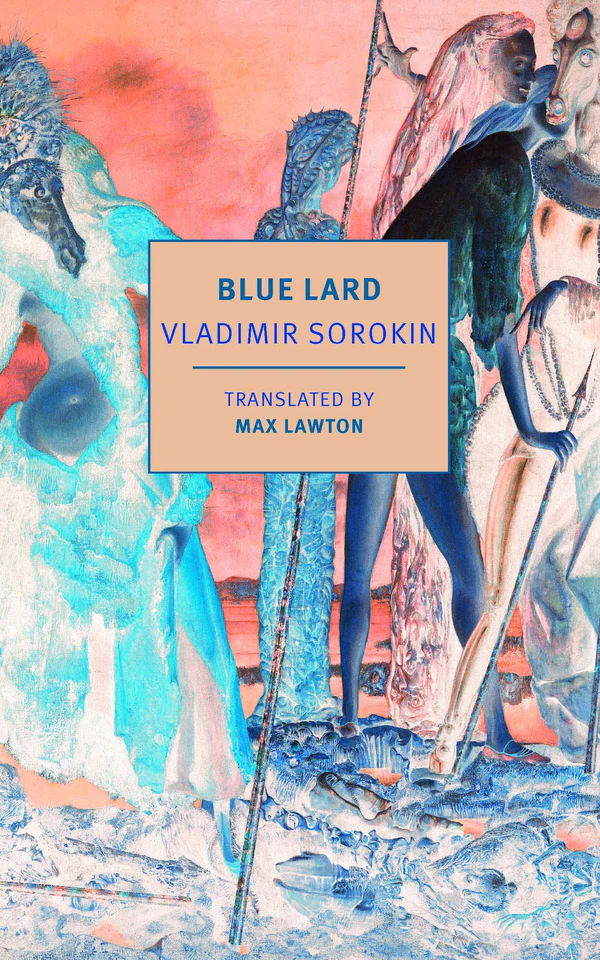



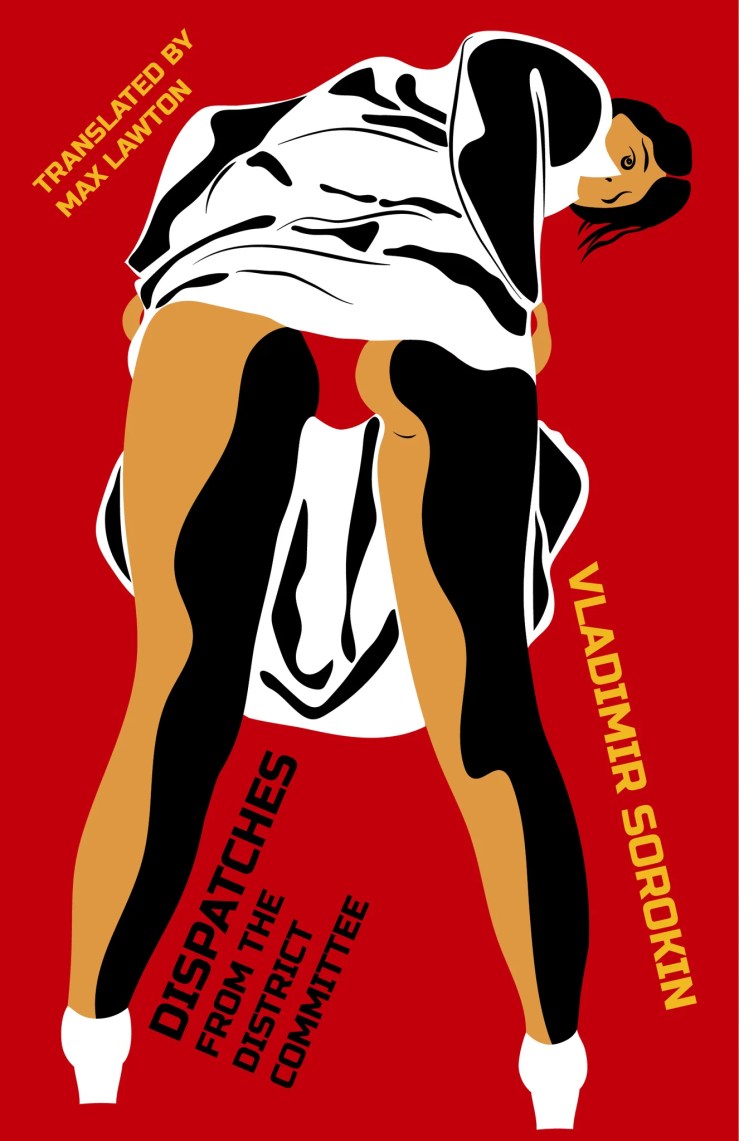


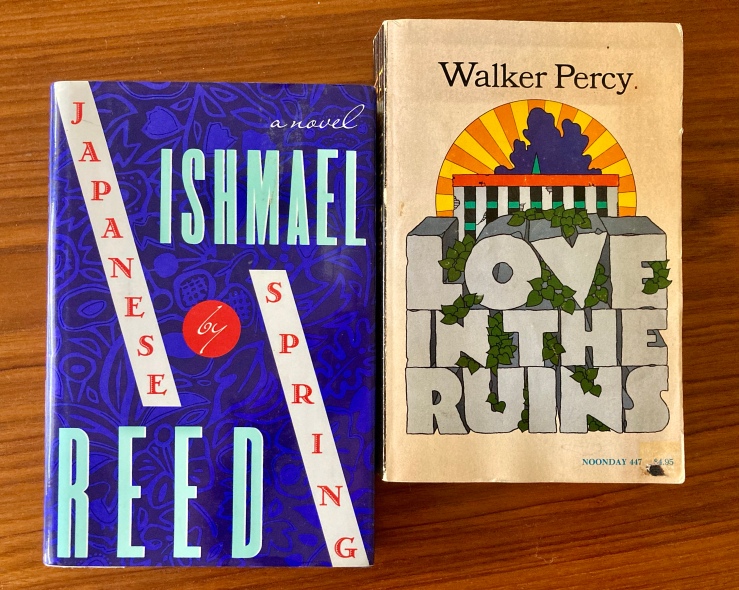

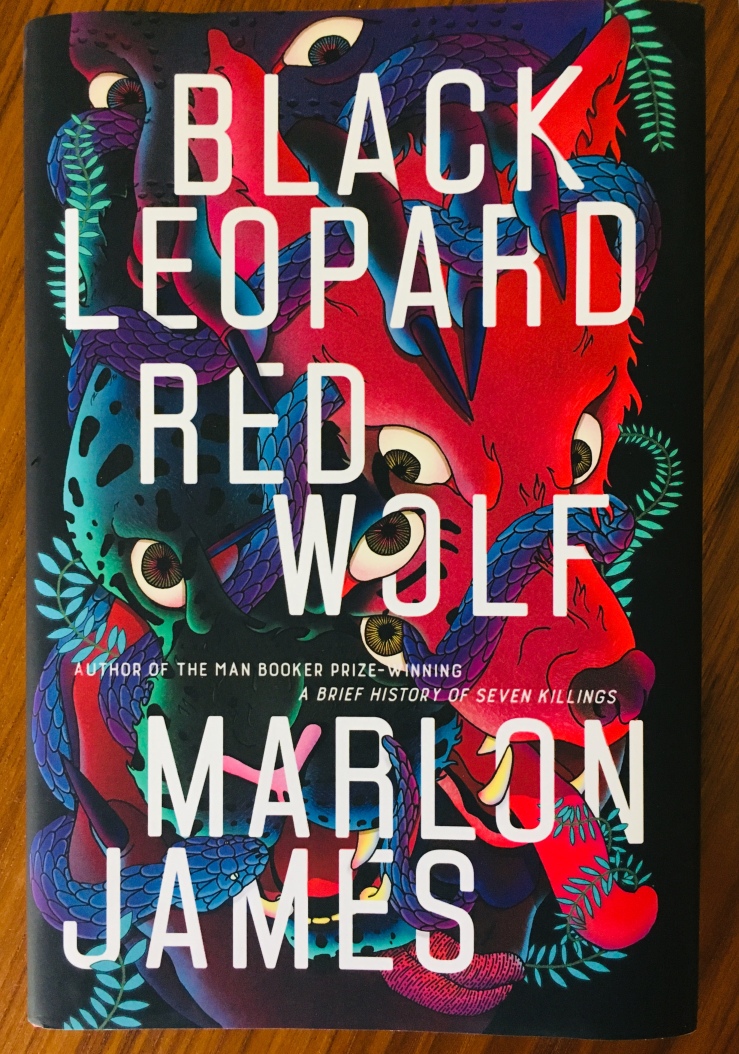
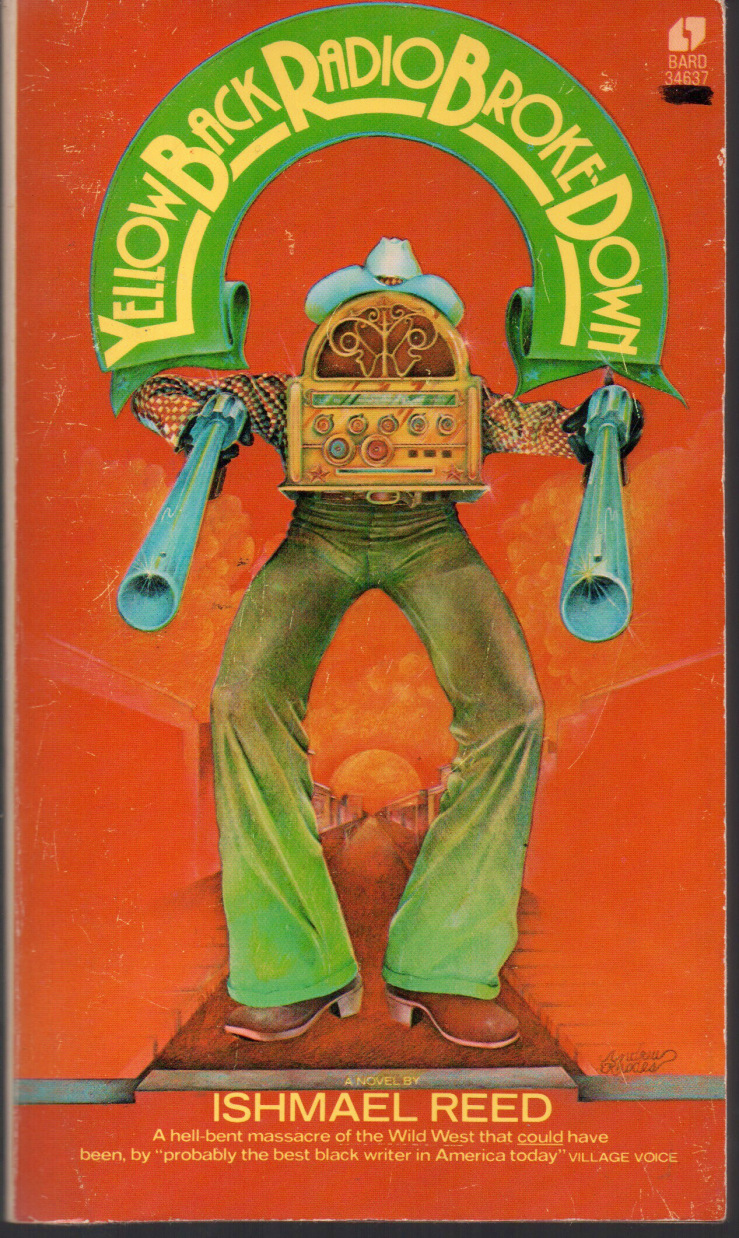



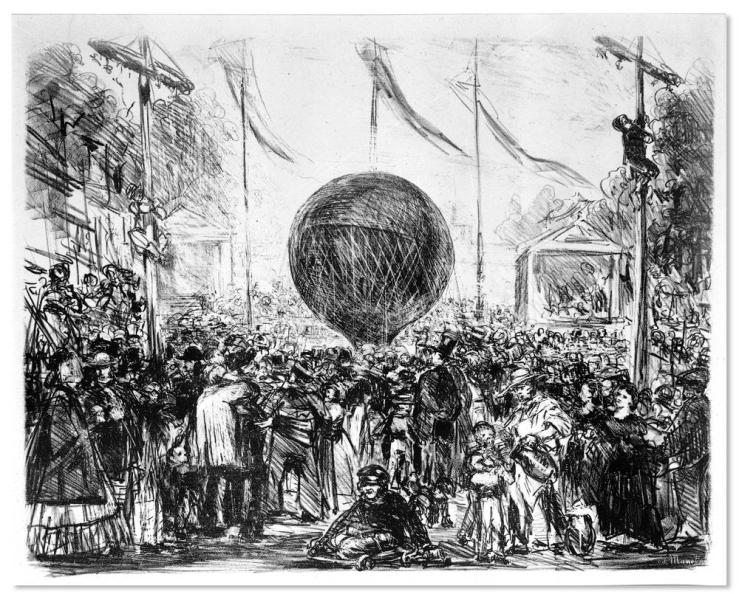




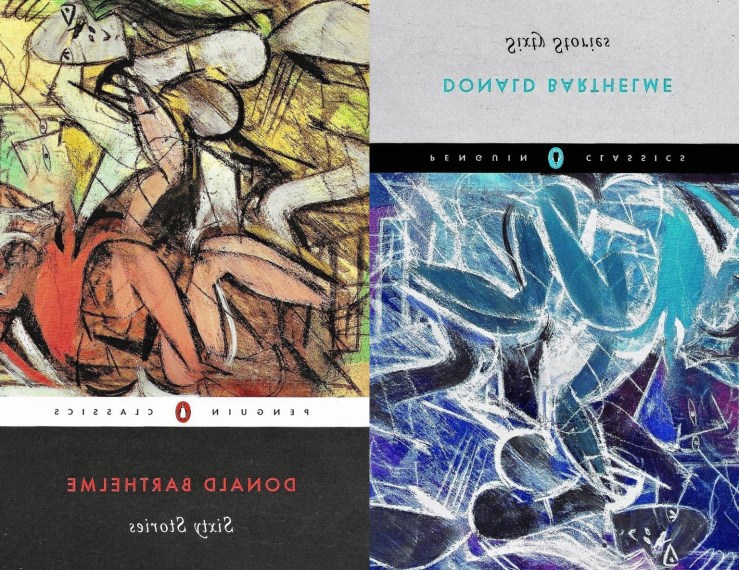



 Biblioklept