Some notes from 299 pages into a rereading of Infinite Jest

IMG_6547

A note on the context of the first reading, subsequent ventures, and this rereading

I bought David Foster Wallace’s novel Infinite Jest in 1997 when I was a freshman in college, as required by law. I attempted reading it a few times without really getting to page 100. (I did read and reread the short stories and the essays and Wallace’s first novel in that time though. None were assigned readings. The DFW Academic Industry was not a Thing yet).

The first time I read the book the whole way through was in the weird fall of 2001, the first fall I hadn’t returned to school because I had graduated from school, the fall of 9/11, the fall I moved to Tokyo the week after 9/11, packing the book in a smallish suitcase that the airport security guy had to take everything out of with his latex-gloved hands, removing every item, all the clothes and books, because I was traveling on a one-way ticket to a foreign land. It was in that weird fall that I finally read the book, reading mostly in the very very early a.m., sometimes reading for hours, reading too late, becoming addicted.

In years since, I’ve poked at rereadings, often looking for very specific passages/sections, and always meaning to do a full reread, but there are all those other big books that need to get read (and then reread).

Well so and anyway: This reread has been prompted by back-to-back readings of Gravity’s Rainbow, which I take to be the most obvious precursor text for Infinite Jest (and likely the greatest source of Wallace’s Oedipal anxiety if we want to get all Bloomian). I thought about Infinite Jest a lot while reading GR.

So far, like any rereading of a big encyclopedic novelInfinite Jest seems much, much easier than my initial go through (although coming off GR almost anything would probably seem much, much easier). With the contours of the “big plot” in place (and the rhetorical dazzle of some of Wallace’s embedded-essays not as blinding as before), focusing on details, patterns, and motifs becomes simply more possible. (I don’t think I connected Hal’s clipping his toenails in Ch. 18 to the toenails Gately finds in Ennet House in Ch. 19 before, f’r’instance). (There are no actual chapter numbers in IJ, although there are circles separating chapters which can be counted).

A note to readers new to Infinite Jest

Infinite Jest is very long but it’s not nearly as difficult as its reputation suggests. There is a compelling plot behind the erudite essaying and sesquipedalian vocabulary. That plot develops around three major strands which the reader must tie together, with both the aid of—and the challenge of—the novel’s discursive style. Those three major plot strands are the tragic saga of the Incandenzas (familial); the redemptive narrative of Ennet House Drug and Alcohol Recovery House, with Don Gately as the primary hero (socicultural); and the the schemes of the Québécois separatists (national/international/political). An addictive and thus deadly film called Infinite Jest links these three plots (through discursive and byzantine subplots).

Wallace often obscures the links between these plot strands, and many of the major plot connections have to be intuited or outright guessed. Furthermore, while there are clear, explicit connections between the plot strands made for the reader, Wallace seems to withhold explicating these connections until after the 200-page mark. Arguably, the real contours of the Big Plot come into (incomplete) focus in a discussion between Hal Incandenza and his brother Orin in pages 242-58. While that scene by no means telegraphs what happens in IJ, it nonetheless offers some promise that the set pieces, riffs, scenes, lists, and vignettes shall add up to Something Bigger.  Continue reading “Some notes from 299 pages into a rereading of Infinite Jest”

An Interview with Christopher K. Coffman and Daniel Lukes, Editors of William T. Vollmann: A Critical Companion (Part 2)

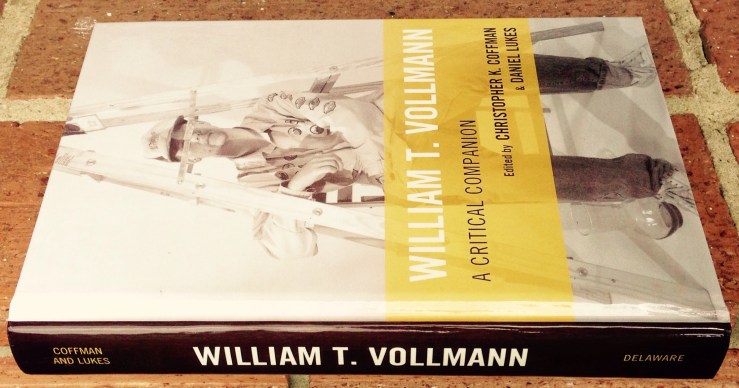
William T. Vollmann: A Critical Companion, newish from University of Delaware Press, collects academic essays and memoir-vignettes by a range of critics and authors to make the case that Vollmann is, as the blurb claims, the “most ambitious, productive, and important living author in the US.” I interviewed the book’s editors, Christopher K. Coffman and Daniel Lukes, over a series of emails in a two-part interview. You can read the first part here. A few days after the first part of the interview posted, Lukes and Coffman hosted a book launch party in NYC for WTV: ACC; the pics in this interview are from that event (check out the Facebook page for more, including Jonathan Franzen reading from his piece on Vollmann).

IMG_6524


Biblioklept: Let’s talk about the formal elements of William T. Vollmann: A Critical Companion. The collection seems to balance essays of a more academic flavor with memoir-vignettes, personal accounts, and riffs.

Christopher K. Coffman: We decided early on to intersperse among the academic essays pieces by non-scholars, or by scholars writing in a non-scholarly mode. The goal here was at least two-fold. We wanted to offer something a bit more accessible to WTV readers who were not in academia (although I think the average WTV fan can follow scholarly arguments as well as many of us in academia can). Also, we realized that some people with a privileged view on WTV’s work–such as those of WTV’s book designers who contributed (Bolte and Speaker Austin)–could add something of interest and great value to audiences in and out of academia, and we wanted to make space for that. I would have to look back through the e-mail log to be sure, but I think Daniel first came up with the idea of soliciting shorter pieces from non-scholars, and that I then conceived the structural component. I am a huge fan of Hemingway’s In Our Time, and the contrapuntal play between the stories and the very short inter-chapters in that book served for me as a paradigm of what Daniel and I have tried to do in this regard. Of course, as soon as we brought up the example of Hemingway, we recalled that WTV does something similar in Thirteen Stories and Thirteen Epitaphs, so he beat us to the punch even there. At any rate, my hope is that our readers find in the short chapterlets material that serves as a response to or as an extension of ideas presented in the more properly scholarly readings that surround those shorter pieces.

The second question of arrangement was the placement of essays and interchapters, and we here grouped according to subject matter as well as we could, without merely replicating what McCaffery and Hemmingson had done for Expelled from Eden. We also, obviously, made space for both Larry and Michael as the authors of the Preface and Afterword. Our intention there, insofar as I can speak for both of us, is to make it clear that we are trying to situate our contribution to scholarship on WTV in relation to the work that Larry and Michael have already done. Finally, I wrote the Introduction not only because one of us had to, but also because Daniel was spoken for in the sense that he already had material that formed the basis for the really great chapter that he contributed. Also, I found the chance to frame the book’s material via an introduction that dealt with WTV’s place in the landscape of post-1945 American fiction appealing. That said, while the introduction bears my byline, my ongoing conversation with Daniel during the past few years shaped my thinking about WTV as much as any original ideas of my own, so he deserves a lot of credit for the introduction as well.

Daniel Lukes: I’ve been going back over the timeline to see if Samuel Cohen and Lee Konstantinou’s edited volume The Legacy of David Foster Wallace, which also features some shorter pieces, was an influence on that, but it looks like we took our approach independently. Though I will say their book did serve as a model in some ways of what ours could be. Dealing with the “non-scholarly” pieces has been for me one of the most exciting parts of putting this book together (the distinction between “scholarlies” and “non-scholarlies” itself being one of the various amusing frameworks that Chris and I have been carrying around throughout the process). From the beginning I thought it would be very helpful to have some of Vollmann’s literary peers chime in: you just don’t hear too much from them about him. So we reached out to writers we thought might be Vollmann readers: some just weren’t (I’d love to know if Cormac McCarthy reads Vollmann: the letter I mailed to a presumed representative of his returned unopened). Some were Vollmann fans/friends, but couldn’t make it for another reason; when Jonathan Franzen came through and expressed his enthusiasm for the project and willingness to contribute a piece, I felt some relief. And James Franco was a pleasure to work with. That said I think the primary value of the non-scholarlies is in the insights they offer into Vollmann’s world and writing practices, from those who have worked closely with him, in particular Carla Bolte, Mary Austin Speaker, and Mariya Gusev’s excellent and vivid pieces. Continue reading “An Interview with Christopher K. Coffman and Daniel Lukes, Editors of William T. Vollmann: A Critical Companion (Part 2)”

A last riff (for now) on Gravity’s Rainbow (and Disney’s Fantasia)

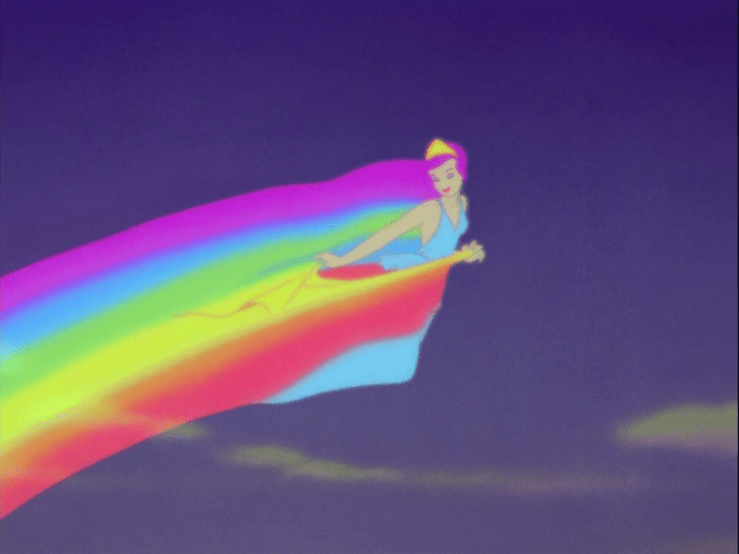
Screenshot 2015-04-24 at 9.27.30 PM

Disney’s Fantasia is one of the better film adaptations of Thomas Pynchon’s novel Gravity’s Rainbow. 

At least this thought zipped into my head a few weeks back, as I watched the film with my wife and kids. I was in the middle of a second reading of the novel, an immediate rereading prompted by the first reading. It looped me back in. Everything seemed connected to the novel in some way. Or rather, the novel seemed to connect itself to everything, through its reader—me—performing a strange dialectic of paranoia/anti-paranoia.

So anyway, Fantasia seemed to me an adaptation of Gravity’s Rainbow, bearing so many of the novel’s features: technical prowess, an episodic and discontinuous form, hallucinatory dazzle, shifts between “high” and “low” culture, parodic and satirical gestures that ultimately invoke sincerity, heightened musicality, themes of magic and science, themes of automation and autonomy, depictions of splintering identity, apocalypse and genesis, cartoon elasticity, mixed modes, terror, love, the sublime, etc.

(There’s even a coded orgy in Fantasia).

But Fantasia was first released in 1940 right, when Pynchon was, what, three or four? And Gravity’s Rainbow was published in 1973, and most of the events in that novel happen at the end of World War II, in like, 1944, 1945, right? So the claim that “Fantasia is one of the better film adaptations of Gravity’s Rainbow” is ridiculous, right?

(Unless, perhaps, we employ those literary terms that Steven Weisenburger uses repeatedly in his Companion to Gravity’s Rainbow: analepsis and prolepsis—so, okay, so perhaps we consider Fantasia an analepsis, a flashback, of Gravity’s Rainbow, or we consider Gravity’s Rainbow a prolepsis, a flashforward, of Fantasia…no? Why not?).

Also ridiculous in the claim that “Fantasia is one of the better film adaptations of Gravity’s Rainbow” is that modifier “better,” for what other film adaptations of Gravity’s Rainbow exist?

(The list is long and mostly features unintentional titles, but let me lump in much of Robert Altman, The Conversation, Richard Kelly’s Southland Tales, Paul Thomas Anderson’s The Master, that Scientology documentary Going Clear, a good bit of stuff by the Wachowksis, The Fisher King (hell, all of Terry Gilliam, why not?), the Blackadder series, which engenders all sorts of wonderful problems of analepsis and prolepsis…).

Gravity’s Rainbow is of course larded with film references, from King Kong and monster movies to German expressionism (Fritz Lang in particular), and features filmmakers and actors as characters. The novel also formulates itself as its own film adaptation, perhaps. The book’s fourth sentence tells us “…it’s all theatre.” (That phrase appears again near the novel’s conclusion, in what I take to be a key passage). And the book ends, proleptically, in “the Orpheus Theatre on Melrose,” a theater managed by Richard M. Nixon, excuse me, Zhlubb—with the rocket analeptically erupting from the past into “The screen…a dim page spread before us, white and silent.” Indeed, as so many of the book’s commentator’s have noted, Pynchon marks separations in the book’s sequences with squares reminiscent of film sprockets —  □ □ □ □ □ □ □. Continue reading “A last riff (for now) on Gravity’s Rainbow (and Disney’s Fantasia)”

On Mad Men’s cynical finale

In an early scene in “Person to Person,” the series finale of Mad Men, Joan Holloway tries cocaine for the first time. “I feel like someone just gave me very good news,” she beams, offering an advertising tag. The coke-sniffing detail seemed odd to me at first—perhaps it was another way for the series to signal the end of the sixties, to introduce the next drug, the next product to fuel future decades.

The final moments of “Person to Person,” however, show that the cocaine scene is an early reading rule. Joan’s testimony of the “Good News” comes from artificial inducement. Impermanent, intoxicating, and addictive, the coke here prefigures the Coke at the show’s end. Fittingly, Mad Men ends with a television commercial, the 1971 “I’d Like to Buy a the World a Coke” Coca-Cola ad.

The ad itself is a genius piece of propaganda: Buy a Coke, become a better person. Not feeling so good? Buy some more Coke. This ad strikes me as a prototypical example of what Slavoj Žižek would critique a few decades later as “the ultimate form of consumerism,” products that allow us “to be a consumerist, without any bad conscience, because the price for the countermeasure, for fighting consumerism, is already included into the price of a commodity.”

What’s the countermeasure, the counterforce then? All those supposed-values of the 1960s, which Don plunders for his career-restoring campaign. He cribs this vision of peace, love, and understanding from the New Age hucksters who are only too happy to take what’s left of our ad man’s money.

Don’s insight comes through a (purposefully facile?) moment of catharsis. In group therapy, a man takes the empty chair that Don’s counselor would have liked Don to fill himself. Don is spared testifying; the stranger will perform in his stead. He tells a story about feeling like a product on a shelf in a fridge, isolated, alienated. The core of his little monologue is about not understanding love, not knowing how to love or be loved. In a rare moment of empathy, Don has his big important cathartic release, and hugs the man, who has reminded Don of what Don already knew, but had been ignoring: People want to feel loved.

Earlier in the season, Don shot down an ad idea that had to do with love — “Love again? We always use that,” he says (or something close to that). But here, disconnected (almost all meaningful conversations in the episode are mediated through telephones), he’s reminded that what people want is touch, the sensation or feeling of love. And he can sell them that: The feeling of the feeling of love. 

Here’s the show’s last moments:

The pat montage ties an unusually neat bow on the series’ major storylines. I’d argue that it’s best read ironically, something of a send-up of our desires, our wish for the characters we “love” to experience “love.”

This ironic reading bears out in light of the notes that punctuate the conclusion. The meditation-leader promises “new lives…a new you,” words that might be used to sell almost anything, from soap to hope. A chime then initiates om meditation, and the series ends with three notes: The chime, a smile on Don’s face, and the opening bars of “I’d Like to Buy a the World a Coke.” The chime recalls a ringing cash register, and Don’s smile is an epiphany of how to sell love. Matthew Weiner ends his seven season project with an ad, a cynical joke on the audience. I loved it.

Or maybe my ironic reading is wrong. Maybe there isn’t a cynical joke on the audience here. Maybe the simple resolutions were the best Weiner et al could do. Maybe the show is just a really good-looking glossy prime-time soap opera (it is), and like all soap operas it was designed to sell soap.

Mad Max: Fury Road Reviewed

ZZ70C9C455
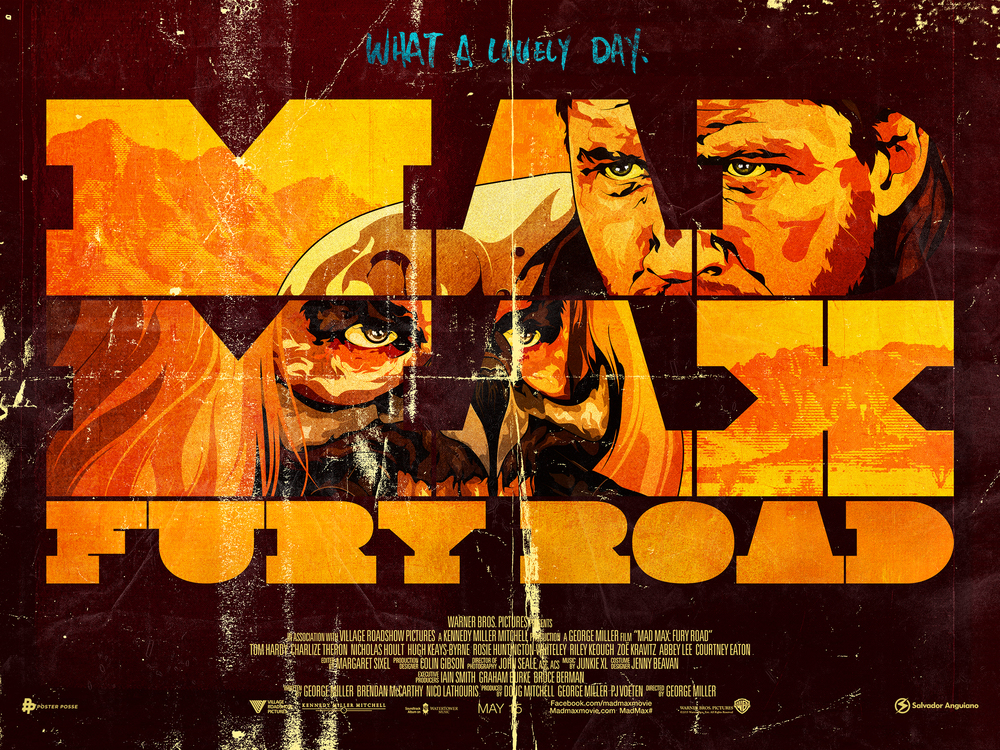
Fury Road film poster by John Aslarona
George Miller’s Mad Max: Fury Road performs exactly what its intended audience demands. Essentially a cartoonish two-hour car chase brimming with violent badassery, Fury Road precludes any real criticism. Poking at the weak dialogue, cardboard characterizations, and muddled motivations would miss the point. Fury Road looks amazing. It’s thrilling. It’s violent. It does what it was made to do. It’s a spectacular entertainment. (Spectacular in the Guy Debord sense).

Those who would contend there’s more to Fury Road, that would protest I’m missing some depth here, might refer me to the film’s feminist motifs. Yes, this is a film that critiques and rebels against patriarchal authority (going so far as to spell out its message in big block letters even). Maybe there’s a Freudian or Lacanian analysis in there too: Charlize Theron’s Imperator Furiosa (she’s the real star of the film—Tom Hardy’s Max is a bland substitute for old crazy eyes Mel), shorn of both hair and an arm (castration symbols, no?) driving an enormous phallus (one dangling a big testicle full of fuel, power, no less) across the desert wastes, plunging it violently ahead to save some concubines (their eminence derives from their non-mutant genes and marvelous cheekbones—like Zack Snyder’s 300, Fury Road always privileges ideal body types over aberrations).

Where was I? It doesn’t really matter.

Ah, yes: I claimed that the movie obviates criticism.

Fury Road is a product, a commodity that successfully camouflages its very commodification. It’s fan service for our post global id.

The film has been nearly universally praised, as a quick tour through the aggregator site Rotten Tomatoes shows. I’ll lazily pull from RT’s pull quotes lazily: “This movie will melt your face off,” promises Christy Lemire. (Uh, okay). For David Edelstein, seeing the film a second time “became about digging the spectacle – not to mention the hilarious sexual politics.” (Were they really “hilarious”?) “An A-plus B-movie that at times feels almost like a tone poem to early-’80s excess,” writes Christopher Orr, who may or may not know what a tone poem is. Mark Kermode, a crank whom I generally admire, calls it “an orgy of loud and louder, leaving us alternately exhilarated, exasperated and exhausted.”

I stuff these quips in  here to show how Fury Road precludes any real criticism. Like I said up front, it does what it intends to do, and what it intends to do is show us something wholly familiar in a way that makes us think that we are not seeing something wholly familiar. But for me, anyway, Fury Road does feel familiar, like any number of movies I’ve already seen. Maybe blame it on Miller’s earlier Mad Max films. Maybe they colonized our cultural imagination so much that any strangeness in Fury Road is difficult to glean, hence the filmmaker’s central trick: Speed the damn thing up. Less character development, less bothersome talking 

I cherry-tomato-picked the Kermode quote above, but his full review is more measured and insightful than that quote alone suggests. He ends with a warning: “…at two hours it’s more of a slog, battle-fatigue teetering on the edge of burn-out and even boredom.” Reader, I’ll admit to that boredom.

The first edges of that boredom actually creep in early, when we see how little is actually at stake in the film. Miller’s gambit is to keep Max constrained for the first quarter of the film—bound, chained, even muzzled. Tied to the prow of a rumbling car like some mythic figure, Max is relentlessly imperiled by spears and bullets and an apocalyptic sandstorm. But like some mythic figure, we know he’ll never die. Like the Roadrunner cartoons it so closely resembles, Fury Road imagines a slapstick world of zany cause-and-effect non-logic, producing kinetic anxieties in its audience that are ultimately relieved (over and over again) with a belief so strong that it cannot be suspended: Max will not die. Max can never die. There must be a sequel.

That promise of a sequel finds its affirmation in the film’s most clichéd final moments. (I’m going to discuss the end of the film now. Spoilers coming up—fair warning, eh?)

mad-max-fury-road-poster-art-collection-from-poster-posse
Fury Road film poster by Salvador Anguiano
Continue reading “Mad Max: Fury Road Reviewed”

Jim O’Rourke’s Simple Songs

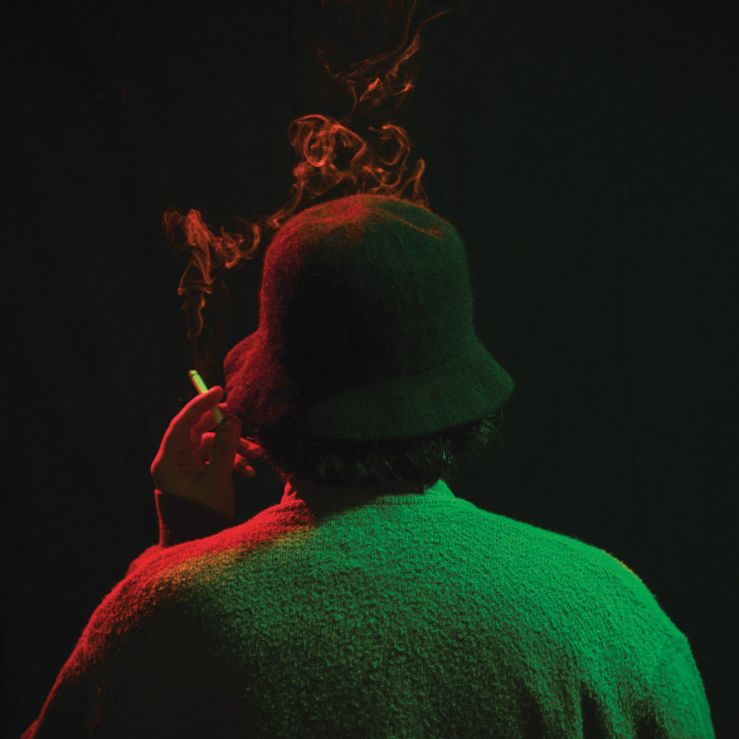
jim-orourke-simple-songs

In the last minute of “Hotel Blue,” the fourth track on his new LP Simple Songs, Jim O’Rourke belts out his lines with an emotional directness we haven’t heard in his work before. He sings, and sings with a sincere presence and confidence perhaps previously absent from his fine work. The song builds from a few strums of acoustic guitar into a crescendo worthy of Harry Nilsson.

Like Nilsson (or Nilsson’s hero Randy Newman), O’Rourke’s work is saturated in a dark humor that’s perhaps easy to ignore because his music sounds so  pretty. Simple Song’s first track “Friends with Benefits” reveals that welcoming-repulsing impetus in its opening lines: “Nice to see you once again / Been a long time, my friend / since you’ve crossed my mind at all.”

The initial moments of “Friends with Benefits” feel like an overture, unfurling in little episodes that recall O’Rourke’s 2009 suite The Visitor. The track eventually coalesces and climaxes in Terry Riley violin strokes, reverberating, decisive guitar lines, and stomping drums.

These musical elements continue throughout the album, which is often driven by piano riffs cribbed from all your favorite ’70s groups. Standout track “Half Life Crisis” bounces along in a Steely Dan strut, punctuated by Brian May guitar squiggles. Dissonant orchestral touches creep into the song’s final moments, recalling some of O’Rourke’s more “experimental” work—but also calling back to The Beatles.

Simple Songs feels like the culmination 0f some of O’Rourke’s projects over the past decade, and it made me revisit them. The Visitor sounds almost like a sketchbook for this record,and All Kinds of People, the record of Burt Bacharach songs O’Rourke recorded with various vocalists, feels in retrospect like a practice run at a personal pop record. Simple Songs builds on O’Rourke’s previous two “pop” records (Eureka and Insignificance), and even though it’s not named after a Nic Roeg film, it completes a trilogy of sorts. (But I hope this is more than a trilogy, to be clear).

The emotional intensity promised in “Hotel Blue” returns in the album’s closing tracks. “End of the Road” sees O’Rourke singing—not just talk-singing, but really singing—over McCartney piano and strings. “If you were at sea / They’d throw you overboard,” our misanthrope suggests. And in the final rousing track “All Your Love,” O’Rourke sings, “I’m so happy now / And I blame you,” before promising that “All your love / Will never change me.”

I’m not very good at writing about music, and really, writing is no substitute for listening. You can stream the album now at NPR—just do it over a real sound system or at least with some proper headphones. It sounds too good for your laptop’s tinny little noise holes.

Simple Songs is out on vinyl, etc., from Drag City next week.

What the hell is Pynchon in Public Day?

image

Pynchon in Public Day is tomorrow, May 8th–that’s Pynchon’s birthday if you’re keeping score. (He’ll be 78 tomorrow. Last year I put together links for his auspicious 77th birthday).

For the past couple of years, I’ve seen the phrase Pynchon in Public pop up in my Twitter timeline, often as a hashtag. I had a (willfully) vague idea about what Pynchon in Public was all about–like, reading Pynchon publicly, posting the W.A.S.T.E. horn in public places, leaving books about. Making the secret sign. Etc.

But so and anyway: I’ve been reading or re-reading Pynchon more or less non-stop for the past two years, after diving for reasons I can’t recall into Against the Day, following that up with Mason & Dixon, and then going through The Crying of Lot 49 and Inherent Vice again. (In the deepest and most sincere spirit of my Pynchon-reading-experience, I abandoned Bleeding Edge twice during this time). I’m rereading Gravity’s Rainbow now after just having finished it (after years of false starts). Reading it again is like reading it for the first time, and as I progress (and sometimes retreat) through the Zone, I experience a sympathetic fragmentation, a scattering, a sense that the novel is consuming me. Another way of saying this is that Gravity’s Rainbow is a scary book, and all of Pynchon is scary in the sense that it’s all just one big book. It kinda sorta worms its way into the ear of one’s consciousness, wriggles (Ruggles?) behind the old brainpan, performs a paranoid song and dance routine. Other fun and games too.

Wait, what? Continue reading “What the hell is Pynchon in Public Day?”

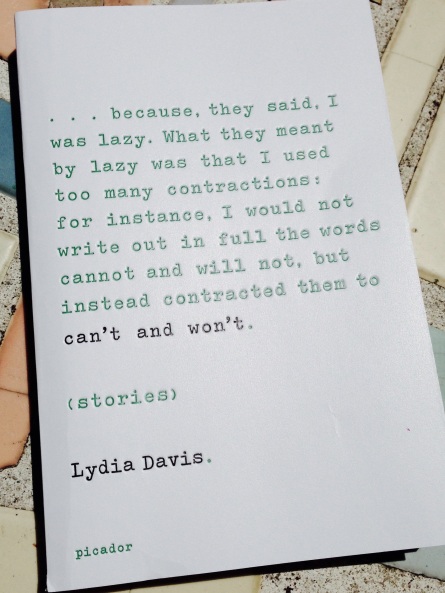
This is not a review of Lydia Davis’s Can’t and Won’t

This is the part of the not-review where I include a picture I took of the book to accompany the not-review:

image

This is the part of the not-review where I briefly restage Lydia Davis’s publishing history to provide some context for readers new to her work.

This is the part of the not-review where I submit that anyone already familiar with Lydia Davis’s short fiction is likely to already hold an opinion on it that won’t (but could) be changed by Can’t and Won’t.

This is the part of the not-review where I dither pointlessly over whether or not the stories in Can’t and Won’t are actually stories or something other than stories.

This is the part of the not-review where I state that I don’t care if the stories in Can’t and Won’t are actually stories or something other than stories.

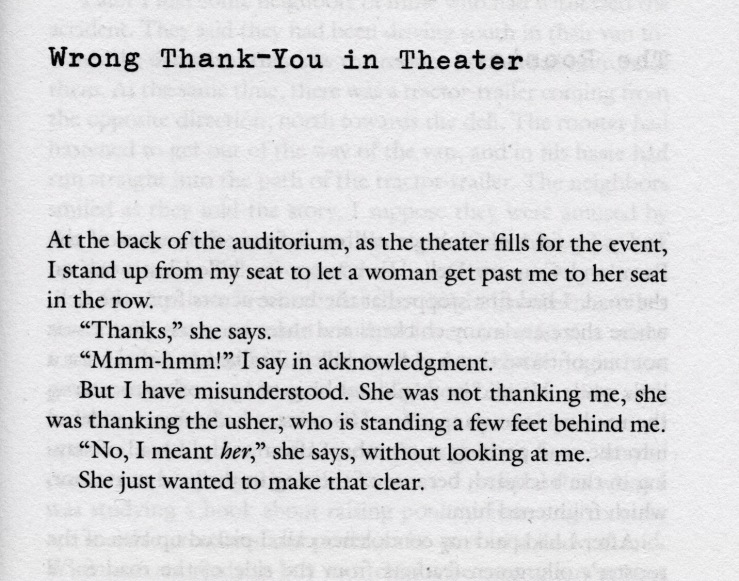
This is the part of the not-review where I explain that I have found a certain precise aesthetic pleasure in most of Can’t and Won’t that radiates from the savory contradictory poles of identification and alienation.

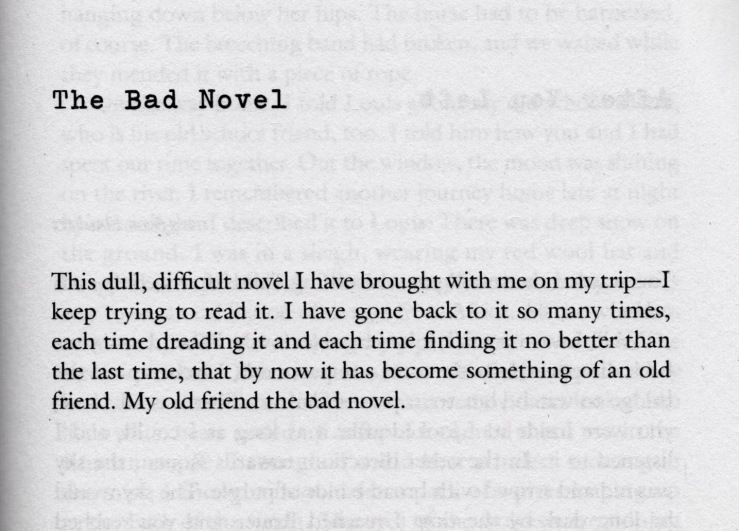
This is the part of the not-review where I cite an example of identification with Davis’s narrator-persona-speaker:

IMG_6074

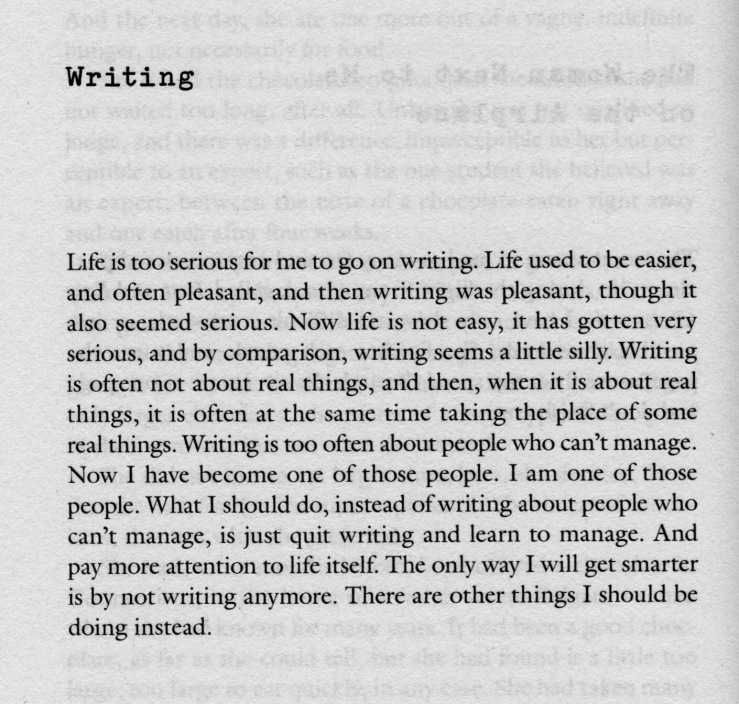
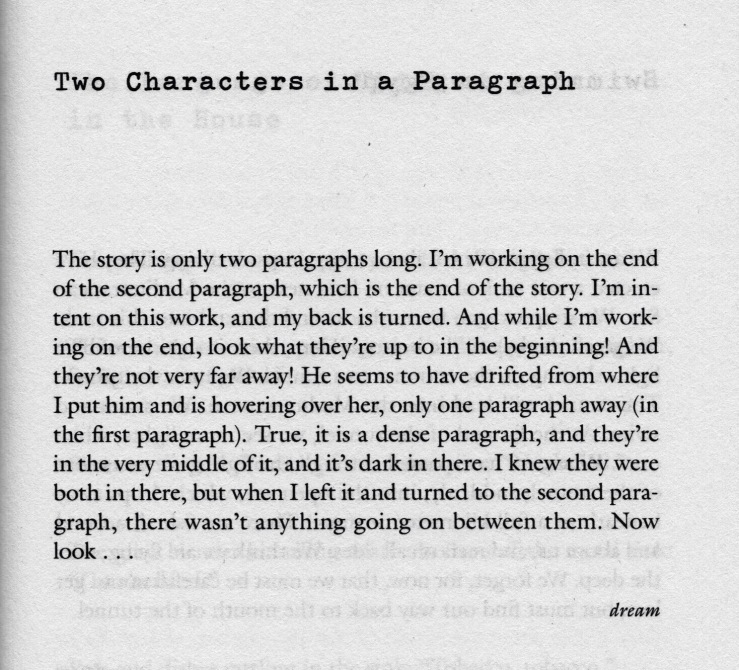
This is the part of the not-review where I claim that I used scans of the text to preserve the look and feel of Lydia Davis’s prose on the page.

This is the part of the not-review where I say that some of my favorite moments in Can’t and Won’t are Davis’s expressions of frustrated boredom with literature (or do I mean publishing?), like in the longer piece “Not Interested.”

This is the part of the not-review where I point out that Davis’s speaker-narrator-persona expresses frustration with the act of writing itself:

IMG_6072

This is the part of the not-review where I dither pointlessly over distinctions between Davis the author and Davis the persona-speaker-narrator.

This is the part of the not-review where I point out that (previous dithering and frustration-with-writing aside) writing itself is a major concern of Can’t and Won’t:

IMG_6070

This is the part of the not-review where I say that many of the stories in Can’t and Won’t are labeled dream, and I often found myself not really caring for these dreams (although I like the one above), but maybe I didn’t really care for the dreams because of their being tagged as dreams. (This is the part of the not-review where I point out that our eyes glaze over when anyone tells us their literal dreams).

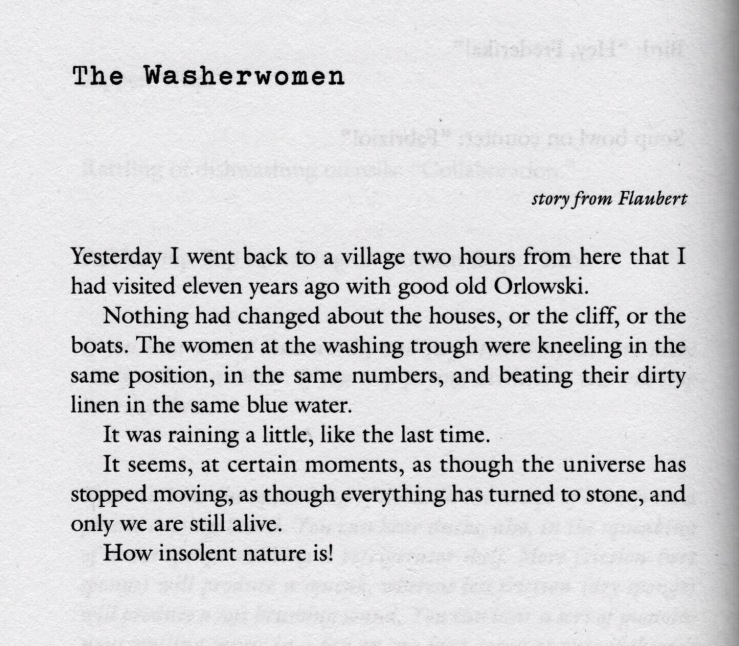
This is the part of the not-review where I transition from stories tagged dream to stories tagged story from Flaubert, like this one:

IMG_6076

This is the part of the not-review where I say how much I liked the stories from Flaubert stories in Can’t and Won’t.

This is the part of the not-review where I mention Davis’s translation work, but don’t admit that I didn’t make it past the first thirty pages of her Madame Bovary. 

This is the part of the not-review where I needlessly reference my review of The Collected Stories of Lydia Davis and point out that that collection is not so collected now.

This is the part of the not-review where I pointlessly dither over post-modernism, post-postmodernism, and Davis’s place in contemporary fiction. (This is the part of the not-review where I needlessly cram in the names of other authors, like Kafka and Walser and Bernhard and Markson and Adler and Miller &c.).

This is the part of the not-review where I claim that nothing I’ve written matters because Davis makes me laugh (this is also the part of the not-review where I use the adverb “ultimately,” a favorite crutch):

IMG_6077

This is the part of the not-review where I point out that Can’t and Won’t is not for everybody, but I very much enjoyed it.

This is the part of the not-review where I mention that the publisher is FS&G/Picador, and that the book is available in the usual formats.

In which I read Playboy for the Thomas Pynchon article

A couple of days ago I posted a brief excerpt from Jules Siegel’s March 1977 Playboy profile “Who is Thomas Pynchon… And Why Did He Take Off With My Wife?” The excerpt came from an excerpt posted on the Pynchon-L forum, but most of the article had been removed at the (apparent) request by Siegel. Several folks sent me the whole article though (thanks!) and I read it.

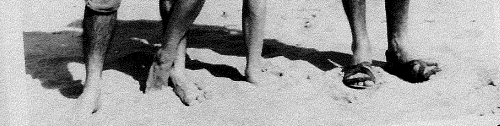
Screenshot 2015-05-01 at 8.54.40 AM
Some of these feet may or may not belong to Thomas Pynchon

Siegel was briefly a Cornell classmate of Pynchon’s in 1954, and they remained friends (in Siegel’s recollection) for at least two decades after. During this time, Siegel claims that Pynchon wrote him dozens of letters, which were ultimately sold at auction (along with much of Siegel’s property) to help pay for a hip replacement. Material from the letters soak into Siegel’s sketch of Pynchon’s progress, along with several stoned/drunken adventures that would not be out of place in V. or Mason & Dixon or Gravity’s Rainbow, or really, any person’s young life.

A competitive anxiety reverberates under the piece. “We were friends, maybe at some points best friends, very much alike in some important ways,” Siegel writes. “We were both writers,” he boldly writes. Siegel reminds us that “In Mortality and Mercy in Vienna, Pynchon’s first published short story, the protagonist is one Cleanth Siegel,” but protests he doesn’t see himself in that hero.

The competitive anxieties culminate in the big reveal that (spoiler!) Thomas Pynchon had an affair with Siegel’s second wife Chrissie. There’s probably a Freudian reading we can append to the details that Siegel offers about Pynchon’s sexual prowess: “He was a wonderful lover, sensitive and quick, with the ability to project a mood that turned the most ordinary surroundings into a scene out of a masterful film—the reeking industrial slum of Manhattan Beach would become as seen through the eye of Antonioni, for example.”

Or maybe these unsexy details are just a sign of Playboy’s editorial hand. Wedged gracelessly between ads for vibrators and nude greeting cards, Siegel’s lines often reek of 1970’s Playboy’s rhetorical house style, a kind of frank-but-(attempted)-sensual glossiness that contrasts heavily with Pynchon’s own sex writing. At times I found myself reading Siegel’s prose in one of Will Ferrell’s more pompous accents.

Even worse is the casual sexism of the piece—which again, may be attributable to Playboy’s editors. Siegel, on his first wife (sixteen when he married her): “She was so wonderful a lover, generous and easily aroused, but I was too callow then to appreciate her.” Of his second wife: “It is easy to underestimate her intelligence, but it is a mistake. She is obviously too pretty to be serious, conventional wisdom would have you believe.” Of one of Pynchon’s girlfriends: “Susan has red hair and is breathtakingly beautiful, with the voluptuous body of a showgirl. Like Chrissie, she is much brighter than she looks.”

More interesting, obviously, are the (supposedly) real-life details that inform Pynchon’s fiction. Siegel notes some of the contents of Pynchon’s Manhattan Beach apartment: “A built-in bookcase had rows of piggy banks on each shelf and there was a collection of books and magazines about pigs.” Pigs, of course, are a major motif of Gravity’s Rainbow. Another detail that seems to connect to GR: “On the desk, there was a rudimentary rocket made from one of those pencil-like erasers with coiled paper wrappers that you unzip to expose the rubber. It stood on a base twisted out of a paper clip.” Siegel lets us know that he knocked the rocket down. Pynchon puts it back together; Siegel knocks it down again.

(Parenthetically: Siegel’s evocation of Pynchon’s Manhattan Beach days fits neatly into my picture of Inherent Vice).

In accounting details of Pynchon’s alleged affair with his wife, Chrissie, Siegel shares the following:

Once, out on the freeway, she told him that we had all gone naked at the commune, he professed to find that incredible and dared her to take off her blouse right there. She did. A passing truck hooted its horn in lewd applause. He loved her Shirley Temple impersonations—On the Good Ship Lollipop sung and danced like a kid at a birthday party. They talked about running away together.

It is hardly possible here not to recall the episode early in Gravity’s Rainbow wherein Jessica Swanlake removes her blouse in the car on a dare from Roger Mexico. Is Siegel daring the reader to extrapolate further? Extrapolation, paranoid connections—isn’t this part of Pynchonian fun?

In that spirit, I’ll close with my favorite moment from the article.

“You know the W.A.S.T.E. horn in The Crying of Lot 49? The symbol of the secret message service? Every weirdo in the world is on my wave length. You cannot understand the kind of letters I get. Someone wrote to tell me that the very same horn was the symbol of a private mail system in medieval times. I checked it out at the library. It’s true. But I made it up myself before the book was ever published, before I ever got that letter.”

The lines are supposedly from Pynchon himself. Siegel even puts them in quotation marks—so they must be real, right?

Derek Pyle Discusses Waywords and Meansigns, an Unabridged Musical Adaptation of James Joyce’s Finnegans Wake

I recently talked to Derek Pyle about his project Waywords and Meansigns, which adapts James Joyce’s novel Finnegans Wake into a new musical audiobook. Derek worked for years as half of Jubilation Press. Printing the poems of Lawrence Ferlinghetti, Thich Nhat Hanh, and William Stafford, Derek’s letterpress work can be found in the special collections of the New York Public Library, Brown University, and the Book Club of California. Derek co-founded Waywords and Meansigns in 2014 and became the project’s primary director in 2015. While living part-time in Western Massachusetts, Derek produces Waywords and Meansigns in eastern Canada.

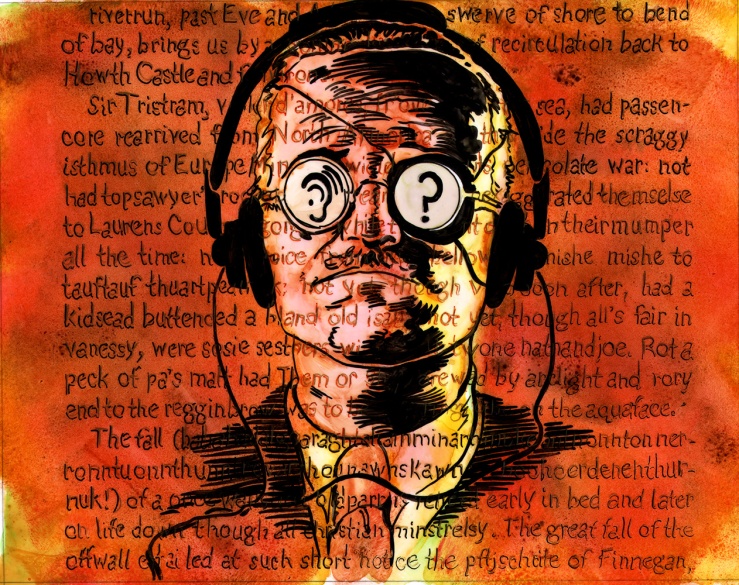
Robert Berry copy
Image by Robert Berry

Biblioklept: What is Waywords and Meansigns?

Derek Pyle: Waywords and Meansigns is a collaborative music project recreating James Joyce’s Finnegans Wake. Seventeen different musicians from all around world have each taken a chapter of Finnegans Wake and set it to music, thereby creating an unabridged audio version of Finnegans Wake.

Finnegans Wake is an incredible book, but it’s notoriously difficult to read. One hope of the project is to create a version of the Wake that is accessible to newcomers — people can just listen to and enjoy the music. To maximize accessibility, we are distributing all the audio freely via our website. But the project does not only appeal to Wake newcomers — as we’ve seen so far, a lot of scholars and devoted readers are also finding Waywords and Meansigns an exciting way of interpreting and engaging with Joyce’s text.

Biblioklept: How did the project come about?

DP: In 2014 I organized a party to celebrate the 75th anniversary of the publication of Finnegans Wake. To celebrate we decided to listen to Patrick Healy’s audiobook recording of Finnegans Wake, which is 20-odd hours long. The party, as you can imagine, lasted all weekend — we actually listened to Johnny Cash’s unabridged reading of the New Testament that weekend too. There was very little sleep, and fair amount of absinthe.

A lot of people really rag on Healy’s recording, because it’s read at breakneck speed. I actually like it though — he creates a very visceral flood of experience, which is one way of reading, or interpreting, Finnegans Wake. But during the party I started wondering about other ways you could perform the text, and that’s when I came up with the idea of approaching musicians to create a new kind of audiobook.

As it turns out, a lot of people seemed to think my idea was a good one. We’ve had no shortage of musicians willing to contribute, including some really cool cats like Tim Carbone of Railroad Earth and bassist Mike Watt, who currently plays in Iggy Pop’s band The Stooges.

Biblioklept: Watt rules! I love the Minutemen and his solo stuff. He seems like a natural fit for this kind of project, as so much of his music is based around story telling. I imagine the musicians involved are composing the music themselves…are they also recording it themselves?

DP: Yeah, it’s very cool to have Watt on board. Turns out he’s a huge fan of Joyce — he recorded a track for Fire Records in 2008, for an album of various musicians turning the poems of Joyce’s Chamber Music into songs. Mary Lorson, of the bands Saint Low and Madder Rose, also played on that Fire Records album, and she’s collaborating with author Brian Hall for our project.

To answer your question, yes, all the musicians are recording their own chapters. Since we have contributors from all around the world — from Berlin to Amsterdam to British Columbia — it would be a logistical nightmare to figure out where and when to record everyone. Not to mention the cost of it. One of the really cool things, I think, about this project — for everyone, it’s a labor of love. No one is making a profit, off any of this. People are just doing it because they love Joyce, or they’re obsessed with Finnegans Wake, or it just seems like a fun challenge to think creatively in this unique way. Either way it’s a pursuit of passion. That’s why we will distribute all the audio freely. There’s this phrase in Finnegans Wake, “Here Comes Everybody!” We’re having fun with Finnegans Wake and everybody is invited to the party. Continue reading “Derek Pyle Discusses Waywords and Meansigns, an Unabridged Musical Adaptation of James Joyce’s Finnegans Wake”

A first riff on rereading Gravity’s Rainbow (and some thoughts on Weisenburger’s Companion)

I enjoy rereading more than reading. Returning to Moby-Dick2666, Ulysses, or Blood Meridian reveals so much more: More depth, more art, more structure, more precision, more humor, more pain, more more.

Thomas Pynchon’s novel Gravity’s Rainbow is all more. Rereading Gravity’s Rainbow is like reading it for the first time, or, rather, more precisely, that is how I am experiencing it now—with clarity—compelled as I was to immediately circle back through its loop again.

Gravity’s Rainbow’s cohesion hides (hides is not the right verb) under detritus, in the flux of objects and concepts that tangle and unravel throughout the text. Indeed, the novel’s themes seem to repeat (with difference, with opposition) in the lists and rants that lard it.

A simple, early example comes on page 18, where Teddy Bloat turns spying eyes over our hero Tyrone Slothrop’s desk, where “Things have fallen roughly into layers, over a base of bureaucratic smegma that sifts steadily to the bottom…” In A Gravity’s Rainbow Companion: Sources and Contexts for Pynchon’s Novel, Steven Weisenburger points out that “Among the list of objects on Slothrop’s desk are items, allusions, and brand names left in his wake throughout the novel.” Weisenburger proceeds to sift through these layers, pointing out connections, and offering (as always) helpful page numbers which attest how damn precise Pynchon’s novel is.

I picked up Weisenburger’s Companion on solicited recommendations from Twitter folk and readers of this blog, and I’ve found it unobtrusive and helpful so far. Weisenburger’s introductory essay is especially good, and foregrounds his intertextual approach to his Companion (he all but namechecks Mikhail Bakhtin: “Gravity’s Rainbow sets in motion ‘the Night’s Mad Carnvival’ (V133.38) of intertextual entertainments”; a few lines later, he describes the novel as a work of “encyclopedic heteroglossia”). Weisenburger also quickly helped to (re)confirm my sense that GR loops back into itself, its end cycling back to its beginning: “Gravity’s Rainbow is ‘heterocyclic’ (V249.26): rings are looped together in still larger, polymerized rings, looped together in the still larger cycling of its four parts.”

I’m about halfway through the second of those four parts, “Un Perm’ au Casino Hermann Goering,” but still playing catch-up with the Weisenburger. I sometimes skim—sometimes with undue pride (Hey I got that reference on my own, thanks anyway Dr. W), and sometimes, admittedly with a vague but cheerful boredom (Weisenburger has an occasional tendency to lay out Pynchon’s source texts in detailed detail).

The Companion is at its finest, in my estimation, when Weisenburger extrapolates from his sources and contexts into GR’s deepest themes, like here, where our introduction to Gottfried (a seemingly minor character) branches into etymology, mythology, and comparative religion:

image

(My favorite moment here is probably where Dr. W poses that question about Pynchon knowing Branston and Grimm, and then immediately answers it (in what I like to pretend is Robert Evans’s voice)).

While Weisenburger’s Companion often enlightens and clarifies, so does simply (or not so simply) rereading Gravity’s Rainbow enlighten and clarify the first reading. I’m thankful that I didn’t use Weisenburger’s book on my first full trip though GR. Sure, Companion hazards a number of plot spoilers, which I imagine would annoy many readers. But more significant to me is that using Weisenburger’s annotations as a first-timer’s guide through Pynchon’s detritus would have likely spoiled the aesthetic effect of that detritus. It would likely have spoiled some of the richness in the rereading that I’m enjoying so very much now.

Riff on the end/beginning of Gravity’s Rainbow

Well: “A screaming comes across the sky. It has happened before [—]”

□ □ □ □ □ □ □

So. Okay. So I finished Gravity’s Rainbow on Friday night, and reread the opening section (and more than the opening section) on Saturday morning, resisting a compulsion to immediately return to the beginning.

□ □ □ □ □ □ □

So: Okay: Right?

The ending of Gravity’s Rainbow cycles back to the beginning (like Finnegans Wake): Blicero’s rocket, screaming across the sky—yes? no?—to invade the dreams (?) of psychic Pirate Prentice? The book: a loop, a Möbius strip, a film, its reels discombobulated, jostled, scattered

□ □ □ □ □ □ □

“…it’s all theatre,” we learn on the book’s first page (page 3); the book ends in a theater—the Orpheus Theater!—where maybe scattered Slothrop is the leading man, scattered, we find ourselves in him, parts of him—where the audience demands, on the book’s last page: “Start-the-show!”

□ □ □ □ □ □ □

“You’re putting response before stimulus,” Spectro shakes his head at Pointsman, early in “Beyond the Zero,” the first section of Gravity’s Rainbow—does this describe the beginning/end of the novel? (“It has happened before”).

□ □ □ □ □ □ □

Or, a bit earlier even, at the seance, (page 32), Gloaming describes one kind of plot: “…we should get something like a straight line” — but then gives us another kind of plot — “…however we’ve data that suggest the curves for certain —conditions, well they’re actually quite different—schizophrenics for example tend to run a bit flatter in the upper part then progressively steeper—a sort of bow shape … classical paranoiac—” Is this the shape of Gravity’s Rainbow?

□ □ □ □ □ □ □

—but right this moment it’s that final dash that intrigues me—this in a novel full of dashes, this in a novel that name-checks Emily Dickinson, Eternal Empress of Dashes—the fragmented conclusion is full of dashes, lines obliterated by more perfect, straight lines, simultaneously connecting and disconnecting—like the novel’s final line:

“Now everybody—“

□ □ □ □ □ □ □ Continue reading “Riff on the end/beginning of Gravity’s Rainbow”

A scattered riff on Thomas Pynchon’s novel Gravity’s Rainbow

I’m safe here at my office, away from Thomas Pynchon’s Gravity’s Rainbow. I almost certainly would not dare to write about it were it proximal. If the book were here with me, its text would infect me, and I’d replicate it in chunks here for you, dear reader, to sort out (or not sort out) as you wish (or do not wish).

□ □ □ □ □ □ □

I’m almost finished with Gravity’s Rainbow, which is how I know that I’m not finished with Gravity’s Rainbow. I’m going to have to read it again. (I want to read it again).

□ □ □ □ □ □ □

I’m about fifty pages from the last page—just got through/endured/delighted in/icked and acked at the Gross Suckling Conference, or, as I like to think of it, the alliterative abject dinner party.

□ □ □ □ □ □ □

Gravity’s Rainbow is filled with more abject imagery than any novel I’ve ever read.

□ □ □ □ □ □ □

I mean abjection here in the general sense of degradation, etc., but also in the specific sense that Julia Kristeva uses in Powers of Horror:

The corpse (or cadaver: cadere, to fall), that which has irremediably come a cropper, is cesspool, and death; it upsets even more violently the one who confronts it as fragile and fallacious chance. A wound with blood and pus, or the sickly, acrid smell of sweat, of decay, does not signify death. In the presence of signified death—a flat encephalograph, for instance—I would understand, react, or accept. No, as in true theater, without makeup or masks, refuse and corpses show me what I permanently thrust aside in order to live. These body fluids, this defilement, this shit are what life withstands, hardly and with difficulty, on the part of death. There, I am at the border of my condition as a living being. My body extricates itself, as being alive, from that border. Such wastes drop so that I might live, until, from loss to loss, nothing remains in me and my entire body falls beyond the limit—cadere, cadaver. If dung signifies the other side of the border, the place where I am not and which permits me to be, the corpse, the most sickening of wastes, is a border that has encroached upon everything. It is no longer I who expel, “I” is expelled. The border has become an object. How can I be without border? That elsewhere that I imagine beyond the present, or that I hallucinate so that I might, in a present time, speak to you, conceive of you—it is now here, jetted, abjected, into “my” world. Deprived of world, therefore, I fall in a faint. In that compelling, raw, insolent thing in the morgue’s full sunlight, in that thing that no longer matches and therefore no longer signifies anything, I behold the breaking down of a world that has erased its borders: fainting away. The corpse, seen without God and outside of science, is the utmost of abjection. It is death infecting life. Abject. It is something rejected from which one does not part, from which one does not protect oneself as from an object. Imaginary uncanniness and real threat, it beckons to us and ends up engulfing us.

□ □ □ □ □ □ □

Forgive me for citing at such length, but perhaps Kristeva summarizes some aspect of Gravity’s Rainbow that deeply interests me: The core of the novel (the core that Pynchon atomizes, decentralizes, scatters like his main man Tyrone Slothrop)—the core of the novel rests on love and death, me and not-me: “How can I be without border?” The war and its corpses and rockets and dissolutions. Continue reading “A scattered riff on Thomas Pynchon’s novel Gravity’s Rainbow”

Yuri Herrera’s Signs Preceding the End of the World is sharp subterranean fiction

IMG_5790

Yuri Herrera’s sharp, thrilling novella Signs Preceding the End of the World opens with calamity. A sinkhole — “the earth’s insanity” — nearly swallows our hero before we can properly meet her:

I’m dead, Makina said to herself when everything lurched: a man with a cane was crossing the street, a dull groan suddenly surged through the asphalt, the man stood still as if waiting for someone to repeat the question and then the earth opened up beneath his feet: it swallowed the man, and with him a car and a dog, all the oxygen around and even the screams of passers-by. I’m dead, Makina said to herself, and hardly had she said it than her whole body began to contest that verdict and she flailed her feet frantically backward, each step mere inches from the sinkhole, until the precipice settled into a perfect circle and Makina was saved.

This opening passage sets the tone of Signs Preceding the End of the World. Makina will repeatedly plunge into and out of danger as she treks from her village in borderland Mexico into the weird world of the Big Chilango–the United States.

Makina crosses the border to find her estranged brother, who left the village years ago with the dubious plan of claiming some land (supposedly) owned by his family. (Reader, mark the symbolism there). Makina’s mother prompts her journey, but she’s also aided by a trio of adversarial gangsters—Mr. Double-U, Mr. Aitch, and Mr. Q. At the end of the first chapter of Signs, Mr. Q summarizes Makina’s impending quest (and the novella itself) in terse but eloquent language:

You’re going to cross and you’re going to get your feet wet and you’re going to be up against real roughnecks; you’ll get desperate, of course, but you’ll see wonders and in the end you’ll find your brother, and even if you’re sad, you’ll wind up where you need to be.

Mr. Q plays seer in his short monologue, just one example of the novella’s mythic overtones. Or maybe the word I want is undertones: Signs Preceding the End of the World opens with the earth swallowing victims; underworld mobsters send a hero on a night-quest over rough waters and alien terrain; aided by an underground network, Makina must traverse labyrinths and mazes and dark spaces; and, yes, the book ends underground. This is subterranean fiction. Continue reading “Yuri Herrera’s Signs Preceding the End of the World is sharp subterranean fiction”

A Conversation about Evan Dara’s Novel Flee (Part 2)

IMG_5657

[Context/editorial note: I’d been meaning to read Evan Dara’s latest novel Flee for a while, and when Biblioklept contributor Ryan Chang told me he’d be reading it as part of a contemporary literature class I decided to join him. This is the second part of a two-part discussion which took place over a few weeks of emails. We discuss the book’s conclusion, including what some people might think of as “spoilers.”

Read part one of our discussion of  Flee.

The tl;dr version of all of this: Both Ryan and I loved Flee, a 2013 novel about the citizens of a New England town who, uh, flee, for reasons never made entirely clear I claim that “Flee is maybe the best novel (so far, anyway) to aesthetically and philosophically address the economic collapse of ’08.” Ryan called it a book “for people who like books to fuck with them and then be their friend.” And I agree with him. — ET]

Ryan Chang: Right–Flee doesn’t prescribe a future, or at least an alternative future. “841” testifies to this. The A-burgian upstakers are no different from the new settlers, rejoicing in the bargains to be had in the town. Carol and Marcus quietly disappear (Spoiler alert). Flee is overall hesitant to prescribe, I think. In my previous e-mail, I was thinking out loud a bit, trying to see if something in the book was pointing to these spaces of the “nonidentical” as Adorno calls it; that Flee as an aesthetic object figures, in exactly what isn’t said, the suffocating presence that squeezes the life out of A-burg, could figure a moment of possibility in absence. Some kind of fracture that, even if it is a failure (as A-burg is, I think), is a temporary moment of reprieve from the administered life.

I’m not sure what the forms of Kimball’s “radical forgiveness” and “hospitality” would be, if he points to them — especially of the former. And is it only that the literary artists get to have all the fun of democracy? Exactly where does democratic critique happen off the page? I’m wondering because it seems that the form of popular critique — save from public protest and other distortions of space — are infected with exploitative capital, with ideology, unwittingly going along with the system that saves the banks before humanity. Additionally: to whom–or what–is forgiveness granted? Hospitality seems more tangible to me, but the phrases Yes? Who’s There? imply exclusion rather than inclusion to me. As if at the door of democracy, the speaker hesitates. Should not a radical affirmation continually say yes rather than no at the door? The questioning yes is skeptical. I wonder if a self-consciousness and -becoming out of administration is required. The molectular make-up of the present absence that suffocates A-Burg and, implicitly, whatever other small town, would have to be transposed, if you like, into another key. To mention Lerner again (briefly) — do you remember that scene in the book, with the first hurricane, the (eventually fictional) threat of Irene destroying the infrastructure as a moment when disparate communities — who would otherwise keep to themselves, much like the voices in Flee — begin convening? That was just a way of getting to the epigraph of the book: “Everything will be as it is now, just a little different.” Continue reading “A Conversation about Evan Dara’s Novel Flee (Part 2)”

Jon McNaught’s Birchfield Close Is a Tranquil Visual Poem

A few weekends ago, I spent several days primitive camping on a tiny, rocky island off Cape Canaveral. The weather was miserable and the fishing was poor, but the company and bourbon offered cheer. Still, by the time I got home I was terribly sore, thoroughly damp, and inhabited by one of those hangovers that sets up shop inside one’s soul as a kind of second-consciousness, coloring the world a dreadful surreal blue. I wanted to see my family, but they were out playing tennis. There was a small stack of packages waiting for me though—review copies for this blog—with Jon McNaught’s Birchfield Close neatly nestled atop. After showering, I lay on my soft soft bed in the afternoon, read through the brief poem-novel-comic, and drifted into a gentle warm hazy nap. It was the most marvelous medicine. Sublime.

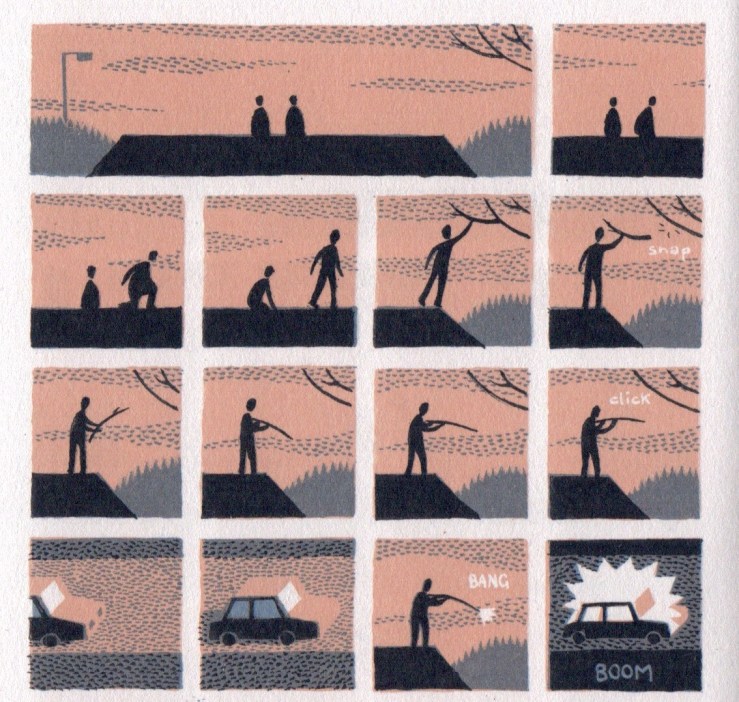
I read Birchfield Close again later that night and then every night for a week. McNaught’s work—see his longer novel Dockwood—is its own aesthetic experience: Minimal, gentle, tranquil, but also evocative and complex. Birchfield Close is (maybe) the (non-)story of two lads who climb upon a roof and spend the day observing (or not observing) their neighborhood.

IMG_5562

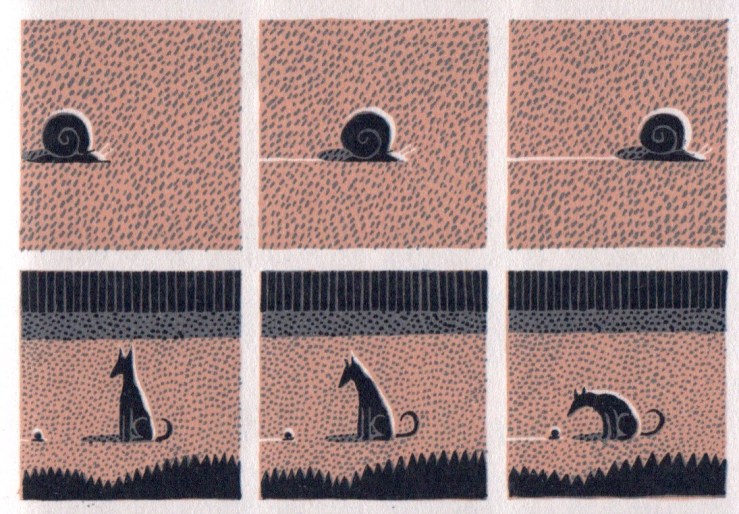
They see birds and people, dogs and snails, balloons and bikes (etc.), all rendered in gentle gradations of orange-pink and grey-blue and black-black.

IMG_5563

In one of my favorite little episodes, one boy reaches for a branch. His imagination transmutes the branch into a rifle, and a play-shooting spree ensues.

Birchfield Close is comprised entirely of such moments, yet none of its episodes feel discrete. Rather, each panel pushes (pushesThat’s not the right verb!) into the next, a miniature gesture that creates—that somehow is—the entire work. The effect is soothing.

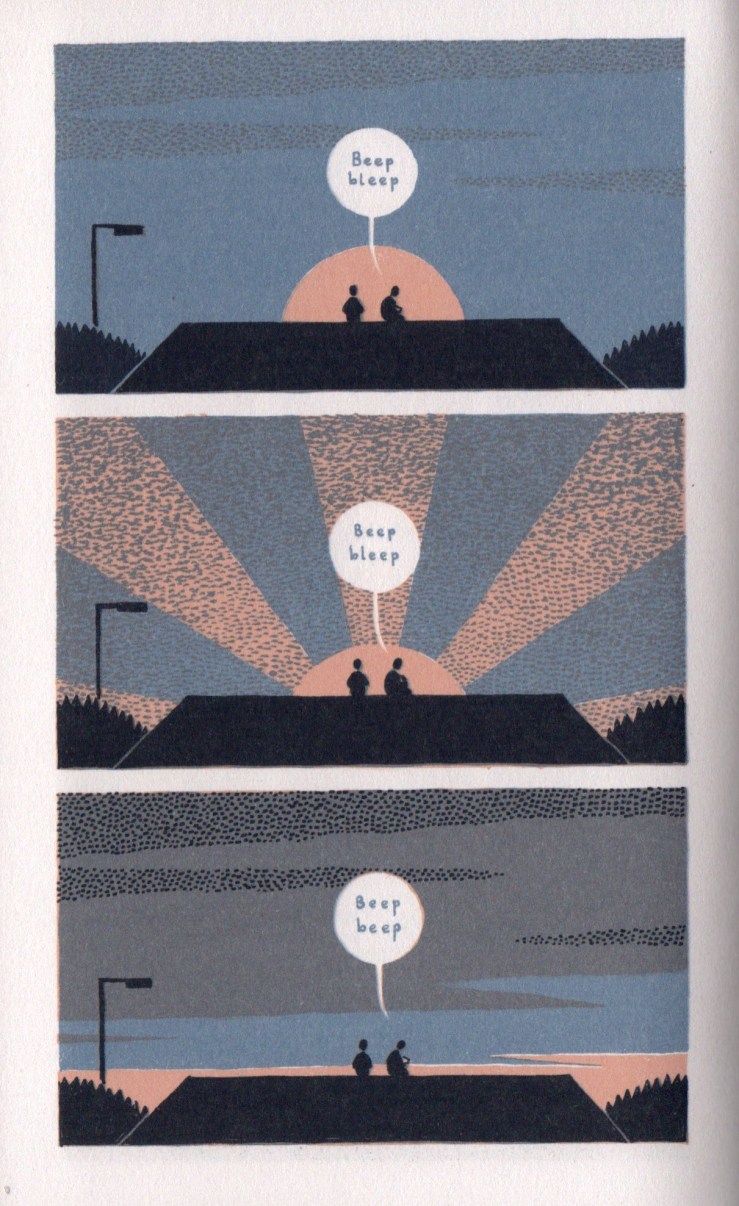
I’ve read Birchfield Close a dozen times now (read? Is that the right verb?), and I’m still (happily) unsure what commentary McNaught might be making on media. The story is full of images of “entertainments” that may or may not be at odds with the neighborhood’s ambiance: a handheld video game, a banal soap opera, a pop song on the radio. In another favorite episode, we move from rooftop to an airplane flying through the sky to the actual inside of the airplane, where a passenger watches Nemo’s reunion with his overprotective father. On the next page, we are treated to the imaginative forms that the clouds might take—formations that the airplane passenger, wrapped up in viewing Finding Nemo on a tiny headrest screen, perhaps misses. But if there’s a judgment here, McNaught seems to leave it to the viewer to suss out. As we pan back down to the boys on the roof, we see that one remains watching the clouds, shaping them in his imagination (or perhaps he’s sharing an imaginative vision with the airplane passenger), while the other boy has returned to his own tiny screen to play a fighting game. He misses the sunset.

Or does he miss the sunset? Maybe it’s simply part of his own aesthetic experience with the game, a peripheral, environmental occurrence, one he enjoys as transitory and ambient, an event promised to repeat again and again. I like this second reading more, as it fits neatly with my own reading experience of Birchfield Close—the book is an ambient aesthetic experience, calming but quizzical, deeply enjoyable—physical: light, color, the touch of the fine thick paper. I’ve tried to capture some of that reading experience here but have undoubtedly failed. Better you read see think feel for yourself.

Birchfield Close and other books by Jon McNaught are available from the good people at Nobrow Press.

A rambling and possibly incoherent riff on Inherent Vice (film and novel) and The Crying of Lot 49

IMG_0200

A. The first time I saw Paul Thomas Anderson’s film Inherent Vice, I was in the middle of rereading Pynchon’s novel The Crying of Lot 49, which I hadn’t read in fifteen years. I remembered the novel’s vibe, its milieu, but not really its details.

B. I read The Crying of Lot 49 and then immediately reread it. It seemed much stronger the second time—not nearly as silly. Darker. Oedipa Maas, precursor to Doc Sportello, trying not to lose the thread as she leaves the tower for the labyrinth, rushing dizzy into the sixties.

C. Another way of saying this: Inherent Vice is sequel to The Crying of Lot 49. Any number of details substantiate this claim (and alternately unravel it, if you wish, but let’s not travel there)—we could focus on the settings, sure, or maybe the cabals lurking in the metaphorical shadows of each narrative—is The Golden Fang another iteration of The Tristero?—but let me focus on the conclusions of both novels and then discuss the conclusion of PTA’s film.

D. A favorite line from a favorite passage from The Crying of Lot 49: “the true paranoid for whom all is organized in spheres joyful or threatening about the central pulse of himself.” Paranoia as a kind of sustained hope, a way to find meaning, order, a center.

E. The final pages of The Crying of Lot 49 find Oedipa trying to make sense of the labyrinth (my emphases in bold):

For it was now like walking among matrices of a great digital computer, the zeroes and ones twinned above, hanging like balanced mobiles right and left, ahead, thick, maybe endless. Behind the hieroglyphic streets there would either be a transcendent meaning, or only the earth. In the songs Miles, Dean, Serge and Leonard sang was either some fraction of the truth’s numinous beauty (as Mucho now believed) or only a power spectrum. Tremaine the Swastika Salesman’s reprieve from holocaust was either an injustice, or the absence of a wind; the bones of the GI’s at the bottom of Lake Inverarity were there either for a reason that mattered to the world, or for skin divers and cigarette smokers. Ones and zeroes. So did the couples arrange themselves. At Vesperhaven House either an accommodation reached, in some kind of dignity, with the Angel of Death, or only death and the daily, tedious preparations for it. Another mode of meaning behind the obvious, or none. Either Oedipa in the orbiting ecstasy of a true paranoia, or a real Tristero. For there either was some Tristero beyond the appearance of the legacy America, or there was just America and if there was just America then it seemed the only way she could continue, and manage to be at all relevant to it, was as an alien, unfurrowed, assumed full circle into some paranoia.

There is either meaning, or there is not meaning. Continue reading “A rambling and possibly incoherent riff on Inherent Vice (film and novel) and The Crying of Lot 49”