Yuri Herrera’s Kingdom Cons condenses myth into vibrant narco noir

Yuri Herrera’s new novella Kingdom Cons condenses myth and archetype into concrete, brutal noir. Gritty and visceral, but also elegant and surreal, Herrera’s prose bristles with cinematic energy in a tale of blood magic and the relationship between power and art.

In Kingdom Cons, our central protagonist Lobo is a singer of corridos, ballads he improvises in dive bars for a few coins to survive on. Herrera paints Lobo’s backstory in quick but rich strokes that evoke a hardboiled, hardscrabble life:

The next day his father went to the other side. They waited in vain. Then his mother crossed without so much as a promise of return. They left him the accordion so he could make his way in the cantinas, and it was there he learned that while boleros can get by with a sweet face, corridos require bravado and acting out the story as you sing. He also learned the following truths: Life is a matter of time and hardship. There is a God who says Deal with it, cause this is the way it is. And perhaps the most important: Steer clear of a man about to vomit.

In one of these cantinas Lobo encounters “the King,” a Mexican drug lord. Lobo is instantly smitten by the King’s power; or, more precisely, by the aesthetics of power that attend the King. Lobo sees himself as a reader of blood. Indeed, he’s survived the streets by

…learning blood. He could detect its curdle in the parasites who said, Come, come little boy, and invited him into the corner; the way it congealed in the veins of fraidycats who smiled for no reason; the way it turned to water in the bodies of those who played the same heartache on the jukebox, over and over again; the way it dried out like a stone in lowlifes just aching to throw down.

Lobo believes he detects magic in the King’s blood, and vows to become a retainer in the King’s Court, which in time he does. There, in the Palace, he takes up a new mantle. He becomes “the Artist,” a singer of narcorridos he composes to flatter his patron, the King. In the Court,

The Artist realized that people saw him only when he sang or they wanted to hear how tough they were; and that was good, because it meant he could see how things worked in the court.

The Artist’s personality is quickly subsumed into this archetypal Court, which includes the Manager, the Journalist, the Jeweler, the Doctor, the Girl, and the Heir. There’s also the Witch and the Commoner, agents who bring the plot of Kingdom Cons to its climax. There’s a cinematic, page-burner quality to the plot, a briskness that perhaps disguises the novella’s heavier themes of art and power.

Herrera weaves these themes into their own subtle climax. The Artist is initially spellbound by the King, whose very “smile seemed a protective embrace” to the singer. The narcobaron urges the Artist to tell the truth in his corridos, even if the truth is brutal: “Let them be scared, let the decent take offense. Put them to shame. Why else be an artist?” And yet in time the Artist begins to parse the layers of distinction to “truth,” and to see the complicated relationship between truth, beauty, and power. He grows into a new art, a new blood.

Indeed, Kingdom Cons is a subtle, spare Künstlerroman, in which Herrera’s hero’s quiet, internal observations lead him to a new artistic outlook. Regarding a slain narco’s corpse, the Artist thinks first that the man probably deserved his death, before appending the notion: “if there’s one thing we deserve, it’s a heaven that’s real.” When the Artist recognizes himself in a “an ashen boy coaxing squalid notes from a trumpet,” he laments “It’s as if there is no right to beauty.” The Artist seeks to create a right to beauty, to secure a heaven that’s real, but his tools are limited—and thoroughly mediated in violence, in blood. Herrera pushes his hero “to feel the power of an order different from that of the Court,” a power that emanates from “his own sovereign texture and volume. A separate reality.” Herrera’s skill as a writer evokes that “separate reality,” first by creating a mythical-brutal narcoland noir, and then by evoking the consciousness of an artist trying to navigate that violence and find his own power through art, through words.

In its finest moments—of which there are many—Herrera evokes his hero’s consciousness in action. Consider the following passage. The Artist has sneaked out of the Palace to return “to the cantina where he’d first met the King”; there, he observes again, becomes eyes and ears that will channel grimy reality into artful storytelling:

…he heard the fortunes and tragedies of the average jack:

The wetback who’d been deported by immigration and was unwanted on this side as well. They’d told him to sing the anthem, explain what a molcajete was and recite the ingredients of pipián to see if he was really allowed to stay; his jitters made him forget it all so they kicked him out too. The narco-in-training who sent bindles of smack over the river with a slingshot and then simply crossed over to pick them up, until one day he got a wild hair and hit a gringo in the head with his whiterock crackshot, and tho that was the end of his business, he still got a kick out of calling himself an avenger. The woman who, to free herself of her cheating husband, sold the house to a much-feared loanshark and left hubby with no house, no wife, and no peace. The boy who faked his own kidnapping to wheedle money from his parents, who believed the ransom note was real and replied, You know what? We’re tired of that bum, how about bumping him off for half the price? And the boy, out of utter sorrow, said Okay, collected the cash, spent it on booze and then kept his word.

The force of storytelling leads the Artist to an epiphany about the King—and, more significantly, to himself as an artist capable of creating a “separate reality.”

I can’t help but think of Kingdom Cons as the third part of a loose trilogy that also includes Herrera’s previous novellas Signs Preceding the End of the World and The Transmigration of Bodies. All three are published by And Other Stories and all three are translated by Lisa Dillman, who conjures magic in translating Herrera’s neologisms, slang, and mythical tone. Kingdom Cons extends the mythic-noir mode that Signs initiated and Bodies continued. Herrera is a writer with a voice and a viewpoint, an author whose archetypal approach shows the deep significance to contemporary life’s concrete contours. I wrote “trilogy” above, but to be clear, I’d be very happy if Herrera, Dillman, and And Other Stories kept putting out these fine novellas. Highly recommended.

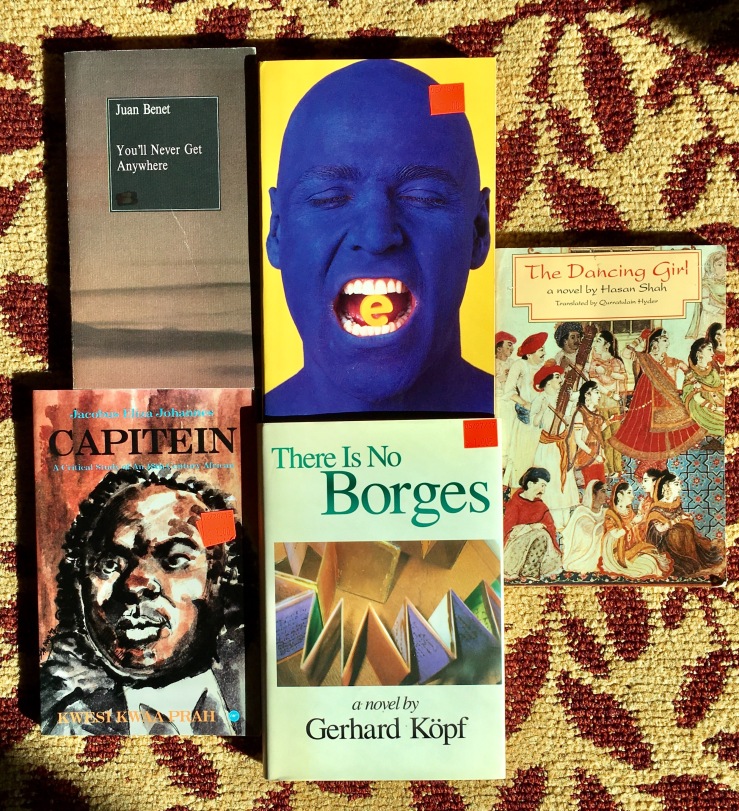
Bowles/Oyono/Reed (Books acquired, 30 May 2017)

img_6303

Books and reality are fused (Philip K. Dick)

…I can say with all truthfulness that for me the moment of greatest understanding in which I knew spiritual reality at last came in connection with emergency root-canal irrigation, two hours in the dentist chair. And twelve hours drinking bourbon-bad bourbon at that-and simply reading Dante without listening to the stereo or eating-there was no way I could eat-and suffering, and it was all worth it; I will never forget it. I am no different, then, from Timothy Archer. To me, too, books are real and alive; the voices of human beings issue forth from them and compel my assent, the way God compels our assent to world, as Tim said. When you have been in that much distress, you are not going to forget what you did and saw and thought and read that night; I did nothing, saw nothing, thought nothing; I read and I remember; I did not read Howard the Duck or The Fabulous Furry Freak Brothers or Snatch Comix that night; I read Dante’s Commedia, from Inferno through Purgatorio, until at last I arrived in the three colored rings of light … and the time was nine A.M. and I could get into my fucking car and shoot out into traffic and Dr. Davidson’s office, crying and cursing the whole way, with no breakfast, not even coffee, and stinking of sweat and bourbon, a sorry mess indeed, much gaped at by the dentist’s receptionist.

So for me in a certain unusual way-for certain unusual reasons-books and reality are fused; they join through one incident, one night of my life: my intellectual life and my practical life came together-nothing is more real than a badly infected tooth-and having done so they never completely came apart again. If I believed in God, I would say that he showed me something that night; he showed me the totality: pain, physical pain, drop by drop, and then, this being his dreadful grace, there came understanding … and what did I understand? That it is all real; the abscessed tooth and the root-canal irrigation, and, no less and no more…

From Philip K. Dick’s 1982 novel The Transmigration of Timothy Archer.

Errors on Whitman (Jorge Luis Borges)

whitman

Never was there more hollowness at heart than at present (Walt Whitman)

I say we had best look our times and lands searchingly in the face, like a physician diagnosing some deep disease. Never was there, perhaps, more hollowness at heart than at present, and here in the United States. Genuine belief seems to have left us. The underlying principles of the States are not honestly believ’d in, (for all this hectic glow, and these melodramatic screamings,) nor is humanity itself believ’d in. What penetrating eye does not everywhere see through the mask? The spectacle is appaling. We live in an atmosphere of hypocrisy throughout. The men believe not in the women, nor the women in the men. A scornful superciliousness rules in literature. The aim of all the littérateurs is to find something to make fun of. A lot of churches, sects, &c., the most dismal phantasms I know, usurp the name of religion. Conversation is a mass of badinage. From deceit in the spirit, the mother of all false deeds, the offspring is already incalculable. An acute and candid person, in the revenue department in Washington, who is led by the course of his employment to regularly visit the cities, north, south and west, to investigate frauds, has talk’d much with me about his discoveries. The depravity of the business classes of our country is not less than has been supposed, but infinitely greater. The official services of America, national, state, and municipal, in all their branches and departments, except the judiciary, are saturated in corruption, bribery, falsehood, mal-administration; and the judiciary is tainted. The great cities reek with respectable as much as non-respectable robbery and scoundrelism. In fashionable life, flippancy, tepid amours, weak infidelism, small aims, or no aims at all, only to kill time. In business, (this all-devouring modern word, business,) the one sole object is, by any means, pecuniary gain. The magician’s serpent in the fable ate up all the other serpents; and money-making is our magician’s serpent, remaining to-day sole master of the field.

From Walt Whitman’s Democratic Vistas (1871).

Mike Watt does Finnegans Wake

Mike Watt and Adam Harvey adapted the “Shem the Penman” episode of James Joyce’s Finnegans Wake for the Waywords and Meansigns project. Raymond Pettibon provided an illustration.

Check it out.

Disinformation (Philip K. Dick)

 It is like information theory; it is noise driving out signal. But it is noise posing as signal so you do not even recognize it as noise. The intelligence agencies call it disinformation, something the Soviet Bloc relies on heavily. If you can float enough disinformation into circulation you will totally abolish everyone’s contact with reality, probably your own included.

From Philip K. Dick’s 1982 novel The Transmigration of Timothy Archer.

Denis Johnson’s Train Dreams is a perfect novella

The Race, 1942 by Thomas Hart Benton (1889-1975)

With blunt grace, Denis Johnson navigates the line between realism and the American frontier myth in his perfect novella Train Dreams. In a slim 116 pages, Johnson communicates one man’s life story with a depth and breadth that actually lives up to the book’s blurb’s claim to be an “epic in miniature.”  I read it in one sitting on a Sunday afternoon, occasionally laughing aloud at Johnson’s wry humor, several times moved by the pathos of the narrative, and more than once stunned at the subtle, balanced perfection of Johnson’s prose, which inheres from sentence to paragraph to resonate throughout the structure of the book.

The opening lines hooked me:

In the summer of 1917 Robert Grainier took part in an attempt on the life of a Chinese laborer caught, or anyway accused of, stealing from the company stores of the Spokane International Railway in the Idaho Panhandle.

Three of the railroad gang put the thief under restraint and dragged him up the long bank toward the bridge under construction fifty feet above the Moyea River. A rapid singsong streamed from the Chinaman voluminously. He shipped and twisted like a weasel in a sack, lashing backward with his one free fist at the man lugging him by the neck.

The matter-of-fact violence here complicates everything that follows in many ways, because Grainier it turns out is pretty much that rare thing, a good man, a simple man who tries to make a life in the Idaho Panhandle at the beginning of the 20th century. The rest of the book sees him trying—perhaps not consciously—to somehow amend for the strange near-lynching he abetted.

Grainier works as a day laborer, felling the great forests of the American northwest so that a network of trains can connect the country. Johnson resists the urge to overstate the obvious motifs of expansion and modernity here, instead expressing depictions of America’s industrial growth at a more personal, even psychological level:

Grainier’s experience on the Eleven-Mile Cutoff made him hungry to be around other such massive undertakings, where swarms of men did away with portions of the forest and assembled structures as big as anything going, knitting massive wooden trestles in the air of impassable chasms, always bigger, longer, deeper.

Grainier’s hard work keeps him from his wife and infant daughter, and the separation eventually becomes more severe after a natural calamity, but I won’t dwell on that in this review, because I think the less you know about Train Dreams going in the better. Still, it can’t hurt to share a lovely passage that describes Grainier’s courtship with the woman who would become his wife:

The first kiss plummeted him down a hole and popped him out into a world he thought he could get along in—as if he’d been pulling hard the wrong way and was now turned around headed downstream. They spent the whole afternoon among the daisies kissing. He felt glorious and full of more blood than he was supposed to have in him.

The passage highlights Johnson’s power to move from realism into the metaphysical and back, and it’s this precise navigation of naturalism and the ways that naturalism can tip the human spirit into supernatural experiences that makes Train Dreams such a strong little book. In the strange trajectory of his life, Grainier will be visited by a ghost and a wolf-child, will take flight in a biplane and transport a man shot by a dog, will be tempted by a pageant of pulchritude and discover, most unwittingly, that he is a hermit in the woods. In Johnson’s careful crafting, these events are not material for a grotesque picaresque or a litany of bizarre absurdities, but rather a beautiful, resonant poem-story, a miniature history of America.

Train Dreams is an excellent starting place for those unfamiliar with Johnson’s work, and the book will rest at home on a shelf with Steinbeck’s naturalist evocations or Cormac McCarthy’s Border Trilogy. I have no idea why the folks at FS&G waited almost a decade to publish it (Train Dreams was originally published in a 2002 issue of The Paris Review), but I’m glad they did, and I’m glad the book is out now in trade paperback from Picador, where it should gain a wider audience. Very highly recommended.

[Ed. note: Biblioklept originally published this review in May of 2012.]

A review of Angels, Denis Johnson’s first novel

AngelsDenis Johnson’s 1983 début novel, begins as a small book about not very much and ends as a small book about pretty much everything. Johnson has a keen eye and keener ear for the kinds of marginal characters many of us would rather overlook all together, people who live and sweat and suffer in the most wretched, unglamorous, and anti-heroic vistas of a decayed America. The great achievement of the novel (beyond Johnson’s artful sentences) is in staging redemption for a few–not all, but a few–of its hopeless anti-heroes.

Take Jamie, for instance. Angels opens on this unfortunate young woman as she’s hauling her two young children onto a Greyhound bus. She’s leaving her cheating husband for relatively unknown prospects, lugging her children around like literal and symbolic baggage. Jamie should be sympathetic, but somehow she’s not. She’s someone we’d probably rather not look at, yelling at her kids while she drags on a Kool. Even she knows it. Of two nuns on the bus: “But Jamie could sense that they found her make-up too thick, her pants too tight. They knew she was leaving her husband, and figured she’d turn for a living to whoring. She wanted to tell them what was what, but you can’t talk to a Catholic.” Jamie finds a closer companion, or at least someone equally bored and equally prone to drinking and substance abuse, in Bill Houston. The ex-con, ex-navy man is soon sharing discreet boilermakers with her on the back of the bus, and she makes the first of many bad decisions in deciding to shack up with him over the next few weeks in a series of grim motels.

The bus, the bus stations, the motels, the bars–Johnson details ugly, urgent gritty second-tier cities and crumbling metropolises at the end of the seventies. The effect is simply horrifying. This is a world that you don’t want to be in. Johnson’s evocation never veers into the grotesque, however; he never risks tipping into humor, hyperbole, or distance. The poetic realism of his Pittsburgh or his Chicago is virulent and awful, and as Jamie drunkenly and druggily lurches toward an early trauma, one finds oneself hoping that even if she has to fall, dear God, just let those kids be okay. It’s tempting to accuse Johnson of using the kids to manipulate his audience’s sympathy, but that’s not really the case. Sure, there’ s a manipulation, but it veers toward horror, not sympathy. (And anyway, all good writing manipulates its audience). Johnson’s milieu here is utterly infanticidal and Jamie is part and parcel of the environment: “Jamie could feel the muscles in her leg jerk, she wanted so badly to kick Miranda’s rear end and send her scooting under the wheels, of, for instance, a truck.”

Jamie is of course hardly cognizant of the fact that her treatment of her children is the psychological equivalent of kicking them under a truck. She’s a bad mother, but all of the people in this novel are bad; only some are worse–much worse–than others. Foolishly looking for Bill Houston on the streets of Chicago, she notices that “None of these people they were among now looked at all legitimate.” Jamie is soon conned, drugged, and gang-raped by a brother and his brother-in-law; the sister/wife part of that equation serves as babysitter during the horrific scene.

And oh, that scene. I put the book down. I put the book away. For two weeks. The scene is a red nightmare, the tipping point of Jamie’s sanity, and the founding trauma that the rest of the novel must answer to–a trauma that Bill Houston, specifically, must somehow pay for, redress, or otherwise atone. The rape and its immediate aftermath are hard to stomach, yet for Johnson it’s no mere prop or tasteless gimmick. Rather, the novel’s narrative thrust works to somehow answer to the rape’s existential cruelty, its base meanness, its utter inhumanity. Not that getting there is easy.

Angels shifts direction after the rape, retreating to sun-blazed Arizona, Bill Houston’s boyhood home and home to his mother and two brothers. There’s a shambling reunion, the book’s closest moment of levity, but it’s punctuated and punctured by Jamie’s creeping insanity, alcoholism, and drug addiction. Johnson’s signature humor is desert-dry and rarely shows up to relieve the narrative tension. Jamie hazily evaporates into the background of the book as the Houston brothers, along with a dude named Dwight Snow, plan a bank robbery. Another name for Angels might be Poor People Making Bad Decisions out of Sheer Desperation. Burris, the youngest Houston, has a heroin habit to feed. James Houston is just bored and nihilistic and seems unable to enjoy his wife and child and home. On hearing about the bank robbery plan, Jamie achieves a rare moment of insight: “Rather unexpectedly it occurred to her that her husband Curt, about whom she scarcely ever thought, had been a nice person. These people were not. She knew that she was in a lot of trouble: that whatever she did would be wrong.” And of course, Jamie’s right.

The bank robbery goes wrong–how could it not?–but to write more would risk spoiling much of the tension and pain at the end of Angels. Those who’ve read Jesus’ Son or Tree of Smoke will see the same concern here for redemption, the same struggle, the same suffering. While Jesusian narratives abound in our culture, Johnson is the rare writer who can make his characters’ sacrifices count. These are people. These are humans. And their ugly little misbegotten world is hardly the sort of thing you want to stumble into, let alone engage in, let alone be affected by, let alone be moved by. But Johnson’s characters earn these myriad affections, just as they earn their redemptions. Angels is clearly not for everyone, but fans of Raymond Carver and Russell Banks should make a spot for it on their reading lists (as well as Johnson fans like myself who haven’t gotten there yet). Highly recommended.

[Ed. note–Biblioklept first posted this review in 2010].
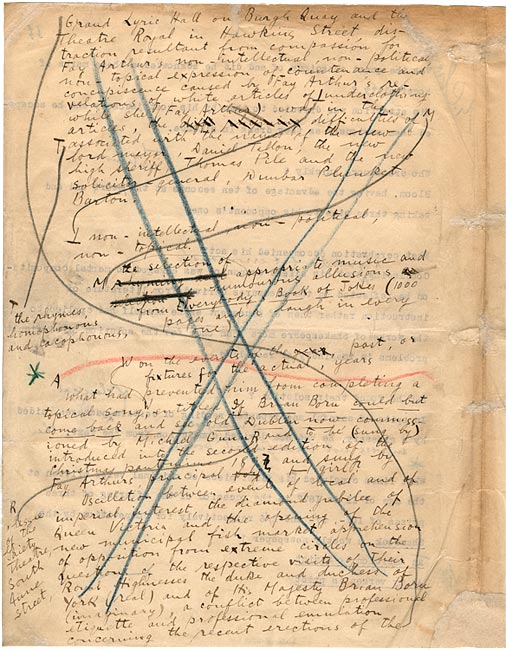
“Quickly Aging Here,” a poem by Denis Johnson

“Quickly Aging Here,” a poem by Denis Johnson—

1
nothing to drink in
the refrigerator but juice from
the pickles come back
long dead, or thin
catsup. i feel i am old
now, though surely i
am young enough? i feel that i have had
winters, too many heaped cold
and dry as reptiles into my slack skin.
i am not the kind to win
and win.
no i am not that kind, i can hear
my wife yelling, “goddamnit, quit
running over,” talking to
the stove, yelling, “i
mean it, just stop,” and i am old and
2
i wonder about everything: birds
clamber south, your car
kaputs in a blazing, dusty
nowhere, things happen, and constantly you
wish for your slight home, for
your wife’s rusted
voice slamming around the kitchen. so few
of us wonder why
we crowded, as strange,
monstrous bodies, blindly into one
another till the bed
choked, and our range
of impossible maneuvers was gone,
but isn’t it because by dissolving like so
much dust into the sheets we are crowding
south, into the kitchen, into
nowhere?

RIP Denis Johnson

img_6273

Denis Johnson, one of the greatest American writers of the latter half of the 20th century, has died at the age of 67.

In books including Jesus’ SonAngelsTree of Smoke, and Fiskadoro, Johnson created vibrant, intense worlds, simultaneously tragic and hilarious, peopled with weirdos and druggies, criminals and soldiers, those who harm and those who cure. Describing Johnson’s prose style requires employing paradox: His prose seems spare, but it’s also incredibly rich; his narratives dwell in rough realism, but this description belies the refined magic of his writing. Johnson painted a damned and fallen world again and again in his novels, but made a space for his characters to earn redemption. His characters, in the hands of a lesser writer, might come off as cartoonish grotesques, but Johnson’s realism extended into their psyches. The man could create souls.

I cannot understate the impact Johnson’s writing made on my development as a reader. I think I first read Johnson’s story “Emergency” in a collection of stories edited by Tobias Wolff; it was on the reading list for a creative writing class I was taking my first semester of college, and I learned more from analyzing the way Johnson put sentences together than I did from anything else. I made a friend read the story; told another friend about it and he said, “Of course,” and made the mistake of loaning me his first edition hardback copy of Jesus’ Son, which had been out for maybe four or five years at the time. I never gave it back, and it remains one of the books I’ve read the most times over the past 20 years.

la-ca-jc-denis-johnson-20141102

Johnson’s novel-in-stories Jesus’ Son is the perfect gateway drug to hook 18-year olds on a particular kind of American literature forever. Those interested in Johnson should also check out his debut 1983 novel Angels, his perfect novella Train Dreams, or his Vietnam War opus, Tree of Smoke: All make excellent starting places.

I’ll close with one of my favorite paragraphs, the last lines of “Beverly Home,” the last story in Jesus’ Son. The lines encapsulate Johnson’s vision of his world, his characters’ place in that world, and the redemptive spirit that might guide us to create a place for people like us:

All these weirdos, and me getting a little better every day right in the midst of them. I had never known, never even imagined for a heartbeat, that there might be a place for people like us.


I’ll be reposting some of the stuff I’ve written on this blog about Johnson’s books all day today, but for anyone interested, here are a bunch of links:

A very short review of Denis Johnson’s new novel The Laughing Monsters

Denis Johnson’s Train Dreams Is a Perfect Audiobook

Denis Johnson’s Train Dreams Is a Perfect Novella

Angels — Denis Johnson

Denis Johnson’s Nobody Move and the Pleasures of Postmodern Crime Fiction

Tree of Smoke — Denis Johnson (second review)

Essential Short Story Collections: Jesus’ Son

Tree of Smoke–Denis Johnson (first review)

The Achievements of Capitalism (Donald Barthelme)

The Achievements of Capitalism:

  1. The curtain wall
  2. Artificial rain
  3. Rockefeller Center
  4. Canals
  5. Mystification

From “The Rise of Capitalism” by Donald Barthelme, which you can read in full here. (Or in Sixty Stories, a perfect book).

Army of Shadows (Book acquired 16 May 2017)

img_6205-1

I first saw Jean-Pierre Melville’s 1969 film Army of Shadows about a decade ago, when a friend brought over the Criterion Collection release and insisted we watch it. I watched it again with my uncle, a fan of French cinema and  WWII films in general (and the guy who made me watch both Paths of Glory and Belle de Jour when I was like 14).

Anyway, Contra Mundum is releasing a new translation of Joseph Kessel’s 1943 novel Army of Shadows, which Melville based his film on. The translation is by Rainer J. Hanshe. (I recently talked to Rainer about his translation of Baudelaire’s notebook My Heart Laid Bare).

Here’s Contra Mundum’s blurb:

Originally published in Algiers in 1943, Joseph Kessel’s Army of Shadows is one of the first books to have been written about the French Resistance. Now available in paperback, Contra Mundum Press is proud to present the first new translation in over 70 years, and the first edition since Jean-Pierre Melville’s iconic 1969 film.“What, then, when it comes to recounting the story of France, an obscure, secret France, which is new to its friends, its enemies, and new especially to itself? France no longer has bread, wine, fire. But mainly it no longer has any laws. Civil disobedience, individual or organized rebellion, have become duties to the fatherland. The national hero is the clandestine man, the outlaw.

Nothing about the order imposed by the enemy and by the Marshal is valid. Nothing counts. Nothing is true any more.


One changes home, name, every day. Officials and police officers are helping insurgents. One finds accomplices even in ministries. Prisons, getaways, tortures, bombings, scuffles. One dies and kills as if it’s natural. France lives, bleeds, in all its depths. It is toward the shadow that its true and unknown face is turned.In the catacombs of revolt, people create their own light and find their own law. Never has France waged a nobler and more beautiful war than in the basements where it prints its free newspapers, in its nocturnal lands, and in its secret coves where it received its free friends and from where its children set out, in torture cells where, despite tongs, red-hot pins, and crushed bones, the French died as free men.”

Sunday Comics

img_6219

Today’s Sunday Comics entry is a page from Chris Ware’s magnificent 2012 novel Building Stories (Pantheon Books).

Screenshot 2017-05-21 at 10.56.25 AM

I had occasion to look through Building Stories again this week. I had to paint a room, which required moving books from shelves, which meant unshelving Building Stories, which unwieldy beast that it is, has been covered in other books for a few years. Building Stories takes the form of 14 different sized books in a box—it’s pretty hard to shelve in any accessible way, which is a shame (but also a pleasure). Ware’s opus seems to me one of the best American novels of the past decade, but I think its greatness tends to get overlooked because a) people are still prejudiced against comics and b) it challenges all the “reading rules” we bring with us to novels—there’s not a “right way” to read the novel. You have to put it together your self, in a sense. Anyway, for me the page above, which is the last page of the chapter called “Disconnect,” is the “conclusion” of the novel, a sort of metacommentary epilogue that (somehow) ties the narrative threads together in a moving and satisfying “end.”

Screenshot 2017-05-21 at 10.57.19 AM

Sunday Comics 

Cerebus #166, January, 1993 by Dave Sim and Gerhard; published by Aardvark-Vanaheim. This issue is Chapter 16 of the Mothers & Daughters storyline, Sim’s imagining of a tyrannical matriarchal state (sort of like The Handmaid’s Tale in reverse, sort of). This issue is one of my favorite chapters in the novel, a riff on Sim’s earlier “Mind Games” issues, wherein Cerebus’s dream-state shapes events in the real world. Mothers & Daughters is pretty much the last good Cerebus novel, before Sim took things completely off the rails in Reads.

Bolaño’s Borges

Jorge Luis Borges is first mentioned in the sixth paragraph of Roberto Bolaño’s masterful short story “The Insufferable Gaucho.” In this paragraph, the narrator tells us that the story’s hero, an ex-judge named Pereda, believed “the best Argentine writers were Borges and his son; any further commentary on that subject was superfluous.”

Several paragraphs later, Bolaño’s narrator explicitly references Borges’s short story “The South,” the precursor text for “The Insufferable Gaucho.” The reference to Borges is tied again to Pereda’s son, the writer Bebe.

Leaving tumultuous Buenos Aires, basically destitute from the Argentine Great Depression, Pereda heads to the countryside to take up residence in his family’s ancient ranch. Departing the train and arriving to a rural town, 

Inevitably, he remembered Borges’s story “The South,” and when he thought of the store mentioned in the final paragraphs his eyes brimmed with tears. Then he remembered the plot of Bebe’s last novel, and imagined his son writing on a computer, in an austere room at a Midwestern university. When Bebe comes back and finds out I’ve gone to the ranch . . . , he thought in enthusiastic anticipation.

Bolaño essentially appropriates the plot of “The South” for his tale “The Insufferable Gaucho” and inserts a version of himself into this revision. Bolaño is “Bebe” here, an author who “wrote vaguely melancholy stories with vaguely crime-related plots,” his name phonically doubling the series of mirrors and precursors that Bolaño, mystery man, leaves as clues: Bebe, B-B, Borges-Bolaño, Belano-Bolaño. (Is this too wild a conjecture, dear reader? Mea culpa). 

And Pereda then? A stand-in for Borges’s Juan Dahlmann (hero of “The South,” who “considered himself profoundly Argentinian”), surely, but also, maybe also—a stand-in for (a version of) Borges.

What I mean to say:

Bolaño, displaced Chilean, writes “The Insufferable Gaucho” as an intertextual love letter to his displaced father, the Argentine Jorge Luis Borges.

Bolaño then, to steal a line from Borges’s story, locates in Dahlmann/Borges “his romantic ancestor, his ancestor of the romantic death.” (English translation of the Borges here by Anthony Kerrigan; Chris Andrews translates Bolaño).

Bolaño’s retelling of Borges’s tale is initially marked by a heightened self-consciousness on the part of its hero Pereda, who, over time, gives over to an entirely different consciousness. Let me share a passage of some length; note the hazy dream-tone:

On the way back to his ranch, he dozed off a couple of times. He woke up from his second nap on one of the streets of Capitán Jourdan. He saw a corner store that was open. He heard voices, and someone strumming a guitar, tuning it but never settling on a particular song to play, just as he had read in Borges. For a moment, he thought that his destiny, his screwed-up American destiny, would be to meet his death like Dahlmann in “The South,” and it seemed unfair, partly because he now had debts to repay and partly because he wasn’t ready to die, although Pereda knew that death is an occurrence for which one is never ready. Seized by a sudden inspiration, he entered the store on horseback. Inside, he found an old gaucho, strumming the guitar, the owner, and three younger guys sitting at a table, who started when they saw the horse come in. Pereda was inwardly satisfied by the thought that the scene was like something from a story by di Benedetto. Nevertheless, he set his face and approached the zinc-topped bar. He ordered a glass of aguardiente, which he drank with one hand, while in the other he held his riding crop discreetly out of view, since he hadn’t yet bought himself the traditional sheath knife. He asked the owner to put the drink on his account, and on his way out, as he passed the young gauchos, he told them to move aside because he was going to spit. This was meant as affirmation of his authority, but before the gauchos could grasp what was happening the gob of phlegm had flown from his lips; they barely had time to jump. May the rain fall soft on you, he said, before disappearing into the darkness of Capitán Jourdan.

Is this insufferably romantic episode real or simply imagined by our hero? Borges perhaps would simply answer, Yes.

We can find that Yes in”The South,” which turns the binary of real/imagined on its metaphorical ear. The story is larded with examples, but I’ll share one where Dahlmann dozes on a train ride to the ranch (just as decades later Pereda will doze on his train ride to a ranch, and then (then?!) doze on a horse):

Tomorrow I’ll wake up at the ranch, he thought, and it was as if he was two men at a time: the man who traveled through the autumn day and across the geography of the fatherland, and the other one, locked up in a sanitarium and subject to methodical servitude. He saw unplastered brick houses, long and angled, timelessly watching the trains go by; he saw horsemen along the dirt roads; he saw gullies and lagoons and ranches; he saw great luminous clouds that resembled marble; and all these things were accidental, casual, like dreams of the plain. He also thought he recognized trees and crop fields; but he would not have been able to name them, for his actual knowledge of the country side was quite inferior to his nostalgic and literary knowledge. 

Two men at a time, Borges tells us; Bolaño will continue exploring that bifurcation decades later with Dahlmann’s doppelgänger Pereda. Do either of the men actually ever wake up? Are their journeys merely their own fictions—or, more Borgesian, the fictions they cobble from the fragments of precursor fictions, shot through the lens of “nostalgic and literary knowledge?”

The extent of Dahlmann’s literary knowledge is never quite clear, although Borges (of course) names a precursor text for “The South”: Weil’s The Thousand and One Nights, a book so intertextually fraught and metatextually overdetermined that I feel little need to remark on its Borgesian significance other than to point out that the tales in that volume are Scheherazade’s way of saving her own life. In “The South,” we are told that Dahlmann uses The Thousand and One Nights as a tool for “suppressing reality” and that during his intense illness it “served to illustrate nightmares.”

Does Dahlmann actually die then, or does he, through literature, imagination, and story-telling, like Scheherazade, stave off death for one more night? Again, I think that the Borgesian answer here is, Yes.

Although I’ve been citing Anthony Kerrigan’s early translation of “The South” here, I think Andrew Hurley’s more recent one makes a marvelous emendation that resonates with the spirit of the tale (and actually fits the original Spanish): He translates the last line into the present tense: “Dahlmann firmly grips the knife, which he may have no idea how to manage, and steps out into the plains.”  Dahlmann is still alive at the end of “The South.” Like the enormous sleeping cat that dozes in his memory, Dahlmann “lives in the present, in the eternity of the instant.”

Tellingly, Pereda doesn’t share my interpretation—for him, Dahlmann dies. Recall that “he thought that his destiny, his screwed-up American destiny, would be to meet his death like Dahlmann in ‘The South.’” Bolaño’s tale (typically Bolañoesque) radiates a cryptic, sinister morbidity, one saturated in dark humor. In a moment that seems both ironic and wholly earnest, Pereda fantasizes a death coded through “nostalgic and literary knowledge,” one modeled after “his romantic ancestor, his ancestor of the romantic death.”

I’ve plugged Borges’s lines into a different context here, but they work, and really the context isn’t so different. In “The South,” the specific ancestor alluded to is Dahlmann’s “maternal grandfather…Francisco Flores, of the Second Line Infantry Division, who  had died on the frontier of Buenos Aires, run through with a lance by Indians from Catriel.” Dahlmann figuratively or literally (Yes) repeats his ancestor’s romantic death.

And then Bolaño repeats his ancestor’s romantic death, reconfiguring the climax at the end of “The South,” in which Dahlmann faces off against the muchachones. I consulted three different translations of “The South”; each one does something a bit different with the youths who threaten Dahlmann: country louts, ruffiansyoung thugs.

How does Bolaño translate these young men? At the end of “The Insufferable Gaucho,” our quixotic hero, dirty, haggard, “attired like a cross between a gaucho and a rabbit trapper,” perhaps dreaming, perhaps insane, peers into a cafe, where he sees

. . . a group of writers who looked as if they worked in advertising. One of them, who had an adolescent air, although he was over fifty and maybe even over sixty, kept putting a white powder up his nose and holding forth on world literature. Suddenly, the eyes of the fake adolescent met Pereda’s. For a moment, their gazes locked, as if, for each of them, the presence of the other were a gash in the ambient reality. Resolutely and with surprising agility, the writer with the adolescent air sprang to his feet and rushed out into the street. Before Pereda knew what was going on, the writer was upon him.

Of course Bolaño, list-maker, canon-maker, curator, always registering the competitive anxieties of poets and authors, of course Bolaño will turn the threatening youth into a fucking writer!

Significantly, Pereda sees (or more likely believes he sees, although Bolaño doesn’t tip his hand here) “Bebe and an old man (An old man like me! Pereda thought)…presiding over one of the most animated tables.” The image betokens a fantastic displacement in Pereda’s warped mind, yes, but also perhaps signals Bolaño’s fantasy to hash out literary matters in a buzzing cafe with his father, Borges. In any case, this is the last we hear of Bebe, a detail that undercuts the reality of what happens next, as the coked-up writer advances on the insufferable gaucho:

Pereda realized that he had grasped his knife, then let himself go. He took a step forward and, without anyone noticing that he was armed, planted the point of the blade, though not deeply, in his opponent’s groin. Later, he would remember the look of surprise on the man’s face, in which terror blended with something like reproof, and the writer’s words as he groped for an explanation (Hey, what did you do, asshole?), as if there could be an explanation for fever and nausea.

Bolaño’s gaucho—the fantastic reconfiguration of Borges’s gaucho, son of Borges’s gaucho, but also doppelgänger to Borges’s gaucho—Bolaño’s gaucho performs a symbolic castration, an Oedipally-charged act of violence that seems to tip into visceral reality in the story’s last moments.

Bolaño turns the country louts into cosmopolitan poseurs, writers that look like yuppie admen, and then he has his hero cut one—right in the crotch.The gesture revises the ambiguous ending of “The South,” following through with the once-suspended knife fight.

Whether or not this final episode actually happens or happens only in the protagonist’s mind may or may not matter to you, reader. “The Insufferable Gaucho” is stocked with surreal Lynchian moments, from Pereda riding his horse into the country store, to a publisher being attacked by a feral rabbit (after which Pereda cauterizes the man’s neck wound with his knife!).

As the story progresses, Pereda shakes off nostalgia and literary reference. Like a bedraggled Quixote, he lives his romance. His consciousness, once informed by Borges and Antonio di Benedetto, becomes freer, asserts its own fantasy as self-generative and self-sufficient. When Pereda first entered the country store, “He heard voices, and someone strumming a guitar, tuning it but never settling on a particular song to play, just as he had read in Borges”; later in the tale, holding a party for his son, Pereda “sent for the foremost of Capitán Jourdan’s guitar-strumming gauchos, warning him beforehand that he was to do strictly that: strum, without playing any song in particular, in accordance with the country way.” Pereda omits Borges as the source of style here: Borges becomes the country way

The fantasy Bolaño constructs allows him to simultaneously posit Borges as his literary progenitor and then erase the evidence of that progenitor, even as his contours and essence remain. Bolaño-as-Bebe remains a marginal figure—Bolaño’s own stable consciousness, perhaps?—while knife-weilding Pereda enacts Borges’s revenge on all the poseurs and hacks. And if Pereda is too passionate, too romantic, too violent, too unstable—so be it. At least he thought enough of his son to class him with Borges the Great.

And it’s through this gesture—this literary trick—that Bolaño asserts and defends the literary lineage he lays his claims to: His romantic ancestor, Borges.

[Ed. note–Biblioklept published aversion of this essay in May of 2014].

Atticus Lish’s Preparation for the Next Life (Book acquired, 9 May 2017)

img_6089

The things that compelled my interest in Atticus Lish’s debut novel Preparation for the Next Life were the same things that made me initially wary. First, the book got a lot of buzz when it was published in 2014. Second, and bigger, Lish’s father Gordon Lish is a literary hero of mine. Indeed, Lish the Elder recommends his son’s talents in his (Gordon’s) last “novel,” Cess:

Atticus is, a, you know, a writer by Christ—is a novelist, by Christ, is indeed, if I, by Keerist, may say so myself, ever so proudly so, ever so rivalrously so, a novelist of nothing less than of rank.

Lish the Elder has impeccable taste, but, you know, c’mon. We all tend to think our kids are great at everything.

Anyway, I picked up a copy of Preparation for the Next Life a few days ago. I wasn’t looking for it; I was looking for another “L” novelist, but the spine popped out. I took it home and read the first few paragraphs. Then I just kept reading, consuming the first third in hungry gulps.

Lish’s prose is amazingly concrete. He renders New York City (and the other settings) with seemingly effortless thoroughness; the evocation of place is vivid and refined in its attention to detail, but reads raw somehow. There’s a flavor of prime Denis Johnson or Don DeLillo here, but these comparisons aren’t fair: Lish is original—the prose reads thoroughly real, real to and from the author. The novel so far strikes me as one of the most authentic “post-9/11” novels I’ve read. There’s almost something sci-fi to Preparation—Lish shows us our world through alien eyes that suck in every detail. I wish I’d read it sooner.

Here’s publisher Tyrant Books’ blurb:

Skinner hitchhikes to New York, newly returned from Iraq, hoping to exorcise his demons. Zou Lei, an undocumented immigrant from Central Asia, catches a bus into the city, searching for a way to get by—or at least stay out of jail. Their unlikely love story becomes the heart of one of the most compelling and widely acclaimed novels in years.

A clear-eyed illustration of life in New York City’s margins, Preparation For the Next Life evokes the unsettling realities of the American Dream for U.S. immigrants and unsupported veterans in stark, vivid detail. At once a nightmare and a love letter to New York City (a place one loves partly for its host of nightmares), Lish’s prose is disciplined yet always alive and taut with danger, rendered with the voice of a new and natural talent.