To find a lost father (Donald Barthelme)

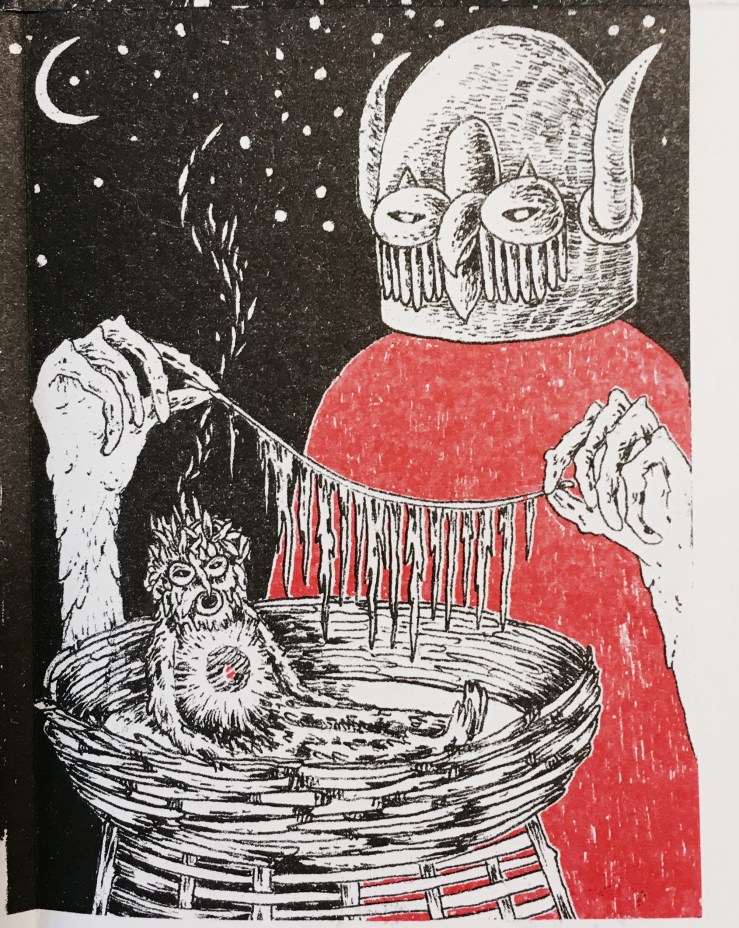
To find a lost father: The first problem in finding a lost father is to lose him, decisively. Often he will wander away from home and lose himself. Often he will remain at home but still be “lost” in every true sense, locked away in an upper room, or in a workshop, or in the contemplation of beauty, or in the contemplation of a secret life. He may, every evening, pick up his gold-headed cane, wrap himself in his cloak, and depart, leaving behind, on the coffee table, a sealed laundry bag in which there is an address at which he may be reached, in case of war. War, as is well known, is a place at which many fathers are lost, sometimes temporarily, sometimes forever. Fathers are frequently lost on expeditions of various kinds (the journey to the interior). The five best places to seek this kind of lost father are Nepal, Rupert’s Land, Mount Elbrus, Paris, and the agora. The five kinds of vegetation in which fathers most often lose themselves are needle-leaved forest, broad-leaved forest mainly evergreen, broad-leaved forest mainly deciduous, mixed needle-leaved and broad-leaved forest, and tundra. The five kinds of things fathers were wearing when last seen are caftans, bush jackets, parkas, Confederate gray, and ordinary business suits. Armed with these clues then, you may place an advertisement in the newspaper: Lost, in Paris, on or about February 24, a broad-leaf-loving father, 6’ 2”, wearing a blue caftan, may be armed and dangerous, we don’t know, answers to the name Old Hickory. Reward. Having completed this futile exercise, you are then free to think about what is really important. Do you really want to find this father? What if, when you find him, he speaks to you in the same tone he used before he lost himself? Will he again place nails in your mother, in her elbows and back of the knee? Remember the javelin. Have you any reason to believe that it will not, once again, flash through the seven-o’clock-in-the-evening air? What we are attempting to determine is simple: Under what conditions do you wish to live? Yes, he “nervously twiddles the stem of his wineglass.” Do you wish to watch him do so on into the last quarter of the present century? I don’t think so. Let him take those mannerisms, and what they portend, to Borneo, they will be new to Borneo. Perhaps in Borneo he will also nervously twiddle the stem of, etc., but he will not be brave enough to manufacture, there the explosion of which this is a sign. Throwing the roast through the mirror. Thrusting a belch big as an opened umbrella into the middle of something someone else is trying to say. Beating you, either with a wet, knotted rawhide, or with an ordinary belt. Ignore that empty chair at the head of the table. Give thanks.

From Donald Barthelme’s novel The Dead Father.

It’s June 16 so I guess I’ll just recycle this Bloomsday blog again

Portrait of James Joyce by Djuna Barnes

How to read Ulysses

What did Leopold actually do on June 16th, 1904?

About Bloomsday 1.0

Ulysses art by Roman Muradov

Selections from one-star Amazon reviews of Ulysses

joyce_ulysses-p2
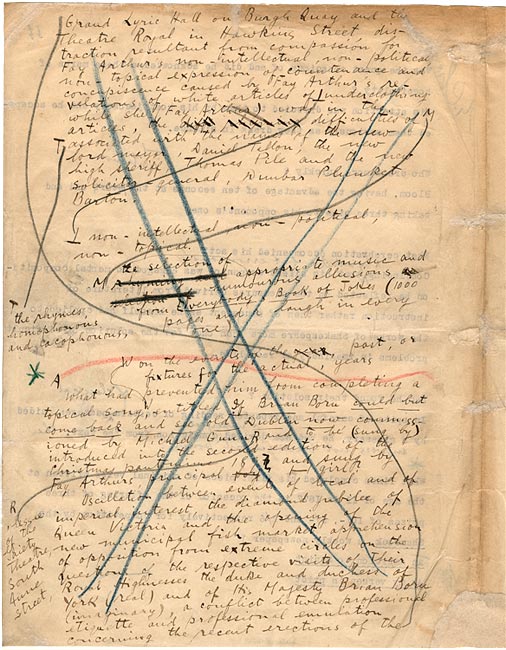
Ulysses manuscript page

A list of Irish heroes (from “The Cyclops” episode of Ulysses)

“Words,” a page from one of Joyce’s notebooks for Ulysses

Another page of Joyce’s notes, plus links to more

James Joyce talks dirty

Filming Finnegans

James Joyce’s eye glasses prescription

William Faulkner’s Joyce anxiety

Ezra Pound on James Joyce

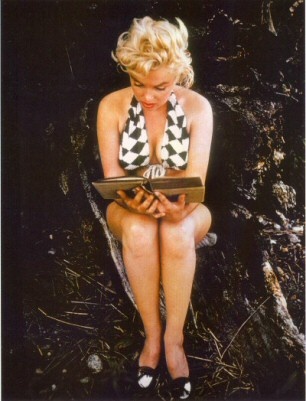
Marilyn Monroe reads Molly 

Biblioklept’s lousy review (the review is lousy, not the book) of Dubliners

Joyce’s entry on the 1901 Irish Census

Joyce’s caricature of Leopold Bloom

Biblioklept’s review (not so lousy, the review) of a superior full-cast audio recording of Ulysses

James Joyce explains why Odysseus is the most “complete man’ in literature

James Joyce’s passport

Leopold’s Bloom’s recipe for burnt kidney breakfast

“What in water did Bloom, waterlover, drawer of water, watercarrier, returning to the range, admire?”

James Joyce’s death mask


Three Books

img_2612

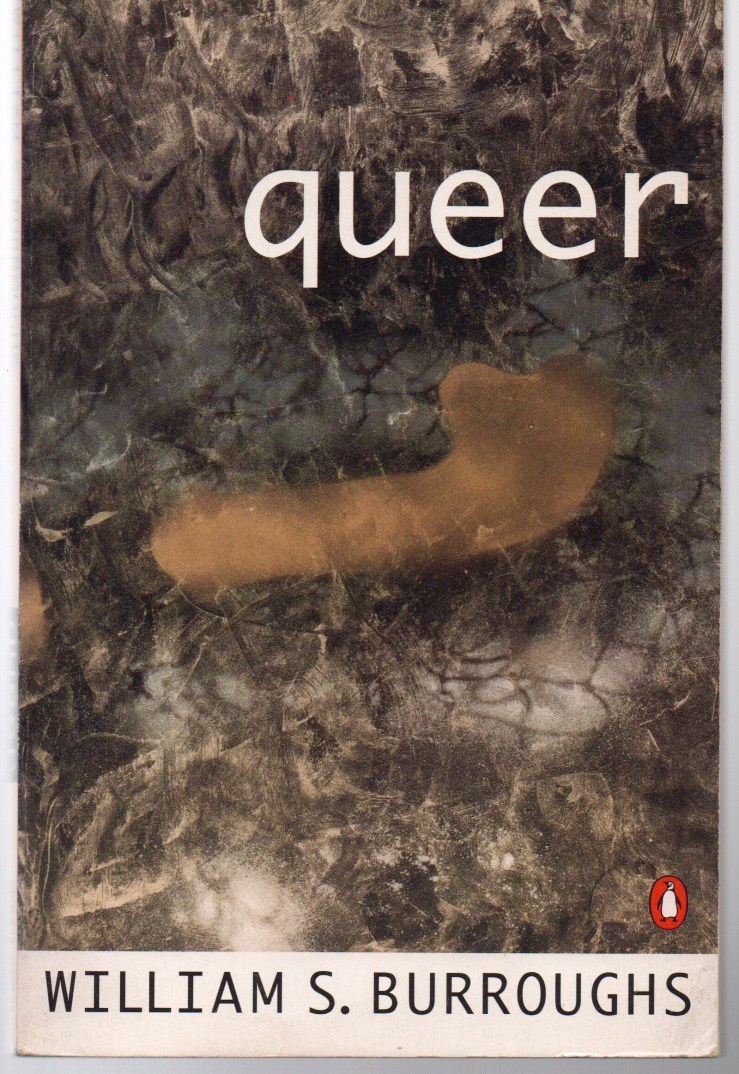
Queer by William S. Burroughs. Trade paperback by Penguin; copyrighted 1987 but no year of the actual printing, which I’m sure is sometime in the mid-nineties. Cover design by Daniel Rembert from a painting by Burroughs.

I bought Queer and Junkie at the Barnes & Noble where I spent too many Friday nights of my high school years. I was sophomore in high school, I think. My parents were concerned about the books, I recall, but in a vague, troubled way—a wrinkling of the temples, a look that I now know means, What does this mean? What are we supposed to do here? They asked me what the books were about and then told me not to do heroin.

img_2613

O Pioneers! by Willa Cather. Hardback and cloth by Houghtin Mifflin, 31st printing, 1961. No designer is credited; the book may have had a dust jacket at one point.

The dark marks are from a librarian’s tape job. She gave me this book, and dozens others, which were being remaindered. I reread the novel a few years ago, noting some of its themes, “including the divide between the New World and the Old, alienation, and the ways in which conformity and routine are antithetical to the pioneer spirit that Americans like to trick themselves into believing they are heir to.”

img_2615

My Sister’s Hand in Mine by Jane Bowles. Trade paperback by the Ecco Press, 7th printing, 1988. Cover design by Anna Demchick.

This collection includes the novel Two Serious Ladies, one of the best and strangest books I’ve read in years. I wrote about it last year on this blog, concluding:

The reading experience cannot be easily distilled. (Strike that adverb). Two Serious Ladies resists unfolding in the way we expect our narratives to unfold—to be about something—Bowles withholds exposition, clarification, and motivation—well, okay, not withholds, but rather hides, or obscures, or enshadows. (I don’t have the verbs for this book). I think of Harold Bloom’s rubric for canonical literature here. In The Western Canon, he  argues that strong literature exemplifies a “strangeness, a mode of originality that either cannot be assimilated, or that so assimilates us that we cease to see it as strange.” Nearly three-quarters of a century after its publication, Two Serious Ladies is still strange, still strong, still ahead of its time. Its vignettes flow (or jerk or shift or pitch wildly or dip or soar or sneak) into each other with a wonderfully dark comic force that simultaneously alienates and invites the reader, who, bewildered by its transpositions, is compelled to follow into strange new territory. Very highly recommended.

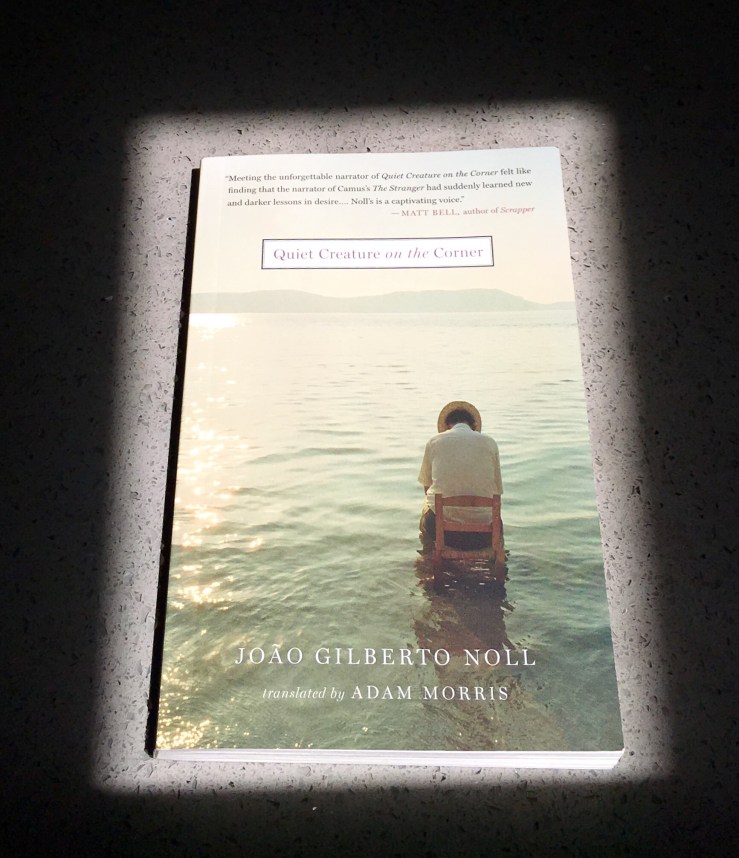
A review of João Gilberto Noll’s surreal novella Quiet Creature on the Corner

img_2588

Brazilian writer João Gilberto Noll’s 1991 novella Quiet Creature on the Corner is new in English translation (by Adam Morris) from Two Lines Press.

The book is probably best read without any kind of foregrounding or forewarning.

Forewarning (and enthusiastic endorsement): Quiet Creature on the Corner is a nightmarish, abject, kinetic, surreal, picaresque read, a mysterious prose-poem that resists allegorical interpretation. I read it and then I read it again. It’s a puzzle. I enjoyed it tremendously.

So…what’s it about?

For summary, I’ll lazily cite the back of the book:

Quiet Creature on the Corner throws us into a strange world without rational cause and effect, where everyone always seems to lack just a few necessary facts. The narrator is an unemployed poet who is thrown in jail after inexplicably raping his neighbor. But then he’s abruptly taken to a countryside manor where all that’s required of him is to write poetry. What do his captors really want from him?

There’s a lot more going on than that.

So…what’s it about? What’s the “a lot more”?

Okay then.

Maybe let’s use body metaphors. Maybe that will work here.

We are constantly leaking. Blood, sweat, tears. Piss, shit, decay. Cells sloughing off. Snot trickling. Vomit spewing. Shuffling of this mortal etc.

(—Are we off to a bad start? Have I alienated you, reader, from my request that you read Noll’s novella?—)

What I want to say is:

We are abject: there are parts of us that are not us but are us, parts that we would disallow, discard, flush away. We are discontinuous, rotten affairs. Bodies are porous. We leak.

We plug up the leaks with metaphors, symbols, tricks, gambits, recollections,  reminiscences. We convert shame into ritual and ritual into history. We give ourselves a story, a continuity. An out from all that abjection. An organization to all those organs. We call it an identity, we frame it in memory.

What has this to do with Noll’s novella?, you may ask, gentle reader. Well. We expect a narrative to be organized, to represent a body of work. And Quiet Creature on the Corner is organized, it is a body—but one in which much of the connective tissue has been extricated from the viscera.

We never come to understand our first-person narrator, a would-be poet in the midst of a Kafkaesque anti-quest. And our narrator never comes to understand himself (thank goodness). He’s missing the connective tissue, the causes for all the effects. Quiet Corner exposes identity as an abject thing, porous, fractured, unprotected by stabilizing memory. What’s left is the body, a violent mass of leaking gases liquids solids, shuttling its messy consciousness from one damn place to the next.

Perhaps as a way to become more than just a body, to stabilize his identity, and to transcend his poverty, the narrator writes poems. However, apart from occasional brusque summaries, we don’t get much of his poetry. (The previous sentence is untrue. The entirety of Quiet Creature on the Corner is the narrator’s poem. But let’s move on). He shares only a few lines of what he claims is the last poem he ever writes: “A shot in the yard out front / A hardened fingernail scraping the tepid earth.” Perhaps Quiet Creature is condensed in these two lines: A violent, mysterious milieu and the artist who wishes to record, describe, and analyze it—yet, lacking the necessary tools, he resorts to implementing a finger for a crude pencil.  Marks in the dirt. An abject effort. A way of saying, “I was here.” A way of saying I.

Poetry perhaps offers our narrator—and the perhaps here is a big perhaps—a temporary transcendence from the nightmarish (un)reality of his environs. In an early episode, he’s taken from jail to a clinic where he is given a nice clean bed and decides to sleep, finally:

I dreamed I was writing a poem in which two horses were whinnying. When I woke up, there they were, still whinnying, only this time outside the poem, a few steps a way, and I could mount them if I wanted to.

Rest, dream, create. Our hero moves from a Porto Alegre slum to a hellish jail to a quiet clinic and into a dream, which he converts into a pastoral semi-paradise. The narrator lives a full second life here with his horses, his farm, a wife and kids. (He even enjoys a roll in the hay). And yet sinister vibes reverberate under every line, puncturing the narrator’s bucolic reverie. Our poet doesn’t so much wake up from his dream; rather, he’s pulled from it into yet another nightmare by a man named Kurt.

Kurt and his wife Gerda are the so-called “captors” of the poet, who is happy, or happyish, in his clean, catered captivity. He’s able to write and read, and if the country manor is a sinister, bizarre place, he fits right in. Kurt and Gerda become strange parent figures to the poet. Various Oedipal dramas play out—always with the connective tissue removed and disposed of, the causes absent from their effects. We get illnesses, rapes, corpses. We get the specter of Brazil’s taboo past—are Germans Kurt and Gerda Nazis émigrés? Quiet Creature evokes allegorical contours only to collapse them a few images later.

What inheres is the novella’s nightmare tone and rhythm, its picaresque energy, its tingling dread. Our poet-hero finds himself in every sort of awful predicament, yet he often revels in it. If he’s not equipped with a memory, he’s also unencumbered by one.

And without memory the body must do its best. A representative passage from the book’s midway point:

Suddenly my body calmed, normalizing my breathing. I didn’t understand what I was doing there, lying with my head in a puddle of piss, deeply inhaling the sharp smell of the piss, as though, predicting this would help me recover my memory, and the memory that had knocked me to the floor appeared, little by little, and I became fascinated, as what had begun as a theatrical seizure to get rid of the guy who called himself a cop had become a thing that had really thrown me outside myself.

Here, we see the body as its own theater, with consciousness not a commander but a bewildered prisoner, abject, awakened into reality by a puddle of piss and threatened by external authorities, those who call themselves cops.  Here, a theatrical seizure conveys meaning in a way that supersedes language.

Indeed our poet doesn’t harness and command language with purpose—rather, he emits it:

No, I repeated without knowing why. Sometimes a word slips out of me like that, before I have time to formalize an intention in my head. Sometimes on such occasions it comes to me with relief, as though I’ve felt myself distilling something that only once finished and outside me, I’ll be able to know.

And so, if we are constantly leaking, we leak language too.

It’s the language that propels Noll’s novella. Each sentence made me want to read the next sentence. Adam Morris’s translation rockets along, employing comma splice after comma splice. The run-on sentences rhetorically double the narrative’s lack of connecting tissue. Subordinating and coordinating conjunctions are rare here. Em dashes are not.

The imagery too compels the reader (this reader, I mean)—strange, surreal. Another passage:

Our arrival at the manor.

The power was out. We lit lanterns.

I found a horrible bug underneath the stove. It could have been a spider but it looked more like a hangman. I was on my knees and I smashed it with the base of my lantern. The moon was full. The low sky, clotted with stars, was coming in the kitchen window. December, but the night couldn’t be called warm—because it was windy. I was crawling along the kitchen tiles with lantern in hand, looking for something that Kurt couldn’t find. I was crawling across the kitchen without much hope for my search: he didn’t the faintest idea of where I could find it.

What was the thing Kurt and the narrator searched for? I never found it, but maybe it’s somewhere there in the narrative.

Quiet Creature on the Corner is like a puzzle, but a puzzle without a reference picture, a puzzle with pieces missing. The publishers have compared the novella to the films of David Lynch, and the connection is not inaccurate. Too, Quiet Creature evokes other sinister Lynchian puzzlers, like Roberto Bolaño’s 2666 (or Nazi Literature in the Americas, which it is perhaps a twin text to). It’s easy to compare much of postmodern literature to Kafka, but Quiet Creature is truly Kafkaesque. It also recalled to me another Kafkaesque novel, Alasdair Gray’s Lanark—both are soaked in a dark dream logic. Other reference points abound—the paintings of Francis Bacon, Leon Golub, Hieronymus Bosch, Goya’s etchings, etc. But Noll’s narrative is its own thing, wholly.

I reach the end of this “review” and realize there are so many little details I left out that I should have talked about–a doppelgänger and street preachers, an election and umbanda, Bach and flatulence, milking and mothers…the wonderful crunch of the title in its English translation—read it out loud! Also, as I reach the end of this (leaky) review, I realize that I seem to understand Quiet Creature less than I did before writing about it. Always a good sign.

João Gilberto Noll’s Quiet Creature on the Corner isn’t for everyone, but I loved it, and look forward to future English translations—Two Lines plans to publish his 1989 novel Atlantic Hotel in the spring of next year. I’ll probably read Quiet Creature again before then. Hopefully I’ll find it even weirder.

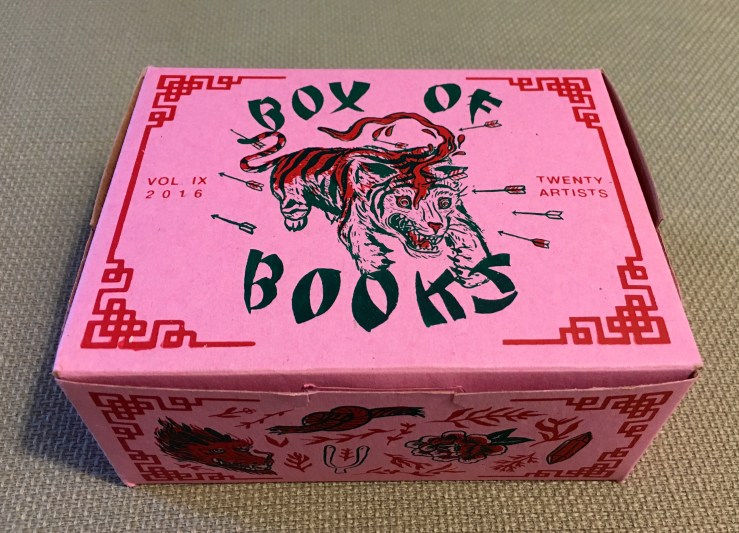
Tiny Splendor’s Box of Books Vol IX (Books acquired, 5.14.2016)

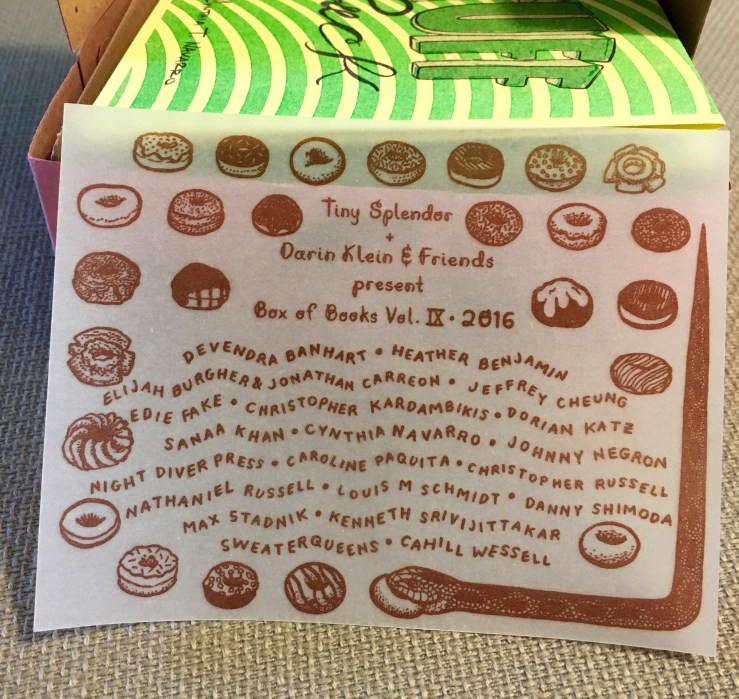
My friend gave me Tiny Splendor’s Box of Books, Vol. IX last weekend.

Here’s the tracklist:

img_2367

I was initially trying to limit myself to looking at one a day but then stopped trying to limit myself to looking at one a day and now I’ve looked at all of them. (Is “look” the right verb? Not sure. “Book” may not be the right noun, either. These book pamphlet art zine comic things are fun though).

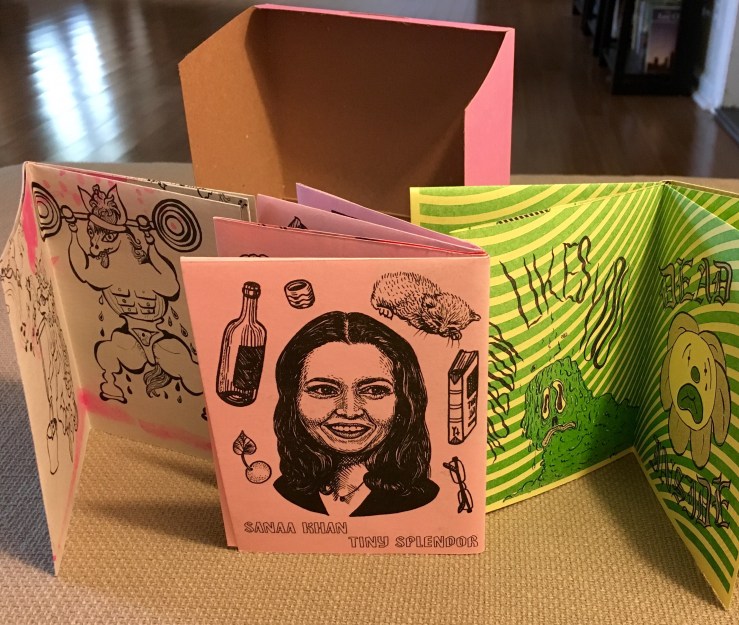
This is what a few of the books look like out of the box:

img_2369

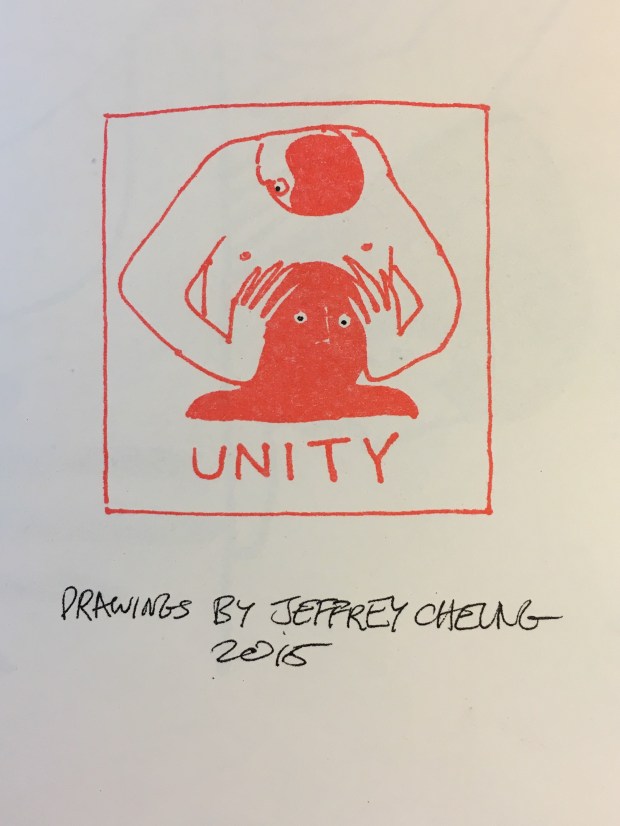
Jeffrey Cheung’s book cracked me up.

img_2371

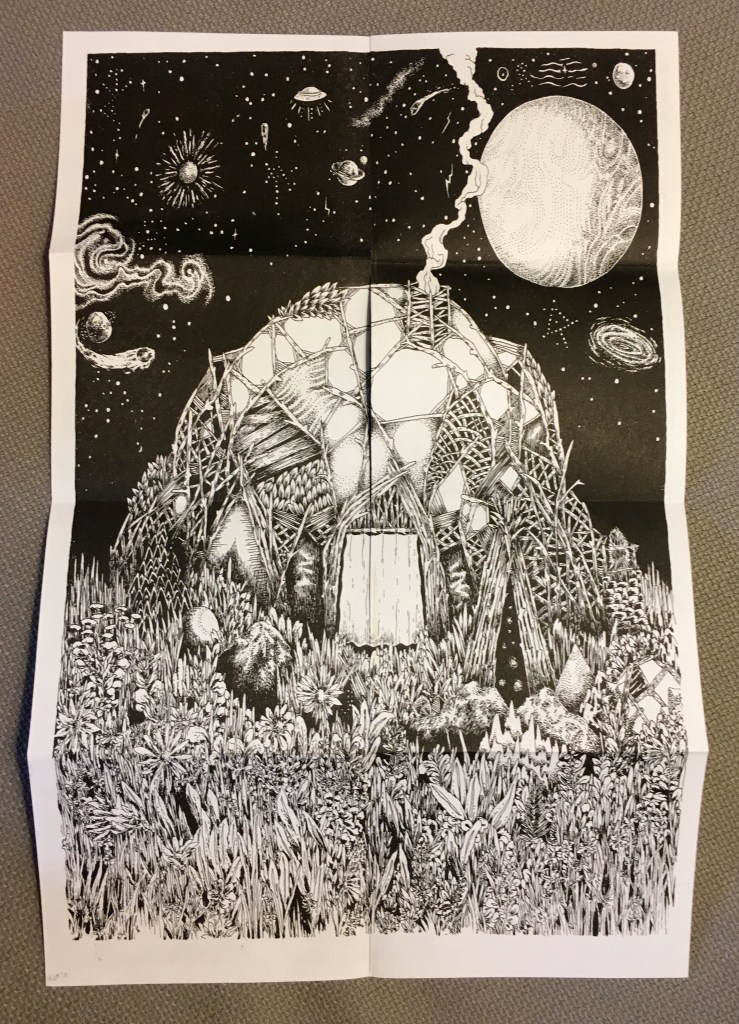
And I really really dig Danny Shimodaa’s contribution:

img_2372 img_2373

And I’ll end the post with positive vibes from Cahill Wesson:img_2374


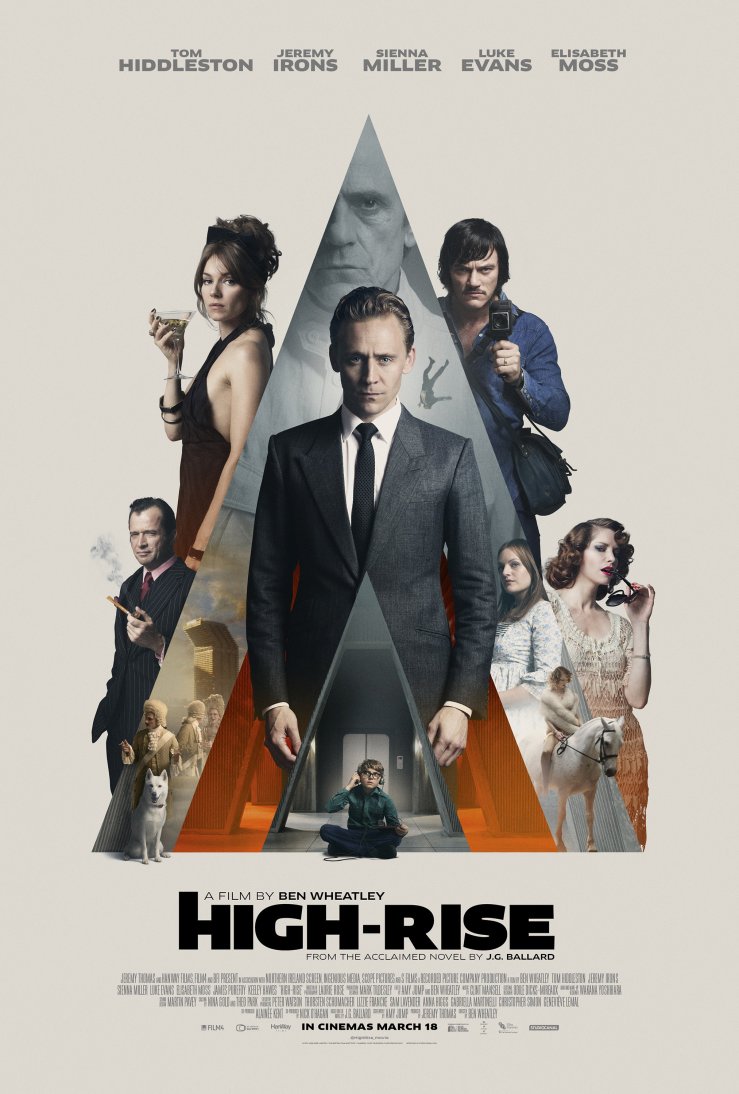
Despite our Ballardian present, the High-Rise film adaptation is a nostalgia piece

high-rise-poster

  1. Our present is utterly Ballardian.
  2. Our present is so utterly Ballardian that our present is actually our (unevenly distributed) future.
  3. Like, what is the 2016 U.S. presidential election but a short story Ballard might have written in 1983 (and hopefully thrown in the trash)?
  4. Ballard’s 1975 novel High-Rise is particularly concerned with this present-future condition: the phrase to come (as in a future to come) repeats throughout the novel, a key dissonant note.
  5. Near the end of the novel, Ballard’s free indirect style drifts into the mind of protagonist Robert Laing:

    ...he found it difficult not to believe that they were living in a future that had already taken place, and was now exhausted.

  6. A version of this line shows up in the first minutes of director Ben Wheatley’s 2015 film adaptation of High-Rise.
  7. While Ballard’s satire evokes the post-future’s psychological (ir)reality, Wheatley’s film adaptation feels like a nostalgic period piece for a future that came and skedaddled. Perhaps he (and his fellow filmmakers—screenwriter Amy Jump, the editor, the set designers and costumers, etc.) found it impossible to do more than stylistically recapitulate the Modernist contours that Ballard transcended.
  8. Critic Tasha Robinson lays it out neatly in her proper review at The Verge:

    The retro cars, suits, and architecture all put High-Rise more in a quaint, remote past than a dystopian future. They also add to the sense of otherworldliness that hangs over the film.

    And so does the sense that High-Rise is driven more by Wheatley’s poster-ready striking images —€” a suicide falling from a high balcony in ultra slow motion, Laing expressionless and spattered with paint — than by any sort of human drives.

  9. (I modify “review” in the above with “proper” because Robinson wrote a real review; I’m not doing that here. I think her take on the film is far more detailed and broad than what I’m doing here, and certainly attends more to the, like, plot of the film—even as she acknowledges that the plot basically gets put on the back-burner for long stretches).
  10. So probably my biggest quibble with the High-Rise film adaptation is its nostalgia, its obsession with midcentury modernism and Brutalism and style—by which I mean the idea of style—over, like, ideas. 
  11. Those ideas: Ballard’s central critiques of capitalism, consumerism, and class do come through in the film, but Wheatley and his team resist giving them any air to breathe, let alone room to stretch their legs. (My god. Forgive me these metaphors, this terrible personification).
  12. There are very, very few scenes in the film where people exchange ideas.
  13. Instead, ideas are wedged in, often in snippets lifted directly from the book, crammed quickly into a frame that will surely veer back into the film’s main technique: Montage!
  14. The first chapter of Ballard’s novel is titled “Critical Mass.” As I pointed out in my review of the novel, “Ballard dispenses with any simmering in his tale of depraved debauchery,” and gets his pot boiling in a hurry.
  15. In contrast, Wheatley’s film gets a slower—but strong—start. (The first 50 or so minutes are actually pretty great).
  16. At its midway point though, the High-Rise film tries to pick up the pace—dramatically. The solution is montage after montage.
  17. Indeed, the final hour of the film slips into a state of near-constant montage. The big set piece scenes (y’know—dance parties and food riots and orgies and the like) dissolve into the film’s frenetic technique. It often feels as if Wheatley is more interested in making a bunch of cool music videos than a film. While this jumpy method might have been the filmmakers’ intention—y’know, to evoke paranoia, anxiety, exhaustion, claustrophobia, etc.—the result, at least for me, was a kind of paradoxical lethargy, a creeping dullness.
  18. Key moments, like the first encounter between Wilder and Royal for example, fly by in rushed blips. It’s as if Wheatley was afraid that if he let two people talk on-screen for more than 30 seconds the viewers would not, y’know, pick up on the fact that we are witnessing the thin veneer of society crack open revealing an abject tumult of sex and violence underneath.
  19. (Wilder—the Id man! Royal the Superego. So much of Ballard’s psychological stuff gets lost in the film, which foregrounds class hierarchy instead of synthesizing the two. But that’s a separate quibble).
  20. What were likely great performances (and much potential for humor) get lost in all the short cuts and montage.
  21. Still:  Sienna Miller is great as Charlotte Melville, and Tom Hiddleston is charming enough.
  22. But best in the film—at least for me—is Elizabeth Moss as Wilder’s pregnant wife Helen.
  23. Still, the filmmakers insist on mining her pregnancy for cheap nostalgic jokes—she’s always smoking, always finishing a drink or pouring a new one.
  24. Which brings me back to: Why a period piece? Why not update High-Rise—or, even better take it outside of time completely?
  25. (It will be interesting to look at the film in twenty years: Oh! These were the aesthetic obsessions of the 2010’s, these were the nostalgic totems of that silly decade).
  26. (And while I’m wedging points in parenthetically in a rush: The ending. I read the novel’s conclusion ironically—the high-rise is a phallic failure, and as its patriarchy devolves into chaos and death, a matriarchy arises (or maybe coalesces is the verb I want). But the film concludes more ambiguously—sure, it points to the idea of a matriarchy (or harem)—but it leaves Laing in the kind of alpha male position that the novel had sought to ironize).
  27. And, to return to point 24: Did the filmmakers underestimate the currency of Ballard’s satire? We live in an era of radical wealth inequality, where the richest in our society are rapidly establishing their own private greenzones away from the plebeians. High-Rise is more timely now than ever.
  28. (A short list of (non-)adaptations of J.G. Ballard’s High-Rise: Pete Travis’s Dredd (2012), Matteo Garrone’s Gomorra (2008), and George Romero’s Land of the Dead (2005)).
  29. (And re: point 27 w/r/t adaptations—in a sense, Ballard adapted/revised the novel himself in his 2003 novel Millennium People).
  30. Reading back over this riff, briefly, I see that there’s so much I left out—on stuff the filmmakers left out (why change the key plot point of Laing’s sister?)—on stuff I should’ve praised more (great soundtrack; good cinematography)—but most of all, what doesn’t come through is my admiration that the filmmakers tried. And they tried hard, successfully evoking a Ballardian style. But while the High-Rise adaptation delivers Ballardian style, that Ballardian style only points at itself, and not at our Ballardian present, our Ballardian future.

In American Candide, Mahendra Singh reboots Voltaire’s classic satire

tumblr_o71467dk931s4y9aso1_1280

About halfway through Mahendra Singh’s American Candide, our omniscientish (yet beguiled) narrator slows down for a moment to offer an internal critique (and useful summary) of the novel thus far:

If Candide could address the reader right now, he would probably apologize for both the breakneck pace and pixelated tenor of his adventures so far. Modern literature evolved beyond that sort of thing long ago, and an easy-to-swallow plot enlivened with a soupçon of ironic handwringing is all the rage today. The idea of a fictional hero running afoul of angry fathers, jihadi terrorists, secret police, corporate mercenaries, a cable TV network, and a secret cabal of global warmers simply boggles the reader’s mind, an authorial fate worse than death.

And yet of course many readers enjoy a good mind boggling every now and then.

I do, anyway.

Our narrator’s little condensation of the novel thus far reminds us that stylistically and formally, American Candide is a true heir to Voltaire’s Candide. Both novels offer a “breakneck pace and pixelated tenor”; both novels pulse with picaresque energy; both novels drip with delightfully venomous satiric acid; both novels are basically one-damn-thing-happening-after-another. Both novels are funny as fuck all.

Our narrator’s quick summary also jabs at the limitations of contemporary socially-conscious-realistic fiction—you know, “serious literature”—which limitations American Candide dispenses with in favor of frenzied fun. Instead of a soupçon of ironic handwringing, we get full-blown glorious agitation.

What’s all the agitation over?

American Candide’s full title is American Candide; or Neo-Optimism, a direct nod to Voltaire’s full title, Candide; or Optimism. But Singh’s subtitular prefix points to other connotations: Neoliberalism, neoconservatism—hell, neofascism—but most of all, the irony that very little of human nature really has changed in three centuries. The big ideals of the Enlightenment continue to radiate too radically for some folks.

tumblr_o6f5s07t9a1s4y9aso1_1280

To wit, American Candide carves sharply into the last two decades, synthesizing the dangerous follies of the Bush Gang (and the subsequent fallout of their crimes) into a kind of mythical transposition. Singh offers a cruel fun satire of the neo-optimism that underwrites blind belief in “the better-than-best of all possible worlds, 21st-century America”. The novel’s satirical sting is simultaneously sweetened by intense humor and painfully amplified by the cruel realism underneath Singh’s zany hyperbole. Tell all the truth but tell it slant, as the poet advised.

And so American Candide is terribly terribly funny but also terribly terribly sad.

For example, Singh’s take on Hurricane Katrina shows American Candide’s capacity to condense historical critique into sharp moments that bristle with anger leavened in caustic humor:

The offending hurricane was clearly an act of god, and the Freedonian government prided itself on its special relationship with god.

Another snippet (“Hooterville” is New Orleans’s Freedonian stunt double):

The winds howled, the clouds unleashed a torrential rain, and the fetid waters of an entire ocean climbed over the heads of those surviving Hootervillains too patently lazy to live on higher ground.

Just a page or two later, Candide and Pangloss mistake armed and uniformed authorities for civil peacekeepers:

Rah! Ooh! We’re better than best police! … We’re Tender-Mercynaries® from Baron Incorporated, booyah, and this is a federally-restricted emergency disaster area, yoot-yoot rah booh!

Instead of helping our heroes, the mercenaries abduct, torture, and interrogate them. Candide and Pangloss find themselves in black hoods at a black site, and even though our young hero “had been lightly sodomized and beaten and even urinated upon…his innermost Freedonian convictions had not been too badly shaken.”

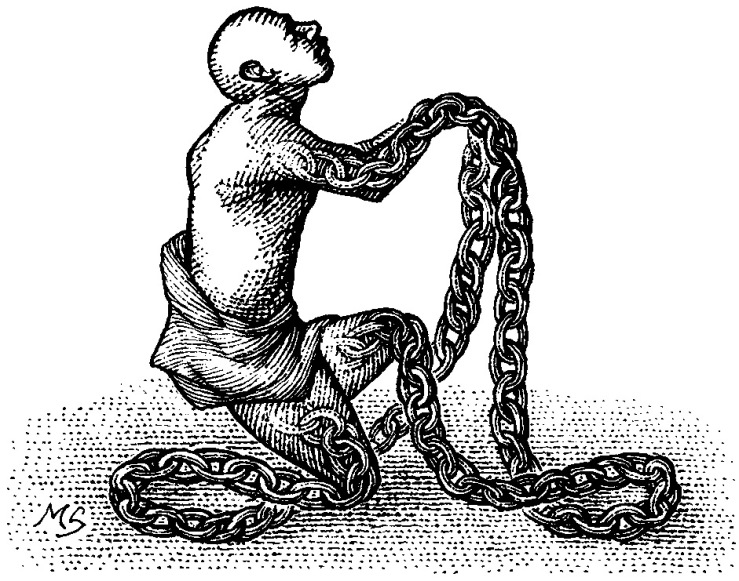
It’s the reader who shakes, in a mix of laughter and rage. The world of American Candide is simply our own world dressed up in a satirical frock that somehow reveals, rather than covers over, our society’s garish ugliness, our addictions to binding illusions. Man is born free, and everywhere he is in chains, commented Rousseau (Voltaire hated Rousseau).

tumblr_o70wqo1hoq1s4y9aso1_1280

American Candide’s  blurb warns that, “College-boy sissies will call it a Juvenalian satire upon America’s penchant for mindless optimism and casual racism.” Hooray for college-boy sissies! But no, really, I think that’s a fair assessment—as is Singh’s Candide’s assessment from the aforementioned blurb: “rage against the rage, Voltaire-dude!”

But it’s not just rage: Laughter—laughter in the all-seeing eye of absurdity—it’s laughter that undergirds American Candide.

img_1468

In a review of Lowell Blair’s translation of Voltaire’s Candide, I suggested:

The book’s longevity might easily be attributed to its prescience, for Voltaire’s uncanny ability to swiftly and expertly assassinate all the rhetorical and philosophical veils by which civilization hides its inclinations to predation and evil. But it’s more than that. Pointing out that humanity is ugly and nasty and hypocritical is perhaps easy enough, but few writers can do this in a way that is as entertaining as what we find in Candide.

Singh’s update-reboot-translation of Candide fittingly answers Voltaire’s pessimistic prescience with not just bitter affirmations of contemporary predation and evil, but also with an eye toward entertainment—to the affirmations of laughter.

[Note: All the illustrations in this review are by Mahendra Singh, and are part of American Candide].

List of writers mentioned in Gordon Lish’s Paris Review interview

A list of writers mentioned in Gordon Lish’s Winter 2015 (No. 215) Paris Review interview

Jean Baudrillard

Harold Bloom

Harold Brodkey

William F. Buckley

William S. Burroughs

Raymond Carver

Neal Cassady

Cormac McCarthy

Don DeLillo

Jacques Derrida

Denis Donoghue

Tess Gallagher

Leonard Gardner

Jack Gilbert

Allen Ginsberg

Barry Hannah

Giles Harvey

 Victor Herman

Noy Holland

John Clellon Holmes

Jack Kerouac

Ken Kesey

Stephen King

Romulus Linney

Sam Lipsyte

Atticus Lish

Gary Lutz

Norman Mailer

Ben Marcus

Patty Marx

Cynthia Ozick

Grace Paley

James Purdy

J.D. Salinger

Christine Schutt

Jason Schwartz

Allan Temko

Joy Williams

Tom Wolfe

I conclude now I have no inner resources (Reading/Have Read/Should Write About)

img_2152

For twenty years now Berryman’s line I conclude now I have no inner resources has been plinking around the inside of my dumb skull. The line is plinking like crazy lately, as I shuffle final exam essays into some kind of order (what order?) that might align with my ability to offer the student, the writer, some meaningful note, some suggestion for improvement, some revelatory remark. Plink plink plink. No inner resources.

It is bad to start with a complaint so I will dress up the preceding paragraph (I dress it mentally) as an apologia. (Why the hell did I decide to write about books online?!).

I’ve been reading some really great books lately, folks. People, yes, you, listen. It’s not true that I have no inner resources. I am unstuck as a reader. I’m all gummed up with what I’ve read. Well-fed. And yet I go to scribble out a, like, review and plink plink plink. Nothing.

But like I said, the reading’s been really good. From the bottom up:

Let me strongly recommend American Candide by Mahendra Singh. I recommend this book for people who enjoy laughing at tragedies that should otherwise make them weep. You can and should purchase this book from Rosarium.

tumblr_o6f5s07t9a1s4y9aso1_1280
Illustration to American Candide by Mahendra Singh

Above American Candide in the stack so lazily pictured above is Yuri Herrera’s neon noir novella The Transmigration of Bodies, which I also highly recommend. I managed a few words on it here.

If you were to describe Henri Michaux’s Miserable Miracle 1956 book to me, I might politely decline with a small gesture of my hand. It’s about a guy who takes mescaline and writes about the experience and he draws these pictures and then he later takes “Indian hemp” and compares it— you might say to me, you, knowing as you know that I dig weird books, but I would cut you off at with an em dash, polite but firm, Not interested in drug novels these days (and besides dude, you know that Aldous Huxley did kinda the same thing at kinda the same time). And then you, having the book with you might press it into my hand, declaring, No, look

img_2156 img_2154 img_2155 img_2158

—and I would say Thanks and consume the book in two sittings.

And so after a few years of false starts, I finally broke through the second chapter of Stanley Elkin’s satire The Franchiser. The many years of recommendations, exhortations (and scoldings) to read The fucking Franchiser were correct and good and now appreciated, as I work my way into the novel’s rich fat middle—but I admit it was Mr. William Gass who finally sold me on a commitment. I read his introduction published elsewhere—in A Temple of Texts—and that was that.

Thanks to Jon for sending me Ursula K. Le Guin’s essay collection The Language of the Night. The collection collects the collective introductions to Le Guin’s so-called Hainish collection, which I read this winter, and wrote about here. Not one of my editions featured the reflections Le Guin (or more likely her editors) called “Introductions” in later essays, and reading the Hainish intros is, in a very slight sense, like rereading those books. Lovely.

Last and never least: Tom Clark’s The Last Gas Station and Other Stories. I’ve thought often of Clark’s poems as stories pretending to be poems so maybe these are poems pretending to be stories. Or maybe I have no idea what the fuck I’m talking about. (Plink plink plink). I read most of them except for the longest one, “Incident at Basecamp,” which I will save save save for the future, an old habit, maybe a bad habit, that, to read all but one story in a collection, to maybe keep the collection afresh somehow or not wholly discovered—eh? Plink plink plink. Wag.

Reasons I didn’t read your novel

  1. The first sentence is not compelling.
  2. Neither are the second, third, or fourth sentences.
  3. Nor the fifth.
  4. (I’m sure the later sentences are sterling, stunning stuff, but I’m sorry, I’m sorry, those earlier efforts couldn’t propel me onward).
  5. Those blurbs: So thickly pasted in glowing praise is your novel that its spine I dare not crack.
  6. Swarming with spiders. Scores of mean spiders. A horde, exploding from your novel’s pages.
  7. Too long.
  8. Your novel is part of a trilogy.
  9. Your novel is basically a fan fiction of a nineteenth-century literary novel.
  10. Your novel is basically a fan fiction of a twentieth-century literary novel.
  11. Your novel-memoir-thing is basically a blog.
  12. All the ghosts in your novel are metaphors.
  13. Ceaseless cyborg sex scenes.
  14. Four chapters in, my only thought is “I’ve read this novel before.”
  15. Your novel is in French.
  16. Your novel is too good and I am too stupid.
  17. Your novel is morally instructive.
  18. Printed in pink ink.
  19. I left it on a plane.
  20. Your novel is upside down.
  21. All of your characters have quirky hobbies; this I cannot abide.
  22. Oh cool, a stranger comes to town?
  23. Every verb attributing speech to a character is modified by an adverb.
  24. Too short.
  25. Too few swamps.
  26. That cover!
  27. Your novel is overtly engaged in social issues.
  28. Your novel is about baseball.
  29. Your novel is “erotic.”
  30. Your novel is extraordinarily well behaved.
  31. Your novel’s extended metaphor is too obvious.
  32. Written on rope.
  33. You are a conceptual poet with bad ideas and boring books.
  34. You had me at Rags to Riches—but back to Rags again?! Not this time.
  35. Exposition!
  36. Not enough cyborg sex.
  37. Your novel is a Word doc.
  38. Your novel is part of a tetralogy.
  39. Your novel was so goddamn excellent that it made my right eye twitch. As if it, my eye, were doing some manic jig. Then, my other eye—the left one—well, your novel was just so literary that that eye got to twitching something awful as well. By the second chapter, my eyes were fairly vibrating, and a clear but steady stream of snot was leaking from my nose. By the fourth chapter, I could no longer feel my lips, and by the beginning of chapter five, I was literally insensate. It took me months to recover, aided by family and friends alike. I will try your novel again when I am stronger.
  40. I drank too much.
  41. Your novel is filled with pressed flowers which I’d rather not disturb.
  42. Deader, better novelists await.
  43. 600 pages of a woman brushing her teeth.
  44. The main character is too likable.
  45. Your novel’s extended metaphor is too oblique.
  46. Your novel’s central character worries about poetry all the time. Poetry!
  47. The batteries died.
  48. No pictures.
  49. I’m too cynical.
  50. Your novel was a brightly-colored bunch of helium balloons—beautiful, sure—but I gave them to my daughter and she—almost immediately—surrendered the string to which they were tethered. Your novel is in heaven now, where it certainly belongs.
  51. Your novel is about a math problem.
  52. Mimesis, ugh.
  53. I gave it to a friend I don’t like.
  54. Not enough chainsaws.
  55. Your novel kept sending me to look up obscure references on Wikipedia, and the Wikipedia pages were more intriguing.
  56. Oh cool, you backpacked through Europe?
  57. Unnecessary end-notes.
  58. You keep emphasizing how brilliant and intelligent and talented this character is, yet nothing in the prose harnesses that brilliant intelligent talent.
  59. Your novel is extraordinarily well meaning.
  60. Your novel is carved into the bark of a very tall tree atop a very tall mountain which I am too physically weak to climb.
  61. Your novel is in Italian.
  62. Your novel is too bossy.
  63. Your central character is invisible, and yet no one is having any fun.
  64. You’ve mistaken “imagination” for “research.”
  65. Too much furniture.
  66. Your novel is just the May 1968 issue of Playboy with your name written on the cover in Sharpie. (Okay, I did read your novel).
  67. Magical realism, eh?
  68. You are a brilliant young novelist, perhaps, but you’ve forgotten to read so many of the brilliant young novelists who came before you.
  69. Your novel is made of poison, which is admittedly appealing, but which I fear will kill me.
  70. Your novel’s characters repeatedly reference other, much better novels (by much deader writers), reminding me that those novels exist.
  71. Pages and pages and pages of weather.
  72. I tucked it under the wheel well of a stranger’s automobile.
  73. All the Southern characters’ speech is rendered in bad phonetic transcription.
  74. Did you buy these epigraphs in bulk?
  75. Your novel is very clever and very unfunny.
  76. Not lurid enough.
  77. I left it out in the rain. It turned to pulp and became a temporary home to small suburban animals—do you find some measure of joy in that? No?
  78. Oh cool, you backpacked across Southeast Asia?
  79. Your novel is cursed.
  80. Your novel is a sustained argument against breakfast, and I can’t get down with that.
  81. Hero’s journey, eh?
  82. The first paragraph is too good. I would only be disappointed by anything that came after.
  83. I like my dirty realism much dirtier.
  84. Your novel was actually a salad, so I ate it.
  85. Having every other character be a Christ figure sounds like a cool idea, but it isn’t.
  86. No dial tone.
  87. Your novel is in Japanese.
  88. Your characters earnestly cite long passages from philosophy.
  89. I’m lazy.
  90. Not enough orcs.
  91. Your novel seems to mistake postmodernism, which is a description, for a prescription.
  92. Your novel is “like X on Y times Z.”
  93. Your “literary novel” fetishizes “genre tropes.”
  94. I didn’t drink enough.
  95. I’m just jealous.
  96. The prose is too dazzling.
  97. Look, we’ve all read Kafka, we get it.
  98. Time is limited, life is short, ashes ashes we all fall etc.
  99. I’ll wait for the movie.

People have always distrusted the classics (William H. Gass)

Oddly enough, people have always distrusted the classics, but it is now publicly acceptable to take pride in such distrust. We all dislike intimidation, so we worry about being overwhelmed by these tomes above which halos hover as over the graves of the recently sainted, because we wrongly believe they are fields full of esoteric knowledge worse than nettles, of specialized jargon, seductive rhetoric, and swarms of stinging data, and that the purpose of all this unpleasantness is to show us up, put us in our place, make fun of our lack of understanding; but the good books are notable for their paucity of information—a classic is as careful about what it picks up as about what it puts down; it introduces new concepts because fresh ideas are needed; and only if the most ordinary things are exotic is it guilty of a preoccupation with the out-of-the-way, since the ordinary, the everyday, is their most concentrated concern: What could be more familiar than a child rolling for fun down a grassy slope—that is, when seen by Galileo, a body descending an inclined plane? What could be more commonplace than Bertrand Russell’s penny, lying naked on an examining table, awaiting the epistemologist’s report on the problems of its perception? What could be less distinguished a subject for Maynard Keynes’s ruminations on the source of its value than such a modest coin? Why should the question—What good is that?—alarm us, or why, in an age when most of the world worships money but calls its chosen God Father instead of Chairman, Lord instead of Coach, Most High instead of Star, should we shy from the same questions Plato asked, and not ask them about our business, about our love affairs, about our lip-served gods, about democracy?

From William H. Gass’s “To A Young Friend Charged with Possession of the Classics”; collected in A Temple of Texts (Knopf, 2006). For fun, pretend you are the young friend in the title.

James Joyce’s Death Mask

James Joyce’s death mask, by Paul Speck (1941)

Selections from One-Star Amazon Reviews of David Foster Wallace’s Infinite Jest

[Ed. note: I usually don’t preface these one-star Amazon selection riffs with much, other than to note the occasion for the post. In this case, the occasion is my coming to the end of a second reading of Pynchon’s novel Gravity’s Rainbow, a novel that is very much about the military-industrial-entertainment complex. And so well anyway, I keep thinking about Infinite Jest, which I have not read in full since 2002, but plan to reread later this summer. I expected Pynchon to show up a few times in the one-star reviews, but he’s present throughout, often obliquely referenced. Otherwise, the one-star reviews are typical: Rants against academia, “literary elites,” etc. The term “self-indulgent” appears again and again. Only one reviewer bothers to engage the plot though.

Update: I ran this post (minus this update) in the summer of 2015; I’m running it again because today’s the 20th anniversary of IJ’s publication]

***

slop

passably clever

completely pointless

superfluous logorrhea

spawn of PC Elitist writers

reads like a math textbook

This is the T.S. Eliot Effect

terminally adolescent drivel.

The footnotes have footnotes.

Big words and run-on sentences

utterly lacking in aesthetic merit

I only read the first 50 pages or so

wow, that’s a heck of a lot of words.

challenging, involving, and horrifying

A humorous book? – no. Absurd – Yes.

never made it to the end of chapter one.

I never did get through Gravity’s Rainbow

the magnum opus of American hipsterism.

the worst science fiction novel ever written.

If you like Pynchon, fine, go ahead, you’ll like this.

over a hundred pages of notes that serve no purpose

I pride myself on being an intelegent well read person

At least Pynchon, has humor, literary references, etc.

He probably sold more books on hype than on talent.

All in all, I suppose Wallace will just become a footnote.

this book(?) would not be worth the money if it was free

I trie d to think of Catcher in the Rye, but no comparison.

If you want to be warm, burn your overrated copy of Infinite Jest.

Wallace makes up words which does not help one reading a story.

I think it was in that book that I learned the word “omphaloskepsis.”

I’ll bet Dave had to beat off the nubile young co-eds after they read this one

obviously didn’t follow Elmore Leonard’s last tenet of his “10 Rules for Writing”

I suppose that some might consider Wallace a great writer, but was he popular?

It’s written in the first-person from the point of view of a mentally ill teenager.

he filled it with worthless footnotes that pretend to enlighten the victim of his prose

I just don’t understand how my fellow Amazon reviewers could have scored this book highly.

I realize that this book is considered to be “literature” but IMHO the internal ravings of mentally ill people isn’t literature.

It is called “INFINITE JETS” but there is not a single aircraft within, in fact the book is about people on land with drugs problems.

The book contains an anecdote plagiarized from the humorist, Gerard Hoffnung, who recorded it in the 1950s.

700 pages of clumsy sci-fi and the kind of smarty pants absurdist nonsense you’d expect from a precocious middle schooler

The premise for this novel derives from a Monty Python sketch in which the world’s funniest joke is also fatal.

Oh one other thing that drove me crazy: he started so many sentences with “And but so..” or “So but and…”

if Finnegans Wake was a rancid fart that was proudly left to rip, Infinite Jest is a weak one, lacking sound and odor.

Just a bunch of irrelevant words to set the scene…. not to mention he described everything into painful detail.

a kid thinks he’s going to the dentist but it’s really some sort of counselor and they have a long battle of wits to see which one of them is the bigger booger-eating nerd

DWF is desperately trying to emulate one of the century’s greatest authors, and utterly fails.

Put down the bong, go outside and get some real world experience before putting pen to paper.

Comparing Wallace to Pynchon is like comparing a kettle of sponges to Disney World

Academics also praise it as a badge of courage for (allegedly) reading it

It’s just the narrator’s interior thoughts about trying to buy drugs.

I was two pages in and started to feel confused, zoned out, and lost.

It reads like the stream of consciousness of a spoiled 10th grader.

What I read would have gotten an F in a freshman writing class.

The style is Pynchon. And by style, I mean, an exact duplication

At least, now I know where Dave Eggers ripped off his garbage

sorry Amazon,you definitely missed the boat with this one.

completely lacking in any kind of moral or ethical center

He and this book are simply silly, and a waste of pulp.

Book was a work of art, one I wasted my time viewing.

seems to spend forever talking about tennis and drugs

Characters are unbelievable and are over analyzed

Sure, he was making good points, for the 1990s!

Reading a thesaurus does not count as research.

Over 1000 pages of pseudo-subersiveness.

It’s the tyranny of the English Deparment

I only read about four percent of the book

For my taste, there were too many words

I think his suicide inflated his reviews.

I still feel awful thinking about it.

narcissistic garbage

wannabe Pynchon

Bad read no stars.

…is this an essay?

Generic Pynchon

Troglodyte.

Boring.

Skip it.

Order is simply a thin, perilous condition we try to impose on the basic reality of chaos (William Gaddis)

Before we go any further here, has it ever occurred to any of you that all this is simply one grand misunderstanding? Since you’re not here to learn anything, but to be taught so you can pass these tests, knowledge has to be organized so it can be taught, and it has to be reduced to information so it can be organized do you follow that? In other words this leads you to assume that organization is an inherent property of the knowledge itself, and that disorder and chaos are simply irrelevant forces that threaten it from the outside. In fact it’s the opposite. Order is simply a thin, perilous condition we try to impose on the basic reality of chaos . . .

So I’m going through William Gaddis’s novel J R again (via Nick Sullivan’s amazing audiobook recording-performance)…

The obligatory 2015 year-end list

img_1228

Favorite Reading Experiences

I finally read Thomas Pynchon’s novel Gravity’s Rainbow in full in 2015. Then I immediately read it again (which is sort of like really reading it), occasionally dipping into Steven Weisenburger’s A Gravity’s Rainbow Companion. Rewarding, hilarious, challenging, perplexing, Gravity’s Rainbow is too brilliant to look at directly, and is perhaps best approached slantwise, as one Ms. Dickinson of Amherst has advised.

On page 588 of Gravity’s Rainbow, the narrator (?!) suggests that we “Check out Ishmael Reed.” So I did. His novel Mumbo Jumbo is like nothing I’ve ever read before—the reviewer’s crutch “dazzling performance” comes to mind, because Mumbo Jumbo is a performance (jazz, bebop, soft shoe, vaudeville, a hoodoo magic show, an exorcism: performance art), and it does dazzle, overwhelm, energize, haunt, titillate, reverberate, howl…and there are pictures! Reed uses photos in a way that Sebald would a few decades later—documentary evidence of a sort. I don’t know. I just don’t know.

Like Reed’s novel, Anne Carson’s novel-poem-myth-book Autobiography of Red is impossible to categorize and extremely difficult to describe. I tried to write about it a few times on this site and failed, which is fine. What matters here is the reading experience: Carson’s book zapped me, gave me tingles, reminded me that what I want to think and feel when I read is, How is this possible? How is this allowed? (Another huge thank you to BLCKDGRD for sending me Autobiography of Red and its sorta-sequel Red Doc>).

Also: Nabokov’s Pale FireTwo Serious Ladies by Jane BowlesHomesick by Lucia Berlin and Evan Dara’s novel Fleewhich I loved reading with Biblioklept contributor Ryan Chang .

And finally, Ursula K. Le Guin, whose so-called Hainish Cycle I read most of this year. I still have to read The Telling, but great stuff, and a full write-up early in the new year.

Favorite Books I Read in 2015 That Were Actually Published in 2015

Signs Preceding the End of the World, Yuri Herrera

Cess, Gordon Lish

The Bus 2, Paul Kirchner

Mislaid, Nell Zink (although I liked The Wallcreeper better, but hey, it was published last year)

Favorite Indie Presses of 2015

You can’t beat Nobrow, Dorothy, OR, and/or And Other Stories.

Favorite Films I Saw in 2015 That Came Out in 2015

IMG_0340

I had a relatively contrarian opinion of Fury Road, but I enjoyed it overall, I suppose. The Force Awakens was a better spectacle for my money/nostalgia. Overall, 2015 was kind of a weak year for movies, filled with overrated indies, comic book schlock, and self-serious entertainments that Tried Too Hard. Hard to Be a God was the only thing that really zapped me, although a quick google shows that it was actually released in 2014.

You know, Inherent Vice was released in late 2014 too, but I saw it and loved it and obsessed over it in 2015…so, Inherent Vice, yeah…

I also liked that Scientology documentary, which was full-on Pynchon.

Favorite Television Shows of 2015

I thought the second season of Fargo was near-perfect and found the tawdry spectacle of The Jinx thrilling, but there was no show I enjoyed watching and reading about more than the second season of True Detective

Favorite Albums of 2015

The albums I listened to the most this year were soundtracks that came out before 2015: Inherent Vice and The Good, The Bad, and The Ugly. But I did like a number of new albums this year, including Joanna Newsom’s Divers, Jim O’Rourke’s Simple Songs, and Destroyer’s Poison Season.

Favorite Books I Didn’t Finish in 2015

I’ve been crawling my way through a full read of Leslie Fiedler’s Love and Death in the American Novel, but: No end in sight. I also read most of the essays in William T. Vollmann: A Critical Companion (check out my interview with the editors). I also read a hefty chunk of the Ben Marcus-edited collection New American Stories. My favorite discursive reading though was dipping into William H. Gass’s nonfiction.

Favorite Rereads

…speaking of Gass—well, I read his essay “Even If, by All the Oxen in the World” in conjunction with a reread of David Foster Wallace’s Infinite Jest, which turned out to be most rewarding—both the rereading and the reading-in-conjunction. Reading Infinite Jest for the first time since 2001 ended up being a deflating, even depressing experience, but I wouldn’t trade it. I also reread against the second reading of Gravity’s Rainbow. Other rereading highlights included Pynchon, Ursula K. Le Guin, High Rise by J.G. Ballard, and Blood Meridian by Cormac McCarthy (which I’ve reread every year since I first read it). But it was McCarthy’s Suttree that I got the most out of rereading this year.

2016

I’ll finish out Le Guin’s Hainish books with The Telling, and then probably crack into William H. Gass’s Eyes. In between I might read Marianne Fritz’s novel The Weight of Things. More Lucia Berlin for sure. Thomas Bernhard if it ever cools down again. (End of December 2015 and it feels like early summer here in Florida). I’d also love to take a shot at William T. Vollmann’s The Dying Grass, but who knows…there are always more pages than hours.

“It was Christmas night and the proper things had been done” (The Once and Future King)

It was Christmas night and the proper things had been done. The whole village had come to dinner in hall. There had been boar’s head and venison and pork and beef and mutton and capons—but no turkey, because this bird had not yet been invented. There had been plum pudding and snap-dragon, with blue fire on the tips of one’s fingers, and as much mead as anybody could drink. Sir Ector’s health had been drunk with “Best respects, Measter,” or “Best compliments of the Season, my lords and ladies, and many of them.” There had been mummers to play an exciting dramatic presentation of a story in which St. George and a Saracen and a funny Doctor did surprising things, also carol-singers who rendered “Adeste Fideles” and “I Sing of a Maiden,” in high, clear, tenor voices. After that, those children who had not been sick from their dinner played Hoodman Blind and other appropriate games, while the young men and maidens danced morris dances in the middle, the tables having been cleared away. The old folks sat round the walls holding glasses of mead in their hands and feeling thankful that they were past such capers, hoppings and skippings, while those children who had not been sick sat with them, and soon went to sleep, the small heads leaning against their shoulders. At the high table Sir Ector sat with his knightly guests, who had come for the morrow’s hunting, smiling and nodding and drinking burgundy or sherries sack or malmsey wine.

After a bit, silence was prayed for Sir Grummore. He stood up and sang his old school song, amid great applause—but forgot most of it and had to make a humming noise in his moustache. Then King Pellinore was nudged to his feet and sang bashfully:

“Oh, I was born a Pellinore in famous Lincolnshire. Full well I chased the Questing Beast for more than seventeen year. Till I took up with Sir Grummore here In the season of the year. (Since when) ’tis my delight On a feather-bed night To sleep at home, my dear.

“You see,” explained King Pellinore blushing, as he sat down with everybody whacking him on the back, “old Grummore invited me home, what, after we had been having a pleasant joust together, and since then I’ve been letting my beastly Beast go and hang itself on the wall, what?”

“Well done,” they told him. “You live your own life while you’ve got it.”

William Twyti was called for, who had arrived on the previous evening, and the famous huntsman stood up with a perfectly straight face, and his crooked eye fixed upon Sir Ector, to sing:

“D’ye ken William Twyti

With his Jerkin so dagged? D’ye ken William Twyti

Who never yet lagged? Yes, I ken William Twyti,

And he ought to be gagged With his hounds and his horn in the morning.”

“Bravo!” cried Sir Ector. “Did you hear that, eh? Said he ought to be gagged, my dear feller. Blest if I didn’t think he was going to boast when he began. Splendid chaps, these huntsmen, eh? Pass Master Twyti the malmsey, with my compliments.”

The boys lay curled up under the benches near the fire, Wart with Cavall in his arms. Cavall did not like the heat and the shouting and the smell of mead, and wanted to go away, but Wart held him tightly because he needed something to hug, and Cavall had to stay with him perforce, panting over a long pink tongue.

“Now Ralph Passelewe.”

“Good wold Ralph.”

“Who killed the cow, Ralph?”

“Pray silence for Master Passelewe that couldn’t help it.”

At this the most lovely old man got up at the furthest and humblest end of the hail, as he had got up on all similar occasions for the past half-century. He was no less than eighty-five years of age, almost blind, almost deaf, but still able and willing and happy to quaver out the same song which he had sung for the pleasure of the Forest Sauvage since before Sir Ector was bound up in a kind of tight linen puttee in his cradle. They could not hear him at the high table—he was too far away in Time to be able to reach across the room—but everybody knew what the cracked voice was singing and everybody loved it. This is what he sang:

“Whe-an/Wold King-Cole/was a /wakkin doon-t’street, H-e /saw a-lovely laid-y a /steppin-in-a-puddle. / She-a /lifted hup-er-skeat/ For to / Hop acrorst ter middle, / An ee /saw her /an-kel. Wasn’t that a fuddle? / Ee could’ernt elp it, /ee Ad to.”

There were about twenty verses of this song, in which Wold King Cole helplessly saw more and more things that he ought not to have seen, and everybody cheered at the end of each verse until, at the conclusion, old Ralph was overwhelmed with congratulations and sat down smiling dimly to a replenished mug of mead.

It was now Sir Ector’s turn to wind up the proceedings. He stood up importantly and delivered the following speech:

“Friends, tenants and otherwise. Unaccustomed as I am to public speakin’—”

There was a faint cheer at this, for everybody recognized the speech which Sir Ector had made for the last twenty years, and welcomed it like a brother.

“Unaccustomed as I am to public speakin'” it is my pleasant duty—I might say my very pleasant duty—to welcome all and sundry to this our homely feast. It has been a good year, and I say it without fear of contradiction, in pasture and plow. We all know how Crumbocke of Forest Sauvage won the first prize at Cardoyle Cattle Show for the second time, and one more year will win the cup outright. More power to the Forest Sauvage. As we sit down tonight, I notice some faces now gone from among us and some which have added to the family circle. Such matters are in the hands of an almighty Providence, to which we all feel thankful. We ourselves have been first created and then spared to enjoy the rejoicin’s of this pleasant evening. I think we are all grateful for the blessin’s which have been showered upon us. Tonight we welcome in our midst the famous King Pellinore, whose labours in riddin’ our forest of the redoubtable Questin’ Beast are known to all. God bless King Pellinore. (Hear, hear!) Also Sir Grummore Grummursum, a sportsman, though I say it to his face, who will stick to his mount as long as his Quest will stand up in front of him. (Hooray!) Finally, last but not least, we are honoured by a visit from His Majesty’s most famous huntsman, Master William Twyti, who will, I feel sure, show us such sport tomorrow that we will rub our eyes and wish that a royal pack of hounds could always be huntin’ in the Forest which we all love so well. (Viewhalloo and several recheats blown in imitation.) Thank you, my dear friends, for your spontaneous welcome to these gentlemen. They will, I know, accept it in the true and warmhearted spirit in which it is offered. And now it is time that I should bring my brief remarks to a close. Another year has almost sped and it is time that we should be lookin’ forward to the challengin’ future. What about the Cattle Show next year? Friends, I can only wish you a very Merry Christmas, and, after Father Sidebottom has said our Grace for us, we shall conclude with a singin’ of the National Anthem.”

The cheers which broke out at the end of Sir Ector’s speech were only just prevented, by several hush-es, from drowning the last part of the vicar’s Grace in Latin, and then everybody stood up loyally in the firelight and sang:

“God save King Pendragon,

May his reign long drag on,

God save the King.

Send him most gorious,

Great and uproarious,

Horrible and Hoarious,

God save our King.”

The last notes died away, the hall emptied of its rejoicing humanity. Lanterns flickered outside, in the village street, as everybody went home in bands for fear of the moonlit wolves, and The Castle of the Forest Sauvage slept peacefully and lightless, in the strange silence of the holy snow.

—From T.H. White’s The Once and Future King.


Zora Neale Hurston’s hand-drawn Christmas card

Screenshot 2015-12-25 at 4.34.25 PM

Zora Neale Hurston’s hand-drawn Christmas card (1926). From Fannie Hurst’s papers at the Harry Ransom center in Austin, TX. Via the Ransom Center’s Instagram account.