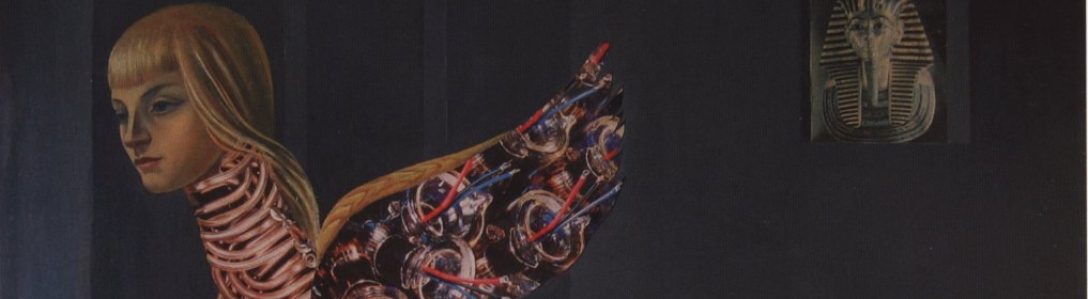
From Washington University’s marvelous Modern Literature Collection YouTube channel.
Category: Books
Books acquired, almost for their covers alone, 4.25.2016 (Elkin, Fine, Michaux)
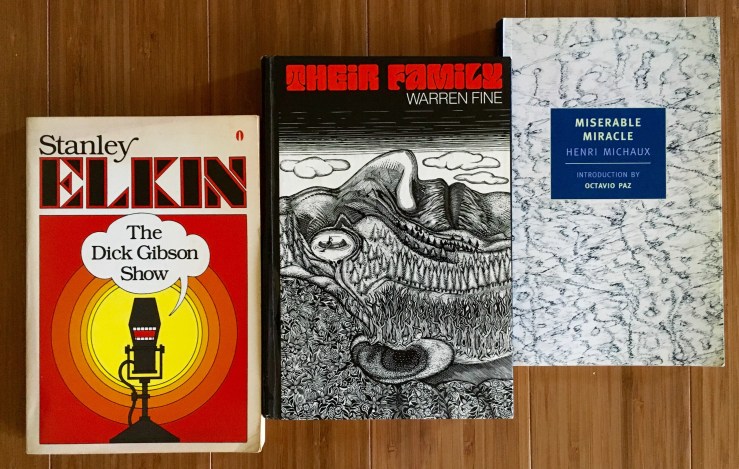
I swung by my favorite used bookstore this afternoon; it’s right near the grocery store and I needed to pick up some mint and some ricotta. I was hoping to pick up Elena Ferrante’s novel My Brilliant Friend at the bookstore. I started the audiobook of My Brilliant Friend today, after finishing the audiobook of Adrian Jones Pearson’s novel Cow Country this weekend. (Full review of Cow Country forthcoming but a real quick review: great performance/reading of a very strange book which I enjoyed very much, but which I also suspect will have very limited appeal. Cow cult classic to come). But so anyway, I’m really digging the Ferrante, and decided I wanted to obtain a physical copy to reread passages (and maybe share some on this blog). My store had several copies of four of Ferrante’s novels–but no Friend. While scanning the F section, my eye alighted (alit?) on a strange-looking hardback spine—Warren Fine’s Their Family. I turned it around and the cover…well, I knew I was gonna leave with it. Knopf, 1972—a few years before Gordon Lish was to become editor there, sure, but interesting bona fides I suppose. Fine does not seem to be beloved by anyone on the internet, and his books seem to have failed to go into second printings of any kind. The Fs are near the Es, and I glanced over the works of Mr. Stanley Elkin, who has his own section there, somehow. I finally broke through the second chapter of his novel The Franchiser this weekend (it’s all unattributed dialog, that chapter, sorta like Gaddis’s JR); I’m really digging The Franchiser now that I’ve tuned into the voice. (It also helps to not try reading it exclusively at night after too many bourbons or wines). Again, the spine of the novel looked interesting so I flipped The Dick Gibson Show around and, again, I knew I was gonna leave with it. Henri Michaux’s Miserable Miracle I found in the “Drugs” section—which I was not perusing (because I am no longer 19)—well I guess I was perusing it, but that’s only because it happens to be right next to this particular bookshop’s collection of Black Sparrow Press titles, which I always scan over. Anyway, the Michaux’s Miserable Miracle was turned face out; NYRB titles always deserve a quick scan, and the cover reminded me of a Cy Twombly painting. Flicking through it revealed a strange structure, full of marginal side notes and doodles and diagrams and drawings. And oh, it’s about a mescaline trip, I think. You can actually read it here, but this version is missing all the drawings and sidenotes.
Oh, and so then I forgot to go pick up the ricotta and the mint.
Three (Purple) Books
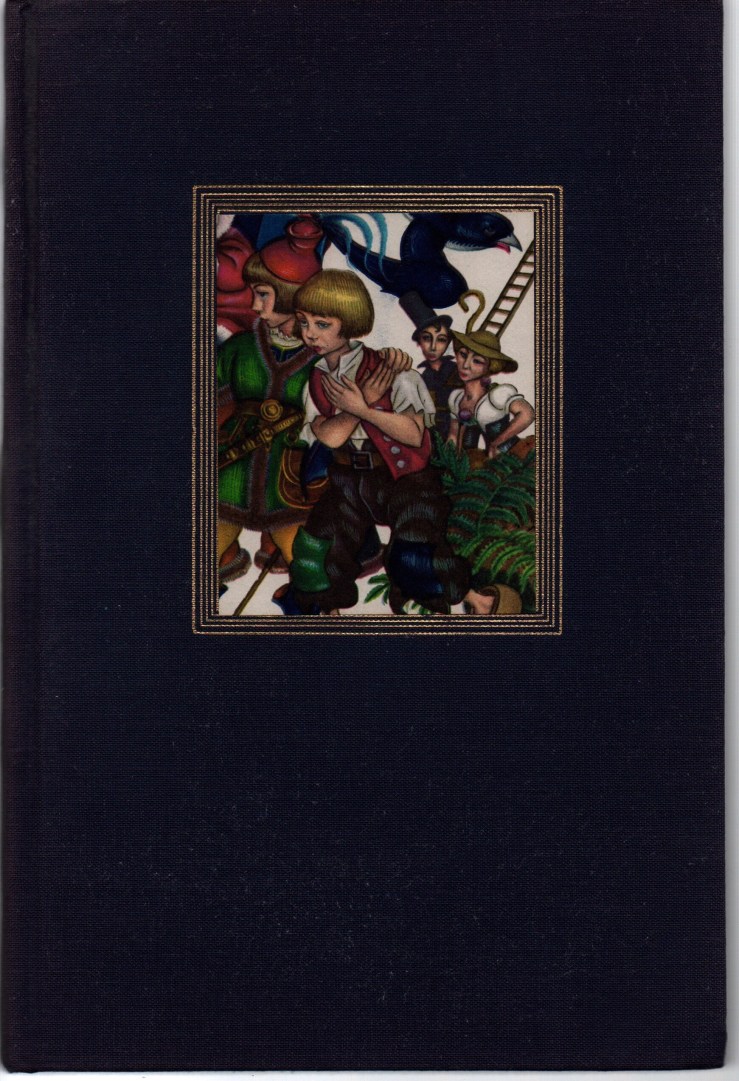
Andersen’s Fairy Tales translated by E.V. Lucas and H.B. Paull. Illustrations by Arthur Syzk. First edition cloth-bound hardback by Grosset & Dunlop, 1945. No designer credited, but the cover illustration is by Syzk. This was a gift from a former student.
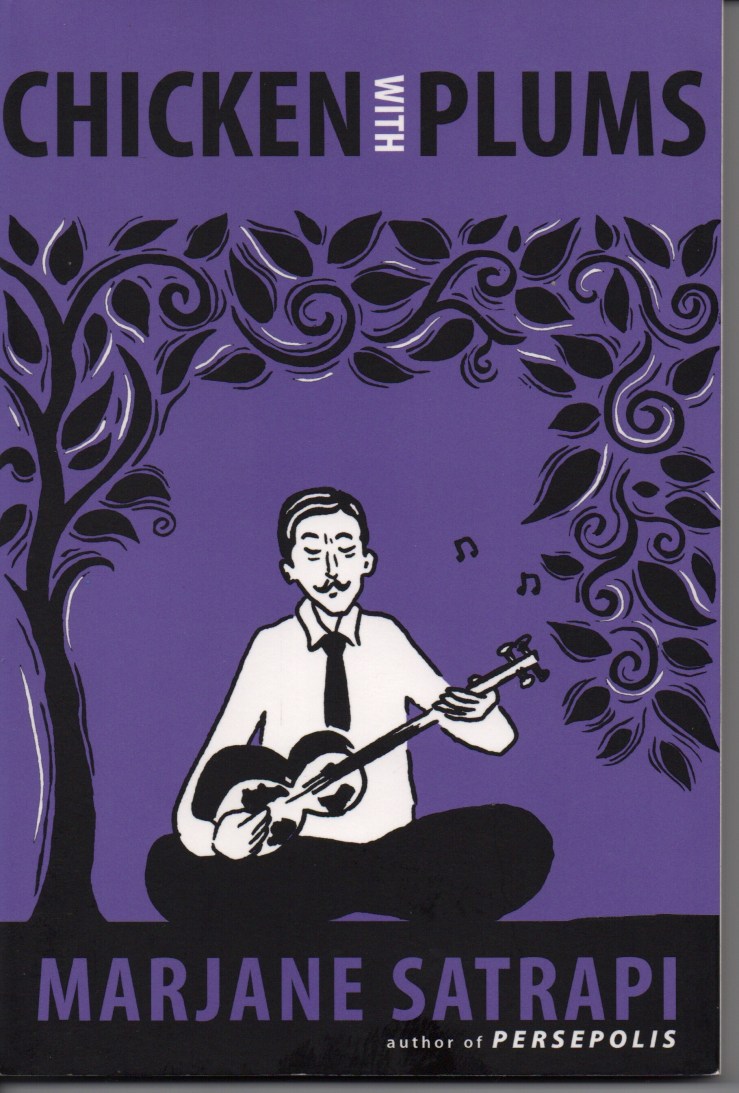
Chicken with Plums by Marjane Satrapi. English translation by Anjali Singh. First Pantheon paperback printing, 2009. Cover image by Satrapi; cover design credited to Brian Barth. I reviewed Plums some years back.
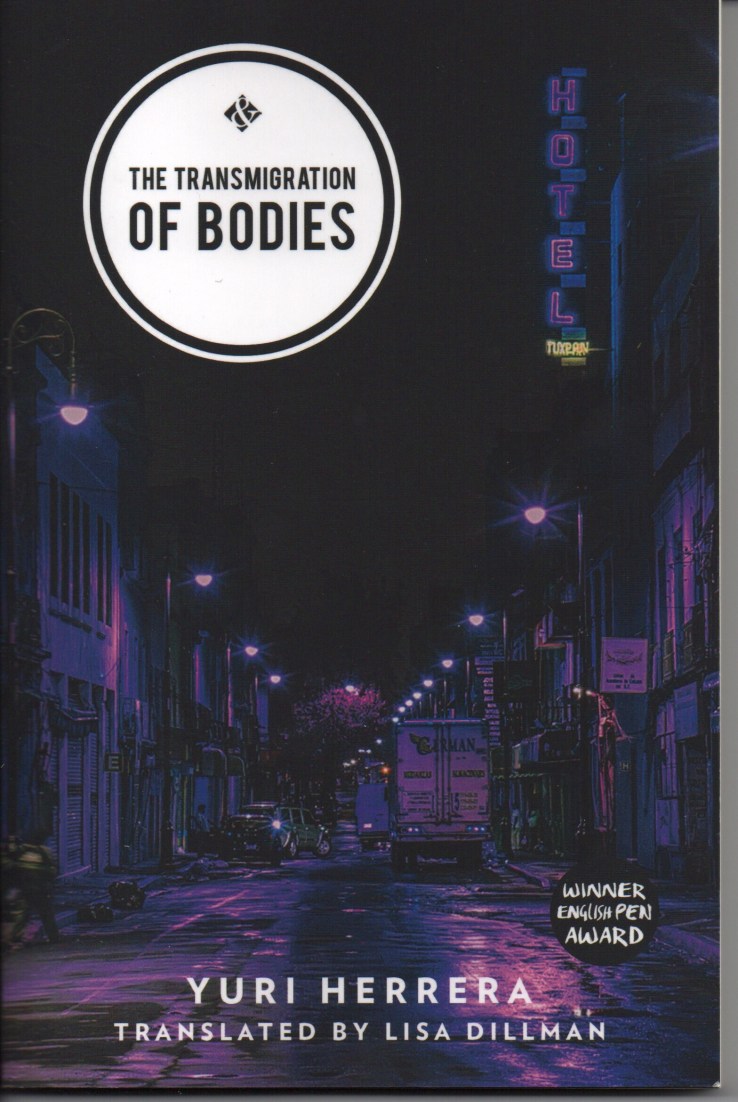
The Transmigration of Bodies by Yuri Herrera. English translation by Lisa Dillman. 2016 paperback by And Other Stories. Cover design by Hannah Naughton from an image credited to iivangm. I wrote a bit about Bodies here; full review next month closer to its publish date.
I finished Herrera’s novella The Transmigration of Bodies a few days before Prince died. The book’s neon purple cover seemed to glare at me from my coffee table when I returned home on the afternoon of April 21, 2016, stunned—yes, stunned is the right word—at learning of the death of one of my heroes. Not just stunned—but stunned at how stunned I was, how sad I felt, how awful and sick Prince’s unexpected, uncalled for, fucking cosmically unjust death was and is. —Wait, I didn’t sign on for this, you protest, eh, dear reader? —No, I didn’t ask for another remembrance or whatever this is, especially not from some blog dude who never knew the guy; look, Biblioklept, the internet’s seams are burstin’ with other, more interesting folks’ thoughts and memories on Prince, you don’t need to—Well I know but I need to. I loved Prince—I loved his music, sure, 1999 and Purple Rain in particular, every song of those records grooved into my mental ear, I can call them up at will—but I loved Prince as an artist, as the Artist, as an aesthetic—which is what I think we, the Big We, all mourn when we mourn Prince. I could go through litany of personal anecdotes about Prince—tell you in detail about first seeing the video for “When Doves Cry” as a child and just totally losing my shit; I could tell you about buying the Batman soundtrack on tape (one of my first album purchases); I could tell you about the summer and fall of 1991, when I was an impressionable twelve years strong, when MTV dared to air Prince’s video for “Gett Off”—I could tell you about how that video accelerated my puberty (I see you plug your ears, reader); I could tell you about discovering that Prince and I shared the same birthday (we are Gemini!) and I could tell you that I always thought about Prince on our birthday, even after I learned that he didn’t celebrate his birthday; I could tell you that my high school band made an album and we named it Prince (it sounded nothing like Prince; nothing sounded like Prince); I could tell you about the year 1999, when I was a junior in college, and how we wore the apocalyptic vinyl thin; I could tell you about djing at a small coffee shop and playing “I Would Die 4 U” five times in one night because I fucking love that song; I could tell you about pulling over the car, late at night, to cry while I listened to “Purple Rain”; I could tell you about dancing to Prince songs at my wedding, at other weddings; I could tell you about how sad I now feel that I never got to go to a Prince concert but how happy I am that I got to see a few on TV, got to see him play and dance and sing; I could tell you I could tell you I could tell you…but I won’t tell you. Maybe you know—maybe you have your own details, your own I could tell yous (forgive me my rhetorical conceits; sometimes it seems that they are all that licenses me to write)—I think you know, I think you have your own I could tell yous. Prince was a fucking genius and he shared that with us (sometimes he shared his genius with us by withholding it from us). Prince was his own genre, his own aesthetic, his own art. How wonderful to have lived on the planet at the same time that he did.
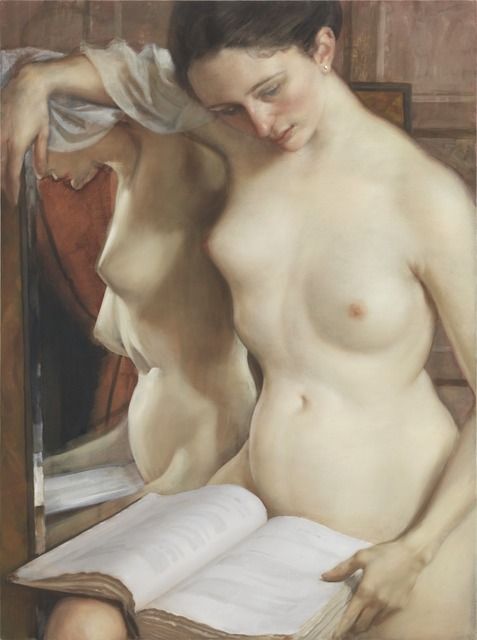
The Reader — John Currin
Our irreceptivity to a certain light (E.M. Cioran)

From Anathemas and Admirations. Translated by Richard Howard.
William Gaddis: “The problem of writing with a message”
From Washington University’s marvelous Modern Literature Collection YouTube channel.
A murder of the joyful young day | Nathaniel Hawthorne’s journal entry for April 19th, 1840
April 19th.–. . . What a beautiful day was yesterday! My spirit rebelled against being confined in my darksome dungeon at the Custom House. It seemed a sin,–a murder of the joyful young day,–a quenching of the sunshine. Nevertheless, there I was kept a prisoner till it was too late to fling myself on a gentle wind, and be blown away into the country. . . . When I shall be again free, I will enjoy all things with the fresh simplicity of a child of five years old. I shall grow young again, made all over anew. I will go forth and stand in a summer shower, and all the worldly dust that has collected on me shall be washed away at once, and my heart will be like a bank of fresh flowers for the weary to rest upon. . . .
6 P.M.–I went out to walk about an hour ago, and found it very pleasant, though there was a somewhat cool wind. I went round and across the Common, and stood on the highest point of it, where I could see miles and miles into the country. Blessed be God for this green tract, and the view which it affords, whereby we poor citizens may be put in mind, sometimes, that all his earth is not composed of blocks of brick houses, and of stone or wooden pavements. Blessed be God for the sky, too, though the smoke of the city may somewhat change its aspect,–but still it is better than if each street were covered over with a roof. There were a good many people walking on the mall,–mechanics apparently, and shopkeepers’ clerks, with their wives; and boys were rolling on the grass, and I would have liked to lie down and roll too.
Yuri Herrera’s The Transmigration of Bodies (Book acquired, 4.16.2016; consumed 4.17.2016)
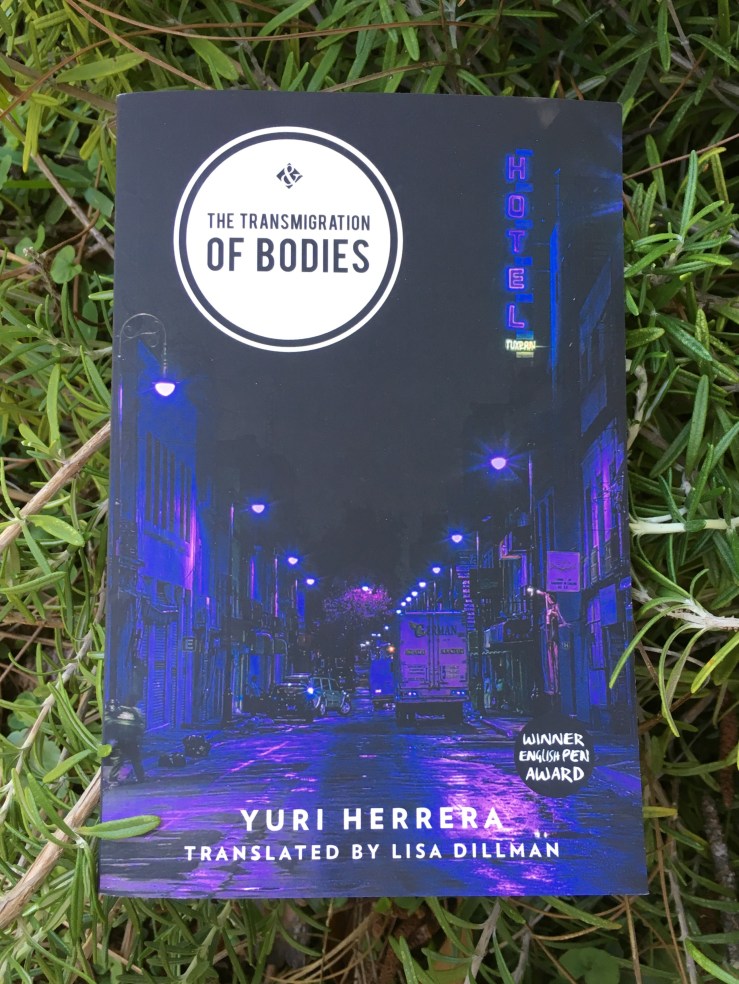
I was a big fan of the last novella I read by Yuri Herrera, Signs Preceding the End of the World (also from publisher And Other Stories, and also translated by Lisa Dillman). So I was psyched when his newest offering (in English translation) The Transmigration of Bodies arrived at Biblioklept World Headquarters this weekend. I read the first half of Transmigration yesterday lying in the hammock, just enjoying the hell out of it. Herrera’s style condenses the mythic with the real; Transmigration begins with a surreal plague, flies buzzing over blood—or just some other filth?—and our (anti-)hero, a fixer who goes by The Redeemer. (Everyone in Transmigration gets a hardboiled name: The Dolphin, Three Times Blonde, Unruly, Neeyanderthal. Etc.). Anyway, the book isn’t out until July, so I’ll wait to do a full review until then, but here’s And Other Stories‘ blurb:
A plague has brought death to the city. Two feuding crime families with blood on their hands need our hard-boiled hero, The Redeemer, to broker peace. Both his instincts and the vacant streets warn him to stay indoors, but The Redeemer ventures out into the city’s underbelly to arrange for the exchange of the bodies they hold hostage.
Yuri Herrera’s novel is a response to the violence of contemporary Mexico. With echoes of Romeo and Juliet, Roberto Bolaño and Raymond Chandler, The Transmigration of Bodies is a noirish tragedy and a tribute to those bodies – loved, sanctified, lusted after, and defiled – that violent crime has touched.
“Romeo and Juliet, Roberto Bolaño and Raymond Chandler” — yes, absolutely — and I would add Nicolas Winding Refn to that list. Herrera’s vivid neon noir is of a piece with Drive and Only God Forgives, and the grime here recalls his wonderful Pusher trilogy to me. I dig it.
Three Books
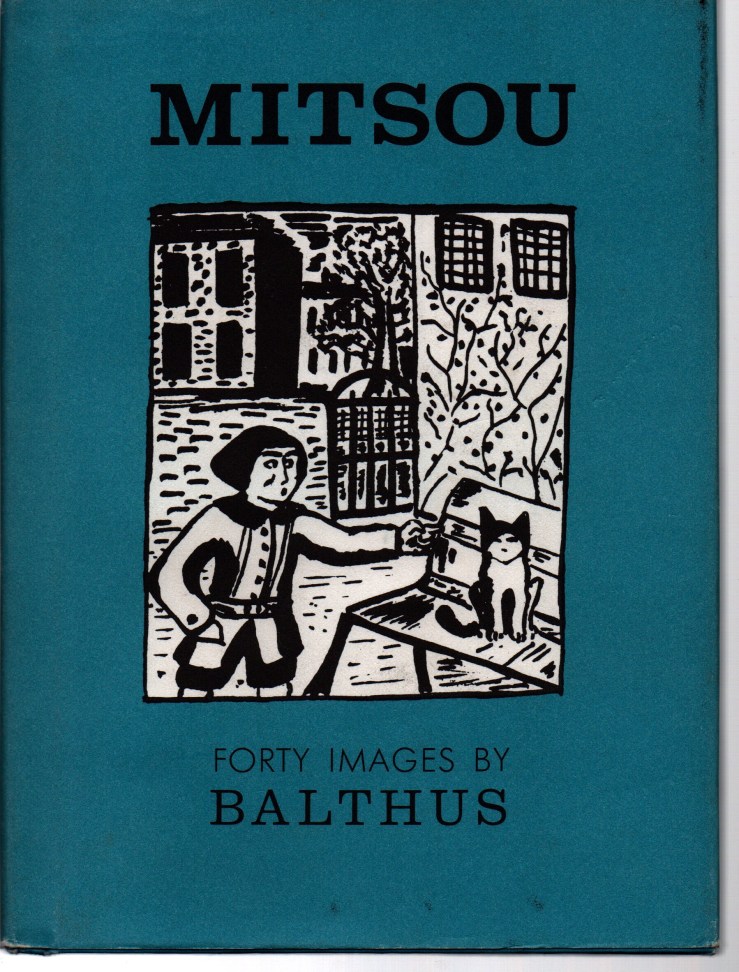
Mitsou by Balthus. Preface by Rainer Maria Rilke (English translation by Richard Miller). Small first edition hardback published by The Metropolitan Museum of Art, 1984. Design credited to Peter Oldenburg; the cover illustration is by Balthus. Mitsou is Balthus’s story of loving (and losing) his titular pet cat. He was thirteen when he composed the story in 40 ink drawings (the drawings resemble woodblock prints, but aren’t). He gave the illustrations to his mother’s lover, Rainer Maria Rilke, who got them published. My wife gave me this book as a gift before we were married, and I love it. It’s sad.
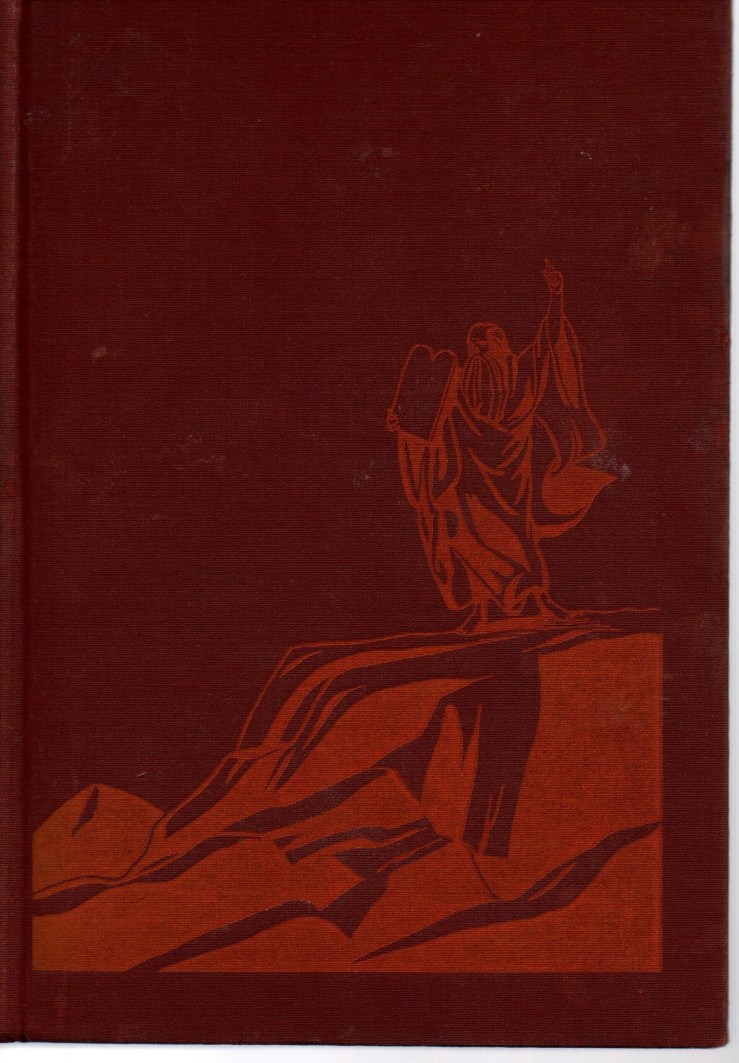
Moses, Man of the Mountain by Zora Neale Hurston. First edition hardback by J.B. Lippincott, 1939. No illustrator or designer credited, by my edition is missing the original jacket. A retelling of the Exodus story.
 Man after Man by Dougal Dixon with illustrations by Philip Hood. First edition hardback from St. Martin’s Press, 1990. Book design by Ben Cracknell; cover art by Philip Hood. It’s Hood’s illustrations that make Dixon’s “future anthropology” of the human race so fascinating. A discursive sci-fi novel of sorts, posing as a textbook.
Reasons I didn’t read your novel
- The first sentence is not compelling.
- Neither are the second, third, or fourth sentences.
- Nor the fifth.
- (I’m sure the later sentences are sterling, stunning stuff, but I’m sorry, I’m sorry, those earlier efforts couldn’t propel me onward).
- Those blurbs: So thickly pasted in glowing praise is your novel that its spine I dare not crack.
- Swarming with spiders. Scores of mean spiders. A horde, exploding from your novel’s pages.
- Too long.
- Your novel is part of a trilogy.
- Your novel is basically a fan fiction of a nineteenth-century literary novel.
- Your novel is basically a fan fiction of a twentieth-century literary novel.
- Your novel-memoir-thing is basically a blog.
- All the ghosts in your novel are metaphors.
- Ceaseless cyborg sex scenes.
- Four chapters in, my only thought is “I’ve read this novel before.”
- Your novel is in French.
- Your novel is too good and I am too stupid.
- Your novel is morally instructive.
- Printed in pink ink.
- I left it on a plane.
- Your novel is upside down.
- All of your characters have quirky hobbies; this I cannot abide.
- Oh cool, a stranger comes to town?
- Every verb attributing speech to a character is modified by an adverb.
- Too short.
- Too few swamps.
- That cover!
- Your novel is overtly engaged in social issues.
- Your novel is about baseball.
- Your novel is “erotic.”
- Your novel is extraordinarily well behaved.
- Your novel’s extended metaphor is too obvious.
- Written on rope.
- You are a conceptual poet with bad ideas and boring books.
- You had me at Rags to Riches—but back to Rags again?! Not this time.
- Exposition!
- Not enough cyborg sex.
- Your novel is a Word doc.
- Your novel is part of a tetralogy.
- Your novel was so goddamn excellent that it made my right eye twitch. As if it, my eye, were doing some manic jig. Then, my other eye—the left one—well, your novel was just so literary that that eye got to twitching something awful as well. By the second chapter, my eyes were fairly vibrating, and a clear but steady stream of snot was leaking from my nose. By the fourth chapter, I could no longer feel my lips, and by the beginning of chapter five, I was literally insensate. It took me months to recover, aided by family and friends alike. I will try your novel again when I am stronger.
- I drank too much.
- Your novel is filled with pressed flowers which I’d rather not disturb.
- Deader, better novelists await.
- 600 pages of a woman brushing her teeth.
- The main character is too likable.
- Your novel’s extended metaphor is too oblique.
- Your novel’s central character worries about poetry all the time. Poetry!
- The batteries died.
- No pictures.
- I’m too cynical.
- Your novel was a brightly-colored bunch of helium balloons—beautiful, sure—but I gave them to my daughter and she—almost immediately—surrendered the string to which they were tethered. Your novel is in heaven now, where it certainly belongs.
- Your novel is about a math problem.
- Mimesis, ugh.
- I gave it to a friend I don’t like.
- Not enough chainsaws.
- Your novel kept sending me to look up obscure references on Wikipedia, and the Wikipedia pages were more intriguing.
- Oh cool, you backpacked through Europe?
- Unnecessary end-notes.
- You keep emphasizing how brilliant and intelligent and talented this character is, yet nothing in the prose harnesses that brilliant intelligent talent.
- Your novel is extraordinarily well meaning.
- Your novel is carved into the bark of a very tall tree atop a very tall mountain which I am too physically weak to climb.
- Your novel is in Italian.
- Your novel is too bossy.
- Your central character is invisible, and yet no one is having any fun.
- You’ve mistaken “imagination” for “research.”
- Too much furniture.
- Your novel is just the May 1968 issue of Playboy with your name written on the cover in Sharpie. (Okay, I did read your novel).
- Magical realism, eh?
- You are a brilliant young novelist, perhaps, but you’ve forgotten to read so many of the brilliant young novelists who came before you.
- Your novel is made of poison, which is admittedly appealing, but which I fear will kill me.
- Your novel’s characters repeatedly reference other, much better novels (by much deader writers), reminding me that those novels exist.
- Pages and pages and pages of weather.
- I tucked it under the wheel well of a stranger’s automobile.
- All the Southern characters’ speech is rendered in bad phonetic transcription.
- Did you buy these epigraphs in bulk?
- Your novel is very clever and very unfunny.
- Not lurid enough.
- I left it out in the rain. It turned to pulp and became a temporary home to small suburban animals—do you find some measure of joy in that? No?
- Oh cool, you backpacked across Southeast Asia?
- Your novel is cursed.
- Your novel is a sustained argument against breakfast, and I can’t get down with that.
- Hero’s journey, eh?
- The first paragraph is too good. I would only be disappointed by anything that came after.
- I like my dirty realism much dirtier.
- Your novel was actually a salad, so I ate it.
- Having every other character be a Christ figure sounds like a cool idea, but it isn’t.
- No dial tone.
- Your novel is in Japanese.
- Your characters earnestly cite long passages from philosophy.
- I’m lazy.
- Not enough orcs.
- Your novel seems to mistake postmodernism, which is a description, for a prescription.
- Your novel is “like X on Y times Z.”
- Your “literary novel” fetishizes “genre tropes.”
- I didn’t drink enough.
- I’m just jealous.
- The prose is too dazzling.
- Look, we’ve all read Kafka, we get it.
- Time is limited, life is short, ashes ashes we all fall etc.
- I’ll wait for the movie.
The Short Stories of Oscar Wilde, featuring Illustrations from Paintings by James Hill (Book acquired, 3.25.2016)
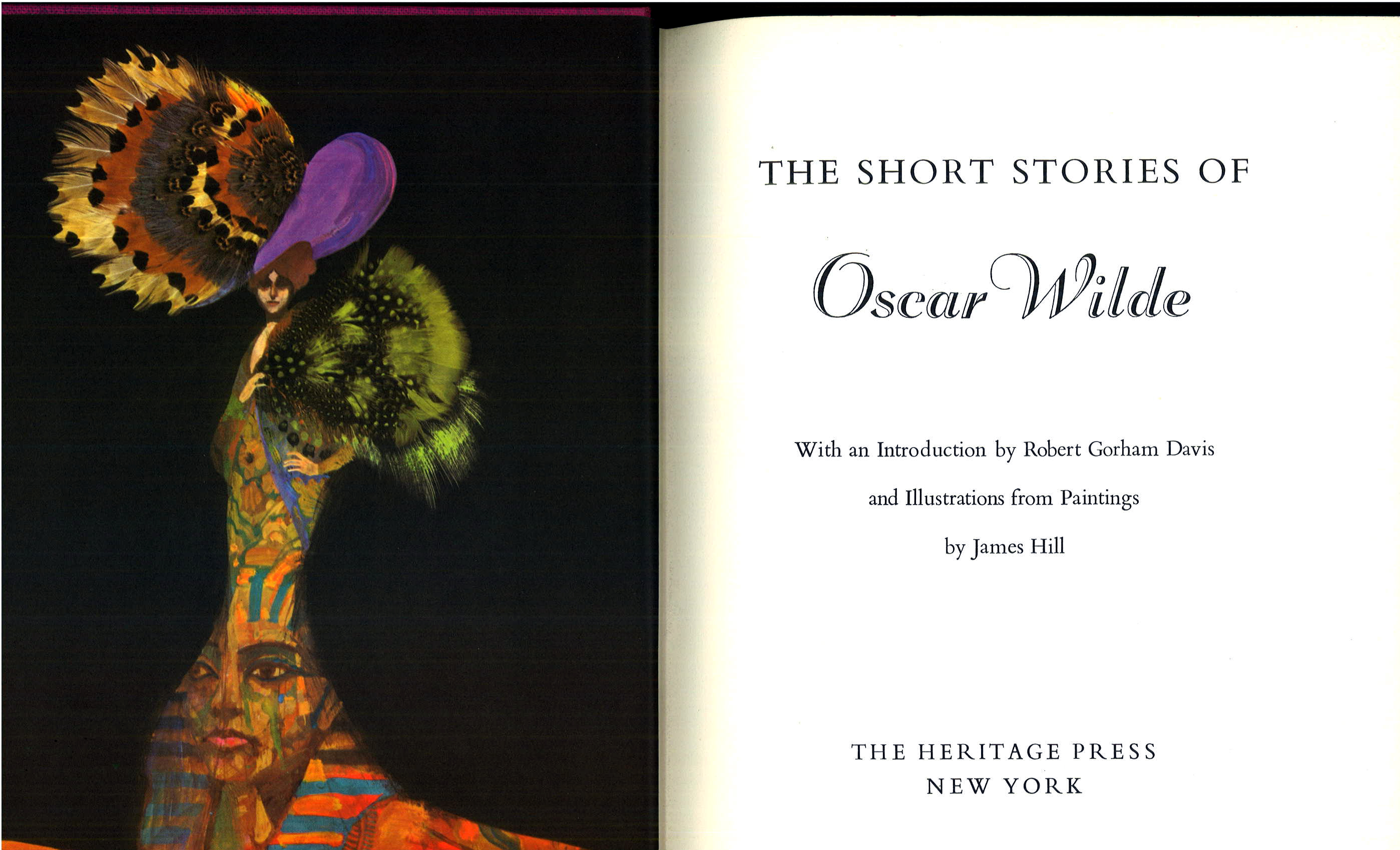
The Heritage Press collection The Short Stories of Oscar Wilde (1968), featuring paintings by James Hill.
Reading/Have Read/Should Write About
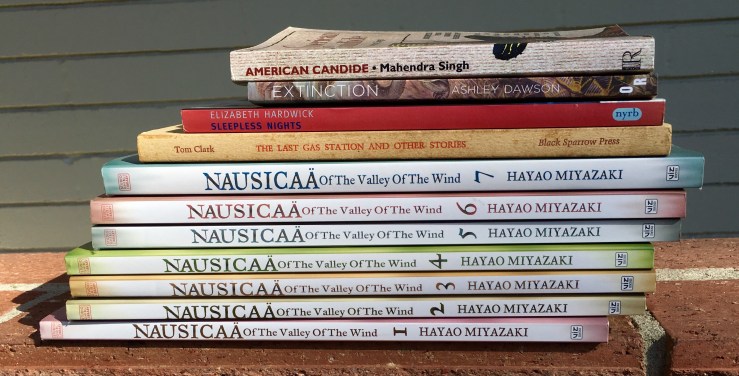
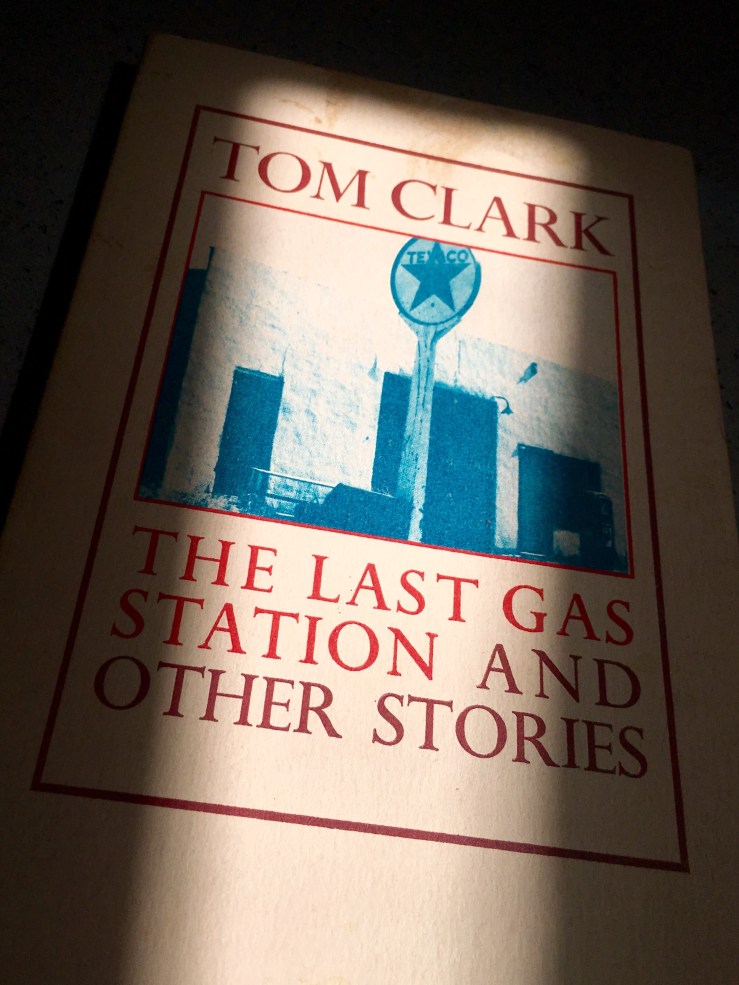
I just spent the past hour reading from Tom Clark’s 1980 short story collection The Last Gas Station and Other Stories. Is this the only collection of short stories by Clark? I don’t know. Maybe I prefer not knowing. I was excited to find this at the bookstore yesterday so maybe I’ll be excited to find some other phantom collection in some eventual phantom future. Stories that are like poems, or infused by poems—or dialogues, or spirit rants, ersatz music reviews for bands that may or may not exist. Heidegger complains to Hitler; Ty Cobb gets turned on to Little Orphan Annie. Tales of sex and love and other things. Find it if you can get it.
Sleepless Nights by Elizabeth Hardwick is a riff-novel, or a thought-novel, or an I-don’t-know-what, I mean. Is it about memory? Or is it memory? “If only one knew what to remember or what to pretend to remember”—If I remember correctly, this is the first sentence of the novel’s second paragraph.
Mahendra Singh’s American Candide is forthcoming from Rosarium. It is funny and sad and even cruel, but also sweet (and bitter and very very funny). I’ll have a full review forthcoming closer to its pub date, but the short review is: Buy it.
I wrote about Ashley Dawson’s Extinction a week or two ago…finished it since then and it’s a good, sad, angrifying read. I read Extinction with/against a viewing of Miyazaki’s Princess Mononoke, and then I got sick, like, the next week, which led to a big re-read of Nausicaä of the Valley of the Wind. I’m better now, thanks to fantasy and manga.
Three Books
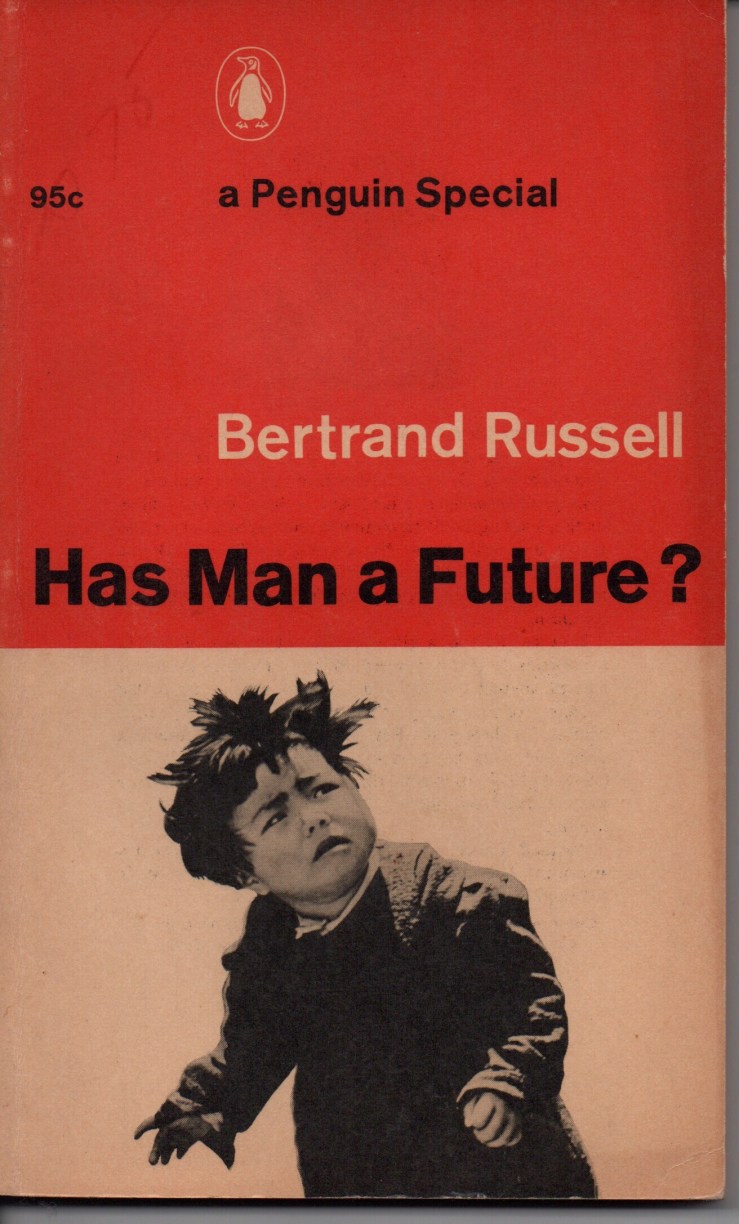
Has Man a Future? by Bertrand Russell. 1961 Penugin U.S. paperback. Cover design by Richard Hollis, using a photo credited to USIS.
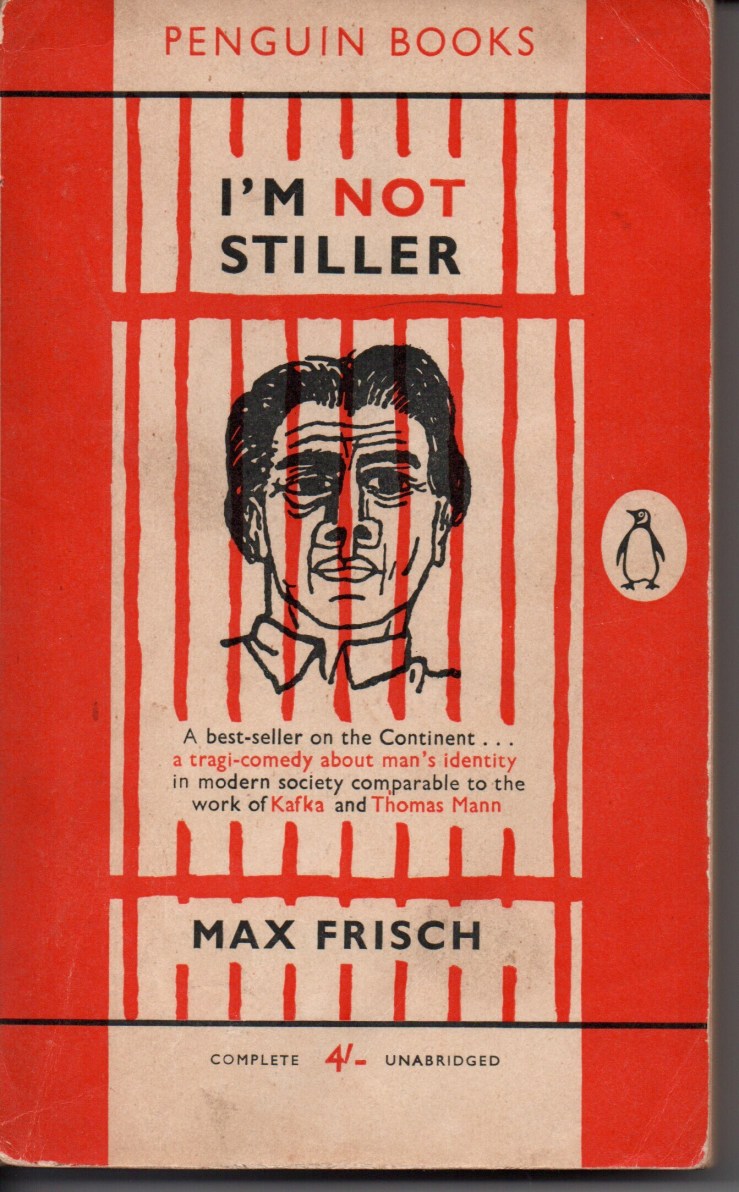
I’m Not Stiller by Max Frisch. English translation by Michael Bullock. 1961 Penguin paperback (Great Britain). Cover by John Griffiths.
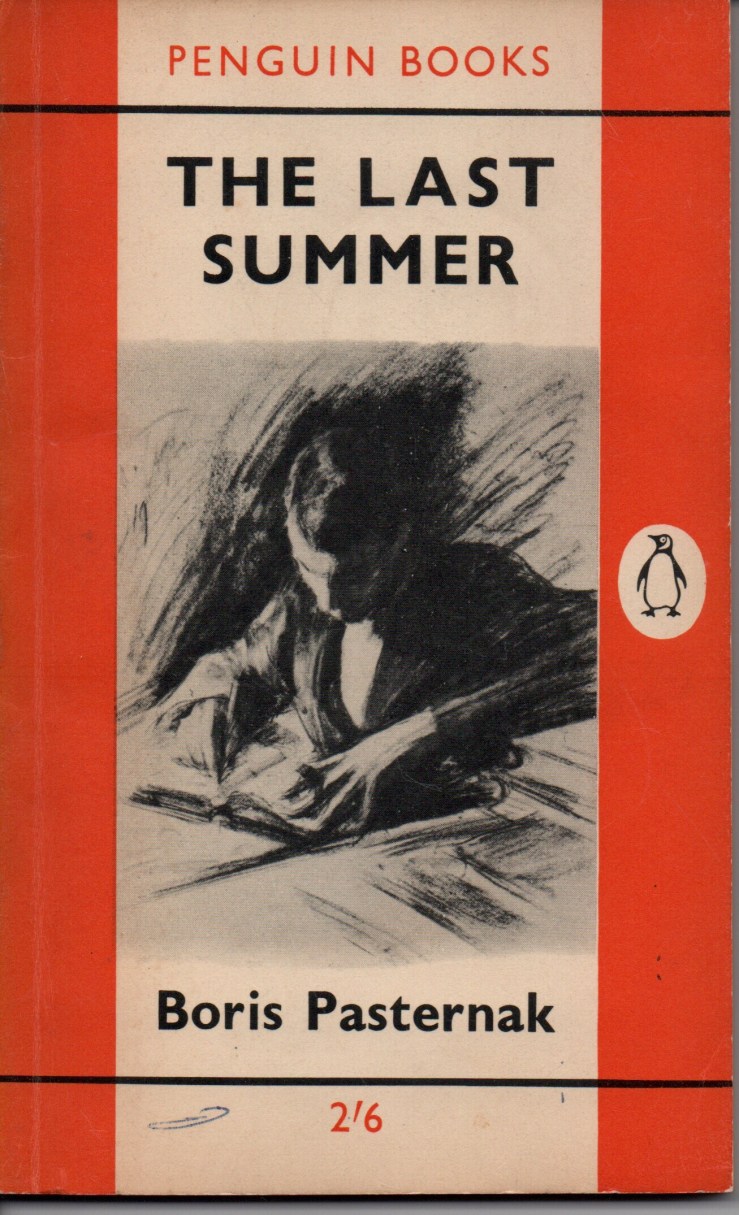
The Last Summer by Boris Pasternak. English translation by George Reavey. 1961 Penguin paperback (Great Britain). Cover illustration of the author by his father, Leonid Pasternak.
Tom Clark stories (Book acquired, 4.09.2016)
Nathaniel Hawthorne’s journal entry for April 7th, 1840
April 7th.–It appears to me to have been the most uncomfortable day that ever was inflicted on poor mortals. . . . Besides the bleak, unkindly air, I have been plagued by two sets of coal-shovelers at the same time, and have been obliged to keep two separate tallies simultaneously. But I was conscious that all this was merely a vision and a fantasy, and that, in reality, I was not half frozen by the bitter blast, nor tormented by those grimy coal-heavers, but that I was basking quietly in the sunshine of eternity, . . . Any sort of bodily and earthly torment may serve to make us sensible that we have a soul that is not within the jurisdiction of such shadowy demons,–it separates the immortal within us from the mortal. But the wind has blown my brains into such confusion that I cannot philosophize now.
Nathaniel Hawthorne’s journal entry for April 7th, 1840.
“First—listen. Listen to Joyce, to Woolf, to Faulkner, to Melville” | On Audiobooks of “Difficult” Novels
Beyond the fact that audiobooks allow me to experience more books than I would be able to otherwise, I like the medium itself: I like a reader reading me a story. Like a lot of people, some of my earliest, best memories are of someone reading to me. (The narrative in my family was always that my mother fell asleep while reading me The Lion, the Witch and the Wardrobe and that I picked it up and finished it on my own and that’s how I “learned” to read—I’m not really sure of this tale’s veracity, which makes it a good story, of course). So I’ve never fully understood folks who sniff their noses at audiobooks as less than real reading.
Indeed, the best literature is best read aloud. It is for the ear, as William H. Gass puts it in his marvelous essay “The Sentence Seeks Its Form”:
Breath (pneuma) has always been seen as a sign of life . . . Language is speech before it is anything. It is born of babble and shaped by imitating other sounds. It therefore must be listened to while it is being written. So the next time someone asks you that stupid question, “Who is your audience?” or “Whom do you write for?” you can answer, “The ear.” I don’t just read Henry James; I hear him. . . . The writer must be a musician—accordingly. Look at what you’ve written, but later … at your leisure. First—listen. Listen to Joyce, to Woolf, to Faulkner, to Melville.
Joyce, Woolf, Faulkner, Melville—a difficult foursome, no? I would argue that the finest audiobooks—those with the most perceptive performers (often guided by a great director and/or producer) can guide an auditor’s ear from sound to sense to spirit. A great audiobook can channel the pneuma of a complex and so-called difficult novel by animating it, channeling its life force. The very best audiobooks can teach their auditors how to read the novels—how to hear and feel their spirit.
I shall follow (with one slight deviation, substituting one William for another) Gass’s foursome by way of example. Joyce initiates his list, so:
I had read Joyce’s Ulysses twice before I first experience RTÉ’s 1982 dramatized, soundtracked, sound-effected, full cast recording of the novel (download it via that link). I wrote about the Irish broadcast company’s production at length when I first heard it, but briefly: This is a full cast of voices bringing the bustle and energy (and torpor and solemnity and ecstasy and etc.) of Bloomsday to vivid vivacious vivifying life. It’s not just that RTÉ’s cast captures the tone of Ulysses—all its brains and hearts, its howls and its harrumphs—it’s also that this production masterfully expresses the pace and the rhythm of Ulysses. Readers (unnecessarily) daunted by Ulysses’s reputation should consider reading the book in tandem with RTÉ’s production.
Woolf is next on Gass’s list. Orlando is my favorite book of hers, although I have been told by scholars and others that it is not as serious or important as To the Lighthouse or Mrs. Dalloway. It is probably not as “difficult” either; nevertheless, put it on the list! Clare Higgins’s reading of Orlando remains one of my favorite audiobooks of all times: arch without being glib, Higgins animates the novel with a picaresque force that subtly highlights the novel’s wonderful absurdities.
Faulkner…well, did you recall that I admitted I would not keep complete faith to Gass’s short list? Certainly Faulkner’s long twisted sentences evoke their own mossy music, but alas, I’ve yet to find an audiobook with a reader whose take on Faulkner I could tolerate. I tried Grover Gardner’s take on Absalom, Absalom! but alas!—our reader often took pains to untangle what was properly tangled. I don’t know. I was similarly disappointed in an audiobook of The Sound and the Fury (I don’t recall the reader). And yet I’m sure Faulkner could be translated into a marvelous audiobook (Apprise me, apprise me!).
Let me substitute another difficult William: Gaddis. I don’t know if I could’ve cracked J R if I hadn’t first read it in tandem with Nick Sullivan’s audiobook. J R is a tragicomic opera of voices—unattributed voices!—and it would be easy to quickly lose heart without signposts to guide you. Sullivan’s reading is frankly amazing, a baroque, wild, hilarious, and ultimately quite moving performance of what may be the most important American novel of the late twentieth century. A recent reread of J R was almost breezy; Sullivan had taught me how to read it.
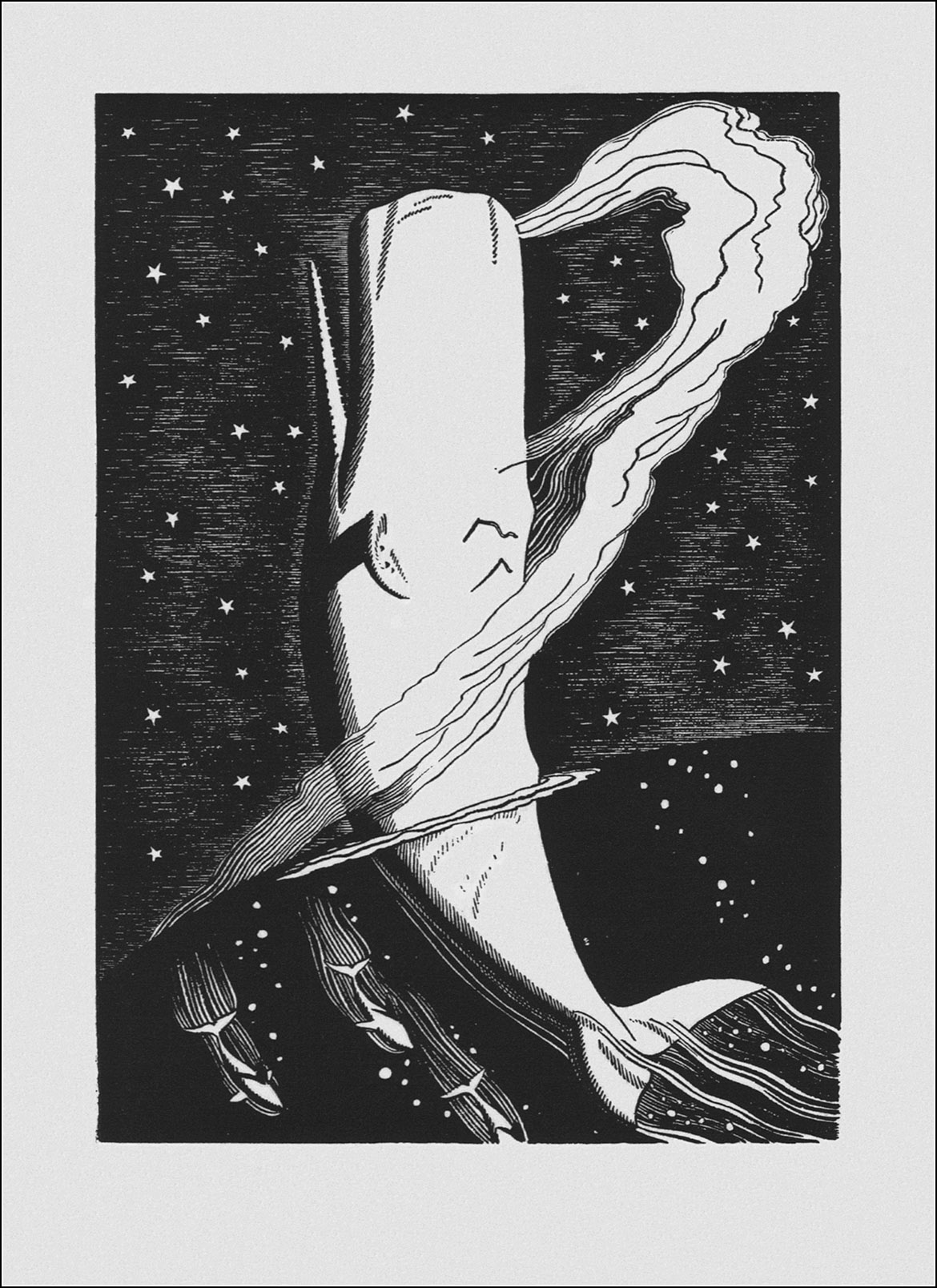
Mighty Melville caps Gass’s list. I had read Moby-Dick a number of times, studying it under at least two excellent teachers, before I first heard William Hootkins read it. (Hootkins, a character actor, is probably most well-known as the X-wing pilot Porkins in A New Hope). As a younger reader, I struggled with Moby-Dick, even as it intrigued me. I did not, however, understand just how funny it was, and even though I intuited its humor later in life, I didn’t fully experience it until Hootkins’ reading. Hootkins inhabits Ishmael with a dynamic, goodwilled aplomb, but where his reading really excels is in handling the novel’s narrative macroscopic shifts, as Ishmael’s ego seems to fold into the crew/chorus, and dark Ahab takes over at times. But not just Ahab—Hootkins embodies Starbuck, Flask, and Stubb with humor and pathos. Hootkins breaths spirit into Melville’s music. I cannot overstate how much I recommend Hootkins audiobook, particularly for readers new to Moby-Dick. And readers old to Moby-Dick too.
“What can we do to find out how writing is written? Why, we listen to writers who have written well,” advises (or scolds, if you like) William Gass. The best audiobook performances of difficult books don’t merely provide shortcuts to understanding those books—rather, they teach auditors how to hear them, how to feel them, how to read them.
Audiobook Riff 1 (a non-definitive list (mine) and a Maqroll anecdote (not mine))
I got a lovely email, with the subject line “Audiobooks,” a few weeks ago from a guy named Ben. Basically, he asked me to do a post on some of my favorite audiobooks, which I suppose I could’ve done fairly easy as a list (and which, yes, if you want to drop down, I will list below, oh-so-non-definitively)—but after thinking about his question, I thought I might break the post up into a couple of posts on audiobooks in general—the excellent ones, the average ones, the terrible ones afflicted by readers who misread the material; the audiobooks I’m auditing now/recently; childhood favorites (on vinyl!); hell, maybe even a totally pretentious post called “How to listen to audiobooks” or some such garbage.
Before I go on though, let me share Ben’s email (he gave me his permission), which is mostly a marvelous anecdote about Álvaro Mutis’s Maqroll novellas:
After reading your post on The Adventures and Misadventures of Maqroll, I immediately ordered the book and read it with my father as we travelled through Borneo, passing it back and forth every dozen pages. The reading became even more significant as we reached the passage in which Maqroll is laid up sick in Northridge, California, in an area surrounded by orange groves. This area is where my father spent his childhood. Reading Maqroll with my father on that trip stands as my most meaningful reading experience. I thank you for putting us onto that book.
Have you done a post yet on your favorite audiobooks? I’d like to get your recommendations. I recall you mentioning a few in previous posts, but could not track them down. Keep at it.
Ben’s Maqroll story surely deserves a response in full, fleshed out detail, and my next post will discuss in detail why I praise the following audio productions. But for now a list (sans, alas, Álvaro Mutis: our Gaviero Maqroll has not found his way into an audiobook yet, at least to my knowledge).
In no real order, and by no means definitive, a list of eight perfect or near-perfect audiobooks:
Herman Melville’s Moby-Dick, as read by William Hootkins
James Joyce’s Ulysses, RTÉ’s 1982 full cast production (that second link links to a free download!).
Virginia Woolf’s Orlando, as read by Claire Higgins
J.R.R. Tolkien’s The Hobbit, as read by Nicol Williamson
William Gaddis’s J R, as read by Nick Sullivan
Cormac McCarthy’s Blood Meridian, as read by Richard Poe
Gordon Lish’s The Collected Fictions of Gordon Lish, as read by Gordon Lish
 Biblioklept