On the evening of Thanksgiving day, John Inglefield, the blacksmith, sat in his elbow-chair, among those who had been keeping festival at his board. Being the central figure of the domestic circle, the fire threw its strongest light on his massive and sturdy frame, reddening his rough visage, so that it looked like the head of an iron statue, all aglow, from his own forge, and with its features rudely fashioned on his own anvil. At John Inglefield’s right hand was an empty chair. The other places round the hearth were filled by the members of the family, who all sat quietly, while, with a semblance of fantastic merriment, their shadows danced on the wall behind then. One of the group was John Inglefield’s son, who had been bred at college, and was now a student of theology at Andover. There was also a daughter of sixteen, whom nobody could look at without thinking of a rosebud almost blossomed. The only other person at the fireside was Robert Moore, formerly an apprentice of the blacksmith, but now his journeyman, and who seemed more like an own son of John Inglefield than did the pale and slender student.
Only these four had kept New England’s festival beneath that roof. The vacant chair at John Inglefield’s right hand was in memory of his wife, whom death had snatched from him since the previous Thanksgiving. With a feeling that few would have looked for in his rough nature, the bereaved husband had himself set the chair in its place next his own; and often did his eye glance thitherward, as if he deemed it possible that the cold grave might send back its tenant to the cheerful fireside, at least for that one evening. Thus did he cherish the grief that was dear to him. But there was another grief which he would fain have torn from his heart; or, since that could never be, have buried it too deep for others to behold, or for his own remembrance. Within the past year another member of his household had gone from him, but not to the grave. Yet they kept no vacant chair for her.
While John Inglefield and his family were sitting round the hearth with the shadows dancing behind them on the wall, the outer door was opened, and a light footstep came along the passage. The latch of the inner door was lifted by some familiar hand, and a young girl came in, wearing a cloak and hood, which she took off, and laid on the table beneath the looking-glass. Then, after gazing a moment at the fireside circle, she approached, and took the seat at John Inglefield’s right hand, as if it had been reserved on purpose for her. Continue reading “Read “John Inglefield’s Thanksgiving,” a short story by Nathaniel Hawthorne”→
The sky of U.S.A.’s desert was clotted with blue stars. Now it was deep at night. Only above the U.S.A. city was the sky blank of stars; its color was pearly and blank. Marathe shrugged. ‘Perhaps in you is the sense that citizens of Canada are not involved in the real root of the threat.’
Steeply shook the head in seeming annoyance. ‘What’s that supposed to mean?’ he said. The lurid wig of him slipped when he moved the head with any abrupt force.
The first way Marathe betrayed anything of emotion was to smooth rather too fussily at the blanket on his lap. ‘It is meaning that it will not of finality be Québecers making this kick to l’aine des Etats Unis. Look: the facts of the situation speak loudly. What is known. This is a U.S.A. production, this Entertainment cartridge. Made by an American man in the U.S.A. The appetite for the appeal of it: this also is U.S.A. The U.S.A. drive for spectation, which your culture teaches. This I was saying: this is why choosing is everything. When I say to you choose with great care in loving and you make ridicule it is why I look and say: can I believe this man is saying this thing of ridicule?’ Marathe leaned slightly forward on his stumps, leaving the machine pistol to use both his hands in saying. Steeply could tell this was important to Marathe; he really believed it.
Marathe made small emphatic circles and cuts in the air while he spoke: ‘These facts of situation, which speak so loudly of your Bureau’s fear of this samizdat: now is what has happened when a people choose nothing over themselves to love, each one. A U.S.A. that would die — and let its children die, each one — for the so-called perfect Entertainment, this film. Who would die for this chance to be fed this death of pleasure with spoons, in their warm homes, alone, unmoving: Hugh Steeply, in complete seriousness as a citizen of your neighbor I say to you: forget for a moment the Entertainment, and think instead about a U.S.A. where such a thing could be possible enough for your Office to fear: can such a U.S.A. hope to survive for a much longer time? To survive as a nation of peoples? To much less exercise dominion over other nations of other peoples? If these are other peoples who still know what it is to choose? who will die for something larger? who will sacrifice the warm home, the loved woman at home, their legs, their life even, for something more than their own wishes of sentiment? who would choose not to die for pleasure, alone?’
Here are the first few paragraphs of “The Hanging of the Schoolmarm”:
The schoolmarm is playing poker in the town saloon. The stake is the saloon itself. As she is preparing to deal the cards, one of the men demands that she cut the fuckin’ deck, and she shoots him from her lap. “Sorry, but I simply cannot allow . . .”
The others tip their crumpled hats. “No, ma’am, you just go ahead and deal.”
The men of the town find the schoolmarm difficult but are awed by her refined and lofty character, and generally do what she tells them to do. The sheriff likes to say that she’s as pure as the spotless lily of the lake, though they have no lake, and there are no lilies in it. No damn lilies. The men cuss a lot—in fact, all the time—but never around the schoolmarm. Cussing doesn’t go together with the schoolmarm. It’s like salting your coffee, to put it politely.
After winning the saloon in the poker hand, the schoolmarm has the deceased removed and turns the card tables into school desks. The bar becomes an altar on Sundays, but there’s no preacher, so the schoolmarm provides temperance lectures from it, which the men are obliged to attend. In their minds, it’s still the old bar, the old saloon, so they carry along hip flasks and beef jerky to ease themselves through the unholy tedium, belching and snorting noisily.
At the Uffizi, in Florence, is this odd painting by Titian. For a while, no one knew who the artist was. First the work was attributed to Leonardo and then to Sebastiano del Piombo. Though there’s still no absolute proof, today the critics are inclined to credit it to Titian. In the painting we see a man, still young, with long dark curly hair and a beard and mustache perhaps slightly tinged with red, who, as he poses, gazes off toward the right, probably toward a window that we can’t see, but still a window that somehow one imagines is closed, yet with curtains open or parted enough to allow a yellow light to filter into the room, a light that in time will become indistinguishable from the varnish on the painting.
The young man’s face is beautiful and deeply thoughtful. He’s looking toward the window, if he’s looking anywhere, though probably all he sees is what’s happening inside his head. But he’s not contemplating escape. Perhaps Titian told him to turn like that, to turn his face into the light, and the young man is simply obeying him. At the same time, one might say that all the time in the world stretches out before him. By this I don’t mean that the young man thinks he’s immortal. On the contrary. The young man knows that life renews itself and that the art of renewal is often death. Intelligence is visible in his face and his eyes, and his lips are turned down in an expression of sadness, or maybe it’s something else, maybe apathy, none of which excludes the possibility that at some point he might feel himself to be master of all the time in the world, because true as it is that man is a creature of time, theoretically (or artistically, if I can put it that way) time is also a creature of man.
In fact, in this painting, time — sketched in invisible strokes — is a kitten perched on the young man’s hands, his gloved hands, or rather his gloved right hand which rests on a book: and this right hand is the perfect measure of the sick man, more than his coat with a fur collar, more than his loose shirt, perhaps of silk, more than his pose for the painter and for posterity (or fragile memory), which the book promises or sells. I don’t know where his left hand is.
How would a medieval painter have painted this sick man? How would a non-figurative artist of the twentieth century have painted this sick man? Probably howling or wailing in fear. Judged under the eye of an incomprehensible God or trapped in the labyrinth of an incomprehensible society. But Titian gives him to us, the spectators of the future, clothed in the garb of compassion and understanding. That young man might be God or he might be me. The laughter of a few drunks might be my laughter or my poem. That sweet Virgin is my friend. That sad-faced Virgin is the long march of my people. The boy who runs with his eyes closed through a lonely garden is us.
Perseus was the son of Danae, who was the daughter of a king. And when Perseus was a very little boy, some wicked people put his mother and himself into a chest, and set them afloat upon the sea. The wind blew freshly, and drove the chest away from the shore, and the uneasy billows tossed it up and down; while Danae clasped her child closely to her bosom, and dreaded that some big wave would dash its foamy crest over them both. The chest sailed on, however, and neither sank nor was upset; until, when night was coming, it floated so near an island that it got entangled in a fisherman’s nets, and was drawn out high and dry upon the sand. The island was called Seriphus, and it was reigned over by King Polydectes, who happened to be the fisherman’s brother.
This fisherman, I am glad to tell you, was an exceedingly humane and upright man. He showed great kindness to Danae and her little boy; and continued to befriend them, until Perseus had grown to be a handsome youth, very strong and active, and skilful in the use of arms. Long before this time, King Polydectes had seen the two strangers—the mother and her child—who had come to his dominions in a floating chest. As he was not good and kind, like his brother the fisherman, but extremely wicked, he resolved to send Perseus on a dangerous enterprise, in which he would probably be killed, and then to do some great mischief to Danae herself. So this bad-hearted king spent a long while in considering what was the most dangerous thing that a young man could possibly undertake to perform. At last, having hit upon an enterprise that promised to turn out as fatally as he desired, he sent for the youthful Perseus.
The young man came to the palace, and found the king sitting upon his throne.
“Perseus,” said King Polydectes, smiling craftily upon him, “you are grown up a fine young man. You and your good mother have received a great deal of kindness from myself, as well as from my worthy brother the fisherman, and I suppose you would not be sorry to repay some of it.”
“Please your Majesty,” answered Perseus, “I would willingly risk my life to do so.”
“Well, then,” continued the king, still with a curving smile on his lips, “I have a little adventure to propose to you; and, as you are a brave and enterprising youth, you will doubtless look upon it as a great piece of good luck to have so rare an opportunity of distinguishing yourself. You must know, my good Perseus, I think of getting married to the beautiful Princess Hippodamia; and it is customary, on these occasions, to make the bride a present of some far-fetched and elegant curiosity. I have been a little perplexed, I must honestly confess, where to obtain anything likely to please a princess of her exquisite taste. But, this morning, I flatter myself, I have thought of precisely the article.”
In a corporate State 1, a place must be made for innocence, and its many uses 2. In developing an official version of innocence, the culture of childhood has proven invaluable 3 . Games, fairy-tales, legends from history, all the paraphernalia of make-believe 4 can be adapted and even embodied in a physical place, such as at Zwölfkinder 5. Over the years it had become a children’s resort, almost a spa. If you were an adult, you couldn’t get inside the city limits without a child escort. There was a child mayor 6, a child city council of twelve. Children picked up the papers, fruit peelings and bottles you left in the street, children gave you guided tours through the Tierpark 7, the Hoard of the Nibelungen 8, cautioning you to silence during the impressive re-enactment of Bismarck’s elevation, at the spring equinox of 1871, to prince and imperial chancellor 9,… child police reprimanded you if you were caught alone, without your child accompanying. Whoever carried on the real business of the town—it could not have been children—they were well hidden.10
From page 419 of Thomas Pynchon’s 1973 novel Gravity’s Rainbow.
1 Pynchon, as always, diagnoses not just the past and present, but the future. The state is corporate; They — the oligarchy et al. — run the show. And conceptualizing innocence is part of running that show.
2 Cf. William Blake’s Songs of Innocence and Experience (1789). In The Marriage of Heaven and Hell (1793), Blake wrote: “Without Contraries is no progression.” Without corruption there is no innocence; without abjection there is no purity; without an elect, there is no preterite.
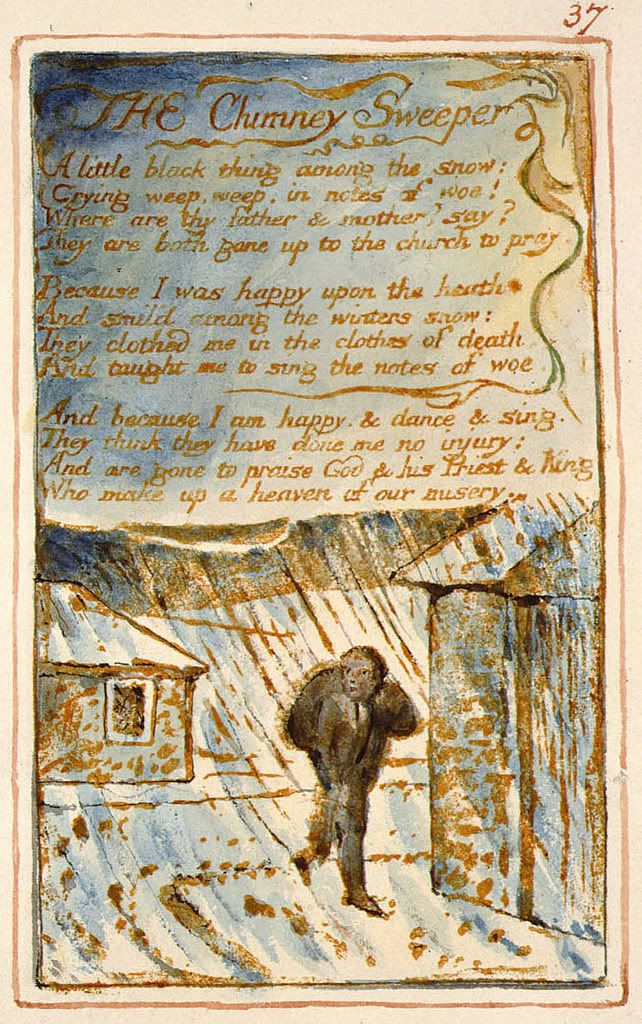
The Chimney Sweeper, William Blake, 1794
Blake’s Songs share much in common with Pynchon’s big novel—both argue for the preterite, pointing out the ways in which industrial technologies exploit the most vulnerable among us; both are wildly, acidly vivid; both employ metaphors of fall and ascent; both foreground the utterly real humanity of their subjects.
Blake’s “The Chimney Sweeper” (from Experience) shows in simple language how the official version of innocence can be used to enforce the dominant and exploitative order. Consider the last stanza:
And because I am happy and dance and sing,
They think they have done me no injury,
And are gone to praise God and his Priest and King,
Who make up a heaven of our misery
Blake’s chimney sweeper asserts his right to happiness, to laughter and joy. The creative impulse is a Counterforce against Them—here, the Priest and King. Yet They co-opt the dancing and joy and convert it into signs of “the official version of innocence”: a lie to cover over the utter corruption of the dominant order.
3 You’ve read Freud, right? Like, those ideas on infantile sexuality that are downright icky, and yet nevertheless reaffirmed and reinforced by the Corporate State? (Oligarchial capitalism simultaneously infantilizes and sexualizes its subjects). Gravity’s Rainbow does a lot of stuff it’s easier (less queasier) to write off as abject than to actually like, think through. But GR also shows that They infantilize and sexualize childhood in the service of control, as a way of establishing (and blurring and “defiling”) official versions of innocence.
Consider Our Poor Hero Tyrone Slothrop, whose conditioning as an infant by Laszlo Jamf (involving the mysterious MacGuffin Imipolex G) leads to erections that predict rocket strikes. (I swear that sentence makes sense).
4 “Games, fairy-tales, legends from history, all the paraphernalia of make-believecan be adapted and even embodied in a physical places” — physical places like Gravity’s Rainbow. Well, okay. I mean, we get a condensation here of Pynchon’s process, his synthesis, his grab-bag of songs and japes and jibes and jokes and tales and etcetera.
But Pynchon’s pointing out other, perhaps more nefarious and venal and corporate uses for the same cultural material he’s massaging: A fucking theme park. Like, uh, Disneyland. Or Disneyworld. Etcetera, you get it—that we—did I just write We?!—I want to say They—that They colonize and corporatize the imagination; that They gobble up the cultural material and excrete it in smooth, digestible, sanitized (yet subtly sexualized)—and consumable, marketable!—segments that we take our kids to queue up to experience in their innocence.
5 As always, Pynchon Wiki does it better than I can:
“Twelve Children” – the name evokes Jacob’s twelve sons (and the daughter who is not one of the official twelve). This pattern is self-consciously repeated in the Grimms’ tale “The Twelve Brothers”, where the boys are to die if their mother gives birth to a girl.
The camp, which is also a quasi-town, may be modelled after Theresienstadt, the Jewish town/Lager set up by the Nazis in what is now the Czech Republic. This is suggested by themes like transit, phoney children’s paradise, as well as the large orchestra, or the number 60,000 (the number of those who “passed through” Zwölfkinder as well the population of Theresienstadt at its peak). It also recalls another totalitarian institution, that of the communist “children’s towns” (large, town-like, somewhat militarized holiday camps for Young Pioneers), whose prototype was Artek in the Soviet Union. (Deutsches Jungvolk also had its summer camps.)
Further, consider Argentina’s Republic of Children, a city proportioned for children, which was created under Juan Peron’s regime and opened in 1951.
The Oedipal plot of Grimms’ “The Twelve Children” repeats throughout Gravity’s Rainbow, and I invite you to look for it lurking in Disney.
“The brothers were full of joy, and embraced her with fondest affection,” Mary Hamilton Fry, 1912
“At the entrance to the town, barring their way, stands the Midget who played the lead in Freaks. The one with the German accent. He is the town sheriff. He is wearing an enormous gold star that nearly covers his chest.”
The little person referenced is Harry Earles who played Hans in Freaks (1932; dir. Tod Browning).
7 The zoo.
8 A vast treasure hoard, such as Scrooge McDuck might dive into, or Bilbo Baggins and his pals might play upon.
The Nibelungen Hoard, as I’m sure you know, is the treasure of the Nibelungen. (You know Wagner’s Ring Cycle, eh? Or you’ve read Tolkien’s The Lord of the Rings, right?—you get the idea. The titular Nibelung is the dwarf Alberich, by the way).
The tale of that same treasure might well your wonder raise;
’T was much as twelve huge wagons in four whole nights and days
Could carry from the mountain down to the salt-sea bay,
If to and fro each wagon thrice journeyed every day.
It was made up of nothing but precious stones and gold;
Were all the world bought from it, and down the value told,
Not a mark the less thereafter were left, than erst was scored.
Good reason sure had Hagan to covet such a hoard.
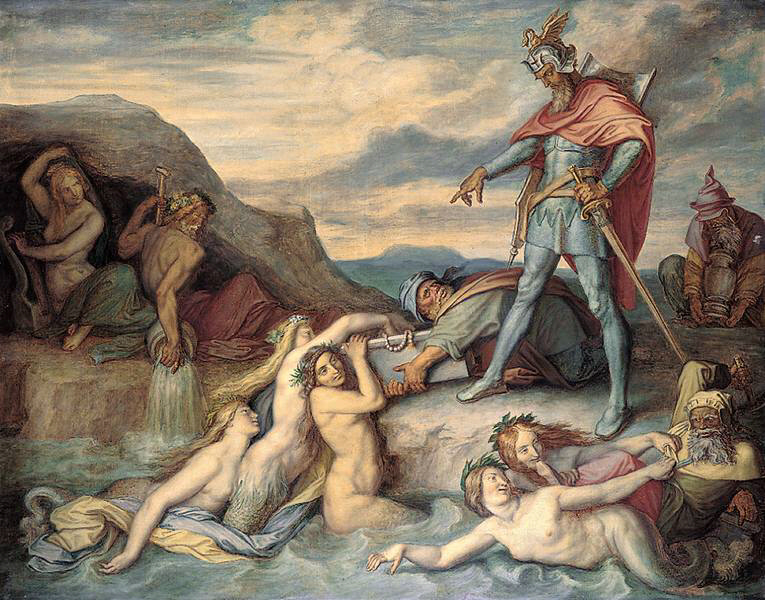
Hagen Orders Servants to Sink the Hoard in the Rhine, Peter von Cornelius (1859)
In the Nibelungenlied, Hagen murders the hero Siegfried and then steals and hides the Nibelung hoard.
9 Otto von Bismarck, 1815-1898, who unified Germany through technocracy and, uh, war.
10 “…they were well hidden”: A précis of Pynchonian paranoia, perhaps.
Bartram the lime-burner, a rough, heavy-looking man, begrimed with charcoal, sat watching his kiln, at nightfall, while his little son played at building houses with the scattered fragments of marble, when, on the hillside below them, they heard a roar of laughter, not mirthful, but slow, and even solemn, like a wind shaking the boughs of the forest.
“Father, what is that?” asked the little boy, leaving his play, and pressing betwixt his father’s knees.
“O, some drunken man, I suppose,” answered the lime-burner; “some merry fellow from the bar-room in the village, who dared not laugh loud enough within doors lest he should blow the roof of the house off. So here he is, shaking his jolly sides at the foot of Graylock.”
“But, father,” said the child, more sensitive than the obtuse, middle-aged clown, “he does not laugh like a man that is glad. So the noise frightens me!”
“Don’t be a fool, child!” cried his father, gruffly. “You will never make a man, I do believe; there is too much of your mother in you. I have known the rustling of a leaf startle you. Hark! Here comes the merry fellow now. You shall see that there is no harm in him.”
Bartram and his little son, while they were talking thus, sat watching the same lime-kiln that had been the scene of Ethan Brand’s solitary and meditative life, before he began his search for the Unpardonable Sin. Many years, as we have seen, had now elapsed, since that portentous night when the IDEA was first developed. The kiln, however, on the mountain-side stood unimpaired, and was in nothing changed since he had thrown his dark thoughts into the intense glow of its furnace, and melted them, as it were, into the one thought that took possession of his life. It was a rude, round, towerlike structure, about twenty feet high, heavily built of rough stones, and with a hillock of earth heaped about the larger part of its circumference; so that the blocks and fragments of marble might be drawn by cart-loads, and thrown in at the top. There was an opening at the bottom of the tower, like an oven-mouth, but large enough to admit a man in a stooping posture, and provided with a massive iron door. With the smoke and jets of flame issuing from the chinks and crevices of this door, which seemed to give admittance into the hillside, it resembled nothing so much as the private entrance to the infernal regions, which the shepherds of the Delectable Mountains[2] were accustomed to show to pilgrims.
There are many such lime-kilns in that tract of country, for the purpose of burning the white marble which composes a large part of the substance of the hills. Some of them, built years ago, and long deserted, with weeds growing in the vacant round of the interior, which is open to the sky, and grass and wild flowers rooting themselves into the chinks of the stones, look already like relics of antiquity, and may yet be overspread with the lichens of centuries to come. Others, where the lime-burner still feeds his daily and night-long fire, afford points of interest to the wanderer among the hills, who seats himself on a log of wood or a fragment of marble, to hold a chat with the solitary man. It is a lonesome, and, when the character is inclined to thought, may be an intensely thoughtful, occupation; as it proved in the case of Ethan Brand, who had mused to such strange purpose, in days gone by, while the fire in this very kiln was burning.
The man who now watched the fire was of a different order, and troubled himself with no thoughts save the very few that were requisite to his business. At frequent intervals he flung back the clashing weight of the iron door, and, turning his face from the insufferable glare, thrust in huge logs of oak, or stirred the immense brands with a long pole. Within the furnace were seen the curling and riotous flames, and the burning marble, almost molten with the intensity of heat; while without, the reflection of the fire quivered on the dark intricacy of the surrounding forest, and showed in the foreground a bright and ruddy little picture of the hut, the spring beside its door, the athletic and coal-begrimed figure of the lime-burner, and the half-frightened child, shrinking into the protection of his father’s shadow. And when again the iron door was closed, then reappeared the tender light of the half-full moon, which vainly strove to trace out the indistinct shapes of the neighboring mountains; and, in the upper sky, there was a flitting congregation of clouds, still faintly tinged with the rosy sunset, though thus far down into the valley the sunshine had vanished long and long ago. Continue reading “Read Nathaniel Hawthorne’s story “Ethan Brand””→
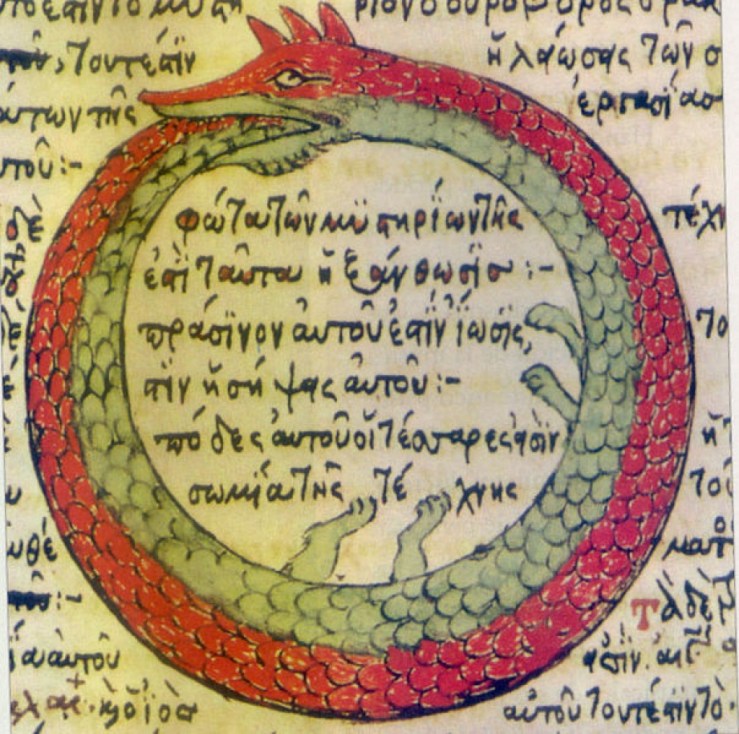
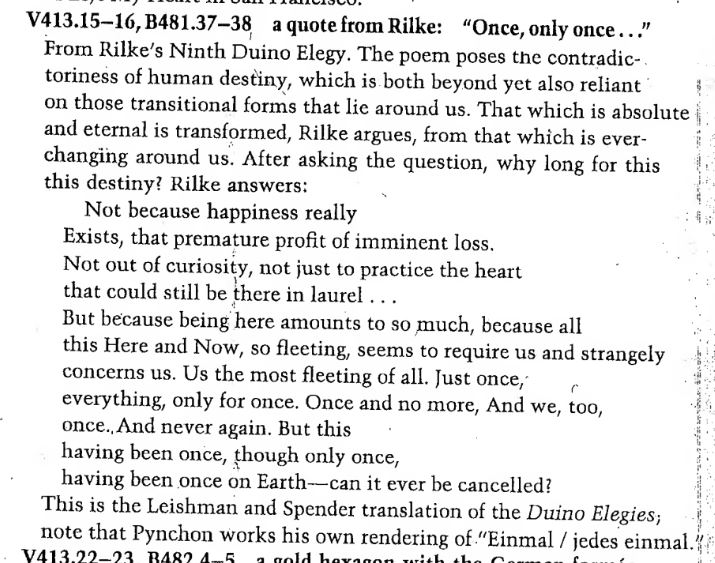
Kekulé 1 dreams 2 the Great Serpent holding its own tail in its mouth, the dreaming Serpent which surrounds the World 3. But the meanness, the cynicism with which this dream is to be used 4. The Serpent that announces, “The World is a closed thing, cyclical, resonant, eternally-returning,” 5 is to be delivered into a system 6 whose only aim is to violate the Cycle. Taking and not giving back, demanding that “productivity” and “earnings” keep on increasing with time, the System removing from the rest of the World these vast quantities of energy to keep its own tiny desperate fraction showing a profit: and not only most of humanity—most of the World, animal, vegetable and mineral, is laid waste in the process 7 . The System may or may not understand that it’s only buying time. And that time is an artificial resource to begin with, of no value to anyone or anything but the System, which sooner or later must crash to its death, when its addiction to energy has become more than the rest of the World can supply 8 , dragging with it innocent souls all along the chain of life. Living inside the System is like riding across the country in a bus driven by a maniac bent on suicide… though he’s amiable enough, keeps cracking jokes 9 back through the loudspeaker, “Good morning folks, this is Heidelberg 10 here we’re coming into now, you know the old refrain, ‘I lost my heart in Heidelberg,’ 11 well I have a friend who lost both his ears here! Don’t get me wrong, it’s really a nice town, the people are warm and wonderful—when they’re not dueling. Seriously though, they treat you just fine, they don’t just give you the key to the city, they give you the bung-starter!” 12 u.s.w. 13 On you 14 roll, across a countryside whose light is forever changing 15 —castles, heaps of rock, moons of different shapes and colors come and go. There are stops at odd hours of the mornings, for reasons that are not announced: you get out to stretch in lime-lit courtyards where the old men sit around the table under enormous eucalyptus trees you can smell in the night, shuffling the ancient decks oily and worn, throwing down swords and cups 16 and trumps major in the tremor of light while behind them the bus is idling, waiting—passengers will now reclaim their seats and much as you’d like to stay, right here, learn the game, find your old age around this quiet table, it’s no use 17 : he is waiting beside the door of the bus in his pressed uniform, Lord of the Night he is checking your tickets, your ID and travel papers 18 , and it’s the wands of enterprise 19 that dominate tonight… as he nods you by, you catch a glimpse of his face, his insane, committed eyes, and you remember then, for a terrible few heartbeats, that of course it will end for you all in blood, in shock, without dignity 20 —but there is meanwhile this trip to be on… over your own seat, where there ought to be an advertising plaque, is instead a quote from Rilke: “Once, only once…” 21 One of Their favorite slogans. No return, no salvation, no Cycle—that’s not what They, nor Their brilliant employee Kekulé, have taken the Serpent to mean. No: what the Serpent means is—how’s this—that the six carbon atoms of benzene are in fact curled around into a closed ring, just like that snake with its tail in its mouth, GET IT? 22
From pages 412-13 of Thomas Pynchon’s novel Gravity’s Rainbow.
1 Friedrich August Kekulé, 1829–1896, German chemist—the “father of organic chemistry.” (Our arts and sciences must be fathered, it seems).
East German Kekulé, postage stamp (with the benzene compound), 1979
[11], 397-433. This long chapter, consisting mostly of one long recollection, narrated in the past tense, tells the story of Franz Pökler […] Pökler dreamed about the history of Friedrich August Kekulé, father of organic chemistry (410-13), and about Kekulé’s dream: a serpent with its tail in its mouth. We learn how this dream was misused by the System, as the foundation for understanding the benzine ring. All this is lectured on by “Pökler’s old prof,” Laszlo Jamf.
A neat little summary, yes.
Kekulé’s most notable contribution to chemistry—and capitalism!—is in his work on describing the structure of that valuable petrochemical benzene.
Formule chimique développée du benzène inscrite dans le dessin de l’Ouroboros (serpent qui se mord la queue), Haltopub, 2013
Kekulé’s dream-image-symbol is clearly compelling for both the reader and, I think, for Pynchon. Gravity’s Rainbow is very much about the overlap between physical and metaphysical, and Kekulé’s vision points to the convergence of dream and experience, magic and science.
3Ouroboros is literally tail-devouring in Greek, but through surreal etymological phonological dream-time leaps, we can get to tale-devouring (why not?—okay, I guess maybe that’s mythosboros or something like that, but hell—–).
In any case, the serpent, or Serpent, here strikes me as one of Pynchon’s Moves Against Them—he taps into an older myth, one that elevates the Scaly and Low—the Preterite?—into an Elect position that the Christian Tradition simply doesn’t care for, what with the Tempting Serpent and all. No, no shedding of the skin, no eternal return…no, no return at all. Cf. a few lines later in the passage cited above: “No return, no salvation, no Cycle—that’s not what They, nor Their brilliant employee Kekulé, have taken the Serpent to mean.”
Horapollo, referring to the serpent symbol, says of it:— ‘When the Egyptians would represent the Universe they delineate a serpent bespeckled with variegated scales, devouring its own tail, the scales intimating the stars in the Universe. The animal is extremely heavy, as is the earth, and extremely slippery like the water, moreover, it every year puts off its old age with its skin, as in the Universe the annual period effects a corresponding change and becomes renovated, and the making use of its own body for food implies that all things whatever, which are generated by divine providence in the world, undergo a corruption into them again.’
4 Used by Them.
Gravity’s Rainbow is clearly about paranoia of Them, and as such (necessarily), Pynchon’s targets are…nebulous. (Although technology and the Military-Industrial-Entertainment Complex that technology works through might be a manifest if not wholly concrete villain in GR.). Pynchon’s big novel Against the Day offers a more specific locus for everything wrong with Them in its awful villain Scarsdale Vibe and his henchmen and lackeys.
5 You are of course familiar with the concept of eternal recurrence, no?
6 Oligarchial capitalism.
7 Pynchon seems to describe the past few centuries here, and probably the future.
8Gravity’s Ranbow was published in 1973, folks…
9 …but of course, Pynchon is also describing now, which is to say, his narrative’s own future.
10 A charming German city famous for its university.
12 A wooden mallet for opening the bung of a cask (or wine or beer). I visited Heidelberg when I was 16 and drank copious quantities of ale.
13 “u.s.w.” — German acronym for und so weiter; translates to etcetera. Pynchon allows the tape to roll on in his reader’s head.
14 Always beware Gravity’s Rainbow’s shifts into second-person! Look at this ride that Pynchon’s put us on…but wait…we’re already on the ride.
15 A rainbow image.
16 Tarot references abound in Gravity’s Rainbow.
3 of Swords, Sola-Busca Tarot (1491; reprint by Wolfgang Mayer, 1998)
17 The preterite’s complaint: Wisdom shall not be found, order will not reveal itself, meaning will be suspended indefinitely.
18 Our wacky busdriver is actually “the Lord of the Night,” an ominous and perhaps self-explanatory title (and one that resonates with the passage’s mythological overtones and tarot motif). The Lords of the Night are figures in both the Mayan and Aztec calendars, but I’m not sure if Pynchon’s referencing them here—although this passage is deeply concerned with the apprehension and management of time. This Lord of the Night, you’ll note—a stickler for paperwork—is awfully bureaucratic.
19 Oligarchial capitalism. The wands are another suit in the tarot deck. (The upright three of wands is associated with enterprise).
20 The strange trip here echoes Gravity’s Rainbow’s bewildering opening “evacuation” sequence, and the line I’ve noted recalls to me a line I’ve cited at least twice now in these annotations.
From the novel’s sixth paragraph:
“You didn’t really believe you’d be saved. Come, we all know who we are by now. No one was ever going to take the trouble to save you, old fellow. . . .”
21 In A Gravity’s Rainbow Companion, Weisenburger provides the following context for the Rilke quote:
From Zora Neale Hurston’s novelization of folklore, Mules and Men:
It was slavery time, Zora, when Big Sixteen was a man. They called ‘im Sixteen cause dat was de number of de shoe he wore. He was big and strong and Ole Massa looked to him to do everything.
One day Ole Massa said, “Big Sixteen, Ah b’lieve Ah want you to move dem sills Ah had hewed out down in de swamp.
“I yassuh, Massa.”
Big Sixteen went down in de swamp and picked up dem 12 X 12’s and brought ’em on up to de house and stack ,em. No one man ain’t never toted a 12 X 12 befo’ nor since.
So Ole Massa said one day, “Go fetch in de mules. Ah want to look ’em over.”
Big Sixteen went on down to, de pasture and caught dem mules by de bridle but they was contrary and balky and he tore de bridles to pieces pullin’ on ’em, so he picked one of ’em up under each arm and brought ’em up to Old Massa.
He says, “Big Sixteen, if you kin tote a pair of balky mules, you kin do anything. You kin ketch de Devil.”
“Yassuh, Ah kin, if you git me a nine-pound hammer and a pick and shovel!”
Ole Massa got Sixteen de things he ast for and tole ‘im to go ahead and bring him de Devil.
Big Sixteen went out in front of de house and went to diggin’. He was diggin’ nearly a month befo’ he got where he wanted. Then he took his hammer and went and knocked on de Devil’s door. Devil answered de door hisself.
“Who dat out dere?”
“It’s Big Sixteen.”
“What you want?”
“Wanta have a word wid you for a minute.”
Soon as de Devil poked his head out de door, Sixteen him over de head wid dat hammer and picked ‘im up and carried ‘im back to Old Massa.
Ole Massa looked at de dead Devil and hollered, “Take dat ugly thing ‘way from here, quick! Ah didn’t think you’d, ketch de Devil sho ’nuff.”
So Sixteen picked up de Devil and throwed ‘im back down de hole.
Way after while, Big Sixteen died and went up to Heben. But Peter looked at him and tole ‘im to g’wan ‘way from dere. He was too powerful. He might git outa order and there wouldn’t be nobody to handle ‘im. But he had to, go somewhere so he went on to hell.
Soon as he got to de gate de Devil’s children was playin’ in de yard and they seen ‘im and run to de house, says, “Mama, mama! Dat man’s out dere dat kilt papa!”
So she called ‘im in de house and shet de door. When Sixteen got dere she handed ‘im a li’l piece of fire and said, “You ain’t comin’ in here. Here, take dis hot coal and g’wan off and start you a hell uh yo’ own.”
So when you see a Jack O’Lantern in de woods at night you know it’s Big Sixteen wid his piece of fire lookin’ for a place to go.
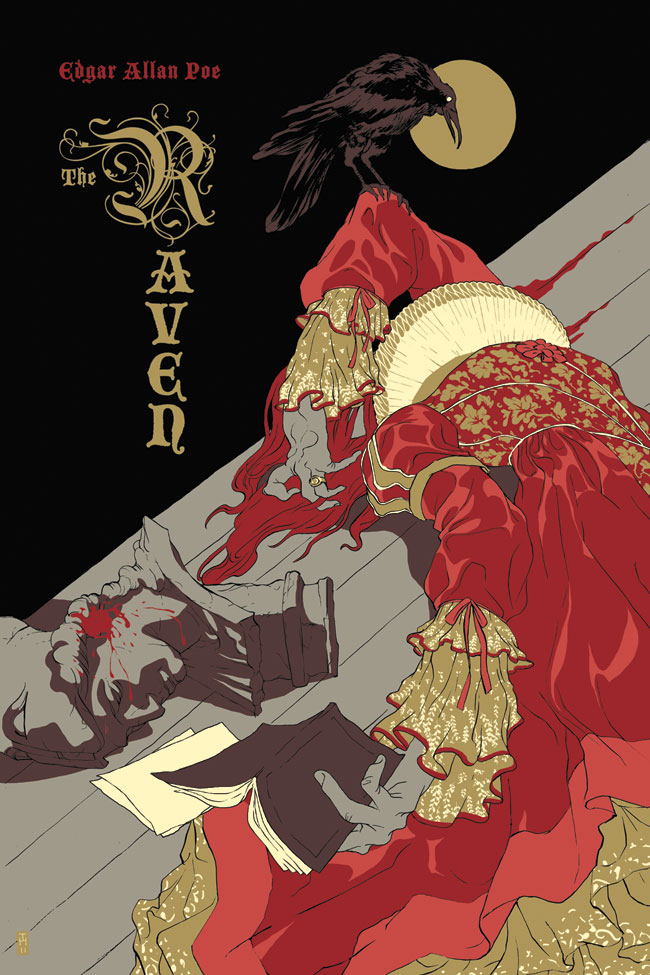
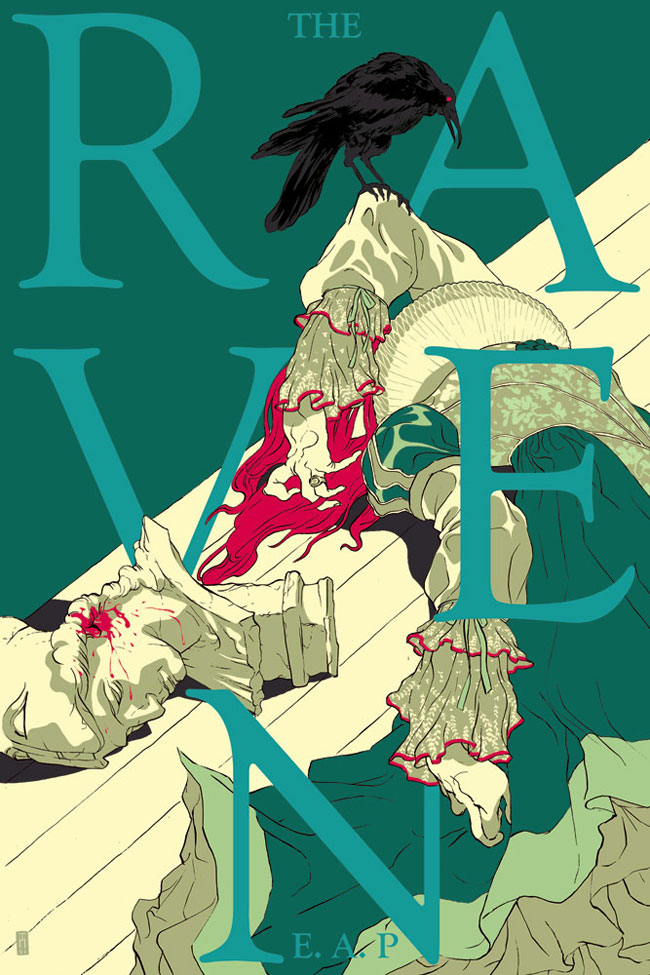
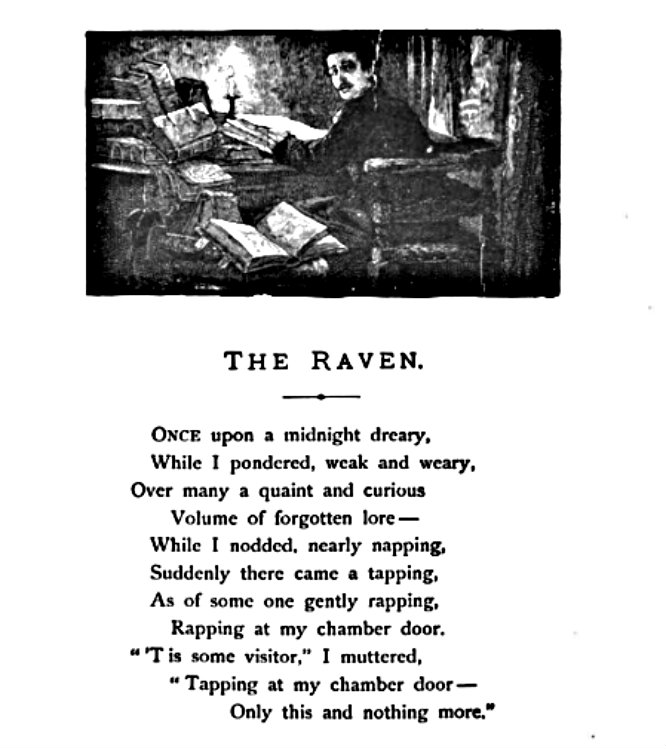
The public for whom Poe wrote, though grossly unappreciative of his art, was by no means unaccustomed to the horrors with which he dealt. America, besides inheriting the usual dark folklore of Europe, had an additional fund of weird associations to draw upon; so that spectral legends had already been recognised as fruitful subject-matter for literature. Charles Brockden Brown had achieved phenomenal fame with his Radcliffian romances, and Washington Irving’s lighter treatment of eerie themes had quickly become classic. This additional fund proceeded, as Paul Elmer More has pointed out, from the keen spiritual and theological interests of the first colonists, plus the strange and forbidding nature of the scene into which they were plunged. The vast and gloomy virgin forests in whose perpetual twilight all terrors might well lurk; the hordes of coppery Indians whose strange, saturnine visages and violent customs hinted strongly at traces of infernal origin; the free rein given under the influence of Puritan theocracy to all manner of notions respecting man’s relation to the stern and vengeful God of the Calvinists, and to the sulphureous Adversary of that God, about whom so much was thundered in the pulpits each Sunday; and the morbid introspection developed by an isolated backwoods life devoid of normal amusements and of the recreational mood, harassed by commands for theological self-examination, keyed to unnatural emotional repression, and forming above all a mere grim struggle for survival—all these things conspired to produce an environment in which the black whisperings of sinister grandams were heard far beyond the chimney corner, and in which tales of witchcraft and unbelievable secret monstrosities lingered long after the dread days of the Salem nightmare.
Poe represents the newer, more disillusioned, and more technically finished of the weird schools that rose out of this propitious milieu. Another school—the tradition of moral values, gentle restraint, and mild, leisurely phantasy tinged more or less with the whimsical—was represented by another famous, misunderstood, and lonely figure in American letters—the shy and sensitive Nathaniel Hawthorne, scion of antique Salem and great-grandson of one of the bloodiest of the old witchcraft judges. In Hawthorne we have none of the violence, the daring, the high colouring, the intense dramatic sense, the cosmic malignity, and the undivided and impersonal artistry of Poe. Here, instead, is a gentle soul cramped by the Puritanism of early New England; shadowed and wistful, and grieved at an unmoral universe which everywhere transcends the conventional patterns thought by our forefathers to represent divine and immutable law. Evil, a very real force to Hawthorne, appears on every hand as a lurking and conquering adversary; and the visible world becomes in his fancy a theatre of infinite tragedy and woe, with unseen half-existent influences hovering over it and through it, battling for supremacy and moulding the destinies of the hapless mortals who form its vain and self-deluded population. The heritage of American weirdness was his to a most intense degree, and he saw a dismal throng of vague spectres behind the common phenomena of life; but he was not disinterested enough to value impressions, sensations, and beauties of narration for their own sake. He must needs weave his phantasy into some quietly melancholy fabric of didactic or allegorical cast, in which his meekly resigned cynicism may display with naive moral appraisal the perfidy of a human race which he cannot cease to cherish and mourn despite his insight into its hypocrisy. Supernatural horror, then, is never a primary object with Hawthorne; though its impulses were so deeply woven into his personality that he cannot help suggesting it with the force of genius when he calls upon the unreal world to illustrate the pensive sermon he wishes to preach.
Hawthorne’s intimations of the weird, always gentle, elusive, and restrained, may be traced throughout his work. The mood that produced them found one delightful vent in the Teutonised retelling of classic myths for children contained in A Wonder Book and Tanglewood Tales, and at other times exercised itself in casting a certain strangeness and intangible witchery or malevolence over events not meant to be actually supernatural; as in the macabre posthumous novel Dr. Grimshawe’s Secret, which invests with a peculiar sort of repulsion a house existing to this day in Salem, and abutting on the ancient Charter Street Burying Ground. In The Marble Faun, whose design was sketched out in an Italian villa reputed to be haunted, a tremendous background of genuine phantasy and mystery palpitates just beyond the common reader’s sight; and glimpses of fabulous blood in mortal veins are hinted at during the course of a romance which cannot help being interesting despite the persistent incubus of moral allegory, anti-Popery propaganda, and a Puritan prudery which has caused the late D. H. Lawrence to express a longing to treat the author in a highly undignified manner. Septimius Felton, a posthumous novel whose idea was to have been elaborated and incorporated into the unfinished Dolliver Romance, touches on the Elixir of Life in a more or less capable fashion; whilst the notes for a never-written tale to be called “The Ancestral Footstep” shew what Hawthorne would have done with an intensive treatment of an old English superstition—that of an ancient and accursed line whose members left footprints of blood as they walked—which appears incidentally in both Septimius Felton and Dr. Grimshawe’s Secret. Continue reading ““The Weird Tradition in America,” H.P. Lovecraft’s analysis of American horror fiction”→
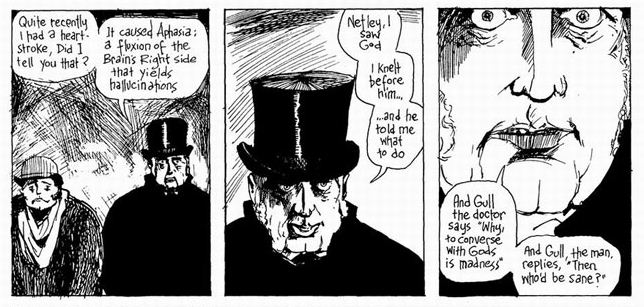
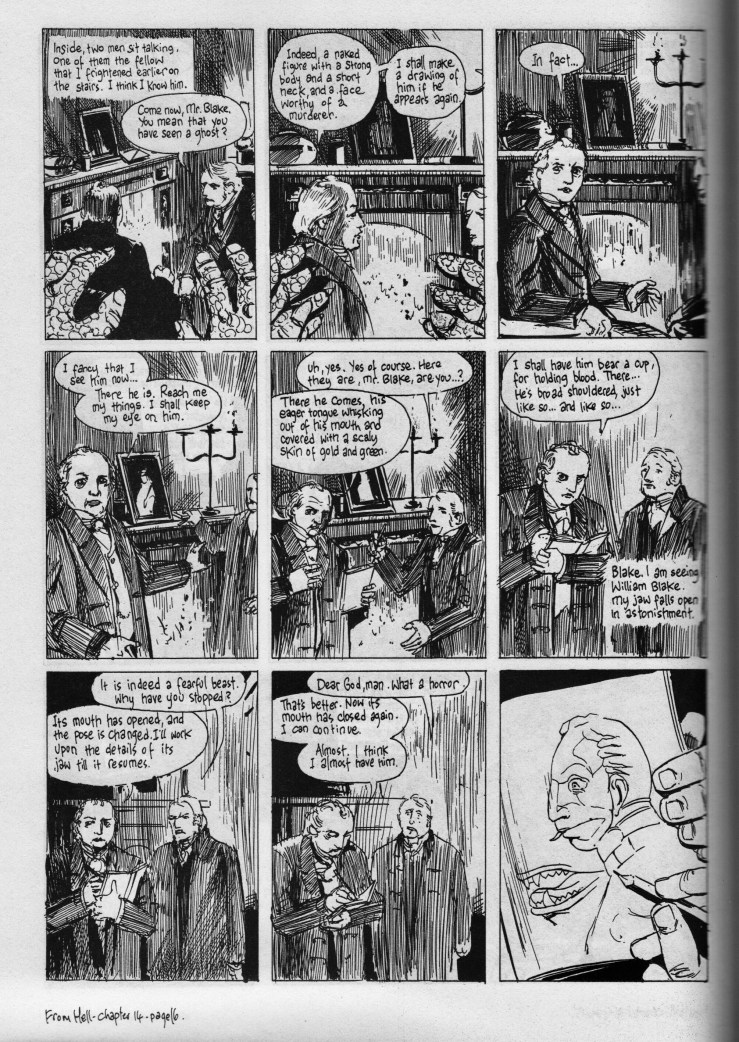
From Hell, Alan Moore and Eddie Campbell’s epic revision of the Jack the Ripper story, posits Sir William Gull, a physician to Queen Victoria, as the orchestrator of the Ripper murders that terrified Londoners at the end of the 19th century. The murders initially arise as a means to cover up an illegitimate son begat by foolish Prince Albert, Victoria’s grandson. However, for Gull the murders represent much more. The murders are part of the continued forces of “masculine rationality” that will constrain “lunar female power.” Gull is a high-level Mason; during a stroke, he experiences a vision of the Masonic god Jahbulon, one which prompts him to his “great work”–namely, the murders that will reify masculine dominance.
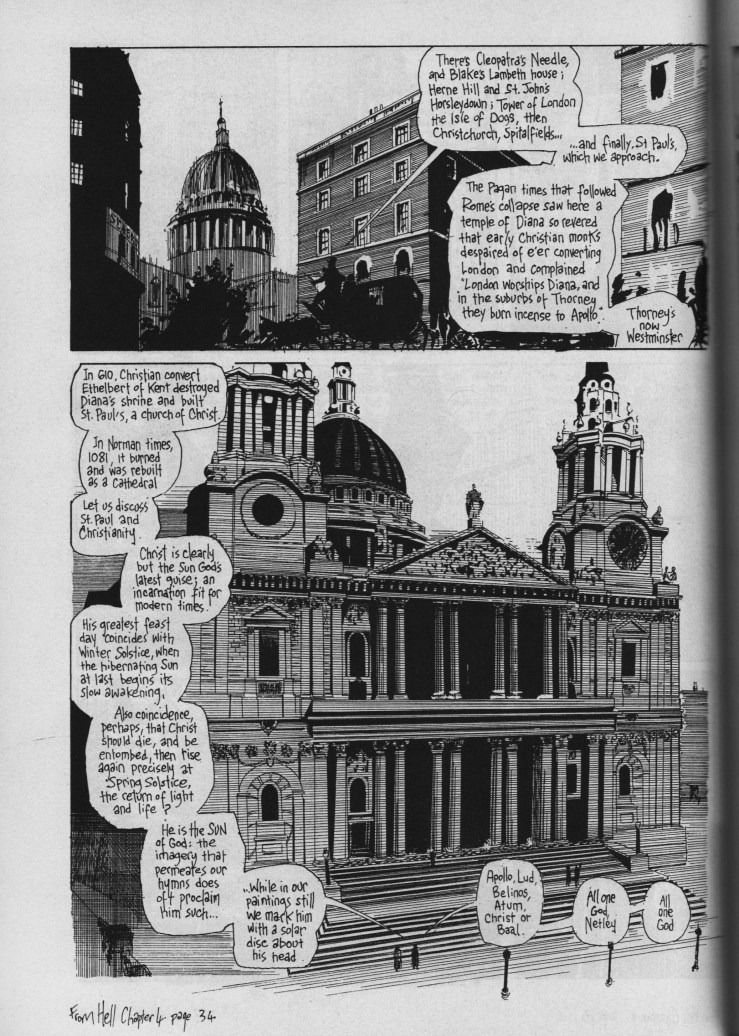
One of the standout chapters in the book is Gull’s tour of London, with his hapless (and witless) sidekick Netley. In a trip that weds geography, religion, politics, and mythology, Gull riffs on a barbaric, hermetic history of London, revealing the gritty city as an ongoing site of conflict between paganism and orthodoxy, artistic lunacy and scientific rationality, female and male, left brain and right brain. The tour ends with a plan to commit the first murder.
From there, the book picks up the story of Frederick Abberline, the Scotland Yard inspector charged with solving the murders. Of course, the murders are unsolvable, as the hierarchy of London–from the Queen down to the head of police–are well aware of who the (government-commissioned) murderer is. The police procedural aspects of the plot are fascinating and offer a balanced contrast with Gull’s mystical visions–visions that culminate in a climax of a sort of time-travel. Gull goes backwards (William Blake sees him in a vision and turns that vision into Ghost of Flea) and Gull goes forwards: he sees London at the end of the twentieth century, and receives a guarantee that his murder plot has had its intended effect.
From Hell takes many of its cues from the idea that history is shaped not by random events, but rather by tragic conspiracies that force people to willingly give up freedom to a “rational” authority. The book points repeatedly to the 1811 Ratcliffe Highway murders, which led directly to the world’s first modern police force. In our own time, if we’re open to conspiracy theories, we might find the same pattern in the 21st century responses to terrorism.
Although From Hell features moments of supernatural horror in Gull’s mysticism, it is the book’s grimy realism that is far more terrifying. London in the late 1880s is no place you want to be, especially if you are poor, especially if you are a woman. The city is its own character, a labyrinth larded with ancient secrets the inhabitants of which cannot hope to plumb. Despite the nineteenth century’s claims for enlightenment and rationality, this London is bizarrely cruel and deeply unfair. Campbell’s style evokes this London and its denizens with a surreal brilliance; his dark inks are by turns exacting and then erratic, concentrated and purposeful and then wild and severe. The art is somehow both rich and stark, like the coal-begrimed London it replicates. Although Moore has much to say, he allows Campbell’s art to forward the plot whenever possible. Moore is erudite and fascinating; even when one of his characters is lecturing us, it’s a lecture we want to hear. His ear for dialog and tone lends great sympathy to each of the characters, especially the unfortunate women who must turn to prostitution to earn their “doss” money. And while Abberline’s frustrations at having to solve a crime that no higher-ups want solve make him the hero of this story, Gull’s mystic madness makes him the narrative’s dominant figure.
From Hell is a fantastic starting place for anyone interested in Moore’s work, more self-contained than his comics that reimagine superhero myths, like Watchmen or Swamp Thing, and more satisfying and fully achieved than Promethea or V Is for Vendetta. Be forewarned that it is a graphic graphic novel, although I do not believe its violence is gratuitous or purposeless. Indeed, From Hell aspires to remark upon the futility and ugliness of cyclical violence, and it does so with wisdom and verve. Highly recommended.










 Biblioklept