Yoko Ogawa’s Revenge is an elegant collection of creepy intertextual tales

revenge

In Yoko Ogawa’s new collection Revenge, eleven stories of fascinating morbidity intertwine at oblique angles. Tale extends into tale: characters, settings, and images float intertextually from chapter to chapter, layering and reticulating themes of death, crime, consumption, and creation. (And revenge, of course. Let’s not forget revenge). Not quite a story cycle or a novel-in-tales, Revenge’s sum is nevertheless greater than its parts. It’s a brisk, engaging read, and as I worked my way to the final story, I already anticipated returning to the beginning to pull at the motifs threading through the book.

The book’s dominant motifs of death and food arrive in the first tale, “Afternoon Bakery,” where a mother tries to buy strawberry shortcakes for her dead son’s birthday—only the baker is too busy bawling to attend to sales. We learn why this baker is crying in “Fruit Juice,” the second story, a tale that ends inexplicably with an abandoned post office full of kiwi fruit. The third story, “Old Mrs.  J” (one of Revenge’s stand-outs) perhaps answers where those kiwis came from. More importantly, “Old Mrs. J,” with its writer-protagonist, elegantly introduces the thematic textual instability of the collection. There’s a  haunting suspicion here that the characters who glide from one tale to the next aren’t necessarily the silent extras they seem to be on the surface. Our characters, background and fore, are doppelgängers, ghost writers, phantoms.

The penultimate tale “Tomatoes and the Full Moon” lays the ghosting bare. Its protagonist is a magazine writer, whose “articles” really amount to little more than advertising. Staying at a seaside resort, he’s pestered by an old woman, one of the many witches who haunt Revenge. The old woman claims to be a novelist, and points out one of her books in the resort’s library:

Later, in my room, I read ‘Afternoon at the Bakery.’ It was about a woman who goes to buy a birthday cake for her dead son. That was the whole story. I should have gone back to my article, but I read her novel through twice, finishing for the second time at 3:00 a.m. The prose was unremarkable, as were the plot an characters, but there was an icy current running under her words, and I found myself wanting to plunge into it again and again.

The final line is perhaps a description of Revenge’s haunting intertextual program—although to be clear, Ogawa’s plot and characters are hardly “unremarkable,” and her prose, in Stephen Snyder’s English translation, is lucid and descriptive. It’s the “icy current running under her words” that makes Ogawa’s tales stick so disconcertingly in the reader’s psychic gullet. And if her prose is at times “unremarkable,” it’s all in the service of creating a unifying tone. All eleven tales are narrated in first-person, and each narrator is bound to the limits of his or her own language.

These limitations of language bump up against the odd, the spectacular, the alien, as in “Sewing for the Heart”:

She had explained that she was born with her heart outside of her chest—as difficult as that might be to imagine.

The line is wonderful in its mundane trajectory: Our narrator, an artisan bagmaker, witnesses this woman who lives with her heart outside her chest and concedes that such a thing might be “difficult . . . to imagine”! There’s something terribly paltry in this, but it’s also purposeful and controlled: Here we find the real in magical realism.

But this bagmaker can imagine, as we see in an extraordinary passage that moves from the phenomenological world of sight and sound and into the realm of our narrator’s strange desires:

She began to sing, but I could not make out the words. It must have been a love song, to judge from the slightly pained expression on her face, and the way she tightly gripped the microphone. I noticed a flash of white skin on her neck. As she reached the climax of the song, her eyes half closed and her shoulders thrown back, a shudder passed through her body. She moved her arm across her chest to cradle her heart, as though consoling it, afraid it might burst. I wondered what would happen if I held her tight in my arms, in a lovers’ embrace, melting into one another, bone on bone . . . her heart would be crushed. The membrane would split, the veins tear free, the heart itself explode into bits of flesh, and then my desire would contain hers—it was all so painful and yet so utterly beautiful to imagine.

Painful and utterly beautiful: Another description of Revenge.

Sometimes the matter-of-fact tone of the stories accounts for marvelous little eruptions of humor, as in “The Last Hour of the Bengal Tiger”:

At fifteen, I took an overdose of sleeping pills. I must have had a good reason for wanting to kill myself, but I’ve forgotten what it was. Perhaps I was just fed up with everything. At any rate, I slept for eighteen hours straight, and when I woke up I was completely refreshed. My body felt so empty and purified that I wondered whether I had, in fact, died. But no one in my family even seemed to have noticed that I had attempted suicide.

The scene is simultaneously devastating and hilarious, an evocation of abyssal depression coupled with mordant irony. The scene also underscores the dramatic uncertainty that underpins so many of the tales, where the possibility that the narrator is in fact a ghost or merely a character in someone else’s story is always in play.

There’s no postmodern gimmickry on display here though. Ogawa weaves her tales together with organic ease, her control both powerful and graceful. Her narrators contradict each other; we’re offered perspectives, glimpses, shades and slivers of meaning. A version of events recounted differently several stories later seems no more true than an earlier version, but each new detail adds to the elegant tangle. Like David Lynch and Roberto Bolaño, Ogawa traffics in beautiful, venomous, bizarre dread. Like those artists, she offers a discrete world we sense is complete and unified, even as our access to it is broken and discontinuous. And like Angela Carter, Ogawa channels the icy current seething below the surface of our darkest fairy tales, those stories that, with their sundry murders and crimes, haunt readers decades after first readings.

What I like most about Revenge is its refusal to relieve the reader. The book can be grisly at times, but Ogawa rarely goes for the lurid image. Instead, the real horror (and pleasure) of Revenge is the anxiety it produces in the reader, who becomes implicated in the crimes cataloged in the text. Witness to first-person narratives that often omit key clues, the reader plays detective—or perhaps accomplice. Recommended.

Revenge is new in handsome trade paperback from Picador; Picador also released Ogawa’s novel Hotel Iris in 2010.

[Editorial note: Biblioklept ran a version of this review in the spring of 2013; we republish it here in the spooky spirit of Halloween].

Read “The Forgetful Ghost,” a supernatural tale by William T. Vollmann

“The Forgetful Ghost”

by

William T. Vollmann


After my father died, I began to wonder whether my turn might come sooner rather than later. What a pity! Later would have been so much more convenient! And what if my time might be even sooner than soon? Before I knew it, I would recognize death by its cold shining as of brass. Hence in those days, I do confess, I felt sometimes angry that the treasures of sunlight escaped my hands no matter how tightly I clenched them. I loved life so perfectly, at least in my own estimation, that it seemed I deserved to live forever, or at least until later rather than sooner. But just in case death disregarded my all-important judgments, I decided to seek out a ghost, in order to gain expert advice about being dead. The living learn to weigh the merits of preparation against those of spontaneity, which is why they hire investment counselors and other fortune-tellers. And since I had been born an American, I naturally believed myself entitled to any destiny I could pay for. Why shouldn’t my postmortem years stretch on like a lovely procession of stone lamps?

If you believe, as H.P. Lovecraft asserted, that all cemeteries are subterraneously connected, then it scarcely matters which one you visit; so I put one foot before the other, and within a half-hour found myself allured by the bright green moss on the pointed tops of those ancient stone columns of the third Shogun’s loyally suicided retainers. Next I found, glowing brighter than the daylight, more green moss upon the stone railings and torii enclosing these square plots whose tombstones strained upward like trees, each stone engraved with its undertenant’s postmortem Buddhist name.

The smell of moss consists of new and old together. Dead matter having decayed into clean dirt, the dirt now freshens into green. It is this becoming-alive that one smells. I remember how when my parents got old, they used to like to walk with me in a certain quiet marsh. The mud there smelled clean and chocolate-bitter. I now stood breathing this same mossy odor, and fallen cryptomeria-needles darkened their shades of green and orange while a cloud slid over the sun. Have you ever seen a lizard’s eyelid close over his yellow orb? If so, then you have entered ghostly regions, which is where I found myself upon the sun’s darkening. All the same, I had not gone perilously far: On the other side of the wall, tiny cars buzzed sweetly, bearing living skeletons to any number of premortem destinations. Reassured by the shallowness of my commitment, I approached the nearest grave. 

The instant I touched the wet moss on the railing, I fell into communication with the stern occupant, upon whose wet dark hearthstone lay so many dead cryptomeria-tips. To say he declined to come out would be less than an understatement. It was enough to make a fellow spurn the afterlife! I experienced his anger as an electric shock. To him I was nothing, a rootless alien who lacked a lord to die for. Why should he teach me?

Humiliated, I turned away, and let myself into the lower courtyard behind the temple. Here grew the more diminutive ovoid and phallic tombs of priests. Some were incised with lotus wave-patterns. One resembled a mirror or hairbrush stood on end. I considered inviting myself in, but then I thought: If that lord up there was so cross, wouldn’t a priest have even less use for me? 

So I pulled myself up to the temple’s narrow porch and sat there with my feet dangling over, watching cherry blossoms raining down on the tombs. The gnarled arms of that tree pointed toward every grave, and afternoon fell almost into dusk. 

A single white blossom sped down like a spider parachuting down his newest thread. Then my ears began to ring—death’s call. 

So I ran away. I sat down in my room and hid. Looking out my window, I spied death up boards and pouring vinegar on nails. Death killed a dog. What if I were next?

Read the rest of “The Forgetful Ghost” at VICE.

The tale is collected in Vollmann’s forthcoming book, Last Stories and Other Stories.

A riff on my favorite ghost story, Roberto Bolaño’s “The Return”

Roberto Bolaño’s short story “The Return” is so good that it has two perfect opening paragraphs:

I have good news and bad news. The good news is that there is life (of a kind) after this life. The bad news is that Jean-Claude Villeneuve is a necrophiliac.

That’s a hell of a way to start a story! Bolaño lays out his two themes—the afterlife and necrophilia—in a jovial, almost cavalier, but dare I say sweet, even charming way. And then this paragraph:

Death caught up with me in a Paris disco at four in the morning. My doctor had warned me, but some things are stronger than reason. I was convinced, mistakenly (and even now it’s something I regret), that drinking and dancing were not the most hazardous of my passions. Another reason I kept going out every night to the fashionable places in Paris was my routine as a middle manager at Fracsa; I was after what I couldn’t find at work or in what people call the inner life: the buzz that you get from a certain excess.

Those are the first two paragraphs, and maybe they’ll entice you to read the story. However, the following riff includes what some people might consider spoilers; my hope is that if you’ve never read it before, you’ll take it on faith that “The Return” is a great, great story and you’ll go read it and stop reading this riff now. (Maybe come back later though after you’ve read it).

“The Return” is a ghost story that transmutes the horror of death and the abjection of the corpse into love, empathy, and communication—and art. It’s a beautiful ghost tale in the Romantic, Gothic tradition of Edgar Allan Poe, from whom Bolaño drew heavily. However, while Poe’s tales of necrophilia (like the poem “Annabel Lee,” “The Fall of the House of Usher,” and “Berenice” to name just a few) obsess over repression, loss, burial, and imperfect and violent attempts at restoration, Bolaño’s “The Return” offers its readers a peaceful reconciliation with death. It’s collected in The Return (New Directions, English translation by Chris Andrews), which is a perfect introduction to Bolaño—so many great stories there (“Buba,” “Clara,” “William Burns,” etc.). So go read it.

Continue reading “A riff on my favorite ghost story, Roberto Bolaño’s “The Return””

Phantoms and ghosts in David Foster Wallace’s novel The Pale King

a

The narrator of David Foster Wallace’s posthumous novel The Pale King assures us at one point that “phantoms are not the same as real ghosts.”

Okay.

So what’s a phantom then, at least in the universe of The Pale King?

Phantom refers to a particular kind of hallucination that can afflict rote examiners at a certain threshold of concentrated boredom.

The “rote examiners” are IRS agents who perform Sisyphean tasks of boredom. They are also placeholders for anyone who works a boring, repetitive job.

(We might even wax a bit here on the phrase rote examiner—the paradox in it—that to examine should require looking at the examined with fresh eyes, a fresh spirit—a spirit canceled out by the modifier rote).

In The Pale King, phantoms visit the rote examiners who toil in wiggle rooms. The “phantoms are always deeply, diametrically different from the examiners they visit,” suggesting two simultaneous outcomes: 1) an injection of life-force, a disruption of stasis that serves to balance out the examiner’s personality and 2) in the novel’s own language, “the yammering mind-monkey of their own personality’s dark, self-destructive side.”

In one scene, desperate Lane Dean contemplates suicide on the job, until he’s visited by a phantom.

“Yes but now that you’re getting a taste, consider it, the word. You know the one.”

The word is boredom, and the phantom proceeds to give a lecture on its etymology:

Word appears suddenly in 1766. No known etymology. The Earl of March uses it in a letter describing a French peer of the realm. He didn’t cast a shadow, but that didn’t mean anything. For no reason, Lane Dean flexed his buttocks. In fact the first three appearances of bore in English conjoin it with the adjective French, that French bore, that boring Frenchman, yes? The French of course had malaise, ennui. See Pascal’s fourth Pensée, which Lane Dean heard as pantsy.

(Thank you, narrator—who are you?!—for mediating the phantom’s speech and Dean’s misauditing of that speech). Continue reading “Phantoms and ghosts in David Foster Wallace’s novel The Pale King”

“The Story of the Inexperienced Ghost” — H.G. Wells

“The Story of the Inexperienced Ghost”

by

H.G. Wells


The scene amidst which Clayton told his last story comes back very vividly to my mind. There he sat, for the greater part of the time, in the corner of the authentic settle by the spacious open fire, and Sanderson sat beside him smoking the Broseley clay that bore his name. There was Evans, and that marvel among actors, Wish, who is also a modest man. We had all come down to the Mermaid Club that Saturday morning, except Clayton, who had slept there overnight—which indeed gave him the opening of his story. We had golfed until golfing was invisible; we had dined, and we were in that mood of tranquil kindliness when men will suffer a story. When Clayton began to tell one, we naturally supposed he was lying. It may be that indeed he was lying—of that the reader will speedily be able to judge as well as I. He began, it is true, with an air of matter-of-fact anecdote, but that we thought was only the incurable artifice of the man.

“I say!” he remarked, after a long consideration of the upward rain of sparks from the log that Sanderson had thumped, “you know I was alone here last night?”

“Except for the domestics,” said Wish.

“Who sleep in the other wing,” said Clayton. “Yes. Well—” He pulled at his cigar for some little time as though he still hesitated about his confidence. Then he said, quite quietly, “I caught a ghost!”

“Caught a ghost, did you?” said Sanderson. “Where is it?”

And Evans, who admires Clayton immensely and has been four weeks in America, shouted, “CAUGHT a ghost, did you, Clayton? I’m glad of it! Tell us all about it right now.”

Clayton said he would in a minute, and asked him to shut the door.

He looked apologetically at me. “There’s no eavesdropping of course, but we don’t want to upset our very excellent service with any rumours of ghosts in the place. There’s too much shadow and oak panelling to trifle with that. And this, you know, wasn’t a regular ghost. I don’t think it will come again—ever.”

“You mean to say you didn’t keep it?” said Sanderson.

“I hadn’t the heart to,” said Clayton.

And Sanderson said he was surprised.

We laughed, and Clayton looked aggrieved. “I know,” he said, with the flicker of a smile, “but the fact is it really WAS a ghost, and I’m as sure of it as I am that I am talking to you now. I’m not joking. I mean what I say.”

Sanderson drew deeply at his pipe, with one reddish eye on Clayton, and then emitted a thin jet of smoke more eloquent than many words.

Clayton ignored the comment. “It is the strangest thing that has ever happened in my life. You know, I never believed in ghosts or anything of the sort, before, ever; and then, you know, I bag one in a corner; and the whole business is in my hands.”

He meditated still more profoundly, and produced and began to pierce a second cigar with a curious little stabber he affected.

“You talked to it?” asked Wish.

“For the space, probably, of an hour.”

“Chatty?” I said, joining the party of the sceptics.

“The poor devil was in trouble,” said Clayton, bowed over his cigar-end and with the very faintest note of reproof.

“Sobbing?” some one asked.

Clayton heaved a realistic sigh at the memory. “Good Lord!” he said; “yes.” And then, “Poor fellow! yes.”

“Where did you strike it?” asked Evans, in his best American accent.

“I never realised,” said Clayton, ignoring him, “the poor sort of thing a ghost might be,” and he hung us up again for a time, while he sought for matches in his pocket and lit and warmed to his cigar.

“I took an advantage,” he reflected at last.

We were none of us in a hurry. “A character,” he said, “remains just the same character for all that it’s been disembodied. That’s a thing we too often forget. People with a certain strength or fixity of purpose may have ghosts of a certain strength and fixity of purpose—most haunting ghosts, you know, must be as one-idea’d as monomaniacs and as obstinate as mules to come back again and again. This poor creature wasn’t.” He suddenly looked up rather queerly, and his eye went round the room. “I say it,” he said, “in all kindliness, but that is the plain truth of the case. Even at the first glance he struck me as weak.”

He punctuated with the help of his cigar. Continue reading ““The Story of the Inexperienced Ghost” — H.G. Wells”

No knightly hero | Gravity’s Rainbow, annotations and illustrations for page 364

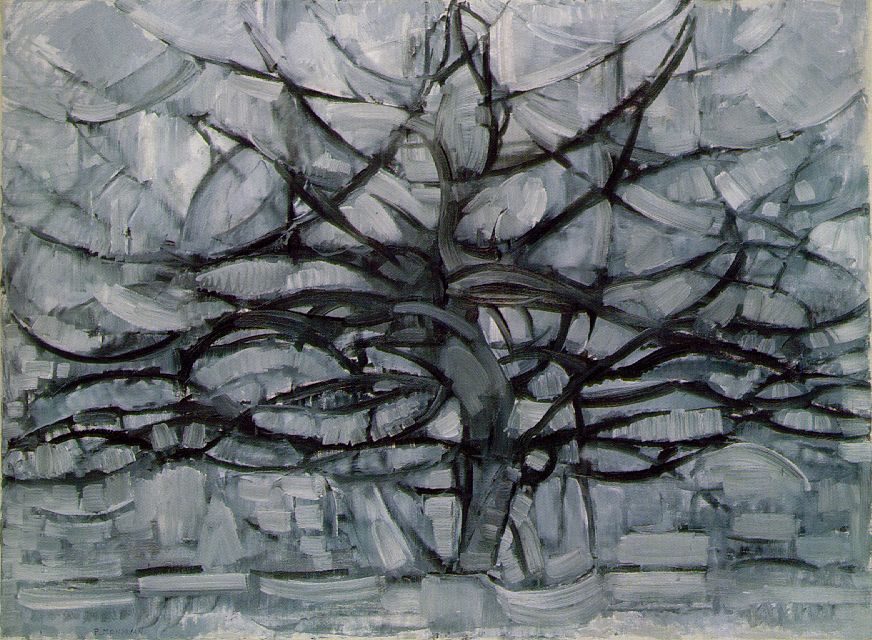
The Gray Tree, Piet Mondrian (1911)

Toward dusk, the black birds descend, millions 1  of them, to sit in the branches of trees nearby. The trees grow heavy with black birds, branches like dendrites of the Nervous System 2  fattening, deep in twittering nerve-dusk, in preparation for some important message… . 3

Later in Berlin, down in the cellar among fever-dreams with shit leaking out of him at gallons per hour, too weak to aim more than token kicks at the rats 4 running by with eyes fixed earnestly noplace, trying to make believe they don’t have a newer and dearer status among the Berliners, at minimum points on his mental health chart, when the sun is gone so totally it might as well be for good, Slothrop’s dumb idling heart 5 sez: The Schwarzgerät is no Grail, Ace, that’s not what the G in Imipolex G stands for. And you are no knightly hero 6. The best you can compare with is Tannhäuser 7, the Singing Nincompoop—you’ve been under one mountain at Nordhausen, been known to sing a song or two with uke accompaniment, and don’tcha feel you’re in a sucking marshland of sin out here, Slothrop? maybe not the same thing William Slothrop, vomiting a good part of 1630 away over the side of that Arbella 8, meant when he said “sin.” . . . But what you’ve done is put yourself on somebody else’s voyage 9—some Frau Holda, some Venus in some mountain—playing her, its, game… you know that in some irreducible way it’s an evil game. You play because you have nothing better to do 10, but that doesn’t make it right. And where is the Pope whose staff’s gonna bloom for you? 11

From page 364 of Thomas Pynchon’s novel Gravity’s Rainbow.

1 A million black birds sounds like a hyperbole of crows, but Berlin 1945, post-V-E Day—which is like, where we are here—I mean, it’s a desperate deathly ghastly place. So maybe buzzards and dreadful crows abound.

2 Cf. the discussion between nerve cells in pages 148-49.

Drawing of Purkinje cells (A) and granule cells (B) from pigeon cerebellum, Santiago Ramón y Cajal (1899)

3  What’s the important message? Oh wait, we’re still in the marvelous tree-crow-dendrite simile—the “twittering nerve-dusk”—so the “message” the crow-tree-branches awaits is just part of the, uh, metaphor. Or not? I mean, this is a novel in large part about expectation—about waiting for the bomb to fall, waiting for the Sword of Damocles to descend. And also: awaiting a message of Return.

But: What a lovely little simile. Pynchon’s powers as a prose stylist seem under-remarked upon.

4 Cf. page 359: “Last week, in the British sector someplace, Slothrop, having been asshole enough to drink out of an ornamental pond in the Tiergarten, took sick.”

The cellar, the diarrhea, the rats….I’ve written it before: Gravity’s Rainbow is a thoroughly abject novel—full of assholes (literal) and shit (literal) and toilets (literal). (And oh, also: metaphorical too, metaphorical too). Slothrop here is sick, literally evacuating—but also figuratively evacuating. A few pages later he’ll evacuate into his next identity, Rocket Man.

Cf. page 553, from Slothrop’s “Partial List of Wishes on Evening Stars for This Period”:

“Let me be able to take a shit soon.”

5  I counted 75 words in the dependent clause that precedes Pynchon’s finally introducing the independent clause—which is to say subject and verb

“Slothrop’s dumb idling heart sez”

(My count is likely off; I counted once and I’ve had some bourbon. I counted “fever-dreams” as two words, although I think you’re not supposed to do that).

Anyway: That’s a lot of dependent-clauseauge before, like, the main idea—which I guess, from a prose/aesthetic analysis, is the, uh, main idea—ascent, suspension—and then an immediate divergence (and note how Pynchon simultaneously deflates and invigorates his predicate verb “sez” with colloquial zeal).

6  Many of Gravity’s Rainbow’s motifs almost cohere here. Pynchon highlights two of Slothrop’s ostensible “quests” — the Schwarzgerät (the mysterious “black device” that will be installed in rocket 00000 (present), and the sexy sinister plastic Imipolex G (past). (But also both, obviously: Future).

Slothrop’s dumb heart denies any knightly virtue, rejects Romanticism—and, perhaps, Modernism’s ironic obsessions with Romanticism.

(I think the passage above, what with its ravens and Venus-denial and grail-refusal, is a tidy antonym to Rossetti’s depiction of the Grail…and yet I’d argue Pynchon’s writing bears a Pre-Raphaelite streak)—

The Damsel of the Holy Grail, Dante Gabriel Rossetti (1874)

The episode strikes me as utterly true, a moment of honest self-speech. As Emily Dickinson put it: “I like a look of Agony / Because I know it’s true.” (One of Slothrop’s ancestor’s plagiarized Ms. Dickinson on his gravestone). And yet and yet and yet…Perhaps Tyrone S. is being a bit too harsh on himself (who among us hasn’t cast a harsh gaze into the mirror?).

Slothrop expels the old identity here, the old dreams, the old, evacuating space for the arrival of “Raketemensch,” — Rocketman!

Rocketman points to an emerging postmodern hero—a comic bookish hero, perhaps—totemic, sure, but also Pop, cartoonish, textual—framed (literally) in the conventions of previous centuries’ conceptions of “heroism.”

7  Cf. page 299: “There is that not-so-rare personality disorder known as Tannhäuserism. Some of us love to be taken under mountains, and not always with horny expectations.” I annotated the page here.  Slothrop seems to accept the abject mantle of a bard, a laze, a loaf, a lingerer. I think of Whitman here, proud to lean and loafe at his ease at the beginning of Song of Myself, only to “effuse [his] flesh in eddies, and drift it in lacy jags” in the poem’s closing lines. Like Whitman’s persona, Slothrop will dissipate.

8 Cf. pages 203-04 (annotations here), wherein Slothrop’s vomiting ancestor William Slothrop, in a remarkable passage of hysteron proteron, travels backwards from the New World to the Old.

9 One of the central paranoias of Gravity’s Rainbow is that you might be on their voyage. How much agency do you have in your own life? And what’s the cost of asserting that agency? How many identities do you have to evacuate? And in the end—what’s left?

10 Boredom strikes me as one of (if not the) central theme connecting Modernism, postmodernism, and post-postmodernism.

11 Cf. the Tannhäuser story/footnote 7.

Or: Simply note the motif of bloom, of fruition, of phallic life, of promise. In fuller context though—it’s a bloom too late. The question blooms from Slothrop’s self-speech, but also extends to you and me, reader.

Or: Cf. the opening of Gravity’s Rainbow. From the sixth paragraph:

“You didn’t really believe you’d be saved. Come, we all know who we are by now. No one was ever going to take the trouble to save you, old fellow. . . .”

Arno Schmidt’s The Egghead Republic (Book acquired, 10.20.2016…and a bunch of pics of German-language books)

img_3911

I filled 45 minutes that I had to wait for something at my favorite used bookstore. I spent most of the time perusing the section of German books—I’d never looked at them before. I was kinda sorta browsing for a copy of Arno Schmidt’s Zettels Traum. I picked up the English translation of Zettels Traum (Bottom’s Dream) not quite two weeks ago, and I was curious to see what the original looks like. It may or may not (I’m guessing probably not) have been there—I got a bit lost. (There are almost three million books in this store; at least 1000 or so in the German section, and not particularly well-organized).

did pick up Schmidt’s sci-fi novel The Egghead Republic, which is much much shorter (and much much more accessible) than Bottom’s Dream. Here’s the blurb:

img_3912

I couldn’t help but snap some pic of some of the German-language, German-published books I perused:


Read “The Dancing Partner,” Jerome K. Jerome’s horror story about an automaton

“The Dancing Partner”

by

Jerome K. Jerome

from Novel Notes (1893)


“This story,” commenced MacShaugnassy, “comes from Furtwangen, a small town in the Black Forest. There lived there a very wonderful old fellow named Nicholaus Geibel. His business was the making of mechanical toys, at which work he had acquired an almost European reputation. He made rabbits that would emerge from the heart of a cabbage, flop their ears, smooth their whiskers, and disappear again; cats that would wash their faces, and mew so naturally that dogs would mistake them for real cats and fly at them; dolls with phonographs concealed within them, that would raise their hats and say, ‘Good morning; how do you do?’ and some that would even sing a song.

“But, he was something more than a mere mechanic; he was an artist. His work was with him a hobby, almost a passion. His shop was filled with all manner of strange things that never would, or could, be sold — things he had made for the pure love of making them. He had contrived a mechanical donkey that would trot for two hours by means of stored electricity, and trot, too, much faster than the live article, and with less need for exertion on the part of the driver, a bird that would shoot up into the air, fly round and round in a circle, and drop to earth at the exact spot from where it started; a skeleton that, supported by an upright iron bar, would dance a hornpipe, a life-size lady doll that could play the fiddle, and a gentleman with a hollow inside who could smoke a pipe and drink more lager beer than any three average German students put together, which is saying much.

“Indeed, it was the belief of the town that old Geibel could make a man capable of doing everything that a respectable man need want to do. One day he made a man who did too much, and it came about in this way:

“Young Doctor Follen had a baby, and the baby had a birthday. Its first birthday put Doctor Follen’s household into somewhat of a flurry, but on the occasion of its second birthday, Mrs. Doctor Follen gave a ball in honour of the event. Old Geibel and his daughter Olga were among the guests.

“During the afternoon of the next day some three or four of Olga’s bosom friends, who had also been present at the ball, dropped in to have a chat about it. They naturally fell to discussing the men, and to criticizing their dancing. Old Geibel was in the room, but he appeared to be absorbed in his newspaper, and the girls took no notice of him.

“‘There seem to be fewer men who can dance at every ball you go to,’ said one of the girls.

“‘Yes, and don’t the ones who can give themselves airs,’ said another; ‘they make quite a favor of asking you.’

“‘And how stupidly they talk,’ added a third. ‘They always say exactly the same things: “How charming you are looking to-night.” “Do you often go to Vienna? Oh, you should, it’s delightful.” “What a charming dress you have on.” “What a warm day it has been.” “Do you like Wagner?” I do wish they’d think of something new.’

“‘Oh, I never mind how they talk,’ said a forth. ‘If a man dances well he may be a fool for all I care.’

“‘He generally is,’ slipped in a thin girl, rather spitefully.

“‘I go to a ball to dance,’ continued the previous speaker, not noticing the interruption. ‘All I ask is that he shall hold me firmly, take me round steadily, and not get tired before I do.’

“‘A clockwork figure would be the thing for you,’ said the girl who had interrupted.

“‘Bravo!’ cried one of the others, clapping her hands, ‘what a capital idea!’

“‘What’s a capital idea?’ they asked.

“‘Why, a clockwork dancer, or, better still, one that would go by electricity and never run down.’ Continue reading “Read “The Dancing Partner,” Jerome K. Jerome’s horror story about an automaton”

Keen and quivering ratio (Emily Dickinson)

quivering

Gravity’s Rainbow, annotations and illustrations for page 299 | Some of us love to be taken under mountains, and not always with horny expectations

In the Venusburg, John Collier (1901)

There is that not-so-rare personality disorder known as Tannhäuserism 1 . Some of us love to be taken under mountains, and not always with horny expectations 2 .—Venus, Frau Holda, her sexual delights—no, many come, actually, for the gnomes , the critters smaller than you, for the sepulchral way time stretches along your hooded strolls down here, quietly through courtyards that go for miles, with no anxiety about getting lost… no one stares, no one is waiting to judge you… out of the public eye… even a Minnesinger needs to be alone…4  long cloudy-day indoor walks… the comfort of a closed place, where everyone is in complete agreement about Death 5. Slothrop knows this place. Not so much from maps he had to study at the Casino 6 as knowing it in the way you know someone is there… .

Plant generators are still supplying power. Rarely a bare bulb will hollow out a region of light 7 . As darkness is mined and transported from place to place like marble, so the light bulb is the chisel that delivers it from its inertia, and has become one of the great secret ikons of the Humility, the multitudes who are passed over by God and History 8. When the Dora prisoners 9  went on their rampage, the light bulbs in the rocket works were the first to go: before food, before the delights to be looted out of the medical lockers and the hospital pharmacy in Stollen Number 1, these breakable, socketless (in Germany the word for electric socket is also the word for Mother—so, motherless too 10 ) images were what the “liberated” had to take… .

From Thomas Pynchon’s Gravity’s Rainbow, page 299. All ellipses are Pynchon’s

1 Tannhäuser was a 13th-century German Minnesinger, a troubadour—a knight-poet. A bard, I guess. Is Slothrop a bard, a knight-poet—a knight-errant? Not sure. (He’ll later deny he’s on a grail-quest).

In German legend, Tannhäuser falls from grace when he discovers Venusberg, the underground home of Venus. He stays there a year, neglecting his betrothed and indulging in erotic delights. Teutonic Christian knight that he is, Tannhäuser leaves Vensuberg (Hörselberg) for Rome to beg forgiveness from Pope Urban IV, who denies him, saying absolution would be as impossible as his papal staff flowering in bloom. The staff does bloom—but not until Tannhäuser has disappeared back into the Venusian underworld (and his gal Lisaura has killed herself in grief).

2006au1525_jpg_l
Title page to ‘The Story of Venus and Tannhäuser’ Aubrey Beardsley (1895)

Cf. the sonnet on pages 532-33 of Gravity’s Rainbow:

Where is the Pope whose staff will bloom for me?
Her mountain vamps me back, with silks and scents,
Her oiled, athletic slaves, her languid hints
Of tortures transubstantiate to sky,
To purity of light-of bonds that sing,
And whips that trail their spectra as they fall.
At weather’s mercy now, I find her call
At every turn, at night’s foregathering.

I’ve left no sick Lisaura’s fate behind.
I made my last confession as I knelt,
Agnostic, in the radiance of his jewel…
Here, underneath my last and splintering wind,
No song, no lust, no memory, no guilt:
No pentacles, no cups, no holy Fool…

The Tannhäuser myth connects to Gravity’s Rainbow’s Orphean motif, and readers may take note of the hero’s descent played against the mystical “blooming” of a staff…eh, what with the sexy phallic overtones and all.

And we can use the third line of Gravity’s Rainbow here to describe the bloom on the staff: “It is too late” (3).

2 “Some of us love to be taken under mountains, and not always with horny expectations” — one problem with reading Gravity’s Rainbow only once or twice is that it is too full of great sentences and you’ll likely miss them. Pynchon continues to deflate what he has inflated (only to inflate it again)—sex will give over to death—or, an un-death (an un-sex) here. Slothrop inert, underground, in the tombs.

3 Cf. Pynchon’s 2006 novel Against the Day, wherein (briefly, too briefly), the heroic Chums of Chance take on “the increasingly deranged attentions of the Legion of Gnomes, the unconscionable connivings of a certain international mining cartel, the sensual wickedness pervading the royal court of Chthonica, Princess of Plutonia, and the all-but-irresistible fascination that subterranean monarch would come to exert, Circelike, upon the minds of the crew of Inconvenience [ETC.]”

4 . “…out of the public eye… even a Minnesinger needs to be alone…”

pynchon-simpsons-0-01

5 A perhaps puzzling line, if only because I think I get what everyone’s in “agreement about Death” here—Death as a kind of cozy promise that we all say “Fuck off” too in lieu of “long cloudy-day indoor walks” (and the horny expectations of underground sexbergs). I’m interested on anyone else’s ideas, of course.

6 The Casino Hermann Goering—Slothrop’s last “official” assigned post.

7 We privilege light over darkness; Pynchon inverts the image here: light is a violent “chisel”; darkness is a commodity to be mined.

The bulb becomes one of GR’s most powerful motifs, culminating in the late (and essential) episode “Byron the Bulb” (find Harold Bloom’s essay on Byron the Bulb if ye can).

References to Byron, via the indispensable folks at References to Byron, via the indispensable Pynchon Wiki:

“a bulb over his head burning all night long. He dreamed that the bulb was a representative of Weissmann, a creature whose bright filament was its soul” 426-27; “a theatre marquee whose sentient bulbs may have looked on […] witnesses to grave and historical encounters” 464; “The Story of” 647-55; “Someday he will know everything, and be just as impotent as before” 654; “electrical tidal wave” 665; “young Jack may have had one of them Immortal Lightbulbs then go on overhead” 688; screwed into Gustav’s kazoo hashpipe, 745

8 Pynchon loves to underline his big theme of “preterite vs elect” in Gravity’s Rainbow. There’s something sweet and even sad in the idea of the Humiliated, the preterite, finding an “ikon” in a lightbulb—a self-spark, a fragment of light. (I riffed a bit a while ago on GR’s theme of fragmentation and the dream of wholeness, the redemption of total light).

9 Laborers in the Mittelbau-Dora concentration camp who were forced to work toward producing V-2 rockets for the Nazis. Myth—Venus, gnomes, etc.—tips back into the horrific reality of slave labor. Pynchon seems to cast the Dora laborers as the preterite, grasping at their own spark of redemption by looting lightbulbs…and then reframes their preterite condition in the ironic quotation marks around “freedom.”

10  I don’t think the German word for electric socket, steckdose, corresponds so much to the word for “mother,” but maybe…it does? In any case, the etymology does seem to correspond to the concept of absence, or cavity, which permeates this episode of GR.

I looked for the root of “socket” in Josepth T. Shipley’s The Origins of English Words: A Discursive Dictionary of Indo-European Roots, and while I didn’t find anything about mothers or Venus or lightbulbs, I did find a connection to another of Gravity’s Rainbow’s big motifs: Pigs!—-

img_3852


Read “Moxon’s Master,” Ambrose Bierce’s story about a chess-playing automaton

“Moxon’s Master”

by

Ambrose Bierce


“Are you serious?—do you really believe a machine thinks?”

I got no immediate reply; Moxon was apparently intent upon the coals in the grate, touching them deftly here and there with the fire-poker till they signified a sense of his attention by a brighter glow. For several weeks I had been observing in him a growing habit of delay in answering even the most trivial of commonplace questions. His air, however, was that of preoccupation rather than deliberation: one might have said that he had “something on his mind.”

Presently he said:

“What is a ‘machine’? The word has been variously defined. Here is one definition from a popular dictionary: ‘Any instrument or organization by which power is applied and made effective, or a desired effect produced.’ Well, then, is not a man a machine? And you will admit that he thinks—or thinks he thinks.”

“If you do not wish to answer my question,” I said, rather testily, “why not say so?—all that you say is mere evasion. You know well enough that when I say ‘machine’ I do not mean a man, but something that man has made and controls.”

“When it does not control him,” he said, rising abruptly and looking out of a window, whence nothing was visible in the blackness of a stormy night. A moment later he turned about and with a smile said:

“I beg your pardon; I had no thought of evasion. I considered the dictionary man’s unconscious testimony suggestive and worth something in the discussion. I can give your question a direct answer easily enough: I do believe that a machine thinks about the work that it is doing.”

Continue reading “Read “Moxon’s Master,” Ambrose Bierce’s story about a chess-playing automaton”

“The Monstropolous Beast Had Left His Bed” — Zora Neale Hurston’s Hurricane

In Chapter 18 of her novel Their Eyes Were Watching God, Zora Neale Hurston imagines a hurricane descending on the Everglades as a cosmic monster. Her description comes in part from accounts of the 1928 Great Lake Okeechobee Hurricane—

Ten feet higher and far as they could see the muttering wall advanced before the braced-up waters like a road crusher on a cosmic scale. The monstropolous beast had left his bed. Two hundred miles an hour wind had loosed his chains. He seized hold of his dikes and ran forward until he met the quarters; uprooted them like grass and rushed on after his supposed-to- be conquerors, rolling the dikes, rolling the houses, rolling the people in the houses along with other timbers. The sea was walking the earth with a heavy heel.

A riff on the Westworld pilot, “The Original”

img_0409

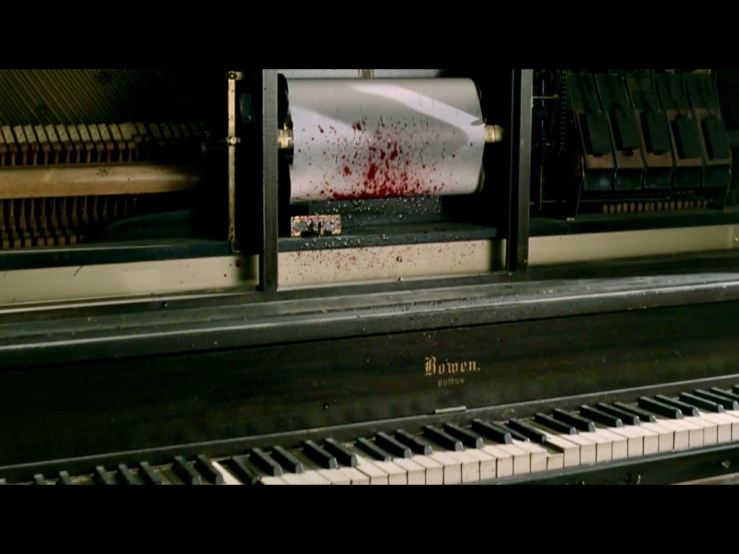
Watching HBO’s new show Westworld, I couldn’t help but think of the late American novelist William Gaddis’s obsession for player-pianos. The narrator of Gaddis’s final novel Agapē Agape howls that the player piano “was the plague spreading across America…its punched paper roll at the heart of the whole thing, of the frenzy of invention and mechanization and democracy and how to have art without the artist and automation, cybernetics.” Here was the idea of art, the artifice of art. Spiritless spirit. Automation.

Director Jonathan Nolan threads these automaton player pianos throughout “The Original,” Westworld’s ironically-titled pilot episodeThe motif is a perhaps-unsubtle reminder of Westworld’s core conflict—automation vs. spirit, real vs. copy, authentic vs. simulation. Human vs. machine.

You know the story of course: whether from Westworld’s source material (Michael Crichton’s 1973 film of the same name), or from Ridley Scott’s Blade Runner or Philip K. Dick in general, or The Matrix, or Battlestar Galactica (original or reboot), or Pinocchio, or AI, or Pygmalion, or Baudrillard, or just generally being alive in the 21st century….or…or…or…you know the story of course. (Oh, and, uh westerns too, natch).

Knowing the story enriches this particular reboot (or reimagining or re-whatever) of Westworld’s pregnant possibilities, and “The Original” is at its finest when tweaking its tropes.

For example, James Marsden’s fresh-faced Teddy Flood arrives to Westworld a noob, a surrogate for the audience—just another “Newcomer,” a human tourist among the amusement park’s android “Hosts” looking for fun and trouble, right? An early reveal shows that he’s actually a Host too though (gadzooks!), an automaton pining after fresh-faced series lead Evan Rachel Wood’s Dolores Abernathy. (I suppose having a fresh face is easy when the lab operatives can grow you a new one each night).

img_0406

The bait-and-switch gambit with Flood plays out in a riveting scene with ringer Ed Harris, the Man in Black, hardly a “Newcomer” and a seemingly unwelcome guest. He reveals that he’s been coming to Westworld for “over thirty years,” and we later learn that the theme park’s automatons haven’t had major glitches in (You guessed it!thirty years. “We’re overdue,” says Westworld’s operations manager, Theresa Cullen (played by Sidse Babett Knudsen–and by the way, that quote’s from my bad memory so don’t quote me on it). Foreshadowing! With the Man in Black creepin’ ’round and takin’ automaton scalps Blood Meridian style, there’s sure to be trouble!

But wait—Westworld can make its own trouble for its own damn self without mysterious outside agents, thank you very much. Dr. Ford (played by Anthony Hopkins, another ringer, and please don’t make me comment on the symbolically-overdetermined character name) has updated the “Hosts” with a new operating system, which includes a new program for “reveries.” These reveries have the replicants all fucked up. In short, the automatons, the Hosts, start going off-script (literally)—asking philosophical questions about the nature of their reality (and pouring milk over corpses).

Ford doesn’t care though—as he explains to Jeffrey Wright’s Bernard Lowe (Westworld’s head programmer), humanity, what with curing all its diseases, etc., can’t progress anymore — “This is as good as we’ll get.” So, like, why not trigger the Singularity? To return to our player piano motif, if only momentarily, Ford would like to inspirit art into the artificial. He wants, or at least moments of “The Original” suggest he wants, to teach the Hosts to play.

But the security forces behind the scenes decide it’s probably not good for their guests to be subjected to unknown quirks. They remand some of these suspect automatons to a creepy Bluebeard’s closet full of other decomissioned replicants that surely won’t be any kind of problem down the line in Westworld, right?

As my quick overview suggests, Westworld brims with potential. Indeed, “The Original,” despite a tight plot, often feels overpacked. There’s not just a season’s worth of plot lines lurking in here, but a whole series’ worth. As a result, “The Original” leaves many interesting characters on the margins for now (Thandie Newton’s brothel madam in particular).  I suppose keeping key players on the sidelines makes sense, especially as the pilot is exposition-heavy as it is (a fault with any number of TV pilots, from Game of Thrones to The Sopranos. Not every show can emerge autochthonous and fully-realized out of the gate like True Detective).

And yet even stuffed with emerging plots, Westworld finds time for a cinematic shooting-slaughter sequence that I suppose many viewers found thrilling but I found admittedly cold. With zero stakes at this early point, the scene felt like any other American TV show where meaningless bodies are gunned to pieces. Maybe that was the point though?

In any case, the punchline to the shooting sequence—one of the Newcomers (a prototypical Ugly American doof) Saves the Day! right before the baddie-Host can give his Big Speech—the punchline didn’t make me laugh so much as grimace. “The Original” is full of tonal inconsistencies and missed opportunities for sharp satire and dark humor. I hope Westworld loosens up a bit, gets a bit weirder, bites more from J.G. Ballard’s playbook. The pilot seems to go for profundity over weirdness, as if the showmakers must telegraph at all times: This is a Dark Serious Show. (Did I mention that director and creator Jonathan Nolan is Christopher Nolan’s brother?).

If the arcade shooter sequence is a dud (or, rather, the simulacrum of a real shootout, an authentic inauthenticity), the final scenes of “The Original” make up for it. In an echo of Blade Runner’s final sequence, Hopkins’s Ford squares off with his creation, Dolores’s father Peter. Peter has found a photograph depicting a girl in Times Square, and the cognitive dissonance of this unreality has him goin’ straight-glitch, quotin’ Shakespeare, and generally blowin’ android gaskets. We find out he’s been rebooted a number of times, and was once the leader of a cannibal cult in a Westworld scenario called “The Dinner Party.” (Har har! That pun works on at least two levels). Peter perhaps has realized he’s but a player in play—but not a true player, just a copy of a player, a simulacrum.

img_0407

Westworld is acutely aware of its own layers of simulacra. The show constantly calls attention to itself as a show, as a play. Early in “The Original,” the camera pulls up from travelers on a train to reveal a god’s-eye diorama of the terrain—a moving diorama that recalls the intro to Game of Thrones (the show Westworld would replace in your hearts and on your screens). The Westworld is surveyed by producers and showrunners making adjustments—just like Westworld. We have here a metacommentary on television, a self-consciously postmodern (and thus, post-postmodern) gesture. Not just automation and artifice, but artists! Not just player pianos, but players!

The diorama shot also reveals the Big Dream embedded in Westworld’s Big Nightmare. We have here that mythic American promise: The Frontier, the Territory that Huck Finn swears to light out to in order to duck the constraints of those who would “sivilize” him. “I take SPACE to be the central fact to man born in America,” declared Charles Olson in the beginning of Call Me Ishmael, his study of Melville’s whale. “I spell it large because it comes large here. Large, and without mercy.” The Newcomers, the tourists, flock to Westworld because it is a safe and constrained territory, a SPACE that is sivilized, yet masked to appear otherwise, garbed in the myth of danger, the empty promises of our National Pastimes, Sex & Violence. Dr. Ford plants reveries—dreams—into his automatons, disrupting civilization’s veneer of order. This is the new Frontier that Westworld promises to explore.

“October” — Tom Clark

october

Gravity’s Rainbow, annotations and illustrations for pages 257-58

The War has been reconfiguring time and space into its own image 1. The track runs in different networks now. What appears to be destruction is really the shaping of railroad spaces to other purposes, intentions he can only, riding through it for the first time, begin to feel the leading edges of… .2

He checks in to the Hotel Nimbus 3, in an obscure street in the Niederdorf or cabaret section of Zürich. The room’s in an attic, and is reached by ladder. There’s also a ladder outside the window, so he reckons it’ll be O.K. 4 When night comes down he goes out looking for the local Waxwing rep, finds him farther up the Limmatquai, under a bridge, in rooms full of Swiss watches, clocks and altimeters 5. He’s a Russian named Semyavin. Outside boats hoot on the river and the lake. Somebody upstairs is practicing on a piano: stumbling, sweet lieder. Semyavin pours gentian brandy 6 into cups of tea he’s just brewed. “First thing you have to understand is the way everything here is specialized. If it’s watches, you go to one café. If it’s women, you go to another. Furs are subdivided into Sable, Ermine, Mink, and Others. Same with dope: Stimulants, Depressants, Psychomimetics… . What is it you’re after?”

“Uh, information?” Gee, this stuff tastes like Moxie… .

“Oh. Another one.” Giving Slothrop a sour look. “Life was simple before the first war. You wouldn’t remember. Drugs, sex, luxury items. Currency in those days was no more than a sideline, and the term ‘industrial espionage’ was unknown. But I’ve seen it change—oh, how it’s changed. The German inflation, that should’ve been my clue right there, zeros 7 strung end to end from here to Berlin. I would have stern talks with myself. ‘Semyavin, it’s only a temporary lapse away from reality 8. A small aberration, nothing to worry about. Act as you always have—strength of character, good mental health. Courage, Semyavin! Soon all will be back to normal.’ But do you know what?”

“Let me guess.”

A tragic sigh. “Information. What’s wrong with dope and women? 9 Is it any wonder the world’s gone insane, with information come to be the only real medium of exchange?”

“I thought it was cigarettes.”

“You dream.” He brings out a list of Zürich cafés and gathering spots. Under Espionage, Industrial, Slothrop finds three. Ultra, Lichtspiel, and Sträggeli 10. They are on both banks of the Limmat, and widely spaced.

“Footwork,” folding the list in an oversize zoot-suit pocket 11.

“It’ll get easier. Someday it’ll all be done by machine. Information machines. You are the wave of the future.” 12

If there is a central thread through these Gravity’s Rainbow annotations—and I’m not claiming that there is one—but if there is a central thread I’ve been trying to tease out, it’s that GR, despite being a complex and confounding conundrum, repeatedly clarifies its thesis. The narrator spells out another summary of the tale, this time in a dozen words.

The “he” here is Our Main Man Tyrone Slothrop en route to Zurich. It’s the spring of 1945, and we’re at the end of the second part of Gravity’s Rainbow, “Un Perm ‘au Casino Hermann Goering,” and riding into part three, “In the Zone.” Here, the war—excuse me, The War—is an entropy pushing out into “other purposes.”

Weisenburger notes in A Gravity’s Rainbow Companion that “The Nimbus appears to be a fictional hotel.”

You, dear reader, of course know that a “nimbus” is a cloud. I’ve always been partial to Magritte’s clouds.

black-magic-1945
Black Magic, Rene Magritte, 1945

“Nimbus” is also a term for the halo or aureola that often surrounds sacred or supernatural figures in artistic representation, like the rainbow that shimmers around Albion in Blake’s Albion Rose.

Albion Rose, William Blake, 1793-1796

Later, in his hot air balloon escape from Marvy’s Mothers, Slothrop and his pirate pilot Schnorp will try to hide in a cloud.

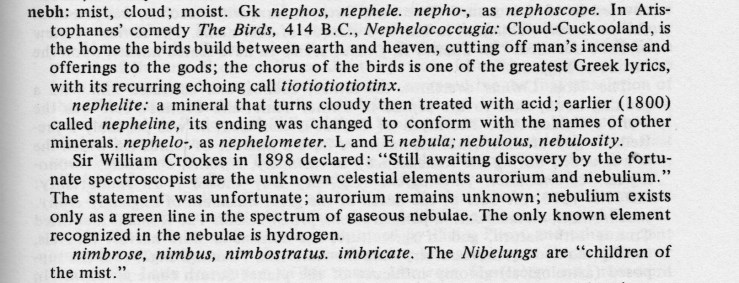
From Joseph T. Shipley’s The Origin of English Words: A Discursive Dictionary of Indo-European Roots (1984). Check his last notation (the Nibelungen are a motif in Gravity’s Rainbow):

img_3681

As GR progresses, Our Free Agent Slothrop gets better and better at spotting means of escape (he’ll note the keys left in an unattended car later in Peenemünde, for example). A ladder up, a ladder down. Rise, ascend, escape. Repeat.

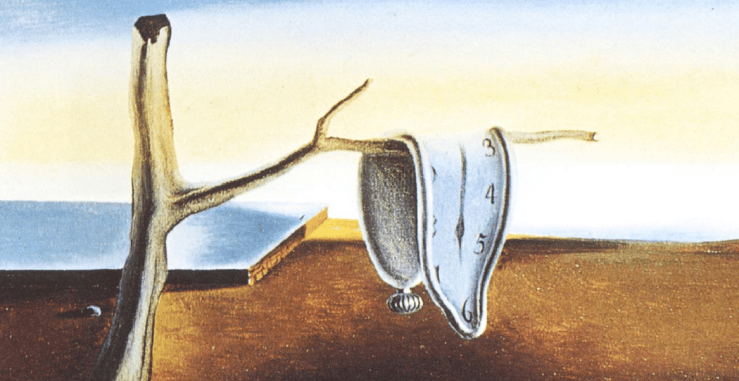
All devices for measuring, obviously—ones and zeroes and all that. Slothrop is a disruptive force to traditional means of measurement, natch.

screenshot-2016-09-30-at-5-56-54-pm
The Persistence of Memory (detail), Salvador Dali, 1931

6 “French and Swiss liqueur distilled from the roots of gentian plants; also called Enzian” (Weisenburger, A Gravity’s Rainbow Companion).

Cf. Oberst Enzian, introduced on page 100—Enzian meets Slothrop a few dozen pages later and pushes Marvy from a train.

7 The inflation, the zeros…Pynchon intricately repeats his motifs, ever-threading them throughout the novel.

8 And who among us has not assured themselves that “it’s only a temporary lapse away from reality”? Semyavin’s complaint seems to be the default position of the 20th century. It’s downright quaint or naive in the 21st.

Reality is not a stable story, a progress, a culmination, but rather a entropic mess, a shuffling chaos, one big etc.

9 Nothing.

10 Weisenburger gives “Ultra, Lichtspiel, and Sträggeli” as nightclubs, and offers that Sträggeli means “‘specter,’ a ‘play of light’ (or Lichtspiel); in the same context, ‘Ultra’ refers to the very high frequency light waves in any spectrum of illumination.” Synonyms.

11 The zoot suit is another motif in GR (another kind of uniform that Slothrop dons—a non-uniform? a uniform of resistance?), and Pynchon’s evocation of the Los Angeles Zoot Suit Riots of 1943 (roughly 10 pages earlier) is a superb little number of storytelling.

M.2011.94a-b
Zoot Suit (1940-1942), Los Angeles County Museum of Art

The zoot suit received an unnecessary revival in the 1990s. I was then an impressionable lad in my very-late teens/early twenties, yet still had the sense to find this attire revolting. It’s possible now to see that the zoot suit revival gelled with the zeitgeist’s preference for baggy garb—hip-hop, mall goth, and skate culture clothes in particular.

12 Clearly prescient lines—both in the spring of 1945 and in 1973 when GR was published. Pynchon explores the idea of these information ideas in his 2009 novel Inherent Vice.

I love the metaphorical evocation of Slothrop as “the wave of the future” — a cliche that the narrative literalizes.

David Foster Wallace: “I’d need some kind of cogent explanation of what Generation X is”

Today, I somehow ended up listening to a “rare” 1996 David Foster Wallace interview on Boston’s The Connection (I was purging a bunch of old stuff, student work, in my office, and, as I often do, put on YouTube as a distraction—the interview popped up after another vid I can’t recall, but one that featured DFW reading too). Here’s the audio:

The interview is pretty good, especially as it happens right before Infinite Jest explodes, but also in the midst of IJ’s marketing buzz, which posits Wallace-as-next-Pynchon, “voice of Gen X,” etc.

I consider myself Generation X, and I have to admit that although I know that much of how a generation is defined boils down to fucking marketing trends (look at how Millennial has been steadily pushed younger and younger over the last ten years), I’m still fascinated by broad-stroke characteristics. (I’m also just generally mad at boomers, as is my Gen X right).

Anyway, some of my favorite bits of the interview circle over Gen X and what it is or is not (prompted by caller “Don,” who wonders whether DFW is a Gen X Tom Pynchon).

Wallace, born in 1962, would be a late Baby Boomer according to many demographers and cultural analysts. (So would Douglas Coupland, author of the 1991 “novel” Generation X, born just a few months before Wallace. So too, for that matter, would be the members of Sonic Youth, born between 1953 and 1962).

The text below is from Kunal Jasty’s transcription:

Christopher Lydon: David Foster Wallace is our guest, his new novel — it’s his second novel and his third book — is this huge doorstop of a post-modern, experimental, funny, dark, incredibly compelling… my taste does not run to avant-garde fiction generally, but this is an irresistible book. I was dreading it, and then I didn’t want it to stop. Don is calling from Rockport.

Don: I have a short question. Just talking on your program months ago with John Updike about Thomas Pynchon, who gave a kind plaudit to him… is Mr. Wallace the Generation X’s Tom Pynchon?

Christopher Lydon: David Wallace, what do you think?

David Foster Wallace: I’d need some kind of cogent explanation of what Generation X is. I hear the term a lot and I’ve honestly never understood what it means. I don’t know Pynchon as well as you do, but for me Pynchon is a quintessentially sixties writer. His sensibility comes out of the late Beats of the sixties. One of the things that I think my generation misses is that real sense of unity and community in the sixties. One of the things I find amusing about Generation X is that it’s kind of a clumsy attempt to form some kind of rubric or community out of our generation. I’m 34, so we’re talking mostly about people who are younger than I, but I think one of the difficulties of my generation is that there’s a great amount of atomism and anomie, and there doesn’t feel like a whole lot of a community. There aren’t a whole lot of shared values. There aren’t a whole lot of shared ideals. I mean [Generation X] seems silly. It seems like it’s trying to impose some kind of sixties type agenda on a generation that as far as I can see is essentially very lost and lonely.

Christopher Lydon: There is an incredibly lost and lonely feeling running through this whole book, I’ve got to say, running through maybe all of American life at the end of this century. Can you talk about the lost and lonely piece?

David Foster Wallace: When I started the book the only idea I had is I wanted to do something about America that was sad but wasn’t just making fun of America. Most of my friends are extremely bright, privileged, well-educated Americans who are sad on some level, and it has something, I think, to do with loneliness. I’m talking out of my ear a little bit, this is just my opinion, but I think somehow the culture has taught us or we’ve allowed the culture to teach us that the point of living is to get as much as you can and experience as much pleasure as you can, and that the implicit promise is that will make you happy. I know that’s almost offensively simplistic, but the effects of it aren’t simplistic at all. I don’t have children but I’m sort of obsessed with the idea of what my children will think of me, and of us, and of what we’ve done with all we’ve been given, and why we are so sad.

Hearing America as it must sound to a non-American | Gravity’s Rainbow, annotations for page 256

Just before dawn knocking comes very loud, hard as steel. Slothrop has the sense this time to keep quiet.1

“Come on, open up.”

“MPs 2 , open up.”

American voices, country voices, high-pitched and without mercy. He lies freezing, wondering if the bedsprings will give him away. For possibly the first time he is hearing America as it must sound to a non-American 3. Later he will recall that what surprised him most was the fanaticism, the reliance not just on flat force but on the rightness 4 of what they planned to do… he’d been told long ago to expect this sort of thing from Nazis, and especially from Japs —we were the ones who always played fair—but this pair outside the door now are as demoralizing as a close-up of John Wayne (the angle emphasizing how slanted his eyes are, funny you never noticed before) screaming “BANZAI!” 6.

“Wait a minute Ray, there he goes—”

“Hopper! You asshole, come back here—”

“You’ll never get me in a strait jacket agaaaaain… .” Hopper’s voice goes fading around the corner as the MPs take off in pursuit.

It dawns on Slothrop, literally, through the yellowbrown window shade, that this is his first day Outside. His first free morning. He doesn’t have to go back. Free? What’s free? He falls asleep at last. A little before noon a young woman lets herself in with a passkey and leaves him the papers. He is now an English war correspondent named Ian Scuffling 7.

1 Slothrop has fled the clutches of The White Visitation and made out for Nice, where he hooks up with Blodgett Waxwing’s contacts in a squalid safehouse…the safehouse is actually closer to a madhouse though, or a halfway house.

2 Military Police—a concept that perplexed me when I was five or six, watching MASH reruns with my father. MASH is kinda sorta (slightly) Pynchonian, actually.

3 A fascinating notation.

Some jingoists would insist, of course, that no decent American (i.e., a Real American) ought to hear America the way it must sound to a non-American. Slothrop has already posed as an Englishman, but there’s a bit of a conversion here, I think—a shift for our shifter, who’s moving from not simply performing a double-agency to actually existing (or non-existing) one.

Cf. Walt Whitman’s 1860 poem “I Hear America Singing”:

I hear America singing, the varied carols I hear,
Those of mechanics, each one singing his as it should be blithe and strong,
The carpenter singing his as he measures his plank or beam,
The mason singing his as he makes ready for work, or leaves off work,
The boatman singing what belongs to him in his boat, the deckhand singing on the steamboat deck,
The shoemaker singing as he sits on his bench, the hatter singing as he stands,
The wood-cutter’s song, the ploughboy’s on his way in the morning, or at noon intermission or at sundown,
The delicious singing of the mother, or of the young wife at work, or of the girl sewing or washing,
Each singing what belongs to him or her and to none else,
The day what belongs to the day—at night the party of young fellows, robust, friendly,
Singing with open mouths their strong melodious songs.
To which, Langston Hughes, in 1926 replied in “I Too”:
I, too, sing America.
I am the darker brother.
They send me to eat in the kitchen
When company comes,
But I laugh,
And eat well,
And grow strong.
Tomorrow,
I’ll be at the table
When company comes.
Nobody’ll dare
Say to me,
“Eat in the kitchen,”
Then.
Besides,
They’ll see how beautiful I am
And be ashamed—
I, too, am America.

4 When we most believe we are right we are most susceptible to being wrong. Unconsidered belief is terrifying.

5 Pynchon is too often accused of obscurity; his critique of blind patriotism and government propaganda is so clear that it hardly warrants this footnote. So I’ll comment, rather, on his brilliant modernist style—note the shift here, via free indirect speech, from third-person to first-person, from “he” to “we.”

I’m admittedly confused here—does the narrator attribute the expression BANZAI! to the MPs, or to John Wayne? I think what we have here is a conflation of both (which is to say a conflation of the third-person “he” with the first-person “I”—in other words, Slothrop, now attuned (or detuned) to “hearing America as it must sound to a non-American” can recast his country’s jingoistic martial fantasies and see/hear the Hero of the Military-Industrial-Entertainment Complex (John Wayne) as a cartoonish, racialized war trope).

In Japanese, the term banzai translates as ten thousand years, but basically means, as I’m sure you know, something like “Hooray.” During WWII, banzai was an attack cry for Japanese soldiers (review the independent clause after the ellipses in Pynchon’s original sentence).

Is BONZAI! here a strange transposition of GERONIMO!, an exclamation cribbed by U.S. Army parachutists from a 1939 film of the same name?

The ironic notation of John Wayne’s “slanted…eyes”seems like a nod to the notorious 1956 flop The Conqueror, which featured John Wayne as…Genghis Khan.


And speaking of BANZAI

Have you seen the Pynchonesque 1984 film The Adventures of Buckaroo Banzai Across the 8th Dimension? It is good fun.


(W.D. Richter, director of Buckaroo Banzai, also co-wrote Big Trouble in Little China, in which Kurt Russell did a good/bad John Wayne impression).

Slothrop’s always shuffling off identities—or shuffling into them. Here, we get Ian Scuffling, his English journalist identity (for a few dozen pages). Scuffling…shuffling…? Let’s get the etymology.

From Joseph T. Shipley’s The Origin of English Words: A Discursive Dictionary of Indo-European Roots (1984):

img_3672