Book Acquired, 1.04.2012

20120104-171225.jpg

The Sweet Relief of Missing Children by Sarah Braunstein. I like the awkwardness of the title: what is “missing” modifying? Is it an adjective, describing the children? Is it a gerund? Who is gaining relief from what?

Publisher Norton’s description:

In New York City, a girl called Leonora vanishes without a trace. Years earlier and miles upstate, Goldie, a wild, negligent mother, searches for a man to help raise her precocious son, Paul, who later discovers that the only way to save his soul is to run away. As the narrative moves back and forth in time, we find deeper interconnections between these stories and growing clues about Leonora—this missing girl whose face looks out from telephone poles and billboards—whom one character will give anything to save.

The Sweet Relief of Missing Children is a suspenseful novel about the power of running and the desire for reinvention. It explores the terror and transcendence of our most central experiences: childhood, parenthood, sex, love.

“Books Are Like Ghosts” — Roberto Bolaño on Lost Books

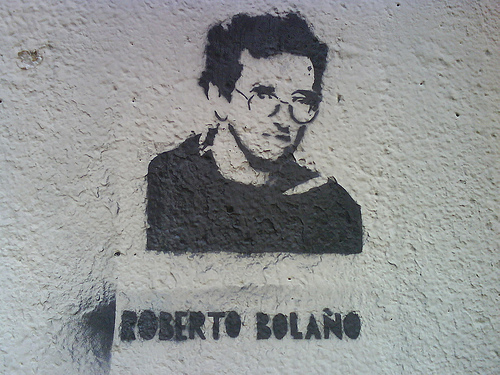
Roberto Bolaño on lost books. From Between Parentheses:

To search for those copies or similar copies, the same font, the same layout, the same plot, the dark or bright syntax, somehow forces me to remember a time when I was young and poor and careless, though I know that the same copies, the exact same ones, will never be found, and to set myself to such a task would be like marching into Florida in search of El Dorado.

Even so, I often browse used bookstores, sorting through stacks of books left behind by others or sold in a dark moment, and in corners like these I try to find the books that I lost or forgot more than thirty years ago on another continent, with the hope and dedication and bitterness of those who search for their first lost books, books that if found I wouldn’t read anyway, because I’ve already read them over and over, but that I would look at and touch just as the miser strokes the coins under which he’s buried.

But books have nothing to do with greed, though they do have something to do with coins. Books are like ghosts.

Books I Didn’t Read in 2011 (And Books I Will Try to Read in 2012)

Okay. So obviously a list of the books I didn’t read in 2011 would be, y’know, long.

This post is about the books I set out to read, tried to read, wanted to read, abandoned, neglected, acquired and thought looked interesting, etc. It’s also about what I want to—what I plan to—read in 2012.

20111228-115819.jpg

A reasonable starting place: I wrote a post in early January of this year detailing the books I would try to read in 2011. I actually read most of the books I named in that post. But:

I failed to read past page 366 of Adam Levin’s incredibly long novel The Instructions, although I think I was a bit too harsh in my semi-review. Chalk it up to exhaustion.

I failed to even begin to try to read William Gaddis’s incredibly long novel JR. (But I swear to read it one year. Not next year, but maybe the year after?).

I failed to read past the first chapter of Katherine Dunn’s Geek Love.

I read most of the Tintin collections I picked up last year, but I didn’t get to volumes 5 or 6.

20111228-115848.jpg

Moving beyond that early post, books that I recall abandoning (although I’m sure there must be more):

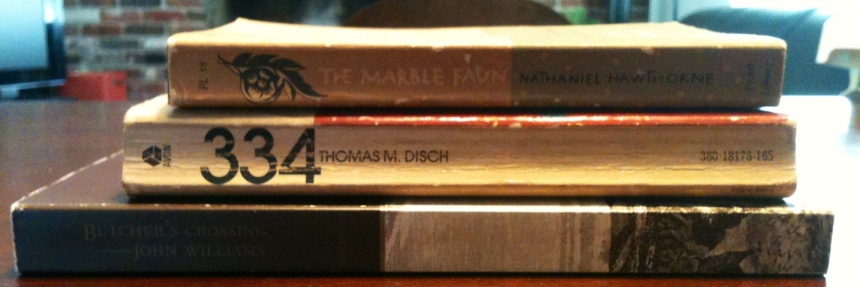
I abandoned Nathaniel Hawthorne’s Italian romance The Marble Faun after about 30 pages.

I abandoned 334 by Thomas Disch after about 50 pages. Somehow simultaneously dense and loose, it struck me as intensely imagined and sloppily composed.

I abandoned John Williams’s Butcher’s Crossing after the first chapter; it was a great opening chapter, but I thought it was going to be, I don’t know, more like Blood Meridian.

I also abandoned Chad Harbach’s big book The Art of Fielding (after 100 pages) because it was lame (notice it’s not pictured above because I traded in that sucker), but I had a nice dialog with some readers who responded to a post I wrote about abandoning it, so that was a plus.

20111228-115828.jpg

Books I bought in 2011 that I aim to read in 2012:

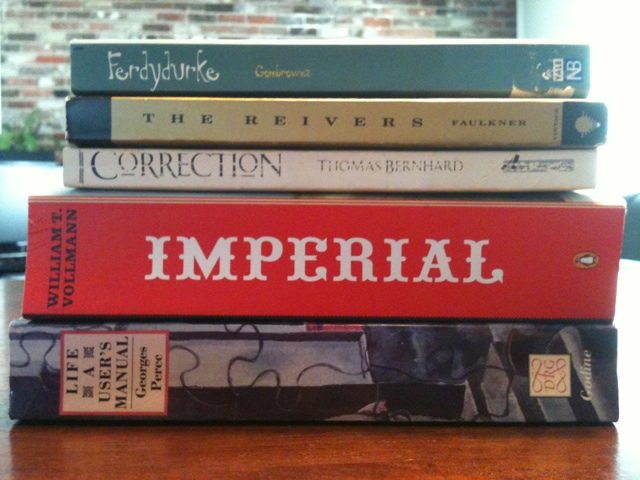
Correction by Thomas Bernhard. Bernhard was a repeated suggestion from readers in the aforementioned Harbach post/rant, and he was apparently a huge influence on W.G. Sebald, so, yes, looking forward to this.

The Reivers by William Faulkner. I read A Light in August this year and reread most of Go Down, Moses. My plan is to read one Faulkner a year for the next ten years.

Ferdydurke by Witold Gambrowicz. I struggled to make it through Gombrowicz’s bizarre jaunt Trans-Atlantyk, but once the novel taught me how to read it, I was enchanted by its strange humor and frenetic syntax. Over some beer and wine, I had a conversation about Ferdydurke with my father-in-law’s priest who is Polish. His pronunciation of Ferdydurke should win an award for charm.

I will read Georges Perec’s big book Life: A User’s Manual.

I have already promised to read William Vollmann’s Imperial.

There are many, many more, of course (too many, really).

20111228-115835.jpg

Books people sent me to read and review that look really cool that I will be reading and reviewing at some point in the very near future:

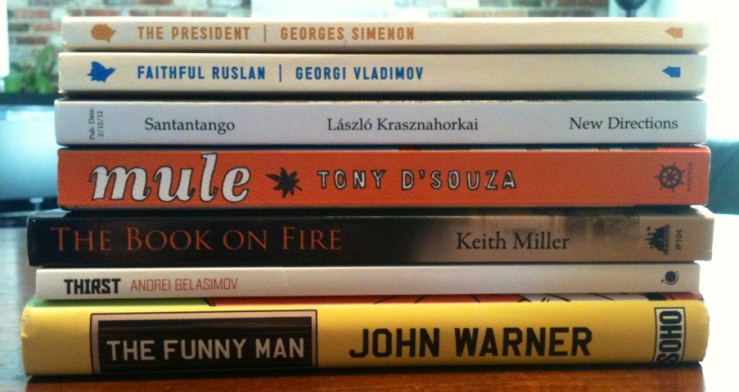
Satantango by László Krasznahorkai: I will read this and review this in the very near future.

The Funny Man by John Warner: Comedy, drugs, celebrity culture.

The Book on Fire by Keith Miller: This one is about a biblioklept. It’s been at the top of my stack for a few months now, but I keep letting myself get distracted.

Thirst by Andrei Gelasimov: Apparently this novella about a maimed alcoholic war vet is funny. (I hate the cover).

Mule by Tony D’Souza: Middle class man sells marijuana cross country. (I love the cover).

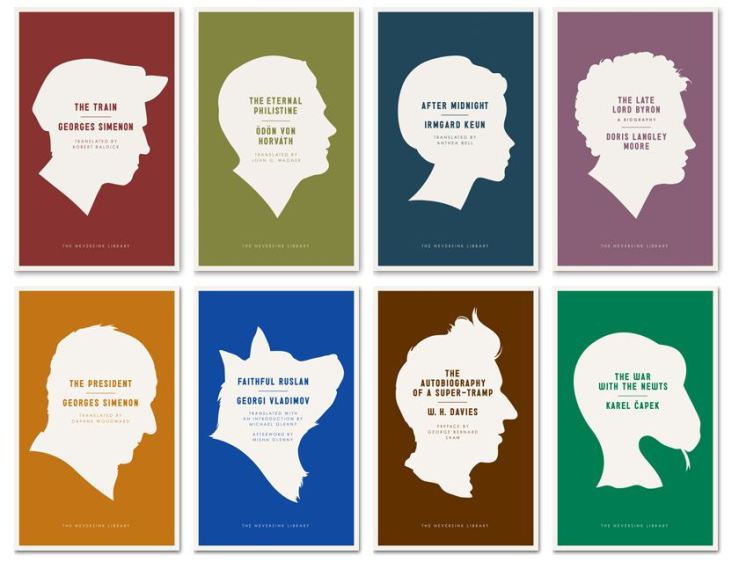
Various titles from Melville House’s Neversink line: I’ve got a few in the stack.

Also: I got a Kindle Fire for Christmas. I actually stayed up really late last night reading free public domain books from Hawthorne, Melville, Whitman, and Dickinson; I’ll read a contemporary novel on it this year—Neal Stephenson’s Snow Crash, perhaps? Suggestions welcome!—and try to review both novel and the process of reading the novel on a warm glowing machine.

And: I’m sure there are a ton of novels that will come out in 2012 that I’ll want to read; I’m already primed for Dogma, Lars Iyer’s sequel to Spurious.

So: What are you guys looking forward to reading in 2012? What did you fail to read in 2011?

Novels Make Lousy Gifts (But We Should Give Them Anyway)

Novels make lousy gifts.

Now, if you have even a passing acquaintance with this little blog, you know that I love novels, that Biblioklept primarily focuses on novels, and that I love books in general. I am not anti-novel or anti-giving-novels-as-gifts. Send me a novel as a gift. I will appreciate it (or trade it toward another book, which is kinda sorta a form of appreciation).

I went to my favorite bookstore today, in fact, to buy some books for Christmas presents. But I restrained myself from picking up novels as gifts.

If you love books like I do, I’m sure that some of your most favorite gifts ever have been novels. Some of my most favorite gifts have been novels. The remaindered copy of The Lord of the Rings (from the South Barwon Library that some friends of the family gave me on Dec. 5th, 1990 when we visited Melbourne (the one in Australia, not Florida)) is probably one of my all-time favorite gifts. I know the exact date because the nice lady who gave it to me wrote a kind note in book and included the date in her note.

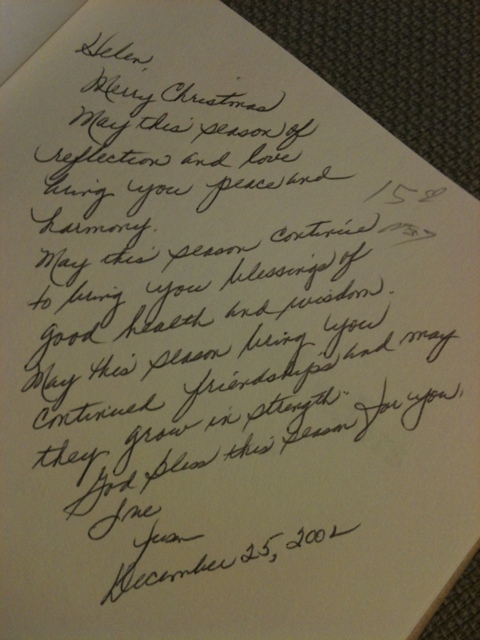
I could never bear to get rid of an inscribed book given as a gift, but lots of people do get rid of inscribed books. This is a monstrous practice, one that attests to just how easily people will discard your oh-so-earnest gifts. If you spend a lot of time in used bookstores (I do) you will come across these sad markings. Because it’s close at hand, and I’m aware of its inscription, I’ll share the note that Jean wrote to Helen (no, of course I know neither of them) in my copy of Balthus’s memoir, Vanished Splendors:

20111220-195619.jpg

I am aware that the memoir of a pervy artist is not the same as a novel, and that, as my first illustrating example, I already seem to be losing my metaphorical balance, but again, it was close at hand, right near the Tolkien in fact (by the bye, Vanished Splendors is pure gold).

In any case, I think Balthus’s memoir “reads” like a novel, which is to say that it’s mostly big chunks of text that require time and energy to decipher, set against the backdrop of TV, internet, movies, etc. It has some pictures, but not many. There’s no gimmick to it. I’m guessing that Helen just wasn’t into Balthus, or, if she had a passing interest in his art, it didn’t translate into wanting to read his memoir. She certainly didn’t read any of it (yes, I have a special sense that tells me when a book has been read. This baby was a virgin). Every time I look over the book, I feel sorta bad for Jean, whose gift seems to have gone unappreciated (by Helen; not by me. I was happy to pick it up used).

To return to an earlier point: yes, some of our favorite gifts ever might be novels. However, most of the life-changing novels I received were rarely given as birthday or Christmas gifts. They weren’t gifts of obligation, if you’ll forgive the ugliness of that term. Most of the great novels that were given to me were handed along free of occasion, given because the giver thought (knew) I should read them.

At Christmas though, we feel obliged to give. Sometimes we get some great novels as gifts. More often though, it seems like that relative who knows you “like to read” gives you a novel by, I dunno, Clive Cussler or Tom Clancy. The worst though are those tiny little hardback books that are designed specifically to be gifts, little faux-tomes of faux-philosophy usually connected to golf or angels or some other bullshit (I was horrified last year when DFW’s “This Is Water” speech got this treatment). Anyway, if you like books, you probably just go trade in this bullshit toward the books you like.

But this post isn’t really about the problem of getting airport novels or gimmick books as gifts. This post is about those of us who insist on giving novels we love to people who we know don’t really love reading novels. Especially really big, somewhat (or very) experimental novels. Important novels. Those novels that we read and decide that everyone needs to read this to become a fully realized human being [gags on that phrase].

I think sometimes we give our friends and relatives novels as gifts because we love them so much and we also love the book so much that we are maybe gunning for an intellectual three-way. We want them to read the novel so that we can share in it together, discuss it, rant about it, argue about it (remember though: that’s what the internet is for).

What often happens though is that these gifted novels (forgive the ambiguous, awkward modifier) tend to lurk about the giftee’s abode, brickishly unread, like dour unwanted houseguests. They skulk at the margins of bookshelves or migrate to the bottom of “to read” stacks; a lucky one might find occasional fingering above a commode. They are ugly reminders to the giftee, signals of how he or she has failed to meet your expectations (your expectations re: 9 or 15 or 25 or 30 hours of her time). (Young people, by which I mean college students in the liberal arts, are the exception here; they probably aren’t going to read the novel, but they are absolutely fine with putting it out for show).

People like books with pictures though, generally.

Even though I think novels tend to make lousy gifts, we should give them to our friends and loved ones anyway, even on those days of obligated giving. We should still offer novels up like they were somehow a part of our own selves in the deluded hope that the giftee will read them and discuss them with us, and that the novel will become an internal, virtual, shared experience. We should give them knowing that it’s likely they’ll go unread, that they may even be a point of shame for the giftee (especially when we ask, “Have you started . . . ?”). We should give them aware that they might point toward our own selfish desires.

Even if a novel may be a gift that implies a certain level of intellectual work, it also implies a  sense of trust and respect toward the giftee, and in this sense, giving a loved novel is a clear way to show love.

The Obligatory Best of 2011 List(s)

Best Books I Read in 2011 That Were Published in 2011 (Or Close Enough to 2011)

MetaMaus, Art Spiegelman

The Avian Gospels, Adam Novy

Spurious, Lars Iyer

The Third Reich, Roberto Bolaño

Humiliation, Wayne Koestenbaum

The Pale King, David Foster Wallace

Between Parentheses, Roberto Bolaño

***

Best Books I Read in 2011 That Were Published Before 2011

The Elementary Particles, Michel Houellebecq

Wittgenstein’s Mistress, David Markson

Expelled from Eden: A William Vollmann Reader

Ray, Barry Hannah

Trans-Atlantyk, Witold Gombrowicz

The Garden of Eden, Ernest Hemingway

Light in August, William Faulkner

Hadji Murad, Leo Tolstoy

First Love and Other Sorrows, Harold Brodkey

Airships, Barry Hannah

Speedboat, Renata Adler

Under the Volcano, Malcolm Lowry

Vertigo, W.G. Sebald

***

Best Rereading

Candide, Voltaire

***

Best Audiobook of 2011

The Collected Fictions of Gordon Lish, read by Gordon Lish

***

Best Film of 2011

The Tree of Life

***

Most Charming Film of 2011

Midnight in Paris

***

Most Overhyped Book of 2011

The Art of Fielding, Chad Harbach

***

Best Book Cover of 2011 

***

Best Book Series Design

Melville House’s Neversink Imprint


***

Weirdest (Yet Nevertheless Moving) Novel of 2011

How to Keep Your Volkswagen Alive, Chris Boucher

***

Book I Read in 2011 That Still Confounds and Haunts Me

The Kindly Ones, Jonathan Littell

***

Saddest Book I Read in 2011

Tie: Under the Volcano, Malcolm Lowry; The Stories of Breece D’J Pancake, Breece D’J Pancake

***

Best Essay (Print)

“Some Notes on Translation and on Madame Bovary,” Lydia Davis (The Paris Review)

***

Best Essay (Online)

“Nude in Your Hot Tub, Facing the Abyss (A Literary Manifesto After the End of Literature and Manifestos),”  Lars Iyer (White Review)

***

Worst Literary Trend of 2011

Tie: Lame “literary fiction” novels; Articles that link everything to David Foster Wallace

***

Best Literary Trend of 2011

Plagiarism!

***

Most Obvious Disclaimer

I did not read or see or hear every book or essay or audiobook or film or TV show or record or video that came out in 2011. Also, there are some days left in the year. These are all, just like, opinions man.

“Novels Are Fantasies of Powerlessness and Power” — Biblioklept Talks to Adam Novy About His Novel The Avian Gospels

Adam Novy’s debut novel The Avian Gospels is one of the best novels I’ve read this year, and one of the best contemporary novels I’ve read in ages. It’s a surreal dystopian magical romance set against the backdrop of political and cultural repression, violent rebellion, torture, family, and birds. Lots and lots of birds. (Read my review).

Adam was kind enough to talk to me about his work over a month-long series of email exchanges; the interview presented below reveals much of his generous, creative energy.

Adam currently teaches writing at Scripps College, Pasadena City College, Long Beach City College and Orange Coast College.

The Avian Gospels is available now from Hobart.

Check out Adam’s website. 


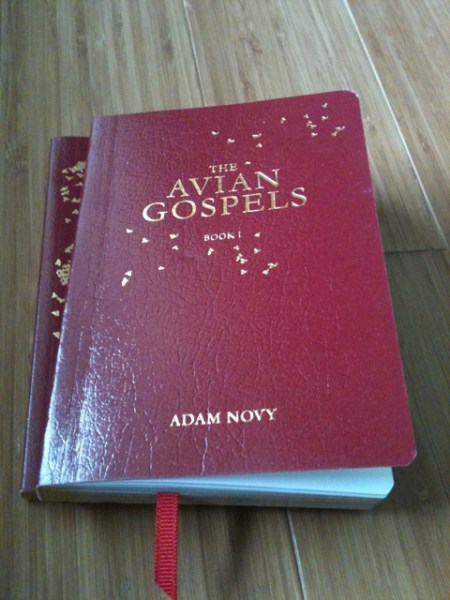
Biblioklept: I have a lot I want to ask you about what’s in your novel, but I have to start by asking about the physical book itself. The Avian Gospels is a lovely little two volume pocket-sized monograph—textured oxblood covers, gilded pages with line numbers, inset bookmarks. Visually, it recalls a Gideon bible, I guess, only not, I don’t know, chintzy. Where did the design idea come from?

Adam Novy: My editor at Hobart, Aaron Burch, had the idea of making the book look like a Bible. He’s an excellent designer and does a wonderful job with Hobart. Some boheemith press in New York City should really snap him up.

Biblioklept: How did the idea for The Avian Gospels come about? When did you start drafting the book? How long did it take to write?

AN: After 9/11, there was a moment where I felt like all Americans were on the same team. Now I wonder if we’ll ever feel that way again. Pardon me for living in the moment, but this country is just so completely fucked. This sensation of being American swiftly curdled into panic, but by then, the coordinates of my work had all been changed. I wanted to find a voice with room for both the historical and the intimate, which led me to a kind of first-person plural officialese. It ended up creating this echo-chamber effect where the personal and political identities of each character were different, and nobody could quite be who they were supposed to be, or wanted to be.

It took months of screwing around to figure this out, and most of it, of course, was accidental. The Lord of the Rings was on TV a lot at the time, and sometimes I thought I wanted to sound like Gandalf if Gandalf was full of shit and, like, a genocider who felt sorry for himself, but still was Gandalf, all mystical and officious, bossing everyone around. I understood the characters right away, except for Jane, who was always hard to deal with. She gets in arguments a lot and she’s usually right. I think I have hard time writing characters who are right. I myself am never right, so I had trouble relating to her. Of course, now she’s my second-favorite character in the book, after Mike.

I started the book in spring of 2002 and finished it in fall of 2005. In 2006, I found an agent and Hobart took the book in 2008. I went through five apartments, three different cities, three computers, one personal trainer and three therapists in that time. And nine adjunct faculty positions.
Biblioklept:  It’s interesting that you mention the LOTR movies as a kind of ambient influence, because they were pretty ubiquitous in the last decade—and there’s so much of the last decade’s zeitgeist in your book: torture, despotism, political and cultural repression, the plight of a refugee class, the idea of “green zones,” etc. You foreground these themes by crafting Gospels as a kind of dystopian novel with elements of magical realism, but it’s also very much a novel about family, and even a love story. (By sheer coincidence I watched the restored edit of Metropolis in the same time frame that I was reading Gospels, and saw so many echoes there). How conscious were you of genre conventions? I’m curious because your book sometimes blends genre tropes, sometimes blurs them, and sometimes straight-up explodes them . . .

AN: The book is quite deliberately a mash-up. I think it’s normal in conversation to try out different ways of seeing things—a fussy way of saying this might be “experiment with different hermeneutics.” For example, one might reference the NBA, The Wire, Shakespeare and Dazed and Confused in a discussion about Obama. I wanted the book to enact this kind of embeddedness, this flailing for a context that makes sense, and I wanted the narrator to sound as though its vernacular was ornate and obsolete, like it trafficked in a pleasure that justified itself as satisfaction while remaining an inadequate moral lens. That’s why I write violence like I do: I want it to be horrifying and beautiful. Unfortunately, violence is cool. I’m not immune—I always watch Kill Bill and Scarface when they’re on cable. It’s disturbing. Everyone knows that torture doesn’t work as an intelligence-gathering method, but our country did it anyway because it simply couldn’t stop. It was a kind of jacking off, the only kind that certain political parties seem to approve of.

Whenever we write about power, we should always defend the powerless, even if they’re just as bad as those in power. I think I saw that in Cioran, and did you know Cioran was a Nazi sympathizer? I just read that Gertrude Stein was, too. I don’t know what kind of paradigm can reckon with this world.

Biblioklept: I had no idea about Stein or Cioran’s Nazi sympathies, but I guess many artists and writers and intellectuals were attracted to the power of fascism, particularly in the modernists’ day (I suppose Ezra Pound and GB Shaw stand out as easy examples, and Heidegger was a member of the Nazi party). Although in our own age, I suppose we also see intellectuals and writers support terrible causes—I think of Christopher Hitchens’s aggressive support of the Iraq War and Bush administration’s policies, for, example.

I don’t want to drop spoilers, but your novel traces an arc that shows how those who are powerless might, given power, recapitulate the aggressive violence that they themselves were once subjected to. In turn, you also reveal how characters who seemed to occupy a clear power position (I’m thinking of Mike here, specifically) are perhaps doomed as well to a life without agency. I found my sympathies shift dramatically throughout the novel. How important are sympathetic characters?

AN: Every writer, including me, wants the reader to cathect to their book with their whole heart. I want my readers to utterly and helplessly engrossed. But sympathy is a means to an end and not the end itself. Technically speaking, it’s just not that hard to accomplish. It’s a skill, like dribbling in basketball is a skill, but it’s not the whole game.

In The Avian Gospels, the character named Mike Giggs is seen in only one scenario—exerting power in the manner of his father—for the first two hundred pages, so he comes off like a jerk until he encounters someone who actually loves him: Chico the band leader. Suddenly, Mike discovers a love of life, a sensitivity and a feeling of camaraderie for his fellows. Not only is he is capable of compassion, he is governed by it. This leaves him ruined in certain ways, but allows him to discover who he can be, and makes him (hopefully) sympathetic.

Meanwhile, on the other end of the book, the character named Zvominir, who was whimperingly sweet for longer than Mike was mean, is meaner than Mike. Novels are fantasies of powerlessness and power—among the zillion other things they are—and I feel like we should at least be conscious of what’s happening to our minds as we are reading. How we deal with power is a serious moral question; counting how many times that we go awwww is not. We have cats on the internet for that. Still, Chad Harbach was probably right when he said that the books that get the best reception are simply “affable.” In desperate times, a nation of New York critic types are turning to . . . Mitt Romney? Or like, Cheever without the psychosexual guilt?

I don’t mean to single out Chad Harbach, whose work I haven’t read, except for his piece on Grantland about the Brewers, which I liked. But what he said is accurate. These days, people seem to feel that art should be uplifting, like art owes it to them, in a customer-service type-way. Have you been to Kinko’s, or excuse me, FedEx Office, lately? It is not a happy place. Novels used to to give the reader the truth in ways no other social narratives would. I’m pretty sure I’m not just being sentimental. There used to be a social lie which said the world was making progress and ascending, but this reversed like fifteen years ago and now we all feel doomed. We need books to tell us how we got here, not to lie about how meaningful our journeys are or however we say it these days. Of course our lives are meaningful, but such a narrow focus on making folks feel better is superficial and disempowering. Our emptiness and dread are trying to tell us something.

Biblioklept: I think you point toward a distinction between art and entertainment here. We want entertainment to comfort us, to ease our worries. In contrast, art challenges us with what we don’t want to see, or can’t see, or can’t see that we can’t see. And yeah, there’s a kind of “literature of comfort” out there, books that simply reconfirm the tropes and tricks and forms of “literary fiction” — so that, even if the protagonists suffer, that suffering is is part and parcel of some greater telos — and not just in terms of the plot, but also in the structure of the novel itself. (Lee Siegel called this camp “Nice Writing” a decade ago, pointing to its “violent affability,” its “deadly sweetness”).

At the risk of asking one of those questions an interviewer is never supposed to ask (but, hey, I really want to know the answer and I think our readers would too), what books move you as a reader?

AN: I think I’m moved by pretty standard stuff. The Portrait of a LadyCharlotte’s WebTo My Twenties, by Kenneth Koch.  On Seeing the Elgin Marbles, by Keats. Places to Look For Your Mind, by Lorrie Moore. Testimony of Pilot and Return to Return by Barry Hannah. Antony and CleopatraStone Arabia, by Dana Spiotta, which is the best new book I’ve read in 2011. Chopin in Winter by Stuart Dybek. The last paragraph of CivilWarLand In Bad Decline. The scene in American Tabloid where Ward steals the pension fund books. The Widow Aphrodissia by Marguerite Yourcenar. There must be fifty different scenes in Buffy that make me cry, and five in Battlestar Galactica. Certain scenes in Lost. This is such a conventional list, I feel like I need to start a fight. FRIDAY NIGHT LIGHTS SUCKS AND YOU ARE ALL A BUNCH OF SAPS. I should also say I’m moved by spectacles of massive human folly. The image of Slim Pickens riding the bomb and waving his hat in Dr. Strangelove and the scene where Kramer and his intern throw the ball of oil out the window are somehow very moving to me.

Biblioklept: I’d love to hear your thoughts on the Occupy Wall Street movement—The Avian Gospels taps into and explores this idea of civil unrest, of disenfranchised voices, of a paramilitary state coping with a populist uprising. You’ve indicated that your novel is in some ways a response to 9/11, but it also seems predictive of the fallout we’re seeing a decade after the fact.

AN: A massive, indescribable injustice was inflicted on our world by the likes of Goldman Sachs and we seem to have no recourse. Law enforcement could not possibly care less, and seeing how they cleared Zucotti Park, they seem jealous of the impunity of Wall Street. In his review of Ron Suskind’s book, Ezra Klein suggests that Washington just did not have the will to pass a stimulus that was big enough. Slavoj Žižek is right when he says this moment is a challenge to our imagination. I think that what happened at Penn State may be a better lens for the recession than Occupy Wall Street. A massive patriarchal network mobilized their resources to preserve an ongoing atrocity. No one will admit that they were wrong, especially the figurehead, Joe Paterno. The community just does not seem to give a shit. They keep telling out-of-towners we don’t get it and rioted in self-pityI guess this is just how power acts.

Biblioklept: What’s next? What are you working on now?

AN: I’m writing a novel about the life and times of Medusa. It’s called The Gore and the Splatter.

Biblioklept: Have you ever stolen a book?

AN: I think the only book I ever stole was an anthology of world literature, which had a really coherent definition of French symbolist poetry. I can’t find this book now, so someone probably stole it from me. Serves me right.


Book Acquired, Sometime Last Week (I’m Not Exactly Sure, It Showed Up While I Was Doing the Thanksgiving Thing in South Florida)

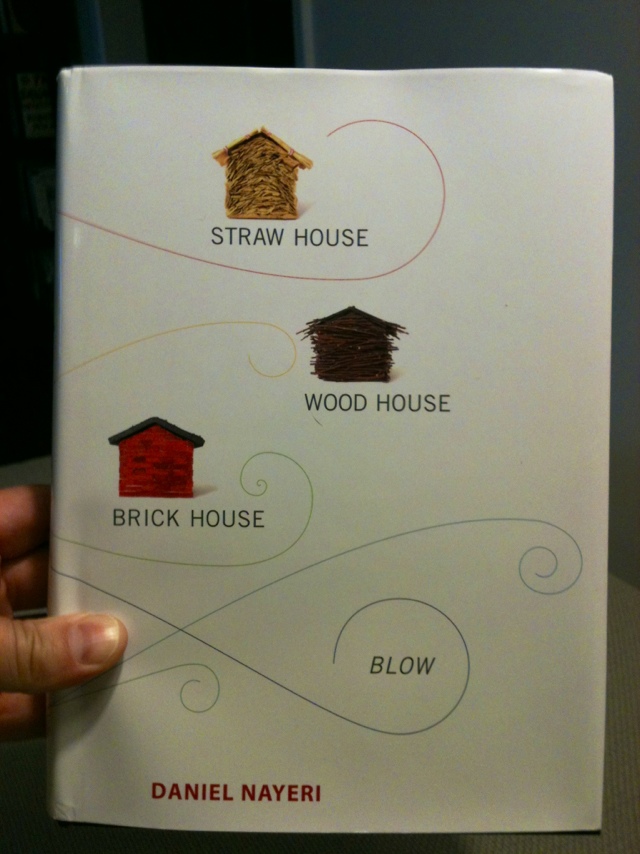
20111129-161210.jpg

This one looks pretty cool: Daniel Nayeri’s quartet of novels  Straw House, Wood House, Brick House, Blow. Publisher’s description—

Written entirely on an iPhone, this quartet of YA novellas by Another Pan and Another Faust author Daniel Nayeri showcases four different genres.

This bold collection of novellas by Another series author Daniel Nayeri features four riveting tales. These modern riffs on classic genres will introduce young adult readers to a broad range of writing styles that explore universally compelling themes such as identity and belonging, betrayal and friendship, love and mortality.

Straw House: A Western sizzling with suspense, set in a land where a rancher grows soulless humans and a farmer grows living toys.

Wood House: This science-fiction tale plunges the reader into a future where reality and technology blend imperceptibly, and a teenage girl must race to save the world from a nano-revolution that a corporation calls “ReCreation Day.”

Brick House: This detective story set in modern NYC features a squad of “wish police” and a team of unlikely detectives.

Blow: A comedic love story told by none other than Death himself, portrayed here as a handsome and charismatic hero who may steal your heart in more ways than one. With humor, suspense, and relatable prose, this hip and cutting-edge collection dazzles.

The book also came with this cool, I dunno whatchacallit, bookmark? It’s flat:

20111129-161218.jpg

—and then it pops up, 3-D style. Zing!

20111129-161225.jpg

Ian McEwan’s Fish Stew

Here’s another entry in our Thanksgiving series of literary recipes–a recipe for fish stew, adapted from Ian McEwan’s novel Saturday. The recipe is Henry Perowne’s, the novel’s protagonist who makes it for dinner on the titular day. The adaptation below comes from journalist Damian Barr, who wrote an excellent article about recipes in literature for The Times.

Into a stockpot of boiling water (a litre or more), put the bones of three skates (or other boned fish), with heads intact. If you have no obliging local fishmonger, use a pound or more of white fish.

Add a dozen or so mussels to the stock. Simmer for 25 minutes.

Meanwhile, strip and chop three onions and eight fat cloves of garlic. Soften over a low heat in a casserole with a lot of olive oil. When they have melted sufficiently, add: a couple of crushed red chillies, a pinch of saffron, some bay leaves, orange-peel gratings, oregano, five anchovy fillets, two cans of peeled tomatoes

When these have blended together in the heat, add a quarter bottle of white wine. Then strain off the stock and add to the casserole. Simmer the mix for 20 minutes.

Rinse and/or scrub the clams and remaining mussels and place in a bowl.

Cut the monkfish tails into chunks and place in a separate bowl.

Wash the tiger prawns and add to the monkfish bowl. Keep both bowls refrigerated until ready to cook. Just before dinner, reheat the casserole.

Simmer the clams, monkfish, mussels and prawns in the casserole for ten minutes.

Eat the stew with brown bread, or garlic bread, salad and a hearty red wine.

(Just a Really Great Grab of) Books Acquired, 11.18.2011

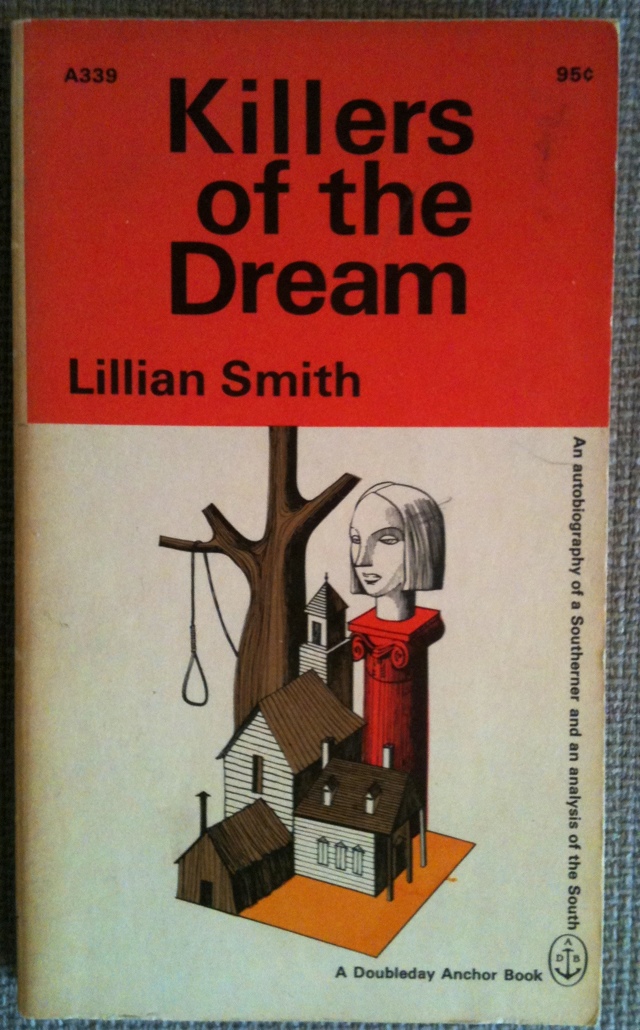
20111118-155019.jpg

See, this is why I go to my favorite local bookshop at least once once. (It doesn’t hurt that it’s like a mile from my house). I read Lillian Smith’s memoir Killers of the Dream back in grad school, but I checked my copy out from the school library (being like, a poor grad student and whatnot, and Biblioklept not being established enough to rack up, uh, free books). Anyway, this is one of the best covers I think I’ve ever seen; Doubleday seems to be taking a cue from Penguin here. The design is simple, elegant, and appropriately horrific. Anyway, I picked up Smith’s book because I had wanted to use a few passages from it for a particular class I was teaching, but I when I looked for it I realized I didn’t it own it. So. Anyway. If you haven’t read Killers, I highly recommend it: “groundbreaking” would be an understatement here. Smith plumbs the strange hypocrisies of Jim Crow South; more straightforward than Faulkner but equally affecting.

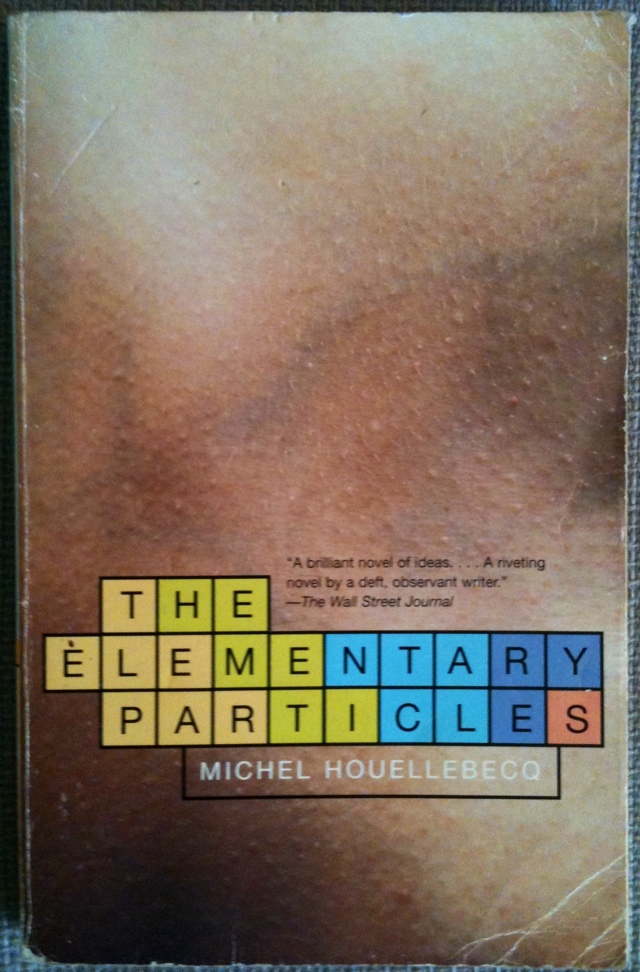
20111118-155032.jpg

I have a little list I keep in my wallet. It’s ragged and rumpled, and some names are cribbed there in a meandering webby calligraphy that would prove to any team of forensic writing analysts that I cannot write by hand. Anyway, Michel Houllebecq (or, if we’re being honest, a bizarre corruption of that last name) has been on that list for a while—so I was happy to snap this one up. The cover is Ballardian, or maybe, more accurately, Cronenebergian (Cronenbergesque?). More forthcoming.

20111118-155042.jpg

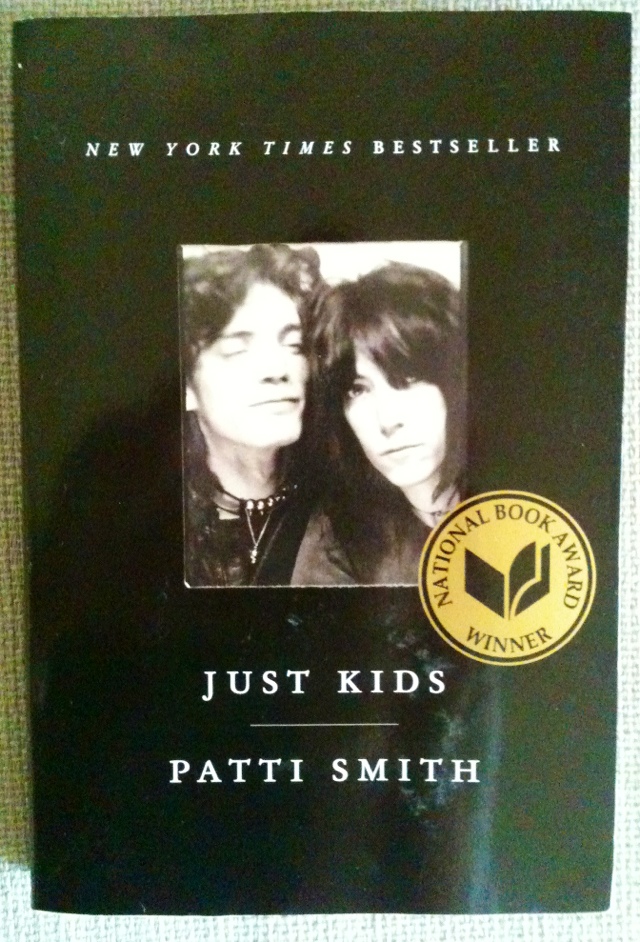
Just Kids: Patti Smith: Robert Mapplethorpe: I was looking under Biographies for Lillian Smith: found this: c’mon, you know this won the Nat’l BA: (or the sticker should tip you): will check out the fuss: extraneous colon: :

Three (Somewhat Literary) Lists for 11 | 11 | 11

Eleven Authors Who Were Also Veterans of War

1. Stendahl (Napoleonic Wars)

2. Ambrose Bierce (Union Army, American Civil War)

3. Erich Maria Remarque (German Army, WWI)

4. George Orwell (Republican Army, Spanish Civil War)

5. Kurt Vonnegut (U.S. Army, WWII)

6. Joseph Heller (U.S. Air Force, WWII)

7. Eveyln Waugh (British Royal Marines, WWII)

8. Norman Mailer (U.S Army, WWII)

9. Gore Vidal (U.S. Army, WWII)

10. Tim O’Brien (U.S. Army, Vietnam War)

11. Anthony Swofford (U.S. Marine Corps, Persian Gulf War)

*          *          *

Eleven Encyclopedic Books, Overstuffed with References, That Compel Compulsive Reading

1. Moby-Dick, Herman Melville

2. Finnegans Wake, James Joyce

3. Expelled from Eden, A WilliamVollmann Reader

4. Species of Spaces and Other Pieces, Georges Perec

5. Wittgenstein’s Mistress, David Markson

6. The Silmarillion, J.R.R. Tolkien

7. Foucault’s Pendulum, Umberto Eco

8. The Rings of Saturn, W.G. Sebald

9. The Recognitions, William Gaddis

10. Between Parentheses, Roberto Bolaño

11.  The Architecture of the Arkansas Ozarks, Donald Harrington

*          *          *

Eleven Excellent Films About Films and Film-making 

1. Hearts of Darkness, Eleanor Coppola, et al

2. Lost in La Mancha, Keith Fulton et al

3. Burden of Dreams, Les Blank

4. Adaptation, Spike Jonze

5. Be Kind Rewind, Michel Gondry

6. The Player, Robert Altman

7. Ed Wood, Tim Burton

8. Stardust Memories, Woody Allen

9. Sullivan’s Travels, Preston Sturges

10. American Movie, Chris Smith

11. Barton Fink, Coen Brothers

Seven Horror Stories Masquerading In Other Genres

We often identify genre simply by its conventions and tropes, and, when October rolls round and we want scary stories, we look for vampires and haunted houses and psycho killers and such. And while there’s plenty of great stuff that adheres to the standard conventions of horror (Lovecraft and Poe come immediately to mind) let’s not overlook novels that offer horror just as keen as any genre exercise. Hence: Seven horror novels masquerading in other genres:

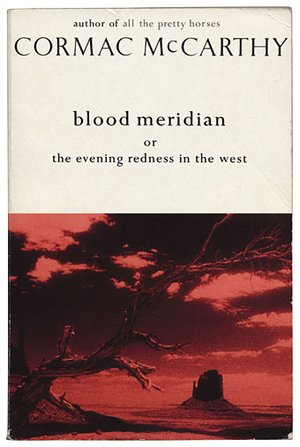
cormac5.jpg_jpeg_300x1000_q85

Blood Meridian — Cormac McCarthy

In my review (link above), I called Blood Meridian “a blood-soaked, bloodthirsty bastard of a book.” The story of the Glanton gang’s insane rampage across Mexico and the American Southwest in the 1850s is pure horror. Rape, scalping, dead mules, etc. And Judge Holden. . . [shivers].

Rushing to Paradise — J.G. Ballard

On the surface, Ballard’s 1994 novel Rushing to Paradise seems to be a parable about the hubris of ecological extremism that would eliminate humanity from any natural equation. Dr. Barbara and her band of misfit environmentalists try to “save” the island of St. Esprit from France’s nuclear tests. The group eventually begin living in a cult-like society with Dr. Barbara as its psycho-shaman center. As Dr. Barbara’s anti-humanism comes to outweigh any other value, the island devolves into Lord of the Flies insanity. Wait, should Lord of the Flies be on this list? 

2666 — Roberto Bolaño

Okay. I know. This book ends up on every list I write. What can I do?

While there’s humor and pathos and love and redemption in Bolaño’s masterwork, the longest section of the book, “The Part about the Crimes,” is an unrelenting catalog of vile rapes, murders, and mutilations that remain unresolved. The sinister foreboding of 2666‘s narrative heart overlaps into all of its sections (as well as other Bolaño books); part of the tension in the book–and what makes Bolaño such a gifted writer–is the visceral tension we experience when reading even the simplest  incidents. In the world of 2666, a banal episode like checking into a motel or checking the answering machine becomes loaded with Lynchian dread. Great horrific stuff.

King Lear — William Shakespeare

Macbeth gets all the propers as Shakespeare’s great work of terror (and surely it deserves them). But Lear doesn’t need to dip into the stock and store of the supernatural to achieve its horror. Instead, Shakespeare crafts his terror at the familial level. What would you do if your ungrateful kids humiliated you and left you homeless on the heath? Go a little crazy, perhaps? And while Lear’s daughters Goneril and Regan are pure mean evil, few characters in Shakespeare’s oeuvre are as crafty and conniving as Edmund, the bastard son of Glouscester. And, lest I forget to mention, Lear features shit-eating, self-mutilation, a grisly tableaux of corpses, and an eye-gouging accompanied by one of the Bard’s most enduring lines: “Out vile jelly!Peter Brook chooses to elide the gore in his staging of that infamous scene:

The Trial — Franz Kafka

Kafka captured the essential alienation of the modern world so well that we not only awarded him his own adjective, we also tend to forget how scary his stories are, perhaps because of their absurd familiarity. None surpasses his unfinished novel The Trial, the story of hapless Josef K., a bank clerk arrested by unknown agents for an unspecified crime. While much of K.’s attempt to figure out just who is charging him for what is hilarious in its absurdity, its also deeply dark and really creepy. K. attempts to find some measure of agency in his life, but is ultimately thwarted by forces he can’t comprehend–or even see for that matter. Nowhere is this best expressed than in the famous “Before the Law” episode. If you’re too lazy to read it, check out his animation with narration by the incomparable Orson Welles:

Sanctuary — William Faulkner

In my original review of Sanctuary (link above), I noted that “if you’re into elliptical and confusing depictions of violence, drunken debauchery, creepy voyeurism, and post-lynching sodomy, Sanctuary just might be the book for you.” There’s also a corn-cob rape scene. The novel is about the kidnapping and debauching of Southern belle Temple Drake by the creepy gangster Popeye–and her (maybe) loving every minute of it. The book is totally gross. I got off to a slow start with Faulkner. If you take the time to read the full review above (in which I make some unkind claims) please check out my retraction. In retrospect, Sanctuary is a proto-Lynchian creepfest, and one of the few books I’ve read that has conveyed a total (and nihilistic) sense of ickiness.

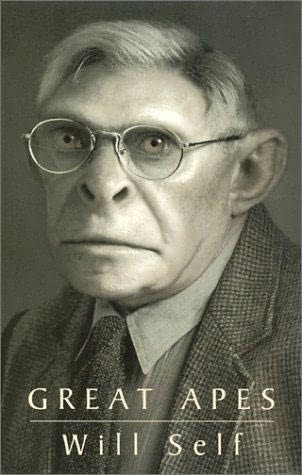
n14559

Great Apes — Will Self

Speaking of ickiness…Self’s 1997 novel Great Apes made me totally sick. Nothing repulses me more than images of chimpanzees dressed as humans and Great Apes is the literary equivalent (just look at that cover). After a night of binging on coke and ecstasy, artist Simon Dykes wakes up to find himself in a world where humans and apes have switched roles. Psychoanalysis ensues. While the novel is in part a lovely satire of emerging 21st-century mores, its humor doesn’t outweigh its nightmare grotesquerie. Great Apes so deeply affected us that I haven’t read any of Self’s work since.

[Ed. note: This post is a few years old. We run it again for Halloween and will run a follow up post later today].

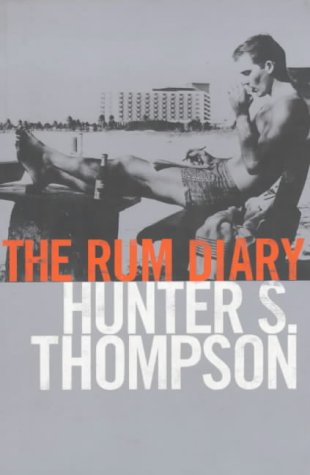
Hey, We Reviewed That Book The Rum Diary by Hunter S. Thompson, the One That Hollywood Turned into a Johnny Depp Movie

Set in the 1950s, Hunter S. Thompson’s second novel The Rum Diary chronicles the drunken misadventures of Paul Kemp, a journalist who moves from New York City to Puerto Rico to write for a small newspaper. While there, Kemp gets involved with a crazy couple who fight all the time (he develops a serious crush on the girl), attends a rum festival, and winds up in jail. Along the way there’s enough drinking to put Hemingway’s characters to shame, and plenty of nude swimming to boot.

Although The Rum Diary was written in the early sixties, it wasn’t published until 1998, long after the infamous gonzo godfather had made his indelible mark on the American literary consciousness. Thompson was 22 when he wrote The Rum Diary, a significant eight years younger than his stand-in in the novel, jaded journalist Paul Kemp. And while it’s easy to imagine that HST was born a cranky old man, at times Kemp’s world-weariness reads more like an affected pose rather than an earned cynicism.

The novel works best when HST focuses on denigrating the cretins, phonies, perverts, and degenerates that are never in short supply in his sick universe. Where the average travel writer might see a joyous festival throbbing with life and humanity, HST finds dread and disgust, fear and loathing. His frenzied yet steady prose moves quickly, adding to the general manic tone of the novel, and, despite its 200+ pages, The Rum Diary is an easy weekend read. Additionally, HST’s reflections on American imperialism and tourism in general remain relevant and fresh over forty years later.

The Rum Diary is hardly the HST starting place, but this is quite obvious (if, dear reader, this is not obvious to you, get thee to a bookstore posthaste and obtain Fear and Loathing in Las Vegas). However, for casual fans The Rum Diary will make an interesting beach read. Apparently a movie featuring HST friend-alum Johnny Depp (as Paul Kemp) is slated to come out next year, so stay one step ahead of Hollywood by reading this now. Recommended. [Editorial note: Yes, this review is a few years old. There’s a movie now, clearly].

Books Acquired, 10.20.2011

20111020-190929.jpg

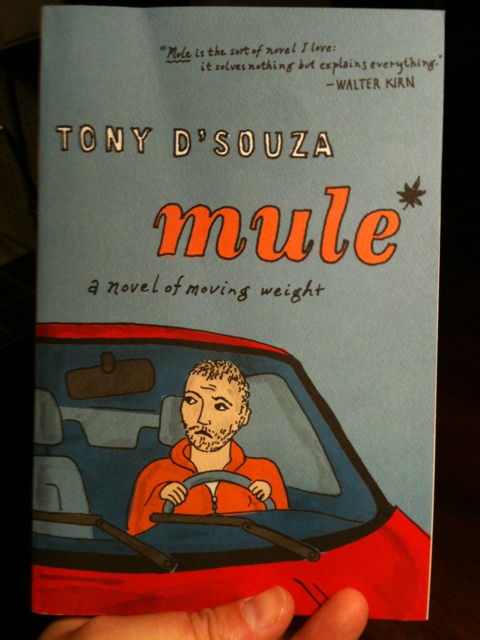
A good lookin’ pair this eve. First up, Tony D’Souza’s novel Mule, which looks rather promising (the cover and premise alone earn it an advanced spot in the stack). From K. Reed Petty’s review at Electric Literature—

Mule is Scarface for readers of The New Yorker: It plots all the emotional points on a man’s rise and downfall, while explaining everything you need to know to avoid getting caught while driving $50,000 worth of marijuana from California to Tennessee.

D’Souza’s book is the most satisfying in answering the details that cable skims over. Our hero, James, is an out-of-work freelance journalist with a new family and no safety net. When he gets an opportunity to make some quick cash, he researches the business of driving drugs like a long-form journalist: How do you convince a bank teller to hand over your $7,000 savings account in hundreds? What are your rights if a cop pulls you over in Texas versus Nevada? And, as James asks of a buyer he meets on his first run: “How much does an ounce weigh?”

20111020-190939.jpg

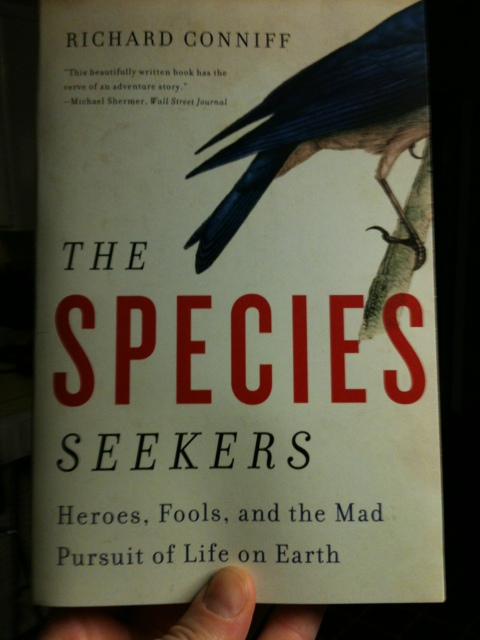
The Species Seekers by Richard Conniff also seems really cool. The book explores the strange intersections of science and adventure. Press release—

Conniff takes us back in time—before the words “scientist” or “biologist” even existed—to when a popular fever for the natural world swept through humanity. Beginning in the mid-eighteenth century, amateur naturalists made it their mission to go to the most perilous corners of the planet and bring back astonishing new species. Linnaeus, Darwin, and Wallace dominate most histories of the great age of discovery.  But they owed their success to this network of enthusiasts, who worked mainly for the pleasure of adding “to the power and grace and beauty of the Infinite.”  Among them:  A grave-robbing anatomist who became the model for Dr. Jekyll and Mr. Hyde, a Catholic missionary who held off bandits at gunpoint, and a British ornithologist who lost his left arm by jamming it down the throat of a charging leopard—but happily lived on to play a good game of tennis.

Discovering new species wasn’t a rarefied pastime; it was a pandemic, a social disease that struck every corner of society, claiming such notables as Thomas Jefferson, who laid out mastodon bones on the floor of the White House, and Mark Twain, who set out to become an Amazonian explorer, but went bust in New Orleans and had to make do with the river at hand.

Amid its tales of adventure and intrigue, The Species Seekers offers unmatched insight into one of the great revolutions in the history of human thought. At the start, God was in heaven, Man was the center of the universe, and everyone accepted that the Earth had been born yesterday for our benefit. But we weren’t sure where vegetable ended and animal began. We didn’t know what species were, or that they could be joined by common origin. We had no way to identify the causes of the pestilential diseases that made death a constant companion.

All that suddenly changed, as the species seekers introduced us to the pantheon of life on Earth—and our place within it.

Book Acquired, 9.30.2011

20110930-164525.jpg

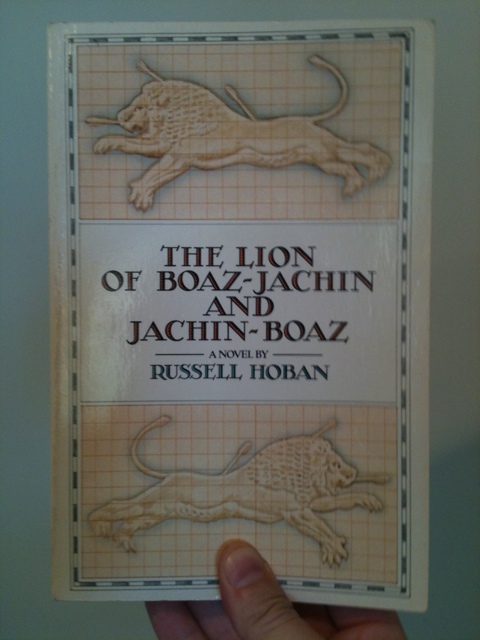
The Lion of Boaz-Jachin and Jachin-Boaz by Russell Hoban. It’s his first novel. Picked it up at the used bookshop today. Love the cover. I’m sure it’s as weird as the other stuff I’ve read by him (Riddley Walker, Pilgermann, Kleinzheit).

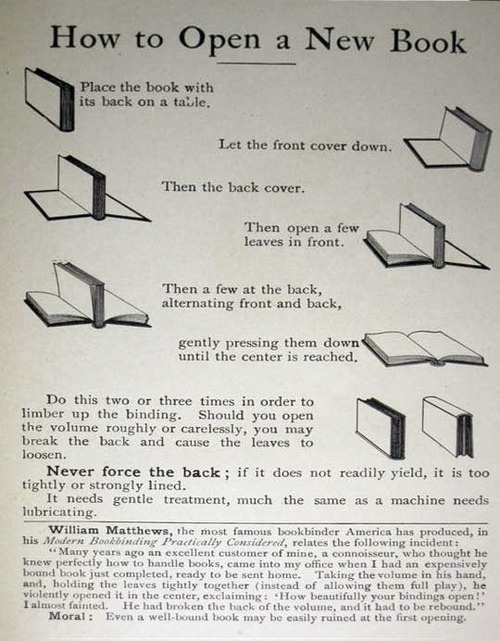
How to Open a New Book

20110911-082527.jpg

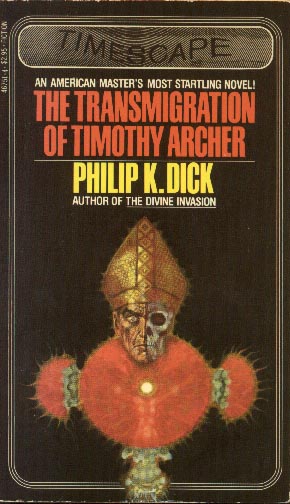
The Transmigration of Timothy Archer — Philip K. Dick

Suffering is the core of The Transmigration of Timothy Archer, a novel published just months after Philip Dick’s death in 1982. This is a book written by an author sure of his abilities, one who could confidently make this novel about big ideas turn on his characters’ struggles to control the trivialities of their day to day lives. While they attempt to make sense of the nature of God and unravel the mysteries of Christian teaching, they confront the questions that must have puzzled even Jesus’ own early advocates: is joy possible when good people are randomly confronted with confusion, pain, and death?  Dick tries to locate a mushy but viable middle ground in this sad, nimble, and touching novel.  Opening on the date of John Lennon’s assassination, Dick writes to commemorate the grinders, the survivors who manage to keep waking up, day after day, despite knowing that life often destroys those who dream too large.

The book is ostensibly based on the life and times of Timothy Archer, the iconoclastic American Episcopalian bishop of California in the 1960s whose unending search for truth led to his becoming friends with Robert Kennedy and Martin Luther King, Jr., advocating for the rights of women, homosexuals, and the transgendered, and time in the national spotlight.  The quest for knowledge led him also to adopt a number of intellectual positions that conflicted directly with his duties as a representative of the Episcopalian church — for example, he was brought to trial for heresy for openly questioning the existence of hell and the Holy Ghost.  The character of Bishop Archer was based almost entirely on the life of Bishop James Pike, Dick’s friend, who, like his fictional counterpart, died of exposure in Israel’s Dead Sea Desert searching for the sources of early Christian doctrine.  Bishop Archer is the bright flame in this book, the Gatsby who pulls in everyone he encounters — not because he’s influential and wealthy, but because his personality is that rare combination of knowledge and empathy, a true man of God who recognizes no difference between the important writer and the indigent cancer patient.  The actions of Bishop Archer form the arc of the book, and his deeds are a mirror to the other characters.  They struggle to shape their own individual visions for their lives because they must work in the shadow cast by a giant they love.

Angel Archer, the bishop’s daughter-in-law and the narrator of the novel, becomes one of Dick’s most realistically drawn characters.  She’s tough, articulate, and well-read.  While those around her succumb to suicidal impulses and mental illness she survives by searching her mind for poems and plays she’s read and committed to memory.  She finds uncomfortable parallels between books and her life.  She values her education and her self-identification as a “Berkeley intellectual” but makes light of her own pretension, telling us that she’s read all the long books but remembers nothing about them.  Do we become apathetic to our own experiences if we’ve read previously about something similar?  Angel fears ennui but describes her own artistic awakening as a ridiculous mixture of pleasure and pain — an agonizing night spent reading Dante’s Commedia while drinking a bottle of bourbon to dampen the pain of an abscessed tooth.  Aware that intellectual exercises and games both trivial and consequential have led to the deaths of her husband, the bishop, and his mistress, she still can’t escape her own self-made prison of words.  “The problem with introspection,” she states while contemplating her own death, “is that it has no end.”  When nobody is left, she soldiers on, dedicating herself, a fragile shell, to driving and working and walking and talking, a person “who records on a notepad the names of those who die.”

Like the narrator, this book reveals its depth rapidly, in spurts of astounding erudition and scholarship.  Dick writes masterfully about nuances of early Judaic law and the formation of Christian thought, illustrates the petty jealousy, kindness, and warmth that seems inherent to certain friendships between between intelligent, rival women, and indicts our perception and treatment of mental illness.  He quotes John Donne, Henry Vaughn, and discusses Virgil and Goethe without arrogance and without disturbing the flow of his story.  Like his best works — A Scanner Darkly, The Man in the High Castle, and Do Androids Dream of Electric Sheep?  — The Transmigration of Timothy Archer is fully drawn and completely real.  His best works seem to be filled with screwed up people trying to get by in a world that has been arbitrarily fucked up by war or technology or drug abuse.  This one is distinctly alive not because it’s set in an alternative world, but in sunny California that existed just three decades ago, close to the environs we currently abide.  A beautiful, moving coda from a man whose vision and prose changed and continues to challenge American writers.

Wig Fetishist

From Roland Barthes’ “Life of Sade,” a short biography of The Marquis de Sade. Translated from the French by Richard Miller.  Read the entire essay at Supervert (or here over the next few days, parceled out over 22 sections)—

14. One of Sade’s principal persecutors, Police Lieutenant Sartine, suffered from a psychopathological condition which in a just (equal) society would have entailed his imprisonment on the same footing as his victim: he was a wig fetishist: “His library contained all kinds of wigs of all sizes: he put them on according to the circumstances; among others, he owned a good-luck wig (with five loosely hanging little curls) and a wig for interrogating criminals, a kind of snake headdress called the inexorable” (Lély, II, 90). Aware of the phallic value of the braid, we can imagine how Sade must have longed to clip the toupees of his hated cop.