Reviews, riffs, anti-reviews, etc., June and July 2018 (and an unrelated griffin)

bibicnsh_ydn_2400x2400
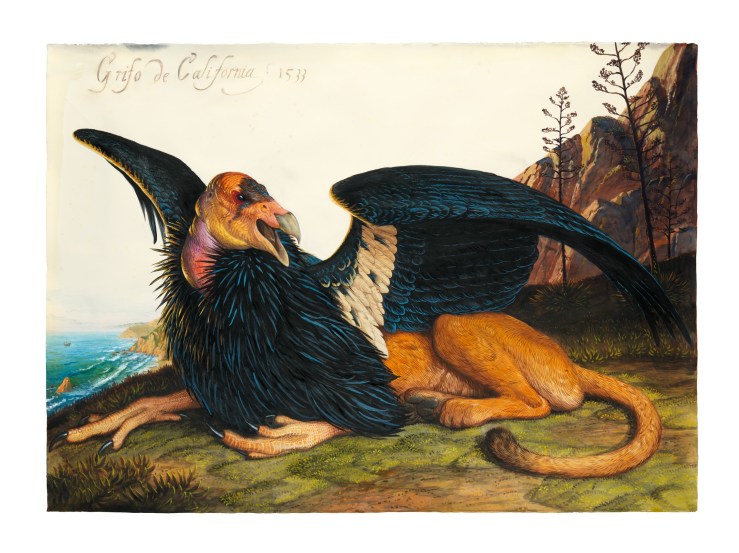
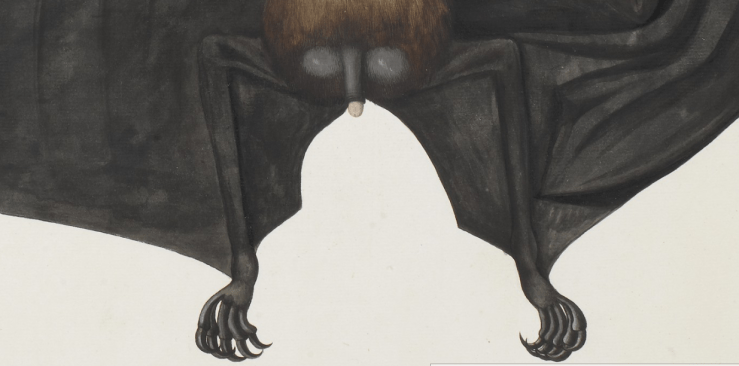
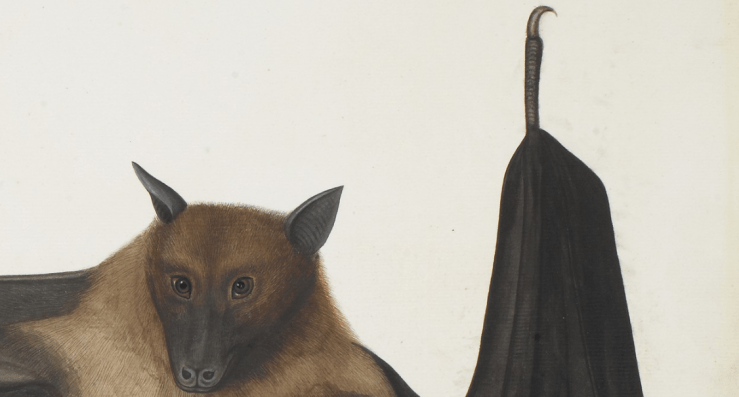
Grifo de California, 2017 by Walton Ford (b. 1960)

Links to reviews, riffs, etc. I wrote in June and July of 2018–

I continued and then apparently abandoned the silly project of trying to write reviews on every film I watched or rewatched this summer:

I hated both Ant-Man and The Disaster Artist, which I made a bad double feature out of.

I loved Lady Bird though.

I took my son to see Pom Poko in the theater as part of the Studio Ghibli Fest 2018 program.

I finally watched David Cronenberg’s film Map to the Stars and was not especially impressed.

I watched Blade Runner 2049 a second time and annotated my original review.

And I watched David Lynch’s film The Elephant Man for the first time in ages and boy is it really really good.

Trying to write about every film I watched what was exhausting and I’m not really sure what I got out of it, if anything. Here are the other films that I remember watching and not writing about:

All eight of the Star Wars films, again, sort of, with my kids.

Samsara (dir. Ron Fricke, 2011)—bought a new TV for the first time in eleven years and used this film to test the screen. Ended up watching it twice.

Thor: Ragnarok (dir. Taika Waititi, 2017)—another one I watched with the kids, although I’m not sure it was for them. It wasn’t for me. A lot of wasted potential in this one.

The Company of Wolves (dir. Neil Jordan, 1984)—I think this one holds up well. I remember renting it for 99 cents from the Hollywood Video next to my apartment in Gainesville, FL in 1997 and thinking it was a work of genius.

Princess Mononoke (dir. Hayao Miyazkai, 1997)—in the theater for the first time, again as part of Ghibli Fest 2018. I wrote about the film here a few years ago.

Under the Skin (dir. Jonathan Glazer, 2014). Watched it again last night on Netflix. I wrote about it here. I like a film that is basically a mood.

Screenshot 2018-07-31 at 8.40.39 PM

I finally read George Eliot’s longass wonderfulass novel Middlemarch  this summer. I wrote about wanting to reread it from about halfway through 

I also wrote about finishing Middlemarch, but edited out a few paragraphs about how much the last paragraphs of Eliot’s novel reminded me of the last lines of Walt Whitman’s Song of Myself.

Screenshot 2018-07-31 at 8.41.11 PM

In what is either strange felicity or my need to connect everything to Whitman, I did connect the end of Song to one of Denis Johnson’s posthumous stories, the title story in The Largesse of the Sea Maiden. 

Writing about “Largesse” was the first of an intended five part series on each of the stories in Johnson’s last book; I wrote about the second story, “The Starlight on Idaho” here and “Strangler Bob” here. (Links to the full texts of those stories are in each of those pieces, by the way).

I recycled a review of Roberto Bolaño’s novella By Night in Chile after I saw its new cover in a Charleston bookstore.

I also wrote about how weak and ineffectual I think George Saunders’ “satire” of Donald Trump, “Little St. Don” is. I see Saunders’ piece as part of an obsolete postmodernist mode that cannot viscerally engage the emerging zeitgeist. I wrote,

But postmodern perspectives have thoroughly soaked our culture (whether we recognize this our not), and good old-fashioned postmodernism-by-numbers isn’t going to work. “Little St. Don” reveals nothing new to its audience, it simply amplifies what they already know and believe, and does so in the very rhetoric that we need to overpower. Literary satire needs to do more than confirm our own morality while lambasting those who perpetrate evil—it needs to invent its own rhetoric, its own form, its own new language.

Screenshot 2018-07-31 at 8.42.52 PM

They will not do us any good—the good books (William H. Gass)

gass_01_body

They will not do us any good—the good books—no—if by good we mean good looks, good times, good shoes; yet they still offer us salvation, for salvation does not wait for the next life, which is anyhow a vain and incautious delusion, but is to be had, if at all, only here—in this one. It is we who must do them honor by searching for our truth there, by taking their heart as our heart, by refusing to let our mind flag so that we close their covers forever, and spend our future forgetting them, denying the mind’s best moments. They extend the hand; we must grip it. Spinach never made Popeye strong sitting in the can. And the finest cookbook ever compiled put not one pot upon the stove or dish upon the table. Here, in the library that has rendered you suspect, you have made their acquaintance—some of the good books. So now that you’ve been nabbed for it, you must become their lover, their friend, their loyal ally. But that is what the rest of your life is for. Go now, break jail, and get about it.

From William H. Gass’s essay “To a Young Friend Charged with Possession of the Classics.” Collected in A Temple of Texts.

A review of Roberto Bolaño’s novella By Night in Chile

djhkew-vaaavpst

Toward the end of the 130 page monologue that is Roberto Bolaño’s novella By Night in Chile, narrator Father Sebastián Urrutia Lacroix claims that “An individual is no match for history.” His statement neatly encapsulates (what might be) the dominant theme of By Night in Chile, namely an individual person’s capacity and ability to correctly–and sanely–somehow measure, attest to, confront, and witness the horror and brutality of history. In this case, Bolaño’s narrator, a Catholic priest–and conservative literary critic (and, of course, failed poet)–Father Urrutia, via a sweeping deathbed confession of sorts, recounts his life story, leading inexorably to Pinochet’s coup and its attendant subsequent draconian reforms and abuses. While it would be a mistake to reduce Bolaño’s rich novella to one conflict, I think the root of Urrutia’s struggle emanates from his inability to come to terms with his role as an intellectual (let alone an artist, critic, or priest) complicit somehow in Pinochet’s crimes. Throughout the book, from the very beginning, Urrutia blames his inner turmoil on a “wizened youth” (I don’t want to spoil this antagonist’s identity, but puzzling out that paradoxical appellation provides a major clue), a kind of idealist who stands apart from the dying priest, mocking and taunting him. After his claim that “An individual is no match for history,” Urrutia avers that “The wizened youth has always been alone, and I have always been on history’s side.” For Urrutia, this is of paramount importance, not just as a Catholic priest (which, it must be pointed out, is a role he doesn’t seem particularly suited for) but also as a literary critic and intellectual: Urrutia wants to systematize and critique history, to be “on the right side of history,” to quote Barack Obama. And yet his own attempt to narrativize his own life ironizes and critiques this very possibility at every turn–he is a sham, a charlatan, motivated and prompted by fear and even hate.

And on that attempt to narrativize a life: I would call By Night in Chile an anti-bildungsroman. Although Urrutia relates a life story, the free flow of psychic impressions that characterizes his telling slip and sail and rock and crash throughout years and over decades, often flowing backwards and forwards, sometimes spending pages on what could only be considered inconsequential minutiae, while at times glossing over the profoundest events with little more than a word or two. It is often what Urrutia does not remark upon that characterizes what is of the greatest importance in this work, and this is a testament to the power of Bolaño’s writing, to his command of voice. In one of the greatest performances of the novel, Urrutia describes the time right before, during, and after Pinochet’s coup. The passage is less than four pages, and for every contemporary action of immediate consequence, Urrutia seems to provide twice as many examples of his retreat into the past: ” . . . the first anti-Allende march was organized, with people banging pots and pans, and I read Aeschylus and Sophocles and Euripides, all the tragedies, and Alkaios of Mytilene and Aesop and Hesiod and Herodotus . . . .” Urrutia doesn’t bother to scrutinize or analyze the visceral reality of history in the making around him, regressing instead to the comfort of established philosophical tradition–the history of Herodotus in favor of the chaos, anarchy, and brutality happening around him. He’s really quite a terrible priest, and as an intellectual he refuses to be engaged. Confident that he will always be “on history’s side,” he refuses to actively even try come to terms with history until he’s dying. And thus we get the narrative of By Night in Chile.

This reckoning with the past takes the form of a long monologue but, as those familiar with Bolaño will attest, there are plenty of other voices here, stories nested within stories like Russian dolls. The force and vitality of Urrutia’s speech is astonishing; one envisions the monologue as a single immediate and discrete exhalation, a stream of memory, the living wail of a dying man. Bolaño’s rhetorical style here conveys this ironic energy. He employs long (very, very long) sentences, sometimes going on for several pages, and often uses little or no transitions between what should be major shifts of space and time. There are plenty of references to writers, of course, many obscure, and more motifs and leitmotifs than I can work out here (or elsewhere, to be honest). I’m going to go out on a limb and suggest that the book is probably even more intense in the original Spanish, although I think Chris Andrews has done a brilliant job translating here, just as he did in Last Evenings on Earth. And since I’ve brought up that book, I’m going to make another suggestion: if you’ve yet to read Bolaño, you should, and Last Evenings of Earth (or 2666 if nearly a thousand pages doesn’t seem too daunting)is probably the best place to start–which is kind of another way of saying that By Night in Chile is not the best entry point to Bolaño–at least not for anyone intimately familiar with Latin American history. It’s not that By Night is particularly challenging or hard to read. However, I think that this particular book will probably be better enjoyed with more context. As Rodrigo Fresán points out in his essay “The Savage Detective,” (published in the March 2007 issue of The Believer), By Night in Chile could be (should be?) read as part of one cohesive book along with Amulet and Distant Star. Indeed, as many critics have pointed out, Bolaño’s works seem to coalesce into one great work, a secret universe parallel to Tolkien’s Middle Earth or Faulkner’s Yoknapatawpha. Urrutia’s voice enriches this universe, but one must have something of a foothold on Bolaño’s themes in order to appreciate the complex ironies of By Night in Chile. Or maybe not. Maybe this is a great entry point to Bolaño. Either way, great book. Highly recommended.


Editorial note: Biblioklept ran the original version of this review in July of 2010. I saw the new cover for By Night in Chile today in a bookstore I was visiting in a town that I do not live in, and the new cover—the picture of which is the only new “content” for this review—is the occasion for republishing this Bolaño review.

Antoine Volodine’s Post-Exoticism in 10 Lessons, Lesson 11 (Book acquired in July, 2018)

img_0454

Even though I haven’t gotten to Minor Angels yet, I went ahead and picked up Antoine Volodine’s Post-Exoticism in Ten Lessons, Lesson Eleven. Publisher Open Letter’s blurb:

Like with Antoine Volodine’s other works (Minor AngelsWe Monks & Soldiers), Post-Exoticism in Ten Lessons, Lesson Eleven takes place in a corrupted future where a small group of radical writers—those who practice “post-exoticism”—have been jailed by those in power and are slowly dying off. But before Lutz Bassmann, the last post-exoticist writer, passes away, journalists will try and pry out all the secrets of this powerful literary movement.

With its explanations of several key “post-exoticist” terms that appear in Volodine’s other books, Lesson Eleven provides a crucial entryway into one of the most ambitious literary projects of recent times: a project exploring the revolutionary power of literature.

Translated from the French by J. T. Mahany

You can read an excerpt from the book here.

Girl Reading — Richard Diebenkorn

Screenshot 2018-07-20 at 9.36.07 AM

Girl Reading, 1961 by Richard Diebenkorn (1922 – 1993)

Blog about Denis Johnson’s story “The Largesse of the Sea Maiden”

img_0381

I finished reading Denis Johnson’s posthumous collection of short stories The Largesse of the Sea Maiden a few weeks ago. I felt a bit stunned by the time I got to the fourth story in the collection, “Triumph Over the Grave,” which ends with these words: “It’s plain to you that at the time I wrote this, I’m not dead. But maybe by the time you read it.”

Denis Johnson died just over a year ago, of course, a fact that haunts any reading of Sea Maiden (at least for fans, and I am a fan). The collection was released just half a year after his death, and I managed to avoid reading any reviews of it. I held out on picking it up for reasons I don’t really know how to explain, but I when I finally read it, I consumed it in a greedy rush.

Anyway, since I finished the book I’ve tried a few times to put together a “review,” but each time I get some words down I find myself sprawling out all over the place, rereading bits of the stories, picking out new motifs, new questions, new parallels between Johnson’s life and the lives of his narrators. Very short review: The Largesse of the Sea Maiden is one of Johnson’s best books, a perfect gift to his readers—his own tragicomic obituary in fictional form. It’s a book about death and writing and art and commerce and regret and salvation, and each time I go back to it I find more in there than I saw the first time–more order, more threads, more design. So instead of a full long review, I’ll offer instead a series of blogs about each of the five stories in the collection. (Perhaps this form is simply an excuse to reread The Largesse of the Sea Maiden).

The first story is the title track, “The Largesse of the Sea Maiden.” First published in The New Yorker back in 2014, this long short story (it runs to not-quite 40 pages) introduces the major themes and tones of the entire collection. “Largesse” is told by a first-person narrator in ten titled vignettes. Some of the titles, like “Widow,” “Orphan,” “Farewell,” and “Memorial,” directly name the themes of both the story and the book.

The narrator of “The Largesse of the Sea Maiden” is a writer—but not a writer of literature or fiction—of art—but of commercials. Although “Largesse” shows him somewhat comfortable in his life in San Diego with his third wife, the narrator nevertheless is melancholy, even dour at times. In the beginning of the vignette “Ad Man,” he declares:

This morning I was assailed by such sadness at the velocity of life—the distance I’ve traveled from my own youth, the persistence of the old regrets, the new regrets, the ability of failure to freshen itself in novel forms—that I almost crashed the car.

(Is there a subtle nod there to one of Johnson’s most well-known stories, “Car-Crash While Hitchhiking”? I think so. If not, I find a thread).

“Ad Man” initiates the major plot trajectory of “Largesse”: Our narrator has won an award for an advertisement he wrote and directed decades ago, and he will have to return to New York City to be given the award at a special dinner. Floating through the vignettes is the ad man’s anxiety about his own legacy of work against the backdrop of the finer arts. We learn in “Accomplices” that he cares enough about the arts to object that his host has hung a Mardsen Hartley oil landscape above a lit fireplace—but he doesn’t prevent the man from burning the painting—his “property”—in a moment where Johnson subtly critiques the relationship between art and commerce. The narrator turns the burning of the painting into a new art though—storytelling.

The narrator later tells us that “looking at art for an hour or so always changes the way I see things afterward,” and “Largesse” is riddled with encounters with art and artists, like the outsider painter Tony Fido, whom the narrator meets at a gallery. The artist offers, unprompted, a scathing critique of a Edward Hopper’s painting Gas:

“You’re a painter yourself.”

“A better painter than this guy,” he said of Edward Hopper.

“Well, whose work would you say is any good?”

“The only painter I admire is God. He’s my biggest influence.”

That attribution — “he said of Edward Hopper” — is a lovely example of Johnson’s sharply-controlled wit.

Tony Fido plays a major minor role in “Largesse.” Fido tells the narrator the story of his encounter with a widow—one of several widows in both “Largesse” and Largesse, and his own suicide—Fido’s—becomes a strange moment for the narrator to realize how little he actually knows about his friend. And of course, all of these plot points give Johnson a chance to riff on the themes of death, loss and regret.

“Largesse” is loaded with thoughts on regret and forgiveness. Talking with a friend, the narrator muses that “we wandered into a discussion of the difference between repentance and regret. You repent the things you’ve done, and regret the chances you let get away.” The vignette “Farewell” stages a chance for the narrator to repent his past sins; his ex-wife, dying of cancer, calls him up to (possibly) forgive him:

In the middle of this I began wondering, most uncomfortably, in fact with a dizzy, sweating anxiety, if I’d made a mistake—if this wasn’t my first wife Ginny, no, but rather my second wife, Jennifer, often called Jenny. Because of the weakness of her voice and my own humming shock at the news, also the situation around her as she tried to speak to me on this very important occasion—folks coming and going, and the sounds of a respirator, I supposed—now, fifteen minutes into this call, I couldn’t remember if she’d actually said her name when I picked up the phone and I suddenly didn’t know which set of crimes I was regretting, wasn’t sure if this dying farewell clobbering me to my knees in true repentance beside the kitchen table was Virginia’s, or Jennifer’s.

I’ve quoted at such length because the moment is an example of Johnson’s tragicomic genius—a sick punchline that disconnects crime from punishment and punishment from forgiveness. The narrator ends up making the connections himself in the end: “after all, both sets of crimes had been the same.” And yet Johnson keeps pushing his character past reconciliation into a midnight walk to clear his conscience:

I wonder if you’re like me, if you collect and squirrel away in your soul certain odd moments when the Mystery winks at you, when you walk in your bathrobe and tasseled loafers, for instance, well out of your neighborhood and among a lot of closed shops, and you approach your very faint reflection in a window with words above it. The sign said “Sky and Celery.”

Closer, it read “Ski and Cyclery.”

“Farewell” ends on this note of a winking Mystery—on the profound insight that we are always susceptible to misreading the signs in front of us.

“The Largesse of the Sea Maiden” is very much a story about trying to put together a cohesive narrative from the strands and fragments around us. Indeed, its very form points to this—the fractured vignettes have to be pieced together by the reader. Johnson fractures not just form but tone. The deadpan, tragicomic, pathos-laden humor that’s run throughout Johnson’s oeuvre dominates in “Largesse,” yes, but there are strange eruptions of sentimental fantasy, particularly in “Mermaid,” a vignette that reads like the narrator’s own imaginative construction, and not the (often banal) reality that most of the narrative is grounded in. After receiving his award in New York, the narrator makes his way to a bar, and here conjures a scene like something from a film noir:

I couldn’t see the musician at all. In front of the piano a big tenor saxophone rested upright on a stand. With no one around to play it, it seemed like just another of the personalities here: the invisible pianist, the disenchanted old bartender, the big glamorous blonde, the shipwrecked, solitary saxophone…And the man who’d walked here through the snow…And as soon as the name of the song popped into my head I thought I heard a voice say, “Her name is Maria Elena.” The scene had a moonlit, black-and-white quality. Ten feet away at her table the blond woman waited, her shoulders back, her face raised. She lifted one hand and beckoned me with her fingers. She was weeping. The lines of her tears sparkled on her cheeks. “I am a prisoner here,” she said. I took the chair across from her and watched her cry. I sat upright, one hand on the table’s surface and the other around my drink. I felt the ecstasy of a dancer, but I kept still.”

The ecstasy here—internalized and “still”—is the ecstasy of storytelling, imagination, art. This is the gift of the mermaid, the largesse of the sea maiden. The minor moment is the real award for our ad man hero, who finds no real transcendence in commercial writing.

I’ve been using “the narrator” in this riff, but our hero has a name, which he reveals to us in the final vignette, “Whit.” It’s here that he describes the ad he’s (not exactly) famous for, an “animated 30-second spot [where] you see a brown bear chasing a gray rabbit.” The chase ends when the rabbit gives the bear a dollar bill.” Narrator Whit explains that this ad for a bank “referred, really, to nothing at all, and yet it was actually very moving.” He goes on:

I think it pointed to orderly financial exchange as the basis of harmony. Money tames the beast. Money is peace. Money is civilization. The end of the story is money.

And yet our ad man, despite his commercial interpretation of his own writing, recognizes too that this work “was better than cryptic—mysterious, untranslatable.” The word “untranslatable” is one of several clues that link the final section of “Largesse” to the final section of Walt Whitman’s long poem, Song of Myself. Whitman’s narrator (“Walt Whitman, a kosmos”) claims that he is, like the spotted hawk who swoops to disturb his reverie, “untranslatable.” Bequeathing himself to us—a gift for our good graces—he reminds us that “You will hardly know who I am,” a line that Johnson echoes in the beginning of “Whit”: “My name would mean nothing to you, but there’s a very good chance you’re familiar with my work.” And then of course, there’s the big tell—Johnson’s narrator is Bill Whitman, a pun that works on several levels. Walt Whitman’s language has seeped into the language of advertising—in a way it is the genesis of a new commercial American idiom—and here Johnson slyly pushes it back into the realm of art.

Just as the conclusion of Song of Myself builds to a self-penned elegy for its self-subject, “The Largesse of the Sea Maiden” reads like Johnson’s elegy for an alter-ego. We learn in the final paragraphs that Bill Whitman is “just shy of sixty-three” — roughly the same age as Johnson would’ve been when the story was published. (We learn that the narrator of “Doppelgänger, Poltergeist,” the final story in The Largesse of the Sea Maiden, is also the same age as Johnson. That narrator was born on “July 20, 1949.” Johnson’s birthday was July 1, 1949).

Narrator Whit reflects on his life in the story’s melancholy penultimate paragraph:

I note that I’ve lived longer in the past, now, than I can expect to live in the future. I have more to remember than I have to look forward to. Memory fades, not much of the past stays, and I wouldn’t mind forgetting a lot more of it.

However, there’s still a restlessness to his spirit, a questing desire to answer the final lines of Song of Myself, perhaps, where Whitman writes:

Failing to fetch me at first keep encouraged,
Missing me one place search another,
I stop somewhere waiting for you

The last paragraph of “The Largesse of the Sea Maiden” is Johnson’s narrator’s implicit response to these lines, and as I cannot improve upon his prose, they will be my last lines as well:

Once in a while, I lie there as the television runs, and I read something wild and ancient from one of several collections of folktales I own. Apples that summon sea maidens, eggs that fulfill any wish, and pears that make people grow long noses that fall off again. Then sometimes I get up and don my robe and go out into our quiet neighborhood looking for a magic thread, a magic sword, a magic horse.

Riff on finishing Middlemarch, George Eliot’s novel of consciousness

Screenshot 2018-06-12 at 8.35.14 PM
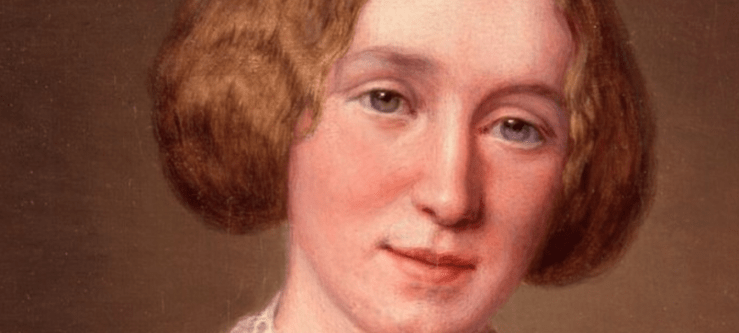
Detail of a portrait of Mary Ann Evans (George Eliot) at age 30 by François d’Albert Durade (1804–1886)

I finally finished George Eliot’s long and marvelous 1872 novel Middlemarch.

When I wrote about reading Middlemarch last month, from not-quite-the-middle of the book, I lamented that I’d rather be rereading the book than reading it. Rich and dense, it’s the kind of big book that clearly offers more on repeat readings. And yes, I will reread Middlemarch, but I’ll give it a year or three to mellow in the back of my consciousness.

Middlemarch is a novel about consciousness, and what the novel does best in my estimation is show how different kinds of consciousness mediate and are mediated by the social forces they inhabit (and are inhabited by).

(The word consciousness appears 90 times in Middlemarch. If we include similar iterations, like consciousconsciouslyunconscious, and unconsciously, the count grows to a total of 172 times. In contrast, iterations of the word conscience appear only 38 times).

Dorothea Brooke remained my favorite consciousness throughout the novel, and I missed her when she wasn’t there, when Eliot had us hovering around or even fully inhabiting another consciousness.

I’ll admit that in the final quarter of Middlemarch I found myself a bit weary of the Bulstrode disgrace plot—and yet I appreciate how Eliot inhabited that consciousness as well. Bulstrode provides Eliot a sharp tool to show how consciousness is blind, or even self-blinding—how consciousness massages conscience in order to survive. In a passage that illustrates this process, Eliot writes,

Bulstrode shrank from a direct lie with an intensity disproportionate to the number of his more indirect misdeeds. But many of these misdeeds were like the subtle muscular movements which are not taken account of in the consciousness, though they bring about the end that we fix our mind on and desire. And it is only what we are vividly conscious of that we can vividly imagine to be seen by Omniscience.

Consciousness cannot lay claim to conceiving of an absolute omniscient conscience, an absolute and ever-present moral consciousness. Too, earlier in the novel, Eliot’s narrator observes,

For the egoism which enters into our theories does not affect their sincerity; rather, the more our egoism is satisfied, the more robust is our belief.

Egoism is a central problem in Middlemarch; indeed, Eliot seems to posit egoism as the greatest threat to how individual consciousnesses navigate social reality. Here is here narrator again:

Will not a tiny speck very close to our vision blot out the glory of the world, and leave only a margin by which we see the blot? I know no speck so troublesome as self.

I cannot improve upon “no speck so troublesome as self” and will not adventure an attempt.

But back to the consciousness I liked best in Middlemarch: Dorothea.

Dorothea is a kind of genius of intention, and Eliot harnesses that genius—she shows us Dorothea’s consciousness-in-action. Eliot doesn’t just tell us what’s happening in Dorothea’s head; she makes that consciousness live in our own heads.

Dorothea’s life, like all lives, is beset with foiled plans and terrible mistakes. Still, Middlemarch grants Dorothea something of a happy ending in her marriage to Will Ladislaw, and yet refuses the conclusion of a classical comedy. There is no wedding scene. Indeed, the last time Dorothea speaks in the novel it is to reconcile with her sister Celia—a conclusion that confirms their love story the equal to that of Dorothea and Ladislaw’s love story.

Eliot’s novel is too sophisticated and too realistic for a simplistic happy or tragic conclusion, of course. In the novel’s “Finale,” the narrator reminds us that,

Every limit is a beginning as well as an ending…the fragment of a life, however typical, is not the sample of an even web.

The narrator then gives us broad details of the fates of the novel’s principal couples: Lydgate and Rosamond, skewing depressive; Mary and Fred, skewing comic; and finally Ladislaw and Dorothea. We learn of Ladislaw’s success as a reform politician and understand that Dorothea is an instrumental force in this success.

Eliot’s conclusion for this final pair skews neither comic nor tragic, but is something more complex—more realistic. Dorothea becomes a cautionary tale in the town of Middlemarch; her legacy is one of misspent potential in the eyes of society. The novel ends without indicating that any of the grand plans of Dorothea’s youth have been achieved. And yet the novel concludes with an oblique revelation about Dorothea’s misunderstood legacy.

In the second-to-final paragraph of Middlemarch, Eliot writes that,

those determining acts of [Dorothea’s] life were not ideally beautiful. They were the mixed result of young and noble impulse struggling amidst the conditions of an imperfect social state, in which great feelings will often take the aspect of error, and great faith the aspect of illusion. For there is no creature whose inward being is so strong that it is not greatly determined by what lies outside it.

Eliot refuses a simple happy ending here; her heroine is still a consciousness subject to the social forces around it. Dorothea’s great utopian ambitions are ultimately tempered by the cultural constraints her consciousness would otherwise seek to transcend.

But then the final paragraph of the novel points towards transcendence:

Her finely touched spirit had still its fine issues, though they were not widely visible. … But the effect of her being on those around her was incalculably diffusive: for the growing good of the world is partly dependent on unhistoric acts; and that things are not so ill with you and me as they might have been, is half owing to the number who lived faithfully a hidden life, and rest in unvisited tombs.

Dorothea—and, more significantly, the spirit of Dorothea—did real grand good in the world, an immeasurable good, “incalculably diffusive.” Even if she lived ultimately a “hidden life,” Eliot insists that it is people like Dorothea who have made the world better for “you and me.”

While “hidden life” and “unvisited tombs” may harbor negative connotations, these phrases are ultimately ironic: Eliot’s novel itself is the key to the hidden life of Dorothea Brooke. Middlemarch is a vivid and vivifying tomb for Dorothea, and we readers are the lucky visitors.

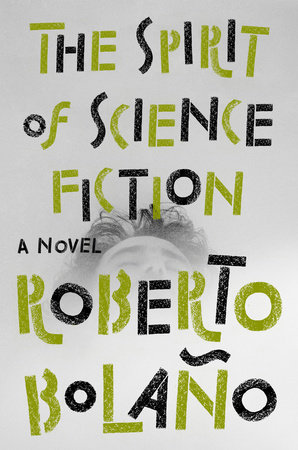
Roberto Bolaño’s novel The Spirit of Science Fiction will debut in English translation in 2019

Roberto Bolaño’s novel The Spirit of Science Fiction will be published in English translation next year. The translation is by Natasha Wimmer (who translated 2666 and The Savage Detectives, among other Bolaño works). Bolaño began The Spirit of Science Fiction in 1984 but apparently never finished it. The novel was first published in 2016 by the Spanish publishing house Alfaguara. Based on the blurb, The Spirit of Science Fiction sounds like a prototype for The Savage Detectives (much as Woes of the True Policeman is a prototype of 2666).

Here is the blurb from the publisher, Penguin Random House—

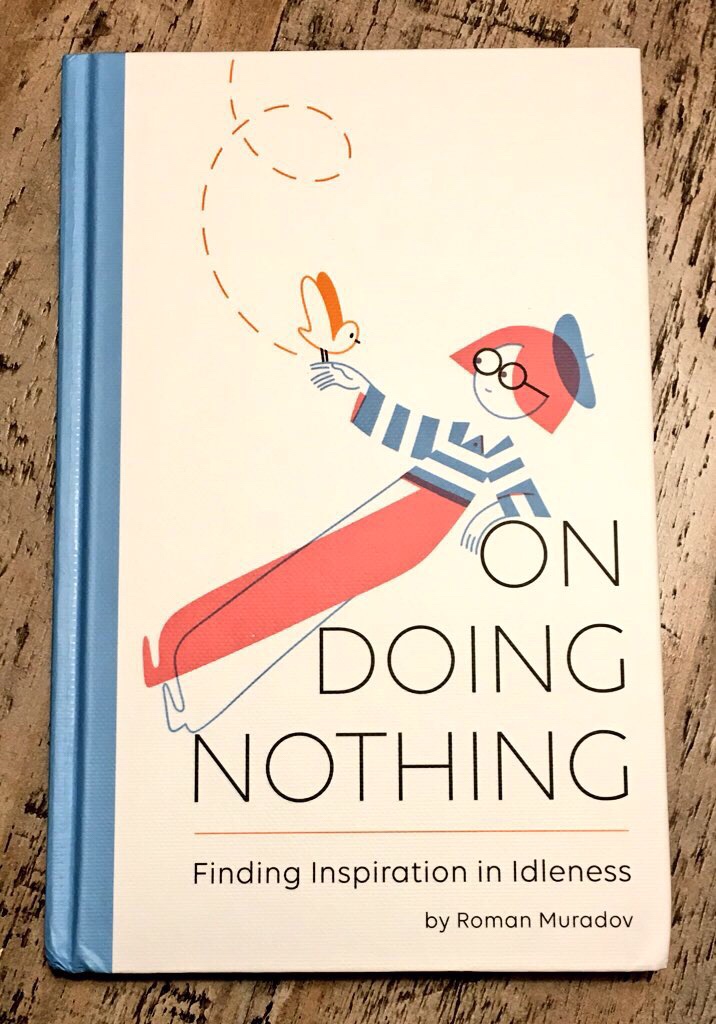
On Doing Nothing (Book acquired, 12 June 2018)

img_0051

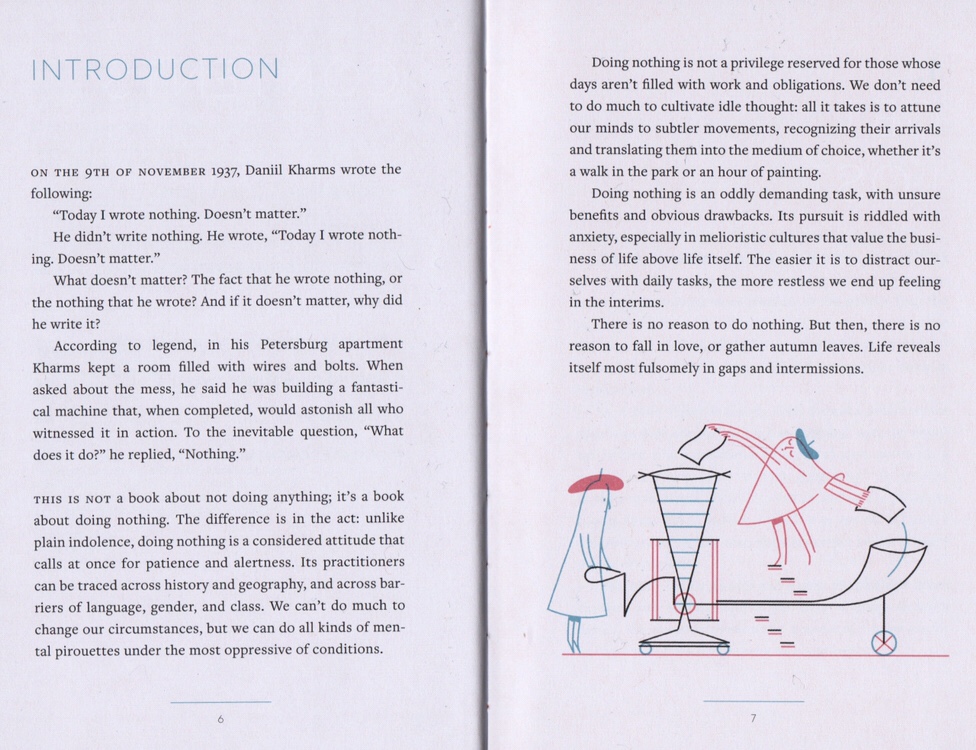
Roman Muradov’s On Doing Nothing is new from Chronicle Books. Instead of the blurb, here’s the intro:

img_0071

What in water did Bloom, waterlover, drawer of water, watercarrier, returning to the range, admire?

What in water did Bloom, waterlover, drawer of water, watercarrier, returning to the range, admire?

Its universality: its democratic equality and constancy to its nature in seeking its own level: its vastness in the ocean of Mercator’s projection: its unplumbed profundity in the Sundam trench of the Pacific exceeding 8000 fathoms: the restlessness of its waves and surface particles visiting in turn all points of its seaboard: the independence of its units: the variability of states of sea: its hydrostatic quiescence in calm: its hydrokinetic turgidity in neap and spring tides: its subsidence after devastation: its sterility in the circumpolar icecaps, arctic and antarctic: its climatic and commercial significance: its preponderance of 3 to 1 over the dry land of the globe: its indisputable hegemony extending in square leagues over all the region below the subequatorial tropic of Capricorn: the multisecular stability of its primeval basin: its luteofulvous bed: its capacity to dissolve and hold in solution all soluble substances including millions of tons of the most precious metals: its slow erosions of peninsulas and islands, its persistent formation of homothetic islands, peninsulas and downwardtending promontories: its alluvial deposits: its weight and volume and density: its imperturbability in lagoons and highland tarns: its gradation of colours in the torrid and temperate and frigid zones: its vehicular ramifications in continental lakecontained streams and confluent oceanflowing rivers with their tributaries and transoceanic currents, gulfstream, north and south equatorial courses: its violence in seaquakes, waterspouts, Artesian wells, eruptions, torrents, eddies, freshets, spates, groundswells, watersheds, waterpartings, geysers, cataracts, whirlpools, maelstroms, inundations, deluges, cloudbursts: its vast circumterrestrial ahorizontal curve: its secrecy in springs and latent humidity, revealed by rhabdomantic or hygrometric instruments and exemplified by the well by the hole in the wall at Ashtown gate, saturation of air, distillation of dew: the simplicity of its composition, two constituent parts of hydrogen with one constituent part of oxygen: its healing virtues: its buoyancy in the waters of the Dead Sea: its persevering penetrativeness in runnels, gullies, inadequate dams, leaks on shipboard: its properties for cleansing, quenching thirst and fire, nourishing vegetation: its infallibility as paradigm and paragon: its metamorphoses as vapour, mist, cloud, rain, sleet, snow, hail: its strength in rigid hydrants: its variety of forms in loughs and bays and gulfs and bights and guts and lagoons and atolls and archipelagos and sounds and fjords and minches and tidal estuaries and arms of sea: its solidity in glaciers, icebergs, icefloes: its docility in working hydraulic millwheels, turbines, dynamos, electric power stations, bleachworks, tanneries, scutchmills: its utility in canals, rivers, if navigable, floating and graving docks: its potentiality derivable from harnessed tides or watercourses falling from level to level: its submarine fauna and flora (anacoustic, photophobe), numerically, if not literally, the inhabitants of the globe: its ubiquity as constituting 90 percent of the human body: the noxiousness of its effluvia in lacustrine marshes, pestilential fens, faded flowerwater, stagnant pools in the waning moon.

From the penultimate episode of James Joyce’s Ulysses.

Blog about reading Middlemarch (and wishing I was rereading Middlemarch)

Screenshot 2018-06-12 at 8.35.14 PM
Detail of a portrait of Mary Ann Evans (George Eliot) at age 30 by François d’Albert Durade (1804–1886)

There should be a word in some language (perhaps not yet invented—word or language) to describe the feeling of Having pushed far enough into a very long novel (a novel that one has cracked into more than once) to the point that one now feels one can finally finish it.

I have felt this specific feeling a number of times in my life after finally sinking into long novels like Moby-DickGravity’s Rainbow, and Infinite Jest. There’s a sort of relief mixed into this (as-yet-unnamed?) feeling, a letting go even, where the reader (me, I mean) surrenders to the novel’s form and content. Finally freed from the idea of reading the novel, I am able to read the novel.

There are 86 numbered chapters in George Eliot’s 1872 novel Middlemarch (not counting a “Prelude” and a “Finale”). I have just finished Chapter XXXV—not exactly a half-way point, but far enough in to finally feel like the story and the style are sticking with me. I’ve been reading a public domain copy on my iPad, after having abandoned my 1977 Norton Critical Edition—the Norton’s print is too cramped (and maybe my eyes are starting to go as I approach 40). Also, the Norton annotations are useful but too intrusive for a first read. I found myself utterly distracted by the Norton footnotes after about 50 pages; switching to a footnote-free version has alleviated a lot of the anxiety I initially felt about trying to fully comprehend Eliot’s novel in its own historical context. Dispensing with the footnotes allowed me to finally sink into Middlemarch and appreciate its wonderful evocation of consciousness-in-action.

So far, my favorite character in Middlemarch is Dorothea Brooke. In part my allegiance to her is simply a matter of the fact that she initially appears to be the novel’s central character—until Eliot swerves into new narratives near the end of Book I (Book I of VIII, by the way). But beyond traditional formal sympathies, it’s the way that Eliot harnesses Dorothea’s consciousness that I find so appealing. Eliot gives us in Dorothea an incredibly intelligent yet palpably naive young woman who feels the world around her a smidge too intensely. Dorothea is brilliant but a bit blind, and so far Middlemarch most interests me in the way that Eliot evokes this heroine’s life as a series of intellectual, emotional, and aesthetic revelations. We see Dorothea seeing—and then, most remarkably, we see Dorothea seeing what she could not previously see.

There are other intriguing characters too, like Dr. Tertius Lydgate, the wastrel Fred Vincy, and the would-be-Romantic Will Ladislaw (who has like, totally smoked opium, just so you know). I’m particularly fond of Dorothea’s goofy uncle Arthur Brooke.

I won’t bother summarizing the plot thus far of the novel, which is really a bunch of plate spinning, but rather offer this sentence from the novel itself:

Scenes which make vital changes in our neighbors’ lot are but the background of our own, yet, like a particular aspect of the fields and trees, they become associated for us with the epochs of our own history, and make a part of that unity which lies in the selection of our keenest consciousness.

There’s also another self-summarizing passage a few chapters before this one, worth citing here:

Your pier-glass or extensive surface of polished steel made to be rubbed by a housemaid, will be minutely and multitudinously scratched in all directions; but place now against it a lighted candle as a centre of illumination, and lo! the scratches will seem to arrange themselves in a fine series of concentric circles round that little sun. It is demonstrable that the scratches are going everywhere impartially and it is only your candle which produces the flattering illusion of a concentric arrangement, its light falling with an exclusive optical selection. These things are a parable. The scratches are events, and the candle is the egoism of any person now absent…

Each of us is a reader reading other lives as scratches on a mirror or trees in the distance, and in our reading we incorporate them into our own consciousness, our own narrative. Middlemarch is very good at evoking this social reality.

I started this blog post by trying to describe a very specific feeling for which I don’t have a word—namely, and again: Having pushed far enough into a very long novel to the point that one now feels one can finally finish it. I suspect that this is a not-uncommon feeling. I’m not so sure though of how common the other feeling I have while reading Middlemarch is. I keep feeling (feeling, not thinking): I wish that I was rereading Middlemarch and not reading Middlemarch. If I were rereading Middlemarch I could make much more sense of those mirror scratches and those trees in the distance; if I were rereading Middlemarch, I could feel the feeling of reading Middlemarch more. There is an obvious answer to this desire, of course. I can finish reading Middlemarch. Then I can reread Middlemarch. 

Even your ugly furniture (From Eliot’s Middlemarch)

An eminent philosopher among my friends, who can dignify even your ugly furniture by lifting it into the serene light of science, has shown me this pregnant little fact. Your pier-glass or extensive surface of polished steel made to be rubbed by a housemaid, will be minutely and multitudinously scratched in all directions; but place now against it a lighted candle as a centre of illumination, and lo! the scratches will seem to arrange themselves in a fine series of concentric circles round that little sun. It is demonstrable that the scratches are going everywhere impartially and it is only your candle which produces the flattering illusion of a concentric arrangement, its light falling with an exclusive optical selection. These things are a parable. The scratches are events, and the candle is the egoism of any person now absent…

From George Eliot’s novel Middlemarch.

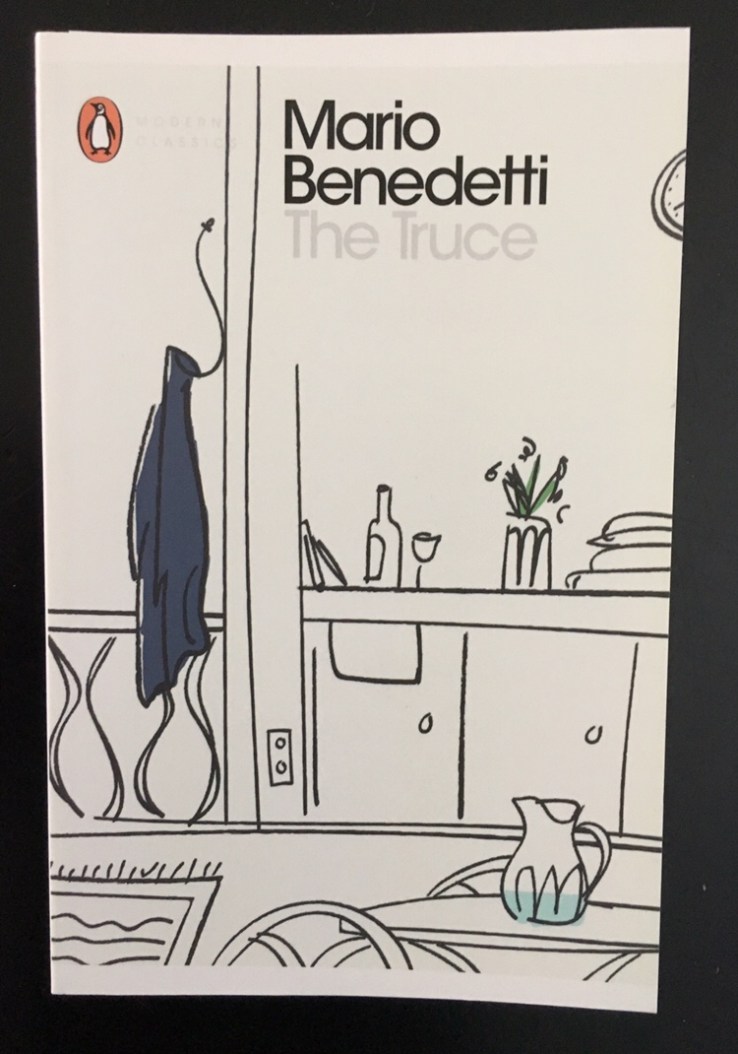
Mario Benedetti’s The Truce (Book acquired, 2 June 2018)

img_9998

I’m excited about this one! I’ll admit I haven’t heard of Mario Benedetti before. The Truce: The Diary of Martín Santomé (first published in Uruguay 1960) is in English translation from Penguin by Harry Morales. More to come, but for now, Penguin’s blurb–

Forty-nine, with a kind face, no serious ailments (apart from varicose veins on his ankles), a good salary and three moody children, widowed accountant Martín Santomé is about to retire. He assumes he’ll take up gardening, or the guitar, or whatever retired people do. What he least expects is to fall passionately in love with his shy young employee Laura Avellaneda. As they embark upon an affair, happy and irresponsible, Martín begins to feel the weight of his quiet existence lift – until, out of nowhere, their joy is cut short.

The intimate, heartbreaking diary of an ordinary man who is reborn when he falls in love one final time, this beloved Latin American novel has been translated into twenty languages and sold millions of copies worldwide, and is now published in Penguin Classics for the first time.

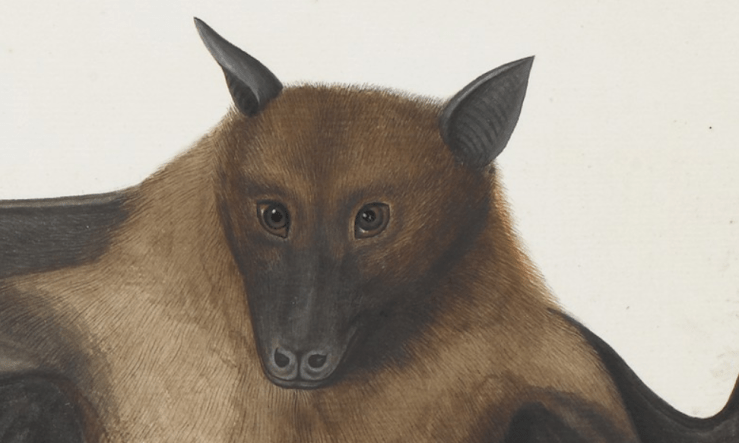
Reviews, riffs, anti-reviews, and interviews of Jan 2018-May 2018 (and an unrelated fruit bat)

DP167067

These are links to some of the longer pieces I’ve written so far this year. The painting of the great Indian fruit bat (c. 1777-1782) is attributed to Bhawani Das or one of his followers.

The Last Jedi and the anxiety of influence

A review of Paul Thomas Anderson’s film Phantom Thread

A review of Paul Kirchner’s underground comix collection Awaiting the Collapse (at The Comics Journal)

A review of The Paris Review’s overproduced podcast

A review of Stanisław Ignacy Witkiewicz’s collection Narcotics

A few paragraphs on beginning Iris Murdoch’s novel The Bell

On a compelling Stephen Crane character

A review of Iris Murdoch’s novel The Bell

On a particular Gordon Lish sentence

On rereading Nathaniel Hawthorne’s The Blithedale Romance

Screenshot 2018-05-31 at 3.59.41 PM

On Goya’s painting The Straw Man

On Don DeLillo’s novel The Names

On the radical postmodernism of Ursula K. Le Guin’s short story “Schrödinger’s Cat” 

Polygamy as a metaphor in Nathaniel Hawthorne’s The Blithedale Romance

On Nathaniel Hawthorne’s “silvery veil” — and David Foster Wallace’s Madame Psychosis

An analysis of William Carlos Williams’s ekphrastic poem “The Wedding Dance in the Open Air”

A close reading of Lydia Davis’s very short story “Happiest Moment”

On a passage from Gerald Murnane’s short story “Stream System”

Something on a scene from Nathaniel Hawthorne’s The Blithedale Romance

Screenshot 2018-05-31 at 3.59.29 PM

On John Berryman’s Dream Song 265

On making a literary cocktail, the sherry cobbler

On Robert Coover’s short story “The Brother”

On Claire-Louise Bennett’s short story “Stir-Fry”

On Balthus’s portraits of young girls reading 

On the postmodern comedy-horror axis of Martin Scorsese’s The King of Comedy

An interview with the editors of Egress, a new literary magazine devoted to innovative writing

A completely subjective and thoroughly unnecessary ranking of Thomas Pynchon’s novels

Screenshot 2018-05-31 at 3.58.43 PM

Antoine Volodine’s Writers blows me away

A review of Dave Cooper’s queasy abject comic Mudbite (at The Comics Journal)

On Michael Radford’s film adaptation of 1984

Is The Running Man a good film?

On William Friedkin’s paranoid, claustrophobic horror flick Bug

Mary and the Witch’s Flower, a love letter to Studio Ghibli from director Hiromasa Yonebayashi

On Hayao Miyazaki’s film Porco Rosso

A review of Zora Neale Hurston’s Barracoon

A review of Lady Macbeth

Screenshot 2018-05-31 at 3.59.03 PM

Amazon Books — Daniel Rich

b85e62a20f6434e8b003361c28b06df4

Amazon Books, 2013 by Daniel Rich (b. 1977)

A review of Zora Neale Hurston’s Barracoon

151835599518773205

Zora Neale Hurston’s 1931 book Barracoon: The Story of the Last “Black Cargo” has finally been published. The book is based on Hurston’s 1927 interviews with Cudjo Lewis, the last known survivor of the transatlantic slave trade. Barracoon went previously unpublished due in part to Hurston’s refusal to revise the prose into a “standard” English. Hurston wrote Barracoon in a phonetic approximation of Cudjo’s voice. While this vernacular style may pose (initial) challenges for many readers, it is the very soul of the book in that it transmits Cudjo’s story in his own voice, tone, and rhythm. Hurston used vernacular diction throughout her work, but Cudjo’s voice is singular; it bears a distinctly different sound than the characters of Their Eyes Were Watching God, Hurston’s most famous novel. It is hard to conceive a more compelling version of Barracoon than this one, the one Hurston refused to compromise, with its intense, vital orality.

What is Barracoon about? I shall liberally borrow my summary from the book’s introduction, penned by Hurston scholar and biographer Deborah G. Plant:

On December 14, 1927, Zora Neale Hurston took the 3:40 p.m. train from Penn Station, New York, to Mobile, to conduct a series of interviews with the last known surviving African of the last American slaver—the Clotilda. His name was Kossola, but he was called Cudjo Lewis. He was held as a slave for five and a half years in Plateau-Magazine Point, Alabama, from 1860 until Union soldiers told him he was free. Kossola lived out the rest of his life in Africatown (Plateau). Hurston’s trip south was a continuation of the field trip expedition she had initiated the previous year.

Oluale Kossola had survived capture at the hands of Dahomian warriors, the barracoons at Whydah (Ouidah), and the Middle Passage. He had been enslaved, he had lived through the Civil War and the largely un-Reconstructed South, and he had endured the rule of Jim Crow. He had experienced the dawn of a new millennium that included World War I and the Great Depression. Within the magnitude of world events swirled the momentous events of Kossola’s own personal world.

Zora Neale Hurston, as a cultural anthropologist, ethnographer, and folklorist, was eager to inquire into his experiences. “I want to know who you are,” she approached Kossola, “and how you came to be a slave; and to what part of Africa do you belong, and how you fared as a slave, and how you have managed as a free man?” Kossola absorbed her every question, then raised a tearful countenance. “Thankee Jesus! Somebody come ast about Cudjo! I want tellee somebody who I is, so maybe dey go in de Afficky soil some day and callee my name and somebody say, ‘Yeah, I know Kossula.’”

Those final sentences should give you a quick taste of Barracoon’s central rhetorical conceit. After her own introductory chapter (which details the historical circumstances of the Clotilda’s illegal journey to West Africa), Hurston lets Cudjo inspirit the text, telling his own story in his own voice. Hurston, who spent three months with Cudjo, initially interposes herself in the story, as we see early in the book’s first chapter:

“My grandpa, he a great man. I tellee you how he go.”

I was afraid that Cudjo might go off on a tangent, so I cut in with, “But Kossula, I want to hear about you and how you lived in Africa.”

He gave me a look full of scornful pity and asked, “Where is de house where de mouse is de leader? In de Affica soil I cain tellee you ’bout de son before I tellee you ’bout de father; and derefore, you unnerstand me, I cain talk about de man who is father (et te) till I tellee you bout de man who he father to him, (et, te, te, grandfather) now, dass right ain’ it?

This brief “cutting in” is one of the last moments in the narrative that Hurston attempts to steer Cudjo in a particular direction. Instead, she befriends the old man, bringing him watermelons, hams, peaches, and other treats. These little gifts serve to frame Cudjo’s narrative as he moves from one episode to the next. Otherwise, Hurston disappears into the background, an ear for Cudjo’s voice, a witness for his story.

Cudjo’s story is astounding. He describes life in his own West African village and the terrible slaughter of his people at the hands of “de people of Dahomey,” a tribe that eventually sells Cudjo and the other young people of his village to white men. Cudjo describes his early enslavement in Alabama, which took place in secret until the Civil War, and his eventual freedom from bondage. He tells Hurston about the founding of Africatown, a community of West Africans. He describes his life after capture and slavery—his marriage, his children, his near-fatal railroad accident. Cudjo’s life and his children’s lives were incredibly difficult. They were always othered:

“All de time de chillun growin’ de American folks dey picks at dem and tell de Afficky people dey kill folks and eatee de meat. Dey callee my chillun ig’nant savage and make out dey kin to monkey.

“Derefo’, you unnerstand me, my boys dey fight. Dey got to fight all de time. Me and dey mama doan lak to hear our chillun call savage. It hurtee dey feelings. Derefo’ dey fight. Dey fight hard. When dey whip de other boys, dey folks come to our house and tellee us, ‘Yo’ boys mighty bad, Cudjo. We ’fraid they goin’ kill somebody.”

Somehow most devastating in a narrative full of devastation are the deaths of Cudjo’s children. After his daughter dies in infancy, his namesake is killed by a sheriff, a scene that resonates with terrible pain in 2018:

Nine year we hurtee inside ’bout our baby. Den we git hurtee again. Somebody call hisself a deputy sheriff kill de baby boy now.

He say he de law, but he doan come ’rest him. If my boy done something wrong, it his place come ’rest him lak a man. If he mad wid my Cudjo ’bout something den he oughter come fight him face to face lak a man. He doan come ’rest him lak no sheriff and he doan come fight him lak no man.

Another of his sons is decapitated in a railroad accident. A third son, angry with the injustice of the world, simply disappears: “My boy gone. He ain’ in de house and he ain’ on de hill wid his mama. We both missee him. I doan know. Maybe dey kill my boy. It a hidden mystery.”

Cudjo, ever the survivor, went on to outlive his wife and all of his children.  In her foreword to Barracoon, Alice Walker captures the pain and pathos of this remarkable position:

And then, the story of Cudjo Lewis’s life after Emancipation. His happiness with “freedom,” helping to create a community, a church, building his own house. His tender love for his wife, Seely, and their children. The horrible deaths that follow. We see a man so lonely for Africa, so lonely for his family, we are struck with the realization that he is naming something we ourselves work hard to avoid: how lonely we are too in this still foreign land: lonely for our true culture, our people, our singular connection to a specific understanding of the Universe. And that what we long for, as in Cudjo Lewis’s case, is gone forever. But we see something else: the nobility of a soul that has suffered to the point almost of erasure, and still it struggles to be whole, present, giving.

I cannot improve on Walker’s phrase here. Hurston brings that “nobility of soul” to life via Cudjo’s own rich language.

While Barracoon is of a piece with Hurston’s anthropological collections Mules and Men and Tell My Horse, it does not read like an autoethnography. It is rather a compelling first-person narrative. Hurston collecteed stories from Cudjo–fables, parables, games—but these are included as an appendix, a wise narrative choice as any attempt to integrate them into the main narrative would hardly be seamless. The appendix adds to the text’s richness without imposing on it, and links it to Hurston’s work as a folklorist.

I’ve noted some of the additional material already—Walker’s foreword, the appendix of folklore, as well as Plant’s introduction. Included also is an afterword by Plant that contextualizes Barracoon within Hurston’s academic career, a list of the original residents of Africatown, a glossary, a bibliography, and a lengthy compendium of endnotes. This editorial material frames the historic and academic importance of Barracoon, and will be of great interest to anyone who wishes to study the subject more. However, Cudjo’s narrative stands on its own as a sad, compelling, essential story. It’s amazing it took this long to reach a wider audience. Recommended.


From Hell (Bill Sienkiewicz)

img_0628

A page from Bill Sienkiewicz’s Stray Toasters #1 (Marvel/Epic, 1988)