Selections from One-Star Amazon Reviews of Margaret Atwood’s The Handmaid’s Tale

[Editorial note: The following citations come from one-star Amazon reviews of Margaret Atwood’s novel The Handmaid’s Tale. (For the record, I think The Handmaid’s Tale is pretty great).

 I’ve preserved the reviewers’ original punctuation and spelling. More one-star Amazon reviews].


shrill

Strange

no hope

anti male story

boring and odd

Feminist dogma

anti-religious zeal

poorly researched

futuristic yet dated

no good verses evil

Political propaganda

socialist point of view

Too many adjectives!!

extremely depressing

It all-around too much

tries to be all futuristic

I’m not a Christian, but

Overuse of punctuation

Sorry but no one liked it

a lot of words were used

twisted grossness and blah

Not a feminist novel for sure

Actually, it is about infertility

Written by a 12-year-old shut in

It’s hard to glean what happened

Not realistic as a futuristic fantasy

pointless exercise in self-contempt

annoying stream-of-consciousness style

these fertile women aren’t treated badly

an academic’s paranoid bondage fantasy

a lot of sexual situations and foul language

The reader is always in a confused state of mind

The main character doesn’t grow or learn anything

The author created a lot of terms but didn’t explain them

literally fills the pages by talking about grocery shopping

obviously has an ax to grind with Judeo-Christian principle

There isn’t much focus on what women are not allowed to do

Mostly just someone running errands in an American dystopia

an author who obviously doesn’t understand the passages from the Bible

main character is weak, conviction less and incapable of making any exciting moves

I’m going to bury it in the ground and let the worms eat all those words unfit for human consumption

drones on and on about brick sidewalks and rays of sunlight and tulips and blue stripes on kitchen towels

Is this supposed to be 1984, Brave New World, or even Hunger Games? If you compare it to any of those books, it is utter fail.

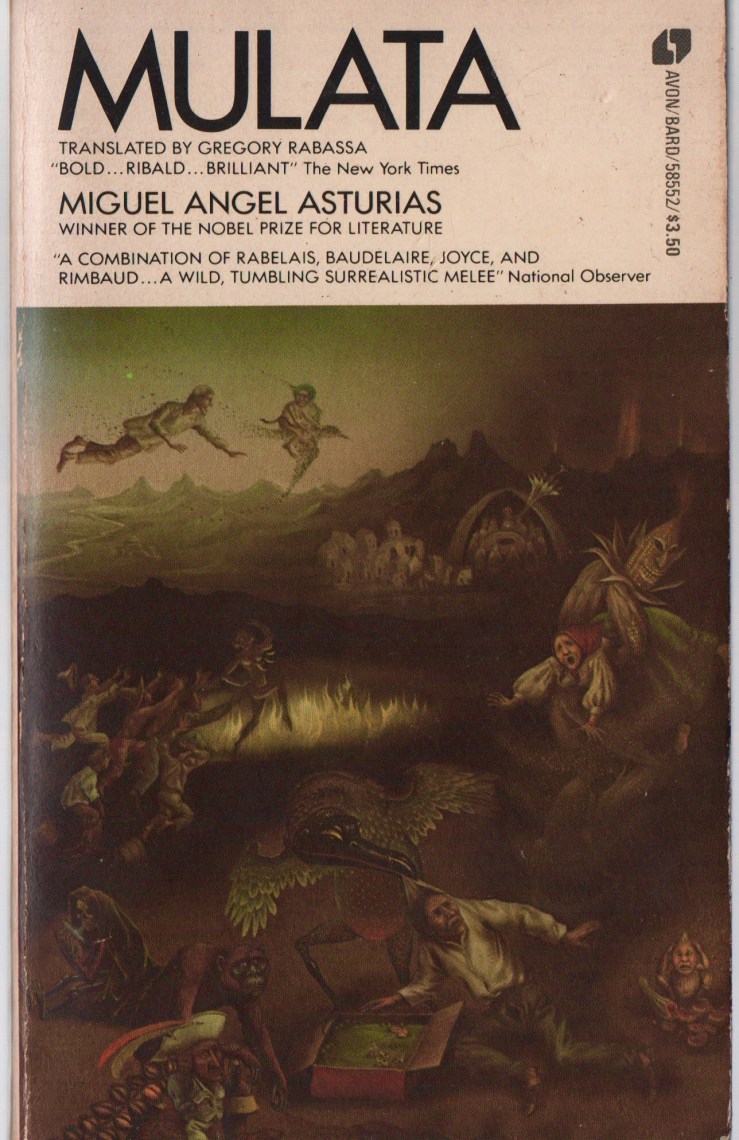
Miguel Ángel Asturias’s weird novel Mulata (Book acquired, 14 April 2017)

img_5940

I admit that I picked up Miguel Ángel Asturias’s 1963 novel Mulata de Tal because of the cover and blurb alone. This 1982 translation is by Gregory Rabassa, and part of a series of Latin American authors that Avon/Bard put out in really cool attractive mass market paperbacks in the 1980s. The titles can be hit or miss, but I like the energy of the first two chapters of Mulata. Back cover blurb:

img_5941

A quick note on Mikhail Bulgakov’s novel The Heart of a Dog

img_5843

I surprised myself by picking up and rapidly reading Mikhail Bulgakov’s 1925 Soviet satire The Heart of a Dog this week. I read Michael Glenny’s translation (Harcourt Brace, 1968) at a quick clip, finding the novel propulsive and zany. I didn’t know anything about the plot beforehand, which I think helped me to enjoy the novel all the more. I liked The Heart of a Dog more than Bulgakov’s posthumously-published classic, The Master and Margarita. I had a rough idea of Master’s plot, whereas my ignorance of the events in The Heart of a Dog allowed me to ride along its zany track without loaded expectations. Perhaps this first paragraph is a way of saying: The Heart of a Dog is a quick, fun, funny read, probably better read without too much foregrounding.

A bit of foregrounding—not too much—The Heart of a Dog begins with the sad howl of a street mutt in Moscow. We’ll first get to know this dog as Sharikand then later Poligraf Poligrafovich Sharikov. Sharik opens the novel: “Ooow-ow-ooow-owow! Oh, look at me, I’m dying.” The line is prescient and ironic: Our pup will, in time, be reborn as a human. The basic plot of The Heart of a Dog is a riff on Frankenstein. Eminent surgeon (and vocal critic of the Communist Party) Dr. Philip Philippovich Preobrazhensky finds the poor beast and restores him to the fattest health. Dr. Phil’s scheme though is a bit nefarious though. The not-quite-mad scientist, securing a thief’s corpse, trepans his poor dog’s skull and inserts the rogue’s pituitary gland. He then transplants the human’s testicles into the dog. Hormones and testes turn Sharik into a terrible shape-shifting speechifying brute, a mannerless boor who cannot be trained and who will not abstain from vodka. In time, Sharik (in the guise of Poligraf Poligrafovich) makes Dr. Phil’s life hell, leading the brief novel to its zany climax.

As with The Master and Margarita, I’m sure there was a lot that I missed in The Heart of a Dog. Undoubtedly, some of Bulgakov’s allusive jokes and jabs couldn’t land on my ignorant skull. What did come through though was a mean-but-fun satirical streak, a howling and yapping and biting at power, groupthink, philistinism, and hypocrisy. I liked the book.

I’ve just now (after having written that paragraph) gone back and read Michael Glenny’s April 1968 introduction to the novel (I always skip prefaces and intros). His final paragraph is far finer analysis than I can muster—but I can share it with you:

Like all the best satire, The Heart of a Dog can be read and relished in several ways: On one level it is a comic story of splendid absurdity; it also pokes fun at the discomforts, shortages, and anomalies of life in the Moscow of the twenties. But it has more profound meanings. It is a fierce parable about the Russian Revolution. The “dog” of the story is the Russian people, brutalized and exploited for centuries—treated, in fact, like animals instead of human beings. The weird surgeon, a specialist in rejuvenation (for “rejuvenation” read “revolution”), is the embodiment of the Communist Party—perhaps of Lenin himself—and the drastic transplant operation that he performs in order to transform the dog into the simulacrum of a human being is the revolution itself. In the story this modern Frankenstein is so appalled by the unredeemable beastliness of the creature he has conjured up that he reverses the process and turns his “new man” back into a dog. With this ending Bulgakov implies that he would like to see the whole ghastly experiment of the Revolution canceled out; unfortunately, successful revolutionaries, even when they realize their mistake, cannot reverse history by a stroke of the pen as an artist can with his fictional creatures. The bitter message is that the Russian intelligentsia, which made the Revolution, is hence-forth doomed to live with—and eventually be ruled by—the crude, unstable, and potentially brutal race of hominids—homo sovieticus—which it has called into being. Bulgakov saw the Revolution as a hideously misguided attempt to achieve the impossible—to change humankind. Man is brutish by nature, and “Soviet man,” he warns, is little more than a lout who has been led to believe he is the very pinnacle of creation. The results of giving power to such men will be disastrous; in fact, Stalin’s terror was carried out ten years later by exactly the sort of callous, brutal cretins that Bulgakov satirizes in this grimly prophetic story.

My variegated face looks somewhat more human to-day | Nathaniel Hawthorne’ journal entry for Monday, April 10th, 1843

Monday, April 10th.–I sat till eight o’clock, meditating upon this world and the next, . . . and sometimes dimly shaping out scenes of a tale. Then betook myself to the German phrase-book. Ah! these are but dreary evenings. The lamp would not brighten my spirits, though it was duly filled, . . . This forenoon was spent in scribbling, by no means to my satisfaction, until past eleven, when I went to the village. Nothing in our box at the post-office. I read during the customary hour, or more, at the Athenæum, and returned without saying a word to mortal. I gathered from some conversation that I heard, that a son of Adam is to be buried this afternoon from the meeting-house; but the name of the deceased escaped me. It is no great matter, so it be but written in the Book of Life.

My variegated face looks somewhat more human to-day; though I was unaffectedly ashamed to meet anybody’s gaze, and therefore turned my back or my shoulder as much as possible upon the world. At dinner, behold an immense joint of roast veal! I would willingly have had some assistance in the discussion of this great piece of calf. I am ashamed to eat alone; it becomes the mere gratification of animal appetite,–the tribute which we are compelled to pay to our grosser nature; whereas, in the company of another it is refined and moralized and spiritualized; and over our earthly victuals (or rather vittles, for the former is a very foolish mode of spelling),–over our earthly vittles is diffused a sauce of lofty and gentle thoughts, and tough meat is mollified with tender feelings. But oh! these solitary meals are the dismallest part of my present experience. When the company rose from table, they all, in my single person, ascended to the study, and employed themselves in reading the article on Oregon in the “Democratic Review.” Then they plodded onward in the rugged and bewildering depths of Tieck’s tale until five o’clock, when, with one accord, they went out to split wood. This has been a gray day, with now and then a sprinkling of snow-flakes through the air. . . . To-day no more than yesterday have I spoken a word to mortal. . . . It is now sunset, and I must meditate till dark.

Nathaniel Hawthorne’ journal entry for Monday, April 10th, 1843. From Passages from the American Note-Books.

Some pics I took of Flannery O’Connor’s childhood home

img_5525

I enjoyed my visit to Flannery O’Connor’s childhood home in Savannah, Georgia. We visited the day before her birthday.

The house is located at 207 East Charlton Street, facing Lafayette Square, with a prominent view of the Cathedral of St. John the Baptist, where young Mary Flannery attended mass.

Here’s the house:

img_5551 Continue reading “Some pics I took of Flannery O’Connor’s childhood home”

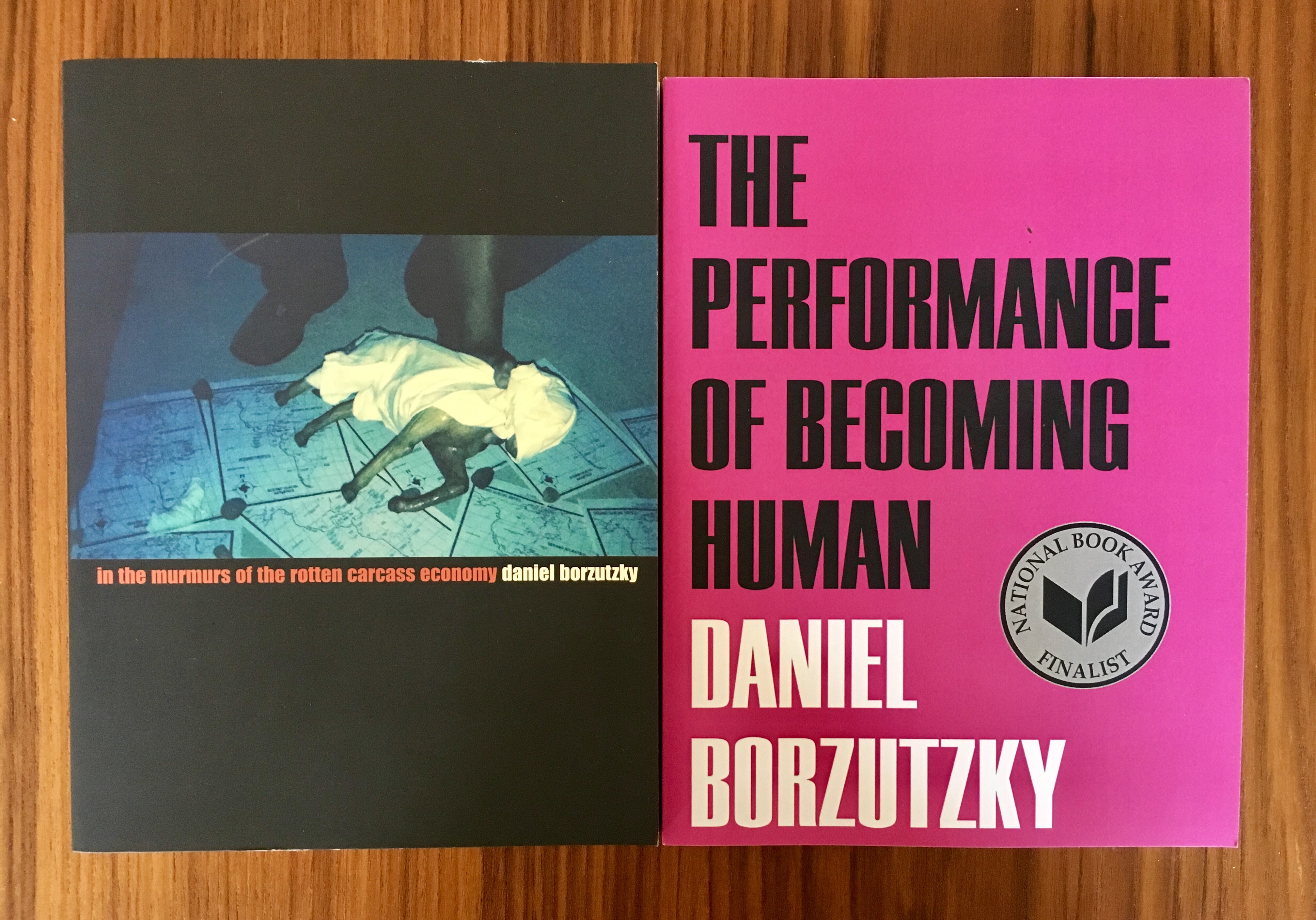
Daniel Borzutzky poems (Books acquired, 9 March 2017)

Big thanks to BLCKDGRD for sending me two books of poetry by Daniel Borzutzky. I’d never read Borzutzky before, but I dig it so far. These poems are abject—stuff about what it means to have a body, to have some horror at having a body, etc.

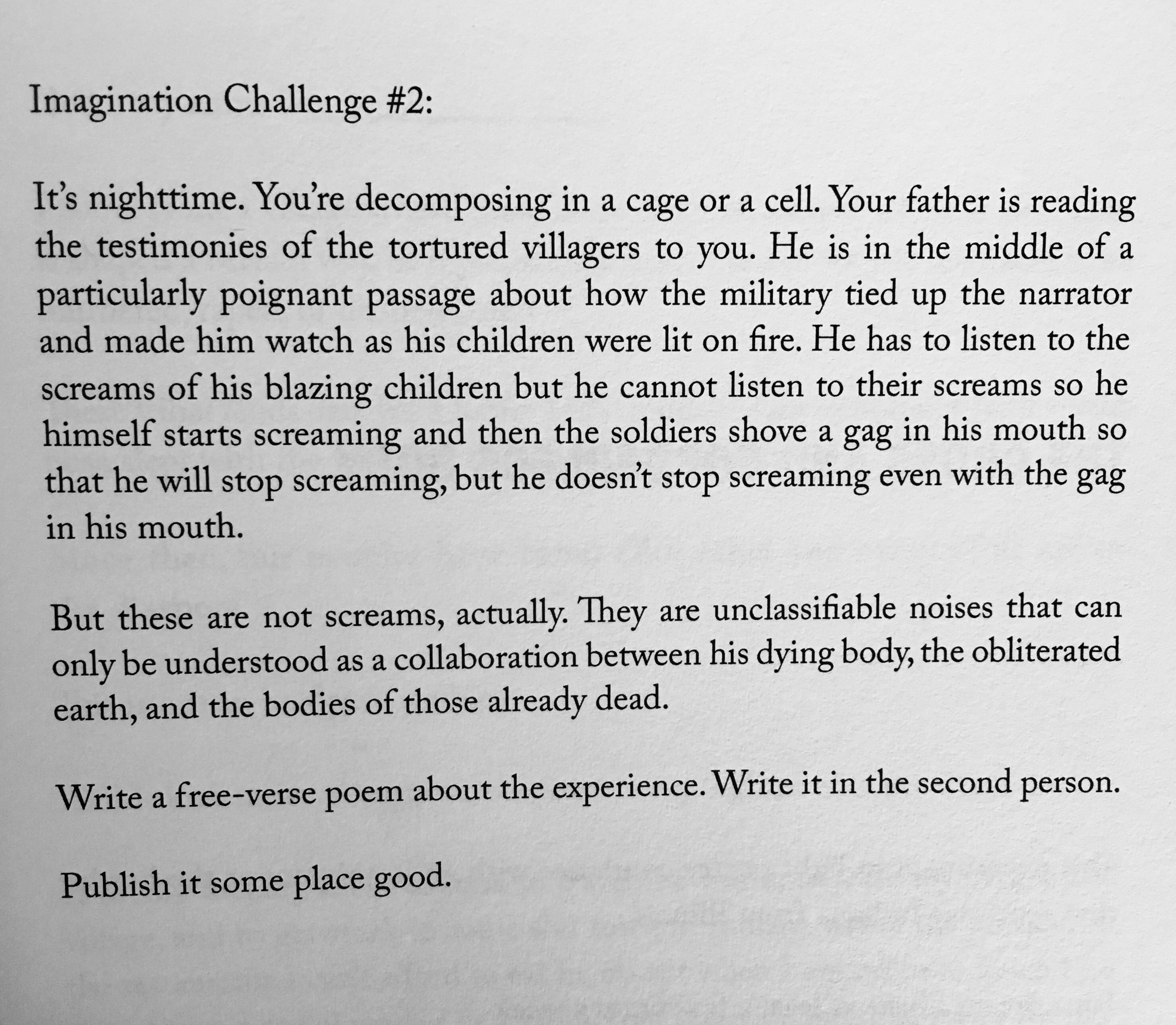
A bit from “The Blazing Cities of Your Rotten Carcass Mouth,” collected in The Performance of Becoming Human:

Jane Bowles’ novel Two Serious Ladies confounds with sinister humor and dark delight

Two Women, Gwen John

Here’s a short review of Jane Bowles’ only novel, Two Serious Ladies: The book is amazing, a confounding, energetic picaresque suffused with sinister humor and dark delight. I read it knowing nothing about the plot on the recommendation of Ben Marcus, who described it as “so insane, so beautiful, and in some sense, unknowable to me. On the surface, it’s not really about much, but the arrangement of words does something chemical to me.” My recommendation is to dispense with the rest of my review and read Bowles’ novel.

“Unknowable” is a fair description, and Two Serious Ladies was met with bewilderment when it was first published in 1943, as Negar Azimi points out in the comprehensive essay “The Madness of Queen Jane”:

Edith Walton, writing in the Times Book Review, called the book senseless and silly: “To attempt to unravel the plot of ‘Two Serious Ladies’ would be to risk, I am sure, one’s own sanity.” Another reviewer said, simply, “The book is about nothing.” Jane’s family, in the meantime, found it unseemly in its stark depiction of lesbianism. Its characters, who have goals and motivations that are hard to grasp, were difficult to relate to. Yet another critic wrote, “The only shocking thing about this novel is that it ever managed to find its way to print.” Jane was only twenty-four.

The notion that “The book is about nothing,” is corrected by Marcus’s qualifier about its “surface”: Two Serious Ladies moves through the phenomenological world that its characters experience, but it does not mediate the concrete contours of that world in a way that its characters can name for the reader. When the characters, those two serious ladies, do stumble into language that might name, pin down, or otherwise fix their experience, fix their consciousness into a stable relation with the world, Bowles spins the wheel again, flings her characters into new scenarios. Moments of epiphany are transitory and hard-purchased. A (perhaps) illustrating passage, offered without context:

Mrs. Copperfield started to tremble after the girl had closed the door behind her. She trembled so violently that she shook the bed. She was suffering as much as she had ever suffered because she was going to do what she wanted to do. But it would not make her happy. She did not have the courage to stop from doing what she wanted to do. She knew that it would not make her happy, because only the dreams of crazy people come true. She thought that she was only interested in duplicating a dream, but in doing so she necessarily became the complete victim of a nightmare.

The free indirect style here still hides so much from the reader, who must suss the characters’ unnamed desires from bewildering details alone. The passage above shows us fear and trembling, dream, nightmare—and crazy people. What does Copperfield want to do? One subtext here is a lesbian desire seemingly comprehended by everyone but Mrs. Copperfield herself. (In some of the book’s strangest moments, Mr. Copperfield leaves his near-mad wife in a dangerous part of a foreign city to encounter hookers of every stripe). Two Serious Ladies is about women searching for something, but something they can’t name, can’t conceive in language—but can perhaps imagine.

A third-act epiphany—again transitory and hard-purchased—parallels Mrs. Copperfield’s fear and trembling. Miss Goering—

—okay, wait, it occurs to me now that I’ve completely neglected to offer any kind of plot description that might anchor this ostensible “review,” to set up who exactly Miss Goering is, etc., so  here goes (and I encourage you to just go ahead and skip the next long paragraph)—

A bad summary: Two Serious Ladies comprises three long chapters, each of which might stand on its own as a long short story. Part the first: Miss Goering is rich but strange. Her childhood is bizarre; alienated from others “she wore the look of certain fanatics who think of themselves as leaders without once having gained the respect of a human being.” Her attempt to baptize another child luckily doesn’t end in a drowning. She grows up out of step with her peers, dresses odd, speaks odd. One day out of nowhere appears a Miss Gamelon, who becomes her (often disagreeable) companion. At a party she runs into the other serious lady, Mrs. Copperfield, whose adventures in Panama comprise the second section of the book. At the same party she meets Arnold, a would-be artist, goes home with him, meets his folks, his father. She elects to move (with Arnold and Miss Gamelon) to a run-down cottage on a drab island, forsaking her wealth, sort of. Part the second: We shift to section two, the Copperfields’ adventures in Panama. Mr. Copperfield checks the couple into a seedy hotel in the wrong part of town and promptly drops his wife off where the brothels are. She moves into a run-down hotel with a prostitute named Pacifica while her husband does God-knows-what. There’s a lot of drinking and near-madness, run-ins with bad boyfriends and snooty hoteliers. Mr. Copperfield leaves without his wife. Part the third: We return to Miss Goering and gang in the dilapidated cottage. Arnold’s father soon moves in with them. Miss Goering starts going out at night alone. She gets picked up at bar and moves in with a man named Andy. She eventually leaves him for a gangster who mistakes her for a prostitute. On a dinner date—okay, not really a dinner date but—on a dinner date with the gangster (who, like the dinner date, is never actually named as a “gangster”), Miss Goering runs into Mrs. Copperfield. Both are much changed.

—okay, so this time with (or without) some context—

A third-act epiphany—again transitory and hard-purchased—parallels Mrs. Copperfield’s fear and trembling. Miss Goering and her gangster:

This man, they had noticed, drove up to the saloon in a very beautiful big automobile that resembled more a hearse than a private car. Miss Goering had examined it one day when the man was drinking in the saloon. It appeared to be almost brand new. She and Andy had looked in through the window and had been a little surprised to see a lot of dirty clothes on the floor. Miss Goering was completely preoccupied now with what course to take should the newcomer be willing to make her his mistress for a little while. She was almost sure that he would, because several times she had caught him looking at her in a certain way which she had learned to recognize. Her only hope was that he would disappear before she had the chance to approach him. If he did, she would be exempt and thus able to fritter away some more time with Andy, who now seemed so devoid of anything sinister that she was beginning to scrap with him about small things the way one does with a younger brother.

And of course she gives in to her terrible desire. The plot of Two Serious Ladies might be described as a search for “anything sinister.”  Miss Goering and Mrs. Copperfield seek the brink of all those things one can be brinked upon: disasters, abysses, madness. Love?

The novel most reminded me of what I love best in the films of David Lynch and the fiction of Roberto Bolaño—that sense of perverse night-time dread, the sordid intimation of just how easily the veneer might crack, of how simple it might be for civilization to give way to the madness under the surface.

David Lynch and Roberto Bolaño suffuse their work with an absurd howling humor that percolates along with the dread, and Two Serious Ladies operates along the same horror/humor axis. The book is hilarious, but my several attempts to capture that here in a few excerpts of dialogue fail to translate into this digest form. Will you take my word? Will you take my word that the book was much funnier the second time I read it?

The reading experience cannot be easily distilled. (Strike that adverb). Two Serious Ladies resists unfolding in the way we expect our narratives to unfold—to be about something—Bowles withholds exposition, clarification, and motivation—well, okay, not withholds, but rather hides, or obscures, or enshadows. (I don’t have the verbs for this book). I think of Harold Bloom’s rubric for canonical literature here. In The Western Canon, he  argues that strong literature exemplifies a “strangeness, a mode of originality that either cannot be assimilated, or that so assimilates us that we cease to see it as strange.” Nearly three-quarters of a century after its publication, Two Serious Ladies is still strange, still strong, still ahead of its time. Its vignettes flow (or jerk or shift or pitch wildly or dip or soar or sneak) into each other with a wonderfully dark comic force that simultaneously alienates and invites the reader, who, bewildered by its transpositions, is compelled to follow into strange new territory. Very highly recommended.

[Ed. note: Biblioklept first published this review of Two Serious Ladies in February of 2015].
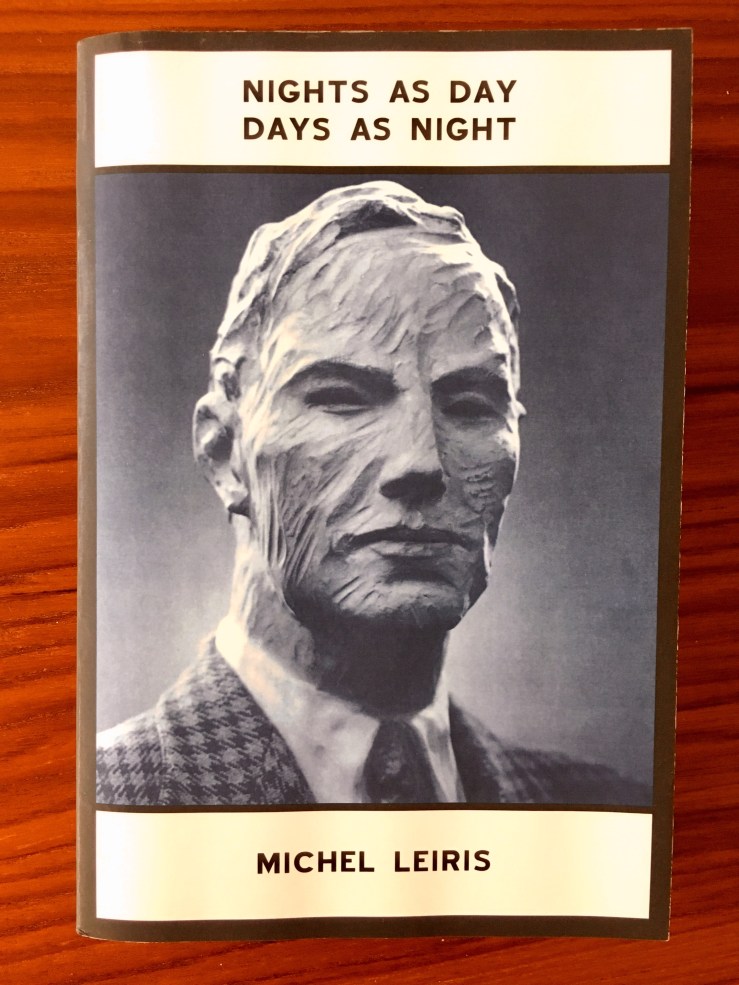
Michel Leiris’s Nights as Day, Days as Night (Book acquired, 27 Feb. 2017)

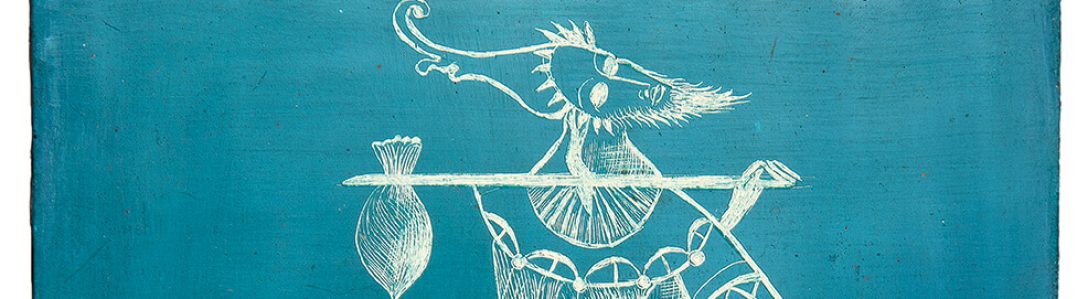
Michel Leiris’s book of dream fragments, Nights as Day, Days as Night is new from Spurl Editions. Their blurb:

Translated from French by Richard Sieburth, with a foreword by Maurice Blanchot. Hailed as an “important literary document and contemporary pleasure” by Lydia Davis, Nights as Day, Days as Night is a chronicle of Michel Leiris’s dreams. But it is also an exceptional autobiography, a distorted vision of twentieth-century France, a surrealist collage, a collection of prose poems. Leiris, author of the seminal autobiography Manhood, here disrupts the line between being asleep and awake, between being and non-being. He captures the profound strangeness of the dreamer’s identity: that anonymous creature who stirs awake at night to experience a warped version of waking life.

Whatever the setting (from circus shows to brothels, from the streets of Paris to Hollywood silent films), Leiris concentrates on estranging the familiar, on unsettling the commonplace. Beautifully translated by Richard Sieburth, these dream records often read like an outsider’s view of Leiris’s life and epoch. This outsider is the dreamer, Leiris’s nocturnal double, whose incisors grow as large as a street, who describes the terror he feels at being executed by the Nazis, and who can say in all seriousness, “I am dead.” It is an alternate life, with its own logic, its own paradoxes, and its own horrors, which becomes alienating and intimate at once. With hints of Kafka, Pirandello, and Nerval, Nights as Day, Days as Night is one of Leiris’s finest works of self-portraiture.

Michel Leiris (1901–1990) was an author, ethnographer, art critic, and former surrealist who pioneered a unique form of autobiographical writing. Praised by Susan Sontag, Maurice Blanchot, and Claude Lévi-Strauss, he made powerful contributions to modern French literature. His autobiographical works include Manhood, The Rules of the Game, and Nights as Day, Days as Night.

I’ve nibbled a little bit—something like microfictions, or unfinished fables, Leiris’ fragments are often funny and often unsettling.

An erotic(ish) one:

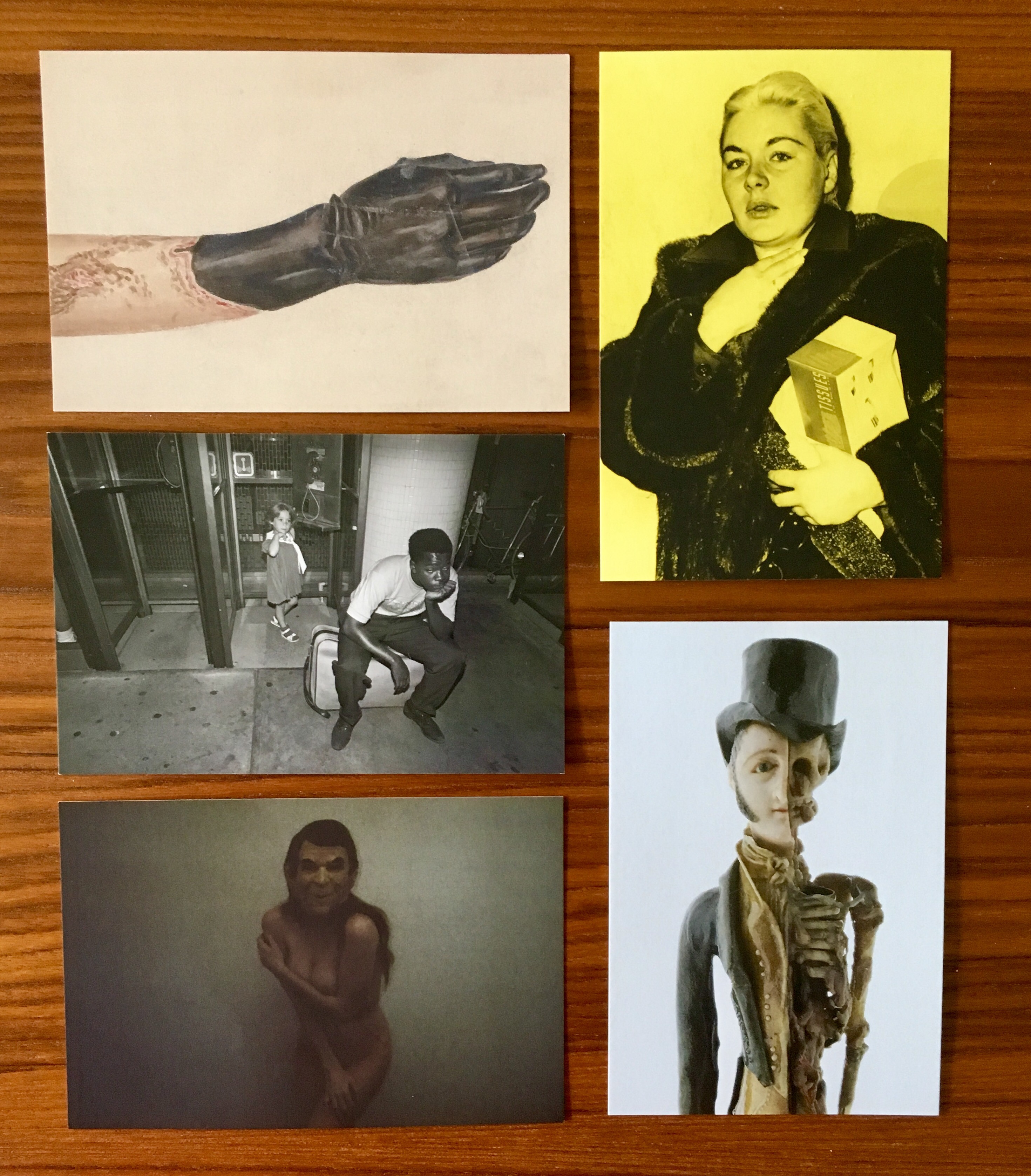
Spurl also enclosed some nice postcards.

I like postcards.

They make lovely bookmarks.

The Erstwhile, B. Catling’s sequel to The Vorrh (Book acquired, 17 Feb. 2017)

img_5200

B. Catling’s sequel to The Vorrh arrived last week, reminding me that I still need to read The Vorrh. 

Publisher Vintage’s blurb:

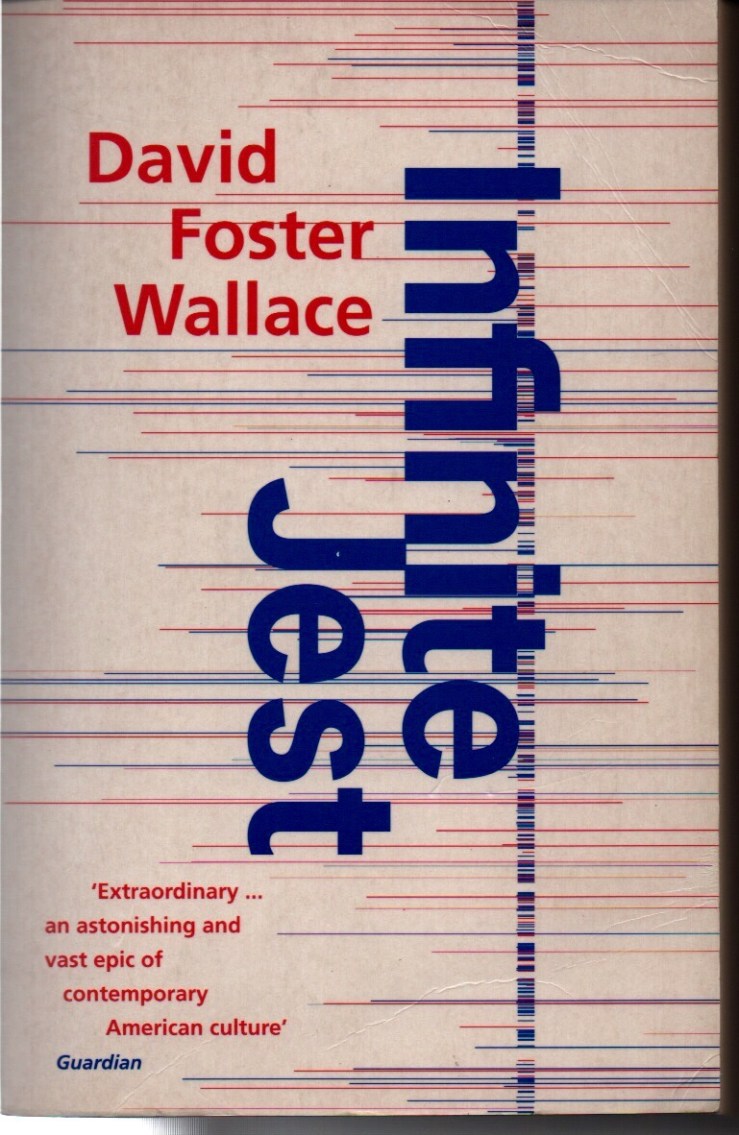
A note to readers new to Infinite Jest

A note to readers new to Infinite Jest

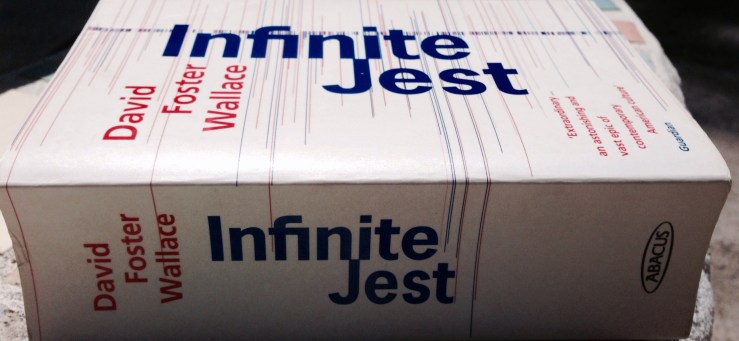
David Foster Wallace’s 1996 novel Infinite Jest poses rhetorical, formal, and verbal challenges that will confound many readers new to the text. The abundance of (or excess of) guides and commentaries on the novel can perhaps have the adverse and unintentional consequence of making readers new to Infinite Jest believe that they can’t “get it” without help.  Many of the online analyses and resources for Infinite Jest are created by and targeted to readers who have finished the novel or are rereading the novel. While I’ve read many insightful and enlightening commentaries on the novel over the years, my intuition remains that the superabundance of analysis may have the paradoxical effect of actually impeding readers new to the text. With this in mind, I’d suggest that first-time readers need only a dictionary and some patience.

Infinite Jest is very long but it’s not nearly as difficult as its reputation suggests. There is a compelling plot behind the erudite essaying and sesquipedalian vocabulary. That plot develops around three major strands which the reader must tie together, with both the aid of—and the challenge of—the novel’s discursive style. Those three major plot strands are the tragic saga of the Incandenzas (familial); the redemptive narrative of Ennet House Drug and Alcohol Recovery House, with Don Gately as the primary hero (socicultural); and the the schemes of the Québécois separatists (national/international/political). An addictive and thus deadly film called Infinite Jest links these three plots (through discursive and byzantine subplots).

Wallace often obscures the links between these plot strands, and many of the major plot connections have to be intuited or outright guessed. Furthermore, while there are clear, explicit connections between the plot strands made for the reader, Wallace seems to withhold explicating these connections until after the 200-page mark. Arguably, the real contours of the Big Plot come into (incomplete) focus in a discussion between Hal Incandenza and his brother Orin in pages 242-58. Getting to this scene is perhaps a demand on the patience of many readers. And, while the scene by no means telegraphs what happens in IJ, it nonetheless offers some promise that the set pieces, riffs, scenes, lists, and vignettes shall add up to Something Bigger. 

Some of those earliest set pieces, riffs, scenes, lists, and vignettes function almost as rhetorical obstacles for a first-time reader. The  novel’s opening scene, Hal Incandenza’s interview with the deans at the University of Arizona, is chronologically the last event in the narrative, and it dumps a lot of expository info on the reader. It also poses a number of questions or riddles about the plot to come, questions and riddles that frankly run the risk of the first-time reader’s forgetting through no fault of his own.

The second chapter of IJ is relatively short—just 10 pages—but it seems interminable, and it’s my guess that Wallace wanted to make his reader endure it the same way that the chapter’s protagonist–Erdedy, an ultimately very minor character—must endure the agonizing wait for a marijuana delivery. The chapter delivers the novel’s themes of ambivalence, desire, addiction, shame, entertainment, “fun,” and secrecy, both in its content and form. My guess is that this where a lot of new readers abandon the novel.

The reader who continues must then work through 30 more pages until meeting the novel’s heart, Don Gately, but by the time we’ve met him we might not trust just how much attention we need to pay him, because Wallace has shifted through so many other characters already. And then Gately doesn’t really show up again until like, 200 pages later.

In Infinite Jest, Wallace seems to suspend or delay introducing the reading rules that we’ve been trained to look for in contemporary novels. While I imagine this technique could frustrate first-time readers, I want to reiterate that this suspension or delay or digression is indeed a technique, a rhetorical tool Wallace employs to perform the novel’s themes about addiction and relief, patience and plateaus, gratitude and forgiveness.

Where is a fair place to abandon Infinite Jest

I would urge first-time readers to stick with the novel at least until page 64, where they will be directed to end note 24, the filmography of J.O. Incandenza (I will not even discuss the idea of not reading the end notes. They are essential). Incandenza’s filmography helps to outline the plot’s themes and the themes’ plots—albeit obliquely. And readers who make it to the filmography and find nothing to compel them further into the text should feel okay about abandoning the book at that point.

What about a guide?

There are many, many guides and discussions to IJ online and elsewhere, as I noted above. Do you really need them? I don’t know—but my intuition is that you’d probably do fine without them. Maybe reread Hamlet’s monologue from the beginning of Act V, but don’t dwell too much on the relationship between entertainment and death. All you really need is a good dictionary. (And, by the way, IJ is an ideal read for an electronic device—the end notes are hyperlinked, and you can easily look up words as you read).

Still: Two online resources that might be useful are “Several More and Less Helpful Things for the Person Reading Infinite Jest,” which offers a glossary and a few other unobtrusive documents, and Infinite Jest: A Scene-by-Scene Guide,” which is not a guide at all, but rather a brief series of synopses of each scene in the novel, organized by page number and year; my sense is that this guide would be helpful to readers attempting to delineate the novel’s nonlinear chronology—however, I’d advise against peeking ahead. After you read you may wish to search for a plot diagram of the novel, of which there are several. But I’d wait until after.

An incomplete list of motifs readers new to Infinite Jest may wish to attend to

The big advantage (and pleasure) of rereading Infinite Jest is that the rereader may come to understand the plot anew; IJ is richer and denser the second go around, its themes showing brighter as its formal construction clarifies. The rereader is free to attend to the imagery and motifs of the novel more intensely than a first-time reader, who must suss out a byzantine plot propelled by a plethora of characters.

Therefore, readers new to IJ may find it helpful to attend from the outset to some of the novel’s repeated images, words, and phrases. Tracking motifs will help to clarify not only the novel’s themes and “messages,” but also its plot. I’ve listed just a few of these motifs below, leaving out the obvious ones like entertainment, drugs, tennis (and, more generally, sports and games), and death. The list is in no way definitive or analytic, nor do I present it as an expert; rather, it’s my hope that this short list might help a reader or two get more out of a first reading.

Heads

Cages

Faces

Masks

Teeth

Cycles

Maps

Waste

Infants

Pain

Deformities

Subjects

Objects

One final note

Infinite Jest is a rhetorical/aesthetic experience, not a plot.

[Ed. note: Biblioklept posted a version of this note in the summer of 2015. Wallace would have turned 55 years old today].

Map of Days (Beautiful book acquired, 2.04.2017)

img_5002

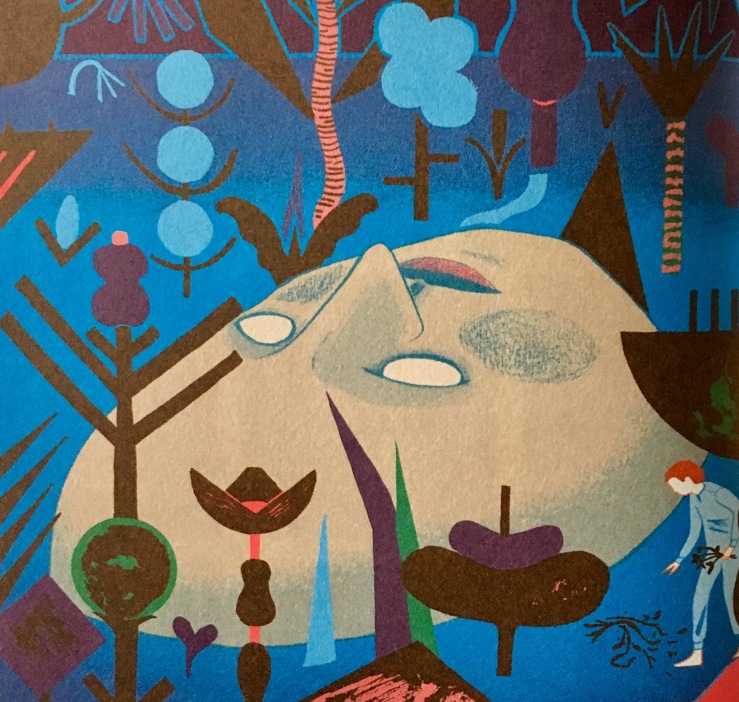
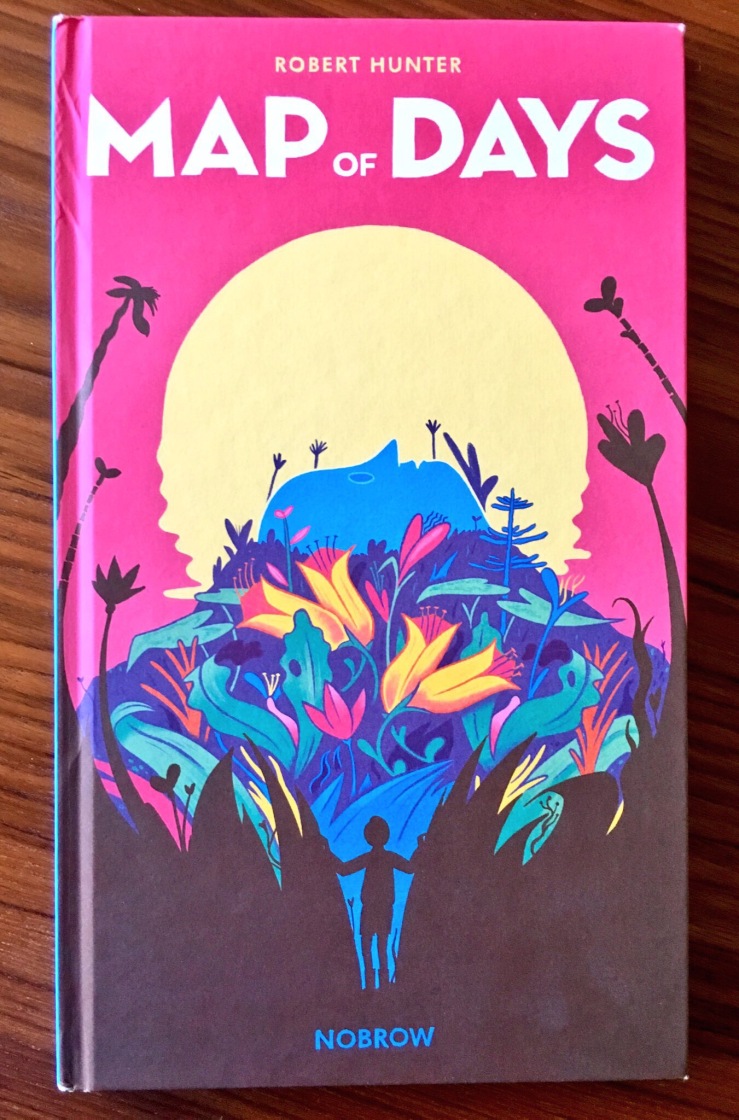
Robert Hunter’s graphic novel Map of Days is new from Nobrow. It’s gorgeous.

img_5004

I’ll write a proper review soon, but for now, here’s Nobrow’s blurb:

Richard can’t stop thinking about the clock. He lies in bed each night listening to its tick-tocking, to the pendulum’s heavy swing. Why does his grandfather open its old doors in secret and walk into the darkness beyond?

One night, too inquisitive to sleep, Richard tiptoes from his bed, opens the cherry wood door of the grandfather clock, and steps inside. There, in a strange twilight, he sees the Face the Earth, locked forever in a simulated world, where green things seem to grow in the semblance of trees and plants, from unreal soil…

img_5003img_5001

Lacemaker — Gerrit Dou

G.Dou, Spitzenkloepplerin - G.Dou, Lace maker -

A review of Ishmael Reed’s Yellow Back Radio Broke-Down

Sunday Comics 

A Krazy Kat strip by George Herriman. The scan is from Krazy Kat by George Herriman, Henry Holt and Company, 1946.

FALLOUT PROTECTION FOR…

img_5095

My wife’s grandmother recently passed away and my wife took a bunch of her old photos and papers, including this DOD pamphlet from 1966. The scan above is the back cover/front cover. Here’s the first inside page, with a cheerful note from LBJ:

img_5093

Here’s my favorite section:

img_5097

Le Guin/Abish/Farber (Books 2.03.2017)

img_5054-1

I picked up this handsome hardback collection of early Ursula K. LeGuin stories last Friday when I went to my local used bookshop. I was there looking for something else.

I wasn’t looking for stories by Walter Abish (and I can’t remember how or why I picked this up, but I read part of it in the store…I mean I can’t recall why I was in the “A’s” for Atwood or Abish):

img_5055-1

And I wasn’t looking for essays by Jerry Farber (this weird mass market paperback was crammed into a completely wrong section—misshelved as if someone was trying to hide it. The font on the spine prompted me to pull it out, and I knew that the guy had written “The Student as Nigger”….I started reading “Why People Love Capitalism” and decided to pick it up):

img_5056-1

What I was looking for was Paul Bowles’s novel The Sheltering Sky, which is prominent on my to-read list after devouring The Stories of Paul Bowles. But I simply couldn’t come to terms with these covers:

img_4987

I mean, look, I know I shouldn’t care about the cover, but these are dreadful, and it this point if I’m going to own a paper book, it needs to have some aesthetic merit. Aesthetic merit like the cover for this collection:

img_4985-1

(I didn’t pick it up because the seven stories are in The Stories of Paul Bowles).

A last thought on covers:

“There’s quite a bit of schmaltz in Lincoln in the Bardo.”

Caleb Crain reviews George Saunders’s first novel Lincoln in the Bardo

First paragraph:

George Saunders’s new novel—his first, after four collections of short stories and a novella—takes place in the afterlife. Or rather, it takes place in the “bardo,” a term that Saunders has borrowed from Buddhism for what might be called the “justafterlife”—the interval between a ghost’s separation from its body and its departure for whatever comes next. As in The Sixth Sense and other movies and television shows, the ghosts imagined by Saunders linger in our world because they either don’t know they’re dead or aren’t yet resigned to leaving. “You are a wave that has crashed upon the shore,” they are told by browbeating angels who visit intermittently, but they refuse to listen.

Crain doesn’t exactly eviscerate Lincoln in the Bardo in his review (which also situates the novel in context with Saunders’s previous stories and essays), but he does make a strong case for passing on it.