Fletcher Hanks/Gilbert Sorrentino (Books Acquired, 7.12.2012)

20120716-124509.jpg

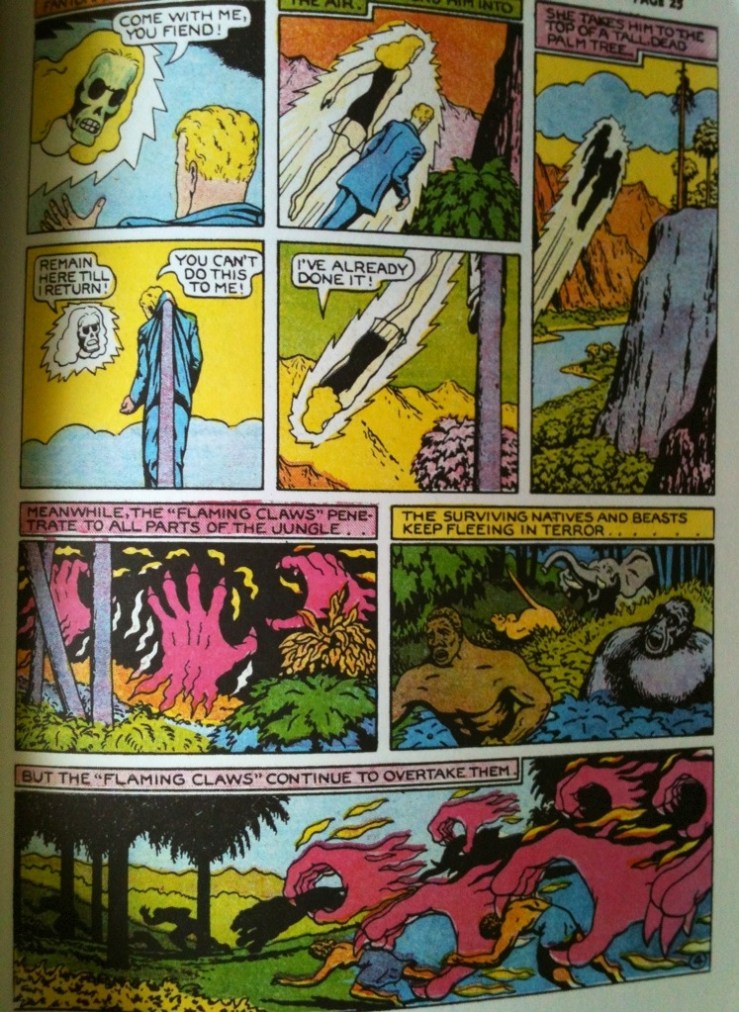
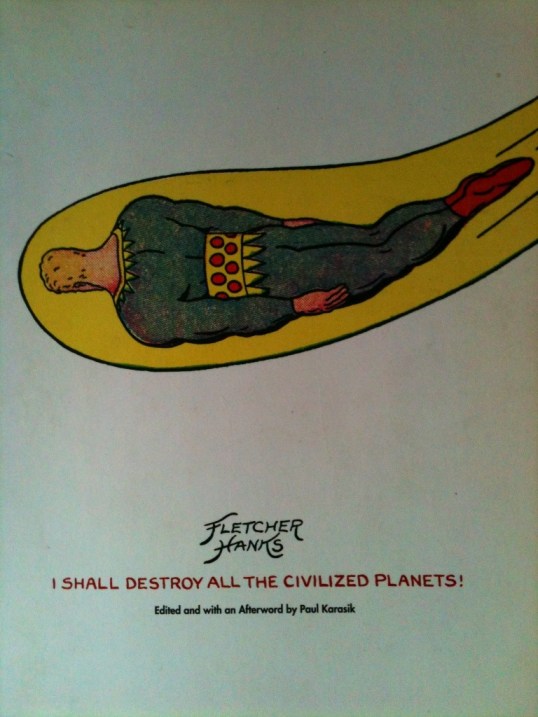
I’ve been wanting to get my mitts on this Fletcher Hanks collection since I first read about it in The Believer five years ago. Finally came across a used copy in pristine shape.

It’s really, really fucking weird. Sample page; full write-up forthcoming:

20120716-124542.jpg

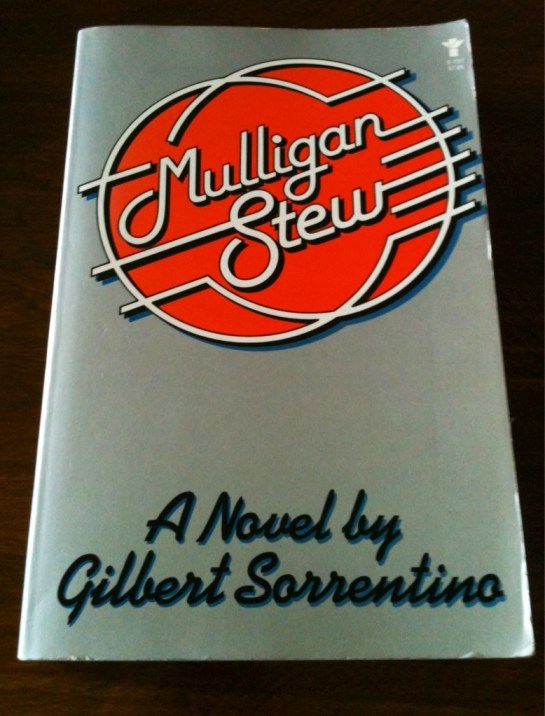
I’ve been itching to read Gilbert Sorrentino’s Mulligan Stew for a while. This copy may or may not be a first edition paperback—the rejection letters in the front are on a different type of paper than the rest of the novel (color/stock). It’s a big book—I’m finishing up a rereading of 2666, so maybe this one will jump in front of Georges Perec’s Life: A User’s Manual. Thoughts?

20120716-124550.jpg

Italo Calvino’s List of Reasons Why We Should Read the Classics

From Italo Calvino’s The Uses of Literature

  1. The classics are the books of which we usually hear people say, “I am rereading . . . ” and never “I am reading . . . “
  2. We use the words “classics” for books that are treasured by those who have read and loved them; but they are treasured no less by those who have the luck to read them for the first time in the best conditions to enjoy them
  3. The classics are books that exert a peculiar influence, both when they refuse to be eradicated from the mind and when they conceal themselves in the folds of memory, camouflaging themselves as the collective or individual unconscious.
  4. Every rereading of a classic is as much a voyage of discovery as the first reading.
  5. Every reading of a classic is in fact a rereading.
  6. A classic is a book that has never finished saying what it has to say.
  7. The classics are the books that come down to us bearing the traces of readings previous to ours, and bringing in their wake the traces they themselves have left on the culture or cultures they have passed through (or, more simply, on language and customs).
  8. A classic does not necessarily teach us anything we did not know before. In a classic we sometimes discover something we have always known (or thought we knew), but without knowing that this author said it first, or at least is associated with it in a special way. And this, too, is a surprise that gives much pleasure, such as we always gain from the discovery of an origin, a relationship, an affinity.
  9. The classics are books which, upon reading, we find even fresher, more unexpected, and more marvelous than we had thought from hearing about them.
  10. We use the word “classic” of a book that takes the form of an equivalent to the universe, on a level with the ancient talismans. With this definition we are approaching the idea of the “total book,” as Mallarmé conceived of it.
  11. Your classic author is the one you cannot feel indifferent to, who helps you to define yourself in relation to him, even in dispute with him.
  12. A classic is a book that comes before other classics; but anyone who has read the others first, and then reads this one, instantly recognizes its place in the family tree.
  13. A classic is something that tends to relegate the concerns of the moment to the status of background noise, but at the same time this background noise is something we cannot do without.
  14. A classic is something that persists as a background noise even when the most incompatible momentary concerns are in control of the situation.


Book Shelves #27, 7.01.2012

20120701-115719.jpg

Book shelves series #27, twenty-seventh Sunday of 2012

There are 27 Sundays in 2012, so today’s post is the half way mark for this series, I guess.

This is an obscure little shelf on the side of a piece of furniture that holds the TV in our den. These are travel books, phrase books, etc., which I’m not sure if people still buy—I mean, I don’t buy them anymore, at least not if I’m going to go somewhere. I use the internet, or iPhone apps. Maybe I need to go to some place without 3G or wireless coverage.

There are some other relics here, too, on the shelf above this one—CDs and DVDs.

Book Shelves #26, 6.24.2012

20120624-143352.jpg

Book shelves series #26, twenty-sixth Sunday of 2012: Some old art books.

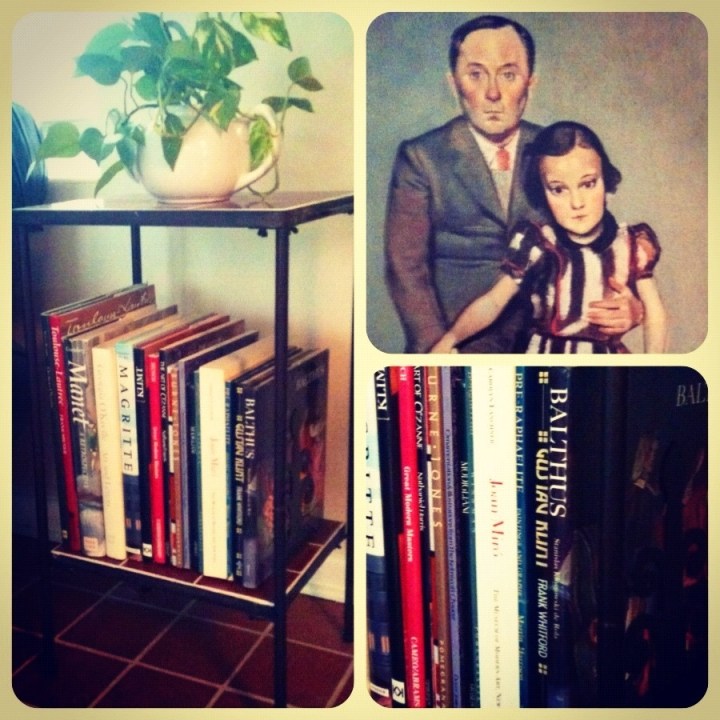
This little shelf sits next to a solitary couch in a den/fireplace room that abuts the eat-in kitchen. The shelf is mostly to hold the occasional drink if feet are propped on the coffee table. There are old art books in here, dating back to high school and college, when my wife and I (separately, of course, in those days) still bought lots and lots of art books, before the internet made accessibility to images so ubiquitous. As such, the shelf holds books that reflected our tastes of fifteen, sixteen, seventeen years ago: Lots of Pre-Raphaelite and Romantic stuff (hers) and lots of surrealist/modernist/cubist stuff (mine). Anyway. These rarely get dug out these days. If I want to check out Burne-Jones I usually visit an online gallery.

The portrait of Joan Miro and his daughter in the upper right corner is by the painter who called himself Balthus. I love the painting. It’s deeply creepy but also tender.

The Orphan Master’s Son, Adam Johnson’s Novel About Identity and Storytelling in North Korea

Late in Adam Johnson’s novel The Orphan Master’s Son, the titular protagonist muses that, “In North Korea, you weren’t born, you were made.” The Orphan Master’s Son is a novel about what it means to claim agency—to literally make a self—in a totalitarian society that assigns an official narrative to each of its citizens. Our hero is Jun Do, a boy who takes on a martyr’s name like all North Korean orphans, even though he believes with absolute commitment in a narrative he’s created where he’s the son of the man who keeps him and the other orphan boys. His mother? Well, she’s a phantom in a photograph, a beautiful singer disappeared on a forgotten night.

In the orphanage, Jun Do decides which boys will eat and which ones will not, who will freeze and who will stay warm. He even chooses their names from the list of Revolutionary Martyrs. From the outset of his life, Jun Do must navigate a world where his own capacity for human feeling is always threatened, preëmpted, or outright destroyed by institutionalized suffering.

Reaching early adulthood, Jun Do joins the army where he’s trained in martial arts. He joins a tunnel unit, learning how to fight in total darkness. In the tunnels, Jun Do receives the first of many opportunities to defect (in this case to South Korea). Johnson explores the tension of such a choice again and again. In time, a special unit conscripts Jun Do to “pluck” (the official euphemism for kidnap) Japanese citizens from their own beaches and seafronts. As a reward for his skills, he’s allowed to learn English, and soon winds up as a radio spy on a North Korean fishing vessel (these are the best moments of the book). During this time, Jun Do eavesdrops on two American women who plan to row around the world, a plot point that resurfaces in the novel’s second-half. He also finds himself a decorated hero of North Korea—but almost as soon as he finds a would-be home and family in the fishing vessel and crew, he’s plucked away on a mission to Texas.

Okay: If the paragraph above seems all over the place, that’s because the first part of The Orphan Master’s Son, “The Biography of Jun Do,” is all over the place—in a good way. There’s a dazzling giddiness to the tale of Jun Do, and the swift turns of his identity read like a picaresque novel. I was repeatedly reminded of Candide or Invisible Man. It’s worth recalling Ralph Ellison’s description of Invisible Man : “it stands on its own if only as one of those pieces of writing which consists mainly of one damned thing after another sheerly happening.”

“The Biography of Jun Do” stands on its own as well, and for me it was the highlight of The Orphan Master’s Son, full of black humor, satirical venom, and genuine pathos. It also showcases some of the best prose in the novel. Let me share some, at length. Here’s the captain of the fishing boat (probably my favorite character in the novel). A bit of context: Pyongyang orders the fishing boat to obtain fresh shrimp, a mission that will take them illegally into Russian waters—an offense the captain has already been incarcerated for:

“The Russians gave me four years,” he said. “Four years on a fish-gutting ship, forever at sea, never once did we go to port. I got the Russians to let my crew go. They were young, village boys mostly. But next time? I doubt it.”

“We’ll just go out for shrimp,” the Pilot said, “and if we don’t get any, we don’t get any.”

The Captain didn’t say anything to that plan. “The trawlers were always coming,” he said. “They’d be out for weeks and then show up to transfer their catch to our prison ship. You never knew what it would be. You’d be down on the gutting floor, and you’d hear the engines of a trawler coming astern and then the hydraulic gates opening up and sometimes we’d even stand on our saw tables because down the chute, like a wave, would come thousands of fish—yellowtail, cod, snapper, even little sardines—and suddenly you were hip deep in them, and you’d fire up your pneumatic saws because nobody was getting out until you’d gutted your way out. Sometimes the fish were hoarfrosted from six weeks in a hold and sometimes they’d been caught that morning and still had the slime of life on them.

“Toward afternoon, they’d sluice the drains, and thousands of liters of guts would purge into the sea. We’d always go up top to watch that. Out of nowhere, clouds of seabirds would appear and then the topfish and sharks—believe me, a real frenzy. And then from below would rise the squid, huge ones from the Arctic, their albino color like milk in the water. When they got agitated, their flesh turned red and white, red and white, and when they struck, to stun their victims, they lanterned up, flashing bright as you could imagine. It was like watching underwater lightning to see them attack.

“One day, two trawlers decided to catch those squid. One set a drop net that hung deep in the water. The bottom of this net was tethered to the other trawler, which acted like a tug. The squid slowly surfaced, a hundred kilos some of them, and when they started to flash, the net was towed beneath them and buttoned up.

“We all watched from the deck. We cheered, if you can believe that. Then we went back to work as if hundreds of squid, electric with anger, weren’t about to come down that chute and swamp the lot of us. Send down a thousand sharks, please—they don’t have ten arms and black beaks. Sharks don’t get angry or have giant eyes or suckers with hooks on them. God, the sound of the squid tumbling down the chute, the jets of ink, their beaks against the stainless steel, the colors of them, flashing. There was this little guy on board, Vietnamese, I’ll never forget him. A nice guy for sure, kind of green, much like our young Second Mate, and I sort of took him under my wing. He was a kid, didn’t know anything about anything yet. And his wrists, if you’d seen them. They were no bigger than this.”

Jun Do heard the story as if it were being broadcast from some far-off, unknown place. Real stories like this, human ones, could get you sent to prison, and it didn’t matter what they were about. It didn’t matter if the story was about an old woman or a squid attack—if it diverted emotion from the Dear Leader, it was dangerous. Jun Do needed his typewriter, he needed to get this down, this was the whole reason he listened in the dark.

“What was his name?” he asked the Captain.

“The thing is,” the Captain said, “the Russians aren’t the ones who took her from me. All the Russians wanted was four years. After four years they let me go. But here, it never ends. Here, there is no limit to anything.”

“What’s that mean?” the Pilot asked.

“It means wheel her around,” the Captain told him. “We’re heading north again.”

The Pilot said, “You’re not going to do anything stupid, are you?”

“What I’m going to do is get us some shrimp.”

Jun Do asked him, “Were you shrimping when the Russians got you?”

But the Captain had closed his eyes. “Vu,” he said. “The boy’s name was Vu.”

I’ve quoted so much here—really more than belongs in a book review, I suppose—because I think that this little story perfectly condenses the novel’s best features. Our characters are forced into an impossible situation, one that can’t have a good end for them. We also get the sense of the deep personal loss—of disappeared persons—that haunts The Orphan Master’s Son. And: The power of story-telling, to move and motivate and thrill, but also to be yet another agent in the aforementioned disappearing.

The excerpt above is a really great stand-alone piece of writing, and I guess I feel the need to clarify that I think Johnson is a pretty good writer before I set about telling you why I didn’t like the second half of The Orphan Master’s Son.

I should probably clarify that I think many people will enjoy this novel and find it very moving and that the faults I found in its second half likely have more to do with my taste as a reader than they do Johnson’s skill as a writer, which skill,  again I’ve tried to demonstrate is accomplished. I like picaresque novels, fragmentary novels, novels that let the reader do the heavy-lifting, novels that leave open spaces and gaps. The first half of The Orphan Master’s Son is such a novel. The second half, “The Confessions of Commander Ga,” settles down into a plot- and motif-driven arc that too-often overstates its case. For me, a good riff of dark, sad, occasionally hilarious tales cohered too heavily in “Confessions” into a gelatinous mess of plot strands verging on soap opera. Johnson’s admirable ambition leads him to overload the novel with unmanageable plot turns and leitmotifs.

The biggest problem though is the overwhelming suspicion that Johnson is simply out of his element in trying to inhabit the North Korean imagination. Although he’s clearly done his research, North Korea is essentially closed to the rest of the world. And Johnson is a U.S. American. I mean, there’s this whole other impossible-to-digest ball of wax here that makes Johnson’s admirable intent to write a novel about “propaganda” just way too complicated to suss out in a review, and I’ll admit that I tend to read like a reviewer, and that these notions just bugged the hell out of me as the novel progressed.

Johnson’s novel repeatedly reminded me of David Mitchell’s excellent historical epic The Thousand Autumns of Jacob de Zoet, a book that also obsesses over storytelling and identity in a closed nation. Mitchell’s novel provides the Western reader with a European surrogate in the titular de Zoet, an obvious device that nonetheless adds to the book a richness—and frankly an authenticity—that The Orphan Master’s Son lacks. Johnson’s title character (again, reader surrogate) is North Korean, and even though Johnson takes pains to show the internal machinations of his character’s changing personality, there’s a deeply U.S. American perspective that underwrites his psychology. We’re repeatedly told that in North Korea it’s the story that’s absolute, “But in America, people’s stories change all the time. In America, it is the man who matters.” By changing his story, Jun Do emotionally, spiritually, psychologically (choose your idiom) defects to The Land of Opportunity.

If I’ve withheld summarizing or even illustrating the plot of “The Confessions of Commander of Ga,” I’ve done so to avoid spoilers. Again, many people will dig this novel, and any explication would ruin its second half. Let’s just say there’s an actress. And a second life. And those rowers come up again. And a love story. And a branding iron. And the Americans. And The Dear Leader, of course. And Casablanca. And dogs. Etc.

The Orphan Master’s Son is very much a dystopian novel, and its second half often reads like the love story from 1984 (should I point out here how dreary I often found that plot form 1984? No? Fair enough). Toward the end of The Orphan Master’s Son, I began imagining how the novel might read as a work divorced from historical or political reality, as its own dystopian blend—what would The Orphan Master’s Son be stripped of all its North Korean baggage? (This is a ridiculous question, of course, but it is the question I asked myself). I think it would be a much better book, one that would allow Johnson more breathing room to play with the big issues that he’s ultimately addressing here—what it means to tell a story, what it means to create, what it means to love a person who can not just change, but also disappear. These are the issues that Johnson tackles with aplomb; what’s missing though, I think, is a genuine take on what it means to be a North Korean in search of identity.

The Abdication (Book/Ero(t)icomic Epic Aquired, Sometime Last Week)

20120606-120115.jpg

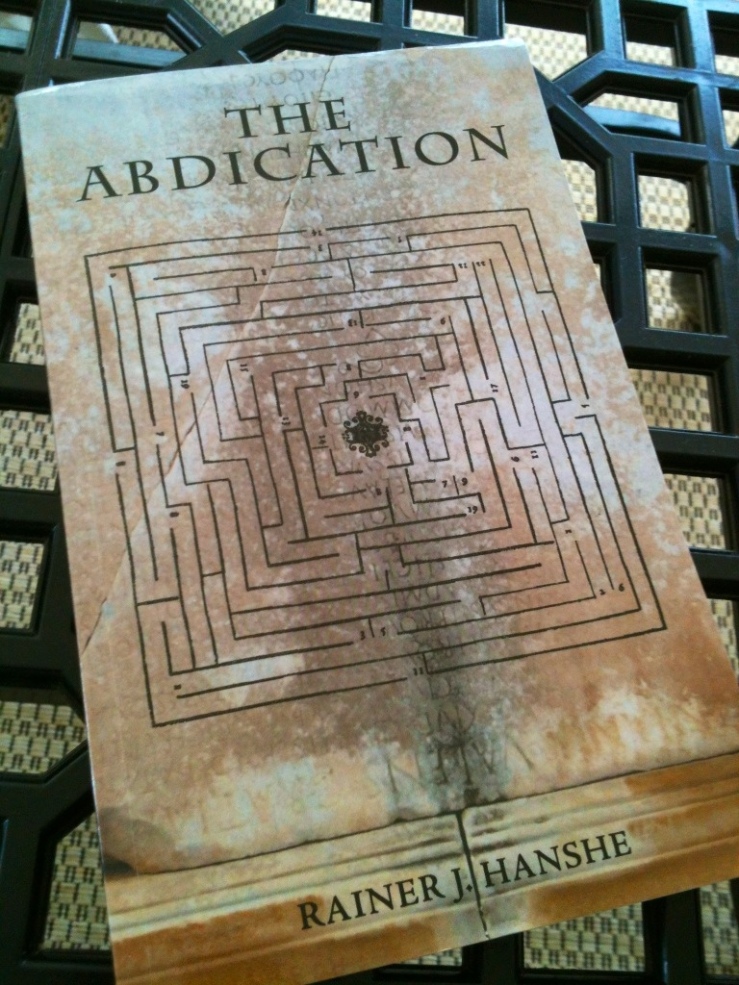
Rainer J. Hanshe’s The Abdication. Started this one the yesterday. Very weird, very cool. More thoughts to come, but here’s the blurb:

Spring 2032: an enigmatic bandleader named Triboulet arrives by helicopter in Rome, where his carnivalesque troupe awaits with a legion of animals and unruly kids. When provoking states of joyous panic through their ritualistic frenzies, the troupe’s arrival proves restorative, for the world is beset with famines, plagues, and religious conflicts, which Triboulet seeks to neutralize with freeing laughter. As he and his troupe begin constructing strange edifices in the Eternal City, sacred sites around the world suffer terrible, often beguiling forms of vandalism, and rumors abound that the Christ has actually finally returned.
Although radical Islamic sects claim responsibility for the vandalism, the culprits remain unknown: is it the Jihadists, anarcho-atheist intellectuals, or eco-terrorists? Religious and political authorities grow leery of the troupe and suspicious of Triboulet, whose true identity remains a mystery. The very future of the world is at stake, and while touring Israel during Christmas, Triboulet and his raucous band of pranksters bear witness to the world’s pivotal crossing into a new reality.
Albert Camus noted that ‘the metaphysics of the worst’ expresses itself in a literature of damnation and argued that ‘we have still not yet found the exit’ from such literature. With his second novel, Hanshe has found the way out, offering in fact something not only promising, but astounding, a pathway that is into a new reality, into a ‘physics of the best.’ The Abdication is a true ero(t)icomic epic.

“They Hate Me More Than I Hate Them” — Michel Houellebecq on Critics and the Press

INTERVIEWER

What about your critics? Can you just sum up briefly what you hold against the French press?

HOUELLEBECQ

First of all, they hate me more than I hate them. What I do reproach them for isn’t bad reviews. It is that they talk about things having nothing to do with my books—my mother or my tax exile—and that they caricature me so that I’ve become a symbol of so many unpleasant things—cynicism, nihilism, misogyny. People have stopped reading my books because they’ve already got their idea about me. To some degree of course, that’s true for everyone. After two or three novels, a writer can’t expect to be read. The critics have made up their minds.

From his Paris Review interview.

Ben Marcus Talks About His Novel The Flame Alphabet

Life: “A Queer Contraption, Very Dangerous, a Certain Death-trap” (A Passage from Flann O’Brien’s The Third Policeman)

I started Flann O’Brien’s novel The Third Policeman yesterday, on the recommendation of a few readers who commented on a post last week. Just a few chapters in, I felt the thrill of really great, strange writing, coupled with the bizarre, almost unwieldy disbelief that I hadn’t read the novel before, or more to the point, and most ashamedly, that it wasn’t even on my radar. I felt a strange antipathy to the name Flann O’Brien whenever I came across it in the past—too close to Flannery O’Connor, if I’m being honest. This is all silly and I’m embarrassed to write it now. Anyway, the novel is amazing so far. Here’s a passage that maybe stands alone. We have the (as yet?) unnamed narrator, his soul (in italics), and an old man (who may or may not be a version of the narrator?):

I smiled at him in good-humoured and said:

‘Tricky-looking man, you are hard to place and it is not easy to guess your station. You seem very contented in one way but then again you do not seem to be satisfied. What is your objection to life?’ He blew little bags of smoke at me and looked at me closely from behind the bushes of hair which were growing about his eyes.

‘Is it life?’ he answered. ‘I would rather be without it,’ he said, ‘for there is a queer small utility in it. You cannot eat it or drink it or smoke it in your pipe, it does not keep the rain out and it is a poor armful in the dark if you strip it and take it to bed with you after a night of porter when you are shivering with the red passion. It is a great mistake and a thing better done without, like bed-jars and foreign bacon.’

‘That is a nice way to be talking on this grand lively day,’ I chided, ‘when the sun is roaring in the sky and sending great tidings into our weary bones.’

‘Or like feather-beds,’ he continued, ‘or bread manufactured with powerful steam machinery. Is it life you say? Life?’

Explain the difficulty of life yet stressing its essential sweetness and desirability.

What sweetness?

Flowers in the spring, the glory and fulfilment of human life, bird-song at evening – you know very well what I mean. I am not so sure about the sweetness all the same.

‘It is hard to get the right shape of it,’ I said to the tricky man, ‘or to define life at all but if you identify life with enjoyment I am told that there is a better brand of it in the cities than in the country parts and there is said to be a very superior brand of it to be had in certain parts of France. Did you ever notice that cats have a lot of it in them when they are quite juveniles?’

He was looking in my direction crossly.

‘Is it life? Many a man has spent a hundred years trying to get the dimensions of it and when he understands it at last and entertains the certain pattern of it in his head, by the hokey he takes to his bed and dies! He dies like a poisoned sheepdog. There is nothing so dangerous, you can’t smoke it, nobody will give you tuppence-halfpenny for the half of it and it kills you in the wind-up. It is a queer contraption, very dangerous, a certain death-trap. Life?’

Book Shelves #15, 4.08.2012

20120407-140053.jpg

1st Gent. How class your man? – as better than the most,

Or, seeming better, worse beneath that cloak?

As saint or knave, pilgrim or hypocrite?

2nd Gent. Nay, tell me how you class your wealth of books

The drifted relics of all time.

As well sort them at once by size and livery:

Vellum, tall copies, and the common calf

Will hardly cover more diversity

Than all your labels cunningly devised

To class your unread authors.

—George Eliot, Middlemarch, epigraph to Chapter 13

Book shelves series #15, fifteenth Sunday of 2012

A new book-case this week; the shorter triplet of the twin ladders seen here. What do the volumes on this top shelf hold in common? They are hardback. That’s about it. Yes, I actually go through The Riverside Shakespeare every now and then, especially when sparking new ideas for class lectures. The Balthus memoir is pretty good. No, I never finished Godel, Escher, Bach. It’s not hardback, come to think of it. The Fallada books are good stuff. Will Dylan ever finish up the Chronicles? Probably not. Maybe so. Who knows? We all love Shel Silverstein, of course.

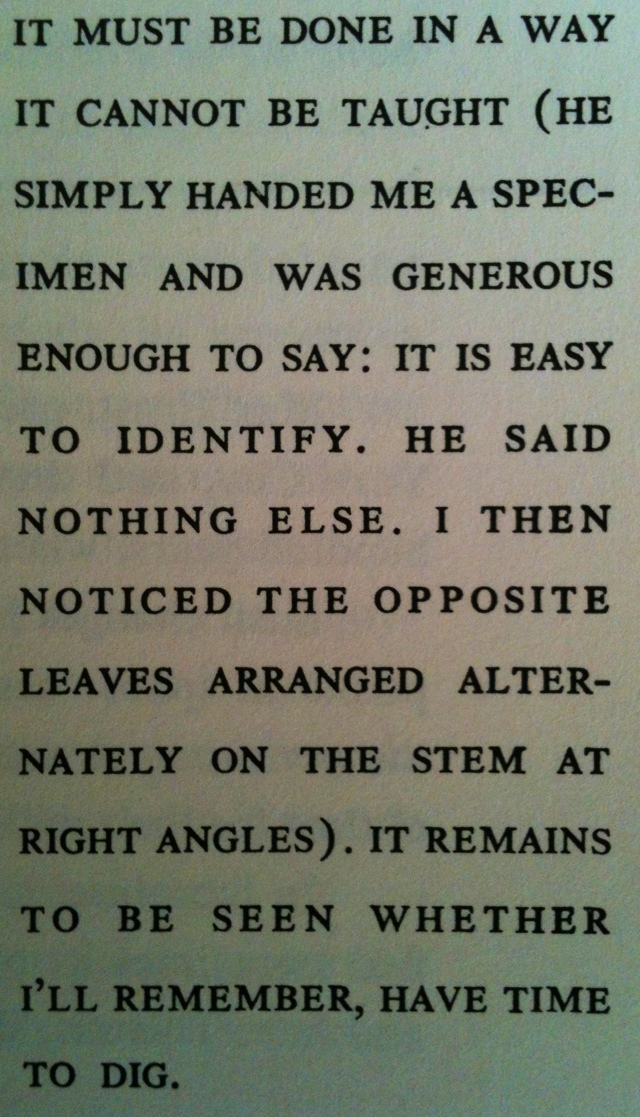
“It Must Be Done in a Way It Cannot Be Taught” — John Cage

20120228-173108.jpg

(From John Cage’s A Year from Monday).

Book Shelves #9, 2.26.2012

We should first of all distinguish stable classifications from provisional ones. Stable classifications are those which, in principle, you continue to respect; provisional classifications are those supposed to last only a few days, the time it takes for a book to discover, or rediscover, its definitive place. This may be a book recently acquired and not read yet, or else a book recently read that you don’t quite know where to place and which you have promised to yourself you will put away on the occasion of a forthcoming ‘great arranging’, or else a book whose reading has been interrupted and that you don’t to classify before taking it up again and finishing it, or else a book you have used constantly over a given period, or else a book you have taken down to look up a piece of information or a reference and which you haven’t yet put back in its place, or else a book that you can’t put back in its place, or else a book that you can’t put back in its rightful place because it doesn’t belong to you and you’ve several times promised to give it back, etc.

—Georges Perec, from “The Art and Manner of Arranging One’s Books”

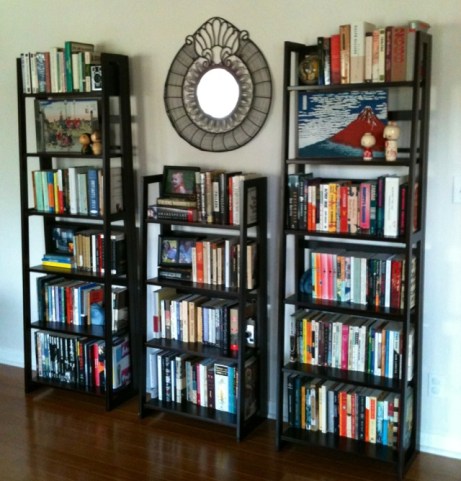
Book shelves series #9, ninth Sunday of 2012: In which I photograph three book shelves that I will examine more closely over the next several weeks.

Georges Perec goes on to admit that over three-quarters of his own books are provisionally categorized (at best). Libraries, like governments and tectonic plates and personalities, are not stable entities. Still, most of us try to impose some sense of order on our book collection, even if it’s an order apparent and relevant to ourselves alone. The three book shelves photographed below are probably the most “stable” in the house:

20120226-105205.jpg

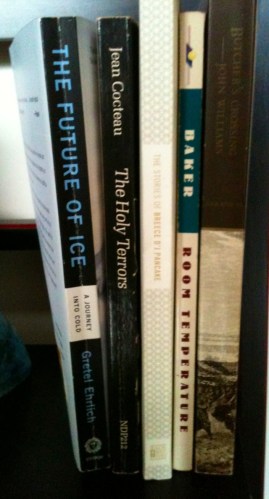
Despite an ongoing process of accretion, relocation, and removal, these shelves tend to remain fairly constant, with minor rearrangements happening maybe monthly instead of weekly or daily. As of today, there’s only one slim piece of a shelf “free”—that is, holding unsorted books waiting to be read, shelved, or, in one case, reviewed (I swear I’ll make another stab at writing up Breece D’J Pancake one day . . .). These books will be elsewhere by the time I get to photographing the shelf they rest on now:

20120226-105217.jpg

Book Shelves #8, 2.19.2012

20120219-125815.jpg

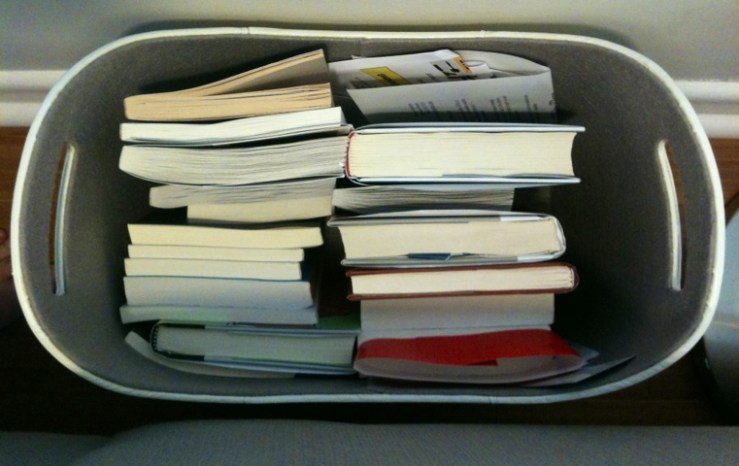
Book shelves series #8, eighth Sunday of 2012. This is likely the most boring post in this series (at least I hope it is). I keep books that folks send me that I intend to review but haven’t gotten to yet in this magazine stand thing; it abuts the sofa in the sitting room. Some of the books in here came in last summer. So, out of shame alone, I won’t be yanking any out for individual pics. Next week, we’ll get a gander at some of the finer shelves in the house.


“A Book Lives as Long as It Is Unfathomed” — D.H. Lawrence on Reading

D.H. Lawrence in his long essay Apocalypse:

Now a book lives as long as it is unfathomed. Once it is fathomed, it dies at once. It is an amazing thing, how utterly different a book will be, if I read it again after five years. Some books gain immensely, they are a new thing. They are so astonishingly different, they make a man question his own identity. Again, other books lose immensely. I read War and Peace once more, and was amazed to find how little it moved me, I was almost aghast to think of the raptures I had once felt, and now felt no more.
Book Acquired, 2.01.2012

20120205-164602.jpg

Haley Tanner’s acclaimed novel Vaclav & Lena is new in trade paperback (excellent cover on this one, by the bye). From Page Pulp’s review:

You could try to categorize this book as a love story or an immigrant story, but it is really simply a human story.  Like life itself, it can be sometimes funny, sometimes awkward (like the scene where Vaclav’s father walks in on him getting out the tub and makes a wrong assumption about what Vaclav was doing), sometimes happy, sometimes sad, and yes, sometimes incredibly dark.  It reflects the human experience so well, but never feels cliché.  Tanner’s prose has a simplicity that mimics the characters’ imperfect English.  She creates beauty with her words, but is never too flowery. This allows the story to shine through, unobscured. Her characters almost do not seem like characters; after awhile they start to feel wondrously real, like you could reach out and touch Lena’s messy black curls.  Tanner is adept at shaping both the story and the characters so that they feel realistic.

Book Shelves #5, 1.29.2012

Book shelves series #5, fifth Sunday of 2012: In which we leave the southern wing of the house where the bedrooms are and enter a formal sitting room.

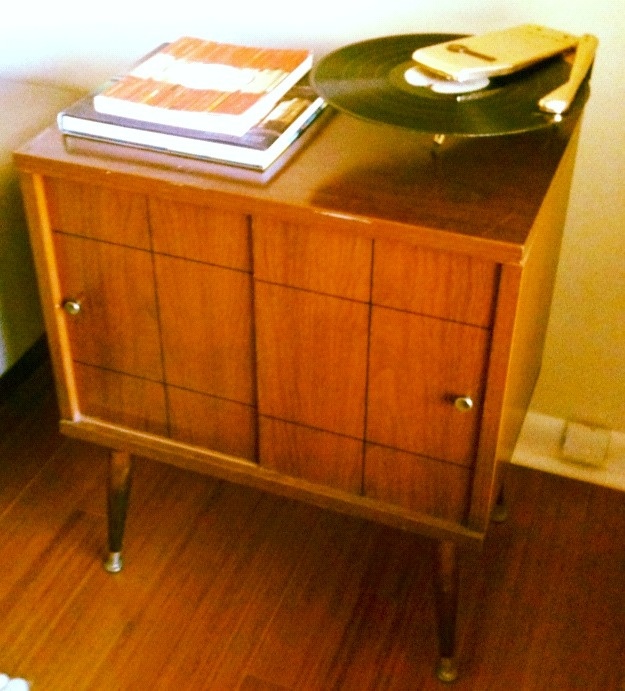
Okay. So. When I started this project, it was easy to identify the rooms in the house—they were bedrooms. As we go, I’ll have to occasionally make up names for rooms, often names that don’t really fit. Our house is a 1956 ranch with some of the atomic flavor, so it’s long and rectangular and very open—rooms open up into other rooms; spaces are demarcated more by ideas of rooms and not, say, walls. The house is essentially three sections; we’ve left the first, the bedrooms, and now move into a series of rooms for living and eating and cooking and sitting. And reading. I mapped out a little route for the rest of this series, and the first stop is this mid-century LP cabinet in what I’ll call, for lack of a better term, our formal sitting room. The cabinet once held many of my records but is now filled with comic books (more on those next week).

20120129-123357.jpg

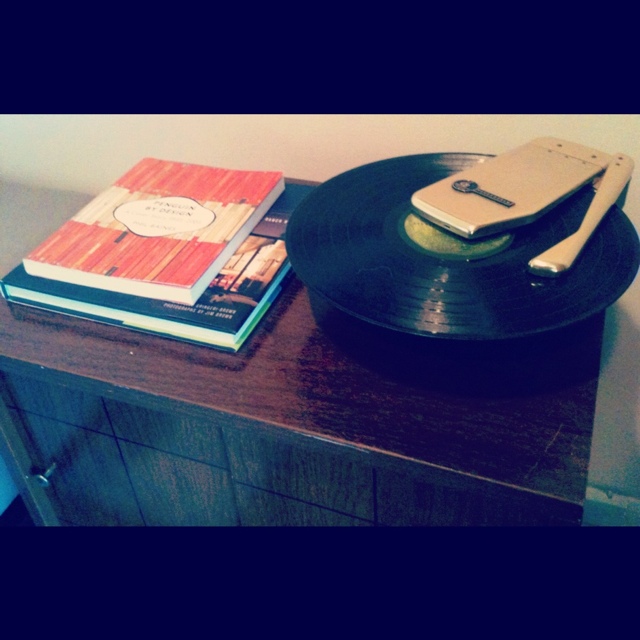
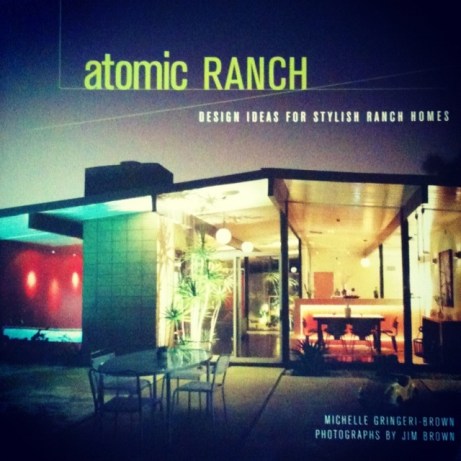
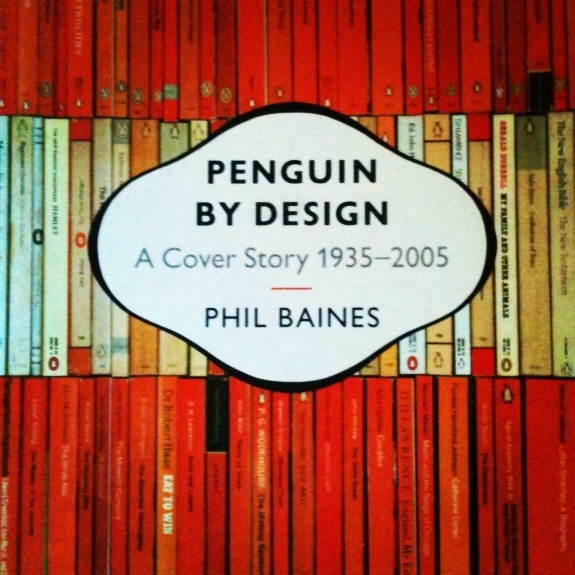
The books that set on top of it are coffee tablish, I suppose, and they tend to rotate, although there’s usually a stray novel or two that sets here as well. Today we’ll look at the two on top now: Penguin by Design and Atomic Ranch.

20120129-123410.jpg

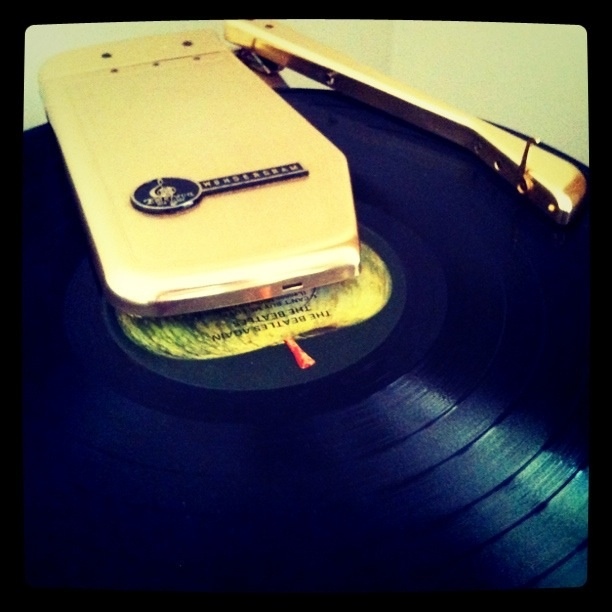
There’s also an Emerson Wondergram record player that sets on the table; I suppose it was the iPod of its day (see one in action here).

20120129-121621.jpg

Atomic Ranch is my wife’s, although I don’t really make such distinctions when it comes to books. We lived for years in a bungalow and she amassed books dedicated to craftsman homes during that time; when we moved to the ’50s ranch, she wanted this:

20120129-123515.jpg

Penguin by Design is essential for anyone who drools over beautiful modern book covers.

20120129-123508.jpg

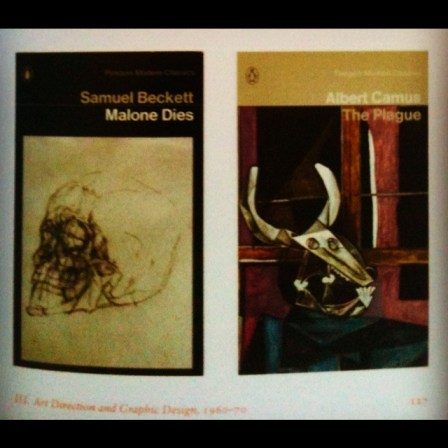
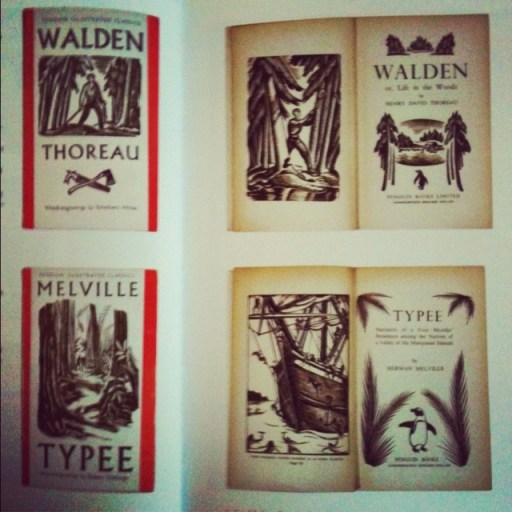
My pics are lousy—sorry—but just a few editions I’d love to pick up one day:

20120129-123417.jpg

20120129-123443.jpg

20120129-123449.jpg

Next week, we’ll look at some of the comic books inside the cabinet.

Book Shelves #4, 1.22.2012

Book shelves series #4, fourth Sunday of 2012: In which we finally leave the master bedroom and check out the books in my children’s rooms.

In the previous weeks, I illustrated that my kids — a girl and a boy, 4 and 1, respectively (tack on a “half” to each of those numbers if you care to) — my kids leave books all over the house. Their books are everywhere. They are as bad as I am. I indicated at the beginning of this year-long series that the documentation would never be stable or absolute; that books float through my house, come and go like bad house guests or silly ghosts—this is probably more true of the children’s books in this house than any other kind of book.

This week, I photograph the book shelves in my kids’ rooms, starting with my daughter’s. This is her big bookshelf:

20120121-174110.jpg

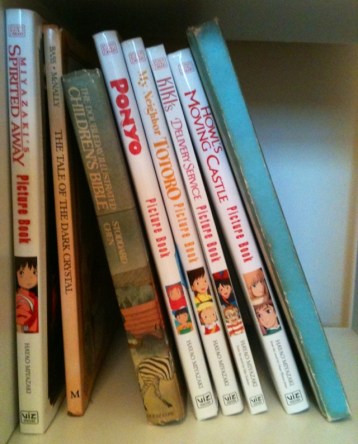
I did not photograph the big pile of books that set to the left. A close up of any of these shelves would reveal a mix of classics—stuff that my wife and I read and cherished as kids—and newer stuff as well. Here’s a shelf, sort of at random—it’s unusually well-organized:

20120121-174117.jpg

There’s a lot of Studio Ghibli books here; most narrativize Hayao Miyazaki’s films (we’re big fans in this house). My daughter loves these. The bible was my bible; the blue-spined book is this:

20120121-174125.jpg

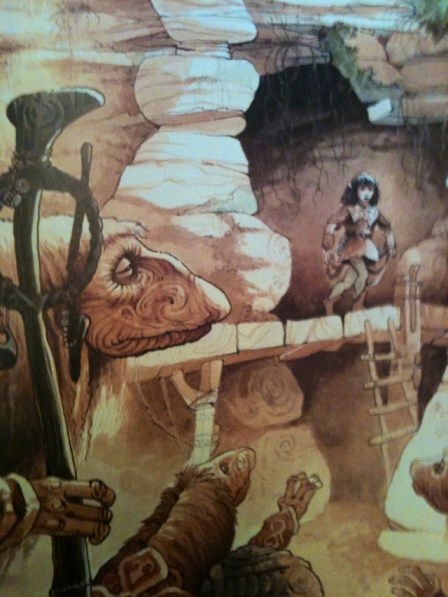
You might also note a book version of Jim Henson’s creepy classic The Dark Crystal; this was mine as a kid and it disturbed the hell out of me, so I gave it to my daughter, of course:

20120121-174143.jpg

The Studio Ghibli books combine beautiful stills of the film with narrative prose and comic book speech bubbles. From the standpoint of a fan of the films, they’re really interesting because they explicate some of the ambiguity. Our daughter loves them and asks for them (too much!):

20120121-174149.jpg

Another shelf from another book shelf—the only shelf with books on it in this piece of furniture, actually. Not interesting, but I said I’d photograph all book shelves as part of this project:

20120121-174157.jpg

Before my wife and I married, we lived in Tokyo for a while; we bought a bunch of these board books at a 100 yen shop. Here’s one:

20120121-174203.jpg

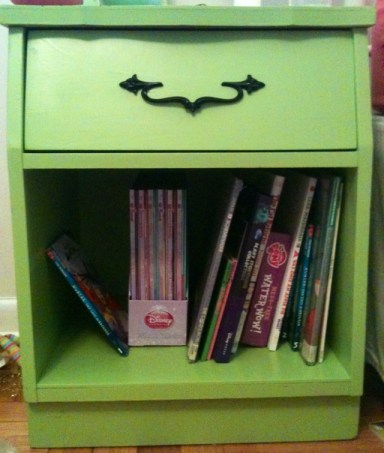
Night stand: always a place of shelving instability:

20120121-174209.jpg

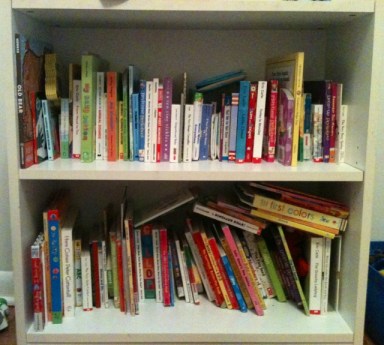
The book shelf in my son’s room—lots of board books, Eric Carle, stuff like that. He likes trains and dogs:

20120121-174219.jpg

So, I covered both of the kid’s rooms in one post in the hopes of getting to more interesting volumes in the next few weeks. On deck: the den/kitchen space, featuring cookbooks, art books, and travel volumes.