I’ve been reading a lot of David Ohle lately — the Moldenke cycle, specifically. I read The Pisstown Chaos(2008) late last year, then kept going with The Old Reactor (2013), and then reread The Age of Sinatra (2004). I’m near the end of a reread of Ohle’s seminal weirdo novel Motorman (1972) right now, and I’ve got The Blast (2014) and The Death of a Character (2021) on the way.
The Moldenke books take place in an abject, stinky, ruinous post-apocalyptic landscape populated with jellyheads, neutrodynes, imps, Stinkers, and Americans. The world runs on broken logic and bureaucratic absurdity. Order is repeatedly disrupted by Chaoses and Forgettings. Bodies fail; technology fails. Ohle relates these stories in a genteel, dry tone (especially in the later books) that mocks any hint of a Hero Saving the Day. His novels, especially those published during US America’s foolish GWOT misadventures, capture the spirit of my country’s farcical post-twentieth-century trajectory.
But this blog post is ostensibly about George Saunders, or rather George Saunders’ new novel Vigil, which I have not yet read, having only just today received a review copy in the mail.
I do not think that a writer has a cultural duty to respond to now, or Now, or even “Now!” if you like–but I do think that Saunders has always aimed to respond to the US American zeitgeist in his fictions. And in the best of his fictions — including the stories “CivilWarLand in Bad Decline,” “Pastoralia,” “Sea Oak,” and “The Semplica Girl Diaries” — Saunders skewered US American absurdity with a tender pathos that balanced his dark humor without overpowering its core anger. But Saunders’ later fiction is perhaps over-seasoned with love, empathy, all that hippy-dippy shit. It’s not necessary to look through everyone’s eyes. Empathy has its limits. Latter-day Saunders often read to me as, in its worst moments, sanctimonious.
“Once you start illustrating virtue, you had better stop writing fiction,” Robert Penn Warren wrote. It was once difficult to imagine this dictum might apply to George Saunders.
From the start, in the mid-1990s, he’s been an American original, a briskly whiskered national asset. He’s an ineluctably strange, dark and funny writer whose work has some of Mark Twain’s subversive wit, Kurt Vonnegut’s cosmic playfulness and Donald Barthelme’s laboratory blitzing of high and low culture.
It was my colleague who alerted me to this review, which I skimmed, noting the phrase “Downhill Alert!”, before dispensing with it. (My colleague wants me to read the book in some kind of, uh, I don’t know, tandem?, with him.)
This colleague loved Saunders’ 2017 novel Lincoln in the Bardo. I did not love Lincoln in the Bardo. I couldn’t even finish it. I found it maudlin, trite. It was like watching your dad try and impress your boss (I don’t know what that means). I wrote that year, 2017, that—
Lincoln in the Bardo might be a really good novel and I just can’t see it or hear it or feel it. I see postmodernism-as-genre, as form; I read bloodless overcooked posturing; I feel schmaltz. I failed the novel, I’m sure. I mean, I’m sure it’s good, right? The problem is me, as usual.
Saunders loves his reader too much. The story wants to make us feel comfortable now, comfortable, at minimum, in our own moral agency and our own moral righteousness. But comfort now will not do.
I thought Saunders’ next two New Yorker stories were a smidge stronger, calling “Elliott Spencer,” “a stylistically-bold tale about poor people who are reprogrammed and then deployed as paid political protesters.” Of “Love Letter,” I suggested that the exercise “reads like a thought experiment with no real conclusion, no solid answer. Or, rather, the solution is there in the title: love. But is that enough?”
Vigil is about a dying oil tycoon visited by a comforting angel, or series of angels, or something like that. It is, if I understand correctly, Saunders’ take on “climate fiction,” which I imagine will not really dwell in the nasty gross irreal reality of the fall we are falling into right now. But I could be wrong. I can’t help but notice that Vigil seems to be organized, like Lincoln in the Bardo, around a “Great Man” in USAian history — a mover and shaker, a powerbroker, a markmaker, etc. I’ll try to read it with an open mind, but I have to admit that even the prospect pales against my recent dip into Ohle’s sour, funky flavors. But we shall see.
Matt Bucher’s forthcoming novel The Summer Layoff is a semi-sequel to his debut, The Belan Deck. Blurb:
On Day 1, the narrator of The Summer Layoff is unceremoniously canned from his soul-sucking corporate job. But, he has a generous severance package that affords him the time off to do nothing, for once. Instead of attending virtual meetings and reviewing PowerPoint files relating to an amorphous Al project, he can now take long walks through his Texas suburb, write in his diary, scroll Wikipedia for hours at a time, and contemplate normal human anxieties. Part catalog, part self-help note-to-self, The Summer Layoff is a meditation on the modern metaphysics of work and stasis.
Let’s talk about the spirit and form of The Belan Deck. Bucher borrows the epigraphic, anecdotal, fractured, discontinuous style that David Markson practiced (perfected?) in his so-called Notecard Quartet (1996-2007: Reader’s Block, This Is Not A Novel, Vanishing Point, and The Last Novel). “An assemblage…nonlinear, discontinuous, collage-like,” wrote Markson, to which Bucher’s narrator replies, “Bricolage. DIY culture. Amateurism. Fandom. Blackout poems.”
Bucher’s bricolage picks up Markson’s style and spirit, but also moves it forward. Although Markson’s late quartet is arguably (I would say, by definition) formally postmodernist, the object of the Notecard Novels’ obsession is essentially Modernism. Bucher’s book is necessarily post-postmodern, taking as its objects the detritus and tools of postmodern communication: PowerPoint, Google Street View, Wikipedia, social media, artificial intelligence.
The following discussion of Vladimir Sorokin’s novel Blue Lard (in translation by Max Lawton) is intended for those who have read or are reading the book. It contains significant spoilers; to be very clear, I strongly recommend entering Blue Lard cold.
I’ve had too many false starts with this last (for now) riff on Blue Lard that I’ve ended up rereading the last 100 or so pages maybe four times now. When I first started this ridiculous series of riffs–way back in February!–I promised to surf Blue Lard’s wave; I have not done that. I’ve bogged myself down in summarizing. I’ve found myself reading Wikipedia entry after Wikipedia entry of the various Soviet luminaries–politicians, artists, writers, scientists, etc.–who lard the end of the novel. I’ve tried to figure out the ending by going back to the epistolary beginning. I’ve tried, I suppose, to flesh out the thesis I arrived at in the last riff I did, where I suggested that “Blue Lard is hypersurreal, shocking, deviant. But it’s also more balanced and nuanced than a first go-through might suggest, not just absurdist shit-throwing and jabberwocky, but an accomplished analysis of the emerging post-Soviet era.”
So well where were we? Or rather, where are we? The novel’s final section begins with Hitler loading his family, his bodyguard, his lover Khrushchev and a retinue of ninjas into his private plane. They abscond with the cache of blue lard and make their way to Germany to meet up with their old pal Hitler, irking Beria and his murderous allies.
On route to Hitler’s Berghof, Stalin’s wife Nadezhda reads aloud the first act of a new play by Konstantin Simonov, A Glass of Russian Blood. The play seems to be an allegory framing the Soviet intelligentsia as literal bloodsuckers, vampires feasting on the proletariat. Khrushchev dismisses the play’s subject as “fashionable rancor”; Stalin is more charitable, remarking that “Every writer has his ups and downs.” As usual, I found myself going down a rabbit hole, trying to glean a possible critique of the Simonov’s journal Novy Mir in particular and Soviet literature in general. This is not the way to read Blue Lard. Meanwhile, unconcerned with absurd theater, Stalin’s daughter is hungry; she declares she’d like to eat a unicorn. (In one of the earlier translations of Blue Lard I read, Max includes a footnote explaining that he’s substituted unicorn for the original tyanitolkai (тяни-Толкай) in the interest of readability.)
Back in Moscow, Beria is trying to track down Stalin and the missing blue lard. He’s also ordered the torture of Andrei Sakharov who’s been condemned for, as his torturer notes, suggesting that “Time is a head of cabbage and all events are just aphids eating their way through it” — a complete rejection of Soviet communism’s teleological conception of historical materialism.
Sakharov’s torturer is Alexander Khvat, who the narrator informs us was “the lead investigator on the case of the sinister saboteur Vavilov who’d devoted his life to cultivating ‘quick ergot’ and using it to infect Kuban wheat.” The historical Vavilov, which is to say our historical Vavilov, was an agrinomical geneticist who tried to use science to feed the world.
But Sorokin’s critique doesn’t seem to be aimed at Soviet communism alone; rather, he seems to condemn the brutal stupidity and close-mindedness of those who fear what they do not comprehend. Blue Lard’s absurdity and violence critiques power—and the fear of loss of power that consumes those who hold power.
Stalin’s crew passes over the great Prague Wall which separates the West from the East, the Third Reich and its partner the USSR, and soon arrive at the Berghof:
The long, unusually smooth tarmac of the airfield was reminiscent of a frozen mountain lake and ran up against a granite statue of Hitler’s head, carved from an entire mountain by the efforts of Arno Breker and six thousand French and British prisoners.
The Hitlers (the führer has married mistress Eva in this reality) and the Stalins kiss their hellos and with their accompanying entourages head to yet another of Blue Lard’s many, many feasts. (The narrator notes that “Meanwhile, in the plane, Ajooba, Sisul, and the ninjas were quickly and professionally strangling the airplane’s crew” — the adverb professionally there is marvelous.)
Just as he does with Stalin, Sorokin renders Hitler in kitschy pop-glam strokes:
Hitler put his unfinished glass down on a tray held up to him by an SS servant, then, opening his long arms in the narrow sleeves of a dark-blue frock coat, lace cuffs spilling out of them, walked over to Stalin, his high-heeled shoes with their golden spurs loudly knocking against the marble. Eva followed him, her thin body nestled snugly into a leopard dress.
Tacky-glam of Hitler of Blue Lard is also a bit of a carnivore, unlike the vegetarian of our own historical record. “The table was covered primarily in meat-based hors d’oeuvres, as the Führer couldn’t stand fruits and vegetables,” the narrator notes. But he’s still an animal lover. When he pets his dog Blondie, his hands sparkle and crackle with electric energy. This Hitler shoots electrical beams from his fingertips, a talent that helps him win WW2.
Blue Lard’s final sequence in Hitler’s Berghof is full of depravities and (soap) operatics. Hitler essentially rapes Vesta, while her mother Nadezdha watches through a keyhole. Stricken, Nadezdha makes a call to her on-again-off-again lover Boris Leonidovich—presumably Boris Pasternak (we encountered his clone, author of the thirteen-stanza poem “Pussy” in the first section of Blue Lard), who chastises her for the sin of “pleonasm” (!) after she accuses him of cheating on her with “that jester… that clown… that idiot” Shklovsky (presumably the literary theorist Viktor Shklovsky).
Then all kinds of shit goes down. I’ve gotten bogged down in over-summarizing again; not my intention. The final strands of Blue Lard twist about like fragments of old spy films or war films—double crosses, unclear intentions. Heinrich Himmler shows up with just a few pages left in the novel, a thousand-pound mutant (Jabba to Hitler’s Emperor? Did Sorokin, like, get mad coked up and watch Return of the Jedi and write Blue Lard?)
It all ends, or doesn’t end, with Stalin injecting blue lard into his brain, which then expands and expands and expands:
Iosif Stalin’s brain gradually filled up the entire universe, absorbing its planets and stars. After 126,407,500 years, the brain turned into a black hole and began to shrink. After 34,564,007,330 years, the brain had shrunk back to the original size of Iosif Stalin’s brain. But the mass of the leader’s brain was 345,000 times greater than the mass of the sun. Then Stalin remembered about the pear.
And opened his eyes.
And now we are back where we started, a hundred years or so from Stalin’s then-present. An old, old man with a thick rural accent, he attends to the bratty recipient of Boris Gloger’s letters. In fact, he gives the brat the missive from Gloger dated 2 January (2048) that initiates Blue Lard—we are in a strange loop. (Is this an endorsement or refutation of the aphids-in-a-head-of-cabbage theory of time?) The letter’s recipient, Gloger’s “tender bastard,” tosses it to the ground after just a few sentences or two.
He’s more interested in the outfit he’ll wear to the Easter ball, a special outfit Stalin has apparently tailored: a mantle composed of blue lard. So rise again.
The following discussion of Vladimir Sorokin’s novel Blue Lard (in translation by Max Lawton) is intended for those who have read or are reading the book. It contains significant spoilers; to be very clear, I strongly recommend entering Blue Lard cold.
Previously on Blue Lard…We enjoyed the first of our clone narratives, Dostoevsky-2’s “Count Reshetovsky” (our dear correspondent Boris brag’s that the tale’s composition will yield “up to 6 kg. of blue lard”).
It is now Akhmatova-2’s turn to whip up some blue lard. Boris reports that “During the script-process, the object didn’t become at all deformed. Just heavy bleeding: vaginal and nasal.” Sorokin mixes abjection with creation. The Anna Akhmatova clone composes the song-poem “Three Nights.” I confess much of my idea of Ann Akhmatova’s poetry is informed by her sympathetic characterization in William T. Vollmann’s novel Europe Central—I’ve read fewer than a dozen of her poems, I’d guess—but nevertheless I found “Three Nights” very, very funny. Sorokin skewers Akhmatova in his parodic evocation of her earnest declaiming, perhaps lovingly, perhaps not, but with a fine ear, as telegraphed in Max Lawton’s translation. The plaintive sincerity of Akhmatova-2’s poem culminates in a riff on the old “farmer’s daughters” joke:
They rubbed sheep’s fat over his hard plow,
So that he could better plow the girls,
The three kolkhoznitsas-in-arms stripped down to their skin,
They lay down next to Comrade Akhmat.
Oh my!
Comrade Akhmat plowed them all night,
Gaptieva––three times,
Gazmanova––three times,
Khabibulina––three times.
Oh my!
Oh my! (A few pages later we’re treated (treated?) to the image of Lenin’s “heavy balls…crimson balls…shaggy balls… his hunchbacked balls.)
The clone narratives take over the text proper of Blue Lard (at least for now) and Boris’s tender letters to his tender bastard dwindle in length. (Boris does note in a letter dated 15 January that he’s reading Romance of the Three Kingdoms (attributed to Luo Guanzhong); perhaps the 14th-century historical novel , with its real-life figures and its epic sweep, signals a precursor text for Blue Lard.)
Our next clone is Platonov-3. Of all the cloned writers, Andrei Platonov was the one with whom I was most unfamiliar. That didn’t stop me from enjoying the scenario the first time I encountered it. It’s an actioner, featuring fight scenes on a train—uh, excuse me, a proletarian lumpomotive. Our hero is Bubnov, a stoker, machinist, engineer (and fighter) who takes on a new mission. The passenger who gives him this mission has to yell these new orders over “the class roar of the furnace with his bourgeois voice.” Such satirical lines riddle Platonov-3’s episode; later after digging a mass grave (I suppose such a scene shouldn’t be so slapstick, but it is), Bubnov’s comrade “got ready to say something sentimental, but was only able to growl because of the poverty of a human language that had entirely dried up in revolutionary winds.” I won’t spoil the trick of Platonov-3’s story, but it’s of a piece with Snowpiercer or The Train to Busan; one can easily reimagine Sorokin’s cloned Platonov-3’s riff as a sci-fi horror flick.
Another letter from Boris to bastard transitions to our next clone narrative, a one-act play by Chekhov-3 called “The Burial of Attis” (I should clarify that Boris includes the clone compositions in his letters). On my first reading of Blue Lard, I tuned into the depravity and linguistic difficulty of Boris’s letters. In the letter of 16 January that precedes Chekhov-3’s story, for instance, he complains that the colonel makes a pass at him while they are both drunk, tempting him to “test” some drug called “3 plus Caroline.” Boris’s letters are filled with futurese along with Chinese slang (he describes the colonel as a “hangkong mujian,” for example). A reread reveals more straightforward plotting elements–the letter of the 19th reminds us that this isn’t just a science mission but a military operation; the base is loaded with soldiers. And guns!
But on to Chekhov-3’s play, “The Burial of Attis.” The titular character is a beloved borzoi, now deceased. Attis belonged to Viktor Nikolayevich Polozov, a young aristocrat who seems to be barely maintaining his ancestral estate. He’s aided Anton, an aging footman. A former lover shows up at the burial, but he shouts her away in disgust after she declares that unlike dead people, “Dead dogs look just like dogs that are alive.” Later, an alcoholic neighbor, Dr. Schtange comes by to tie one on; in his drunkenness he urges Polozov to sell the ancestral manse: “Sell everything, sell it all! And as soon as possible! All this junk, all this decay, all this graveside garbage. A Chinese vase, a stuffed shark, these crystal goblets, what the devil are they to you?!” He does recommend keeping the weapons collection though, including a certain Mexican throwing knife. Chekhov-3’s Mexican throwing knife? Again, no spoilers, but the monologue that Polozov delivers at the end of the play is something else. A selection:
All things correspond to their names. The Chinese vase was, is, and shall always be a Chinese vase. Crystal is crystal and shall be thus until the day the moon falls to earth. You stood amidst these dead things––a living, warm-blooded man––and you alone did not correspond to your name. It wasn’t to do with the properties of your soul, not because of your decency or your wickedness, your honesty or your deceitfulness, not because of the good or the evil that was inside of you. You simply did not have a name… A person cannot have a name… They’re mere titles. We have no name. And never shall.
“There’s something M-unpleasant in this script,” muses Boris, “But I can’t figure out just what.” Something to return to later?
Nabokov-7’s “Kardosso’s Way” is up next. The clone has composed this text “in blood,” which, as Boris archly notes, “the original [Nabokov] couldn’t quite manage.” The linguistic fussiness of Nabokov-7’s composition is soaked in some of the foulest culinary abjection since Roger Mexico and Pig Bodine served snot soup, vomit vichyssoise wart waffles in Gravity’s Rainbow. “I only eat white meat!” the golddigger Svetalana exclaims before digging into a “silver dish filled with the prostates of catamites baked in grated cheese and generously sprinkled with lemon juice.” Later, “having nepresnified herself,” Svetlana “immersed her feet in a vase filled with ferret pâté.” And what to order when dining out?
The spouses never betrayed their gastronomic preferences, as they always ordered an 1889 Tokay, a swamp grass salad, the roots of elderly proletarians’ wisdom teeth, marengo made from bolonkas, parchment with toad caviar, and the menisci of third league Belarussian football players under a pile of vomit. For dessert, Svetlana would have rock crystal with whipped bull saliva or “Lair.” Having eaten their fill, they would move on to the jointer-inlaid tabernacle, wipe the prisms and trample the hamsters for forty minutes, then slide down the larded chute into the cloakroom.
The diction above is obscure, to be sure, but it’s possible to figure out what a marengo made of bolonkas might look like (you might not want to imagine what it would taste like, natch). Beyond obscurantism though, Nabokov-7 lards his narrative with terms that seem utterly alien to any known language: geobnorobdy, sodictio, nepresenified, half-gronzezily… In his recent interview on this blog, translator Max Lawton stated that he “worked in a few of Nabokov’s pet words,” but I’m not sure if jebraifying was one of those.
“I’m sending this one without comment,” Boris begins his letter of 18 January, referring to Pasternak-1’s 13-stanza poem “Pussy.” “You know I can’t stand Russcenities. Because of this, I offer no commentary,” he appends. I too will withhold commentary on the Pasternak pastiche, but will note that Boris’s brief letter reminds us that their experiment is part of a military operation: a certain Sgt. Prut allows him to shoot off a Cyclops-238 MC, a “slaughtersome thing” that Boris notes “could easily hew a clearing into our taiga all the way to the ocean.”
The last of the clone narratives, Tolstoy-4’s, is my favorite of the group. We get three chapters from the middle of an unnamed novel set in what seems to be 17th-century Russia. In media res, we find out that, “Having spent the whole winter in Pospelov, the old prince Mikhail Savvich found out about Boris’s duel too late, after his son’s wound had already closed up, and, along with it, so too had the whole business of his quarrel with Nesvitsky closed up and scabbed over.” So prodigal Boris returns home, where he will relax by bear hunting with his father and his father’s retainers. These scenes are richly-detailed and wonderful to walk through. Sorokin doesn’t seem to parody or skewer Tolstoy, nor does he mimic or mock him (at least to my ear)—instead the Tolstoy-4 passages evoke what I sense is a tempered if contested respect for the old master. Of all the clones, this narrative points to Sorokin’s intertextual competition with Tolstoy, which Sorokin enters into not with barbed neologisms or depraved abjection (although there is a bit of that here!), but with strange pop-fantasy eruptions. Accompanying the aristocrats and their retinue on their hunt are three “crushers,” a bizarre Cerberus troop of beasts who also seem to be men. The crushers speak in cracked, harsh voices and possess hands, yet walk leashed and lick their master’s lardshined boots. (Tatyana Tolstoya’s 2000 novel The Slynx (in English translation by Jamey Gambrell) would expand on these “crushers,” reinventing them as “degenerators,” human hybrid slaves used as beasts of burden.) Later, as Boris recuperates in a bathhouse, the wound he received in the duel reopens and one of the crushers gently licks it clean. Sorokin weaves abjection and purity in this strange bathhouse tableaux. The wound/scabbing motif here at the end of Tolstoy-4’s narrative echoes a remarkable passage from the section’s outset:
How does an awakened person differ from one who is awakened a s i t w e r e ? An awakened individual, that is to say, an individual who has been awakened by their conscience once and for all, has shaken off the evil of indifference to the lives of other people, as if it were a scab strongly and tightly clinging to the body, which, like a shell or suit of armor, clings to the conscience of every contemporary person living in contemporary society, which is based on the lawful oppression of certain people, the weak and the poor, by other people, the strong and the rich; this awakened individual will always evaluate all his deeds and misdeeds based on his new, young conscience, which has just awoken from its slumber. A person who is awakened, a s i t w e r e, shall continue to evaluate his deeds and misdeeds based not on his conscience, but on the shape of the scab of socially legitimized deception that clings to his conscience, continuing to flatter himself as before.
I would read an entire novel by Tolstoy-4; at the same time, I love that we only get three chapters, reifying Blue Lard’s apparently discontinuous structure. The writing of the section is evocative enough that we can imagine our own befores and afters if we like.
The first six clone narratives included linguistic aberrations–mechanical repetitions, scatological eruptions, perverted interludes, abject impossibilities–but the only real syntactical tic throughout Tolstoy-4’s story are three iterations of a sentence that might best be understood as “Sonya, get the hammer out of the cupboard” — although we see those words recombined, repeated, and inverted. Is this the Sonya of War and Peace? A version of Sofiya Tostoya? Is this Sonya merely (merely!) the verbal tic of cloned version of a nineteenth-century Russian realist whose erregen object is a stuffed albino panther? Does it matter?
Ahead: cocktail hour, dance party, armed combat, earthfuckers, THE SWIM, THE INDIGO PILL…
Max Lawton is the translator of many, many works, including a number of books by the Russian writer Vladimir Sorokin. The recent publication of two of those translations, Blue Lard and Red Pyramid was the occasion for my email-based interview with Max. We began in earnest late last fall and finished up on Leap Day, 2024. While Blue Lard was our starting place, we meandered, discussing future translations of Sorokin’s work, like The Norm and Dispatches from the District Committee, as well as some of Max’s other translation projects, books like Michael Lentz’s Schattenfroh and Stefano D’Arrigo’s Horcynus Orca. We also got into Max’s own fiction, which I anticipate seeing in bookstores soon. I want to express my gratitude to Max for generously sharing his time in this interview, and more importantly, making more Good Weird Stuff available to monolingual slobs like me.
Biblioklept: Max! Congrats on the publication of Blue Lardand Red Pyramid. I want to start with Blue Lard, because I think it’s a big deal that it’s getting an English language publication. It’s also my favorite Vladimir Sorokin book that I’ve read, and I know that it’s one of yours as well. The novel is perhaps Sorokin’s most (in)famous one, and I think it’ll attract new readers. What can readers expect when approaching the novel?
Max Lawton: Like TELLURIA, BLUE LARD is all about textures: literary, historical, ideological… However, unlike TELLURIA, BLUE LARD has a telos to it—an endpoint. I am firmly of the belief that BLUE LARD is Vladimir’s best novel. He had taken a long break from prose (about 7 years) before writing it, so this text simply burst forth from him and ended up as a neat showcase of all of his aesthetic preoccupations, butheld together by an edifice that has proportions none too short of classically harmonious. What should readers expect… hmm… the first section is rather challenging. One needs to surf its wave and not expect full comprehension. There is a glossary of Chinese words and neologisms at the back of the book, but I’m not sure it’s worth consulting in the expectation of further understanding. The middle section of the book—characterized by a faux-archaic language—is also terribly strange, but with fewer neologisms. The last section of the book—an alternate iteration of Post-WWII Europe—is formally very smooth, but insanely transgressive in terms of content. And I haven’t even mentioned the rather unorthodox parodies of Russian classics in the novel’s first section! What should readers expect? In short: to have their minds blown!
Max Lawton, Hollywood, California. Photog. by Ecem Lawton.
Biblioklept: Yeah, Blue Lard zapped me in the wildest way, and you’re right when you suggest the reader should “surf its wave and not expect full comprehension.” The first section is disorienting, but I think it also orients the reader to the radical disorientation to come. And the parodies of Chekhov, Tolstoy, Akhmatova, et al. are fantastic; there’s something really joyful in these deviant mutant performances. Sorokin constantly shifts linguistic registers in his work, which I know poses challenges and opportunities for you as a translator. For example, you’ve stated that in translating the polyglossia of Telluria you tapped into a range of voices including Chaucer, Faulkner, and Mervyn Peake. I’m curious about your process in translating Sorokin’s Russian classics parodies in Blue Lard.
ML: This is a fantastic question. The fundamental issue, however, is that Vladimir isn’t really interested in parody. If the clone-texts were a neat pastiche of Russian greats, that would be one thing. But Vladimir describes them as “essence hunts.” Oftentimes, they do not read like the authors they are “imitating.” This is especially so for Nabokov and Pasternak. Tolstoy and Akhmatova are in the middle. Then Dostoevsky, Platonov, and Chekhov are right on the money; their essence seems to line up with their outer form––their noumena are no different from their phenomena. For Dostoevsky, Platonov, and Chekhov, I did appeal to previous translations of their work, as not to do so seemed like a grave error. But, for the others, I had to think more outside of the box. With Nabokov, the one thing I “added” to the translation was recommended by a couple of professors and approved by Vladimir: I worked in a few of Nabokov’s pet words in English, as he is actually more famous for his writing in English than in Russian. For this reason, the insanely bizarre Nabokov “essence-hunt” reads more like a parody in English than in Russian––not that it isn’t very alienating in both languages. The Dostoevsky parody was especially fun to translate, as it allowed me to indulge the worst instincts of a Dostoevsky translator. I leave it to you to figure out what that might mean. The fundamental question posed by these parodies and the way they both resemble the texts of the original authors and not is: what does it mean, aesthetically speaking, when phenomena do not align with noumena?
Biblioklept: That seems like a central thread of what I’ve read from Sorokin in general—this aesthetic disarrangement of what we know, or what we think we know, and what might actually, I don’t know, be. To go back to Blue Lard: it reads like the work of someone joyfully detonating and reinventing realities. The “plot” of the novel is a series of displacements that culminate in this fucked up and hilarious reinvention of Postwar Europe. But as you mention above, that section is composed in a really precise, lucid, “smooth” manner, which only serves to highlight its transgressive content. The tonal shift isn’t exactly jarring, because by this point the reader has been through a linguistic gauntlet—but it does imbue the “alternate history” at the end of Blue Lard with an uncanny tinge.
ML:I actually think that the second half of the novel was more difficult to translate than the first. There’s a specific rhythm of Russian speech that is pun-filled and, I guess you’d say, overripe. This is how Russians speak in a sophisticated milieu even now. And I think it comes across as if it were wearing a fedora, so to speak, when it’s translated too directly. For that reason, I went back to the rhythms of dialogue at play in Old Hollywood films to find something that felt stilted but didn’t simply register as dissonance to the Anglophone ear. Of course, translating the narration of the book’s second half was more a question of reduction—making it as transparent as possible so that the horrors at its bottom would be visible. This wasn’t difficult, but was a good exercise in Hemingwayesque (or Sadean) style—Vladimir loves Old Man Ham and doesn’t much like Sade. As somebody who has written a lot of screenplays, Vladimir does sometimes enter a mode of narrative prose that seems to owe a lot to the way that screenplays are composed. With reference to the first half of the book with its constant destabilizing, I would say that it can be easier to translate things that sound utterly deranged because the question of normalcy goes out the window. As you will see in 2025, this is why the Soviet rhythms of THE NORM were a particular pain to render… we simply don’t have that register!
Biblioklept: Okay, so the fact that you drew from Old Hollywood patter actually makes a lot of sense to my ear. There’s like a heightened artificiality to the section, but one grounded in “realism,” which, again, lends to this uncanny rhythm.
ML: Yes, exactly. I have made this comparison before, but it bears repeating: Sorokin is a bit like a Russian hybrid of David Lynch and Quentin Tarantino. I very much hope that the dialogue in my translations of his work falls onto the Tarantino side of that spectrum. It should be crisp patter––highly rhythmic. Not stilted and highly unreal like Lynch’s screenplays. But, as with Tarantino and Old Hollywood films, something in Sorokin’s crispness eventually begins to limp, cloy, gum up the works… to glitch!
Max Lawton and Vladimir Sorokin, NYC.
Biblioklept:The Norm is Sorokin’s first novel, right?
ML: THE NORM is more or less Sorokin’s first novel. Things are a bit complicated at the beginning because he was simply writing “into his desk” with no prospect of publication. So, the early novels were sort of composed alongside one another. THE NORM is a Soviet Disneyland of abject horror: eight rides, each representing a different aspect of the USSR’s shittiness. Everyone knows it’s the book in which people eat shit, but it actually goes way deeper than that. The section people most love in Russia is a deranged epistolatory one, in which the distant relation managing an intelligentsia family’s dacha loses his mind with rage at having been saddled with its maintenance. Part 5––the best.
Actually, here’s a fun spoiler-free preview of the book––this diagram-thing will be included in the edition coming out from NYRB Classics in 2025.
TRANSLATOR’S LINATI SCHEMA FOR THE NORM
I. Contemporary dialogue. For a Soviet person, the same shock an Irish person might have had upon reading Dubliners. No point foraging through the American ‘80s. Therefore: the NOW.
II. Critical exegesis. These are mere words. American slang when necessary––then to explain the original by way of scholarly apparatus.
III. A thesis: Russian’s rhythms are generally quite defined by rurality. The agrarian empire was industrialized too quickly––couldn’t do away with the rurality of speech. But, so as not to exaggerate, to make the dialogue in “The Scourge” sound like a film noir about louche characters. Again: contemporary speech when necessary (esp. with the editors interrupting the text). Pilfering phrases from Constance Garnett for the Anton frame-narrative.
IV. Making the poems as perfect as any poems can be in translation. Total metrical adequacy.
V. No contractions. A dash of Benjy Compson. Instead of rhyming insults, total obscenity (“dickass professor” instead of the more literal “dickessor”).
VI. The occasional need to make a slogan more grammatical in English than in Russian.
VII. Not perfect lines, but shattered fragments. A meta-commentary on the clunkiness of official poetry (of poetry an sich as well?). The main thing: that the reader feels the clunky, contorted poetry when it supplants the prose, but that I not give into Miltonic excess entirely. Impossible to translate these as perfect poems as in Part V.
VIII. To occasionally add syntax to the gibberish so that it scans. “Jabberwocky.”
Biblioklept: I’m about halfway through The Norm—haven’t gotten to Part 5, which I’ll read tonight. The first section was, uh, hard to swallow, but also very funny. And once it told me how to read it, I was quite taken with how even in some of his earliest stuff, Sorokin has already found this strange, mutating form, a kind of narrative hot potato (or “hot norm” if we’re feeling extra abject today). I loved the third section, especially the sinister shift it takes.
ML: THE NORM is a highly compressed preview of all the tendencies Sorokin would be working out in the first half of his career—all the way up until BLUE LARD. Of course, you have the binary bomb structure of the short stories, in which a highly ordinary situation that would typically make up the raw material of Soviet official prose is ruptured and gives way to something abject. This will be explored a great deal more in the short stories of DISPATCHES FROM THE DISTRICT COMMITTEE, coming out from Dalkey next year. ROMAN and MARINA’S THIRTIETH LOVE, also binary bombs, but novels rather than stories, belong to the NORM-universe as well. Sorokin’s imitation of the world of Russian classics in ROMAN is as precise as his immersion in Soviet shit. Indeed, in THE NORM, one cannot help but note the intense specificity of Sorokin’s engagement with the Soviet Life-World. His prose would not be quite as specific in and after BLUE LARD—it would be more imaginative and less grounded in any one reality. Perhaps what tortured Sorokin during the first half of his career was his inability to imagine a world other than the Soviet Union. In all books after THEIR FOUR HEARTS (so BLUE LARD AND all that follows), though he may be haunted by the Russian past, the worlds he imagines are light and free—defined by his own language alone. After BLUE LARD, it is only his short stories that are weighted down by the gritty details of Russianness.
Biblioklept: You mentioned Russians love the fifth section, the “deranged epistolatory.” I loved the section too—it’s a kind of linguistic unraveling, but a strangely sympathetic one. Why do you think this chapter resonates with Sorokin’s native audience? Can you tell us a bit about translating it—was it fun? Difficult?
ML: That part was only tricky when Soviet-houseware vocab would pop up—obviously not my area of expertise. But, beyond that, in the sections where Sorokin is exploring a very pronounced directionality, I find it somehow easier to ride along with him. Translation is more about translating intent than individual words, so when the intent is very legible, it makes the translator’s job easier. That section is so beloved because it depicts a Soviet archetype of resentment and envy—wasn’t all of that meant to have gone away? Isn’t this the Shining Future? Well, it turns out that people are still animated by precisely the same sorts of petty evil. The idea of this section is a lot like what Dostoevsky wants to convey with the Underground Man: human beings are immutably illogical, petty… From that perspective, there is something divine about the gibberish at the section’s end—as divine as Dostoevsky’s 2+2=5.
Biblioklept: I really enjoy the gibberish and jabberwocky that infiltrates The Norm (particularly the lulling but clunky rhyming in the seventh section). That polyglossic strand seems woven throughout Sorokin’s work but is more palpable in this early novel than his later stuff. (Not sure if novel is the right word for The Norm but I don’t really care.) In Blue Lard and other later works, Sorokin employs neologisms and a range of non-Russian-language terms, but these are deployed in a more narratively-coherent manner than what’s happening in The Norm. In your estimation, is this simply an evolution in style? Is it purposeful, or just a writer doing his thing? Is this a stupid question?
ML: THE NORM is what all of Sorokin’s later works emerge from. In that sense, it’s undoubtedly true that this “narrative experiment” (you’re also right that it’s not a novel in any real sense) is less laser-focused than books like BLUE LARD, in which tropes like gibberish or corporeal-mutilation-as-metaphor have been worked out to a precise science. Sorokin wrote the book when he was a young man, passing around pamphlets of each part to his friends in the Moscow Conceptualist Underground. They were over the moon about it. In fact, there’s no meaningful way in which THE NORM can be differentiated from MY FIRST WORKING SATURDAY (mostly collected in Dalkey Archive’s forthcoming DISPATCHES FROM THE DISTRICT COMMITTEE), ROMAN, or MARINA’S THIRTIETH LOVE. All these books are a singular meta-work that deconstructs the ideological and literary languages of the Soviet Union, during the period when Sorokin was coming of age as an artist.
Biblioklept: Can you tell us a little more about Dispatches from the District Committee? Also, if this is something you can get into, how do you go about placing Sorokin’s work with the U.S. publishers—is there a thought into which titles go to Dalkey and which go to NYRB?
ML: DISPATCHES FROM THE DISTRICT COMMITTEE is the dark Dale Cooper to the RED PYRAMID’s sweet pie-eating FBI man. Whereas the latter was structured in accordance with a certain sort of classical form (yes, it’s fucked, but its stories are fucked (and fuck) in a harmonious way, as it were), DISPATCHES is a collection of early binary bombs from Sorokin’s famous MY FIRST WORKING SATURDAY collection, along with a few bits of juvenilia and a few late-period stories. Without exception, these are woolly and insane tales, some of my favorite things Sorokin has ever written. And it is in this collection that we truly learn the meaning of the “binary bomb” of which he so often speaks: in such stories, the first half is the technically-accomplished outlining of a typical Soviet situation or Soviet literary mode, but, about halfway through the story, the pin of the grenade is pulled and all that which is “normal” about the tale we’ve been reading gives way to the abject and the obscene––to Joycean gibberish and Bataillean acts of violence. In a way, this collection is the ninth part of THE NORM, and I wouldn’t object to readers approaching it in that way.
The publishers themselves divided the books, but I do think there was a certain logic to how it shook out. The Dalkey books tend to be the cult-classic Sorokin novels that are particularly beloved by people in Russia: by his “cult readers.” And the NYRB books are the books foreign readers tend to come to first. This narrative might become a bit stranger in coming years with NIGHTINGALE GROVE and THE SUGAR KREMLIN, but I’d say that’s how the chips have fallen for the time being.
Art by artist Yaroslav Schwartzstein from ОПРИЧНАЯ КНИГА, a collaboration with Vladimir Sorokin
Biblioklept: Speaking of The Sugar Kremlin and different publishers: the manuscript I have includes wonderful color illustrations by Yaroslav Schwarzstein. If I understand correctly, these illustrations have appeared with other editions of the book? Is the plan to include the illustrations in a U.S. edition? The Dalkey edition of Their Four Hearts includes illustrations by Gregory Klassen—has he collaborated with Sorokin on other works? Can you give us some background on Sorokin’s relationship with visual artists?
ML: I’m not sure those illustrations are going to be in THE SUGAR KREMLIN, alas… But Greg Klassen’s wonderful frontispieces for DISPATCHES are going to be included. Sorokin was a visual artist before he was a writer, so his texts are profoundly visual. He also has a lot of love for illustrated editions of his novels and stories––especially the deluxe editions put out by ciconia, ciconia in Berlin. In the future, I would love to put out English editions of Sorokin’s illustrated works that are just as deluxe as the German ones. In a sense, Sorokin writes like a painter. When I read his books, I can always see exactly what’s happening on the page in my mind’s eye. But it’s funny to imagine an illustrated edition of something like BLUE LARD––his linguistic abilities outpace those of any theoretical artist. I am also working to get a couple of American film adaptations of Sorokin’s books and stories off the ground here in LA. Cinema is very dear to him––and he’s written quite a few scripts.
Sanke’s Love by Gregory Klassen. From Dispatches from the Central Committee.
Biblioklept: Yeah, Sorokin’s writing is very imagistic, photographic, cinematic—for all the wild unreal shit that happens, it’s anchored in highly visual, sensual prose. I think that imagistic quality is important to the storytelling, especially when he drops these “binary bombs” as you put it (or is that Sorokin’s term?). I think the term is appropriate; I also like how novelist Will Self describes this signature structure in his introduction to Red Pyramid: “Each of his stories is a sort of mutant Mobius strip, in which to follow the narrative is to experience the real and fantastic as simultaneously opposed and coextensive.” I’m curious how Self’s introduction came about—can you tell us a little bit about that process?
ML: The binary bomb is Sorokin’s term of art for his own early stories, not my own. In fact, the term in Russian is closer to “lil’ binary bomb”. Will’s introduction is just so beautifully written—Vladimir and I think it’s one of the best texts ever written about him. I’d met Will a long time ago—first when he did a reading from Shark at Columbia when I was doing my undergrad there, then when he debated Zizek in London when I was at Oxford (Will won the debate by a wide margin, you can still find it on YouTube). Will has always been one of my heroes—one of the writers whose books showed me a possible path forward with my own writing when I was starting high school. In fact, for contemporary English-language prose, one couldn’t do better than his “technology trilogy”—UMBRELLA, SHARK, and PHONE. Anyways… I’d emailed Will a few times about my writing and received polite replies, but, when I was in London on the eve of the release of THEIR FOUR HEARTS and TELLURIA, he tried to meet up with me, didn’t succeed, then we met up in NYC, where he was doing a bit of research for his new novel. We became fast friends and, just as Will has become a big fan of Sorokin, so too has he become a mentor to me. To my mind, Will represents all that which is glorious about the English literary tradition: its irreverence, wildness, erudition, biting wit… It means a great deal to both me and Vladimir to have him “coming out to meet the reader”—and doing such a damn fine job of introducing the book! To all those readers who haven’t yet touched Sorokin, I would recommend starting out your odyssey with Will’s intro to RED PYRAMID, then reading the collection itself, then reading BLUE LARD.
Biblioklept: You’ve touched on the timeline for publication for some of your Sorokin translations. Any news on when we might expect to see Roman or The Sugar Kremlin on anglophone shelves? What about your translation of Michael Lentz’s surreal opus, Schattenfroh?
ML: The Sorokin timeline is still a bit unclear. ROMAN and THE SUGAR KREMLIN will be coming out in the next two or three years, I would say. Actually, I take that back: THE SUGAR KREMLIN will be coming out in 2025, but ROMAN is a little bit more unclear. There is some discussion of ROMAN and MARINA’S THIRTIETH LOVE being released together in a slipcase.
SCHATTENFROH is the novel. I am most excited about having translated after BLUE LARD. It is such an incredible, strange masterpiece, and I really don’t think the Anglosphere is ready for it. That will be coming out in 2025 and in fact, my translation, or rather, the very final draft of my translation is due at the beginning of the fall, and my editor Matthias and I are thinking a lot about how much work that will be to get done.
Biblioklept: Who’s publishing Schattenfroh? I’m going to ask you an unfair and stupid question: What is Schattenfroh?
ML: I can’t reveal who will be publishing it, but a press release about all these books is coming within the month. In brief, SCHATTENFROH is about a man named Nobody, who, coincidentally, bears a great deal of resemblance to Michael Lentz, being forced to write a book called SCHATTENFROH by his father’s ghost, whose name is also Schattenfroh. The process of the book’s composition—the journeys undertaken during its composition and the technical elements of its assembly (and deconstruction)—are what it’s about. It also deals with family history, metaphysics, World War II, Hegel, the baroque, German urban planning, incest, the apocalypse, death, and much else. It is one of my favorite novels without question.
Biblioklept: Can you touch briefly on some of what went into translating Schattenfroh? The book is formally daunting; at times reading in it is like walking through a surreal nightmare; other times the prose is austere, even spare…
ML: In certain respects, I felt the inherent affinity to SCHATTENFROH I have felt to other texts I am deeply infatuated with as a translator (BLUE LARD, Antonio Moresco’s trilogy, Céline…). On the other hand, the technical vocabulary that crops up from time to time as a conceptual gag was absolutely brutal to work with and I am indebted to my editor Matthias Friedrich for the good work he’s done, of which there is still much to do. The printing press vocab will require a specialist in medieval printing technology to give it a rather intensive read, just as the section in which a museum guard quizzes the protagonist about a technical architecture article from an East German architecture journal will require an intensive edit by a perfectly bilingual scholar conversant in architecture and physics. Lentz has the luxury of using texts as found objects––we, alas, do not! Matthias has also been a great help with identifying quotes, which we then have to translate or find extant translations of. The latter option is preferable, as it safeguards the encyclopedic quality of the book––you see a quote, Google it, and dive deeper into the world of the novel. The most problematic translation question is what to do with historical quotes from Luther and others like him that have been translated into English, but into modern English, whereas the German is dense as hell and difficult to read due to its archaicism. Translations of Luther from the era he lived would be ideal, otherwise I’m left attempting to kitschify the English into an approximation of the archaic German.
Biblioklept: I expect Schattenfroh to become a cult novel for anglophones after your translation comes out. Do you know if it has a similar reputation in Germany?
ML: The fascinating thing about SCHATTENFROH is that it doesn’t have too much of an audience in Germany. It’s very much a cult novel. Its release in English will provide a new opportunity for more German readers to discover it. With that said, those German readers who have read the book have, for the most part, fallen in love with it. It’s the sort of novel one can’t believe is still being written. On the other hand, there’s a way in which SCHATTENFROH is the sort of book that might find an audience in America more readily than it has in Germany—this is just my suspicion.
ML: Yes, I’m very excited to dredge the depths of its pornographic scatology. It’s one of the most metaphysical projects I’ve ever encountered––moving from Moresco’s own lived experience as a monk and revolutionary to the most distant reaches of interstellar space in a frozen Steinian mode that is as gorgeous as it is infuriating. This trilogy is on the level of SCHATTENFROH and BLUE LARD and will be adored by all readers of 2666, THE 120 DAYS OF SODOM, and SOLENOID. The second book in the trilogy in particular, CANTI DEL CAOS, will be an event in English publishing that I hope will reach the heights of the reception to Bolaño’s masterpiece. I am also translating HORCYNUS ORCA and am still terrified of the Sicilian therein. The great writer and translator Francesco Pacifico will be editing these translations.
ML: It’s thanks to Andrei that I’m going to be translating SCHATTENFROH, Moresco’s trilogy, HORCYNUS ORCA, and, in a few years, Palol’s BOÖTES. He’s a great friend and mentor to me and there are few things in the world I appreciate as much as his taste and total aesthetic honesty. He is a source of great guidance to me, and I am deeply, deeply grateful that I stumbled on his blog and that he responded to me when I sent him the illustrated manuscript of THEIR FOUR HEARTS back in 2019. A true OG.
Biblioklept: Amazing. Andrei is a champion reader. Reading is such a private, internal process; it’s easy to overlook that great writers need great readers. And translators are clearly in the vanguard of great readers.
This is probably a really stupid question, but when you’re writing your own fiction, like your novel The Abode, are you in, like, a totally different zone than the translation sphere?
ML: Will Self always asks me about this and expresses concern that I’m being over-influenced by the fiction I translate, but, for whatever reason, I have found that translation is a self-contained system in my literary life. The words of the original enter me, then are flushed out like water turning into piss. I have the capacity to be influenced by texts, but the very fact of translating means that I also exorcise the influence. The commonality between my own prose and translation is the focus on style, but the difference is the question of what to write that must necessarily plague any original writer. That is the most difficult part of writing––ontological doubts. I have a good feeling that the Anglosphere will soon get to read my first novel PROGRESS, my short-story collection THE WORLD, and my second novel THE ABODE. These three books represent the first era of my writing. After I’m done with THE ABODE, the autofictional monstrosity I’m writing now, I’m going to stop writing for a while––just play black metal with my new band here in LA and read. Then see when I’m driven back to the blank page (though, to be honest, I’m half-lying: I already have two new novels planned out––they’re just very different from the first three books).
Biblioklept: To your parenthetical post-dash clause: When you write that your plans for these two new books differ from the first three, what do you mean? Style? Subject? Did this difference come from a conscious choice?
ML: Yeah, the first three are very selfish books in a sense. MAX LAWTON looms over them rather heavily. For the follow-ups, I’ve been thinking about certain American styles that are generous, biblical: Cormac McCarthy, Marilynne Robinson, etc. I want to write a few books from which I am utterly absent, and I want them to be shorter, with the sentences screwed in tight. In brief, I want to write grown-up books. These first three are my graphomaniacal youth-culture books––Bret Easton Ellis casts a long shadow over them too.
Here are links to a few of my short stories that have recently been published:
Biblioklept: There’s that line near the end of the prologue of The Abode, where the third-person narrator tells us that “Max wasn’t interested in the ups and downs of a typical Bildungsroman or campus novel”…
ML: Yeah, I’ve always wanted to write a massive slab of autofiction but am keenly aware of the clichés that dog the form. This is the sort of cheeky line that might get thrown out in further revisions of the text but represents my desire to combine disparate tendencies: the neuroticism of Proust, the hedonism of Bret Easton Ellis, and the metaphysics of William Blake. Though my German reader says it reminds him of THE CORRECTIONS… In a sense, THE ABODE is all about wanting my cake and eating it too.
Biblioklept: I liked the line, especially in its context, which I hope you don’t mind if I share here with some readers:
“Max wasn’t interested in the ups and downs of a typical Bildungsroman or campus novel, didn’t believe he’d ever end up with a single woman to whom he would pledge his affections––he was the plinks of the second synth coming in over the washes of the first and each click of the metronome showed him something else––something he was meant to see, something pure and visionary that had been vomited up from the very center of the earth.”
The synth metaphor is lovely.
ML: Thanks so much! I tried to make the language chewy and specific without losing the pellucid quality of 19th-century narrative prose. My first novel PROGRESS is very dense stylistically in a way I strived to move away from.
Biblioklept: The style of Progress seems to rhetorically approximate the narrator’s attempt to register the material world he is moving through with his sense of interiority, selfhood, whatever. (That inside/outside distinction manifests in a number of the book’s motifs, including all the pissing and shitting.) I don’t know if I think of the style as dense, necessarily. The clauses stack up, but they also flow and move. I mean, I think the book is quite readable; it’s not like, Oh fuck another giant paragraph! Maybe that’s because Progress is, at least in part, about, “Y’know, like, apocalyptic stuff,” to quote one character out of context.
ML: I wrote PROGRESS during Covid and the lack that seemed to inform it was my feeling that narrative prose had ceased to describe the world as it exists (I was also reading a lot of Heidegger at the time). The conceptual sci-fi narrative is an excuse to describe the freeways and all that exists around them as if it were a natural idyll. The book is a beach on which the detritus of our age washes up––I catalog it.
Ralph Hubbell and Max Lawton pose before the house where Atay wrote The Disconnected (photog. unknown)
Biblioklept: So, besides your novel Progress, your short story collection The World, your autofiction-in-progress The Abode, the Moresco trilogy, Horcynus Orca, Schattenfroh, and a slew of Sorokin–what other projects are you cooking up?
ML: There are a couple of others (as if I didn’t have enough on my plate!). First is my new translation of GUIGNOL’S BAND in a single volume––the previous translations of the book’s two parts were done by two translators and put out by two publishers. It is my contention that GUIGNOL’S BAND may be Céline’s greatest novel. The extremity of his style increased all throughout his career, but,by the time it reached its point of extremity, the content had, alas, curdled (here, I’m thinking of the final trilogy recounting his years spent as a Nazi). GUIGNOL’S BAND, on the other hand, is a showcase of the way Céline would blow up his own idiom, but in the context of a propulsive London novel with a lot of crime and capers. It is my hope that a new translation of GUIGNOL’S BAND will truly bring home to the Anglosphere the quiddity of Céline’s “musical orality.”
My friend Ralph Hubbell and I are also hoping to translate Oğuz Atay’s great novel THE DISCONNECTED, which has already been translated into English, but, speaking delicately, needs to be redone if it is to be published (Ralph and I have written a lot about this and gotten into hot water for what we’ve said). The book is akin to a mix of ULYSSES and CATCHER IN THE RYE. It’s the best novel ever written in Turkish, and I sincerely hope we get good news from Istanbul in the near future––the offer from the Anglophone publisher that wants the two of us to retranslate the book still stands.
Biblioklept: The last time I interviewed you, I ended with my standard last question, Have you ever stolen a book? and you admitted that you hadn’t. Any updates there?
ML: I still haven’t stolen any physical books, but I hope that my work continues to be another kind of theft: stealing great books out of the maw of Anglophone oblivion and putting them into the hands of readers eager for fiction that is dense, extreme, and difficult. I am of the sincere conviction that the demand for these books is high and, to any Anglophone publishers reading this, I say this: take a chance, publish something that pushes the envelope, and you might just be surprised by the reaction…
Literary critic Daniel Green has written a longish essay on the writings of Evan Dara. Titled, “Giving Voice: On the Work of Evan Dara,” the essay situates Dara’s work within the context of its postmodern forebears and so-called “experimental” literature in general. Green contends that,
…it is obvious once one begins reading these novels that the author wants to subvert any presumptions we might have that the novel we are reading will bear enough family resemblance to those we have read before that it will be explicable according to the “rules” we believe we have learned about how novels should proceed. Clearly it intends to replace those rules with others applicable only to this work (although any one of Dara’s novels certainly does then provide direction in reading the others), rules that we will have to learn as we read. In this way, Dara’s novels work like all of their predecessors in the lineage of “experimental” fiction, presenting the reader with a heterodox formal arrangement the reader must learn to assimilate by attending closely to the new patterns the work establishes as alternatives to those patterns more conventional fiction has predisposed us to expect. Indeed, in the challenge they pose to the assumption that the conventional patterns define the novel as a form, Dara’s novels are arguably the most radically disruptive books in American fiction since, say, Gilbert Sorrentino in a work like Mulligan Stew (1979)
Much of Green’s essay is devoted to Dara’s 1995 debut, The Lost Scrapbook, which is a great starting point for anyone interested in Dara. Green describes The Lost Scrapbook as a work that
seems to consist of a series of disconnected episodes (some longer than others) leaning heavily on interior monologue and introducing “characters” whose relationships to each other are not immediately apparent. Moreover, these self-standing scenes don’t merely succeed each other but at times appear to merge, one dissolving into the other, as if the novel’s discourse represents a radio set whose dial is being tuned, bringing in one station before moving on to another.
Green also discusses Dara’s follow-ups to The Lost Scrapbook, 2007’s The Easy Chain and 2013’s Flee, as well as Dara’s most recent work, a 2018 play titled Provisional Biography of Mose Eakins. Green’s reading of the latter seems to inform his conclusion that Dara is ultimately “a moralist, not an aesthete,” a claim that I’m not quite sure I fully agree with (maybe he’s both?)—but I haven’t reread the works (although reading Green’s essay makes me want to). Green’s essay is, to my knowledge the only lengthy measure of Dara’s career to date, although I’m sure it won’t be the last of this under-read and important contemporary writer.
Describing Geometry in the Dust is a challenge. I’ve deleted so many openings now and my frustration is mounting: so some very basic description:
Geometry in the Dust is a novel by the French author Pierre Senges with accompanying illustrations by the Oubapo comix artist Killoffer. The novel was originally published in France (as Géométrie dans la poussière) in 2004. The English translation is by Jacob Siefring, and was published by Inside the Castle earlier this year. Geometry in the Dust is 117 pages and includes 22 black and white illustrations. The prose is set in two columns per page, with infrequent inclusions of inset notes of a smaller font obtruding into the text proper. The typeset is Venetian. The book is approximately 217cm long, 172cm tall, and 10cm thick. It weighs approximately 210 grams.
This is a lousy way to describe a book.
What is it about?, you’ll want to know. What’s the plot? Who are the characters? What’s the drama, the conflict, the themes?, you’ll insist.
So there’s a geometer.
The geometer is a first-person “I” who addresses himself to the “inheriting prince” who rules a “country of sand.” The geometer is of course also addressing himself to you the reader. In addition to being a geometer, he is also
your minister (of Economy, of Religion, of War, and also of the City, we decided). As your sole, faithful minister, your counsellor, chamberlain, and your scapegoat, having weathered many dry seasons and countless reorganizations of your cabinet, I am your confidant too, and, judging from appearances–one can say this without offending the dignity of your kingdom or its constitution, we might even call me your friend.
And so we have our characters: Geometer and his absent audience, his sultan, his reader.
And so for plot? What is our friend, our confidant doing in Geometry in the Dust? He is trying to describe the city that he and his monarch (?) have…dreamed up? Built from scratch? Proposed as a thought experiment?
(I’m not sure.)
The reality or unreality of the city in question should be dispensed with entirely of course. The city is made of words, and it exists in Geometry in the Dust through words. Our narrator implores us in the novel’s second paragraph: “do not be afraid of words!”
So our narrator the geometer tries to describe the city, this city, the sultan’s city, in words. But of course capturing a city in words is a problem—
How does one form an idea of the city, when all one has seen of it are little pieces of it brought back from voyages in trunks? how to describe a metropolis to someone who has only ever known sand and its forms through the cycle of seasons? how to speak of snow to a Moor, of cannibalism to a vegetarian Jesuit?
Measuring a city for our narrator amounts to measuring the angles of waves as they break on the shore: an impossible task. Even metaphors run dry, point in the wrong directions, and ultimately, “all of these measures will be in vain and mediocre , the descriptions will be lost in allegories.” Nevertheless, our narrator will try.
This trying to describe the city is the plot, I suppose, such as it is. And it’s really quite marvelous, far richer and smarter and funnier than I’ve managed to capture here so far. Our geometer is observant, sharp, witty, strangely sincere, flighty and whimsical at times. He advises his prince, his reader, on the value of getting lost in the city (the only way to know it), and a lot of Geometry might amount to our narrator getting lost himself, losing us, leading us in, out, around.
“You will readily understand that a city is not composed only of itself,” he avers at one point, continuing that, “a city is composed of city, the intentions present in the city, and the difference between the city and those intentions…” Perhaps too Geometry is our narrator’s effort to measure the gaps and lacunae between split intentions, and to situate the various players that fill these gaps: black marketeers and insomniacs, calligraphers and macabre dancers, crowders and loners, musicians and animals (including “an alligator of the White Nile” to reside “in the conduits of our main sewer,” whose presence will surely “spice up the lives of your people, those incorrigible auditors of fables.” And if such an alligator can’t be find, never mind–just spread its legends. Words).
Andthemes?, you ask after. I don’t know. I’ve read Geometry twice now and it’s thick with themes, the basic one, I suppose (and I could be wrong) is: What is a city? (This is too easy, I know). Senges’ narrator invokes and evokes every manner of archaic text, imagined or otherwise; he considers our native tendencies, the roles outsiders play, the movements of crowds, what constitutes a garden, and so forth.
Maybe a better description of Geometry is to simply look at the text itself. Here is a short chapter (go on, read it—click on it if you need a bigger version):
Notice the punctuation: the semicolons, the dashes (em and en), the periods, the parentheses, the commas. Senges’ prose in Geometry is syntactically thick. Sentences, like alleys in a strange city, begin in one place and end up somewhere quite different. The interposition of jostling clauses might cause a reader to lose the subject, to drop the thread or diverge from the path (or pick your metaphor). The effect is sometimes profound, with our narrator arriving at some strange philosophical insight after piling clause upon clause that connects the original subject with something utterly outlandish. And sometimes, the effect is bathetic. In one such example, the narrator, instructing his sovereign on the proper modes of religious observance in the city, moves from a description of the ideal confessional to an evocation of Limbourg’s hell to the necessity of being able grasp a peanut between two fingers. The comical effect is not so much punctured as understood anew though when Senges’ narrator returns to the peanut as a central metaphor for the scope of a city (“there are roughly as many men in the city as peanuts in the city’s bowls”), a metaphor that he extends in clause after clause leading to an invocation of “Hop o’ my Thumb’s pebbles,” a reference to Charles Perrault fairy tale about a boy who uses riverstones to find his way home after having been abandoned in the woods by his parents.
What is the path through Geometry in the Dust? The inset notes, as you can see in the image above, also challenge the reader’s eye, as do the twin columns, so rare in contemporary novels.
Killoffer’s illustrations also challenge the reader. They do not necessarily correspond in pagination to the sections that they (may) illustrate; rather, they seem to obliquely capture the spirit of the novel. The following image is perhaps the most literal illustration in the novel, evoking something in the passage I shared above:
The experience of reading Geometry is confounding but also rewarding. The first time I read it, at least for the first third or so, I kept looking for all those basic signs of a novel—character, plot, clear conflict, etc. I was happy to find instead something else, something more challenging, but also something unexpectedly fun and funny. In its finest moments, Geometry evokes the essays that Borges disguised as short stories. Readers familiar with Italo Calvino and Georges Perec will find familiar notes here too, as well as those who love the absurd tangles Donald Barthelme’s sentences can take. But Senges is singular here, his own weird flavor, a flavor I enjoyed very much. Recommended.
AV: Yes, what’s important in post-exoticism is that it does away with exoticism. You suggested anti-exoticism, and it could just as well have been anti-exoticism, in as much as what characterizes exoticism is the absolute distinction between the metropolis and the margin, between the center and the periphery. With exoticism, there is an interest in the margins–the writer lives on the margins–but it’s all for the sake of the center. In exoticism, one describes the margins with ideas that come from the center, whereas in our books, the characters—who are dying, or perhaps already dead, who are birds, or animals, or insane—have no center, or rather it is their margin that is the center—the center no longer exists. For us, mental derangement doesn’t refer to a discourse of normality outside of it. In the books, it is present, and it is the center, it is what’s creating the world. In Lisbon, Last Frontier, it’s Ingrid Vogel who creates the world. The reader might think she’s completely mad, schizophrenic, paranoid, but, in fact, the book never refers to an outside normality, from which one could judge Ingrid’s experience. Yes, the book enters her imaginary; yes, it creates imaginary spaces for her to inhabit, but it never refers to a normality outside of her. And it’s through this precise mechanism that the books are on the margins, in the dustbin (to borrow an expression from Lisbon, Last Frontier); it’s in this way that they are dustbin literature, a literature from elsewhere, and that’s what comes into being with post-exoticism. That’s what’s important I think: a literature that doesn’t refer to normality, that doesn’t refer to the center. In that sense it’s more anti-exoticism… but of course I’m not going to change it now. It’s too late; it’s post-exoticism until the end!
It seems that for the past two weeks I have been reading mostly final exams and research papers, but I have read some other things too.
I have all but finished Tristan Foster’s collection Letter to the Author of the Letter to the Father, which I think is excellent contemporary fiction. Foster’s pieces do things that I did not know that I wanted contemporary fiction to do until I read the pieces. Read his story/poem/thing “Economies of Scale” to get an illustrating example.Letter to the Author of the Letter to the Father deserves a proper review and I will give it one sooner rather than later. For now let me say that I am jealous of that title.
I’ve continued sifting unevenly through John Berryman’s 77 Dream Songs. Earlier this year I tried reading one Dream Song a day and then realized I didn’t like reading one Dream Song a day. Some days I wanted to read three or five and some days I wanted to read none and some days I felt like skipping ahead to later Dream Songs and some days I got stuck on a few lines or a spare image or an oblique word and then I couldn’t move on. Here is Dream Song 30, which took me two days to read (I got hung up on “Hell talkt my brain awake” for more than a little while):
I am still auditing/rereading William Gaddis’s first novel The Recognitions. I riffed on rereading it here and here and here) and hope to riff some more, but I doubt I’ll have anything comprehensible to write about the chapter I just finished, II.3 (Chapter 3 of Section II). The opening of this chapter is a stream-of-consciousness flowing so freely that it overwhelms the reader. Gaddis takes us into Wyatt’s addled brains, a space overstuffed with hurtling esoteric mythopoetic gobbledygook. (The section also strongly recalls Stephen Dedalus’s stroll on the beach in Chapter 3 of Ulysses—although Gaddis denied having read Joyce’s opus).
The interior of Wyatt’s skull is frustrating as hell, which is maybe half the point. Things don’t get any simpler when Wyatt goes to his childhood home where no one recognizes him. Or, rather, he is misrecognized, recognized as someone else: an acolyte of Mithras, Prester John, the Messiah. As always with The Recognitions though, there’s a radical ambiguity: Is Wyatt misrecognized? Or is there an originality under the surface that his ersatz fragmented family recognizes?
I have around 100 more pages left to read of Helen DeWitt’s debut novel The Last Samurai. I’ve read the book at such a fast clip that I’m frankly suspicious of it. The book is 530 pages but feels like its 150 pages. I’m not sure what that means. Maybe it means it’s not a particularly dense novel, although it is rich in ideas—ideas about art, language, family. The book won me over when DeWitt steers the narrative into one of its first major side quests, the story of a musician named Kenzo Yamamoto. I recall reading late into the night, overtired but unable to put the book down. I stayed up too late and was too tired the next day, and then sneaked in a few sections during office hours the next morning. I think that means that I like the book very much—but I also find myself irked at times by something in DeWitt’s style—a sort of archness that veers into preciousness, a cleverness that interminably announces itself. The book tries to spin irony into earnestness, which is vaguely exhausting. I think I would have been head over heels in love with this book if I had read it ten or fifteen years ago.
In his recent review of The Last Samurai at Vulture — where the book garnered the dubious prize of being prematurely called “The Best Book of the Century” — Christian Lorentzen wrote that DeWitt’s “novel was never easily subsumed in one of the day’s critical categories, like James Wood’s hysterical realism.” But reading The Last Samurai, I am reminded of the books that Wood thought of as “hysterical realism.” Wood coined the term to describe a trend he saw in literature of the late nineties, literature that combined absurdity with social and cultural realism (at the expense of Wood’s precious psychological realism). Wood specifically applied his description to Zadie Smith’s novel White Teeth (published, like The Last Samurai, in 2000), but slapped it down elsewhere, notably to David Foster Wallace. While I don’t endorse Wood’s scolding use of the phrase “hysterical realism,” I do think that it’s a useful (if perhaps too-nebulous) description for a set of trends in some of the major novels published in the late nineties and early 2000s: Infinite Jest, Middlesex, The Corrections, A Heartbreaking Work of Something or Other, etc. And, to come in where I started: The Last Samurai shares a lot of the same features with these texts—the blending of styles and texts and disciplines, etc. DeWitt’s filtering a lot of the same stuff, I guess. I would maybe use the term post-postmodernism in place of “hysterical realism” though—although a novel need not be subsumed by any term, and maybe the best can’t really be described in language at all.
In Ch. VII of Part I of William Gaddis’s 1955 novel The Recognitions, the erstwhile hero of the novel, Wyatt Gwyon—who has by this point disappeared into an anonymous he—meets Basil Valentine, a somewhat ambiguous and priestly art-world contact for Recktall Brown, the arch-capitalist Mephistophelean villain of the novel. Brown uses Valentine to arrange the forgeries that Gwyon executes. Here, Valentine and Wyatt discuss Brown, who has left the room. (Brown is the initial He; Valentine speaks first):
—He would absolutely have to have Alexander Pope in a box, to enjoy him. He is beyond anything I’ve ever come upon. Honestly, I never in my life could have imagined that business could live so powerfully independent of every other faculty of the human intelligence. Basil Valentine rested his head back, blowing smoke toward the ceiling, and watching it rise there. —Earlier, you know, he mentioned to me the idea of a novel factory, a sort of assembly line of writers, each one with his own especial little job. Mass production, he said, and tailored to the public taste. But not so absurd, Basil Valentine said sitting forward suddenly.
—Yes, I … I know. I know.
—When I laughed . . . but it’s not so funny in his hands, you know. Just recently he started this business of submitting novels to a public opinion board, a cross-section of readers who give their opinions, and the author makes changes accordingly. Best sellers, of course.
—Yes, good God, imagine if … submitting paintings to them, to a cross section? You’d better take out . . . This color . . . These lines, and . . . He drew his hand down over his face, —You can change a line without even touching it. No, he went on after a pause, and Valentine watched him closely, —nothing is funny in his hands. Everything becomes very . . . real.
Do you like the passage? I do.
I continue to enjoy re-reading Gaddis’s debut novel, aided in large part by an audiobook version read by Nick Sullivan. I’ve also been reading The Recognitions with/against Letters of William Gaddis (ed. Steven Moore, Dalkey Archive, 2013), which I do not recommend doing (especially for first-time readers). Gaddis, paraphrasing his own novel, said that the artist was simply “the dregs of his [own] work,” and much of The Recognitions reads like Gaddis polishing the material from his own early life and travels and readings, and then forcing that material—the nuggets and the morsels (and, let us be honest, the occasional duds)—into an angry demanding sustained attack on the Modern condition. But the material is good ammunition in that oh-so self-conscious attack on Modernism—an attack that in many ways engenders postmodernism, or at least builds a bridge to it, or perhaps sunders links to Modernism—
—look, I have way too many stupid metaphors cooking here, forgive me: What I mean to say, in simpler terms, is that The Recognitions diagnoses the end of big-em Modernism, that it describes something yet-to-emerge, and that it also, significantly, performs that something yet-to-emerge. Gaddis’s letters show the frustrations of a young man trying to cook up adventures in a modern world: a world already explored, mapped, tagged, and written about by other folks. And not just written about im histories and novels, but also in cheap guide books and cheap glossy magazines. This is the world after the age of mechanical reproduction, the world in which Gaddis’s hero Wyatt strives to forge a legitimate forgery of a place for himself.
Gaddis’s novel’s emergent postmodernism—more fully realized in his follow-up, J R—also presciently points to the post-postmodernist storytelling world of late capitalism. Gaddis’s villain Recktall Brown is a brute, but this philistine is perceptive, and he understands the economy of middlebrow aesthetics. As erudite Valentine laments, “I never in my life could have imagined that business could live so powerfully independent of every other faculty of the human intelligence.” Valentine should imagine harder. But this is America, where people frequently mistake wealth and the power to create wealth with creative intelligence.
Maybe I’m too hard here on Valentine, who eventually realizes that an appeal to the lowest common denominator is “not so absurd,” after he reflects on Recktall’s business idea “of a novel factory, a sort of assembly line of writers, each one with his own especial little job. Mass production…tailored to the public taste.” And we then learn that Recktall has already capitalized on his vision of masscult writing: “Just recently he started this business of submitting novels to a public opinion board, a cross-section of readers who give their opinions, and the author makes changes accordingly. Best sellers, of course.”
Reading this, I mentally annotated: Ah, Netflix-—that’s the novel factory of 2018. And not just Netflix—I mean, clearly, not just Netflix, that’s simply a signal example—but rather the idea of the data-driven artefact, the non-artefact, the copy of a copy of a copy, the narrative entirely derived from atomizing the masscult nostalgia artefacts of 20, 30, 40 years ago, retrofitting them, repackaging them, and selling them as the real thing. Wyatt’s final observation in the passage laments that Recktall Brown, and the emerging late capitalism he represents, is winning a kind of war on culture and imagination. And nothing is funny in this devil’s busy hands: “Everything becomes very . . . real.” Even the fakes. Even the copies. Especially the copies.
Attempting to fictionalise things that happened to me or that I observed, even from afar, can be like trying to slip through a gap in a wire fence: shirtsleeves are snagged and threaten to unspool—so bear with me.
From “Music for Church Organs.”
Tristan Foster’s Letter to the Author of the Letter to the Father is new from Transmission Press.
“What does one wear to one’s death? What does the sheep think of the sky? Wrap the disc of soap in the washer. Draw it slow across the flesh, up the arm, up the arm, across the belly. Flesh of the living becomes flesh of the dead. Open the cupboard, doorknob squealing. Finger through coathangers, coats and throwovers and dresses. Pull a skirt out to see, imagine it on the hips, around the legs, hang the hanger back and look for death-clothe again. The water hot brings out the soap’s smell soft and light as feathers. That day on the corner the boys threw eggs. Egg in the hair and ran home. Egg on face means a smile now. Water down back down legs.
From “What the Sheep Thinks of the Sky.”
There are 28 stories in Letter to the Author of the Letter to the Father.
I met the dead man in the only place appropriate: underground. I was in Cappadocia, Turkey, in a tunnel dug more than a millennium ago by Byzantines hiding with their faith. I was—I admit this only reluctantly—lost; I’d separated from the tour group soon after the smiling guide had explained that the network of tunnels stretched out under the countryside for kilometers, and was alone in the ancient hallways for long enough to imagine being trapped in them forever.
From “The Deadest Man in the Underworld.”
I have not read all of the stories in Letter to the Author of the Letter to the Father yet.
While on holiday in Europe you go to a Courbet exhibition with a friend but you are so distracted by the scratching of your shirt’s tag on the base of your neck that later, after you’ve left the gallery, all that will remain with you are memories of idyllic, woodland scenes. A deer maybe. Only when you exit the exhibition do you go into a toilet cubicle, wrestle the back of the shirt around to the front and pluck off the tag, tearing a hole in the collar.
From “Stories About You.”
Some of the stories in Letter to the Author of the Letter to the Father are microfictions; some are not. Most are what could lazily be called experimental, but I don’t think Foster is experimenting. I think he knows what he’s doing. The reader is the one who gets experiment.
To be specific: fire-burnt fingers.
From “Hellhole.”
Tristan Foster’s Letter to the Author of the Letter to the Father is new from Transmission Press.
Antoine Volodine’s collection of loosely-connected stories Writers (2010; English translation by Katina Rogers, Dalkey Archive, 2014) is 108 pages. I have read the first four of the seven stories here—the first 54 pages. This is the first book by Volodine that I have read. Antoine Volodine is in fact a pseudonym, I know, but I don’t know much else about the writer. I’ve been meaning to read him for a few years, after some good folks suggested I do so, but I’ve never come across any of his books in the wild until this weekend. After I finish Writers I will read more about Volodine, but for now I am enjoying (?) how and what this book teaches me about the bigger project Volodine seems to be working towards.
That bigger project evinces in the first story in the collection, “Mathias Olbane,” which centers on the titular character, a writer who tries to hypnotize himself into a suicide attempt. Poor Mathias goes to prison for twenty-six years — “He had assassinated assassins.” Like most of the figures in Writers (so far anyway—you see by the title of this post that I am reporting from half way through, yes?) — like most of the figures in Writers, Mathias is a revolutionary spirit, resisting capitalist power and conformist order through radical violence. Before prison, Mathias wrote two books. The first, An Autumn at the Boyols’ “consisted of eight short texts, inspired by fantasy or the bizarre, composed in a lusterless but impeccable style. Let’s say that it was a collection that maintained a certain kinship with post-exoticism…” The description of the book approximates a description of Writers itself; notably, Volodine identifies his own genre as post-exoticism. Autumn at the Boyols’ doesn’t sell at all, and its sequel, Splendor of the Skiff (which “recounted a police investigation, several episodes of a global revolution, and traumatizing incursions into dream worlds”) somehow fares even worse. Mathias begins a new kind of writing in prison:
…after twenty-six years in captivity, he had forged approximately a hundred thousand words, divided as follows:
sixty thousand first and last names of victims of unhappineess
twenty thousand names of imaginary plants, mushrooms, and herbs
ten thousand names of places, rivers, and localities
and ten thousand various words that do not belong to any language, but have a certain phonetic logic that makes them sound familiar
I love the mix of tones here: Mathias Olbane’s grand work is useless and strange and sad and ultimately unknowable, and Volodine conveys this with both sinister humor and dark pathos. Once released from prison, our hero immediately becomes afflicted with a rare and incurable and painful disease. Hence, the suicide urge. But let’s move on.
The second tale in Writers, “Speech to the Nomads and the Dead,” offers another iteration of post-exotic writing, both in form and content. The story plays out like a weird nightmare. Linda Woo, isolated and going mad in a prison cell, conjures up an audience of burn victims, an obese dead man, Mongolian nomads, and several crows. She delivers a “lesson” to her auditors (a “lesson,” we learn, is one of post-exoticism’s several genres). The lesson is about the post-exotic writers themselves. She names a few of these post-exotic writers (Volodine is addicted to names, especially strange names), and delivers an invective against the modern powers that the post-exotic writers write against:
Post-exoticism’s writers…have in their memory, without exception, the wars and the ethnic and social exterminations that were carried out from one end of the 20th century to the other, they forget none and pardon none, they also keep permanently in mind the savageries and the inequalities that are exacerbated among men…
The above excerpt is a small taste of Woo’s bitter rant, which goes on for long sentence after long sentence (Volodine is addicted to long sentences). Like Mathias Olbane, Linda Woo writes in the face of futility, creating the “post-exotic word,” a word that creates an “absurd magic” that allows the post-exotic writers to “speak the world.”
Linda Woo’s name appears in the next story in Writers, “Begin-ing,” if only in passing. This story belongs to an unnamed writer, yet another prisoner. Wheelchair-bound, he is interrogated and tortured by two insane inmates who have taken over their prison, having killed their captors. The pair, Greta and Bruno Khatchatourian, are thoroughly horrific, spouting abject insanities that evoke Hieronymus Boschs’s hell. They are terrifying, and I had a nightmare the night that I read “Begin-ing.” It’s never quite clear if Greta and Bruno Khatchatourian are themselves post-exotic writers gone mad or just violent lunatics on the brink of total breakdown. In any case, Volodine affords them dialogue that veers close to a kind of horror-poetry. “We can also spew out the apocalypse,” Greta defiantly sneers. They torture the poor writer. Why?
They would like it, in the end, if he came around to their side, whether by admitting that he’s been, for a thousand years, a clandestine leader of dark forces, or by tracing for them a strategy that could lead them to final victory. … They would like above all for him to help them to drive the dark forces out from the asylum, to prepare a list of spies, they want him to rid the world of the last nurses, of Martians, of colonialists, and of capitalists in general.
The poor writer these lunatics torture turns inward to his own formative memories of first writings, of begin-ing, when he created his own worlds/words in ungrammatical misspelled scrawlings, filling notebook after notebook. Volodine unspools these memories in sentences that carry on for pages, mostly centering on the writer’s strange childhood in an abject classroom where he engages in depravities that evoke Pasolini’s Salò. And yet these memories are the writer’s comfort—or at least resistance—to the lunatics’ violence. Volodine’s prose in “Begin-ing” conjures Goya’s various lunatics, witches, demons, and dogs. It’s all very upsetting stuff.
Courtyard with Lunatics, 1794 by Francisco Goya (1746-1828)
After the depravity of “Begin-ings,” the caustic comedy of the next story “Acknowledgements” is a welcome palate cleanser. In this story’s twelve pages (I wish there were more!) Volodine simultaneously ridicules and exults the “Acknowledgements” page that often appends a novel, elevating the commonplace gesture to its own mock-heroic genre. The story begins with the the hero-writer thanking “Marta and Boris Bielouguine, who plucked me from the swamp that I had unhappily fallen into along with the bag containing my manuscript.” The “swamp” here is not a metaphor, but a literal bog the writer nearly drowned in. And the manuscript? A Meeting at the Boyols’, a title that recalls poor Mathias Olbane’s first book An Autumn at the Boyols’. Each paragraph of “Acknowledgments” is its own vignette, a miniature adventure in the form of a thank-you note to certain parties. Most of the vignettes end in sex or death, or an escape from one of the two. “Grad Litrif and his companion Lioudmila” as well as “the head of the Marbachvili archives” (oh the names in this story!) are thanked for allowing the writer
…to access the notebooks of Vulcain Marbachvili, from which I was able, for my story Long Ago to Bed Early, to copy several sentences before the earthquake struck that engulfed the archives. My thanks to these three people, and apologies to the archivist, as I was sadly unable to locate either her name or her body in the rubble.
“Acknowledgments” is littered with such bodies—sometimes victims of disasters and plagues, and elsewhere the bodies of the married or boyfriended women the writer copulates with before escaping into some new strange circumstances (he often thanks the husbands and the boyfriends, and in one inspired moment, thanks a gardener “who one day had the presence of mind to detain Bernardo Balsamian in the orchard while Grigoria and I showered and got dressed again”). He thanks a couple who shows him their collection of 88 stuffed guinea pigs; he thanks “the leader of the Muslim Bang cell” who, during his “incarceration in Yogyakarta…forbid the prisoners on the floor from sodomizing” him; he thanks the “Happy Days” theater troupe who “had the courage” to perform his play Djann’s Awakening three times “before a rigorously empty room.” Most of the acknowledgments connect the writer’s thank-you to a specific book he’s written. I’m tempted to list them all (oh the names!), but just a few—Tomorrow the Otters, Eve of Pandemic, Journal of Pandemonium, Goodbye Clouds, Goodbye Romeo, Mlatelpopec in Paradise, Macbeth in Paradise, Hell in Paradise…Without exaggeration: “Acknowledgements” is one of the funniest stories I’ve ever read.
With its evocations of mad and obscure writers, Volodine’s books strongly reminds me of Roberto Bolaño’s work. And yet reading it is not like reading an attempt to copy another writer—which Volodine is in no way doing—but rather like reading a writer who has filtered much of the same material of the 20th century through himself, and has come to some of the same tonal and thematic viewpoints—Volodine’s labyrinth is dark and weird and sinister and abject, but also slightly zany and terribly funny. More to come.
David Winters: Literally: the act or way of leaving a place; an emergence, opening or exit. Egress is also a biannual literary magazine devoted to showcasing the most innovative writers on both sides of the Atlantic today. Our first issue features, among others, Gordon Lish, Diane Williams, Sam Lipsyte, Kathryn Scanlan, David Hayden and Kimberly King Parsons.
Biblioklept: How long has Egress been incubating? How did the magazine come about?
DW: Incubation began in May 2017, over a lunch of okonomiyaki in Bloomsbury, London. We met through Gordon Lish. Little Island had published Lish’s White Plains, as well as books by his students Russell Perrson and Jason Schwartz. I’d also alerted Andrew to the work of David Hayden, author of Darker with the Lights On, who has two new stories in Egress #1. So, there was a sense of shared tastes. A sense, too, that UK literary magazines–despite the efforts of a few pioneers—lacked the avant-garde spirit of US publications like NOON and New York Tyrant. We both saw a space for something new. Okonomiyaki, for the benefit of your readers, are a type of savoury Japanese pancake.
Andrew Latimer: Through David and Gordon Lish, I’d discovered writers like Christine Schutt and Sam Lipsyte (both in Egress #1) and desperately wanted a vehicle for engaging this type of work here, in the UK. Egress – the name, the style, the design – all came about quite naturally from a desire to bring writing like this into one place.
Biblioklept: For readers unfamiliar, can you describe the Lishian aesthetic, at least as you see it?
DW: Well, in a sense, there’s no such thing. Journalists in the eighties harped on about ‘minimalism’—a stupid label, with little purchase on the writers in question. Sven Birkerts once claimed there was a ‘School of Gordon Lish’. But Lish’s influence can’t be reduced in that way. Over the decades, hundreds of very different writers have worked with him, learned from him, bounced off him, swerved away from him. What the best of them have in common is an acute sensitivity to the power of language, and a commitment to creating new and lasting art—art that stands apart from the marketplace. Those are also the qualities we prize at Egress. But they are hardly restricted to “Lishian” fiction.
Biblioklept: That “acute sensitivity to the power of language” is on display in the two fictions from Lish in Egress #1, “Jawbone” and “Court of the Kangaroo.” The first Lish story, “Jawbone,” is about this seemingly unimportant minuscule moment, but Lish turns the whole thing into a drama about language itself. There’s this line in “Jawbone” that I kept tripping over, rereading and rereading: “Like lucky thing for the local citizenry someone on your side was there in there on duty on the nightbeat last night in the crapper last night.” The line is simultaneously gorgeous and ugly, elegant and clunky—rapturous really.
AL: Rereading is the key here. We’re familiar with rereading whole stories that we like or ones with endings that puzzle us. But what Lish, and writers of this ilk, ask us to do is to reread sentences in the course of making our first reading. This assumes a reader, a listener even, with the patience to linger over the page, its construction. (Gary Lutz prefers a “page-hugging” to a page-turning reader.)
DW: “Gorgeous and ugly” — exactly, yes. Donald Barthelme once said, “every writer in the country can write a beautiful sentence, or a hundred. What I am interested in is the ugly sentence that is also somehow beautiful.” Lish, when he was teaching, called this “burnt tongue”: “God only listens to those whose tongues are burnt, twisted, crippled.” Writers of fiction can achieve extraordinary power by attending to everything wrong, skewed, erratic in their natural speech — and, rather than being afraid of that wrongness, amplifying it on the page. But power of this kind needn’t be purely spontaneous; it can also be elicited by editing. The sentence you mention went through multiple revisions; Lish reworks his stories obsessively, right up to the final proof stage. When I edit fiction, in my lesser way, I often look out for those off-kilter sentences, isolate them, tweak them, try to increase their tension and pressure.
Biblioklept: How much and what kind of editing did you guys do with Egress #1. I mean, were the authors submitting finished pieces, or were you working with them through the process?
DW: It varies. Some stories are, with the authors’ approval, heavily edited. Some authors come to us in such command of their material that no editing is necessary. Sometimes, editing is simply about discovery: finding the new. Sometimes it’s about reinvention: getting stuck in and making it new. Between these extremes, there’s a whole spectrum of interventions.
Biblioklept: I’ll admit that I opened Egress with the idea that I’d probably go straight to Lish and then maybe read Christine Schutt or Evan Lavender-Smith—some of the writers I’d already read before—before reading ones that were new to me. However, the first story in Egress #1, which is by Kimberly King Parsons had a title that grabbed my attention: “Mr. Corpulent Wants Polaroid Proof.” So I started there, and all the sentences made me want to keep reading, and then read into her second story. Then I read the next story, Grant Maierhofer’s “Everybody’s Darling.” (The opening line “I suppose I took to mother’s unders when the end became too sure” sort of insisted Keep going). How important is sequencing the stories (and essays) of Egress and what was that process like? How much of your editorial mission involves opening up a place for newer voices?
DW: Openings are important. Andrew and I share the view that stories should command attention from their very first sentence–what some would call the ‘attack’. Again, though, an attack doesn’t have to be nailed down straight away; it can emerge in the process of revision. However they’re made, the best openings astonish, seduce, compel us, as you say, to ‘keep going’.
And if literary art is about attention, so too is the art of the literary magazine. Drawing attention to unknown writers has long been the mission of little magazines, ever since the heyday of modernism. Incidentally, this has also been my mission as a critic. When I started writing about Christine Schutt, Evan Lavender-Smith and others, they were largely overlooked and unpublished in the UK. Both in mainstream literary journalism and in the academy, critical attention often fixates on the famous and commercially successful. This is especially true of prose fiction, which inhabits a different institutional ecosystem to, say, poetry. With the current renaissance of small presses, the pendulum is starting to swing the other way. Even so, the writers who make the Booker Prize shortlist or get reviewed in The Guardian are not, by and large, the writers who’ll be remembered decades from now. The market exerts a powerful pull on our collective attention. Good publishing, like good criticism, resists that pull. The task is to look away from what everyone else is looking at–look at what they’re not looking at–and then make them see.
AL: Absolutely – and the sequencing of the stories and essays plays a huge part in showcasing those new voices. As a reader, there is always that pull to go to the names you know and love first. (It’s part of why you pick up a magazine.) But, as an editor, you can’t just rely on the big names; you’ve got to be in the business of making new ones. You have a responsibility to disrupt the reader’s expectations, to put things in their way. Beyond names and reputations, there’s also a careful and deliberate counterpointing of the work in Egress. David and I think about how one story or essay speaks to another, how it’s placement can enrich another’s meaning, its rhythms. This kind of editorial work, the imposition of an overarching rhythm to the issue, wills the reader to ‘keep going’. Catrin Morgan’s illustrations (of various egresses – trapdoors and staircases) are a neat visual cue to the reader to push on, to explore what’s round the corner.
Illustration for Egress #1 by Catrin Morgan
Biblioklept: Some of this blog’s readers might know Catrin Morgan from her illustrated version of Ben Marcus’s The Age of Wire and String. How did you get her involved with Egress? Do you plan for each issue to have a different artist?
AL: Originally we asked her for an image for the front cover, but she ended up drawing all these bizarre stairs and exits that were so compelling I just had to use them. I’d like to continue using her illustrations throughout the text for the future, but there will be a new artist featured in the colour plates each issue. The “artist” for this issue is Hob Broun.
Biblioklept: I know David has been enthusiastic about Hob Broun’s writing for a few years. Broun is sort of a “writer’s writer’s writer,” if that makes sense. The first issue of Egress features a section titled “Remembering Hob Broun: 1950-1987”; in addition to remembrances from the novelist Sam Lipsyte and Kevin McMahon, who befriended Broun when they attended Reed College together in the late sixties, you include a full color selection from one of Broun’s journals. Can you describe some of the journal for readers, and talk a bit about how the Broun section came together? For readers unfamiliar with Broun, what’s the appeal?
DW: Broun is a ‘writer’s (writer’s) writer’ only in that he isn’t well-known–his work isn’t at all opaque or aloof. He published three books in his lifetime, the novels Odditorium (1983) and Inner Tube (1985), and the superb short story collection Cardinal Numbers (1988). While writing Inner Tube, Broun underwent emergency surgery to remove a spinal tumour. He was left paralysed from the neck down. Remarkably, he finished the novel–and wrote the stories in Cardinal Numbers–using a kind of writing-machine: an oral catheter (or ‘sip-and-puff device’) connected to a customised word processor, triggered by his breath whenever a letter flashed on the screen. This aspect of Broun’s life lends itself to mythologization: what better image of writerly dedication? At the same time, it risks obscuring what really matters: the work itself. I was delighted, then, when Kevin McMahon got in touch. Kevin’s essay only glances at Broun’s illness, giving us, instead, a vivid portrait of the man behind the myth. Best of all, Kevin sent us Broun’s personal journal. It’s an extraordinary artefact–a scrapbook of doctored magazine clippings and miniature, fragmentary narratives–unmistakably Brounian in its pulpy, screwball surreality. Broun’s journal is continuous with his fiction (Cardinal Numbers contains the manifesto-like statement, ‘modus operandi: montage, collage, bricolage’), but, unlike his fiction, it wasn’t created for public consumption. Not unlike the art of, say, Ray Johnson or Joseph Cornell, it gives us a glimpse of a private world, a game played for inscrutable reasons—what Don DeLillo calls “the pure game of making up”. Our celebration of Broun ends with a wonderful essay by Sam Lipsyte–a writer Andrew and I both revere–who captures his essence far better than either of us ever could.
Biblioklept: Which of Broun’s three books do you think is the best starting place for folks interested in his work after reading about him in Egress?
DW: Cardinal Numbers, without a doubt. Open Road recently reissued all three titles as e-books, but I’d recommend picking up the old Knopf hardbacks, which can be had for as little as a dollar. Another Broun novel–a previously unpublished manuscript–might be out in a year or two.
Biblioklept: Maybe Egress could get a hold of a few pages.
DW: We’ve been looking at some of his unpublished work, yes.
Biblioklept: Why is it necessary to publish Egress in a physical, print form?
AL: Why is Egress in print? There are so many reasons, but I’ll focus on one. The role of curation has never been more important as it is now. We are distracted: information, entertainment, stuff causes our attention to bleed from one thing to the next. Egress, like all the best journals and mags, is a highly curated affair. David and I wanted there to be a palpable sensation derived from receiving and reading each issue of the magazine. The style of writing, the artwork, the design. Much of that effect relies on all the pieces being enclosed between covers – simultaneously held together and also cut off, if only briefly, from everything else that’s going on. It’s hard, likely impossible, to get that same sense of quietude, to enforce focus, when reading on a screen as infinite worlds suggest themselves merely clicks away. As well as this, there’s an indispensable sense of occasion one gets from a print magazine: ‘when is it out?’ The magazine, as a format, craves temporality.
Biblioklept: Do you envision future issues of Egress publishing some of the authors featured in the first issue?
AL: Yes, definitely.
Biblioklept: There’s an obvious aesthetic value to a literary journal or magazine publishing the same authors frequently, but are there any risks?
DW: There are risks and rewards. Magazines like Egress serve two roles in the culture. Our primary role is to discover and promote new writers. Often unpublished, unagented, and lacking industry connections, these writers reside at the margins. But we believe in them, fervently, and we believe they deserve to be heard. This gives rise to a second role. You might even call it a moral responsibility. Newness needs to be nurtured, protected, given a space in which it can grow. One contributor to Egress #1 only began writing fiction six months ago. She’d published nothing before she came to us. But what she’s doing is truly unique. Will we publish her again? You bet. We’ll do everything in our power to support her work. The same goes for any writer we believe in. If you do that and keep doing it–if you keep bringing new writers together–you become something more than a magazine. You become a community. Look at the best literary magazines of recent decades–from The Quarterly through to elimae, NOON, Tyrant and Unsaid–and that’s what you’ll see: artistic communities. Temporary autonomous zones; bubbles in which innovation can flourish. The risk, of course–and here I could name several lesser litmags–is that such communities can solidify into coteries, stables, ‘closed shops’. We’ll champion writers as long as they need us, but we’ll never close ourselves off in that way. After all, the real thrill is when someone comes to you from out of nowhere–no publications, no social media accounts, no ‘platform’, fuck, even no cover letter–just power on the page.
Biblioklept: Have you ever stolen a book?
DW: Sure, when they’re overpriced or out of print. Worse, I’ve had others steal them for me. Years ago, a friend went to great lengths to liberate Ilya Prigogine and Isabelle Stengers’ Order Out of Chaos from a university library for me. And a contributor to Egress #2 once smuggled an exorbitantly priced theology monograph out of a bookshop on my behalf. (Sorry Julie—see you in prison!)
AL: I’m bad for stealing books from places I’m staying at — friends’, hostels, BnBs — especially if I think I’d appreciate the book more myself. My favourite steal so far has been Epitaph of a Small Winner by Machado de Assis, which I’ve read the covers off so can’t return that now (not that I would).
Illustration for Egress #1 by Catrin Morgan
The first issue of Egressis out now in the UK. It will be available in the US on 21 June 2018.
David Winters is a literary critic. He has written for the Times Literary Supplement, the Los Angeles Review of Books, Bookforum, The Brooklyn Rail and elsewhere. He currently holds a postdoctoral research fellowship at the University of Cambridge, where he is writing a book about Gordon Lish. He co-edits both Egress and 3:AM Magazine, and can be found online at www.davidwinters.uk.
I’m not sure exactly how many nested layers there are to Lydia Davis’s short story “Happiest Moment.” Sometimes I count as many as nine frames to the tale, sometimes only four or five. Sometimes the story seems its own discrete entity. A matryoshka doll could look like one thing or lots of things, I guess, and this matryoskha doll points back at herself: When you open the final doll, the minutest level of narrative, you find that you’ve found the source of the story. The biggest doll is there nesting in the belly of the smallest doll.
But I’m getting ahead, maybe. Break it down:
“Happiest Moment”
The title is the first frame, the big doll that declares: This is a story.
If you
The second-person pronoun here is general, sure, but also points directly at you, you reader you. We have here another frame, one outside of the story (because you are the reader) but also bounded inside of it (as the character you).
ask her what is a favorite story she has written,
We’re not into the next frame yet, but we’ve got a new character, a her—a story writer! Like Lydia Davis! The author of this particular story!
she will hesitate for a long time
Still no new frame, but rather the space between layers, the hesitation, the drawing together of thought, judgment, analysis, reflection—Davis doesn’t make the reader feel any of that rhetorically, instead snappily snapping to the point of this whole deal.
and then say
Okay here’s the next frame. I’m not counting though.
it may be this story that she read in a book once:
Good lord, where to start here. Okay, so, we have another frame, but even more significantly, we have this verbal shift: Our her, our she, our hero-author, who has been asked (hypothetically by interlocutor you) about a favorite story she’s written avers that the favorite story she’s written is a story that she read in a book once.
(To save me the trouble of coming back later: Of course our hero-author is writing the story she read in a book once now; “Happiest Moment” is this performance, kinda, sorta, kindasorta).
an English language teacher in China
There’s a frame.
asked his Chinese student
Another frame (and a second ask).
to say what was the happiest moment in his life.
The student, like the hero-author-has to say his answer (not write it).
The student hesitated for a long time.
(Like the hero-author—note the precise repetition of verbs in this tale).
At last he smiled with embarrassment
(God I love this guy).
and said that his wife had once gone to Beijing and eaten duck there,
(We’re getting to our climax folks).
and she often told him about it,
Another frame, another telling.
and he would have to say
Our verb, our answer—
that the happiest moment of his life was her trip and the eating of the duck.
What a sweet, sweet ending.
The Chinese English language student’s wife’s enjoyment of duck in Beijing is his favorite memory, despite it not being a memory at all, but rather the story of a memory, not his own, but his beloved’s. He relays this memory of someone else’s to his English teacher and the memory somehow ends up in a book, which the hero-author of “Happiest Moment” somehow reads, and then attests to be the most favorite story she has written, despite the fact that she makes it clear that this is a story she read and didn’t write—although of course, she wrote it, because it is the story “Happiest Moment.”

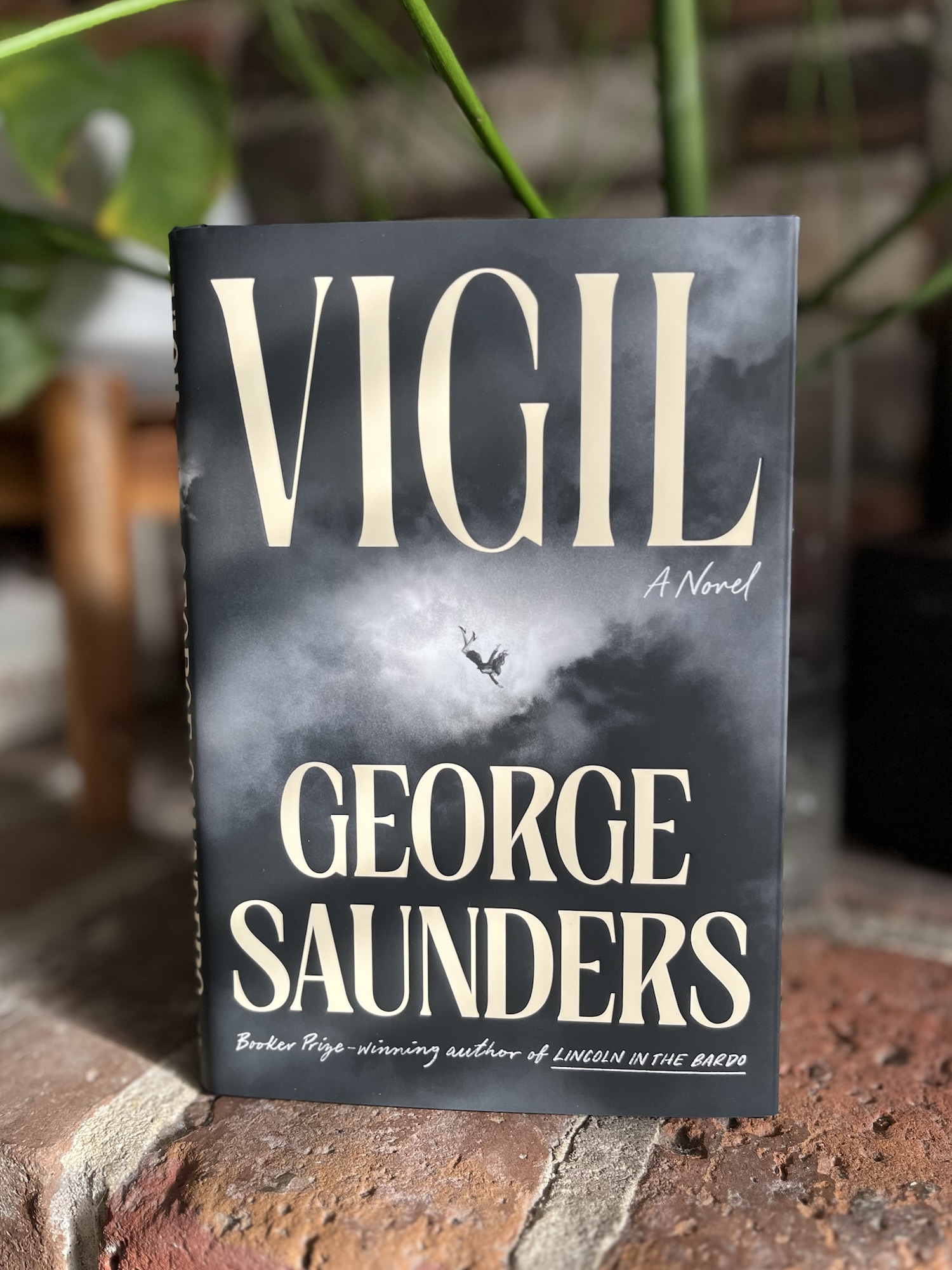
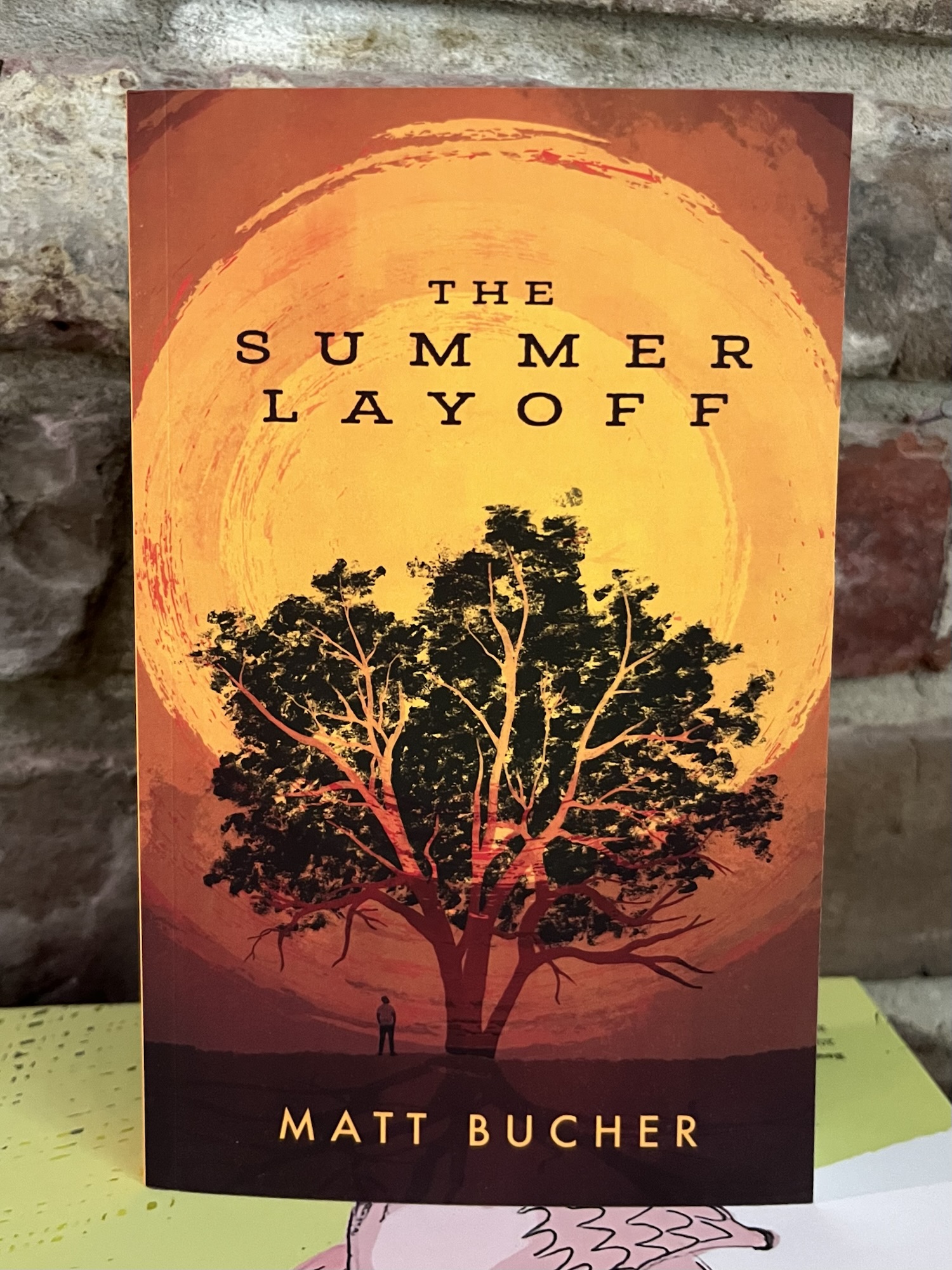
 Previously on Blue Lard…


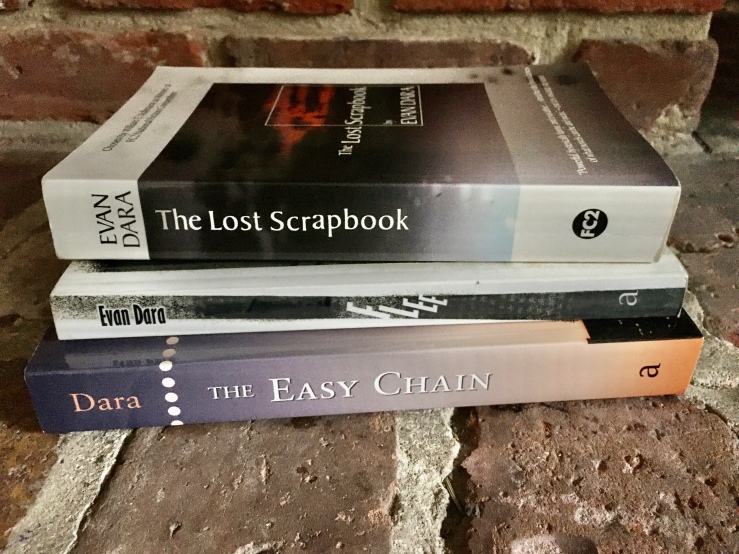
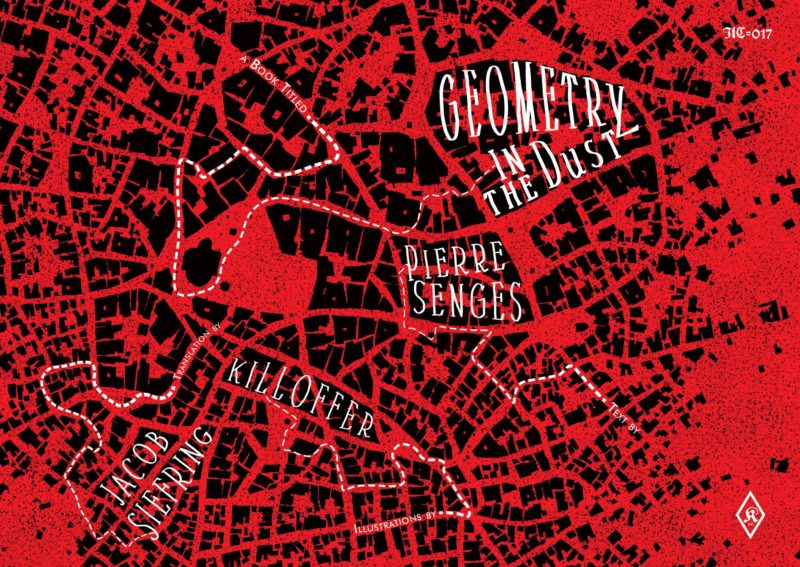

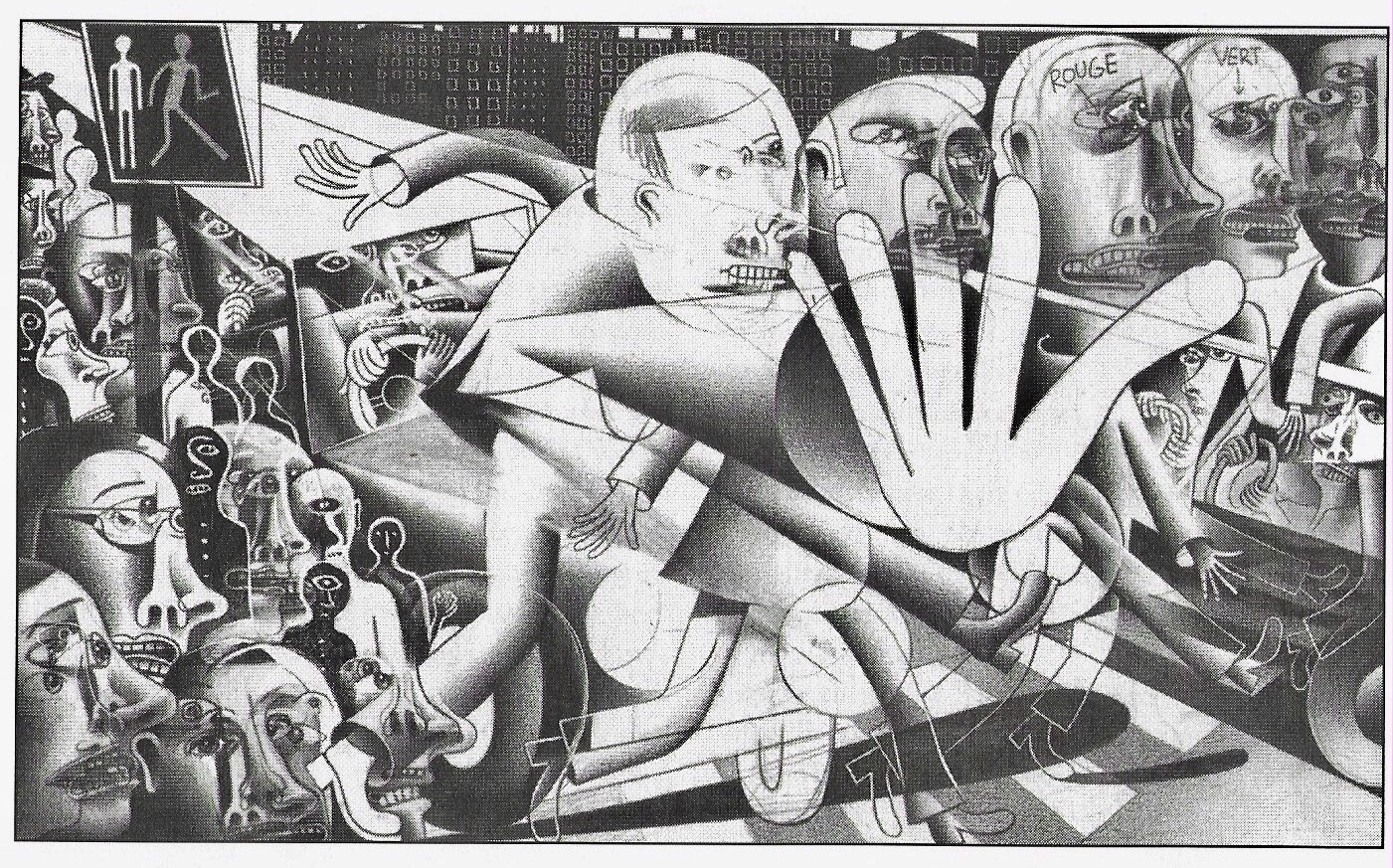


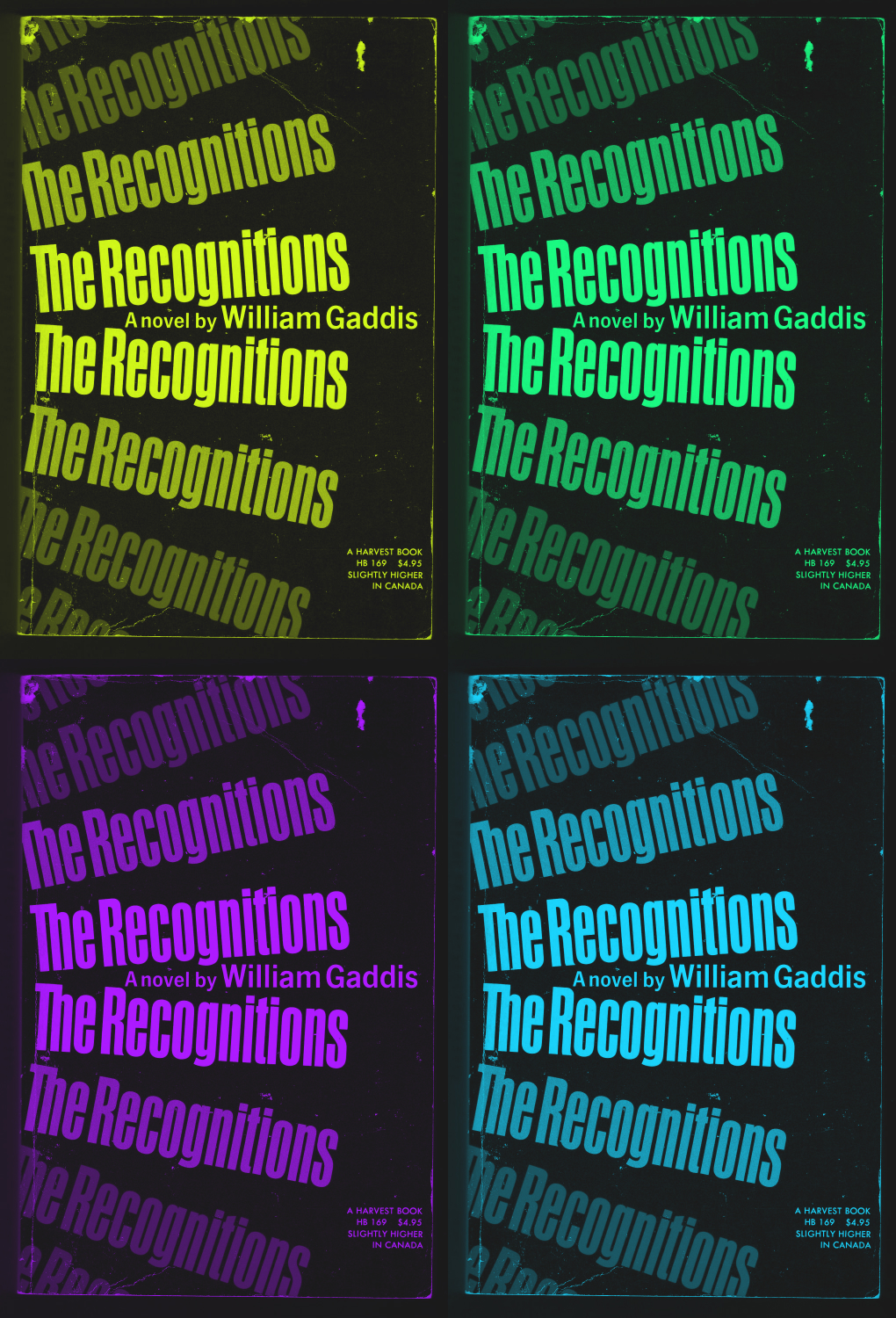


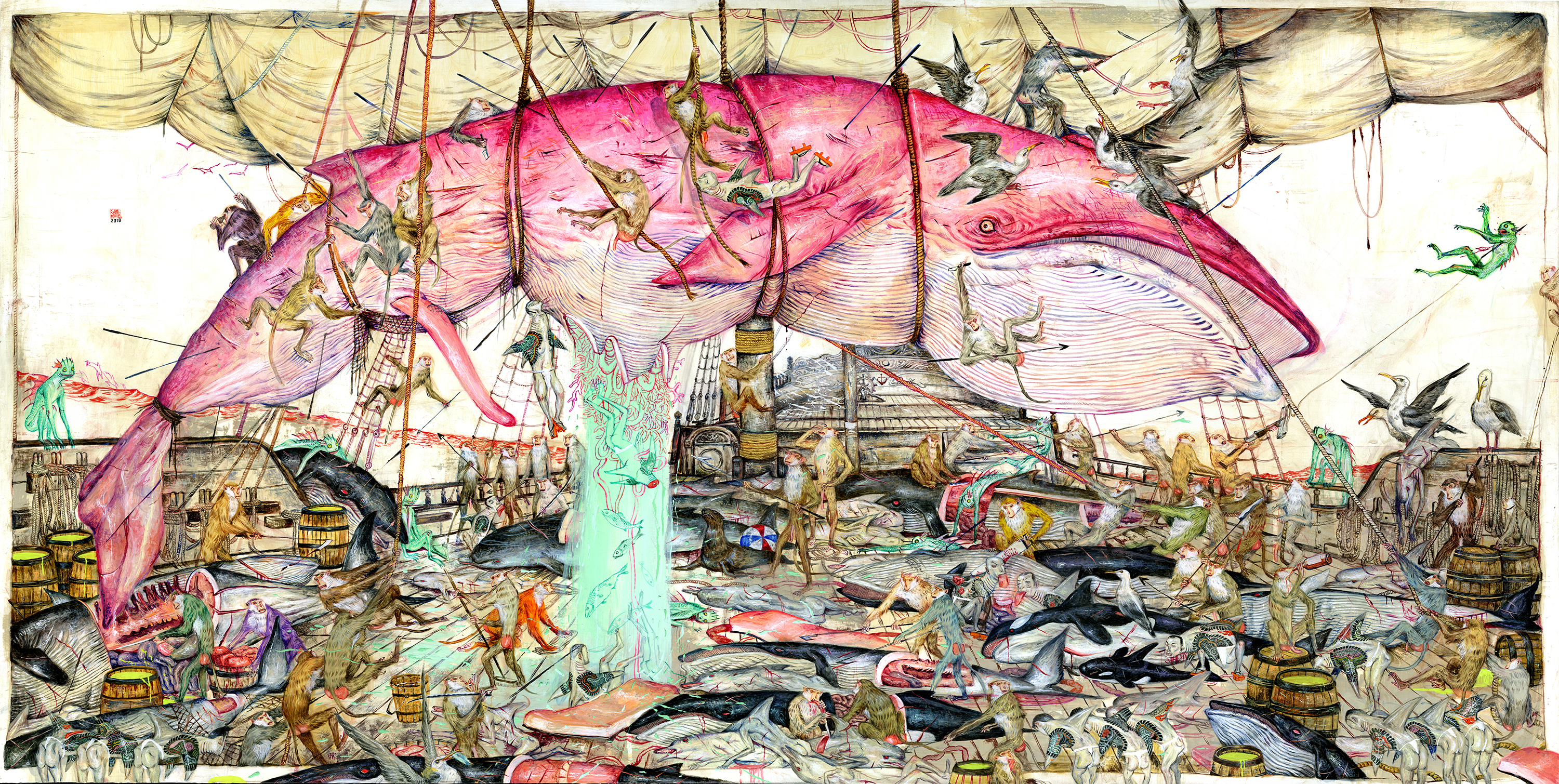







 Biblioklept