Madeleine L’Engle’s seminal fantasy novel A Wrinkle in Time turns 50 this year, and publisher Macmillan is celebrating by releasing a new anniversary edition with oodles of extras, including photos, manuscript pages, and new editorial content. They’ve also initiated a “50 Years, 50 Days, 50 Blogs Celebration Campaign” to promote the new book, and they asked Biblioklept to participate in the first week.
Here is the new cover:
And here is the cover to my beloved, ragged edition:
A Wrinkle in Timeexplores the strange intersections of space and time against a backdrop of adolescent angst. Our intrepid heroine Meg, her child genius brother Charles Wallace, and her would-be beau Calvin O’Keefe, go on a trans-dimensional quest to find her missing physicist father. They are aided (and initiated into) this quest by a trio of immortal women (shades of the Norns); their intergalactic mission finds them encountering angelic centaurs, motherly tentacled beasts, a red-eyed automaton, a disembodied brain, and more more more. Dr. Dad has disappeared while working on a mysterious project involving a tesseract.
Like a lot of young people, as a child I was deeply fascinated by the concept of “tessering” away to a strange, marvelous, dangerous place, and it was surely this idea that most enthralled me as an early reader of the novel. I was probably ten when I first read the book, which I’m pretty sure was a gift from my aunt who brought it to me while our family was living in New Zealand. I actually wrote my name and our six-digit phone number into the book, which suggests that I loaned it out quite a bit.
A Wrinkle in Time gelled with all of the stuff I was reading then: lots of Tolkien, C.S.Lewis, and Douglas Adams, but also plenty of crappy Dr. Who novels and lots of execrable fantasy novels. L’Engle’s novels (of course I read all of them after reading Wrinkle; to this day, Many Waters is probably the one that stands out the most, weird and sexy as it was) were of a piece with Tolkien and Lewis (especially Lewis’s oft-overlooked space trilogy)—but there was something distinctly American about L’Engle’s characters—her writing even—that intrigued me. I had spent my entire childhood expatriated and was constantly looking for avenues of American expression, ways “to be American” (yes, I realize how silly that sounds now).
In retrospect, it’s not the tesseract and its fantastical properties that I so recall from A Wrinkle in Time so much as it is L’Engle’s characters, especially mercurial Meg and her future-husband Calvin. While much of literature emphasizes the clash between individual desires and societal conventions, L’Engle’s particular tone and characterization is keenly sensitive to the difficulties adolescents face navigating this conflict. In a sense, L’Engle is working out the early blueprint for what would become the conventions of Young Adult literature. L’Engle wrote a specific brand of sci-fi/fantasy that, on the surface, sets her apart from S.E. Hinton and Robert Cormier—but what these writers share in common, what makes their work so enduring even as society changes, is the essential emotional reality their characters share with readers.
Wrinkle endures also because of its handling of complex themes of conformity, idealism, faith, and science. It’s a book that challenges a youngish audience to read in new ways. It’s also a frequently challenged book—always the sign of something good—suggesting that it’s not going anywhere soon. In this sense, Wrinkle’s literary legacy externally recapitulates its internal themes of nonconformity.
Of course, characterization and strong themes probably wouldn’t get too far with young readers if Wrinkle didn’t deliver the goods that YA readers demand: a good yarn. Wrinkle is spry and engaging at fifty, and while it’s not as bloody as new kid on the block The Hunger Games (the protagonist of which owes some small debt to Meg Murray) it nevertheless negotiates the dangers of existence (both physical and metaphysical) with greater emotional intensity.
But I’ve veered off course here, invoking a newer, more violent YA star at the end of my riff, when what I really want to do is encourage young people who haven’t read Wrinkle yet to pick it up (okay, especially young people who think that Collins’s trilogy is the bee’s knees). It’s a wise, endearing, and enduring classic, one that deserves attention on its golden anniversary.
If you hate Wes Anderson—and hating Wes Anderson seems like a special kind of sport in 2012 (or at least it did after his last two films, The Darjeeling Limited and Fantastic Mr. Fox)—the trailer for his new film Moonrise Kingdom will surely give you fuel for that fire or arrows for your quiver or whatever you need for your particular metaphor.
I like Wes Anderson’s films: I like the strange blend of earnestness and irony, the precociousness and preciousness, the calculated soundtracks, the fussy set and costume design and faux-’70s color schemes; I like the crumbling families, the failed and failing geniuses, the narcissists and the hacks; I like the fantasy of it all. I like the sentimentality of it all. I like the tents and special societies and secret compartments and fake books. I like the depression behind the charm.
I especially like Rushmore and The Royal Tenenbaums, which I think are the films that best navigate that special space between fantasy and reality (and theatricality) that is Andersonville. My least favorite film of his is his first, Bottle Rocket—too realistic (what a strange claim!), too naturalistic, not mannered or fussy enough.
I more or less understand why so many people hate Anderson’s fantasies, although I think it’s weak criticism to dismiss them as empty exercises in style without substance; still, watching the new trailer, I can see why anyone with a quarrel with Wes Anderson will positively hate this Wes Anderson movie before it’s even come out.
Here is that trailer:
So:
We’ve got a charismatic young man in the Max Fischer mold.
We’ve got a never-was early 1960s (?) sleep-away-camp (?)
We’ve got Edward Norton in a scouting uniform (in shorts!) saying: “Jiminy Cricket, he flew the coop!” (this is like +100 flaming arrows in the quivers of Anderson-haters, I imagine; it made me cringe my own self).
We have a portable turntable on a Northeastern beach.
We have the kind of tracking close up shots that went out of fashion, what, thirty years ago now?
Also:
A 1960s French pop song.
A play.
A house in a tree.
Some sailing shots that somehow remind me of Arthur Ransome’s Swallows and Amazons.
Old Bruce Willis.
Frances McDormand.
And:
Well, did you watch the end? Did you see those final moments, the shirtless Bill Murray with the ax propped over one shoulder, bottle of red in the other? Well, that’s why I tend to like these films.
Really slowed down on this one, mostly because the spring semester hath begun, wreaking all sorts of destabilizing tasks on me. Momentum and reading habits will inevitably return. Anyway, Smith’s book is more or less a litany of famous meetings and infamous moments with lots and lots of descriptions of talismanic objects. The scene where she meets Allen Ginsberg is pretty cool. Smith presents herself as earnest, passionate, but also somehow at odds (or at least outs) with the whole Chelsea Hotel scene.
2. Nausicaä of the Valley of the Wind, Vol 1, Hayao Miyazaki
Completed the first volume of Miyazaki’s groundbreaking manga and started the second. The art is well crafted and distinct, but often extremely busy and even frenetic. It sometimes feels squashed in the panels, like it needs room to breathe. I can’t help but compare it to the film that followed, which is visually richer and more expansive. The film, in a sense, helps me to fill out the scope signaled in Miyazki’s inky illustrations.
The story in the manga so far differs subtly but significantly from the film; without adding spoilers (I think fans of the film will enjoy the book), the political dimension of the plot is heightened and gender roles are explored with greater concern. Nausicaä’s initial rashness is also presented with greater intensity (read: violent consequences). More to come.
3. Imperial, William T. Vollmann
Chapter 3 of Imperial, “The Water of Life,” is some of the best gonzo journalism I’ve ever read. Vollmann (along with an improbably game ex-Marine/hotel clerk) takes a raft—a cheap rubber dinghy, really—down the infamous New River, purportedly one of the most polluted waterways in North America. This river is filled with dead birds, dead fish, probably dead humans, lots and lots of garbage, industrial runoff, and lots and lots of human shit.
Of course, Vollmann can find beauty and strangeness and ugliness all at once:
The chapter does everything one wants from the book, and if you’re at all intrigued, there’s a version in the excellent Vollmann reader Expelled from Eden, which is a good starting point for his work.
The next chapter, “Sublineations: Lovescapes,” is this awful emo exploration of a bad breakup and the following heartbreak Volls feels after. It was torturous to get through, the sort of thing that screams for an editor. It also underscores how deeply deeply deeply personal the book is to him, though. More to come.
4. A Dance with Dragons, George R. R. Martin (audiobook read by Roy Dotrice)
Well goddam if I didn’t finally finish it. As I’ve lamented elsewhere in these e-pages, Martin’s fourth and fifth books in the A Song of Ice and Fire series (I hate that name, by the way: Game of Thrones (without the indefinite article) is way cooler sounding) are bloated, sagging, overfilled beasts sorely in need of an enema. Still, Dragons picks up in its final third, and ends with some shockers that, if I remember them 12 years from now when he finally finishes the next one, I may want to read it. Roy Dotrice = a very gifted reader. A great audiobook (still, I can’t believe this one topped so many year end lists).
5. JR, William Gaddis (tandem reading with audiobook read by Nick Sullivan)
Big thanks to Dwight at A Common Reader for suggesting the audiobook of JR read by Sullivan. I’m a few hours in; I’ve also been rereading bits immediately when I get home (I listen mostly in the car or on walks), retracing the lines that I’ve mentally underlined. Sullivan is a gifted voice actor who brings the many, many voices of JR to vivid life (that line seems hackneyed but it is in no way insincere. If I weren’t riffing I’d revise. If I weren’t riffing I’d edit parenthetical excuses. I’m gonna drink more red zin now). I’m reminded in some ways of RTE’s full-cast unabridged recording—performance really—of Joyce’s Ulysses. I’d read Ulysses twice before, but I feel like the full-cast production was an equally definitive version to the one in my head. Like Ulysses—especially the Sirens episode—JR is extremely aural; it’s mostly dialogue.
I’ve laughed out loud several times so far—had no idea the book would be this funny. Also, reading/hearing it, I can’t help but see how profoundly David Foster Wallace was influenced by Gaddis here: the bizarre corporate-speak, the disjunctive rhythms, the absurd humor, the satire on modernity, the ironic-earnest axis—even the passages of naturalistic description.
On deck:The Orphan Master’s Son by Adam Johnson, Open City by Teju Cole, Smut by Alan Bennett and more more more.
2. Wittgenstein’s Mistress by David Markson. End of the world cultural riffage. No raffage.
3. The Stories of Breece D’J Pancake: soul-crashing sad. [Not a typo].
4. Season two of Boardwalk Empire: The Oedipal complex as a plot arc hasn’t been done so well since The Sopranos. Most HBO shows seem to be about capitalism and law (see also: Deadwood, The Wire, The Sopranos).
5. That first episode of Luck. I love David Milch. Michael Mann seems imminently capable of filming things (although I think Heat is overrated, even though it has Val Kilmer, and he’s radness in the form of a lion in the form of a sea lion). The opening episode was dry like vermouth. But I will watch, because of Deadwood.
6. Hung. My wife and I are the only two people in America who liked Hung. Then it got canceled.
7. Captain America: All of the shots + set design in this film seem to have been straight up stolen from the Star Wars films—except the shots that were stolen from the Indiana Jones films. It’s funny in a way because Lucas (and Spielberg) were stealing from old serial films that were contemporaneous with the age that Captain America is meant to be set in. (And, oh, yeah, the movie was contrived bullshit).
8. I wish I’d reviewed How to Keep Your Volkswagen Alive by Chris Boucher. It was new and fresh and strange and deserved a good review from this blog, but it was very difficult to write about. I tried. It’s simultaneously sad, funny, too-experimental, but also rich and rewarding. An excellent flawed début.
9. The Trip: Steve Coogan and Rob Brydon take a trip through Northern England, eating at Michelin starred inns, creeping on the wild misty moors, referencing plenty of Romantic lit, and riffing—and backbiting—a lot. Comedy + tragedy done right. Lovely.
10. The Adventures of Buckaroo Banzai: Across the 8th Dimension: Okay, frankly, I was ashamed to admit that I hadn’t seen it until this summer. Batshit insane interstellar hi-jinks. Rasta aliens. Buckaroo and his men are in a band! The ending credits sequence is the second best I’ve ever seen (after Lynch’s closing credits for INLAND EMPIRE).
11. The last Harry Potter movie. It was good. I’m glad they’re over though.
12. Baudolino by Umberto Eco, which I listened to on mp3 while refinishing a room in my new house. The first half was great—silly, bawdy, funny—but it unraveled into a sloppy mess by the end.
13. The Hunger Games by whoever wrote The Hunger Games, I think her name is Suzanne Collins, but Christ I’m not gonna waste any time checking: I listened to this audiobook working on the same room project that I worked on while listening to Baudolino. Look, I get that these books are for kids, and that they’re probably a sight better than Twilight, but sheesh, exposition exposition exposition. There’s nothing wrong with letting readers fill in the gaps (especially when your book is ripping off The Running Man + a dozen other books). Also, there’s a character in this book who I think is named after pita bread.
14. A Canticle for Leibowitz by Walter M. Miller. Another audiobook that I listened to working on the aforementioned project—only this book is pure excellence, a post-apocalyptic examination of faith and meaning set against Big Nothing. The first third recalled Blood Meridian to me, although McCarthy’s book must have been composed 25 years after Miller’s.
15. I finally watched Party Down after all of my friends kept telling me, “You gotta watch Party Down!” Have you seen Party Down? You gotta watch Party Down!
16. Various short stories by Melville and Hawthorne: I read a lot of short pieces from these guys, mostly obscure, often half-baked stories that were still better than 99.9% of the contemporary stuff American writers are doing.
17. Uncreative Writing by Kenneth Goldsmith. Goldsmith is a hero: Ubuweb is magic. But a lot of Uncreative Writing just felt like an excuse for Goldsmith to share his favorite riffs on avant gardism from the classroom. And I know he’s probably a great and inspiring teacher, and I’m sure his Uncreative Writing class was gangbusters and meaningful for his students. Maybe it’s because I teach at a community college; maybe I’m conservative—I’m a fan of Dada; I get Walter Benjamin, blah blah blah. I just think we should cite sources still. Originality may be a fiction, but synthesis isn’t. Research and documentation are meaningful. Still, an entertaining book.
18. Music. Although most writing about music sucks.
19. Probably several dozen other books, movies, TV shows, etc. But there’s always 2012 to become overwhelmed by!
1. Donald Harington, The Architecture of the Arkansas Ozarks
I want to publicly thank blogger BLCKDGRD for sending me this book; it arrived in sections, the binding glue cracked, its abused condition surely a sign of love. I happened to be recaulking the margins of my screened in porch the day it arrived, so I used silicone caulk (along with c-clamp) to repair it.
The Architecture of the Arkansas Ozarks rightfully should have shown up on my Books I Didn’t Read in 2011 post, but it was doubly neglected, left under a pile of half-read books that I intend to keep reading: Georges Perec’s Species of Spaces, the Vollmann reader Expelled from Eden, a volume of stories by Breece D’J Pancake (two stories remain unread; I am sure they are awfully sad), Stendahl’s The Charterhouse of Parma. In short, I didn’t want to own up to abandoning it because I intend to go back and finish it. I read a little over half of Harington’s big, rich, funny history of Arkansas, told through the lens of the species of spaces inhabited by the Ingledews and their fellow Stay Morons. The book is lively, deeply ironic, and stands with Kurt Vonnegut as perfect American satire.
2. Just Kids, Patti Smith
I found Just Kids, which was a Big Deal book in 2010, while looking for a copy of Lillian Smith’s The Killers of the Dream (don’t fret; I found that book too). I’ve loved Smith’s music since I was a kid; like The Talking Heads, she was hard to place, not outright punk rock, definitely not pop, very weird.
I usually read the first few pages of books in the store if I think I’m going to buy them; I ended up reading about 10 pages of Just Kids, taking it home, and then reading for a few more hours. I’m almost finished with it now.
Smith documents a fascinating time in a fascinating place (New York City’s art/lit/music scene in the late sixties/early seventies), but her perspective for most of the book is that of an outsider, a would-be artist struggling to help Robert Mapplethorpe become famous for his art. Smith is in love with literature, particularly Romantic French stuff.
She’s also an object fetishist; I can’t think of another book that details so many tchotchkes, so many surfaces, so many contours, so many things. She’s an aesthete. There are also several incidences of book theft. I’m not sure if I’ll write up a proper review of this book—it won the Nat’l Book award and made all the year end lists in 2010—but I have been enjoying it as a chronicle of creative energy.
3. Imperial, William T. Vollmann
There’s a strange shift between the first and second chapters of Vollmann’s massive book about Imperial County. The first chapter, “The Gardens of Paradise,” reads like a magazine article (and it was; it was published in abbreviated form in Gear in 1999)—lots of dialogue, short paragraph breaks, a spare, lucid syntax, but nevertheless rippling with verve. The second chapter, “Delineations” is a heady brew, a page right out of Ishmael’s big book, as we see Vollmann try to delineate or define his white whale Imperial. And yet he seems to realize that delineation is a fantasy:
People say it was miraculous that Christ walked across the water, and yet they don’t think twice when the same is performed by this entity invisible everywhere except in its representations, whose substance is comprised of equal parts imagination, measurement, memory, authority, and jurisdiction! Delineation is the merest, absurdest fiction, yet delineation engenders control.
The territory and the time Vollmann treks in just a few dozen pages astounds . . .
4. MetaMaus, Art Spiegelman
Okay—not really recent reading, although I did pick it up again and thumb through it before writing this piece; mostly, I wanted to try to write something about this book before the end of the year (I put it on my “best of ’11” list, by the bye). This book is Spiegelman’s attempt to measure Maus: where it came from, how it was made, what making it did to him and for him—and to his family. Like Smith’s book, MetaMaus is very much about the creative process (forgive the hackneyed phrase)—only, where Smith breathlessly gushes in the glowing, enriching flames of art, Spiegelman guides us through the nitty-gritty nooks and crannies of how he made what is perhaps the signature work of comics art of the twentieth century.
The book is beautiful. Take a gander:
5. Pancha Tantra, Walton Ford
The index at the end of Pancha Tantra contains a series of citations that illustrate Ford’s paintings (hang on, the elements of that last phrase should be vice versa, right?). To wit:
6. A Dance with Dragons, George R. R. Martin (audiobook read by Roy Dotrice)
I really liked the first three Game of Thrones books (yeah, I know they have that long silly name; I’m not gonna write it). I listened to them on audio, all read by Roy Dotrice—who is a great reader—and I gave them a positive review. The first three books detail a world of Machiavellian scheming, a phallocentric, desacralized universe where power is constantly shifting and idealism will get you beheaded. The character development is excellent, the plots are engaging, and the prose is good enough.
The fourth book, narrated by John Lee, was almost too much to get through. Here are some words to describe it: bloated, plodding, sagging, lazy, meandering, over-expansive.
I’d heard that A Dance with Dragons was much better, knew that Dotrice was narrating again, and knew that the book picked up with some of my favorite characters who were left out of that fourth book (Tyrion, Danaerys).
I’m nearing the end—it’s much better than the last one, but not nearly as good as the first three. Martin could probably make the book a third shorter simply by cutting out the endless descriptions of food, the awful, gross sex scenes (actually, he can go ahead and keep those), and the terrible stock phrases. (How long do things last in ADwD? “Half a heartbeat.” Also, I would love to never hear the phrase “Much and more” again in my life. I’m not even kidding. And “Useless as the nipples on a breastplate” doesn’t need to show up more than once in your book).
Even with my gripes, there have been some good episodes so far, including a creepy cabin fever Sadean setpiece that reminded me of the South Africa episode of Pynchon’s V, which is like one of my favorite things in literature.
7. Various public domain books on Kindle Fire, including Poe, Hawthorne, Melville, Whitman, and Dickinson
I got a Kindle Fire. I like it. I downloaded a bunch of obscure American Renaissance stuff—letters, reviews, essays—and have been scrolling over it quite a bit late at night. More thoughts on this device to come.
Okay. So obviously a list of the books I didn’t read in 2011 would be, y’know, long.
This post is about the books I set out to read, tried to read, wanted to read, abandoned, neglected, acquired and thought looked interesting, etc. It’s also about what I want to—what I plan to—read in 2012.
I failed to read past page 366 of Adam Levin’s incredibly long novel The Instructions, although I think I was a bit too harsh in my semi-review. Chalk it up to exhaustion.
I failed to even begin to try to read William Gaddis’s incredibly long novel JR.(But I swear to read it one year. Not next year, but maybe the year after?).
I failed to read past the first chapter of Katherine Dunn’s Geek Love.
I read most of the Tintin collections I picked up last year, but I didn’t get to volumes 5 or 6.
Moving beyond that early post, books that I recall abandoning (although I’m sure there must be more):
I abandoned Nathaniel Hawthorne’s Italian romance The Marble Faun after about 30 pages.
I abandoned 334by Thomas Disch after about 50 pages. Somehow simultaneously dense and loose, it struck me as intensely imagined and sloppily composed.
I abandoned John Williams’s Butcher’s Crossing after the first chapter; it was a great opening chapter, but I thought it was going to be, I don’t know, more like Blood Meridian.
I also abandoned Chad Harbach’s big book The Art of Fielding (after 100 pages) because it was lame (notice it’s not pictured above because I traded in that sucker), but I had a nice dialog with some readers who responded to a post I wrote about abandoning it, so that was a plus.
Books I bought in 2011 that I aim to read in 2012:
Correction by Thomas Bernhard. Bernhard was a repeated suggestion from readers in the aforementioned Harbach post/rant, and he was apparently a huge influence on W.G. Sebald, so, yes, looking forward to this.
The Reiversby William Faulkner. I read A Light in Augustthis year and reread most of Go Down, Moses. My plan is to read one Faulkner a year for the next ten years.
Ferdydurkeby Witold Gambrowicz. I struggled to make it through Gombrowicz’s bizarre jaunt Trans-Atlantyk, but once the novel taught me how to read it, I was enchanted by its strange humor and frenetic syntax. Over some beer and wine, I had a conversation about Ferdydurke with my father-in-law’s priest who is Polish. His pronunciation of Ferdydurke should win an award for charm.
I will read Georges Perec’s big book Life: A User’s Manual.
There are many, many more, of course (too many, really).
Books people sent me to read and review that look really cool that I will be reading and reviewing at some point in the very near future:
Satantangoby László Krasznahorkai: I will read this and review this in the very near future.
The Funny Manby John Warner: Comedy, drugs, celebrity culture.
The Book on Fire by Keith Miller: This one is about a biblioklept. It’s been at the top of my stack for a few months now, but I keep letting myself get distracted.
Thirst by Andrei Gelasimov: Apparently this novella about a maimed alcoholic war vet is funny. (I hate the cover).
Muleby Tony D’Souza: Middle class man sells marijuana cross country. (I love the cover).
Various titles from Melville House’s Neversink line: I’ve got a few in the stack.
Also: I got a Kindle Fire for Christmas. I actually stayed up really late last night reading free public domain books from Hawthorne, Melville, Whitman, and Dickinson; I’ll read a contemporary novel on it this year—Neal Stephenson’s Snow Crash, perhaps? Suggestions welcome!—and try to review both novel and the process of reading the novel on a warm glowing machine.
And: I’m sure there are a ton of novels that will come out in 2012 that I’ll want to read; I’m already primed for Dogma, Lars Iyer’s sequel to Spurious.
So: What are you guys looking forward to reading in 2012? What did you fail to read in 2011?
Now, if you have even a passing acquaintance with this little blog, you know that I love novels, that Biblioklept primarily focuses on novels, and that I love books in general. I am not anti-novel or anti-giving-novels-as-gifts. Send me a novel as a gift. I will appreciate it (or trade it toward another book, which is kinda sorta a form of appreciation).
I went to my favorite bookstore today, in fact, to buy some books for Christmas presents. But I restrained myself from picking up novels as gifts.
If you love books like I do, I’m sure that some of your most favorite gifts ever have been novels. Some of my most favorite gifts have been novels. The remaindered copy of The Lord of the Rings (from the South Barwon Library that some friends of the family gave me on Dec. 5th, 1990 when we visited Melbourne (the one in Australia, not Florida)) is probably one of my all-time favorite gifts. I know the exact date because the nice lady who gave it to me wrote a kind note in book and included the date in her note.
I could never bear to get rid of an inscribed book given as a gift, but lots of people do get rid of inscribed books. This is a monstrous practice, one that attests to just how easily people will discard your oh-so-earnest gifts. If you spend a lot of time in used bookstores (I do) you will come across these sad markings. Because it’s close at hand, and I’m aware of its inscription, I’ll share the note that Jean wrote to Helen (no, of course I know neither of them) in my copy of Balthus’s memoir, Vanished Splendors:
I am aware that the memoir of a pervy artist is not the same as a novel, and that, as my first illustrating example, I already seem to be losing my metaphorical balance, but again, it was close at hand, right near the Tolkien in fact (by the bye, Vanished Splendors is pure gold).
In any case, I think Balthus’s memoir “reads” like a novel, which is to say that it’s mostly big chunks of text that require time and energy to decipher, set against the backdrop of TV, internet, movies, etc. It has some pictures, but not many. There’s no gimmick to it. I’m guessing that Helen just wasn’t into Balthus, or, if she had a passing interest in his art, it didn’t translate into wanting to read his memoir. She certainly didn’t read any of it (yes, I have a special sense that tells me when a book has been read. This baby was a virgin). Every time I look over the book, I feel sorta bad for Jean, whose gift seems to have gone unappreciated (by Helen; not by me. I was happy to pick it up used).
To return to an earlier point: yes, some of our favorite gifts ever might be novels. However, most of the life-changing novels I received were rarely given as birthday or Christmas gifts. They weren’t gifts of obligation, if you’ll forgive the ugliness of that term. Most of the great novels that were given to me were handed along free of occasion, given because the giver thought (knew) I should read them.
At Christmas though, we feel obliged to give. Sometimes we get some great novels as gifts. More often though, it seems like that relative who knows you “like to read” gives you a novel by, I dunno, Clive Cussler or Tom Clancy. The worst though are those tiny little hardback books that are designed specifically to be gifts, little faux-tomes of faux-philosophy usually connected to golf or angels or some other bullshit (I was horrified last year when DFW’s “This Is Water” speech got this treatment). Anyway, if you like books, you probably just go trade in this bullshit toward the books you like.
But this post isn’t really about the problem of getting airport novels or gimmick books as gifts. This post is about those of us who insist on giving novels we love to people who we know don’t really love reading novels. Especially really big, somewhat (or very) experimental novels. Important novels. Those novels that we read and decide that everyone needs to read this to become a fully realized human being [gags on that phrase].
I think sometimes we give our friends and relatives novels as gifts because we love them so much and we also love the book so much that we are maybe gunning for an intellectual three-way. We want them to read the novel so that we can share in it together, discuss it, rant about it, argue about it (remember though: that’s what the internet is for).
What often happens though is that these gifted novels (forgive the ambiguous, awkward modifier) tend to lurk about the giftee’s abode, brickishly unread, like dour unwanted houseguests. They skulk at the margins of bookshelves or migrate to the bottom of “to read” stacks; a lucky one might find occasional fingering above a commode. They are ugly reminders to the giftee, signals of how he or she has failed to meet your expectations (your expectations re: 9 or 15 or 25 or 30 hours of her time). (Young people, by which I mean college students in the liberal arts, are the exception here; they probably aren’t going to read the novel, but they are absolutely fine with putting it out for show).
People like books with pictures though, generally.
Even though I think novels tend to make lousy gifts, we should give them to our friends and loved ones anyway, even on those days of obligated giving. We should still offer novels up like they were somehow a part of our own selves in the deluded hope that the giftee will read them and discuss them with us, and that the novel will become an internal, virtual, shared experience. We should give them knowing that it’s likely they’ll go unread, that they may even be a point of shame for the giftee (especially when we ask, “Have you started . . . ?”). We should give them aware that they might point toward our own selfish desires.
Even if a novel may be a gift that implies a certain level of intellectual work, it also implies a sense of trust and respect toward the giftee, and in this sense, giving a loved novel is a clear way to show love.
It’s hard to underestimate the influence that Def Jam Records brought to bear on contemporary culture. Not only did the label help to legitimize rap and hip hop as commercially viable (and artistic) art form, it also helped to redefine attitudes about fashion, culture, race, and even business. At its core, the early days of Def Jam were an energetic experiment in synthesis, combining the DIY spirit of punk rock with the nascent rhythms of hip hop, all twisted up in a graffiti writer’s aesthetic. Def Jam 25, a huge, overstuffed illustrated oral history of the label’s first quarter century, details the fascinating beginnings, successes—and many, many troubles—of the strange child of Rick Rubin and Russell Simmons.
Rick Rubin Hard at Work
Def Jam 25 focuses its initial energy on Rick Rubin, who comes across as the dark, eccentric spirit whose aesthetic and temperament would come to define the label’s early successes. Rubin started the label out of his NYU dorm to release a single by his artcore band Hose. Rubin was soon introduced to Simmons (by Vincent Gallo, of all people), and the duo would go on to produce and release huge hits from the Beastie Boys, L.L. Cool J, Run DMC, and a host of others.
Early Flyers
Def Jam 25 combines photographs and essays with shorter eyewitness commentaries from the artists, designers, musicians, producers, and business guys who helped define Def Jam. The effect is intriguing, often insightful, occasionally funny, and especially fascinating when folks share very different accounts of how things went down. The early years of the label are documented with an energy that matches the verve of Def Jam’s pioneering work in the ’80s, and if I dwell on the first thirds, it’s only because there’s something so electrifying about those early years, when Slayer and Public Enemy were labelmates and Aerosmith and Run DMC could craft a top ten hit together.
From the "Walk This Way" Sessions
Def Jam’s success continued unabated after Rubin’s departure in 1988, and it’s hard to argue that a label putting out records by EPMD, Nas, De La Soul, Public Enemy, and the Roots was somehow less artistic and more commercial after that point. Still, Rubin’s strange punk rock energy was clearly irreplaceable, and while it remains part of the Def Jam template to this day, it’s hard to get as psyched about Rihanna and Ja Rule as it is about Slick Rick or even Onyx. But that has little to do with the actual book I suppose, which is lovingly crafted and impeccably designed.
Def Jam 25 is a great big coffee table book for people who actually like to read (and for your guests who don’t like to read, the book explodes with vivid imagery). The book reveals (and reflects) Def Jam Records as a marvelous synthesis of art, design, fashion, and business, a label that was (and is) dramatically unstable and also wildly innovative. The book will appeal to fans of music and culture alike. Def Jam 25 is new in hardback from Rizzoli.
1. If I had anything resembling a decent thesis about Michel Houellebecq’s 1998 novel The Elementary Particles, I’d try to write a proper review; but I don’t have anything approaching a thesis about it, so I’ll just riff a bit.
2. Re: item 1: there are just too many “big ideas” to hash out without a second reading. The book tackles social and cultural evolution, taking a hard aim at what the boomers hath wrought: it attacks the concepts of the free market, free love, and even free will.
3. The themes of The Elementary Particles: sex and death.
4. Les Particules élémentairesis the original French title. The book was sold with the title Atomised in its British publication. The Elementary Particles is the “American” title; it’s fine, I suppose, but Atomised strikes me as more fitting. Both titles allude to the book’s plot, which involves molecular biology as well as the “metaphysical mutations” that happen over human history. But the American title seems too positive—it connotes imagery of building blocks, of growth, of possibility. Atomised conjures disintegration, which is more in tune with the novel’s tone.
5. Frank Wynne translates.
6. Is it silly to say that I find the novel very French? I think this is a silly comment, one that says more about me than the book.
7. Still, I find the book very French.
8. The Elementary Particles isn’t a “novelly novel.” Don’t read this book if you are interested in plot arc, character development, or emotional uplift. Catharsis? Validation of the existential human drama? Not gonna happen here.
9. This isn’t a book for everyone. This is probably not a book for most people, in fact.
10. I loved it though. It was funny and mean and shocking. Bristly, brisk, engaging. Most of all, I was fascinated by Houellebecq’s intelligence.
11. It is possible that many readers will be annoyed or aggravated at Houellebecq’s artless ventriloquizing of his characters, who often deliver long, occasionally polemical, speeches on any number of subjects, including the Huxleys (Aldous and his brother Julian), problems with the French education system, the merits and tragedies of anonymous sex, the emotional cost of a culture mediated by advertising and consumerist desire, the terrors of post-boomer moral fallout (ritualized slayings and the like) . . .
12. Things that The Elementary Particles reminds me of:
Louis-Ferdinand Céline
William Burroughs
Albert Camus
The Marquis de Sade
Aldous Huxley
J.G. Ballard
Neuromancer
Pornography
Wikipedia
Flat narrative voice-overs in films both foreign and domestic
Nietzsche
Peter Greenaway’s film A Zed and Two Noughts
The late twentieth century
13. What do the two half-brothers of The Elementary Particles crave? Motherly love.
14. Sensationalism that repels more than it titillates in The Elementary Particles: group sex, voyeurism, exhibitionism, ritualistic Satanic murder.
15. A weak shot at plot summary: Michel and Bruno are half-brothers. Their mother, a selfish hippie (there can be no other kind in Houellebecq’s world), abandons them to be raised by different family members. Bruno, more or less forgotten by his father, is brutalized in boarding school. Michel, raised by his paternal grandmother, becomes emotionally isolated and withdrawn. He grows up to become a brilliant molecular biologist whose work on DNA mapping leads to a new type of cow (later he does something that changes the course of humanity forever, but hey, no spoilers). Michel cannot make human connection and finds no interest in sex. Bruno, in contrast, spends his life in arrested development, lusting after young girls like a sex-crazed maniac (which he kinda sorta technically is, I suppose). Both men reconnect with each other, connect with meaningful women, and some other stuff happens too.
16. Look, the plot isn’t really that important in The Elementary Particles. It’s an idea novel. A novel of ideas. [Shudders].
17. A lot of people hated this book; that is, they hated the ideas in this book and the presentation of those ideas.
18. Here’s Michiko Kakutani in The New York Times:
The reader of the newly translated English version can only conclude that controversy — over the book’s right-wing politics and willfully pornographic passages — accounts for the novel’s high profile. As a piece of writing, ”The Elementary Particles” feels like a bad, self-conscious pastiche of Camus, Foucault and Bret Easton Ellis. And as a philosophical tract, it evinces a fiercely nihilistic, anti-humanistic vision built upon gross generalizations and ridiculously phony logic. It is a deeply repugnant read.
19. I generally disagree with Kakutani, who is often disingenuous or lazy as a critic. I think that she completely misreads the novel.
20. I find it reassuring that Houellebecq offends Kakutani.
21. Kakutani loved Gary Shteyngart’s awful dystopian sex and death and aging novel Super Sad True Love Story; I super hated it! While reading Houellebecq’s novel, I occasionally thought about Shteyngart’s book, which I think seems not just watery and weak next to The Elementary Particles, but cowardly.
22. Is The Elementary Particles sci-fi? Maybe. Sort of. Not really.
23. Is it dystopian? I think that it posits the globalized, post-boomer world as a dystopia, as a place obsessed with aging and image, as a world of enslaved people who falsely extol their own freedom. But it works its way toward a positive vision of life.
24. Is it utopian then? No, not really. I mean, this positive vision of life doesn’t include human beings.
25. The ending of the book is a philosophical dodge, the kind of misanthropy that too easily dismisses the entirety of history, philosophy, religion, and even basic biological impulses.
26. Maybe the ending is ironic. So much of the book is blackly bleakly ironic, that, hey, yeah, it’s possible the ending is ironic.
Cormac McCarthy’s seminal anti-Western Blood Meridian isn’t exactly known for visions of peace on earth and good will to man. Still, there’s a strange scene in the book’s final third that subtly recalls (and somehow inverts) the Christmas story. The scene takes place at the end of Chapter 15. The kid, erstwhile protagonist of Blood Meridian, has just reunited with the rampaging Glanton gang after getting lost in the desert and, in a vision-quest of sorts, has witnessed “a lone tree burning on the desert” (a scene I have argued is the novel’s moral core).
Glanton’s marauders, tired and hungry, find temporary refuge from the winter cold in the town of Santa Cruz where they are fed by Mexicans and then permitted to stay the night in a barn. McCarthy offers a date at the beginning of the chapter — December 5th — and it’s reasonable to assume, based on the narrative action, that the night the gang spends in the manger is probably Christmas Eve. Here is the scene, which picks up as the gang — “they” — are led into the manger by a boy–
The shed held a mare with a suckling colt and the boy would would have put her out but they called to him to leave her. They carried straw from a stall and pitched it down and he held the lamp for them while they spread their bedding. The barn smelled of clay and straw and manure and in the soiled yellow light of the lamp their breath rolled smoking through the cold. When they had arranged their blankets the boy lowered the lamp and stepped into the yard and pulled the door shut behind, leaving them in profound and absolute darkness.
No one moved. In that cold stable the shutting of the door may have evoked in some hearts other hostels and not of their choosing. The mare sniffed uneasily and the young colt stepped about. Then one by one they began to divest themselves of their outer clothes, the hide slickers and raw wool serapes and vests, and one by one they propagated about themselves a great crackling of sparks and each man was seen to wear a shroud of palest fire. Their arms aloft pulling at their clothes were luminous and each obscure soul was enveloped in audible shapes of light as if it had always been so. The mare at the far end of the stable snorted and shied at this luminosity in beings so endarkened and the little horse turned and hid his face in the web of his dam’s flank.
The “shroud of palest fire” made of sparks is a strange image that seems almost supernatural upon first reading. The phenomena that McCarthy is describing is simply visible static electricity, which is not uncommon in a cold, dry atmosphere–particularly if one is removing wool clothing. Still, the imagery invests the men with a kind of profound, bizarre significance that is not easily explainable. It is almost as if these savage men, naked in the dark, are forced to wear something of their soul on the outside. Tellingly, this spectacle upsets both the mare and her colt, substitutions for Mary and Christ child, which makes sense. After all, these brutes are not wise men.
[Ed. note — Yes, this post is recycled (regifted?) from last year].
Duck and Carrots Putting the Final Touches on a Doghouse -- Click Mort
Click Mort makes surreal, charming, disarming sculptures that synthesize pre-existing figures into strange new forms. Largely self-taught, Click works out of his home in his native L.A., where he lovingly decapitates and recapitates antique statuettes. Click’s sculptures were featured in a solo exhibit earlier this year in L.A.’s La Luz de Jesus gallery and are currently on display at the Webb Gallery in Waxahachie, Texas. Click was kind enough to talk to me in detail about his work over a series of emails around Thanksgiving. Check out Click’s website to see more of his fantastical stuff.
Biblioklept: I love your sculptures. They’re disconcerting and surreal but also charming. They’re bizarre and clever, but not whimsical. Can you tell us about how you make them?
Click Mort: Thanks. I’m especially happy to hear them described as “not whimsical.” As for how they’re made, I should probably backtrack a bit since the porcelain pieces I’m doing now weren’t the actual starting point. The first things I tried recapitating were resin figurines from the 99 Cent Store: cute kid couples strolling hand-in-hand, adorable angel-tots, etc.. They were pleasantly awful on their own merits, but when I saw some particularly crappy plastic barnyard animals in the toy section that were roughly the same scale, the gears started turning. Those first head-swaps were pretty crude: I’d just hack off both heads mid-neck with a jeweler’s saw, attach the non-native head with some sculpting resin, and paint over the seam. Voila … Angel-tot with a pig’s head (or angel-pig with a tot’s body, depending on how you look at things).
After a few years of working with cheap resin figures, I kind of burnt out on them. My technique had developed to the point where the swaps were reasonably undetectable, but the available subject matter — tots, tots, and … tots — had gotten monotonous. Also, the figures gave off a really horrible smell when sawed; I strongly suspected they were made of something creepy like melamine. At that point, I decided to try doing the same thing with porcelain figures.
Right … so now I can answer your actual question. Once a suitable head and body match have been found (and describing that process would add a few more paragraphs to an already inhumanely long and dull answer) the first job is to remove all the unwanted material. A jeweler’s saw — or any cutting implement whose description doesn’t include the words “diamond-edged” — won’t even mar the finish on porcelain. I use a high-speed Dremel with some sort of diamond-dust edged cutting tool attachment. Assuming we’re talking about a human body getting an animal head, everything from the collar up has to go on the body figure. This includes hair, headgear, ribbons, or whatever connecting the head and body. If any of these drape over a collar or lapel, those parts have to go too. For the heads, the amount that gets hacked off depends on the animal. On a quadruped, because of the different angle the spine intersects the skull relative to a biped, almost everything behind the ears and under the jawline has to be removed and then re-sculpted after the head has been attached to the body.
This slideshow requires JavaScript.
In order to get a really good bond between the head and body, I fill the upper torso with sculpting resin and sink an aluminum rod into it. A length of rod is left protruding up, and the head—which also gets stuffed with resin—is then positioned on it. After that, all the missing areas have to be sculpted back on. Finally, whatever painting is needed to cover the recreated areas and blend them into the original parts gets done.
And however tedious that was to read, the actual process is several thousand times more so.
Biblioklept: I liked reading about the process, but I suppose when we do something all the time, it seems tedious to us. Your process fascinates me, because the images of your figures don’t show any “seams” — your figures look like little mass produced statues from an alternate dimension. There’s a surreal synthesis at play in your work, not just in the actual combination of, say, a dog’s head on human body, but also in the tone of the work. Your pieces strike me as both creepy and tender at the same time. I’m curious how you know if a piece “works” — when are you satisfied with your figures?
CM: That mass-produced quality is something I really try not to lose when putting together the figures. There’s something inherently familiar and low-key about mass-produced objects, and I like the idea of art that doesn’t scream for attention but just sort of sits there mumbling to itself. The down side to this is it sometimes works against the figures getting noticed at all. In the few gallery shows they’ve been in, it seemed a lot of people never looked at them from closer than a few feet away. Maybe they thought someone had just lined up a bunch of old lady tschotske crap as some sort of conceptual piece.
As for the figures working as much on a tonal as objective level, yeah, that’s becoming more and more the case. Or at least my intention. On the early pieces, I was getting figures that I thought were awful to begin with and simply trying to change the nature of their awfulness. Over the course of hundreds of hours on eBay looking for working materials, I started noticing how great some of these cheap figurines were in their own right, particularly the stuff made in Japan in the fifties and sixties. At that point, I really started paying less attention to what kind of head would seem funniest on a piece and focusing more on how the shape and expression of the new head would fit into what was already a wonderful figure. It became more about trying to maintain the geometry of the whole thing while shifting the mood.
“Creepy and tender” is as good a description as I’ve heard. I guess the tenderness is a product of my real affection for the original figures showing through. And while I don’t consider the finished pieces particularly creepy, a lot of people have described them that way. As near as I can figure, it’s because the heads I like to use almost always have sort of neutral expressions, and that lack of expression is unsettling to us on some fundamental level.
And to a great degree, when a piece “works” is determined almost as soon as I have the original figure in hand. The only finished pieces I’ve been unhappy with are ones where as soon as I unpackaged a figure bought online, I hated it but followed through with a head-swap anyway rather than just eat the cost of the figure. Usually though, if I like the original piece, I’m going to be happy with the finished figure. It might be a week or a year for the right head to show up, but I’ll know when it does. And from there, it’s only a matter of taking the time (and typically, this is something like ten to twenty hours) to bring the two together.
Clock Headed Harpy -- Click Mort
Biblioklept: There’s a clear appreciation or even adoration of kitsch in your work, but there’s also this level to it where you’re literally grafting two tchotchkes to each other in a way that transcends kitsch (I don’t know if that description is clear or valid). What I like about your work is that it doesn’t rely solely on an ironic aesthetic shared by both artist and audience, but that’s nevertheless part of the experience. What is it about the awful that attracts us?
CM: I wouldn’t describe my composite pieces as transcending their components, but that’s probably an extension of my regard for the original, unaltered figures. I mean, obviously I don’t think they’re sacrosanct or whatever or I wouldn’t be doing what I’m doing. Still, if there were only one — rather than thousands — of a given figure, I’d absolutely leave it alone. The same holds true for figures I think are already so wonderfully bizarre that anything I could possibly do to them would only diminish their oddity.
I guess I consider what I do as just condensing what I like about these things: taking the most expressive elements of each and putting that all in one figure in a way that enhances (but doesn’t necessarily transcend) what was already going on to some degree in the original.
It’s really hard to say what perceptions I share with whatever audience my work has. Originally, the only place that would carry them was a little boutique retail store, and now the figures have gotten into a couple of gallery group shows. In both instances, I almost never know who’s bought them, so there’s no opportunity for any sort of dialogue. For me, there’s no irony whatsoever at work in these things, but I’m pretty much literal to the point of dullness and don’t really see them as operating on any level other than the apparent. All I’m trying to do is get objectively incongruent elements and make them visually and aesthetically congruent.
But that’s just my take on them. I can be a didactic goon about a lot of stuff, but it would really be pointless to try and dictate what anyone else is or isn’t seeing in these pieces. And while there’s a definite attraction to awfulness, I don’t perceive these figures as awful. Alien, yeah. Absolutely. Which is pretty funny, given that they were originally produced as innocuous home garni and now something like a Norman Rockwell figurine is about as familiar as one of those lumpy Paleolithic Venus figures.
Biblioklept: A few of your pieces reference authors (Didion, Hemingway), but it’s not necessarily a recurring theme. How did these authors find their way into your titles? What do you enjoy reading?
CM: Titling the pieces is probably my least favorite part of the process. Usually, I just slap on whatever gibberish pops into my head and that’s that. The two figures you’ve posted are the only ones with literary references and, oddly enough, refer to one author who knocks me out and one I think is flat-out terrible (and I don’t think Didion is terrible).
As for what I read, it’s sort of a weird grab bag of stuff. Rather than trying to categorize my likes, I just grabbed the pile currently on the nightstand. Here’s what was there:
Wicked Bugs: The Louse That Conquered Napoleon’s Army & Other Diabolical Insects
Dada and Surrealism: A Very Short Introduction
Zippy Goes to School (The titular Zippy is a chimp, not the better-known pinhead.)
Guns, Germs, and Steel: The Fates of Human Societies (Keep trying to read this but invariably drop it in favor of something like Zippy Goes to School)
Tank Warfare: A History of Tanks in Battle
Monsters Are Attacking Tokyo: The Incredible World of Japanese Fantasy Films
And there’s other stuff I like and have been reading and rereading for decades: Saki and Flannery O’Connor are two particular faves.
Portrait of the Artist with the Easter Bunny, 2011
Biblioklept: You’ve mentioned that you don’t have an art school background. I’ll concede up front that this is one of those questions that interviewers aren’t supposed to ask, but I’d really like to know—what artists move you?
CM: Not to flip the interview, but why aren’t you supposed to ask stuff like that? It seems like a reasonable question.
Besides lacking an art school background, I’ve got a pretty skimpy art foreground. I’ve just never paid all that much attention to visual art. There are a few artists who for whatever reason caught my attention like Mark Ryden, Basil Wolverton, and Norman Saunders, but that’s about it. Oh, and Norman Rockwell, whose paintings are as wonderful as the figures inspired by them aren’t. And oddly enough, I seem much more moved by sounds than sights. It’s probably just a matter of how my neuro-wiring is laid out.
Biblioklept: I don’t know where I got the idea that you weren’t supposed to ask the interviewee questions like “What artists do you like?” or “What books do you read?” — maybe my high school journalism teacher? Not sure. I guess it just seems lazy on my part. But the questions are asked in good faith, I think.
You bring up music—I know you played guitar for The Cramps in the early eighties—do you have any musical projects underway now?
CM: Nope. While I still spend a fair amount of time banging on guitars, the interest and/or enthusiasm for any sort of group effort just isn’t there. I mean, I guess I could go the digital recording route, but rock and roll — and that’s all I really care about — has always been a real immediate, physical kind of thing to me. Anything other than playing with a clutch of similarly-minded goofballs just seems kinda clinical.
Biblioklept: What are you working on now? What projects do you have on the horizon?
CM: I’ve attached pictures of the figures currently in progress. This seemed kinder than subjecting your readers to the equivalent two thousand words.
As for events outside the “studio” (which is my apartment’s kitchen and breakfast nook), about a dozen pieces will be in a show opening December 4 at the Webb Gallery in Waxahachie, Texas. Also, La Luz de Jesus here in L.A. will have a clutch of them on hand through December. And my website will have an ongoing influx — and hopefully, outflux — of new figures.
Biblioklept: Have you ever stolen a book?
CM: Not recently, but yeah, I’ve lifted a volume or two. For a big stretch of my adult life I was a junky, and like most junkies had a terrifically flexible — and convenient — sense of morality. I used to steal books from used bookstores under the theory they were already used, so if I read them and then took them back, no one was really out anything.
And I usually did return them, but as often as not it was to sell the store their own book.
When I finally cleaned up, I felt like a crumb for having done this. All the same, I wasn’t about to risk some hothead filing charges if I told them I was sorry about what I’d done and wanted to settle up. Instead, I just went back to the various stores involved and, over time, bought all the books I’d sold them and those just read and returned. To me that seemed to square things, but this could be just more convenient moral reckoning. Beats me.
Tie: Lame “literary fiction” novels; Articles that link everything to David Foster Wallace
***
Best Literary Trend of 2011
Plagiarism!
***
Most Obvious Disclaimer
I did not read or see or hear every book or essay or audiobook or film or TV show or record or video that came out in 2011. Also, there are some days left in the year. These are all, just like, opinions man.
Adam Novy’s debut novel The Avian Gospels is one of the best novels I’ve read this year, and one of the best contemporary novels I’ve read in ages. It’s a surreal dystopian magical romance set against the backdrop of political and cultural repression, violent rebellion, torture, family, and birds. Lots and lots of birds. (Read my review).
Adam was kind enough to talk to me about his work over a month-long series of email exchanges; the interview presented below reveals much of his generous, creative energy.
Adam currently teaches writing at Scripps College, Pasadena City College, Long Beach City College and Orange Coast College.
Biblioklept: I have a lot I want to ask you about what’s in your novel, but I have to start by asking about the physical book itself. The Avian Gospels is a lovely little two volume pocket-sized monograph—textured oxblood covers, gilded pages with line numbers, inset bookmarks. Visually, it recalls a Gideon bible, I guess, only not, I don’t know, chintzy. Where did the design idea come from?
Adam Novy: My editor at Hobart, Aaron Burch, had the idea of making the book look like a Bible. He’s an excellent designer and does a wonderful job with Hobart. Some boheemith press in New York City should really snap him up.
Biblioklept: How did the idea for The Avian Gospels come about? When did you start drafting the book? How long did it take to write?
AN: After 9/11, there was a moment where I felt like all Americans were on the same team. Now I wonder if we’ll ever feel that way again. Pardon me for living in the moment, but this country is just so completely fucked. This sensation of being American swiftly curdled into panic, but by then, the coordinates of my work had all been changed. I wanted to find a voice with room for both the historical and the intimate, which led me to a kind of first-person plural officialese. It ended up creating this echo-chamber effect where the personal and political identities of each character were different, and nobody could quite be who they were supposed to be, or wanted to be.
It took months of screwing around to figure this out, and most of it, of course, was accidental. The Lord of the Rings was on TV a lot at the time, and sometimes I thought I wanted to sound like Gandalf if Gandalf was full of shit and, like, a genocider who felt sorry for himself, but still was Gandalf, all mystical and officious, bossing everyone around. I understood the characters right away, except for Jane, who was always hard to deal with. She gets in arguments a lot and she’s usually right. I think I have hard time writing characters who are right. I myself am never right, so I had trouble relating to her. Of course, now she’s my second-favorite character in the book, after Mike.
I started the book in spring of 2002 and finished it in fall of 2005. In 2006, I found an agent and Hobart took the book in 2008. I went through five apartments, three different cities, three computers, one personal trainer and three therapists in that time. And nine adjunct faculty positions.
Biblioklept: It’s interesting that you mention the LOTR movies as a kind of ambient influence, because they were pretty ubiquitous in the last decade—and there’s so much of the last decade’s zeitgeist in your book: torture, despotism, political and cultural repression, the plight of a refugee class, the idea of “green zones,” etc. You foreground these themes by crafting Gospels as a kind of dystopian novel with elements of magical realism, but it’s also very much a novel about family, and even a love story. (By sheer coincidence I watched the restored edit of Metropolis in the same time frame that I was reading Gospels, and saw so many echoes there). How conscious were you of genre conventions? I’m curious because your book sometimes blends genre tropes, sometimes blurs them, and sometimes straight-up explodes them . . .
AN: The book is quite deliberately a mash-up. I think it’s normal in conversation to try out different ways of seeing things—a fussy way of saying this might be “experiment with different hermeneutics.” For example, one might reference the NBA, The Wire, Shakespeare and Dazed and Confused in a discussion about Obama. I wanted the book to enact this kind of embeddedness, this flailing for a context that makes sense, and I wanted the narrator to sound as though its vernacular was ornate and obsolete, like it trafficked in a pleasure that justified itself as satisfaction while remaining an inadequate moral lens. That’s why I write violence like I do: I want it to be horrifying and beautiful. Unfortunately, violence is cool. I’m not immune—I always watch Kill Bill and Scarface when they’re on cable. It’s disturbing. Everyone knows that torture doesn’t work as an intelligence-gathering method, but our country did it anyway because it simply couldn’t stop. It was a kind of jacking off, the only kind that certain political parties seem to approve of.
Whenever we write about power, we should always defend the powerless, even if they’re just as bad as those in power. I think I saw that in Cioran, and did you know Cioran was a Nazi sympathizer? I just read that Gertrude Stein was, too. I don’t know what kind of paradigm can reckon with this world.
Biblioklept: I had no idea about Stein or Cioran’s Nazi sympathies, but I guess many artists and writers and intellectuals were attracted to the power of fascism, particularly in the modernists’ day (I suppose Ezra Pound and GB Shaw stand out as easy examples, and Heidegger was a member of the Nazi party). Although in our own age, I suppose we also see intellectuals and writers support terrible causes—I think of Christopher Hitchens’s aggressive support of the Iraq War and Bush administration’s policies, for, example.
I don’t want to drop spoilers, but your novel traces an arc that shows how those who are powerless might, given power, recapitulate the aggressive violence that they themselves were once subjected to. In turn, you also reveal how characters who seemed to occupy a clear power position (I’m thinking of Mike here, specifically) are perhaps doomed as well to a life without agency. I found my sympathies shift dramatically throughout the novel. How important are sympathetic characters?
AN: Every writer, including me, wants the reader to cathect to their book with their whole heart. I want my readers to utterly and helplessly engrossed. But sympathy is a means to an end and not the end itself. Technically speaking, it’s just not that hard to accomplish. It’s a skill, like dribbling in basketball is a skill, but it’s not the whole game.
In The Avian Gospels, the character named Mike Giggs is seen in only one scenario—exerting power in the manner of his father—for the first two hundred pages, so he comes off like a jerk until he encounters someone who actually loves him: Chico the band leader. Suddenly, Mike discovers a love of life, a sensitivity and a feeling of camaraderie for his fellows. Not only is he is capable of compassion, he is governed by it. This leaves him ruined in certain ways, but allows him to discover who he can be, and makes him (hopefully) sympathetic.
Meanwhile, on the other end of the book, the character named Zvominir, who was whimperingly sweet for longer than Mike was mean, is meaner than Mike. Novels are fantasies of powerlessness and power—among the zillion other things they are—and I feel like we should at least be conscious of what’s happening to our minds as we are reading. How we deal with power is a serious moral question; counting how many times that we go awwww is not.We have cats on the internet for that. Still, Chad Harbach was probably right when he said that the books that get the best reception are simply “affable.” In desperate times, a nation of New York critic types are turning to . . . Mitt Romney? Or like, Cheever without the psychosexual guilt?
I don’t mean to single out Chad Harbach, whose work I haven’t read, except for his piece on Grantland about the Brewers, which I liked. But what he said is accurate. These days, people seem to feel that art should be uplifting, like art owes it to them, in a customer-service type-way. Have you been to Kinko’s, or excuse me, FedEx Office, lately? It is not a happy place. Novels used to to give the reader the truth in ways no other social narratives would. I’m pretty sure I’m not just being sentimental. There used to be a social lie which said the world was making progress and ascending, but this reversed like fifteen years ago and now we all feel doomed. We need books to tell us how we got here, not to lie about how meaningful our journeys are or however we say it these days. Of course our lives are meaningful, but such a narrow focus on making folks feel better is superficial and disempowering. Our emptiness and dread are trying to tell us something.
Biblioklept: I think you point toward a distinction between art and entertainment here. We want entertainment to comfort us, to ease our worries. In contrast, art challenges us with what we don’t want to see, or can’t see, or can’t see that we can’t see. And yeah, there’s a kind of “literature of comfort” out there, books that simply reconfirm the tropes and tricks and forms of “literary fiction” — so that, even if the protagonists suffer, that suffering is is part and parcel of some greater telos — and not just in terms of the plot, but also in the structure of the novel itself. (Lee Siegel called this camp “Nice Writing” a decade ago, pointing to its “violent affability,” its “deadly sweetness”).
At the risk of asking one of those questions an interviewer is never supposed to ask (but, hey, I really want to know the answer and I think our readers would too), what books move you as a reader?
AN: I think I’m moved by pretty standard stuff. The Portrait of a Lady. Charlotte’s Web. To My Twenties, by Kenneth Koch. On Seeing the Elgin Marbles, by Keats. Places to Look For Your Mind, by Lorrie Moore. Testimony of Pilot and Return to Return by Barry Hannah. Antony and Cleopatra. Stone Arabia, by Dana Spiotta, which is the best new book I’ve read in 2011. Chopin in Winter by Stuart Dybek. The last paragraph of CivilWarLand In Bad Decline. The scene in American Tabloid where Ward steals the pension fund books. The Widow Aphrodissia by Marguerite Yourcenar. There must be fifty different scenes in Buffy that make me cry, and five in Battlestar Galactica. Certain scenes in Lost. This is such a conventional list, I feel like I need to start a fight. FRIDAY NIGHT LIGHTS SUCKS AND YOU ARE ALL A BUNCH OF SAPS. I should also say I’m moved by spectacles of massive human folly. The image of Slim Pickens riding the bomb and waving his hat in Dr. Strangelove and the scene where Kramer and his intern throw the ball of oil out the window are somehow very moving to me.
Biblioklept: I’d love to hear your thoughts on the Occupy Wall Street movement—The Avian Gospels taps into and explores this idea of civil unrest, of disenfranchised voices, of a paramilitary state coping with a populist uprising. You’ve indicated that your novel is in some ways a response to 9/11, but it also seems predictive of the fallout we’re seeing a decade after the fact.
AN: A massive, indescribable injustice was inflicted on our world by the likes of Goldman Sachs and we seem to have no recourse. Law enforcement could not possibly care less, and seeing how they cleared Zucotti Park, they seem jealous of the impunity of Wall Street. In his review of Ron Suskind’s book, Ezra Klein suggests that Washington just did not have the will to pass a stimulus that was big enough. Slavoj Žižek is right when he says this moment is a challenge to our imagination. I think that what happened at Penn State may be a better lens for the recession than Occupy Wall Street. A massive patriarchal network mobilized their resources to preserve an ongoing atrocity. No one will admit that they were wrong, especially the figurehead, Joe Paterno. The community just does not seem to give a shit. They keep telling out-of-towners we don’t get it and rioted in self-pity. I guess this is just how power acts.
Biblioklept: What’s next? What are you working on now?
AN: I’m writing a novel about the life and times of Medusa. It’s called The Gore and the Splatter.
Biblioklept: Have you ever stolen a book?
AN: I think the only book I ever stole was an anthology of world literature, which had a really coherent definition of French symbolist poetry. I can’t find this book now, so someone probably stole it from me. Serves me right.
Adam Novy’s novel The Avian Gospels synthesizes dystopian themes with magical realism to tell the story of an unnamed city, in an unnamed time, afflicted by plagues of birds and bands of Gypsies. The novel is marvelous, surreal and very strange, disorienting in its tones and unnerving in its subjects; it’s at once a confounding allegory of torture, suppression, and rebellion, and at the same time a study in intrafamily relationships.
There are two families at the heart of The Avian Gospels. The aristocratic Giggs are led by the Judge, a ruthless patriarch who is both inheritor and perpetrator of endless war. Judge Giggs controls the city through fear, torture, and his fascist personal guard, the RedBlacks. While Judge Giggs seems to hold illimitable power in the city, it isn’t enough to retain the love or even respect of his family. His wife veers into a manic depressive breakdown, brought on in large part by the death of her elder son, who was killed during the last (foolish) war. His second son, Mike, is a loutish ne’er-do-well, a bully who fails to win his father’s approval. The Judge’s daughter Katherine is the apple of his eye, but as she matures in her adolescence, she begins to perceive the violent disconnect between her privileged life and the suppression and poverty forced on the city’s Gypsy population.
The other family (perhaps more of a duo, really) comprises Zvominir, an immigrant claiming to hail from Sweden, and his son Morgan, a petulant teen of an age with Katherine. Routinely beaten bloody by Mike Giggs and his RedBlack goons, Morgan develops a visceral hatred of the Judge’s regime, one that leads the lad to repeatedly (and rashly) lash out against the violent injustice he perceives around him. Zvominir and Morgan live in sad, motherless squalor, separated not only from the suburban greenzoned upper-class, but also from the Gypsies; Zvominir, who leads most of his life genuflecting to or cowering from power, will not even allow his son the joy of partaking in the Gypsies vibrant customs (like rowdy ska music and barbecues).
Most of all, Zvominir tries to contain his son’s bizarre power, a power that he shares with the boy: they can telepathically control the birds. This gift becomes both blessing and curse as the city is overrun by flocks of birds that block out the sun and make roads unnavigable. Zvominir, always kowtowing to power, agrees to employ his gift to “sweep” the city (particularly the area where the rich folks live) of the bird hordes; Morgan agrees to help, but only under the condition that he be allowed to show off his talent in the public square, where eager crowds (of Gypsies and suburbanites alike) gather to marvel at the spectacle of his “birdshows.” In time, Morgan begins writing dissent into his performances:
Birdshows were generally narrative, and featured a bird-made Morgan being chased through the streets by a soldier who was torn to bits by swans, though the swans were made of pigeons, and the soldier of flesh-colored plovers, his uniform of cardinals and crows. Swans would also be pursued through ghetto canyons by flying tigers made of orioles. These were his intentions for the birdshows, at any rate, but Zvominir would censor when the images betrayed but a hint of dangerous content, obscuring Morgan’s work with birdclouds, or worse, laughing babies made of birds. The audience found these touches psychedelic, and weren’t pacified so much as confused, so their passion turned to mumbles. The elder’s power over birds was superior, and Morgan couldn’t stop his father from suppressing the transgressive. It infuriated him.
Falling Bough -- Walton Ford
Zvominir isn’t the only authority figure prone to parental censorship; as the poor old man tries to keep his son safe by “suppressing the transgressive,” the Judge in turn does all in his power to keep his precious daughter Katherine blind and ignorant to the violence and inequality that has purchased her material comfort. However, Katherine meets and becomes fascinated by Morgan, just as the young man’s rebellious attitude comes to find definition and ideology thanks to the Gypsy rebel Jane. Jane harnesses Morgan’s raw anger, turning him into the figurehead of a Gypsy resistance against the Judge’s terrible regime. She literally ushers him into the Gypsy underworld, a surreal setting of nightplants and black markets and ecstatic ska music and donkeys, sprawling in a labyrinthine network of caves and caverns and tunnels under the unnamed city. From this subterranean site, Jane becomes mastermind of a terrorist plot to overthrow the fascist Judge:
They—we—were helpless, and we knew it. She would do to us what Hungary had done, but with stealth; this terror stuff is easy, she mused. Who needs armies? She was poor, and lived in sewers, so nothing could be taken but her life, while we had homes, jobs, children, hopes, dreams and possessions we adored, which all gave meaning to our lives. There was no end to that of which she could deprive us. Our privilege made us vulnerable.
Now seems as reasonable a time as any to remark upon the narrator of The Avian Gospels, as its pronouns color much of the passage I just cited. A first-person plural “we” tells the story, a “we” whose contours and guts alike become more evident as the book unfolds. Much of the joy (and bewilderment and occasional frustration) I felt reading The Avian Gospels came from puzzling out just who this “we” is. As the book progresses, it becomes clear that, like the collective first plural person who narrates, say, William Faulkner’s “A Rose for Emily,” the narrator is part and parcel of the story—is the story, perhaps—and that Novy’s dystopian vision is realized not just in the book’s content, but also in the telling of that content. Calling the narrator unreliable is beside the point; the narrator is the ideology itself that Novy critiques. Rebel Jane provides a very real ideological anesthesia to the narrator’s methods, the Judge’s power, and Morgan’s artistic ambitions:
. . . Jane felt suspicious of beauty, which trafficked in desire, not in justice, and left you lonelier and sadder. It made you feel worse in the guise of feeling better, and left you hungry for more beauty. Further. It enfeebled you politically, by pointing at some hypothetical catharsis, a transcendence that could not be achieved, for who could really say they had communed with a non-religious paradise of aesthetics? The beauty effect: a crescendo of nothing. Beauty distracted from things that were important—the rights of disadvantaged people—in the name of something it claimed was more important, and which didn’t actually exist. It was a cognitive conspiracy, a con that disempowered.
If Jane seems a bit shrewish—and what zealot isn’t?—it’s worth pointing out that her ideas might be the novel’s thesis, a thesis ironically couched in the very beauty that Jane would make us wary of. She’s the cold conscience in a book filled with passions. And she’s a terrorist.
While The Avian Gospels surpasses any allegorical schema we might try to impose upon it, it’s still very much a response to America’s post-9/11 zeitgeist. Novy’s Judge is a figure of malevolence glossed in benevolence. If he’s a sicko who takes dull delight in torturing Gypsies in his Boom Boom Room, he’s also a family man with problems that most of us can relate to. He’s an authoritarian who maintains order in a fractured society through violence and suppression—but he delivers what the suburban greenzoners want from a leader. So what if security comes at the expense of justice, and on the backs of a displaced population to boot?
The Gypsies, refugees from countless wars afflicting the world of The Avian Gospels, aren’t the only displaced persons in the narrative. Novy displaces the readers as well. The Avian Gospels erupts with uncanny moments where the material of our recognizable world overlaps with the crumbled reality of the narrative. Social structures, attitudes, cultural norms and ideals—these remain, more or less. But how to puzzle out a world where China, Bolivia, Angloa, and Oklahoma are among the nations that surround the unnamed city? Or where technology has regressed to the point that the automobile is a thing of the past? (Guns remain). And, uh, the birds, of course.
Novy’s dystopian novel skews more fantasy (or, more properly, magical realism) than sci-fi, but it’s the novel’s strange, shifting tones that most likely will paradoxically estrange and engage most readers. There’s a violent zaniness to The Avian Gospels, but the zaniness is never tinted with even a hint of whimsy. The first-person plural “we” that narrates the text juxtaposes dense, poetic images against the teenspeak of the street. At times, the narrator staggers into a mordant lament, only to retreat into cruel, blackly ironic prose. The effect is disorienting and compelling. Novy’s writing moves rhythmically with a complex energy that I’m faltering to describe. You should probably just read the book.
I’ve neglected thus far to comment on the actual physical books that comprise The Avian Gospels. They are beautiful, compact, oxblood volumes with gilded edges and bookmarks, reminiscent of Gideon bibles, I suppose, but more lovely. They’re also very small, the sort of thing that fits easily into a pocket or a purse. I love books like that.
The Avian Gospels deserves a place on the shelf (or in the pocket) of any fan of cult or dystopian novels. It’s a story about cyclical violence, power and powerlessness, and political and cultural repression. It’s also a story about family and parent-child relationships and what it means to love another person in the face of radical danger, a novel that foregrounds the very real stakes of rebellion, both Oedipal and political. It’s a strange book, one that offers little comfort to its readers and certainly proffers no simple answers. Deeply moving and highly original, I strongly recommend this book.
Irrepressible, Leslie Brody’s new biography of Jessica Mitford, is a fascinating study in divergent attitudes about class, politics, and what it might mean to dissent from one’s own family. Jessica Mitford — “Decca” to her friends — was born into English aristocracy, which she promptly tried to escape. Brody offers a succinct outline in the opening pages (“Little D.” is young Decca, of course)—
What was Little D. running away from? The usual: parental rules and regulations, hothouse sibling rivalries, boredom; the more arcane: country estates, nannies, governesses, secret cupboards, and secret languages: conservatism and elitism in her relations; and fascism, in the body politic. Where was she running to? At first, she longed to go to school and, later, to the East End of London to live in a bedsit and be a Communist. To readers of the British press, the Mitfords were the subject of gossip and scrutiny for the fashions they wore and the odd things they did. Anyone not related to her seemed infinitely more fascinating to Decca.
For Decca, experiences with “Anyone not related to her” became her form of school, which her mother forbade her to attend (although, to be fair, brother Tom did hip her to a crash course of Western canonical lit). As the passage above suggests, the trajectory of Decca’s life would be defined and drawn against the conservative values of her family. In an especially instructive scene near the end of her teen years, Decca and her sister “Unity etched symbols of their political affiliations into the window of the room they shared at the top of the house—Unity drew a swastika; Decca a hammer and sickle.” What did these kids use to draw their sigils? A diamond ring.
Brody (thankfully) doesn’t dwell on the psychological motivations that might have led Decca to a life and ideology so dramatically diametrically opposed to her aristocratic, fascist-leaning family, perhaps in part because Decca’s progressive convictions seem, in retrospect, so clearly to have come down on the “right side of history.” As Brody’s biography reveals, however, Decca was not simply some rich kid slumming for a few years; indeed, we find in Jessica Mitford a soul clearly committed to the ideals of equality and democracy throughout her entire life.
And what a strange, wonderful, and often tragic life it was. In a sharp, reportorial style (one that frequently employs primary sources), Brody relates Decca’s tumultuous life, beginning with her early, scandalous marriage with a cousin, Esmond Romilly, their involvement in the Spanish Civil War, and his death in WWII. Soon after Esmond’s death, Decca married Bob Treuhaft, an American civil rights lawyer. The pair moved to Oakland and had children, although Decca doesn’t seem to have been much of a mother (her heavy drinking might have gotten in the way when political obligations like testifying before HUAC didn’t). The bulk of Brody’s narrative covers Decca’s intense involvement in the Civil Rights movement, from its earliest inception right through the Vietnam era and beyond. Decca wrote articles, facilitated meetings, and generally served as a nexus point for creative and political energies devoted to free, progressive thought. Decca went on to author books investigating the funeral home practices, the Vietnam War draft, and the American prison system, but it is likely that her memoirs will be of the greatest interest to readers today.
Brody’s biography seems more relevant than ever as the Occupy movement (particularly in Decca’s adopted Oakland) sheds greater light on the disparity between the rich and poor in America and calls into question the very ground that pioneers like Jessica Mitford fought for. At the same time, Brody’s book is never didactic, nor is it overtly and unnecessarily juicy (which surely must have been a great temptation, considering that Decca’s entire life was something of a scandal). Instead, Brody offers us a tightly drawn, well-researched portrait that is sure to fascinate.
Newt Gingrich, a sour, puffy-faced man who somehow retains a platform for his regressive ideas, ruffled a few metaphorical feathers this weekend when he proposed that failing schools (populated mostly by poor children) should fire their janitorial staffs and replace them with child labor. In Newt’s bizarre Dickensian vision, giving these poor children an opportunity to scrub toilets and mop floors (overseen, of course by one non-unionized “master janitor” ) will offer them, I don’t know, bootstraps by which they might pull themselves up. Notice too that his idea also works to eradicate the notion of a free and equitable public education system in this country. And while plenty of folks have called out the sheer regressivism inherent in Newt’s comments, there are far too many people in this country who think it’s not just a solid idea, but a viable plan.
Gingrich’s comments came the same weekend we witnessed police at UC Davis casually dispersing pepper spray into the faces of unarmed, peaceful students. Who were sitting down. Sitting down. The nonchalance that characterizes this particular violence against the students is particularly egregious, but it’s simply part and parcel of a greater wave of police actions targeting dissent in this country. The police themselves are not the ultimate culprit though—they are merely a tool of a corporatacracy that intends to enforce the status quo — namely, the continuing class disparity in this country that will disenfranchise the young in particular. The attitude that allows Gingrich to casually suggest reintroducing normalized child labor is the same attitude that allows one human being to casually spray poison into the face of another human being. Dehumanization underwrites all master-slave relationships.
Dehumanization in political rhetoric is nothing new. Still, I was particularly shocked while watching the Republican Presidential Candidate debate in Las Vegas last month. What shocked me was not necessarily the sentiments (or lack thereof) of most of the candidates (I’m too cynical for that), but the nakedness of their rhetoric. They made absolutely no attempt to rhetorically gloss over their dehumanizing ideas; instead, to the cheers of an audience, they trotted out one dystopian idea after another. (Read the transcript)
Herman Cain hemmed and hawed over whether or not he would build an electrified fence between the United States and Mexico. Perry insisted he would use unmanned predator drones (like the ones we are field testing in Pakistan) to, uh, “patrol” the border. Bachmann bragged about the pledge she’d signed to “build a double-walled fence with an area of security neutrality in between.”
What would a double-walled fence look like? (Especially an electrified one monitored by predator drones?).
What would that area of “security neutrality” look like?
It might resemble the refugee camp in Children of Men, Alfonso Cuarón’s dystopian film that engages the fascist future head on.
It’s easy to suggest that this is a hyperbolic vision of amplified grime and violence, an extrapolation of what happens when “security neutrality” becomes the normative space. But consider Ciudad Juárez, the violent Mexican twin city of El Paso, Texas. According to some sources, there have been over 1,500 murders in the first ten months of 2011 alone. Simply put, dystopian spaces similar to the ones we see in Children of Men already exist along the nebulous edges of our country.
Dystopian fiction isn’t solely predictive; rather, its job is to comment on contemporary society. Consider Fritz Lang’s 1927 masterpiece Metropolis. There’s a robot in the movie, sure. But at its core, this is a film about a divided world, a world where an underclass is deeply alienated from the product of their labor. Metropolis depicts a world split into two distinct classes: workers who live underground and managers who live in luxurious skyscrapers.
The manager class in Metropolis (is it too much for me to call them “the 1%”?) exploit the underclass from the comfort and safety of their greenzone. The “greenzone” is an essential component of any good dystopian fiction: this is the place not only of safety, but also of leisure, and hence, the refinement of culture that that leisure can help produce. Again, Children of Men is visually instructive here, in a scene (set to King Crimson’s “In the Court of the Crimson King”) that moves from the gritty streets of London (this is the middle class!) up to the gates that protect the aristocracy (notice that there’s a double-wall there folks)—
The great lie that our own “leaders” like to sell us is that we will all share in the greenzone, that we—the prosperous, culturally-normative “middle class”—will all be kept safe from the dirty, dark other that would otherwise seek to overtake our precious space. This is one way that leaders monopolize popular sentiment and consolidate power. We’ve seen this power-grab evince for years now in nebulous unending wars on abstract nouns like “drugs” and “terror,” and it will only continue.
Neil Postman is probably right—our contemporary society is more Brave New World than 1984. Again, the concept of the greenzone is instructive here. Simply put, greenzoning is far more prevalent in BNW than it is in 1984 (along with rigid and hierarchical class distinctions — “Oh no, I don’t want to play with Delta children. And Epsilons are still worse”). And it is not so much the greenzone but the idea of getting to share the greenzone that we will latch on to, distracted as we cede hard fought freedoms. We will convince ourselves that a double-fence (electrified and monitored by predator drones) will protect our freedom to be comfortable, even as other walls are built to keep us—and our children—out.
Earlier, I referred to Gingrich and his “plan” to reintroduce 18th century child labor practices as “regressive.” The core regressivism in Gingrich’s ideas (as well as the mentality that allows peaceful dissenters to be shot in the face with pepper spray by those who are supposedly sworn to protect them) is based on the teleological assumption that history is progressing toward some ultimate great grand good. To paraphrase Slavoj Žižek (and others), we need to cognitively remap our psyches here in the great free Western World. We need to return to real history, and lose the teleological illusion of infinite progress.
This is why dystopian fiction is invaluable: with one hand, dystopian fiction offers us the technological progression that we have come to identify with the imaginative space of “science fiction”; with the other hand, dystopian fiction shows us that technological progression is never a good in and of itself. The human position—which is to say humanity itself—is always under threat, and not from technology, but from other humans. How far removed is Newty’s plan for child labor from indentured servitude for debtors? At what point does a “security neutral” zone echo a concentration camp?
I’ll end by contrasting two dystopian visions. One I loathe and one I love.
The one I love is Adam Novy’s 2010 novel The Avian Gospels, a take on power and torture and greenzoning and undergrounding and dehumanizing and rehumanizing. (And birds. Great big flocks of birds). Novy’s novel features children at work, or at least kids of an age Newtykins would have swabbing the proverbial deck, teenagers from both the privileged greenzone and the awful underworld. The Avian Gospels explores the deep humanity of all people and the possibility inherent in all children (don’t worry, it’s never shlocky or sentimental, and deserves a better description than that last treacly sentence). At the same time, Novy’s novel shows the dramatic stakes at heart in the kind of world that dehumanizes children. You probably haven’t read Novy’s novel but you should. I highly recommend it.
You probably have seen (or at least are aware of) the dystopian vision I hate, Christopher Nolan’s 2008 Batman film The Dark Knight. I’ll concede upfront that the film seems to endorse some level of cooperation between citizens and “noncitizens” in its silly “prisoner dilemma” scene. This scene is the closest the film approaches to representing moral civic behavior, but ultimately it’s more or less another manipulative faux-moral tactic employed to manipulate the film’s audience (the first manipulation being, of course, that they are seeing a “superhero” film, and not a dystopian horrorshow). In truth, the scene invites the audience to identify with the film’s villain, the Joker, or with the fake protagonist, the fascist vigilante Batman (who is, of course, the deluded “alter-ego” of 1%er Bruce Wayne). There’s no moral dilemma; the people are not real people. The Dark Knight is a dark dystopian endorsement of fascism, one that tacitly asks people to kowtow to violent authority even as it pretends to present its “hero” as an outsider. Nolan’s Batman is an extension of Bush’s Abu Ghraib or Guantanamo Bay (just as Obama’s Guantanamo Bay extends GB’s GB). Nolan’s Batman is an extension of the Bush admin’s legacy of surveillance on private citizens. Most of all, Nolan’s Batman is an endorsement of the fake war on terror. The entire movie is predicated upon the idea that justice is relative and can be corrupted (or, in the film’s terms, normalized) by concrete events. The film’s greatest trick is its depiction of the Joker as a terrorist, as an inhuman monster who cannot be understood, who exists outside of the psychological plain of humanity.
Once a human isn’t a human it’s easy to endorse or elect or prescribe or suggest (or ignore) a fascist program for that inhuman human. Like making that inhuman human shut up because you don’t like that inhuman human’s ideas. Or spraying poison into that inhuman human’s face. Or locking up that inhuman human in a zone of vague laws. Or torturing that inhuman human. Or indenturing that inhuman human. Or denying that inhuman human an equitable education. Rhetoric like Gingrich’s is just rhetoric until it worms its way into brains and souls, supplanting human decency, at which point it becomes its own dystopian nightmare.
There’s an unexpected sweetness toMister Wonderful, the latest work from Daniel Clowes (new in hardback from Pantheon). Sure, we’re still deep in Clowes territory here, with misanthropic protagonist Marshall offering up acerbic observations on wealthy yuppies, phony poseurs, and jerks on cell phones—all shot through a lens of self-loathing—but Mister Wonderful (subtitled A Love Story) is optimistic, a study in possibility that never tips over the sheer cliff of despair on the other side of romanticism. With its sense of balance, both emotional and narrative, Mister Wonderful is in some way the “good twin” to last year’s Wilson, a work that pointed to the illusory nature of growth and the futility of human connection.
Where Wilson measured the life of its eponymous protagonist over decades (and in extreme hyperbole) as he sought to regain contact with his estranged family, Mister Wonderful covers just a few hours in the life of Marshall, a sad man set up on a blind date with nutty Natalie, a woman he immediately pegs as way out of his league. Marshall quickly romanticizes the possibility of a life with Natalie, struggling to keep his composure throughout their coffee and dinner date.
Natalie curtails the date to go to a party with old friends, but a surprise (violent) encounter allows Marshall a sliver of heroism—and a chance for more time with Natalie. They head to the party together, only to run into Natalie’s ex-boyfriend, giving Clowes plenty of oomph for a strong third act.
There’s a cinematic scope to Mister Wonderful. The book is 11″ x 6″, and Clowes makes excellent use of his Sunday’s comic page dimensions, exhibiting a level of detail and precision that imbue in Mister Wonderful an air of realism (one that contrasts the cartoony elements of evil twin Wilson). Clowes’s artistic powers are refined, balanced, and agile; he displays a command of color and shape that help define the strange emotional contours of Mister Wonderful, a book about second chances and those rare moments our interior lives might sync unexpectedly with the concrete possibilities life affords us.
Mister Wonderful is funny and balanced, but it’s not for everyone, including some longtime Clowes fans who might quibble with the book’s apparent slightness. Mister Wonderful clocks in at 80 pages, and while some readers may feel shortchanged, perhaps they are overlooking the scope of the work. Clowes is at the height of his powers here, deftly controlling a spare story about midlife tumult. There’s maturity and depth in this graphic novella. “Novella” isn’t the right term—Mister Wonderful is closer to a long short story, expertly told. Clowes still exhibits some of the sharp, mean edges that marked his earlier work, but the points are more finely honed, more subtle and precise. Some of the erratic weirdness we find in Clowes’s early stuff isn’t on display here, but this is more on account of Clowes’s stronger command of his medium’s formal elements. The bizarre, cynical spirit remains, however. Thankfully, Clowes makes no attempt to redeem his weirdos, nor does he push them into an unearned, false conclusion. Instead, Mr. Wonderful presents their problems and hang-ups and shortcomings as very real, even as it suggests a tint of unironic optimism. Recommended.

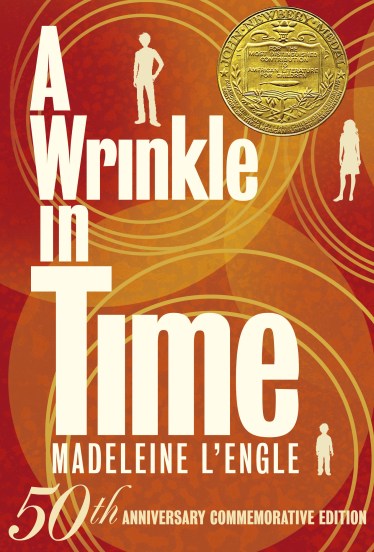
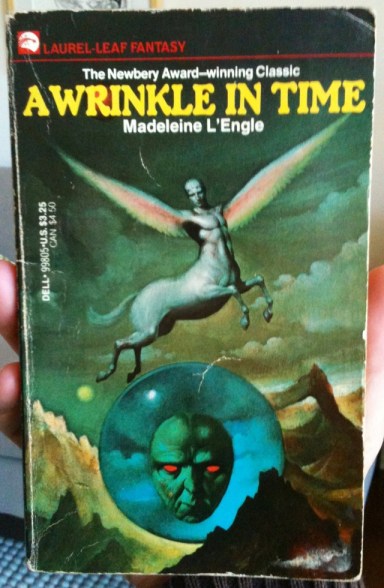

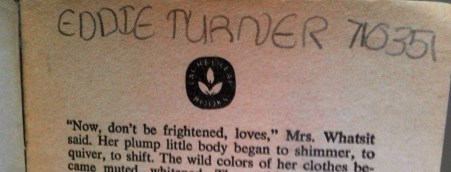
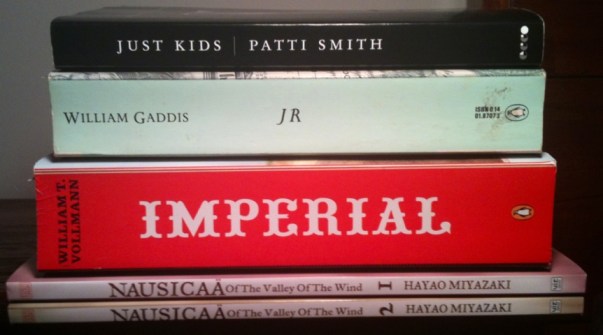

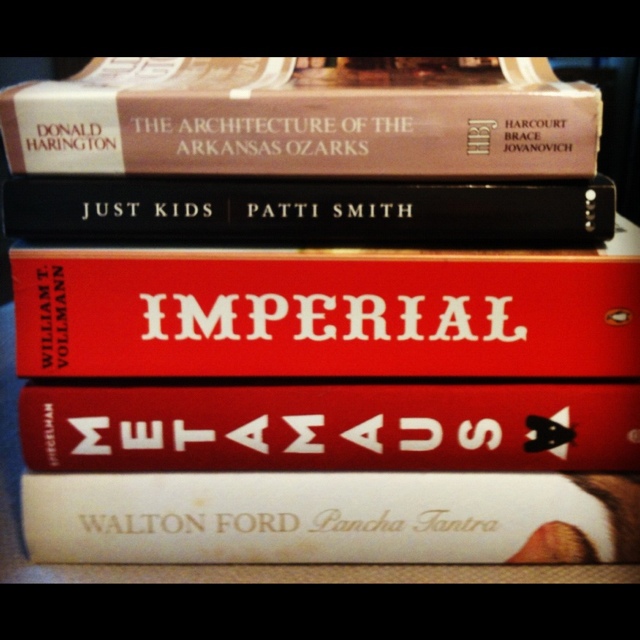


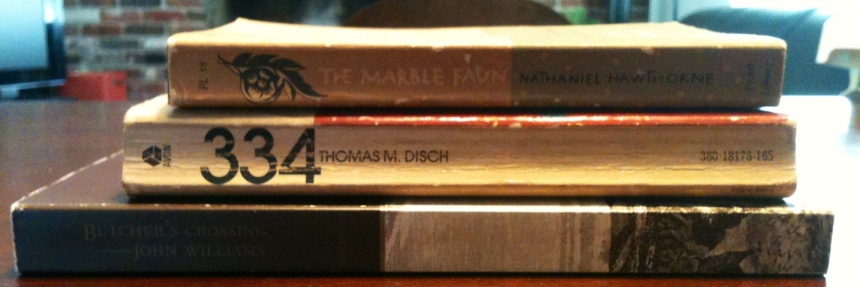
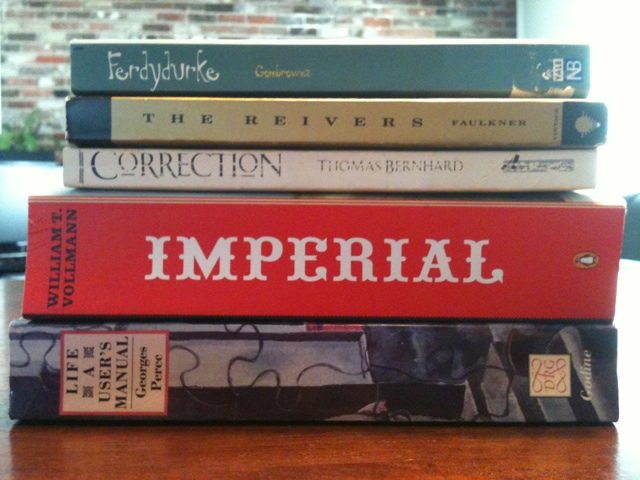
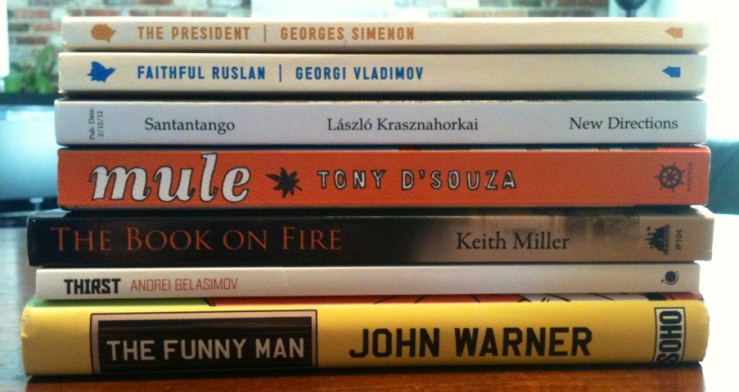
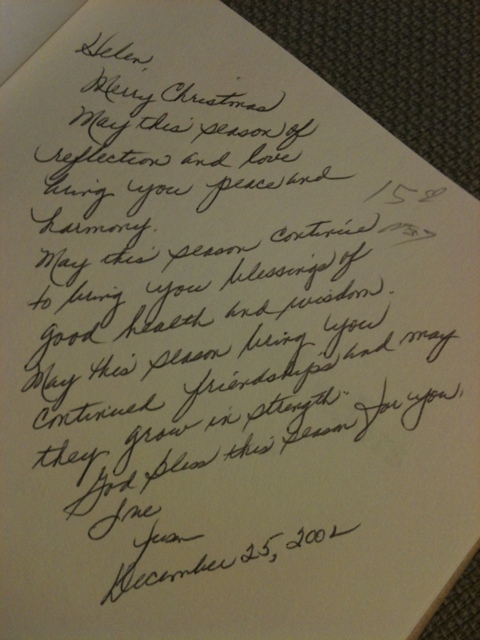


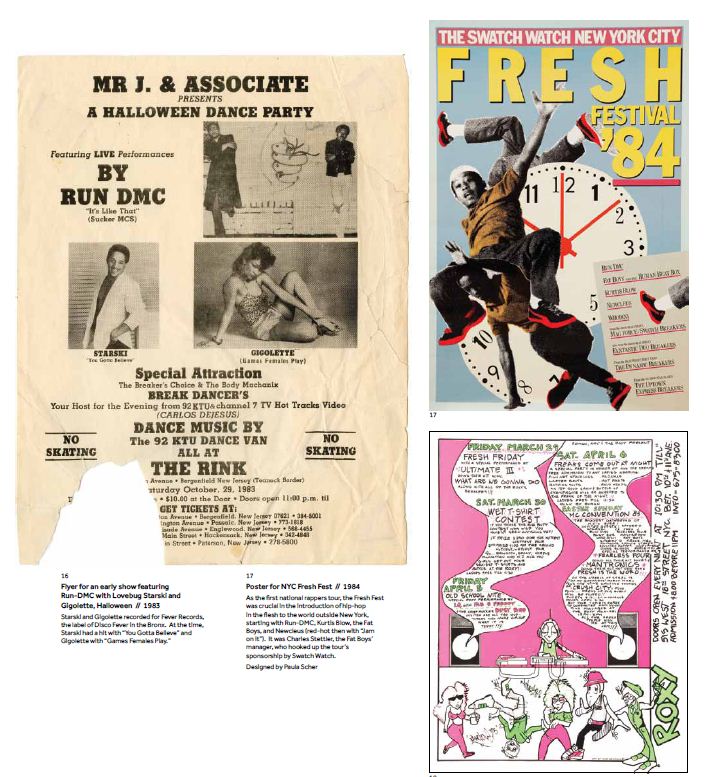
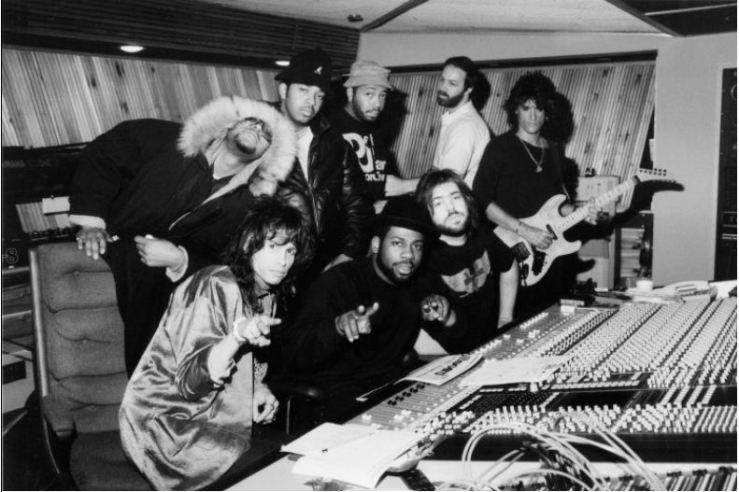

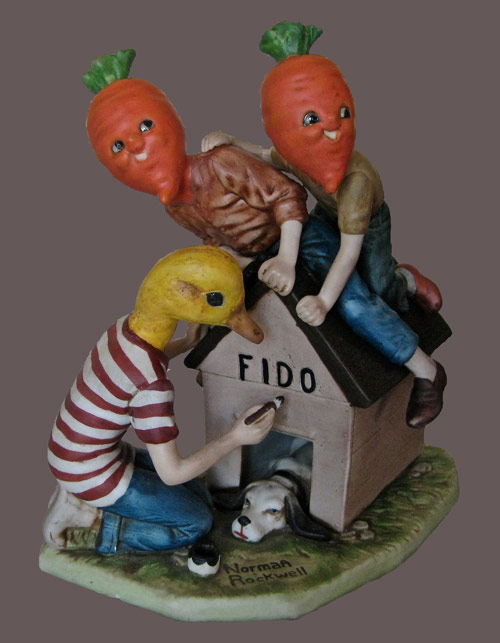
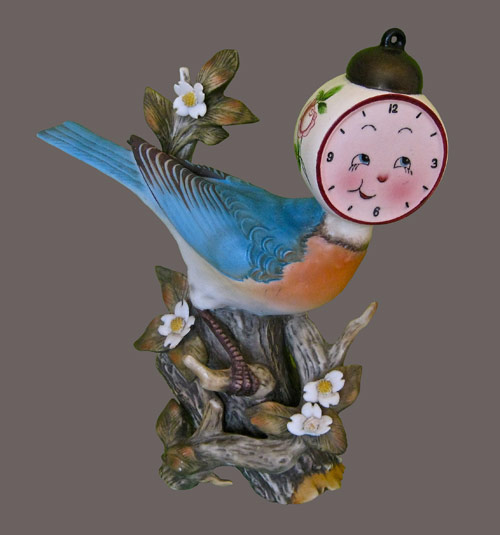



 Adam Novy’s debut novel The Avian Gospels is one of the best novels I’ve read this year, and one of the best contemporary novels I’ve read in ages. It’s a surreal dystopian magical romance set against the backdrop of political and cultural repression, violent rebellion, torture, family, and birds. Lots and lots of birds. (
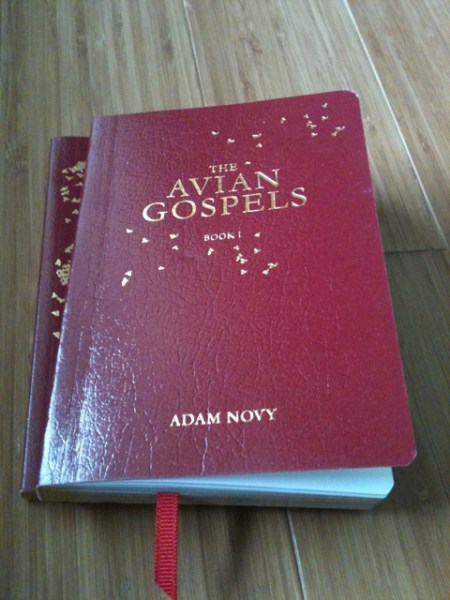 Biblioklept: It’s interesting that you mention the LOTR movies as a kind of ambient influence, because they were pretty ubiquitous in the last decade—and there’s so much of the last decade’s zeitgeist in your book: torture, despotism, political and cultural repression, the plight of a refugee class, the idea of “green zones,” etc. You foreground these themes by crafting Gospels as a kind of dystopian novel with elements of magical realism, but it’s also very much a novel about family, and even a love story. (By sheer coincidence I watched the restored edit of Metropolis in the same time frame that I was reading Gospels, and saw so many echoes there). How conscious were you of genre conventions? I’m curious because your book sometimes blends genre tropes, sometimes blurs them, and sometimes straight-up explodes them . . .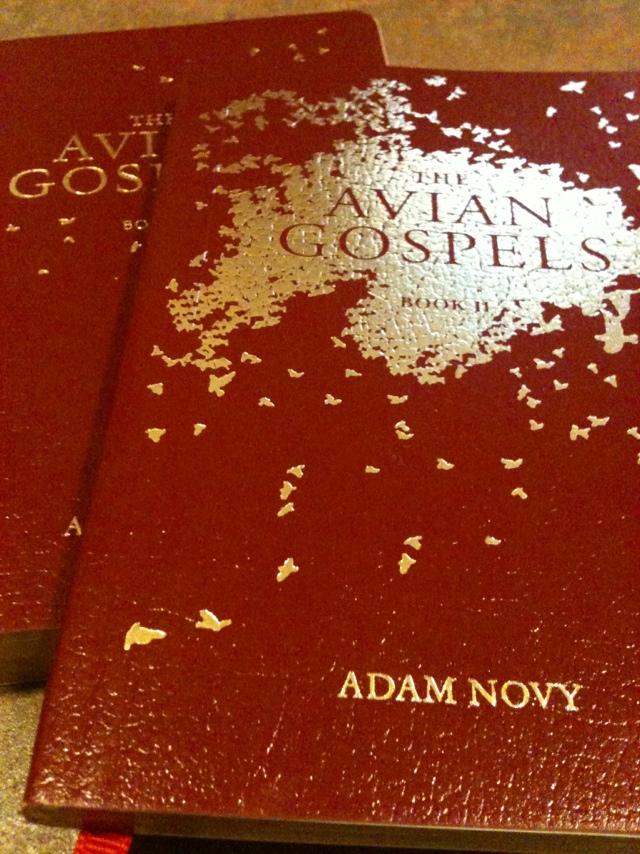
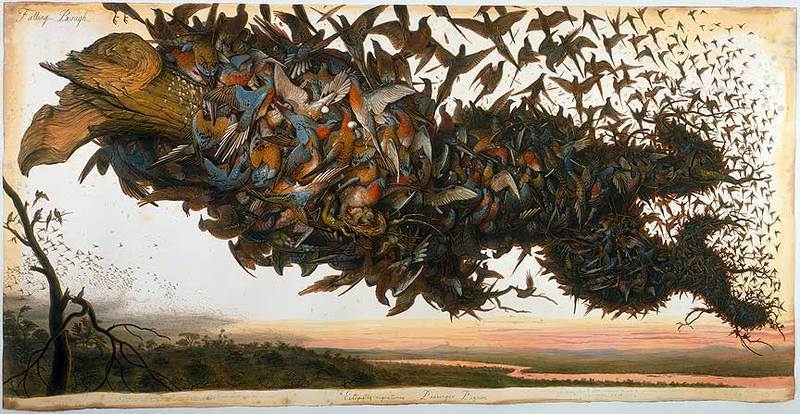
 Irrepressible, Leslie Brody’s new biography of Jessica Mitford, is a fascinating study in divergent attitudes about class, politics, and what it might mean to dissent from one’s own family. Jessica Mitford — “Decca” to her friends — was born into English aristocracy, which she promptly tried to escape. Brody offers a succinct outline in the opening pages (“Little D.” is young Decca, of course)—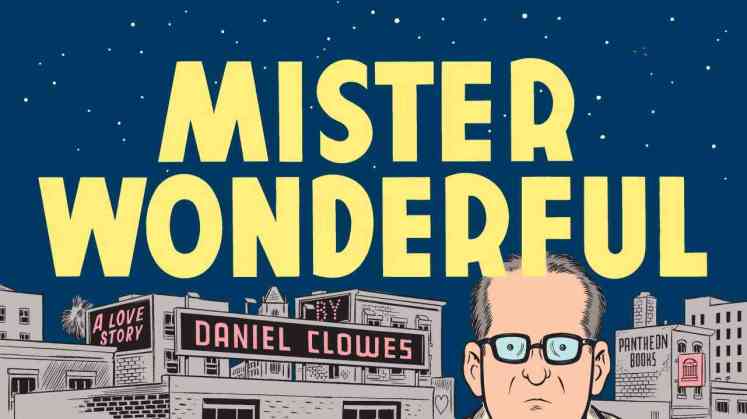
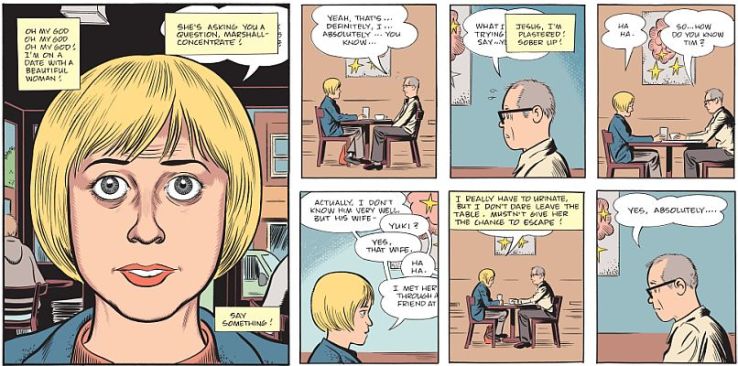

 Biblioklept