Fletcher Hanks/Gilbert Sorrentino (Books Acquired, 7.12.2012)

20120716-124509.jpg

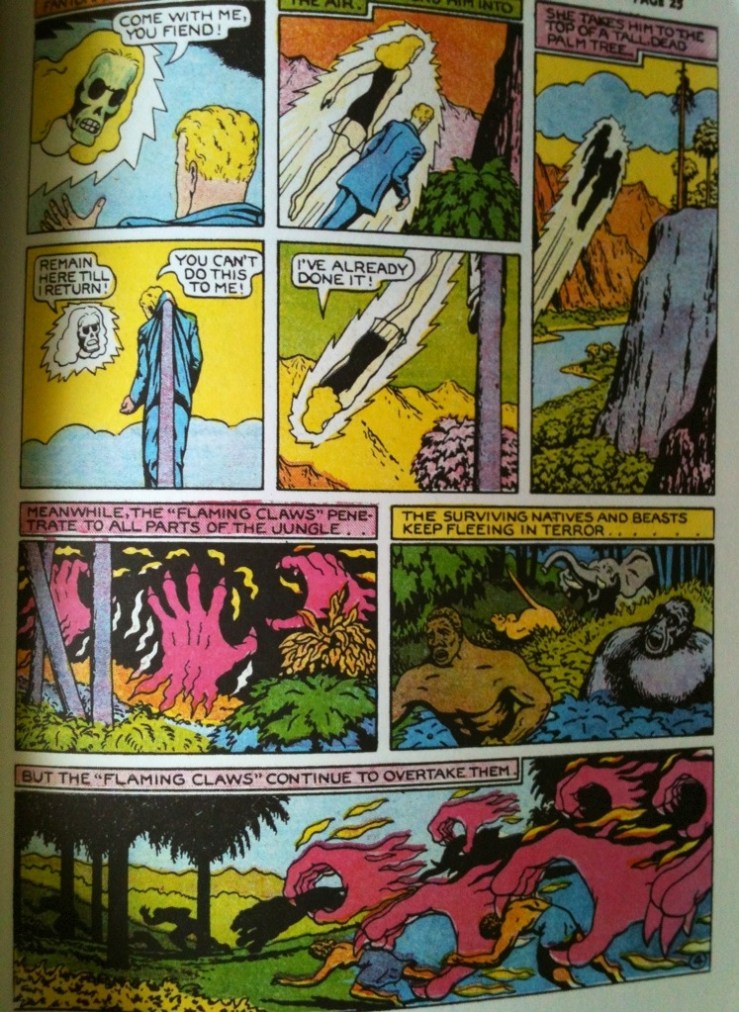
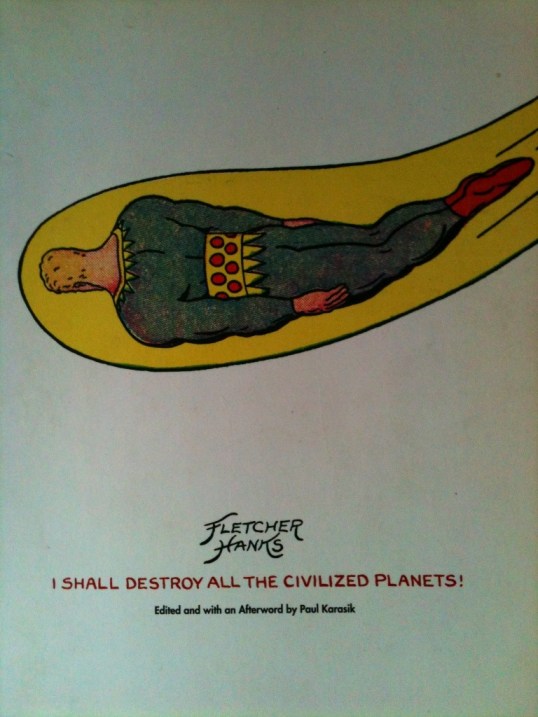
I’ve been wanting to get my mitts on this Fletcher Hanks collection since I first read about it in The Believer five years ago. Finally came across a used copy in pristine shape.

It’s really, really fucking weird. Sample page; full write-up forthcoming:

20120716-124542.jpg

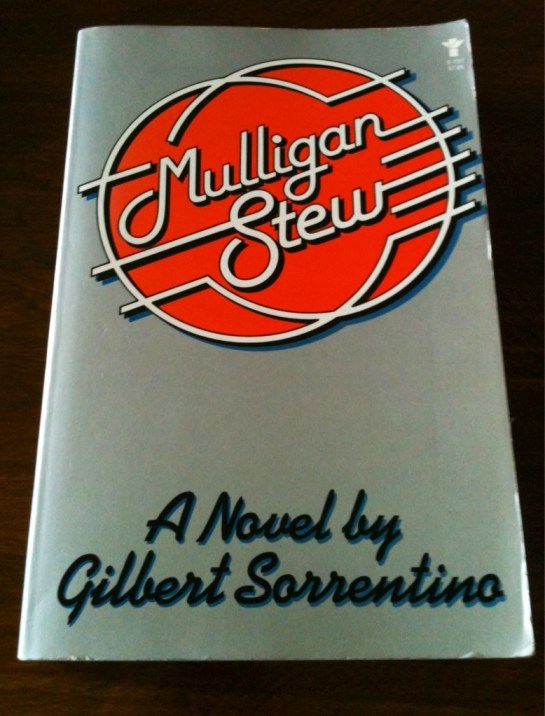
I’ve been itching to read Gilbert Sorrentino’s Mulligan Stew for a while. This copy may or may not be a first edition paperback—the rejection letters in the front are on a different type of paper than the rest of the novel (color/stock). It’s a big book—I’m finishing up a rereading of 2666, so maybe this one will jump in front of Georges Perec’s Life: A User’s Manual. Thoughts?

20120716-124550.jpg

Book Shelves #29, 7.15.2012

20120715-103934.jpg

Book shelves series #29, twenty-ninth Sunday of 2012

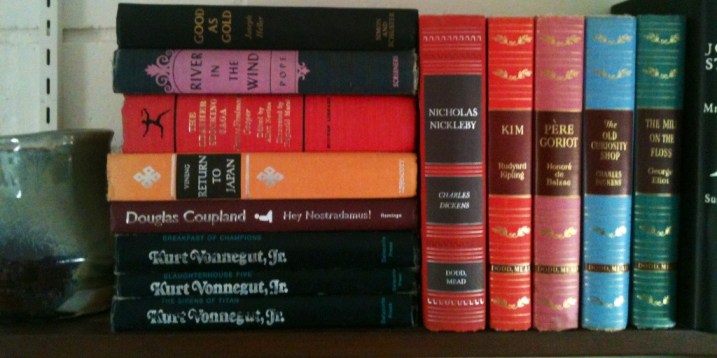
Lots of hardbacks on this long, long shelf. The Vonneguts above were particularly important to me when I was young. They were my father’s. I read them surreptitiously for years and then outright appropriated them at some point. The matching Dodd, Mead hardbacks were rescued from a school I worked at for years. My wife made the vase that serves as a bookend. The copy of Jonathan Strange and Mr. Norrell that doesn’t quite fit in the frame remains unread.

20120715-103943.jpg

The BFG: a classic. I reviewed Wabi Sabi. Next to the Crumb:

20120715-111742.jpg

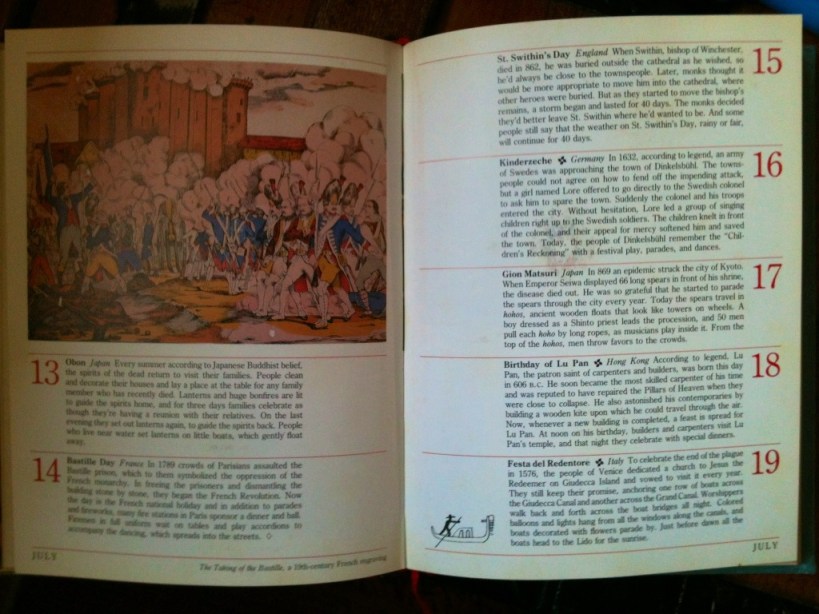
I found Holidays in a box of free books in a library lobby. Love it. Here’s this week’s schedule of holidays:

20120715-111749.jpg

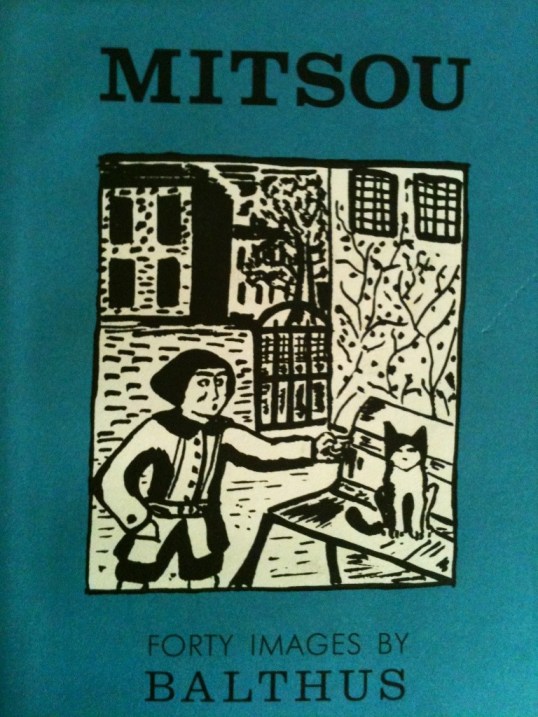
One of my favorite books ever is Mitsou, a book that Balthus did when he was like 10 or 12 or something:

20120715-104032.jpg

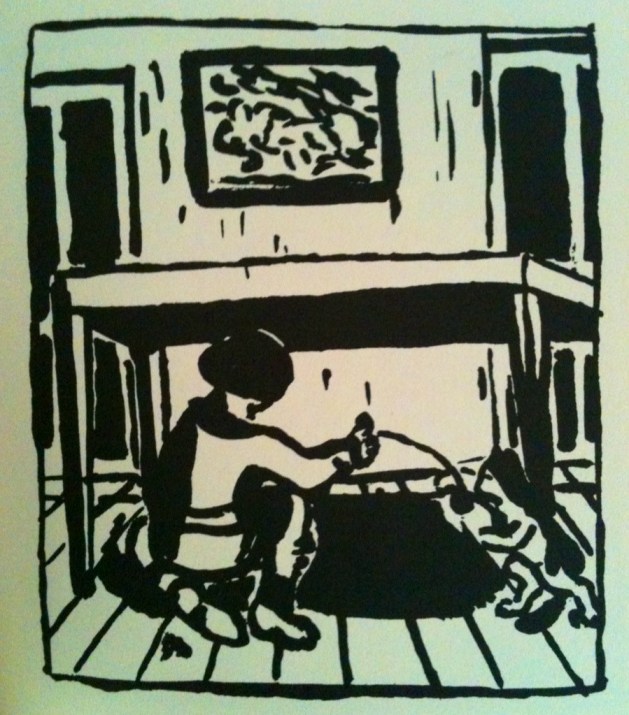
It’s about a young boy who gets a cat and loves the cat and then loses the cat. It’s heartbreaking. Image:

20120715-104040.jpg

And next to this one:

20120715-104015.jpg

Shelf’s end:

20120715-112719.jpg

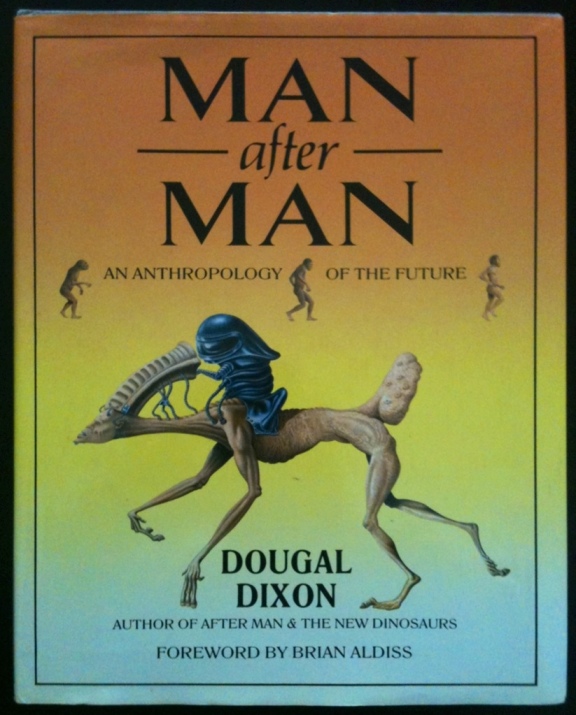
Dougal Dixon’s Man After Man (Book Acquired 6.30.2012)

20120710-095416.jpg

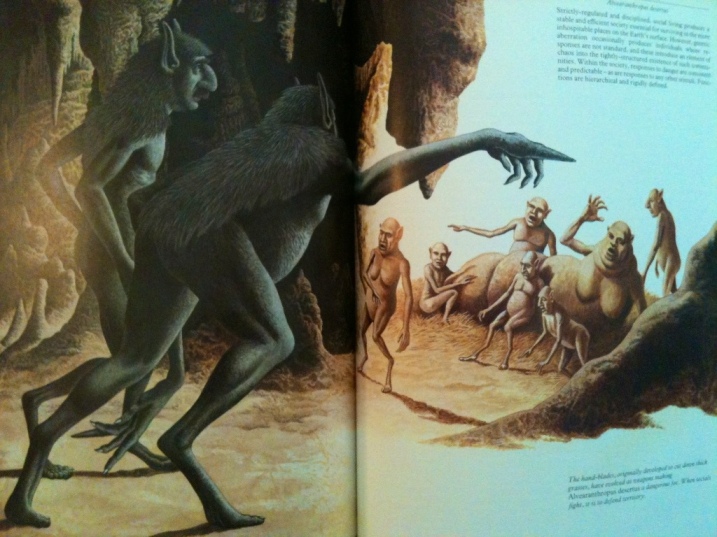
I found a first edition hardback copy of Dougal Dixon’s cult book Man After Man not quite two weeks ago when I was browsing books for my cousins’ kids, who I would see over the July 4th holiday. I’ve possessed an illicit digital copy of Man After Man for a few years, but it’s not nearly as fun as the real thing. As its subtitle attests, Dixon’s book is an anthropology of the future, a sort of speculative sci-fi textbook that imagines a future-history of genetically engineered humanity. The illustrations by Philip Hood (who deserves bigger billing) are especially weird and wonderful. Some samples below.

20120710-094738.jpg

20120710-094752.jpg

20120710-094800.jpg

20120710-094806.jpg

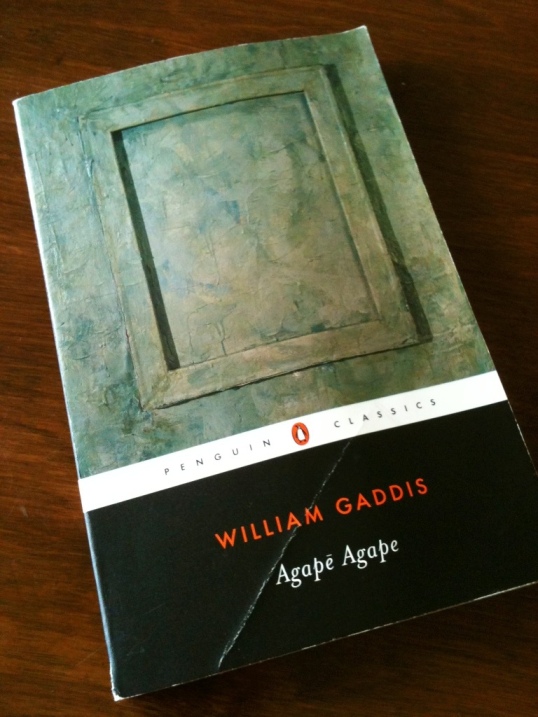
Some Annotations on the First Sentence of William Gaddis’s Last Novel, Agapē Agape

20120627-145321.jpg

1. Let’s start with the what:

Agapē Agape is the last novel by William Gaddis, that underread titan who gave us The Recognitions and J R. Agapē Agape was published in 2002, four years after Gaddis’s death. Agapē Agape is 96 pages in my Penguin Classics edition (the font is rather large, too)—almost exactly one-tenth the length of The Recognitions in my Penguin Classics edition, which is 956 pages (and in a smaller font).

2. And why?

Let’s say I’ve struggled with this review, perhaps more than I struggled with writing about J R (which I did here and here) or The Recognitions (which I did here and here), which seems nonsensical because those books are so big and this one is so short. But that’s a surface argument.

See, Agapē Agape is dense. It seems to compact and condense all of Gaddis’s themes and ideas and motifs into this little book that’s uranium heavy, too dense to allow for line breaks or paragraph breaks or indentations, let alone chapters. It’s one big block of text.

3. And so—

After reading the book twice I’ve marked every page (which is exactly like marking no pages), and at this point the only way that I can find to discuss it (I know there must be others) is to annotate the opening paragraph, its first sentence, really—which of course isn’t really a paragraph or a sentence in the traditional grammatical sense—I mean, there are a set of clauses, some fused sentences, perhaps a comma splice or two—but what marks it as a discrete sentence is that it’s punctuated by a question mark, a tiny caesura before the next onslaught of words. (Some of Agapē Agape’s sentences go on for pages).

4. The style of Agapē Agape recalls Thomas Bernhard, who Gaddis’s narrator accuses of having plagiarized the book that the narrator has yet to write. The accusation (ironic, purposefully, of course) points to Agapē Agape’s concern for synthesis, for transmitting some clear thesis statement out of the muddle of Western culture. Agapē Agape tries to suss out that muddle and as such is larded with discussions of Plato, Nietzsche, Melville, Hawthorne, Byron, Freud (“Sigi”!), Bach, Caesar, Joyce, Pulitzer, Tolstoy, Frankenstein, Huizinga, Pound, Philo T. Farnsworth, player-pianos . . . It overwhelms the narrator; it overwhelms the reader. But enough dithering—

5. —here is the opening sentence:

No but you see I’ve got to explain all this because I don’t, we don’t know how much time there is left and I have to work on the, to finish this work of mine while I, why I’ve brought in this whole pile of books notes pages clippings and God knows what, get it all sorted and organized when I get this property divided up and the business and worries that go with it while they keep me here to be cut up and scraped and stapled and cut up again my damn leg look at it, layered with staples like that old suit of Japanese armour in the dining hall feel like I’m being dismantled piece by piece, houses, cottages, stables orchards and all the damn decisions and distractions I’ve got the papers land surveys deeds and all of it right in this heap somewhere, get it cleared up and settled before everything collapses and it’s all swallowed up by lawyers and taxes like everything else because that’s what it’s about, that’s what my work is about, the collapse of everything, of meaning, of values, of art, disorder and dislocation wherever you look, entropy drowning everything in sight, entertainment and technology and every four year old with a computer, everybody his own artist where the whole thing came from, the binary system and the computer where technology came from in the first place, you see?

6. “No but you see I’ve got to explain all this because I don’t, we don’t know how much time there is left and I have to work on the, to finish this work of mine while I,”

Ulysses ends with a “Yes”; Agapē Agape begins with a “No.” This is a deeply negative book, cruel almost, bitter, caustic, acidic, but also erudite, funny, and even charming. We see right away the narrator—surely a version of Gaddis himself—concerned with the ancient problem of communication, the problem that occupied Plato and every philosopher since: “I’ve got to explain all this.” We also see here the same stream-of-consciousness technique here that Joyce used so frequently in Ulysses (putting aside Gaddis’s denials of a Joyce influence)—the suspended referent, the unnamed (the unnameable?): “I have to work on the, to finish this work of mine while I”—while I what? Still can? Still live? From the outset, Agapē Agape is a contest against time, death, and entropy.

7. “why I’ve brought in this whole pile of books notes pages clippings and God knows what, get it all sorted and organized”

Synthesis, synthesis, synthesis. Making books out of other books. Plugging literature into other literature. I am quite content to go down to posterity as a scissors-and-paste man, said someone once. And then others said it again. And then I cited it here, now.

I’m reminded here of a list that Gibbs (erstwhile Gaddis stand-in in J R) keeps in his pocket, a scrap paper crammed with ideas, fragments, citations:

Is it possible to get it sorted?

Recall now Gaddis’s hero Ezra Pound. From Tom McCarthy’s essay on synthesis, “Transmission and the Individual Remix”:

With the Cantos, he kept up this furious enterprise for five whole decades, ramping its intensity up and up until the overload destroyed him, blew his mind to pieces, leaving him to murmur, right toward the end: “I cannot make it cohere.”

It is the reader’s job to make Agapē Agape cohere.

8. “when I get this property divided up and the business and worries that go with it”

Agapē Agape may be said to have a few formalizing plots beyond its object of synthesizing Western culture vis-à-vis art and entertainment.

One of these formalizing elements is the idea of an old man divvying up his property to his daughters. Oh, hey, King Lear anyone? What’s most interesting to me about this plot (okay, more of a motif really) is that it’s the only allusive device that the narrator doesn’t remark upon. We have a narrator who’s trying to control all these notes and clippings, all these scraps of culture, a narrator with a sharp (if distracted intelligence) who nevertheless fails to remark upon the fact that his personal circumstances echo the great dismal swan song of English literature. King Lear: madness, unraveling, degeneracy, death, entropy.

9. “while they keep me here to be cut up and scraped and stapled and cut up again my damn leg look at it, layered with staples like that old suit of Japanese armour in the dining hall feel like I’m being dismantled piece by piece,”

Another formalizing element in Agapē Agape are the health issues the narrator faces, presumably a series of surgeries that involve at least one of his legs. The motif of surgeries, of transplants, and implants runs throughout The Recognitions and J R as well. In The Recognitions we get poor Stanley’s mother’s amputated leg, another strange reliquary trace floating through the text. In J R, we get Cates prepped for a heart transplant, yet another organ transferral for this massive man. There’s the idea here of borrowed parts, that humans might not be “natural,” cohesive entities but rather a collection of parts that may be swapped out. Again, synthesis in the face of break down; the surgeon as entropy repairman.

10. “houses, cottages, stables orchards and all the damn decisions and distractions I’ve got the papers land surveys deeds and all of it right in this heap somewhere, get it cleared up and settled before everything collapses and it’s all swallowed up by lawyers and taxes like everything else because that’s what it’s about,”

Here, the personal, the concrete, the immediate, and the real tips into what Gaddis took to be the grand subject of his corpus—collapse, chaos, entropy. Spelled out clearly in the next line:

11. “that’s what my work is about, the collapse of everything, of meaning, of values, of art, disorder and dislocation wherever you look, entropy drowning everything in sight,”

I don’t think commentary from me is necessary here. Instead, let me share a quote from Gibbs in J R, ranting to his young students:

Before we go any further here, has it ever occurred to any of you that all this is simply one grand misunderstanding? Since you’re not here to learn anything, but to be taught so you can pass these tests, knowledge has to be organized so it can be taught, and it has to be reduced to information so it can be organized do you follow that? In other words this leads you to assume that organization is an inherent property of the knowledge itself, and that disorder and chaos are simply irrelevant forces that threaten it from the outside. In fact it’s the opposite. Order is simply a thin, perilous condition we try to impose on the basic reality of chaos . . .

12. “entertainment and technology and every four year old with a computer, everybody his own artist where the whole thing came from, the binary system and the computer where technology came from in the first place, you see?”

The age of the amateur. Paint-by-numbers. Everyone wants to write a novel but no one wants to read one. Etc. When the narrator grumbles “where technology came from in the first place,” he means entertainment. That’s one thesis in Agapē Agape: that the technological progress we so value, that so underwrites the march of our grand civilization has its roots in toymaking and child’s play.

13. The novel that follows this addled, rattled opening line is remarkable for its brilliance, its cruelty, but most of all its sheer verbal force. Gaddis showed a mastery of voice in J R, a heteroglossic novel of speech, speech, speech, a grand dare to any reader, I suppose. Agapē Agape is even more stripped down, the monologue of a dying voice, a voice that’s been too-long ignored and under-appreciated. I don’t know if something so sad, so personally sad can be called perfect, but I can’t think of a more appropriate or fitting final statement from Gaddis.

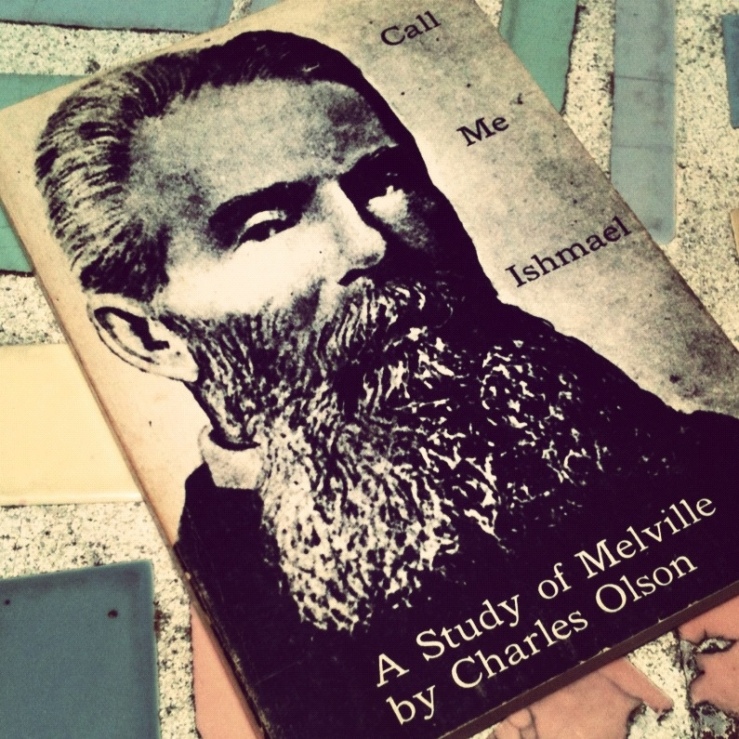
“Half Horse Half Alligator” — I Review Charles Olson’s Inimitable Melville Study, Call Me Ishmael

20120616-141629.jpg

The classical Greeks understood that literature is a form of competition. The eminent literary critic Harold Bloom folded a bit of Freudian psychology into this insight, describing the “anxiety of influence” that lurks beneath the impetus to write, the motivation to enter into an agon with the history of letters, to Oedipally assassinate—or at least assimilate—one’s literary forebears. To put this another way: What does it take to write after, say, The Odyssey? How does one answer to The Book of Job? The gall to write after Don Quixote, after Shakespeare, after Dostoevsky, after George Eliot . . .

What about Moby-Dick? What are the possibilities of even writing about Moby-Dick? (One thinks here of Ishmael’s own futile attempts to measure whales). How could Melville write after Job? After Lear? After Moby-Dick? How did Melville assimilate the texts that presented the strongest anxieties of influence in his opus? Could Melville survive the wreckage of The Pequod? These are the questions that poet-critic Charles Olson tackles—sometimes directly, sometimes obliquely, and always with brisk, sharp language—in Call Me Ishmael, his study of Melville and Moby-Dick.

Here’s one answer to my list of questions. It comes early in Olson’s book:

The man made a mess of things. He got all balled up in Christ. He made a white marriage. He had one son die of tuberculosis, the other shoot himself. He only rode his own space once—Moby-Dick. He had to go fast, like an American, or he was all torpor. Half horse half alligator.

Melville took an awful licking. He was bound to. He was an original, aboriginal. A beginner. It happens that way to the dreaming men it takes to discover America . . . Melville had a way of reaching back through time until he got history pushed back so far he turned time into space. He was like a migrant backtrailing to Asia, some Inca trying to find a lost home.

We are the last “first” people. We forget that. We act big, misuse our land, ourselves. We lose our own primary.

Melville went back, to discover us, to come forward. He got as far as Moby-Dick.

This passage illustrates Olson’s forceful, often blunt prose, the kind of language that cracks directly at Melville’s own impossible prose in Moby-Dick. I think here of the critic James Wood’s notation in his essay “Virginia Woolf’s Mysticism” that

The writer-critic, or poet-critic, has a competitive proximity to the writers she discusses. The competition is registered verbally. The writer-critic is always showing a little plumage to the writer under discussion. If the writer-critic appears to generalize, it is because literature is what she does, and one is always generalizing about oneself.

Olson may generalize as he shows a little plumage to master Melville, cutting through huge swaths of history and making poetic leaps into strange similes, but Call Me Ishmael is ultimately keenly attenuated to detail, to the processes of Melville’s constructions at the historical, economic, psychological, religious, and, yes, literary level. Although a slim 119 pages in my 1947 City Lights edition, Call Me Ishmael nevertheless vividly conveys the sources Melville synthesized to create Moby-Dick.

The book begins with an unsourced account of the whaleship Essex, attacked and destroyed by a sperm whale in the Pacific in 1820, a year after Melville’s birth. Olson trusts his readers to connect The Essex to The Pequod. Unlike so much literary scholarship, Olson’s Ishmael doesn’t torture every element of the text into overwrought explications. He provides an overview of the importance of whaling-industry-as-world’s-fuel source in a chapter that reads more like a prose poem than a stuffy history book, and then, in a chapter appropriately titled “Usufruct,” offers up entries from Melville’s own journals as primary evidence of the material that led to Moby-Dick. Olson rarely sticks his nose in here, letting the reader synthesize the selections.

Olson then plumbs Moby-Dick’s literary roots, delving into Shakespeare, particularly Lear and Antony and Cleopatra. He attends to Melville’s own annotations to Shakespeare, and then points out Melville’s literary/political condensation:

As the strongest force Shakespeare caused Melville to approach tragedy in terms of the drama. As the strongest social force America caused him to approach tragedy in terms of democracy.

It was not difficult for Melville to reconcile the two. Because of his perception of America: Ahab . . .

Ahab is the FACT, the Crew the IDEA. The Crew is where what America stands for got into Moby-Dick. They’re what we imagine democracy to be. They’re Melville’s addition to tragedy as he took it from Shakespeare. He had to do more with the people than offstage shouts in a Julius Caesar. This was the difference a Declaration of Independence made.

The Shakespeare section of Call Me Ishmael marvels: Olson’s perceptive powers simultaneously enlighten and make seemingly-familiar territory dark, strange. He then moves into a discussion of post-Moby Melville, a man perhaps crushed by his own achievement—not by any financial success, no, definitely no, but the metaphysical success. Like a Moses, Melville had found the god he so desperately needed:

Melville wanted a god. Space was the First, before time, earth, man. Melville sought it: “Polar eternities” behind “Saturn’s gray chaos.” Christ, a Holy Ghost, Jehovah never satisfied him. When he knew peaces it was with a god of Prime. His dream was Daniel’s: the Ancient of Days, garment white as snow, hair like the pure wool. Space was the paradise Melville was exile of.

When he made his whale he made his god. Ishmael once comes to the bones a Sperm whale pitched up on land. They are massive, and his struck with horror at the “antemosaic unsourced existence of the unspeakable terrors of the whale.”

When Moby-Dick is first seen he swims a snow-hill on the sea. To Ishmael he is the white bull Jupiter swimming to Crete with ravished Europa on his horns: a prime, lovely, malignant white.

Olson agrees with an 1856 journal entry by Nathaniel Hawthorne that he cites at length: Melville “can neither believe, nor be comfortable in his unbelief.” In Olson’s analysis, after having found god-in-the-whale, Melville plummets into an existential crisis. He gives over to his inner-alligator, torpid, enervated, numb, but still fierce and potent and monstrous. “He denied himself in Christianity,” writes Olson, linking the downward spiral of Melville’s career and family life to this religion.


To this end, Olson is too dismissive of Melville’s later work; when he can find nothing of the “old Melville” to praise in Benito Cereno, Bartleby, or Billy Budd, it’s almost as if he’s willfully ignoring evidence that contradicts his thesis. These are marvelous books, and if they can’t win a contest against Moby-Dick, it’s worth pointing out that little of what’s been written after that book can.

And yet we can write after Melville; we can even write on Melville. The will and vitality of Olson’s forceful, intelligent prose opens a way, or at least exemplifies a way. At the same time, paradoxically, a reading of Call Me Ishmael seems to foreclose the need, if not the possibility, of reading another study of Moby-Dick. This statement is not meant to be a knock against Melville scholarship. Here’s the thing though: life is short, time is limited, and if one plans to read a book about Moby-Dick, it should be Olson’s Call Me Ishmael. It’s great, grand stuff.

Books Acquired, 6.02.2012 (Comix + Angela Carter)

20120611-142705.jpg

Little Lit: Strange Stories for Strange Kids is a collection of comix (and other oddities) for kids, edited by Art Spiegelman and his wife artist/publisher Françoise Mouly. I saw at random and picked it up for my daughter, whose birthday was the next day. She loves, loves, loves this book, spending hours poring over all its weird images and picture games. Cover is by the great Charles Burns; there are also comics by Spiegelman, the late great Maurice Sendak—

20120611-142717.jpg

—a weird search picture by Martin Handford (here’s a detail)—-

20120611-142725.jpg

—and comics by other notables like David Sedaris, Paul Auster, Claude Ponti, Jules Feiffer, and Kim Deitch. The endpapers — “Strange Cartoon Lessons” are by Kaz:

20120611-142742.jpg

I also picked up Burning Your Boats, which collects all of Angela Carter’s short stories:

20120611-142812.jpg

I was looking for her dystopian novel The Passion of New Eve, but no go. Of course, I couldn’t pass up this volume, which comprises four collections, as well as early and uncollected stuff.

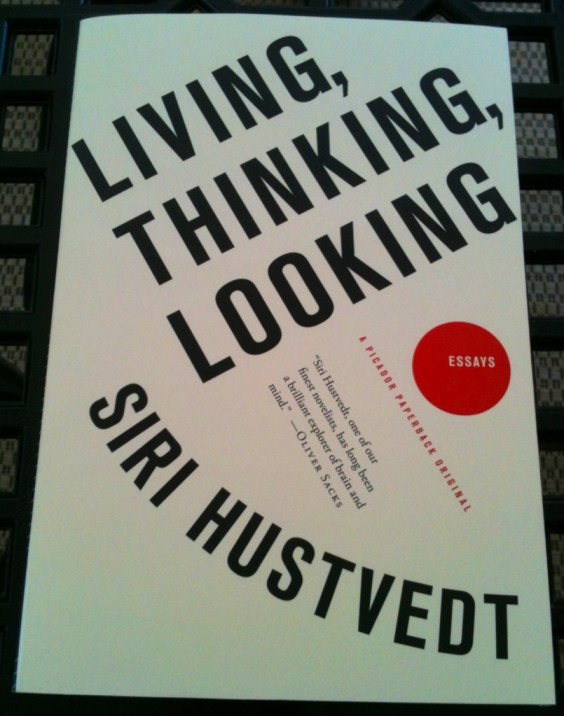
Siri Hustvedt’s Living, Thinking, Looking (Book Acquired, 5.15.2012)

20120606-120223.jpg

The whole point of these books acquired posts is to try to document interesting stuff that comes in before it winds up in my pile for months (to put things in perspective, I got a reader copy of Adam Johnson’s The Orphan Master’s Son back in January, and have finally gotten around to reading it just now). I usually spend a week or two looking over the book, maybe  publish a blurb or an excerpt of the book along with a photo, and then file it in one of three stacks — now, later, or never. Anyway, Siri Hustvedt’s new collection of essays Living, Thinking, Looking ended up never getting stacked anywhere, because I kept going back to it, poking into her essays on Goya, Gerhard Richter, Freud, reading her riff on sleeping, which somehow synthesizes Macbeth and Nabokov and REM science, pausing over her consideration of the Bush admin’s rhetoric. I haven’t finished the book but I will. Hustvedt combines her keen intellect with a range of ideas to explore her subjects (primarily, if the title didn’t tip you, living, thinking, looking). There’s a lot of lit here, a lot of psych, and plenty of art. Good stuff.

Book Shelves #22, 5.27.2012

20120527-111623.jpg

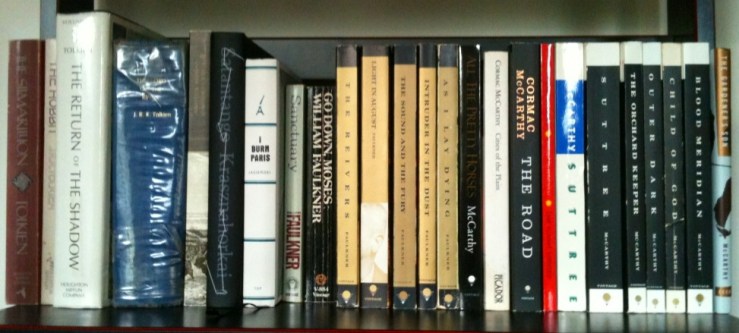
Book shelves series #22, twenty-second Sunday of 2012: Tolkien, Faulkner, McCarthy

As always, sorry for the glare. Shooting this case head on is almost impossible because of the windows on the other side of the room. Anyway.

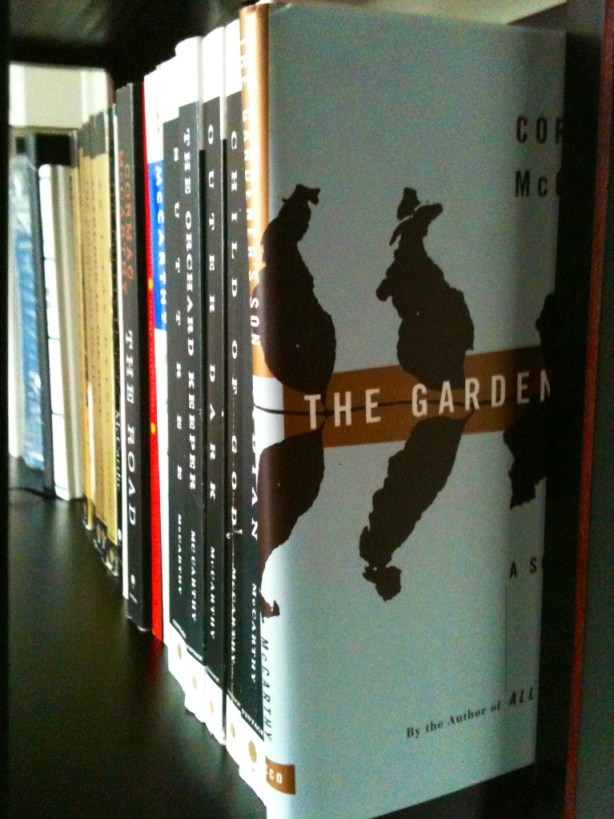
I’ve read everything by Cormac McCarthy with the exception of his screenplay for The Gardener’s Son, which I found a week or two and picked it up. I don’t own a copy of No Country for Old Men because I haven’t found one that isn’t a movie tie-in.

20120527-111632.jpg

This copy of The Lord of the Rings—my first—was a kind gift from some friends we were staying with in Melbourne (the one in Australia, not Florida).

20120527-111642.jpg

I’ve read it at least four times; I have other copies of LoTR and have read them too. It’s probably the book I’ve read the most, although I haven’t read it since 2002. This copy is kindly inscribed:

20120527-111650.jpg

There’s a slim space on the shelf that currently holds a few books that I’ve been meaning to read:

20120527-111659.jpg

Book Shelves #21, 5.20.2012

20120520-111437.jpg

Book shelves series #21, twenty-first Sunday of 2012: William T. Vollmann and David Foster Wallace

Sorry about the glare in the photo above. As I seem to attest weekly, photography is hard. Photographing books is hard. Lighting issues, glare etc. Anyway, this shelf is half Vollmann, half DFW. I’ve written so extensively about these guys on the site that I won’t bother linking to anything here. A few months ago, Gaddis’s JR and The Recognitions was hanging out here, but then I put Expelled and Imperial on the shelf, bought Everything and More, and also picked up some more Gaddis, and, well, anyway, had to move him up with Joyce, where he seems to belong. The paperback of The Pale King is a review copy; it has additional stuff. Maybe I should part with the hardback. It seems ridiculous to have them both.

The copy of Girl with Curious Hair is extremely important to me, as silly as that sounds. It was one of the first books I ever “reviewed” on this blog, back when I still focused almost entirely on books I’d stolen or books I’d never returned to. From that review:

Scott Martin was kind enough to loan me this book. Did he know that it would forever change the way I read? It was the first semester of my freshman year in college, and I was slowly reaching beyond stuff like Henry Miller, Wm Burroughs and Franz Kafka. David Foster Wallace’s short story collection Girl With Curious Hair introduced me to a whole new world of writing. Reading DFW is like having a very witty friend tell you a moving and funny story over a few beers. He’s hilarious, thought-provoking, and not nearly as hard to read as people seem to think.

I leave the bookmark I’ve been using in almost every book I read. When I pulled Girl from the shelf, I found a Polaroid of my cat:

20120520-112636.jpg

He’s just a kitten here. His name is Remy. He no longer lives with us, but he’s still around. We moved a year ago from a bungalow set above the ground (i.e. with cat crawl space) to a ranch on a block (i.e. no crawl space). He didn’t want to move because he was having this romance with a stray my daughter named Pearly. I eventually trapped him and moved him to the new place, but I foolishly forgot he’d have no place to run and hide while getting acclimated. He ran away. A few months later I found him down the street. He looked happy and came up and talked to us. He followed us back to the new place and we gave him some people food treats. Then he left again. We seem him every now and then. He’s gotten surprisingly fat and seems to like the new people he’s taken up with. They have two boys, a little older than my kids. Sometimes I miss my cat.

Flann O’Brien and Alasdair Gray (Books Acquired, 5.12.2012)

20120512-174120.jpg

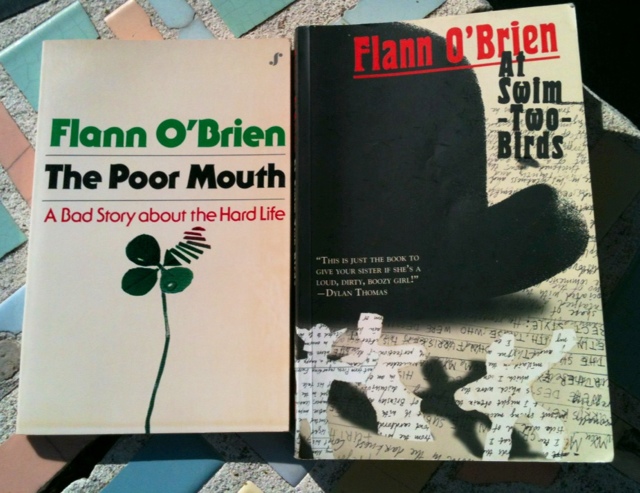
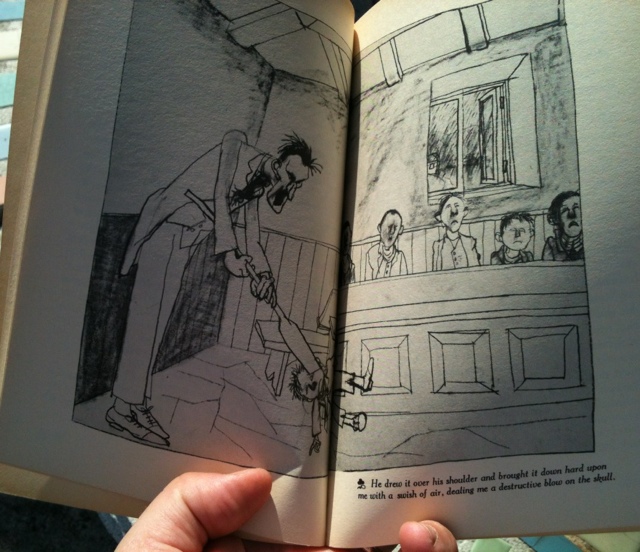
Picked up two more by Flann O’Brien after enjoying The Third Policeman so very much; thanks again to the reader suggestions on that one. The Poor Mouth has pictures:

20120512-175150.jpg
20120512-174128.jpg

I was looking for Alasdair Gray’s first novel Lanark (no dice), but picked up 1982 Janine read the back and immediately knew I had to have it.

20120512-174146.jpg

I picked up Poor Things just to riffle a bit, and again, very intrigued. Also, another book with illustrations. Here’s one:

20120512-175200.jpg

And, as I shot these outside in the cheap showiness of nature, here’s a picture of a large plant’s tumescent bloom, because hey why not:

20120512-174156.jpg

Flann O’Brien’s Novel The Third Policeman Is a Surreal Comic Masterpiece

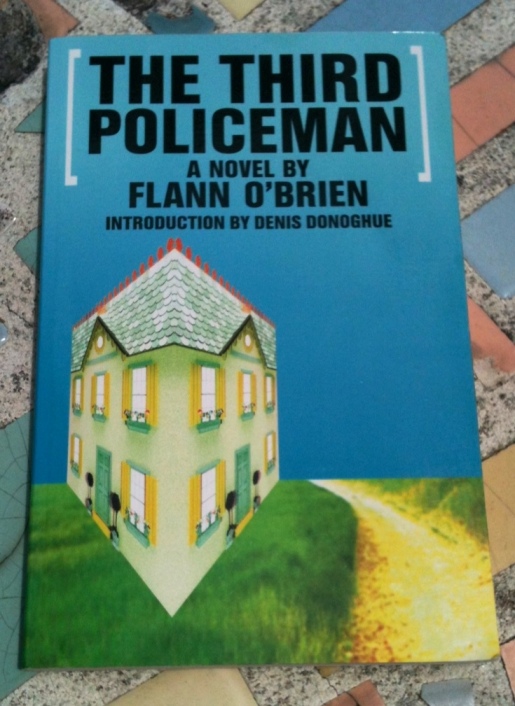
20120504-141353.jpg

Here’s the short review: Flann O’Brien’s The Third Policeman is a dark, comic masterpiece—witty, bizarre, and buzzing with surreal transformations that push the limits of language. I am ashamed that I came so late to its cult (how the novel escaped my formative teens and twenties escapes me), but also thankful that I trusted the readers of this blog who kindly suggested I read it.

I’m also thankful that I knew pretty much nothing about the book going in; I’m thankful that I skipped over Denis Donoghue’s introduction (which has the gall to spoil the novel’s end); I’m thankful that I resisted looking up information on de Selby, a philosopher I had never heard the name of before The Third Policeman. I read the novel in an ideal state, a kind of Platonic purity of appropriate bewilderment, at turns gaping and guffawing at O’Brien’s sublime impositions on plot, imagery, thought, language.

To be plain, I think that you should read the book too, gentlest reader, and if you are fortunate enough to possess innocence of its strange virtues, all the better. The less you know about The Third Policeman, the more enjoyable your first time will be. But if such conditions are too much to ask, here are a few fragments of plot:

We have an unnamed narrator, a one-legged orphan and would-be de Selby scholar (don’t ask) who enters into a nefarious plot with a man named Divney. Okay, they plan and execute a murder for treasure. Shades of Crime and Punishment creep into the novel by way of Poe’s nervous narrators; the plot even anticipates in some ways The Stranger, though not as moody and far funnier and honestly just way better. (I’m riffing on books here because, again, it seems to me a disservice to the interested reader to overshare the plot of The Third Policeman).

Let’s just say there’s a two-dimensional house. Let’s just say there’s an absurd picaresque quest to recover a missing black box. Let’s just say there are two policemen (okay, there are three), alternately terrifying, edifying, assuaging, bewildering. Let’s just say there’s an army of one-legged men. Let’s just say there’s a soul. Let’s call him “Joe.”

Let’s just say there are bicycles. Lots and lots of bicycles.

And the wisdom (?!) of de Selby, of course, “the savant,” who, via our unnamed narrator’s erudite footnotes (including the notes of de Selby’s esteemed commentators, of course) offers up opinions and maxims on matters of natural science and philosophy alike. Here’s a taste of de Selby, from the epigraph:

Human existence being an hallucination containing in itself the secondary hallucinations of day and night (the latter an insanitary condition of the atmosphere due to accretions of black air) it ill becomes any man of sense to be concerned at the illusory approach of the supreme hallucination known as death.

It’s also a good taste of the bizarre thrust of The Third Policeman; the first five words might work as a dandy summary, or at least summary enough.

But maybe I should share some of O’Brien’s language (and not just some philosopher that if you’re being honest you’ll admit you’ve never heard of before, although it seems like maybe you ought to have heard of him, hmmm?).

Just the first paragraph, gentle soul. It was enough to hook this fish:

Not everybody knows how I killed old Phillip Mathers, smashing his jaw in with my spade; but first it is better to speak of my friendship with John Divney because it was he who first knocked old Mathers down by giving him a great blow in the neck with a special bicycle-pump which he manufactured himself out of a hollow iron bar. Divney was a strong civil man but he was lazy and idle-minded. He was personally responsible for the whole idea in the first place. It was he who told me to bring my spade. He was the one who gave the orders on the occasion and also the explanations when they were called for.

And: two more excerpts that you can read, funny-stuff, context-free.

Okay. Hopefully I’ve convinced you a) to read The Third Policeman and b) to quit reading this review (let’s be honest, this isn’t so much a review as it is a riff, a recommendation, and it’s going to get even ramblier in a moment). You can get The Third Policeman from The Dalkey Archive, so you know it’s good, but oh-my-God-guess-what-can-you-believe-it? The Dalkey Archive is actually named after one of O’Brien’s novels, The Dalkey Archive.

So, yes, very highly recommended, read it, etc.

The rest of this riff I devote to puzzling out (without resolution) some of the marvels and conundrums of The Third Policeman; if you haven’t read the book, I suggest skipping all that follows.

I imagine that there’s a ton of criticism out there that might try to explain or elucidate the meaning of The Third Policeman, and while I’d love to hear or read some opinions on the book, I think it ultimately defies heavily symbolic readings. I suppose we might argue that the bicycle motif points toward the slow mechanization of humanity in the post-industrial landscape (or some such nonsense), or we might try to find some codex for the plot of the novel in the work of the fictional philosopher de Selby (and his critics), or we might try to plumb the novel’s mystical and religious underpinnings. It seems to me though that the absurd, nightmarish fever-joy of The Third Policeman lies in its precise indeterminacy. Here’s an example, at some length, of our narrator’s marvelous powers to describe what cannot be described:

This cabinet had an opening resembling a chute and another large opening resembling a black hole about a yard below the chute. He pressed two red articles like typewriter keys and turned a large knob away from him. At once there was a rumbling noise as if thousands of full biscuit-boxes were falling down a stairs. I felt that these falling things would come out of the chute at any moment. And so they did, appearing for a few seconds in the air and then disappearing down the black hole below. But what can I say about them? In colour they were not white or black and certainly bore no intermediate colour; they were far from dark and anything but bright. But strange to say it was not their unprecedented hue that took most of my attention. They had another quality that made me watch them wild-eyed, dry-throated and with no breathing. I can make no attempt to describe this quality. It took me hours of thought long afterwards to realize why these articles were astonishing. They lacked an essential property of all known objects. I cannot call it shape or configuration since shapelessness is not what I refer to at all. I can only say that these objects, not one of which resembled the other, were of no known dimensions. They were not square or rectangular or circular or simply irregularly shaped nor could it be said that their endless variety was due to dimensional dissimilarities. Simply their appearance, if even that word is not inadmissible, was not understood by the eye and was in any event indescribable. That is enough to say.

O’Brien’s unnamed narrator repeatedly runs up against the problem of the ineffable, of the inability of language to center meaning.

The policemen—Sergeant Pluck and Policeman MacCruiskeen—are handier at navigating the absurd pratfalls of language. When the Sergeant asks the narrator if he’d like “a velvet-coloured colour,” we see the tautological, self-referential scope to description, and hence the underlying trouble of approaching pure communication. Much of the humor of The Third Policeman comes from such language. The Sergeant tells of an angry mob that “held a private meeting that was attended by every member of the general public except the man in question,” and we see the mutability of oppositions like “private/public” played to absurd comic effect.

When the policemen describe machines that break sensation into opposing and contradictory parts, we get here an anticipation of deconstruction, of the idea that difference and instability governs sensation and meaning. There is no purity:

‘We have a machine down there,’ the Sergeant continued, ‘that splits up any smell into its sub – and inter-smells the way you can split up a beam of light with a glass instrument. It is very interesting and edifying, you would not believe the dirty smells that are inside the perfume of a lovely lily-of-the mountain.’

‘And there is a machine for tastes,’ MacCruiskeen put in, ‘the taste of a fried chop, although you might not think it, is forty per cent the taste of…’ He grimaced and spat and looked delicately reticent.

The policemen’s analytic machinery correlates strongly with the narrator’s interest in philosophy and science. Through de Selby and his various critics, O’Brien simultaneously mocks and reveres the atomizing pursuits of knowledge. Delivered mostly in footnotes that would give David Foster Wallace a run for his money, the absurd philosophy of de Selby underpins the physical and metaphysical conundrums of The Third Policeman (this is, after all, the story of a man traversing a world where the laws of physics do not adhere). Here’s an early footnote:

. . . de Selby . . . suggests (Garcia, p. 12) that night, far from being caused by the commonly accepted theory of planetary movements, was due to accumulations of ‘black air’ produced by certain volcanic activities of which he does not treat in detail. See also p. 79 and 945, Country Album. Le Fournier’s comment (in Homme ou Dieu) is interesting. ‘On ne saura jamais jusqu’à quel point de Selby fut cause de la Grande Guerre, mais, sans aucun doute, ses théories excentriques – spécialement celle que nuit n’est pas un phénomène de nature, mais dans l’atmosphère un état malsain amené par un industrialisme cupide et sans pitié – auraient l’effet de produire un trouble profond dans les masses.’

This is wonderful mockery of academicese, a ridiculous idea presented with some commentary in French. At this point in the novel, I started to doubt the existence of de Selby; as the narrator’s notations of de Selby’s ideas grew increasingly bizarre, I soon realized the joke O’Brien had played on me.

And yet these jokes do not deflate the essential metaphysical seriousness of The Third Policeman: This is a novel about punishment, about crime, about damnation; this is a novel about not knowing but trying to know and describe what can’t be known or described.

This not knowing extends strongly to the reader of The Third Policeman. I was never sure if the narrator was dreaming or hallucinating or wandering through a strange afterlife—and in a way, it didn’t matter. There’s no allegorical match-up or metaphysical scorecard from which to parse The Third Policeman’s final meaning because there is no final meaning. Here’s O’Brien—or really Brian O’Nolan, I suppose; O’Brien was a pseudonym—summarizing the novel in a 1940 letter to William Saroyan:

I’ve just finished another book. The only thing good about it is the plot and I’ve been wondering whether I could make a crazy…play out of it. When you get to the end of this book you realize that my hero or main character (he’s a heel and a killer) has been dead throughout the book and that all the queer ghastly things which have been happening to him are happening in a sort of hell which he earned for the killing. Towards the end of the book (before you know he’s dead) he manages to get back to his own house where he used to live with another man who helped in the original murder. Although he’s been away three days, this other fellow is twenty years older and dies of fright when he sees the other lad standing in the door.

Then the two of them walk back along the road to the hell place and start thro’ all the same terrible adventures again, the first fellow being surprised and frightened at everything just as he was the first time and as if he’d never been through it before. It is made clear that this sort of thing goes on for ever – and there you are. It is supposed to be very funny but I don’t know about that either…I think the idea of a man being dead all the time is pretty new. When you are writing about the world of the dead – and the damned – where none of the rules and laws (not even the law of gravity) holds good, there is any amount of scope for back-chat and funny cracks.

Happily, as I mentioned earlier, I skipped the introduction and thus missed this letter, which I think deflates the novel in some ways, including the authorial spoiler. Also, O’Brien’s just plain wrong when he contends that the “only good thing about it is the plot” — there’s also the language, the ideas, the rhythm, the structure . . .

But 1940 was not ready for such a strange novel, and The Third Policeman wasn’t published until 1967, a year after its author’s death. By 1967 Thomas Pynchon had published V. and The Crying of Lot 49, John Barth has published The Sot-Weed Factor and Giles Goat-Boy, Don DeLillo had quit advertising to start writing novels, Donald Barthelme had published Snow-White, Kurt Vonnegut had gained a large audience—in short, the world of letters had caught up to O’Brien (or O’Nolan, if you prefer). Here was a post-modern novel delivered while Modernism was still in full swing.

But literary labels are no fun. You know what’s fun? The Third Policeman is fun. And unnerving. And energetic. And surreal. And really, really great. Very highly recommended.

Self-Portrait — Ben Marcus

20120429-141359.jpg

Proving Darwin (Book Acquired, 4.23.2012)

20120426-161632.jpg

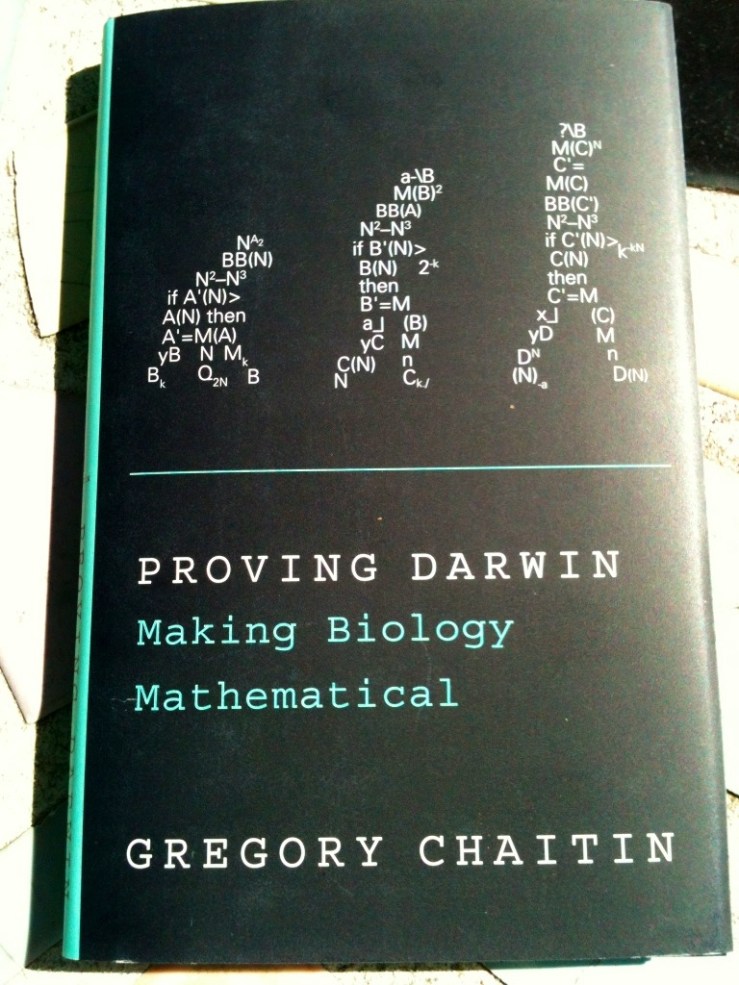
Gregory Chaitin’s Proving Darwin: Making Biology Mathematical is forthcoming in hardback from Random House. It’s a great-looking book, slim and neat with graphs and plenty of explications of the math for fellas like me. There’s also illustrations from Biblioklept fave Ernst Haeckel:

20120426-161640.jpg

Random House’s copy:

Groundbreaking mathematician Gregory Chaitin gives us the first book to posit that we can prove how Darwin’s theory of evolution works on a mathematical level.

For years it has been received wisdom among most scientists that, just as Darwin claimed, all of the Earth’s life-forms evolved by blind chance. But does Darwin’s theory function on a purely mathematical level? Has there been enough time for evolution to produce the remarkable biological diversity we see around us? It’s a question no one has yet answered—in fact, no one has even attempted to answer it until now.

In this illuminating and provocative book, Gregory Chaitin argues that we can’t be sure evolution makes sense without a mathematical theory. He elucidates the mathematical scheme he’s developed that can explain life itself, and examines the works of mathematical pioneers John von Neumann and Alan Turing through the lens of biology. Chaitin presents an accessible introduction to metabiology, a new way of thinking about biological science that highlights the mathematical structures underpinning the biological world. Fascinating and thought-provoking, Proving Darwin makes clear how biology may have found its greatest ally in mathematics.

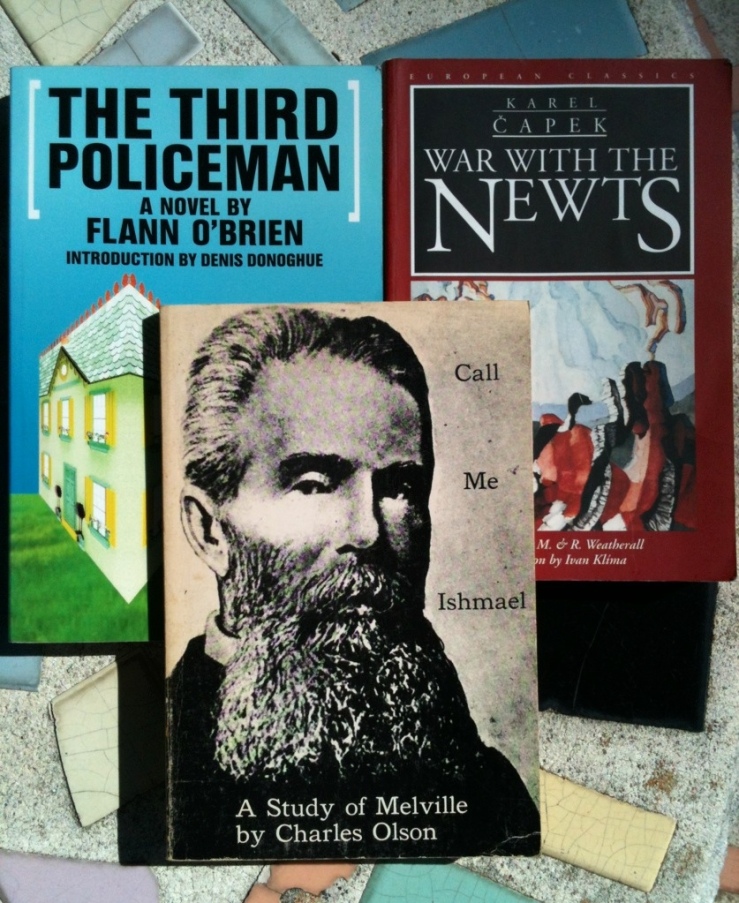
Flann O’Brien, Charles Olson, Karel Capek (Books Acquired, Earlier This Week)

20120426-161730.jpg

Books Acquired, This Week and Last

20120426-161440.jpg

Reading for Our Time by J. Hillis Miller from Columbia University Press. Their copy:

A masterclass in attentive reading that opens up brilliant insights into two of George Eliot’s novels. J. Hillis Miller shows how reading Eliot’s great novels Adam Bede and Middlemarch can provide the pleasure and insight unique to reading fiction. The readings focus on famous passages in which the narrator reflects about the story and its characters. What do these passages really say? What role does Eliot’s figurative language play in her storytelling? These stories deal with uncovering their characters’ ideological illusions. By understanding how to expose these illusions, readers will be able to recognize how easy it is to be taken in by such mistakes, both in the personal and in the political worlds.

20120426-161452.jpg

Mary S. Lovell’s The Churchills is new in trade paperback from Norton. From the LA Times review:

Intelligent and well-written, like all of Mary S. Lovell’s biographies, “The Churchills” provides a vivid introduction to the family of English aristocrats whose nation-preserving achievements stretch from the Battle of Blenheim to the Battle of Britain and beyond. The Churchills are a much-chronicled clan, and although footnotes indicate that Lovell has read all the relevant books and delved into vast archives of personal papers, there’s nothing startlingly new here. Instead, as she did in “The Mitford Girls,” the author synthesizes a variety of familiar material to create a lively collective portrait.

20120426-161503.jpg

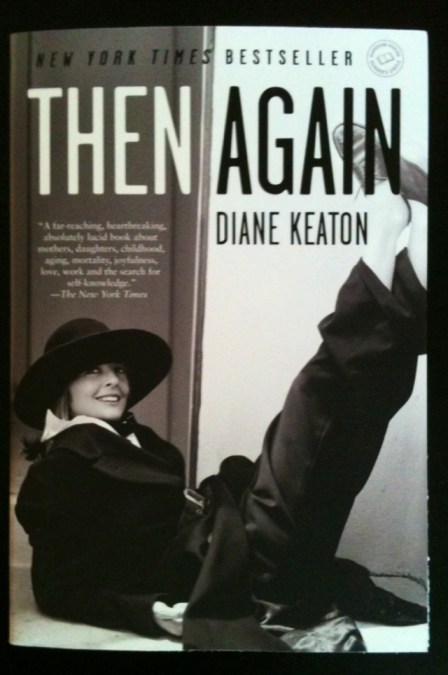
Diane Keaton’s memoir is out in trade paperback. It’s a handsome book with stylish color inserts. New from Random House.

20120426-161518.jpg

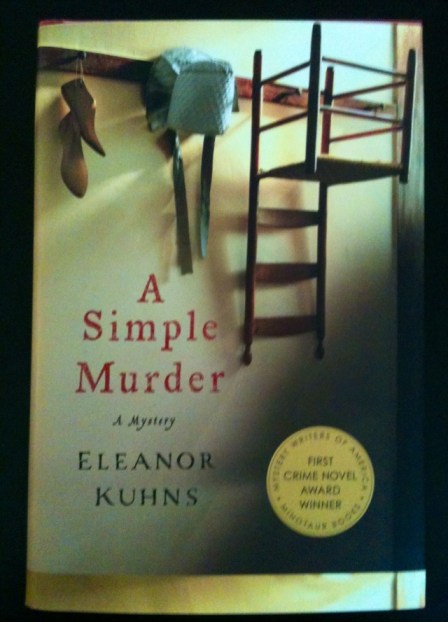
 Great cover on A Simple Murder, new from Eleanor Kuhns. Publisher Minotaur/Macmillan’s write-up:

Five years ago, while William Rees was still recovering from his stint as a Revolutionary War soldier, his beloved wife died. Devastated, Rees left his son, David, in his sister’s care, fled his Maine farm, and struck out for a tough but emotionally empty life as a traveling weaver. Now, upon returning unexpectedly to his farm, Rees discovers that David has been treated like a serf for years and finally ran away to join a secluded religious sect—the Shakers.

Overwhelmed by guilt and hoping to reconcile with his son, Rees immediately follows David to the Shaker community. But when a young Shaker woman is brutally murdered shortly after Rees’s arrival, Rees finds himself launched into a complicated investigation where the bodies keep multiplying, a tangled web of family connections casts suspicion on everyone, and the beautiful woman on the edge of the Shaker community might be hiding troubling ties to the victims. It quickly becomes clear that in solving Sister Chastity’s murder, Rees may well expose some of the Shaker community’s darkest secrets, not to mention endanger his own life.

An atmospheric portrait of a compelling time in American history, A Simple Murder is an outstanding debut from Eleanor Kuhns, Minotaur Books/Mystery Writers of America’s 2011 First Crime Novel Competition Winner.

Book Shelves #17, 4.22.2012

Book shelves series #17, seventeenth Sunday of 2012.

20120422-114730.jpg

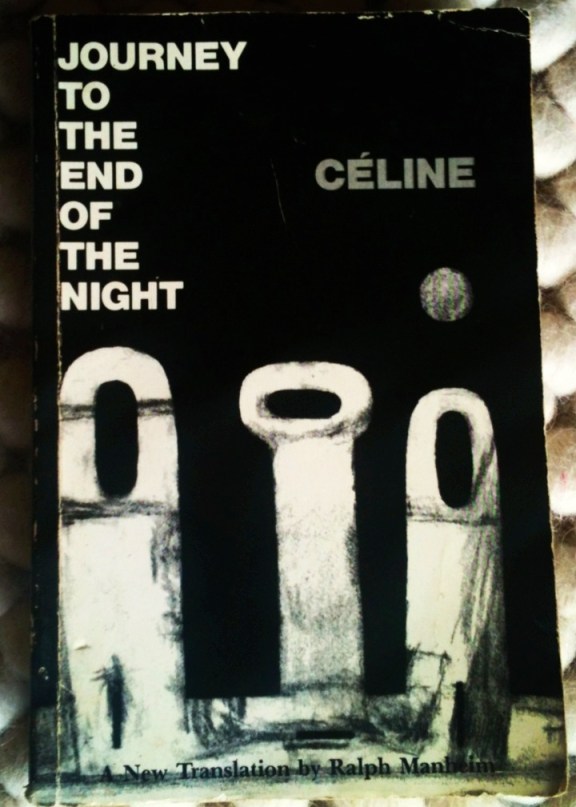
Hemingway, Fitzgerald, Steinbeck, Camus, Nabokov, Celine, Kafka.

20120422-130058.jpg

Jonathan Littell’s The Kindly Ones with Revere movie camera as bookend. Littell’s lurid, bizarre book is only shelved here temporarily (he’s in too-rarefied company, perhaps).

20120422-130453.jpg

A friend gave me this in high school.

Denis Johnson, Malcolm Lowry, Ben Marcus (Books Acquired, 4.18.2012)

20120418-144738.jpg

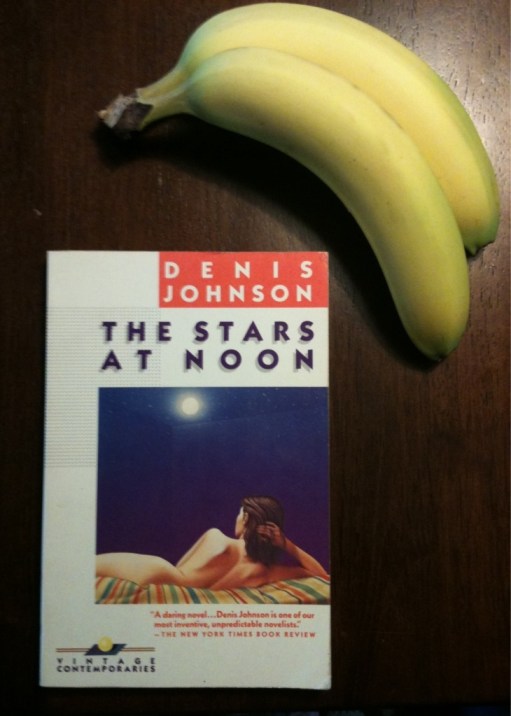
I went to the bookstore to pick up a graduation present and then spent too much time wandering the stacks. While looking for Mat Johnson’s Pym, I found a first printing paperback of Denis Johnson’s The Stars at Noon and had to have it—haven’t read it yet, and it makes a nice sister for my copy of Angels—but honestly, I’m just in love with these 1980s Vintage Contemporary editions with awful, awful covers.

20120418-144806.jpg

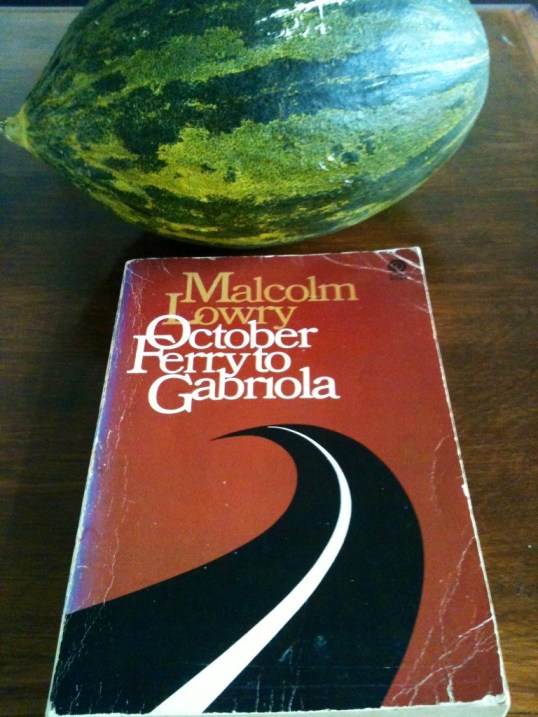
Malcolm Lowry’s last novel, the posthumously published October Ferry to Gabriola. Kind of a hideous cover.

20120418-144816.jpg

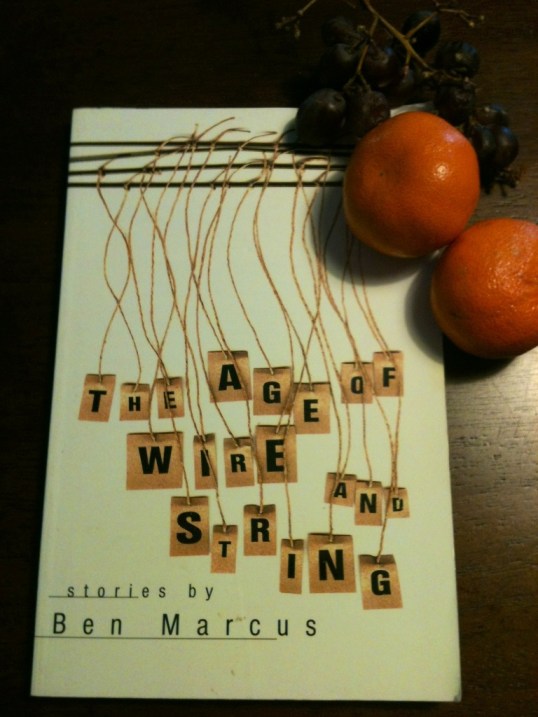
 I was looking for something by David Markson (no dice) when I came across The Age of Wire and String by Ben Marcus; I’ve been meaning to check out Marcus’s stuff, and a few minutes with the volume sold me—short vignettes, sort of like Lydia Davis or DFW or Dennis Cooper or William Burroughs (but probably not; I’m just using these as a short hand reference).